
By Karina Janitra
Indonesia is home to some of the largest tropical forest areas in Southeast Asia, particularly on the islands of Kalimantan, Sumatra, and Papua. These forests are important for biodiversity, wildlife, and the livelihoods of millions of people. However, despite having such valuable natural resources, Indonesia has continued to struggle with recurring forest and land fires for decades.
In 2026, Indonesia experienced another serious forest fire crisis, particularly in Kalimantan and Sumatra. Fires were also recorded in Papua and other parts of the country. The situation worsened during the dry season, especially from August onwards, when prolonged drought and El Niño conditions allowed fires to spread across large areas of forest and peatland.
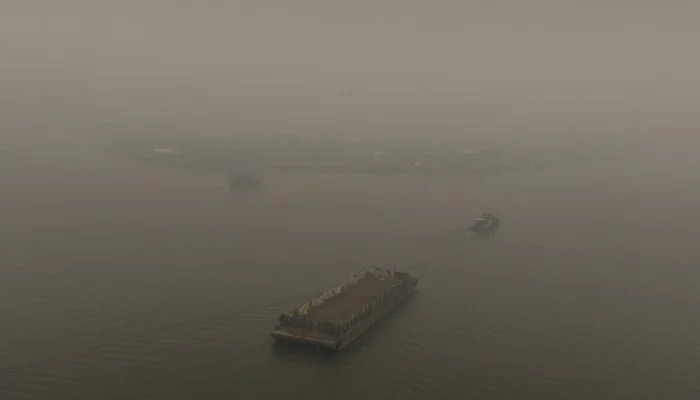
In some parts of Kalimantan, thick smoke reduced visibility and made the sky appear orange. Poor air quality affected residents’ health and disrupted education, transportation, businesses, and everyday activities. People struggled to carry out their normal routines while breathing air filled with smoke from the burning forests. However, the haze did not remain within Indonesia’s borders. Smoke from the fires spread to neighbouring countries, particularly Malaysia and Singapore, turning a domestic environmental problem into a regional crisis.
In Malaysia, schools in affected areas were closed, while some universities temporarily moved their classes online. Universiti Teknologi Malaysia, for example, announced online teaching arrangements from 12 to 16 October 2026 because of concerns about air quality. The haze also disrupted air transportation, with Firefly cancelling selected flights between Subang Airport and Singapore’s Seletar Airport. Singapore experienced similar problems. On 14 October 2026, its one-hour PM2.5 concentration reached 284 micrograms per cubic metre, the highest recorded that year at the time. The poor air quality created health concerns and forced restrictions on outdoor activities.
The consequences demonstrate that forest fires are not simply an environmental issue. They also affect public health, education, transportation, economic activities, and the daily lives of people who live far away from the burning forests.
A Historical Problem Dating Back to Indonesia’s New Order Era
Forest fires have been part of Indonesia’s environmental history for many years. One of the earliest extensively documented large-scale fire disasters occurred in East Kalimantan during 1982–1983, under President Soeharto’s New Order government.
During the New Order era, Indonesia increasingly promoted economic development through natural resource extraction, logging, agricultural expansion, and commercial plantations. These activities created employment opportunities and contributed to economic growth. However, large-scale changes in land use also created environmental risks.
One important example was the Mega Rice Project introduced in Central Kalimantan in the mid-1990s. The government planned to convert approximately one million hectares of peatland into agricultural land for rice production. Thousands of kilometres of canals were constructed to drain the peatlands. However, the project failed to achieve its original agricultural goals.
The drainage system caused the peat soil to become increasingly dry, making it more vulnerable to fire. Unlike ordinary vegetation, dry peat can continue burning beneath the ground for long periods, making fires especially difficult to extinguish. The environmental consequences became particularly clear during the 1997–1998 forest fires, which produced widespread haze across Indonesia, Malaysia, Singapore, and other Southeast Asian countries.
These events demonstrated that forest fires were not caused only by extreme weather conditions. Earlier government decisions about land conversion and development had also created conditions that increased fire risks. The consequences of those decisions continued long after the original development projects ended.
The problem continued in later decades. The 1997–1998 fires became one of the most serious environmental disasters in Southeast Asia, producing widespread haze that affected Indonesia, Malaysia, Singapore, and other countries. Another major crisis occurred in 2015, when approximately 2.6 million hectares of land burned across Indonesia. According to the World Bank, the disaster caused an estimated US$16.1 billion in economic losses, equivalent to approximately 1.9% of Indonesia’s GDP.
These repeated disasters show that Indonesia’s forest fire problem is not new. Although extreme weather conditions contribute to the spread of fires, they do not fully explain why the problem continues. History matters because peatland fires are not caused only by the weather in a particular year. Drought can trigger or worsen burning, but previously drained land becomes more flammable even after the original development project has ended. The 2026 crisis therefore reflects environmental changes that have built up over decades.
Back to 2000s, political reforms
Following the fall of President Soeharto in 1998, Indonesia entered a period of political reform known as Reformasi. One of the major changes was decentralisation, which transferred greater responsibilities over various aspects of administration and natural resource management to regional and local governments.
During the early 2000s, regional governments gained greater influence over development decisions. This created opportunities to attract investment, expand plantations, increase local government revenue, and generate employment. However, these changes also created new challenges in environmental governance.
Different government institutions had responsibilities for land administration, forestry, plantations, and environmental protection. In some cases, responsibilities overlapped, making it difficult to determine which institution should respond when environmental violations occurred. Competition for investment and local government revenue could also encourage land conversion, particularly in areas where plantation development was economically attractive.
Research published by the Center for International Forestry Research (CIFOR) in 2002 explained that forest fires were closely connected to the allocation of forest areas for other uses, including commercial plantations. CIFOR argued that when land had already been allocated for conversion, burning could become a convenient method of preparing the area for agricultural development.
This meant that simply extinguishing fires would not solve the underlying problem if the economic and political decisions encouraging land conversion remained unchanged.
In the same year, Southeast Asian governments signed the ASEAN Agreement on Transboundary Haze Pollution in Kuala Lumpur on 10 June 2002. The agreement aimed to improve regional cooperation in preventing, monitoring, and responding to forest and land fires. However, its implementation depended heavily on individual governments’ willingness and ability to enforce environmental regulations within their territories.
Despite these efforts, serious haze returned in 2006. CIFOR continued to highlight problems involving unclear government responsibilities, weak enforcement, and land ownership disputes. These difficulties made it harder to prevent fires and identify the parties responsible for environmental damage. The situation demonstrated a growing conflict between economic development and environmental protection. While plantation expansion could bring economic benefits, weak coordination between government institutions and inconsistent enforcement could allow environmental damage to continue.
The 2009 Environmental Law: Why Have Forest Fires Continued Despite Regulations?
Following repeated environmental crises, Indonesia introduced stronger environmental legislation through Law No. 32 of 2009 on Environmental Protection and Management, known in Indonesian as Undang-Undang Nomor 32 Tahun 2009 tentang Perlindungan dan Pengelolaan Lingkungan Hidup.
The law replaced the earlier Environmental Management Law of 1997 and established a broader framework for environmental protection. One important provision is Article 69(1)(h), which prohibits clearing land by burning. However, Article 69(2) recognises considerations of local wisdom and traditional practices. The original explanation of the provision describes limited traditional burning practices involving a maximum of two hectares per household, local crop varieties, and measures to prevent fire from spreading. The law also established criminal penalties for unlawful land burning.
I. Under Article 108 of the original law, violations could result in imprisonment ranging from three to ten years and fines between Rp3 billion and Rp10 billion. Other provisions address environmental responsibilities and public rights.
II. Article 68 establishes environmental obligations for businesses, including providing accurate environmental information and maintaining environmental sustainability.
III. Article 116 provides for corporate criminal responsibility under specified circumstances, while Article 91 recognises the right of affected communities to bring representative lawsuits when they experience environmental harm.
The 2015 forest fire crisis became one of the most important turning points in Indonesia’s environmental history. Approximately 2.6 million hectares of forest and land burned during the disaster.
Although the 1997–1998 fires affected a larger area, the 2015 crisis was among Indonesia’s most devastating in terms of its economic, environmental, and public health consequences. Which raised serious concerns about whether environmental regulations were sufficient to prevent recurring fires. Following the crisis, Indonesia introduced further environmental measures.
In 2016, the government established the Peatland Restoration Agency, which aimed to restore degraded peatlands and reduce future fire risks. Restoration measures included blocking drainage canals, raising water levels, and encouraging more sustainable land management. These policies were important because they addressed the physical conditions that make peatlands vulnerable to burning.
However, restoration programmes require long-term funding, monitoring, and cooperation between different institutions. If restored areas are not maintained or surrounding peatlands continue to be drained, fire risks can return.
What economic incentives make land clearing by fire attractive to some actors?
Fire is often cheaper and faster than clearing vegetation with machinery or paid labour. It can also prepare land for planting and, in some cases, increase the commercial value of land that can then be cultivated, sold or transferred.
An economic analysis published by Chew Soon Beng and Daniel Ong Qi Ming in 2019 reported that burning previously logged land could cost approximately US$5 per hectare, while using heavy machinery and chemicals could cost around US$200 per hectare.
A 2022 academic study by Falcon and colleagues also found similar differences in West Kalimantan. The researchers reported that burning could cost approximately US$3–5 per hectare, while mechanical land clearing could cost around US$150–180 per hectare. However, These figures are historical estimates from specific locations and should not be treated as fixed national costs in 2026. Nevertheless, they demonstrate why burning can be financially attractive.
For businesses preparing large areas of suitable land, using fire can reduce immediate expenses. For small farmers who cannot afford machinery or hire workers, burning may appear to be the only financially accessible option. Another important reason is that burning vegetation can temporarily improve soil fertility. When plants, trees, and other organic materials are burned, some of the nutrients stored in the vegetation are released into the remaining ash. These nutrients include potassium and phosphorus, which are important for plant growth. In certain soil conditions, ash can also temporarily increase soil pH and improve nutrient availability.
Repeated burning can reduce organic matter, contribute to soil erosion, and damage the long-term quality of agricultural land. It is particularly harmful in peatland areas, where burning can destroy large amounts of stored carbon and leave the land vulnerable to future fires. Therefore, although burning can provide short-term economic and agricultural benefits, it can also create serious long-term environmental damage. The central problem is that the financial savings are received directly by those clearing the land, while the resulting environmental and health costs are often experienced by the wider population.
Plantation Companies, Land Concessions, and Commercial Responsibilities.
The expansion of commercial plantations has played an important role in Indonesia’s economic development. Palm oil, timber, and other agricultural industries contribute to export earnings, employment, and investment. These industries can also create environmental risks when plantation expansion involves forest conversion, peatland drainage, or poorly managed land clearing.
One important issue concerns the financial value of converted land. Land that has already been cleared and prepared for agricultural production can have greater commercial value than land that still requires extensive development. Means that some actors may benefit economically from forest conversion even before agricultural production begins. The financial benefits can involve plantation developers, landowners, investors, and other groups involved in land transactions, it is important to recognise that not every plantation company is responsible for land burning, and not every fire is deliberately started for commercial purposes.
Companies may also suffer losses when fires damage their plantations or spread from neighbouring land. Nevertheless, plantation companies and land concession holders have important environmental responsibilities. These responsibilities include complying with environmental regulations, preventing unlawful burning, monitoring fire risks, maintaining appropriate firefighting resources, and cooperating with government investigations. Companies also need to consider the environmental practices of contractors, suppliers, and other business partners involved in their operations. Indonesia’s environmental legislation provides mechanisms for holding businesses accountable when the relevant legal conditions are established. However, identifying responsibility is not always straightforward.
A fire may begin outside a plantation concession and later spread into it. Therefore, the presence of a fire within a concession does not automatically prove that the company deliberately caused it. Authorities must investigate the circumstances and establish the relevant legal responsibilities.
Research published in 2026 by Abdurrahim and colleagues examined the political economy of peatland fires in Ketapang, West Kalimantan. The researchers found that recurring fires were connected to the expansion of palm oil plantations, unclear land status, inconsistent government regulations, and unequal influence among different groups. The study also identified how some commercial actors could benefit from regulatory ambiguities surrounding land classified as non-forest areas.
At the same time, small farmers and transmigrant communities continued to depend on burning because of limited financial resources and a lack of affordable alternatives. The findings demonstrate that the haze crisis cannot be explained simply by blaming one group. The problem involves different actors with different interests, responsibilities, and levels of economic and political influence.
Are Environmental Regulations Adequately Enforced?
Although Indonesia has introduced environmental laws, enforcement remains a major challenge. One problem is the difficulty of monitoring Indonesia’s extensive forest and peatland areas, Many fire-prone locations are remote, making inspections and emergency responses more difficult, determining who is responsible for a fire. While, satellite monitoring systems can identify hotspots and burned areas, but investigators still need evidence to establish how a fire started and whether an individual or company violated the law.
Government coordination is another important factor. Forest management, environmental protection, agricultural development, and land administration involve different ministries and regional authorities. When responsibilities overlap or institutions do not coordinate effectively, prevention and enforcement can become less consistent.
During the early 2000s, decentralisation changed the distribution of responsibilities between national and regional governments. While decentralisation created opportunities for local development, it also increased the importance of coordination between different levels of government. The continued recurrence of fires indicates that these institutional challenges have not been fully resolved. Nevertheless, the Indonesian government has taken enforcement action during the 2026 crisis.
On 19 October 2026, Indonesia’s Ministry of Forestry reported that 32 companies had received administrative sanctions in connection with forest fires affecting approximately 12,926.74 hectares. The ministry also reported criminal processes involving 125 legal subjects, including individuals and corporations. These figures demonstrate that authorities have undertaken investigations and enforcement measures.
However, administrative sanctions and ongoing criminal investigations should not be confused with final criminal convictions. The larger question is whether these actions will produce long-term improvements in environmental management.
If enforcement mainly occurs after major fires have already developed, the environmental and public health consequences may have already affected millions of people. Therefore, prevention should receive as much attention as punishment. Effective enforcement requires regular monitoring, transparent information, consistent investigation procedures, and clear responsibility among government institutions. It also requires ensuring that penalties are applied according to evidence and the law, rather than selectively.
The history of repeated haze crises suggests that improving environmental governance is not only a matter of introducing more laws but also of ensuring that existing regulations are implemented consistently.
Political and Administrative Barriers to Long-Term Reform
One reason the haze problem has continued for decades is that environmental reform involves competing political and economic priorities. Indonesia’s agricultural and plantation industries are economically important. They provide employment, contribute to exports, and support regional development. For local governments, attracting investment can also be important for generating revenue and creating jobs.
However, these economic priorities can create tensions with environmental protection. Stronger environmental regulations may require businesses to spend more money on machinery, monitoring, firefighting equipment, and sustainable land management. Although these investments can reduce long-term environmental risks, they may increase immediate operating costs, creates a challenge for governments trying to balance economic development with environmental protection.
Indonesia’s decentralised governance system requires cooperation between national ministries, provincial governments, and local authorities. Different institutions may have responsibilities for development permits, land management, environmental monitoring, and law enforcement. When these responsibilities are unclear or overlapping, reforms can become difficult to implement consistently. Land ownership and concession arrangements also contribute to the problem. In some areas, communities, companies, and government authorities may have different claims or understandings of land rights. These disputes can make environmental regulation more complicated.
The 2026 Crisis: What Do the Latest Statistics Reveal?
The severity of the 2026 crisis can be examined through both official government information and independent environmental monitoring.
According to Indonesia’s Ministry of Forestry through the SiPongi monitoring system, approximately 202,004 hectares of forest and land were affected by fires between January and July 2026. This represented a reported increase of 69% compared with the corresponding 2025 figure. However, these official statistics do not fully represent the scale of the crisis by October.
Independent monitoring by MapBiomas Indonesia estimated that 637,011 hectares had burned nationwide between January and August 2026. Its analysis also found that approximately 27% of the burned area was located in Papua. Another satellite-based assessment, by Nusantara Atlas, placed the nationwide burned area at nearly 900,000 hectares by the end of August.
The differences between these estimates reflect different monitoring methods. Nevertheless, they show that the scale of the fires was substantially greater than the official figures published through July.
More recent information from Indonesia’s National Disaster Management Agency (BNPB) provides further evidence of the continuing emergency. BNPB reported that approximately 38,310.86 hectares of land had been affected by fires in West Kalimantan through 28 September 2026.
Its forest-fire response dashboard, updated on 2 October, recorded 5,540 hotspots across six priority provinces: Riau, Jambi, South Sumatra, West Kalimantan, Central Kalimantan, and South Kalimantan. The dashboard also reported approximately 850.3 hectares of land burned during the preceding 24-hour reporting period. However, the environmental consequences extended beyond the number of hectares burned.
According to Health Ministry data reported by Reuters on 15 October, respiratory illness cases associated with the fire crisis had reached 283,270 across seven Indonesian provinces by 13 October. This was more than double the 113,336 cases reported on 9 September.
Transportation was also seriously disrupted, with nearly 2,000 flights affected across Indonesia between 11 August and 12 October. These figures illustrate the growing humanitarian and economic consequences of the disaster. The continuing fires also raise questions about environmental monitoring and public access to information. While Indonesia has systems such as SiPongi and BNPB to collect and publish environmental data, the absence of an updated official nationwide burned-area total during the October crisis makes it more difficult to assess its full extent.
Nevertheless, delayed statistics alone do not establish government negligence. The more important question is whether available information and early warnings have been used effectively to prevent fires and protect affected communities.
ASEAN’s Efforts to Address Transboundary Haze
The transboundary nature of haze has encouraged Southeast Asian governments to cooperate on the issue for more than two decades.Following the 1997–1998 crisis, ASEAN member states signed the Agreement on Transboundary Haze Pollution in Kuala Lumpur on 10 June 2002The agreement entered into force in November 2003 and established a framework for preventing, monitoring, and responding to forest and land fires. Indonesia approved ratification through Law No. 26 of 2014 and formally deposited its instrument of ratification on 20 January 2015. Indonesia was the last of the original ten ASEAN member states to ratify the agreement. However, the agreement did not immediately resolve the problem.
Indonesia experienced another major haze crisis in 2015, demonstrating the limitations of regional cooperation when national environmental regulations and preventive measures were not sufficient. ASEAN later developed additional programmes, including its first Haze-Free Roadmap for 2016–2020.
On 23 August 2023, ASEAN adopted the Second Roadmap for Cooperation on Transboundary Haze Pollution Control, covering the period from 2023 to 2030. The roadmap established the shared vision of achieving a transboundary haze-free ASEAN by 2030. It focuses on improving forest fire prevention, strengthening environmental regulations, managing peatlands sustainably, and encouraging cooperation between governments, businesses, and local communities. The roadmap also recognises the need for sufficient financial resources and greater public participation. Indonesia participates in this regional initiative as an ASEAN member state. However, the return of severe haze in 2026 raises questions about whether these commitments are being implemented effectively. One major limitation is ASEAN’s reliance on consultation, negotiation, and cooperation between member states.
Although these approaches support regional relations, ASEAN does not have the same enforcement powers as national authorities responsible for regulating land use and prosecuting environmental violations.
Singapore has introduced an additional legal approach through its Transboundary Haze Pollution Act of 2014. The legislation provides mechanisms for addressing haze caused or contributed to by companies operating outside Singapore, subject to specific legal requirements.
In October 2026, Singapore’s National Environment Agency announced preventive measures involving ten companies holding concessions in Indonesia. These notices required companies to take steps such as firefighting, stopping burning activities, and preparing action plans. While, the notices do not establish that the companies have been found legally responsible for causing the haze. The different approaches taken by ASEAN member states demonstrate that regional cooperation has developed over time.
Nevertheless, the recurring haze problem shows that regional agreements alone cannot address the underlying economic and political factors contributing to forest fires.
Different Responses from Indonesia, Malaysia, and Singapore
Singapore adopted the Transboundary Haze Pollution Act in 2014. The law can apply to companies whose activities outside Singapore cause or contribute to haze pollution in Singapore, subject to the legal requirements of the Act. This is a different approach from ASEAN’s mainly cooperative framework because it creates possible legal responsibility for companies. However, tracing smoke to particular land areas and establishing the legal elements of a case can be difficult.
On 16 October 2026, Singapore’s National Environment Agency (NEA) announced that it had sent Preventive Measure Notices to seven companies holding land concessions in Indonesia. NEA said there were indications that smoke from fires on those lands could have reached Singapore. The notices required the companies to take firefighting and preventive steps and submit action plans. The issuance of notices is an enforcement-related development, but it does not mean that those companies have been convicted or that their liability has been decided by a court.
Malaysia has taken a different approach, relying mainly on bilateral discussions and ASEAN cooperation. On 15 October 2026, Foreign Minister Mohamad Hasan said that Malaysia did not then plan to take legal action or issue a diplomatic note against Indonesia. He explained that the government preferred diplomatic discussions while protecting public health and relations between the two countries.
Indonesia has introduced restrictions on land burning, conducted investigations into suspected violations, deployed firefighting teams, and undertaken peatland restoration. A 2026 study in Geophysical Research Letters found that restoration using canal dams and deep wells was associated with a 22% reduction in hotspots in the studied restored peatlands during 2019. The researchers also noted that the effects differed by location and conditions, showing that restoration must be maintained and adapted.
The Indonesian government has also described its current firefighting efforts. On 13 October, Reuters reported that President Prabowo had ordered additional resources to be mobilised. On 16 October, Foreign Minister Arrmanatha Nasir said the president had approved accepting assistance from neighbouring countries, with BNPB working on the practical arrangements. These steps are important to acknowledge, even as questions remain about prevention and whether emergency measures are enough. Taken together, these responses show that regional governments have not been inactive. The key question is whether the existing measures are strong enough, consistently enforced, and able to reduce the conditions that repeatedly allow fires to spread.
Previous Lawsuits and the current 2026 Lawsuit Against the Indonesian Government
Legal action has become another way for Indonesian communities to seek accountability for environmental damage. The current lawsuit against President Prabowo is not the first attempt to challenge government responsibilities for forest fires.
In 2016, residents and environmental activists in Central Kalimantan filed a citizen lawsuit against the administration of President Joko Widodo following the severe 2015 fires. The plaintiffs argued that government authorities had failed to take sufficient measures to prevent recurring fires and protect public health. The courts initially ruled in favour of the residents, and Indonesia’s Supreme Court upheld the earlier judgment in 2019. Yet, the Supreme Court later overturned the ruling through an extraordinary judicial review in 2022. The case demonstrated that obtaining a favourable judgment does not necessarily guarantee lasting environmental reform.
In September 2026, another legal challenge was brought by residents, Indigenous representatives, and civil society organisations in West Kalimantan. The coalition, known as Nafas Kalbar, filed a class-action lawsuit naming President Prabowo Subianto and other government authorities as defendants. The plaintiffs allege that government authorities failed to adequately prevent and respond to recurring forest and land fires. They argue that prolonged haze has harmed public health, education, livelihoods, and the right to a healthy environment.
The lawsuit seeks greater government accountability and stronger measures to prevent future environmental disasters. The first hearing took place on 7 October 2026, but the proceedings were postponed after most government defendants did not attend.
The next hearing was scheduled for 21 October. At the time of writing, the outcome of that hearing had not been independently confirmed. The allegations remain subject to judicial proceedings, and the filing of the case does not establish government wrongdoing. The lawsuit is significant because it brings attention to the rights of affected communities and the responsibilities of government institutions. Whether the legal system can help address problems that environmental policies and regional agreements have not fully resolved. However, the earlier lawsuit against the Jokowi administration shows that favourable court decisions may still face further legal and practical challenges. A meaningful outcome would require not only legal recognition of government responsibilities but also effective implementation of environmental policies.
Conclusion
Indonesia’s recurring haze crisis is not simply the result of extreme weather or individual forest fires. It is a long-standing problem connected to the country’s history of economic development, land conversion, environmental governance, and political change. The major fires of 1982–1983 and 1997–1998 demonstrated the environmental risks associated with logging, forest disturbance, and large-scale land conversion.
During the early 2000s, decentralisation and plantation expansion created further challenges in regulating land use and managing environmental responsibilities. Indonesia strengthened its environmental legislation through Law No. 32 of 2009, while ASEAN continued developing regional cooperation. However, the major crises of 2015 and 2026 show that these measures have not completely resolved the underlying problem.
One important reason is that burning can remain economically attractive because it offers short-term financial savings and temporary agricultural benefits. At the same time, the economic importance of plantation development can create competing priorities for businesses and government institutions. While some actors benefit financially from land conversion, affected communities may experience respiratory illnesses, disrupted education, economic losses, and environmental damage.
This demonstrates the wider relationship between economic interests, political power, and public welfare. Environmental protection therefore requires more than introducing laws or responding to fires after they occur. It requires stronger and more consistent enforcement, transparent land administration, cooperation between government institutions, and affordable alternatives to harmful burning practices. Plantation companies and concession holders must also fulfil their environmental responsibilities, while affected communities should have meaningful opportunities to participate in decisions concerning their land and environment.
The 2026 lawsuit against President Prabowo represents another effort by affected communities to seek accountability. However, whether it can produce lasting changes will depend on the legal proceedings and the implementation of any resulting decisions. Ultimately, preventing transboundary haze requires addressing the economic and political conditions that have allowed the problem to continue for decades.
“Clean air should not become a priority only when smoke covers the sky. Protecting it must remain a responsibility even after the fires have been extinguished.”
22 October 2026