
By Dr. Ghulam Nabi Fai
Introduction: Islamophobia and the Universal Principle of Human Dignity
It is heartening that the United Nations General Assembly designated March 15 as the International Day to Combat Islamophobia in 2022. Observed annually, the day calls for international solidarity against anti-Muslim hatred, discrimination, and prejudice. It also provides an opportunity to promote mutual understanding, religious tolerance, and respect for the diversity of human beliefs and traditions.
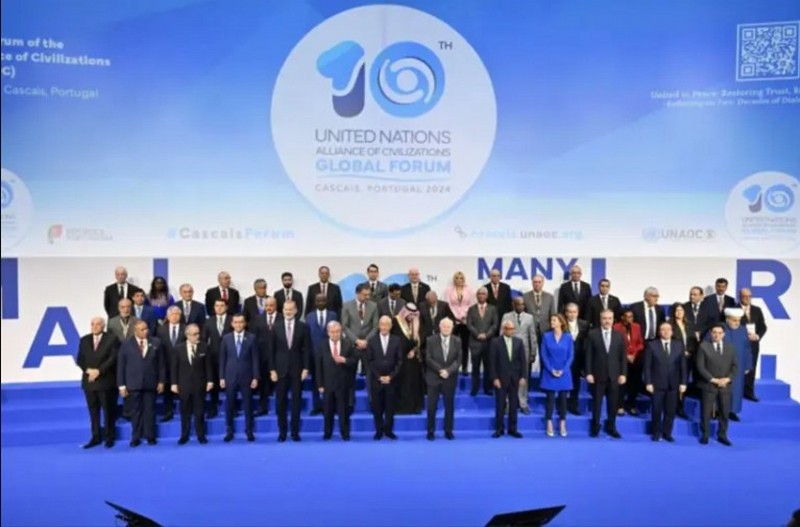
Miguel Ángel Moratinos, United Nations Under-Secretary-General, holding the position of High Representative for the Alliance of Civilizations (UNAOC) said on October 27, 2026, during 6th Ministerial Meeting of the Baku Process — and 7th World Forum on Intercultural Dialogue at Baku, Azerbaijan that “In my capacity as United Nations Special Envoy to Combat Islamophobia, my Office is advancing work towards a United Nations Action Plan to Combat Islamophobia.”
He added that “Institutions are often measured by the number of meetings they organize or programmes they deliver. Those indicators matter. But in our field, we should also ask whether we have helped build trust where mistrust existed, whether we have enabled cooperation across cultural or religious divides, and whether successful local initiatives have been given opportunities to grow and inspire others. That is where the practical value of dialogue becomes most visible. That is also the spirit that connects the Baku Process and the work of UNAOC.”
At the United Nations observance in March 2023, Secretary-General António Guterres condemned anti-Muslim hatred and emphasized that Muslims, despite their diversity and contributions to humanity, continue to face bigotry and prejudice because of their faith. Other international leaders similarly called for concerted efforts to challenge discrimination, hate speech, and the targeting of Muslim communities.
These concerns are not new. In 2004, former UN Secretary-General Kofi Annan expressed concern that the world had found it necessary to coin the term Islamophobia to describe growing prejudice and intolerance. His observation underscored the troubling reality that religious identity can become a pretext for exclusion and discrimination.
In 1997, the Runnymede Trust published Islamophobia: A Challenge for Us All, defining Islamophobia as an outlook involving an unfounded fear and dislike of Muslims that leads to exclusion and discrimination.
Other scholars have examined the phenomenon as a form of anti-Muslim racism, while Professor Seyyed Hossein Nasr of George Washington University has emphasized that it involves not only fear but also hatred.
Islamophobia can manifest itself in discriminatory policies, restrictions on religious expression, hate speech, harassment, violence, and the portrayal of Muslims as inherently incompatible with modern society. It can also be reinforced by misconceptions about Islamic teachings, particularly those concerning human rights, religious freedom, equality, and democracy.
One persistent misconception is that Islam and universal human rights are fundamentally opposed. This assumption deserves careful examination.
The central argument of this article is that Islamic teachings and the Universal Declaration of Human Rights (UDHR) share fundamental commitments to human dignity, justice, equality, compassion, and the protection of human life. Although Islamic legal traditions and modern international human rights law have different histories, foundations, and interpretive frameworks, there is substantial common ground on which Muslims and non-Muslims can work together.
Recognizing this compatibility does not require overlooking human rights violations in some Muslim-majority countries or elsewhere. Rather, it requires distinguishing the ethical principles of a religious tradition from the actions of governments and individuals who may fail to uphold them.
Islam, Human Dignity, and Universal Values
The word Islam is commonly understood as referring to submission to Allah and is associated with the Arabic root connected with peace. Islamic teachings place considerable emphasis on justice, mercy, accountability, and the dignity of human beings.
The Qur’an presents its moral guidance as relevant to humanity, not merely to a particular ethnic group or nation. It calls upon people to act justly, fulfill their obligations, care for the vulnerable, and refrain from oppression.
The Qur’anic vision of human dignity also shares important ethical themes with Judaism and Christianity. All three Abrahamic traditions contain teachings concerning compassion, justice, charity, the sanctity of life, and responsibility toward one’s neighbors. These traditions have influenced many societies and have contributed to broader moral discussions about human rights.
The modern international human rights framework, however, also reflects contributions from many other philosophical, cultural, religious, and legal traditions. The UDHR was developed through an international process involving representatives from different regions and legal backgrounds. Its universal character rests on the proposition that human rights belong to all people by virtue of their humanity.
Islamic teachings can contribute meaningfully to this common endeavor without needing to be presented as a mere imitation of Western ideas. Nor should Western societies be treated as the sole representatives of human rights or democracy. Human rights violations have occurred across cultures and political systems, just as movements for justice and freedom have emerged within diverse societies.
The objective should not be to impose one country’s political model on the rest of the world. It should be to encourage governments everywhere to protect human dignity, uphold the rule of law, and guarantee fundamental freedoms.
A Common Human Family: Qur’an 49:13
One of the clearest Quranic foundations for human equality appears in verse 13 of Surah Al-Hujurat: “O mankind, indeed, We have created you from male and female and made you peoples and tribes that you may know one another. Indeed, the most noble of you in the sight of Allah is the most righteous of you. Indeed, Allah is Knowing and Acquainted.” — Qur’an 49:13
This verse addresses humanity as a whole. It recognizes differences among peoples and communities while rejecting the notion that ancestry, ethnicity, or tribal identity establishes a person’s ultimate worth.
Human diversity is presented as an opportunity for recognition and understanding rather than a justification for hostility. The verse places moral character and righteousness above inherited social distinctions.
This principle resonates strongly with Articles 1 and 2 of the UDHR. Article 1 declares that all human beings are born free and equal in dignity and rights, while Article 2 affirms that everyone is entitled to the rights and freedoms set forth in the Declaration without discrimination based on race, color, sex, language, religion, national or social origin, or other status.
The Qur’anic emphasis on a shared human origin and the UDHR’s affirmation of equal dignity provide a foundation for cooperation across religious, racial, and national boundaries.
Prophet Muhammad (peace be upon him) is also reported to have declared in his Farewell Sermon that an Arab has no superiority over a non-Arab, nor a non-Arab over an Arab, also a white has no superiority over a black, nor does a black have any superiority over a white except by piety and good action. And that a person’s moral standing does not derive from racial identity. This teaching reinforces the rejection of racial arrogance and inherited superiority. The principle is straightforward: no human being should be treated as inferior simply because of the community into which they were born.
An often-recounted historical account illustrates this ideal. During the caliphate of Umar ibn al-Khattab, a dispute reportedly arose after the son of Amr ibn al-As, the governor of Egypt, struck an Egyptian who had defeated him in a race. According to the account, Umar condemned the abuse of power and invoked the freedom with which people are born. The story expresses an enduring principle of justice: authority does not place anyone above accountability.
The British historian Arnold Toynbee also wrote approvingly of Islam’s contribution to overcoming racial distinctions among Muslims. His observation remains relevant in a world where racial prejudice and religious discrimination continue to undermine human solidarity.
A central teaching in Islamic ethics is the principle of reciprocity: treating others as one would wish to be treated. A well-known hadith, recorded in Imam al-Nawawi’s Forty Hadith, states: “None of you [truly] believes until he wishes for his brother what he wishes for himself.”
This teaching encourages believers to consider the welfare of others and to resist selfishness, cruelty, and indifference. It offers a moral foundation for protecting the dignity and well-being of people beyond one’s immediate family or community.
The Universal Declaration of Human Rights (UDHR) expresses a related commitment through its affirmation of equal rights and its call for people to act toward one another in a spirit of brotherhood.
Reciprocity is not a substitute for enforceable legal protections. A person may recognize another’s dignity in principle and still fail to respect it in practice. For this reason, moral education must be accompanied by fair institutions, effective remedies, and laws that protect people from discrimination and abuse.
Nevertheless, the ethic of reciprocity provides a powerful moral motivation for respecting the rights of others. It encourages individuals to ask whether they would accept the same treatment they are prepared to impose upon another person.
Human Rights in the Qur’an and the UDHR
The Universal Declaration of Human Rights was adopted by the UN General Assembly on December 10, 1948, through Resolution 217 A (III). It establishes a common international standard for the protection of human dignity and fundamental freedoms.
The Qur’an and the Prophetic tradition contain teachings that correspond in important respects with several principles expressed in the Declaration. The following comparisons illustrate areas of substantial ethical convergence.
Article 3 of the UDHR states: “Everyone has the right to life, liberty and security of person.”
The Qur’an emphasizes the sanctity of human life in verse 32 of Surah Al-Ma’idah: “Whoever kills a soul unless for a soul or for corruption in the land—it is as if he had slain mankind entirely. And whoever saves one—it is as if he had saved mankind entirely.” — Qur’an 5:32
The verse appears in a passage referring to a decree concerning the Children of Israel, but its moral significance extends to the profound value of human life.
Islamic teachings also condemn unjust aggression and emphasize the responsibility to protect the vulnerable. The principle that saving one life is comparable, in moral significance, to saving all humanity offers a compelling religious foundation for humanitarian work and the prevention of violence. Respect for life must extend beyond words. It requires the protection of civilians, the prevention of unlawful killings, and accountability for those who violate the right to life.
Article 4 of the UDHR prohibits slavery and the slave trade in all their forms.
The Qur’an repeatedly encourages the freeing of enslaved people and presents emancipation as an act of moral and religious significance. In Qur’an 4:92, freeing a believing person from bondage is prescribed as part of the expiation for certain forms of accidental killing. The Qur’anic emphasis on charity, human dignity, the rejection of oppression, and the liberation of enslaved people provides important resources for an Islamic argument against slavery.
The contemporary ethical imperative is clear: slavery, human trafficking, forced labor, and sexual exploitation violate human dignity and must be opposed. Muslim scholars and communities can draw upon Islamic teachings concerning emancipation, justice, and the prohibition of oppression to support the universal rejection of these practices.
Article 5 of the UDHR prohibits torture and cruel, inhuman, or degrading treatment. Article 6 affirms everyone’s right to recognition everywhere as a person before the law.
Islamic teachings concerning justice and the prohibition of oppression provide a moral basis for opposing torture, humiliation, and abuse in custody. The Qur’an warns against wrongdoing and commands believers to uphold justice, including when doing so is difficult.
Prophetic traditions concerning the conduct of warfare are also frequently cited in discussions of humanitarian protection. Reports attributed to Prophet Muhammad and early Muslim leaders prohibit the deliberate killing of women, children, and other noncombatants and condemn the mistreatment of vulnerable people.
Such teachings are relevant to the development of humane standards in conflict. They can reinforce the moral obligation to protect civilians and detainees.
The prohibition of torture must apply regardless of a person’s religion, nationality, political affiliation, or alleged offense. Likewise, every person must receive legal recognition and protection rather than being placed beyond the reach of justice.
Article 7 of the UDHR establishes equality before the law and the right to equal protection without discrimination.
The Qur’an commands believers not to allow hostility toward another people to prevent them from acting justly: “And do not let the hatred of a people prevent you from being just. Be just; that is nearer to righteousness.” — Qur’an 5:8
This principle is particularly important because impartiality is most difficult when the person seeking justice belongs to a disliked or marginalized group.
A widely recounted account from early Islamic history concerns a dispute between Ali ibn Abi Talib, son-in-law of Prophet Muhammad (PBUH) and a Jewish man over a suit of armor. According to the story, the matter was brought before a judge, who declined to accept the testimony of Ali’s son in his favor. The decision went against Ali, and the other claimant subsequently acknowledged that the armor belonged to him – Ali Ibn Abi Talib.
The account illustrates the ideal that legal authority and personal status should not determine the outcome of a case. Its significance lies in the principle of impartial justice: evidence and fair procedure must prevail over rank, wealth, and religious identity.
For the compatibility of Islamic ethics with universal human rights to become a practical reality, these principles must be reflected in independent courts, equal legal protection, due process, and effective remedies for victims of abuse.
Article 16 of the Universal Declaration of Human Rights (UDHR) recognizes the right of adults to marry and establish a family, affirms equal rights in marriage and its dissolution, and requires the free and full consent of the intending spouses.
The Qur’an describes marriage in terms of tranquility, love, and compassion: “And of His signs is that He created for you from yourselves mates that you may find tranquility in them; and He placed between you affection and mercy.” — Qur’an 30:21. This verse presents marriage as a relationship grounded in emotional well-being, affection, and mutual care.
The Qur’anic emphasis on compassion provides a valuable ethical basis for protecting family members from abuse and neglect. The dignity and safety of spouses and children should remain central to family life.
At the same time, discussions of compatibility must acknowledge that interpretations of Islamic family law and modern international standards can differ, particularly concerning equal rights within marriage, divorce, and other legal matters. These questions deserve serious engagement through scholarship, dialogue, and attention to the lived experiences of those affected. The common objective should be to protect human dignity, prevent coercion and abuse, and ensure that family relationships are governed by justice and responsibility.
Article 17 of the UDHR recognizes the right to own property individually or jointly and prohibits arbitrary deprivation of property.
The Qur’an condemns the wrongful appropriation of another person’s possessions: “And do not consume one another’s wealth unjustly or send it in bribery to the rulers in order that [they might aid] you to consume a portion of the wealth of the people in sin, while you know [it is unlawful].” — Qur’an 2:188. The verse condemns unjust enrichment and the misuse of legal or political influence for private gain.
This principle supports the protection of property rights, opposition to corruption, and the fair administration of justice. It also underscores the importance of ensuring that public officials do not exploit their positions to deprive others of what rightfully belongs to them.
Articles 18 and 19 of the UDHR protect freedom of thought, conscience, and religion, as well as freedom of opinion and expression.
One of the most frequently cited Qur’anic passages on religious freedom declares: “There shall be no compulsion in religion.” — Qur’an 2:256. The principle rejects the idea that genuine faith can be established through coercion. Religious conviction involves conscience, and belief cannot be made authentic merely by force.
The Qur’an also states: “For you is your religion, and for me is my religion.” — Qur’an 109:6 This verse affirms a distinction between religious commitments and recognizes the reality of differing beliefs.
Prophetic traditions further emphasize the importance of protecting non-Muslims from injustice. A report recorded in Sahih al-Bukhari warns against harming a person living under a Muslim’s covenant of protection. These teachings provide a basis for respectful relations among religious communities and for opposing coercion, persecution, and discrimination.
Article 25 of the UDHR recognizes the right to an adequate standard of living, including food, clothing, housing, medical care, and necessary social services. It also calls for special care and assistance for motherhood and childhood.
Islamic teachings place strong emphasis on charity, social responsibility, and assistance to people in need. Zakat, a prescribed form of charitable giving, is one of the Five Pillars of Islam and establishes an important obligation to support eligible recipients.
The Qur’an repeatedly associates prayer with charitable giving. For example: “And establish prayer and give Zakah, and whatever good you put forward for yourselves—you will find it with Allah.” — Qur’an 2:110. These teachings emphasize that religious responsibility is not limited to personal worship. It also includes concern for the material well-being of others.
Islamic charitable traditions have historically supported the poor, travelers, orphans, widows, and other vulnerable people. Such practices can complement public institutions and social protection systems.
The underlying principle is that a society’s moral health should be measured not only by the prosperity of its wealthiest members but also by how it treats those who are struggling.
Islamic teachings about mercy extend beyond the protection of human beings to the treatment of animals and the natural world.
The Qur’an describes the mission of Prophet Muhammad (PBUH) in the following terms: “And We have not sent you, [O Muhammad], except as a mercy to the worlds.” — Qur’an 21:107.
Prophetic traditions recount his condemnation of cruelty toward animals, including overburdening them, causing them unnecessary suffering, and distressing animals by taking their young.
One report describes a bird searching anxiously for its chicks after they had been taken away. The Prophet reportedly ordered that the chicks be returned. Another account relates his disapproval of burning an anthill, emphasizing that punishment by fire belongs to Allah. These traditions express an ethic of compassion that recognizes the moral significance of suffering beyond the human community.
They also invite reflection on contemporary environmental concerns. Clean air, safe water, the preservation of natural resources, and protection from environmental harm are essential to human health and dignity. Although the UDHR does not expressly enumerate every modern environmental right, the relationship between environmental protection and human rights has become increasingly important in international discussions.
Islamic teachings concerning stewardship, moderation, and responsibility toward creation can contribute to these discussions. Religious ethics and contemporary environmental policy need not be competing approaches; they can reinforce a common commitment to safeguarding the conditions necessary for life.
Al-Quran recognizes the religious significance of Judaism and Christianity and repeatedly refers to their followers in discussions of revelation, moral responsibility, and shared religious history.
The Qur’an speaks of earlier prophets, including Abraham, Moses, and Jesus, and calls upon Muslims to recognize the broader history of divine revelation. Qur’an 29:46, among other passages, encourages respectful engagement with the People of the Book. Such teachings provide a foundation for interfaith dialogue and cooperation. They also challenge the assumption that Islam necessarily requires hostility toward other religious communities.
The history of Muslim-Jewish and Muslim-Christian relations, however, is complex. There have been periods of coexistence, intellectual exchange, and cultural flourishing, as well as periods of discrimination, conflict, and persecution. A credible account should recognize both realities.
Muslim Spain, particularly during parts of the medieval period, became an important center of intellectual and cultural exchange involving Muslim, Jewish, and Christian communities. The period is often associated with significant Jewish cultural achievements, although the conditions experienced by religious minorities varied across time and place.
The lesson is not that any civilization has an unblemished record. It is that traditions of coexistence can be recovered and strengthened, while historical injustices must be acknowledged honestly.
A funeral story often cited in Islamic tradition offers a simple expression of respect for human dignity. When Prophet Muhammad (PBUH) reportedly stood as a Jewish funeral procession passed, those around him observed that the deceased was Jewish. The Prophet is said to have responded by asking, in effect, whether the person was not a human soul. The story conveys a powerful moral principle: the dignity of a human being does not disappear because that person belongs to another faith.
The Universal Declaration of Human Rights (UDHR) is a foundational international declaration, but it is not an exhaustive catalogue of every moral responsibility or every emerging human rights concern. Subsequent international agreements and evolving legal interpretations have addressed many issues that were not fully developed in 1948.
Islamic ethical teachings also address responsibilities within families, obligations toward neighbors, the fair treatment of workers, care for vulnerable people, and the preservation of natural resources.
The Qur’an encourages honesty, forgiveness, generosity, humility, the fulfillment of promises, reconciliation, and restraint from mockery, fraud, and corruption. These values contribute to a broader vision of a just society.
The distinction between rights and responsibilities should not be used to diminish individual freedoms. Rather, it should help explain how a community can protect personal dignity while encouraging conduct that benefits others.
A person’s freedom should not be used as a justification for violating another person’s fundamental rights. Equally, appeals to social harmony or moral responsibility should not become excuses for arbitrary restrictions, persecution, or discrimination. A balanced approach recognizes both individual rights and the responsibilities that enable people to live together peacefully.
The United Nations was established in 1945, following the devastation of the Second World War. Its Charter identified respect for human rights and fundamental freedoms as a central purpose of international cooperation. The UDHR followed in 1948, establishing a common standard to which all peoples and nations could aspire.
The Declaration was a landmark achievement in the development of international human rights. Its adoption should be understood in its historical context, including the experience of war, the struggle against oppression, and the desire to establish a more just international order.
For Muslims, the Declaration need not be viewed as an alien set of values. Its commitments to dignity, equality, life, conscience, justice, and social well-being resonate with important teachings in the Qur’an and the Prophetic tradition.
At the same time, the UDHR and Islamic ethical and legal traditions are not identical in every respect. They differ in their foundations, methods of interpretation, and approaches to particular questions. Compatibility in fundamental principles does not mean that every provision has an exact counterpart in every school of Islamic jurisprudence.
Acknowledging these distinctions strengthens the argument. It creates space for serious discussion about how shared moral commitments can be translated into law, public policy, and institutional practice.
The central question should not be whether one civilization can claim exclusive ownership of human rights. It should be whether all societies are willing to protect human beings from violence, discrimination, exploitation, and arbitrary power.
Conclusion: Building a Partnership Against Islamophobia
Do Western scholars, policymakers, and members of the public fully appreciate the resources within Islamic tradition for defending human rights? Do Muslims themselves always recognize how closely many of their ethical teachings correspond with the principles expressed in the UDHR? These questions deserve serious consideration at a time when religious prejudice continues to divide communities and undermine international cooperation.
Islamic teachings concerning the common origin of humanity, the sanctity of life, the obligation to act justly, the rejection of coercion in religion, and the duty to care for the vulnerable offer substantial common ground with universal human rights principles.
Prophet Muhammad’s teachings, as understood and transmitted in Islamic tradition, emphasize mercy, fairness, responsibility, and respect for human dignity. The Qur’an repeatedly calls upon believers to uphold justice, even when doing so conflicts with personal interests or group loyalties.
These principles must be applied consistently. Muslim-majority societies, Western democracies, and all other political systems should be judged by their treatment of people, particularly minorities, dissidents, migrants, and other vulnerable communities. No country should claim moral superiority while overlooking violations committed within its own borders.
Religious ideas, institutions, and government policies of any country can be examined and debated. What must be rejected is the collective demonization of Muslims, the denial of their equal rights, and the attribution of wrongdoing to an entire religious community.
The international community should therefore pursue two complementary objectives: combating anti-Muslim prejudice and strengthening the protection of universal human rights for everyone. Muslim scholars, Jewish and Christian leaders, Western intellectuals, civil society organizations, and governments can contribute to this effort by promoting education, interfaith dialogue, legal equality, and practical cooperation.
The Qur’anic vision of humanity as diverse peoples called to know one another offers a fitting conclusion. Human differences should be an invitation to understanding, not a pretext for hatred. Justice should transcend religious and national boundaries, and human dignity should not depend on identity, status, or belief.
Islamic principles of human dignity and justice can serve as partners in the universal pursuit of human rights. By recognizing shared values, addressing genuine differences honestly, and holding every society accountable to the protection of human dignity, we can build a world that is more peaceful, tolerant, equitable, and just.
Dr. Ghulam Nabi Fai, Chairman World Forum for Peace & Justice
Dr. Ghulam Nabi Fai can be reached at:
WhatsApp: 1-202-607-6435
gnfai2003@yahoo.com
5 November 2026