
By Bharat Dogra
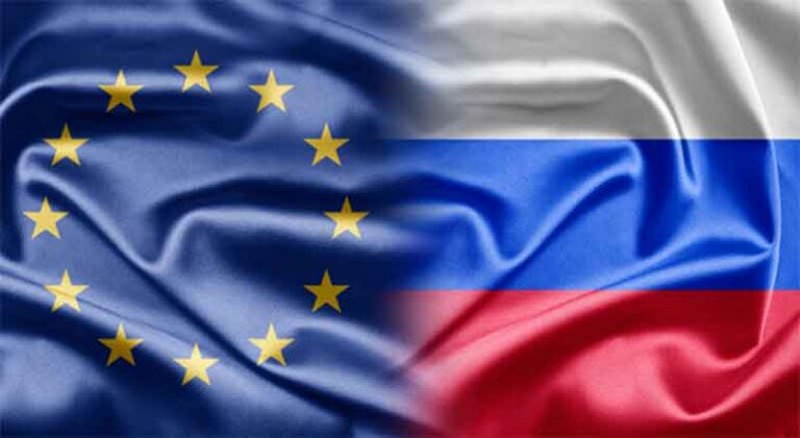
If a single policy change is to be identified which can resolve many problems and risks of Europe while also helping the cause of world peace, then this must preeminently be a strong recommendation for Europe to fundamentally reconsider its relations with Russia and to start moving towards seeking a future of friendship with Russia, in place of the existing policy of relentless and non-rational hostility which goes against basic geography and common sense.
While better, improved relationship of all of Europe with Russia would be beneficial for all, in particular the improved relationship of Germany, France and UK with Russia would be very welcome.
Such improved relationship can help immediately in ending the Ukraine-Russia war on a note of durable peace and goodwill (such as can still be salvaged) but the beneficial impacts of such improved relationship, which must extend ultimately to eastern Europe and all of Europe, will go beyond this and contribute to better development prospects of all concerned, eliminating huge dangers of bigger wars and advancing overall prospects of world peace.
This must be understood in the post-cold war framework. After the disintegration of communist Soviet Union, Russia was in the middle of extreme economic difficulties and tried to find a way out of very adverse situations. In such a condition Russia would have been extremely grateful for sincere efforts of European countries to help the troubled country. This would have established enormous goodwill and helped the Europeans to enter into longer-term energy and other agreements on favorable terms to them but also helpful for the recovery of Russia.
This was not to be and instead Europe gradually drifted towards increasingly hostile relationship with Russia, even as Russia found its own strengths to recover considerably from the traumatic situation following the disintegration of the Soviet Union and the resulting economic crisis.
The hostilities worsened in the course of the Ukraine war and are at their extreme level in this late stage of the war. As a result on several occasions risks and possibilities of a direct confrontation have arisen. Such a possibility in turn can have very destructive consequences as three of the involved countries—Russia, UK and France—have nuclear weapons.
Now that, relatively speaking in comparison to Biden’s times, President Trump also appears more inclined to favor an early end of war, there is everything to be gained by Europe cooperating in any efforts that can be actually effective in ending the war, instead of sticking to proposals which may look good on paper but given the realities of the situation cannot effectively help to end the war and bring peace.
Beyond this, however, Europe should very seriously consider changing its perceptions and policies towards Russia in more fundamental ways.
The wider objective of this policy shift should be to improve short-term as well as long-term peace prospects in the region, in particular to reduce the risks of a big and very destructive war involving nuclear weapon countries, as well as to improve prospects of peace, stability and development. It is only by improving peace prospects and reducing war possibility, that the prospects of sustainable development can improve and it is only in such peaceful conditions that the cooperation as well as the commitment for very important tasks of environment protection including an adequate and satisfactory climate response at the regional level can emerge.
Geography and resource distribution are also on the side of mutual cooperation of Europe with Russia that can be very beneficial to both sides.
One cannot plan for the best possible future options on the basis of real and imaginary past grievances or highly unrealistic fears for the future which are not based on evidence.
Europe has some of the highest levels of education and top level scholarship to support its policy making. Hence it has been surprising and shocking that several of its policy choices in recent times have not been based on hard evidence or even common sense and rationality. Much needed capacity to correct mistakes and take corrective actions has been missing. It is not clear what is behind the tendency to demonize Russia, its present leadership and almost all of its recent actions without making any effort at all to try to understand things also from the perspective of Russia, its leaders and people. The views and pleas of several highly reputed western scholars who have argued in well-reasoned, evidence-based ways for a better understanding of Russia have also been ignored.
Europe with its high levels of education and scholarship is supposed to be a world leader for peace, and it can make a significant contribution to this on its home front by seeking a future of friendship, not unending hostility, with Russia.
Bharat Dogra is Honorary Convener, Campaign to Save Earth Now. His recent books include Protecting Earth for Children, Planet in Peril and A Day in 2071.
24 January 2026
Source: countercurrents.org