
By Ali Asghar
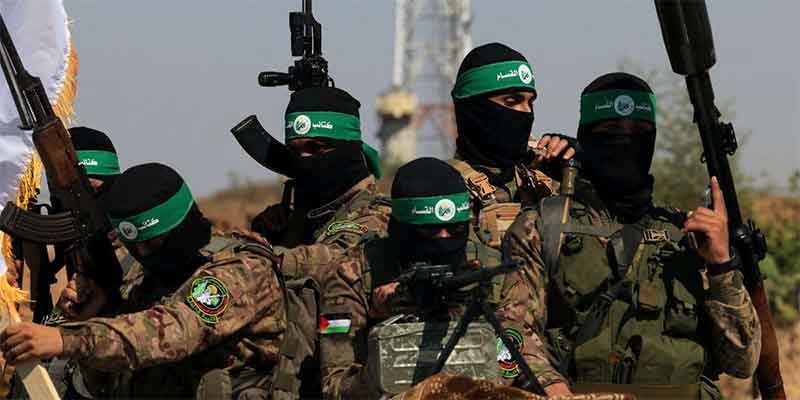
Hamas is an acronym for Harakat al-Muqawama al-Islamiya (Islamic Resistance Movement).It emerged in 1987 during the First Intifada as an Islamist alternative to the secular Palestine Liberation Organisation (PLO). From a grassroots social movement it evolved into a dominant political and military force in Palestinian society. Its transformation reflects the complexities of Palestinian politics, the interplay with Israeli strategies, and the shifting dynamics of the broader Middle East. The evolution of Hamas from a social movement to a resistance force can be traced through several phases. Let us examine these phases to understand how the increasing atrocities of the Israel forced a social movement to transform itself into resistance and militant organisation.
The roots of Hamas lie in the Muslim Brotherhood’s activities in Gaza and the West Bank. Throughout the 1970s and 1980s, the Brotherhood focused on dawa (Islamic outreach and social work). This phase was characterized by establishment of mosques, schools, clinics, and charities that provided essential services to the Palestinian population, often filling gaps left by the Israeli occupation and the secular Palestine Liberation Organization (PLO). During this period, Israeli authorities permitted the expansion of Islamist social institutions, viewing them as a counterweight to the PLO, which, due to its armed resistance and broader international support was considered as a great threat. As a counter to PLO Israeli authorities often permitted or even encouraged the growth of Islamist organizations, believing their focus on social work and religious activities would undermine the PLO’s influence. As PLO’s authority started to decline during the later 1980s, it created a political vaccum that Hamas was well positioned to exploit. PLO’s leadership got expelled from Lebanon in 1982 and was exiled in Tunisia. This caused it to get increasingly disconnected from daily realities in the occupied territories. This got exacerbated through increasing corruption, inefficiency and internal divisions within the PLO which further eroded its standing amongst the ordinary Palestinians. As the faith of common Palestinians in secular nationalism waned, increasing numbers started to turn towards Islamism as a more authentic and responsive framework for resistance and social organization. This period was also marked by worsening economic and social conditions for Palestinians due to increasing Israeli restrictions, economic stagnation and rising unemployment creating widespread hardship. Resentment and disillusionment got further fuelled by the absence of effective governance and increasing poverty. In this context, Hamas’s social services and message of religiously inspired resistance resonated even more strongly with the population.
These factors along with the growing suffering of people eventually led to the outbreak of the First Intifada in December 1987. This was a watershed moment, as it brought Hamas to the forefront as a leader of resistance. Hamas quickly moved beyond social work, establishing a military wing and engaging in armed struggle against Israeli forces and collaborators. In 1988, Hamas issued its foundational Covenant, formally declaring its commitment to the liberation of all historic Palestine through jihad and its opposition to any negotiated settlement with Israel. The Covenant combined Islamist ideology with Palestinian nationalism, rejecting both the PLO’s secularism and the possibility of compromise.
The 1993 Oslo Accords between Israel and the PLO generated hopes for a negotiated settlement but left core issues unresolved. Continued settlement growth and persistent restrictions by Israel led many Palestinians to question the effectiveness of diplomacy. Hamas positioned itself as the principal opponent of the peace process and intensified attacks inside Israel during the mid-1990s.
The Second Intifada (2000–2005) deepened polarization. Israeli military incursions, targeted killings, and the construction of the separation barrier coincided with Hamas-led suicide bombings and other attacks. The cycle of violence weakened moderate actors and strengthened factions advocating uncompromising resistance. Hamas gained significant popularity by adopting suicide bombings, often targeting Israeli civilians, in response to Israeli military actions, which killed over 1,000 Israeli soldiers and 3,000 Palestinian civilians
In 2006, Hamas won Palestinian legislative elections, capitalizing on dissatisfaction with corruption and stagnation within the Fatah-led Palestinian Authority. After violent clashes with Fatah, Hamas consolidated control over Gaza in 2007. Israel and Egypt imposed a blockade on the territory, citing security concerns. Repeated wars between Israel and Hamas since 2008 have caused significant civilian casualties and infrastructure damage, while rocket attacks from Gaza have targeted Israeli communities.
Under these conditions, Hamas evolved into a hybrid actor: simultaneously a governing authority, a social movement, and an armed organization. The blockade and recurring conflicts reinforced its narrative of resistance, even as governance responsibilities exposed it to criticism.
Hamas’s trajectory shares similarities with several other movements that combined social services, political participation, and armed struggle:
Hezbollah (Lebanon): Like Hamas, Hezbollah began as a social movement providing social services within a marginalized community while engaging in armed resistance against a foreign military presence. Both developed disciplined military wings alongside political structures. However, Hezbollah operates within a recognized state and participates formally in national government, whereas Hamas governs a territorially fragmented and internationally isolated enclave.
Irish Republican Army (IRA): The IRA and its political wing, Sinn Féin, illustrate how armed struggle can coexist with electoral politics. As with Hamas, imprisonment, security crackdowns, and contested sovereignty fueled support for militancy. Yet the Irish peace process ultimately integrated militants into a negotiated settlement, a transition Hamas has not undertaken in comparable form.
African National Congress (ANC): The ANC combined mass mobilization, international diplomacy, and limited armed struggle against apartheid South Africa. Unlike Hamas, the ANC increasingly prioritized global legitimacy and sanctions-based pressure, culminating in a negotiated transition. Hamas has remained more firmly rooted in a strategy that foregrounds armed resistance.
Across cases, several common patterns emerge: prolonged conflict environments, perceived failure of moderate leadership, grassroots social networks, and state repression often contribute to the radicalization and legitimization of armed movements. Differences arise in ideological framing, international recognition, and willingness or capacity to transition from militancy to negotiated compromise.
Hamas’s evolution reflects the interaction of occupation structures, political fragmentation, ideological mobilization, and recurring violence. Israeli security policies, internal Palestinian rivalries, the shortcomings of diplomatic initiatives, and regional instability all contributed to shaping the movement’s development.
Like many resistance movements, Hamas emerged from social activism, gained legitimacy amid conflict, institutionalized armed struggle, and later assumed governing responsibilities. Its trajectory underscores how protracted conflicts can produce hybrid actors that blend welfare provision, political participation, and militancy—entrenching cycles of confrontation that become increasingly difficult to resolve.
Ali Asghar is a social activist committed to community development, communal harmony, and social justice.
19 February 2026
Source: countercurrents.org