
By Miguel Santos García
The uncertainty about Venezuela’s future has become a focal point for global politics and energy geopolitics analysis. While the ultimate outcome remains unpredictable, a common narrative suggests that China, as a key purchaser of Venezuelan crude, faces significant disruption and must urgently seek alternative suppliers.
This assumption, however, overlooks some fundamental realities that insulate Beijing from such global instability.
The scale of Venezuela’s production is simply too small to sway the global market meaningfully. Although Venezuela is a member of OPEC, its current output of approximately 700,000 to 900,000 barrels per day is a fraction of the oil cartel’s total production of nearly 29 million barrels.
For context, Saudi Arabia produces almost 15 times more, while non-OPEC giant Russia produces over 11 times Venezuela’s volume. Therefore, the potential loss of Venezuelan crude, while significant for Caracas, constitutes a marginal blip in the vast global supply pool, easily absorbed by other major producers. Venezuela’s historically low oil production is a consequence of prolonged and crippling US and European sanctions that have systematically strangled its energy sector. These sanctions have directly blocked Venezuela’s access to the foreign investment, specialized equipment, and advanced technology required to maintain and modernize its aging oil fields and infrastructure. They have also effectively severed the nation from key global financial markets and shipping insurance, making it nearly impossible to fund operations, pay service companies, or export crude efficiently.
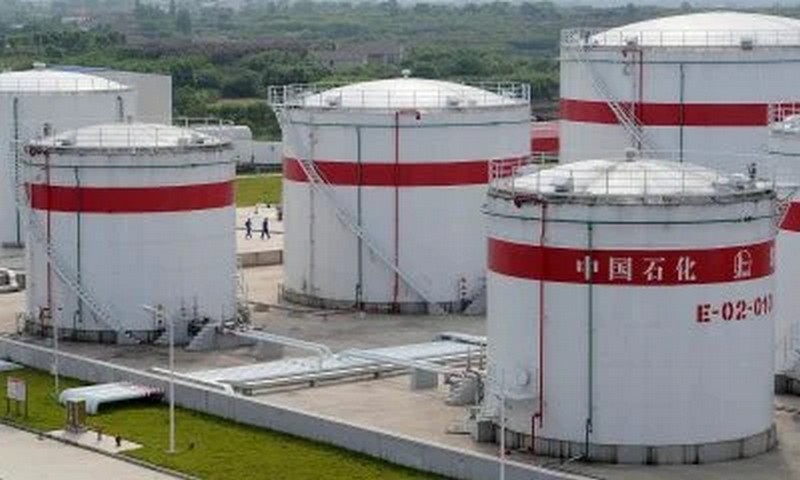
Moreover, a more profound reason is China’s strategic transformation from a passive price-taker to an active market stabilizer, heavily insulated from supply shocks. As the world’s largest crude importer and consumer, China has historically been subject to the pricing power of producer cartels. Today, however, its massive and rapidly expanding strategic petroleum reserve has fundamentally altered this dynamic. This infrastructure allows China to act as a giant price buffer: it aggressively purchases and stockpiles crude when prices are low, establishing a price floor, and can subsequently reduce imports or draw from inventories when prices rise, effectively setting a ceiling.
China has been channeling substantial surplus imports, an estimated 500,000 barrels per day or more which go directly into storage. Consequently, the Venezuela supply shick problem is neutralized by the sheer flexibility and scale of China’s procurement network. In a single month, increases in imports from other suppliers in the global south like for instance Saudi Arabia and Iran can nearly match Venezuela’s entire daily production. The global market is flush with willing sellers, and tankers can easily be rerouted from the Caribbean to the Middle East or Russia, not to mention the important fact that currently there is a global oil glut meaning there is an oversupply of the black gold currently in the markets.
Thus, far from being vulnerable, China is leveraging this period of lower prices and geopolitical flux to accelerate its stockpiling further cushioning itself from any supply shocks created by US foreign policy. With an additional 170 million barrels of oil storage capacity coming online, the nation is systematically building an immense financial and energy security buffer. This inventory flow, that is, the movement of oil into and out of Chinese tanks has become a primary driver of global oil prices. In this context, regional conflicts or the total loss of a supplier like Venezuela have negligible impact on China’s energy security. Its versatile trade network and strategic reserves ensure that it remains impervious to the ruckus, turning potential vulnerability into a position of formidable market strength.
*
Miguel Santos García is a Puerto Rican writer and political analyst who mainly writes about the geopolitics of neocolonial conflicts and Hybrid Wars within the 4th Industrial Revolution, the ongoing New Cold War and the transition towards multipolarity.
13 January 2026
Source: globalresearch.ca