
By V.A. Mohamad Ashrof
This paper advances the argument that the core ethical commitments of liberal political philosophy — universal human dignity, freedom of conscience, democratic governance, equitable distribution of resources, and the protection of pluralism — are not historical coincidences of Western modernity. They are encoded within the structural and semantic architecture of the three great Abrahamic revelations: The Hebrew Bible (Torah and Tanakh), the Christian New Testament, and the Quran. Through a methodology integrating linguistic exegesis, thematic coherence, and cross-scriptural resonance, this paper demonstrates a profound correspondence between the Abrahamic tradition as a whole and the humane principles of liberal governance. Conversely, the neoliberal ideology — with its doctrines of market supremacy, deregulation, commodification of the human person, and the concentration of wealth — is shown to violate the foundational principles shared across all three traditions: Tzedek (justice) in the Hebrew scriptures, Agape (love) and the preferential option for the poor in the Christian Gospels, and Mizan (balance), Adl (justice), and Karama (inherent dignity) in the Quran. The Abrahamic scriptures are revealed not as texts co-opted by any political fashion, but as timeless liberatory charters whose ethical mathematics precede and transcend the debates of modernity.
The Hermeneutical Horizon
Hermeneutics is the art of reading a text across time. The classical traditions of Jewish midrash, Christian exegesis, and Islamic tafsir have always understood that the living Word speaks to every generation in the language of its most pressing concerns. In the twenty-first century, humanity is divided not primarily by theology but by ideology: the struggle between systems that honour the human being as an end in themselves, and those that reduce the human being to an instrument of economic production.
The thesis of this monograph is precise: the foundational values of liberalism — liberty, dignity, equality, social welfare, and rational pluralism — are structurally confirmed within the texts of all three Abrahamic traditions. Neoliberalism, by contrast, operationalizes values that all three traditions explicitly condemn: the worship of accumulation (Matthew 6:24; Quran 102:1), the extraction of wealth through usury (Exodus 22:25; Luke 6:34-35; Quran 2:275), the concentration of resources among elites (Isaiah 5:8; Luke 1:51-53; Quran 59:7), and the subordination of justice to market outcomes (Amos 5:11-12; James 5:1-6; Quran 4:135).
The methodology employed here is threefold. First, semantic hermeneutics: close reading of the original languages — Hebrew, Greek, and Arabic — in their lexical and contextual fullness. Second, thematic hermeneutics: tracing the coherence of principles across all three canonical bodies. Third, typological hermeneutics: examining the patterns of correspondence between the traditions as a convergent theological witness to the same moral universe.
The Ontological Foundation — Dignity Against Market Utility
Every ideological system rests upon an implicit anthropology — a theory of what a human being fundamentally is. Neoliberalism’s foundational anthropology is that of Homo economicus: a self-interested rational actor whose value is determined by market productivity and the accumulation of capital. Under this model, a person who cannot participate in market exchange possesses diminished social value.
The Hebrew tradition offers a categorically different anthropology. The opening chapter of the Torah establishes what becomes the bedrock of all Abrahamic ethics:
“So God created humankind in his image, in the image of God he created them; male and female he created them.” (Genesis 1:27)
The Hebrew phrase Tzelem Elohim — the image of God — is an ontological endowment that precedes any social contract, any economic contribution, or any religious affiliation. It is bestowed upon all human beings without qualification: male and female, rich and poor, native and foreigner. The Mishnah, the foundational rabbinic text, draws the democratic implication with precision: ‘Therefore every person is obligated to say, the world was created for my sake’ (Sanhedrin 4:5), for since all humanity descends from a single ancestor, no person can claim superior lineage. The divine image is a universal franchise, not a market premium.
The Hebrew prophetic tradition translated this anthropology directly into economic critique. Isaiah, writing in the eighth century BCE, issued one of the most withering condemnations of wealth concentration in religious literature:
“Woe to you who add house to house and join field to field till no space is left and you live alone in the land.” (Isaiah 5:8)
The prophet’s indictment anticipates the logic of capitalist land enclosure by nearly three millennia. The accumulation of land at the expense of community — what economists now call ‘asset stripping’ — is not merely a policy failure but a theological transgression against the covenant community.
Christianity intensifies the Hebrew anthropological foundation through the doctrine of the Incarnation. If God chose to enter human history as a poor craftsman from a peripheral province — ‘Is not this the carpenter’s son?’ (Matthew 13:55) — then the dignity of the marginalised becomes not merely a social concern but a theological imperative. The Gospel of Matthew makes this absolute:
“Truly I tell you, whatever you did for one of the least of these brothers and sisters of mine, you did for me.” (Matthew 25:40)
When we see the divine in the hungry, the stranger, the naked, the sick, and the imprisoned (Matthew 25:35-36), it slams the door on any economic system that creates and perpetuates these conditions. It’s like, neoliberalism is straight-up going against the sacred by gutting welfare states, creating precarious lives, and blaming people for being poor. That’s not just wrong, that’s anti-gospel.
The Quran consummates the Abrahamic anthropological tradition with the concept of Karama — inherent, inviolable dignity granted by divine decree, independently of economic utility or social status:
“And We have certainly honoured the Children of Adam and carried them on the land and sea and provided for them of the good things and preferred them over much of what We have created, with definite preference.” (Quran 17:70)
The verb Karramna derives from the root K-R-M, signifying an act of ennobling that is unconditional and primordial. The object — Bani Adam, the Children of Adam — is the entire human species without qualification. Paired with the doctrine of Khilafa (Vicegerency), announced in Quran 2:30, this dignity is not passive but active: the human being is constituted as a trustee (Khalifah) of the created order, not as a ‘human resource’ or a production input. To reduce the person to an economic variable is, in the Quranic framework, a form of Shirk — the association of an idol (the Market) with attributes belonging exclusively to the divine.
Liberty as a Divine Mandate — Conscience, Reason, and Non-Compulsion
Liberalism’s most fundamental commitment is to the freedom of the individual conscience — the right to think, believe, and dissent without coercion. Long before the Enlightenment theorised this principle, the Abrahamic prophetic tradition lived it. The Hebrew prophets — Amos, Hosea, Micah, Isaiah, Jeremiah — were structurally defined by their willingness to speak truth against temporal power. Amos condemned the judicial corruption of Israelite elites with language that retains its force across three thousand years:
“You trample on the poor and force him to give you grain. Therefore, though you have built stone mansions, you will not live in them; though you have planted lush vineyards, you will not drink their wine.” (Amos 5:11)
This prophetic tradition is the original ‘speaking truth to power’ — a demand that political and economic life remain accountable to a moral standard that no sovereign can override. It is precisely the tradition that neoliberalism’s technocratic governance structures seek to silence: by relocating economic decision-making to central banks, the IMF, and corporate boardrooms that are insulated from the prophetic demands of democratic accountability.
Jesus of Nazareth stands explicitly within this prophetic tradition. His inaugural address in the synagogue at Nazareth, drawn from Isaiah 61, constitutes a comprehensive programme of liberatory politics:
“The Spirit of the Lord is on me, because he has anointed me to proclaim good news to the poor. He has sent me to proclaim freedom for the prisoners and recovery of sight for the blind, to set the oppressed free, to proclaim the year of the Lord’s favour.” (Luke 4:18-19)
The reference to ‘the year of the Lord’s favour’ is a direct invocation of the Jubilee — the Hebrew institution mandating the periodic cancellation of debts and the return of land to its ancestral holders (Leviticus 25). This is not metaphorical liberation: it is an economic programme. Debt cancellation, the primary meaning of the Jubilee, is precisely what neoliberal financialization has systematically made impermissible through the structural adjustment programmes of the World Bank and IMF.
The Quran’s contribution to the theology of liberty is its constitutional affirmation of non-compulsion in the domain of conscience:
“There is no compulsion in religion. The right course has become clear from the wrong.” (Quran 2:256)
The phrase La Ikraha fi al-Din does not merely permit tolerance; it constitutively defines the nature of faith itself. If belief must be free to be genuine, then any political system that coerces fundamental human expressions — including the freedom to organize labor, to access information, or to imagine economic alternatives — violates the ontological structure of truth. The liberal ‘harm principle’ articulated by John Stuart Mill is the secular expression of the same logic. The Quran further radicalises this: ‘And say, the truth is from your Lord, so whoever wills — let him believe; and whoever wills — let him disbelieve’ (18:29). This is the theological demolition of what critics of neoliberalism call the TINA doctrine — ‘There Is No Alternative.’ Where neoliberalism presents the market as a natural law impervious to democratic revision, the Quran insists that no truth is valid that does not pass through the gateway of free human choice.
The Quranic mandate of reason (‘Aql) reinforces this. The verb ‘aqala and its derivatives appear 49 times (7 × 7) in the Quranic text — a frequency suggesting that reason belongs not to any civilisation’s tradition but to the architecture of the universe itself. The rhetorical question of Quran 39:9, ‘Are those who know equal to those who do not know?’ constitutes a Quranic meritocracy of the intellect, not of capital. Neoliberalism’s commodification of education into a debt-driven credentialing system and its subordination of scientific research to commercial patent interests violate this mandate of knowledge as a universal human right (Haqq).
Democratic Governance and the Accountability of Power
The Hebrew political tradition is remarkable for its structural suspicion of concentrated power. The very institution of Israelite monarchy is introduced in the Hebrew Bible not as a divine gift but as a concession to human weakness, accompanied by an explicit prophetic warning about the abuses kings will perpetrate:
“This is what the king who will reign over you will claim as his rights: He will take your sons and make them serve with his chariots… He will take the best of your fields and vineyards and olive groves and give them to his attendants.” (1 Samuel 8:11, 14)
The prophet Samuel’s warning reads as a precise inventory of what we would now call ‘regulatory capture’ — the use of state power to extract wealth for the benefit of the powerful at the expense of the many. The Hebrew tradition never fully legitimated unconditional royal authority. The covenant between God and the people (Exodus 19-24) preceded and constrained the monarchy: kings were bound by Torah, and prophets retained the authority to hold them accountable. This is the structural forerunner of the liberal rule of law.
The political theology of the New Testament is shaped by the tension between the Roman imperial order and the alternative community — the ekklesia — that Jesus’s followers were constructing. Paul’s letter to the Romans counsels respect for governing authorities (Romans 13:1-7), but the Revelation to John identifies Rome as the Great Whore ‘drunk with the blood of the saints’ (Revelation 17:6), whose fall is celebrated as liberation. The authentic Christian political tradition is not one of uncritical deference to state power but of prophetic witness against it.
The Letter of James, perhaps the most politically radical text in the New Testament canon, speaks with a directness that matches Amos:
“Now listen, your rich people, weep and wail because of the misery that is coming on you. Your wealth has rotted, and moths have eaten your clothes… The wages you failed to pay the workers who mowed your fields are crying out against you.” (James 5:1-4)
James calls out ‘wages withheld’, and honestly, it’s like he’s talking about today’s ‘wage theft’ and ‘labour precarity’ Neoliberal policies are all about squeezing workers dry through deregulation, crushing unions, and gigging people out. The Bible’s verdict? This ain’t just a policy mistake, it’s a MASSIVE moral fail.
The Quran’s political contribution is the principle of Shura — consultation — which it presents not as a procedural regulation but as a defining characteristic of the righteous community:
“…whose affair is [determined by] consultation (Shura) among themselves.” (Quran 42:38)
Critically, this verse places democratic deliberation alongside prayer and generosity as constitutive of faithful life. Democratic participation is not an imported foreign value; it is a Quranic obligation. This is reinforced by the command to the Prophet himself: ‘And consult them in the matter’ (3:159). If the individual with direct prophetic authority is commanded to govern consultatively, then any claim to governance without consultation — whether by autocrat or unelected technocrat — is theologically impermissible.
Neoliberalism’s transfer of effective economic governance from elected legislatures to central banks, the IMF, and corporate boards represents precisely this form of un-consulted authority. The market becomes the Pharaoh: it dictates austerity conditions to elected governments, and populations are presented with structural adjustment as though it were a law of nature rather than a political choice. Against this, the Shura principle insists that the Amanah (trust) of governance cannot be delegated to unaccountable institutional powers.
The anti-tyranny mandate is further specified in Quran 4:135: ‘O you who have believed, be persistently standing firm in justice, witnesses for God, even if it be against yourselves or parents and relatives’ — and reinforced in 5:8: ‘Be just; that is nearer to righteousness.’ Justice is not an optional addendum to faith; it is a manifestation of Tawhid (Divine Unity) in the social sphere. A financialized system that writes laws favouring corporations over citizens, and allows ‘too big to fail’ institutions to bypass legal accountability, constitutes a fracture in this principle of divine unity itself.
The Moral Economy — Redistribution, Usury, and the Welfare Mandate
No aspect of the Abrahamic traditions is more systematically at odds with neoliberal economics than their treatment of wealth distribution. The Hebrew Bible’s most comprehensive economic institution is the Jubilee, prescribed in Leviticus 25: every fifty years, debts are to be cancelled, slaves freed, and alienated land returned to ancestral families. This is not a primitive ritual survival but a sophisticated structural mechanism for preventing the permanent entrenchment of economic inequality.
The underlying theology is explicit: ‘The land must not be sold permanently, because the land is mine and you reside in my land as foreigners and strangers’ (Leviticus 25:23). The foundational principle is that ultimate ownership belongs to the divine, not to private actors. Humans hold wealth in trust, and that trust imposes obligations of redistribution. The Deuteronomic code amplifies this with what may be the most extraordinary prohibition in ancient economic law:
“There will always be poor people in the land. Therefore, I command you to be open-handed toward your fellow Israelites who are poor and needy in your land.” (Deuteronomy 15:11)
The text does not say ‘there will always be poor people, therefore poverty is natural and acceptable.’ It says the permanence of poverty is the very reason for the permanent obligation to address it. This is structurally the opposite of neoliberal trickle-down theory, which holds that the enrichment of elites will eventually eliminate poverty without redistributive intervention.
The prohibition on usury in the Hebrew scriptures is equally categorical. Exodus 22:25 forbids charging interest to the poor: ‘If you lend money to one of my people among you who is needy, do not treat it like a business deal; charge no interest.’ Ezekiel lists the charging of interest alongside violence and idolatry as evidence of wickedness (Ezekiel 18:13). Nehemiah’s economic reforms include the cancellation of interest-bearing debts (Nehemiah 5:1-13) as a condition of community restoration.
The Christian tradition, particularly in its Latin American liberation theology expression, distils the Gospels’ economic message into the ‘preferential option for the poor’ — the principle that the moral quality of a society is measured by how it treats its most vulnerable members. This is not sentiment but exegesis. Mary’s Magnificat, among the earliest Christian hymns, frames the Incarnation itself in redistributive terms:
“He has brought down rulers from their thrones but has lifted up the humble. He has filled the hungry with good things but has sent the rich away empty.” (Luke 1:52-53)
The Sermon on the Mount pronounces blessing upon the poor (Luke 6:20) and woe upon the rich (Luke 6:24). The parable of Lazarus and the Rich Man (Luke 16:19-31) presents the accumulation of wealth while ignoring the suffering of the poor as a condition that results in the ultimate inversion of status — the rich man tormented Lazarus in Abraham’s bosom. The parable does not blame the rich man for violence or fraud; it condemns him for indifference. In the Christian moral framework, the mere passivity of allowing systemic poverty to persist while possessing the means to address it is itself culpable.
The economic vision of the earliest Christian community, described in Acts 2:44-45, is explicitly redistributive: ‘All the believers were together and had everything in common. They sold property and possessions to give to anyone who had need.’ This is not a blueprint for compulsory collectivism, but it is an unambiguous demonstration that the early Christians understood the Gospel as requiring a transformation of economic relations, not merely of private piety.
Zakat, Anti-Concentration, and the War on Riba
The Quran’s economic theology is its most institutionally developed dimension. The anti-concentration principle is stated with remarkable directness:
“…so that wealth will not be a perpetual distribution (Dawla) among the rich from among you.” (Quran 59:7)
Dawla in classical Arabic is like a vicious cycle – wealth circulating among the same elite crew. But the Quran says break it! It’s not about policy tweaks, it’s about smashing the system where capital begets more capital for the few, while the many struggle. Today’s economists call it ‘wealth concentration’ and ‘rentier capitalism’ – the Quran calls it out.
Zakat — mandatory redistribution — is a Rukn, a foundational pillar of the faith. The Quran specifies its recipients in 9:60 as eight categories including the poor, the indebted, and the traveller. The poor person’s claim on the surplus wealth of the community is described as a Haqq al-Ma’lum — a ‘known right’ (70:24-25) — of the same legal standing as the right to receive a debt repayment. This is the theological basis for the liberal welfare state: social provision is not charity but justice, not a gift from the wealthy but an obligation they discharge.
The prohibition of Riba (interest-based finance) is the Quran’s most sustained economic argument, addressed with language of exceptional severity:
“God has permitted trade and has forbidden interest (Riba)… And if you do not [desist], then be informed of a war from God and His Messenger.” (Quran 2:275, 2:279)
The hermeneutical significance of the war-declaration is that Riba is treated not as a personal vice but as a systemic social evil equivalent to an act of aggression against the community. Contemporary neoliberal financialization has produced sovereign debt crises that force governments to cut education, healthcare, and welfare to service interest obligations to international creditors. Nations of the Global South have been locked into precisely the debt-peonage the Quran identifies as warfare — structural adjustment programmes that mandate austerity for populations while ensuring returns to bond-holders. The Quranic prohibition of Riba is not medieval fiscal conservatism; it is a structural critique of extractive finance that anticipates the pathologies of twenty-first century neoliberalism with startling precision.
The psychological critique of accumulation is completed in the verse: ‘Competition in worldly increase diverts you until you visit the graveyards’ (102:1-2). GDP growth metrics, stock market indices, and net worth rankings are the modern form of the ‘competition in increase’ the Quran identifies as a diversion from the fundamental purposes of human life. The verse does not condemn production or commerce but the psychological orientation that makes accumulation an end in itself — the condition that roots social injustice.
Pluralism, Coexistence, and the Common Humanity
Liberalism’s commitment to pluralism — the coexistence of multiple worldviews within a shared social framework — finds perhaps its deepest roots in the Hebrew concept of the Ger (resident alien or stranger). The Torah commands hospitality and justice toward the stranger with a frequency unparalleled in ancient legal codes: ‘Do not mistreat or oppress a foreigner, for you were foreigners in Egypt’ (Exodus 22:21). The memory of oppression becomes the foundation of solidarity. Leviticus 19:34 extends this to full legal equality: ‘The foreigner residing among you must be treated as your native-born. Love them as yourself, for you were foreigners in Egypt.’
This is the theological genealogy of what we now call universal human rights — the extension of legal protections to all persons regardless of origin, status, or identity. Neoliberal globalisation’s simultaneous opening of borders to capital flows while closing them to the movement of labour, and its demonisation of refugees and economic migrants, violates this foundational Abrahamic principle of hospitality to the stranger.
The Christian Gospels are, among other things, a systematic disruption of ethnic and religious exclusivism. The parable of the Good Samaritan (Luke 10:25-37) makes a despised ethnic outsider the exemplar of neighbourly love, while the respectable religious insiders — the priest and the Levite — fail the test. The encounter with the Samaritan woman (John 4:1-42), the healing of the Centurion’s servant (Matthew 8:5-13), and the vision of Peter in Acts 10 — ‘I now realise how true it is that God does not show favouritism but accepts from every nation the one who fears him’ (Acts 10:34-35) — all consistently expand the circle of moral regard beyond ethnic and religious boundaries.
Paul’s letter to the Galatians offers the most celebrated expression of this inclusive anthropology: ‘There is neither Jew nor Gentile, neither slave nor free, nor is there male and female, for you are all one in Christ Jesus’ (Galatians 3:28). This is not the abolition of difference but the abolition of difference as the basis for hierarchy and exclusion — precisely the principle that liberal pluralism seeks to institutionalise in law.
The Quran’s contribution to a theology of pluralism is its remarkable declaration that diversity is not a problem to be resolved but a divine intentionality to be honoured:
“And if your Lord had willed, He would have made mankind one community; but they will not cease to differ.” (Quran 11:118)
If the omnipotent Creator chose not to make humanity uniform, then any human project enforcing uniformity — whether through religious compulsion or through the neoliberal homogenisation of global culture into a single consumer identity — acts against explicit divine design. The positive purpose of diversity is then stated in perhaps the most beautifully concise formula in any scripture:
“O mankind, indeed We have created you from male and female and made you peoples and tribes that you may know one another (Lita’arafu). Indeed, the most noble of you in the sight of God is the most righteous.” (Quran 49:13)
The word Lita’arafu — the stated purpose of human diversity — means not merely encounter but deep mutual recognition: to come to know the Other in their fullness. The sole criterion of honour is moral quality (taqwa), not ethnicity, wealth, or social origin. Neoliberal globalisation performs a false pluralism: it celebrates ‘diversity’ in advertising while pursuing the systematic replacement of local cultures, languages, and traditions with standardised, profit-driven products. This is what the Quran calls Fasad fi al-Ard — corruption in the land (2:205) — the destruction of the cultural ecology.
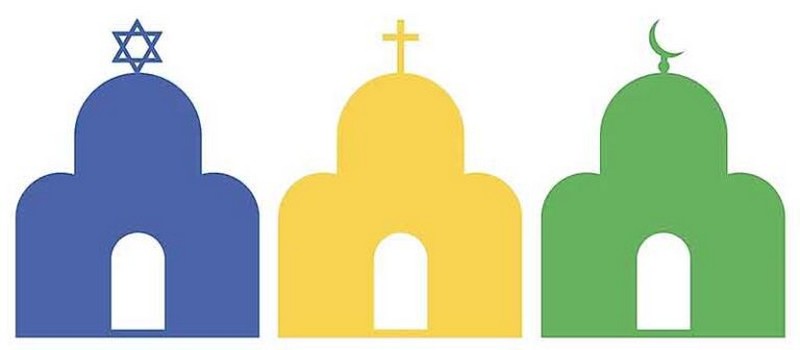
The Quran also mandates, in perhaps its most ‘liberal-secular’ verse, the protection of all houses of religious worship: ‘Were it not that God checks the people, some by means of others, there would have been demolished monasteries, churches, synagogues, and mosques in which the name of God is much mentioned’ (22:40). The enumeration of all religious institutions — including those of non-Muslims — as deserving divine protection constitutes the theological basis for a neutral secular state that protects all religious communities equally.
Environmental Stewardship — The Mizan Against Extractivism
The opening chapters of Genesis have sometimes been misread as a divine license for environmental exploitation. The command to ‘fill the earth and subdue it’ (Genesis 1:28) has been invoked to justify extractive industry. But the fuller Hebrew theological tradition offers a very different picture. The human role is designated in Genesis 2:15 as one of Abad ve’Shomar — ‘to work and to keep/guard’ the garden. The Hebrew Shomar carries the sense of watchful protective care. Humanity is not the owner of creation but its steward and guardian.
The Hebrew legal tradition embeds this ecology of stewardship in economic law. The land must observe a Sabbath rest every seventh year (Leviticus 25:4) — a requirement that functions as a form of environmental regulation, allowing soil to recover. Deuteronomy 20:19-20 even extends protections to trees in wartime: ‘Do not destroy its trees by putting an axe to them, because you can eat their fruit… Are the trees people, that you should besiege them?’ This rhetorical question is one of the earliest arguments for the intrinsic value of the natural world, independent of human utility.
The Christian tradition has been complicated in its relationship to environmental ethics, but its deepest resources point clearly toward stewardship. Paul’s letter to the Romans describes creation as sharing in the consequences of human failure: ‘The creation waits in eager expectation for the children of God to be revealed… the whole creation has been groaning as in the pains of childbirth right up to the present time’ (Romans 8:19, 22). Creation is a moral patient, not merely a resource bank.
The Franciscan tradition, which has experienced a significant contemporary revival through Pope Francis’s encyclical Laudato Si’ (2015), represents the most developed Christian theology of ecological care. Drawing on the vision of Francis of Assisi — who addressed the sun, moon, wind, and water as brothers and sisters — it argues that the same social justice logic that demands care for the poor demands care for the Earth, since the poor are disproportionately the victims of environmental destruction. Laudato Si’ explicitly names neoliberal economics as a driver of ecological collapse, arguing that the logic of ‘maximum gain with minimal investment in the shortest period of time’ is fundamentally incompatible with a theology of creation.
The Quran presents the cosmos as a system of calibrated, fragile equilibria:
“And the heaven He raised and imposed the balance (Mizan). That you do not transgress within the balance. And establish weight in justice and do not make the balance deficient.” (Quran 55:7-9)
The Mizan is not merely a metaphor for justice; it is a physical description of ecological reality. The nitrogen cycle, carbon balance, oceanic chemistry, and biodiversity are the Mizan of the created order. To ‘make deficient the balance’ — to transgress the ecological equilibria that sustain life — is a transgression equivalent in gravity to social injustice. Neoliberal deregulation, which removes environmental constraints from industrial production in the name of market freedom, constitutes precisely this transgression.
The Quran contains what may be the most accurate pre-modern description of anthropogenic environmental collapse:
“Corruption (Fasad) has appeared throughout the land and sea by reason of what the hands of people have earned, so He may let them taste part of the consequence of what they have done that perhaps they will return to righteousness.” (Quran 30:41)
The verse maps precisely onto the contemporary climate crisis: ecological breakdown (Fasad) appearing in land and sea as a direct consequence of human economic activity. The Quranic Khalifah doctrine — human beings as stewards of the created order rather than its absolute owners — provides the theological foundation for liberal environmentalism and climate justice. The steward who destroys the trust is not exercising freedom but betraying it. Neoliberal extractivism, which treats the environment as a free externality to be exploited for private gain, is the theological inversion of the stewardship mandate: despoilment of the Amanah.
Toward an Abrahamic Liberal Synthesis
This paper has traced, across three Abrahamic canonical bodies, a convergent moral architecture that is deeply consonant with the foundational commitments of liberal political philosophy and profoundly at odds with the neoliberal economic ideology. The convergence is not coincidental. All three traditions share a common theological grammar: the unconditional dignity of the human person, the accountability of power to a transcendent moral standard, the obligation of the community to care for its most vulnerable members, the freedom of conscience as a prerequisite for authentic moral life, and the stewardship of the created order as a trust, not a possession.
The Hebrew tradition contributes to the structural institutions: The Jubilee debt cancellation, the Sabbatical year, the laws protecting the stranger, and the prophetic tradition of holding power accountable. The Christian tradition contributes the radicalization of these institutions into universal human solidarity: the identification of the divine with the poor, the dismantling of every hierarchy of worth, and the vision of a community where the logic of gift replaces the logic of exchange. The Islamic tradition contributes the systematic elaboration of these principles into a comprehensive social theology: Karama as the ontological foundation of human rights, Shura as the constitutional principle of democratic governance, Zakat as the institutional architecture of the welfare state, and the prohibition of Riba as the structural critique of extractive finance.
Neoliberalism, assessed against this convergent Abrahamic framework, emerges as a sophisticated form of what classical Islamic scholarship calls Jahiliyyah — an age of ignorance in which idols are worshipped in place of the divine. The neoliberal idol is the self-regulating Market: presented as omniscient, self-correcting, and the final arbiter of human value. Against the Abrahamic affirmation that creation is a trust held in stewardship before the divine, neoliberalism implicitly declares this dominion to belong to Capital.
This is not a metaphorical critique. Neoliberalism’s elevation of market outcomes above democratic deliberation, its subordination of ecological health to shareholder value, its treatment of human labour as a disposable input, and its systematic dismantling of the social solidarity that all three Abrahamic traditions mandate as a pillar of a just society — all of these constitute, in the convergent Abrahamic hermeneutical framework, the worship of an idol in the political-economic domain. The Market is invested with the attributes of divinity — sovereignty, omniscience, ultimate arbiter of worth — that belong, in all three traditions, to the Creator alone.
The prophets of Israel called it Baal worship — the subordination of human welfare to the demands of economic gods. The Gospels named it Mammon — the service of wealth as an absolute master. ‘No one can serve two masters. Either you will hate the one and love the other, or you will be devoted to the one and despise the other. You cannot serve both God and money’ (Matthew 6:24). The Quran named it Takathur — the competitive accumulation that distracts humanity from its highest purposes until death renders the vanity of the whole project apparent (Q.102:1-2).
The Six Pillars of Abrahamic Liberal Political Theology
The monograph has established six pillars of an Abrahamic Liberal political theology, to each of which all three traditions contribute their witness:
First, the Primacy of Human Dignity: every political and economic policy must be evaluated against its impact on the intrinsic, non-negotiable dignity of the human person — Tzelem Elohim (Genesis 1:27), the imago Dei of the Incarnate Christ (Matthew 25:40), and Karama (Quran 17:70). No market outcome justifies the erosion of this dignity.
Second, the Sovereignty of Conscience: the freedom of belief and moral reasoning established in the prophetic tradition (Amos 5:14), in the Pauline theology of conscience (Romans 14:5), and in the Quranic La Ikraha (2:256) is not a liberal concession to modernity but a theological prerequisite for authentic moral agency. Political and economic systems that coerce belief, manufacture ignorance, or foreclose the imagination of alternatives violate the divine architecture of truth.
Third, the Democratic Imperative: from the covenant accountability of the Hebrew monarchy (1 Samuel 8) through the conciliar governance of the early church (Acts 15) to the Shura principle of the Quran (42:38), participatory governance is a religious obligation. The transfer of economic sovereignty to unelected institutions violates the Amanah of the people.
Fourth, the Social Floor as Divine Right: The Jubilee institutions of Leviticus 25, the redistribution mandate of Acts 2:44-45, the Zakat system of Quran 9:60, and the Haqq al-Ma’lum of Quran 70:24-25 establish access to food, water, education, and healthcare not as policy preferences but as legally cognizable rights of every human being. The withholding of wages denounced by James 5:4 and the anti-concentration mandate of Quran 59:7 together constitute a comprehensive Abrahamic economics of redistribution.
Fifth, the Anti-Extractive Covenant: the prohibition of usury in Exodus 22:25, Deuteronomy 23:19-20, Ezekiel 18:13, Luke 6:34-35, and Quran 2:275-279, combined with the Jubilee debt-cancellation and the Quranic war-declaration against Riba, establish that debt-based extraction and the hoarding of wealth are not merely unjust but are, in all three traditions, acts of violence against the covenant community.
Sixth, Ecological Stewardship as Sacred Trust: The Hebrew Abad ve’Shomar (Genesis 2:15), the Pauline theology of creation’s groaning (Romans 8:22), and the Quranic Mizan (55:7-9) together establish that the protection of the ecological order is a condition of human trusteeship. Environmental destruction is a betrayal of the Amanah — the trust deposited by the Creator in the human steward.
The Quran’s repeated address to humanity — ‘O Mankind’ (Ya Ayyuhan-Nas) — echoes the Torah’s repeated invocation of the covenant community (Am Yisrael) and the Gospels’ proclamation of the Kingdom of God to ‘every nation, tribe, people and language’ (Revelation 7:9). All three traditions speak not to a particular civilisation, sect, or ideological bloc, but to the enduring human being — the dignified, free, consultative, and stewardly creature called to justice, to care for the Other, and to the responsible inheritance of the created world.
To return to the Abrahamic scriptures on these questions is not to retreat from modernity but to discover that the path forward — toward a just, free, and sustainable human civilisation — was mapped long before the Enlightenment, in texts that address not the West, not the East, not the medieval, not the modern, but the universal human person: honoured by creation (Genesis 1:27), beloved by the Incarnate Word (John 3:16), and appointed steward of the earth (Quran 2:30). The liberal values of dignity, freedom, accountability, and solidarity are not Western inventions. They are the Fitra — the natural disposition of the human being as created and honoured by the divine — inscribed with equal force across the three great rivers of Abrahamic revelation.
“O mankind, fear your Lord, who created you from one soul…” (Quran 4:1)
“…that you may know one another.” (Quran 49:13)
“Love your neighbour as yourself.” (Leviticus 19:18; Matthew 22:39)
“…so wealth does not circulate only among the rich.” (Quran 59:7)
V.A. Mohamad Ashrof is an independent Indian scholar specializing in Islamic humanism. With a deep commitment to advancing Quranic hermeneutics that prioritize human well-being, peace, and progress, his work aims to foster a just society, encourage critical thinking, and promote inclusive discourse and peaceful coexistence.
19 February 2026
Source: countercurrents.org