
By Dr Ram Puniyani
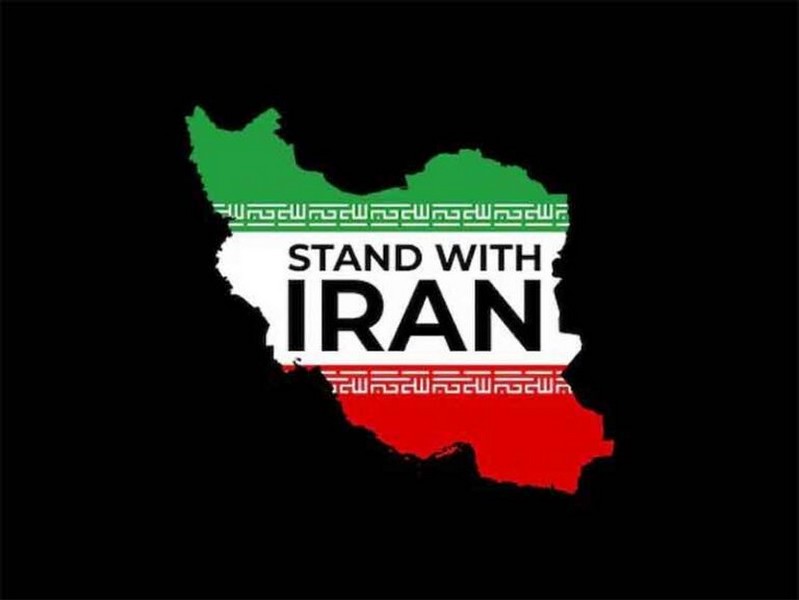
The joint attack by Israel and the United States on Iran has been very devastating. Like most wars, it is brutal to the core. The pretext for the war has been that the Ayatollah Khamenei regime has been very brutal, particularly regarding women’s rights, and that it has been preparing nuclear weapons. Iran, in turn, was willing to come to the negotiating table and concede some of the points emerging from the talks. However, in the middle of these negotiations, the Israel–America (I-A) axis decided to launch the war, and in its initial phase it inflicted severe damage on Iran. One was the killing of Khamenei along with some of his family members, and the other was the bombing of a school in which 165 young girls lost their lives. Many civilians have also been targeted by the I-A axis. In addition, an Iranian naval ship that had arrived in India on India’s invitation for naval exercises was torpedoed by a US submarine, killing a large number of sailors on board. Iran bravely retaliated and caused huge damage to the I-A axis.
During these developments, India’s role has been a great eye-opener regarding its evolving foreign policy. India began with a policy of non-alignment and had very amicable relations with Iran. Cultural and economic exchanges between the two countries were excellent. Now we see that Indian Prime Minister Narendra Modi visited Israel just before the war. The goal of the visit was not disclosed to the country. He did receive the highest honour of Israel and pledged that India would stand with Israel through thick and thin. The very next day, the I-A axis attacked Iran. Mr. Modi did not tweet about the demise of Iran’s supreme leader and issued a vague statement equating the aggressor and the aggrieved country. The transition of India from being neutral to embracing the American–Israel axis came out loudly through the acts of commission and omission of the Indian Prime Minister.
Coming back to the American story, we have been watching the role of the United States particularly since the 1950s. Its role has often been one of interfering in other countries’ affairs for political and economic goals. Earlier, “saving the world from communism” was its major plank for unleashing wars, beginning with the Vietnam War. The French had colonised Vietnam, and Ho Chi Minh’s communist forces overthrew the French. A long and complicated political process led to the division of Vietnam along the 17th parallel into communist North Vietnam and capitalist South Vietnam. America launched a horrific war against Vietnam, spending millions of dollars. The Americans used chemical weapons such as napalm (jellied petrol) and Agent Orange (a powerful defoliant). These were used to clear jungle foliage that served as natural cover for the Viet Cong (the Vietnamese resistance forces). Napalm cleared much of the undergrowth, but it also stuck to human bodies and caused horrific injuries. Agent Orange killed many innocent civilians; farms were destroyed, crops were lost, and animals were killed.
The Vietnamese people largely supported Ho Chi Minh. The Viet Cong, through guerrilla tactics, eventually emerged victorious, and America, for once, had to face defeat. Its army—over five lakh strong—retreated with its morale crushed by defeat at the hands of a young nation. The Vietnam War demonstrated abundantly that America would spare no effort to defeat those who opposed its interests, often framed under the ideology of the “Free World.”
This pattern became clearer over time as America attacked country after country on one pretext or another. The second major case was Iran. With its strategic location and vast oil reserves, Iran was of special interest to Western powers, particularly the United States and the United Kingdom. Britain had a major presence in Iran during the Second World War. After the war, Britain continued to retain control over Iran’s oil through the Anglo-Iranian Oil Company, exploiting Iran’s resources for its own interests. This arrangement changed abruptly in 1951 when the Iranian parliament, led by the nationalist and democratically elected government of Mohammad Mossadegh, voted to nationalize the country’s oil industry. From that point, Britain began opposing the Mossadegh regime and attempted to foment opposition against him. Britain enlisted American support, and a coup was staged in Iran that overthrew the democratically elected government and installed Reza Shah Pahlavi, a stooge of the United States. Western oil interests remained secure.
The story of Salvador Allende’s elimination and the overthrow of a democratic government in Chile is fairly similar. Allende, a Marxist and a member of the Socialist Party, was sworn in as President of Chile on November 3, 1970. He decided to nationalize copper companies controlled largely by American interests. The U.S. spent about $8 million on covert actions between 1970 and the 1973 coup. According to a 1975 Senate report, U.S. officials also backed economic measures to squeeze Allende’s government. In a CIA-supported coup, the military dictator Augusto Pinochet came to power. He ruled ruthlessly and wrought havoc on Chile’s democracy and potential prosperity.
The harm inflicted on West Asia has been even more dangerous. After the Soviet occupation of Afghanistan, America supported certain madrasas in Pakistan and helped train mujahideen fighters. From these networks, the Taliban and Al-Qaeda eventually emerged. America funded them to the extent of $8 billion and supplied them with about 7,000 tons of armaments (Mahmood Mamdani’s book Good Muslim, Bad Muslim). After the events of 9/11, America used this as a pretext to attack Afghanistan, where about 60,000 people were killed. To dominate the region further, it invoked the pretext of “weapons of mass destruction” to attack Iraq. Soldiers were told that Iraq’s people were being oppressed by Saddam Hussein and that the war was necessary. They were also told that Iraqis would welcome them as liberators with bouquets and chocolates. The reality was very different. Iraq was dismantled, and the rise of the Islamic State followed. Neither were weapons of mass destruction found nor were American soldiers welcomed.
Colonialism and imperialism leave dangerous marks on victim countries and on the world as a whole. In India, British policies of “divide and rule” strengthened communal forces, the consequences of which we continue to suffer today. The American media’s coining and popularisation of the phrase “Islamic terrorism” has contributed to the global demonization of Muslims. Both colonialism and imperialism lie at the roots of many of the major problems the world faces today. One can only hope that peace may be promoted by recognizing the destructive impact of imperialism.
13 March 2026
Source: countercurrents.org