
By Vikas Parashram Meshram
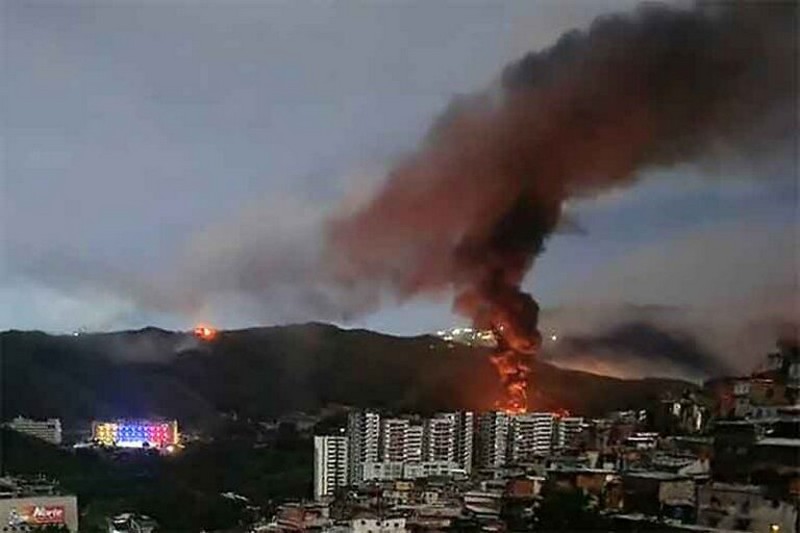
While people across the world were celebrating the New Year, U.S. President Trump launched air strikes last Friday on four Venezuelan cities and several military bases. On Saturday, news emerged that following the attack, Venezuelan President Nicolás Maduro and his wife had been taken hostage and transported to the United States. President Trump’s initial allegation was that President Maduro was involved in a “drug war” against the United States. He accused him of narco terrorism.
However, it was during a Saturday night press conference, when Trump made several significant claims about Venezuela’s oil reserves, that his real intentions became apparent. While congratulating himself on the alleged success of the entire operation, he announced that Venezuela would now be placed under American supervision. He further stated that the responsibility of rebuilding Venezuela would be handed over to top American oil companies using the country’s oil reserves. These declarations made it clear that the primary objective of the United States was to seize Venezuela’s oil wealth. The earlier accusations against President Maduro were merely a pretext for the attack.
Independent American analysts have also established that the arrest of Venezuelan President Nicolás Maduro who had long been a target of Donald Trump constitutes a grave violation of international law. Invading a sovereign nation, arresting its president, and transporting him to the United States is a rare example of outright international thuggery. Even more disturbing is Trump’s declaration that Washington will govern this Latin American country until a “transition of power” takes place. This sets a dangerous precedent that could be repeated beyond the American continent.
There is no doubt that Maduro’s downfall will evoke mixed reactions within Venezuela. A global network had long been engaged in an international conspiracy to demonize him. Maduro has been accused of ruining the country’s economy, suppressing dissent, and forcing millions into exile. He has also been accused of election rigging and involvement in drug trafficking. However, experts in global diplomacy believe that Trump’s move is driven not by a desire to deliver justice to victims of authoritarianism or to protect national sovereignty, but by the objective of gaining control over Venezuela’s vast oil reserves. Launching a military operation to arrest a head of government abroad and then ruling the country from Washington is, without doubt, an expression of imperialist ideology.
Undoubtedly, this display of American authoritarianism will have far-reaching geopolitical consequences. Even U.S. allies who opposed Maduro are now issuing warnings. Russia and China have described America’s actions as a threat to the rules-based international order. Meanwhile, developments in Venezuela have given China an opportunity to blunt U.S. criticism of its own regional ambitions, potentially heightening concerns over Taiwan.
America’s actions also revive memories of the invasions and military deployments in Iraq and Afghanistan wars launched due to American complacency and overconfidence, which ultimately ended in humiliating withdrawals. Yet those countries never returned to normalcy. Trump’s assertion that the mission to capture Maduro will be funded through Venezuela’s oil revenues reveals America’s intent to control natural resources. The U.S. has not clarified who will be entrusted with leadership to fulfill the Venezuelan people’s aspirations for good governance and security. India is among the countries that have expressed concern over these developments, aligning with broader global anxieties about the future. Sooner or later, however, Trump will realize that removing an authoritarian ruler is easy, but ensuring long-term peace and stability requires sustained and serious effort.
The arrest and forced deportation of Venezuelan President Nicolás Maduro is a blatant violation of international law and also breaches Article 2 of the United Nations Charter. By intercepting oil tankers in the Caribbean and illegally killing civilians aboard ships without any credible anti-drug justification, the United States has bypassed the UN Security Council and appointed itself judge and executioner. This intervention follows a familiar calculation.
First, it seeks to revive the Monroe Doctrine to re-establish American dominance in the Americas a system that governments like Venezuela, in alliance with Cuba, had attempted to overturn. Second, it aims to sever Latin America’s ties with China, as the Maduro government has looked eastward for investment and oil trade. Third, it represents a selfish attempt to seize Venezuela’s enormous crude oil reserves resources that are viewed as a “prize” for American businesses.
In any case, America’s claims of victory may prove hollow. Although Maduro’s rule was authoritarian, Venezuela’s United Socialist Party still enjoys substantial support. The Bolivarian movement was launched to counter the extreme inequalities created by previous U.S.-backed elite governments. By forcibly imposing a new order, the United States is not “liberating” people, but rather reinforcing fears of colonial plunder. The hypocrisy is evident.
While the Trump administration, without presenting any public evidence, declared Maduro the head of a drug cartel to justify his removal, it ordered the release of former Honduran leader Juan Orlando Hernández
convicted on drug trafficking charges and helped Washington-backed Nasry Asfura rise to power. In the post-Cold War, globalized, and interdependent world, hopes for a stable and liberal order have repeatedly been dashed by the actions of both the United States and Russia. By withdrawing from climate agreements and escalating tariff wars, the U.S. has shown contempt for international norms something arguably more dangerous than any single atrocity. The attack on Venezuela is a natural and violent outcome of this isolationist-imperialist blend of Trumpism. If the international community remains silent, it will effectively endorse a world order in which sovereignty depends on Washington’s will.
The claims that President Maduro had links with Venezuelan drug cartels were baseless. Trump’s attack on Caracas and the subsequent capture of President Maduro and his wife inevitably recall memories of the 2003 invasion of Iraq. At that time, U.S. President George W. Bush accused Saddam Hussein of possessing weapons of mass destruction. The entire American media legitimized Bush’s lies. Today, almost the whole world agrees that the invasion of Iraq was based on false and unfounded claims. Bush’s real objective was to remove Saddam Hussein from power and seize control of Iraq’s oil fields. Saddam Hussein was eventually executed after arbitrary legal proceedings. Later, under President Obama, U.S. forces withdrew from Iraq but by then, the country had been devastated.
Venezuela holds about 17% of the world’s oil reserves. When hardline socialist President Hugo Chávez, an outspoken critic of U.S. expansionist foreign policy passed away, Nicolás Maduro came to power. In terms of ideological commitment, Maduro emerged as Chávez’s most fitting successor in Venezuela’s political landscape. He implemented measures that improved the living standards of the majority and translated socialist aspirations into reality developments that deeply unsettled capitalist America.
However, Maduro was also accused of suppressing opposition voices and manipulating elections, allegations that sparked widespread global debate, especially after Venezuelan opposition leader María Machado was awarded the Nobel Peace Prize in 2025. Yet the reality is that such accusations and counter-accusations are common in the domestic politics of almost every country. This does not grant the United States any moral authority to interfere in another nation’s sovereignty.
During Trump’s first term, seizing Venezuela’s oil reserves was on his agenda, but he failed. At the beginning of his second term, Trump made his intentions clear. He is interested in capturing Venezuela’s oil reserves, even if it means removing Maduro from power. Preparations for Venezuela had been underway for months: attacks on oil vessels, their seizure, and the creation of a political climate through media statements. Finally, the attack occurred, and President Maduro and his wife were taken hostage and brought to the United States. Trump’s post-attack statements to the press made it evident that the world is, in reality, governed not by politics, but by economics.
Vikas Parashram Meshram is a journalist
6 January 2026
Source: countercurrents.org