
By Feroze Mithiborwala
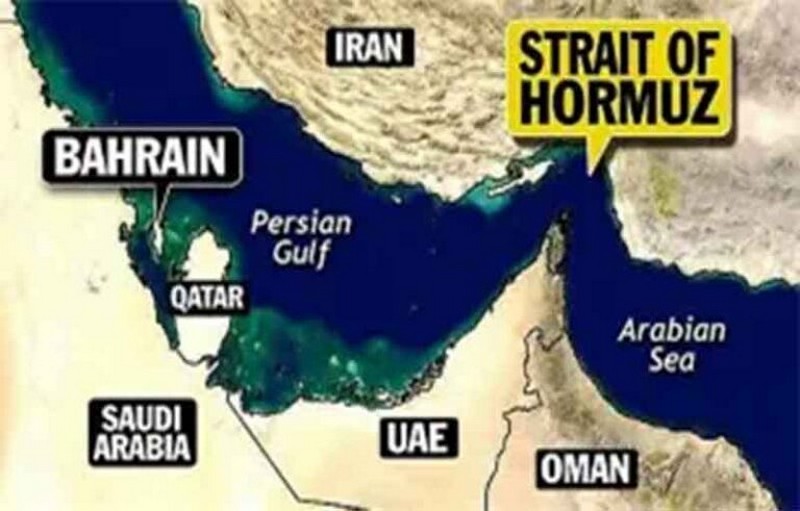
TEHRAN / WASHINGTON — As the tyrannical Trump regime moves from punitive strikes under “Operation Epic Fury”, or rather “Operation Epstein Fury”, toward the actual seizure of Iranian islands, a consensus is emerging among military realists and veteran geopoliticians: the mission is a strategic mirage. While the Pentagon’s destructive firepower is overwhelming, the unique confluence of Iran’s asymmetric warfare, daunting fortress-like geography, “anti-navy” tactics, and the sheer persistence of Iran’s decentralized command structure suggests that any attempt to “capture and hold” Kharg, Abu Musa or the Tunb islands will likely result in a historic American quagmire.[1]
1. THE GEOGRAPHICAL “KILL ZONE”
The primary obstacle to a successful U.S. occupation is not just the Iranian military, which has proved to be a formidable force, but the physics of the Strait itself. Colonel Douglas Macgregor, a decorated combat veteran and former advisor to the Secretary of Defence, has been vocal about the folly of a ground engagement in this theatre. Macgregor warns that U.S. forces are being led into a “catastrophic trap,” noting that the U.S. military is currently “a force designed for a world that no longer exists,” ill-equipped for the high-intensity, localized attrition required to hold Iranian territory.[8]
- The “Unsinkable Aircraft Carrier” Myth: Military analysts warn that while islands like Qeshm and Abu Musa are “fixed launch pads,” they are also surrounded by thousands of “hidden teeth.” According to Mike Plunket, a senior analyst at Janes, the proximity to the Iranian mainland means U.S. forces would be “perpetually within the engagement envelope of Iranian mobile artillery.”[3]
- The Topographical Fortress: The Iranian coastline is composed of rugged, limestone cliffs and “moon-like” caves. Pravin Sawhney, editor of FORCE Magazine and a veteran defence analyst, argues that the U.S. fails to grasp the integration of Iranian geography with their missile doctrine. Sawhney notes that Iran’s “unmatched missile and drone capability” is purpose-built to negate U.S. carrier groups in the narrow waters of the Gulf, making any landing force a “sitting duck” for land-based saturation.[9]
2. THE “ANTI-NAVY” AND ASYMMETRIC SATURATION
The U.S. Navy is designed to fight “blue water” battles. In the Strait, it faces an “Anti-Navy”—a swarm of low-cost assets that can overwhelm sophisticated Aegis defence systems.
- The Swarm Dilemma: Iran’s IRGC Navy utilizes hundreds of fast-attack craft (FAC). George Galloway, the British politician and commentator, has frequently highlighted the disparity in the cost of war. In recent broadcasts, Galloway has pointed out the absurdity of the U.S. “spending millions on interceptor missiles to shoot down drones that cost as much as a lawnmower,” arguing that the Western public has no appetite for the “rivers of blood” that a Strait invasion would entail.[10]
- The Mine Menace: Experts at Stratfor estimate Iran possesses up to 8,000 naval mines.[2] Mike Plunket emphasizes that the U.S. lacks the mine countermeasure capability to sweep the Strait while under active fire from the mainland cliffs.[3]
3. THE “MOSAIC” DEFENSE: DECAPITATED YET DEADLY
A central tenet of the Trump strategy has been “decapitation.” However, Professor Mohammad Marandi of the University of Tehran argues this is a profound Western miscalculation. Marandi, a knowledgeable and leading voice for the Iranian perspective, states that the U.S. is “living in a fantasy” if it believes destroying command centres will stop the resistance. He emphasizes that Iran’s defence is “deeply rooted in the population and the geography,” and that the “Axis of Resistance” is now a self-sustaining entity and has the firepower to strike back at U.S. staging grounds.[11]
- Decentralized Lethality: The IRGC’s “Mosaic Defence” allows 31 independent commands to operate autonomously. Can Kasapoğlu of the Hudson Institute notes that even with “functional air supremacy,” the U.S. cannot suppress the “kill chains” of these decentralized units.[1]
4. LOGISTICAL SUICIDE: THE COST OF THE “HOLD”
Seizing an island is an act of hours; holding it is an ordeal of years. Pravin Sawhney observes that the U.S. military logistics chain is “overstretched and vulnerable,” particularly when facing a peer-level electronic warfare environment that Iran, bolstered by its allies, now provides.[9]
- Vulnerability of the “Tail”: Every cargo ship carrying resupply to an occupied island becomes a target for Iran’s Anti-Ship Ballistic Missiles (ASBMs). As Douglas Macgregor bluntly stated, any attempt to sustain a landing force in the face of Iranian shore-based missiles would result in the “destruction of the U.S. Navy as we know it” within the confines of the Gulf.[8]
5. THE ALLY FACTOR: THE “AXIS” BEYOND TEHRAN
The U.S. is not fighting Iran in a vacuum. Mohammad Marandi warns that the U.S. “cannot protect its bases in the region,” and that countries like the UAE and Saudi Arabia are “extremely vulnerable” to having their entire economic infrastructure dismantled if they continue to host an invasion force.[11]
- Global Backlash: George Galloway frames the conflict as the “final gasp of Western hegemony,” suggesting that the global South and Iran’s allies will ensure that the U.S. is diplomatically and economically isolated for its “aggression” in the Strait.[10]
CONCLUSION: THE PYRRHIC VICTORY
The attempt to capture the islands of the Strait of Hormuz is likely to result in what military historians call a Pyrrhic Victory. As Douglas Macgregor and Pravin Sawhney have both cautioned in different contexts, “victory” on paper means nothing if the price is the loss of a carrier strike group and the collapse of regional alliances. The islands of the Strait remain not a prize, but a trap designed to bleed a superpower dry.[5][8][9]
References:
- [1] Kasapoğlu, Can. “Examining US Military Options for Kharg Island and the Strait of Hormuz.” Hudson Institute, March 30, 2026.
- [2] Stratfor Worldview. “The Obstacles Facing the U.S. Plan for Strait of Hormuz.” Stratfor, March 17, 2026.
- [3] Plunket, Mike. “Iran challenges the powerful US Navy in an asymmetric naval battle.” El País, March 13, 2026.
- [4] Maritime Security Forum. “Iran’s Islands and Strategic Architecture.” March 21, 2026.
- [5] WANA News. “Trump’s Two Scenarios for Ending the Conflict.” West Asia News Agency, March 31, 2026.
- [6] Iran Watch. “Weapon Programs One-Month Update.” Wisconsin Project, March 31, 2026.
- [7] FPRI Experts. “Options in the Strait of Hormuz.” Foreign Policy Research Institute, March 20, 2026.
- [8] Macgregor, Douglas. “The Coming Conflict with Iran: A Strategic Disaster.” Judging Freedom / YouTube, March 25, 2026.
- [9] Sawhney, Pravin. “Why the US cannot win a war against Iran.” FORCE Magazine / YouTube, March 28, 2026.
- [10] Galloway, George. “The Mother of All Talk Shows (MOATS): The Gulf War Part II?” Galloway Media, March 29, 2026.
- [11] Marandi, Mohammad. “US aggression will lead to its total expulsion from West Asia.” Al Jazeera English, March 30, 2026.
Feroze Mithiborwala is an expert on West Asian & International Geostrategic issues.
1 April 2026
Source: countercurrents.org