
By Quds News Network
Gaza (QNN)- Orouba Center for Research and Strategic Thinking released its weekly report on Israeli violations in Gaza. The report covers December 6–12, 2025, and highlights the continuation of large-scale, systematic attacks despite the ceasefire entering its ninth week.
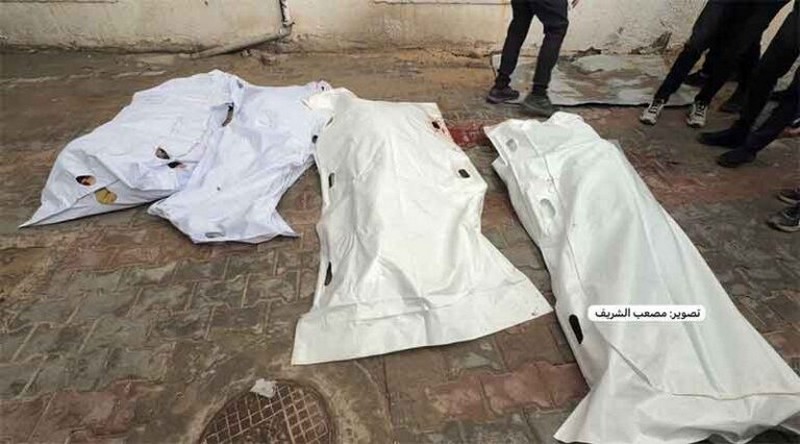
During this period, the center documented 268 violations. The attacks killed 18 Palestinians, including women and children, and injured 56 others. The figures indicate Gaza remains under daily aggression, even as tensions were slightly lower than in previous weeks.
Data revealed a consistent pattern of repeated assaults. These included artillery shelling, airstrikes, direct gunfire, ground incursions, and large-scale demolition of residential buildings. Most violations targeted eastern and northern Gaza.
Gaza City, Khan Younis, and northern Gaza suffered the heaviest toll in terms of deaths, injuries, bombardment, and demolitions.
The report’s ninth-week figures show:
- 18 killed, including women and children
- 56 injured
- 10 ground incursions
- 43 artillery attacks
- 24 demolition operations on civilian buildings
- 41 direct targeting incidents
- 76 shooting incidents
- 268 total violations
The center said the daily average reached about 38 violations, showing that Trump’s ceasefire has not translated into a meaningful reduction in Israeli military activity.
Airstrikes and shelling hit residential neighborhoods in Gaza City, Khan Younis, Rafah, and Deir al-Balah, causing deaths, injuries, and widespread destruction. Israeli forces advanced in eastern Khan Younis, Deir al-Balah, and Jabalia, bulldozing homes, vandalizing property, and setting up earth mounds. Displaced families inside shelter schools faced continued siege.
Demolition operations included the destruction of entire residential blocks and the use of booby-trapped armored vehicles in urban areas. These attacks forced further displacement and targeted civilian homes and tents of displaced families. Jabalia, Bani Suheila, and Mawasi in Rafah experienced the highest impact.
The humanitarian situation worsened after a recent winter storm. Hundreds of tents flooded, and several homes partially or fully collapsed. Israeli restrictions blocked the entry of relief and humanitarian aid, increasing the vulnerability of displaced families. Children faced the highest risk.
The report also noted ongoing injuries and deaths from unexploded Israeli ordnance scattered across residential and displacement areas.
Orouba Center concluded that the ninth week of the ceasefire shows Israel does not treat the agreement as a political or humanitarian commitment. Instead, it uses it to manage gradual aggression, maintain field pressure, and block any real path toward recovery or stability. Civilians remain under constant threat.
Israel Violates Trump’s ceasefire Again, Murdering Four Palestinians West of Gaza
Four Palestinians have been killed and others wounded on Saturday evening in an Israeli army attack west of Gaza City.
Israeli warplanes fired at least three missiles at a Palestinian car near Nabulsi Roundabout, southwest of Gaza City.
The Israeli army claimed the strike targeted senior Qassam Brigades leader Raed Saad, in yet another violation of the ceasefire.
Saad is a prominent commander in the Qassam Brigades in Gaza. The resistance movement has not confirmed the Israeli claim yet.
Israel had previously claimed it killed Saad during a raid on Al-Shifa Hospital last year.
The attack came as Israeli violations continued across the Gaza Strip despite the ceasefire entering its ninth week. The mediators continue to remain silent.
Orouba Center for Research and Strategic Thinking released its weekly report on Israeli violations in Gaza.
The report covered the period from December 6 to December 12, 2025. The center documented 268 Israeli violations during the week.
The violations killed 18 Palestinians, including women and children. Another 56 people suffered injuries.
The center said the ninth week of the ceasefire shows a clear pattern; Israel does not treat the agreement as a political or humanitarian commitment. It treats it as a framework to manage gradual aggression.
The center said the policy keeps pressure on the ground. It blocks any real path toward recovery or stability in Gaza. As a result, civilians remain under constant threat.
14 December 2025
Source: countercurrents.org