
By Harsh Thakor
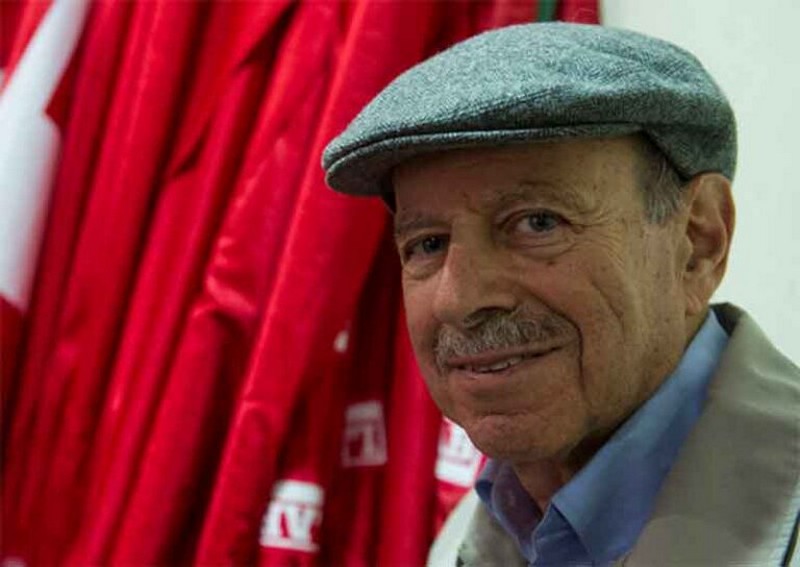
The world of critical scholarship and anti-imperialist struggle has lost one of its most steadfast voices. James Petras, a towering Marxist sociologist and one of the foremost analysts of Latin American politics, passed away on January 17, 2026, at the age of 89.
Born in Lynn, Massachusetts, to a Greek immigrant working-class family, Petras carried throughout his life the imprint of that upbringing: a deep identification with labour, migrants, and the marginalized. He earned his B.A. from Boston University and his Ph.D. from the University of California, Berkeley, before embarking on a distinguished academic career. In 1972, he joined Binghamton University, where he became Bartle Professor of Sociology and later Professor Emeritus. He also served as an adjunct professor at Saint Mary’s University in Halifax.
Yet to describe Petras merely as an academic would be to diminish the scale of his engagement. He was, above all, a public intellectual rooted in struggle. Over six decades, he authored more than 62 books—translated into 29 languages—and published hundreds of articles in leading journals, including the American Sociological Review, the British Journal of Sociology, Social Research, the Journal of Contemporary Asia, and the Journal of Peasant Studies. His scholarship was encyclopedic, but always anchored in the concrete realities of class power and resistance.
A leading authority on Latin America, Petras dissected the structures of neoliberalism, transnational capital, and U.S. foreign policy with unflinching clarity. In works such as Unmasking Globalization: Imperialism of the Twenty-First Century (2001), The Dynamics of Social Change in Latin America (2000), System in Crisis (2003), Social Movements and State Power (2004), Empire with Imperialism (2005), Multinationals on Trial (2006), and Rulers and Ruled in the U.S. Empire (2007), he demonstrated how imperialism had not disappeared under the euphemism of “globalization,” but rather assumed new economic forms while retaining its political and military foundations.
Petras’s Marxism was neither dogmatic nor diluted. He refused to abandon class analysis in the face of postmodern and post-Marxist currents that, in his view, fragmented social theory and obscured material relations of power. In The Left Strikes Back and A Marxist Critique of Post-Marxism, he argued that the retreat from class politics reflected political defeats, not intellectual progress. He warned that neoliberal institutions often funded “grassroots” organizations promoting anti-statist ideologies, thereby depoliticizing potentially insurgent classes.
His method embodied what he often invoked as “pessimism of the intellect, optimism of the will.” History, he insisted, was never linear. At every conjuncture, competing tendencies, counter-tendencies, and class forces contended. The task of the analyst was to dissect these forces rigorously—without surrendering faith in transformative possibility.
Nowhere was this clarity more evident than in his work on Latin America. Petras examined neoliberal reforms, trade agreements, and financial dependency as mechanisms of upward wealth transfer and labour disempowerment. He remained a fierce critic of NGOs, which he regarded as instruments that softened and institutionalized social movements under neoliberal rule. His allegiance lay consistently with landless workers, peasants, and combative grassroots organizations.
His assessments of progressive governments were marked by the same principled independence. Writing on Hugo Chávez after Venezuela’s 2004 referendum, Petras recognized the class and racial alignments underpinning Chávez’s support while cautioning against premature declarations of revolutionary transformation. He distinguished Chávez from other national-populist leaders by noting his reliance on mass movements and alliances with Cuba, even as he pointed to contradictions within the process.
In evaluating figures such as Lula in Brazil and Morales in Bolivia, Petras resisted both euphoria and cynicism. The central question for him was always whether participation in parliamentary democracy sharpened the independent power of the working class—or whether it absorbed and institutionalized social movements, reducing class struggle to negotiated interest-group politics. He understood that progressive governments operating within bourgeois democracy posed new strategic dilemmas for popular forces.
Throughout his career, Petras insisted that global inequality could only be understood through the interplay of class relations, state power, and imperial strategy. He argued that 21st-century imperialism was driven by the internal dynamics of capital, producing what he termed the “super-exploitation” of the Global South—often mediated through financial institutions, NGOs, and compliant political elites.
James Petras leaves behind an intellectual legacy of extraordinary depth and breadth. For students, activists, and scholars across continents, his writings will remain a formidable resource for diagnosing exploitation and mapping resistance. Even where debates endure—and they will—his insistence on grounding theory in material struggle stands as a lasting contribution.
In an era when class analysis was declared obsolete and empire renamed globalization, James Petras held the line. His life was a testament to the enduring relevance of Marxist critique and to the conviction that history, shaped by struggle, remains open.
Harsh Thakor is a freelance Journalist
3 March 2026
Source: countercurrents.org