Just International

Voting against Genocide – How Gaza Defeated the Democratic Establishment

By Dr. Ramzy Baroud

Arab and Muslim American voters did not remove Democrats from office, nor did they cost Kamala Harris the Oval Office. They merely sent a strong message that Palestine matters, not only to Arabs and Muslims but to many Americans as well.

The ones who cost the Democrats the elections are the Democrats themselves. Their humiliating defeat on November 5 was due largely to their undeniable role in the Israeli war and genocide in Gaza.

Peter Beinart put it best in his November 7 op-ed in the New York Times, entitled “Democrats Ignored Gaza and Brought Down Their Party.”

“Israel’s slaughter and starvation of Palestinians — funded by U.S. taxpayers and live-streamed on social media,” according to Beinart, has “triggered one of the greatest surges in progressive activism in a generation”. The writer correctly indicates that the core of this activism was “Black Americans and the young”.

Undeniably, for the first time in US election history, Palestine has become a domestic American political issue – a nightmare realization for those who labored to maintain US foreign policy in the Middle East as an exclusive Israeli domain.

Aside from Arab voters, black voters and voters from other minority groups who prioritized Palestine, many white Americans felt the same way. This claim is particularly important as it suggests that American voters are challenging the identity politics paradigm, and are now thinking around common struggles, values and morality.

“Democrats may no longer be able to rely on young voters to boost numbers, as Harris appears on track to have the lowest support among voters aged 18-29 in this century,” a report in the British Independent newspaper noted. Knowing the relatively strong support for Palestine among young Americans, US politicians have much to worry about in coming elections.

We already know that support for Palestine is overwhelmingly strong among young Democrats. A poll conducted by Gallup in March 2023 indicated that, for the first time, Democrats’ “sympathies .. now lie more with the Palestinians than the Israelis, 49% versus 38%.”

Even more astonishing, the overall US Democratic constituency is more pro-Palestine than Israel. According to a poll conducted by the Pew Research Center last April, the overall young American population “are more likely to sympathize with the Palestinian people than the Israeli people.” While a third of adults under 30 sympathized “entirely or mostly” with Palestinians, only 14% sympathized with the Israelis.

These numbers did not seem to matter to the Democrats who continued to take for granted the votes of youth and other minority groups. They made a grave mistake.

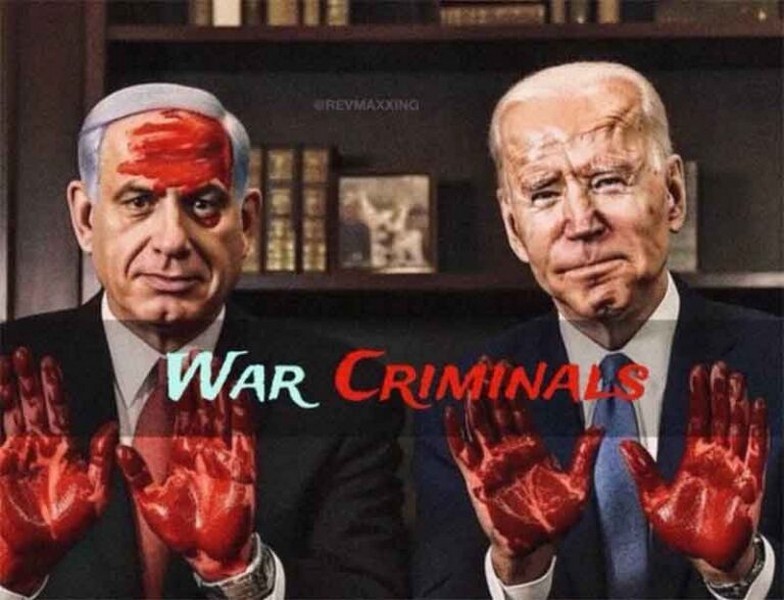
The Biden Administration has played a central role in funding and sustaining the Israeli war machine, thus facilitating the Israeli genocide in Gaza. Millions of Americans took notice and acted upon their sense of collective rage to punish the Democrats for what they had done to the Palestinian people.

According to a report prepared for Brown University’s Costs of War project, the Biden Administration has granted Israel a record of at least $17.9 billion in military aid to Israel in the first year of the war. Additionally, according to a report published on October 4 by the non-profit investigative newspaper ProPublica, “the US has shipped more than 50,000 tons of weaponry” to Israel since October 7, 2023.

Merely hours after the US presidential election results were announced, the Israeli Ministry of Defense signed a deal “to acquire 25 F-15IA combat jets from U.S. manufacturer Boeing for $5.2 billion, with an option to get 25 more,” according to Defense News. In other words, Biden remains unrepentant.

Biden, Harris and others may twist the logic to justify their support for Israel in any way they wish. However, there can be no denying that their administration has played a leading role in the Israeli genocide in Gaza. For this, they were duly and deservedly penalized by American voters.

The understandable euphoria among many of Palestine’s supporters in the US notwithstanding, we must not harbor any illusions. Neither President-elect Donald Trump nor his entourage of right-wing politicians will be the saviors of Palestine.

We must recall that it was Trump’s first term in office that paved the road to the complete marginalization of the Palestinians. He did so by granting Israel sovereignty over occupied East Jerusalem, recognizing the illegal settlements as legitimate, waging financial warfare against Palestinians, and attempting to destroy the UN refugee agency, UNRWA, among other actions.

If Trump returns to his old destructive policies in Palestine, another war will certainly start.

This means that the pro-Palestine camp, which has managed to convert solidarity into decisive political action, must not wait for the new US administration to adopt a more sensible political line on Palestine. Judging by the history of Republican support for Israel, no such sensibility should be expected.

Thus, it is time to build on the existing solidarity among all American groups that voted against genocide in the latest elections. This is the perfect opportunity to translate votes into sustained action and pressure so that all aspects of the US government may hear and heed the deafening chants of ‘ceasefire now’, and ‘free, free Palestine.’

This time around, however, these chants are backed by solid evidence that American voters are capable of destabilizing the entire political paradigm, as they did on November 5, 2024.

Dr. Ramzy Baroud is a journalist, author and the Editor of The Palestine Chronicle.

14 November 2024

Source: countercurrents.org

Will Trump End or Escalate Biden’s Wars?

By Medea Benjamin and Nicolas J. S. Davies

When Donald Trump takes office on January 20th, all his campaign promises to end the war in Ukraine in 24 hours and almost as quickly end Israel’s war on its neighbors will be put to the test. The choices he has made for his incoming administration so far, from Marco Rubio as Secretary of State to Mike Waltz as National Security Advisor,  Pete Hegseth as Secretary of Defense and Elise Stefanik as UN Ambassador make for a rogues gallery of saber-rattlers.

The only conflict where peace negotiations seem to be on the agenda is Ukraine. In April, both Vice President-elect JD Vance and Senator Marco Rubio voted against a $95 billion military aid bill that included $61 billion for Ukraine.

Rubio recently appeared on NBC’s Today Show saying, “I think the Ukrainians have been incredibly brave and strong when standing up to Russia. But at the end of the day, what we’re funding here is a stalemate war, and it needs to be brought to a conclusion… I think there has to be some common sense here.”

On the campaign trail, Vance made a controversial suggestion that the best way to end the war was for Ukraine to cede the land Russia has seized, for a demilitarized zone to be established, and for Ukraine to become neutral, i.e. not enter NATO. He was roundly criticized by both Republicans and Democrats who argue that backing Ukraine is vitally important to U.S. security since it weakens Russia, which is closely allied with China.

Any attempt by Trump to stop U.S. military support for Ukraine will undoubtedly face fierce opposition from the pro-war forces in his own party, particularly in Congress, as well as perhaps the entirety of the Democratic party. Two years ago, 30 progressive Democrats in Congress wrote a letter to President Biden asking him to consider promoting negotiations. The party higher ups were so incensed by their lack of party discipline that they came down on the progressives like a ton of bricks. Within 24 hours, the group had cried uncle and rescinded the letter. They have since all voted for money for Ukraine and have not uttered another word about negotiations.

So a Trump effort to cut funds to Ukraine could run up against a bipartisan congressional effort to keep the war going. And let’s not forget the efforts by European countries, and NATO, to keep the U.S. in the fight. Still, Trump could stand up to all these forces and push for a rational policy that would restart the talking and stop the killing.

The Middle East, however, is a more difficult situation. In his first term, Trump showed his pro-Israel cards when he brokered the Abraham accords between several Arab countries and Israel; moved the U.S. embassy to a location in Jerusalem that is partly on occupied land outside Israel’s internationally recognized borders; and recognized the occupied Golan Heights in Syria as part of Israel. Such unprecedented signals of unconditional U.S. support for Israel’s illegal occupation and settlements helped set the stage for the current crisis.

Trump seems as unlikely as Biden to cut U.S. weapons to Israel, despite public opinion polls favoring such a halt and a recent UN human rights report showing that 70% of the people killed by those U.S. weapons are women and children.

Meanwhile, the wily Israeli Prime Minister Netanyahu is already busy getting ready for a second Trump presidency. On the very day of the U.S. election, Netanyahu fired his defense minister, Yoav Gallant, who opposed a lasting Israeli military occupation of Gaza and had at times argued for prioritizing the lives of the Israeli hostages over killing more Palestinians.

Israel Katz, the new defense minister and former foreign minister, is more hawkish than Gallant, and has led a campaign to falsely blame Iran for the smuggling of weapons from Jordan into the West Bank.

Other powerful voices, national security minister Itamar Ben-Gvir and finance minister Bezalel Smotrich, who is also a “minister in the Defense Ministry,” represent extreme Zionist parties that are publicly committed to territorial expansion, annexation and ethnic cleansing. They both live in illegal Israeli settlements in the occupied West Bank.

So Netanyahu has deliberately surrounded himself with allies who back his ever-escalating war. They are surely developing a war plan to exploit Trump’s support for Israel, but will first use the unique opportunity of the U.S. transition of power to create facts on the ground that will limit Trump’s options when he takes office.

The Israelis will doubtless redouble their efforts to drive Palestinians out of as much of Gaza as possible, confronting President Trump with a catastrophic humanitarian crisis in which Gaza’s surviving population is crammed into an impossibly small area, with next to no food, no shelter for many, disease running rampant, and no access to needed medical care for tens of thousands of horribly wounded and dying people.

The Israelis will count on Trump to accept whatever final solution they propose, most likely to drive Palestinians out of Gaza, into the West Bank, Jordan, Egypt and farther afield.

Israel threatened all along to do to Lebanon the same as they have done to Gaza. Israeli forces have met fierce resistance, taken heavy casualties, and have not advanced far into Lebanon. But, as in Gaza, they are using bombing and artillery to destroy villages and towns, kill or drive people north and hope to effectively annex the part of Lebanon south of the Litani river as a so-called “buffer zone.” When Trump takes office, they may ask for greater U.S. involvement to help them “finish the job.”

The big wild card is Iran. Trump’s first term in office was marked by a policy of “maximum pressure” against Tehran. He unilaterally withdrew America from the Iran nuclear deal, imposed severe sanctions that devastated the economy, and ordered the killing of the country’s top general. Trump did not support a war on Iran in his first term, but had to be talked out of attacking Iran in his final days in office by General Mark Milley and the Pentagon.

Colin Powell’s former chief of staff, retired Colonel Lawrence Wilkerson, recently described to Chris Hedges just how catastrophic a war with Iran would be, based on U.S.military wargames he was involved in.

Wilkerson predicts that a U.S. war on Iran could last for ten years, cost $10 trillion and still fail to conquer Iran. Airstrikes alone would not destroy all of Iran’s civilian nuclear program and ballistic missile stockpiles. So, once unleashed, the war would very likely escalate into a regime change war involving U.S. ground forces, in a country with three or four times the territory and population of Iraq, more mountainous terrain and a thousand mile long coastline bristling with missiles that can sink U.S. warships.

But Netanyahu and his extreme Zionist allies believe that they must sooner or later fight an existential war with Iran if they are to realize their vision of a dominant Greater Israel. And they believe that the destruction they have wreaked on the Palestinians in Gaza and Hezbollah in Lebanon, including the assassination of their senior leaders, has given them a military advantage and a favorable opportunity for a showdown with Iran.

By November 10, Trump and Netanyahu had reportedly spoken on the phone three times since the election, and Netanyahu said that they see “eye to eye on the Iranian threat.” Trump has already hired Iran hawk Brian Hook, who helped him sabotage the JCPOA nuclear agreement with Iran in 2018, to coordinate the formation of his foreign policy team.

So far, the team that Trump and Hook have assembled seems to offer hope for peace in Ukraine, but little to none for peace in the Middle East and a rising danger of a U.S.-Israeli war on Iran.

Trump’s expected National Security Advisor Mike Waltz is best known as a China hawk. He has voted against military aid to Ukraine in Congress, but he recently tweeted that Israel should bomb Iran’s nuclear and oil facilities, the most certain path to a full-scale war.

Trump’s new UN ambassador, Elise Stefanik, has led moves in Congress to equate criticism of Israel with anti-semitism, and she led the aggressive questioning of American university presidents at an anti-semitism hearing in Congress, after which the presidents of Harvard and Penn resigned.

So, while Trump will have some advisors who support his desire to end the war in Ukraine, there will be few voices in his inner circle urging caution over Netanyahu’s genocidal ambitions in Palestine and his determination to cripple Iran.

If he wanted to, President Biden could use his final two months in office to de-escalate the conflicts in the Middle East. He could impose an embargo on offensive weapons for Israel, push for serious ceasefire negotiations in both Gaza and Lebanon, and work through U.S. partners in the Gulf to de-escalate tensions with Iran.

But Biden is unlikely to do any of that. When his own administration sent a letter to Israel last month, threatening a cut in military aid if Israel did not allow a surge of humanitarian aid into Gaza in the next 30 days, Israel responded by doing just the opposite–actually cutting the number of trucks allowed in. The State Department claimed Israel was taking “steps in the right direction” and Biden refused to take any action.

We will soon see if Trump is able to make progress in moving the Ukraine war towards negotiations, potentially saving the lives of many thousands of Ukrainians and Russians. But between the catastrophe that Trump will inherit and the Warhawks he is picking for his cabinet, peace in the Middle East seems more distant than ever.

Medea Benjamin and Nicolas J. S. Davies are the authors of War in Ukraine: Making Sense of a Senseless Conflict, published by OR Books, with an updated edition due in February 2025.

14 November 2024

Source: countercurrents.org

Israel bombs Beirut and Lebanon-Syria border, as UN declares basic foodstuffs “barely exist” in Gaza

By Jordan Shilton

Israel carried out four major air strikes on the southern suburbs of the Lebanese capital Beirut yesterday, as well as a series of strikes on bridges and other infrastructure on the Lebanon-Syria border. Coming as the Zionist regime continues to starve Gaza and the US military once again struck targets in Yemen, the attacks show that there is no let-up in the drive by Washington’s attack dog to redraw the map of the Middle East.

The four strikes targeted the suburbs of Haret Hreik and Burj al-Barajneh. The strikes flattened six residential buildings, but no official casualty figures were initially reported. After at least 78 people were killed in Israel Defence Forces (IDF) raids on Tuesday, the official death toll in Lebanon since October 8 stands at 3,365, with 14,344 wounded.

Defence Minister Israel Katz, who replaced Yoav Gallant after his firing by Prime Minister Benjamin Netanyahu last week, vowed to continue to escalate the conflict in Lebanon. In a visit to the IDF’s Northern Command, Katz declared, “We will not make any ceasefire, we will not take our foot off the gas, and we will not allow any arrangement that does not include the achievement of the war’s goals.”

These include the disarming of Hezbollah, the pushing of its forces north of the Litani River, and the return of residents to towns and villages on Israel’s northern border, he added. The Defence Minister asserted that Israel would retain “the right to enforce” any ceasefire deal, i.e., the “right” to launch attacks inside Lebanon at will after a ceasefire is concluded.

On the ground, the IDF reported six casualties following a gun battle with Hezbollah in southern Lebanon. The clash reportedly occurred as Israeli forces sought to advance to the second line of villages inside the border.

Syrian state news agency SANA reported that the air strikes near the border caused “significant damage” to infrastructure. According to the IDF, the attacks were aimed at smuggling routes used by Iran to transfer weaponry to Hezbollah. They come less than three weeks after Israel’s air strikes on Iran on October 26, which targeted military sites and were described by the World Socialist Web Site as a “dress rehearsal” for a region-wide war.

US Central Command also announced Wednesday that it struck numerous sites in Yemen on Saturday and Sunday, reportedly destroying weapons supplied to the Houthis by Iran.

American imperialism has backed Israel’s genocide against the Palestinians and subsequent war on Lebanon to the hilt, seeing them as components of its preparations for a region-wide war targeting Iran. Washington is pursuing the goal of consolidating its hegemony over the oil-rich region as part of a renewed redivision of the world, which encompasses the war on Russia in Ukraine and advanced preparations for war with China in the Asia-Pacific.

If Katz’s pledge to intensify the war in Lebanon is fulfilled, the likelihood that the conflict will spread throughout the energy-rich region will become ever greater. President-elect Donald Trump, who drastically escalated tensions with Tehran during his first term in office by abrogating the nuclear accord with Iran, has nominated Marco Rubio, a vocal anti-Iran hawk, as his secretary of state. At a campaign rally last month, Trump urged Israel to strike Iran’s nuclear sites at a time when the bourgeois-clerical regime in Tehran was warning that such a decision would lead to all-out war. In the end, Netanyahu chose the more limited, but nonetheless provocative, attack on October 26 that struck military sites.

Mike Huckabee, a staunch defender of the Zionist state’s expansionist plans, is set to be Trump’s ambassador to Israel. The second Trump administration is expected to give Netanyahu a free hand to expand settlements in the West Bank and intensify the genocide in Gaza. As Huckabee put it in 2017, “There is no such thing as a West Bank. It’s Judea and Samaria. There’s no such thing as a settlement. They’re communities, they’re neighbourhoods, they’re cities. There’s no such thing as an occupation.”

Israel continued its bombardment of Gaza Wednesday, where 26 people were reported killed in a series of strikes throughout the day. One targeted the al-Mawasi district in the southwest, an ostensible “safe zone” where many displaced people are sheltering. Another strike on the Maghazi refugee camp killed five.

The UN’s World Food Programme noted on X that markets across the enclave are “in decay,” adding that basic staples “barely exist.” It stated, “Fresh foods, eggs and meat barely exist and the prices of any food available have reached record highs.” The UN’s aid coordination office OCHA added that all attempts to gain Israeli approval for the delivery of supplies to northern Gaza since the beginning of November have been rebuffed.

In early October, Netanyahu’s far-right regime adopted what is known as the “Generals’ Plan,” which calls for the denial of all food aid to northern Gaza and the treating of all civilians who remain as enemy combatants.

On Tuesday, the Biden administration defended Israel against criticism from aid organisations pointing to the abysmally low level of deliveries entering the enclave. Even though the Zionist regime is allowing just one-tenth of the 350 aid trucks into Gaza per day called for by the Biden administration last month, the State Department asserted Tuesday that Israel was not violating international humanitarian law by withholding food aid, and refused to place any restrictions on Washington’s massive weapons deliveries.

The UN Security Council held a briefing the same day on the threat of famine in northern Gaza. It was requested by Guyana and Switzerland following a November 8 alert from the Integrated Food Phase Classification (IPC) stating that there is “a strong likelihood that famine is imminent within areas of the northern Gaza Strip.” An earlier October 17 snapshot from the agency revealed that the entirety of Gaza is at risk of famine between November and April 2025 “under a worst-case scenario that has a reasonable chance of occurring.”

“We are witnessing acts reminiscent of the gravest international crimes,” Joyce Msuya, interim head of the UN’s Office for the Coordination of Humanitarian Affairs, told Tuesday’s Security Council meeting. She described Israel’s ongoing siege of northern Gaza as “an intensified, extreme, and accelerated version of the horrors of the past year.”

Head of the UN’s Food and Agricultural Organisation (FAO) Rein Paulsen told the Security Council that the number of people facing “catastrophic food insecurity,” the highest classification on the IPC’s food insecurity scale, would treble from the current level of 133,000 in the coming months. “Men, women, boys and girls are effectively starving as the conflict rages, with humanitarian organizations blocked from delivering assistance to those in need,” Paulsen continued. “By the time famine has been declared, people are already dying of hunger, with irreversible consequences that can last generations.”

An FAO release on the briefing noted that local food production has “collapsed”: “nearly 70 percent of croplands—which contributed up to one-third of daily consumption—have been destroyed; over 70 percent of olive trees and orchards have been burned to the ground; agricultural infrastructure has been decimated; and 95 percent of cattle and more than half of sheep and goat herds, have died.”

None of these horrors move the imperialist barbarians represented in the Security Council. They are dead set on continuing with their support for Israel’s genocide and vicious attacks on anyone who protests it at home. The only social force capable of putting an end to this savagery is the international working class, mobilised on the basis of a socialist and internationalist programme for the abolition of capitalism, the root cause of genocide and imperialist war.

14 November 2024

Source: countercurrents.org

Dozens killed by Israeli air strikes and ground assaults across Gaza and Lebanon

By Kevin Reed

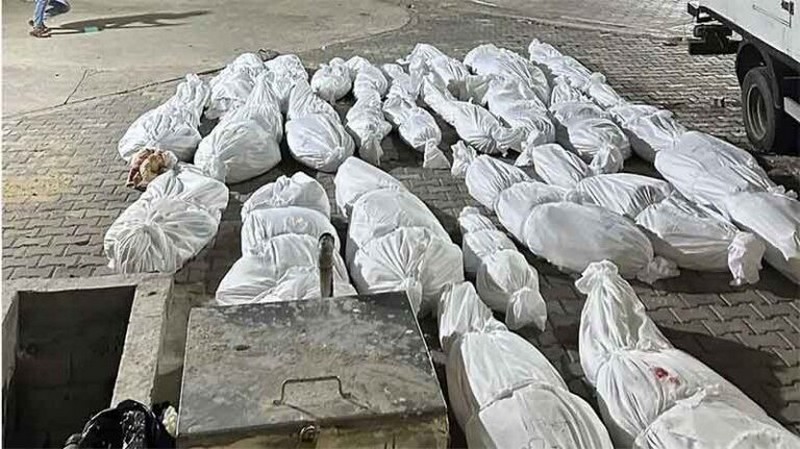
Israeli air strikes across Gaza and Lebanon killed dozens of people on Sunday, including at least 20 children, as the Israeli regime intensified its genocide of Palestinians and expanded its wider war in the Middle East.

Health officials reported at least 30 people were killed in northern and central Gaza as tanks entered the refugee camp at Nuseirat in a new incursion. A report by Al Jazeera said, “Health officials at Al-Awda Hospital in Nuseirat, in the central Gaza Strip, said 20 people were killed in a series of air and ground attacks overnight and into Monday, including one that hit a tent encampment.”

In a message sent to Reuters via a chat app, 25-year-old resident Zaik Mohammad said tanks opened fire on the Nuseirat camp without warning and caught residents by surprise. The residents and displaced families were sent into a panic. “Some people couldn’t leave and remained trapped inside their homes, appealing to be allowed out, while others rushed out with whatever they could carry as they fled.”

Al Jazeera also reported four people were killed in an Israeli air attack in the northern town of Beit Lahiya, which Israeli forces have besieged from the air and with tanks since the beginning of October. Others were killed in an air attack in Gaza City.

An Israeli drone fired upon Kamal Adwan Hospital in Beit Lahiya—the only medical facility operating in northern Gaza—injuring three medical workers. Another 10 people were killed in an air strike late Monday in a café in Al-Mawasi—an area designated a “humanitarian safe zone” by Israel—near the southern Gaza city of Khan Younis.

Health Ministry officials reported that at least 43,604 Palestinians have been killed by the Israeli military since October 2023, with 102,929 injured.

The strikes in Lebanon on Sunday killed nearly 40 people, with the Israeli air assault moving into the north of the country. At least 14 people were killed in a missile attack on the northern town of Ain Yaaqoub, which is approximately 6.2 miles from the border with Syria.

Al Jazeera reported that there may well have been Syrian casualties in this strike because there are so many refugees in the north of Lebanon who have been sheltering there for years. There were also Lebanese people in Ain Yaaqoub who had fled there for safety from the suburbs of Beirut and areas in the Bekaa Valley that have been hit by Israeli bombings.

At least 23 people were killed in another strike about nine miles from the capital Beirut. The Lebanese Ministry of Health said on Monday that at least 3,243 people had been killed in the recent escalation by Israel, including at least 200 children.

There have been numerous indications that the Israeli government—which has been provided with arms and funding by the Biden administration to carry out its ethnic cleansing of Gaza—has been further emboldened to intensify its criminal military operations by the victory of Donald Trump in the 2024 US presidential elections.

Prime Minister Benjamin Netanyahu revealed in a recorded message on Sunday that he has spoken to the fascist president-elect three times in recent days. Throughout the 2024 campaign, Trump repeatedly told Netanyahu to “do what you have to do” in Gaza and Lebanon, while simultaneously telling the electorate he would bring both conflicts to an end.

There can be no question that the election of Donald Trump has given the Israeli leaders encouragement to completely drop any pretense of ceasefire negotiations and move forward with the Zionist project to permanently remove Palestinians from Gaza and the so-called “Generals’ Plan.”

In his first meeting with Israeli military officials, new Defense Minister Israel Katz said that “there will be no ceasefire” and “no break in the strikes against Hezbollah” in Lebanon. Katz also posted a statement on X that said, “Iran is more exposed than ever to strikes on its nuclear facilities. We have the opportunity to achieve our most important goal—to thwart and eliminate the existential threat to the State of Israel.”

Finance Minister Bezalel Smotrich, speaking to the press on Monday before his Religious Zionism party’s weekly faction meeting in the Knesset, welcomed Trump’s victory and said it presents an “important opportunity” to “apply Israeli sovereignty to the settlements in Judea and Samaria,” referring to areas of the West Bank by their biblical names.

Smotrich, who is also a minister in the Israeli Defense Ministry, complained that the Biden administration had “unfortunately chosen to intervene in Israeli democracy and personally not to cooperate with me.”

He referred to actions taken by the Trump administration of 2017-2021, such as the transfer of the US Embassy to Jerusalem, the recognition of the Golan Heights as Israeli territory, and the decision to declare that Israel’s West Bank settlements are legal under international law, as being in line with his own fascist political agenda.

On Monday, Donald Trump selected Senator Elise Stefanik, a Republican from New York, to be US Ambassador to the United Nations. Stefanik has been a rapid supporter of Zionism and a defender of the Gaza genocide. She was a leading figure in Congress who labeled pro-Palestinian protesters at college campuses across the country as “antisemitic.”

Stefanik’s witch-hunting of protesters against the Gaza genocide aligns with her echoing of the Great Replacement Theory of actual antisemitism, which claims that wealthy Jewish people are engineering and financing a mass migration to the United States from Asia, Africa and Latin America to replace the white American population.

12 November 2024

Source: countercurrents.org

My thoughts in plain English: Where is USA, the self-un-acknowledged Empire, heading now? by Dr MAUNG ZARNI

November 07, 2024

Empires do NOT reform. Resilience is the term associated with the Oppressed, not the Oppressor.  (Try imagine being enslaved or colonized for 300 years).  With elite delusions and a popular sense of “being special/exceptional/unique/superior),  Empires get toxic at home and abroad, decay, get overpowered/crushed or simply collapse.  USA is no exception, except it has the capacity to bring humanity at large with it, to Hell.  I do not hate Americans as a people – just another population of fellow humans, who deserve life, not more or less than any other population.

But, with every cell in my body, I absolutely loath Empires and Imperialisms, whatever their names.    Some of the mightiest  imperial entities – Asoka’s India and what it left behind, the Maureans of N. India with its crowning intellectual edifice of Nalanda University – (if you think everything rational and intellectual was rooted in or developed out of the European Enlightenment,  you have not seen even ruins of Nalanda and what it gifted humanity), the Moguls of the latter day Indian subcontinent, the China of the Great Wall,  the Ankgor, the Ottoman, the Mayans, and many others.    We know some of them lasted for 500 years. History has, in due course, humbled them all.

But there is this signature historical ignorance of the imperalist elite – which my dear friend Gayatri  Spivak termed “sanctioned ignorance”.  They are typically drunk with their own cool-aid.     My street in this English countryside is littered with Oxbridge types.  I can only talk to them about the weather, dogs and gardens: their very elite education did not include a single lesson on the crimes against humanity serially perpetrated by Britain during its relatively short reign vis-a-vis other empires that came, and went before the British Empire.

Historical time is not human biological life span.    Whatever is unfolding before our eyes, I for one do NOT despair.  I ask myself were a young African on a slaveship passing through the Middle Passage,  what would I have done?    Certainly, i would not have known that the Evil of Europe would go on to be institutionalized for another 400 years, but the question really is would I have jumped off the ship that was carrying me to the living Hell of Plantations far away, or would I have resisted the attempts to shackle me and my loved ones to eternity.  Of course, this is all academic.  For I was not there.

But I am here, living in the most wretched and horrid era of the United States taking off its mass-murderous gloves, and giving the rest of humanity the middle finger.   Teddy Roosevelt was at least wiser in that he advised his power elite, to carry a big stick but speaks softly.

But the American elites have been talking crude and crass while running 750 military bases around the world and openly threatening any institution or individuals that seek to uphold international law and norms (ICC, UN, ICJ).

I have long adopted the long historical perspective – that Braudel called “long durations”.     I left the United States for good – against my own interests 20 years ago, because i could no longer bear the deep pain of cognitive dissonance – benefitting from being in the belly of the beast while knowing how sick the whole place is.   Yesterday, my 25-years old daughter texted me, “it’s not just Trump, Dad.  All across the board.   Awful country.”   I knew this when she was barely 5.

I keep the faith.   This Evil Empire too has its own expiry date.   Take the long view, if you feel dejected by the Second Coming of Trump.    Genocide Joe and thick-headed and unprincipled Kamala Harris, who also went to the same elementary school as my daughter, are also not good for humanity.   Ask the Palestinians.     Have a great day!

Zarni

Source: drhabibsiddiqui.blogspot.com

President Biden’s Gaza Policy Leaves the Middle East in Flames

By Juan Cole

President Joe Biden has now joined the ranks of Jimmy Carter and George W. Bush as a president whose Middle East policy crashed and burned spectacularly. Unlike Carter, who was stymied by the Iranian hostage crisis, or Bush, who faced a popular Iraqi resistance movement, Biden’s woes weren’t inflicted by an enemy. Quite the opposite, it was this country’s putative partner, the Israeli government, that implicated the president in its still ongoing genocide in Gaza, as well as its disproportionate attacks on Lebanon and Iran, for which Biden steadfastly declined to impose the slightest penalties. Instead, he’s continued to arm the Israelis to the teeth.

Israel’s total war on Palestinian civilians, in turn, significantly reduced enthusiasm for Biden among youth and minorities at home, helping usher him out of office. It also created electoral obstacles for Kamala Harris’s presidential bid. By his insistence on impunity for the government of Prime Minister Benjamin Netanyahu, Biden has left the Middle East in flames and the U.S. and the world distinctly in peril.

During his first three years in office, his administration wielded the tools of diplomacy in the Middle East. Donald Trump’s sanctions against the Houthis in Yemen had imperiled the civilian population there by denying them humanitarian aid and gasoline to drive to the market for food. Biden lifted those sanctions and sponsored continued negotiations between those in power in the Yemeni capital of Sanaa and in the neighboring Saudi Arabian capital of Riyadh. Only relatively small contingents of American troops remained in Syria and Iraq to help with the mopping-up operations against the so-called Islamic State terrorist organization.

Pushing Iran into the Arms of China and Russia

Danger signals nonetheless soon began flashing bright red among friend and foe alike in the region, as Biden’s team quickly squandered an opportunity to restore the 2015 “Joint Comprehensive Plan of Action,” or JCPOA, between the U.N. Security Council and the Iranian regime in Tehran, which Trump had so tellingly trashed.  Between 2015 and 2019, that deal had successfully kept Iran’s civilian nuclear enrichment program purely civilian, closing off the four most plausible pathways to a nuclear weapon.

In those years, the Iranians had, in fact, mothballed 80% of their nuclear program in return for sanctions relief. While the U.N. Security Council lifted economic sanctions on that country, Republicans in Congress refused to halt unilateral American sanctions, which applied to third parties as well. European investors had to jump through hoops to invest in Iran while avoiding Treasury Department fines. As a result, a disappointed Iranian leadership went unrewarded for its careful compliance with the JCPOA.

Then, in May 2018, Trump stabbed the Iranians in the back, withdrawing the U.S. from the JCPOA and slapping the most severe economic sanctions ever applied by one country to another in peacetime on Iran. It essentially added up to an invisible blockade of the Iranian economy, even interfering with ordinary commerce like that country’s oil sales. Israel’s Prime Minister Benjamin Netanyahu boasted of having convinced the gullible Trump to take such a step, which led Iran’s petroleum exports to plummet over the next three years. Trump even designated the Iranian National Bank a terrorist organization, again with potentially crippling consequences for the entire economy.

In revenge, Iran went back to enriching uranium to high levels and building more centrifuges, though without actually producing weapons-grade material. To this day, its civilian nuclear program remains a form of “the Japan option,” an attempt at deterrence by making it clear that it does not want a bomb but that, if it feels sufficiently threatened, it can build a nuclear weapon relatively quickly.

As soon as Joe Biden defeated Trump in 2020, the centrist Iranian President Hassan Rouhani declared that the JCPOA could be restored by the two leaders virtually by fiat. And Biden’s foreign policy team initially appeared to consider negotiations to reinstate the treaty, only to ultimately retain Trump’s outrageous sanctions as “leverage,” demanding that Iran return to compliance with the JCPOA before the two sides could talk.

Perhaps the Iranian public got the message that Biden was determined to be as hostile as Trump. Certainly, in the next round of voting in the summer of 2021, they swung behind hardliner Ebrahim Raisi. And despite occasional modest diplomatic forays since then, relations have been in a dumpster for the remainder of Biden’s term, with most of Trump’s “maximum pressure” sanctions still in place. And once again, as in the Trump years, the Israeli government of Benjamin Netanyahu has lobbied Biden hard to cease all negotiations with Tehran.

Iran, which might have been drawn into the Western camp, has instead become a hostage to Beijing. Starting in 2019, China accepted smuggled Iranian petroleum at a substantial price discount. Then, when the Ukraine War broke out and Biden imposed maximum sanctions on the Russian Federation, Moscow and Tehran found themselves pushed ever closer.

Now, the two countries plan to sign a “strategic partnership agreement,” while, in July 2023, Iran joined the Shanghai Cooperation Organization, cementing the alliances with both China and Russia into which it had been so vigorously pushed by Washington. Iran also became a definite asset for Russia in its Ukraine War, providing Vladimir Putin with crucial weaponry. In short, Biden’s hardline policy toward Tehran ultimately harmed his major foreign policy initiative, of defeating Moscow.

Passionate Intensity

Biden’s team also pursued the strategy worked out by Donald Trump and his son-in-law Jared Kushner of trying to wheedle or strong-arm Arab states into making a separate peace with Israel, while throwing the stateless Palestinians under the bus. They managed to defame the Bible by naming their agreements — initially among Bahrain, the United Arab Emirates, Morocco, and Israel — the “Abraham Accords,” though they were actually thinly veiled arms deals. Underlying such a strategy lurked the possibility of creating a military bloc, involving Israel and significant parts of the Arab world, to isolate and ultimately overthrow the government of Iran. The Arab signatories all sought the economic benefits of trade and investment with Israel as well as U.S. security promises, benefiting American arms manufacturers with their orders. Had Biden instead made a full-court press for Palestinian rights, he might have created optimism rather than despair.

Sudan was also soon blackmailed into joining the accords. A popular revolution there overthrew the decades-long dictatorship of Omar al-Bashir on April 11, 2019. Its civilian and military wings then entered into a tenuous cohabitation, with the civilians pressing the generals to return to their barracks. Civilian Prime Minister Abdalla Hamdok and the chairman of the Transitional Military Council, General Abdel Fattah Burhan, signed onto the Abraham Accords in January 2021 both to get Sudan removed from the U.S. list of terrorist nations and to begin repairing its economy.

In the end, that represented pure economic blackmail, a policy continued by Secretary of State Antony Blinken. A 2022 poll showed that more than 74% of Sudanese rejected any normalization with Israel. Instead of attempting to bolster budding Sudanese democracy, the Biden administration continued to resort to backdoor deals with that junta in the interests of America’s main geopolitical client in the Middle East (while Sudan itself fell into a catastrophic civil war).

Blinken also made it a personal mission to rope Saudi Arabia into the Abraham Accords. Unlike the two other Gulf states committed to the treaty, however, Saudi Arabia has a largely pro-Palestinian Muslim population in the millions and a peace treaty with Israel might have fomented unrest among them. While Mohammed Bin Salman, the fickle crown prince who ran much of the show in that country, continued to vacillate on the issue, his father, King Salman, repeatedly made it clear that “Palestine is our number one issue,” and that there will be no recognition of Israel without an ironclad path to a Palestinian state (a longstanding Saudi position).

Nonetheless, the Biden foreign policy team continued pressuring Riyadh to normalize relations with Israel, even as the Gaza War grew ever more devastating and the Saudi public daily saw images of women and children being shredded by American-supplied bombs and drones. In an opinion poll released last January, 78% of Saudis said that they felt psychologically stressed by the Gaza War, while nearly every one of them lambasted the U.S. response as “bad” or “very bad,” and  57% believed there was now no possibility of making peace with Israel.

Things Fall Apart, the Center Cannot Hold

The security guarantees the U.S. gave the United Arab Emirates under the Abraham Accords emboldened its leader, Mohamed Bin Zayed (MBZ), in his quest to create an informal empire stretching from Yemen to Sudan and even all the way to Libya.  In April 2023, however, Sudan’s conventional army and the country’s special operations Rapid Support Forces (RSF) fell to fighting one another, as the generals that led them competed for power. The country then devolved into a horror show of a civil war, with half of its 50 million people now facing starvation and at least 62,000 already slaughtered. The brutal RSF fighters are nonetheless backed by the Emirates (lovingly dubbed “little Sparta” by the Pentagon). And in these years, President Biden has proven impotent when it came to reining in America’s “Abraham Accords” darling. In fact, he only recently hosted MBZ at the White House and a Rose Garden that’s seen more genocidaires than most administrations.

The Israeli and U.S. response to the gruesome Hamas attacks on Israel on October 7, 2023, can fairly be said to have entirely undone all of Biden’s diplomatic work in the region. While the United States and some other Western governments viewed Prime Minister Benjamin Netanyahu’s never-ending devastation of Gaza and his country’s deployment of American 2,000-pound bombs against residential complexes as forced on him by Hamas’s alleged tactic of using civilians as “human shields,” virtually no one in the global South agreed. Even some European Union states and Israeli journalists dissented.

South Africa brought a case against Israel at the International Criminal Court charging it with genocide, which the Court found “plausible” in January, issuing the equivalent of a preliminary injunction against the Netanyahu government. Israel, of course, ignored it and has simply continued the devastation there (and now in Lebanon as well). Somehow, Biden seemed unaware that the government of extremists formed by Netanyahu in late 2022 was anything but the Israel of the 1960 film Exodus, with a blue-eyed Paul Newman as the protagonist. It was instead a witch’s brew of virulent ethnonationalism and religious apocalypticism.

Worse yet, Netanyahu used the cover of his Gaza atrocities to expand the war further. He deliberately bombed an Iranian diplomatic facility (considered Iranian soil under international law) in the Syrian capital of Damascus last spring. Iran later responded with a rocket barrage. Netanyahu went on attempting to get Tehran’s goat, aware that if he could turn his conflict into an actual war with Iran, American jingoists would give him even more knee-jerk support.

In the process, he had Ismail Haniyeh, his chief, if indirect, civilian Hamas negotiating partner, assassinated in Iran’s capital of Tehran on the occasion of the inauguration of a new president there. He then launched a terrorist onslaught of booby-trapped pager bombs against an Iran-allied group, Hezbollah, in Lebanon before invading that country and subjecting significant parts of it to a Gaza-style bombardment, as a response to Hezbollah rocket attacks on Israel in support of Gaza. Such provocations led to yet another Iranian missile barrage against Israel on October 1st to which Israel replied with attacks on Iranian military facilities. Biden was reduced to pleading with Iran to be reasonable in response, while declining to demand any similar restraint from Israel.

The Blood-Dimmed Tide

And here’s the truth of the matter: President Biden could undoubtedly have halted Netanyahu’s total war on Palestinian civilians at any point in 2024, given Israel’s dependence on U.S. ammunition and arms. Instead, his gung-ho support of the insupportable in Gaza has helped turn the Middle East into a genuine powder keg, which he is bequeathing to his successor. Crucial Red Sea and Suez Canal maritime trade has already been partially paralyzed, thanks to rocket attacks launched by Yemen’s Houthi rebels in support of the people of Gaza, adding inflation and supply-chain difficulties to the global economy.

Biden then restored sanctions on the Houthis, harming Yemeni civilians, while allowing Netanyahu to go on butchering Gazan civilians.  Lebanon, already a basket case, with a ruined port, a bankrupt national bank, no president, and a third of its population below the poverty line, now faces a wholesale reduction to fourth-world misery. More than a million Lebanese have had to flee their homes in that small country and the conflict will undoubtedly contribute to Europe’s immigration crisis.

Consider it a distinct irony, then, that, rather than allying with Israel against Iran, most Arab publics have significantly raised their estimation of Tehran. Even long-time American ally Turkey and U.S. partner Egypt have felt threatened by the extremist Netanyahu government and its Napoleonic ambitions, and have begun warming to one another and exploring better relations with Tehran.

Nativist Shiite militias in Iraq rained down rockets on bases in that country hosting U.S. troops, but ranged even further afield, targeting American soldiers in Jordan and killing Israeli troops in Israel itself. They pledged to come to the aid of Lebanon’s Hezbollah. The Iraqi parliament recognized such militias in 2016 as the equivalent of a national guard. Iraq’s outraged Shiites even finally convinced Prime Minister Mohammed Shia’ Al Sudani to kick the last U.S. troops out of that country by 2026.

In the end, Biden’s unfaltering bear hug of Benjamin Netanyahu ensured that even the last vestiges of the George W. Bush administration’s neoconservative project of reshaping the Middle East to America’s and Israel’s advantage have now gone down the drain. Washington continues to send ever more bombs and sophisticated weaponry to a Middle East in flames and, with Donald Trump set to take office in January, such dangerous arms deals will likely only multiply.

Consider it a genuine first-class nightmare.

Juan Cole, a TomDispatch regular, is the Richard P. Mitchell collegiate professor of history at the University of Michigan.

11 November 2024

Source: countercurrents.org

As Israel insists on using starvation as weapon, famine in northern Gaza must be officially declared

By Euro-Med Human Rights Monitor

Palestinian Territory – Given that Israel has blocked the entry of goods and aid to the hundreds of thousands of besieged residents in the northern Gaza Strip for more than 50 days now, the relevant international and UN organisations must formally declare famine in the region. Israel’s use of starvation as a weapon is one component of its ongoing genocide in the Strip, which also includes mass killings and forced displacement.

Due to the illegal Israeli blockade on the enclave, 10s of thousands of Palestinians, including dozens of patients in three hospitals in the northern Gaza Strip, are in immediate danger of starvation or long-term health consequences.

Israel has been blocking the flow of any humanitarian aid into northern Gaza since 25 September. By blocking the entry of all goods, beginning on 1 October, and launching a massive military assault against all citizens of Jabalia and Beit Lahia four days later, Israel has successfully divided the North Gaza Governorate from the rest of the Gaza Strip.

The Israeli occupation forces targeted and bombed hundreds of homes and shelters in the North Gaza Governorate over the course of 36 days, killing approximately 1,900 Palestinians and injuring over 4,000 more. Tens of thousands of people were forced to leave the governorate, while 10s of thousands more still reside in its homes and shelters.

The people who are still in North Gaza are living under an immobilising siege, are being deliberately and continuously bombed, and are without food, water, and medical supplies. Anyone who tries to flee in search of these necessities is targeted by Israeli drones and killed.

The Euro-Med Monitor field team has documented shocking testimonies from Palestinians forced to leave the northern Gaza Strip regarding the intense hunger and scarcity of food there. The team cautions that this foretells a rise in the prevalence and spread of hunger, severe malnutrition, and related illnesses, particularly among the elderly, children, and expectant mothers.

Palestinians have not recovered from earlier waves of starvation that appeared at different times at the end of last year and multiple times in the preceding months, and they are currently facing the worst of Israel’s starvation, bombing, and displacement campaigns.

Due to Israel’s illegal blockade on the entire northern Gaza Strip, including Gaza City, 10s of thousands of people who were forced to flee the North Gaza Governorate and initially sought safety in the Gaza City Governorate are now unable to purchase basic necessities. This is due to both the lack of humanitarian aid allowed to enter the northern governorates of the Strip and to the high costs brought on by the shortage of supplies there.

The situation in the southern Gaza Valley is not much better, because Israel still places severe restrictions on the ability of traders to enter the area, restricts the number of aid trucks allowed in, and frequently gives armed gangs and thieves cover to seize a significant portion of aid from the trucks in Israeli-controlled areas, preventing them from reaching their destinations. Israel has effectively destroyed public order in the Gaza Strip, killing numerous people in charge of protecting humanitarian aid and distributing it equitably.

All residents of the Gaza Strip are now reliant on foreign humanitarian aid due to a lack of employment opportunities, cash liquidity issues, and the collapse of local production capacity. Consequently, halting such aid would mean denying them access to food and other necessities that are essential to their survival.

Since Israel has been committing the crime of starvation and using it as a means to carry out its genocide against the Palestinian people with the goal of eradicating them, the world is accountable for the famine crisis that Israel has caused in the Gaza Strip. Given the likelihood of dozens of deaths among the hungry every day, the international community is cautioned that this crisis is nearing its peak.

The Integrated Food Security Phase Classification System’s Famine Review Committee, a specialised body that evaluates and authorises famine classifications in nations experiencing severe food crises, issued an alert on Friday that warned of the gravity of the humanitarian situation in the Gaza Strip and its rapid deterioration. It also raised concerns about the imminent and high risk of famine in the northern part of the Strip specifically and the urgent need for the international community to act within days—not weeks—to lessen the severity of this humanitarian disaster in the northern Gaza Strip.

Euro-Med Human Rights Monitor counters that it is time to formally declare famine in the Gaza Strip, particularly in the north, which is experiencing an unprecedented siege, bombardment, and deprivation of all basic necessities for survival. This declaration would require the international community to fulfill its moral obligations and take all of the necessary legal actions against Israel, such as punishing it with sanctions, preventing it from receiving weapons, and acting quickly to establish a humanitarian corridor and bring in aid and supplies to prevent thousands of Palestinians from starving to death.

The international community has both an ethical and legal responsibility to stop the spread of famine in the Gaza Strip. This includes calling things by their proper names and officially declaring the famine in the Strip in order to ensure the provision of immediate supplies of life-saving aid. The delay in this official declaration, i.e. the decision not to take new, serious steps to pressure Israel to lift its illegal blockade of the Strip and stop its crimes there, will undoubtedly result in further obstructions of life-saving aid that will lead to worsening poverty, malnutrition, starvation and deaths.

Israel must be pressured to restore health, water, and sanitation services in the Gaza Strip and to supply safe, nourishing, and sufficient food for the entire Palestinian population there by providing parents with baby formula; treating cases of starvation, malnutrition, and related diseases; allowing the entry and movement of life-saving materials through crossings and land routes immediately, quickly, and effectively; and restoring local production systems and the entry of commercial goods. All of these actions are necessary, especially in the north, as is the urgent restoration of Palestinians’ access to humanitarian aid and services across the entire Strip.

Euro-Med Human Rights Monitor is a Geneva-based independent organization with regional offices across the MENA region and Europe

11 November 2024

Source: countercurrents.org

Cuba, buckle up! Trump elected US president

By Francisco Dominguez

The people of the United States and most of the rest of the world woke up this week to the last news they wanted to hear.

Not only had Donald J Trump presiding over a proto-fascist Maga mass movement been elected president of the United States, he will enjoy a comfortable Republican majority in the Senate, and he also may have a Republican majority in the House of Representatives.

He obtained about the same number of votes as in 2020, 74 million, and he scored an electoral victory because the Democrat candidate, Kamala Harris, got well over 10 million votes less than Joe Biden in 2020.

If one adds the strong political identification of the US Supreme Court with Trump’s overall political views, he will enjoy few obstacles from the key institutional structures of the United States to implement his cherished aim, the establishment of a strongly authoritarian government that would endeavour to turn all existing institutions into instruments of his political movement, his ideology and his government plans.

Throughout the election campaign and since he lost the 2020 election, Trump has projected a government programme of wholesale retribution against his political opponents including what he perceives as a hostile media, which he has labelled “the enemy within.”

He also intends to expel millions of — principally Latino — immigrants, who he accuses of “poisoning the blood of the country.”

His strategic plan for the US has been systematised in a 900-page document by the Heritage Foundation, Project 2025, which, if fully implemented, will erase most of the existing mechanisms and practices that, despite its gross imperfections, broadly qualify the US as a democracy.

Many have exhaled a premature sigh of relief when Trump in his victory speech promised “no more wars” in his coming administration. However, during his 2016-20 government he conducted a mutually damaging “trade war” against China, a country he harbours a deep hostility to.

Hostility to China is likely to become the centre of his concerns on foreign policy, for which he can escalate the intense cold war and the massive military build-up around the South China Sea, including arming Taiwan, already developed by Biden.

Open US hostility to China began with president Barack Obama’s “Pivot to East Asia” in 2011, which prepared the militarisation of US policy towards the Asian giant. US military build-up 8,000 miles away from the US is stirring trouble in the region.

There ought to be little progress to be expected from the coming Trump government on the Middle East and on Palestine-Gaza. In December 2017, less than a year in office, reversing nearly seven decades of US policy on this sensitive issue, Trump formally recognised Jerusalem as the capital city of Israel and moved the US embassy to Jerusalem. There was worldwide dismay, including in substantial sections of the US Establishment, because it “shattered decades of unwavering US neutrality on Jerusalem.”

About Latin America, the 2016-20 Trump government specifically targeted what his national security adviser, John Bolton, called the “troika of tyranny” — namely, Cuba, Venezuela and Nicaragua — which he also referred to as “a triangle of terror.”

Bolton in outlining Trump’s policy accused the three governments of being “the cause of immense suffering, the impetus of enormous regional instability and the genesis of a sordid cradle of communism.”

In 2018, Trump’s state secretary, Rex Tillerson, affirmed the Monroe Doctrine because it had asserted US “authority” in the western hemisphere, stating that the doctrine is “as relevant today as it was when it was written.” Tillerson’s was a strong message to Latin America that the US would not allow the region to entertain building links with emerging world powers such as China.

It was during Trump’s 2016-20 administration that, after several years of careful and methodical preparations, the US orchestrated and financed the 2018 coup attempt against Nicaragua. It convulsed the small Central American nation for more than six months of vicious levels of violence, leading to wanton destruction of property, massive economic losses, and nearly 200 innocent people killed. The Biden administration, under pressure from cold warriors in the US, has continued its policy of aggression against Nicaragua by applying an array of sanctions.

Trump inflicted hundreds of sanctions on Venezuela with horrible human consequences, since in 2017-18 about 40,000 vulnerable people died unnecessarily. Venezuela’s economy was blockaded to near asphyxiation. Its oil industry was crippled with the double purpose of denying the country’s main revenue earner and preventing oil supplies to Cuba. Trump repeatedly threatened Venezuela with military aggression; Venezuela (2017) was subjected to six months of opposition street violence; an assassination attempt against President Nicolas Maduro (August 2018); Juan Guaido proclaimed himself Venezuela’s “interim president” (January 2019, and he was recognised by the US); the opposition tried to force food through the Venezuela border by military means (February 2019); the State Department offered a reward of $15 million for “information leading to the arrest of President Maduro” (March 2020); a failed coup attempt (May 2019); a mercenary raid (May 2020); and in 2023 Trump publicly admitted that he wanted to overthrow Maduro to have control over Venezuela’s large oil deposits.

Although Cuba has endured the longest comprehensive blockade of a nation in peace time (over six decades, so far), under Trump the pressure was substantially ratcheted up. In 2019 Trump accused the government of Cuba of “controlling Venezuela” and demanded that, on the threat of implementing a “full and complete” blockade, the 20,000 Cuban specialists on health, sports culture, education, communications, agriculture, food, industry, science, energy and transport, who Trump falsely depicted as soldiers, leave.

Due to the tightening of the US blockade, between April 2019 and March 2020, for the first time its annual cost to the island surpassed $5 billion (a 20 per cent increase on the year before).

Furthermore, Trump’s policy of “maximum pressure” against Cuba meant, among other things, that lawsuits under Title III of the Helms-Burton Act, were allowed; increased persecution of Cuba’s financial and commercial transactions; a ban on flights from the US to all Cuban provinces (except Havana); persecution and intimidation of companies that send fuel supplies; an intense campaign to discredit Cuban medical co-operation programmes; USAid issued a $97,321 grant to a Florida-based body aimed at depicting Cuban tourism as exploitative; Trump also drastically reduced remittances to the island and severely limited the ability of US citizens to travel to Cuba, deliberately making companies and third countries think twice before doing business with Cuba; and 54 groups received $40 million in US grants to promote unrest in Cuba. Besides, Cuba has had to contend with serious unrest in July 2021 and more recently in March 2024, stoked by US-funded groups in as many cities as they could. The model of unrest is based on what has been perpetrated against Nicaragua and Venezuela.

Trump’s final act of sabotage, just days before Biden’s inauguration, was to return Cuba to the State Sponsors of Terrorism (SSOT) list by falsely charging it with having ties to international terrorism. The consequences have been devastating: between March 2022 and February 2023, 130 companies, including 75 from Europe, stopped any dealings with Cuba, affecting transfers for the purchase of food, medicines, fuel, materials, parts and other goods.

Trump, despite being so intemperate and substantially discredited worldwide due to his rhetorical excesses, threats and vulgarities, leads a mass extremist movement, has the presidency, the Senate and counts on the Supreme Court’s explicit complicity, and is, therefore, in a particularly strong position to go wacko about the “troika of tyranny,” especially on Cuba. In short, Trump’s election as president has a historic significance in the worst possible sense of the term.

From his speeches one can surmise he would like to make history and he may entertain the idea of doing so by “finishing the job” on Cuba (but also on Venezuela and Nicaragua). If he does undertake that route, he has already a raft of aggressive policies he implemented during 2016-20. Furthermore, he will enjoy right-wing Republican control over the Senate foreign affairs committee.

Worse, pro-blockade hard-line senators Ted Cruz and Marco Rubio are leading members of this committee and have a fixation with Cuba. Trump got stronger support in Florida, where the anti-Cuban Republicans in Florida bolstered his support and election victory. He also has a global network of communications owned by his ally, billionaire Elon Musk. Furthermore, no matter who the tenant in the White House, the “regime change” machinery is always plotting something nasty on Cuba.

So, buckle up! Turbulent times are coming to Latin America. Our solidarity work must be substantially intensified by explaining the increased threat that a second Trump term represents for all Latin America, but especially for Cuba.

Francisco Dominguez is national secretary of the Venezuela Solidarity Campaign and co-author of Right-Wing Politics in the New Latin America.

10 November 2024

Source: countercurrents.org
November 11 Is Armistice Day: Veterans Demand Ceasefire in Gaza

By Gerry Condon

November 11, declared Armistice Day at the end of World War I, is celebrated in the U.S. as Veterans Day. Understanding why requires us to recall World War I and its aftermath.

World War I was an international conflict, 1914-18, that embroiled most of the nations of Europe, along with Russia, the United States, the Middle East, and other regions.  The war pitted the “Central Powers” – mainly Germany Austria-Hungary and Turkey – against the “Allies” – mainly France, Great Britain, Russia, Italy and (from 1917) the United States. The war was unprecedented in the slaughter, carnage, and destruction it caused. Over 15 million people were killed – both soldiers and civilians, and over 25 million were wounded.

The First World War ended in November 1918 when an armistice was declared at the “eleventh hour of the eleventh day of the eleventh month,” marking a moment of hope and the promise of peace. It was also a moment of great sadness and a sense of great tragedy. Many people prayed this would be “the war to end all wars,” and that Armistice Day would serve as an eternal warning never to repeat the past.  But then came World War II.

After the end of World War II and the Korean War ceasefire, in 1954 veterans’ organizations pushed the Congress to switch the holiday’s name to Veterans Day, a day to honor those who fight in war. Could it be that – having emerged from World War II unscathed and more powerful than ever, the United States was not ready to abandon militarism? Whatever the intention, the holiday’s meaning was turned on its head – a day for war instead of a day for peace.

The national organization Veterans For Peace has been working to Reclaim Armistice Day as  a day that is dedicated to ending war once and for all. Veterans lead Armistice Day activities around the country, many incorporating the ringing of bells at the “11th hour of the 11th day of the 11th month.” Now the veterans group is also calling for Peace in the Middle East.

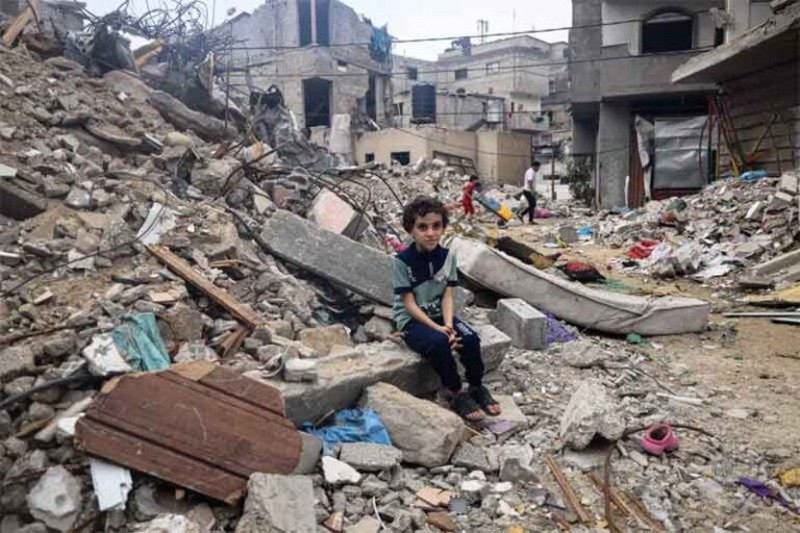
The looming threats of climate catastrophe and nuclear annihilation have been overshadowed this year by Israel’s horrific ongoing genocide of Palestinian civilians in Gaza – up to 50,000 killed, 70% of whom are women and children.For thirteen months straight, unspeakable atrocities have filled our screens and haunted our consciences. We can see clearly that the US government is complicit in Israel’s merciless ethnic cleansing. The bombs that Israel drops on Palestinian children are made in the USA and delivered by the US government. US-backed Israeli wars have now expanded to the Palestine’s West Bank, to Lebanon and to Iran, risking a wider war, possibly even a global war that could “go nuclear.”

According to Wikipedia: “Scholars trying to understand the cause of World War I “look at political, territorial and economic competition; militarism, a complex web of alliances and alignments; imperialism, the growth of nationalism; and the power vacuum created by the decline of the Ottoman Empire.” One hundred and six years after the end of World War I, another such deadly concoction is brewing. War is permanent. Genocide is on TV.  A desperate empire is pushing human civilization toward a tragic end.

NO MORE US BOMBS TO ISRAEL

This year, Veterans For Peace is calling for an Armistice – a permanent Ceasefire in Palestine, Lebanon and throughout the Middle East, and for an end to US arms shipments to Israel.

 “When US bombs stop dropping on Palestinian children, the genocide will end” said VFP Vice President Joshua Shurley.

The 39-year-old veterans’ organization, with chapters in over 100 US cities, recently issued a statement in support of Israeli and US soldiers who refuse to take part genocide, illegal wars and war crimes.

Gerry Condon is Vietnam-era veteran and war resister who is a past president and a current Board member of Veterans For Peace.

10 November 2024

Source: countercurrents.org
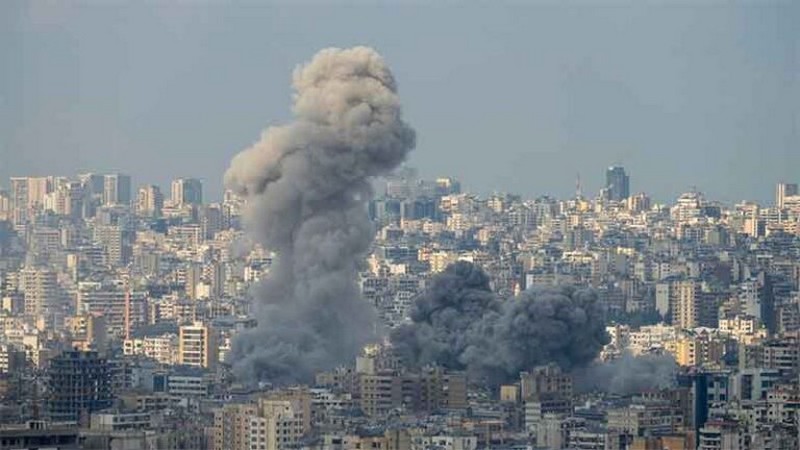
Lessons Learned from an Ongoing Genocide in Gaza

By Ida Audeh

Addressing the UN in September, Israeli Prime Minister Binyamin Netanyahu held up a map of historic Palestine, in which the West Bank and Gaza Strip were not delineated; the whole territory, from the river to the sea, was labeled Israel. Other maps of Israel are even more ambitious and include parts of Lebanon and Syria as well. Israel sees the war with the Palestinians, and now with Lebanon, as an opportunity to change the map of the Arab world to make it more hospitable to Israeli expansionism and domination. The United States had the same impulse after September 2001, seizing the moment to embark on a global program of regime change, to make the world more amenable to U.S. hegemony.

As the genocidal war against Palestinians enters its second year, some things are very clear.

Israel’s wars in Palestine and now Lebanon are joint U.S.-Israeli wars. The U.S. could stop the carnage if it chose to, but it chooses instead to offer full military, tactical, financial and political support to Israel. European countries with colonial and genocidal histories assist Israel to the extent they can. The result is that the most industrial “advanced” countries in the world are supporting the destruction of the Gaza Strip, besieged for the past 17 years, and Lebanon, a country that has teetered on collapse for the past several years. Their goal is to demonstrate that resistance to U.S.-Israeli hegemony is futile. This single fact transforms the war into one with global implications.

Israelis and Palestinians are engaged in an existential battle throughout historic Palestine. If Palestinians lose, they most likely will be ethnically cleansed from the soil of Palestine in a repeat of the 1948 Nakba. (In fact, that process has already begun in the West Bank and in the northern Gaza Strip.) Israeli leaders have threatened this very explicitly, using the word “Nakba” to leave no doubt about their intentions. They have long lamented that the 1948 Nakba had not been more thorough. After Oct. 7, 2023, they saw an opportunity and seized it.

If Israel loses, its colonial experiment—as a Jewish ethnostate representing Western aims in the region and destabilizing the Arab world—comes to an end. Jews who live in Palestine will have to live like everyone else in a non-Zionist state yet to be created. Already tens of thousands of Israelis have decided that the country has no future, and they’ve used their second passports to emigrate.

Both parties know what is at stake. This understanding fuels the savagery of the Israeli army, fully supported by the Israeli people and the Biden administration, and the tenacious resistance of the Palestinian fighters. One year of carpet bombing and bloodletting, and Israel hasn’t managed to accomplish a single one of its stated military aims in Gaza. In fact, one of those goals—securing the release of the Israelis held in Gaza—no longer seems to factor into military considerations at all. It is waging a war of terror on civilians to prepare them for Israel’s Final Solution.

A high civilian death toll is precisely the point for the colonizer. In Gaza, the figure of 42,000 dead used by the health ministry includes only documented deaths; it is clear to everyone that in the massive mounds of rubble throughout the Gaza Strip, decomposing bodies are buried. Lebanon is getting similar treatment, with bombing of residential areas in which entire families are snuffed out.

The U.S. has denounced calls for a ceasefire as unacceptable. It prefers to give Israel time and space to kill civilians, in the hopes of improving Israel’s negotiating position and enabling it to dictate the terms of an end to hostilities. What Israel, the U.S. and other colonial backers have not yet figured out is that atrocities don’t cow people into accepting subjugation. Burying lots of children shot in the head has the uncanny effect of stiffening the backbone and fueling rage, which in turn produces fighters who understand that they cannot negotiate with a savage enemy bent on their destruction. When you’ve lived through the worst you can imagine—loved ones dismembered, relatives shuttled from place to place like sacks of potatoes and bombed anyway, the dead fed to roaming dogs, starvation—what is left for you to fear?

Israel has no red lines. Since its creation, Israel has been supported, armed and politically protected by Western countries. The result is the creation of a powerful, savage Frankenstein that ends Palestinian bloodlines; shoots children in the head; runs torture centers where Palestinian noncombatants are beaten, electrocuted, starved and gang raped; deliberately destroys hospitals and schools; targets U.N. agencies and personnel and makes geographies uninhabitable. The consequences of Western indulgence of Israel are explored in the recent Al Jazeera investigative study, (see p. x) which assembles social media postings from Israeli soldiers. The seeming unawareness by Israeli soldiers that their trophy moments are evidence of war crimes is deeply disturbing to the viewer. They actually believe that no human law applies to them.

Israel’s sabotaging of pagers and walkie-talkies delivered to Lebanon in September is a clear case of state-sponsored terrorism because the devices were remotely detonated as their users were in public spaces. At least 12 were killed and thousands injured; many were blinded. This is on a par with targeting hospitals and medical staff and turning commandeered hospitals into mass graves.

Israel’s assassination of political leaders demonstrates a need to deliver some red meat to the Israeli public in the absence of securing the release of Israelis from Gaza. Its assassination of Hamas political leader Ismail Haniyeh in July in Tehran, followed less than two months later by its assassination of Hezbollah leader Sheikh Hassan Nasrallah in Beirut, were grievous blows to both organizations, but not the knock-out punches that Israel and the U.S. might have hoped. Israel has a long and sordid history of assassinating Palestinian political figures. The Palestinian encyclopedia (<palquest.org>) lists 37 actual and attempted assassinations of Palestinian figures from 1970 to 2019. The resistance movement fighters know that they are marked men, and their organizations have found ways to continue functioning after they are gone. They are honored for their sacrifices.

U.S. officials who support Israel are becoming more freakish and disturbing with each passing month. What can be made of revelations that U.S. Secretary State Antony Blinken signed off on Israeli attacks on humanitarian convoys and buried internal reports concluding that Israel was blocking aid into Gaza. Or plastic-faced State Department spokesman Matthew Miller claiming that Israel is taking steps to allow humanitarian aid into Gaza even as a mountain of evidence shows that famine is widespread, a fact that World Food Program Executive Director Cindy McCain acknowledged?

Even people who don’t care about foreign policy have to be dismayed by the sight of a charlatan like Netanyahu being invited to address Congress and receiving no fewer than 58 standing ovations as he spewed lie after lie about the Israeli army’s conduct in Gaza. What good can come from legislators with such questionable morals and no self-respect, who see fit to give a gracious audience to a foreign war criminal?

This blind support for Israel even as it commits genocide explains at least some of the unease Americans feel when contemplating Gaza. Palestinians are being killed wholesale, but Americans feel threatened, too. U.S. institutions and state agencies have come down harshly on protesters on university campuses. White nationalists who shoot social justice protesters while the police stand by are not very different from Israeli settlers who shoot Palestinians while the army stands by to offer backup support. Whether in Palestine or the United States, dissent is crushed in ways designed to serve as a deterrence for others. State power is absolute and cannot be questioned. Can we live in such a world?

The Israeli army is an effective demolition battalion and mass killer of noncombatants, but it is psychologically defeated. It has destroyed every university in Gaza and most of the hospitals and killed noncombatants without restraint. But when Israeli soldiers come under fire, Palestinian fighters hear them curse their leaders, the same leaders who show no interest in securing the release of Israelis. When Palestinian fighters prepare for an ambush, they regard it as an honor and pay tribute to other brigades and to their fallen leaders—Haniyeh, Nasrallah and those who died years ago, whose names are given to the guns they use. They have a cause they believe in, and they are part of a history and tradition that they understand and honor and believe can liberate Palestine from the river to the sea. They fight for the future; the Israeli cause, incubated in the 19th century, seems increasingly preposterous, a racist setup long rejected by normal people.

The Palestinian resistance is aided by resistance movements in the Arab world. The current war demonstrates that Palestine is an Arab, not exclusively Palestinian, cause. Hezbollah knows that unless Israel is defanged, it will always pose a threat to Lebanon and to the Lebanese people, who are being wiped out like Gazans, entire families at one go. Groups in Iraq, Syria and Yemen, countries that have been ravaged by Western colonial actors, are coming to the aid of the Palestinians because they understand the need to end Western domination of the region.

That domination began more than a century ago, with the Sykes-Picot agreement of 1916, with which the French and British divided the Levant into states and spheres of influence that suited their wishes, indifferent to the histories and wishes of the people. The Balfour Declaration of 1917 generously promised the support of the British government for the creation of a Jewish national homeland in Palestine. The Bush administration (2001-2009) took upon itself the foolhardy mission of implementing regime change in countries it thought should be more malleable to U.S. (and Israeli) wishes, and its wish list included Iraq, Libya and Syria; these countries are now in shambles. Everywhere the U.S. and Israel impose their will, they leave wastelands behind.

The battle waged for the liberation of Palestine calls to mind the battles waged in the epic trilogy Lord of the Rings, where warriors band together to fight against the seemingly crushing evil forces of Sauron. The odds are against them, and they know they won’t all live to see the scourge expunged from the realm, but they must at least try, because to do less would be ignoble.

Palestinians and their allies too, understand what is at stake. As of this writing, Israel is expelling Palestinians from the northern Gaza Strip in the first stages of what it thinks of as a final solution for the matter of the Palestinians. It is laying claim to territories in southern Lebanon to afford itself more living space. The combined Israel-U.S.-Western forces against them are merciless, and they must not be allowed to prevail.

What Israel and the U.S. are doing in Palestine, and now Lebanon, will set precedents for future lawless regimes. Unless the international community sets some red lines and backs them with deterring force, no one will be safe anywhere in the world.

Ida Audeh is senior editor of the Washington Report. This article was first published on the Washington Report on Middle East Affairs website on October 16, 2024

10 November 2024

Source: countercurrents.org