Just International

UK police charge co-founder of Palestine Action under Terrorism Act

By Areeb Ullah

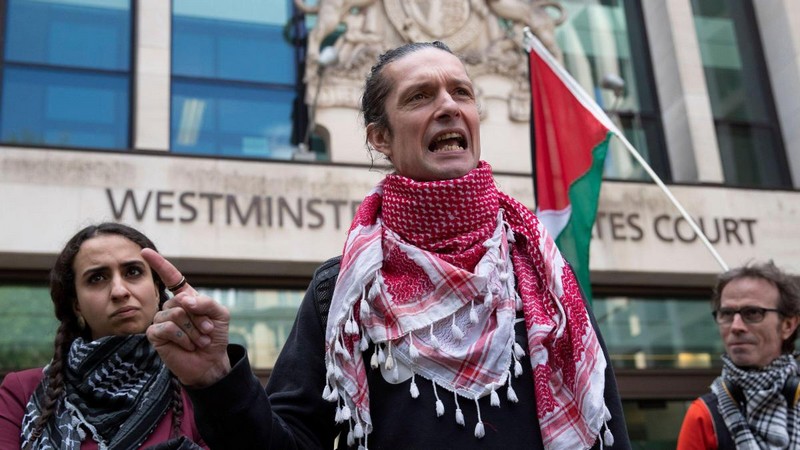
The co-founder of Palestine Action has been charged with violating the Terrorism Act after a series of speeches in Manchester and Bradford.

Richard Barnard stands accused of “expressing an opinion that is supportive of a proscribed organisation contrary to section 12 of the Terrorism Act 2000”.

Barnard, 41, will appear before the Westminster Magistrates’ Court on 18 September, where he also faces two charges of encouraging or intending to encourage criminal damage.

The charges stem from an investigation by the specialised Counter Terrorism Policing North West (CTPNW) unit into a demonstration held on 8 October in Manchester after Hamas launched an attack on southern Israel.

Police have accused Barnard of expressing an opinion or belief in support of a proscribed organisation, namely Hamas, and of encouraging criminal damage.

He also faces an additional charge of encouraging criminal damage for a speech he delivered in Bradford.

Elbit raid

On the same day Barnard was charged, counterterrorism police raided the home of another Palestine Action activist suspected of involvement in a breach at an Elbit Systems research facility.

Last month, police arrested 10 activists who participated in the raid on a factory in Bristol, detaining them without charge under the Terrorism Act. They were later charged with non-terror offences and remanded to prison.

Palestine Action has targeted various Elbit sites across the UK, including factories in Leicester, Oldham and Shenstone, as well as the company’s headquarters in London.

The group employs direct action tactics to disrupt operations and draw attention to Elbit’s role in supplying arms to Israel.

Their typical protests involve occupying factory rooftops, smashing windows, spraying red paint to symbolise bloodshed and shutting down equipment to interrupt the production of military technologies.

Elbit’s weapons have been used in conflicts with Palestinians, including in the ongoing war in Gaza, where Israel faces accusations of genocide at the International Court of Justice (ICJ).

Elbit supplies 85 percent of Israel’s military drones and land-based equipment. It also exports drones, aircraft components, electronics and other military systems to Britain.

Middle East Eye delivers independent and unrivalled coverage and analysis of the Middle East, North Africa and beyond.

30 August 2024

Source: middleeasteye.net

Group which spread lies about 7 October seeks EU funding

By David Cronin

The organization which spread the lies used as a pretext for the genocidal war against Gaza is seeking funds from the European Union.

ZAKA – nominally an emergency rescue group – won praise from Benjamin Netanyahu for playing an important role in influencing public opinion as his government sought international backing during the initial stages of the genocide. Israel’s prime minister repeated claims fabricated by the group that Hamas burned and killed dozens of children on 7 October last year.

European Union diplomats enjoy a warm relationship with ZAKA despite – or perhaps because of – its blatant dishonesty. Dimiter Tzantchev, the EU’s ambassador to Tel Aviv, has contended that the group carries out “hard and holy work.”

[https://twitter.com/DTzantchev/status/1720088670282383776]

[https://twitter.com/AJIunit/status/1771945074840244384]

Documents obtained under freedom of information rules show that Tzantchev’s team has discussed the possibility that ZAKA could receive EU aid.

In January, a ZAKA representative emailed the EU’s Tel Aviv embassy with a request for information about possible funding. The message – see below – referred to an earlier conversation with the embassy on Zoom.

An EU diplomat replied swiftly with a promise that “I will definitely add your name to our distribution list” on calls for funding proposals.

The diplomat notified ZAKA that one such call had just been launched. It concerned the EU Peacebuilding Initiative.

The stated aim of that scheme is “to achieve greater public and political support for the two-state solution among specific constituencies and groups in Israel and Palestine through civil society’s positive engagement.”

Who do these EU officials think they are kidding?

A two-state solution has been a mirage for years, if not decades. At a time when Israel is slaughtering and starving Gaza’s people and intensifying its colonization in the West Bank (including East Jerusalem), Western diplomats remain dedicated to a fantasy whereby historic Palestine is carved up into two viable states.

ZAKA’s correspondence with the EU’s Tel Aviv embassy indicates that it viewed the separate Partnership for Peace program as a future source of money.

That program is ostensibly focused on supporting activities that “promote peace, tolerance and nonviolence in the Middle East.”

ZAKA is committed to none of those things.

Motivated by racism

This week the organization expressed its approval for Israel’s latest ground and air attack on the West Bank.

According to ZAKA, the operation is a “critical step in securing the country” – indicating that it regards the occupied West Bank as part of Israel. The operation is concentrated, ZAKA claimed, on “ ‘refugee’ camps that have become strongholds for Palestinian terror groups.”

By putting scare quotes around the word “refugee,” ZAKA has proven that it is motivated by anti-Palestinian racism.

The camps in question host people who were driven from their homes by Zionist forces during the Nakba – the ethnic cleansing of Palestine between 1947 and 1949 – and their descendants.

No genuine humanitarian would question the accuracy of the term “refugee” in this context. Despite posing as altruistic, ZAKA is smearing victims of a mass expulsion.

ZAKA noted that this week’s operation against the West Bank involved “drones, bulldozers, military and security forces, four battalions of the Israel Border Police and an elite unit of undercover troops” before describing the attack as “necessary.”

It is by no means the first time that ZAKA has endorsed Israel’s acts of extreme violence.

In March, ZAKA defended what it called Israel’s “difficult decision” to invade al-Shifa hospital in Gaza City.

The invasion, ZAKA alleged, was “based on concrete intelligence that senior Hamas officials were using the hospital’s premises to plan and execute terror activities.”

No evidence for that accusation has ever been provided. That has not stopped ZAKA from becoming one of the world’s few, if not the only, “emergency rescue” groups to applaud an offensive in which a major hospital would be destroyed.

By inventing and spreading the main lies used to “justify” the current war on Gaza, ZAKA is complicit in genocide. Such complicity is a recognized and punishable offense under international law.

Rather than holding it and other Israeli bodies accountable, the European Union is giving ZAKA advice on how it can be funded.

29 August 2024

Source: electronicintifada.net

50 STORIES OF PALESTINIAN LIFE UNDER OCCUPATION

June 2017 marks 50 years since Israel began its military occupation of the West Bank, including East Jerusalem, and the Gaza Strip.

Israel’s occupation is a key cause of humanitarian needs, to which the international community responds.

Occupation denies Palestinians control over basic aspects of daily life. Their ability to move unimpeded within their own country, to exit and return, to develop large parts of their territory, build on their own land, access natural resources or develop their economy is largely determined by the Israeli military.

Occupation-related policies have isolated communities, ruptured social cohesion, deprived Palestinians of their human rights, affected economic activity, and undermined their right to self-determination.

The prolonged occupation, with no end in sight, cultivates a sense of hopelessness and frustration that drives continued violence and impacts both Palestinians and Israelis.

At the 50 year mark OCHA has compiled a broad spectrum of case studies featured in recent years. These stories exemplify the Palestinian experience of occupation and its humanitarian impacts.

20 August 2024

Source: ochaopt.org

Shin Bet reveals 21,000 Palestinian prisoners held in Israeli jails

By News Desk

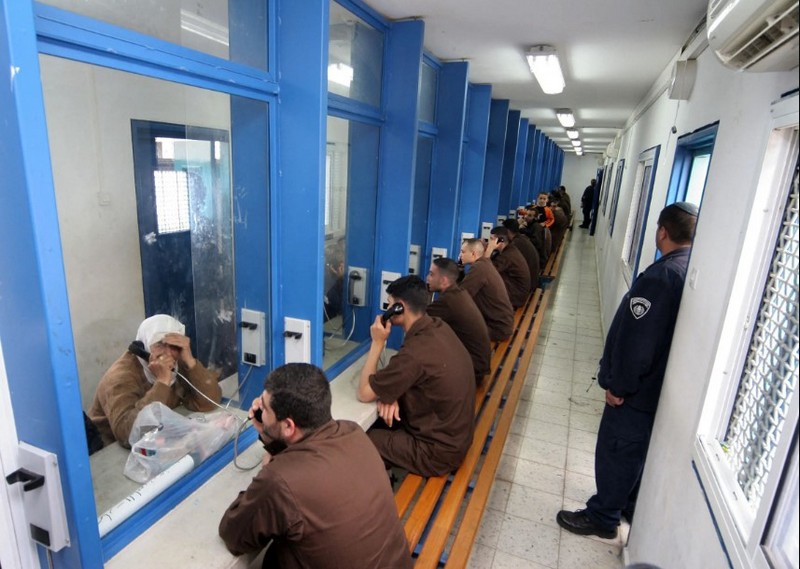
The head of Israel’s Shin Bet security service, Ronen Bar, warned in a recent letter to Israeli Prime Minister Benjamin Netanyahu and National Security Minister Itamar Ben Gvir that 21,000 Palestinians are imprisoned in jails across Israel, referring to the issue as an “incarceration crisis.”

The letter was delivered to Netanyahu and Ben Gvir last week. Its contents were revealed in a report by Hebrew news site Ynet on 2 July.

In the letter, also sent to Israeli police commander Kobi Yacovi and Attorney General Gali Baharav-Miara, Bar warned that “the incarceration crisis constitutes a real strategic crisis,” according to Ynet.

The situation in Israel’s prisons is a “time bomb,” Bar said. “It may also endanger senior Israelis abroad and expose them to international tribunals,” given the fact that the conditions and conduct towards Palestinians in these prisons “borders on abuse.”

Bar strongly criticized Ben Gvir, who is in charge of the prison system, and called “for the cancellation of various measures that harmed the conditions of the prisoners.”

Since Netanyahu’s government assumed power in November 2022, Ben Gvir has significantly tightened already brutal and restrictive measures against Palestinian prisoners. The national security minister has also recently doubled down on his position, demanding the execution of Palestinian prisoners.

The Shin Bet chief goes on to say in his letter that now – after several months of war – the current number of incarcerated people stands at 21,000, despite prison capacity allowing for no more than 14,500.

It was previously assumed that around 9,000 to 10,000 Palestinians were detained across Israeli prisons.

“Emergency legislation allows for the overcrowding of prisons almost without limits. This crisis arose despite warnings that were sent to the Ministry of National Security to prepare for this about a year ago,” Bar said in his letter.

Bar also slammed Ben Gvir for his cancellation of Red Cross visits to the prison.

“Following the 7 October attack, Israel denied rights to prisoners that were acceptable before the war, including those which are obligated in accordance with international law [e.g., Red Cross visits],” Bar said.

He also warned that the prison issue opens individuals within Israel’s government to prosecution at the Hague-based International Criminal Court (ICC), particularly in light of the recent requests by the ICC for arrest warrants against Netanyahu and his defense minister over war crimes in Gaza.

“The issue of prison conditions is well regulated in international law,” he emphasized.

He also warned that the incarceration crisis is significantly harming “the pace and quality” of Israel’s ability to “counter terrorism,” and that in recent months, the security establishment has been forced to cancel arrests of suspects or of “those who are defined as posing a clear and immediate danger to security.”

“Bottom line, the incarceration crisis creates threats to Israel’s national security.”

The director of Al-Shifa Hospital in north Gaza, Dr Mohammed Abu Salmiya, was released from Israeli detention on 1 July, sparking outrage across Israel and within its political establishment. Abu Salmiya is viewed by Israelis as complicit in Hamas’ alleged holding of captives inside Al-Shifa Hospital – one of many claims about the medical facility that Israel has been unable to prove.

He was released alongside dozens of other Palestinian prisoners. Following the release, Israeli officials blamed one another for allowing him to be freed, and Netanyahu said he ordered a probe into the matter.

According to Ynet, Abu Salmiya “was included in a group of ‘low-risk’ detainees who were released as part of the need to help solve the incarceration crisis.”

2 July 2024

Source: thecradle.co

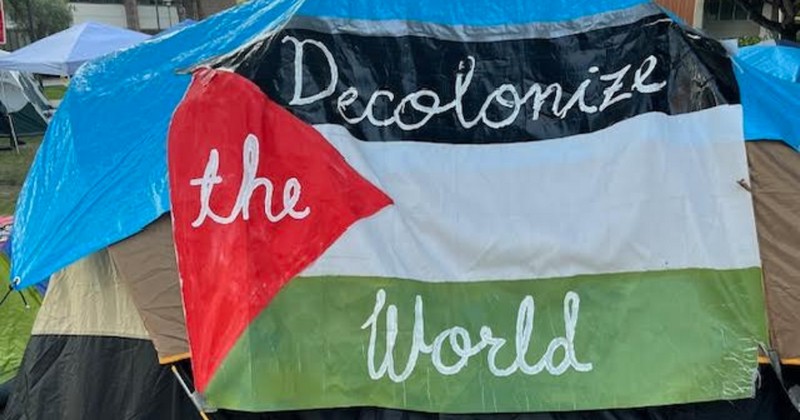
10 Language Do’s & Don’ts for De-Colonizers

By Marcy Winograd

If we want to decolonize Palestine and all lands the US, Israel and client states occupy and genocide (yes, it’s a verb), we need to decolonize our conversations, our vocabulary, our language and our framing. Words can not only evolve our own thinking but the thinking of those around us who may linger on our words long after a conversation ends to question their previous assumptions. Here are 10 do’s and don’ts, along with examples and quotes from advocates for decolonization and demilitarization:

1. Do say “military budget” or “war budget” or “military contractors” or “war contractors” or “merchants of death” when referencing the “defense” budget and war profiteers. 

The term “Merchants of Death” dates back to the days following World War I, when the Senate Munitions Committee held 93 hearings, grilling 200 witnesses, including railroad investment banker J. P. Morgan, Jr., about the undue influence of war profiteers on the decision to enter the first world war.

Sam Pizzigati in American Merchants of Death-Then and Now, writes:

“By the mid-1930s the world was swimming in a weapons-of-war sea, and people still reeling from World War I — the “Great War” — wanted to know why. In the United States, peace-seekers would “follow the money” to find out. Many of America’s moguls, they soon realized, were becoming ever richer off of prepping for war. These “merchants of death” — the era’s strikingly vivid label for war profiteers — had a vested interest in perpetuating the sorts of arms races that make wars more likely. America needed, millions of Americans believed, to take the profit out of war.

Don’t say “defense budget” or “defense contractors” or “Secretary of Defense.” 

The US government’s near-trillion dollar budget for weapons–bunker buster bombs, attack jets, missiles, nuclear warheads–is not defensive but offensive. The Pentagon’s 750 overseas military bases in 80 countries, its war drills in the Pacific and its billions in weapons transfers for Israel engenders global outrage that undermines US security. Weapons dealers who profit from this barbarism are not contracting to defend us but to profit from death and destruction.

2. Do say “US residents” or “US public” when talking about people in the United States because that reference is specific and does not promote the US as the sole representative of the Americas.

Don’t say America and Americans when talking solely about the United States. 

The US is only one country in the Americas and does not represent nor speak for all of North, Central and South America, which is made up of 42 countries!

3. Do say “settler-colonialists” or “settler terrorists” or “settler arsonists” or “terrorist settlements”–when referring to what is often described as simply “settlers” and “settlements.” Instead of the verb “settle”, consider using the verb “stole” or the phrase “stole to settle.”

“Over the centuries our sacred lands have been repeatedly and routinely stolen from us by the governments and peoples of the United States and Canada.” Leonard Peltier Prison Writings:  My Life is My Sundance

Do not simply say “settle” or “settlers” or “settlements” – all of which sound harmless, are devoid of context, and suggest adventurous people pulled themselves up by their bootstraps to build homes on vacant land rather than stole land at gunpoint or set fire to people’s homes in order to steal their property.

4. Do say “Israel’s genocide in Gaza” or “genocidal war on (not in) Gaza” rather than “Israel-Palestinian conflict” because Israel relentlessly bombs Palestinian civilians, destroying hospitals, schools and refugee centers, while blockading water, food and medicine to impose mass starvation on 2.3 million people.  Israel’s assault on Gaza meets UN Convention on Genocide criteria, defining genocide as “Deliberately inflicting on the group conditions of life calculated to bring about its physical destruction in whole or in part;”

Example: Israel’s genocidal war against the Palestinian people in Gaza — who, along with those in the West Bank, East Jerusalem, and inside Israel itself, have been conscripted to serve as involuntary embodiments of the foundational enemy of Israel — has produced unimaginable grief and sorrow. (Angela Davis: Standing with Palestinians. Hammer & Hope. Spring, 2024.)

Do use “genocide” as a verb, even if the dictionary tells you it’s only a noun. Verbs are power words, so when you turn a noun into a verb or verbify it you add a sense of immediacy and urgency.

Do not say Israel-Hamas war because a war implies equal sides with equal  weapons and political power. 

“It is not an “onslaught”. It is not an “invasion”. It is not even a “war”. It is a genocide.” (Andrew Mitrovica. Al Jazeera columnist. October 14, 2023.)

By the same token, don’t say Israeli-Palestinian conflict to refer to Israel’s occupation and ethnic cleansing of Palestine. The word “conflict” again falsely suggests equal sides, often leading to “it’s too complicated”–another conversational dead-end..

Also avoid the words “military campaign” as in “Israel launched its military campaign on Oct. 7, declaring that its aim was to destroy Hamas.” (Washington Post) This is not a campaign of door knocking, petitioning and hand-shaking, but a genocidal assault on 2.3 Palestinians, most of whom had nothing to do with Hamas’ attack on Israel, but nonetheless are trapped in a concentration camp.

5. Do say “torture” when the crime meets the criteria under the UN Convention Against Torture that states “torture” means any act by which severe pain or suffering, whether physical or mental, is intentionally inflicted on a person for such purposes as obtaining from him or a third person information or a confession, punishing him for an act he or a third person has committed.”

On Democracy Now (8/27/24) Amy Goodman headlines a Human Rights Watch investigation into Israel’s torture of Palestinian prisoners in Israeli prisons.

“A new report by Human Rights Watch details the harrowing experiences of eight doctors, nurses and paramedics who were recently held in Israeli prisons, where they described being blindfolded, beaten, held in forced stress positions and handcuffed for extended periods of time. They also reported torture, including rape and sexual abuse, by Israeli forces.

Don’t say “coercive measures” when talking about colonizers inflicting waterboarding, amputations, starvation, rape and other horrors on prisoners.

6. Do use the active voice so that the subject of the sentence performs the action against the object.

Since October 7th, Israel has killed over 40 thousand Gazans and ordered two million to abandon their homes.”

Do not use the passive voice. 

Passive voice puts the object of the sentence before the verb and may leave out the person/persons/country committing the atrocity.

Passive voice: “Since October 7th, over 40,000 Gazans have been killed and an estimated two million made homeless.” Who did the killing? Who uprooted millions of people? We don’t know. People use the passive voice to avoid holding those responsible accountable.

7. Do use the term “weapons” and be specific when referring to what some characterize as “defensive weapons.”

Example: President Biden recently approved another $20 billion in weapons–attack jets, missiles– for Israel’s genocide in Gaza.”

Do not use the term “defensive weapons” because so-called defensive weapons, such as ”missile defense shields,” enable the aggressor to escalate without fear of retribution. A “defensive” weapon can be used for offensive purposes.

8. Do say Israeli Occupation Forces when referring to the Israeli military because the Israeli military is occupying land, air and sea in Gaza, East Jerusalem, the West Bank and Israel inside the pre-1976 Green Line, where Israel expelled 800,000 Palestinians in the 1948 Nakba or catastrophe of ethnic cleansing.

Do not say “Israel Defense Forces” because Israel is the aggressor, occupying, terrorizing and genociding Palestinians.

9. Do say nuclear rearmament when referring to the US developing new nuclear weapons. 

The US, in violation of the UN Nuclear Non-Proliferation Treaty, pursues nuclear rearmament, developing  warheads at least 20 times more deadly than the atomic bomb that incinerated 200,000 Japanese in Hiroshima and Nagasaki in 1945.

Do not say “nuclear modernization” because the US is not “modernizing”–a benign term that conjures up images of redecorating a kitchen. The US is not modernizing its nuclear weapons but pursuing nuclear rearmament to eventually budget over a trillion dollars to produce new nuclear warheads.

WRONG USAGE: “US nuclear policy is aimed at deterring Russia through the modernization of the US arsenal.” (CNN3/1/18)

10. Do say “military exercises” or  “war drills” when referring to massive US-driven military maneuvers in preparation for war.

Hawaiian activists Kawena’ulaokalã Kapahua and Joy Lehuanani Enomoto write in US-Led Military Exercises in Pacific Wreak Havoc, “Every two years, the Indo-Pacific Command Center of the United States convenes the largest maritime war exercises on the planet” … “RIMPAC as a symptom of the U.S.  empire has immense environmental and cultural ramifications. Geopolitically, the exercises are used to control trade routes, train genocidal regimes and posture against China.”

Do not say “war games” when referencing RIMPAC (Rim of the Pacific), a 29 nation military exercise involving 40 ships, three submarines, 150 military aircraft and 25,000 troops on the island of Oahu and the waters off Hawaii–all to prepare for war with China. The word “games” makes us think of charades or backgammon or soccer–not drills for a third world war that could end the human race.

Those are a few of the do’s and don’ts to consider as we decolonize our conversations to avoid unintentionally reinforcing the status quo of empire, plunder and subjugation. This is not to suggest that anti-imperialists become language cops policing words and phrases or–even worse–canceling each other after a slip of the tongue.

At a time when we yearn for the power to stop US-Israel genocide–when in disbelief we witness utter sociopathy and global complicity in ongoing atrocities, we must continue to protest, disrupt and organize–to raise our voices of resistance to the sky– while also quietly choosing our words with intention.

Marcy Winograd volunteers as the coordinator of CODEPINK Congress and is a local leader of CODEPINK Santa Barbara and the Central Coast Antiwar Coalition.

29 August 2024

Source: codepink.org

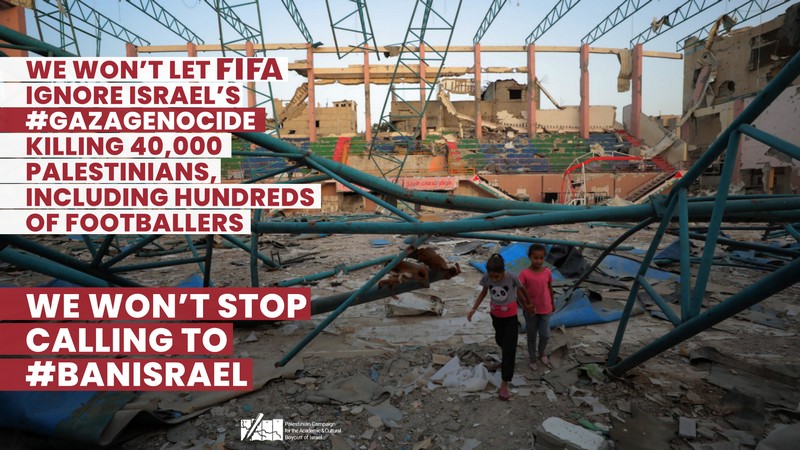
Fifa Wants To Keep Its Vote on Banning Israel Quiet. Let’s Make Some Noise.

By Palestinian Campaign for the Academic and Cultural Boycott of Israel (PACBI)

FIFA wants to keep its vote on banning Israel quiet.

Let’s make some noise.

FIFA wants to ignore Israel’s livestreamed Gaza genocide and the tens of thousands of Palestinians it has murdered in the past months, including hundreds of athletes, coaches, referees, and club owners.

FIFA wants to ignore that Israel has damaged or destroyed all sports infrastructure in Gaza, some after using them as detention and torture camps.

FIFA wants to ignore Israel’s football teams in Israeli settlements on occupied Palestinian land despite the recent ICJ ruling reconfirming they are illegal, in fact a war crime.

FIFA to ignore that Israel is an apartheid state that must be banned, just as apartheid South Africa was in 1961.

FIFA wants to ignore rampant racism and dehumanization in Israeli sports, including the banner at a recent Israeli match saying the lives of Jewish-Israeli children are worth more than those of Palestinian children, not to mention Israeli football fans’ favorite anthem, “Death to the Arabs!”

FIFA wants to ignore Israel’s recent violent attack on the headquarters of the Palestinian Football Association in Jerusalem.

FIFA wants to ignore calls from the 47-member Asian Football Confederation and more than 500,000 signatories, to ban Israel.

By the end of this month, FIFA will vote on banning Israel.

Let’s make sure FIFA can’t ignore Israel’s genocide and sporticide against Palestinians. 

Tell FIFA: We won’t stop calling to ban apartheid Israel from football!

The global calls to ban Israel from sports have kept the spotlight on its attacks on Palestinian life, rights, liberty and sports.

We have no illusions on the lengths that Western dominated FIFA, and its corrupt president Gianni Infantino, will go to in order to shield Israel from accountability, even as it carries out a livestreamed genocide and escalate its 76-year-old regime of settler-colonial apartheid.

Instead, we have every faith in people power. We call for continued peaceful disruption of ALL Israeli participation in regional and international sports, including the upcoming Nations League matches against Italy, France and Belgium. 

When governments and institutions fail to uphold justice and stop Israel’s #GazaGenocide, people of conscience must shoulder the moral responsibility to isolate apartheid Israel, just as apartheid South Africa was isolated.

26 August 2024

Source: bdsmovement.net

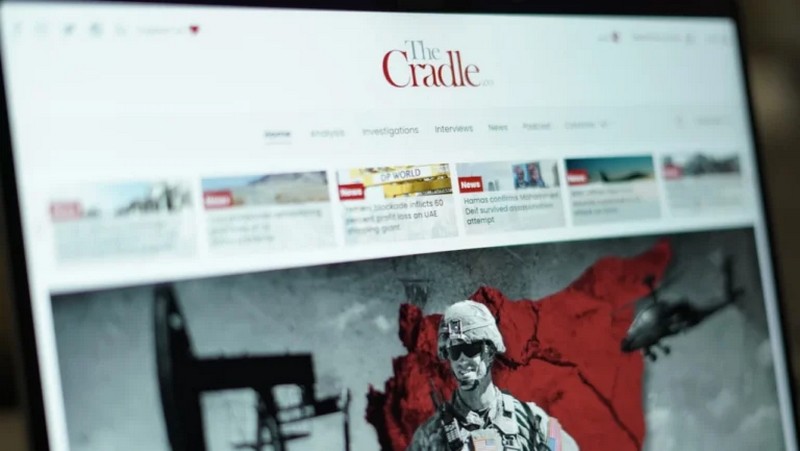
Meta Permanently Bans The Cradle in Latest Attack on Free Speech

By The Cradle

The social media giant has singled out an independent West Asian media outlet, as it intensifies its crackdown on Palestinian and regional voices, both on its platforms and among its employees.

19 Aug 2024 – On 16 August, Facebook and Instagram parent company Meta permanently banned The Cradle from its social media platforms for allegedly violating community guidelines by “praising terrorist organizations” and engaging in “incitement to violence.”

“No one can see or find your account, and you can’t use it. All your information will be permanently deleted,” reads the message accompanying the ban on Instagram, where The Cradle had surpassed 107,000 followers and amassed millions of views.

“You cannot request another review of this decision,” the message ends, despite the fact the ban came with little warning or any chance for review.

The Cradle is an independent, journalist-owned news website that covers the geopolitics of West Asia from a West Asian perspective. Since 2021, the publication has made a name for itself by covering regional developments with the kind of breadth and depth – and nuance – that often go missing in mainstream corporate media.

Meta’s accusations of “praising terrorist organizations” and engaging in “incitement to violence” largely stem from posts and videos that relay information or quotes from West Asian resistance movements like Hamas, Hezbollah, and Ansarallah – blacklisted by many western governments  – who are an essential part of the news stories unfolding in a region on the precipice of a major war. 

It is also essential to recognize that these are major West Asian political organizations that have deep institutional and civic roots within Lebanon, Palestine, and Yemen and are part of the very fabric of these societies. They are represented in governance, run schools, hospitals, and utilities, and disperse salaries to millions of civilian workers.

Ironically, many of The Cradle‘s Meta-flagged quotes on these organizations also come from Israeli and western officials:

TO CONTINUE READING Go to Original – thecradle.co

26 August 2024

Source: transcend.org

Accusations of US Regime-Change Operations in Pakistan & Bangladesh Warrant UN Attention

By Jeffrey D. Sachs

The very strong evidence of the U.S. role in toppling the government of Imran Khan in Pakistan raises the likelihood that something similar may have occurred in Bangladesh.

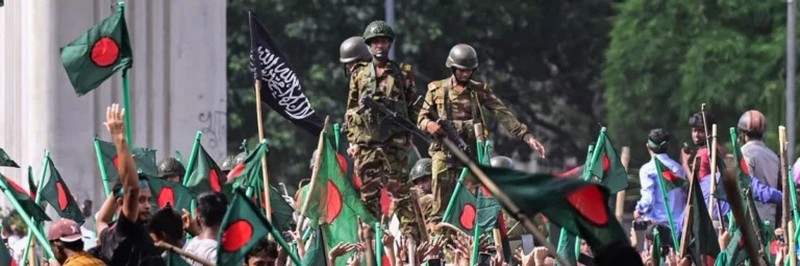
19 Aug 2024 – Two former leaders of major South Asian countries have reportedly accused the United States of covert regime change operations to topple their governments. One of the leaders, former Pakistan Prime Minister Imran Khan, languishes in prison, on a perverse conviction that proves Khan’s assertion. The other leader, former Bangladesh Prime Minister Sheik Hasina, fled to India following a violent coup in her country. Their grave accusations against the U.S., as reported in the world media, should be investigated by the UN, since if true, the U.S. actions would constitute a fundamental threat to world peace and to regional stability in South Asia.

The two cases seem to be very similar. The very strong evidence of the U.S. role in toppling the government of Imran Khan raises the likelihood that something similar may have occurred in Bangladesh.

In the case of Pakistan, Donald Lu, Assistant Secretary of State for South Asia and Central Asia, met with Asad Majeed Khan, Pakistan’s Ambassador to the U.S., on March 7, 2022. Ambassador Khan immediately wrote back to his capital, conveying Lu’s warning that PM Khan threatened U.S.-Pakistan relations because of Khan’s “aggressively neutral position” regarding Russia and Ukraine.

The Ambassador’s March 7 note (technically a diplomatic cypher) quoted Assistant Secretary Lu as follows: “I think if the no-confidence vote against the Prime Minister succeeds, all will be forgiven in Washington because the Russia visit is being looked at as a decision by the Prime Minister. Otherwise, I think it will be tough going ahead.” The very next day, members of the parliament took procedural steps to oust PM Khan.

On March 27, PM Khan brandished the cypher, and told his followers and the public that the U.S. was out to bring him down. On April 10, PM Khan was thrown out of office as the parliament acceded to the U.S. threat.

We know this in detail because of Ambassador Khan’s cypher, exposed by PM Khan and brilliantly documented by Ryan Grim of The Intercept, including the text of the cypher. Absurdly and tragically, PM Khan languishes in prison in part over espionage charges, linked to his revealing the cypher.

The U.S. appears to have played a similar role in the recent violent coup in Bangladesh. PM Hasina was ostensibly toppled by student unrest, and fled to India when the Bangladeshi military refused to prevent the protestors from storming the government offices. Yet there may well be much more to the story than meets the eye.

According to press reports in India, PM Hasina is claiming that the U.S. brought her down. Specifically, she says that the U.S. removed her from power because she refused to grant the U.S. military facilities in a region that is considered strategic for the U.S. in its “Indo-Pacific Strategy” to contain China. While these are second-hand accounts by the Indian media, they track closely several speeches and statements that Hasina has made over the past two years.

On May 17, 2024, the same Assistant Secretary Liu who played a lead role in toppling PM Khan, visited Dhaka to discuss the US Indo-Pacific Strategy among other topics. Days later, Sheikh Hasina reportedly summoned the leaders of the 14 parties of her alliance to make the startling claim that a “country of white-skinned people” was trying to bring her down, ostensibly telling the leaders that she refused to compromise her nation’s sovereignty. Like Imran Khan, PM Hasina had been pursuing a foreign policy of neutrality, including constructive relations not only with the U.S. but also with China and Russia, much to the deep consternation of the U.S. government.

To add credence to Hasina’s charges, Bangladesh had delayed signing two military agreements that the U.S. had pushed very hard since 2022, indeed by none other than the former Under-Secretary of State Victoria Nuland, the neocon hardliner with her own storied history of U.S. regime-change operations. One of the draft agreements, the General Security of Military Information Agreement (GSOMIA), would bind Bangladesh to closer military-to-military cooperation with Washington. The Government of PM Hasina was clearly not enthusiastic to sign it.

The U.S. is by far the world’s leading practitioner of regime-change operations, yet the U.S. flatly denies its role in covert regime change operations even when caught red-handed, as with Nuland’s infamous intercepted phone call in late January 2014 planning the U.S.-led regime change operation in Ukraine. It is useless to appeal to the U.S. Congress, and still less the executive branch, to investigate the claims by PM Khan and PM Hasina. Whatever the truth of the matter, they will deny and lie as necessary.

This is where the UN should step in. Covert regime change operations are blatantly illegal under international law (notably the Doctrine of Non-Intervention, as expressed for example in UN General Assembly Resolution 2625, 1970), and constitute perhaps the greatest threat to world peace, as they profoundly destabilize nations, and often lead to wars and other civil disorders. The UN should investigate and expose covert regime change operations, both in the interests of reversing them, and preventing them in the future.

The UN Security Council is of course specifically charged under Article 24 of the UN Charter with “primary responsibility for the maintenance of international peace and security.” When evidence arises that a government has been toppled through the intervention or complicity of a foreign government, the UN Security Council should investigate the claims.

In the cases of Pakistan and Bangladesh, the UN Security Council should seek the direct testimony of PM Khan and PM Hasina in order to evaluate the evidence that the U.S. played a role in the overthrow of the governments of these two leaders. Each, of course, should be protected by the UN for giving their testimony, so as to protect them from any retribution that could follow their honest presentation of the facts. Their testimony can be taken by video conference, if necessary, given the tragic ongoing incarceration of PM Khan.

The U.S. might well exercise its veto in the UN Security Council to prevent such a investigation. In that case, the UN General Assembly can take up the matter, under UN Resolution A/RES/76/, which allows the UN General Assembly to consider an issue blocked by veto in the UN Security Council. The issues at stake could then be assessed by the entire membership of the UN. The veracity of the U.S. involvement in the recent regime changes in Pakistan and Bangladesh could then be objectively analyzed and judged on the evidence, rather than on mere assertions and denials.

The U.S. engaged in at least 64 covert regime change operations during 1947-1989, according to documented research by Lindsey O’Rourke, political science professor at Boston Collage, and several more that were overt (e.g. by U.S.-led war). It continues to engage in regime-change operations with shocking frequency to this day, toppling governments in all parts of the world. It is wishful thinking that the U.S. will abide by international law on its own, but it is not wishful thinking for the world community, long suffering from U.S. regime change operations, to demand their end at the United Nations.

Jeffrey D. Sachs, Professor of Sustainable Development and Professor of Health Policy and Management at Columbia University, is Director of Columbia’s Center for Sustainable Development and the UN Sustainable Development Solutions Network.

26 August 2024

Source: transcend.org

Ten Theses on the Far Right of a Special Type

By Vijay Prashad

Fascism is an insufficient term, as it denies the intimacy between liberal and far right forces. We present ten theses to understand this ‘intimate embrace’ and the rise of this far right of a special type.

15 Aug 2024 – There has been widespread consternation about how to understand Donald Trump’s emergence as a serious candidate for US president since 2016. Far from an isolated phenomenon, Trump rose to power alongside other strongmen such as Viktor Orbán (prime minister of Hungary since 2010), Recep Tayyip Erdoğan (president of Turkey since 2014), and Narendra Modi (prime minister of India since 2014). People like this, who came to power and cemented their rule through liberal institutions, seem to be impossible to permanently remove through the ballot box. It has become clear that a rightward shift is taking place in liberal democratic states, whose constitutions emphasise multi-party elections while allowing the space for one-party rule to be gradually established.

The concept of liberal democracy was and is a highly contested concept that emerged from European and US colonial powers in the 18th and 19th centuries. Its claims of internal pluralism and tolerance, the rule of law, and the separation of political powers came at the same time as its colonial conquests and its use of the state to maintain class power over its own societies. Liberalism today cannot be easily reconciled with the fact that the North Atlantic Treaty Organisation (NATO) countries account for 74.3% of world military spending.

Countries with constitutions that emphasise multi-party elections have increasingly seen the gradual establishment of what is effectively one-party rule. This one-party rule may at times be masked by the existence of two or even three parties, concealing the reality that the difference between these parties has become increasingly negligible.

It has become apparent that a new kind of right wing has emerged not only through elections but by exerting dominance in the arenas of culture, society, ideology, and the economy, and that this new kind of right wing is not necessarily concerned with overthrowing the norms of liberal democracy. This is what we called ‘the intimate embrace between liberalism and the far right’, following the writings of our late senior fellow Aijaz Ahmad.

The formulation of this ‘intimate embrace’ allows us to understand that there is no necessary contradiction between liberalism and the far right and indeed that liberalism is not a shield against the far right, and certainly not its antidote. Four theoretical elements are key to understanding this ‘intimate embrace’ and the rise of this far right of a special type:

  1. Neoliberal austerity policies in countries with liberal electoral institutions vanquished the social welfare schemes that had allowed liberal sensibilities to exist. The state’s failure to take care of the poor turned into a harshness toward them.
  2. Without a serious commitment to social welfare and redistributionist schemes, liberalism itself drifted into the world of far-right policies. These include increased spending on the internal repressive apparatus that polices working-class neighbourhoods and international borders alongside the increasingly stingy distribution of social goods, disbursed only if the recipients allow themselves to be stripped of basic human rights (such as by ‘agreeing’ to the obligatory use of birth control).
  3. In this terrain, the far right of a special type found that it became more and more accepted as a political force given the turn by the parties of liberalism to the policies for which the far right had advocated. In other words, this tendency to draw from far-right policies allowed the far right to become mainstream.
  4. Finally, the political forces of liberalism and the far right unified across the board to diminish the left’s grasp on institutions. The far right and its liberal counterparts have no fundamental economic differences regarding class. In the imperialist countries, there is a very high confluence of viewpoints on maintaining US hegemony, hostility and contempt for the Global South, and increased jingoism, as seen by the full-throttled military support for the genocide Israel is conducting against Palestinians.

After the defeat of Italian, German, and Japanese fascism in 1945, commentators in the West worried about the incubation of the far right in their societies. Most Marxists, meanwhile, recognised that the far right had not emerged out of nothing, but out of the contradictions of capitalism itself. The collapse of the Third Reich was only a phase in the history of the far right and the development of capitalism: it would emerge again, perhaps wearing different clothes.

In 1964, the Polish Marxist Michał Kalecki wrote the stimulating article ‘The Fascism of Our Times’ (‘Faszyzm naszych czasów’). In that essay, Kalecki said that the new kinds of fascistic groups that were emerging at the time appealed ‘to the reactionary elements of the broad masses of the population’ and were ‘subsidised by the most reactionary groups of big business’. However, Kalecki wrote, ‘the ruling class as a whole, even though it does not cherish the idea of fascist groups seizing power, does not make any effort to suppress them and confines itself to reprimands for overzealousness’. This attitude persists today: the ruling class as a whole fears not the rise of these fascist groups, but only their ‘excessive’ behaviour, while the most reactionary sections of big business support these groups financially.

A decade and a half later, when Ronald Reagan seemed to be on the threshold of becoming the president of the United States, Bertram Gross published Friendly Fascism: The New Face of Power in America (1980), which drew liberally from The Power Elite (1956) by C. Wright Mills and Monopoly Capital: An Essay on the American Economic and Social Order (1966) by Paul A. Baran and Paul M. Sweezy. Gross argued that since large monopolistic firms had strangled democratic institutions in the United States, the far right did not require jackboots and swastikas: this orientation would come through the very institutions of liberal democracy. Who needs tanks when you have the banks to do the dirty work?

The warnings of Kalecki and Gross remind us that the intimacy between liberalism and the far right is not a new phenomenon but one that emerges from deep within liberalism’s capitalist origins: liberalism was never going to be anything but the friendly face of capitalism’s normal brutality.

Liberals are using the word ‘fascism’ to distance themselves from the far right. This use of the term is more moralistic than precise since it denies the intimacy between liberals and the far right. To that end, we have formulated ten theses on this far right of a special type, which we hope will provoke discussion and debate. This is a provisional statement, an invitation to a dialogue.

Thesis One. The far right of a special type uses democratic instruments as much as possible. It believes in the process known as the ‘long march through the institutions’, through which it patiently builds political power and staffs the permanent institutions of liberal democracy with its cadre, who then push their views into mainstream thought. Educational institutions are also key to the far right of a special type since they determine the syllabi for students in their respective countries. There is no need for this far right of a special type to set aside these democratic institutions as long as they provide the path to power not just over the state, but over society.

Thesis Two. The far right of a special type is driving the attrition of the state and transferring its functions to the private sector. In the United States, for instance, its proclivity for austerity is helping gut the quantity and quality of cadre in core state functions, such as the US Department of State. Many of the functions of such institutions, now privatised, instead take place under the auspices of non-governmental organisations led by newly emergent billionaire capitalists such as Charles Koch, George Soros, Pierre Omidyar, and Bill Gates.

Thesis Three. The far right of a special type uses the repressive apparatus of the state as much as is legally permissible to silence its critics and demobilise movements of economic and political opposition. Liberal constitutions provide wide latitude for this kind of use, which liberal political forces have taken advantage of over time to quell any resistance from the working class, peasantry, and left.

Thesis Four. The far right of a special type incites a homeopathic dose of violence in society by the more fascistic elements within its political coalition to create fear, but not enough fear to turn people against it. Most middle-class people the world over seek convenience and are disturbed by inconvenience to themselves (such as that produced by riots, etc.). But, on occasion, an arms-length assassination of a labour leader or an arms-length threat made to a journalist is not blamed on the far right of a special type, which often hastily denies any direct association with the fringe fascistic groups (which are nonetheless linked organically to the far right).

Thesis Five. The far right of a special type provides a partial answer to the loneliness that is woven into the fabric of advanced capitalist society. This loneliness stems from the alienation of precarious working conditions and long hours, which corrode the possibility of building a vibrant community and social life. This far right does not build an actual community, except when it comes to its parasitic relationship with religious communities. Instead, it develops the idea of community, community through the internet or community through mass mobilisations of individuals or community through shared symbols and gestures. The immense hunger for community is apparently solved by the far right, while the essence of loneliness melts into anger rather than love.

Thesis Six. The far right of a special type uses its proximity to private media conglomerates to normalise its discourse and its proximity to the owners of social media to increase the societal acceptance of its ideas. This highly agitational discourse creates a frenzy, mobilising sections of the population either online or in the streets to participate in rallies where they nonetheless remain individuals rather than members of a collective. The feeling of loneliness generated by capitalist alienation is dulled for a moment, but not overcome.

Thesis Seven. The far right of a special type is a tentacular organisation, with its roots spread across various sectors of society. It operates wherever people gather, whether in sports clubs or charitable organisations. It aims to build a mass base in society rooted in the majority identity in a given place (whether race, religion, or a sense of national being) by marginalising and demonising any minority. In many countries, this far right relies upon religious structures and networks to ever-more deeply embed a conservative view of society and the family.

Thesis Eight. The far right of a special type attacks the institutions of power that are the very foundation of its socio-political basis. It creates the illusion of being plebian rather than patrician, when in fact it is deep in the pockets of the oligarchy. It creates the illusion of the plebian by developing a highly masculine form of hyper-nationalism, the decadence of which drips out in its ugly rhetoric. This far right straddles the testosterone power of this hyper-nationalism while playing up its portrayed victimhood in the face of power.

Thesis Nine. The far right of a special type is an international formation, organised through various platforms such as Steve Bannon’s The Movement (based in Brussels), the Vox party’s Madrid Forum (based in Spain), and the anti-LGBTQ+ Fellowship Foundation (based in Seattle, Washington). These groups are rooted in a political project in the Atlantic world that enhances the role of the right wing in the Global South and provides them with the funds to deepen right-wing ideas where they have little fertile soil. They create new ‘problems’ where they did not exist at this scale before, such as the fanfare over sexuality in eastern Africa. These new ‘problems’ weaken peoples’ movements and tighten the right’s grip over society.

Thesis Ten. Though the far right of a special type might present itself as a global phenomenon, there are differences between how it manifests in the leading imperialist countries versus the Global South. In the Global North, both liberals and the far right vigorously defend the privileges that they have gained through plunder over the past five hundred years – through their military and other means – while in the Global South the general tendency amongst all political forces is to establish sovereignty.

The far right of a special type is emerging in a period defined by hyper-imperialism to mask the actuality of hideous power and pretend that it cares about the isolated individuals that it instead harms. It knows human folly well and preys on it.

Vijay Prashad is an Indian historian, editor and journalist. He is a writing fellow and chief correspondent at Globetrotter.

26 August 2024

Source: transcend.org

US: Democratic National Convention Fiddles while the World Burns

By Medea Benjamin and Nicolas J. S. Davies

21 Aug 2024 – An Orwellian disconnect haunts the 2024 DNC. In the isolation of the convention hall, shielded from the outside world behind thousands of armed police, few of the delegates seem to realize that their country is on the brink of direct involvement in major wars with Russia and Iran, either of which could escalate into World War III.

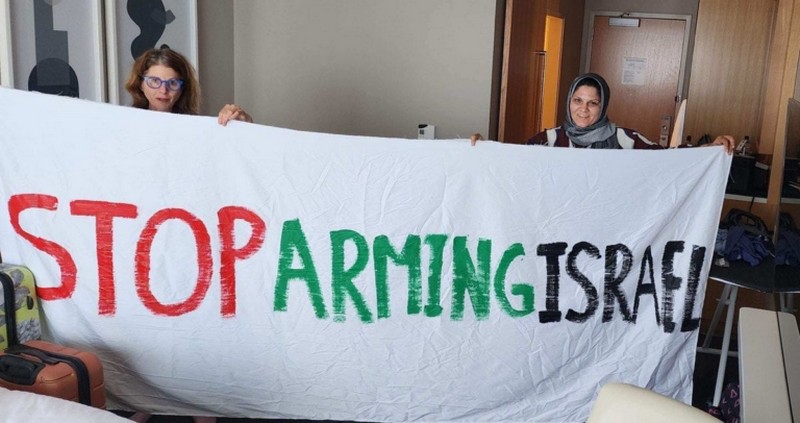
Inside the hall, the mass slaughter in the Middle East and Ukraine are treated only as troublesome “issues,” which “the greatest military in the history of the world” can surely deal with. Delegates who unfurled a banner that read “Stop Arming Israel” during Biden’s speech on Monday night were quickly accosted by DNC officials, who instructed other delegates to use “We ❤️ Joe” signs to hide the banner from view.

In the real world, the most explosive flashpoint right now is the Middle East, where U.S. weapons and Israeli troops are slaughtering tens of thousands of Palestinians, mostly children and families, at the bidding of Israel’s Benjamin Netanyahu. And yet, in July, Democrats and Republicans leapt to their feet in 23 standing ovations to applaud Netanyahu’s warmongering speech to a joint session of Congress.

In the week before the DNC started, the Biden administration announced its approval for the sale of $20 billion in weapons to Israel, which would lock the US into a relationship with the Israeli military for years to come.

Netanyahu’s determination to keep killing without restraint in Gaza, and Biden and Congress’s willingness to keep supplying him with weapons to do so, always risked exploding into a wider war, but the crisis has reached a new climax. Since Israel has failed to kill or expel the Palestinians from Gaza, it is now trying to draw the United States into a war with Iran, a war to degrade Israel’s enemies and restore the illusion of military superiority that it has squandered in Gaza.

To achieve its goal of triggering a wider war, Israel assassinated Fuad Shukr, a Hezbollah commander, in Beirut, and Hamas’s political leader and chief ceasefire negotiator, Ismail Haniyeh, in Tehran. Iran has vowed to respond militarily to the assassinations, but Iran’s leaders are in a difficult position. They do not want a war with Israel and the United States, and they have acted with restraint throughout the massacre in Gaza. But failing to respond strongly to these assassinations would encourage Israel to conduct further attacks on Iran and its allies.

The assassinations in Beirut and Tehran were clearly designed to elicit a response from Iran and Hezbollah that would draw the U.S. into the war. Could Iran find a way to strike Israel that would not provoke a U.S. response? Or, if Iran’s leaders believe that is impossible, will they decide that this is the moment to actually fight a seemingly unavoidable war with the U.S. and Israel?

This is an incredibly dangerous moment, but a ceasefire in Gaza would resolve the crisis. The U.S. has dispatched CIA Director William Burns, the only professional diplomat in Biden’s cabinet, to the Middle East for renewed ceasefire talks, and Iran is waiting to see the result of the talks before responding to the assassinations.

Burns is working with Qatari and Egyptian officials to come up with a revised ceasefire proposal that Israel and Hamas can both agree to. But Israel has always rejected any proposal for more than a temporary pause in its assault on Gaza, while Hamas will only agree to a real, permanent ceasefire. Could Biden have sent Burns just to stall, so that a new war wouldn’t spoil the Dems’ party in Chicago?

The United States has always had the option of halting weapons shipments to Israel to force it to agree to a permanent ceasefire. But it has refused to use that leverage, except for the suspension of a single shipment of 2,000 lb bombs in May, after it had already sent Israel 14,000 of those horrific weapons, which it uses to systematically smash living children and families into unidentifiable pieces of flesh and bone.

Meanwhile the war with Russia has also taken a new and dangerous turn, with Ukraine invading Russia’s Kursk region. Some analysts believe this is only a diversion before an even riskier Ukrainian assault on the Russian-held Zaporizhzhia nuclear power plant. Ukraine’s leaders see the writing on the wall, and are increasingly ready to take any risk to improve their negotiating position before they are forced to sue for peace.

But Ukraine’s recent incursion into Russia, while applauded by much of the west, has actually made negotiations less likely. In fact, talks between Russia and Ukraine on energy issues were supposed to start in the coming weeks. The idea was that each side would agree not to target the other’s energy infrastructure, with the hope that this could lead to more comprehensive talks. But after Ukraine’s invasion toward Kursk, the Russians pulled out of what would have been the first direct talks since the early weeks of the Russian invasion.

President Zelenskyy remains in power three months after his term of office expired, and he is a great admirer of Israel. Will he take a page from Netanyahu’s playbook and do something so provocative that it will draw U.S. and NATO forces into the potentially nuclear war with Russia that Biden has promised to avoid?

A 2023 U.S. Army War College study found that even a non-nuclear war with Russia could result in as many U.S. casualties every two weeks as the wars in Afghanistan and Iraq did in two decades, and it concluded that such a war would require a return to conscription in the United States.

While Gaza and Eastern Ukraine burn in firestorms of American and Russian bombs and missiles, and the war in Sudan rages on unchecked, the whole planet is rocketing toward catastrophic temperature increases, ecosystem breakdown and mass extinctions. But the delegates in Chicago are in la-la land about U.S. responsibility for that crisis too.

Under the slick climate plan Obama sold to the world in Copenhagen and Paris, Americans’ per capita CO2 emissions are still double those of our Chinese, British and European neighbors, while U.S. oil and gas production have soared to all-time record highs.

The combined dangers of nuclear war and climate catastrophe have pushed the hands of the Doomsday Clock all the way to 90 seconds to midnight. But the leaders of the Republican and Democratic parties are in the pockets of the fossil fuel industry and the military-industrial complex. Behind the election-year focus on what the two parties disagree about, the corrupt policies they both agree on are the most dangerous of all.

President Biden recently claimed that he is “running the world.” No oligarchic American politician will confess to “running the world” to the brink of nuclear war and mass extinction, but tens of thousands of Americans marching in the streets of Chicago and millions more Americans who support them understand that that is what Biden, Trump and their cronies are doing.

The people inside the convention hall should shake themselves out of their complacency and start listening to the people in the streets. Therein lies the real hope, maybe the only hope, for America’s future.

Medea Benjamin is cofounder of CODEPINK for Peace, and author of several books, including Inside Iran: The Real History and Politics of the Islamic Republic of Iran.

Nicolas J. S. Davies is an independent journalist, a researcher with CODEPINK and the author of  Blood on Our Hands: The American Invasion and Destruction of Iraq.

26 August 2024

Source: transcend.org