Just International

Terror attack on Lebanon opens new front in US-Israeli war in Middle East

By Andre Damon

On Tuesday and Wednesday, thousands of mobile communication devices rigged with explosives by Israel detonated throughout Lebanon, killing dozens of people, including members of the Iranian-backed Hezbollah organization, and wounding thousands.

The mass terror bombings by Israel against the people of Lebanon are a flagrant war crime. They violate the laws of war regarding assassination, treachery and the prohibition of indiscriminate bombing.

“International humanitarian law prohibits the use of booby traps—objects that civilians are likely to be attracted to or are associated with normal civilian daily use—precisely to avoid putting civilians at grave risk and produce the devastating scenes that continue to unfold across Lebanon,” said Lama Fakih, Middle East and North Africa Director at Human Rights Watch, in a statement.

“Fatima was in the kitchen on Tuesday when a pager on the table began to beep,” her aunt said. “She picked up the device to bring it to her father and was holding it when it exploded, mangling her face and leaving the room covered in blood,” she said. “Fatima was trying to take courses in English,” Ms. Mousawi said. “She loved English.”

While these crimes were committed by the Israeli government and military, they were orchestrated with the help of the limitless financial, military and political support of the United States and other imperialist powers for Israel as part of their drive to subjugate and dominate the Middle East.

At Wednesday’s White House press briefing, the usually composed White House spokesman John Kirby could not help visibly sneering as he denied US responsibility for or foreknowledge of the terrorist attack. “We were not involved,” Kirby said, grinning from ear to ear.

Meanwhile, officials of the Democratic Party openly gloated about this act of mass murder. “I fully support efforts to target and neutralize any existential threat like Hezbollah,” wrote Democratic US Senator John Fetterman on X, after sharing a screenshot of the news report of the attack.

Israel’s attack on Lebanon aims to massively escalate its war with the country, in which hundreds of people have been killed since October of last year. Just hours before the start of the bombings, Israel’s security cabinet met to declare that it had “updated the objectives of the war” to include returning Israeli residents to northern Israel, a euphemism for escalating Israel’s war against Hezbollah in Lebanon.

On Wednesday, Israeli Defense Minister Yoav Gallant reported that the Army’s 98th Division, which includes commandos and paratroopers, is being transferred from Gaza to northern Israel.

“The ‘center of gravity’ is moving north, meaning that we are allocating forces, resources and energy for the northern arena,” Gallant said.

The transfer of Israeli forces to the north does not mean any let-up in the suffering of Gaza’s population, who are totally besieged and being systematically starved and denied access to water, electricity and medical care. Since October, more than 40,000 Palestinians have been killed by Israel, according to the official death toll, while a study published in The Lancet suggested the real death toll could be 186,000 or more.

The attack on Lebanon is the latest in a series of provocations by Israel, supported by the United States, with the aim of provoking war not only against Lebanon but also against Iran.

In April, an Israeli strike killed a group of Iranian military officers meeting in Damascus, to which Iran responded with a strike on Israel with 300 missiles and drones, nearly all of which were intercepted. In July, Israel assassinated Fuad Shukr, senior member of Hezbollah, with a strike in Beirut, followed by the assassination of Hamas political leader Ismail Haniyeh at a military guesthouse in Iran.

Israel’s terrorist attacks throughout Lebanon mark a new stage in the criminalization of imperialist foreign policy and set a precedent for the legitimization of terrorist attacks on both political leaders and the broader civilian population.

Hezbollah is one of the largest political parties in Lebanon and until 2022 held the dominant position in the country’s parliament. Many of those targeted were not soldiers but politicians, professionals and administrators. And with thousands of bombs detonating throughout the country, many bystanders with no connection to Hezbollah to begin with, including two children, were killed in the blasts.

A precedent is being set, by means of which the definition of war is being expanded to include what was previously defined as terrorism. The effect is to legitimize such prohibited methods as the booby-trapping of everyday objects with the aim of assassinating both individual members of the civilian population and causing mass indiscriminate killing and maiming.

This has implications far beyond the Middle East. Throughout the past 50 years, actions by the state of Israel have been used to set a precedent for US global policy. The most significant example is the doctrine of “targeted killing,” that is, state-sanctioned assassination.

In November 2000, Israel became the first state in the world to “openly acknowledge that it operated a policy of targeted killing,” wrote Nils Melzer, who served as United Nations Special Rapporteur on Torture, in 2009. Soon after, the United States moved “to openly adopt the method of targeted killing.”

The US conducted its first known drone strike outside a war zone, in Yemen in 2002. In 2011, US-born cleric Anwar al-Awlaki and his son, both US citizens, were killed in separate drone strikes in Yemen. In 2020, a US drone strike in Iraq killed Qasem Soleimani, a high-ranking Iranian military official, while on an official visit to Iraq.

As with the adoption of “targeted killing,” the war crimes now being committed by Israel will become the new baseline for even greater crimes by the United States and other imperialist powers.

Israel’s terrorist attack was denounced, entirely hypocritically, by the pseudo-left enablers of the Gaza genocide. “This attack clearly and unequivocally violates international humanitarian law and undermines US efforts to prevent a wider conflict,” wrote Democratic Representative Alexandria Ocasio-Cortez.

Far from conflicting with US policy in the Middle East, as Ocasio-Cortez claimed, Israel’s offensive against Lebanon is proceeding with the full support of the Biden-Harris administration.

In July, Israeli Prime Minister Benjamin Netanyahu delivered an address to both houses of Congress in which he vowed to expand the genocide in Gaza into a war against Lebanon and Iran. Following Netanyahu’s address to Congress, he met with Vice President Kamala Harris, who vowed, “I will always ensure that Israel is able to defend itself, including from Iran and Iran-backed militias, such as Hamas and Hezbollah.”

American imperialism is expanding its war throughout the Middle East as part of a global military offensive targeting Russia and China. At the very moment when thousands of explosives were going off throughout Lebanon, the US was finalizing plans, expected to come into effect later this month, to allow Ukraine to carry out virtually unlimited strikes on Russia using NATO weapons, threatening an escalation into global nuclear war.

The US-Israeli terrorist attack against Lebanon is a warning. As the US embarks upon wars all over the world in order to defend its global hegemony, it is willing to use the methods of mass murder and terrorism to achieve its aims.

19 September 2024

Source: countercurrents.org
Standing at Gaza Border Felt Like Visiting Auschwitz: Burmese Genocide Scholar Maung Zarni

The United Nations is warning about widespread human rights abuses in Burma as the military regime intensifies the killings and arbitrary arrests of tens of thousands of civilians since seizing power in a coup over three years ago. A new report from the U.N. High Commissioner for Human Rights says many of those detained by the Burmese military are children taken from their parents, with dozens of minors dying in custody. “What it paints is an extremely disturbing picture of Burma descending into this human rights abyss. If you’re living there, it’s a complete living hell,” says Burmese scholar, dissident and human rights activist Maung Zarni. He also discusses his recent visit with faith leaders to the West Bank and the border of Gaza, drawing parallels between Burma’s and Israel’s human rights abuses. “Israel has taken the practices and policies of genocide to a whole new level,” says Zarni.

GUESTS

Maung Zarni

Burmese dissident, co-founder of the Forces of Renewal for Southeast Asia, or FORSEA.

AMY GOODMAN: This is Democracy Now! I’m Amy Goodman, with Nermeen Shaikh.

NERMEEN SHAIKH: The United Nations is warning Burma is “plumbing the depths of a human rights abyss” as the military regime intensifies the killings and arbitrary arrests of tens of thousands of civilians since seizing power in a coup over three years ago. The gruesome findings are part of a new U.N. human rights report detailing how the Burmese military detained children who were taken from their parents. Dozens of those children have died in custody.

We end today’s show with Maung Zarni, a Burmese genocide scholar and human rights activist who’s been a vocal critic of the Burmese junta and Israel’s war on Gaza and the Israeli occupation.

AMY GOODMAN: In August, Maung Zarni traveled to the occupied West Bank and the Gaza border.

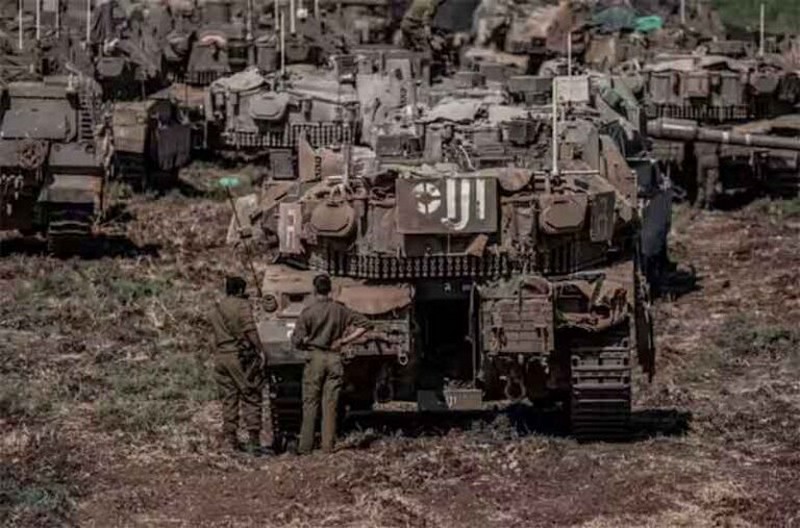
MAUNG ZARNI: Here at this Rafah crossing, sandwiched between Israel and Egyptian border, I feel like I am standing outside a giant concentration camp. When I see the tanks coming in and out, hearing airstrikes, I feel like I am once again visiting Auschwitz.

AMY GOODMAN: Maung Zarni, Burmese genocide scholar and human rights activist, joins us now from Kent, England, co-founder of the Forces of Renewal for Southeast Asia, or FORSEA.

Welcome back, Zarni, to Democracy Now! It’s so important to have you with us. Talk about the groups you traveled to the Gaza border and to the West Bank with and your thoughts not only about what’s happening there, but comparisons to what’s going on, the horror that’s going on in Burma right now.

MAUNG ZARNI: Well, Amy, I am greatly indebted to the North American-based, particularly the U.S.-based Rabbis for Ceasefire and Christians for Ceasefire, as well as the Jerusalem-based liberation theologian group called Sabeel. And these three organizations facilitated a visit of the 28-member delegation. And most of the delegates are, you know, clergymen and clergywomen and people of faith. And I am, rather, a humanist, a human rights activist, but nonetheless I joined them, because I wanted to bear witness to what’s happening.

As you know, you have — you know, I’ve covered my own native country of Burma for 30 years and since we have known each other. And Burma and Israel, we regained our — Burma regained independence in 1948. Israel established itself as a sovereign state in 1948. They had what Golda Meir called a love affair. And these newly independent states after the Second World War are now undergoing a genocide trial or, you know, proceedings at the International Court of Justice. And so, you know, Burma is no stranger when it comes to mass atrocities.

What I found in Israel actually shocked me more than what I was prepared. You know, I have studied genocide for decades, and I’ve studied Nazi genocide, Cambodian genocide, my own country’s so-called Buddhist genocide of Rohingya people in western Burma. But Israel has taken the practices and policies of genocide to a whole new level. You know, what I found there — I’ve said this, as well, in other forums — a vast ecosystem of genocidal methodologies or methods.

That is to say that Israel has invented, very creatively, a system of depopulating the pre-1967 Palestine land using different methods, separating different pockets of subpopulation of Palestinians, from Gaza as open-air prison to other various parts of West Bank, you know, five- or six-tier citizenships with severely limited basic and fundamental rights, the severely — you know, severe restriction of life’s essentials, like access to food system, agricultural land, not just simply confiscating massive agricultural land, you know, across Israel. The chicken farms that Israeli companies run, and settlers, that have set up fantastic stone houses in communities fenced off, have chickens. Let me put this this way. Chickens in Israel, in Israeli companies’ farm, have far more access to water and electricity than Palestinian villages and people. And checkpoints, 810-kilometer-long wall — and it’s not just for security purposes. It is actually — the U.N. said it in 2005 — the wall, 810-kilometer-long wall, has been the prime driver behind mass deprivation — in other words, mass poverty of Palestinian people. And so, it’s rather frightening.

And Ramallah, you know, it’s thriving, the city, a bubble. But the locals tell me that the Israeli IDF and security agency will come in and do anything they want, and Palestinian Authority is completely helpless and that they cannot do nothing. They cannot protect the Palestinian people, even in Ramallah — forget about West Bank and other places.

Land confiscation. You know, we came very close to being tear-gassed by the IDF because we were supporting a farm family that have been evicted after their farm has been confiscated in Jerusalem, UNESCO World Heritage agricultural areas. And so, the Hebrew-speaking local colleagues in Jerusalem area who were with us told us that we need to vacate the place because the IDF is going to start firing tear gas and stun guns or grenades.

NERMEEN SHAIKH: So, Zarni, finally, we want to turn to what’s going on in Burma. If you could respond to the new U.N. human rights report and their warning about what’s going on in Burma?

MAUNG ZARNI: Yeah. The new U.N. human rights report cover a one-year period since spring of 2023. What it says — what it paints is an extremely disturbing picture of Burma descending into this human rights abyss. You know, if you’re living there, it’s a complete living hell. You know, 3 million people are being displaced by a civil war between the army, on one hand, and various — you know, the pro-democracy or pro-ethnic liberation armed groups. You know, then we got hit by the typhoon over the last 10 days, and another 700,000 people, they’re displaced and dispossessed.

And so, the only problem is that in the past the Burmese military, the junta, has been the number one or sole perpetrator of egregious human rights crime, but since the coup three years ago, we have a mushrooming of armed organizations in the name of like a pro-democracy movement, and they join hands with different ethnic or ethnonationalist organizations. And so, there are organizations, such as Arakan Army, which represent the Buddhist Rakhine in western Myanmar. Now they are —

AMY GOODMAN: We have 15 seconds, Maung Zarni.

MAUNG ZARNI: — [inaudible] permitting genocide. Yeah.

AMY GOODMAN: We want to thank you so much for being with us. Of course, we’ll continue to cover what’s happening in Burma and also in Gaza and the West Bank. Maung Zarni, Burmese dissident, human rights activist, scholar of genocide, co-founder of the Forces of Renewal for Southeast Asia, speaking to us from Kent.

Very happy belated birthday to Sam Alcoff! That does it for our show. Democracy Now! produced with Mike Burke, Renée Feltz, Deena Guzder, Messiah Rhodes, Nermeen Shaikh, María Taracena, Tami Woronoff, Charina Nadura, Sam Alcoff. I’m Amy Goodman, with Nermeen Shaikh. Thanks for joining us.

19 September 2024

Source: democracynow.org

A Centrist Muslim Alliance Against an Extremist Israel?

By Juan Cole

At least one thing is now obvious in the Middle East: the Biden administration has failed abjectly in its objectives there, leaving the region in dangerous disarray. Its primary stated foreign policy goal has been to rally its partners in the region to cooperate with the extremist Israeli government of Benjamin Netanyahu while upholding a “rules-based” international order and blocking Iran and its allies in their policies. Clearly, such goals have had all the coherence of a chimera and have failed for one obvious reason. President Biden’s Achilles heel has been his “bear hug” of Netanyahu, who allied himself with the Israeli equivalent of neo-Nazis, while launching a ruinous total war on the people of Gaza in the wake of the horrific October 7th Hamas terrorist attack on Israel.

Biden also signed on to the Abraham Accords, a project initiated in 2020 by Jared Kushner, the son-in-law and special Middle East envoy of then-President Donald Trump. Through them the United Arab Emirates, Bahrain, and Morocco all agreed to recognize Israel in return for investment and trade opportunities there and access to American weaponry and a U.S. security umbrella. Not only did Washington, however, fail to incorporate Saudi Arabia into that framework, but it has also faced increasing difficulty keeping the accords themselves in place given increasing anger and revulsion in the region over the high (and still ongoing) civilian death toll in Gaza. Typically, just the docking of an Israeli ship at the Moroccan port of Tangier this summer set off popular protests that spread to dozens of cities in that country. And that was just a taste of what could be coming.

Breathtaking Hypocrisy

Washington’s efforts in the Middle East have been profoundly undermined by its breathtaking hypocrisy. After all, the Biden team has gone blue in the face decrying the Russian occupation of parts of Ukraine and its violations of international humanitarian law in killing so many innocent civilians there. In contrast, the administration let the government of Prime Minister Benjamin Netanyahu completely disregard international law when it comes to its treatment of the Palestinians. This summer, the International Court of Justice ruled that the entire Israeli occupation of Palestinian territories is illegal in international law and, in response, the U.S. and Israel both thumbed their noses at the finding. In part as a response to Washington’s Israeli policy, no country in the Middle East and very few nations in the global South have joined in its attempt to ostracize Vladimir Putin’s Russia.

Worse yet for the Biden administration, the most significant divide in the Arab world between secular nationalist governments and those that favor forms of political Islam has begun to heal in the face of the perceived Israeli threat. Turkey and Egypt, daggers long drawn over their differing views of the Muslim Brotherhood, the fundamentalist movement that briefly came to power in Cairo in 2012-2013, have begun repairing their relationship, specifically citing the menace posed by Israeli expansionism.

The persistence of Secretary of State Antony Blinken in pressing Saudi Arabia, a key U.S. security partner, to recognize Israel at a moment when the Arab public is boiling with anger over what they see as a campaign of genocide in Gaza, is the closest thing since the Trump administration to pure idiocracy. Washington’s pressure on Riyadh elicited from Saudi Crown Prince Mohammed Bin Salman the pitiful plea that he fears being assassinated were he to normalize relations with Tel Aviv now. And consider that ironic given his own past role in ordering the assassination of Saudi journalist Jamal Khashoggi. In short, the ongoing inside-the-Beltway ambition to secure further Arab recognition of Israel amid the annihilation of Gaza has America’s security partners wondering if Washington is trying to get them killed — anything but a promising basis for a long-term alliance.

Global Delegitimization

The science-fiction-style nature of U.S. policy in the Middle East is starkly revealed when you consider the position of Jordan, which has a peace treaty with Israel. In early September, its foreign minister, Ayman Safadi, warned that any attempt by the Israeli military or its squatter-settlers to expel indigenous West Bank Palestinians to Jordan would be considered an “act of war.” While such anxieties might once have seemed overblown, the recent stunning (and stunningly destructive) Israeli military campaign on the Palestinian West Bank, including bombings of populated areas by fighter jets, has already begun to resemble the campaign in Gaza in its tactics. And keep in mind that, as August ended, Foreign Minister Israel Katz even urged the Israeli army to compel Palestinians to engage in a “voluntary evacuation” of the northern West Bank.

Not only is the expulsion of Palestinians from there now the stated policy of cabinet members like Jewish Power extremist Itamar Ben-Gvir; it’s the preference of 65% of Israelis polled. And mind you, when Israel and Jordan begin talking war you know something serious is going on, since the last time those two countries actively fought was in the 1973 October War during the administration of President Richard Nixon.

In short, Netanyahu and his extremist companions are in the process of undoing all the diplomatic progress their country achieved in the past half-century. Ronen Bar, the head of Israel’s domestic Shin Bet intelligence agency, warned in August that the brutal policies the extremists in the government were pursuing are “a stain on Judaism” and will lead to “global delegitimization, even among our greatest allies.”

Turkey, a NATO ally with which the U.S. has mutual defense obligations, has become vociferous in its discontent with President Biden’s Middle Eastern policy. Although Turkey recognized Israel in 1949, under President Recep Tayyip Erdogan of the pro-Islam Justice and Development Party interactions had grown rocky even before the Gaza nightmare. Still, until then their trade and military ties had survived occasional shouting matches between their politicians. The Gaza genocide, however, has changed all that. Erdogan even compared Netanyahu to Hitler, and then went further still, claiming that, in the Rafah offensive in southern Gaza in May, “Netanyahu has reached a level with his genocidal methods that would make Hitler jealous.”

Worse yet, the Turkish president, referred to by friend and foe as the “sultan” because of his vast power, has now gone beyond angry words. Since last October, he’s used Turkey’s position in NATO to prohibit that organization from cooperating in any way with Israel on the grounds that it’s violating the NATO principle that harm to civilians in war must be carefully minimized. The Justice and Development Party leader also imposed an economic boycott on Israel, interrupting bilateral trade that had reached $7 billion a year and sending the price of fruits and vegetables in Israel soaring, while leading to a shortage of automobiles in the Israeli market.

Erdogan’s Justice and Development Party represents the country’s small towns and rural areas and its Muslim businesses and entrepreneurs, constituencies that care deeply about the fate of Muslim Palestinians in Gaza. And while Erdogan’s high dudgeon has undoubtedly been sincere, he’s also pleasing his party’s stalwarts in the face of an increasing domestic challenge from the secular Republican People’s Party. In addition, he’s long played to a larger Arab public, which is apoplectic over the unending carnage in Gaza.

The Alliance of Muslim Countries

Although it was undoubtedly mere bluster, Erdogan even threatened a direct intervention on behalf of the beleaguered Palestinians. In early August, he said, “Just as we intervened in Karabakh [disputed territory between Azerbaijan and Armenia], just as we intervened in Libya, we will do the same to them.” In early September, the Turkish president called for an Islamic alliance in the region to counter what he characterized as Israeli expansionism:

“Yesterday, one of our own children, [Turkish-American human rights advocate] Ayşenur Ezgi Eygi, was vilely slaughtered [on the West Bank]. Israel will not stop in Gaza. After occupying Ramallah [the de facto capital of that territory], they will look around elsewhere. They’ll fix their eyes on our homeland. They openly proclaim it with a map. We say Hamas is resisting for the Muslims. Standing against Israel’s state terror is an issue of importance to the nation and the country. Islamic countries must wake up as soon as possible and increase their cooperation. The only step that can be taken against Israel’s genocide is the alliance of Muslim countries.”

In fact, the present nightmare in Gaza and the West Bank may indeed be changing political relationships in the region. After all, the Turkish president pointed to his rapprochement with Egypt as a building block in a new security edifice he envisions. Egyptian President Abdel Fattah al-Sisi made his first visit to Ankara on September 4th (following a February Erdogan trip to Cairo). And those visits represented the end of a more than decade-long cold war in the Sunni Muslim world over al-Sisi’s 2013 coup against elected Muslim Brotherhood Egyptian President Mohamed Morsi, whom Erdogan had backed.

Despite its apparent embrace of democratic norms in 2012-2013, some Middle Eastern rulers charged the Brotherhood with having covert autocratic ambitions throughout the region and sought to crush it. For the moment, the Muslim Brotherhood and other forms of Sunni political Islam have been roundly defeated in Egypt, Syria, Tunisia, and the Persian Gulf region. Erdogan, a pragmatist despite his support for the Brotherhood and its offshoot Hamas, had been in the process of getting his country the best possible deal, given such a regional defeat, even before the Israelis struck Gaza.

Netanyahu’s Forever War in Gaza

For his part, Egypt’s al-Sisi is eager for greater leverage against Netanyahu’s apparent plan for a forever war in Gaza. After all, the Gaza campaign has already inflicted substantial damage on Egypt’s economy, since Yemen’s Houthis have supported the Gazans with attacks on container ships and oil tankers in the Red Sea. That has, in turn, diverted traffic away from it and from the Suez Canal, whose tolls normally earn significant foreign exchange for Egypt. In the first half of 2024, however, it took in only half the canal receipts of the previous year. Although tourism has held up reasonably well, any widening of the war could devastate that industry, too.

Egyptians are also reportedly furious over Netanyahu’s occupation of the Philadelphi Corridor south of the city of Rafah in Gaza and his blithe disregard of Cairo’s prerogatives under the Camp David agreement to patrol that corridor. The al-Sisi government, which, along with Qatar’s rulers and the Biden administration, has been heavily involved in hosting (so far fruitless) peace negotiations between Hamas and Israel, seems at the end of its tether, increasingly angered at the way the Israeli prime minister has constantly tacked new conditions onto any agreements being discussed, causing the talks to fail.

For months, Cairo has also been seething over Netanyahu’s charge that Egypt allowed tunnels to be built under that corridor to supply Hamas with weaponry, insisting that the Egyptian army had diligently destroyed 1,500 such tunnels. Egypt’s position was given support recently by Nadav Argaman, a former head of Shin Bet, who said, “There is no connection between the weaponry found in Gaza and the Philadelphi Corridor.” Of Netanyahu, he added, “He knows very well that no smuggling takes place over the Philadelphi Corridor. So, we are now relegated to living with this imaginary figment.”

In the Turkish capital, Ankara, Al-Sisi insisted that he wanted to work with Erdogan to address “the humanitarian tragedy that our Palestinian brothers in Gaza are facing in an unprecedented disaster that has been going on for nearly a year.” He underscored that there was no daylight between Egypt and Turkey “regarding the demand for an immediate ceasefire, the rejection of the current Israeli escalation in the West Bank, and the call to start down a path that achieves the aspirations of the Palestinian people to establish their independent state on the borders of June 4, 1967, with East Jerusalem as its capital.” He also pointed out that such positions are in accord with U.N. Security Council resolutions and pledged to work with Turkey to ensure that humanitarian aid was delivered to Gaza despite “the ongoing obstacles imposed by Israel.”

To sum up, the ligaments of American influence in the Middle East are now dissolving before our very eyes. Washington’s closest allies, like the Jordanian and Saudi royal families, are terrified that Biden’s bear hug of Netanyahu’s war crimes and the fury of their own people could, in the end, destabilize their rule. Countries that, not so long ago, had correct, if not warm, relations with Israel like Egypt and Turkey are increasingly denouncing that country and its policies. And the alliance of U.S. partners in the region with Israel against Iran that Washington has long worked for seems to be coming apart at the seams. Countries like Egypt and Turkey are instead exploring the possibility of forming a regional Sunni Muslim alliance against Netanyahu’s geopolitics of Jewish power that might, in the end, actually reduce tensions with Tehran.

That things have come to such a pass in the Middle East is distinctly the fault of the Biden administration and its position — or lack of one — on Israel’s nightmare in Gaza (and now the West Bank, too). Today, all too sadly, that administration is wearing the same kind of blinkers regarding the war in Gaza that President Lyndon B. Johnson and his top officials once sported when it came to the Vietnam War.

Juan Cole, a TomDispatch regular, is the Richard P. Mitchell collegiate professor of history at the University of Michigan.

17 September 2024

Source: countercurrents.org
​​To the Israeli Soldier Who Murdered Aysenur Ezgi Eygi

By Chris Hedges

I know you. I met you in the dense canopies in the war in El Salvador. It was there that I first heard the single, high-pitched crack of the sniper bullet. Distinct. Ominous. A sound that spreads terror. Army units I traveled with, enraged by the lethal accuracy of rebel snipers, set up heavy .50 caliber machine guns and sprayed the foliage overhead until your body, a bloodied and mangled pulp, dropped to the ground.

I saw you at work in Basra in Iraq and of course Gaza, where on a fall afternoon at the Netzarim Junction, you shot dead a young man a few feet away from me. We carried his limp body up the road.

I lived with you in Sarajevo during the war. You were only a few hundred yards away, perched in high rises that looked down on the city. I witnessed your daily carnage. At dusk, I saw you fire a round in the gloom at an old man and his wife bent over their tiny vegetable plot. You missed. She ran, haltingly, for cover. He did not. You fired again. I concede the light was fading. It was hard to see. Then, the third time, you killed him. This is one of those memories of war I see in my head over and over and over and never talk about. I watched it from the back of the Holiday Inn, but by now I have seen it, or the shadows of it, hundreds of times.

You targeted me, too. You struck down colleagues and friends. I was in your sights traveling from northern Albania into Kosovo with 600 fighters from the Kosovo Liberation Army, each insurgent carrying an extra AK-47 to hand off to a comrade. Three shots. That crisp crack, too familiar. You must have been far away. Or maybe you were a bad shot, although you came close. I scrambled for cover behind a rock. My two bodyguards bent over me, panting, the green pouches strapped to their chests packed full of grenades.

I know how you talk. The black humor. “Pint sized terrorists” you say of the children you kill. You are proud of your skills. It gives you cachet. You cradle your weapon as if it is an extension of your body. You admire its despicable beauty. This is who you are. A killer.

In your society of killers, you are respected, rewarded, promoted. You are numb to the suffering you inflict. Maybe you enjoy it. Maybe you think you are protecting yourself, your identity, your comrades, your nation. Maybe you believe the killing is a necessary evil, a way to make sure Palestinians die before they can strike. Maybe you have surrendered your morality to the blind obedience of the military, subsumed yourself into the industrial machinery of death. Maybe you are scared to die. Maybe you want to prove to yourself and others that you are tough, you can kill. Maybe your mind is so warped that you believe killing is righteous.

You are intoxicated by the god-like power to revoke another person’s charter to live on this earth. You revel in the intimacy of it. You see in fine detail through the telescopic sight, the nose and mouth of your victim. The triangle of death. You hold your breath. You pull slowly, gently on the trigger. And then the pink puff. Severed spinal cord. Death. It is over.

You were the last person to see Aysenur alive. You were the first person to see her dead.

This is you now. And now no one can reach you. You are death’s angel. You are numb and cold. But, I suspect, this will not last. I covered war for a long time. I know, even if you do not, the next chapter of your life. I know what happens when you leave the embrace of the military, when you are no longer a cog in these factories of death. I know the hell you are about to enter.

It starts like this. All the skills you acquired as a killer on the outside are useless. Maybe you go back. Maybe you become a gun for hire. But this will only delay the inevitable. You can run, for a while, but you cannot run forever. There will be reckoning. And it is the reckoning I will tell you about.

You will face a choice. Live the rest of your life, stunted, numb, cut off from yourself, cut off from those around you. Descend into a psychopathic fog, trapped in the absurd, interdependent lies that justify mass murder. There are killers, years later, who say they are proud of their work, who claim not a moment’s regret. But I have not been inside their nightmares. If this is you then you will never again truly live.

Of course, you do not talk about what you did to those around you, certainly not to your family. They think you are a good person. You know this is a lie. The numbness, usually, wears off. You look in the mirror, and if you have any shred of conscience left, your reflection disturbs you. But you repress the bitterness. You escape down the rabbit hole of opioids and alcohol. Your intimate relationships, because you cannot feel, because you bury your self-loathing, disintegrate. This escape works. For a while. But then you go into such darkness that the stimulants you use to blunt your pain begin to destroy you. And maybe that is how you die. I have known many who died like that. And I have known those who ended it quickly. A gun to the head.

Between 1973 and 2024, 1,227 Israeli soldiers committed suicide according to official statistics, but the actual number is believed to be far higher. In the U.S. an average of 16 veterans commit suicide every day.

I have trauma from war. But the worst trauma I do not have. The worst trauma from war is not what you saw. It is not what you experienced. The worst trauma is what you did. They have names for it. Moral injury. Perpetrator Induced Traumatic Stress. But that seems tepid given the hot, burning coals of rage, the night terrors, the despair. Those around you know something is terribly, terribly wrong. They fear your darkness. But you do not let them into your labyrinth of pain.

And then, one day, you reach out for love. Love is the opposite of war. War is about smut. It is about pornography. It is about turning other human beings into objects, maybe sexual objects, but I also mean this literally, for war turns people into corpses. Corpses are the end product of war, what comes off its assembly line. So, you will want love, but the angel of death has made a Faustian bargain. It is this. It is the hell of not being able to love. You will carry this death inside you for the rest of your life. It corrodes your soul. Yes. We have souls. You sold yours. And the cost is very, very high. It means that what you want, what you most desperately need in life, you cannot attain.

Then one day, maybe you are a father or a mother or an uncle or an aunt, and a young woman you love, or want to love as a daughter, comes into your life. You see in her, it will come in a flash, Aysenur’s face. The young woman you murdered. Come back to life. Israeli now. Speaking Hebrew. Innocent. Good. Full of hope. The full force of what you did, who you were, who you are, will hit you like an avalanche.

You will spend days wanting to cry and not knowing why. You will be consumed by guilt. You will believe that because of what you did the life of this other young woman is in danger. Divine retribution. You will tell yourself this is absurd, but you will believe it anyway. Your life will start to include little offerings of goodness to others as if these offerings will appease a vengeful god, as if these offerings will save her from harm, from death. But nothing can wipe away the stain of murder.

Yes. You killed Aysenur. You killed others. Palestinians who you dehumanized and taught yourself to hate. Human animals. Terrorists. Barbarians. But it is harder to dehumanize her. You know, you saw it through your scope, she was no threat. She did not throw rocks, the paltry justification the Israeli army uses to shoot live rounds at Palestinians, including children.

You will be overwhelmed with sorrow. Regret. Shame. Grief. Despair. Alienation. You will have an existential crisis. You will know that all the values you were taught to honor in school, at worship, in your home, are not the values you upheld. You will hate yourself. You will not say this out loud. You may, one way or another, extinguish yourself.

There is a part of me that says you deserve this torment. There is a part of me that wants you to suffer for the loss you inflicted on Aysenur’s family and friends, to pay for taking the life of this courageous and gifted woman.

Shooting unarmed people is not bravery. It is not courage. It is not even war. It is a crime. It is murder. You are a murderer. I am sure you were not ordered to kill Aysenur. You shot Aysenur in the head because you could, because you felt like it. Israel runs an open-air shooting gallery in Gaza and the West Bank. Total impunity. Murder as sport.

You will, one day, not be the killer you are now. You will exhaust yourself trying to ward off demons. You will desperately want to be human. You will want to love and be loved. Maybe you will make it. Being human again. But that will mean a life of contrition. It will mean making your crime public. It will mean begging, on your knees, for forgiveness. It will mean forgiving yourself. This is very hard. It will mean orientating every aspect of your life to nurturing life rather than extinguishing it. This will be your only hope for salvation. If you do not take it, you are damned.

Chris Hedges is a Pulitzer Prize-winning journalist who was a foreign correspondent for fifteen years for The New York Times, where he served as the Middle East Bureau Chief and Balkan Bureau Chief for the paper.

17 September 2024

Source: countercurrents.org

Israeli terror attack in Lebanon injures thousands, kills 9

By Andre Damon

Israel launched a coordinated terror attack throughout Lebanon Tuesday, triggering tiny bombs which it had hidden in thousands of pagers that exploded simultaneously, killing nine people and wounding 2,750 others.

The pagers were given out to members of Hezbollah, the Lebanese political party and military group, US officials told the New York Times. Thousands of the pagers exploded indiscriminately in homes, hospitals, schools and shops, killing and injuring bystanders. Iran’s Ambassador to Lebanon Mojtaba Amani was among the injured in the attack.

“Around 3:30 p.m. today, a very large number of wounded people with pager communication devices in their possession began arriving at hospital emergency rooms in the following areas: the suburbs, Beirut, the south, especially Tyre and the Bekaa,” said Dr. Firas Al-Abyad, Lebanon’s Minister of Public Health.

He added, “So far, the health emergency room at the Ministry of Public Health has recorded about 2,800 wounded, about 200 of whom are in critical condition and require surgery or admission to intensive care units. More than 150 units of blood have been provided. A preliminary toll has recorded nine martyrs, including an eight-year-old girl.”

He continued: “The majority of the injuries recorded were distributed between the face, abdomen, hands and eyes.”

The Israeli attack included the commission of multiple war crimes, including violating the laws of war regarding assassination, treachery and the prohibition of indiscriminate bombing.

Commenting on the attack, NSA whistleblower Edward Snowden wrote, “What Israel has just done is, via *any* method, reckless. They blew up countless numbers of people who were driving (meaning cars out of control), shopping (your children are in the stroller standing behind him in the checkout line), et cetera. Indistinguishable from terrorism.”

Responding to global revulsion to the mass killing, Eylon Levy, Israel’s former government spokesman, defended the mass bombing, declaring, “It was literally an attack on personal devices given only to operatives of a terror organization. That’s the definition of a targeted counterterror attack.”

The bombing spree was likewise endorsed by Democratic US Senator John Fetterman, who wrote in a post on X, “I fully support efforts to target and neutralize any existential threat like Hezbollah” after sharing a screenshot of the news report of the attack.

The New York Times, citing US officials, said that “Israel hid explosive material in a shipment of Taiwanese-made pagers imported into Lebanon.”

The Times continued, “The explosive material, as little as one or two ounces, was inserted next to the battery in each pager, two of the officials said. The pagers, which Hezbollah had ordered from the Gold Apollo company in Taiwan, had been tampered with before they reached Lebanon, according to some of the officials.”

The attacks occurred just 24 hours after Israel’s security cabinet met to declare that it had “updated the objectives of the war” that had previously targeted Hamas following the October 7 attacks to include returning Israeli residents to Northern Gaza—a euphemism for escalating Israel’s war on Lebanon.

In August, Israel launched its largest attack on southern Lebanon since 2006, involving over 100 air force fighter jets. The Israel Defense Forces (IDF) claimed that the attacks involved over 40 targets.

Israel’s strikes on Lebanon are part of a US-backed military escalation throughout the Middle East, with the central target being Iran. The US is simultaneously sponsoring Israel’s genocide in Gaza, which has resulted in the deaths of over 40,000 people.

In April, an Israeli strike killed a group of Iranian military officers meeting in Damascus, to which Iran responded with a strike on Israel with 300 missiles and drones, nearly all of which were intercepted.

In July, Israel assassinated Fuad Shukr, senior member of Hezbollah, with a strike in Beirut, followed by the assassination of Hamas political leader Ismail Haniyeh at a military guesthouse in Iran.

These attacks followed the visit by Israeli Prime Minister Benjamin Netanyahu to Washington, where he vowed to expand the Gaza genocide into a war targeting Lebanon and Iran.

Following Netanyahu’s address to Congress, he met with Vice President Kamala Harris, who vowed, “I will always ensure that Israel is able to defend itself, including from Iran and Iran-backed militias, such as Hamas and Hezbollah.”

In this month’s presidential debates, both Harris and former US President Donald Trump expressed their unequivocal support for the Gaza genocide and threatened both Iran and Lebanon.

Even as Israel expands its targeting of Lebanon, its ongoing mass killing, starvation and ethnic cleansing of the population of Gaza continues and intensifies.

On Monday, Gaza’s health ministry published the names of 34,344 Palestinians killed by Israeli massacres since the start of the genocide—a figure that includes neither those missing nor those who died of hunger and disease.

The first 14 pages of the document list 710 infants under the age of one. All told, the list includes 11,355 children under the age of 18.

In October 2023, James Elder, spokesperson for the UN children’s agency UNICEF, warned that Gaza was becoming a “graveyard for children.”

He added, “Our gravest fears about the reported numbers of children killed becoming dozens, then hundreds, and ultimately thousands were realized in just a fortnight. The numbers are appalling. Gaza has become a graveyard for thousands of children. It’s a living hell for everyone else.”

With the publication of the list of the thousands of children killed by the Israeli military, these warnings have been horrifyingly confirmed.

18 September 2024

Source: countercurrents.org
Pakistan: Khan, the Movement for Justice, and the Left

By Prof. Junaid S. Ahmad

It is compellingly said that the Zionist genocide in Gaza is the moral issue of our lifetimes. That is, regardless of your strong stands on other social issues of our day – ignoring Gaza is profoundly and unacceptably immoral. This is why, in the United States, a large chunk of the Democratic Party base is turning towards the Green Party. While the Democratic Party and its most recent presidential candidate, Kamala Harris, may have some semi-progressive views on certain domestic issues, the fact that the Party establishment is silent, nay complicit, in the Israeli genocide is the red line that the Party has crossed.

In a similar vein, arguably the moral issue today for the people of Pakistan is a new phase of extreme barbarism of the national security state in Islamabad.

In the US, this has been an ‘unmasking’ moment of elite American institutions such as the universities, the corporations, and, of course, the Biden administration. In order to please the Zionist billionaire class, these power centers have dispensed with any pretense of commitment to liberal values such as freedom of speech and the right to peacefully protest. Similarly, whatever shred of a democratic facade the Pakistani military-civilian regime has tried to sell to the world, has been replaced by a ‘gloves off’ brutal repression of even an iota of democratic expression.

The most egregious of the state actions took place last week against Pakistani parliamentarians of the ‘Movement for Justice’ (MFJ/PTI), who were manhandled, detained, and disappeared by the security state. Unable to eradicate the most popular political tendency by far in the country, the generals have removed any mask of restraint and instead are now, once again, engaging in unashamed state terror, this time directed toward the democratically-elected ‘troublemakers.’

The resurgence of mass protests of the MFJ are led by those who remain uncompromisingly resolute in their struggle against the military establishment and its kleptocratic friends in the political class. Most of these protestors are critical – not blind – supporters of jailed former Prime Minister Imran Khan, which places them in good company with 75% of Pakistan’s population.

However, what has been most unfortunate is that the ideological section of society that one would expect to be at the forefront of solidarity and struggle at this moment, i.e., the Left, is nowhere to be found. The Pakistani Left admirably organizes around labor issues, but doesn’t see ordinary MFJ workers as a part of the struggle. The Left commendably advances women’s rights, though does not consider the thousands of MFJ women horribly abused and jailed as a part of that endeavor. The Left impressively opposes state repression against political expression in provinces such as Balochistan, but becomes somewhat reticent about the repression of anyone having anything to do with the MFJ or Khan.

A constant refrain reiterated by sections of the Pakistani Left is that these people resisting and being repressed – especially those from the dominant province of Punjab – never condemned the horrendous state violence meted out to the people of Balochistan. It is correctly pointed out that the Baloch people, like those in former East Pakistan (now Bangladesh), have been victims of unrelenting exploitation, routine disappearances, torture, and cold-blooded murder.

This accusation by the Left, not necessarily against all but definitely many in the current mobilizations, has legitimacy. But it is sadly far too frequently deployed to avoid serious and committed solidarity and support for victims of the most recent manifestation of the Pakistani state’s campaign of mass terror. For principled progressives, this seems to be a grave ethical and strategic blunder.

The ethical component of such politics is rooted in how we approach the question of solidarity. We can invoke innumerable examples of solidarity that clarify this issue. The most recent example is the US-Israeli genocide in Gaza. The constant demand of anyone in solidarity with the Palestinians is to first condemn Hamas, and then these apologists of genocide may possibly bewiling to hear what they have to say. The global Left, for the most part, finds this logic utterly contemptible. Whether the people of Gaza are supporters or not of Hamas is categorically irrelevant. In the face of the most savage wholesale violence in our lifetimes, much of the Left makes their solidarity with Palestinians unconditional.

Similarly, since the 7th of October 2023, the factions forming the Palestinian Authority, never having any love loss with Hamas, have stood firmly with the Islamic Resistance Movement in its armed struggle against Zionism. Quite surprisingly, even the factions of the PA that reject armed struggle have not been willing to condemn the prison revolt of Hamas/the Gazans and their military operation against Israel on Oct. 7th.

Some other cases may further illustrate this point. In Turkiye, there was an attempted military coup against President Erdogan and his AKP party in July of 2016. It probably would have succeeded had it not been for the solidarity of millions of other Turks of drastically different ideological orientations than the AKP. In some cases, many of these political parties detested Erdogan. But these oppositional political forces clearly understood that the Turkish people have been waging a decades-long struggle to rid the country of military rule and usher in a new period of democracy. Hence, they felt that at that particular moment, the moral issue at hand was to confront head-on the Turkish military establishment from once again butchering any democratic process, regardless if this would lead to the victory of a political party with whom they vehemently disagreed, the AKP.

Another well-documented instance of state savagery was that of Saddam Hussein and his particular targeting of the Kurds and the Shia. The ruthless attack on the Kurds, using chemical weapons, was one of the most heinous instances of state violence against an internal ethnic group in modern times. What was disappointing was that the majority – not all – of Iraqi Shia did not show much solidarity with the Kurds and refused to condemn what happened. However, shortly thereafter, the Shia themselves faced a sadistic, cold-blooded campaign of terror against them by Saddam. While it was definitely lamentable that not more Shia vocalized their condemnation of what was done to the Kurds, nevertheless, no serious individuals and groups on the Left deemed the brutalized Shia unworthy of their full support and solidarity.

Closer to home, the Left may not like various Baloch political factions for a variety of reasons, including both collaboration with the state apparatus as well violent militant actions that kill civilians. Nevertheless, this correctly does not prevent general solidarity with the historically oppressed Baloch.

Hence, we can see the utter immorality, in light of some people within MFJ who have shown indifference in the past (but are now beginning to see the parallels), of making the present victims of state brutality effectively unworthy of solidarity. The most disconcerting rhetoric by some Pakistani progressives is the insinuation that it’s essentially good that members of the MFJ can now feel what the Baloch have felt.

Though the moral basis of standing shoulder to shoulder with students, workers, and women of the MFJ should be self-evidently obvious, there is also the strategic question. While the Left is usually on the mark on the question of strategy, it has been regrettably amiss with regards to popular mobilizations against state barbarity over the past few years.

Indeed, is there a shadow of a doubt that the principal target of Pakistani state terror has been and are the MFJ/Khan supporters? Of course, that is not to deny the ongoing assault against the Baloch and the Pashtuns, and the harassment of the Left.

In this period of Pakistan’s vicious crackdown, is it possible for the Left to acknowledge that there are at least some MFJ activists who are not part of any cult, who are not suffering from overbearing ‘false consciousness,’ and who actually might be interested in radical change and are yearning for a politics that can achieve that? One can certainly argue whether Khan or the MFJ represents a movement for such radical transformation. But it is only by engaging with people sympathetic to the MFJ and Khan can this healthy political discussion advance. These encounters would undoubtedly benefit both the existing Left as well as MFJ constituents in becoming more cognizant of how progressive politics, strategy, and vision can facilitate the latter’s desired sea change in the social, political, and economic life of Pakistan. Such political engagement would immensely boost the credibility of the Left, with these discussions taking place in the real-life context of solidarity and struggle. The time-tested Marxist adage applies here, the notion that the most rapid transformation of political consciousness occurs while standing arm in arm in struggle at the barricades, fighting one form of oppression or the other together and collectively.

The Left assuming a ‘vanguard’ role in providing direct, militant support for those battling state tyranny would teach activist-minded young people and others what solidarity looks like in practice.

We are hopeful that the Left’s former condescension towards young people involved in the MFJ, callously and mockingly calling them ‘youthias’ (connoting a deeply vulgar and despicable characterization in Urdu), has been expunged from their discourse today, representing a higher level of political maturity.

Thus, the moral issue of our time in contemporary Pakistan is fighting a reinvigorated violent, fascist military-intelligence apparatus on steroids. Pakistan’s predicament has degenerated to such an extent that even old neocon of note, Zalmay Khalizad, is now publicly expressing the indignation of the American foreign policy establishment. Washington planners are exasperated by the inability of the generals in Islamabad to ‘manage’ the situation even with the employment of massive violence against the people of Pakistan. Recently, and practically out of the wilderness, the New York Times has woken up and also is also articulating the position of the State Department and US intelligence. The latter seem to be incensed at their thoroughly illegitimate Pakistani regime changer clients’ incompetence in quashing the ongoing revolt from below.

Many Pakistanis remain optimistic and confident that the Left’s denunciation of the country’s new phase of totalitarianism will hopefully come before when even the US State Department would feel compelled to reprimand its minions in Islamabad. Hopefully, the Left and its indefatigable and deservedly well-respected young leaders in Pakistan recognize that, while all of the important social struggles in the country must continue, directly confronting the present oppressive regime, in solidarity with activists of the MFJ, is the moral issue of their time.

Prof. Junaid S. Ahmad teaches Law, Religion, and Global Politics and is the Director of the Center for the Study of Islam and Decolonization (CSID), Islamabad, Pakistan.

16 September 2024

Source: countercurrents.org
Can the World Save Palestine from US-Israeli Genocide?

By Medea Benjamin and Nicolas J. S. Davies

On September 18th, the UN General Assembly is scheduled to debate and vote on a resolution calling on Israel to end “its unlawful presence in the Occupied Palestinian Territory” within six months. Given that the General Assembly, unlike the exclusive 15-member UN Security Council, allows all UN members to vote and there is no veto in the General Assembly, this is an opportunity for the world community to clearly express its opposition to Israel’s brutal occupation of Palestine.

If Israel predictably fails to heed a General Assembly resolution calling on it to withdraw its occupation forces and settlers from Gaza, the West Bank and East Jerusalem, and the United States then vetoes or threatens to veto a Security Council resolution to enforce the ICJ ruling, then the General Assembly could go a step further.

It could convene an Emergency Session to take up what is called a Uniting For Peace resolution, which could call for an arms embargo, an economic boycott or other UN sanctions against Israel – or even call for actions against the United States. Uniting for Peace resolutions have only been passed by the General Assembly five times since the procedure was first adopted in 1950.

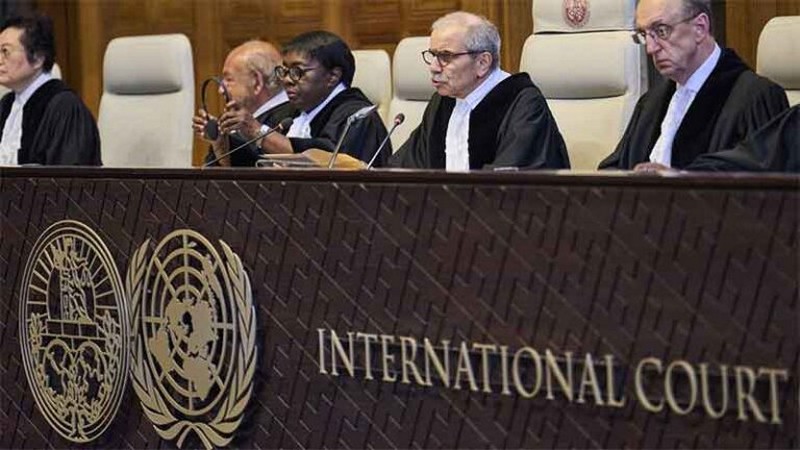
The September 18 resolution comes in response to an historic ruling by the International Court of Justice (ICJ) on July 19, which found that “Israeli settlements in the West Bank and East Jerusalem, and the regime associated with them, have been established and are being maintained in violation of international law.”

The court ruled that Israel’s obligations under international law include “the evacuation of all settlers from existing settlements” and the payment of restitution to all who have been harmed by its illegal occupation. The passage of the General Assembly resolution by a large majority of members would demonstrate that countries all over the world support the ICJ ruling, and would be a small but important first step toward ensuring that Israel must live up to those obligations.

Israel’s President Netanyahu cavalierly dismissed the court ruling with a claim that, “The Jewish nation cannot be an occupier in its own land.” This is  exactly the position that the court had rejected, ruling that Israel’s 1967 military invasion and occupation of the Occupied Palestinian Territories did not give it the right to settle its own people there, annex those territories, or make them part of Israel.

While Israel used its hotly disputed account of the October 7th events as a pretext to declare open season for the mass murder of Palestinians in Gaza, Israeli forces in the West Bank and East Jerusalem used it as a pretext to distribute assault rifles and other military-grade weapons to illegal Israeli settlers and unleash a new wave of violence there, too. 

Armed settlers immediately started seizing more Palestinian land and shooting Palestinians. Israeli occupation forces either stood by and watched or joined in the violence, but did not intervene to defend Palestinians or hold their Israeli attackers accountable.

Since last October, occupation forces and armed settlers in the West Bank and East Jerusalem have now killed at least 700 people, including 159 children.

The escalation of violence and land seizures has been so flagrant that even the U.S. and European governments have felt obligated to impose sanctions on a small number of violent settlers and their organizations.

In Gaza, the Israeli military has been murdering Palestinians day after day for the past 11 months. The Palestinian Health Ministry has counted over 41,000 Palestinians killed in Gaza, but with the destruction of the hospitals that it relies on to identify and count the dead, this is now only a partial death toll. Medical researchers estimate that the total number of deaths in Gaza from the direct and indirect results of Israeli actions will be in the hundreds of thousands, even if the massacre were to end soon.

Israel and the United States are undoubtedly more and more isolated as a result of their roles in this genocide. Whether the United States can still coerce or browbeat a few of its traditional allies into rejecting or abstaining from the General Assembly resolution on September 18 will be a test of its residual “soft power.”

President Biden can claim to be exercising a certain kind of international leadership, but it is not the kind of leadership that any American can be proud of. The United States has muscled its way into a pivotal role in the ceasefire negotiations begun by Qatar and Egypt, and it has used that position to skillfully and repeatedly undermine any chance of a ceasefire, the release of hostages or an end to the genocide.

By failing to use any of its substantial leverage to pressure Israel, and disingenuously blaming Hamas for every failure in the negotiations, U.S. officials are ensuring that the genocide will continue for as long as they and and their Israeli allies want, while many Americans remain confused about their own government’s responsibility for the continuing bloodshed.

This is a continuation of the strategy by which the United States has stymied and prevented peace since 1967, falsely posing as an honest broker, while in fact remaining Israel’s staunchest ally and the critical diplomatic obstacle to a free Palestine.

In addition to cynically undermining any chance of a ceasefire, the United States has injected itself into debates over the future of Gaza, promoting the idea that a post-war government could be led by the Fatah-led Palestinian Authority, which many Palestinians view as hopelessly corrupt and compromised by subservience to Israel and the United States.

China has taken a more constructive approach to resolving differences between Palestinian political groupings. It invited Hamas, Fatah and 12 other Palestinian groups to a three-day meeting in Beijing in July, where they all agreed to a “national unity” plan to form a post-war “interim national reconciliation government,” which would oversee relief and rebuilding in Gaza and organize a national Palestinian election to seat a new elected government.

Mustafa Barghouti, the secretary-general of the political movement called the Palestinian National Initiative, hailed the Beijing Declaration as going “much further” than previous reconciliation efforts, and said that the plan for a unity government “blocks Israeli efforts to create some kind of collaborative structure against Palestinian interests.” China has also called for an international peace conference to try to end the war.

As the world comes together in the General Assembly on September 18, it faces both a serious challenge and an unprecedented opportunity. Each time the General Assembly has met in recent years, a succession of leaders from the Global South has risen to lament the breakdown of the peaceful and just international order that the UN is supposed to represent, from the failure to end the war in Ukraine to inaction against the climate crisis to the persistence of neocolonialism in Africa.

Perhaps no crisis more clearly embodies the failure of the UN and the international system than the 57-year-old Israeli occupation of the Palestinian territories it invaded in 1967. At the same time that the United States has armed Israel to the teeth, it has vetoed 46 UN Security Council resolutions that either required Israel to comply with international law, called for an end to the occupation or for Palestinian statehood, or held Israel accountable for war crimes or illegal settlement building.

The ability of one Permanent Member of the Security Council to use its veto to block the rule of international law and the will of the rest of the world has always been widely recognized as the fatal flaw in the existing structure of the UN system.

When this structure was first announced in 1945, French writer Albert Camus wrote in Combat, the French Resistance newspaper he edited, that the veto would “effectively put an end to any idea of international democracy… The Five would thus retain forever the freedom of maneuver that would be forever denied the others.”

The General Assembly and the Security Council have debated a series of resolutions calling for a ceasefire in Gaza, and each debate has pitted the United States, Israel, and occasionally the United Kingdom or another U.S. ally, against the voices of the rest of the world calling in unison for peace in Gaza.

Of the UN’s 193 nations, 145 have now recognized Palestine as a sovereign nation comprising Gaza, the West Bank and East Jerusalem, and even more countries have voted for resolutions to end the occupation, prohibit Israeli settlements and support Palestinian self-determination and human rights.

For many decades, the United States’ unique position of unconditional support for Israel has been a critical factor in enabling Israeli war crimes and prolonging the intolerable plight of the Palestinian people.

In the crisis in Gaza, the U.S. military alliance with Israel involves the U.S. directly in the crime of genocide, as the United States provides the warplanes and bombs that are killing the largest numbers of Palestinians and literally destroying Gaza. The United States also deploys military liaison officers to assist Israel in planning its operations, special operations forces to provide intelligence and satellite communications, and trainers and technicians to teach Israeli forces to use and maintain new American weapons, such as F-35 warplanes.

The supply chain for the U.S. arsenal of genocide criss-crosses America, from weapons factories to military bases to procurement offices at the Pentagon and Central Command in Tampa. It feeds plane loads of weapons flying to military bases in Israel, from where these endless tons of steel and high explosives rain down on Gaza to shatter buildings, flesh and bones.

The U.S. role is greater than complicity – it is essential, active participation, without which the Israelis could not conduct this genocide in its present form, any more than the Germans could have run Auschwitz without gas chambers and poison gas.

And it is precisely because of the essential U.S. role in this genocide that the United States has the power to end it, not by pretending to plead with the Israelis to be more “careful” about civilian casualties, but by ending its own instrumental role in the genocide.

Every American of conscience should keep applying all kinds of pressure on our own government, but as long as it keeps ignoring the will of its own people, sending more weapons, vetoing Security Council resolutions and undermining peace negotiations, it is by default up to our neighbors around the world to muster the unity and political will to end the genocide.

It would certainly be unprecedented for the world to unite, in opposition to Israel and the United States, to save Palestine and enforce the ICJ ruling that Israel must withdraw from Gaza, the West Bank and East Jerusalem. The world has rarely come together so unanimously since the founding of the United Nations in the aftermath of the Second World War in 1945. Even the catastrophic U.S.-British invasion and destruction of Iraq failed to provoke such united action.

But the lesson of that crisis, indeed the lesson of our time, is that this kind of unity is essential if we are ever to bring sanity, humanity and peace to our world. That can start with a decisive vote in the UN General Assembly on Wednesday, September 18, 2024.

Medea Benjamin and Nicolas J. S. Davies are the authors of War in Ukraine: Making Sense of a Senseless Conflict, published by OR Books in November 2022.

17 September 2024

Source: countercurrents.org

America and Zionist Americans bribed and blackmailed UN to plant Israel in Palestine after evicting Palestinians from their lands

By Latheef Farook

At the turn of the last century Palestine was part of the Turkish Ottoman Empire. About 95 percent of the population in 1896 were Arabs who owned ninety percent of the land.   Palestine was brought under British power after World War 11. Both British mandatory power and Zionist Jews decided to kill and kick out Palestinians and establish in Palestinian lands a state for Jews brought from outside.

Once sufficient Jews were brought in, US and Zionists turned to United Nations to partition Palestine and create a separate state for Jews. There was fierce opposition in the United States for partitioning Palestine.

Zionists resorted to deception, bribery, and blackmail and brought pressure on United Nations General Assembly to pass the resolution to partition Palestine. Haiti, Liberia,   Philippines, China, Ethiopia and   Greece opposed the partition.  Zionists used intense pressure, through American channels, to force these countries to vote in favor,

Robert Nathan, a Zionist who had worked for the US government and who was particularly active in the Jewish Agency  wrote, “We used any tools at hand,” such as telling certain delegations that the Zionists would use their influence to block economic aid to any country that did not vote the right way.

Financier and longtime presidential advisor Bernard Baruch told France it would lose U.S. aid if it voted against partition. Top White House executive assistant David Niles organized pressure on Liberia; rubber magnate Harvey Firestone pressured Liberia.

Latin American delegates were told that the Pan-American Highway construction project would be more likely if they voted yes. Delegates’ wives received mink coats (the wife of the Cuban delegate returned hers); Costa Rica’s President Jose Figueres reportedly received a blank checkbook. Haiti was promised economic aid if it would change its original vote opposing partition.

Longtime Zionist Supreme Court Justice Felix Frankfurter, along with ten senators and Truman domestic advisor Clark Clifford, threatened the Philippines (seven bills were pending on the Philippines in Congress).

Before the vote on the plan, the Philippine delegate had given a passionate speech against partition, defending the inviolable “primordial rights of a people to determine their political future and to preserve the territorial integrity of their native land…”

He went on to say that he could not believe that the General Assembly would sanction a move that would place the world “back on the road to the dangerous principles of racial exclusiveness and to the archaic documents of theocratic governments.”

Twenty-four hours later, after intense Zionist pressure, the delegate voted in favor of partition.

The U.S. delegation to the U.N. was so outraged when US President Truman insisted that they support partition that the State Department director of U.N. Affairs was sent to New York to prevent the delegates from resigning en masse.

Despite fierce opposition on November 29, 1947 the partition resolution, 181, was passed. USA voted for Zionist State in Palestine and paved the way for the creation of Israel which turned the region into a killing field.Israel came into being on 78 per cent of Palestinian lands. Palestinians were thrown into refugee camps including Gaza where they are slaughtered now.

According to the Chicago Daily Tribune of 9 February 1948, “President Truman cracked down harder on his State Department than ever before to swing the United Nation’s vote for the partition of Palestine. Truman called Acting Secretary Lovett to the White House   warning him he would demand a full explanation from nations which usually line up with the US, who failed to do so on Palestine”.

At least 33 massacres of Palestinian civilians were perpetrated, half of them before a single Arab army had entered the conflict, hundreds of villages were depopulated and razed, and a team of cartographers was sent out to give every town, village, river, and hillock a new, Hebrew name. All vestiges of Palestinian habitation, history and culture were to be erased from history, an effort that almost succeeded.

However U.S. Officials fiercely Opposed Partition Plan.

The U.S. State Department opposed partition plan strenuously, considering Zionism contrary to both fundamental American principles and US interests. Loy Henderson, Director of the State Department’s Office of Near Eastern and African Affairs, wrote a memo to the Secretary of State warning:   that such a partition would have to be implemented by force and emphasized that it was “not based on any principle.”

Henderson wrote that his views were not only those of the entire Near East Division but were shared by “nearly every member of the Foreign Service or of the Department who has worked to any appreciable extent on Near Eastern problems. “Henderson wasn’t exaggerating. Official after official and agency after agency opposed Zionism. “

President Harry Truman, ignored all advice and supported Zionists in the way President Joe Biden supporting Israel in its genocide of Palestinians in Gaza today.

Truman’s Secretary of State George Marshall, the renowned World War II General and author of the Marshall Plan, condemned what he called a “transparent dodge to win a few votes,” which would cause ” the great dignity of the office of President [to be] seriously diminished.”

Former Undersecretary of State Dean Acheson also opposed Zionism. He was “worried that the West would pay a high price for Israel.” Another Author, John Munhall, records Acheson’s warning: “…to transform [Palestine] into a Jewish State capable of receiving a million or more immigrants would vastly exacerbate the political problem and imperil not only American but all Western interests in the Near East.”

The head of the State Department’s Division of Near Eastern Affairs, Gordon P. Merriam, warned against the partition plan on moral grounds:

“U.S. support for partition of Palestine as a solution to that problem can be justified only on the basis of Arab and Jewish consent.  Merriam added that without consent, “bloodshed and chaos” would follow, a tragically accurate prediction. An internal State Department memorandum accurately predicted how Israel would be born through armed aggression masked as defense:

“…the Jews will be the actual aggressors against the Arabs. However, the Jews will claim that they are merely defending the boundaries of a state which were traced by the UN…In the event of such Arab outside aid the Jews will come running to the Security Council with the claim that their state is the object of armed aggression and will use every means to obscure the fact that it is their own armed aggression against the Arabs inside which is the cause of Arab counter-attack.”

The ideologically divided United States and the Soviet Union stood together like   comrades-in-arms in solidarity in creating the Zionist state in Palestine – showing to what extent the Jews had control over the two super powers and effectively the world at large. Thus, on November 29 1947, the UN voted in favour of a partition of Palestine violating its own charter. Of the total population of 1,008,900 in the proposed Jewish state, the Arab-Jew ratio was 509,780 to 499,020. In other words, at the outset, the Arabs had a majority in the proposed Jewish state too.

Palestinians rejected the UN resolution to partition their country into two halves because that would be tantamount to cleaving their own motherland.  There was more widespread condemnation of this injustice from all right thinking people.   Today Israel remains the most condemned country in the UN.

Latheef Farook is a journalist from Sri Lanka

16 September 2024

Source: countercurrents.org

Abbas ‘Postponed’ Democracy – So, Who Speaks on Behalf of the Palestinian People?

By Dr. Ramzy Baroud

In April 2021, Palestinian Authority President Mahmoud Abbas issued a decree postponing parliamentary and presidential elections, which were scheduled to take place in May and July respectively.

The then-85-year-old Palestinian leader justified his unwarranted decision as a result of a ‘dispute’ with Israel over the vote of Palestinians living in the occupied Palestinian city of East Jerusalem.

But that was just a pretense. Though contrary to international law, Israel considers Palestinian East Jerusalem as part of its “eternal and undivided capital’, the cancellation of the elections stemmed from a purely internal Palestinian matter: fears that the outcome of the elections could sideline Abbas and his unelected political apparatus.

Marwan Barghouti, though a member of Abbas’ Fatah party, had decided to throw his hat in the ring, entering the elections under a separate list, the Freedom List. Opinion polls showed that, if Barghouti entered the fray, he could have decisively beaten Abbas. Those numbers are, in fact, consistent with most Palestinian public opinion polls conducted in recent years.

However, Barghouti, the most popular Palestinian figure in the West Bank, is a prisoner in Israel. He has spent 22 years in Israeli prisons due to his leadership of the Second Palestinian Intifada, the uprising of 2000.

Neither Israel nor Abbas wanted Barghouti, known as the Mandela of Palestine, to acquire any more validation while in prison, thus putting pressure on Israel to release him.

One can only speculate regarding the possible outcomes of the canceled May and July 2021 elections should they have taken place as scheduled. A democratically elected government would have certainly addressed, to some extent, the question of legitimacy, or lack thereof, among all Palestinian factions.

It would have also allowed the incorporation of all major Palestinian groups into a new political structure that would be purely Palestinian – not a mere platform for the whims and interests of specific political groups, business classes or hand-picked ruling elites.

That is all moot now, but the question of legitimacy remains a primary one, as the Palestinian people, more than ever before, require a unified, truly representative leadership that is capable of steering the just cause of Palestine during these horrifically difficult and crucial times.

This new leadership could have also understood the changing global dynamics regarding Palestine and would be compelled, per the will of the Palestinian people, to refrain from utilizing growing international support and sympathies with Gaza for financial perks and limited factional interests.

True, elections under military occupation would never meet the requirements of true democracy. However, if a minimal degree of representation was acquired in the now-canceled elections, the outcome could have served as a starting point towards widening the circle of representation to include the PLO and all Palestinians, in occupied Palestine and in the shatat as well.

Palestinians in the shatat, the diaspora, have also confronted the question of legitimacy and representation. However well-intentioned, many of these attempts  faced, and continue to face, many obstacles, including the impossible geography, increasing political restrictions and limited funding, among other problems.

As the vacuum of truly representative leadership in Palestine remains in place, Washington and its western allies are left to contend with the question themselves: who shall rule the Palestinians? Who shall govern Gaza after the war? Who are the ‘moderate’ Palestinians to be included in future US-led western schemes and the ‘extremists’ to be shunned and relegated?

The irony is that such thinking, of picking and choosing Palestinian representation, has led, in large part, to the current crisis in Palestine. Segmenting Palestinians according to ideological, geographic and political lines has proved disastrous, not just to the Palestinians themselves but to any entity that is interested in achieving a just peace in Palestine.

The question of representation should be resolved by the Palestinian people and no one else. And, until that task is achieved, we must invest in centering Palestinian voices in every political, legal and social platform that is relevant to Palestine, to the struggle of the Palestinians and to their legitimate aspirations.

Centering Palestinian voices does not mean that any Palestinian is a legitimate representative of the collective Palestinian experience. Indeed, not any Palestinian, regardless of his political views, class orientation, background, and so on can be a worthy ambassador for the Palestinian cause.

Even without organized general elections, we already know so much about what Palestinians want. They want an end to the Israeli occupation, the dismantlement of the illegal settlements, the honoring of the Right of Return for Palestinian refugees, social equality, end to corruption and democratic representation, among other shared values.

These are not my own conclusions, but the views of the majority of Palestinians as indicated in various opinion public polls. Similar sentiments have been expressed and repeated year after year.

It follows that any true representative of the Palestinian cause should adhere to these ideals; otherwise, he or she either represents the narrow interests of a faction, a self-serving class or merely reflects his own personal views.

Only those who truly reflect the wider collective Palestinian experience and aspiration deserved to be centered, listened to or engaged with. Doing so would help protect the Palestinian cause of the self-seeking few, who use the Palestinian struggle as an opportunity for personal or factional gains.

Dr. Ramzy Baroud is a journalist, author and the Editor of The Palestine Chronicle.

16 September 2024

Source: countercurrents.org

Gaza Officials Publish List of Those Killed in Israeli Assault. The First 14 Pages Are Babies

By Jake Johnson

Gaza’s Ministry of Health on Sunday released a document containing the names and ages of Palestinians killed by Israel’s assault since the Hamas-led October 7 attack, an incomplete list that nonetheless runs 649 pages—the first 14 of which are filled with the names of babies.

The list, published to the health ministry’s Telegram account, is limited to those for whom Gaza officials had information—over 34,000 people—and the count stops on August 31. The current death toll, according to the ministry, is close to 42,000, but experts believe that figure is likely a gross undercount.

The new document is a testament to the devastating impact Israel’s U.S.-backed war has had on Gaza’s population, particularly children. According to Gaza officials, children make up a third of those killed since October 7.

“This is a genocide of children. 14 pages of babies. Babies,” Heba Gowayed, a sociology professor at the City University of New York’s Hunter College, wrote on social media in response to the list. “This is nothing short of an attempt to expunge a people.”

[https://twitter.com/sharifkouddous/status/1835292186818056667]

The Gaza Health Ministry’s statistics are considered credible by independent watchdogs and have been cited internally by U.S. officials, notwithstanding President Joe Biden’s public questioning of the data. In June, the U.S. House approved an amendment that would bar the State Department from using statistics from the Gaza Ministry of Health (MoH).

But after examining an earlier list of names published by the ministry, the research group Airwars found “a high correlation between the official MoH data and what Palestinian civilians reported online.” The group acknowledged that gathering data has become increasingly difficult “as Gaza’s health infrastructure has been decimated by the war.”

Trita Parsi, executive vice president of the Quincy Institute for Responsible Statecraft, wrote that the newly published list highlights “what differentiates Gaza.”

“It’s a genocide of children since their proportion is unprecedented,” Parsi wrote, adding that the “U.S., U.K., and Germany arm and support the genocide.”

Jake Johnson is a senior editor and staff writer for Common Dreams.

16 September 2024

Source: countercurrents.org