Just International

The coming North Atlantic deep freeze

By Kurt Cobb

In recent years scientists have been watching and measuring the flow of the Atlantic Meridional Overturning Circulation, (AMOC), what Americans often refer to as the Gulf Stream though that flow is only part of this vast ocean current. For a long time the belief was that the AMOC—which transports heat from the tropics to Greenland, Iceland and northern Europe and makes them much warmer than they would otherwise be—would continue to flow with no discernible end date.

But two recent studies suggest that the current could not just slow, but stop altogether sometime around mid-century thereby lowering temperatures dramatically in northern Europe. The earlier study from 2023 suggests a collapse could occur sometime between 2025 and 2095, a wide interval, but actually the blink of an eye in geologic time. The more recent study released this year used a more sophisticated model and narrowed the window from 2037 to 2064. Both studies put the most likely date of collapse at mid-century (either 2050 or 2057).

Rising temperatures due to climate change are resulting in vastly increased meltwater coming from the the Greenland ice sheet—which on average is over one mile thick. This meltwater is being dumped into the North Atlantic where it reduces the salinity of the ocean water, thus making the water less dense. This reduced density appears to be slowing the current where it dives deep into the ocean, a dive that is essential for the current to continue to flow.

Meanwhile, business as usual continues in northern Europe and the rest of the world, too. Greenhouse gases are now accumulating in the atmosphere at a record pace. Far from addressing our climate crisis, we as a species are behaving as if it doesn’t exist (even though in many places leaders give lip service to doing something while they do nothing commensurate with the danger we face).

Cheerleaders for the so-called energy transition love to talk about how carbon dioxide emissions have “decoupled” from economic growth. By this they generally mean that per capita emissions are declining compared to per capita economic growth. And, while some countries have shown actual declines in the RATE of emissions, that does NOT mean that they are at zero emissions. They continue to contribute to the stock of carbon in the atmosphere at prodigious rates. And, the world as a whole still needs to burn ever increasing amounts of carbon to grow.

That makes me believe that the deep freeze in the North Atlantic will more likely than not arrive on schedule. We have no plan to avert it and simply wearing warmer clothing is not going to address the myriad problems that societies unprepared for sudden climate change will suffer.

Kurt Cobb is a freelance writer and communications consultant who writes frequently about energy and environment.

26 August 2024

Source: countercurrents.org

The unpublished genocide diaries of Refaat Alareer

By Refaat Alareer

The following pieces by Dr. Refaat Alareer, the Palestinian poet, professor and beloved mentor who was murdered in an Israeli airstrike on 6 December 2023, have not been published previously. These pieces will also appear in If I Must Die: Poetry and Prose, an anthology of Alareer’s work compiled with an introduction by Yousef M. Aljamal and published by OR Books.

In addition to many other pieces, Alareer contributed to The Electronic Intifada two narratives about his experience during the ongoing genocide: “Israel bombed my home without warning,” published on 22 October 2023, and “Israel’s claims of ‘terrorist activity’ in a children’s hospital were lies,” published on 19 November 2023.

Alareer also appeared several times on The Electronic Intifada livestream, launched at the beginning of the genocide. During the first episode of the livestream, broadcast on 9 October, viewers and listeners could hear the bombs exploding in the background as Alareer described why Palestinians insist on fighting for justice and liberation in the face of Israel’s genocidal violence. Alareer’s last livestream appearance was on 1 December 2023, a few days before his death, but for only a few minutes because his electricity shut off and the connection was lost.

On 26 April 2024, Alareer’s oldest child, Shymaa, was killed in an Israeli attack along with her husband Muhammad Abd al-Aziz Siyam and their 3-month-old son Abd al-Rahman. The infant was born after Alareer’s death and was his first grandchild.

19 October 2023: In Gaza, we have grown accustomed to war

Horrific experiences of death and destruction have permanently impacted Palestinians’ culture, language and collective memory. “Is it war again?” asks my little Amal, 7, memories of the previous Israeli assaults still fresh in her mind.

The wording of the question shows the maturity she has been forced to develop. Last year, Amal asked her mum if it was “another war.”

Yes, it is war again in Gaza! In Gaza, we have grown accustomed to war. War has become a recurrent reality, a nightmare that won’t go away. A brutal normality. War has become like a grumpy old relative, one that we can’t stand but can’t rid ourselves of either.

The children pay the heaviest price. A price of fear and nonstop trauma that is reflected in their behaviors and their reactions. It’s estimated that over 90 percent of Palestinian children in Gaza show signs of trauma. But also, specialists claim there is no post-war trauma in Gaza as the war is still ongoing.

My grandmother would tell me to put on a heavy sweater because it would rain. And it would rain! She, like all Palestinian elders, had a unique sense, an understanding of the earth, wind, trees and rain. The elders knew when to pick olives for pickling or for oil. I was always envious of that.

Sorry, Grandma. We have instead become attuned to the vagaries of war. This heavy guest visits us uninvited, unwelcomed and undesired, perches on our chests and breaths, and then claims the lives of many, in the hundreds and thousands.

A Palestinian in Gaza born in 2008 has witnessed seven wars: 2008–2009, 2012, 2014, 2021, 2022, 2023A and 2023B. And as the habit goes in Gaza, people can be seven wars old, or four wars old. My little Amal, born in 2016, now holds a BA in wars, having lived through four destructive campaigns. In Gaza, we often speak about wars in terms of academic degrees: a BA in wars, an MA in wars, and some might humorously refer to themselves as PhD candidates in wars.

Our discourse has significantly changed and shifted. At night, when Israel particularly intensifies the bombardment, it’s a “party”: “The party has begun.” “It will be a horrific party tonight.” And then there is “The Bag,” capital T and capital B. This is a bag that is hurriedly prepared to contain the cash, the IDs, the birth certificates and college diplomas. The aim is to grab the kids and one item when there is a threat of evacuation.

The collective memories and culture of Palestinians in Gaza have been substantially impacted by these horrific experiences of war and death. Most Gazans have lost family members, relatives, or loved ones or have had their homes damaged or destroyed. It’s estimated that these wars and the escalations between them have claimed the lives of over 9,000 (it was 7,500 when I started drafting this last week!) Palestinians and destroyed over 60,000 housing units.

Death and war. War and Death. These two are persona non grata, yet we can’t force them to leave. To let us be.

Palestinian poet Tamim Al-Barghouti summarizes the relationship between death and the Palestinians that war brings (my translation):

It was not wise of you, Death, to draw near.
It was not wise to besiege us all these years.
It was not wise to dwell this close,
So close we’ve memorized your visage
Your eating habits
Your time of rest
Your mood swings
Your heart’s desires
Even your frailties.
O, Death, beware!
Don’t rest that you tallied us.
We are many.
And we are still here
[Seventy] years after the invasion
Our torches are still alight
Two centuries
After Jesus went to his third grade in our land
We have known you, Death, too well.
O, Death, our intent is clear:
We will beat you,
Even if they slay us, one and all.
Death, fear us,
For here we are, unafraid.

23 October 2023: Five stages of coping with war in Gaza

Our familiarity with war in Gaza has led us to develop a unique perspective and unique coping mechanisms.

We can identify five major emotional stages that Gazans go through during these grim conflicts. The stages are denial, fear, silence, numbness, hope, despair and submission.

This is day 16 and Israel has killed more than 5,000 Palestinians (many are still unaccounted for under the rubble), including over 2,000 Palestinian children, Gaza authorities tell us. More than 15,000 were injured and over 25,000 Palestinian homes were destroyed. And Israel says it is ready for ground invasion.

Stage one: Denial

In the early stages of a crisis, there is often a sense of denial. We convince ourselves that this time won’t lead to war. People are tired of the recurring conflicts, and both sides may appear too preoccupied to engage in warfare. As missiles fall and soar, we maintain a form of partial denial, hoping that this time will not be as lengthy or devastating as past wars.

No, this time it’s not going to be war. Everyone is tired of wars. Israel is too busy to go to war.

Palestinians are too exhausted and too battered to engage in a war. It could just last five days, give or take, we hope.

Stage two: Fear

Soon, denial turns to fear as the reality of another war sets in. Gaza is paralyzed as civilians, including children, are attacked by Israeli bombs. The pictures and videos of massacres, of homes obliterated with the families inside, of high rise buildings toppled like dominoes turn the denial into utter terror.

Every strike, especially at night, means all the children wake up crying and weep. As parents, we fear for our kids and we fear we can’t protect our loved ones.

Stage three: Silence and numbness

This is when Israel particularly intensifies the bombing of civilian homes. Stories are interrupted. Prayers are cut short. Meals are left uneaten. Showers are abandoned.

Therefore, amid the chaos and danger Israel brings, many in Gaza, especially children, withdraw into silence. They find solace in solitude as means of coping with the overwhelming emotion and uncertainty that surrounds them. Silence prevails.

Then numbness follows. As people attempt to protect themselves from the constant onslaught of distressing news, they grow indifferent. Because we could die anyway, no matter where we go. Emotional numbness sets in, as individuals attempt to detach from their emotions to survive.

Stage four: Hope

In the midst of despair, glimmers of hope may emerge. Even in the darkest moments, Gazans may hold onto the belief Israel might at least kill fewer people, bomb fewer places, and damage less. The most hopeful of us wish for a lasting ceasefire or an end to the siege or even the occupation. But this is merely hope. And hope is dangerous.

We hope that politicians will man up. We hitch our hope to the masses taking to the streets to reassure their politicians and warn they will be punished in future elections if they support Israeli aggression against Palestinians in Gaza.

Stage five: Despair and submission

Unfortunately, hope can often be fleeting, and many Gazans have experienced recurring cycles of despair. The repeated loss of life, homes and security lead to deep feelings of helplessness.

In the final stage, there is a sense of submission as Gazans accept the reality that they are unable to change the situation. That they are left alone. That the world has abandoned us. That Israel can kill and destroy at large with impunity. This is a stage marked by endurance, as Palestinians strive to adapt and persevere in the face of ongoing challenges.

These stages of war have become an unfortunate part of life in Gaza, shaping the resilience and perseverance of the Palestinian people in the face of unimaginable hardships imposed by the Israeli occupation.

27 October 2023: What it’s like when Israel bombs your building

I have six children. And so far we have survived seven major Israeli escalations, unscathed. We are an average family. My wife, Nusayba, is a housewife, I have two children in college and my youngest child, Amal, is 7. In Gaza, Amal is already four wars old.

We are an average family in Gaza, but we have had our fair share of Israeli death and destruction.

So far, since the early 1970s, I have lost 20 (and 15 last week) members of my extended family due to Israeli aggression.

In 2014, Israel destroyed our family home of seven flats, killing my brother Mohammed.

In 2014, Israel killed about 20 of my wife’s family including her brother, her sister, three of her sister’s kids, her grandfather and her cousin. And destroyed several of my in-laws’ homes.

Combined, my wife and I have lost over fifty 50 members to Israeli war and terror.

2023 war on Gaza

As the bombs fall and Israel targets sleeping families in their homes, parents are torn between several issues.

Should we leave? But go where, when Israel targets evacuees on their way and targets the areas they evacuate to?

Should we stay with relatives? Or should our relatives stay with us, whose home is relatively “safe?” We can never be sure. It’s been more than 75 years of brutal occupation – and over six major Israeli military onslaughts in the past 15 years – and we have so far failed to understand Israel’s brutality and mentality of death and destruction.

And then there is the fear of what to do if – when – we are bombed. We try to evade them. But how can you evade the bombs when Israel throws three or four or five consecutive bombs at the same home.

The big question Palestinian households debate is whether we should sleep in the same room so that when we die, we die together, or whether we should sleep in different rooms so some of us may survive.

The answer is always that we need to sleep in the living room together. If we die, we die together. No one has to deal with the heartbreak.

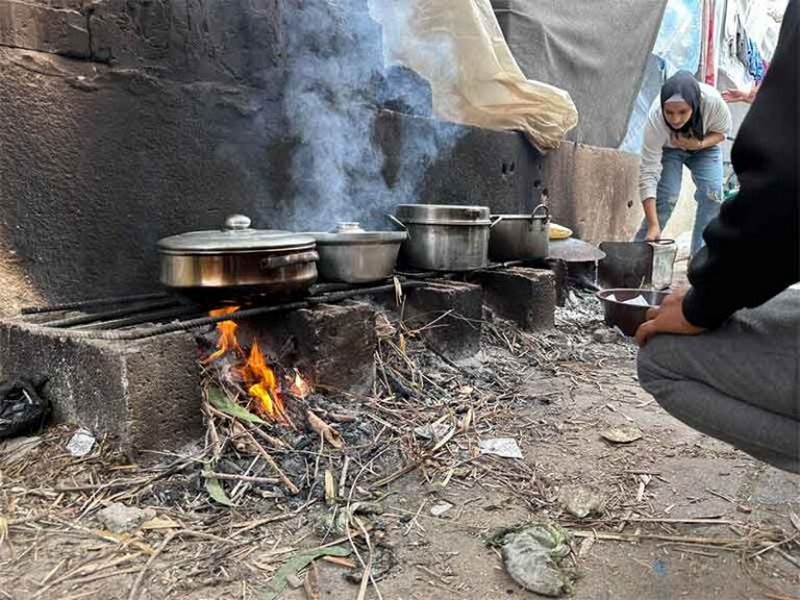
No food. No water. No electricity.

This 2023 war is different. Israel has intensified using hunger as a weapon. By completely besieging Gaza and cutting off the electricity and water supplies and not allowing aid or imports, Israel is not only putting Palestinians on a diet, but also starving them.

In my household, and we are a well-off family, my wife and I sat with the children and explained the situation to them, especially the little ones: “We need to ration. We need to eat and drink a quarter of what we usually consume. It’s not that we do not have money, but food is running out and we barely have water.”

And good luck explaining to your 7-year-old that she can’t have her two morning eggs and instead she will be having a quarter of a bomb! (Israel later bombed the eggs.)

As a parent, I feel desperate and helpless. I can’t provide the love and protection I am supposed to give my kids.

Instead of often telling my kids “I love you,” I have been repeating for the past two weeks:

“Kids, eat less. Kids, drink less.” And I imagine this being my last thing I say to them and it is devastating.

Israel bombs our building

If we had a little food last week, now we barely have any because Israel struck our home with two missiles while we were inside. And without prior warning!

My wife Nusayba had already instructed the kids to run if a bombing happened nearby. We never expected [our building] to be hit. And that was a golden piece of advice.

I was hosting four families of relatives in my flat. Most of them were kids and women.

We ran and ran. We carried the little ones and grabbed the small bags with our cash and important documents that Gazans keep at the door every time Israel wages a war.

We escaped with a miracle, with only bruises and tiny scratches. We checked and found everyone was fine. And then we walked to a nearby UN school shelter, which was in an inhuman condition. We crammed into small classrooms with other families.

With that, we lost our last sense of safety. We lost our water. We lost our food and the remaining eggs that Amal loves.

We are an average Palestinian family. But we have had our fair share of Israeli death and destruction. In Gaza, no one is safe. And no place is safe. Israel could kill all 2.3 million of us and the world would not bat an eye.

The quoted verses by Tamim Al-Barghouti are from the second part of his poem “Military Communiqué.”

26 August 2024

Source: countercurrents.org
Venezuela’s Supreme Court upholds Maduro’s re-election

By Guilherme Ferreira

On Thursday, Venezuela’s Supreme Court of Justice (TSJ) upheld the results of the July 28 presidential election issued by the National Electoral Council (CNE), which handed re-election to President Nicolás Maduro. According to the CNE, Maduro received 52 percent of the vote, against 43 percent for the candidate of the Washington-backed Venezuelan opposition, Edmundo González. The TSJ declared that its decision was “unappealable and of mandatory compliance.”

At a rally the same day in the state of La Guaira, Maduro praised the “technical, scientific, professional work” of the TSJ and described its decision as “historic and forceful.” He added: “Holy word, let there be peace, absolute respect for the Public Powers!”

Both González and fascistic candidate María Corina Machado, who was barred from running, denounced the TSJ’s decision on X/Twitter. González said the decision is “null” and “Sovereignty resides untransferably in the people.” In a “WORLD ALERT,” Machado shared a publication by the United Nations Human Rights Council saying that the TSJ and the CNE “lack impartiality and independence” and denounced Maduro’s “coup d’état against the Constitution.”

Since the CNE announced Maduro’s victory on election day, the Venezuelan opposition has accused the Chavista regime of electoral fraud for not presenting the individual results from all the polling stations. The CNE claimed that a “cyber-terrorist attack” prevented it from publishing them shortly after the election. However, even after the TSJ’s count, their publication has still not been forthcoming.

On August 5, González and Machado published a letter claiming that, according to their supposed count of more than 80 percent of the precinct results, González won the election with 67 percent of the votes against 33 percent for Maduro. Citing these alleged results, González repeated the 2019 move by US puppet Juan Guaidó and declared himself president-elect of Venezuela.

In response, the Venezuelan Public Prosecutor’s Office launched a criminal investigation against González and Machado for “instigation to disobey the law, instigation to insurrection, criminal association and conspiracy,” among other crimes.

The opposing sides of a developing world war, which threatens to turn South America into a future battlefield, are also supporting the opposing factions in the Venezuelan election. China, Russia, and Iran, which have close political, economic, and military ties with Venezuela, recognized and welcomed Maduro’s electoral victory from the outset. The US and European powers are also demanding the release of the individual vote tallies and have recognized González’s electoral victory.

In Latin America, Bolivia, Cuba, and Nicaragua recognized Maduro’s victory, while the fascistic president of Argentina, Javier Milei, and Peru’s unelected and dictatorial President Dina Boluarte, along with the pseudo-leftist president of Chile, Gabriel Boric, denounced the electoral process and backed the claims of a González victory.

Boric was one of the first to speak out against the Venezuelan Supreme Court’s decision, writing on X/Twitter: “There is no doubt that we are facing a dictatorship that falsifies elections, represses those who think differently, and is indifferent to the world’s largest exile [population].”

Despite its full support for the Venezuelan opposition, the US has yet to formally recognize González as president. According to an August 5 statement by US State Department spokesman Matthew Miller, this “is not a step we’re taking today. We’re in close contact with our partners in the region, especially with Brazil, Mexico and Colombia … we continue to urge the Venezuelan parties to begin a peaceful transition back to democratic norms.”

Indeed, the presidents of the largest countries to see a second wave of the “Pink Tide” in Latin America, Luiz Inácio Lula da Silva (Workers Party – PT) of Brazil, Andrés Manuel López Obrador (AMLO) of Mexico, and Gustavo Petro of Colombia, are acting as mediators for imperialism to try to defuse the political crisis in Venezuela. While recognizing neither Maduro’s nor González’s claims to victory, they are vocalizing the Venezuelan opposition’s and US imperialism’s demands that the authorities in Venezuela “publicly disclose the data aggregated by polling station,” as they wrote in a joint note on August 1.

However, this consensus of the three Latin American presidents was broken last week, when Lula and Petro began to advocate new elections. AMLO said that new elections are “reckless” and advocated that the Venezuelan Supreme Court decide the issue.

On August 15, Petro detailed the conditions for a new election, writing on X/Twitter: “Lifting of all sanctions against Venezuela. General national and international amnesty [for members of the Maduro government and the opposition]. Full guarantees for political action. Transitional coalition government.” Lula has also advocated the participation of international observers. Both Maduro and Machado have rejected the proposal.

At the advent of “Pink Tide” bourgeois nationalist governments in Latin America, Lula established a close relationship with Hugo Chávez (president of Venezuela from 1999 until his death in 2013) during his own first two terms in office (2003-2010). Since coming to power for his third term at the beginning of last year, Lula has been trying to rehabilitate the Chavista government and served as one of the mediators in the Barbados agreement between Maduro and the opposition that paved the way for the July 28 presidential election.

However, this process has suffered a setback since the election results were announced. Last week, Lula explained in an interview with Radio T FM that his relationship with the Chavista regime “has deteriorated because the political situation there is deteriorating.” In another interview with Rádio Gaúcha, also last week, he said, “Venezuela is experiencing a very unpleasant regime. I don’t think it’s a dictatorship … It’s a government with an authoritarian bias.”

Another move that has pitted Brazil against Venezuela is the Maduro government’s revival of Venezuela’s claim to the Essequibo region held by Guyana, which dates back to British and Spanish colonialism at the beginning of the 19th century. When, in the face of Guyana’s move toward exploitation of offshore oil deposits, Maduro held a popular referendum on Venezuela’s claims last December and mobilized troops near its borders with Guyana, the Lula government responded by militarizing the border region between Brazil and Venezuela, through which a possible invasion of Guyana would likely pass.

As with the Venezuelan election, the Lula government has been working closely with the Biden administration to mediate the crisis between Venezuela and Guyana, even as the Pentagon has stepped up US military exercises in Guyana and its disputed waters.

The Essequibo claim—much like that of Argentina’s junta to the British-held Malvinas Islands in 1982—is part of an effort by the Maduro government to deflect outward Venezuela’s enormous social and economic crisis. The predominant factor in this process is the pressure imposed by US imperialism, which seeks unrestricted access to the Venezuela’s rich natural resources, including the world’s largest known oil reserves.

To this end, Washington has imposed draconian sanctions to force regime change, resulting in the drastic impoverishment of the Venezuelan masses and an estimated 100,000 deaths due to the cutoff of medical supplies and other vital necessities. Maduro’s bourgeois-nationalist government has been unable to offer a progressive way out of this crisis, even as it seeks a better negotiating position with the US.

Unable to appeal to the working class, which has increasingly turned against the Chavista regime, Maduro has reinforced his alleged “military-police-popular alliance” and increased its repressive nature. According to the government itself, some 2,400 Venezuelans have been arrested in protests that erupted after the election. And, since August 8, X/Twitter has been blocked as part of the Maduro government’s crusade against “hate campaigns” on social media.

In the Chavista-controlled National Assembly, a bill is being discussed to regulate social networks and another against “fascism, neo-fascism, and similar expressions” that could lead to the banning of parties that “incite fascism.” As happens all over the world, bills like these can be utilized to attack the working class fighting against capitalism, with the Chavista regime painting all opposition as fascistic.

The allegations of political repression and persecution go beyond the US-backed opposition and include militant workers and sectors that have broken with Chavismo, such as the Stalinist Communist Party of Venezuela (PCV). In August of last year, the Chavista regime virtually outlawed the PCV and prevented it from running candidates in this year’s presidential election.

On August 13, the PCV and its Popular Democratic Front drew attention in a statement to the “massive, popular and spontaneous mobilization of indignation over the announced results” that gave Maduro the victory and charged that “The massive violence against the popular sectors is accompanied by permanent threats, incitement to hatred and the execution of practices of selective violence against different sectors of the political opposition.”

The crisis in Venezuela will undoubtedly escalate in the coming weeks and months. There are more and more warnings that country could confront civil war or even a “pro-democracy” foreign military intervention.

Whatever happens, the Lula and Petro governments are already exposed as key players in the efforts of US imperialism and the right-wing Venezuelan opposition that it sponsors to remove Chavismo from power. The illusion promoted by these governments that the crisis in Venezuela can be resolved at the negotiating table represent a cover for the decades-long regime change operations of the Venezuelan opposition and US imperialism as they buy time to discredit the Maduro government and advance their strategy.

As the WSWS wrote in its August 2 Perspective, the July 28 election “was illegitimate from the outset, the product not of any demand by the Venezuelan people, but of closed-door talks between Caracas and Washington’s lackeys in Barbados.” Therefore, the demand that the local polling results be made public, made by the imperialist powers, the governments of the “Pink Tide,” and much of the international pseudo-left, offers no real alternative and will serve only the interests of Washington and Venezuela’s far-right opposition.

The only alternative for Venezuela’s working class against the threat of war and fascism is to mobilize its own strength independently from all factions of the Venezuelan bourgeoisie, including chavismo and its satellites, and to forge its unity with the Latin American and world working class in the struggle for international socialism.

24 August 2024

Source: countercurrents.org
Israel Launches Massive Attack on Lebanon, Heightening Fears of All-Out War

By Jake Johnson

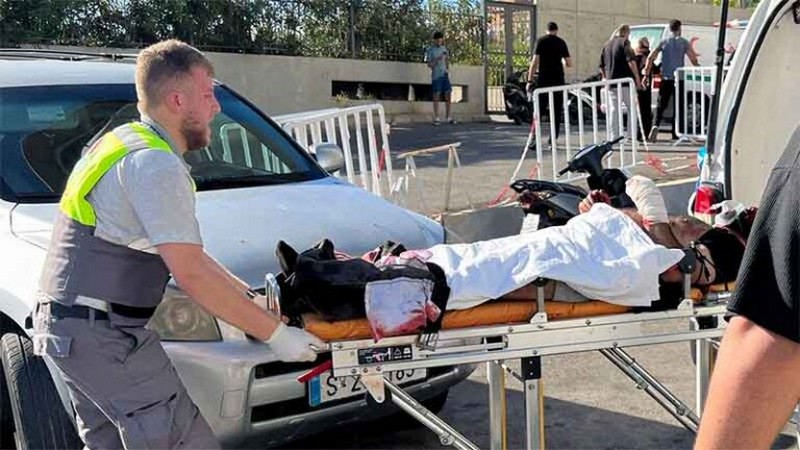
Israel’s military deployed around 100 fighter jets to launch a massive bombing campaign in southern Lebanon on Sunday, endangering tens of thousands of civilians and heightening the chances of an all-out regional war.

The Israel Defense Forces (IDF) characterized the wave of airstrikes as an effort to preemptively “remove the threat” posed by a purportedly imminent Hezbollah attack, but observers argued the Israeli bombing marked a serious escalation that could further undermine hopes of a cease-fire deal in Gaza.

“Looks like Israel is now escalating in Lebanon in a major way in the hopes of kicking off a major war in the north that has thus far been kept to more limited exchanges,” wrote political analyst Yousef Munayyer. “Just as negotiations for a cease-fire were reportedly advancing.”

Hezbollah said Sunday that it had fired hundreds of drones and rockets at Israeli military sites in retaliation for the assassination of one of the group’s senior commanders last month. Hezbollah said the “first phase” of its response was complete and rejected the IDF’s claim that it preempted the group’s retaliatory action.

The Associated Pressreported that “by mid-morning, it appeared that the exchange had ended, with both sides saying they had only aimed at military targets.”

“At least three people were killed in the strikes on Lebanon,” AP noted, “while there were no reports of casualties in Israel.”

Israel Katz, the Israeli foreign minister, wrote on social media following the attack on Lebanon that he “sent a direct message to dozens of foreign ministers worldwide, urging them to support Israel against the Iranian axis of evil and its proxies, led by Hezbollah.”

[https://twitter.com/Seamus_Malek/status/1827643114678333567]

Sunday’s dangerous back-and-forth, described by one newspaper as the two sides’ biggest exchange of fire since the 2006 war, further intensified concerns that the region is moving toward the precipice of an all-out conflict as Israel’s U.S.-backed assault on the Gaza Strip continues with no end in sight.

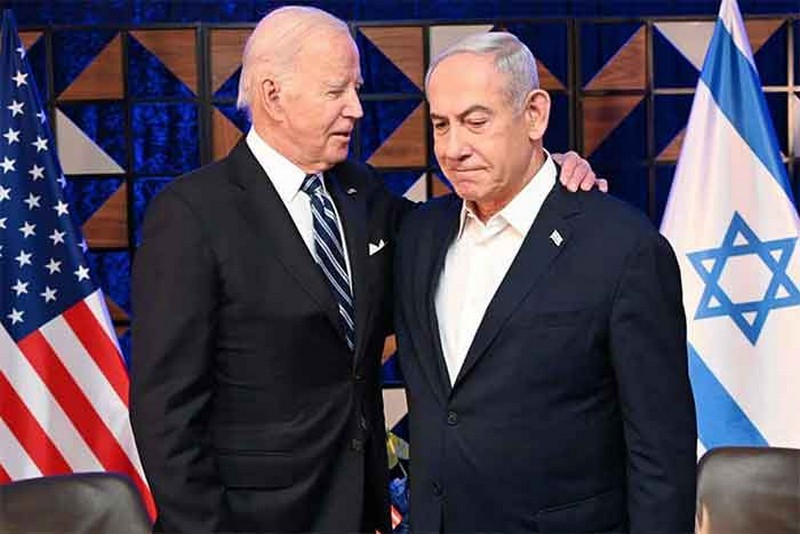
A White House spokesperson said Sunday that U.S. President Joe Biden is “closely monitoring events in Israel and Lebanon.”

“At his direction, senior U.S. officials have been communicating continuously with their Israeli counterparts,” the spokesperson said. “We will keep supporting Israel’s right to defend itself, and we will keep working for regional stability.”

One senior U.S. official said Israel did not give the White House advance notice of the Lebanon attack.

Monica Marks, professor of Middle East politics at New York University Abu Dhabi, wrote that the White House’s claim to be promoting regional stability “lands like a bad joke” given ongoing U.S. support for Israel’s “escalatory acts.”

“Lives on the ground are at stake. So are [Democratic presidential nominee Kamala] Harris‘ chances and Biden’s legacy,” Marks added. “D.C. is playing Middle East roulette.”

Israel’s bombardment of Lebanon came after another horrific day in the Gaza Strip, where the IDF killed dozens of Palestinians in southern Gaza. “Among the dead,” according to the AP, “were 11 members of a family, including two children, after an airstrike hit their home in Khan Younis.”

The atrocities preceded a fresh round of high-level cease-fire talks, negotiations that Israeli Prime Minister Benjamin Netanyahu has repeatedly thwarted with hardline demands.

The Washington Post reported Saturday that “Israel and Hamas were sending senior-level delegations to Cairo this weekend as U.S., Qatari, and Egyptian mediators prepared for a high-stakes summit they hope will break the deadlock in negotiations for a cease-fire in the Gaza Strip.”

“Hamas officials arrived in the Egyptian capital Saturday, while Israeli media reported that a team led by the head of Mossad, David Barnea, would travel there Sunday,” the Post added. “The summit, also on Sunday, will include CIA Director William J. Burns, Egyptian intelligence chief Abbas Kamel, and Qatari Prime Minister Mohammed bin Abdulrahman Al Thani.”

Jake Johnson is a senior editor and staff writer for Common Dreams.

25 August 2024

Source: countercurrents.org

Six ways to witness genocide in Gaza without losing your sanity

By Rima Najja

It’s painful, punishing and horrific. You might be tempted not to bear witness and shut off all means of communication and, if you are a believer, to simply focus on prayer, and if you are not a believer, to become hardened and cynical, and live in the safe zone where your good fortune has planted you for no apparent reason. Or you might torture yourself by dwelling on and sharing every detail of every massacre, every image of a dismembered child or of scenes so inhumane, so catastrophic, so depraved, they cause your brain to want to freeze. Or you might become hopelessly outraged, take yourself off on a suicidal mission of revenge, or protest in the streets where you know you will be met with repression.

At any given time these past months since Toufan al Aqsa on Oct 7, 2023, a multitude of these tendencies have been raging in our hearts simultaneously, buffeting us helplessly this way or that the minute we open our eyes each morning wondering if it is over. No matter the siren call of cowardice, failing to bear witness one way or another to both the horror and the truth is not an option.

So, here are a few tips on how to be present in this nightmare, awake and conscionable:

1. Disabuse yourself of any lingering illusions related to the United States’ government policy in the Middle East, its so-called “values,” and its key corporate media discussion forums like the Sunday morning shows (ABC’s This Week, CBS’s Face the Nation, NBC’s Meet the Press, CNN’s State of the Union and Fox News Sunday), which speak primarily in the voice of government officials. You can safely tune them all out and filter US pronouncements through Al Mayadeen’s or other trusted media discussion forums that consistently thread their way through the maze of US doublespeak. If you are American, join the Uncommitted National Movement to put pressure on Kamala Harris in key swing states, including Michigan.

2. Understand that the international regime as represented by UNSC has no credibility. It is dominated by the US-centralized empire — i.e., the extensive political, economic, military, and cultural influence that the United States exerts globally. Historically, the US has vetoed numerous resolutions that called for Israel to adhere to international laws, recognize Palestinian statehood, or halt settlement activities in occupied territories. The US continues to veto a framework for peace in Palestine by blocking resolutions that criticize Israel’s actions in Gaza or call for measures to protect Palestinian civilians, most recently blocking a resolution for an immediate humanitarian ceasefire in Gaza, blocking another that called for “humanitarian pauses,” and another that condemned violence against civilians and called for adherence to humanitarian law.

3. Whereas there are no indications that the international regime will be transformed soon, there are indications that the dynamic between Arab Gulf countries and Iran is evolving. Iran is expanding its influence in the Middle East and has become a direct challenge to the power and influence of the United States in Gulf countries that now realize the strategy of the US to maintain Israel’s chokehold on Palestinians has failed. It is the US and Israel that now pose a threat to the security of the Gulf states and the whole region.

4. Be aware that, in the same way that the accusation of antisemitism has lost its potency for being falsely used on a large scale by Zionists, the accusation of terrorism has also lost its integrity for the same reason. Journalist Jonathan Cook writes on Facebook: “Israel just keeps widening the circle of ‘terrorists’: from Hamas to the entire Palestinian people, to the United Nations, to the International Court of Justice, to the International Criminal Court. The question you should be asking yourself is: How long before I’m declared a terrorist?”

5. Have faith in the axis of resistance. Their cause is just and they are proving themselves on the battle field beyond measure. As Caitlin Johnstone writes in Caitlin’s Newsletter, “October 7 was entirely a response to generations of abuse against the Palestinian people by the state of Israel, so the correct response to it would have been to heal those abuses in a way that is agreeable to the Palestinians. This would likely include ceding large amounts of land, the payment of very extensive reparations from Israel (and ideally from its wealthy western allies as well), eliminating all unjust laws and apartheid systems, a comprehensive push to purge society of the toxins of anti-Palestinian racism and Islamophobia, the right of Palestinians in exile to return to their homeland, and the negotiation of a peace agreement which yields so much that even the most hardline factions in Palestinian society would be compelled to agree with it.”

6. Pray for Israel to implode from within as well as without before it destroys the world.

In short, as you bear witness to the horror, keep firmly in mind the end of all the illusions and misconceptions that you might have accumulated over decades of US and Zionist PR, and put all your faith in the resistance.

Note: First published on Medium

__________________
Rima Najjar is a Palestinian whose father’s side of the family comes from the forcibly depopulated village of Lifta on the western outskirts of Jerusalem and whose mother’s side of the family is from Ijzim, south of Haifa. She is an activist, researcher, and retired professor of English literature, Al-Quds University, occupied West Ban

25 August 2024

Source: countercurrents.org

Prolonging Genocide as a Smokescreen: On Israel’s Other War in the West Bank

By Dr. Ramzy Baroud

Promises of “absolute victory” in Gaza are nothing but “gibberish”, according to Israeli Defense Minister Yoav Gallant. Gallant’s comments were not meant to be public, but somehow were leaked and published by Israeli media on August 12.

The explanation of why Netanyahu is pursuing a losing war in Gaza has been largely confined to the prime minister’s personal interests: avoiding the outcome of his corruption trials, preserving his extremist government coalition and avoiding early elections.

Still, none of these rationales explain the absurdity of continuing with a war, which, in the words of former Israeli Prime Minister Ehud Barak is “the worst failure in Israel’s history”.

What else could explain Netanyahu’s motive behind the war? And why are his most crucial government allies, National Security Minister Itamar Ben-Gvir and Finance Minister Bezalel Smotrich determined to prolong it?

The answer may not lie in Gaza, but in the West Bank.

While Israel is extending its failed military campaign in the Strip with no clear strategic objectives, its war on the West Bank is driven by clear strategic motives: the annexation of the West Bank and the ethnic cleansing of large sectors of the Palestinian population.

This is not only obvious through Israel’s daily actions in the West Bank but also because of the clear statements made by Israel’s extremist government officials.

This includes a commitment by Netanyahu’s own Likud party to  “advance and develop settlement in all parts of the land of Israel – in the Galilee, Negev, Golan Heights, and Judea and Samaria.”

An audio recording, obtained by the Israeli group, Peace Now, conveyed the following remarks by Smotrich at a June 9 conference: “My goal is to settle the land, to build it, and to prevent, for God’s sake, its division … and the establishment of a Palestinian state.”

To do so, the far-right politician has assigned himself the job of “change(ing) the DNA of the system.” This ‘system’ was put in place decades ago.

Following its military occupation of the West Bank, Israel began a slow but determined process of the illegal annexation of Palestinian territories. This process included the establishment, in 1981, of the so-called Civil Administration.

The latter was essentially a branch of the Israeli military but was designated as ‘civil’ as part of a greater government effort to convert a temporary military occupation into the permanent colonization of Palestine. This entailed the practical annexation and continued expansion of the illegal Israeli Jewish settlements built on Palestinian land after the war.

The Oslo Accords in 1993-94 gave Palestinians nominal administrative control over small areas in the West Bank, designated as areas A and B. This necessitated the transfer of some of the Civil Administration’s responsibility to the newly formed Palestinian Authority, based on the understanding the PA will continue essentially to prioritize Israel’s security.

The new arrangement allowed Israel to expand, unhindered, its illegal settlements in most of the West Bank and East Jerusalem, tripling both the size and population of the settlements between 1993 and 2023.

As Israel’s colonial plan in the West Bank reached its zenith, Netanyahu sought, in 2020, to reinforce Israeli gains with the annexation of more than 30 percent of the West Bank.

Due to international pressure and growing Palestinian resistance, Netanyahu postponed his plan, though with the understanding that “annexation remains on the table”.

Without much fanfare, however, Israel swapped its hope for a sweeping de jure annexation of the West Bank with de facto control, through rapid seizure of Palestinian land and the expanding of settlements.

Though the Israeli military is faltering in Gaza, the war is being used as the perfect smokescreen to finalize old colonial plans in the West Bank.

This scheme was dubbed by Smotrich in 2017 as a “victory by settlement”. Now in a position of power and with access to a massive budget, he is making his life’s goal a reality.

For Smotrich’s dream to be realized, he needed to revitalize the once central role of the Civil Administration. In May, he invented a new position called ‘deputy head’ of the administration, granting the position to his close associate Hillel Roth.

Now, both have unparalleled sweeping rights to expand the settlements. Since the start of its term in power, Netanyahu’s government has approved 12,000 new housing units for illegal settlements, while ordering the demolition of thousands of Palestinian homes and other civilian infrastructure.

In the first three months of 2024, Israel declared nearly 6,000 as ‘state-owned land’, therefore eligible for settlement construction. The decision was described by the Israeli watchdog Peace Now as the ‘largest West Bank land grab in 30 years’.

The ethnic cleansing of Palestinians is already under way. According to the Norwegian Refugee Council, in the first half of 2024 alone, at least 1,000 Palestinians have been forcefully displaced while nearly 160,000 have been affected by home demolitions.

The Israeli war on the West Bank has come at a high price of blood. As of August 12, at least 632 Palestinians were killed and 5,400 were wounded in the West Bank, according to the Ministry of Health.

When the war on Gaza is over, the war on the West Bank shall grow more intense and bloodier, but with clear strategic goals of annexing the whole of the area.

On July 19, the International Court of Justice resolved that  Israel’s “annexation and .. assertion of permanent control” in the West Bank, is illegal.

To avoid a greater war and genocide, the international community must use all available means to enforce international law and to end the Israeli occupation of Palestine.

Dr. Ramzy Baroud is a journalist, author and the Editor of The Palestine Chronicle.

23 August 2024

Source: countercurrents.org

The Rohingya Genocide: A Global Failure to Act

25 August 2024

As we mark the seventh anniversary of the Myanmar military’s genocidal campaign against the Rohingya, the world stands at a grim crossroads. On August 25, 2017, the military unleashed a campaign of mass murder, widespread rape, and the systematic destruction of Rohingya villages. Seven years later, these atrocities have not only continued but have intensified into a calculated campaign of extermination. The Myanmar military junta operates with unchallenged impunity, while the international community has failed to act decisively.

“Seven years into this tragedy, the Rohingya continue to suffer and die, abandoned by the international community,” said Kyaw Win, Executive Director of the Burma Human Rights Network (BHRN). “The world’s inaction has not only failed to halt the genocide but has emboldened the Myanmar military and other armed groups to commit further atrocities with impunity. How many more lives must be lost before the world takes meaningful action?”

Approximately 600,000 Rohingya remain confined in Myanmar under dire conditions that amount to a state-enforced system of apartheid. Since the junta seized power in a coup in 2021, it has intensified its campaign of terror against the Rohingya, flouting international condemnation and defying orders from the International Court of Justice (ICJ) aimed at preventing further genocidal acts.

In the past year, the situation has been further aggravated by the Arakan Army (AA), which has escalated its attacks on Rohingya communities in a brutal struggle for control in Rakhine State. Trapped between the genocidal military junta and the violent AA, the Rohingya face escalating violence and displacement. Eyewitnesses have reported to BHRN that the AA has attacked Rohingya civilians with guns, rockets, and crude drone bombs. Many have been forced to flee, only to face closed borders and a global community largely indifferent to their plight. The ICJ’s provisional measures, intended to protect the Rohingya from further atrocities, are being flagrantly violated.

In Bangladesh, over a million Rohingya refugees have sought refuge, but their situation remains dire. The camps are overcrowded and suffer from severe shortages of basic necessities, healthcare, and security. As conditions worsen, the prospects for a dignified return home and the quest for justice become increasingly bleak.

Despite extensive documentation of the military’s genocidal actions, the international response has been alarmingly insufficient. The genocide of the Rohingya has been recognized by several countries, including the United States and Canada, and by international bodies such as the Organization of Islamic Cooperation (OIC). However, this recognition has not translated into meaningful action. The global community’s inaction sends a dangerous message: genocidal regimes can act with impunity, and the world will stand by as entire populations are exterminated.

The United Nations Security Council’s failure to act reflects a disturbing pattern of global inaction driven by geopolitical interests that shield Myanmar from meaningful consequences. Nations like China and Russia, with strategic interests in Myanmar, have blocked efforts to hold the military accountable. Meanwhile, the Association of Southeast Asian Nations (ASEAN) has proven ineffective, opting for weak diplomatic engagement rather than taking concrete steps to protect vulnerable communities in Myanmar.

In remembrance of the Rohingya victims and survivors of genocide, the Burma Human Rights Network calls on governments, international bodies, and civil society to take immediate and effective measures to protect the Rohingya. The international community must confront the ongoing crisis in Myanmar with the urgency it demands. The United Nations must take immediate action to hold the Myanmar military accountable for its crimes, including referring the situation to the International Criminal Court. The ICJ’s provisional measures must be enforced, and those responsible for violating them must be held to account. Countries must also impose targeted sanctions against the Myanmar military and its affiliates, cutting off the financial resources that enable their campaign of terror. Corporations with ties to the junta must be held accountable for their complicity, facing global sanctions and legal consequences for their role in supporting a regime that commits atrocities with impunity.

The relentless suffering of the Rohingya calls for urgent, decisive action from the international community. It is time to end the cycle of impunity and secure a future of justice and dignity for every Rohingya.

Organisation’s Background

BHRN is based in London, operates across Burma and works for human rights, minority rights and religious freedom in Burma. BHRN has played a crucial role in advocating for human rights and religious freedom with politicians and world leaders.

Media Enquiries
Please contact:
Kyaw Win,
Executive Director
Burma Human Rights Network (BHRN)
E: kyawwin@bhrn.org.uk
T: +44(0) 740 345 2378
Ye Min
Editor
Burma Human Rights Network (BHRN)
E: ye.min@bhrn.org.uk
T: +66(0) 994 942 358

Thou Shalt Not Commit Genocide

By Chris Hedges

There is only one way to end the ongoing genocide in Gaza. It is not through bilateral negotiations. Israel has amply demonstrated, including with the assassination of the lead Hamas negotiator, Ismail Haniyeh, that it has no interest in a permanent ceasefire. The only way for Israel’s genocide of the Palestinians to be halted is for the U.S. to end all weapons shipments to Israel. And the only way this will take place is if enough Americans make clear they have no intention of supporting any presidential ticket or any political party that fuels this genocide.

The arguments against a boycott of the two ruling parties are familiar: It will ensure the election of Donald Trump. Kamala Harris has rhetorically shown more compassion than Joe Biden. There are not enough of us to have an impact. We can work within the Democratic Party. The Israel lobby, especially the American Israel Public Affairs Committee (AIPAC), which owns most members of Congress, is too powerful. Negotiations will eventually achieve a cessation of the slaughter.

In short, we are impotent and must surrender our agency to sustain a project of mass killing. We must accept as normal governance the shipment of hundreds of millions of dollars in military aid to an apartheid state, the use of vetoes at the U.N. Security Council to protect Israel and the active obstruction of international efforts to end mass murder. We have no choice.

Genocide, the internationally recognized crime of crimes, is not a policy issue. It cannot be equated with trade deals, infrastructure bills, charter schools or immigration. It is a moral issue. It is about the eradication of a people. Any surrender to genocide condemns us as a nation and as a species. It plunges the global society one step closer to barbarity. It eviscerates the rule of law and mocks every fundamental value we claim to honor. It is in a category by itself. And to not, with every fiber of our being, combat genocide is to be complicit in what Hannah Arendt defines as “radical evil,” the evil where human beings, as human beings, are rendered superfluous.

The plethora of Holocaust studies should have made this indelible point. But Holocaust studies were hijacked by Zionists. They insist that the Holocaust is unique, that it is somehow set apart from human nature and human history. Jews are deified as eternal victims of anti-Semitism. Nazis are endowed with a special kind of inhumanity. Israel, as the U.S. Holocaust Memorial Museum in Washington concludes, is the solution. The Holocaust was one of several genocides carried out in the 19th and 20th centuries. But historical context is ignored and with it our understanding of the dynamics of mass extermination.

The fundamental lesson of the Holocaust, which writers such as Primo Levi stress, is that we can all become willing executioners. It takes very little. We can all become complicit, if only through indifference and apathy, in evil.

“Monsters exist,” Levi, who survived Auschwitz, writes, “but they are too few in number to be truly dangerous. More dangerous are the common men, the functionaries ready to believe and to act without asking questions.”

To confront evil — even if there is no chance of success — keeps alive our humanity and dignity. It allows us, as Vaclav Havel writes in “The Power of the Powerless,” to live in truth, a truth the powerful do not want spoken and seek to suppress. It provides a guiding light to those who come after us. It tells the victims they are not alone. It is “humanity’s revolt against an enforced position” and an “attempt to regain control over one’s sense of responsibility.”

What does it say about us if we accept a world where we arm and fund a nation that kills and wounds hundreds of innocents a day?

What does it say about us if we support an orchestrated famine and the poisoning of the water supply where the polio virus has been detected, meaning tens of thousands will get sick and many will die?

What does it say about us if we permit for 10 months the bombing of refugee camps, hospitals, villages and cities to wipe out families and force survivors to camp out in the open or find shelter in crude tents?

What does it say about us when we accept the murder of 16,456 children, although this is surely an undercount?

What does it say about us when we watch Israel escalate attacks on United Nations facilities, schools — including the Al-Tabaeen school in Gaza City, where over 100 Palestinians were killed while performing the Fajr, or dawn prayers — and other emergency shelters?

What does it say about us when we permit Israel to use Palestinians as human shields by forcing handcuffed civilians, including children and the elderly, to enter potentially booby-trapped tunnels and buildings in advance of Israeli troops, at times dressed in Israeli military uniforms?

What does it say about us when we support politicians and soldiers who defend the rape and torture of prisoners?

Are these the kinds of allies we want to empower? Is this behavior we want to embrace? What message does this send to the rest of the world?

If we do not hold fast to moral imperatives, we are doomed. Evil will triumph. It means there is no right and wrong. It means anything, including mass murder, is permissible. Protestors outside the Democratic National Convention at the United Center in Chicago demand an end to the genocide and U.S. aid to Israel, but inside we are fed a sickening conformity. Hope lies in the streets.

A moral stance always has a cost. If there is no cost, it is not moral. It is merely conventional belief.

“But what of the price of peace?” the radical Catholic priest Daniel Berrigan, who was sent to federal prison for burning draft records during the war in Vietnam, asks in his book “No Bars to Manhood:”

I think of the good, decent, peace-loving people I have known by the thousands, and I wonder. How many of them are so afflicted with the wasting disease of normalcy that, even as they declare for the peace, their hands reach out with an instinctive spasm in the direction of their comforts, their home, their security, their income, their future, their plans — that five-year plan of studies, that ten-year plan of professional status, that twenty-year plan of family growth and unity, that fifty-year plan of decent life and honorable natural demise. “Of course, let us have the peace,” we cry, “but at the same time let us have normalcy, let us lose nothing, let our lives stand intact, let us know neither prison nor ill repute nor disruption of ties.” And because we must encompass this and protect that, and because at all costs — at all costs — our hopes must march on schedule, and because it is unheard of that in the name of peace a sword should fall, disjoining that fine and cunning web that our lives have woven, because it is unheard of that good men should suffer injustice or families be sundered or good repute be lost — because of this we cry peace and cry peace, and there is no peace. There is no peace because there are no peacemakers. There are no makers of peace because the making of peace is at least as costly as the making of war — at least as exigent, at least as disruptive, at least as liable to bring disgrace and prison and death in its wake.

The question is not whether resistance is practical. It is whether resistance is right. We are enjoined to love our neighbor, not our tribe. We must have faith that the good draws to it the good, even if the empirical evidence around us is bleak. The good is always embodied in action. It must be seen. It does not matter if the wider society is censorious. We are called to defy — through acts of civil disobedience and noncompliance — the laws of the state, when these laws, as they often do, conflict with moral law. We must stand, no matter the cost, with the crucified of the earth. If we fail to take this stand, whether against the abuses of militarized police, the inhumanity of our vast prison system or the genocide in Gaza, we become the crucifiers.

The Chris Hedges Report is a reader-supported publication.

16 August 2024

Source: chrishedges.substack.com

‘Pressure’ on Hamas to finalize the Gaza Deal

By Ranjan Solomon

Benjamin Netanyahu has called on mediators from the United States, Qatar and Egypt to “pressure” Hamas to accept a deal. Israel itself may not be looking for a long-lasting peace. It has taken some big hits in terms of army personnel. Sympathy in the region for its Israel is rock bottom. Its losses have come from several quarters. Reservists are deserting the army and new recruits are just not there. While regimes in the region have not been outspoken; their appraisal of the mood of their people is that it is irrevocably pro-Palestine. Given the ongoing genocide, which is deemed to be the worst in living memory, Israel is losing the support of even its own population- not in mass numbers. But the Peace Movement is capturing the moment and building up. Netanyahu is also a nervous man. He’s in a damned-if you-do, and damned if-you-don’t. An end to war would be a pathway to jail for crimes that have not tried and jailed him because he is constitutionally protected for as long as he is in powers It is hard to see how long he can sustain with the façade of confidence.

Even as he seeks a cease-fire, Hamas will want to read between the lines after the misstep of Oslo. Palestinians cannot afford another replica of Oslo. Any peace process must be just and permanent and guaranteed in ways that Israel and its Western allies do not construct ploys that will be conveniently against Palestinian interests.

Even as Israel seeks to talk peace, they are using Palestinians as human shields in booby-trapped tunnels. This is cowardice as much as it is immoral. Israel has further reeked so much havoc that the international humanitarian agencies are losing count of just how many people have died. The Gaza rubble likely conceals the horrific death toll of 40,000.

Alongside the pressure of pushing along peace talks and a cease fire, the US is playing its own arms trade games and has approved about $20 billion in new weapons sales to Israel over the next several years. This comes amid fading hopes that negotiations would lead to a Gaza cease-fire and hostage release.

Everything about the cease fire comes with a big IF. The pessimism supersedes the optimism. With the prospects of a regional war, prompted by Israeli killings of important adversaries, peace may be tough bargain.

In solidarity

18 August 2024

Ranjan Solomon
On behalf of MLN Palestine Updates

Ram Mandir in the NYC India Day Parade is a symbol of hate, not heritage

By Sunita Viswanath

(RNS) — This year’s India Day Parade in New York City on Sunday (Aug. 18), traditionally a celebration of India’s vibrant democracy and cultural diversity, will be marred with a float of a model Ram Mandir, the controversial temple to Lord Rama in Ayodhya, India. Organizers who included the float insist this is an expression of Hindu heritage in India, but this structure signals a divisive ideology that threatens the very values the parade seeks to celebrate.

India’s Ram Mandir stands on the site of the Babri Masjid, a centuries-old mosque that was illegally demolished in 1992 by a mob of Hindu extremists, sparking Hindu-Muslim riots that killed at least 2,000 people, mostly Muslims. This violence was the culmination of a campaign based on the unproven claim that the mosque stood on the birthplace of the Hindu deity Ram — a claim rejected by historians, the Archaeological Survey of India and, until recently, the Indian judiciary.

The ruling Bharatiya Janata Party, which has promoted an increasingly authoritarian agenda in India, has recently faced setbacks, but the ideology of Hindutva — a Hindu nationalist movement — remains a potent and destructive force. This ideology’s threat to Indian society, particularly on Muslims and Christians, is profound and ongoing.

In the U.S., as Indian Americans become more visible in politics and public life, there is a growing need to reflect on the kind of legacy we are building. Our community must mature and take responsibility for the messages conveyed at events like the India Day Parade. The inclusion of the Ram Mandir float is not just a cultural statement. It’s a troubling emblem of exclusion and intolerance.

This marks a continuation of a disturbing trend that began in 2022 when the India Day Parade in Edison, New Jersey, featured a bulldozer — a symbol of the brutal tactics used by India’s current regime to demolish homes and lives, particularly those of Muslims. For many Americans, the inclusion of such symbols in a celebration of Indian heritage might seem perplexing. But this is more than just an internal issue for the Indian community; it’s an alarm for how dangerous ideologies can cross borders and influence communities far from their origins.

Yet, there are signs of hope that the days of Hindutva rule may be numbered. In a surprising turn of events, a BJP parliamentarian was recently unseated in Ayodhya, the very city where the Ram Mandir stands, replaced by Awadhesh Prasad of the socialist Samajwadi Party. Despite its predominantly Hindu population, Ayodhya chose to reject Hindu nationalism in favor of a Dalit candidate, signaling a desire for a more inclusive and compassionate vision of Hinduism. Prasad has spoken in the press as a devotee of Lord Ram: “No one can be a greater devotee of Ram than me. I am a native of Ayodhya, so who could be closer to Lord Ram than me?”

Swami Ram Das, the mahant (temple chief) of Sidh Peeth Mandir in Ayodhya, was among those who supported Prasad, even offering him his blessing along with other local Hindu religious leaders. Their cooperation sent a message that resonates far beyond India’s borders.

Speaking to me after the election, Swami Ram Das said: “Ayodhya is the land of Lord Rama, the supreme deity who accepts all people, especially marginalized people, and people of all religions and cultures. Real Hinduism teaches us love, unity and respect for other beliefs. Rama doesn’t belong to one person, one party or one religion. He exists in all of us.”

Swami Ram Das further highlighted the irony that despite the grand inauguration of the Ram Mandir being livestreamed in Times Square, he and most Ayodhya-based religious leaders were not invited. Laughing, he told me: “Why do I need to go? Ram is in my heart.”

The people of Ayodhya voted out the BJP and its divisive Hindutva politics. Instead, they embraced the inclusive Hindu faith that Swami Ram Das represents. New Yorkers can do the same.

The dangerous ideology that the Ram Mandir float represents has no place in a city known for being a refuge for the persecuted and marginalized. After all, the same Hindu nationalist regime that promoted the Ram Mandir has been credibly accused of assassinating its critics outside of India, including attempting to kill a New Yorker.

New York City, which proudly stood as a sanctuary during former President Donald Trump’s Muslim travel ban, must reaffirm its commitment to combating hate and Islamophobia. The Ram Mandir float in the New York parade is not a symbol of heritage. It is a symbol of hate. Indian Americans must ensure that our cultural expressions in public spaces reflect the diversity, inclusivity and democratic values central to both our Indian and American identities.

(Sunita Viswanath is the executive director of Hindus for Human Rights. The views expressed in this commentary do not necessarily reflect those of Religion News Service.)

16 August 2024

Source: religionnews.com