Just International

Stranglehold of Imperialism: Inflicting Hunger and Hardship in Africa

By CST Research

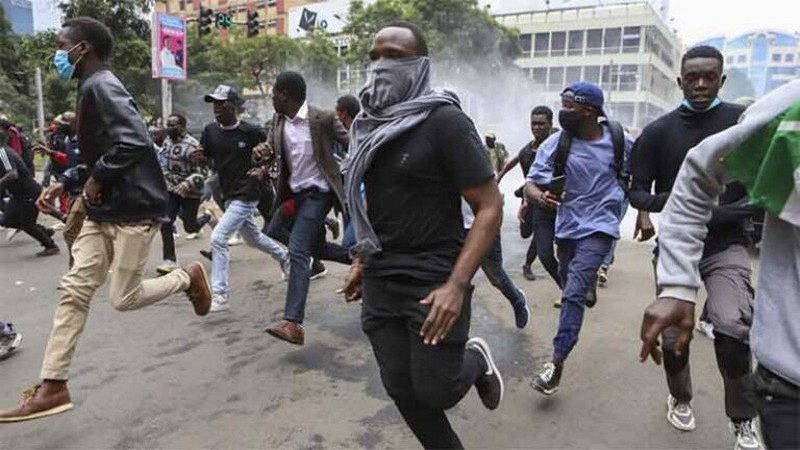
In late June, Kenyan President William Ruto backtracked on a tax-hiking finance bill after protests left at least 20 people dead and more than 150 injured when police opened fire with live ammunition.

According to Patrick Gathara of The New Humanitarian, the youth-led protests were triggered by a range of proposed new taxes that will increase the financial burden on families already struggling with rising prices.

In response to the ongoing nationwide protests that led up to the aforementioned incident, Ruto said he would withdraw the bill as “members of the public insist on the need for us to make more concessions. The people have spoken.”

Fine words, but Amnesty International had previously reported that 21 social media activists had been abducted by state security agents as the government moved to curb the growing dissent.

Ruto has withdrawn the bill and sacked cabinet members to appease the demonstrators. Whether it will remains to be seen.

Triggering a multi-trillion-dollar debt crisis 

In 2021, an Oxfam review of IMF COVID-19 loans showed that 33 African countries were encouraged to pursue austerity policies. This, despite the IMF’s own research showing austerity worsens poverty and inequality.

Days into the shutdown of the global economy in April 2020, the IMF and World Bank were facing a deluge of aid requests from countries in the Global South. Apparently, financial institutions had $1.2 trillion to lend.

Prior to that, in late March, World Bank Group President David Malpass said that poorer countries would be ‘helped’ to get back on their feet after the lockdowns.

However, such ‘help’ would be provided on condition of the acceptance of a booster shot of neoliberalism:

“For those countries that have excessive regulations, subsidies, licensing regimes, trade protection or litigiousness as obstacles, we will work with them to foster markets, choice and faster growth prospects during the recovery.”

Two years later, in an April 2022 press release, Oxfam International insisted that the IMF must abandon demands for neoliberal-driven austerity as hunger and poverty continued to increase worldwide.

According to Oxfam, 13 out of the 15 IMF loan programmes negotiated during the second year of the COVID event required new austerity measures such as taxes on food and fuel or spending cuts that could put vital public services at risk. The IMF was also encouraging six additional countries in Africa to adopt similar measures.

Kenya and the IMF agreed a $2.3 billion loan programme in 2021, which included a three-year public sector pay freeze and increased taxes on cooking gas and food. More than three million Kenyans were facing acute hunger as the driest conditions in decades spread a devastating drought across the country. Oxfam said nearly half of all households in Kenya were having to borrow food or buy it on credit.

It was similar in Cameroon, Senegal and Surinam, for example, which were required to introduce or increase VAT, a tax that disproportionately impacts people living in poverty.

In Sudan, nearly half of the population live in poverty, but it was directed to scrap fuel subsidies, which would hit the poorest hardest.

Oxfam and Development Finance International also revealed that 43 out of 55 African Union member states face public expenditure cuts totalling $183 billion between 2022 and 2027.

Many governments are nearing debt default and being forced to slash public spending to pay creditors and import food and fuel. The world’s poorest countries were due to pay $43 billion in debt repayments in 2022, which could otherwise cover the costs of their food imports.

Oxfam has shown that low- and middle-income countries paid $106 billion in debt repayments and interest to G7 countries in 2023.

In a recent article, journalist Thin Lei Win shared a comment from Professor Raj Patel, member of the International Panel of Experts on Food Systems (IPES-Food). He is reported as saying:

“Debt servicing at these insane interest rates is making it even harder for countries to make sure the hungry are fed. In Kenya, a neoliberal government has met its citizens’ hunger not with food but with violence and tax increases. This is, alas, an augury of the world to come.”

According to the recently released report The State of Food Security and Nutrition in the World, one in 11 people went hungry in 2023 and more than one in four were cutting back on the quantity and quality of the food they consume.

One in five people faced hunger and more than a half were eating less or nothing at all for days at a time.

Thin Lei Win notes that soaring inflation and stagnant incomes have put healthy food out of reach for many people, while a reliance on global markets to feed the population has made them hostages to either spiking import bills or market volatility.

Solutions 

Aside from releasing nations from their heavy debt burdens, the solution involves boosting the resilience of local food systems. With nearly 30% of the world food insecure and 42% unable to afford a healthy diet, it is essential to challenge and move away from a global food regime that relies on corporate-controlled supply chains, creates food insecurity (not least in Africa: see the online article Destroying African Agriculture) and uses debt and dependency to leverage compliance with the demands of powerful agribusiness conglomerates.

That much is made clear in the new report Food From Somewhere (IPES-Food) that argues for building food security and resilience through ‘territorial markets’. It notes that the past three years have seen big cracks emerge in global commodity markets and corporate-controlled supply chains resulting in supply chain chaos, lost harvests, volatile food prices and empty shelves.

The authors say:

“Feeding a hungry world requires resilient and robust food systems. In this comprehensive review, IPES-Food finds that a fundamental shift towards close-to-home food supply chains (‘territorial markets’) offers a more resilient, robust and equitable approach to food security.”

The report notes that a wide variety of vibrant food provisioning systems exist beyond corporate-controlled supply chains:

“From public markets and street vendors to cooperatives, urban agriculture to online direct sales, food hubs to community kitchens; territorial market channels are contributing to feeding as much as 70% of the world’s population every day. They are based around small-scale producers, processors and vendors, rooted in territories and communities, and play multiple roles within them. Yet they are continuously overlooked.”

Territorial markets are the backbone of food systems in many countries and regions, and the report highlights how they build resilience on multiple fronts, including ensuring access to seasonal, diverse, more nutritious foods and diets, demonstrating high degrees of resilience and adaptability to shocks, providing decent prices and steady incomes for small-scale producers and enhancing environmental sustainability by promoting low-input, biodiverse farming.

They also sustain traditional food cultures and foster community connections, solidarity and social capital.

However, governments are propping up fragile, disaster-prone global supply chains through agricultural subsidies, trade and investment agreements, tax breaks and food supply infrastructure skewed towards large-scale, industrial export agriculture.

The report adds:

“At the same time, corporate power continues to grow, eroding traditional practices and food cultures, co-opting local and territorial chains and reshaping diets around staple commodities and ultra-processed foods.”

It concludes that public procurement and state purchasing should be redirected to schemes that support sustainable small-scale producers and subsidies should be shifted to invest in the infrastructure, networks and people that underpin territorial markets, including public marketplaces, collectives and cooperatives.

Moreover, local markets need to be protected from corporate co-optation. This involves breaking up supply chain monopolies and encouraging sustainable, biodiverse farming practices and diverse healthy diets.

By moving towards food sovereignty in this way, we can not only avert future food crises and the ramping up of a debt-trap strategy but also challenge a food regime that has its roots in a persistent colonialism and imperialism facilitated by the imposition of neoliberal trade policies and World Bank/IMF directives at the behest of global agribusiness interests.

CST Research specialises in food, agriculture and development issues.

1 August 2024

Source: countercurrents.org

A Diary of Genocide w/ Atef Abu Saif

By Chris Hedges

A Diary of Genocide w/ Atef Abu Saif | The Chris Hedges Report

Those that attempt to transmit the truth from war zones — whether factual or artistic — in the face of death, violence and sickness vanquish the lies told by the killers, determined to make those of us far from the carnage understand. This is why writers, photographers and journalists are targeted by aggressors in war, including the Israelis, for obliteration.

Atef Abu Saif, the Palestinian novelist who has served as the Minister for Culture in the Palestine Authority since 2019, chronicled his experience surviving the most recent onslaught in Gaza that has persisted since last October in his book, “Don’t Look Left: A Diary of Genocide.”

Born in Gaza, Saif has known war his whole life.

“I was born during war, and I might die during war, actually,” he tells Hedges in this interview. “This is our life as Palestinians.”

By detailing the trauma of his experience through horrifyingly vivid imagery and tragic tales of murdered loved ones and permanently injured family, Saif illustrates how life in Gaza, as he says, “is timeout for survival. The normal discourse is to be killed and for your house to be destroyed, like my house in this war. So what we live is like a timeout. It’s rest. So it’s not the normal thing to live.”

This spacey description of existing in the face of genocide is reflected in the Minister for Culture’s words to his niece Wissam when she lost her legs and one of her hands after her family was bombed by the Israelis:

“We are all in a dream…all our dreams are terrifying.”

In this first episode of the new and independent iteration of The Chris Hedges Report, Saif and Hedges explore these experiences, and the meaning behind them, in a substantive and powerful conversation. Through it, the texture of the genocide and the damage it inflicts on its victims is captured, as Saif’s eloquence and vulnerability reveals the weight of the tragedy in a way that only facts and data simply would not be able to.

Transcript

Chris Hedges: There are scores of Palestinian writers, journalists and photographers, many of whom have been killed in the Israeli attacks on Gaza, who are determined to make us see and feel the horror of this genocide. They, in the end, will vanquish the lies told by the killers. Writing and photographing in wartime are acts of resistance, acts of faith. They affirm the belief that one day – a day the writers, journalists and photographers may never see – the words and images will evoke empathy, understanding, outrage and provide wisdom. They chronicle not only the facts, although facts are important, but the texture, sacredness and grief of lives and communities lost. They tell the world what war is like, how those caught in its maw of death endure, how there are those who sacrifice for others and those who do not, what fear and hunger are like, what death is like. They transmit the cries of children, the wails of grief of the mothers, the daily struggle in the face of savage industrial violence, the triumph of their humanity through filth, sickness, humiliation and fear. This is why writers, photographers and journalists are targeted by aggressors in war — including the Israelis — for obliteration. They stand as witnesses to evil, an evil the aggressors want buried and forgotten. The Palestinian novelist Atef Abu Saif, along with his 15-year-old son Yasser, who live in the occupied West Bank, were visiting family in Gaza — where Atef was born —when Israel began its scorched earth campaign. Atef is no stranger to the violence of the Israeli occupiers. He did what writers do, including the professor and poet Refaat Alareer, who was killed, along with Refaat’s brother, sister and her four children, in an airstrike on his sister’s apartment building in Gaza on Dec. 7. Atef described, for 85 days, the horror around him, producing a haunting and powerful work “Don’t Look Left: A Diary of Genocide.” Joining me from his home in Ramallah in occupied Palestine to speak about the genocide in Gaza and his book is Atef Abu Saif.

Atef Abu Saif: Thank you, Chris for this powerful introduction, which you just presented about the situation in Palestine and the role of authors, journalists, artists, photographers and they’ve been victims of the Israeli assault which is going on. Let’s remember since 67 years, this war never stopped on the Palestinian people. When my grandmother and grandfather were expelled from their town of Jaffa, and they were sent to the sands of Gaza to live in a refugee camp, then they died there, unfortunately. So this war never stopped and the war against Palestinian authors, intellectuals, artists, painters, and I would say, against Palestinian culture never stopped. And we can remember, we can mention scores of Palestinian authors, starting with Ghassan Kanafani, who was in a Senate in 1967, Majed Sharar, of course, etc. it’s a long list. But thank you very much for reminding us of this fact that the Palestinians who, of course, like international journalists who try to provide the truth from Palestine, were always as well targeted, like the American [Rachel] Corrie, if you remember her. This lady was killed in Rafah 15 years ago, etc. So whoever wants to transmit or to talk about what’s actually happening in the occupied territories is subject to violence and to evil, and probably would be killed.

For me, as you said, I was born in a refugee camp, in Jabalia refugee camp in 1973 and I think when I was two months old, the war of 1973 started. So I would say, like most of the Palestinians, I was born during war, and I might die during war, actually. And this is how my shortlisted novel for the Arab Booker Prize, “A Suspended Life” starts. Naim, who is the main character of the novel, was born during war, and he dies during war, and this is, this is our life as Palestinian. What we live is time out for survival. We don’t survive. The normal discourse is to be killed and for your house to be destroyed, like my house in this war. So what we live is like a timeout. It’s rest. So it’s not the normal thing to live. So it’s not normal to live. So I was born during the war, then I, of course, Chris, I remember the first time I was arrested. Actually, I was, I would say, nine years old. I was in the elementary school when the Israeli army, this was 1982 I think, yeah, it was the Beirut war at that time, and they attacked our school. We were in the elementary school and, of course, I was nine years old. I remember my mom was telling the captain when she came to the Israeli occupation force basement. She said he doesn’t understand politics, you know, because she wanted me to… anyway, I spent like one day, then they released us. We were like 10 students, 10 pupils at that time. Then, of course, when the First Intifada came, I was like most of the people my age, the young boys and women in my years, in my time, we were throwing stones at the soldiers, and I was shot at three times. One of them actually picked the grave for me and was supposed to be buried in the grave.

And then suddenly, I remember it was a British surgeon. She was in, where we call it, you know, this hospital where, where the Israeli massacre, 500 people. We call it the British hospital, the Baptist Hospital in Gaza. Then she said he’s alive and I went under surgery for 12 hours, etc. Then I survived, you know? Some would say I’m the son of death, you know, just take him for that. So I know, how does it feel that what you live is something that you are not granted. You took from the mouth of death, you know? And obviously I remember that when I was trying to protect my kid Yasser who happened to be with me during my visit to Gaza when the war broke out. And so every time I have to think of that, he should not be killed, because I would be responsible for this, because I missed that. And of course, you feel helpless. And many times I just was sitting like this in the tent. And I think, you know, if a rocket came from an Israeli helicopter or drone or whatever, and will kill it’s not my fault. I was trying to convince myself that we humans, we cannot, we could not control our fate. And unfortunately, it’s not even this thing that controls our fate, in our case, it’s the Israeli army which controls the fate of the Palestinians in Gaza because it is this side which [inaudible] them, this side which destroys them.

And of course, killing and assassination and destruction never stop them in Gaza. And I can tell hundreds of stories which I witnessed myself during my 50 years of my age, you know? My grandfather, from my mother’s side, was killed in the 1967 war, and I didn’t tell you this, even when we met, but he was injured in the Nakba, can you believe it? He was in Jaffa at that time. He was like, I think, 16 years old, and he was injured when, at that time they call it the Israelis gangs before the establishment of Israel, they attacked our neighborhood in Jaffa, and he was injured. And actually it was in the newspaper, I have a cut of the newspaper in Jaffa. And he was injured in his leg, this was in 1948, tt was April, early April, 1948. Then he was killed in 1967, when the Israeli army occupied Gaza after the Six-Day War. So many stories to be told about this and always, one has to remind himself that you know life is precious and you have to live it, and you have to struggle with it. And even in moments, you know, I remember when I was in Israeli jail, I was in the First Intifada for like, I would say five months or four months.

Chris Hedges: How old were you, Atef?

Atef Abu Saif: Yeah, at that time, I was 18 years old, I would say. I was just finishing high school, as you say it in America and I wanted to join the university then. Anyway, I was sent to the Israeli jail in Negev, which we call it, Ktzi’ot, they call it, in Hebrew, and we call it Ansar 3. And yes, always about narrative as well, struggle against, about narrative terms and terminology. Anyway, but I was, at that time, in Israel this year and my brother, Naim, was in Gaza central prison. And I remember my mother at that time, she was like a girl of 42 years old, and she was visiting us on that day. At nine o’clock in the morning, she came to visit me. I was not transferred to Negev jail, I was still in the Gaza arrestment, you know, which is near the beach. It was raining. It was January. She was 42 years old, and she was sick at that time. Anyway, she died later on, and she has to visit my brother in the afternoon in the other hail. And so it’s a tale of, you know, life is a tale of pain, but what other choices did she have? This is always, I remind myself, her two sons are in jail, and she has no other choice, only to visit them and to kiss them, even from far, to see them and to give them power. And actually, she was stronger than us when she was telling us, my brother would be released.

And I remember her statement, it’s amazing, she said, listen, a prison is never built on anybody. It means, you know, it’s not like a grave when it’s filled, you know, you will leave it at a certain moment. And unfortunately, when my brother left it, she had already passed away and she couldn’t see him. And one of the stories about peace and war, if you want to talk about that, I remember her demonstrating in support of Oslo Accords. This was 1993 when they signed. It was November, it was before Arafat arrived in Gaza, and she went happily demonstrating the Oslo Accords, and I was at the university at that time and I was telling her, “Wow, you became a very political activist.” She said, “No, I support Oslo because it’s going to release my son.” And unfortunately, she died two years later without her son being released. And this can tell the whole story of the peace process, how it was disappointing for many Palestinians. So our life is a life of searching for your life or for your time out. Actually, the title of my book in Arabic, goes “Time Out for Survival,” you know, searching for this time out, you know, during the catastrophic war or the genocide, which you live in. And it’s the same story, unfortunately, and this is sad to say, I’m gonna tell my grandchild if I happen to have one, the same story that my grandmother told me about her being forced to leave Jaffa, and how she left her villa, which it still exists until now in Jaffa and is inhabited by Jewish-Polish, from Poland. And I saw it a couple of times, of course, and I even had this structure, which the engineer made and I put it on the cover of one of my novels. And anyway, she had to leave her villa and to walk down, to walk all the way south to Gaza on the sand, and to live in a tent, where we used to live in a villa on the beach, etc. When she was rich, she died very poor.

So I have to tell the same story that she told me to my grandchild in the future but, again, what other options do you have? You have to live this life, to struggle to live and to do all that you can to survive, because life is worth doing, you know? It’s not an adventure, or it’s not a journey, it’s not an act, of course, like Shakespeare would say, we don’t do our part and we leave the stage. It’s just what we are made for. I want to talk, before we talk about October 7, this wasn’t the first Israeli assault on Gaza that you endured and wrote about, you have a previous book. But I want you to talk a little bit about that assault. I think, what was it, 2018 if I’m correct, and compare it to what’s happening now. But let’s talk about that first book that you did, where, day by day, you chronicle the relentless shelling, bombardment and killing that Israel carried out. Yeah, as I told you, I lived all the wars of Gaza, but even the previous attacks I was writing about, but I never published them, and I still have them. I hope they still exist somewhere in Gaza, you know, but 2014 war, because in the summer, 10 years ago, actually it started like these days, it was very massive and very huge and very aggressive for us. We experienced many Israel attacks. But that time, you know, it all happened all of a sudden and the attacks took place everywhere. And the Israeli army invaded Gaza for the first time since the Oslo Accords, you know, they invaded the city from the south, from the valley of Gaza, we call it. I was writing daily what happened, because I felt I’m gonna die at that point, like at this time, but this time it was more… Now we can talk about comparing the two wars, but sometimes it’s ridiculous to compare wars, because, you know, they aim, of course, to kill you.

So sometimes death is closer to you than other occasions, but it’s always seeking to catch you. So 2014 war, for us, was the first massive war we attended or we witnessed or we experienced and we felt it’s danger, that we’re going to die. I remember many times because, you know, at that time, I was more engaged and I wasn’t living in the refugee camp Jabalia, where I was born. And, yeah, at that time, I can tell scores of stories where I helped in rescuing some people, you know, from death. We took them from under the rubble and many times I would get a head without a body or a hand without… You know, it’s awful. But on many occasions, Chris, I was not sure if I was alive or dead, especially when you carry the bodies, you know? And I remember one time I had to take a shower like 15 times or 12 times, you know? At that time, we didn’t have problems with electricity and water like we did in this war. Because this war, yeah, I think it was not a war, it was an elimination. Because they wanted to eliminate Gaza. So this is, in the current war, genocide. They stopped water, electricity and people, they don’t talk about this, Chris, even the press now, they don’t say that it’s now, in a couple of days, it will be 300 days for war. People, they don’t say it’s 300 days without electricity and water in Gaza, running water. But at that time, in 2014, we had kind of regular water supply. It will be kept for a couple of days, but we still have it. So many times when, after washing myself, like 12 times, I remember the family name, it was the Balata family, they were living near the graveyard of the camp and [inaudible] Russian.

Then I had nightmares and then I couldn’t sleep because I saw the hands, the hair without a head, like [inaudible] I would carry it. Then in the night, I had to wake up, I’m not sure if I’m dead or alive, and I approach electricity and I wanted to touch it. So I said if I’m alive, then, of course, I nearly did it. But then in the last minute, I said, yeah, but what if I died? If I’m alive, then I did, I became dead, you know, after touching it, so, what is the point? So what if I’m dead? So I said, No, I’m not going to. But at that time, I don’t like to say this, it was a rehearsal for the coming war, it was like an exercise, you know? So when the current war started, I remember I was in the press house, Belal Jadalla, whom the Israel army assassinated later on, he was the head of the press club in Gaza, what we call press house, and to whom I dedicated the book, actually, and and we were trying to compare the current world with 2014 war, because 2014 war is all what we have in our memory about a massive war. Then, of course Belal at the time was dead, and it was my other friends, we were saying, listen, if this war doesn’t stop on the 51st day, which is the length of the previous war, then this is different.

And of course, what we were doing, we were just indulging, or we were trying to calm ourselves that this war is not going to last for 51 days, like when we were in the tents, my grandaunt, great grandaunt, greataunt Noor, she would ask me, “Oh, do you think we’re going to spend Ramadan here?” Because she doesn’t want to spend Ramadan in the tent. And by the way, Noor, she lived her childhood in a tent, and she lived in, spent the last couple of months of her life in the tent, like my mother-in-law as well, who was born in 1948 in Majdal Asqalan in Ashkelon, and she was carried by her mom to Gaza, where she lived the first three years of her life in a tent. And unfortunately, she died in a tent and then I mentioned about her in my book, but she was dead when I finished my book, when I left Gaza. So my great aunt would ask, “Oh, are we going to spend Ramadan here?” Then after Ramadan over the phone, she will tell me, Atef we going to spend [inaudible]? Every time now, people in Gaza, my sister Asia, will ask, she was asking me today, do you think we’re going to remember the first anniversary of the war here? Which means October 7, will come when [inaudible] yeah, I’m sorry for being long.

Chris Hedges: No, you go as long as you want. I want to talk about Refaat [Alareer] before we talk about your book. He was clearly tracked and assassinated by Israelis, along, of course, with his sister and her family. But just speak a little bit about him before we begin.

Atef Abu Saif: Yeah, I happened to know Refaat from this project, “We’re Not Numbers,” which was, the title of the project was taken from one of my articles in New York Times at that time, in the 2014 war. I was titling every day. And I think Refaat was reporting daily, as you know, from Gaza, he was very active in telling the Palestinian truth simply. He was not exaggerating, he was not even political, like poets will do, you know, just he was doing it. He was writing about what happened to his neighbors and to his family in person, I think, in one of his articles, even when his mom was telling him, don’t speak in the press, because this is dangerous and we might be killed. And, yeah, it’s sad that we lose our voice because it’s not that the killer wants to hide his crime. He doesn’t want the future crimes to be heard of. So the assassination of Refaat, like the assassination of Belal Jadalla as well, the head of the press house in Gaza, was transmitting news from Gaza in five, six languages, not him,  the people working with him. Same thing, of course, with the other other poets like Saleem Al-Naffa and you talked about artists, writers, photographers, etc. So Shireen Abu Akleh before, if you remember in Jenin as well, she was assassinated. So the fight against the truth, or terrorizing the truth itself, so it hides by itself, so nobody dares to touch it, nobody dares to speak about it, and nobody because the word is stronger than the poet, believe me. And many people do not remember the names of the fighters, but they remember the names of the poets, the journalists, the filmmakers who spoke about them, transmitted the truth about their life, their pain, their soul, their suffering.

So Refaat was, yeah, I think he believed in what he did. And, you know, as he said in his poem, if I must die, you know. So the truth would be like the kite, which he referred to, flying in the sky, and with a long tail, long white tail, so a kid from Gaza can see it from any other place on the Gaza beach. And so this is hope, because the truth never dies, Chris, even if they kill the transmitter, the truth never dies. It will find another transmitter, another brave, brave, courageous person, to transmit it and to get it and to tell it, you know? And we Palestinians, I have to say, we’re very grateful to our artists and poets, mainly, who transmitted our pain in the last 100 years. And remember, it’s not only the Israelis, even the British army was putting Palestinian poets in jail in the ’20s and ’30s, like [inaudible] and like [inaudible] and those great poets of the ’20s and ’30s of the Palestinian life in the ’20s and ’30s and [inaudible] Nazareth, they were put in jail at that time. So always the truth. And it’s not always Israelis. All oppressors, all killers, they kill the truth before killing… I always, Chris, said, okay, nobody can understand why you kill your fellow man, your fellow human being, but this war, but why do you destroy castles, for example, in Gaza? The Qasr al-Basha Palace, even when Napoleon Bonaparte entered Gaza, he used it as his office. The Turkish, they were using it as a military office, the British as well. So nobody knows why you destroy it. It doesn’t harm you. It doesn’t and you occupied it already, you were there.

The tanks were there, and they didn’t even shell it from very far, by the way. The tanks stood in front of the historic wall of the castle. It’s a castle as we call it, Basha Palace, we call it, and it’s a museum, by the way, where you had Phoenician jars and Crusades swords. And it’s from all different ages, Islamic [inaudible], you know, monuments. So nobody understands why you can’t stand in front of a historic palace where there is no resistance, no army, nothing, then you destroy it. Hey, even if you’re insane, you sit there and you enjoy your coffee as a winner, or he’s not a winner. But let’s assume you won the war. You sit there and you enjoy the city or on the hill or in the middle of Gaza City. And you can see [inaudible] on your left hand [side] etc. No one can understand why you destroy, the soldiers go inside one of the artist studios, it’s in the video, and they enjoy destroying the damn thing. For God’s sake, you enjoy stealing it, you take it, you hide it. You don’t enjoy just making colors of the painting. You bleed and you enjoy the bleeding colors of the painting. So it’s something, you know, and again, this is not new. This always happened to us, for six, seven years, when the painting in my grandfather’s house in Jaffa was destroyed, when the painting of the Palestinian newspapers were destroyed as well. And then we’re repeating the same story, we’re repeating the same pain and I hope this is not going to happen in the future. I hope this world will put an end to all this pain and long journey of displacement.

Chris Hedges: I mean, in settler colonial projects, they must destroy the culture, identity, history of those they occupy. That’s the way they affirm their own supremacy, or they impose their own supremacy by destroying the Palestinians who are indigenous to Palestine.

Atef Abu Saif: Yeah. Theoretically, you can understand this. But you’re not doing this with joy, you know? They’re doing it with joy and pleasure and why do you kill a poet? Why do you kill Refaat Alareer? He’s a person who always wanted to seek to live in peace, who always wanted to write about love, but he didn’t find love to write about it. He couldn’t write a poem about the toy that he wanted to give as a gift to his daughter, because you took this gift at the checkpoint in Rafah when they were there. So he couldn’t write about stable and normal life. So why do you destroy a museum? And I know that the struggle of narrative, it’s not physically you’re superior even, narrative wise, you’re superior, and you want your narrative and your tales to overwhelm the region. But even thieves, of course, thieves take what is not theirs. But even thieves, they take the nice things from the houses they attack. And even the Colonials in history, they sometimes have little bit of respect to the indigenous culture, like stealing their culture, taking it. But for God’s sake, [inaudible] is one of our greatest poets now, living poet now. And I saw him, I would say, in the first month of the war. And his poems are taught and for our kids in the schools. He’s a very good poet, he and his wife and his kids until now, under the rubble for more than 150 days. And just imagine our loss. He was great and he was at that time, six, and we celebrated his birthday together.

Actually, he was Ramallah participating [inaudible] last September. He’s 60 still. So he could draw another 100 poems, you know? And of course, many young… The other day, by the way, the 21st, a young Palestinian poet, Pilar. His name is [inaudible], I wrote in my Facebook account, I put his… He was killed in his house and he wrote very nice poems. He writes in Arabic. He used to write in Arabic. He’s dead now, but just if you read his text, how he was afraid of that, how he was trying to calm down his sister. He’s 26 years old. And then his house in the center, I think it is in Nuseirat refugee camp and he was killed there. So again, it’s not… This war is targeting humans, the place, the [inaudible] of the place, the history of the place, and it targets the trees. If you plant guava or mango or whatever tree in your garden, it takes you 30 years to see it a full-fledged tree, you know? And suddenly someone comes and takes it out. I remember my sister was telling me the other day on the phone when she realized that her house was destroyed in Beit Lahia. She’s now 46 years old. She said, “I don’t have time in my life to build a new house.” She started with her husband to build the house when they get married when she was in the 20s of their age and they spent 25 years building the house. She said, I don’t have time now to build a new house. So there is no time to plant your new tree in the garden, even. So it’s like this war is targeting everything in Gaza. It’s targeting Gaza, and it’s not targeting the political parties, not targeting the militia, it’s not targeting a specific party or person or character or whatever, and it doesn’t have any aim other than  just eliminating Gaza and making life in Gaza impossible. Not for today or for tomorrow, for the next day or the day after, for scores of years to come. So people have to leave Gaza voluntarily after that.

Chris Hedges: I want to read a little bit from your book. It’s an amazing work, and captures the texture, horror of the genocide. When it begins, you lose a friend, a young poet, musician. You wonder about the Israeli soldiers watching you and your family, quote, “their infrared lenses and satellite photography. You ask, can they count the loaves of bread in my basket, the number of falafel balls on my plate? You watch a crowd of dazed and confused families, their homes and rubble, carrying mattresses, bags of clothes, food and drink. The supermarket, the bureau of change, falafel shop, fruit stalls, perfume parlor, sweet shop, toy shop, all burned.” You write, “Blood was everywhere, along with bits of kids’ toys, cans from the supermarket, smashed fruit, broken bicycles, shattered perfume bottles, the place looked like a charcoal drawing of a town scorched by a dragon.” This, of course, has been a level of destruction, despite the many assaults on Gaza, that is just apocalyptic. But talk about those first days. Did you realize at the beginning that this was different?

Atef Abu Saif: Yeah, actually, it’s funny, the war started while I was swimming in the beach. I remember that I didn’t go swimming the whole summer. So I was visiting Gaza, which was a regular visit for me. But it was my dad who passed away, by the way, Chris, during the war and mid-April, unfortunately, because of lack of food and lack of medicine. Anyway, I was visiting my dad and my sisters. Then we were supposed to celebrate the Palestinian heritage there, which is October 7. And so I was there in the morning. I have to go to the beach. It was my first time at the beach and so I went swimming in the beach, then the war started. And for us, I remember I was calling my brother-in-law, get out of the water. We have to leave. It’s war, I told him. It was 6:30 in the morning. He said, “No, this is another escalation.” I remember I left him inside the water. He said, “Go, go, go, leave me.” It’s because he lives nearby, in [inaudible], near the beach. So when I left, I was driving with my brother Muhammad. I think the policeman was asking us, what is happening? Nobody knows what is happening, you know? But, of course, as the night falls, it gets very dark. We realize this is a different type of war, because even back to the 2014 war, it was not taking place in all the places at the same time. Gaza was targeted today, I remember, in 2014. Even in the 2008 war, Jabalia was targeted, then Gaza City, then Rafah, then Khan Younis but this war was everywhere, every single… I remember October 7 and October 8, the first two days of the war, shelling everywhere, all over. You couldn’t move.

And I had to stay in the press house at that time because I was in the [inaudible] quarter during the day. Then I couldn’t leave so I had to sleep in the press house between the disks of the journalist. From the beginning, it was realized to be a very hard war, but in the previous wars, Chris, people were displaced from their places, but people living in the peripheries, near the border, north border, or eastern border. And they used to come to stand at [inaudible] schools in Jabalia refugee camp, mainly. And we never dreamt of the army getting inside Jabalia, by the way. It’s like even during the war, even after a month of the war, we said, no, no, they will not be able to get, they were not there because this means killing, because we couldn’t believe that the killer can be this savage. We couldn’t believe that any killer can be any human to this extent, to kill 1000s of people, to get to an overcrowded and overcrowded and inhabited place. So we couldn’t believe that in this war, we’re going to be displaced. If you ask me, even after two, three weeks of the war, I say no, come on, it’s just another war for us. But this tends to be not another war. For this, Palestinians usually compare this war to the Nakba War, where people were forced to leave. And even the same slogans, same sentences, phrases we use, I used to say, which was very similar to what my grandmother was saying in the Nakba, but my grandfather was saying, “Oh, it’s just a couple of days then we come back.” We were there. And this is what I was telling my kid, without thinking, this was natural, that we were coming back in a couple of days. And this is what my grandmother and all the old ladies and men were telling their kids in 1948.

So the only comparable situation for the people was the Nakba itself. However, in one of my articles later on, I said, No, we should not compare Nakba to anything, because in the Nakba, a political attack resulted afterward. But the elimination of the Palestinian, I would say, statehood or entity, and they established another entity. So I said, we cannot compare Nakba to any other thing, but this is the only thing that comes to the people’s mind, Nakba. Even the 1960 war doesn’t come to their mind. However, in the 1960 war, if you remember, half of the people of the West Bank were displaced to Jordan, and many of the Gazans, including my grandfather, Ibrahim, with my uncles, they were forced to leave Jabalia to Jordan, and just my father and my grandmother remained in Jabalia. And I think, as I was always saying, I was lucky for this. I didn’t live in diaspora or refugees outside Palestine. So the only comparable event in the minds of the Palestinians to this is the Nakba itself. And Nakba, for the Palestinians, is… you know you translate into English, like catastrophe, which is I would say, a soft word for it, for Nakba. The Nakba is something, a catastrophe that comes very heavy from above. So it’s something that you cannot afford. And that doesn’t mean anything for you. So it’s a very hard and harsh word, you know, and so for this, the Palestinians didn’t call 1967 another Nakba. So they just changed the one sound, Naksa. They changed the “P” sound with “S” sound, which means like being defeated, anyway. So from very early, I told you, in the first two, three weeks, nobody expected that we’re going to be displaced. I didn’t, I cried when I crossed the checkpoint between south and north, and I was looking to the south, 1000s of people, women, men, kids, children, pregnant women crossing.

And it was with my kid carrying the wheelchair of my grandmother, sorry, my mother-in-law, who passed away later on. And we were carrying her, while she was handing her wheelchair, sitting firmly, trying not to fall. We were crossing the border. Then, all the images which I heard of in the camp, I grew up in a refugee camp in the ’70s and ’80s, and so I hear hundreds of stories of people telling about their exodus from their villages and towns in southern Jaffa and all the villages south of Jaffa. So all these stories were presented like you’re watching cinema movies, you know? But you’re watching 100 cinema movies at the same time, but they all reflect the same scene. They all show the same scene with different characters’ faces, and now, at the moment, I realized I’m one of those characters. I became another scene and another movie in this big screen show.

Chris Hedges: And as you’re walking, I remember from the book, you’re with your young son, who’s 15, and they’re bodies everywhere, and you tell him not to look.

Atef Abu Saif: You’ll see that if you do any movement, if you do any gestures, any sign, you would be killed. I remember I said I was arguing with my publisher, we nearly named the book, “A Coffee on Top of the Tank,” because the soldier was sitting on the top of the tank. I don’t know how you can enjoy having your coffee while desperate people, all men and women, grieving on the bodies of the persons while the other soldiers [inaudible] again, actually. Having her, 16, like this, and ready to shoot in any minute, you know? So we nearly named the book that but then we were saying, we’re not naming… I remember my first first book was, “The Drone Is With Me.” So we said we’re not going to say the tank and the drone. So we have to discuss another title, but for this, you walk on those bodies, and you don’t want to be another dead as well. So I was telling my kid not to [inaudible], because the soldier from now, then he will call say, “Hey, you, young man with a white t-shirt and glasses, long hair, jeans, trouser come here.” So of course, you might find like in the same frame, if you take a photo, take a cinema movie, you will find like five, six person like this. But if the wrong person, then to the left of the soldier, he will shoot him. Can you believe it? So the main person himself here, he should realize that he is the wanted one. He is the chosen one to be arrested. So the best way is not to move, not to look, just to keep looking straight until you pass. Just imagine this feeling when you realize that, now in the Olympic time, they’re playing in Paris now, so if you cross the line of the race, this feeling, you know, that you made it, that you survived, you crossed the line. But then I remember, I have some photos of this from my mother-in-law, when we’re sitting after we crossed the checkpoint. We didn’t realize we became displaced. A refugee like me, when I was born in Jabalia refugee camp, became a refugee again. And my mother-in-law became refugee as well. So the moment we cross the point, the moment we realize that we will be beyond the sun, beyond the light, you know? And we’re in darkness. And, of course, it’s funny, from the first day we started to regret that we did it, that we should not cross the line. Actually, there is a bridge there. We call it the Salah al-Din bridge, it’s named after the longest Street in Gaza, so we were regretting that we crossed the bridge. Is there a way to go back?

Chris Hedges: I just remember from your book you write about your house In Jabalia, and how you may change a little bit of the street here and there, and you write about why you always came back to Gaza. You have a PhD from a European university, you could have easily spent the rest of your life living outside of Palestine, but you didn’t. And you write about that house, which, of course, has now been destroyed.

Atef Abu Saif: Yeah, I always had the chance to live abroad, but I never wanted it. It’s not, I love New York, of course, I would say New York is one of my favorite cities. I’ve been there after 11 September directly, [inaudible]. And I love Rome, for example. I’ve been studying in Italy. And I love many places. I love Palestine as well. And if I was telling myself, if everyone like me is going to leave Gaza, who will remain there? So against this brain drain and I don’t like to be this author, intellectual, like many of the Arabs and third world authors, Chris, they sit in London having their precious life, or in Paris or in LA and join American life. Then they talk about the poor people back home. If I have to, I might go to Italy, as I told you, to teach. I don’t mind, but temporarily. I never wanted to stay abroad all my life. Why? Chris, believe me, Gaza is very beautiful. It’s a very beautiful coastal city, and when we people from Gaza, we remember even the taste of coffee in Gaza. We would say, No, you know, all the coffee we have, I remember this guy, we had this talk. No, for God’s sake, no coffee brand in Cairo is similar to the worst coffee brand in Gaza, for example. And this is true, I’m convinced of this. Of course, you might be convinced otherwise. Everybody likes his mom the cook, dishes.

Everybody believes that his mother’s dishes are the best. But she might not be, actually. But for this I like Gaza, it’s where I belong, it’s where I have responsibilities towards the people. Because there I was taught how to tell stories, by my neighbors, by my grandmother, Asia. And always I have felt, due to an obligation, to retell this, their stories, to re-narrate their pain and their suffering, transmit their grief and their loves, by the way, and their sense of humor as well. So when my house was destroyed, I cried like, you know, this is normal. We’re human in the end, you cannot stand, stand fast forever. So I was but I felt sorry for my characters, the characters in my novels. I said, if they came out of my books. They jumped from the novels, they wouldn’t know the place. Instead, where they lived in those alleys, which now is damaged unfortunately, those alleys and those little [inaudible] in between the houses where they lived all their life, but even when I was drawing, sometimes I would draw the map of the sea, or I would say, the stage, the theater of my novel, and always, I depict the same area, which is my neighborhood, which is we call it the Jaffa neighborhood, where all the people living there are originally coming from Jaffa, where they were refugees from Jaffa. So I said, Wow, now the streets are no more streets, the houses are no more there, the alleys are damaged. Everything has changed.

So if my characters walked, they wouldn’t know the place of the house. And if they find that the house where they left and where they were born, actually, they will not recognize it. I used to sit down near the outdoor of the house, looking at the stairs, wooden stairs inside the house, which was to my room, actually. And then I started, always, to make up my stories. Since I was looking to the sky from the stairs as I was imagining myself walking up to the sky from the stairs. You know, Chris, I would tell you that the actual war starts after the war is finished. My wife lost her only sister. She doesn’t have sisters or brothers, and she’s lost her mother as well. And until now, Chris, she cries every night, you know why? Because she wishes, until now, that somebody can take the bones of her sister and her husband and her kids and bury them because they are under the rubber since the seventh, eighth day of the war, ie, since 290 days, more or less. So all she wishes for is a grave to visit, to mourn there. So our soul, even, is postponed. Our pain is not given its duty. So after the war, people will have more time to mourn, to cry, to give respect to the beloved persons who passed in the war. So the actual war, even at the personal level, will start after the war is finished. And of course just think of my dad’s children, they don’t have a place to stay. Even those married, those girls are boys who are married of my dad’s, they don’t, their houses were destroyed as well. So there is no place to go. What the people of the north will do, Chris, they will carry their tents on their shoulder, and they will walk to the north to set them back, again, to live near the rubble and the [inaudible] of their houses. So this is a very long pain, and this is what I’m saying. The end of this war is to eliminate life from Gaza, to make it something impossible, to make it costing and taxing, you’re not happy. You’ll never feel happy, but your future. So it’s a war against the future as well. It’s not, remember, we talked about the war against the past, the memory, the narrative, through culture, destroying minimum sculptures, museums, killing authors, destroying libraries, the string that the archive of Gaza. It’s not only against the past, it’s against the future as well, to make the future something that will not come and will not exist for the Gazans.

Chris Hedges: So Atef, as you mentioned, you lose your sister-in-law and her husband when their building is bombed, you write the bodies of their daughter and grandchild had already been retrieved. The only known survivor was Wissam, one of their other daughters, who had been taken to the ICU. Wissam had gone straight into surgery where both of her legs and her right hand had been amputated. Her graduation ceremony from Art College had taken place only the day before. She has to spend the rest of her life without legs, with one hand. And you visit her in the hospital, and she’s barely awake, and after half an hour, she asks you, “I’m dreaming, right?” And you say, “we are all in a dream.” And she says, “My dream is terrifying. Why?” And you answer, “all our dreams are terrifying.” After 10 minutes of silence, she said, “Don’t lie to me, uncle, in my dream, I don’t have legs. It’s true, isn’t it? I have no legs.” But you said it’s a dream, you tell her. I don’t like this dream, uncle, and you write, “I had to leave. For a long 10 minutes, I cried and cried overwhelmed by the horrors of the past few days. I walked out of the hospital and found myself wandering the streets.I thought idly, we could turn this city into a film set for war movies.” And then when you go back to visit her, and there are no painkillers or sedatives, and she’s racked in pain, she asks you for a lethal injection, and she tells you that Allah will forgive her. And you answer, “but he will not forgive me, Wissam.” And she answers, “I’m going to ask him on your behalf.” I want you to talk a little bit about Wissam and that moment.

Atef Abu Saif: You know, I never read the book after I wrote it, I told you. I don’t [inaudible]. I don’t and even when I did talk about the book in Oman, Cairo, Morocco, my only condition was not to read part of the book, because they would ask you to read them. It’s about your book. So I was in Qatar, actually, where we managed, luckily, I communicated with some persons in the Qatar government, and they transmitted her to Qatar and hopefully, she’s undergoing a few surgeries and operations in August, 15 August, to prepare her to have artificial limbs, legs. And I remember how it goes, when I found my wife saying, she knew the news, it was in the news. She says, “Nobody survived, not even a single person.” Then I went, “Well, Wissam survived. Can you believe it?” You’re talking to a person who lost all her family because she doesn’t have brothers and sisters, so her only sister, and, of course, with her kids and her wife. So for Wissam, when she was in the house, the bomb, the explosion took place, and she was thrown to the next house without legs or hand, and they carried her and they took her to the hospital. Of course, she was unconscious. So for her, the last thing she remembers, she was laying in bed opposite her mother, like they were like this and talking so she doesn’t remember anything. But I think later on, she told me in Cairo, when I visited the hospital in Cairo, she realized that when they carried her, she was with no legs and she felt that her legs were amputated. So for her, it’s like most people, Chris, it’s a nightmare, it’s a movie.

It’s something that you don’t believe or you don’t want, actually to believe. You wish this dream like this until now, because every night before I sleep, my wife has to cry and tell me, “Wow, what if this is a nightmare?” And after 300 days, because in this nightmare which she wants to wake up from, she lost… “You know Atef, when you catch your mobile, you find people to call from your family. But when I catch it, no person.” Her sister, only sister, her brother-in-law, the two kids who are not kids, that are 25, 28 the sons of her sister and her mother. It’s her whole family. So it’s only her [inaudible] father was still alive and he’s a very old man for her. So she says, “When you catch your mobile and you find numbers to call, I don’t find numbers to call.” So every night, she says, what Wissam said to me that day, what if this is a dream, nightmare, a horror movie? Even in this movie, I lost my legs, or in this nightmare, I lost my legs and my arm, but everybody, Chris, I know we are running out of time. But when I left my dad in Jabalia, he refused to come with me to Rafah and the south and said, “Listen, Atef, I lived all my life here, and if Allah wants me to die, I will die, I’m not going to die anywhere.” And he died, actually there, but he died because he didn’t find the bread to eat either. For 10 days, he was eating the animal seeds. The seeds, which you feed animals with. Anyway, I remember when I looked at his face for the last time before driving south. I was asking Allah, just one favor, which he didn’t do for me. I said just, I want to see him again, because I had this feeling I might not see him again. And until now, many times I just think, wow, what if this is just another story I’m telling to the nation, to the readers, like I’m making up all this work as a writer, and you do it as a writer. What if this is just one of my creations, and I wish it is actually. And all our talk now is part of this, actually, is part of this fictitious universe I made to tell about.

Chris Hedges: Great. Thank you, Atef. That was Atef Abu Saif, we’re talking about his book, “Don’t Look Left: A Diary of Genocide.” I want to thank Sofia, Diego, Thomas and Max, who produced the show.

Chris Hedges is a Pulitzer Prize-winning journalist who was a foreign correspondent for fifteen years for The New York Times, where he served as the Middle East Bureau Chief and Balkan Bureau Chief for the paper.

1 August 2024

Source: countercurrents.org

‘Beijing Declaration’ on Palestine – Can Chinese Diplomacy Replace the US?

By Dr. Ramzy Baroud

Chinese diplomacy has done it again.

By hosting a historic signing of a unity agreement between 14 Palestinian political parties in Beijing on July 23, China has, once more, shown its ability to play a global role as a peace broker.

For years, China has attempted to play a role in Middle East politics, particularly in the region’s most enduring crisis, the Israeli occupation of Palestine.

In 2021, China announced its four-point plan, aimed at “comprehensively, fairly and permanently” resolving the Palestinian question.

Whether the plan itself was workable or not, it mattered little, as neither the Israeli government nor the Palestinian Authority were prepared to ditch Washington, which has dominated Middle East diplomacy for decades.

For the Israelis, their interests lie largely within their historic alliance with the United States, which has translated into very generous aid packages, military support and political backing.

As for the PA, since its inception in 1994, it revolved largely within a US-foreign policy sphere.

With time, the Palestinian leadership grew even more reliant on American-western financial handouts and validation. Thus, allowing China to flex its diplomatic muscles in the Middle East, at the expense of the US, would be considered a violation of the unspoken agreement between Washington and Ramallah.

Consequently, the Chinese efforts yielded nothing tangible.

But China’s success in ending a seven-year rift between Saudi Arabia and Iran re-introduced Beijing as a powerful new mediator, in a region known for its protracted and layered conflicts.

The latest horrific war in Gaza has further highlighted the possible role of China in Palestine and the region at large.

For years, China attempted to find the balance between its historic role as a global leader, with clout and credibility in the Global South, and its economic interests, including those in Israel.

That balancing act began eroding soon after the start of the war.

The Chinese political discourse on the war was committed to the rights of the Palestinian people and their historic struggle for freedom and justice.

The above notion was highlighted in the words of China’s ambassador to the UN, Fu Cong, when he said that “the establishment of an independent state is the indisputable national right of the Palestinian people, not subject to questioning or bargaining”.

Such language, which came to define China’s strong stance against the war, the massive human rights violations and the urgent need for a ceasefire, continued to evolve.

On February 22, China’s representative to the Hague, Ma Xinmin, said that “in pursuit of the right to self-determination, Palestinian people’s use of force to resist foreign oppression (…) is (an) inalienable right well founded in international law”. His statement was made during the fourth day of public hearings held by the ICJ to address Israel’s decades-long occupation of Palestine.

The Chinese, and other countries’ efforts, paid dividends, as the ICJ released its Advisory Opinion on July 19, stating that “the sustained abuse by Israel of its position as an occupying Power” and “continued frustration of the right of the Palestinian people to self-determination, violates fundamental principles of international law”.

It is within this context that ‘The Beijing Declaration on Ending Division and Strengthening Palestinian National Unity’ was signed.

The agreement was not a mere document, similar to those signed between rival Palestinian parties in the past. It proposed a three-step initiative that includes a “comprehensive, lasting and sustainable ceasefire in Gaza”, followed by a post-conflict governance plan, which is itself predicated on the principle of “Palestinians governing Palestine.”

The final step seeks long-term peace, all of which is achieved through broad-based participation of regional and international players. In other words, ending the domination of a single country over the future of Palestine and her people.

There will certainly be attempts to undermine, if not cancel, the Chinese efforts entirely. But there are reasons that give us hope that the diplomatic push by China may, in fact, serve as a foundation for a change in the global attitude towards justice and peace in Palestine.

The fact that western European countries like Spain, Norway and Ireland have recognized Palestine shows that the US-dominated western diplomacy is breaking apart.

Moreover, the growing role of the Global South in supporting the Palestinian struggle suggests another seismic shift.

Since the signing of the Oslo Accords, much of the world has been sidelined from the struggle in Palestine. This is no longer the case.

China’s growing role in Palestinian and Middle East politics is taking place with changing global dynamics, and the practical end of the US traditional role as the ‘honest peace broker’.

The war on Gaza has presented China with the opportunity to play the role of an advocate for Palestine. This has given Beijing the needed credibility to achieve the most comprehensive agreement among Palestinian groups.

Time will tell if the agreement will be implemented or thwarted. But the fact remains that China is now officially a peace broker in Palestine and, for most Palestinians, a credible one at that.

Dr. Ramzy Baroud is a journalist, author and the Editor of The Palestine Chronicle.

1 August 2024

Source: countercurrents.org

Assassination of Ismail Haniyeh will strengthen resistance resolve

By Ali Abunimah

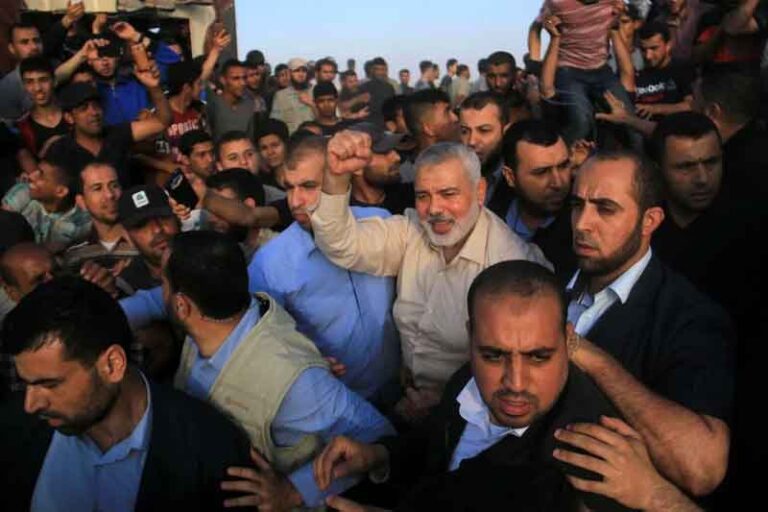
The assassination of Hamas leader Ismail Haniyeh in Tehran early Wednesday is a major escalation that brings the region closer to an all-out war that Israel claims it does not want, but seems to be doing everything in its power to provoke.

It came hours after Israel bombed Lebanon on Tuesday evening, killing three civilians. Israel claimed that it targeted Fuad Shukr, Hizballah’s most senior military official and its leader Hasan Nasrallah’s close confidant. Hizballah confirmed Shukr’s martyrdom later in the day on Wednesday and said that Nasrallah “will announce our political position tomorrow regarding this crime during the funeral of Commander Shukr.”

In keeping with its standard practice, Israel has not made any official comment on the assassination of Ismail Haniyeh and his bodyguard Wasim Abu Shaaban in the Iranian capital, where the Hamas leader was present for the inauguration of President Masoud Pezeshkian on Tuesday.

During a brief speech on Wednesday, Israeli Prime Minister Benjamin Netanyahu warned the public that “challenging days are ahead” and said that “[we] will stand united and determined against every threat.”

He did not comment on Haniyeh’s assassination and instead doubled-down on his position not to end the war on Gaza through an agreement reached with Hamas. Referring to international and domestic pressure, Netanyahu said “I did not give in to those voices then, and I don’t give in to them now.”

But at least one Israeli official, heritage minister Amihai Eliyahu, celebrated the killing. He posted on X, formerly Twitter, that “this is the right way to clean the world from this filth.”

“No more imaginary ‘peace’/surrender agreements, no more mercy for these sons of death,” Eliyahu added.

Despite Israel’s official silence, few are in doubt about its responsibility, not least Iran, where the killing of Haniyeh on its soil will be viewed as a major breach of its sovereignty and security.

“The criminal, terrorist Zionist regime martyred our dear guest in our territory and has caused our grief, but it has also prepared the ground for a severe punishment,” Ayatollah Ali Khamenei, Iran’s supreme leader, said.

Iran’s Islamic Revolutionary Guard Corps said that Haniyeh and his bodyguard were killed in the residence where they were staying. It added that the attack is under investigation and that details will be released later.

Khalil al-Hayya, a senior Hamas official, said that Haniyeh was “directly” killed in a missile strike that destroyed the windows, doors and walls in the room where he was staying. Al-Hayya added that Israel was aiming to “burn the entire region … because they’ve failed to achieve their goals” in Gaza, rejecting a deal and wanting “to continue their aggression despite all the failure.”

Haniyeh’s family massacred

Among Haniyeh’s last public words are those he made to Khamenei one day before his murder. Haniyeh told the Iranian leader how he had lost more than 60 members of his family in Gaza during Israel’s genocide, including three sons, a sister and many grandchildren.

Following Israel’s killing of several of his family members in April, Haniyeh said “the blood of my children and grandchildren is not more precious than the blood of the children of the Palestinian people.”

“I thank God for this honor that He has bestowed upon me by the martyrdom of my three sons and some of my grandchildren,” Haniyeh added.

After the news of Ismail Haniyeh’s murder, his eldest son Abd al-Salam said, “we have accustomed ourselves to receive the news of martyrdom, like all our people, we have accustomed ourselves to victory or martyrdom.”

He added that Israel was “deluded” if it thought murdering leaders of the resistance would halt the Palestinian struggle for liberation.

Ismail Haniyeh was born in 1962 in Gaza’s Beach refugee camp to a family originally from the Palestinian city of Majdal Asqalan, renamed Ashkelon after the Zionist conquest of the city in 1948.

In the early 1980s he studied literature at the Islamic University of Gaza and joined the Islamic student bloc.

He was active during the first intifada, the mass uprising in the occupied Gaza Strip and the West Bank that began in 1987, the same year Hamas was founded. Haniyeh was one of the group’s early members, becoming a close confidant to its founder Sheikh Ahmed Yassin, who was assassinated by Israel in 2004.

As an activist against the occupation, Haniyeh was repeatedly jailed by Israel, his longest stint in its prisons lasting three years. After that, in 1992, he was among hundreds of Palestinian leaders and activists expelled by Israel to Lebanon.

He returned to Gaza after the signing of the Oslo accords between the Palestine Liberation Organization and Israel in 1993. In 1997, he became the assistant to Sheikh Yassin.

Yassin had just been released from prison by Israel following a failed Israeli assassination attempt on senior Hamas leader Khaled Meshaal in Amman, Jordan, in which Israeli agents had sprayed a toxin into Meshaal’s ear. King Hussein of Jordan demanded that Israel provide the antidote, which it did, and that it release Yassin.

Haniyeh’s rise to leadership

When he returned to Gaza, Haniyeh also returned to the modest family home in which he was born and raised in Beach refugee camp. Haniyeh became a well-known and popular leader across Gaza, in part by regularly giving sermons during Friday prayers in mosques across the territory.

In 2006, following Hamas’ victory in the Palestinian Authority legislative elections in the occupied West Bank and Gaza Strip, Haniyeh became prime minister of a short-lived national unity government. That government was ended by a plot, backed by the United States, to overthrow Hamas using militias affiliated with its main rival Fatah, which had fully controlled the Palestinian Authority up to that point.

The US-backed coup succeeded in the West Bank but failed in Gaza. Haniyeh remained as prime minister in Gaza as Israel imposed a devastating siege on the territory with the support and complicity of the US, the European Union, Canada, some Arab states and the Palestinian Authority run by Mahmoud Abbas in Ramallah.

Haniyeh was known as a conciliator among Palestinian factions and in 2014 he stepped down as prime minister in Gaza in a fresh attempt to achieve national unity. This followed the signing of an accord with a Palestine Liberation Organization delegation known as the Shati agreement, because it was signed in Haniyeh’s home in al-Shati camp, as Beach camp is called in Arabic.

But the obstacles in the way of unity – principally the PA’s insistence on maintaining its collaboration with Israel and objections from the Ramallah government’s foreign sponsors – torpedoed every attempt to overcome the divide.

In May 2017, Haniyeh was elected head of the politburo of Hamas, succeeding Khaled Meshaal. This coincided with Hamas’ launch of a new political charter that affirmed the group’s independence from the Muslim Brotherhood.

The document indicated Hamas’ readiness to accept a Palestinian state within the West Bank and Gaza.

The new charter stated that the “conflict is with the Zionist project not with the Jews because of their religion. Hamas does not wage a struggle against the Jews because they are Jewish but wages a struggle against the Zionists who occupy Palestine. Yet, it is the Zionists who constantly identify Judaism and the Jews with their own colonial project and illegal entity.”

Resistance a “legitimate right”

The revised charter also stated that resistance, including armed resistance, “is a legitimate right” guaranteed by international law. But it also signaled that armed resistance was a means to an end, and that if those ends – Palestinian liberation and self-determination – could be achieved by political means, Hamas was ready for that.

Hamas had hoped that these far-reaching concessions and political overtures would gain it admission to the international political arena, in a manner similar to the Irish republican movement Sinn Fein and its associated armed wing, the IRA.

Hamas also supported the mass protests in Gaza beginning in 2018 known as the Great March of Return – an effort to win international support and pressure on Israel to end the siege of Gaza. Israel responded by sending military snipers to murder and maim thousands of unarmed civilians.

Met with adamant rejectionism from Israel and the US to all its political overtures, Hamas saw no option but continued and escalating armed resistance, culminating in the al-Aqsa Flood operation of 7 October 2023.

With his assumption of the role as Hamas’ top leader, Haniyeh relocated from Gaza to Doha. From the Qatari capital he could conduct international diplomacy and negotiations, including a central role in the so far unsuccessful efforts to achieve an end to Israel’s genocidal war in Gaza and a mutual exchange of detainees.

Following the assassination of Haniyeh, Israel reaffirmed that it still seeks a deal to free its captives in Gaza, a perverse and cynical statement after it murdered its chief Palestinian interlocutor.

Haniyeh was seen by Palestinians as a major and popular national leader and had gained widespread international recognition, serving as an interlocutor with major world capitals including Moscow, Beijing and Ankara. An opinion poll conducted in the West Bank and Gaza Strip in March, six months into Israel’s genocide, showed him winning 70 percent of the vote in a potential match-up against Palestinian Authority leader Mahmoud Abbas.

After the January assassination of Haniyeh’s deputy and key negotiator Saleh al-Arouri in Beirut – an act also widely attributed to Israel – the now departed head of Hamas stated:

“A movement that offers its leaders and founders as martyrs for the dignity of our people and our nation will never be defeated, and such assassinations only make it stronger, more resilient and more determined.”

Ali Abunimah is Co-founder of The Electronic Intifada and author of The Battle for Justice in Palestine.

Maureen Clare Murphy contributed research.

1 August 2024

Source: countercurrents.org
Israel’s blocking of cleaning, hygiene supplies is another way it perpetuates its genocide in Gaza

By Euro-Med Human Rights Monitor

Palestinian Territory – The Israeli authorities continue to enforce their ongoing arbitrary blockade of the Gaza Strip, refusing to allow humanitarian aid and necessities that are essential for survival—such as cleaning and personal hygiene supplies—into the Strip. This comes amid the spread of infectious diseases and on top of the precarious living conditions faced by the approximately 2.3 million Palestinians in the enclave, constituting a perpetuation of Israel’s comprehensive crime of genocide, which began on 7 October 2023.

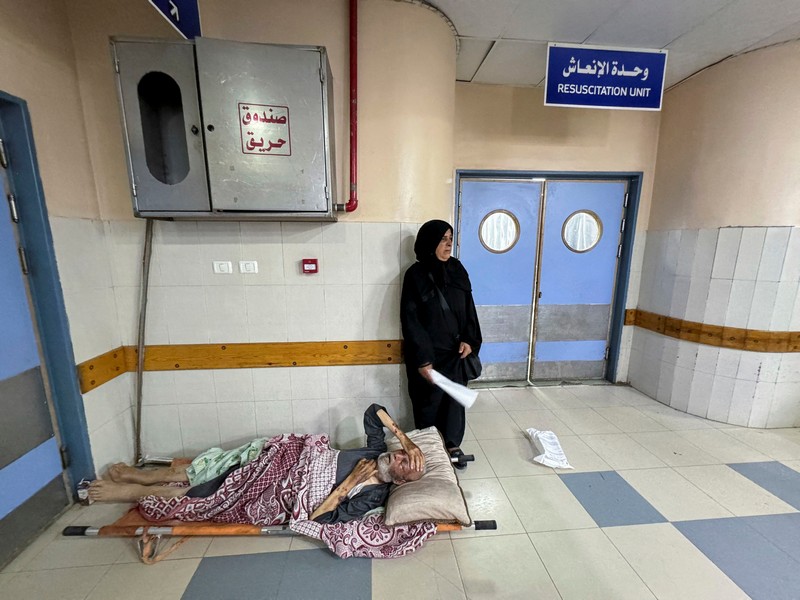
Euro-Med Human Rights Monitor emphasises that the consequences of Israel’s intentional worsening of the humanitarian situation in the Gaza Strip, by blocking people’s access to cleaning and personal hygiene products, medical equipment, and sterilisation supplies, are dire. Nothing justifies subjecting the population to conditions that can cause widespread death, including by causing the spread of serious infectious and skin diseases like hepatitis.

Israel continues to systematically and arbitrarily deny hygiene supplies and equipment to all Gaza Strip residents, exacerbating the catastrophic health crisis that Israel has caused there. This crisis has been made worse by the population’s forced, widespread, and repeatedly occurring displacement, as well as the lack of personal hygiene supplies and disinfectants in shelters and camps housing hundreds of thousands of displaced people. Israel continues to prevent and obstruct the entry of the most basic supplies into the Strip, creating conditions that are ripe for the spread of infectious diseases, water pollution, and the absence of sanitation services, as Israeli army forces have destroyed these facilities.

Since the beginning of the genocide nearly, Israel has arbitrarily closed crossings into the Gaza Strip, blocking the entry of humanitarian supplies and the flow of food and water. These actions have resulted in a dangerous accumulation of crises that directly threaten the lives and health of the Gaza Strip’s residents, most notably due to their lack of access to food, clean water, medicines, medical supplies, sanitary tools, and cleaning supplies.

Aya Kamal Ashour Abed, a 20-year-old displaced mother of two at the Deir al-Balah Preparatory School for Girls in the central Gaza Strip, spoke with the Euro-Med Monitor team. “We are more than 30 people living in this classroom for about nine months,” she stated. “A few months ago, we numbered roughly 70, but after some of the displaced individuals relocated to tents outside the school, our numbers dropped somewhat.

“We only receive cleaning and personal hygiene supplies in small quantities every two or three months, despite the fact that our number is very high and we require them constantly,” Abed continued. “Sanitation supplies, like tissues, soap, and shampoo, are extremely expensive [or] even nonexistent in the markets.”

Added Abed, “A bar of soap, for instance, now costs 30 shekels (roughly nine USD) while a bottle of shampoo costs 90 shekels (roughly 25 USD). We do not have anything to eat, so how can we afford these amounts for basic hygiene?”

Abed, who was displaced from her home in the Jabalia refugee camp in the northern Gaza Strip following its bombing last October, said that her two sons had become afflicted with allergies and bacteria, for which she is unable to provide ointments because they are unavailable in UNRWA clinics. “I showed my son to the doctor, and he told me that his entire body is seriously infected with bacteria due to poor hygiene,” Abed told Euro-Med Monitor.

Obtaining sanitary pads—which are pricey and hard to find in local markets—is one of her biggest challenges. “Even though my children’s diapers are completely unusable, I have to cut them into tiny pieces and use them as sanitary pads,” Abed explained. “During my period, I also have to use a single pad for the entire day, which has led to numerous infections and rashes.”

Approximately 680,000 women and girls in the Gaza Strip are of reproductive age. These individuals lack access to menstrual pads and other essentials, and also face other challenges such as inadequate access to water, toilets, various hygiene products, and privacy. Additionally, they must use contaminated or unsterilised materials, which puts them at risk of developing infections that can lead to infertility and uterine cancer.

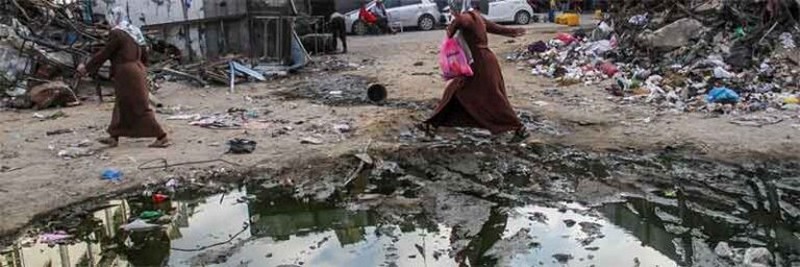
Since Israel has cut off electricity to the Gaza Strip, there is a growing risk to all residents caused by waste accumulation and sewage flooding of roads and markets due to the inability to drain it. Israel has destroyed most of the Strip’s vital infrastructure, including sewage networks, and forced over two million people—the majority of whom have been displaced more than once—into shelters and tents that lack the basic necessities of life, personal hygiene, and health care.

Forty-two-year-old Mohammed Saad Abu Haitham said that his family of eight, which resides in a tent in the Mawasi neighborhood of Khan Yunis in the southern Gaza Strip, is severely impacted by the lack of cleaning supplies, laundry detergent, and bar soap. Due to its scarcity, soap is unusually expensive and therefore difficult to purchase.

“We do not have the money to buy enough meals for our children, so we cannot buy cleaning materials and soap in light of their high prices and the lack of availability,” Abu Haitham told the Euro-Med Monitor team. “My spouse and kids’ hair has been infected with lice, and we all have skin diseases as a result of not washing and not using enough soap and shampoo.”

Food dyes are used instead of traditional dyes for making liquid soap and sterilisation products, which have not entered the Gaza Strip in months due to the Israeli closure of the crossings and the imposition of an arbitrary siege. These alternative and primitive cleaning products are made locally, are unsafe, and are generally insufficient in both quality and quantity when sold in the markets of the central and southern Gaza Strip.

Tens of thousands of cases of skin diseases, including eczema, have been reported to medical facilities as having cropped up in shelters and camps for displaced people living in tents. This is particularly concerning for women, as eczema often appears on the hands of people working to clean food utensils using antiquated and dangerous materials. Meanwhile, reports from the United Nations indicate that skin rashes and skin infections, especially among children, are sharply increasing in the Strip.

The Israeli authorities have placed an arbitrary and oppressive siege on the Palestinian people there, squeezing them into a tiny area with exceedingly limited resources; denying them access to food, clean water, and other necessities; and leaving them exposed to extreme heat.

The right to dignity is an internationally recognised human right that protects people from humiliation, among other forms of unethical treatment. It is meant to ensure fairness by providing the means for people to live in dignity, as well as other fundamental needs and rights, like the right to health and the right to water and sanitation. These rights are essential to maintaining human dignity and preserving the lives of the populace.

The only way to guarantee the rights of Gaza Strip residents is to put an end to Israel’s crime of genocide, lift the arbitrary siege on the Strip, and rescue what remains of the currently uninhabitable region. Delays will either cause the region to irreversibly deteriorate, or incur significant costs in terms of civilian lives and health.

The international community is required to guarantee the entry of humanitarian aid into the Gaza Strip, including the entry of non-food essentials needed to respond to the dire circumstances faced by the Strip’s entire population. Euro-Med Monitor stresses that swift and effective action must be taken to safely deliver aid to civilians across the entire Strip, including the northern section, which is particularly isolated right now. Additionally, the international community must prioritise providing adequate supplies of personal and family hygiene products, as well as products for menstruating individuals, plus sexual and reproductive health care services to prevent and mitigate further harm to women and children in particular, and the entire Palestinian population in general. These actions are mandated by international human rights law and relevant international obligations.

Pressure needs to be put on Israel, as the occupying force, to maintain sanitation facilities and services in the Gaza Strip, as well as to guarantee the safety of the technicians charged with repairing and renovating water lines and their various sources. The main water pipelines that enter the Strip need to be restored, particularly those that enter it from the north.

In addition to ensuring the entry of enough fuel to operate the Gaza Strip’s water and sanitation infrastructure, including desalination plants, water wells, and mobile toilets, it is crucial to exert pressure on Israel to permit the entry of materials required for repair work and rehabilitation of civilian infrastructure. These services are essential to the civilian population’s survival in the Strip, and will protect them from the threat of further health disasters.

Euro-Med Human Rights Monitor is a Geneva-based independent organization with regional offices across the MENA region and Europe

1 August 2024

Source: countercurrents.org
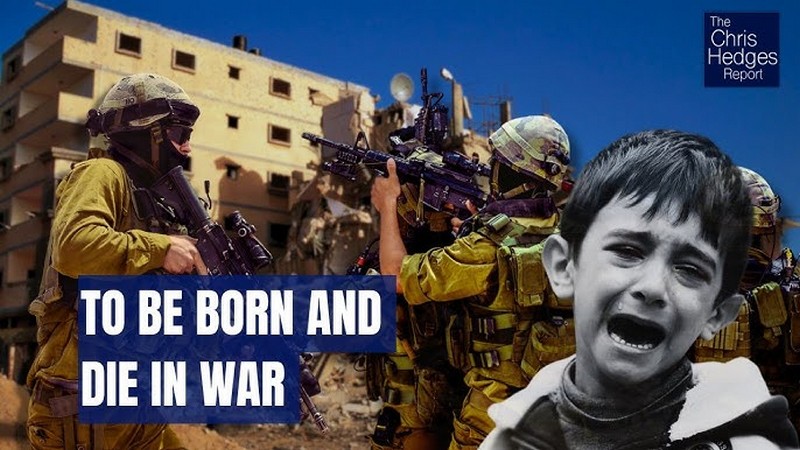
WHO warns Gaza children facing immediate threat of polio

By Benjamin Mateus

The director-general of the World Health Organization (WHO), Tedros Adhanom Ghebreyesus, said on Wednesday that polio had been detected in Gaza and warned that urgent preventive measures had to be taken to protect children from the infection, which can cause death or crippling paralysis.

“The detection of polio in Gaza is another reminder of the dire conditions the population is facing,” the WHO director wrote on X, referring to the Israeli military onslaught on the Palestinian enclave. “The persistence of the conflict hampers efforts to identify and respond to preventable threats such as polio.”

The WHO has dispatched a million doses of polio vaccine to the Israeli-occupied territory, but how they will reach the population, particularly the children, under conditions of continuous military violence is unknown.

The Gaza Health Ministry declared a polio epidemic Monday based on testing of wastewater samples. No actual cases have yet been reported, but the chaotic conditions in Gaza, with constant bombing and shelling and forced movements of population make any systematic monitoring for the disease impossible.

In a statement posted on Telegram, the ministry warned that polio “poses a health threat to the residents of Gaza and neighboring countries,” referring to both Israel and Egypt, the two countries which border on the Gaza Strip, as well as the wider Middle East.

Gaza has been polio-free for a quarter of a century, thanks to effective mass vaccination, but this health achievement, like all the social gains of the Palestinians, is threatened with utter destruction under the impact of Israeli bombs, missiles and tank shells.

Miles of tents line the beaches and empty lots and fields, people are piled into tents in clothes that have not been washed for months, children are playing in and drinking from puddles of water contaminated with sewage.

The primary means of spread for polio is fecal-oral contamination, and the targeting of water and sanitary facilities by the Israel Defense Forces has as a conscious aim the spreading of infectious disease to decimate the Palestinian population.

Repeatedly during the ongoing genocide, health authorities had warned that the destruction of critical infrastructure would bring with it a public health crisis. And last week, six of seven routine sewage samples detected the virus.

The UN noted that besides polio, diseases like Hepatitis A, dysentery, and other gastrointestinal disorders are widespread and continue to rise. More than one million respiratory infections have been documented. Scabies and lice are running rampant among the population. And as many have noted, this is only the beginning of the broader public health crisis that the exhausted and trodden population will see adding to their historic misery.

Dr. Tanya Haj-Hassan, a pediatric intensive care physician, speaking with Al-Jazeera, called the detection of polio a “ticking time bomb.” She added, “Normally if you have a case of polio, you’re going to isolate them, you’re going to make sure that they use a bathroom that nobody else uses, make sure that they’re not in close proximity to other people, [but] that’s impossible. You have everybody clustering in refugee camps at the moment without vaccines for at least the past nine months, including children who would otherwise have been vaccinated for polio and adults who, in the setting of an outbreak, should receive a booster, including healthcare workers.”

Dr. Medhat Abbas, director general of Al Shifa Medical Complex, told the press that the streets were full of sewage. “Personal hygiene is absent. You can’t wash your hands, even after you’ve used the bathroom,” he said. “So, there’s pollution and this disease is spread through feces.”

In May, Oxfam’s Middle East director, Sally Abi Khalil, lamented, “The situation is desperate, with so many people in Gaza living in fear and being forced to endure inhumane and unsanitary conditions caused by sustained Israeli bombardment. One colleague told me there was so much human waste in the streets, it literally smelt like disease.”

She said at that time: “Israel’s military assault on Rafah could be devastating, not only because of the risk of mass civilian casualties, but also the repercussions of vast numbers of people being forced to move. With the infrastructure already beyond breaking point, little or no healthcare available, and widespread malnutrition this could quickly escalate into a major epidemic.”

This week, Dr. Ayadil Saparbekov, the World Health Organization’s (WHO) health emergency team lead for Gaza and the West Bank, told NPR, “It’s a very dangerous disease. And, in the situation of Gaza, it’s beyond dangerous.” The limited investigation indicates the virus came from Egypt sometime in September before the commencement of hostilities.

Another important element in the policy of extermination through disease is the blockade-imposed famine, which starves some victims to death and weakens the resistance to infection among many more.

This is combined with the military offensive on hospitals, clinics, and healthcare workers that has killed 500 physicians, 50 of them specialists. More than 200 medical staff have been imprisoned in detainee camps in Southern Israel where they undergo violent interrogations. Twenty of 36 hospitals have been completely destroyed and the rest are functioning under most barbaric conditions. The sick and injured have no place to turn to address any of their immediate and life-threatening injuries and illnesses.

In response to the reports of polio, Israel said it was offering soldiers serving in the Gaza Strip the polio vaccine to be administered during routine troop turnover, although it was not mandatory for them to accept it. The Israeli army also indicated it would allow international groups to bring the polio vaccine into the enclave. According to the WHO, more than a million polio vaccine doses were being brought in to be given over the coming weeks.

Even before the military assault on the defenseless enclave, in March 2023, Israeli physicians were urging the government and medical community to respond to an outbreak of polio and prioritize and vaccinate the 176,000 Israeli children who had never received any doses. At the time, four children had been diagnosed with polio, and one had paralysis in his limbs. Prior to that outbreak, Israel had no clinical cases of polio between 1988 and 2022.

1 August 2024

Source: countercurrents.org
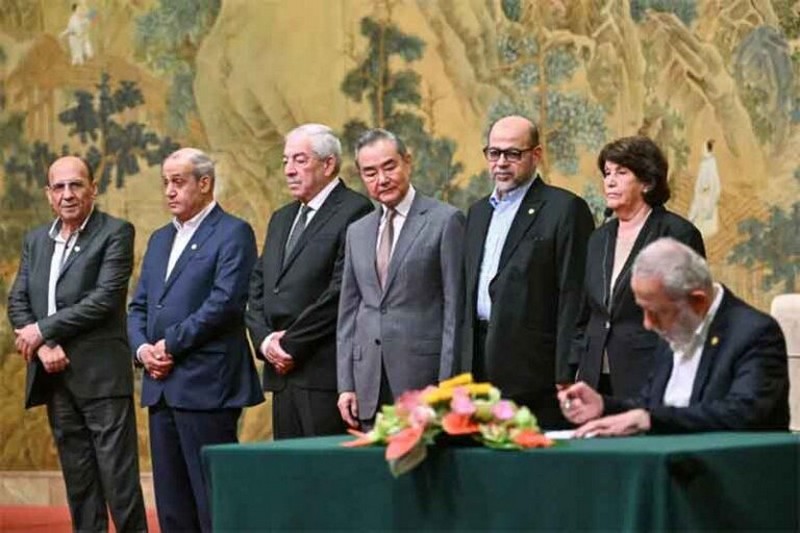
American Physicians’ and Nurses’ Observations from the Gaza Strip Since October 7, 2023. Open Letter to Joe Biden, Kamala Harris, Jill Biden

By Dr. Feroze Sidhwa, Dr. Mark Perlmutter, Dr. Thalia Pachiyannakis, and et al.

Dear President Joseph R. Biden, Vice President Kamala Harris, and Dr. Jill Biden,

We are 45 American physicians, surgeons, and nurses who have volunteered in the Gaza Strip since October 7, 2023.

We worked with various nongovernmental organizations and the World Health Organization in hospitals throughout the Strip. In addition to our medical and surgical expertise, many of us have a public health background, as well as experience working in humanitarian and conflict zones, including Ukraine during the brutal Russian invasion. Some of us are veterans of the United States Armed Forces. We are a multifaith and multiethnic group. None of us support the horrors committed on October 7 by Palestinian armed groups and individuals in Israel.

The Constitution of the World Health Organization states:

“The health of all peoples is fundamental to the attainment of peace and security and is dependent on the fullest cooperation of individuals and States.”

It is in this spirit that we write to you.

We are among the only neutral observers who have been permitted to enter the Gaza Strip since October 7. Given our broad expertise and direct experience of working throughout Gaza we are uniquely positioned to comment on several matters of importance to our government as it decides whether to continue supporting Israel’s attack on, and siege of, the Gaza Strip. Specifically, we believe we are well positioned to comment on the massive human toll from Israel’s attack on Gaza, especially the toll it has taken on women and children.

This letter collects and summarizes our own experiences and direct observations in Gaza. We have also provided links to a much longer and heavily cited appendix summarizing the publicly available information from media, humanitarian, and academic sources on key aspects of Israel’s invasion of Gaza. The appendix is available as a PDF file here. This letter can be accessed electronically as a PDF file here.

This letter and the appendix show probative evidence that the human toll in Gaza is far higher than is understood in the United States. It is likely that the death toll from this conflict is already greater than 92,000, an astonishing 4.2% of Gaza’s population. Our government must act immediately to prevent an even worse catastrophe than what has already befallen the people of Gaza and Israel. A ceasefire must be imposed on both Israel and Palestinian armed groups by withholding military support for Israel and supporting an international arms embargo on both Israel and all Palestinian armed groups. We believe our government is obligated to do this, both under American law and International Humanitarian Law, and that it is the right thing to do.

With only marginal exceptions, everyone in Gaza is sick, injured, or both. This includes every national aid worker, every international volunteer, and probably every Israeli hostage: every man, woman, and child. While working in Gaza we saw widespread malnutrition in our patients and our Palestinian healthcare colleagues. Every one of us lost weight rapidly in Gaza despite having privileged access to food and having taken our own supplementary nutrient-dense food with us. We have photographic evidence of life-threatening malnutrition in our patients, especially children, that we are eager to share with you.

Virtually every child under the age of five whom we encountered, both inside and outside of the hospital, had both a cough and watery diarrhea. We found cases of jaundice (indicating hepatitis A infection under such conditions) in virtually every room of the hospitals in which we served, and in many of our healthcare colleagues in Gaza. An astonishingly high percentage of our surgical incisions became infected from the combination of malnutrition, impossible operating conditions, and lack of supplies and medications, including antibiotics. The pregnant women we treated often gave birth to underweight infants, and they were unable to breastfeed due to malnutrition. This left their newborns at high risk of death given the lack of access to potable water anywhere in Gaza. Many of those infants died. In Gaza we watched malnourished new mothers feed their underweight newborns infant formula made with poisonous water. We can never forget that the world abandoned these innocent women and babies.

We urge you to realize that epidemics are raging in Gaza. Israel’s continued, repeated displacement of the malnourished and sick population of Gaza, half of whom are children, to areas with no running water or even toilets available is absolutely shocking. It is virtually guaranteed to result in widespread death from viral and bacterial diarrheal diseases and pneumonias, particularly in children under the age of five. We worry that unknown thousands have already died from the lethal combination of malnutrition and disease, and that tens of thousands more will die in the coming months. Most of them will be young children.

Children are universally considered innocents in armed conflict. However, every single signatory to this letter treated children in Gaza who suffered violence that must have been deliberately directed at them. Specifically, every one of us on a daily basis treated pre-teen children who were shot in the head and chest.

Image source

President and Dr. Biden, we wish you could see the nightmares that plague so many of us since we have returned: dreams of children maimed and mutilated by our weapons, and their inconsolable mothers begging us to save them. We wish you could hear the cries and screams our consciences will not let us forget. We cannot believe that anyone would continue arming the country that is deliberately killing these children after seeing what we have seen.

The pregnant women we treated were particularly malnourished. Those of us who worked with pregnant women regularly saw stillbirths and maternal deaths that were easily preventable in any third-world healthcare system. The rate of infection in C-section incisions was astonishing. Women underwent C-sections without anesthesia, and were given nothing but Tylenol afterwards because no other pain medications were available.

All of us observed emergency departments overwhelmed by patients seeking treatment for chronic medical conditions such as renal failure, hypertension, and diabetes. Aside from trauma patients, most ICU beds were taken up by type 1 diabetics who no longer had access to injected insulin, due to the lack of medication and the widespread loss of electricity and refrigeration. Israel has destroyed more than half of Gaza’s healthcare resources and has killed one out of every 40 healthcare workers in Gaza. At the same time healthcare needs have increased massively from the lethal combination of military violence, malnutrition, and disease.

The hospitals where we worked were starved of basic supplies from, surgical material to soap. They were regularly cut off from electricity and Internet access, denied clean water, and operated at four to seven times their bed capacity. Every hospital was overwhelmed beyond the breaking point by displaced persons seeking safety, by the constant stream of patients whose treatment of chronic conditions had been interrupted by the war, by the huge influx of seriously wounded patients who typically arrived in mass casualty events, and by the sick and malnourished seeking medical care.

These observations and the publicly available material detailed in the appendix lead us to believe that the death toll from this conflict is many times higher than what is reported by the Gaza Ministry of Health. We also believe this is probative evidence of widespread violations of American laws governing the use of American weapons abroad, and of International Humanitarian Law. We cannot forget the scenes of unbearable cruelty directed at women and children that we witnessed ourselves.

As we met our healthcare colleagues in Gaza it was clear that they were malnourished, and both physically and mentally devastated. We quickly learned that our Palestinian healthcare colleagues were among the most traumatized people in Gaza, and perhaps in the entire world. Like virtually all people in Gaza they had lost family members and their homes. Most lived in and around their hospitals with their surviving families in unimaginable conditions. Although they continued working a grueling schedule, they had not been paid since October 7. All were acutely aware that their work as healthcare providers had marked them as targets for Israel. This makes a mockery of the protected status hospitals and healthcare providers are granted under the oldest and most widely accepted provisions of International Humanitarian Law.

We met healthcare personnel in Gaza who worked at hospitals that had been raided and destroyed by Israel. Many of these colleagues of ours were taken by Israel during the attacks. They all told us a slightly different version of the same story: in captivity they were barely fed, continuously physically and psychologically abused, and finally dumped naked on the side of a road. Many told us they were subjected to mock executions and other forms of mistreatment and torture. Far too many of our healthcare colleagues told us they were simply waiting to die.

We urge you to see that Israel has directly targeted and deliberately devastated Gaza’s entire healthcare system, and that Israel has targeted our colleagues in Gaza for death, disappearance, and torture. These unconscionable acts are entirely at odds with American law, American values, and International Humanitarian Law.

Dr. Biden, you worked with young people throughout your life. We hope and pray that you will not look away from the unspeakable horrors the youth of Gaza face today, horrors only we as Americans can end. We sincerely hope you will do everything in your power to stop what is being done to them.

President Biden and Vice President Harris, any solution to this problem must begin with an immediate and permanent ceasefire.We urge you to withhold military, economic, and diplomatic support from the State of Israel and to participate in an international arms embargo of both Israel and all Palestinian armed groups until a permanent ceasefire is established, and until good faith negotiations between Israel and the Palestinians lead to a permanent resolution of the conflict.

In the meantime:

  1. All land crossings between Gaza and Israel as well as the Rafah Crossing must be opened to unfettered aid delivery by recognized international humanitarian organizations. Security screening of aid deliveries must be conducted by an independent international inspection regime instead of Israeli forces. These screenings must be based on a clear, unambiguous, and published list of forbidden items, and with a clear independent international mechanism for challenging forbidden items, as verified by the UN Office for the Coordination of Humanitarian Affairs in the occupied Palestinian territory.
  2. A bare minimum water allocation of 20L of potable water per person per day must be allocated to the population of Gaza, as verified by UN Water.
  3. Full and unrestricted access of medical and surgical professionals and medical and surgical equipment to the Gaza Strip must be allowed. This must include items taken in healthcare professionals’ personal luggage to safeguard their proper storage, sterility, and timely delivery, as verified by the World Health Organization. Incredibly, Israel is currently blocking any physician of Palestinian descent from working in Gaza, even American citizens. This makes a mockery of the American ideal that “all men are created equal” and degrades our nation and our profession. Our work is lifesaving. Our Palestinian healthcare colleagues in Gaza are desperate for relief and protection, and they deserve both.

We are not politicians. We do not claim to have all the answers. We are simply physicians and nurses who cannot remain silent about what we saw in Gaza. Every day that we continue supplying weapons and munitions to Israel is another day that women are shredded by our bombs and children are murdered with our bullets.

President Biden and Vice President Harris, we urge you: end this madness now!

Sincerely and urgently,

Feroze Sidhwa, MD, MPH, FACS, FICS
Trauma, acute care, critical care, and general surgeon
Northern California Veterans Affairs general surgeon
Served at European Hospital, Khan Younis, March 25-April 8 Secretary/Treasurer, Chest Wall Injury Society
Associate Professor of Surgery, California Northstate University College of Medicine
Prior humanitarian work in Haiti, West Bank, Ukraine (3 deployments since 2023), and Zimbabwe
Treated victims of the Boston Marathon Bombing
French Camp, CA

Mark Perlmutter, MD, FAAOS, FICS
Orthopedic and hand surgery
Served at European Hospital, Khan Younis, March 25-April 8 President, World Surgical Foundation
Global Vice President, International College of Surgeons Prior humanitarian work in 30 countries
Treated victims of 9-11 and Hurricane Katrina
Rocky Mount, NC

Thalia Pachiyannakis, MD, FACOG
Obstetrician and gynecologist
Served at Nasser Medical Complex, Khan Younis, June 20-July 11 South Bend, IN

Adam Hamawy, MD
Plastic and reconstructive surgeon
Served at European Hospital, Khan Younis, May 1-21 Lt. Colonel, U.S. Army (Ret.)
Princeton, NJ

Bing Li, MD
Emergency medicine
Served at European Hospital, Khan Younis, June 6-13
Served at Nasser Medical Complex, Khan Younis, June 14-20 Served at Indonesian Hospital, Beit Lahia, June 21-July 3 U.S. Army Veteran
Peridot, AZ

Thaer Ahmad, MD
Emergency medicine
Served at Nasser Medical Complex, Khan Younis & al-Aqsa Martyrs Hospital, Deir el-Balah, January 8-24
Director of Global Health, Advocate Christ Medical Center Assistant Clinical Professor, University of Illinois Chicago College of Medicine
Chicago, IL

Tanya Haj-Hassan, BM BCh, MSc
Pediatric intensivist
Served at al-Aqsa Martyrs Hospital, March 11-25
Prior humanitarian work in the West Bank with Doctors Without Borders
Rhodes Scholar
Philadelphia, PA

Mohammad Subeh, MD, MS
Emergency medicine and ultrasound
Served at the International Medical Corps Rafah Field Hospital, February 14-March 13
Served at the International Medical Corps Deir el-Balah Field Hospital, June 25-July 18
Mountain View, CA

Nahreen Ahmed, MD, MPH
Pulmonary and critical care intensivist
Served at Nasser Medical Complex, Khan Younis, January 8-21 Served at the MedGlobal/WHO Nutrition Center, Rafah,; al-Awda Hospital, Gaza City & Kamal Adwan Hospital, Beit Lahia March 4-18
Former medial director, MedGlobal
Previous humanitarian work in Yemen, Syria, Ukraine, and Sudan Philadelphia, PA

Ahmed Hassabelnaby, DO
Emergency medicine
Served at European Hospital, Khan Younis, March 18-April 1 Served at Indonesian Hospital, Beit Lahia, June 20-July 3 Orlando, FL

Talal Khan, MD, FACP, FASN, FRCP
Nephrologist
Served at Nasser Medical Complex, Khan Younis, July 16-August 13
Clinical Associate Professor, University of Oklahoma College of Medicine
Currently serving in Gaza
Oklahoma City, OK

Mahmoud G. Sabha, MD
Family medicine
Served at al-Aqsa Martyrs Hospital, Deir el-Balah, March 25-April 3
Served at European Hospital, Khan Younis, May 1-17
Dallas, TX

Asma A. Taha, PhD, RN, CPNP-PC/AC, FAAN
Pediatric nurse practitioner
Served at Emirati Hospital for Women and Children, Rafah, February 15-March 1
President, Association of Faculties of Pediatric Nurse Practitioners Professor of Nursing, Oregon Health & Science University School of Nursing
Portland, OR

Imad Tamimi, DMD
Oral and Maxillofacial Surgeon
Served at European Hospital, Khan Younis, February 8-20 Clinical Associate Professor, Rutgers New Jersey School of Dental Medicine
President, Palestine Children’s Relief Fund Medical Advisory Board
Clifton, NJ

Chandra Hassan, MD, FACS, FRCS
General, bariatric, minimally invasive, and robotic surgeon Served at Nasser Medical Complex, Khan Younis & al-Aqsa Martyrs Hospital, Deir el-Balah, January 9-23
Board Member, MedGlobal
Prior humanitarian work in Ukraine and Syria
Associate Professor of Surgery, University of Illinois College of Medicine
Chicago, IL

Hani El-Omrani, MD
Obstetric and regional anesthesiologist
Served at European Hospital, Khan Younis, March 4-18 Assistant Professor of Anesthesiology, University of Washington School of Medicine
Seattle, WA

Zaher Sahloul, MD, FCCP
Pulmonary and critical care intensivist
Served at Nasser Medical Complex, Khan Younis, January 9-25 President, MedGlobal
Associate Clinical Professor of Medicine, University of Chicago Pritzker School of Medicine
2020 Gandhi Peace Award recipient
Chicago, IL

Mike M. Mallah, MD
Trauma, acute care, critical care, and general surgeon Served at European Hospital, March 4-18
Assistant Professor of Surgery
Director of Global Surgery Program
Charleston, SC

Mohamed Elfar, MD, MSc, FACS, FCCM
Plastic and reconstructive surgeon
Served at European Hospital, Khan Younis, February 8-20 Assistant Professor of Surgery, SUNY Upstate Medical University Adjunct Professor of Surgery, Touro University New York College of Osteopathic Medicine
New York City, NY

Hisham Qandeel, MD
Cardiac and thoracic surgeon
Served at European Hospital, Khan Younis, March 18-April 1 Clinical Assistant Professor, Michigan State University Medical Schools
Lansing, MI

Mohammed J. al-Jaghbeer, MD, FCCP
Pulmonary and critical care intensivist
Served at European Hospital, Khan Younis, March 25-April 8 Cleveland, OH

Waleed Sayedahmad, MD, PhD
Anesthesiologist
Served at European Hospital, Khan Younis, March 25-April 8 Parkland, FL

Amer Afaneh, MD, FACS
Trauma, acute care, critical care, and general surgeon
Served at European Hospital, Khan Younis, March 25-April 8 Toledo, OH

Omer Ismail, MD, FACS
Trauma, acute care, critical care, and general surgeon Served at European Hospital, Khan Younis, May 1-21 Des Moines, IA

Ammar Ghanem, MD, FCCP
Pulmonary and critical care intensivist
Served at European Hospital, Khan Younis, May 1-17
Clinical Assistant Professor, Michigan State University College of Osteopathic Medicine
Lansing, MI

Abeerah Muhammad, MSN, RN, CEN
Emergency and critical care nurse
Served at European Hospital, Khan Younis, May 1-17
Dallas, TX

Abdalrahman Algendy, MD
Anesthesiologist
Served at European Hospital, Khan Younis, February 19-March 5
Toledo, OH

Ayman Abdul-Ghani, MD, FACS, FRCS
Cardiac and thoracic surgeon
Served at European Hospital, Khan Younis, March 25-April 8
Honolulu, HI

Mohamad Abdelfattah, MD
Pulmonary and critical care intensivist
Served at European Hospital, Khan Younis, May 1-17
Los Angeles, CA

Irfan Galaria, MD, MBA
Plastic and reconstructive surgeon
Served at European Hospital, Khan Younis, January 29-February 7
Chantilly, VA

Mohammed Khaleel, MD, MS
Orthopedic and spine surgeon
Served at European Hospital, Khan Younis, April 3-10
Fort Worth, TX

Salman Dasti, MD
Anesthesiologist and interventional pain specialist
Served at European Hospital and Nasser Medical Complex, Khan Younis, June 20-July 4
San Francisco, CA

Bashar Alzghoul, MD, FCCP
Pulmonary and critical care intensivist
Served at European Hospital, Khan Younis, March 25-April 8
Gainesville, FL

Lana Abugharbieh, BSN, RN, CEN
Trauma, operating room, and emergency nurse
Served at European Hospital, Khan Younis & Primary Care Clinics, Rafah, January 24-February 7
Ashburn, VA

Rana Mahmoud, RN, BSN
Emergency and critical care nurse
Served at European Hospital, Khan Younis, January 22-February 6 & March 25-April 8
Wesley Chapel, FL

Tarek Gouda, RN, AACN
Critical care nurse
Served at European Hospital, Khan Younis, March 5-13
San Diego, CA

Ndal Farah, MD
Anesthesiologist
Served at European Hospital, Khan Younis, February 8-20
Toledo, OH

Hina Syed, MD
Internal medicine and geriatric medicine
Served at al-Aqsa Martyrs Hospital, Deir el-Balah, April 1-10
College Park, MD

John Kahler, MD, FAAP
Pediatrician
Co-founder, MedGlobal
Served at Primary Care Clinics, Rafah, January 8-24
Served at Kamal Adwan Hospital and Nutrition Center, Beit Lahia, March 4-25
Chicago, IL

Aman Odeh, MBBS, FAAP
Pediatrician
Served at Emirati Hospital for Women and Children, Rafah, March 20 to April 1
Assistant Professor of Pediatrics, Dell Medical School
Austin, TX

Tamer Hassen, BSN
Trauma and emergency nurse
Served at European Hospital, Khan Younis, April 29-May 22
Bedford, MA

Gamal Marey, MD, FACS, FACC
General, cardiac, and thoracic surgeon
Served at European Hospital, Khan Younis, March 25-April 8 Lt. Colonel, U.S. Army Reserve
Stockton, CA

Ahmad Yousaf, MD, MBA
Internal medicine physician and pediatrician
Served at al-Aqsa Martyrs Hospital, June 24-July 16
Little Rock, AK

Ahmed Ebeid, MD
Anesthesiology and pain specialist
Served at Kamal Adwan Hospital, Beit Lahia, March 25-April 13
Portland, OR

Nadia Yousef, MD
Nephrologist
Served at Nasser Medical Complex, Khan Younis, June 18-July 3
Modesto, CA

*

4 August 2024

Source: globalresearch.ca

The Perils of a Looming Saudi-Israeli Normalization Deal

By Tariq Dana

Amid the Israeli regime’s ongoing genocide in Gaza, high-stakes negotiations aimed at formalizing and upgrading the long-standing, covert relationship between Israel and Saudi Arabia persist. While attempting to draw the parameters of a ceasefire agreement, the Biden administration has likewise doubled down on efforts to broker a historic deal between the two countries.

This policy memo examines the mutually reinforcing interests of the US, Saudi Arabia, and Israel that fuel the prospective agreement. It interrogates Saudi’s feigned solidarity with the Palestinian struggle and situates the normalization deal within shifting regional dynamics.

US and Israeli Interests: A Shifting Security Alliance

Washington has long aspired for Saudi Arabia to embrace Israel officially. The bipartisan Israel Relations Normalization Act, passed by Congress in March 2022, underscored this objective, mandating the State Department to further Arab normalization with Israel based on the Trump-era Abraham Accords.

The message to Saudi Arabia is clear: an Israeli alliance is a prerequisite for US protection

Among all possible partnerships, Saudi Arabia holds particular weight for both US and Israeli interests. The US is endeavoring to cement Israel as the preeminent military-economic linchpin of a US-led regional order. Within that order, Israel will serve as the hub for an anti-Iran coalition involving Saudi Arabia and other Abraham Accords partners. Thus, understanding Saudi-Israeli rapprochement as a calculated initiative to cultivate new security alliances amid increasing global power rivalries is critical.

A US-Saudi defense pact, which lies at the heart of ongoing normalization talks with Israel, speaks directly to this aim. The pact would commit the US to defend Saudi Arabia and expand Saudi’s access to US weapons. In doing so, the arrangement would strengthen US-Saudi military relations and simultaneously help to thwart Riyadh’s security cooperation with China. Regional interests notwithstanding, the US has conditioned any such agreement with Saudi Arabia on the latter’s normalization with Israel. Hence, the message to Saudi Arabia is clear: an Israeli alliance is a prerequisite for US protection.

Masking Saudi’s Abandonment of Palestine

The Saudi regime is ostensibly making a number of Palestine-related demands as part of the normalization negotiations. Riyadh’s stipulations reportedly include a permanent ceasefire in Gaza and a “pathway” to Palestinian statehood. The timeline for statehood is not clear, however, and the Israeli regime would certainly place conditions on the agreement that would allow indefinite postponement of such a move.

Saudi Arabia’s attempt to tie Israeli normalization with Palestinian statehood is undoubtedly designed to provide political cover from those who may argue that the kingdom has abandoned the Palestinian cause. In reality, normalization with Israel would be a continuation—not the start—of Saudi’s desertion of the Palestinian struggle and its de facto acceptance of the Israeli settler-colonial status quo.

Normalization with Israel would be a continuation—not the start—of Saudi’s desertion of the Palestinian struggle

Indeed, the fruits of Saudi’s decades-long informal relationship with the Israeli regime can currently be seen through its crackdown on domestic solidarity with Palestine and amplification of anti-Palestinian propaganda in its media coverage of the genocide. The new Saudi school curriculum has even gone so far as to scrub the name “Palestine” from maps in school textbooks.

Despite this systematic effort to reshape public understanding of Israeli settler colonialism, the Saudi regime faces an uphill battle in trying to sway its population. A recent survey by the Arab Center for Research and Policy Studies found that 95% of the Saudi public consider the Palestinian cause as a central Arab issue. A 2023 poll by the pro-Israel Washington Institute for Near East Policy likewise indicated that 96% of Saudi citizens are opposed to normalization and believe Arab countries should cut all ties with Israel.

Joining the Abraham Accords

If a Saudi-Israeli normalization deal goes ahead, it will likely be incorporated into the expansive Abraham Accords framework. Saudi Arabia’s formal entry into this scheme carries far-reaching and dangerous ramifications for Palestine and the broader region. Indeed, the kingdom’s immense financial clout and symbolic weight in the Arab and Muslim worlds could catalyze a domino effect. Through economic incentives or political pressure, Saudi participation may compel other Arab and Muslim nations to join this growing alliance.

Even if a formal Saudi-Israeli normalization deal remains pending until after the next US president assumes office in 2025, Saudi Arabia’s determined push to legitimize a widely-condemned regime stands as a pursuit utterly divorced from global realities. And while much of the world has awoken to Israel’s genocidal and colonial aims, Riyadh’s dogged willingness to proceed with such normalization obliterates any pretense of rational and strategic calculations, let alone solidarity with the Palestinian cause.

Tariq Dana is Assistant Professor of Conflict and Humanitarian Studies at the Doha Institute for Graduate Studies, and an adjunct lecturer at Northwestern University in Qatar.

30 July 2024

Source: al-shabaka.org

Israeli soldiers demolish water system in Gaza

By Benjamin Mateus

The Israeli daily Haaretz reported Monday that over the weekend, in violation of humanitarian law, a unit of the Israel Defense Forces (IDF), the 401st Brigade of the Armored Corps, rigged a critical water reservoir in Gaza with explosives and then detonated them, destroying the facility known as the Canada Well.

The water facility, located in Tel Sultan neighborhood on the northwestern side of Rafah, the southernmost city in the Gaza Strip, was built in 1999 with funding provided by the Canadian International Development Agency. Equipped with solar panels, it enabled water services to continue for tens of thousands of people in the area despite the destruction of the entire electrical grid in the enclave.

Following the destruction, the IDF soldiers celebrated by posting videos of the operation on their Instagram and X social media accounts, writing, “Destruction of the Tel Sultan water reservoir in honor of Shabbat.” The Israeli army admitted that its soldiers were responsible for the bombing of the Canada Well and said it was investigating if any international laws were violated.

Monther Shoblaq, director general of the Coastal Municipalities Water Utility, speaking with Drop Site, said, “I was shocked when I saw the video. It’s not just that they targeted this water facility; it’s the fact that they planted explosives, celebrated the act on Instagram, and did so under the guise of honoring the Sabbath. It’s deeply cruel. This is the Canada Well in Tal al-Sultan—one of the most important water facilities in the city of Rafah.”

What is being disputed in the Israeli press, however, is whether the brigade commander of the Combat Engineers obtained permission from senior officers of the IDF Southern Command to destroy the facility and not the obvious fact that the operation was typical of the conduct of the IDF throughout the war against the people of Gaza. The areas where the operation took place were considered humanitarian safe zones, which become killing zones whenever the IDF pleases. As is usual in these situations, the army told Haaretz it was going to look into the incident and consider if the military police needed to open an investigation.

Given the international outcry over Israeli war crimes in Gaza, these reports from Rafah are one more embarrassment for the IDF and the Netanyahu government, which will try to manufacture yet another outrageous pretext, perhaps claiming that the operation was necessary to prevent Hamas from accessing potable water for their continued operations. A similar argument could be made for actions to deprive the population of breathable air as well.

Throughout the now more than nine-month-long siege on the Gaza Strip, countless video clips posted on social media have exposed the barbarism of IDF in the killing and abuse of innocent Palestinians, as well as international aid workers who have risked their lives to help the beleaguered population. In each case, neither the Israeli army, Netanyahu, nor the US government has raised a finger to curb the savagery. On the contrary, they have commended and justified these actions.

On the same day as the Haaretz report, UN Human Rights Office’s spokesperson, Jeremy Laurence, speaking with Anadolu Agency,said, “It is indeed strictly prohibited under international humanitarian law to attack civilian objects. Moreover, it is prohibited to attack objects indispensable to the survival of the civilian population, such as drinking water supplies.”

Furthermore, Laurence noted, “The Human Rights Office has received no information on any investigations by Israel into the specific incident of the destruction of the water reserve. In view of Israel’s well-documented failure to ensure accountability for serious violations of international humanitarian law and the international human rights law, remedies at the international level are essential to addressing this long-standing accountability gap.”

The complete destruction of the water supplies in Gaza is part and parcel of the assault on the basic essentials of life for Palestinians from the very inception of the genocidal campaign.

In an interview with Major General (Reserves) Giora Eiland, the adviser to Yoav Gallant, on the IDF’s radio station, GLZ, in October 2023, Eiland said, “But there are many wells in Gaza, which contain water which they treat locally, since originally they contain salt. If the energy shortage in Gaza makes it so that they stop pumping out water, that’s good. Otherwise, we have to attack these water treatment plants in order to create a situation of thirst and hunger in Gaza, and I would say, forewarn of an unprecedented economical and humanitarian crisis.”

The same month, Eiland wrote in the Israeli newspaper, Yedioth Ahronoth, “The State of Israel has no choice but to turn Gaza into a place that is temporarily or permanently impossible to live in. Creating a severe humanitarian crisis in Gaza is a necessary means to achieve the goal. Gaza will become a place where no human being can exist.”

Placing context on the blowing up of the Canada Well water reservoir, Reuters reported yesterday that in July the Israeli army destroyed 30 water wells in Rafah and Khan Younis. And given the incessant bombing and drone attacks, the daily chore to seek water and sustenance has potentially lethal consequences. In May, the BBC reported that satellite data had revealed more than half of Gaza’s water sites had been damaged including four of the six wastewater treatment plants crucial to preventing the build-up of sewage.

As the Reutersreport noted, “People have dug wells in bleak areas near the sea where the bombing has pushed them or rely on salty tap water from Gaza’s only aquifer, now contaminated with seawater and sewage. Children walk long distances to line up at makeshift collection points. Often not strong enough to carry the filled containers, they drag them on wooden boards. Gaza city has lost nearly all its water production capacity, with 88 percent of its water wells and 100 percent of its desalination plants damaged or destroyed.”

31 July 2024

Source: countercurrents.org
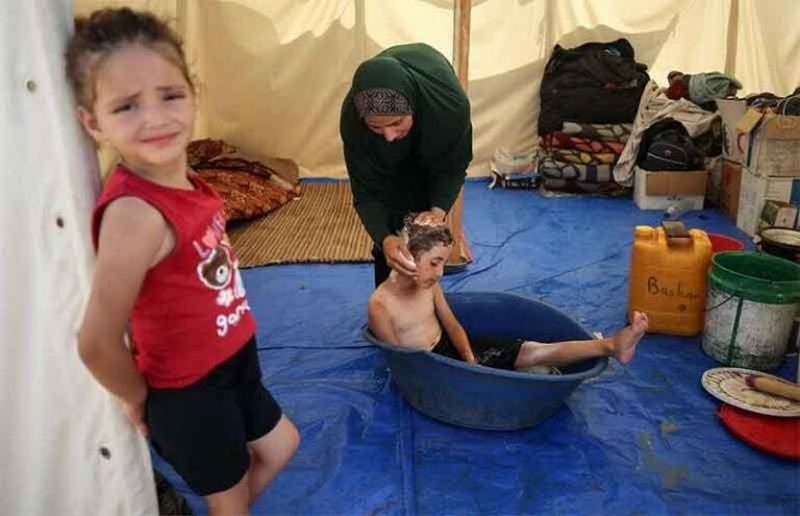
Amnesty International says ICJ’s advisory opinion is historic victory for Palestinian rights

LONDON / PNN

Erika Guevara-Rosas, Amnesty International’s Senior Director of Research, Advocacy, Policy and Campaigns, today said that the International Court of Justice’s (ICJ) advisory opinion on the ‘unlawful’ Israeli occupation of the Palestinian territories is a historic victory for the rights of Palestinians.

She clarified in a statement that “the occupation is a fundamental pillar of the apartheid system that Israel relies on to dominate and persecute the Palestinians, as they are exposed to the demolition of their homes and the seizure of their lands in favor of colonist expansion.”

Rosas affirmed, “The ICJ’s advisory opinion comes while Israel has continued to blatantly and catastrophically violate international humanitarian law during the past nine months, launching deadly and unlawful attacks on the occupied Gaza Strip, which has claimed the lives of an unprecedented number of civilians.

She stressed that the international community, especially Israel’s allies, must now take tough action to ensure that Israel ends its illegal occupation, starting with an immediate halt to the expansion of Israeli colonies, reversing the annexation of Palestinian lands, including East Jerusalem, and dismantling the brutal apartheid system against Palestinians.

“Ending the occupation is crucial in order to stop the recurring pattern of human rights violations throughout Israel and the occupied Palestinian territories,” she added.

Rosas  affirmed that Israel must withdraw its forces from all parts of the occupied territories, including the Gaza Strip, evacuate all colonists from the West Bank, including illegally annexed East Jerusalem, and relinquish control over all aspects of Palestinian life.

22 July 2024

Source: english.pnn.ps