Just International

Israel’s Willing Executioners

By Chris Hedges

Hundreds of thousands of people are being forced to flee, once again, after more than half of Gaza’s population took sanctuary in the border town of Rafah. This is part of Israel’s sadistic playbook.

Run, the Israelis demand, run for your lives. Run from Rafah the way you ran from Gaza City, the way you ran from Jabalia, the way you ran from Deir al-Balah, the way you ran from Beit Hanoun, the way you ran from Bani Suheila, the way you ran from Khan Yunis. Run or we will kill you. We will drop 2,000-pound bunker buster bombs on your tent encampments. We will spray you with bullets from our machine-gun-equipped drones. We will pound you with artillery and tank shells. We will shoot you down with snipers. We will decimate your tents, your refugee camps, your cities and towns, your homes, your schools, your hospitals and your water purification plants. We will rain death from the sky.

Run for your lives. Again and again and again. Pack up the pathetic few belongings you have left. Blankets. A couple of pots. Some clothes. We don’t care how exhausted you are, how hungry you are, how terrified you are, how sick you are, how old, or how young you are. Run. Run. Run. And when you run in terror to one part of Gaza we will make you turn around and run to another. Trapped in a labyrinth of death. Back and forth. Up and down. Side to side. Six. Seven. Eight times. We toy with you like mice in a trap. Then we deport you so you can never return. Or we kill you.

Let the world denounce our genocide. What do we care? The billions in military aid flows unchecked from our American ally. The fighter jets. The artillery shells. The tanks. The bombs. An endless supply. We kill children by the thousands.  We kill women and the elderly by the thousands. The sick and injured, without medicine and hospitals, die. We poison the water. We cut off the food. We make you starve. We created this hell. We are the masters. Law. Duty. A code of conduct. They do not exist for us.

But first we toy with you. We humiliate you. We terrorize you. We revel in your fear. We are amused by your pathetic attempts to survive. You are not human. You are creatures. Untermensch. We feed our libido dominandi – our lust for domination. Look at our posts on social media. They have gone viral. One shows soldiers grinning in a Palestinian home with the owners tied up and blindfolded in the background. We loot. Rugs. Cosmetics. Motorbikes. Jewelry. Watches. Cash. Gold. Antiquities. We laugh at your misery. We cheer your death. We celebrate our religion, our nation, our identity, our superiority, by negating and erasing yours.

Depravity is moral. Atrocity is heroism. Genocide is redemption.

Jean Améry, who was in the Belgian resistance during World War II and who was captured and tortured by the Gestapo in 1943, defines sadism “as the radical negation of the other, the simultaneous denial of both the social principle and the reality principle. In the sadist’s world, torture, destruction, and death are triumphant: and such a world clearly has no hope of survival. On the contrary, he desires to transcend the world, to achieve total sovereignty by negating fellow human beings – which he sees as representing a particular kind of ‘hell.’”

Back in Tel Aviv, Jerusalem, Haifa, Netanya, Ramat Gan, Petah Tikva who are we? Dish washers and mechanics. Factory workers, tax collectors and taxi drivers. Garbage collectors and office workers. But in Gaza we are demigods. We can kill a Palestinian who does not strip to his underwear, fall to his knees, beg for mercy with his hands bound behind his back. We can do this to children as young as 12 and men as old as 70.

There are no legal constraints. There is no moral code. There is only the intoxicating thrill of demanding greater and greater forms of submission and more and more abject forms of humiliation.

We may feel insignificant in Israel, but here, in Gaza, we are King Kong, a little tyrant on a little throne. We stride through the rubble of Gaza, surrounded by the might of industrial weapons, able to pulverize in an instant whole apartment blocks and neighborhoods, and say, like Vishnu, “now I have become death, the destroyer of worlds.”

But we are not content simply with killing. We want the walking dead to pay homage to our divinity.

This is the game played in Gaza. It was the game played during the Dirty War in Argentina when the military junta “disappeared” 30,000 of its own citizens. The “disappeared” were subjected to torture – who cannot call what is happening to Palestinians in Gaza torture? – and humiliated before they were murdered. It was the game played in the clandestine torture centers and prisons in El Salvador and Iraq. It is what characterized the war in Bosnia in the Serbian concentration camps.

This soul crushing disease runs through us like an electric current. It infects every crime in Gaza. It infects every word that comes out of our mouths. We, the victors, are glorious. The Palestinians are nothing. Vermin. They will be forgotten.

Israeli journalist Yinon Magal on the show “Hapatriotim” on Israel’s Channel 14, joked that Joe Biden’s red line was the killing of 30,000 Palestinians. The singer Kobi Peretz asked if that was the number of dead for a day. The audience erupted in applause and laughter.

We place “booby-trapped” cans resembling food tins in the rubble. Starving Palestinians are injured or killed when they open them. We broadcast the sounds of women screaming and babies crying from quadcopters to lure Palestinians out so we can shoot them. We announce food distribution points and use artillery and snipers to carry out massacres.

We are the orchestra in this dance of death.

In Joseph Conrad’s short story “An Outpost of Progress,” he writes of two white, European traders, Carlier and Kayerts. They are posted to a remote trading station in the Congo. The mission will spread European “civilization” to Africa. But the boredom and lack of constraints swiftly turn the two men into beasts. They trade slaves for ivory. They get into a feud over dwindling food supplies. Kayerts shoots and kills his unarmed companion Carlier.

“They were two perfectly insignificant and incapable individuals,” Conrad writes of Kayerts and Carlier:

“…whose existence is only rendered possible through the high organization of civilized crowds. Few men realize that their life, the very essence of their character, their capabilities and their audacities, are only the expression of their belief in the safety of their surroundings. The courage, the composure, the confidence; the emotions and principles; every great and every insignificant thought belongs not to the individual but to  the crowd; to the crowd that believes blindly in the irresistible force of its institutions and its morals, in the power of its police and of its opinion. But the contact with pure unmitigated savagery, with primitive nature and primitive man, brings sudden and profound trouble into the heart. To the sentiment of being alone of one’s kind, to the clear perception of the loneliness of one’s thoughts, of one’s sensations – to the negation of the habitual, which is safe, there is added the affirmation of the unusual, which is dangerous; a suggestion of things vague, uncontrollable, and repulsive, whose discomposing intrusion excites the imagination and tries the civilized nerves of the foolish and the wise alike.

Rafah is the prize at the end of the road. Rafah is the great killing field where we will slaughter Palestinians on a scale unseen in this genocide. Watch us. It will be an orgy of blood and death. It will be of Biblical proportions. No one will stop us. We kill in paroxysms of excitement. We are gods.

Chris Hedges is a Pulitzer Prize-winning journalist who was a foreign correspondent for fifteen years for The New York Times, where he served as the Middle East Bureau Chief and Balkan Bureau Chief for the paper.

14 May 2024

Source: countercurrents.org
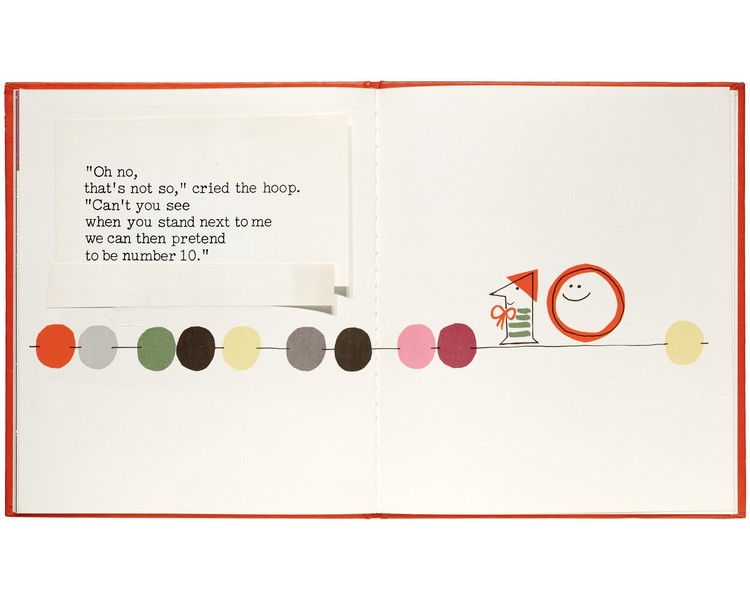
The Invention of Zero: How Ancient Mesopotamia Created the Mathematical Concept of Nought and Ancient India Gave It Symbolic Form

By Maria Popova

“If you look at zero you see nothing; but look through it and you will see the world.”

If the ancient Arab world had closed its gates to foreign travelers, we would have no medicine, no astronomy, and no mathematics — at least not as we know them today.

Central to humanity’s quest to grasp the nature of the universe and make sense of our own existence is zero, which began in Mesopotamia and spurred one of the most significant paradigm shifts in human consciousness — a concept first invented (or perhaps discovered) in pre-Arab Sumer, modern-day Iraq, and later given symbolic form in ancient India. This twining of meaning and symbol not only shaped mathematics, which underlies our best models of reality, but became woven into the very fabric of human life, from the works of Shakespeare, who famously winked at zero in King Lear by calling it “an O without a figure,” to the invention of the bit that gave us the 1s and 0s underpinning my ability to type these words and your ability to read them on this screen.

Mathematician Robert Kaplan chronicles nought’s revolutionary journey in The Nothing That Is: A Natural History of Zero (public library). It is, in a sense, an archetypal story of scientific discovery, wherein an abstract concept derived from the observed laws of nature is named and given symbolic form. But it is also a kind of cross-cultural fairy tale that romances reason across time and space

Kaplan writes:

If you look at zero you see nothing; but look through it and you will see the world. For zero brings into focus the great, organic sprawl of mathematics, and mathematics in turn the complex nature of things. From counting to calculating, from estimating the odds to knowing exactly when the tides in our affairs will crest, the shining tools of mathematics let us follow the tacking course everything takes through everything else – and all of their parts swing on the smallest of pivots, zero

With these mental devices we make visible the hidden laws controlling the objects around us in their cycles and swerves. Even the mind itself is mirrored in mathematics, its endless reflections now confusing, now clarifying insight.

[…]

As we follow the meanderings of zero’s symbols and meanings we’ll see along with it the making and doing of mathematics — by humans, for humans. No god gave it to us. Its muse speaks only to those who ardently pursue her.

With an eye to the eternal question of whether mathematics is discovered or invented — a question famously debated by Kurt Gödel and the Vienna Circle — Kaplan observes:

The disquieting question of whether zero is out there or a fiction will call up the perennial puzzle of whether we invent or discover the way of things, hence the yet deeper issue of where we are in the hierarchy. Are we creatures or creators, less than – or only a little less than — the angels in our power to appraise?

Like all transformative inventions, zero began with necessity — the necessity for counting without getting bemired in the inelegance of increasingly large numbers. Kaplan writes:

Zero began its career as two wedges pressed into a wet lump of clay, in the days when a superb piece of mental engineering gave us the art of counting.

[…]

The story begins some 5,000 years ago with the Sumerians, those lively people who settled in Mesopotamia (part of what is now Iraq). When you read, on one of their clay tablets, this exchange between father and son: “Where did you go?” “Nowhere.” “Then why are you late?”, you realize that 5,000 years are like an evening gone.

The Sumerians counted by 1s and 10s but also by 60s. This may seem bizarre until you recall that we do too, using 60 for minutes in an hour (and 6 × 60 = 360 for degrees in a circle). Worse, we also count by 12 when it comes to months in a year, 7 for days in a week, 24 for hours in a day and 16 for ounces in a pound or a pint. Up until 1971 the British counted their pennies in heaps of 12 to a shilling but heaps of 20 shillings to a pound.

Tug on each of these different systems and you’ll unravel a history of customs and compromises, showing what you thought was quirky to be the most natural thing in the world. In the case of the Sumerians, a 60-base (sexagesimal) system most likely sprang from their dealings with another culture whose system of weights — and hence of monetary value — differed from their own.

Having to reconcile the decimal and sexagesimal counting systems was a source of growing confusion for the Sumerians, who wrote by pressing the tip of a hollow reed to create circles and semi-circles onto wet clay tablets solidified by baking. The reed eventually became a three-sided stylus, which made triangular cuneiform marks at varying angles to designate different numbers, amounts, and concepts. Kaplan demonstrates what the Sumerian numerical system looked like by 2000 BCE:

This cumbersome system lasted for thousands of years, until someone at some point between the sixth and third centuries BCE came up with a way to wedge accounting columns apart, effectively symbolizing “nothing in this column” — and so the concept of, if not the symbol for, zero was born. Kaplan writes:

In a tablet unearthed at Kish (dating from perhaps as far back as 700 BC), the scribe wrote his zeroes with three hooks, rather than two slanted wedges, as if they were thirties; and another scribe at about the same time made his with only one, so that they are indistinguishable from his tens. Carelessness? Or does this variety tell us that we are very near the earliest uses of the separation sign as zero, its meaning and form having yet to settle in?

But zero almost perished with the civilization that first imagined it. The story follows history’s arrow from Mesopotamia to ancient Greece, where the necessity of zero awakens anew. Kaplan turns to Archimedes and his system for naming large numbers, “myriad” being the largest of the Greek names for numbers, connoting 10,000. With his notion of orders of large numbers, the great Greek polymath came within inches of inventing the concept of powers, but he gave us something even more important — as Kaplan puts it, he showed us “how to think as concretely as we can about the very large, giving us a way of building up to it in stages rather than letting our thoughts diffuse in the face of immensity, so that we will be able to distinguish even such magnitudes as these from the infinite.”

This concept of the infinite in a sense contoured the need for naming its mirror-image counterpart: nothingness. (Negative numbers were still a long way away.) And yet the Greeks had no word for zero, though they clearly recognized its spectral presence. Kaplan writes:

Haven’t we all an ancient sense that for something to exist it must have a name? Many a child refuses to accept the argument that the numbers go on forever (just add one to any candidate for the last) because names run out. For them a googol — 1 with 100 zeroes after it — is a large and living friend, as is a googolplex (10 to the googol power, in an Archimedean spirit).

[…]

By not using zero, but naming instead his myriad myriads, orders and periods, Archimedes has given a constructive vitality to this vastness — putting it just that much nearer our reach, if not our grasp.

Ordinarily, we know that naming is what gives meaning to existence. But names are given to things, and zero is not a thing — it is, in fact, a no-thing. Kaplan contemplates the paradox:

Names belong to things, but zero belongs to nothing. It counts the totality of what isn’t there. By this reasoning it must be everywhere with regard to this and that: with regard, for instance, to the number of humming-birds in that bowl with seven — or now six — apples. Then what does zero name? It looks like a smaller version of Gertrude Stein’s Oakland, having no there there.

Zero, still an unnamed figment of the mathematical imagination, continued its odyssey around the ancient world before it was given a name. After Babylon and Greece, it landed in India. The first surviving written appearance of zero as a symbol appeared there on a stone tablet dated 876 AD, inscribed with the measurements of a garden: 270 by 50, written as “27°” and “5°.” Kaplan notes that the same tiny zero appears on copper plates dating back to three centuries earlier, but because forgeries ran rampant in the eleventh century, their authenticity can’t be ascertained. He writes:

We can try pushing back the beginnings of zero in India before 876, if you are willing to strain your eyes to make out dim figures in a bright haze. Why trouble to do this? Because every story, like every dream, has a deep point, where all that is said sounds oracular, all that is seen, an omen. Interpretations seethe around these images like froth in a cauldron. This deep point for us is the cleft between the ancient world around the Mediterranean and the ancient world of India.

But if zero were to have a high priest in ancient India, it would undoubtedly be the mathematician and astronomer Āryabhata, whose identity is shrouded in as much mystery as Shakespeare’s. Nonetheless, his legacy — whether he was indeed one person or many — is an indelible part of zero’s story.

Kaplan writes:

Āryabhata wanted a concise way to store (not calculate with) large numbers, and hit on a strange scheme. If we hadn’t yet our positional notation, where the 8 in 9,871 means 800 because it stands in the hundreds place, we might have come up with writing it this way: 9T8H7Te1, where T stands for ‘thousand’, H for “hundred” and Te for “ten” (in fact, this is how we usually pronounce our numbers, and how monetary amounts have been expressed: £3.4s.2d). Āryabhata did something of this sort, only one degree more abstract.

He made up nonsense words whose syllables stood for digits in places, the digits being given by consonants, the places by the nine vowels in Sanskrit. Since the first three vowels are a, i and u, if you wanted to write 386 in his system (he wrote this as 6, then 8, then 3) you would want the sixth consonant, c, followed by a (showing that c was in the units place), the eighth consonant, j, followed by i, then the third consonant, g, followed by u: CAJIGU. The problem is that this system gives only 9 possible places, and being an astronomer, he had need of many more. His baroque solution was to double his system to 18 places by using the same nine vowels twice each: a, a, i, i, u, u and so on; and breaking the consonants up into two groups, using those from the first for the odd numbered places, those from the second for the even. So he would actually have written 386 this way: CASAGI (c being the sixth consonant of the first group, s in effect the eighth of the second group, g the third of the first group)…

There is clearly no zero in this system — but interestingly enough, in explaining it Āryabhata says: “The nine vowels are to be used in two nines of places” — and his word for “place” is “kha”. This kha later becomes one of the commonest Indian words for zero. It is as if we had here a slow-motion picture of an idea evolving: the shift from a “named” to a purely positional notation, from an empty place where a digit can lodge to “the empty number”: a number in its own right, that nudged other numbers along into their places.

Kaplan reflects on the multicultural intellectual heritage encircling the concept of zero:

While having a symbol for zero matters, having the notion matters more, and whether this came from the Babylonians directly or through the Greeks, what is hanging in the balance here in India is the character this notion will take: will it be the idea of the absence of any number — or the idea of a number for such absence? Is it to be the mark of the empty, or the empty mark? The first keeps it estranged from numbers, merely part of the landscape through which they move; the second puts it on a par with them.

In the remainder of the fascinating and lyrical The Nothing That Is, Kaplan goes on to explore how various other cultures, from the Mayans to the Romans, contributed to the trans-civilizational mosaic that is zero as it made its way to modern mathematics, and examines its profound impact on everything from philosophy to literature to his own domain of mathematics. Complement it with this Victorian love letter to mathematics and the illustrated story of how the Persian polymath Ibn Sina revolutionized modern science.

My name is Maria Popova — a reader, a wonderer, and a lover of reality who makes sense of the world and herself through the essential inner dialogue that is the act of writing.

13 May 2024

Source: transcend.org

UN Vote Was for Palestinian Membership, Not Statehood

By Joe Lauria

10 May 2024 – In a blow to the U.S., the U.N. General Assembly voted today to give Palestine, whose statehood it has already acknowledged, full U.N. membership, forcing the U.S. into another embarrassing veto at the Security Council.

The United States will be forced into another embarrassing veto at the U.N. Security Council after the General Assembly on Friday voted overwhelmingly to ask the Council to reverse its rejection of full U.N. membership for Palestine.

The Assembly voted 143 nations in favor, to just nine against, with 25 abstentions to recommend that the Security Council reconsider its decision last month not to approve full membership. It was a message in reality only to the United States, since it was the U.S. veto in the Council on April 18 that denied Palestine full membership.

Joining the U.S. in the Assembly in voting against on Friday were Israel, Argentina, Czechia, Hungary, Micronesia, Nauru, Palau and Papua New Guinea. Most U.S. allies abstained but several voted in favor of membership, including Australia, Estonia, France, Japan, Norway, Spain and South Korea.

Israel’s furious ambassador, Gilad Erdan, said the U.N. was founded to prevent the kind of tyranny of the Nazis who sought to annihilate the Jewish people.

“Today, you are doing the opposite … welcoming a terror State into its ranks,” he said. “You have opened up the United Nations to modern-day Naziism. It makes me sick.”

Erdan hysterically added that the vote had “opened up the United Nations to modern-day Nazis, to genocidal jihadists committed to establishing an Islamic state across Israel and the region, murdering every Jewish man, woman and child.”

He then held up a battery-operated, mini paper shredder and inserted the cover of the U.N. charter.

In 2012, the Assembly voted overwhelmingly to make Palestine an observer state, giving it only the right to speak in the Assembly.  The resolution passed on Friday expands Palestinian rights to include being seated alphabetically in the Assembly, having the right to submit amendments and agenda items and to be elected as officers to U.N. committees.

Full U.N. membership with voting rights can only be granted by the General Assembly after a recommendation from the Security Council. The General Assembly took action on Friday after the United States cast the lone veto against Palestinian membership at the Security Council, when ally France voted in favor and Britain abstained.

The matter now goes back to the Security Council, where the U.S. said on Friday that it will veto it again on the basis of an erroneous argument that the issue before the U.N. is statehood rather than membership.

“It remains the U.S. view that the most expeditious path toward statehood for the Palestinian people is through direct negotiations between Israel and the Palestinian Authority with the support of the United States and other partners,” said Robert Wood, the U.S. deputy ambassador, after the U.S. cast its veto last month.  “We also have long been clear that premature actions here in New York, even with the best intentions, will not achieve statehood for the Palestinian people.”

The New York Times and other Western media also incorrectly reported that the General Assembly voted for Palestinian statehood.  The Times headline read: “The U.N. General Assembly adopts a resolution in support of Palestinian statehood.” The Sydney Morning Herald‘s headline was: “Australia joins 142 nations in backing Palestinian statehood in UN vote.”

In fact, the resolution was only to grant full U.N. membership to Palestine. Only states can bilaterally recognize other states and 139 countries have already done so for Palestine.  The U.S. government and Western media ignoring the legality of these 139 countries recognizing Palestine is an inheritance of colonial arrogance.

In reporting for The Wall Street Journal on the 2012 General Assembly vote to make Palestine an observer state I referred to the country as “Palestine.” A WSJ editor angrily rebuked me. “We don’t call it Palestine,” he said.  So the call of Wall Street Journal editors overrides 139 nations.

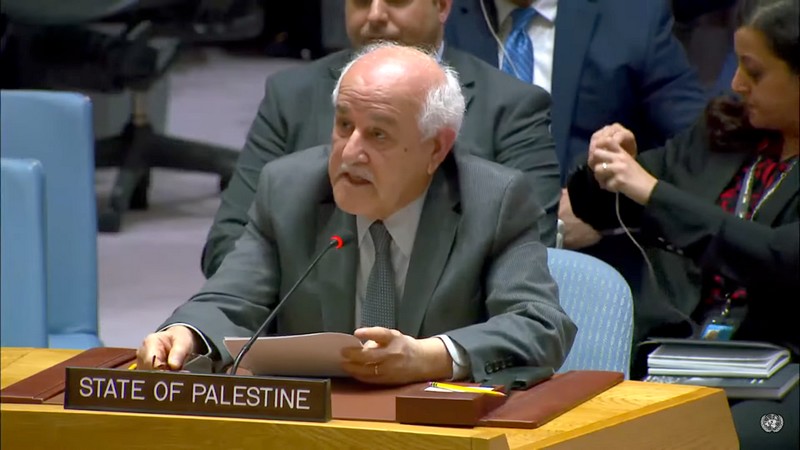
The General Assembly has considered Palestine to be a state since that 2012 vote as seen in the nameplate before Palestine’s U.N. Ambassador Riyad Mansour, seen here speaking at the Security Council last month:

Definition of a State

The U.N. can only confer membership to already existing states, and not grant statehood. Only states can recognize other states bilaterally. The U.N. General Assembly gave observer state status to the State of Palestine in 2012.

The U.N. Charter is clear. Article 4 says that only existing states may apply for U.N. membership. It says:

“Membership in the United Nations is open to all other peace-loving states which accept the obligations contained in the present Charter and, in the judgment of the Organization, are able and willing to carry out these obligations.” [Emphasis added.]

Friday’s General Assembly resolution “Determines that the State of Palestine is qualified for membership in the United Nations in accordance with Article 4 of the Charter of the United Nations and should therefore be admitted to membership in the United Nations.” ”

The resolution doesn’t say the General Assembly determines that Palestine qualifies as a state, but as a member of the U.N. because it already says it’s a state, in a resolution that 143 countries voted for and only nine against. But those nine countries rule the world, according to the U.S.

On the basis of the language of Article 4, the 143 countries that voted in favor on Friday consider Palestine to be a state, even if they have not formally recognized it bilaterally.

France, for instance voted for full membership, although it has not yet formally recognized Palestine. However. French President Emmanuel Macron said in February it was no longer a “taboo” for France to recognize Palestinian statehood.  The French Assembly voted in 2014 to urge the government to do so.

The original text of Friday’s resolution says “membership in the United Nations is open to all peace-loving States which accept the obligations contained in the Charter and, in the judgment of the Organization, are able and willing to carry out these obligations.”  The Associated Press reported that the words “peace-loving” were dropped from the resolution.

The very act of the U.N. secretary general in 2011 accepting a Palestinian membership application was an acknowledgement from the U.N. that Palestine is already a state, as only states can apply.

The definition of a state is contained in Article 1 of the 1933 Montevideo Convention, according to which Palestine is indeed a state: The Convention’s requirements for statehood are:

  • “a) a permanent population,
  • (b) a defined territory,
  • (c) government and
  • (d) capacity to enter into relations with the other states.”

Palestine has all four. Since 1967 its defined territory has been Gaza and the West Bank after Security Council resolutions demanding Israel stop occupying Palestinian territory. Francis Boyle, a professor of international law at the University of Illinois, told Consortium News that the Montevideo Convention “still has standing under customary international law.”

The General Assembly also pointed out that Palestine is a member of the Arab League and several U.N. agencies and affiliated bodies, such as the International Criminal Court.

[SeeWhy Palestine Is Already a State (CN, 2012)]

China: Palestine Should Have Same Status as Israel

During the Assembly debate Friday, Ambassador Fu Cong of China said Palestine should have the same U.N. status as Israel and Palestinians the same rights as Israelis.

“It is the common responsibility of the international community to support and advance the process of Palestinian independent Statehood, and provide strong support for the implementation of the two-State solution and a lasting peace in the Middle East,” he said.

Fu said the U.S. repeatedly used its veto “in an unjustified attempt” to block the world’s efforts to correct the “historical injustice long visited on Palestine.”

“It is not commensurate with the role of a responsible major country,” he said.

“China welcomes this historic resolution, which reflects the will of the international community,” Fu said. “We believe that the special modalities adopted within the limits permitted by the U.N. Charter will enable the international community to listen more adequately to the voice of Palestine and help it to talk and negotiate with Israel on a more equal footing.”

Russia’s ambassador, Vassily Nebenzia, told the Assembly: “Only full-fledged membership will allow Palestine to stand alongside other members of the Organization and enjoy the rights that this status implies. It is the moral duty of everyone.”

“A ‘yes’ vote is a vote for Palestinian existence; it is not against any State, but it is against attempts to deprive us of our State,” said Mansour, the Palestinian representative. “It is true that we will not disappear, but the lives lost cannot be restored.”

“No words can capture what such loss and trauma signify for Palestinians, their families, their communities and for our nation as whole,” Mansour told the Assembly. Despite that, the Palestinian flag “flies high and proud” in Palestine and around the world as a “symbol raised by all those who believe in freedom and its just rule. ”

Watch the debate on Palestinian membership at the General Assembly:

General Assembly adopts resolution to expand Palestine’s rights; stops short of full membership

Joe Lauria is editor-in-chief of Consortium News and a former correspondent for The Wall Street Journal, Boston Globe and numerous other newspapers, including The Montreal Gazette and The Star of Johannesburg.

13 May 2024

Source: transcend.org


We Tried to Bring Food into Gaza—but Israel Blocked and Arrested Us

By Brant Rosen

“As Israel continues to starve the people of Gaza, a delegation of rabbis marched toward the Erez Crossing during Passover carrying sacks of flour and demanding a cease-fire.

6 May 2024 – In 2017, I spent several days in Gaza as a staff person for the American Friends Service Committee. Although I took away many powerful and vivid memories from that trip, some of the most indelible involved the delicious food that was continuously served to us by our Gazan hosts. Gazans are famously proud of their cuisine, and rightfully so, as it provides them with a palpable connection to Palestinian history and life outside that small 140 square-mile strip—to communities in Palestine where their ancestors used to live. As journalist Laila El-Haddad has observed, Gazan food is “a sort of treasure map to a largely invisible, or invisibilized, world of Palestinian history going back well before the 1948 Nakba.”

During the course of our visit, Ali, a member of the AFSC Gaza staff, mentioned more than once that Gazan knafeh (a traditional Arabic dessert) was by far the best in Palestine. When our staff group gathered at a restaurant in Gaza City for our final meal, Ali was chagrined to learn that there was no more knafeh left in the kitchen. Determined, he got up, ran down the street to another restaurant, and returned with a huge round plate of the sticky, golden pastry for our table. It was indeed more delicious than any knafeh I have eaten before or since.

I’ve recalled that sweet memory often over the past seven years. When I think of it now, however, I find its sweetness has curdled into horror. As far back as December, human rights agencies determined that Israel “was using starvation as a weapon of war.” According to the World Food Program, Gaza’s food system was on the brink of collapse and the population was facing a “high risk of famine.”

This past March, the mainstream media published shocking, heartbreaking pictures of Yazan Kafarneh, a 10-year-old Gazan boy reduced to skin and bones from starvation. To date, it has been estimated that 28 children have died of malnutrition and starvation in northern Gaza. By all accounts, starvation in the besieged Strip has now reached “catastrophic” proportions. Palestinians in Gaza are now forced to eat grass just to survive.

As a congregational rabbi, I spoke with many people who told me that they were not sure how—or even if—they would celebrate Passover this year. With the genocide and forced starvation of the people of Gaza deepening with no end in sight, they said it felt beyond challenging to celebrate a festival of Jewish liberation. To make the moral dissonance even more dissonant, many in the Jewish communal establishment framed the meaning of this year’s Passover exclusively around the plight of the Israeli hostages in Gaza and the call for their liberation from Hamas, with nary a mention of the 35,000 Gazans who have been killed by Israel’s genocidal vengeance.

More than once I was asked, “How can I partake of this festive meal while Israel has been starving Palestinians in the name of the Jewish people? How can I read about Pharaoh’s oppression of Israelite children when I’ve just read the latest death count of Palestinian children dying increasingly things from forced starvation?”

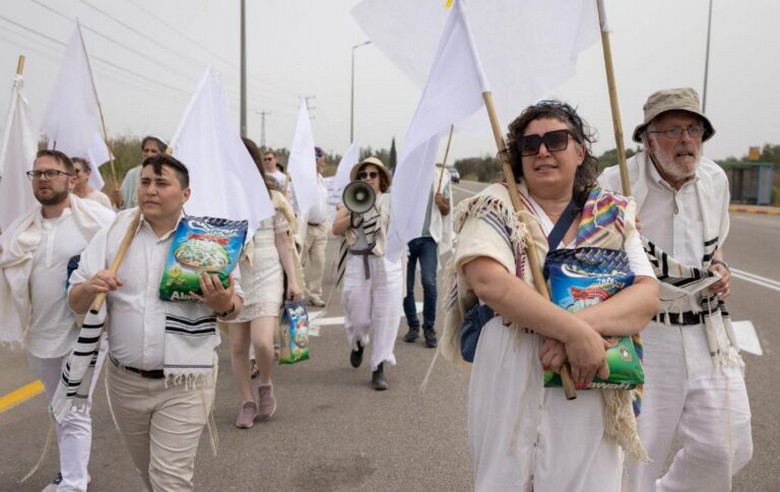
As a political-spiritual response to this unprecedented Passover moment, Rabbis for Ceasefire—a group of rabbis and rabbinical students who came together last October to demand an end to the violence—began to organize an action at the Gaza border. Motivated by Passover’s central imperative—“All who are hungry come and eat!”—our mission was to bring food supplies to the Erez Crossing and demand that Israel allow us to pass through. Our action included 10 American rabbis, writer Ayelet Waldman, and 30 Israeli activists—including Israeli rabbis—who have been tirelessly protesting both at the Gaza border and organizing protect presence for West Bank communities targeted by settler violence.

On April 26, we gathered at a preplanned meetup location, with a truck filled with half a ton of flour. We each shouldered bags of rice and, carrying banners and flags, marched in the direction of the Erez Crossing. The Israeli police quickly drove up to intercept us. During that initial stand-off, several of us offered statements.

I began with an opening prayer, an adaptation of the “Magid” section of the Passover Haggadah, when Jews retell the story of the Exodus: “This is the bread of affliction, the bread and food systemically, cruelly denied the people of Gaza. Let all who are hungry come and eat. Let all who are oppressed be liberated this Pesach. Now, we are here—tomorrow, let there be bread for Gaza. Now, we are here—next year, may there be liberation from the river to the sea!”

Other speakers included Israeli Rabbi Avi Dabush of Rabbis for Human Rights, a resident and survivor of a kibbutz that was attacked on October 7, and Noam Shuster-Eliassi, a well-known Israeli activist, writer, and comedian. When our program was over, we pushed forward toward the border. When the soldiers violently attempted to break us up, several of us sat down in the road. During the course of the protest seven of our group—four Americans and three Israelis—were arrested.

All of the arrested were fully prepared for this eventuality (the Israelis were veterans at protest arrests and had briefed us on protocol). They were taken to two detention centers and interrogated for eight to nine hours. The Americans were told, bluntly, that they were being held for “attempting to bring food into Gaza.” All the arrested were released that evening. Thankfully, the food we attempted to bring into Gaza was not confiscated, so we were able to donate it to Masafer Yatta—a community in the South Hebron Hills where almost 3,000 residents are resisting the daily threat of demolitions, evictions, and dispossession.

Now that many of us are back in the United States, we are not ready to stop sounding the alarm about the atrocities Israeli is committing in Gaza, not ready to stop pressing for a cease-fire and the flow of food once again into Gaza. As it is, nearly 2.2 million Palestinians in Gaza currently face mass starvation and encroaching famine. Hundreds of trucks filled with humanitarian goods have been sitting idle on roads leading into the Rafah crossing on the border with Egypt, blocked from entering Gaza by a draconian inspection process that severely limits the number of trucks that can pass through. Inside Gaza, the Israeli military has attacked efforts to distribute aid with tragic results. According to the United Nations, the Israeli military has killed 196 relief workers, while soldiers have shot and killed hundreds of Gazans venturing out to seek food.

Amid all this horror, the one agency that has the capacity and infrastructure to effectively distribute relief to the people of Gaza, the United Nations Relief and Works Agency (UNRWA), has been defunded by the Biden administration. This past January, the Israeli government leveled the still-unsubstantiated claim that 12 UNRWA employees were involved in Hamas’s October 7 attacks in Israel. Though UNRWA immediately fired the employees in question and launched an investigation, the US withdrew its financial support of the agency, which was founded in 1949 to provide support to the hundreds of thousands of refugees created by the establishment of the state of Israel.

In its spending bill this past March, the US government extended its ban on UNRWA funding for a year. Though the agency reports it has sufficient funds to operate until the end of May, its ability to provide services in Gaza has been dangerously hampered. Last month, Israel announced that it would no longer approve UNRWA food convoys to the north of Gaza, where famine is the most imminent. According to a recent report, the agency noted that “a total of 420 food trucks were denied or impeded by Israeli authorities [inMarch].” It warned: “Gaza is on the brink of famine, with 1.1 million people—half of its population—experiencing catastrophic food insecurity due to the intense conflict and severe restrictions on humanitarian access.”

Most ominously, Israel continues to amplify its threats to invade Rafah, where some 1.4 million people are currently living, many of them refugees from elsewhere in Gaza. An invasion would almost certainly result in massive human suffering and tragedy.

And yet, in the wake our action on the border, I continue to hold out hope. It is clear to me that our border protest was part of something much larger: the dramatic rise in Palestine solidarity increasing around the world, including the growing student protest movement on campuses across the United States. And I am more convinced than ever that Israel cannot, try as it might, starve or bomb the Palestinian people from existence, nor can it destroy the love for their culture that is so deeply rooted in their homeland: In the words of El-Haddad: “Lately, I’ve been thinking about what I would go back to, and what I would find, if I returned to Gaza. Most of the landmarks have been destroyed. Gone too are many of the people I cherished. But…it feels like I am the torchbearer now, the family’s keeper of treasured recipes. Like Um Hani [Leila’s aunt, who was killed in an Israeli air strike], I will cook and I will teach, connecting the next generation of Palestinians to our homeland.”

Brant Rosen is the founding rabbi of the synagogue Tzedek Chicago and the cofounder of the Jewish Voice for Peace Rabbinical Council.

13 May 2024

Source: transcend.org

Let Israel’s Leaders Get Arrested for War Crimes

By Gideon Levy

5 May 2024 – All decent Israelis must ask themselves the following questions: Is their country committing war crimes in Gaza? If so, how should they be stopped?

How should the culprits be punished? Who can punish them? Is it reasonable for crimes to go unprosecuted and criminals to be exculpated?

One may, of course, reply in the negative to the first question – Israel is not committing any war crimes in Gaza – thereby rendering the rest of the questions superfluous.

But how can one answer in the negative in the face of the facts and the situation in Gaza:

  • about 35,000 people killed and another 10,000 missing, about two-thirds of them innocent civilians, according to the Israel Defense Forces;
  • among the dead are around 13,000 children, nearly 400 medical workers and more than 200 journalists; 70 percent of homes have been destroyed or damaged;
  • 30 percent of children suffer from acute malnutrition;
  • two people in 10,000 die each day from starvation and disease. (All figures are from the United Nations and international organizations.)

Is it possible that these horrific figures came to be without the commission of war crimes?

There are wars whose cause is just and whose means are criminal;

the justice of the war does not justify its crimes. Killing and destruction, starvation and displacement on this scale could not have occurred without the commission of war crimes. Individuals are responsible for them, and they must be brought to justice.

Israeli hasbara, or public diplomacy, does not try to deny the reality in Gaza. It only makes the claim of antisemitism: Why pick on us? What about Sudan and Yemen?

The logic doesn’t hold: A driver who is stopped for speeding won’t get off by arguing that he’s not the only one. The crimes and the criminals remain. Israel will never prosecute anyone for these offenses. It never has, neither for its wars nor its occupation. On a good day, it will prosecute a soldier who stole some Palestinian’s credit card.

But the human sense of justice wants to see criminals brought to justice and prevented from committing crimes in the future. By this logic, we can only hope that the International Criminal Court in The Hague will do its job.

Every Israeli patriot and everyone who cares about the good of the state should wish for this. This is the only way that Israel’s moral standard, according to which it is permitted everything, will change. It is not easy to hope for the arrest of the heads of your state and your army, and even more difficult to admit it publicly, but is there any other way to stop them?

The killing and destruction in Gaza has gotten Israel in way over its head. It is the worst catastrophe the state has ever faced. Someone led it there – no, not antisemitism, but rather its leaders and military officers. If not for them, it wouldn’t have turned so quickly after October 7 from a cherished country that inspired compassion into a pariah state.

Someone must stand trial for this.

Just as many Israelis want Benjamin Netanyahu to be punished for the corruption of which he is accused, so should they wish for him and the perpetrators subordinate to him to be punished for much more serious crimes, the crimes of Gaza.

They cannot be allowed to go unpunished.

Nor is it possible to blame only Hamas, even if it has a part in the crimes.

We are the ones who killed, starved, displaced, and destroyed on such a massive scale. Someone must be brought to justice for this.

Netanyahu is the head, of course. The picture of him imprisoned in The Hague together with the defense minister and the IDF chief of staff is the stuff of nightmares to every Israeli.

And yet, it is probably warranted. 

It is highly unlikely, however. The pressure being exerted on the court by Israel and the United States are enormous (and wrong). But scare tactics can be important.

If the officials actually refrain from traveling abroad in the next few years, if they actually live in fear of what may come, we can be sure that in the next war, they’ll think twice before sending the military on campaigns of death and destruction of such insane proportions. We can find a little comfort in that, at least.

Gideon Levy is a Haaretz columnist and a member of the newspaper’s editorial board.

13 May 2024

Source: transcend.org

Challenging Dollar’s Dominance

By BRICS Portal

6 May 2024 – Strengthening ties and cooperation with regional countries, promoting platforms like BRICS and focusing on trade in local currencies may challenge the dominance of the US dollar in the coming years on account of a changing world order.

At present, the US has technological, economic and political dominance across the globe.

The potential diversification of foreign exchange reserves can help avert the impact of volatility in the US dollar and with the changing world scenario, countries such as Pakistan need to strengthen regional trade ties. Trade with Central Asia and the Middle East via the China-Pakistan Economic Corridor (CPEC) could benefit Islamabad to a great extent.

A recent KTrade economic insight report titled “Assessing the Future Trend of the US Dollar & Global Currency Flows,” provides a comprehensive analysis by examining the dollar’s dominance as a store of value, a safe haven and a reserve currency on the global stage along with predicting the future global financial system. It seeks to assess the potential of emerging challengers such as BRICS-plus nations to rival the dominant position of the US dollar. It also stresses the significance of the international transactions carried out by various economies in local currencies, rather than the dollar.

It has led to the growing likelihood of a parallel financial system to contest the dollar’s status as the world reserve currency. This trend is further propelled by the escalating non-dollar trade in the global oil market. The US dollar plays a pivotal role in the global financial transactions, as per the most recent SWIFT (messaging services) data for calendar year 2023. Approximately 48% of international transactions were conducted in dollars, indicating its prominence despite shifts in the geopolitical landscape. Notably, the dollar’s utilisation through SWIFT showed a notable surge, from 42% in 2022 to 48% in 2023. The euro also commands a notable share in international payments via SWIFT, standing at 22% in 2023. Nevertheless, this represents a significant decrease from approximately 36% in 2020, resulting in an increased share of the dollar and other currencies in SWIFT transactions.

Transactions in forex markets are predominantly concentrated in the US dollar with 88% of spot, forward and swap markets featuring the dollar in one leg of the transactions in 2022. The dollar’s role as a vehicle currency for forex transactions has remained steady as it has not fallen below 87% since 2013. The euro too has been holding a prominent share in forex turnover over the last two decades, at more than 30%. As of 2022, the share of UK pound stood at 31% while the Japanese yen held a share of 17%.

One measure of confidence in a currency, as a store of value, is its use in the official foreign exchange reserves. The dollar comprised 59% of the disclosed global official foreign reserves in 2023, far surpassing all other currencies.

The US dollar is still a dominant currency. Its share in international foreign reserves, global trade invoicing, international debt securities and cross-border loans is many times greater than the US’s share in the global gross domestic product (GDP) and international trade.

Major commodities such as oil are primarily bought and sold by using the US dollar, and some major economies, including Saudi Arabia, still peg their currencies to the dollar. In the domain of debt issuance denominated in foreign currencies, the dollar has maintained its consistent dominance, commanding a substantial share of approximately 70% since 2010. The euro’s share has remained stable at approximately 20% over the past decade.

As of 2022, the US dollar and euro collectively represented over 90% of the composition of the debt issued in foreign currency.

The international currency usage index is computed as the weighted average of five measures for which time series data is available. These include the official currency reserves, forex transaction volumes, outstanding foreign currency debt instruments, cross-border deposits and cross-border loans.

Distinguished by their burgeoning economies, the BRICS group – comprising Brazil, Russia, India, China and South Africa – has actively pursued enhanced diplomatic coordination, advocated reforms within the global financial institutions and endeavoured to serve as a formidable counterbalance to the western hegemony.

According to the projections made by the IMF, BRICS is anticipated to collectively represent approximately 27% of the global GDP by the year 2024. BRICS is considered a key challenge to the western alliance of G7 countries. G7 is estimated to account for 26.4% of the global GDP in 2023.

The BRICS coalition, anchored by the vast population exceeding 3.6 billion people, has consistently represented a formidable demographic force. With the potential addition of more nations, BRICS stands poised to surpass 50% of the global population. BRICS accounts for about 25% of the global goods exports. Given their significant presence in global trade, BRICS nations can enhance economic resilience by promoting the use of local currencies in transactions.

This strategy mitigates the risks associated with exchange rate fluctuations and reduces dependence on dollar-denominated transactions, aligning with broader efforts to fortify economic cooperation within the BRICS framework. India is taking steps to promote the use of its own currency for international trade as part of a push to boost its exports to countries grappling with the shortage of dollars or hit with western sanctions.

India is among several countries exploring trading mechanisms that bypass the dollar, which has dominated international trade for decades. If any group that can make oil trade in non-dollar currencies possible, it is BRICS. The bloc brings together some of the world’s largest exporters of oil with some of the biggest importers. If it succeeds in shifting some of the oil trade towards other currencies, that could have a knock-on effect on the share of the US dollar in the global forex reserves.

Approximately 20% of the global oil transactions in 2023 were facilitated in currencies other than the dollar, notably as Russia and Iran supplied cargoes to different purchasers.

Following western sanctions post-Ukraine war, Russian crude oil has faced reduced demand and traded at significant discounts to global benchmarks. Despite this, India, a major importer, has continued to purchase the heavily discounted Russian crude.

Russia and Iran have finalised an agreement to trade in local currencies instead of the US dollar. Russian and Iranian banks can now use non-SWIFT messaging platforms and bilateral brokerage links to facilitate transactions in Russian ruble and Iranian rial.

Meanwhile, developing countries should benefit from the changing world outlook.

13 May 2024

Source: transcend.org

As Gaza Assault Intensifies, Egypt Joins ICJ Case Accusing Israel of Genocide

By Olivia Rosane

“It’s a real diplomatic punch,” a former Israeli diplomat said. “Israel would have to take it very seriously.”

12 May 2024 – Egypt announced today that it would join South Africa’s case before the International Court of Justice accusing Israel of committing genocide in Gaza.

The announcement from the Egyptian Ministry of Foreign Affairs came nearly a week after Israel seized the Gaza side of the Rafah border crossing with Egypt and the day after the Israel Defense Forces issued new evacuation orders for Rafah and the north of Gaza. It also comes as the United Nations Relief and Works Agency for Palestine Refugees in the Near East (UNRWA) said that around 300,000 people had fled Rafah in the last week and the death toll reported by the Gaza Health Ministry surpassed 35,000.

“The submission… comes in light of the worsening severity and scope of Israeli attacks against Palestinian civilians in the Gaza Strip, and the continued perpetration of systematic practices against the Palestinian people, including direct targeting of civilians and the destruction of infrastructure in the strip, and pushing Palestinians to flee,” the Egyptian ministry said in the statement explaining its decision.

In a preliminary ruling in January, the ICJ determined that it was plausible that Israel was conducting a genocide in Gaza and ordered it to “take all measures within its power” to avoid doing so.

In its statement, Egypt’s foreign ministry called on Israel “to comply with its obligations as the occupying power and to implement the provisional measures issued by the ICJ, which require ensuring access to humanitarian and relief aid in a manner that meets the needs of Palestinians in the Gaza Strip.”

Israel cut off aid when it seized the Rafah border crossing, making it even harder for Gazans to access essential goods like food and fuel, though Israel said on Sunday it had opened a new crossing for aid in the north.

The Egyptian Ministry of Foreign Affairs also repeated a call for the U.N. Security Council and the international community to take action to stop violations in Gaza and Israel’s attack on Rafah.

“Tel Aviv is forcing Palestinians to be contestants in its murderous game show as it flouts international law and basic human decency.”

Egypt is the third country after Colombia and Turkey to request to join South Africa’s case. However, it’s request is especially significant for Israel, Alon Liel, former director of Israel’s Foreign Ministry, told Al Jazeera. Liel said that Egypt was the “cornerstone” of Israel’s standing in the Middle East since the two countries signed a treaty in 1979.

“With Egypt joining South Africa now in The Hague, it’s a real diplomatic punch. Israel would have to take it very seriously,” Liel said. “Israel has to… listen to the world—not only to the Israeli public opinion asking now for revenge.”

Israel’s devastating assault on Gaza began October 7 in response to a Hamas attack on southern Israel that killed around 1,100 people and captured around 250 hostages. Before that attack, Israel had blockaded Gaza for 16 years.

Egypt’s action on Sunday accompanied warnings and expressions of alarm from humanitarian workers, diplomats, and journalists as Israel escalated its campaign in Gaza over the weekend.

“Over the past 48 hours, Israel has intensified its attacks in Gaza as it orders Palestinians in the south to move north and the north to move south,” journalist and Intercept co-founderJeremy Scahill wrote on social media Sunday. “Tel Aviv is forcing Palestinians to be contestants in its murderous game show as it flouts international law and basic human decency.”

UNRWA on Saturday posted photos of bomb-damaged schools in Khan Younis to which displaced families were now returning following the new evacuation orders.

“The classrooms are torched. Walls are blown out. There is rubble everywhere,” UNRWA said. “This situation is unfolding under the world’s watch. Enough is enough.”

Responding to the images, UNRWA Commissioner-General Philippe Lazzarini wrote, “Since the war began, most people in Gaza have moved multiple times: on average once a month. They desperately sought safety that they never found. Some have no choice but to stay in bombed-out UNRWA shelters.”

“The claim of ‘safe zones’ is false and misleading,” Lazzarini continued. “No place is safe in Gaza. Period.”

The U.N. High Commissioner for Human Rights Volker Turk said in a statement Sunday, “A full-scale offensive on Rafah cannot take place.”

“I can see no way that the latest evacuation orders, much less a full assault, in an area with an extremely dense presence of civilians, can be reconciled with the binding requirements of international humanitarian law and with the two sets of binding provisional measures ordered by the International Court of Justice,” Turk said.

However, the Palestinian Center for Human Rights (PCHR) argued on social media Sunday that Israel’s actions in Rafah already comprised “a large-scale military attack, and not a limited operation as described by Israel.”

The group said that Israel had killed at least 116 people—among them 22 women and 38 children—since IDF forces entered Rafah one week ago.

In addition to stepping up its campaign in Rafah, the IDF has increased its attacks on parts of northern Gaza, including Jabalaya, the largest refugee camp in the Gaza Strip.

“We have been hearing from eyewitnesses on the ground, in that very densely populated area, that military tanks are surrounding evacuation centers and residential buildings,” Al Jazeera journalist Tareq Abu Azzoum reported.

PCHR concluded: “In sum, Israel is continuing its genocidal military campaign against the Palestinian people in Gaza unabated. We reiterate our call for an immediate cease-fire. This genocide must end now.”

Olivia Rosane is a staff writer for Common Dreams.

13 May 2024

Source: transcend.org

Oxford Faculty on the Action for Palestine Solidarity Encampment

By University of Oxford Faculty & Staff

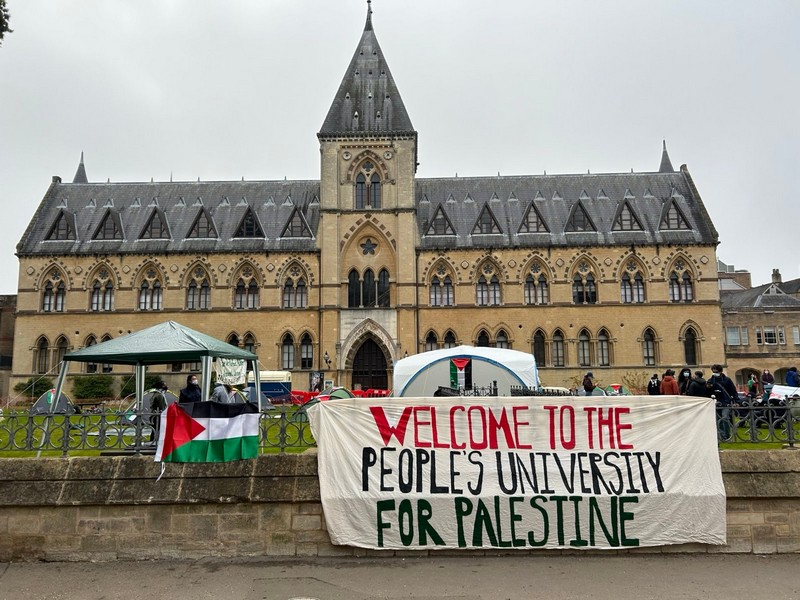
6 May 2024 – As members of faculty and staff of the University of Oxford, we stand firmly in support of the members of the university community who have begun an encampment outside the Pitt Rivers Museum to demand that the university divest from Israel’s genocide in Gaza, as well as from Israel’s ongoing apartheid regime against Palestinians and its settlements in the West Bank and East Jerusalem. Our students have demanded that the university call for an unconditional and immediate ceasefire, condemn the destruction of all of Gaza’s universities by Israel’s bombardment in the last six months, and commit concrete resources both to support Palestinian scholars’ education and to rebuild Gaza’s destroyed institutions of higher education. These sentiments have also been echoed in statements that members of Oxford’s community have initiated or signed, particularly the letter from the Scholars for Palestine group, which is led by Palestinian scholars in the UK.

The present situation in Gaza is catastrophic; the International Court of Justice has characterised it as plausibly amounting to genocide. We consider our students’ demands entirely reasonable given the University of Oxford’s commitment to global leadership in education and to furthering educational opportunities internationally. The University has called for the release of the Israeli hostages and for an end to the ongoing violence in Gaza. We further call for the release of Palestinian prisoners held under administrative detention in Israeli prisons, many of them arrested as children. We also ask the University itself to take a number of other urgent measures.

Currently, Oxford holds a policy of no direct investment in arms. We join our students in asking that the university review its ethical investment policy to explicitly restrict all investment – direct or indirect – in arms, weapons, and other instruments of war. To this end, we ask that the University instruct Oxford University Endowment Management to make available the granular detail of any investment in portfolios that may include arms investment, or investment in other instruments of war such as warplanes, so that we can have an open discussion on this issue with all the facts in hand. We also ask that the Vice Chancellor unequivocally condemn the killing of over a hundred university professors and Israel’s destruction of Gaza’s educational institutions and archives. Finally, we ask that the university immediately commit resources to (a) creating opportunities for Palestinian scholars to access library resources and educational support online so that they can continue their learning and to (b) rebuilding Gaza’s universities.

We see the encampment in solidarity with Gaza, in the words of Professor David Ludden, as “a public-facing global education project”. We hope that the university’s leadership will treat this political expression as the opportunity for dialogue that it is.

This is a statement from the undersigned faculty and staff at the University of Oxford, and does not set out to represent the views of the participants of the encampment. 

Faculty and staff of the University of Oxford who would like to sign can do so HERE.

  1. Walter Armbrust, Professor of Modern Middle Eastern Studies, Faculty of Asian and Middle Eastern Studies
  2. Robert Gildea, Emeritus Professor of Modern History
  3. Karma Nabulsi, Professor Emerita and Senior Research Fellow, St Edmund Hall
  4. Sudhir Hazareesingh, Fellow in Politics, Balliol College
  5. Avi Shlaim, Emeritus Fellow of St Antony’s College and former Professor of International Relations
  6. Neta C Crawford, Montague Burton Professor of International Relations and Fellow of the British Academy
  7. Arathi Sriprakash, Professor of Sociology and Education
  8. James McDougall, Professor of Modern and Contemporary History
  9. Wes Williams, Professor of French
  10. Patricia Owens, Professor of International Relations
  11. Nikita Sud, Professor of the Politics of Development, Oxford Department of International Development and Wolfson College
  12. Bernard Sufrin, Emeritus Fellow, Worcester College and Department of Computer Science
  13. Marilyn Booth, Emerita Khalid Bin Abdallah Al Saud Professor for the Study of the Contemporary Arab World, Faculty of Asian and Middle Eastern Studies
  14. Pablo Mukherjee, Professor of Anglophone World-Literature, Faculty of English
  15. Sneha Krishnan, Associate Professor in Human Geography
  16. Dario Carugo, Associate Professor, Medical Sciences Division
  17. Debbie Hopkins, Associate Professor in Human Geography
  18. Sophie Smith, Associate Professor of Political Theory
  19. Meera Sabaratnam, Associate Professor of International Relations
  20. Jeanne Morefield, Associate Professor of Political Theory
  21. Nayanika Mathur, Professor of Anthropology and South Asian Studies, Oxford School of Global and Area Studies
  22. Katherine Ibbett, Professor of French
  23. Amia Srinivasan, Chichele Professor of Social and Political Theory
  24. Daniela Dover, Associate Professor of Philosophy
  25. Kate Tunstall, Professor of French
  26. Faisal Devji, Professor of Indian History
  27. Jocelyn Alexander, Professor of Commonwealth Studies
  28. Simukai Chigudu, Associate Professor of African Politics
  29. Maryam Alamzadeh, Associate Professor, Oxford School of Global and Area Studies
  30. Raihan Ismail, His Highness Sheikh Hamad Bin Khalifa Al Thani Professor of Contemporary Islamic Studies, Faculty of Asian and Middle Eastern Studies
  31. Barbara Harriss-White, Emeritus Professor of Development Studies
  32. Paul Dresch, Emeritus Fellow of St John’s College, Oxford
  33. Morgan Clarke, Professor of Social Anthropology, School of Anthropology and Museum Ethnography
  34. Roxana Banu, Associate Professor and Tutorial Fellow, Lady Margaret Hall and the Faculty of Law
  35. Leila Ullrich, Associate Professor of Criminology
  36. Stuart White, Associate Professor in Politics
  37. Chihab El Khachab, Associate Professor in Visual Anthropology, School of Anthropology and Museum Ethnography
  38. Ian Klinke, Associate Professor in Human Geography
  39. Patrick McGuinness, Professor of French and Comparative Literature
  40. Amanda Power, Associate Professor of Medieval History
  41. Jeremy Johns, Emeritus Professor of the Art and Archaeology of the Islamic Mediterranean
  42. Gillian Rose, Professor of Human Geography
  43. Dr Helen Salisbury, Senior Medical Education Fellow, Nuffield Dept of Primary Care Health Sciences
  44. Zeynep Yurekli, Associate Professor of Islamic Art and Architecture, Faculty of Asian and Middle Eastern Studies
  45. Danny Dorling, Halford Mackinder Professor of Geography
  46. Federica Genovese, Professor of Political Science and International Relations and Fellow at St Antony’s
  47. Alain George, I.M. Pei Professor of Islamic Art and Architecture
  48. Naomi Waltham-Smith, Professor of Music and Douglas Algar Tutorial Fellow, Merton College
  49. Heath Rose, Professor of Applied Linguistics
  50. Mohamed-Salah Omri, Professor, Faculty of Asian and Middle East Studies
  51. Laura Fortunato, Professor of Evolutionary Anthropology, Institute of Human Sciences & Magdalen College
  52. Asli Niyazioglu, Associate Professor of Ottoman History
  53. Thomas Puschel Associate Professor in Evolutionary Anthropology
  54. Jennifer Lauren Martin, Senior Tutor, Ruskin School of Art
  55. Madhavi Krishnan, Professor of Physical Chemistry
  56. Emily Jones, Associate Professor, Blavatnik School of Government
  57. Katharine Burn, Associate Professor of Education
  58. Shankar Srinivas, Professor of Developmental Biology
  59. Mina Fazel, Professor of Adolescent Psychiatry
  60. Laura Stevens, Associate Professor of Climate, Department of Earth Sciences
  61. Patricia Thornton, Associate Professor in Politics
  62. Tim Schwanen, Professor of Transport Geography, Transport Studies Unit
  63. Reuben Binns, Associate Professor, Computer Science
  64. Rachel Murphy, Professor of Chinese Development and Society
  65. Maria Midra, Professor of Global History
  66. Filippo de Vivo, Professor of Early Modern History
  67. Laura Ashe, Professor of English Literature
  68. David Chivall, School of Archaeology
  69. Amogh Dhar Sharma, Departmental Lecturer, Oxford Department of International Development
  70. Ana Valdivia, Departmental Research Lecturer in AI, Government and Policy, Oxford Internet Institute
  71. Dylan Carver, Departmental Lecturer in English
  72. Alexis McGivern, Net Zero Standards Manager, School of Geography and the Environment
  73. Catherine Sloan, Hertford College
  74. Henry Clements, Faculty of History
  75. Aliya Khalid, Senior Departmental Lecturer in Comparative and International Education
  76. Sara Hijazi, Blaschko Fellow, Department of Pharmacology
  77. Hashem Abushama, Departmental Lecturer, School of Geography and the Environment
  78. Jack Doyle, Faculty of History
  79. Mobeen Hussain, Junior Research Fellow, University College
  80. Ankita Pandey, Departmental Lecturer, Modern South Asian Studies
  81. Rowan Wilson, DPhil Student and Tutor, English Faculty
  82. Emily Dyson, DPIR Political Theory DPhil and Graduate Teaching Assistant
  83. Carina Uchida, DPhil Candidate and Tutor, Department of Politics and International Relations
  84. Kaya Axelsson, Head of Policy and Partnerships, Oxford Net Zero, School of Geography and the Environment
  85. Nicola Stevens, Trapnell Research Fellow in African Environments, Environmental Change Institute
  86. Camilla Hyslop, Net Zero Tracker Data Lead, Oxford Net Zero, School of Geography and the Environment
  87. Matilda Becker, Strategic Partnerships Manager, Oxford Net Zero, School of Geography and the Environment
  88. Rebecca Berrens, Sir Henry Wellcome Fellow, Department of Pediatrics
  89. Samira Barzin, Senior Researcher, Environmental Change Institute, School of Geography and the Environment Change Institute
  90. Kaveri Medappa, Postdoctoral Researcher in Human Geography, Department of Continuing Education
  91. Kerry-Anne Grey, Project Assistant to the Ecosystems Lab, ECI, SoGE
  92. Orlando Lazar, Early Career Research and Teaching Fellow in Politics, St Edmund Hall
  93. Michael Mayo, Worcester College
  94. Amber Murrey, Associate Professor in Human Geography
  95. Thiruni Kelegama, Departmental Lecturer in Modern South Asian Studies
  96. Katherine Lebow, Associate Professor of History
  97. Hugh Nankervis, Postdoctoral Researcher in Microbiology
  98. Dorothee Boulanger, Career Development Fellow in Women’s and Gender Studies
  99. Emma Bond, Professor of Italian and Comparative Studies
  100. Ross Moncrieff, DPhil Student and Examination Fellow, All Souls College
  101. Dr Pelagia Goulimari, Co-director, MSt in Women’s, Gender and Sexuality Studies
  102. Alex Vasudevan, Associate Professor in Human Geography
  103. Neeraj Shetye, Partnerships and Communications Manager, Oxford India Centre for Sustainable Development
  104. Aradhana Cherupara Vadekkethil, Early Career Fellow in Law, Somerville College
  105. Thirza Wakefield, Rosemary Pountney Research Fellow, St Anne’s College
  106. Alice Willatt, Research Fellow
  107. Bee Jones, DPhil Candidate and Tutor
  108. Marta Zboralska, Leverhulme Early Career Fellow, Ruskin School of Art
  109. Jamie Linsley-Parrish DPhil Candidate and Research Assistant, School of Geography and the Environment
  110. Simon Gilbert, Nuffield department of population health
  111. Timothy LaRock, Postdoc; President of Oxford UCU
  112. Daniella Lock, Postdoctoral Fellow, Faculty of Law
  113. Katie Higgins, Research Fellow
  114. Ammar Azzouz, British Academy Research Fellow
  115. Pratinav Anil, Lecturer in History at St Edmund Hall
  116. Eve Ess, Departmental Lecturer, Ruskin School of Art
  117. Raúl Zepeda Gil, Departamental Lecturer in Development Studies
  118. Uttara Shahani, Departmental Lecturer
  119. Catherine Phipps, Postdoctoral Associate Member
  120. Nadia Jamil, Senior Researcher
  121. Jade de Montserrat, Senior Ruskin Tutor
  122. Katherine Paugh, Associate Professor, Department of History
  123. Lucia Akard, College Lecturer in Medieval History, Oriel College, Oxford
  124. Adrita Mitra, DPhil student and Tutor
  125. Maryanne Saunders, Career Development Fellow
  126. Anton Jäger, Departmental Lecturer in Political Theory
  127. Gaurav Mittal, Researcher in Mobility Governance
  128. Felicity Leary, Department of International Development
  129. Lillian Fontaine, DPhil Francophone Postcolonial Studies, Stipendiary Lecturer
  130. Mai Musie, Project Manager, TORCH
  131. David Kampmann, Career Development Fellow, Oxford Sustainable Finance Group, School of Geography and the Environment
  132. Chambrez-Zita Zauchenberger, Clinical Researcher, Department of Psychiatry
  133. Elly Walters, DPhil Candidate and Tutor
  134. Laura Trajber Waisbich, Departmental Lecturer, Oxford School of Global and Area Studies
  135. Umme Hani Ima

_____________________________

13 May 2024

Source: transcend.org

Listen to the Students!

By Marjorie Cohn

8 May 2024 – Hopefully, the political movement on US college campuses will be a game changer in stopping Israel’s U.S.-backed genocide in Gaza.

The author delivered these remarks on Sat 4 May 2024 at the 55-year reunion of the Stanford University antiwar movement, in which she participated.

On April 3, 1969, an estimated 700 Stanford students voted to occupy the Applied Electronics Laboratory (AEL), where classified research on electronic warfare was being conducted at Stanford. That spawned the April Third Movement (A3M), which holds reunions every five to 10 years.

The sit-in at AEL, supported by a majority of Stanford students, lasted nine days. Stanford moved the objectionable research off campus, but the A3M continued with sit-ins, teach-ins and confrontations with police in the Stanford Industrial Park.

*************************************

This reunion comes at an auspicious time, with college campuses erupting all over the country in solidarity with the Palestinian people.

Once again, 55 years later, Stanford students are rising up for peace and justice. They have established a “People’s University” encampment and they are demanding that Stanford:

(1) explicitly condemn Israel’s genocide and apartheid; (2) call for an immediate ceasefire, and for Israel and Egypt to allow humanitarian aid into Gaza; and (3) immediately divest from the consumer brands identified by the Palestinian BDS National Committee and all firms in Stanford’s investment portfolio that are complicit in Israeli war crimes, apartheid and genocide.

At this moment in history, there are two related military occupations occurring simultaneously – 5,675 miles apart. One is Israel’s ongoing 57-year occupation of Palestinian territory, which is now taking the form of a full-fledged genocide that has killed more than 34,000 Palestinians.

The other is at Columbia University, where the administration has asked the New York Police Department to occupy the school until May 17. Both occupations are fueled by the Zionist power structure. Both have weaponized anti-Semitism to rationalize their brutality.

The students at Columbia are demanding that the university end its investments in companies and funds that are profiting from Israel’s war against the Palestinians. They want financial transparency and amnesty for students and faculty involved in the demonstration.

Most protesters throughout the country are demanding an immediate ceasefire and divestment from companies with interests in Israel. More than 2,300 people have been arrested or detained on U.S. college campuses.

Israel has damaged or destroyed every university in Gaza. But no university president has denounced Israel’s genocide or supported the call for divestment.

The Boycott, Divestment and Sanctions movement was launched in 2005 by 170 Palestinian civil society organizations who described BDS as “non-violent punitive measures” to last until Israel fully complies with international law.

That means Israel must (1) end its occupation and colonization of all Arab lands and dismantle its barrier wall; (2) recognize the fundamental rights of the Arab-Palestinian citizens of Israel to full equality; and (3) respect, protect and promote the rights of Palestinian refugees to return to their land as mandated by U.N. General Assembly Resolution 194.

Boycotts are the withdrawal of support for Israel, and Israeli and international companies that are violating Palestinian human rights, including Israeli academic, cultural and sporting institutions.

Divestment occurs when universities, churches, banks, pension funds and local councils withdraw their investments from all Israeli and international companies complicit in the violation of Palestinian rights.

Sanctions campaigns pressure governments to stop military trade and free-trade agreements and urge them to expel Israel from international fora.

Source of Palestinian Hope

“A particularly important source of Palestinian hope is the growing impact of the Palestinian-led nonviolent BDS movement,” according to Omar Barghouti, co-founder of BDS. It “aims at ending Israel’s regime of military occupation, settler-colonialism, and apartheid and defending the right of Palestinian refugees to return home.”

Israeli Prime Minister Benjamin Netanyahu has called the BDS movement an existential threat to Israel — an absurd claim in light of Israel’s arsenal of nuclear weapons.

The BDS movement is modeled largely on the boycott that helped end apartheid in South Africa. As confirmed by Human Rights Watch, Amnesty International and the Israeli human rights organization B’Tselem, Israel also maintains a system of apartheid.

Israel’s system is “an even more extreme form of the apartheid” than South Africa’s was, the South African ambassador told the International Court of Justice (ICJ) at the recent hearing on the legality of the Israeli occupation.

The U.S. has a long, proud history of boycotts — from the civil rights bus boycott to the United Farm Workers Union’s grape boycott. But at the behest of Zionists, anti-boycott legislation has been passed at the federal and state levels to prevent the American people from exercising their First Amendment right to boycott.

“The genocide underway in Gaza is the result of decades of impunity and inaction. Ending Israel’s impunity is a moral, political and legal imperative,” Palestine’s Foreign Minister Riyad al-Maliki told the ICJ. “Successive Israeli governments have given the Palestinian people only three options: displacement, subjugation or death; these are the choices, ethnic cleansing, apartheid or genocide.”

“Israel restricts every aspect of Palestinian life, from birth to death, resulting in manifest human rights violations and an overt system of repression and persecution,” al-Maliki said.

“Through indiscriminate killing, summary execution, mass arbitrary arrest, torture, forced displacement, settler violence, movement restrictions and blockades, Israel subjects Palestinians to inhumane life conditions and untold human indignities, affecting the fate of every man, woman and child under its control.”

The Israeli military is poised to compound its genocidal campaign by ethnically cleansing 1.4 million people sheltering in Rafah, who have nowhere to flee. The violence in Gaza did not start on Oct. 7, 2023, with the killing of some 1,200 Israelis by Hamas.

[Related: Profs Urge NYT to Probe False Oct. 7 Rape Story]

It is the continuation of Israel’s brutal Nakba (Arabic for “catastrophe”) that began 75 years ago.

The ambassador of Belize told the ICJ,

“No state reserves to itself the right to systematically violate the rights of a people to self-determination — except Israel. No state seeks to justify the indefinite occupation of another’s territory — except Israel. No state commits annexation and apartheid with impunity, except — it seems — Israel.”

He said that “Israel must not be allowed such blatant impunity.”

Yet the U.S. government continues to fund Israel’s occupation and genocide, and protect the Israeli regime from any accountability. The U.S. also provides Israel with diplomatic cover, consistently vetoing resolutions in the U.N. Security Council that call for an enduring ceasefire.

Israeli officials believe that the International Criminal Court is about to issue arrest warrants for senior Israeli government officials, including Netanyahu, for their crimes, including the obstruction of humanitarian aid to the people starving to death in Gaza. Hamas leaders also reportedly face arrest warrants. The Biden administration is taking steps to shield Israelis from ICC arrest warrants.

Meanwhile, Francesca Albanese, United Nations special rapporteur for the occupied Palestinian territory, called for an arms embargo and sanctions on Israel. The amazing student movement that only promises to grow will hopefully be a game changer in stopping Israel’s U.S.-backed genocide.

To the brave students following in our noble tradition, I say, you are on the right side of history. Dare to struggle, dare to win!

Marjorie Cohn is professor emerita at Thomas Jefferson School of Law, former president of the National Lawyers Guild, and a member of the national advisory boards of Assange Defense and Veterans for Peace, and the bureau of the International Association of Democratic Lawyers.

13 May 2024

Source: transcend.org

Gazans Salute University Students’ Uprising for Palestine

By Tareq S. Hajjaj

As Israel’s invasion of Rafah begins, people in Gaza are holding out hope that international pressure will force Israel to stand down. Part of that hope is tied to the heroic actions of students across the world rising up for Palestine. 

7 May 2024 – As Israel’s invasion of Rafah has begun, people in Gaza are holding out hope that international pressure will force Israel to refrain from going further in its genocidal campaign. A part of that hope is tied to the heroic actions of university students across the U.S. who are rising up for Gaza and for Palestine.

A week before the most recent escalation of Israel’s military campaign, people in Gaza were writing messages on placards in their displacement camps, thanking the students for reminding the people of Gaza that they are not alone and that entire generations in the U.S., the largest supporter of the war machine eliminating Palestinian life in Gaza, are committed to putting a stop to the genocide.

In front of the displacement camps, children stand to deliver a message of thanks to the solidarity protests. In front of the al-Aqsa Martyrs Hospital, a group of doctors holds a conference thanking the students. Likewise, in markets and public places, activists participate on social media holding up signs also thanking the free students defending the rights of Palestinians.

The media spokesman for al-Aqsa Martyrs Hospital, Dr. Khalil Al-Dakran, expressed thanks on behalf of Palestinian doctors in a message he read at a vigil.

“This systematic Israeli crime has urged free people of the world and motivated their spirit of humanity, which resulted in a global movement rejecting genocidal war,” he said, describing the uprising of university students as “a moral and humanitarian revolution” aimed at lifting the injustice and genocide against the Palestinian people.

“From beneath the rubble of homes, the tents of the displaced, the families of the wounded, and the shrouds of the martyrs, we extend our great thanks to these students and the teaching staff participating in defending Gaza against genocide,” he added.

Fatima Abu Bakr, 34, says from inside her tent in the city of Rafah that when she heard and saw pictures of American students setting up tents similar to theirs, they felt that they were not alone.

“If these actions and protests could not stop our daily killing and extermination, and the bombing over our heads, then they were at least able to make us feel a little more human,” she told Mondoweiss. “They reminded us that we aren’t alone in this world, even if we die. We know there is someone who will raise our names and tell our story to the whole world.”

Fatima wishes that the whole world would follow the example of student activists to stem the flow of Gazans’ blood.

“If the people of the world do nothing to stop a genocide, what is to stop another one from occurring in another region of the world?” she said.

In another tent sits Sami Darwish, 70, who has a different opinion about the protests.

He says that they are similar to the family that discovered that their father took care of them throughout his life with illegal money. These students have woken up to the lies that their leader feeds them, which help the extermination of an entire people.

“The American administration, while it says it supports the rights of the Palestinian people and the establishment of their state, uses its veto in the United Nations to grant Palestine full membership,” Darwish says. “This reveals that the American administration is selling its people lies and nothing more.”

It is apparent that the repression the university students have faced makes it clear that they are a threat to the system.

“Have you seen what happens when you stand with the truth? With the oppressed?” Sami said. “ This is the clear policy of the United States. It does not want anyone to talk about the oppressed. It only wants to support killing and destruction throughout the world, and it does not want peace for anyone.”

Tareq S. Hajjaj is the Mondoweiss Gaza Correspondent, and a member of the Palestinian Writers Union.

13 May 2024

Source: transcend.org