Just International

What’s Really Happening on College Campuses, According to Student Journalists

By Catherine Kim

“Leaders of campus news organizations were asked to set the record straight about campus unrest, antisemitism and what the media is getting wrong.

3 May 2024 – Over 50 schools. Nearly 2,000 arrests. One canceled graduation ceremony — so far.

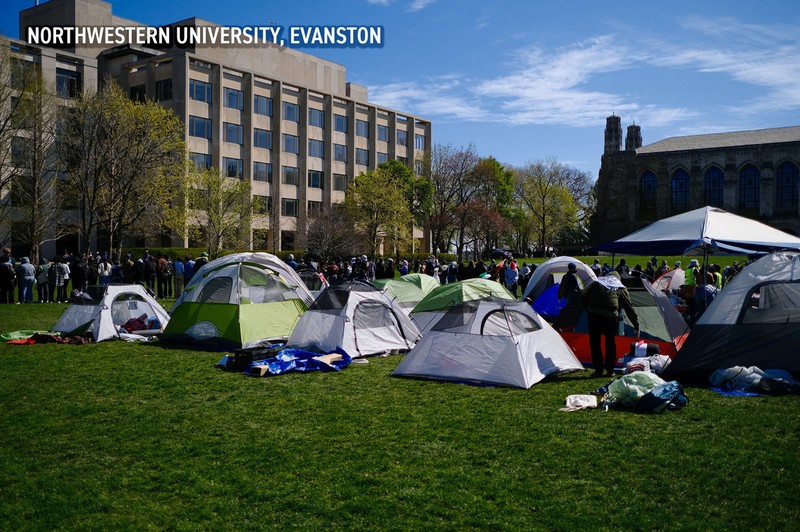
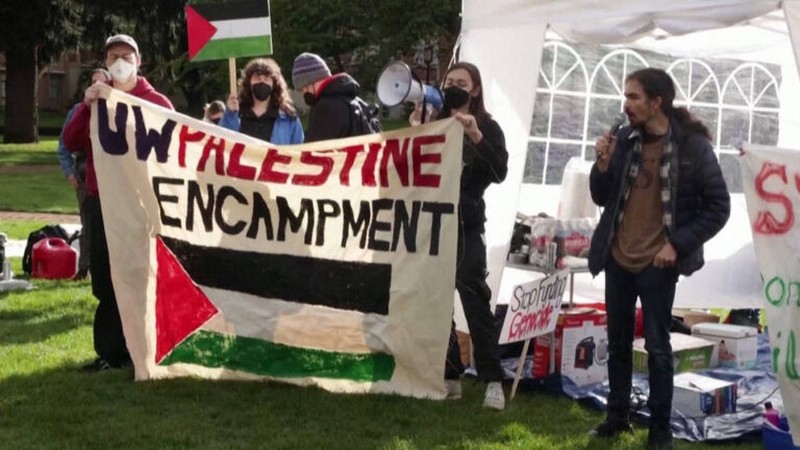
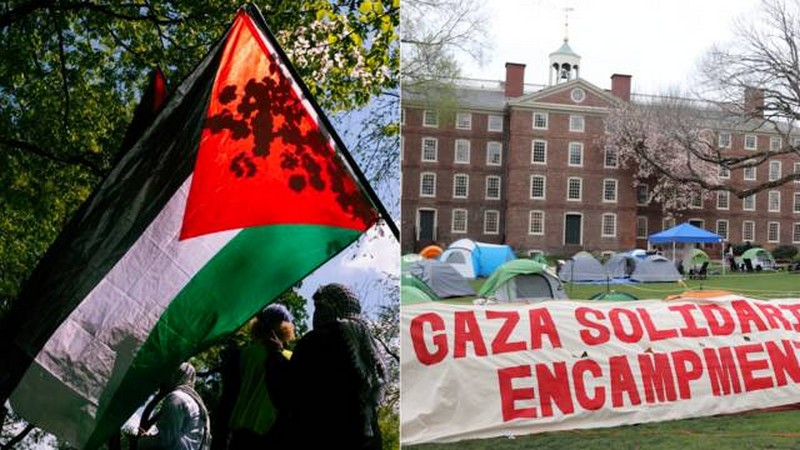
We’re in the midst of the most widespread campus unrest since the 1960s, sparked by the war between Israel and Hamas. Over the last two weeks, campus protests have escalated, with pro-Palestinian tent encampments set up in public spaces, triggering counterprotests and, on more than 30 campuses, clashes with police.

With so many incidents taking place in so many places, it’s hard for anyone to grasp what’s really happening at America’s universities right now. So POLITICO Magazine reached out this week to top student journalists, who have been reporting on the turmoil at the ground level for weeks and months. As neutral observers able to interact with all sides, they can provide unique insights, even as they watch friends get arrested or worry if their graduation ceremonies will even take place.

Over email and phone calls the past week, editors-in-chief of campus publications from 13 different colleges and universities told us how support for Palestine has surged over the last seven months, how their peers define antisemitism and what the political consequences of these protests might be. They come from a wide variety of campuses all over the country, but collectively, the group painted a picture of students fighting to be heard by leadership — both on campus and nationally.

“This conversation has been compiled from email responses and phone interviews and edited for length and clarity.

TO READ THE FULL REPORT

13 May 2024

Source: transcend.org

India, Mexico, Japan, UK, Australia, France, Canada, USA: Pro-Palestine Protests Grow around the World

By Pressenza

“In the last two weeks, more than 160 actions and 125 camps in solidarity with Palestine have been registered in at least 17 countries. The common demand of the students is to divest from companies that support Israel and the Gaza genocide.

10 May 2024 – Students at Jawaharlal Nehru University in New Delhi forced the US ambassador to India to cancel his official visit to the university with the slogan: “Genocides are not welcome!

Camps have been set up at the National Autonomous University of Mexico in Mexico City, the International Christian University, and Hiroshima University, as well as demonstrations at other Japanese universities.

Students at the University of Manchester (UK) set up the Manchester Resistance Camp for Palestine in Brunswick Park, demanding an end to collaboration with BAE Systems (a British aerospace and defense company) and links with Israeli universities, an end to unethical research and protection for student protesters. Other encampments were set up in Sheffield, Bristol, Newcastle, Warwick and Leeds.

In Australia, protest camps were set up at universities in Melbourne, Sydney, Adelaide, Perth and Brisbane.

In France, students at the prestigious Sciences Po in Paris stepped up their protests after the university rejected demands to review its relations with Israel. Several students said they would go on hunger strike. Police entered the Sorbonne to evict activists who had set up tents inside the university, but made no arrests.

The brutal repression unleashed against students in the US has fortunately not been repeated in other countries, at least so far, and is provoking outraged reactions, legal action and measures such as those announced by the Department of Education: Columbia University is indeed under federal investigation for discrimination, harassment and anti-Palestinian racism.

The Columbia University chapter of the American College Teachers Administration also called for a vote of no confidence against President Minouche Shafik and the entire university administration for inviting the NYPD onto campus on the night of 30 April without the approval of the university senate and faculty. The professors condemned the “militarized closure” of the university, and demanded its reopening and the withdrawal of the police, whom Shafik had asked to remain on campus until 17 May.

In the US, however, the crackdown on protests continues, with a total of 2,200 arrests: yesterday, at Dartmouth College in New Hampshire, police arrested Jewish studies professor Annelise Orleck and banned her from campus for six months. The history professor was trying to protect students along with other faculty members when they were attacked by police, who made more than 90 arrests that night.

On Thursday, police arrested students at Portland State University, the University of Tennessee at Knoxville, and the Purchase and New Paltz campuses of SUNY (the State University of New York, the nation’s largest university system). Meanwhile, new solidarity camps have sprung up in recent days at the University of Washington and the University of Toronto.

Sources:

Democracy Now!
Resistance News Network
CU Apartheid Divest

13 May 2024

Source: transcend.org

What Happens When Universities Engage, rather than Arrest, Gaza Protesters?

By Amy Goodman and Denis Moynihan

9 May 2024 – What if universities negotiated with students engaged in Gaza solidarity protests, instead of calling the police to violently arrest them? A mass movement opposing Israel’s ongoing assault on Gaza has spread like wildfire this Spring. Student organizers have issued demands ranging from university divestment from companies profiting from the war on Gaza and from Israel’s occupation of Palestine, to the creation of Palestinian studies programs, and more. In most cases, sadly, officials have responded with brute force, calling in police and destroying encampments. Republican House Speaker Mike Johnson called for the deployment of the National Guard, while New Jersey Democratic Congressman Josh Gottheimer wants to get the FBI involved, The Intercept reports. Thousands of students and faculty have been arrested so far this Spring, with several seriously injured.

“We set up for seven days,” Rafi Ash, a student at Brown University, said on the Democracy Now! news hour, describing Brown’s Gaza solidarity encampment. “Disciplinary threats…really did not sway students,”Rafi, part of Brown Jews for a Ceasefire Now, explained. “We were able to force them to the table on Monday of last week, and that led to a multi-day negotiation process…we were able to actually push to force a vote on divestment, that’s never happened before at Brown, something that we’ve been pushing for for a long time.”

For many Brown students, the war on Gaza hit home last Thanksgiving, when a white man shot Brown junior Hisham Awartani, along with his two close friends, all Palestinian Americans, while they were taking a walk near Hisham’s grandmother’s home in Burlington, Vermont. Hisham was paralyzed.

Students at Evergreen State College in Olympia, Washington, also successfully negotiated with their administration. The Evergreen community has its own painful connection to Gaza. Rachel Corrie was an Evergreen student in 2003 when she traveled to Rafah, in southern Gaza. Rachel was crushed to death by an Israeli military Caterpillar bulldozer on March 16th, 2003, while non-violently defending a Palestinian home from demolition.

Alex Marshall, a graduating Evergreen senior, explained on Democracy Now! how that history influenced negotiations:

“She’s been gone for 20 years, but her memory lives on amongst the student body… I’ve read her emails to her parents in multiple classes that I’ve taken at Evergreen.”

Through negotiations, Alex summarized, “we focused on divesting from companies that are profiting off of Israel’s occupation of Palestine…they also agreed to release a statement calling for a ceasefire and acknowledging the International Court of Justice’s genocide investigation.”

At Rutgers, New Jersey’s main public university, students also achieved a negotiated settlement.

“It was a four-day encampment. As a result of our collective efforts, we were able to have the Rutgers administration agree to commit to eight out of 10 demands,” Aseel, a Palestinian student at Rutgers-New Brunswick with family in Gaza, said on Democracy Now!, using only her first name for safety reasons.

“We demanded [Rutgers] divest from Israel, from Israeli apartheid and settler colonialism,” Aseel explained. “We did get an agreement to have a meeting with the Joint Committee on Investments, with the Board of Governors, with President Holloway, for divestment…we had been asking for a meeting for five years, and we finally got one.”

Calls for a ceasefire are mounting, pressuring the Biden administration. Sadly, any negotiated ceasefire will be too late for many Palestinians in Gaza, where the official death toll approaches 35,000.

“Nearly a hundred of my [family] members were martyred,” Aseel said. “I still have family left. I am still in contact with them. But they are all displaced. Our family home is basically destroyed…The Gaza that I once knew is essentially gone. But I am more than confident, along with my family, that we will return and that we will rebuild it.”

While many Jewish students have participated in the Gaza protests, mainstream media outlets focus on Jewish students who are opposed, saying the protests make them feel uncomfortable or threatened.

Frederick Lawrence, former president of Brandeis University, responded on Democracy Now!

“Many people feel that when they hear views that they deeply disagree with, that’s threatening to them. That’s not how universities operate. You are not entitled to be intellectually safe. You are entitled to be physically safe.” Brandeis was founded after World War II in the wake of the Holocaust, and named after Louis Brandeis, the first Jewish Supreme Court justice, known for his advocacy of free speech. Universities, Lawrence said, “exist for the purposes of creating and discovering knowledge.”.

Additional negotiated settlements have been announced at Pitzer College, University of California–Riverside, Sacramento State and Middlebury College. All these examples should be studied closely by university administrators, before they call in the police with their batons, rubber bullets, tear gas and handcuffs.

Amy Goodman is the host of “Democracy Now!” a daily international TV/radio news hour airing on more than 900 stations in North America.

Denis Moynihan is the co-founder of Democracy Now! Since 2002, he has participated in the organization’s worldwide distribution, infrastructure development, and the coordination of complex live broadcasts from many continents.

13 May 2024

Source: transcend.org

The Nation’s Conscience

By Chris Hedges

The courageous stance of students across the US in defiance of genocide is accompanied by a near total blackout of their voices. Their words are the ones we most need to hear.

8 May 2024 – I am sitting on a fire escape across the street from Columbia University with three organizers of the Columbia University Gaza protest. It is night. New York City Police, stationed inside and outside the gates of the campus, have placed the campus on lockdown. There are barricades blocking streets. No one, unless they live in a residence hall on campus, is allowed to enter. The siege means that students cannot go to class. Students cannot go to the library. Students cannot enter the labs. Students cannot visit the university health services. Students cannot get to studios to practice. Students cannot attend lectures. Students cannot walk across the campus lawns. The university, as during the Covid pandemic, has retreated into the world of screens where students are isolated in their rooms.

The university buildings are largely vacant. The campus pathways deserted. Columbia is a Potemkin university, a playground for corporate administrators. The president of the university — a British-Egyptian baroness who built her career at institutions such as the Bank of England, World Bank and International Monetary Fund — called in police in riot gear, with guns drawn, to clear the school’s encampment, forcibly evict students who occupied a campus hall and beat and arrest over 100 of them. They were arrested for “criminal trespassing” on their own campus.

These administrators demand, like all who manage corporate systems of power, total obedience. Dissent. Freedom of expression. Critical thought. Moral outrage. These have no place in our corporate-indentured universities.

All systems of totalitarianism, including corporate totalitarianism, deform education into vocational training where students are taught what to think, not how to think. Only the skills and expertise demanded by the corporate state are valued. The withering away of the humanities and transformation of major research universities into corporate and Defense Department vocational schools with their outsized emphasis on science, technology, engineering and math, illustrate this shift. The students who disrupt the Potemkin university, who dare to think for themselves, face beatingssuspensionarrest and expulsion.

The mandarins who run Columbia and other universities, corporatists who make salaries in the hundreds of thousands of dollars, oversee academic plantations. They treat their poorly paid adjunct faculty, who often lack health insurance and benefits, like serfs. They slavishly serve the interests of wealthy donors and corporations. They are protected by private security. They despise students, forced into onerous debt peonage for their education, who are non-conformists, who defy their fiefdoms and call out their complicity in genocide.

Columbia University, with an endowment of $13.64 billion, charges students nearly $90,000 a year to attend. But students are not allowed to object when their tax and tuition money funds genocide, or when their tuition payments are used to see them, along with faculty supporters, assaulted and sent to jail. They are, as Joe Biden put it, members of “hate groups.” They are — as Senate Majority leader Chuck Schumer said of those who occupied Hamilton Hall at Columbia renaming it Hind Hall, in honor of a six-year-old Palestinian girl, Hind Rajab, who was murdered by Israeli forces after spending 12 days trapped in a car with her six dead relatives — engaged in “lawlessness”.

During the assault by dozens of police on the occupied hall, one student was knocked unconscious, several were beaten and sent to hospital and a shot was fired by a police officer inside the hall. The excess use of force is justified with the lie that there are outside infiltrators and agitators directing the protest. As the protests continue, and they will continue, this use of force will become more draconian.

“The university is a place of capital accumulation,” says Sara Wexler, a doctoral student in philosophy, seated with two other students on the fire escape. “We have billion dollar endowments that are connected to Israel and defense companies. We are being forced to confront the fact that universities aren’t democratic. You have a board of trustees and investors that are actually making the decisions. Even if students have votes saying they want divestment and the faculty want divestment, we actually don’t have any power because they can call in the NYPD.”

There is an iron determination by the ruling institutions, including the media, to shift the narrative away from the genocide in Gaza, to threats against Jewish students and antisemitism. The anger the protesters feel for journalists, especially at news organizations such as CNN and The New York Times, is intense and justified.

“I’m a German-Polish Jew,” says Wexler. “My last name is Wexler. It’s Yiddish for money-maker, money-exchanger. No matter how many times I tell people I’m Jewish, I’m still labeled antisemitic. It’s infuriating. We are told that we need a state that is based on ethnicity in the 21st century and that’s the only way Jewish people can be safe. But it is really for Britain and America and other imperialist states to have a presence in the Middle East. I’ve no idea why people still believe this narrative. It makes no sense to have a place for Jewish people that requires other people to suffer and die.”

I have seen this assault on universities and freedom of expression before. I saw it in Augusto Pinochet’s Chile, the military dictatorship in El Salvador, Guatemala under Rios Montt, and during my coverage of the military regimes in Argentina, Peru, Bolivia, Syria, Iraq and Algeria.

Columbia University, with its locked gates, lines of police cruisers, rows of metal barricades three and four deep, swarms of uniformed police and private security, looks no different. It looks no different because it is no different.

Welcome to our corporate dictatorship.

The cacophony of the streets of New York City punctuates our conversation. These students know what they are risking. They know what they are up against.

Student activists waited months before setting up encampments. They tried repeatedly to have their voices heard and their concerns addressed. But they were rebuffed, ignored and harassed. In November, the students presented a petition to the university calling for divestment from Israeli corporations that facilitate the genocide. No one bothered to respond.

The protesters endure constant abuse. On April 25, during Columbia’s senior boat cruise, Muslim students and those identified as supporting the protests had alcohol poured on their heads and clothes by jeering Zionists. In January, former Israeli soldiers studying at Columbia used skunk spray to assault students on the steps of Lowe Library. The university, under heavy pressure once the attackers were identified, said they had banned the former soldiers from campus, but other students reported seeing one of the men on campus recently. When Jewish students in the encampment attempted to prepare their meals in the kosher kitchen at the Jewish Theological Seminary, they were insulted by Zionists who were in the building. Zionist counter demonstrators have been joined on campus by the founder  of the white supremist Proud Boys organization. Students have had their personal information posted on the Canary Mission and found their faces on the sides of trucks circling the campus, denouncing them as antisemites.

These attacks are replicated at other universities, including UCLA, where masked Zionists released rats and tossed fireworks into the encampment and broadcast the sound of crying children –  something the Israeli army does to lure Palestinians in Gaza out of hiding to kill them. The Zionist mob, armed with pepper and bear spray, violently attacked the protesters, as police and campus security watched passively and refused to make arrests.

“At the General Studies gala, which is one of the undergraduate schools that has a large population of former IDF soldiers, at least eight students wearing keffiyehs were physically and verbally harassed by students identified as ex-IDF and Israelis,” Cameron Jones, a sophomore majoring in urban studies and who is Jewish, tells me. “Students were called ‘bitch’ and ‘whore’ in Hebrew. Some were called terrorists and told to go back to Gaza. Many of the students harassed were Arabs, some having their keffiyehs ripped off and thrown to the ground. Several students in keffiyehs were grabbed and pushed. A Jewish student wearing a keffiyeh was cursed at in Hebrew and later punched in the face. Another student was kicked. The event ended after dozens of students sang the Israeli national anthem, some of them flipping off students wearing keffiyehs. I have been followed around campus by individuals and been cursed and had obscenities yelled at me.”

The university has refused to reprimand those who disrupted the gala, even though the individuals who carried out the assaults have been identified.

Universities have hired people such as Cas Halloway, currently the chief operating officer at Columbia, who was the deputy mayor for operations under Michael Bloomberg. Holloway reportedly oversaw the police clearance of the Occupy encampment at Zuccotti Park. This is the kind of expertise universities covet.

At Columbia, student organizers, following the mass arrests and evictions from their encampment and Hind Hall, called for university-wide strikes by faculty, staff and students. Columbia has canceled its university wide commencement.

I am on the campus of Princeton University. It is after evening prayers and 17 students who have mounted a hunger strike sit together, many wrapped in blankets.

As universities escalate their crackdowns, the protesters escalate their response. Students at Princeton held rallies and walk-outs throughout October and November, which culminated in a protest at the Council of the Princeton University Community, made up of administrators, students, staff, deans and the president. They were met at each protest with a wall of silence.

Princeton students decided, following the example at Columbia, to set up a tent encampment on April 25 and issued a set of demands calling on the university to “divest and disassociate from Israel.” But when they arrived early in the morning at their staging areas, as well as the site in front of Firestone Library which they hoped to use for an encampment, they were met with dozens of campus police and Princeton town police who had been tipped off. The students hastily occupied another location on campus, McCosh Courtyard. Two students were immediately arrested, evicted from their student housing and banned from campus. The police force

the remaining students to take down their tents.

Protesters at the encampment have been sleeping in the open, including when it rains.

In an irony not lost on the students, dotted around Princeton’s campus are massive tents set up for reunion weekend where alumni down copious amounts of alcohol and dress up in garish outfits with the school colors of orange and black. The protesters are barred from entering them.

Thirteen students at Princeton occupied Clio Hall on April 29. They, like their counterparts at Columbia, were arrested and are now barred from campus. Some 200 students surrounded Clio Hall in solidarity as the occupying students were led away by police. As they were being processed by the police, the arrested students sang the Black spiritual Roll Jordan Roll, altering the words to “Well some say John was a baptist, some say John was a Palestinian, But I say John was a preacher of God and my bible says so too.”

The hunger strikers, who began their liquid-only diet on May 3, issued this statement:

The Princeton Gaza Solidarity Encampment announces the initiation of a hunger strike in solidarity with the millions of Palestinians in Gaza suffering under the ongoing siege by the state of Israel. The Israeli occupation has deliberately blocked access to basic necessities to engineer a dire famine for the two million residents of Gaza. Since the announcement on October 9 by the Israeli Defense Minister prohibiting the entry of food, fuel and electricity into the Gaza Strip, Israel has systematically obstructed and limited access to vital aid for Palestinians in Gaza, even intentionally destroying existing cropland. On March 18, the U.N. Secretary General declared that “This is the highest number of people facing catastrophic hunger ever recorded by the integrated food security classification system.” To make bread, Gazans have been forced to use animal feed as flour. To break their fasts in Ramadan, Gazans have been forced to prepare meals of grass. 97% of Gaza’s water has been deemed undrinkable since October 2021 and they have been forced to drink dirty salt water to survive. The consequences of this unprecedented famine created and maintained by Israel will devastate Gaza’s children for generations to come and cannot be tolerated any longer. We have begun our hunger strike to stand in solidarity with the people of Gaza. We are drawing from the tradition of Palestinian political prisoners going on salt-water-only hunger strikes in Israeli prisons since 1968. Our hunger strike is a response to the administration’s refusal to engage with our demands for disassociation and divestment from Israel. We refuse to be silenced by the university administration’s intimidation and repression tactics. We struggle together in solidarity with the people of Palestine. We commit our bodies to their liberation. Participants in the hunger strikes will abstain from all food or drink except water until the following demands are met:

•   Meet with students to discuss demands for disclosure, divestment and a full academic and cultural boycott of Israel.

•   Grant complete amnesty from all criminal and disciplinary charges for participants of the peaceful sit-in.

•   Reverse all campus bans and evictions of students.

The university and the world must recognize that we refuse to be complicit in genocide and will take every necessary action to change this reality. Our hunger strike, though small in comparison to the enduring suffering of the Palestinian people, symbolizes our unwavering commitment to justice and solidarity.

University President Christopher Eisgruber met with the hunger strikers – the first meeting by school administrators with protesters since Oct. 7 – but dismissed their demands.

“This is probably the most important thing I’ve done here,” says Areeq Hasan, a senior who is going to do a PhD in applied physics next year at Stanford, who is also part of the hunger strike. “If we’re on a scale of one to 10, this is a 10. Since the start of encampment, I have tried to become a better person. We have pillars of faith. One of them is sunnah, which is prayer. That’s a place where you train yourself to become a better person. It is linked to spirituality. That’s something I’ve been emphasizing more during my time at Princeton. There’s another aspect of faith. Zakat. It means charity, but you can read it more generally as justice…economic justice and social justice. I’m training myself, but to what end? This encampment is not just about trying to cultivate, to purify my heart to try to become a better person, but about trying to stand for justice and actively use these skills that I’m learning to command what I feel to be right and to forbid what I believe to be wrong, to stand up for oppressed people around the world.”

Anha Khan, a Princeton student on hunger strike whose family is from Bangladesh, sits with her knees tucked up in front of her. She is wearing blue sweatpants that say Looney Tunes and has an engagement ring that every so often glints in the light. She sees in Bangladesh’s history of colonialism, dispossession and genocide, the experience of Palestinians.

“So much was taken from my people,” she says. “We haven’t had the time or the resources to recuperate from the terrible times we’ve gone through. Not only did my people go through a genocide in 1971, but we were also victims of the partition that happened in 1947 and then civil disputes between West and East Pakistan throughout the forties, the fifties and the sixties. It makes me angry. If we weren’t colonized by the British throughout the eighteenth, nineteenth and twentieth century, and if we weren’t occupied, we would have had time to develop and create a more prosperous society. Now we’re staggering because so much was taken from us. It’s not fair.”

The hostility of the university has radicalized the students, who see university administrators attempting to placate external pressures from wealthy donors, the weapons manufacturers and the Israel lobby, rather than deal with the internal realities of the non-violent protests and the genocide.

“The administration doesn’t care about the well being, health or safety of their students,” Khan tells me. “We have tried to get at least tents out at night. Since we are on a 24-hour liquid fast, not eating anything, our bodies are working overtime to stay resilient. Our immune systems are not as strong. Yet the university tells us we can’t pitch up tents to keep ourselves safe at night from the cold and the winds. It’s abhorrent for me. I feel a lot more physical weakness. My headaches are worse. There is an inability to even climb up stairs now. It made me realize that for the past seven months what Gazans have been facing is a million times worse. You can’t understand their plight unless you experience that kind of starvation that they’re experiencing, although I’m not experiencing the atrocities they’re experiencing.”

The hunger strikers, while getting a lot of support on social media, have also been the targets of death threats and hateful messages from conservative influencers. “I give them 10 hours before they call DoorDash,” someone posted on X. “Why won’t they give up water, don’t they care about Palestine? Come on, give up water!” another post read. “Can they hold their breath too? Asking for a friend,” another read. “OK so I hear there’s going to be a bunch of barbecues at Princeton this weekend, let’s bring out a bunch of pork products too to show these Muslims!” someone posted.

On campus the tiny groups of counter protesters, many from the ultra orthodox Chabad House, jeer at the protesters, shouting “Jihadists!” or “I like your terrorist headscarf!”

“It is horrifying to see thousands upon thousands of people wish for our deaths and hope that we starve and die,” Khan says softly. “In the press release video, I wore a mask. One of the funnier comments I got was, ‘Wow, I bet that chick on the right has buck-teeth behind that mask.’ It’s ridiculous. Another read, ‘I bet that chick on the right used her Dyson Supersonic before coming to the press release.’ The Dyson Supersonic is a really expensive hair dryer. Honestly, the only thing I got from that was that my hair looked good, so thank you!”

David Chmielewski, a senior whose parents are Polish and who had family interned in the Nazi death camps, is a Muslim convert. His visits to the concentration camps in Poland, including Auschwitz, made him acutely aware of the capacity for human evil. He sees this evil in the genocide in Gaza. He sees the same indifference and support that characterized Nazi Germany. “Never again,” he says, means never again for everyone.

“Since the genocide, the university has failed to reach out to Arab students, to Muslim students and to Palestinian students to offer support,” he tells me. “The university claims it is committed to diversity, equity and inclusion, but we don’t feel we belong here.”

“We’re told in our Islamic tradition by our prophets that when one part of the ummah, the nation of believers, feels pain, then we all feel pain,” he says. “That has to be an important motivation for us. But the second part is that Islam gives us an obligation to strive for justice regardless of who we’re striving on behalf of. There are plenty of Palestinians who aren’t Muslim, but we’re fighting for the liberation of all Palestinians. Muslims stand up for issues that aren’t specifically Muslim issues. There were Muslims who were involved in the struggle against apartheid in South Africa. There were Muslims involved in the civil rights movement. We draw inspiration from them.”

“This is a beautiful interfaith struggle,” he says. “Yesterday, we set up a tarp where we were praying. We had people doing group Quran recitations. On the same tarp, Jewish students had their Shabbat service. On Sunday, we had Christian services at the encampment. We are trying to give a vision of the world that we want to build, a world after apartheid. We’re not just responding to Israeli apartheid, we’re trying to build our own vision of what a society would look like. That’s what you see when you have people doing Quran recitations or reading Shabbat services on the same tarp, that’s the kind of world we want to build.”

“We’ve been portrayed as causing people to feel unsafe,” he says. “We’ve been perceived as presenting a threat. Part of the motivation for the hunger strike is making clear that we’re not the people making anyone unsafe. The university is making us unsafe. They’re unwilling to meet with us and we’re willing to starve ourselves. Who’s causing the un-safety? There is a hypocrisy about how we’re being portrayed. We’re being portrayed as violent when it’s the universities who are calling police on peaceful protesters. We’re being portrayed as disrupting everything around us, but what we’re drawing on are traditions fundamental to American political culture. We’re drawing on traditions of sit-ins, hunger strikes and peaceful encampments. Palestinian political prisoners have carried out hunger strikes for decades. The hunger strike goes back to de-colonial struggles before that, to India, to Ireland, to the struggle against apartheid in South Africa.”

“Palestinian liberation is the cause of human liberation,” he goes on. “Palestine is the most obvious example in the world today, other than the United States, of settler-colonialism. The struggle against Zionist occupation is viewed accurately by Zionists both within the United States and Israel, as sort of the last dying gasp of imperialism. They’re trying to hold onto it. That’s why it’s scary. The liberation of Palestine would mean a radically different world, a world that moves past exploitation and injustice. That’s why so many people who aren’t Palestinian and aren’t Arab and aren’t Muslim are so invested in this struggle. They see its significance.”

“In quantum mechanics there’s the idea of non-locality,” says Hasan. “Even though I’m miles and miles away from the people in Palestine, I feel deeply entangled with them in the same way that the electrons that I work with in my lab are entangled. As David said, this idea that the community of believers is one body and if one part of the body is in pain, all of it pains, it is our responsibility to strive to alleviate that pain. If we take a step back and look at this composite system, it’s evolving in perfect unitary, even though we don’t understand it because we only have access to one small piece of it. There is deep underlying justice that maybe we don’t recognize, but that exists when we look at the plight of the Palestinian people.”

There’s a tradition associated with the prophet,” he says. “When you’ve seen an injustice occur you should try to change it with your hands. If you can’t change it with your hands then you should try to adjust it with your tongue. You should speak out about it. If you can’t do that, you should at least feel the injustice in your heart. This hunger strike, this encampment, everything we’re doing here as students, is my way of trying to realize that, trying to implement that in my life.”

Spend time with the students in the protests and you hear stories of revelations, epiphanies. In the lexicon of Christianity, these are called moments of grace. These experiences, these moments of grace, are the unseen engine of the protest movements.

When Oscar Lloyd, a junior at Columbia studying cognitive science and philosophy, was about eight-years-old, he and his family visited the Pine Ridge Reservation in South Dakota.

“I saw the vast distinction between the huge memorial at the Battle of the Little Bighorn compared to the small wooden sign at the massacre at Wounded Knee,” he says, comparing the numerous monuments celebrating the 1876 defeat of the U.S. 7th Cavalry at the Little Big Horn to the massacre of 250 to 300 Native Americans, half of whom were women and children, in 1890 at Wounded Knee. “I was shocked that there can be two sides to history, that one side can be told and the other can be completely forgotten. This is the story of Palestine.”

Sara Ryave, a graduate student at Princeton, spent a year in Israel studying at the Pardes Institute of Jewish Studies, a non-denominational yeshiva. She came face to face with apartheid. She is banned from campus after occupying Clio Hall.

“It was during that year that I saw things that I will never forget,” she said. “I spent time in the West Bank and with communities in the south Hebron Hills. I saw the daily realities of apartheid. If you don’t look for them, you don’t notice them. But once you do, if you want to, it’s clear. That predisposed me to this. I saw people living under police and IDF military threats every single day, whose lives are made unbearable by settlers.”

When Hasan was in fourth grade, he remembers his mother weeping uncontrollably on the 27th night during Ramadan, an especially holy day known as The Night of Power. On this night, prayers are traditionally answered.

“I have a very vivid memory of standing in prayer at night next to my mother,” he says. “My mother was weeping. I’d never seen her cry so much in my life. I remember that so vividly. I asked her why she was crying. She told me that she was crying because of all of the people that were suffering around the world. And among them, I can imagine she was bringing to heart the people in Palestine. At that point in my life, I didn’t understand systems of oppression. But what I did understand was that I’d never seen my mother in such pain before. I didn’t want her to be in that kind of pain. My sister and I, seeing our mother in so much pain, started crying too. The emotions were so strong that night. I don’t think I’ve ever cried like that in my life. That was the first time I had a consciousness of suffering in the world, specifically systems of oppression, though I didn’t really understand the various dimensions of it until much later on. That’s when my heart established a connection to the plight of the Palestinian people.”

Helen Wainaina, a doctoral student in English who occupied Clio Hall at Princeton and is barred from campus, was born in South Africa. She lived in Tanzania until she was 10-years-old and then moved with her family to Houston.

“I think of my parents and their journeys in Africa and eventually leaving the African continent,” she says. “I’m conflicted that they ended up in the U.S. If things had turned out differently during the post-colonial movements, they would not have moved. We would have been able to live, grow up and study where we were. I’ve always felt that that was a profound injustice. I’m grateful that my parents did everything they could to get us here, but I remember when I got my citizenship, I was very angry. I had no say. I wish the world was oriented differently, that we didn’t need to come here, that the post-colonial dreams of people who worked on those movements actually materialized.”

The protest movements – which have spread around the globe – are not built around the single issue of the apartheid state in Israel or its genocide against Palestinians. They are built around the awareness that the old world order, the one of settler colonialism, western imperialism and militarism used by the countries in the Global North to dominate the Global South, must end. They decry the hoarding of natural resources and wealth by industrial nations in a world of diminishing returns. These protests are built around a vision of a world of equality, dignity and independence. This vision, and the commitment to it, will make this movement not only hard to defeat, but presages a wider struggle beyond the genocide in Gaza.

The genocide has awakened a sleeping giant. Let us pray the giant prevails.

Chris Hedges is a Pulitzer Prize–winning journalist who was a foreign correspondent for fifteen years for The New York Times, where he served as the Middle East Bureau Chief and Balkan Bureau Chief.

13 May 2024

Source: transcend.org

Africa to France: ‘Get Out!’

By Vijay Prashad

After decades of brewing anti-imperialist sentiment in the Sahel, events in the region are now unfolding at a rapid pace. France has long sought to undermine African sovereignty since the national liberation struggles of the twentieth century. But Africa would not tolerate French dominion then, nor will it now.

9 May 2024 – On 2 October 1958, Guinea declared its independence from France. Guinea’s President Ahmed Sékou Touré clashed against France’s President Charles De Gaulle, who tried to strong arm Touré into abandoning the project for independence. Touré said of De Gaulle’s threats, ‘Guinea prefers poverty in freedom to riches in slavery’. In 1960, the French government launched a covert operation called Operation Persil to undermine Guinea and overthrow Touré. The operation was named after a laundry detergent, used to wash away dirt. This provides a clear window into the French attitude toward Touré’s government. France’s weapons shipment to opposition groups in Guinea was interdicted in Senegal, whose President Mamadou Dia complained to the French government. France would not tolerate African independence, but the people of Africa would not tolerate French dominion.

That fervour for African sovereignty remains intact. ‘France, get out’ was the slogan then and remains the slogan now, from Senegal to Niger. To better understand recent developments in this struggle, the rest of this newsletter features a briefing from No Cold War and the West Africa Peoples’ Organisation on the manifestation of that sentiment in the Sahel.

Briefing 13: The Sahel Seeks Sovereignty

The call ‘La France degage!’ (‘France, get out!’), against the ongoing legacy of French colonialism in the region, has long echoed across West Africa. In recent years, this call has reached a new pitch of intensity, from the 2018 grassroots movements in Senegal and newly elected President Bassirou Diomaye Faye’s campaign promise to unshackle his country from the neocolonial monetary system of the CFA franc to the popularly supported military coups in Mali, Burkina Faso, and Niger and the ejection of French military forces from these countries between 2021 and 2023.

The military-led governments of the central Sahelian states (Mali, Burkina Faso, and Niger) have taken steps to wrestle their sovereignty from Western monopolies – such as reviewing mining codes and contracts and expelling foreign militaries – and to establish new regional cooperation platforms. On 16 September 2023, the governments of Burkina Faso, Mali, and Niger signed the Liptako-Gourma Charter, a mutual defence pact that established the Alliance of Sahel States. This trilateral partnership is a response to the threats of military intervention and economic sanctions that have been levied against Niger by the Economic Community of West African States (ECOWAS) following the July 2023 popular coup that took place in the country.

A few months after reaching this defence cooperation agreement, the three countries withdrew from the ECOWAS regional bloc. Some political commentators have claimed that these events – combined with the ejection of French military forces from the region – ‘spell trouble’ for regional social security, economic development, political stability, and regional integration. What is behind the tidal wave sweeping through the Sahel, and what does it mean for the region?

The Legacy of French Colonialism

Anti-imperialist sentiment has been brewing in the Sahel for years. To look at the case of Niger, which is emblematic of the wave of resistance in the region, during the July 2023 coup, the people took to the streets against the French colonial hangover that has facilitated rampant, structural corruption and disenfranchised large sectors of the population.

Much of this corruption has taken place in Niger’s mining sector, which represents one of the world’s largest high-grade uranium deposits. For instance, in 2014, prior to the coup, then Nigerien President Mahamadou Issoufou lowered taxes on mining activities that directly benefited French monopolies, receiving indirect pay outs in return. Meanwhile, the French military in Niger operated as the gendarme for mining companies and against those seeking to migrate to Europe.

Société des Mines de l’Aïr (Somaïr), a purported ‘joint venture’ between Niger and France in the uranium industry, is yet another example of the continued French influence in the region and on the continent. While France’s Atomic Energy Commission and two French companies own 85% of the company, Niger’s government owns a mere 15%. While close to half of Niger’s population lives below the poverty line and 90% lives without electricity, as of 2013 uranium from Niger powers one in three lightbulbs in France. It should come as no surprise that, shortly after the 2023 coup, Nigerien citizens seized the French embassy and military base in the capital of Niamey. France withdrew its troops soon after.

Sovereignty, Security, and Terrorism

On 16 March 2024, the Nigerien government revoked a decade-old military agreement with the United States, just two days after a US delegation met with local authorities to raise concerns over the nation’s partnerships with Russia and Iran. In a public statement, the government of Niger ‘forcefully condemne[d] the condescending attitude, accompanied by the threat of retaliation, from the head of the US delegation towards the government and people of Niger’. The statement added that ‘Niger regrets the intention of the US delegation to deny the sovereign Nigerien people the right to choose their partners and the types of partnerships that are capable of truly helping them fight terrorism at a time when the United States of America has unilaterally decided to suspend all cooperation’. The government also cited the following as reasons for revoking the agreement with the US: the cost it has inflicted upon Nigerien taxpayers, the lack of communication around domestic operations and US military base activities, unauthorised aircraft movements, and the ineffectiveness of its so-called counter-terrorism work.

The US has established the single largest foreign military presence on the African continent, beginning with the 2002 Pan-Sahel Initiative and followed by the creation of the US Africa Command (AFRICOM) in 2007, which set up a significant network of US military bases across the Sahel (of which there are nine in Niger alone as well as two in Mali and one in Burkina Faso). In 2007, US State Department adviser J. Peter Pham defined AFRICOM’s strategic objective to US House of Representatives Committee on Foreign Affairs as follows:

“It is unlikely that any amount of public relations work will fully quench anti-imperialist concerns that AFRICOM is fundamentally an attempt to erect a bulwark in Africa against trans-national terrorism and China’s appetite for Africa’s oil, minerals, and timber… The proposed structure of AFRICOM, consisting of four or five relatively small bases with no force deployments, means that these will be largely invisible even in their host countries and societies.

In the aftermath of the North Atlantic Treaty Organisation’s (NATO) war on Libya led by France and the US, the Sahel region has been embroiled in conflicts, many of them driven by emerging forms of jihadist armed activities, piracy, and smuggling. France and the US have used these conflicts as a pretext to increase their military interventions across the region. In 2014, France set up the G5 Sahel (a military arrangement that included Burkina Faso, Chad, Mali, Mauritania, and Niger) and expanded or opened new military bases in Gao, (Mali), N’Djamena (Chad), Niamey (Niger), and Ouagadougou (Burkina Faso). In 2019, the US began conducting drone strikes and aerial surveillance across the Sahel and the Sahara Desert from its Air Base 201 outside Agadez (Niger) – the largest construction effort in US Air Force history.

The Global Terrorism Index found that the Sahel region was the most impacted by terrorism in 2023, accounting for nearly half of all terrorism-related deaths and 26% of terrorist incidents worldwide. Burkina Faso, Mali, and Niger each ranked among the top ten countries most impacted by terrorism, a fact often held up to allege the failure of the new military-led governments. However, this reality predates the coups of 2021–2023 and instead speaks to the impact of US and French military intervention. Between 2011 (the year of NATO’s war on Libya) and 2021 (the year of the first of the recent wave of Sahelian coups, in Mali), Burkina Faso, Mali, and Niger soared from positions 114, 40, and 50, respectively, on the index of countries most impacted by terrorism to 4, 7, and 8. It is clear that the US and French ‘war on terrorism’ has done little to improve security in the region and has in fact had the opposite effect.

Seeking New Partners and Paths

The people of the Sahel have grown disillusioned not only with the West’s military strategies, as seen by the increasing security cooperation agreements with other countries, but also with Western economic policies that have yielded little social development. Despite the region’s abundant energy resources (including Niger’s aforementioned uranium reserves), the Sahel has some of the world’s lowest levels of energy generation and access, with at least 51% of the population unable to access electricity.

Though the Alliance of Sahel States began as a defence pact, political autonomy and economic development are a core focus. This includes, for instance, pursuing joint energy projects and exploring the possibility of establishing regional civil nuclear power initiatives. Burkina Faso has already signed agreements with Rosatom, a state-owned Russian company, to build new power plants while Mali is advancing its application of atomic energy through the National Nuclear Programme, overseen by the Malian Radiation Protection Agency.

Ultimately, the Alliance of Sahel States represents an attempt to uphold the demands of sovereignty and the right to self-determination – an agenda that the people of Niger, Burkina Faso, and Mali have poured into the streets to support.

Events in the Sahel are unfolding at a rapid pace, but as the Malian novelist Aïcha Fofana wrote in La fourmilière (‘The Anthill’) in 2006, modernisation is tempered by the rigidities and wisdom of the old ways. ‘We have always been generous’, the griot in La fourmilière says to a young man who has many ideas about transforming society. Patience is necessary. Change is coming. But it is coming at its own pace.

Vijay Prashad is an Indian historian, editor and journalist. He is a writing fellow and chief correspondent at Globetrotter.

13 May 2024

Source: transcend.org
The Russia–Iran–China Search for a New Global Security Order

By Pepe Escobar

While the collective west is in the grips of an existential legitimacy crisis, the RIC is devising its own security order to protect the rest of the world from the ‘genocidals.’

3 May 2024 – The Hegemon has no idea what awaits the Exceptionalist mindset: China has started to decisively stir the civilizational cauldron without bothering about an inevitable array of sanctions coming by early 2025 and/or a possible collapse of the international financial system.

Last week, US Secretary of State Anthony Blinken and his list of delusional US demands was welcomed in Beijing by Foreign Minister Wang Yi and President Xi Jinping as little more than an annoying gnat. Wang, on the record, stressed that Tehran was justified in defending itself against Israel’s shredding of the Vienna Convention when it attacked the Iranian consulate in Damascus.

At the UN Security Council, China now openly questions not only the state terror attack on the Nord Streams but also the US–Israel combo’s blocking of Palestinian statehood. Moreover, Beijing, just like Moscow recently, hosts Palestine’s political factions together in a conference aiming to unify their positions.

Next Tuesday, only two days before Moscow celebrates Victory Day, the end of the Great Patriotic War, Xi will land in Belgrade to remind the whole world about the 25th anniversary of the bombing of the Chinese embassy by the US, UK, and NATO.

Russia, meanwhile, provided a platform for the UNRWA – the UN relief agency for Palestinian refugees, which Israel has sought to defund – to explain to high representatives of BRICS-10 the cataclysmic humanitarian situation in Gaza, as described by UNRWA Commissioner-General Philippe Lazzarini.

In short, serious political business is already being conducted outside of the corrupted UN system, as the United Nations disintegrates into a corporate shell with the US dictating all terms as the largest shareholder.

Yet another key example of BRICS as the new UN: Russian Security Council chairman Nikolai Patrushev met in St. Petersburg with his Chinese counterpart Chen Wenqing on the sidelines of the 12th International Security Summit, congregating over 100 nations, including the security heads of BRICS-10 members Iran, India, Brazil, and South Africa, as well as Iraq.

The SCO security show

But the key crossroads these past few days was the Shanghai Cooperation Organization (SCO) defense summit in Astana, Kazakhstan. For the first time, the new Chinese Defense Minister, Dong Jun, met with his Russian counterpart, Sergei Shoigu, to emphasize their comprehensive strategic partnership.

Dong, significantly, stressed the “dynamic” nature of China–Russia military interaction, while Shoigu doubled down, saying it “sets a model for interstate relations” based on mutual respect and shared strategic interests.

Addressing the full SCO assembly, Shoigu emphatically refuted the massive western propaganda drive about a Russian “threat” to NATO.

Everybody was at the SCO defense ministers’ meeting – including, at the same table, India, Iran, Pakistan, and Belarus as an observer. Minsk is eager to join the SCO.

The interlocking Russia–Iran–China strategic partnerships were totally in sync. Apart from Dong meeting Shoigu, he also met Iranian Defense Minister Brigadier General Mohammad Reza Ashtiani, who lavishly praised Beijing’s condemnation of the Israeli terror air strike in Damascus.

What is happening now between Beijing and Tehran is a replay of what started last year between Moscow and Tehran, when a member of the Iranian delegation on a visit to Russia remarked that both parties had agreed on a mutual, high-level “anything you need” relationship.

In Astana, Dong’s support for Iran was unmistakable. Not only did he invite Ashtiani to a security conference in Beijing, mirroring the Iranian position, he also called for an immediate ceasefire in Gaza and the delivery of humanitarian aid.

Shoigu, meeting with Ashtiani, provided extra context when he recalled that “the joint fight against international terrorism in Syria is a vivid example of our long-standing friendly relations.” The Russian defense minister then delivered his clincher:

The current military-political situation and threats to our states oblige us … to common approaches to building a just world order based on equality for all participants in the international community.

A new global security order

Establishing a new global security order is right at the heart of BRICS-10 planning – on par with the de-dollarization debate. All of this is anathema to the collective west, which is incapable of understanding the multifaceted, intertwined Russia, Iran, and China partnerships.

And the interaction goes on in person. Russian President Vladimir Putin will be visiting Beijing later this month. On Gaza, the Russia–Iran–China position is in complete sync: Israel is committing genocide. For the EU – and NATOstan as a whole – this is not genocide: the bloc supports Israel no matter what.

After Iran, on 13 April, changed the game in West Asia for good, without even using their finest hypersonic missiles, the key question for the Global Majority is stark: in the end, who will restrain the genocidals, and how? Diplomatic sources hint this will be discussed face-to-face by Putin and Xi.

As one Chinese scholar, with unique aplomb, remarks:

This time, the barbarians are facing a 5,000-year continuing written civilization, armed with Sun Tzu’s Art of War, Mao thought, Xi’s dual circulation strategy, Belt and Road, BRICS, renminbi digitalization, Russia and China unlimited, the world’s most powerful manufacturing industry, tech supremacy, economic powerhouse, and the backing of the Global South.

All that against a polarized Hegemon in turmoil, with its genocidal aircraft carrier in West Asia totally spinning out of control.

US threats of a “clear choice” between ending several key strands of the Russia–China strategic partnership or facing a sanctions tsunami don’t cut it in Beijing. The same applies to Washington’s wishful attempts at preventing BRICS members from ditching the US dollar.

Russian Foreign Minister Sergey Lavrov has made it quite clear that Moscow and Beijing have nearly reached the point of abandoning the US dollar in bilateral trade. And the outright theft of Russian assets by the collective west is the ultimate red line for BRICS – and all other nations watching with horror – as a whole: this is definitely a “non-agreement capable” Empire, as Lavrov has been emphasizing since late 2021.

Yaroslav Lisovolik, founder of BRICS+ Analytics, dismisses the Hegemon’s threats against BRICS as the road map toward an alternative payment system is still in its infancy. As for Russia–China trade, the non-dollar high-speed train has already left the station.

Yet the key question remains: how will Russia–Iran–China (RIC), as BRICS leaders, SCO members, and simultaneously top three “existential threats” to the Hegemon, be able to start implementing a new global security architecture without staring down the genocidals.

Pepe Escobar, born in Brazil, is a correspondent and editor-at-large at Asia Times and columnist for Consortium News and Strategic Culture in Moscow.

13 May 2024

Source: transcend.org
Bio-Imperialism vs. Bio-Diversity

By Prof. Vandana Shiva

15 Apr 2024 – Seeds are emblematic of the connections between our lives, our food, our health and our freedom. They are the first link in the food chain. They embody our heritage and enfold the future evolution of life. The cultivation of seeds and their free exchange among farmers is the core foundation of our biodiversity and our food security. To have control over seeds is to have control over our lives, our food and our freedom.

Bio-imperialism severely threatens this freedom today through intellectual property rights. Old and  new GMO technologies that have transformed seeds from a commons shared by farmers, to a commodity under the control and monopoly of agribusiness corporations. This imperialism seeks to appropriate the world’s seeds, destroying the lives and livelihoods of peasant communities, as well as biodiversity, but more seriously, in territories recognized as centers of origin. These centers of origin of biodiversity are the cradles of the world’s food supply, and the protection against plague, climate challenges, natural disasters or other hindrances to food production.

Over the last few decades, GMO crops have been imposed in countries all over the world, advertised as a solution to food insecurity and the malnutrition crisis. However, hunger, disease and malnutrition have increased, while biodiversity has declined and toxins have spread. Corporations have forced the introduction of genetically manipulated seeds to impose Food Imperialism through various tools such as regulatory frameworks for intellectual property of seeds, such as UPOV 91, and other legal mechanisms like Trade Dispute Settlement Panels. GMO imperialism has destroyed the lives and livelihoods of small farmers and biodiversity around the world and especially in these centers of origin.

Most recently, agribusiness and biotech giants are attempting to bypass existing biosafety regulations, such as the Convention on Biological Diversity’s Cartagena and Nagoya Protocols by quietly making changes to GMO regulation around the world, in order to promote these new GMOs under new acronyms, such as NBTs (New Breeding Techniques), NGTs (New Genomic Techniques), or TEAs (Techniques of Assisted Evolution). These new GMOs have been silently dovetailing into different countries’ existing agricultural legislation, with the aim still being patent monopolies in the hands of the big chemical and biotechnology giants.

This deregulation would allow gene edited crops to:

  • Be commercialized with no environmental or consumption safety testing
  • Require no labeling
  • Have little to no traceability
  • Be free from public disclosure of gene edited organisms
  • Mass deregulation
  • Be patented without disclosure

These new GMOs are leaving farmers, and citizens completely in the dark as to what is in their food and are an attempt to subvert sovereign governments, the United Nations Convention on Biological Diversity and biosafety laws, with their imposition. The biotech industry has claimed that their gene edited products, including seed, plants, microorganism, and animals, are to be considered the same as their conventional counterparts. This deregulation of old and new GMOs absolves the biotech industry from any responsibility and is a continued attack on food sovereignty.

Agribusiness companies have not solved any issue for humanity on the pretext of false narratives around GMOs solving problems of food supplies. The true basis of the world’s food supply is free seeds, the heritage of humanity that contain the answers to pests, climate challenges and other threats to the world’s production of healthy and sufficient food, not GMOs and Bio-Imperialism. GMOs cannot be forced upon communities, violating norms of democracy and freedom.

All over the world, citizens are rising against the unscientific, undemocratic, anti-ecological imposition of GMOs by corporations. The first generation of GMOs has failed, but corporations continue to impose gene-edited organisms, or new GMOs, in centers of diversity. They continue to shift their narrative towards framing nature and biodiversity as commodities for commercialization and patent monopolies.

Imposition of GM corn in Mexico has global ramifications

In Mexico, which is the center of origin of maize, just as in other centers of biodiversity, there has been a long struggle by society and organized communities against GMO imperialism threatening the subsistence and culture of  its peoples. To date, Mexican society has achieved a ban on the planting of GM maize in Mexico through a class action lawsuit filed against the companies like Bayer-Monsanto, Syngenta and Cortiva Agriscience. This ban is still in force, which since 2013 has prevented the planting of genetically manipulated maize in Mexican territories.

Mexican NGOs have bravely continued to resist genetically modified maize to strengthen access to healthy, sustainable and culturally appropriate food for all people; to defend the food sovereignty of peasant and indigenous communities, responsible for developing the 59 breeds and thousands of varieties of maize existing in Mexico, which are also part of the milpa, a holistic, sustainable and biodiverse system that involves other staple foods such as beans, chili peppers, squash, quelites and amaranth.

Recently, the Mexican government issued an executive order that proposes the gradual prohibition of the use of glyphosate and the use of GM maize in food products, such as tortillas, a staple food for Mexicans. GMOs compromise access to healthy, sustainable, culturally appropriate foods free of genetically modified organisms. Faced with this decision, the U.S. government, based on the U.S.-Mexico-Canada Free Trade Agreement (USMCA), and under the duress, of agribusiness lobby, installed a dispute settlement panel to reject the Mexican government’s decision to restrict the use of genetically manipulated (modified) maize in human food and the importation of glyphosate, citing lack of scientific evidence of their harm. This Dispute Settlement Panel neglects the risks to human health, the environment and biodiversity associated with genetically manipulated maize. In addition, it jeopardizes the food sovereignty of the entire Mexican population, since maize is an indispensable food.

In response to this omission, on March 15th, non-governmental organizations from Mexico presented their Technical Opinions before the Panel, arguments based on reliable scientific evidence, including new found evidence by Mexico’s scientific advisory board CONAHCYT, rooted in scientifically rigorous evidence from academic institutions. This evidence points out and warns about the multiple risks that make it pertinent and urgent to stop the presence of genetically manipulated maize in the food of the Mexican population, and as raw material for other industries.

In stark contrast, the US refused to do new experiments and engage in real science and continued to stick to pseudo-science funded by the same agribusinesses that produce this GM corn and make the unscientific claim that it is safe to consume this GM corn.

The case of Mexico is a people’s attempt to guard their biodiverse cultures, inheritance, food, health and fields. It is a case of a people demanding their sovereignty be respected. It is a statement to the world and to agribusiness that they cannot continue to impose their system that violates and destroys sovereignty at all these levels, and has wave after wave destroyed health, the land and biodiversity.

On March 5, 2024 Mexico published its formal response to the dispute where its submission presented evidence supporting the implementation of precautionary measures aimed at safeguarding consumers from potential health risks associated with imported GM corn from the U.S. and residues of glyphosate. They noted that the scientific data regarding the safety of GMOs presented by the U.S. was outdated, with a significant portion originating from industry-sponsored studies lacking peer-reviewed support. They pointed out that the regulatory process in the U.S. lacks sufficient stringency to guarantee the safety of products for consumption by Mexicans. Furthermore, the Mexican submission highlighted that Genetically modified (GM) corn, designed to eliminate insect pests, has strong potential to pose negative effects on non-target animals with research that has demonstrated that mammals can experience harm to their digestive systems due to a GM trait that targets the guts of pests, leading to unintended consequences.

While the US claimed that Mexico’s ban is “unscientific”, IATP Senior Advisor Timothy A. Wise highlighted that Mexico’s response “refutes that claim, presenting hundreds of academic studies that show cause for concern about human health and the threat to native corn diversity.”

Significantly, The US claim that Mexico’s ban is unscientific is completely unjustified as the US never signed onto the Convention on Biological Diversity and the Cartagena Protocol on Biosafety. It has no biosafety regulatory organism to judge the safety of these GM foods.  It is based instead on “substantial equivalence” which is not enough to be considered as a safety assessment in itself. This principle doesn’t prioritize consumer protection from health risks nor does it provide consumers with comprehensive information regarding the actual level of risks and hazards associated with “novel foods” (in this case GMO foods) compared to traditional ones.

In its formal submission to the trade dispute panel, Canada aligned itself with the arguments presented by the US government, claiming the safety of genetically modified (GM) corn for consumption in Mexico. However, CBAN’s (Canadian Biotechnology Action Network)’s response refuted this stance by asserting that scientific evidence supported Mexico’s precautionary measures, particularly due to the extensive use of minimally processed corn in the daily diet of the majority of Mexicans.

Lucy Sharratt of the Canadian Biotechnology Action Network (CBAN), stated that, “Mexico is a sovereign nation with the right to determine the future of its food supply and its needs to take action to protect native corn from GM contamination.”

Globally, Mexico’s case is important due to the current context of the world. Due to the industrial food system, we are seeing the rise of chronic diseases rooted in metabolic disorders, increasing ecological disasters, lack of water and declining biodiversity. Mexico defending its cultural and food heritage is equivalent to a country taking a stand, backed by scientific evidence and government support, against the continuation of these multiple crises.

Furthermore, the significance of this case is that an unfavorable resolution for Mexico in this Panel, would limit Mexican people’s right to decide which seeds to plant and which types of maize to feed themselves with. This directly jeopardizes the traditional Mexican cuisine which is central to the cultural identity of the communities that practice and transmit it from generation to generation and has been recognised as Intangible Cultural Heritage of Humanity by UNESCO.

This in turn also has the potential to devastatingly affect all other centers of biodiversity and interconnected food cultures around the world who will continue to face such attacks on their sovereignty.

Mexico holds the legacy of being one of the first constitutions globally to incorporate enforceable social rights, encompassing health and a clean environment (Article 4). Thus, a right to health is a legally enforceable provision under its national constitution. This along with achieving universal health coverage (UHC) for its 100 million citizens makes Mexico a country that continues to stand up for biodiversity, for health, for the environment.

Convergence: Interconnected strength, interconnected resistance

In the face of this local and global Bio-imperialism, Navdanya International joined together with the campaign Sin Maiz No Hay País, and Via Orgánica, along with the Ministry of the Environment and Natural Resources (SEMARNAT), the Ministry of Agriculture and Rural Development (SADER) and the Ministry of Culture, along with other Latin American movements to organize events from March 12th to 16th in Mexico City to carve a common strategy against the further imposition of new and old GMOs around the world, sharing experiences, struggles and solidarity in defense of Biodiversity, Food and Seed Freedom, through strengthening the support and solidarity, in cultivating and connecting different organizations, movements and people.

These meetings and convergences helped create a gathering place for solidarity by bringing together representatives from movements from all over Latin America and beyond to demonstrate that this struggle goes beyond individual borders. All over the world the impostions continue to take place, directly violating the sovereignty and rights of people and nature, in favor of corporate agenda.

José Bernardo Magdaleno Velazco (Nino), President of the Peasant Union, Totikes, Chiapas emphasized that “we are not alone in this fight”. Together with activists and organizations such as the Campaña Nacional Sin Maíz No Hay País, Semillas de Vida, Vía Organica, Regeneration International, Bloque Verde, Probioma, Naturaleza De Derechos, and Semillas de Identidad- Colombia, Navdanya International joined the demand for governments around the world to stop genetically manipulated seeds, which threaten the survival of food and agricultural systems based on biological and cultural diversity.

These events carved a convergence of movements, to stand in defense of our biocultural diversity and food heritage across the world, in resistance to old  GMOs and new GMOs.

It is in this coming together of different movements and voices united in their goal of food and seed sovereignty that these events in Mexico led to the emergence of an interconnected strength and resistance. Where the nurturing of solidarity and a reminder of a common resistance despite varied contexts, echoed and re-iterated that together, we are all more than the sum of the parts. Building relationships and connections, across organizations, across movements and beyond countries is necessary for effectively resisting this GMO imperialism. This interconnected strength is what we have to tap into, to continue our struggle in defense of life, diversity and freedom.

Significance: Food sovereignty as a driving force for political sovereignty 

The current socio-political context of Mexico’s demand of autonomy based on being a center of diversity and cultural heritage is unique because food sovereignty is the driving force behind the political sovereignty of the people. This reiterates that every kind of autonomy  is rooted in food and seed.

At the event held on March 12, 2024 at Mexican Ministry of Agriculture and Rural Development (SADER), Mexico City called “In Defense of Food Sovereignty”, Dr. Vandana Shiva, President of Navdanya International in her keynote lecture on food sovereignty, mentioned that it was so important to celebrate  cultures where cultural diversity and biodiversity are not seen as separate. She added that “Food sovereignty is a high level concept, because it implies the sovereignty of beings to manage and organize themselves toward health.” The cultivation of biodiversity has to imply sovereignty at all levels. Sovereignty is needed at all levels for organisms to be able to freely develop and evolve, self organize toward health.

Leydy Pech, evocatively added in the same event that “In Maya, we have no word for GMO, we call them instead seeds that have no heart, seeds with no life.” Furthermore, she asked a significant question, potent for everyone around the world: “Our seeds, our knowledge is our inheritance, with this destruction what will we inherit in the future?”

As also highlighted by Jesús Ramírez Cuevas, general coordinator of social communication and spokesperson for the Government of the Mexican Republic, “Mexican sovereignty starts with food sovereignty.” It is food sovereignty and the sovereignty of all interconnected beings to self-organize and grow with health that holds the power of resistance politically, economically and socially.

GMO imperialism is an attack on this sovereignty of all interconnected beings at all levels of self organization. It is an attack on life itself.

As Leydy Pech echoed: “You cannot call what goes against life, development”. Dr. María Elena Álvarez-Buylla Roces, general director of the National Council of humanities, sciences and technologies (CONAHCYT) said that “On a global level the deregulation and imposition of GMOs and toxic food systems is a denial of sovereignty and right to health on multiple levels.” She added that Mexico’s success in asserting its own sovereignty on seeds and food policies would be a beacon for other countries to be able to assert their food sovereignty and seed freedom in turn.

Biodiversity at all levels

A Seminar on Biodiversity Protection titled “Protection and Conservation of Biodiversity in Centers of Origin” was held on March 15, 2024 at the Mexican Ministry of Environment and Natural Resources (SEMARNAT) Headquarters, Mexico City. This seminar analyzed and discussed strategies to conserve and protect natural resources in countries that are centers of origin and genetic diversity of species, through a dialogues, work round tables, and discussions for common strategy with key actors of the Mexican government, representatives from Latin America, Asia, the United States, and others in the protection and conservation of biodiversity in Latin America and other regions.

Maestro Iván Rico López, Subsecretary of Environmental Planning and Policy, SEMARNAT highlighted that “Megadiverse countries, the centers of origin of crop varieties, have greater responsibility in protecting the world’s biodiversity. We have learned that our plant genetic heritage is our cultural heritage. Natural and Social aspects go hand in hand, as those who have preserved the genetic diversity are the indigenous peoples.”

Columba López, Director of the Commission for Natural Resources and Rural Development, CORENADR, emphasized the key to this biodiversity being in the hands of the farmers. It is the farmers who are the custodians of  these biodiverse foods, cultures, seeds, knowledges. She said that “We work on native seeds in our Seed Houses. We cultivate and replicate seeds through agroecological practices in the field. We develop seeds that adapt in the mountains or near the water, that are climate resilient and we do it through farmers’ participatory breeding.”

Biodiversity at all levels produces health, diversity in our farms, our seed, our foods, our cultures etc. having a biodiverse field in line with local ecosystem and cultural heritage, gives us a diversity of foods, and a diversity of food cultures. This is how we create health first in our fields all the way to our plates and our guts.

Dr. Vandana Shiva, of Navdanya International highlighted that, “Indigenous peoples and communities know that seeds continuously evolve. By turning biodiversity into technology they (corporations) deny the creativity of biodiversity, they go against how nature works. Diversity is a living necessity.” She further reiterated that, “The colonizing mentality considers living beings as disposable and nature as raw material to be extracted. Mexico is recovering the dignity of natural resources, which are the basis of our health and well-being & the health of the planet.”

Similarly, at the event held on March 16, 2024 held at Cencalli, Museo de maíz y centro de la cultura alimentaria, Los Pinos, Ciudad de México, in the presence of the Alejandra Frausto Guerrero, from the Ministry of Culture, Dr Vandana Shiva reaffirmed the need to resist the food imperialism that destroys our cultures by defending our biodiversity and strengthening seed freedom. Navdanya International co-organized this event with Campaña Nacional Sin Maíz No Hay PaísVia Organica and Regeneration International. Andre Leu, Director of Regeneration International, discussed the latest evidence of negative health effects caused by exposure to glyphosate: “There’s scientific evidence about the correlations between the introduction of glyphosate and transgenic crops and the increase in diseases such as cancer, obesity, kidney failure and autism.”

Mercedes López Martínez from Vía Orgánica, Mexico, discussed the great importance of protecting small farmers and indigenous communities as the backbone of a thriving food culture. Miguel Ángel Crespo of Probioma, Bolivia shared how, “The fight to protect biodiversity and genetic resources is also political, legal and scientific.”

It is this interconnection of diversity at all levels, including diversity of organizations and movements reflecting the interconnection and sovereignty of organisms that is needed to resist GMO imperialism from the ground up.

TRANSCEND Member Prof. Vandana Shiva is a physicist, ecofeminist, philosopher, activist, and author of more than 20 books and 500 papers.

13 May 2024

Source: transcend.org
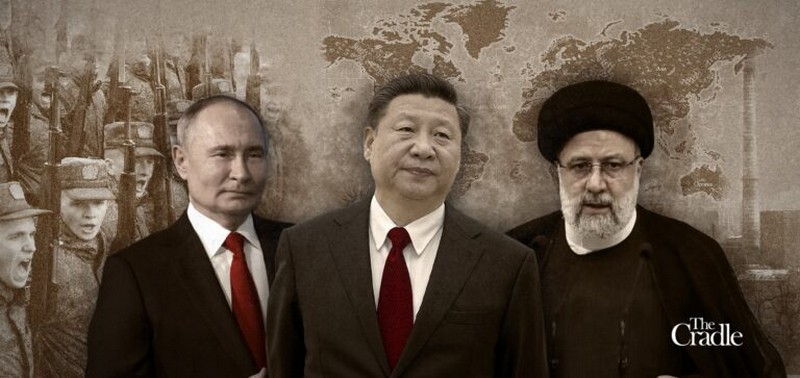
Can the ICC Finally Gain Credibility?

By Richard Falk

13 May 2024 – A different version of this opinion piece was published in Middle East Eye on 7 May 2024. Nothing substantive has happened in the intervening weeks, but I wanted to call more explicit attention to the crude efforts by Netanyahu to call openly for the exertion of pressure on the ICC by the United States and other ‘democracies,’ seeking to induce the ICC rejection of this Global South attempt to criminalize Israel’s use of force, purporting to a defensive operation justifiably seeking the destruction of Hamas and the release of hostages seized in the Hamas attack on 7 Oct. Neither apologists nor critics have yet acknowledged the possibility that the genocidal fury of Israel’s response was partly motivated by the Greater Israel vision of the extremist coalition government headed by Netanyahu that has been governing Israel since the start of 2023, or more than nine months before the Hamas attack. This construction of the events does not seem to alter its criminal character one way or the other, but it does affect its political and moral interpretation, thereby helping us understand why Israel embarked on such an alienating course of action ignoring several alternatives if restored security was truly its dominating motivation.

**************************************************

Taking the ICC Seriously: Who Would Have Thought Netanyahu Would Lead the Way

A Shaky Start for the ICC

Since its establishment in 2002 the International Criminal Court has struggled to find a path to legitimacy. Its establishment was a triumph for the Global South in extending the potential reach of international criminal law, although it was limited from the outset by its existence being situated outside the formal UN framework and by the failure of the geopolitical ‘big three’ of the US, China, and Russia to join, and in relation to present concerns, by Israel’s refusal. The ICC does have 124 members including the liberal democracies in Western Europe, all states in South America, most in Africa, and  many in Asia. Despite this wide representation it has struggled throughout its existence for recognition, influence, respect, and legitimacy.

In its early years it was blamed for focusing its activities on the alleged wrongdoing of sub-Saharan African leaders, suggesting a racialist bias. Then later on, in relation to US and Israel’s alleged crimes in Afghanistan and Occupied Palestine, the ICC prosecutor sat on the files containing abundant evidence justifying at the very least, diligent investigations to determine whether indictments and prosecution were legally warranted, and by doing nothing, an impression formed that the ICC was so weak that it could not hope to resist geopolitical, Western backdoor manipulations. ICC inaction in this instance was partly attributed to the radical ultra-nationalism of the Trump presidency that had the temerity to impose personalized sanction on the prosecutor of the ICC should the tribunal open a case against either the US or Israel.

The story goes on, but with new twists. When Russia attacked Ukraine in early 2022, the ICJ was called upon by the NATO West to act with unaccustomed haste. It obliged by expediting its procedures to move forward on an emergency basis a determination as to whether Putin and others should be immediately indictment for war crimes. This unusual request for haste again appeared to serve the interests of the West, again somewhat racialized by the fact that ICC activism was on behalf of a white, Christian victim of alleged war crimes, and had never before been so enlisted. The ICC obliged, including issuing arrest warrants for Putin and a close assistant, confirming the suspicion that it could be bullied by even non-parties to the Rome Statute that state adhered to if seeking status as parties. Such haste with respect to Russia has not evident with regard to the far greater urgency, given the magnitude and severity of the unfolding humanitarian catastrophe in Gaza in the context of controversial happenings during the last several months. To date the ICC has withheld a response to the legal initiative of Chile and Mexico to enforce the Genocide Convention on the Prevention and Punishment of the Crime of Genocide.

These governments were seeking an ICC investigation and appropriate responses to Israel’s apparent gross violations of the Genocide Convention committed in the course of carrying out its retaliatory attack on Gaza after October 7. Israel’s disproportionate response seemed designed from its outset to ignore the civilian innocence of the Palestinian people in Gaza in a prolonged orgy of collective punishment, itself a violation of Article 33 of the 4th Geneva Convention.  This difference between the ICC response times in relation to Ukraine and Gaza reinforced the impression of double standards in the tribunal’s treatment of allegations of international crimes. In this instance, it was inevitable that the ICC politicized reputation would be contrasted with the laudable efforts of ICJ to do what it could do by way of declaring the relevant law, although hampered by its inability to coerce compliance by Israel or enforcement by the UN.

The ICJ and ICC: A Performative Comparison

Against this background, it was inevitable that the ICC would be widely viewed as a weak institution, above all by not initially obtaining participation or cooperation of such important states as the US, Russia, China, and of course, Israel. In this regard, the ICC was most unfavorably compared to the International Court of Justice (ICJ) to which all members of the UN were automatically parties. The ICJ was widely respect for maintaining a high degree of professionalism in assessing the merits of legal disputes referred to it for adjudication, consistently cautious about encroaching upon sovereign rights of international states.

This positive reputation of the ICJ was greatly enhanced by its near unanimous Interim Orders of January and March 2024 granting several Provisional Measures requested by South Africa to impede Israel’s behavior that seemed to lay a plausible basis for concluding that Israel would in the future be found guilty of ‘genocide’ in Gaza. Israel was also legally ordered to allow humanitarian aid to reach Palestinian civilians without interference given the emergency conditions that existed. Such order would apply at least until a final judgment on the merits of the genocide contention was reached by the ICJ after responding to further oral and written pleadings by the parties. This process was expected to last for several years, reducing the existential relevance of the ICJ judgment as the killing would have stopped long before the Court had time to rule. The decision would still have jurisprudential value as an authoritative interpretation of the crime of genocide despite geopolitical support given to Israel by important UN Member States. A belated ICJ judgment  might also be widely welcomed internationally as giving rise to preventive and early response mechanisms in anticipation of future genocides.

Despite the cautious legal professionalism of the ICJ a nearly unanimous panel of the seventeen judges found Israel sufficiently responsible for action that made it ‘plausible’ to fear genocide sufficiently to grant Provisional Measures in response to South Africa’s request. [Application of the Convention on the Prevention and Punishment of the Crime of Genocide in the Gaza Strip (South Africa v. Israel, ICJ Orders, 192, 20240126 & 192 20240328, ProvMeasures)]; [see also the less jurisprudentially inhibited systematic assessment of Special Rapporteur on Occupied Palestine for the UN Human Rights Council, Francesca Albanese, ‘Anatomy of a Genocide,’ A/HRC/55/73, 25 March 2024].

These orders legally required Israel to take a variety of steps to stop engaging in what was plausibly viewed by the ICJ as genocidal behavior including interference with efforts to deliver food and medicine to starving and desperate Palestinians huddled together in dangerously crowded collective misery throughout Gaza, and not only in the small city of Rafah on the Egyptian border. The prospect of bloody extensions of genocide continue at this point to be daily pledged by Israeli leaders poised to attack Rafah and put the finishing touches on an assault defiantly directed against the moral sensibilities of humanity as well as the life prospects of Palestinians. In the process of proceeding with its Rafah attack, Israel so far more openly refused US overt and covert pressures than did the ICC, which in the past and perhaps will again in the present bend to the will of the Global West.

A Redemptive Moment for the ICC?

If asked even a week ago, I would have said that Bibi Netanyahu would have been the very last person on the planet to come to the institutional rescue of the ICC, although in indirectly doing so he chose a backhanded way. Netanyahu leaped to denounce the ICC after leaked rumors suggested that the Court was on the verge of issuing arrest warrants naming Netanyahu, the Minister of Defense, Yoav Gallant, and Army Chief of Staff Herzl Halevi. Somehow this prospect so disturbed Netanyahu that he chose to go on the offensive in advance of any formal action. His five-minute video tirade against the ICC is worth watching by everyone—

https://x.com/netanyahu/status/1785362914519519597?s  1-–if only to get a sense of just how potentially formidable the ICC might become if it performs as it should. If it takes Netanyahu to shame the ICC into finally doing its job, so be it.

At the same time Netanyahu’s gross distortions of what was happening in Gaza were extreme enough to provide valuable material to late night TV humorists if their purpose was to whitewash over six months of unprecedented humanitarian catastrophe imperiling the survival of the long much abused civilian population of Gaza.  Israeli behavior is so macabre as to beyond the realm of good-natured, apolitical comedy, or even political satire. It offer more of an occasion for weeping and mourning the lost and ravaged lives, and devasted cities, hospitals, places of worship, schools, and UN facilities.

It is within this setting that the ICC seems to have been given an opportunity to act finally in accordance with its mandate, redeem its reputation for spinelessness, and strike a symbolic blow in the increasingly worldwide struggle to stop Israel’s genocide in Gaza. It is technically possible and undoubtedly politically tempting for the prosecutor to disappoint these expectations by limiting ICC action against Israeli and Hamas leaders to their alleged pre-October 7 crimes. Such an evasion would be within scope of the 2015 initiative of Palestine, a party to the Rome Statute, which was initiated in such a manner that any crime after 2014 was potentially indictable. Such an evasion would be a double disappointment for those seeking to increase pressure on Israel to accept a ceasefire followed by a series of restorative acts that could include redress, reparations, accountability, and reconstruction punitive directives.

We are left with the puzzle of why Israel’s reaction to the ICC, in view of its low institutional esteem, was seen as so much more threatening to the Israeli leadership than the more focused directives of the far more established ICJ. Could it be that the criminal character of the ICC and the personal nature of arrest warrants pose more of a threat than the prospect of a mere legal ruling? It is of course relevant to note that the ICJ is not a criminal tribunal and possesses authority only to assess legal disputes between sovereign states and to give legal ‘advice’ in response to requests by organs of the UN.

Netanyahu phrased his key argument against the arrest warrants as posing a mortal threat to the right of democracies to defend themselves against their terrorist enemies, whether regime or non-state actor, singling out Iran.  Such a view, reverses the perceptions of peoples throughout the world excepting those governments and right-wing elements that support Israel in the Global West and the hardest core overseas Zionist zealots. Increasingly, even in the strongholds of Zionist influence, softer versions of Zionism and more independent Jewish voices are siding with the pro-Palestine protesters, reacting against the stark reality of genocide.

A Concluding Remark

We should all know by now that Israel has no intention of complying with international law no matter what the source of authority. In this sense, the importance of the ICJ and potentially, the ICC, is to strengthen the growing tide of pro-Palestinian sentiment around the world, and an emerging consensus to strengthen civil society solidarity initiatives of the kind that contributed to the American defeat in Vietnam despite total battlefield military superiority and that later doomed the South African apartheid regime. In this regard, the utterances of the most influential international institutions entrusted with interpreting international law have more of a behavioral impact in high profile political situations such as exist in Gaza, than does do either the ICJ or ICC, and for that matter, than even the UNSC. Governments may defy legal authority, while civil society is mobilized to implement its conclusions if they seem to reinforce moral and political convictions.

Once again if the Palestine people ever do finally realize their basic rights, it will be thanks to the resistance of those victimized as reinforced by the civil society activism of people everywhere.  It may be in launching his vitriolic attack on the ICC, Netanyahu was subconsciously delivering a mendacious sermon to the aroused peoples of the world who are refusing to heed such self-serving hyperbole.

Prof. Richard Falk is a member of the TRANSCEND Network, Albert G. Milbank Professor Emeritus of International Law at Princeton University, Chair of Global Law, Faculty of Law, at Queen Mary University London, Research Associate the Orfalea Center of Global Studies at the University of California, Santa Barbara, and Fellow of the Tellus Institute.

13 May 2024

Source: transcend.org
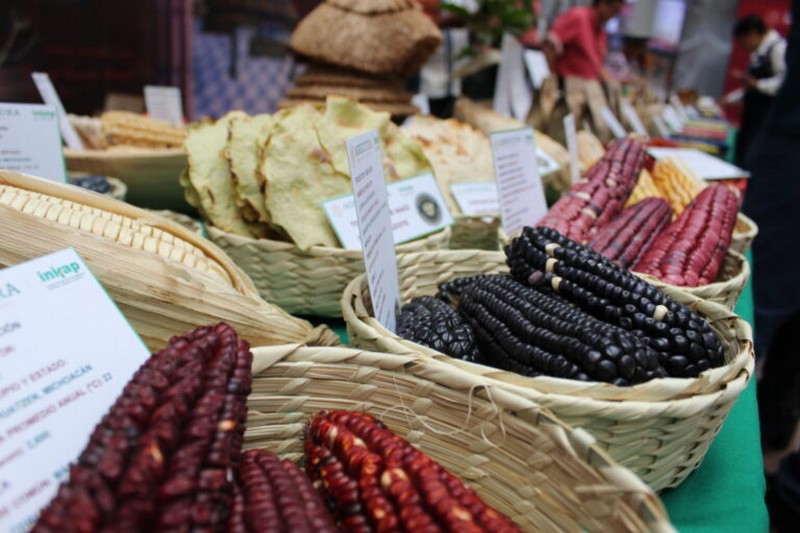
More Than 300,000 Displaced from Rafah, URWA Says

By teleSUR

Israel continues to keep the Rafah crossing closed, crucial for the entry of humanitarian aid.

12 May 2024 – The United Nations Relief and Works Agency for Palestine Refugees (UNRWA), reported that evacuation orders in Rafah issued by the Israeli authorities forced more than 300,000 residents of the area to move anywhere.

The head of the organization Philippe Lazzarini refuted the Zionist allegations of the existence of safe areas in the Gaza Strip and called them false and misleading, while the situation in the southern city of Rafah is increasingly critical after the army imposed new forced displacements this weekend.

“Since the war began, most people in Gaza have moved multiple times: on average once a month. They desperately sought safety that they never found. Some have no choice but to stay  in bombed out UNRWA shelters,” said Lazzarini in Twitter.

[https://twitter.com/UNRWA/status/1789282267791028316]

Israel continues to keep the Rafah crossing closed, crucial for the entry of humanitarian aid and where the chronically ill and wounded were leaving for treatment, although on Monday it announced the opening of a new crossing in the northern Gaza Strip.

“They are people, like you and I. They used to have dreams, they were part of a vibrant and diverse community…. Now, it’s only broken lives and broken futures,” the UNRWA head said reffering to the Raffah displaced by the occupation forces.

[https://twitter.com/EyeonPalestine/status/1789676230649720963]

Other targets besieged were the Nuseirat camps and ambulances near the UNRWA clinic in the middle of the Jabalia camp, says Al Mayadeen news agency, also indicates that during the last days there were numerous international sentences to the Israeli military operation in Rafah.

Since the October 7th, the Israeli occupation forces have killed more than 35.000 Palestinian, according to figures of the Health Ministry. The entity says also that more than 78,700 have been injured.

Biden acknowledges use of U.S. weapons to kill Palestinians in Gaza

13 May 2024

Source: transcend.org
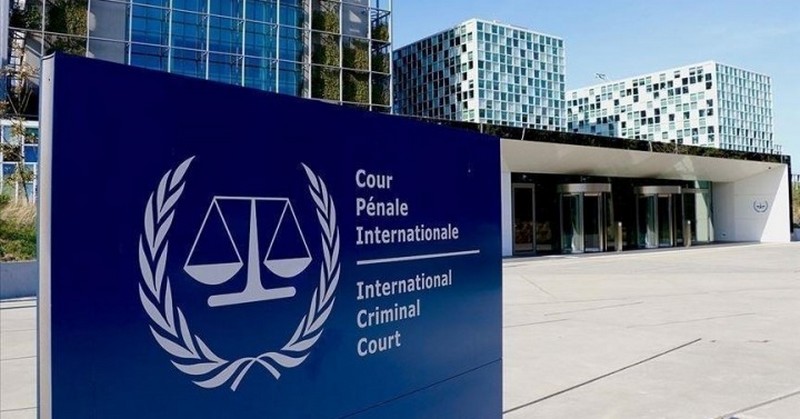
Covering Palestine and Journalists Deaths in GazaCovering Palestine and Journalists Deaths in Gaza

By Phil Pasquini

Reflecting on the unprecedented number of journalists killed in Gaza by the Israeli military along with their intentional killing of Palestinian-American journalist Shireen Abu Akleh two years ago, the Arab Center Washington, DC held an all-day symposium on May 9 at the National Press Club (NPC) delving into the state of press coverage and journalists’ deaths in Palestine and Gaza.

The program, dedicated to the memory of Shireen Abu Akleh, opened with a poignant memorial visual presentation with 100 photos of the over 140 journalists killed in Gaza since October 7.

Arab Center Director Khalil Jahshan, speaking of his friend Shireen, reflected on her as being “candid, composed, precise and substantive with very professional qualities that characterized her journalistic career that followed throughout the following two decades.”

Appearing remotely, keynote speaker Senator Chris Van Hollen (D-MD) revealed the mostly underreported and horrific fact as listed by Reporters Without Borders (RSF) that more journalists have been killed in Gaza in the past seven months than in Mexico over 20 years. Mexico is considered the most dangerous place for journalists in the world.

Wearing a button with Shireen’s picture on it, Laila Al-Arian from Al Jazeera, on the first panel titled “What the Western Media Gets Right and Wrong,” said that reading the names of all 36,000 victims of those killed during the genocide in Gaza would take 20 hours and warned that “We must not lose our humanity and remain silent during all of this.”

Mona Chalabi from The Guardian US reflected on the use of the wrong verbs in western media by using the term “died” instead of “killed” along with “migration” instead of “displacement” when reporting on Gaza which she characterized as “lies driven by ideology and malicious deceit.”

In speaking about western editors involved in the production of articles on the conflict, Chalabi noted that editors mostly unfamiliar with the history and context, use “style books” that are formulated to define the conflict by eliminating such terms as “Palestinian” among others. She went on to talk about journalists being assigned to cover the Middle East who have no previous experience in the area and their being given the title of articles created by editors with fixed agendas, such as “Antisemitism on Campus” around which a journalist would fill in information formulated to support that narrative.

She also cited an article in The New Yorker titled “Hamas’ Propaganda War” implying that “Palestinian journalists who are putting their lives on the line are doing Hamas’ propaganda” for them.

Al-Arian referred to this as “regurgitating Israeli official narratives… that turn out to be lies and propaganda,” noting that many people in the newsroom are troubled by this and unhappy to be a part of the “media bias” favoring Israel and are now speaking out more.

She went on to say that “to be an Arab journalist is to not be believed,” and that she has reviewed and compared how asymmetrical and extensive the coverage is on the number of “Israeli people who have been killed versus the Palestinian people who had been killed.”

TV host and journalist Ayman Mohyeldin, a Palestinian American, speaking with Yousef Munayyer of the Arab Center, related his personal experience of having covered Gaza both on the ground during war and from the anchor’s chair in New York. He eloquently described having worked with Shireen and other Palestinian journalists saying that their reporting had a “very granular” knowledge and context of the stories they covered that western journalists’ reporting lacked.

Having worked with Shireen and learning from her and others who have lived the story of conflict there “day in and day out,” he said, “shapes your coverage as a reporter and changes your entire outlook and the ability to report it. What she has taught me has stayed with me as a journalist throughout my entire career.” He confessed that while being unable to change anything through reporting, he was, however, empowered to be “The voice for the voiceless.”

On the second panel titled, “Journalism under fire: Risking It All to Tell the Story,” Shireen Abu Akleh’s niece Lina Abu Akleh said the family’s journey in “calling for the bare minimum of justice for Shireen” has been difficult and warning that “without justice for Shireen, this will give the green light to kill more journalists.”

Speaking on how Shireen’s widely condemned killing was reported in the media, she said that it was without context covering only basic information making it seem that Shireen somehow had “magically died” based on the lack of context and substantive facts. Saying “she was killed” as reported, neglected to mention how and by whom and that “It was disheartening seeing how fellow journalists covered the killing of Shireen.”

After the killing she went on to say that “Advocating [for justice] should not have been our role as a family, we should have been mourning. They didn’t just kill Shireen, they also attacked the funeral, that was another violation that was another attack on her dignity and our right to put her to rest. We felt it was silencing Shireen twice.”

She characterized the lack of a credible U.S. investigation into Shireen’s killing by saying that “the “Administration has failed our family” and that it was “not a surprise.”

Eman Mohammed, a Palestinian photojournalist from Gaza, spoke about western journalists covering Gaza by saying that “With the genocide happening in Gaza now, I am distraught with the silence, the complicity, the abandonment that my colleagues are experiencing.” Referring to the unprecedented toll of Palestinian journalists being killed in Gaza she admitted, “I don’t know how we got here to this level of inhumanity.”

Reacting to the statement of letting foreign journalists into Gaza, she said “The problem is not in the coverage, the problem is in protecting the coverage, the coverage is top notch. If I was covering, I would just throw the images raw and be like take it.”

“I would love to see, but I would not love to see, how the world would react when white journalists start to drop, because we have seen six aid workers, white foreign aid workers get killed by Israel and we have seen the drastic different reaction.”

“Everyone keeps saying ‘oh we need foreign journalists inside of Gaza’ but not for the coverage to improve we need it for different reasons. I see now that we are all disposable.” She pointed out that “the media is not the same as journalists. The media is clicks, its profits, its views. The journalists are journalists and without you they don’t have content and they don’t have credibility they don’t have anything whatsoever.”

When asked how her colleagues in Gaza react about not getting the same respect as western journalists, she responded by saying that “They are aware but at the same time they have the intelligence to separate the media and their journalists.”

“When we work in Gaza and we have a foreign journalist, no matter who that foreign journalist is, they need an army of us to work with them to make it possible for them to get their story. They need fixers, they need translators, they need drivers, they need us to vouch with the locals to get that story for them to be trusted. They parachute in and we need to work around them to get them that trust even if they stay there for a month, and they think they are more credible than us.”

“Without us they don’t have a story and then we need them to tell our story. It’s kind of not even laughable; it’s insulting. And then when we’re the ones getting killed, they don’t have the words to say ‘Israel killed Palestinian journalists.’ So, I mean it’s complicity and the lack of having a backbone…”

Report and photos by Phil Pasquini

13 May 2024

Source: countercurrents.org