Just International

76th Palestinian Nakba: Commemoration, Resistance, Liberation

By Phil Pasquini

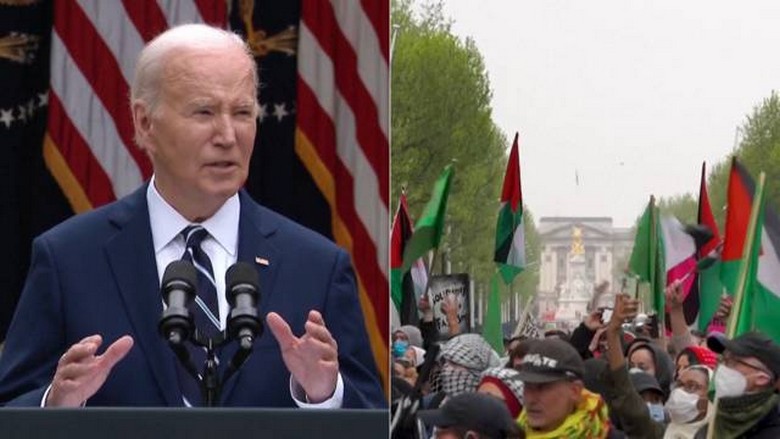
Palestinian activists and their supporters rallied on May 18 at the National Mall on a wet and dreary day in observance of the 76th anniversary of the Nakba — catastrophe, in Arabic — by announcing that their assembly’s goal was “More Than Commemoration” it was “Resistance Until Total Liberation.”

Considered the foundational symbol of Palestinian national identity, the Nakba refers to the May 15, 1948 war by Zionists in British-ruled Palestine that displaced and dispossessed Palestinians from their homeland, along with the destruction of their culture and society.

The war resulted in around 500 Arab-majority towns and villages being destroyed and dozens of massacres targeting Palestinians. Approximately 750,000 Palestinians fled or were expelled by Zionist forces creating a permanent Palestinian refugee population along with the rejection of their right of return.

Lest anyone believe that the Nakba was an isolated historical fact, the first speaker, a woman from the Palestinian Youth Movement, recalled that “For the past seven months the ongoing genocide has demonstrated that the Nakba didn’t start or end in 1948, it is ongoing.” Citing massacres, genocide, forced starvation and torture against Gazans, she noted that this has all been supported by the United States government whose funding for Israel utilizes taxpayer dollars from Americans, many of whom have family in Gaza, thus making them complicit in the murder of their own family members.

Recalling, too, that Gazans have had to watch daily as their doctors, journalists and entire families are being massacred and that the Israeli military has displaced almost two million people who have been forced to relocate to “safe zones,” only to be bombed repeatedly resulting in further deaths and destruction.

She said: “As Palestinian Youth, this struggle is our responsibility, and it belongs to us. There is no liberation without the return of all the refugees,” including those from the diaspora who have the right of return to their homeland. Vowing to resist until that goal is accomplished, she closed by relaying a message of solidarity in Arabic from Washington to those in Gaza.

The second speaker discussed how “Genocide Joe” had called the invasion of Rafah a “red line” and that his recent announcement of a pause in the transfer of arms to Israel was soon followed by a report from his administration that said it is “reasonable to assess” Israel has been using U.S.-supplied weapons in contravention to both U.S. and international law. While this constitutes a war crime, Biden a few days later, announced an additional one billion dollars in aid for Israel in its war against Hamas on top of the already 14.1 billion dollars recently allocated by Congress.

“It is in our power to influence our government’s action to say, we do not want our money funding occupation,” the speaker said. “We must relentlessly badger our government and Congress to respond to their constituents, us, and not pledge allegiance to a foreign entity. May our collective voices be a catalyst for liberation, may our steadfast determinations bring peace for Palestine.”

Speaking from personal experience, Randa, a Palestinian-American woman, told the crowd that “since the genocide we have lost over 40 members of our family and probably even more. We are all living the genocide live, everyday, day in and day out. Every picture coming out of Gaza delivers a more powerful message than any speech ever will.” She went on to tell of the horror her family experiences every single day in Gaza, saying, “They are alive, but not living. They are strong, and frail. They are human and they are stretched out beyond human comprehension.”

She told the crowd about her frustration with the use of U.S. taxpayer money being used to destroy her family in Gaza, hearing from them daily “about how hungry they are and hearing about the forced displacement of your family, their children, your people.” She told of her cousin Alma being buried under the rubble of her home, and after 180 days Alma was finally found. “Eight days ago, May 8th was Alma’s 12th birthday,” she related. “Instead of wrapping her birthday presents, Alma’s father wrapped her decaying little body in a shroud. Finally granting her the gift of a decent burial. To be from Gaza is to painfully watch your people holding on to their babies’ lifeless bodies. Kissing them goodbye for the last time. And you don’t know what else is left to say, you don’t know what is left to do to ease their pain and to ease their suffocating suffering.”

Going on to tell of her murdered cousin Akmed, she said that as of today “His family has been forcibly displaced six times since the beginning of the genocide. Each physical displacement is not only an assault to their physical and mental health, but it is also an assault on their identity as Palestinians and their dignity as human beings.”

She called on Joe Biden, Kamala Harris and Antony Blinken to tell her where her family, stuck in Gaza, should go to seek safe shelter. Illustrating her point by accusing the U.S. of spending millions of dollars to destroy their homes, obliterate their streets and wipe out any means of escape,” she simply asked: “Where do they go?”

After he fully supported the genocide from day one, she accused Biden of having rebranded himself after seven months with the “humanitarian port.” “Joe Biden, Palestinians do not need a savior, Palestinians need an end to the occupation. We, the American people, have seen you for seven long months support genocide. We will not be silent, nor will there be business as usual as long as you use our tax dollars, as long as you commit crimes against our families, crimes against humanity. We see right through your lies that are not only insulting to our intellect, but also to our humanity. Joe, the world is watching, history is watching.”

Report and photo by Phil Pasquini

© 2024 nuzeink all rights reserved worldwide

19 May 2024

Source: countercurrents.org
Modi on the backfoot spewing out hatred and anti-minority venom

By George Abraham

As India has completed its fourth phase of the national elections, it has become increasingly clear that it is in no way a walkover by the BJP towards a third term. Prime Minister Modi, who relied on his own carefully crafted image and easy-flowing rhetoric, found himself in an unchartered territory facing an electorate more skeptical of his promises and less interested in his anti-minority tirades.

Instead of focusing on either his accomplishments as head of the administration in the last ten years or the plan of action, he has stooped down low in further fomenting hatred and divisions within the country. Mr. Sam Pitroda, the father of the Telecom revolution in India, made an innocuous statement to bolster his advocacy on pluralism by comparing the looks of South Indians with those of Africans.  Anyone who knows Pitroda would say that he doesn’t have a racist bone in his body. Having come from a backward caste background, he fully understands the dimensions of caste discrimination and its impact on people across the nation.

However, the real shock was not in what Pitroda had to say but how the Prime Minister picked upon it to further create a racist controversy. Modi said that ‘it was an abuse that filled him with anger’ when he heard such a statement. Having come from the southern state of Kerala, I would categorically state that I am neither angry nor insulted by being compared to Africans.  It only shows the depravity of a man who harbors such hatred and bigotry in his mind.

I was often told how south Indians are referred to in the North in certain circles as ‘Kaala Saala Madrasi’ and people from the Northeast are called ‘Chinky’ and often frowned upon. We know the stories of African students in the North who have been subjected to name-calling and dehumanizing treatment. Various matrimonies, even in respected newspapers, invite alliances based on skin color. Inside the booming beauty industry, cremes for fair skin have become the primary source of revenue. There is little doubt that a segment of the nation is obsessed with skin color, and it is that type of mindset that harbors these deep-rooted racial biases, and the recent outbursts are borne out of it.

What I described above was not an isolated incident during this campaign cycle from the Prime Minister. Mr. Modi recently called Muslims’ infiltrators’ who would take India’s wealth if the opposition gained power. Addressing voters in the state of Rajasthan, Modi claimed that the Congress party would distribute wealth to those who have more children, to infiltrators. In addition, he made an emotional appeal to women, “my mothers and sisters,” saying that his Congress opponents would take their gold and give it to Muslims.

There are two hundred million Muslims who live in India. They are an integral part of India and, in every sense, citizens of the country. A Prime Minister doesn’t serve one religious or ethnic group but all its citizens regardless of caste, creed, language, religion, or region. What we have witnessed here from a Prime Minister is nothing but a brazen and divisive rhetoric that is demeaning to the people of India while raising eyebrows abroad.  It contrasts very much with what he says on an overseas trip, which extols India as a mother of democracy and invokes the philosophy of ‘Vasudeva Kutumba.’

Mr. Modi was feeling no anger or hurt when the Manipur Police personnel drove two Kuki-Zomi Christian women, who had sought refuge in their official gypsy, to a mob of around 1000 Meiti rioters in Kangpokpi district. The women, one of whom was the wife of a Kargil war veteran, desperately asked the police to drive them to a safe location but were refused. Moreover, 450 churches were burned to the ground or destroyed in Manipur last year. According to government figures, as of February 28th, 2024, 219 people have been killed in the pogrom unleashed by the suspected Arambai Tenggol and Meitei Leepun with the support of the BJP government in power with every Kuki-zomi was ethnically cleansed from Imphal, the capital of Manipur.

Mr. Modi was feeling no anger or hurt when suspected vigilantes approached a Muslim man, identified as Akbar, transporting two cows from Rajasthan to his village in nearby Haryana state and thrashed him to death on suspicion of smuggling the animals.  Modi’s years of campaign against the ‘pink revolution’ finally bore fruit under his majoritarian rule. It would be pretty interesting to see how one justifies cow slaughter bans when human slaughter for that cause goes unnoticed!

There is little doubt that Modi has been exploiting religious divisions and weaponizing investigative agencies to perpetuate his power. What goes unnoticed is the systematic consolidation of power by bending the courts, muzzling the media, destroying civil society, and weakening the legislature through subtle ways. The reconstruction of the Election Commission is another example of a power grab by the Modi administration with the intent to replace India’s secular democracy with a majoritarian Hindu ideology and supporting framework. Although Modi often rails against the vote bank politics, he created his own Hindu vote bank.

The question the Indian voters are facing this election cycle is whether they have had enough of these polarizing religious debates that do not contribute anything to their well-being. Analysts increasingly doubt that BJP can win a landslide election as promised. All eyes will be on the EVMs as well.  “Do not get deterred by the diversionary tactics of hateful speeches that divided society,” Congress President Mallikarjun Kharge said in a message to the voters. Rahul Gandhi, leader of the main opposition Congress party, said that the election would decide the future of democracy. “Strengthen democracy by applying the balm of your vote to the wounds inflicted on the nation’s soul in the last ten years and defeat hatred.”  We will find out on June 4th from those 969 million voters who are eligible to vote in this history-making election.

George Abraham is a political commentator

16 May 2024

Source: countercurrents.org
Campus Protests in the West Accelerate the Palestinian Quest for Freedom

By Taj Hashmi

“If there were not an Israel, we’d have to invent one.”

–Joe Biden (Senate Speech, 1986)

We are all Palestinians today. Especially in the wake of Israel’s genocidal invasion of Gaza on October 2, 2023, any decent, informed, and intelligent person, irrespective of one’s faith and ethnolinguistic background, anywhere in the world must be pro-Palestinian. Barring most Western governments and their leaders in government and opposition, people around the globe are in solidarity with the hapless victims of the ongoing Zionist genocidal invasion of Gaza.

Millions of youths, especially in the West, have already come forward in support of the victims of Israel’s genocidal war in Gaza. They also demand Palestine to be free from Israeli occupation since 1948. America provides $3.8 billion annually to Israel for the purchase of American weapons. Additionally, since the Israeli invasion of Gaza in October, the Biden Administration has given around $26 billion to Israel, citing the need for Israel to “defend itself from anti-Semitic Palestinians”. However, most Millennials and Generation Z worldwide no longer believe this cliche. As of early May, Israel has killed around 35,000 Palestinians (including half of them children) in Gaza. There’s no reason to be moved by Biden’s late and worthless “kindness” towards the Palestinian victims of the Israeli genocidal war in Gaza by his decision to suspend further delivery of 2,000-pound bombs and artillery shells to Israel by his government — since he knows now that these weapons kill innocent Palestinians! It has come too late and too little to “save Palestinian lives”.

Last month, the United States refrained from vetoing the Security Council’s decision, which called for an unconditional ceasefire in Gaza. The latest Volte Face and the apparent neutrality of the Biden Administration regarding the Gaza War befools nobody. We believe these farcical and melodramatic gimmicks by Biden are an attempt to gain support from Arab, Muslim, and liberal young voters in the US to secure a second term in office.

It’s important to acknowledge that all US presidents, from Truman to Biden, except possibly Carter and Clinton, can be considered war criminals based on any definition of the term. This acknowledgement should form the foundation of any discussion on the US’s controversial pro-Israeli and anti-Arab/anti-Muslim policies from 1919 onward. The conflicts between Zionists and Palestinians, which have resulted in genocide, started soon after the League of Nations arbitrarily brought Palestine and Jordan under the British mandate in 1919, primarily due to British involvement and US apathy. The ongoing conflict between Israel and Palestine is a Western genocidal war against freedom-loving Palestinians. Those who speak out against the Israeli massacre of Palestinians in Gaza are often branded anti-Semites by Western governments and Israel. We live another “Longest Day” in human history with resilience, courage, and optimism despite Zionist and Western terror. However, I believe the ongoing campus protests in the West accelerate Palestinian freedom.

The world has witnessed a surge of campus protests across North America, Europe, and beyond following the “Million People’s March”. This has given me renewed hope for the people of Gaza and has made me realise that my optimism is not unfounded. I firmly believe that a Free Palestine is a dream and a shared destiny of every freedom-loving and justice-seeking person on earth. It may take time, but we must continue to stand together and fight for what is right. YouTuber Maher Musalli – a Saudi human rights activist – has recently affirmed that no global authority exists to stop Netanyahu’s genocidal warfare in Gaza. Twitter has removed Musalli’s video due to its anti-Israeli content. His video also highlights an American assertion that says, “You Gazans have liberated America”, as he learnt about the hypocritical and double standards of Israeli and US governments towards Palestine. Here lies the flicker of hope in these candid words of the American!

The Arab world, particularly the Muslim world at large, has been coerced into submission and a deafening silence. This has been facilitated by autocratic rulers who are protegees of Western powers, possibly except Iran, Turkiye, Lebanon, Syria, and Yemen. Despite these challenges, there is a flicker of hope for oppressed people across the world, particularly the Palestinians. In the West, millions of young people from the Millennial and Generation Z cohorts, including those in Israel, are championing the cause of freedom, optimism, and hope for the underdogs in Palestine. They tell us without any ambiguity: “Support Palestine today for a better world tomorrow!” This positive development emphasizes the need for continued advocacy and activism to support the oppressed in and beyond Palestine.

I wish Western leaders complicit in the genocidal warfare in Gaza — who are the descendants and successors of imperialist marauders, at least since the days of Columbus, who killed, raped, dehumanized, enslaved, and plundered hundreds of millions of indigenous people in the Americas, Asia, Africa, Australia and Oceania – start acting like civilized human beings, rather than continuing the legacy of their warmongering ancestors. I demand that they reflect, repent, and transform their behaviour to adhere to the basic principles of humanity, which they have disregarded for the last five centuries.

The younger generation has been exposed to many ideas, including the “New World Order” and the “War on Terror”. However, most of them in the Western world have developed their rationale for distancing themselves from the narrative of unjust invasions and the mass killing of innocent people by Netanyahu and his promoters in powerful Western capitals, Washington, London, and elsewhere. This pattern of behaviour is reminiscent of previous leaders such as the rough and tough Papa and Baby Bush, the deceptively gentle Blair, the smooth, suave, and intellectual Obama, and the “mad” and unpredictable Trump, all of whom have contributed to the destabilization of the world order.

It’s worth noting that after the assertive, brave, and humane generation of anti-war protesters from the 1960s and 1970s disappeared from the social and political movements arena, the West experienced a false dawn of hope and euphoria. This happened after the fall of the Berlin Wall and the demise of the Soviet Union, which Francis Fukuyama ineptly called the “End of History”. The West has become too complacent and indifferent towards the suffering of humanity outside of North America and Western Europe, as well as its allies in Australia, Japan, South Korea, and the compliant oil-rich Arab World. After the end of the Cold War, the West and its allies indulged themselves in phoney wars against their own Frankenstein’s Monsters like Saddam Hussein, al Qaeda, and the Taliban through the ubiquitous War on Terror. This has resulted in collective amnesia and the criminally induced fever of the War on Terror following the mysterious and catastrophic 9/11 across the West.

In Washington in 2023, Joe Biden told Israeli President Isaac Herzog, “If there were no Israel, we’d have to invent one” (referring to his 1986 Senate speech). The views of Biden, Trump, and many White Americans regarding Israel are similar. Despite this, the ongoing Gaza Massacre is a tragedy that the whole world is witnessing in real time. As the violence continues, it has sparked a movement among college students worldwide who are now passionate advocates for Palestinian rights and condemn the actions of the Israeli government. This surge in activism is a testament to the power of the younger generation, who will one-day lead state affairs and shape the policies of governments worldwide. We must listen to their voices and take action now to ensure a better future for all.

In an exciting development, the UN General Assembly voted on May 10th to grant Palestine full UN membership. All countries except the US, Argentina, and seven small ones voted favourably, while 29 abstained. Disregarding the decision, the Israeli representative tore down the UN Charter. Israeli defiance of international law, including the UN, has been emboldened by the American blank cheque. In this regard, Joe Biden is unambiguous.  Western support for Israel without any conditions is in line with Theodor Herzl’s ideas mentioned in his pamphlet “The Jewish State,” published in 1896. According to him, Israel would be a “Western rampart in the heart of the Arab World”. It would help in protecting the strategically significant regions of the Middle East and North Africa for the West.

Western support for Israel has been driven by the desire to control the vast oil fields in the Gulf, as well. In twenty years, most motorized vehicles will run on electricity instead of fossil fuels. What a US general said quite candidly during the First Gulf War in 1991, that the root cause of the war was oil and that America was jealously guarding its interests in the Arab World by keeping control over the oil fields across the region for its allies to use, will no longer be relevant in the coming years. I believe America’s Military-Industrial Lobby’s overpowering influence as warmongers in the world will be neutralized as well by the emergence of China, Russia, Turkey, Iran, Pakistan, Indonesia, and democratic Saudi Arabia and Egypt as superpowers in a multipolar world.

Today’s youth are surpassing their predecessors in terms of knowledge and capacity. Driven by a strong passion for democracy, freedom, and human rights, their colour-blind stance on race is a testament to their progressive outlook. Their potential as thought leaders is unmatched, and they will be the driving force behind a new era of change and progress. I firmly believe in the power of truth, justice, and natural law, and therefore, my optimism is a resolute affirmation rather than a mere hyperbole. The Millennials and Generation Z in North American, European, and Australian campuses show unexpected passion for the Palestinian cause. Their voices are being heard today, and their actions will matter in the coming decades. As they become the law- and policy-makers in the West, especially in the US and UK, which have been the main supporters of Israel since before its establishment in 1948, their opinions and actions will carry significant weight. Within the next ten years or even sooner, there will be an independent Palestinian state with Jerusalem as its capital and an end to the Israeli occupation of all Arab lands.

Taj Hashmi is a historian-cum-cultural anthropologist and security analyst, Taj Hashmi, Ph.D., FRAS, is a retired professor of Security Studies at the APCSS, US.

16 May 2024

Source: countercurrents.org
Israel’s Willing Executioners

By Chris Hedges

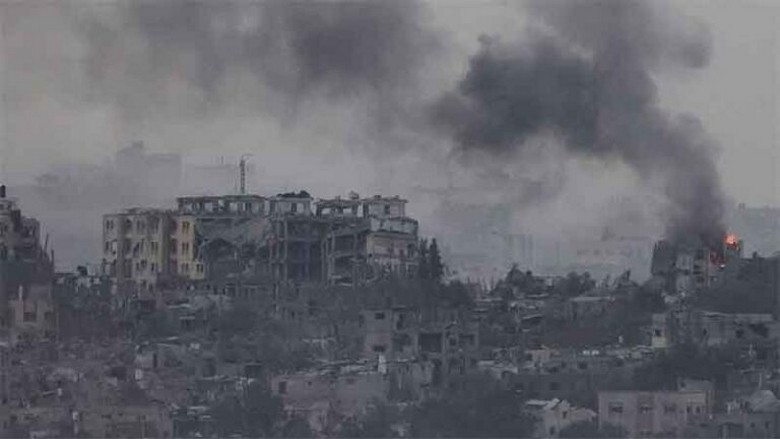
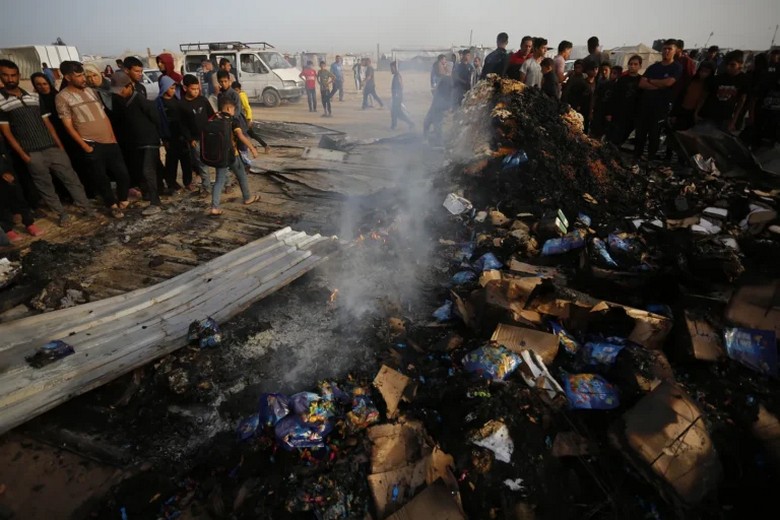
Hundreds of thousands of people are being forced to flee, once again, after more than half of Gaza’s population took sanctuary in the border town of Rafah. This is part of Israel’s sadistic playbook.

Run, the Israelis demand, run for your lives. Run from Rafah the way you ran from Gaza City, the way you ran from Jabalia, the way you ran from Deir al-Balah, the way you ran from Beit Hanoun, the way you ran from Bani Suheila, the way you ran from Khan Yunis. Run or we will kill you. We will drop 2,000-pound bunker buster bombs on your tent encampments. We will spray you with bullets from our machine-gun-equipped drones. We will pound you with artillery and tank shells. We will shoot you down with snipers. We will decimate your tents, your refugee camps, your cities and towns, your homes, your schools, your hospitals and your water purification plants. We will rain death from the sky.

Run for your lives. Again and again and again. Pack up the pathetic few belongings you have left. Blankets. A couple of pots. Some clothes. We don’t care how exhausted you are, how hungry you are, how terrified you are, how sick you are, how old, or how young you are. Run. Run. Run. And when you run in terror to one part of Gaza we will make you turn around and run to another. Trapped in a labyrinth of death. Back and forth. Up and down. Side to side. Six. Seven. Eight times. We toy with you like mice in a trap. Then we deport you so you can never return. Or we kill you.

Let the world denounce our genocide. What do we care? The billions in military aid flows unchecked from our American ally. The fighter jets. The artillery shells. The tanks. The bombs. An endless supply. We kill children by the thousands.  We kill women and the elderly by the thousands. The sick and injured, without medicine and hospitals, die. We poison the water. We cut off the food. We make you starve. We created this hell. We are the masters. Law. Duty. A code of conduct. They do not exist for us.

But first we toy with you. We humiliate you. We terrorize you. We revel in your fear. We are amused by your pathetic attempts to survive. You are not human. You are creatures. Untermensch. We feed our libido dominandi – our lust for domination. Look at our posts on social media. They have gone viral. One shows soldiers grinning in a Palestinian home with the owners tied up and blindfolded in the background. We loot. Rugs. Cosmetics. Motorbikes. Jewelry. Watches. Cash. Gold. Antiquities. We laugh at your misery. We cheer your death. We celebrate our religion, our nation, our identity, our superiority, by negating and erasing yours.

Depravity is moral. Atrocity is heroism. Genocide is redemption.

Jean Améry, who was in the Belgian resistance during World War II and who was captured and tortured by the Gestapo in 1943, defines sadism “as the radical negation of the other, the simultaneous denial of both the social principle and the reality principle. In the sadist’s world, torture, destruction, and death are triumphant: and such a world clearly has no hope of survival. On the contrary, he desires to transcend the world, to achieve total sovereignty by negating fellow human beings – which he sees as representing a particular kind of ‘hell.’”

Back in Tel Aviv, Jerusalem, Haifa, Netanya, Ramat Gan, Petah Tikva who are we? Dish washers and mechanics. Factory workers, tax collectors and taxi drivers. Garbage collectors and office workers. But in Gaza we are demigods. We can kill a Palestinian who does not strip to his underwear, fall to his knees, beg for mercy with his hands bound behind his back. We can do this to children as young as 12 and men as old as 70.

There are no legal constraints. There is no moral code. There is only the intoxicating thrill of demanding greater and greater forms of submission and more and more abject forms of humiliation.

We may feel insignificant in Israel, but here, in Gaza, we are King Kong, a little tyrant on a little throne. We stride through the rubble of Gaza, surrounded by the might of industrial weapons, able to pulverize in an instant whole apartment blocks and neighborhoods, and say, like Vishnu, “now I have become death, the destroyer of worlds.”

But we are not content simply with killing. We want the walking dead to pay homage to our divinity.

This is the game played in Gaza. It was the game played during the Dirty War in Argentina when the military junta “disappeared” 30,000 of its own citizens. The “disappeared” were subjected to torture – who cannot call what is happening to Palestinians in Gaza torture? – and humiliated before they were murdered. It was the game played in the clandestine torture centers and prisons in El Salvador and Iraq. It is what characterized the war in Bosnia in the Serbian concentration camps.

This soul crushing disease runs through us like an electric current. It infects every crime in Gaza. It infects every word that comes out of our mouths. We, the victors, are glorious. The Palestinians are nothing. Vermin. They will be forgotten.

Israeli journalist Yinon Magal on the show “Hapatriotim” on Israel’s Channel 14, joked that Joe Biden’s red line was the killing of 30,000 Palestinians. The singer Kobi Peretz asked if that was the number of dead for a day. The audience erupted in applause and laughter.

We place “booby-trapped” cans resembling food tins in the rubble. Starving Palestinians are injured or killed when they open them. We broadcast the sounds of women screaming and babies crying from quadcopters to lure Palestinians out so we can shoot them. We announce food distribution points and use artillery and snipers to carry out massacres.

We are the orchestra in this dance of death.

In Joseph Conrad’s short story “An Outpost of Progress,” he writes of two white, European traders, Carlier and Kayerts. They are posted to a remote trading station in the Congo. The mission will spread European “civilization” to Africa. But the boredom and lack of constraints swiftly turn the two men into beasts. They trade slaves for ivory. They get into a feud over dwindling food supplies. Kayerts shoots and kills his unarmed companion Carlier.

“They were two perfectly insignificant and incapable individuals,” Conrad writes of Kayerts and Carlier:

“…whose existence is only rendered possible through the high organization of civilized crowds. Few men realize that their life, the very essence of their character, their capabilities and their audacities, are only the expression of their belief in the safety of their surroundings. The courage, the composure, the confidence; the emotions and principles; every great and every insignificant thought belongs not to the individual but to  the crowd; to the crowd that believes blindly in the irresistible force of its institutions and its morals, in the power of its police and of its opinion. But the contact with pure unmitigated savagery, with primitive nature and primitive man, brings sudden and profound trouble into the heart. To the sentiment of being alone of one’s kind, to the clear perception of the loneliness of one’s thoughts, of one’s sensations – to the negation of the habitual, which is safe, there is added the affirmation of the unusual, which is dangerous; a suggestion of things vague, uncontrollable, and repulsive, whose discomposing intrusion excites the imagination and tries the civilized nerves of the foolish and the wise alike.

Rafah is the prize at the end of the road. Rafah is the great killing field where we will slaughter Palestinians on a scale unseen in this genocide. Watch us. It will be an orgy of blood and death. It will be of Biblical proportions. No one will stop us. We kill in paroxysms of excitement. We are gods.

Chris Hedges is a Pulitzer Prize-winning journalist who was a foreign correspondent for fifteen years for The New York Times, where he served as the Middle East Bureau Chief and Balkan Bureau Chief for the paper.

14 May 2024

Source: countercurrents.org
The Invention of Zero: How Ancient Mesopotamia Created the Mathematical Concept of Nought and Ancient India Gave It Symbolic Form

By Maria Popova

“If you look at zero you see nothing; but look through it and you will see the world.”

If the ancient Arab world had closed its gates to foreign travelers, we would have no medicine, no astronomy, and no mathematics — at least not as we know them today.

Central to humanity’s quest to grasp the nature of the universe and make sense of our own existence is zero, which began in Mesopotamia and spurred one of the most significant paradigm shifts in human consciousness — a concept first invented (or perhaps discovered) in pre-Arab Sumer, modern-day Iraq, and later given symbolic form in ancient India. This twining of meaning and symbol not only shaped mathematics, which underlies our best models of reality, but became woven into the very fabric of human life, from the works of Shakespeare, who famously winked at zero in King Lear by calling it “an O without a figure,” to the invention of the bit that gave us the 1s and 0s underpinning my ability to type these words and your ability to read them on this screen.

Mathematician Robert Kaplan chronicles nought’s revolutionary journey in The Nothing That Is: A Natural History of Zero (public library). It is, in a sense, an archetypal story of scientific discovery, wherein an abstract concept derived from the observed laws of nature is named and given symbolic form. But it is also a kind of cross-cultural fairy tale that romances reason across time and space

Kaplan writes:

If you look at zero you see nothing; but look through it and you will see the world. For zero brings into focus the great, organic sprawl of mathematics, and mathematics in turn the complex nature of things. From counting to calculating, from estimating the odds to knowing exactly when the tides in our affairs will crest, the shining tools of mathematics let us follow the tacking course everything takes through everything else – and all of their parts swing on the smallest of pivots, zero

With these mental devices we make visible the hidden laws controlling the objects around us in their cycles and swerves. Even the mind itself is mirrored in mathematics, its endless reflections now confusing, now clarifying insight.

[…]

As we follow the meanderings of zero’s symbols and meanings we’ll see along with it the making and doing of mathematics — by humans, for humans. No god gave it to us. Its muse speaks only to those who ardently pursue her.

With an eye to the eternal question of whether mathematics is discovered or invented — a question famously debated by Kurt Gödel and the Vienna Circle — Kaplan observes:

The disquieting question of whether zero is out there or a fiction will call up the perennial puzzle of whether we invent or discover the way of things, hence the yet deeper issue of where we are in the hierarchy. Are we creatures or creators, less than – or only a little less than — the angels in our power to appraise?

Like all transformative inventions, zero began with necessity — the necessity for counting without getting bemired in the inelegance of increasingly large numbers. Kaplan writes:

Zero began its career as two wedges pressed into a wet lump of clay, in the days when a superb piece of mental engineering gave us the art of counting.

[…]

The story begins some 5,000 years ago with the Sumerians, those lively people who settled in Mesopotamia (part of what is now Iraq). When you read, on one of their clay tablets, this exchange between father and son: “Where did you go?” “Nowhere.” “Then why are you late?”, you realize that 5,000 years are like an evening gone.

The Sumerians counted by 1s and 10s but also by 60s. This may seem bizarre until you recall that we do too, using 60 for minutes in an hour (and 6 × 60 = 360 for degrees in a circle). Worse, we also count by 12 when it comes to months in a year, 7 for days in a week, 24 for hours in a day and 16 for ounces in a pound or a pint. Up until 1971 the British counted their pennies in heaps of 12 to a shilling but heaps of 20 shillings to a pound.

Tug on each of these different systems and you’ll unravel a history of customs and compromises, showing what you thought was quirky to be the most natural thing in the world. In the case of the Sumerians, a 60-base (sexagesimal) system most likely sprang from their dealings with another culture whose system of weights — and hence of monetary value — differed from their own.

Having to reconcile the decimal and sexagesimal counting systems was a source of growing confusion for the Sumerians, who wrote by pressing the tip of a hollow reed to create circles and semi-circles onto wet clay tablets solidified by baking. The reed eventually became a three-sided stylus, which made triangular cuneiform marks at varying angles to designate different numbers, amounts, and concepts. Kaplan demonstrates what the Sumerian numerical system looked like by 2000 BCE:

This cumbersome system lasted for thousands of years, until someone at some point between the sixth and third centuries BCE came up with a way to wedge accounting columns apart, effectively symbolizing “nothing in this column” — and so the concept of, if not the symbol for, zero was born. Kaplan writes:

In a tablet unearthed at Kish (dating from perhaps as far back as 700 BC), the scribe wrote his zeroes with three hooks, rather than two slanted wedges, as if they were thirties; and another scribe at about the same time made his with only one, so that they are indistinguishable from his tens. Carelessness? Or does this variety tell us that we are very near the earliest uses of the separation sign as zero, its meaning and form having yet to settle in?

But zero almost perished with the civilization that first imagined it. The story follows history’s arrow from Mesopotamia to ancient Greece, where the necessity of zero awakens anew. Kaplan turns to Archimedes and his system for naming large numbers, “myriad” being the largest of the Greek names for numbers, connoting 10,000. With his notion of orders of large numbers, the great Greek polymath came within inches of inventing the concept of powers, but he gave us something even more important — as Kaplan puts it, he showed us “how to think as concretely as we can about the very large, giving us a way of building up to it in stages rather than letting our thoughts diffuse in the face of immensity, so that we will be able to distinguish even such magnitudes as these from the infinite.”

This concept of the infinite in a sense contoured the need for naming its mirror-image counterpart: nothingness. (Negative numbers were still a long way away.) And yet the Greeks had no word for zero, though they clearly recognized its spectral presence. Kaplan writes:

Haven’t we all an ancient sense that for something to exist it must have a name? Many a child refuses to accept the argument that the numbers go on forever (just add one to any candidate for the last) because names run out. For them a googol — 1 with 100 zeroes after it — is a large and living friend, as is a googolplex (10 to the googol power, in an Archimedean spirit).

[…]

By not using zero, but naming instead his myriad myriads, orders and periods, Archimedes has given a constructive vitality to this vastness — putting it just that much nearer our reach, if not our grasp.

Ordinarily, we know that naming is what gives meaning to existence. But names are given to things, and zero is not a thing — it is, in fact, a no-thing. Kaplan contemplates the paradox:

Names belong to things, but zero belongs to nothing. It counts the totality of what isn’t there. By this reasoning it must be everywhere with regard to this and that: with regard, for instance, to the number of humming-birds in that bowl with seven — or now six — apples. Then what does zero name? It looks like a smaller version of Gertrude Stein’s Oakland, having no there there.

Zero, still an unnamed figment of the mathematical imagination, continued its odyssey around the ancient world before it was given a name. After Babylon and Greece, it landed in India. The first surviving written appearance of zero as a symbol appeared there on a stone tablet dated 876 AD, inscribed with the measurements of a garden: 270 by 50, written as “27°” and “5°.” Kaplan notes that the same tiny zero appears on copper plates dating back to three centuries earlier, but because forgeries ran rampant in the eleventh century, their authenticity can’t be ascertained. He writes:

We can try pushing back the beginnings of zero in India before 876, if you are willing to strain your eyes to make out dim figures in a bright haze. Why trouble to do this? Because every story, like every dream, has a deep point, where all that is said sounds oracular, all that is seen, an omen. Interpretations seethe around these images like froth in a cauldron. This deep point for us is the cleft between the ancient world around the Mediterranean and the ancient world of India.

But if zero were to have a high priest in ancient India, it would undoubtedly be the mathematician and astronomer Āryabhata, whose identity is shrouded in as much mystery as Shakespeare’s. Nonetheless, his legacy — whether he was indeed one person or many — is an indelible part of zero’s story.

Kaplan writes:

Āryabhata wanted a concise way to store (not calculate with) large numbers, and hit on a strange scheme. If we hadn’t yet our positional notation, where the 8 in 9,871 means 800 because it stands in the hundreds place, we might have come up with writing it this way: 9T8H7Te1, where T stands for ‘thousand’, H for “hundred” and Te for “ten” (in fact, this is how we usually pronounce our numbers, and how monetary amounts have been expressed: £3.4s.2d). Āryabhata did something of this sort, only one degree more abstract.

He made up nonsense words whose syllables stood for digits in places, the digits being given by consonants, the places by the nine vowels in Sanskrit. Since the first three vowels are a, i and u, if you wanted to write 386 in his system (he wrote this as 6, then 8, then 3) you would want the sixth consonant, c, followed by a (showing that c was in the units place), the eighth consonant, j, followed by i, then the third consonant, g, followed by u: CAJIGU. The problem is that this system gives only 9 possible places, and being an astronomer, he had need of many more. His baroque solution was to double his system to 18 places by using the same nine vowels twice each: a, a, i, i, u, u and so on; and breaking the consonants up into two groups, using those from the first for the odd numbered places, those from the second for the even. So he would actually have written 386 this way: CASAGI (c being the sixth consonant of the first group, s in effect the eighth of the second group, g the third of the first group)…

There is clearly no zero in this system — but interestingly enough, in explaining it Āryabhata says: “The nine vowels are to be used in two nines of places” — and his word for “place” is “kha”. This kha later becomes one of the commonest Indian words for zero. It is as if we had here a slow-motion picture of an idea evolving: the shift from a “named” to a purely positional notation, from an empty place where a digit can lodge to “the empty number”: a number in its own right, that nudged other numbers along into their places.

Kaplan reflects on the multicultural intellectual heritage encircling the concept of zero:

While having a symbol for zero matters, having the notion matters more, and whether this came from the Babylonians directly or through the Greeks, what is hanging in the balance here in India is the character this notion will take: will it be the idea of the absence of any number — or the idea of a number for such absence? Is it to be the mark of the empty, or the empty mark? The first keeps it estranged from numbers, merely part of the landscape through which they move; the second puts it on a par with them.

In the remainder of the fascinating and lyrical The Nothing That Is, Kaplan goes on to explore how various other cultures, from the Mayans to the Romans, contributed to the trans-civilizational mosaic that is zero as it made its way to modern mathematics, and examines its profound impact on everything from philosophy to literature to his own domain of mathematics. Complement it with this Victorian love letter to mathematics and the illustrated story of how the Persian polymath Ibn Sina revolutionized modern science.

My name is Maria Popova — a reader, a wonderer, and a lover of reality who makes sense of the world and herself through the essential inner dialogue that is the act of writing.

13 May 2024

Source: transcend.org

UN Vote Was for Palestinian Membership, Not Statehood

By Joe Lauria

10 May 2024 – In a blow to the U.S., the U.N. General Assembly voted today to give Palestine, whose statehood it has already acknowledged, full U.N. membership, forcing the U.S. into another embarrassing veto at the Security Council.

The United States will be forced into another embarrassing veto at the U.N. Security Council after the General Assembly on Friday voted overwhelmingly to ask the Council to reverse its rejection of full U.N. membership for Palestine.

The Assembly voted 143 nations in favor, to just nine against, with 25 abstentions to recommend that the Security Council reconsider its decision last month not to approve full membership. It was a message in reality only to the United States, since it was the U.S. veto in the Council on April 18 that denied Palestine full membership.

Joining the U.S. in the Assembly in voting against on Friday were Israel, Argentina, Czechia, Hungary, Micronesia, Nauru, Palau and Papua New Guinea. Most U.S. allies abstained but several voted in favor of membership, including Australia, Estonia, France, Japan, Norway, Spain and South Korea.

Israel’s furious ambassador, Gilad Erdan, said the U.N. was founded to prevent the kind of tyranny of the Nazis who sought to annihilate the Jewish people.

“Today, you are doing the opposite … welcoming a terror State into its ranks,” he said. “You have opened up the United Nations to modern-day Naziism. It makes me sick.”

Erdan hysterically added that the vote had “opened up the United Nations to modern-day Nazis, to genocidal jihadists committed to establishing an Islamic state across Israel and the region, murdering every Jewish man, woman and child.”

He then held up a battery-operated, mini paper shredder and inserted the cover of the U.N. charter.

In 2012, the Assembly voted overwhelmingly to make Palestine an observer state, giving it only the right to speak in the Assembly.  The resolution passed on Friday expands Palestinian rights to include being seated alphabetically in the Assembly, having the right to submit amendments and agenda items and to be elected as officers to U.N. committees.

Full U.N. membership with voting rights can only be granted by the General Assembly after a recommendation from the Security Council. The General Assembly took action on Friday after the United States cast the lone veto against Palestinian membership at the Security Council, when ally France voted in favor and Britain abstained.

The matter now goes back to the Security Council, where the U.S. said on Friday that it will veto it again on the basis of an erroneous argument that the issue before the U.N. is statehood rather than membership.

“It remains the U.S. view that the most expeditious path toward statehood for the Palestinian people is through direct negotiations between Israel and the Palestinian Authority with the support of the United States and other partners,” said Robert Wood, the U.S. deputy ambassador, after the U.S. cast its veto last month.  “We also have long been clear that premature actions here in New York, even with the best intentions, will not achieve statehood for the Palestinian people.”

The New York Times and other Western media also incorrectly reported that the General Assembly voted for Palestinian statehood.  The Times headline read: “The U.N. General Assembly adopts a resolution in support of Palestinian statehood.” The Sydney Morning Herald‘s headline was: “Australia joins 142 nations in backing Palestinian statehood in UN vote.”

In fact, the resolution was only to grant full U.N. membership to Palestine. Only states can bilaterally recognize other states and 139 countries have already done so for Palestine.  The U.S. government and Western media ignoring the legality of these 139 countries recognizing Palestine is an inheritance of colonial arrogance.

In reporting for The Wall Street Journal on the 2012 General Assembly vote to make Palestine an observer state I referred to the country as “Palestine.” A WSJ editor angrily rebuked me. “We don’t call it Palestine,” he said.  So the call of Wall Street Journal editors overrides 139 nations.

The General Assembly has considered Palestine to be a state since that 2012 vote as seen in the nameplate before Palestine’s U.N. Ambassador Riyad Mansour, seen here speaking at the Security Council last month:

Definition of a State

The U.N. can only confer membership to already existing states, and not grant statehood. Only states can recognize other states bilaterally. The U.N. General Assembly gave observer state status to the State of Palestine in 2012.

The U.N. Charter is clear. Article 4 says that only existing states may apply for U.N. membership. It says:

“Membership in the United Nations is open to all other peace-loving states which accept the obligations contained in the present Charter and, in the judgment of the Organization, are able and willing to carry out these obligations.” [Emphasis added.]

Friday’s General Assembly resolution “Determines that the State of Palestine is qualified for membership in the United Nations in accordance with Article 4 of the Charter of the United Nations and should therefore be admitted to membership in the United Nations.” ”

The resolution doesn’t say the General Assembly determines that Palestine qualifies as a state, but as a member of the U.N. because it already says it’s a state, in a resolution that 143 countries voted for and only nine against. But those nine countries rule the world, according to the U.S.

On the basis of the language of Article 4, the 143 countries that voted in favor on Friday consider Palestine to be a state, even if they have not formally recognized it bilaterally.

France, for instance voted for full membership, although it has not yet formally recognized Palestine. However. French President Emmanuel Macron said in February it was no longer a “taboo” for France to recognize Palestinian statehood.  The French Assembly voted in 2014 to urge the government to do so.

The original text of Friday’s resolution says “membership in the United Nations is open to all peace-loving States which accept the obligations contained in the Charter and, in the judgment of the Organization, are able and willing to carry out these obligations.”  The Associated Press reported that the words “peace-loving” were dropped from the resolution.

The very act of the U.N. secretary general in 2011 accepting a Palestinian membership application was an acknowledgement from the U.N. that Palestine is already a state, as only states can apply.

The definition of a state is contained in Article 1 of the 1933 Montevideo Convention, according to which Palestine is indeed a state: The Convention’s requirements for statehood are:

  • “a) a permanent population,
  • (b) a defined territory,
  • (c) government and
  • (d) capacity to enter into relations with the other states.”

Palestine has all four. Since 1967 its defined territory has been Gaza and the West Bank after Security Council resolutions demanding Israel stop occupying Palestinian territory. Francis Boyle, a professor of international law at the University of Illinois, told Consortium News that the Montevideo Convention “still has standing under customary international law.”

The General Assembly also pointed out that Palestine is a member of the Arab League and several U.N. agencies and affiliated bodies, such as the International Criminal Court.

[SeeWhy Palestine Is Already a State (CN, 2012)]

China: Palestine Should Have Same Status as Israel

During the Assembly debate Friday, Ambassador Fu Cong of China said Palestine should have the same U.N. status as Israel and Palestinians the same rights as Israelis.

“It is the common responsibility of the international community to support and advance the process of Palestinian independent Statehood, and provide strong support for the implementation of the two-State solution and a lasting peace in the Middle East,” he said.

Fu said the U.S. repeatedly used its veto “in an unjustified attempt” to block the world’s efforts to correct the “historical injustice long visited on Palestine.”

“It is not commensurate with the role of a responsible major country,” he said.

“China welcomes this historic resolution, which reflects the will of the international community,” Fu said. “We believe that the special modalities adopted within the limits permitted by the U.N. Charter will enable the international community to listen more adequately to the voice of Palestine and help it to talk and negotiate with Israel on a more equal footing.”

Russia’s ambassador, Vassily Nebenzia, told the Assembly: “Only full-fledged membership will allow Palestine to stand alongside other members of the Organization and enjoy the rights that this status implies. It is the moral duty of everyone.”

“A ‘yes’ vote is a vote for Palestinian existence; it is not against any State, but it is against attempts to deprive us of our State,” said Mansour, the Palestinian representative. “It is true that we will not disappear, but the lives lost cannot be restored.”

“No words can capture what such loss and trauma signify for Palestinians, their families, their communities and for our nation as whole,” Mansour told the Assembly. Despite that, the Palestinian flag “flies high and proud” in Palestine and around the world as a “symbol raised by all those who believe in freedom and its just rule. ”

Watch the debate on Palestinian membership at the General Assembly:

General Assembly adopts resolution to expand Palestine’s rights; stops short of full membership

Joe Lauria is editor-in-chief of Consortium News and a former correspondent for The Wall Street Journal, Boston Globe and numerous other newspapers, including The Montreal Gazette and The Star of Johannesburg.

13 May 2024

Source: transcend.org


We Tried to Bring Food into Gaza—but Israel Blocked and Arrested Us

By Brant Rosen

“As Israel continues to starve the people of Gaza, a delegation of rabbis marched toward the Erez Crossing during Passover carrying sacks of flour and demanding a cease-fire.

6 May 2024 – In 2017, I spent several days in Gaza as a staff person for the American Friends Service Committee. Although I took away many powerful and vivid memories from that trip, some of the most indelible involved the delicious food that was continuously served to us by our Gazan hosts. Gazans are famously proud of their cuisine, and rightfully so, as it provides them with a palpable connection to Palestinian history and life outside that small 140 square-mile strip—to communities in Palestine where their ancestors used to live. As journalist Laila El-Haddad has observed, Gazan food is “a sort of treasure map to a largely invisible, or invisibilized, world of Palestinian history going back well before the 1948 Nakba.”

During the course of our visit, Ali, a member of the AFSC Gaza staff, mentioned more than once that Gazan knafeh (a traditional Arabic dessert) was by far the best in Palestine. When our staff group gathered at a restaurant in Gaza City for our final meal, Ali was chagrined to learn that there was no more knafeh left in the kitchen. Determined, he got up, ran down the street to another restaurant, and returned with a huge round plate of the sticky, golden pastry for our table. It was indeed more delicious than any knafeh I have eaten before or since.

I’ve recalled that sweet memory often over the past seven years. When I think of it now, however, I find its sweetness has curdled into horror. As far back as December, human rights agencies determined that Israel “was using starvation as a weapon of war.” According to the World Food Program, Gaza’s food system was on the brink of collapse and the population was facing a “high risk of famine.”

This past March, the mainstream media published shocking, heartbreaking pictures of Yazan Kafarneh, a 10-year-old Gazan boy reduced to skin and bones from starvation. To date, it has been estimated that 28 children have died of malnutrition and starvation in northern Gaza. By all accounts, starvation in the besieged Strip has now reached “catastrophic” proportions. Palestinians in Gaza are now forced to eat grass just to survive.

As a congregational rabbi, I spoke with many people who told me that they were not sure how—or even if—they would celebrate Passover this year. With the genocide and forced starvation of the people of Gaza deepening with no end in sight, they said it felt beyond challenging to celebrate a festival of Jewish liberation. To make the moral dissonance even more dissonant, many in the Jewish communal establishment framed the meaning of this year’s Passover exclusively around the plight of the Israeli hostages in Gaza and the call for their liberation from Hamas, with nary a mention of the 35,000 Gazans who have been killed by Israel’s genocidal vengeance.

More than once I was asked, “How can I partake of this festive meal while Israel has been starving Palestinians in the name of the Jewish people? How can I read about Pharaoh’s oppression of Israelite children when I’ve just read the latest death count of Palestinian children dying increasingly things from forced starvation?”

As a political-spiritual response to this unprecedented Passover moment, Rabbis for Ceasefire—a group of rabbis and rabbinical students who came together last October to demand an end to the violence—began to organize an action at the Gaza border. Motivated by Passover’s central imperative—“All who are hungry come and eat!”—our mission was to bring food supplies to the Erez Crossing and demand that Israel allow us to pass through. Our action included 10 American rabbis, writer Ayelet Waldman, and 30 Israeli activists—including Israeli rabbis—who have been tirelessly protesting both at the Gaza border and organizing protect presence for West Bank communities targeted by settler violence.

On April 26, we gathered at a preplanned meetup location, with a truck filled with half a ton of flour. We each shouldered bags of rice and, carrying banners and flags, marched in the direction of the Erez Crossing. The Israeli police quickly drove up to intercept us. During that initial stand-off, several of us offered statements.

I began with an opening prayer, an adaptation of the “Magid” section of the Passover Haggadah, when Jews retell the story of the Exodus: “This is the bread of affliction, the bread and food systemically, cruelly denied the people of Gaza. Let all who are hungry come and eat. Let all who are oppressed be liberated this Pesach. Now, we are here—tomorrow, let there be bread for Gaza. Now, we are here—next year, may there be liberation from the river to the sea!”

Other speakers included Israeli Rabbi Avi Dabush of Rabbis for Human Rights, a resident and survivor of a kibbutz that was attacked on October 7, and Noam Shuster-Eliassi, a well-known Israeli activist, writer, and comedian. When our program was over, we pushed forward toward the border. When the soldiers violently attempted to break us up, several of us sat down in the road. During the course of the protest seven of our group—four Americans and three Israelis—were arrested.

All of the arrested were fully prepared for this eventuality (the Israelis were veterans at protest arrests and had briefed us on protocol). They were taken to two detention centers and interrogated for eight to nine hours. The Americans were told, bluntly, that they were being held for “attempting to bring food into Gaza.” All the arrested were released that evening. Thankfully, the food we attempted to bring into Gaza was not confiscated, so we were able to donate it to Masafer Yatta—a community in the South Hebron Hills where almost 3,000 residents are resisting the daily threat of demolitions, evictions, and dispossession.

Now that many of us are back in the United States, we are not ready to stop sounding the alarm about the atrocities Israeli is committing in Gaza, not ready to stop pressing for a cease-fire and the flow of food once again into Gaza. As it is, nearly 2.2 million Palestinians in Gaza currently face mass starvation and encroaching famine. Hundreds of trucks filled with humanitarian goods have been sitting idle on roads leading into the Rafah crossing on the border with Egypt, blocked from entering Gaza by a draconian inspection process that severely limits the number of trucks that can pass through. Inside Gaza, the Israeli military has attacked efforts to distribute aid with tragic results. According to the United Nations, the Israeli military has killed 196 relief workers, while soldiers have shot and killed hundreds of Gazans venturing out to seek food.

Amid all this horror, the one agency that has the capacity and infrastructure to effectively distribute relief to the people of Gaza, the United Nations Relief and Works Agency (UNRWA), has been defunded by the Biden administration. This past January, the Israeli government leveled the still-unsubstantiated claim that 12 UNRWA employees were involved in Hamas’s October 7 attacks in Israel. Though UNRWA immediately fired the employees in question and launched an investigation, the US withdrew its financial support of the agency, which was founded in 1949 to provide support to the hundreds of thousands of refugees created by the establishment of the state of Israel.

In its spending bill this past March, the US government extended its ban on UNRWA funding for a year. Though the agency reports it has sufficient funds to operate until the end of May, its ability to provide services in Gaza has been dangerously hampered. Last month, Israel announced that it would no longer approve UNRWA food convoys to the north of Gaza, where famine is the most imminent. According to a recent report, the agency noted that “a total of 420 food trucks were denied or impeded by Israeli authorities [inMarch].” It warned: “Gaza is on the brink of famine, with 1.1 million people—half of its population—experiencing catastrophic food insecurity due to the intense conflict and severe restrictions on humanitarian access.”

Most ominously, Israel continues to amplify its threats to invade Rafah, where some 1.4 million people are currently living, many of them refugees from elsewhere in Gaza. An invasion would almost certainly result in massive human suffering and tragedy.

And yet, in the wake our action on the border, I continue to hold out hope. It is clear to me that our border protest was part of something much larger: the dramatic rise in Palestine solidarity increasing around the world, including the growing student protest movement on campuses across the United States. And I am more convinced than ever that Israel cannot, try as it might, starve or bomb the Palestinian people from existence, nor can it destroy the love for their culture that is so deeply rooted in their homeland: In the words of El-Haddad: “Lately, I’ve been thinking about what I would go back to, and what I would find, if I returned to Gaza. Most of the landmarks have been destroyed. Gone too are many of the people I cherished. But…it feels like I am the torchbearer now, the family’s keeper of treasured recipes. Like Um Hani [Leila’s aunt, who was killed in an Israeli air strike], I will cook and I will teach, connecting the next generation of Palestinians to our homeland.”

Brant Rosen is the founding rabbi of the synagogue Tzedek Chicago and the cofounder of the Jewish Voice for Peace Rabbinical Council.

13 May 2024

Source: transcend.org

Let Israel’s Leaders Get Arrested for War Crimes

By Gideon Levy

5 May 2024 – All decent Israelis must ask themselves the following questions: Is their country committing war crimes in Gaza? If so, how should they be stopped?

How should the culprits be punished? Who can punish them? Is it reasonable for crimes to go unprosecuted and criminals to be exculpated?

One may, of course, reply in the negative to the first question – Israel is not committing any war crimes in Gaza – thereby rendering the rest of the questions superfluous.

But how can one answer in the negative in the face of the facts and the situation in Gaza:

  • about 35,000 people killed and another 10,000 missing, about two-thirds of them innocent civilians, according to the Israel Defense Forces;
  • among the dead are around 13,000 children, nearly 400 medical workers and more than 200 journalists; 70 percent of homes have been destroyed or damaged;
  • 30 percent of children suffer from acute malnutrition;
  • two people in 10,000 die each day from starvation and disease. (All figures are from the United Nations and international organizations.)

Is it possible that these horrific figures came to be without the commission of war crimes?

There are wars whose cause is just and whose means are criminal;

the justice of the war does not justify its crimes. Killing and destruction, starvation and displacement on this scale could not have occurred without the commission of war crimes. Individuals are responsible for them, and they must be brought to justice.

Israeli hasbara, or public diplomacy, does not try to deny the reality in Gaza. It only makes the claim of antisemitism: Why pick on us? What about Sudan and Yemen?

The logic doesn’t hold: A driver who is stopped for speeding won’t get off by arguing that he’s not the only one. The crimes and the criminals remain. Israel will never prosecute anyone for these offenses. It never has, neither for its wars nor its occupation. On a good day, it will prosecute a soldier who stole some Palestinian’s credit card.

But the human sense of justice wants to see criminals brought to justice and prevented from committing crimes in the future. By this logic, we can only hope that the International Criminal Court in The Hague will do its job.

Every Israeli patriot and everyone who cares about the good of the state should wish for this. This is the only way that Israel’s moral standard, according to which it is permitted everything, will change. It is not easy to hope for the arrest of the heads of your state and your army, and even more difficult to admit it publicly, but is there any other way to stop them?

The killing and destruction in Gaza has gotten Israel in way over its head. It is the worst catastrophe the state has ever faced. Someone led it there – no, not antisemitism, but rather its leaders and military officers. If not for them, it wouldn’t have turned so quickly after October 7 from a cherished country that inspired compassion into a pariah state.

Someone must stand trial for this.

Just as many Israelis want Benjamin Netanyahu to be punished for the corruption of which he is accused, so should they wish for him and the perpetrators subordinate to him to be punished for much more serious crimes, the crimes of Gaza.

They cannot be allowed to go unpunished.

Nor is it possible to blame only Hamas, even if it has a part in the crimes.

We are the ones who killed, starved, displaced, and destroyed on such a massive scale. Someone must be brought to justice for this.

Netanyahu is the head, of course. The picture of him imprisoned in The Hague together with the defense minister and the IDF chief of staff is the stuff of nightmares to every Israeli.

And yet, it is probably warranted. 

It is highly unlikely, however. The pressure being exerted on the court by Israel and the United States are enormous (and wrong). But scare tactics can be important.

If the officials actually refrain from traveling abroad in the next few years, if they actually live in fear of what may come, we can be sure that in the next war, they’ll think twice before sending the military on campaigns of death and destruction of such insane proportions. We can find a little comfort in that, at least.

Gideon Levy is a Haaretz columnist and a member of the newspaper’s editorial board.

13 May 2024

Source: transcend.org

Challenging Dollar’s Dominance

By BRICS Portal

6 May 2024 – Strengthening ties and cooperation with regional countries, promoting platforms like BRICS and focusing on trade in local currencies may challenge the dominance of the US dollar in the coming years on account of a changing world order.

At present, the US has technological, economic and political dominance across the globe.

The potential diversification of foreign exchange reserves can help avert the impact of volatility in the US dollar and with the changing world scenario, countries such as Pakistan need to strengthen regional trade ties. Trade with Central Asia and the Middle East via the China-Pakistan Economic Corridor (CPEC) could benefit Islamabad to a great extent.

A recent KTrade economic insight report titled “Assessing the Future Trend of the US Dollar & Global Currency Flows,” provides a comprehensive analysis by examining the dollar’s dominance as a store of value, a safe haven and a reserve currency on the global stage along with predicting the future global financial system. It seeks to assess the potential of emerging challengers such as BRICS-plus nations to rival the dominant position of the US dollar. It also stresses the significance of the international transactions carried out by various economies in local currencies, rather than the dollar.

It has led to the growing likelihood of a parallel financial system to contest the dollar’s status as the world reserve currency. This trend is further propelled by the escalating non-dollar trade in the global oil market. The US dollar plays a pivotal role in the global financial transactions, as per the most recent SWIFT (messaging services) data for calendar year 2023. Approximately 48% of international transactions were conducted in dollars, indicating its prominence despite shifts in the geopolitical landscape. Notably, the dollar’s utilisation through SWIFT showed a notable surge, from 42% in 2022 to 48% in 2023. The euro also commands a notable share in international payments via SWIFT, standing at 22% in 2023. Nevertheless, this represents a significant decrease from approximately 36% in 2020, resulting in an increased share of the dollar and other currencies in SWIFT transactions.

Transactions in forex markets are predominantly concentrated in the US dollar with 88% of spot, forward and swap markets featuring the dollar in one leg of the transactions in 2022. The dollar’s role as a vehicle currency for forex transactions has remained steady as it has not fallen below 87% since 2013. The euro too has been holding a prominent share in forex turnover over the last two decades, at more than 30%. As of 2022, the share of UK pound stood at 31% while the Japanese yen held a share of 17%.

One measure of confidence in a currency, as a store of value, is its use in the official foreign exchange reserves. The dollar comprised 59% of the disclosed global official foreign reserves in 2023, far surpassing all other currencies.

The US dollar is still a dominant currency. Its share in international foreign reserves, global trade invoicing, international debt securities and cross-border loans is many times greater than the US’s share in the global gross domestic product (GDP) and international trade.

Major commodities such as oil are primarily bought and sold by using the US dollar, and some major economies, including Saudi Arabia, still peg their currencies to the dollar. In the domain of debt issuance denominated in foreign currencies, the dollar has maintained its consistent dominance, commanding a substantial share of approximately 70% since 2010. The euro’s share has remained stable at approximately 20% over the past decade.

As of 2022, the US dollar and euro collectively represented over 90% of the composition of the debt issued in foreign currency.

The international currency usage index is computed as the weighted average of five measures for which time series data is available. These include the official currency reserves, forex transaction volumes, outstanding foreign currency debt instruments, cross-border deposits and cross-border loans.

Distinguished by their burgeoning economies, the BRICS group – comprising Brazil, Russia, India, China and South Africa – has actively pursued enhanced diplomatic coordination, advocated reforms within the global financial institutions and endeavoured to serve as a formidable counterbalance to the western hegemony.

According to the projections made by the IMF, BRICS is anticipated to collectively represent approximately 27% of the global GDP by the year 2024. BRICS is considered a key challenge to the western alliance of G7 countries. G7 is estimated to account for 26.4% of the global GDP in 2023.

The BRICS coalition, anchored by the vast population exceeding 3.6 billion people, has consistently represented a formidable demographic force. With the potential addition of more nations, BRICS stands poised to surpass 50% of the global population. BRICS accounts for about 25% of the global goods exports. Given their significant presence in global trade, BRICS nations can enhance economic resilience by promoting the use of local currencies in transactions.

This strategy mitigates the risks associated with exchange rate fluctuations and reduces dependence on dollar-denominated transactions, aligning with broader efforts to fortify economic cooperation within the BRICS framework. India is taking steps to promote the use of its own currency for international trade as part of a push to boost its exports to countries grappling with the shortage of dollars or hit with western sanctions.

India is among several countries exploring trading mechanisms that bypass the dollar, which has dominated international trade for decades. If any group that can make oil trade in non-dollar currencies possible, it is BRICS. The bloc brings together some of the world’s largest exporters of oil with some of the biggest importers. If it succeeds in shifting some of the oil trade towards other currencies, that could have a knock-on effect on the share of the US dollar in the global forex reserves.

Approximately 20% of the global oil transactions in 2023 were facilitated in currencies other than the dollar, notably as Russia and Iran supplied cargoes to different purchasers.

Following western sanctions post-Ukraine war, Russian crude oil has faced reduced demand and traded at significant discounts to global benchmarks. Despite this, India, a major importer, has continued to purchase the heavily discounted Russian crude.

Russia and Iran have finalised an agreement to trade in local currencies instead of the US dollar. Russian and Iranian banks can now use non-SWIFT messaging platforms and bilateral brokerage links to facilitate transactions in Russian ruble and Iranian rial.

Meanwhile, developing countries should benefit from the changing world outlook.

13 May 2024

Source: transcend.org

As Gaza Assault Intensifies, Egypt Joins ICJ Case Accusing Israel of Genocide

By Olivia Rosane

“It’s a real diplomatic punch,” a former Israeli diplomat said. “Israel would have to take it very seriously.”

12 May 2024 – Egypt announced today that it would join South Africa’s case before the International Court of Justice accusing Israel of committing genocide in Gaza.

The announcement from the Egyptian Ministry of Foreign Affairs came nearly a week after Israel seized the Gaza side of the Rafah border crossing with Egypt and the day after the Israel Defense Forces issued new evacuation orders for Rafah and the north of Gaza. It also comes as the United Nations Relief and Works Agency for Palestine Refugees in the Near East (UNRWA) said that around 300,000 people had fled Rafah in the last week and the death toll reported by the Gaza Health Ministry surpassed 35,000.

“The submission… comes in light of the worsening severity and scope of Israeli attacks against Palestinian civilians in the Gaza Strip, and the continued perpetration of systematic practices against the Palestinian people, including direct targeting of civilians and the destruction of infrastructure in the strip, and pushing Palestinians to flee,” the Egyptian ministry said in the statement explaining its decision.

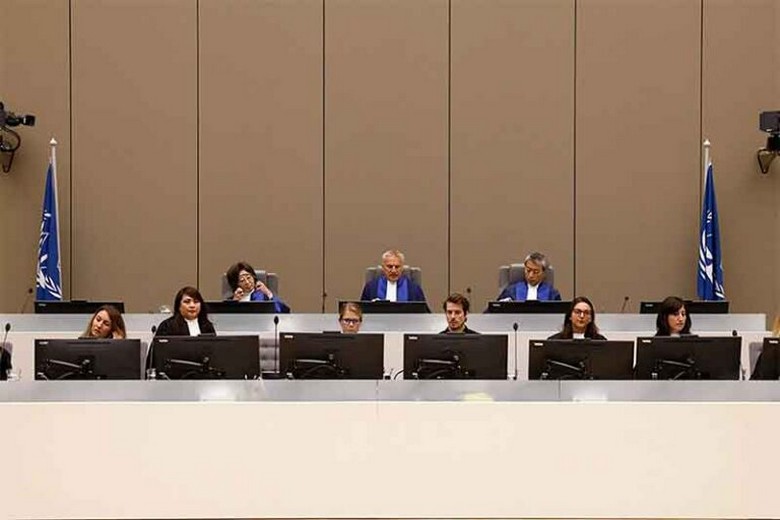
In a preliminary ruling in January, the ICJ determined that it was plausible that Israel was conducting a genocide in Gaza and ordered it to “take all measures within its power” to avoid doing so.

In its statement, Egypt’s foreign ministry called on Israel “to comply with its obligations as the occupying power and to implement the provisional measures issued by the ICJ, which require ensuring access to humanitarian and relief aid in a manner that meets the needs of Palestinians in the Gaza Strip.”

Israel cut off aid when it seized the Rafah border crossing, making it even harder for Gazans to access essential goods like food and fuel, though Israel said on Sunday it had opened a new crossing for aid in the north.

The Egyptian Ministry of Foreign Affairs also repeated a call for the U.N. Security Council and the international community to take action to stop violations in Gaza and Israel’s attack on Rafah.

“Tel Aviv is forcing Palestinians to be contestants in its murderous game show as it flouts international law and basic human decency.”

Egypt is the third country after Colombia and Turkey to request to join South Africa’s case. However, it’s request is especially significant for Israel, Alon Liel, former director of Israel’s Foreign Ministry, told Al Jazeera. Liel said that Egypt was the “cornerstone” of Israel’s standing in the Middle East since the two countries signed a treaty in 1979.

“With Egypt joining South Africa now in The Hague, it’s a real diplomatic punch. Israel would have to take it very seriously,” Liel said. “Israel has to… listen to the world—not only to the Israeli public opinion asking now for revenge.”

Israel’s devastating assault on Gaza began October 7 in response to a Hamas attack on southern Israel that killed around 1,100 people and captured around 250 hostages. Before that attack, Israel had blockaded Gaza for 16 years.

Egypt’s action on Sunday accompanied warnings and expressions of alarm from humanitarian workers, diplomats, and journalists as Israel escalated its campaign in Gaza over the weekend.

“Over the past 48 hours, Israel has intensified its attacks in Gaza as it orders Palestinians in the south to move north and the north to move south,” journalist and Intercept co-founderJeremy Scahill wrote on social media Sunday. “Tel Aviv is forcing Palestinians to be contestants in its murderous game show as it flouts international law and basic human decency.”

UNRWA on Saturday posted photos of bomb-damaged schools in Khan Younis to which displaced families were now returning following the new evacuation orders.

“The classrooms are torched. Walls are blown out. There is rubble everywhere,” UNRWA said. “This situation is unfolding under the world’s watch. Enough is enough.”

Responding to the images, UNRWA Commissioner-General Philippe Lazzarini wrote, “Since the war began, most people in Gaza have moved multiple times: on average once a month. They desperately sought safety that they never found. Some have no choice but to stay in bombed-out UNRWA shelters.”

“The claim of ‘safe zones’ is false and misleading,” Lazzarini continued. “No place is safe in Gaza. Period.”

The U.N. High Commissioner for Human Rights Volker Turk said in a statement Sunday, “A full-scale offensive on Rafah cannot take place.”

“I can see no way that the latest evacuation orders, much less a full assault, in an area with an extremely dense presence of civilians, can be reconciled with the binding requirements of international humanitarian law and with the two sets of binding provisional measures ordered by the International Court of Justice,” Turk said.

However, the Palestinian Center for Human Rights (PCHR) argued on social media Sunday that Israel’s actions in Rafah already comprised “a large-scale military attack, and not a limited operation as described by Israel.”

The group said that Israel had killed at least 116 people—among them 22 women and 38 children—since IDF forces entered Rafah one week ago.

In addition to stepping up its campaign in Rafah, the IDF has increased its attacks on parts of northern Gaza, including Jabalaya, the largest refugee camp in the Gaza Strip.

“We have been hearing from eyewitnesses on the ground, in that very densely populated area, that military tanks are surrounding evacuation centers and residential buildings,” Al Jazeera journalist Tareq Abu Azzoum reported.

PCHR concluded: “In sum, Israel is continuing its genocidal military campaign against the Palestinian people in Gaza unabated. We reiterate our call for an immediate cease-fire. This genocide must end now.”

Olivia Rosane is a staff writer for Common Dreams.

13 May 2024

Source: transcend.org