Just International

October 7

By Al Jazeer

This film includes scenes that some viewers may find disturbing.

20 Mar 2024

Hamas’s incursion into Israel on October 7 transformed the politics of the Middle East. Al Jazeera’s Investigative Unit (I-Unit) has carried out a forensic analysis of the events of that day – examining seven hours of footage from CCTV, dashcams, personal phones and headcams of dead Hamas fighters, and drawing up a comprehensive list of those killed.

The investigation also found that many of the worst stories that came out in the days following the attack were false. This was especially true of atrocities that were used repeatedly by politicians in Israel and the West to justify the ferocity of the bombardment of the Gaza Strip, such as the mass killing of babies and allegations of widespread and systematic rape.

In particular the I-Unit reveals that claims by the Israel Defence Force that it found 8 burned babies at a house in Kibbutz Be’eri were entirely untrue. There were no babies in the house and the 12 civilians inside were killed by Israeli forces when they stormed the house. This was one of a number of incidents where the police and army appear to have killed Israeli citizens. October 7 is a deep dive into the events that led to the deaths of tens of thousands of people, the significance of which will reverberate for decades.

October 7 | Al Jazeera Investigations

TRANSCEND VIDEOS STAY POSTED FOR 2 WEEKS BEFORE BEING ARCHIVED

8 April 2024

Source: transcend.org

How Israel Weaponizes Water

By Vijay Prashad

Thousands Have Lived without Love, but Not One without Water – Israel is using water as a weapon in its war of aggression against Palestinians by denying access and destroying infrastructure.

4 Apr 2024 – By November 2023, it was already clear that the Israeli government had begun to deny Palestinians in Gaza access to water. ‘Every hour that passes with Israel preventing the provision of safe drinking water in the Gaza strip, in brazen breach of international law, puts Gazans at risk of dying of thirst and diseases related to the lack of safe drinking water’, said Pedro Arrojo-Agudo, UN special rapporteur on the human rights to safe drinking water and sanitation. ‘Israel’, he noted, ‘must stop using water as a weapon of war’. Before Israel’s most recent attack on Gaza, 97 percent of the water in Gaza’s only coastal aquifer was already unsafe for human consumption based on World Health Organisation standards. Over the course of its many attacks, Israel has all but destroyed Gaza’s water purification system and prevented the entry of materials and chemicals needed for repair.

In early October 2023, Israeli officials indicated that they would use their control over Gaza’s water systems as a means to perpetrate a genocide. As Israeli Major General Ghassan Alian, the head of the Coordination of Government Activities in the Territories (COGAT), said on 10 October, ‘Human beasts are dealt with accordingly. Israel has imposed a total blockade on Gaza. No electricity, no water, just damage. You wanted hell, you will get hell’. On 19 March, UN Humanitarian Coordinator for Palestine Jamie McGoldrick noted that Gaza needed ‘spare parts for water and sanitation systems’ as well as ‘chemicals to treat water’, since the ‘lack of these critical items is one of the key drivers of the malnutrition crisis’. ‘Malnutrition crisis’ is one way to talk about a famine.

The assault on Gaza – whose entire population is ‘currently facing high levels of acute food insecurity’, according to Oxfam and the Integrated Food Security Phase Classification – has sharpened the contradictions that strike the world’s people with force. A UN report released on World Water Day (22 March) shows that, as of 2022, 2.2 billion people have no access to safely managed drinking water, that four out of five people in rural areas lack basic drinking water, and that 3.5 billion people do not have sanitation systems. As a consequence, every day, over a thousand children under the age of five die from diseases linked to inadequate water, sanitation, and hygiene. These children are among the 1.4 million people who die every year due to these deficiencies. The UN report notes that, since women and girls are the primary collectors of water, they spend more of their time finding water when water systems deteriorate due to inadequate or non-existent infrastructure or droughts exacerbated by climate change. This has resulted in higher dropout rates for girls in school.

A 2023 study by UN Women describes the perils of the water crisis for women and girls:

Inequalities in access to safe drinking water and sanitation do not affect everyone equally. The greater need for privacy during menstruation, for example, means women and girls and other people who menstruate may access shared sanitation facilities less frequently than people who do not, which increases the likelihood of urinary and reproductive tract infections. Where safe and secure facilities are not available, choices to use facilities are often limited to dawn and dusk, which exposes at-risk groups to violence.

The lack of access to public toilets is by itself a serious danger to women in cities across the world, such as Dhaka, Bangladesh, where there is one public toilet for every 200,000 people.

Access to drinking water is being further constricted by the climate catastrophe. For instance, a warming ocean means glacier melt, which lifts the sea levels and allows salt water to contaminate underground aquifers more easily. Meanwhile, with less snowfall, there is less water in reservoirs, which means less water to drink and use for agriculture. Already, as the UN Water report shows, we are seeing increased droughts that now impact at least 1.4 billion people directly.

According to the United Nations, half of the world’s population experiences severe water scarcity for at least part of the year, while one quarter faces ‘extremely high’ levels of water stress. ‘Climate change is projected to increase the frequency and severity of these phenomena, with acute risks for social stability’, the UN notes. The issue of social stability is key, since droughts have been forcing tens of millions of people into flight and starvation.

Climate change is certainly a major driver of the water crisis, but so is the rules-based international order. Capitalist governments must not be allowed to point to an ahistorical notion of climate change as an excuse to shirk their responsibility in creating the water crisis. For instance, over the past several decades, governments across the world have neglected to upgrade wastewater treatment facilities. Consequently, 42% of household wastewater is not treated properly, which damages ecosystems and aquifers. Even more damning is the fact that only 11% of domestic and industrial wastewater is being reused.

Increased investment in wastewater treatment would reduce the amount of pollution that enters water sources and allow for better harnessing of the freshwater available to us on the planet. There are several sensible policies that could be adopted to immediately address the water crisis, such as those proposed by UN Water to protect coastal mangroves and wetlands; harvest rainwater; reuse wastewater; and protect groundwater. But these are precisely the kinds of policies that are opposed by capitalist firms, whose profit line is improved by the destruction of nature.

In March 2018, we launched our second dossierCities Without Water. It is worthwhile to reflect on what we showed then, six years ago:

The Intergovernmental Panel on Climate Change’s Technical Paper VI (IPCC, June 2008) is on climate change and water. The scientific consensus in this document is that the changes in weather patterns – induced by carbon-intensive capitalism – have a negative effect on the water cycle. Areas where there will be higher rainfall might not see more groundwater due to the velocity of the rain, which will create a rapid movement of water to the oceans. Such high velocity rainfall neither refills aquifers (natural water sources), nor does it allow water to be stored by humans. The scientists also predict higher rates of drought in regions such as the Mediterranean and Southern Africa. It is this technical report that put forward the number that over a billion people will suffer from water scarcity.

For the past decade, the United Nations Environmental Programme has warned about the growth of water-intensive lifestyles and of water pollution. Both of these – lifestyles and pollution – are consequences of the spread of capitalist social relations and capitalist productive mechanisms across the planet. In terms of lifestyle use, the average resident in the United States consumes between 300 and 600 litres of water per day. This is a misleading figure. It does not mean that individuals consume such high amounts of water. Much of this water is used by water-intensive agriculture and by water-intensive industrial production, including energy production. The World Health Organisation (WHO) recommends per person usage of 20 litres of water per day for basic hygiene and food preparation. The gap between the two is not accidental. It is about a water-intensive lifestyle – use of washing machines and dishwashers, washing of cars and watering of gardens, as well as the use of water by factories and factory farms.

Water pollution is a serious problem. In Esquel, Argentina, the people saw that the contaminants from corporate gold mining were ruining their drinking water. ‘Water is worth more than gold’ (El agua vale más que el oro), they said. Ruthless techniques of extraction by mining corporations (by use of cyanide) and of cultivation by agribusiness (by use of fertilisers and pesticides) have ruined reservoirs of clean water. Their blue gold, say the people of Esquel, is more important than real gold. They held a public assembly in 2003 that asserted their right to their water against the interests of the private corporations.

It is worth pointing out that the amount of water it would take to support 4.7 billion people at the WHO daily minimum would be 9.5 billion litres – the exact amount used every day to water the world’s golf courses. The water used by 60,000 villages in Thailand, for instance, is used to water one golf course in Thailand. These are the priorities of our current system.

In other words, watering golf courses is more important than providing piped water to the thousand children under the age of five who die every day due to water deprivation. Those are the values of the capitalist system.

Vijay Prashad is an Indian historian, editor and journalist. He is a writing fellow and chief correspondent at Globetrotter.

8 April 2024

Source: transcend.org

The Death of Amr

By Chris Hedges

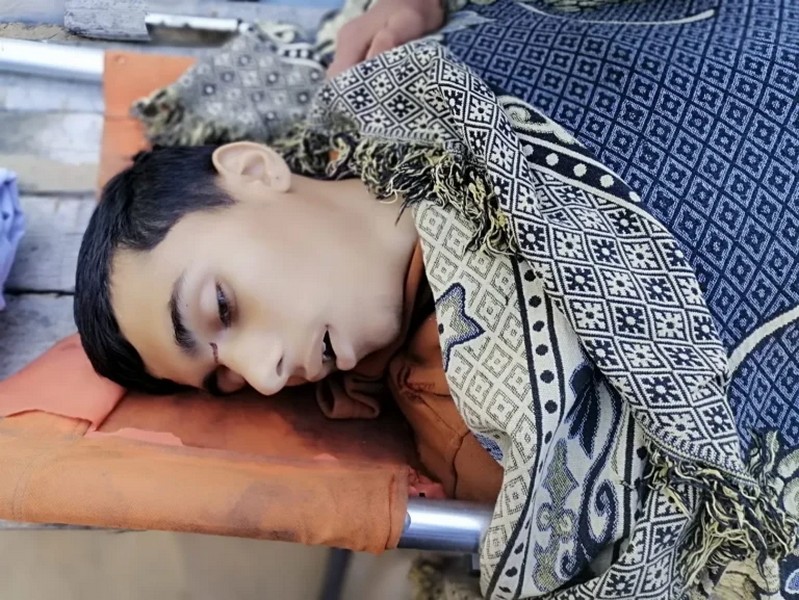
Over 13,000 children have been killed in Gaza. Amr Abdallah is just one of them.

3 Apr 2024 – On the morning Amr Abdallah was killed, he woke before dawn to say his Ramadan prayers with his father, mother, two younger brothers and aunt, in an open field in southern Gaza.

“It is You we worship and You we ask for help,” they prayed. “Guide us to the straight path — the path of those upon whom You have bestowed favor, not of those who have evoked Your anger or of those who are astray.”

It was dark. They made their way back to their tents. Their old life was gone — their village, Al-Qarara, their house — built with the money Amr’s father saved during the 30 years he worked in the Persian Gulf — their orchards, their school, the local mosque and the town’s cultural museum with artifacts dating from 4,000 B.C.

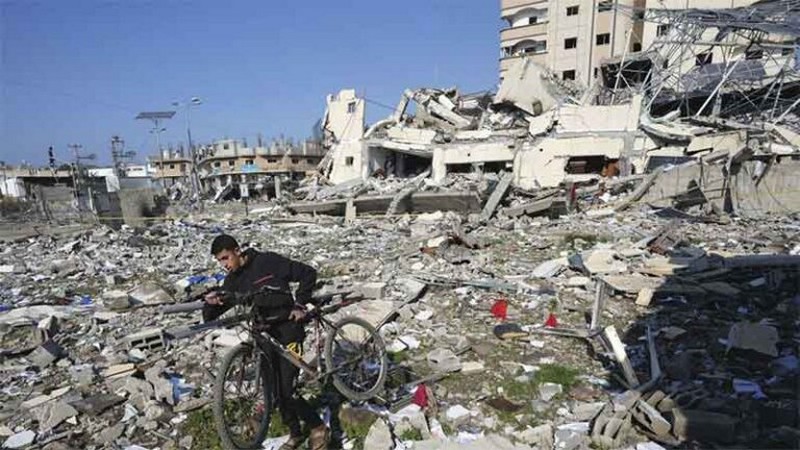
Blasted into rubble.

Amr, who was 17, would have graduated from high school this year. The schools were closed in November. He would have gone to college, perhaps to be an engineer like his father, who was a prominent community leader. Amr was a gifted student. Now he lived in a tent in a designated “safe area” that, as he and his family already knew, was not safe. It was shelled sporadically by the Israelis.

It was cold and rainy. The family huddled together to keep warm. Hunger wrapped itself around them like a coil.

“When you say ‘Amr’ it’s like you’re talking about the moon,” his uncle, Abdulbaset Abdallah, who lives in New Jersey, tells me. “He was the special one, handsome, brilliant, and kind.”

The Israeli attacks began in northern Gaza. Then they spread south. On the morning of Friday, Dec. 1, Israeli drones dropped leaflets over Amr’s village.

The leaflets read:

“To the inhabitants of al-Qarara, Khirbet al-Khuza’a, Absan and Bani Soheila, you must evacuate immediately and go to shelters in the Rafah area. The city of Khan Yunis is a dangerous combat zone. You have been warned. Signed by the Israeli Defense Army.”

One of the leaflets dropped over Amr’s village

Families in Gaza live together. Whole generations. This is why dozens of family members are killed in a single air strike. Amr grew up surrounded by uncles, aunts and cousins.

The villagers panicked. Some began to pack. Some refused to leave.

One of Amr’s uncles was adamant. He would stay behind while the family would go to the “safe area.” His son was a physician at Nasser Hospital. Amr’s cousin left the hospital to plead with his father to leave. Moments after he and his father fled, their street was bombed.

Amr and his family moved in with relatives in Khan Yunis. A few days later more leaflets were dropped. Everyone was told to go to Rafah.

Amr’s family, now joined by relatives from Khan Yunis, fled to Rafah.

Rafah was a nightmare. Desperate Palestinians were living in the open air and on streets. There was little food or water. The family slept in their car. It was cold and rainy. They did not have blankets. They looked desperately for a tent. There were no tents. They found an old sheet of plastic, which they attached to the back of the car to make a protected area. There were no bathrooms. People relieved themselves on the side of the road. The stench was overpowering.

They had been displaced twice in the span of a week.

Amr’s father, who has diabetes and high blood pressure, fell sick. The family took him to the European Hospital near Khan Yunis. The doctor told him he was ill because he was not eating enough.

“We can’t handle your case,” the doctor told him. “There are more critical cases.”

“He had a beautiful house,” Abdallah says of his older brother. “Now he is homeless. He knew everyone in his hometown. Now he lives on the street with crowds of strangers. No one has enough to eat. There is no clean water. There are no proper facilities or bathrooms.”

The family decided to move again to al-Mawasi, designated a “humanitarian area” by Israel. They would at least be in open land, some of which belonged to their family. The coastal area, filled with dunes, now holds some 380,000 displaced Palestinians. The Israelis promised the delivery of international humanitarian aid to al-Mawasi, little of which arrived. Water has to be trucked in. There is no electricity.

Israeli warplanes hit a residential compound in al-Mawasi in January where medical teams and their families from the International Rescue Committee and Medical Aid for Palestinians were housed. Several were injured. An Israeli tank fired on a house in al-Mawasi where staff from Médecins Sans Frontières and their families were sheltering in February, killing two and injuring six.

Amr’s family set up two makeshift tents with palm tree leaves and sheets of plastic. Israeli drones circled overhead night and day.

On the day before he was killed, Amr managed to get a phone connection — telecommunications are often cut — to speak to his sister in Canada.

“Please get us out of here,” he pleaded.

The Egyptian firm Hala, which means “Welcome” in Arabic, provided travel permits for Gazans to enter Egypt for $350, before the Israeli assault. Since the genocide began, the firm has raised the price to $5,000 for an adult and $2,500 for a child. It has sometimes charged as much as $10,000 for a travel permit.

Hala has offices in Cairo and Rafah. Once the money is paid — Hala only accepts U.S. dollars — the name of the applicant is submitted to Egyptian authorities. It can take weeks to get a permit. It would cost around $25,000 to get Amr’s family out of Gaza, double that if they included his widowed aunt and three cousins. This was not a sum Amr’s relatives abroad could raise quickly. They set up a GoFundMe page here. They are still trying to collect enough money.

Once Palestinians get to Egypt, the permits expire within a month. Most of the Palestinian refugees in Egypt survive on money sent to them from abroad.

Amr awoke in the dark. It was the first Friday of Ramadan. He joined his family in the morning prayer. The Fajr. It was 5 a.m.

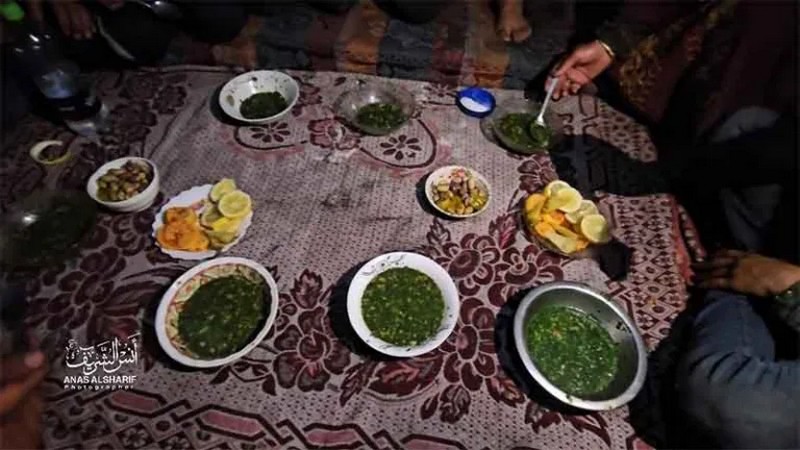
Muslims fast in the day during the month of Ramadan. They eat and drink once the sun goes down and shortly before dawn. But food was now in very short supply. A little olive oil. The spice za’atar. It was not much.

They went back to their tents after prayers. Amr was in the tent with his aunt and three cousins. A shell exploded near the tent. Shrapnel tore apart his aunt’s leg and critically injured his cousins. Amr frantically tried to help them. A second shell exploded. Shrapnel ripped through Amr’s stomach and exited from his back.

Amr stood up. He walked out of the tent. He collapsed. Older cousins ran towards him. They had enough gas in their car — fuel is in very short supply — to drive Amr to Nasser Hospital, three miles away.

“Amr, are you okay?” his cousins asked.

“Yes,” he moaned.

“Amr, are you awake?” they asked after a few minutes

“Yes,” he whispered.

They lifted him from the car. They carried him into the overcrowded corridors of the hospital. They set him down.

He was dead.

They carried Amr’s body back to the car. They drove to the family’s encampment.

Amr’s uncle shows me a video of Amr’s mother keening over his corpse.

“My son, my son, my beloved son,” she laments in the video, her left hand tenderly stroking his face. “I don’t know what I will do without you.”

They buried Amr in a makeshift grave.

Amr’s Burial

Later that night the Israelis shelled again. Several Palestinians were wounded and killed.

The empty tent, occupied the day before by Amr’s family, was obliterated.

Chris Hedges is a Pulitzer Prize–winning journalist who was a foreign correspondent for fifteen years for The New York Times, where he served as the Middle East Bureau Chief and Balkan Bureau Chief.

8 April 2024

Source: transcend.org

Thailand Leads Southeast Asia: Parliament Approves Landmark Same-Sex Marriage Bill

By Pranjal Pandey

Thailand’s lower house endorses historic same-sex marriage bill, paving the way for southeast Asia’s first marriage equality law amid evolving LGBTQ+ rights landscape.

Legislators in Thailand’s lower house of Parliament have decisively endorsed a marriage equality bill, marking a historic step towards becoming the first Southeast Asian nation to legalize equal marriage rights for all people. On March 27, 2024, 400 out of 415 attending lawmakers voted in favor of the bill.

“This is the beginning of equality. It’s not a universal cure for every problem. Still, it’s the first step towards equality,” Danuphorn Punnakanta, an MP and chairman of the lower house’s committee on marriage equality, told Parliament while presenting a draft of the bill.

The bill must undergo approval by the Senate and receive endorsement from the Thai king. Following this endorsement, it would be published in the Royal Gazette and become law after 60 days. If it happens, Thailand will join Taiwan and Nepal as one of the few countries in Asia to legalize same-sex marriage.

The National Assembly has debated different versions of the legislation since December last year. Subsequently, the cabinet of Prime Minister Srettha Thavisin sent the bill to Parliament. Initially, four draft bills on same-sex marriage were proposed by various political parties, which were later consolidated into one. In 2020, the constitutional court upheld the constitutionality of the country’s marriage law, which only recognized heterosexual couples. However, it recommended expanding the law to ensure the rights of other types of couples.

The law, which redefines marriage as a partnership between two individuals rather than solely between a man and a woman, grants LGBTQ+ couples equal rights. These rights include marital tax savings, inheritance entitlements, and the ability to give medical treatment consent for ill partners. Additionally, under the law, married same-sex couples can adopt children.

However, the lower house did not adopt the committee’s suggestion to replace the terms “fathers and mothers” with “parents.” A government survey conducted late last year indicated overwhelming support for the bill, with 96.6 percent of respondents in favor.

The rights to marry and form a family are fundamental rights acknowledged in Article 23 of the International Covenant on Civil and Political Rights (ICCPR), a treaty ratified by Thailand. Currently, 37 countries have included same-sex marriage in their national laws. Taiwan set a precedent in 2019 by becoming the first Asian country to recognize same-sex marriage. Meanwhile, Nepal acknowledged a nontraditional marriage in 2023 under an interim order from the Supreme Court, awaiting a final judgment.

In 2015, Thailand enacted the Gender Equality Act to offer legal safeguards against gender-based discrimination, particularly targeting unfair treatment of LGBTQ+ individuals. Nonetheless, the law retains provisions that permit the justification of discrimination against LGBTQ+ individuals on grounds of religion or national security. Furthermore, legal gender recognition remains absent, depriving transgender and non-binary individuals of the ability to officially alter their surname or gender on official records.

Same-Sex Marriage in Asia

In Asia, the legal landscape regarding same-sex marriage is evolving, with only Taiwan and Nepal currently recognizing such unions. Taiwan made history on 24 May 2019, becoming the first country in the region to legalize same-sex marriage nationwide. This milestone followed a landmark ruling by the Constitutional Court and subsequent legislative reforms. Meanwhile, Nepal has been a pioneer in LGBTQ+ rights, with the Supreme Court granting permission for same-sex marriage as early as 2008. This progressive stance was further solidified by the 2015 constitution, which explicitly prohibits discrimination based on sexual orientation.

Despite strides towards equality, Nepal continues to navigate the legal intricacies of recognizing same-sex unions. In a significant move on June 28, 2023, Supreme Court Justice Til Prasad Shrestha directed the government to establish a dedicated register for sexual minorities and nontraditional couples, allowing for their temporary registration. However, a definitive verdict from the Supreme Court on the broader recognition of same-sex marriage is still awaited, underscoring the ongoing legal debate surrounding LGBTQ+ rights in the country.

Against this backdrop, November 2023 marked a historic moment in Nepal’s LGBTQ+ journey. In Dordi Rural Municipality in western Nepal, Maya Gurung, a 35-year-old transgender woman, and Surendra Pandey, a 27-year-old gay man, legally formalized their union.

Meanwhile in India, the journey towards obtaining legal recognition for same-sex relationships has been rife with legal and societal challenges. A significant breakthrough occurred in 2018 when the Supreme Court of India took a groundbreaking step by decriminalizing consensual same-sex relations, marking a pivotal moment of progress for the LGBTQ+ community.

However, in a notable turn of events in 2023, the Supreme Court bench led by Chief Justice D.Y. Chandrachud unanimously rejected the legalization of same-sex marriage. Moreover, the court voted 3 to 2 against acknowledging civil unions for non-heterosexual couples. This ruling dealt a blow to activists who had campaigned for equal rights within the realm of marriage.

This decision underscored the crucial role of legislative action in shaping the fate of same-sex marriage. The court abstained from interpreting the Special Marriage Act (SMA) 1954 to encompass same-sex unions, emphasizing that such matters lie within the purview of Parliament and state legislatures. Despite this setback, the court reiterated the fluid nature of the institution of marriage and affirmed the equal right of queer individuals to form unions, i.e., to stay as a live-in couple or have a relationship short of marriage.

The SMA is a piece of Indian legislation that allows individuals of different religions, nationalities, castes, or communities to solemnize their marriage through a civil ceremony. It provides a legal framework for interfaith and inter-caste marriages and offers provisions for the registration and validation of such unions.

Meanwhile, other prominent countries in Asia are also grappling with the complexities surrounding same-sex marriage. In China, there is no nationwide recognition of same-sex marriage. In countries such as Cambodia and Japan, partnership certificates are available only in specific cities or prefectures. In contrast, Hong Kong provides spousal visas and benefits to same-sex partners, highlighting stark differences from countries such as Afghanistan, Brunei, Iran, Qatar, Saudi Arabia, and the UAE, where homosexuality can result in the death penalty.

The level of social acceptance towards LGBT individuals varies considerably, with evolving public attitudes and ongoing discussions influencing the trajectory of same-sex marriage rights across the region. Advocacy efforts and legal battles persist as communities strive for equality and acknowledgment in a continent marked by complex social dynamics.

Pranjal Pandey, a journalist and editor located in Delhi, has edited seven books covering a range of issues available at LeftWord.

2 April 2024

Source: countercurrents.org

How Israel Devastated Al Shifa Complex

By Dr Marwan Asmar

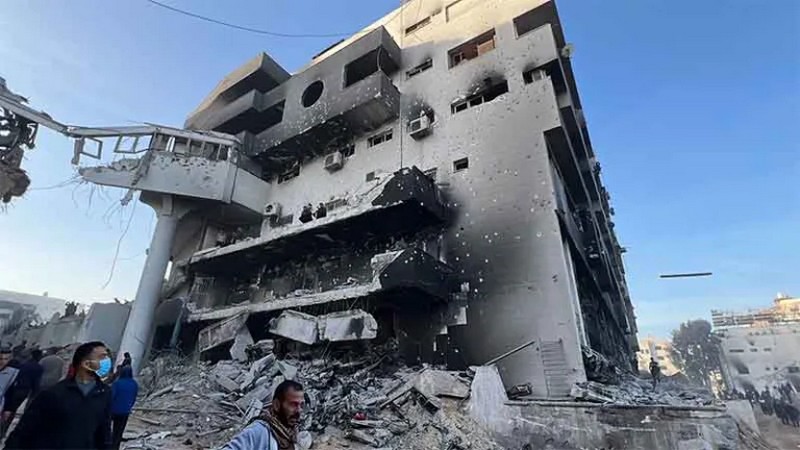
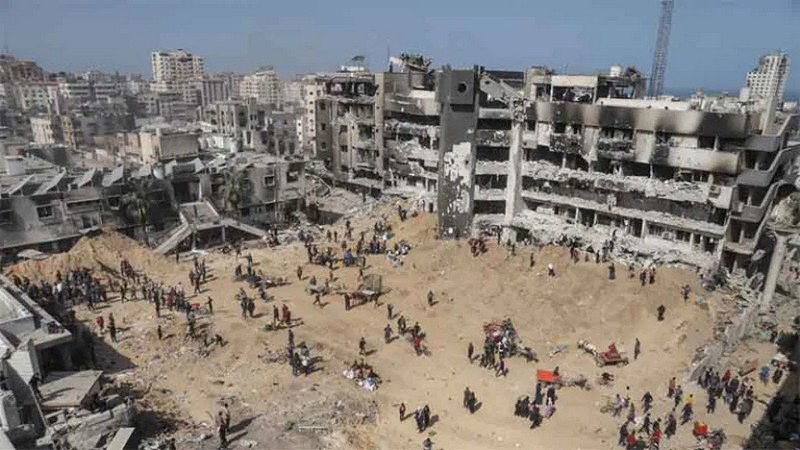
Finally, the Israeli army pulled out of the Shifa complex after two weeks of mass destruction. The hospital itself and all of its buildings were rendered inoperable, either bombed or burned to the ground.

The Israeli army entered the hospital on 18th March searching for Palestinian resistance fighters but it found mainly 3000 displaced people as well as doctors, staff and starving patients.

https://t.me/QudsNen/100243

The images on the social media are horrendous, visually speaking of devastation not only of the Hospital but its surrounding. Its carnage and wreaking death.

After the Israeli soldiers left the complex hundreds of Gazans flocked to the area but there was nothing but debris.

Palestinian news agency (WAFA) journalist Khader Al Za’anoun, also working for CNN, said the scene following the withdrawal of the Israeli army resembled a “horror movie.”

Medical sources in Al Shifa hospital told WAFA the Israeli army completely destroyed floors in the specialized surgeries building, and burned the rest of the buildings, and the main reception and emergency building, and destroyed dozens of its rooms and all the medical equipment in it.

They added that the Israeli forces also burned the kidney and maternity buildings, the morgues, cancer and burns refrigeration facilities, and destroyed the outpatient clinics building.

https://t.me/warfareanalysis/26255

A Norwegian doctor, working at the Al-Shifa Hospital in Gaza for 16 years, said that the hospital has been turned into a “House of Death by Israel and the US,” as quoted in the Turkish Anadolu news agency.

“Today, we witness the total Israeli destruction of the most important, 700-bed specialty hospital in Gaza, Al Shifa Medical Complex,” said Mads Gilbert in his account on X.

https://t.me/warfareanalysis/26251

This is the second time that Israeli soldiers raid the hospital with the first being on 16 November, 2023.

After the army left, many bodies were seen next the hospital and in the surrounding areas. They have been trampled on by Israeli bulldozers after they were shot dead.

The Euro-Med Human Rights Monitor said Al-Shifa Medical Complex witnessed one of the largest massacres in Palestinian history. In the 14-day siege of Al Shifa complex the Israeli army killed more than 200 Palestinians and detained over 900 Palestinians in and around the hospital, Anadolu reports. But these are only the tip of the iceberg.

https://t.me/QudsNen/100262

“The Israeli army carried out a massive, shockingly horrific military operation in the Al-Shifa Medical Complex in Gaza City over the course of the past two weeks, indiscriminately targeting and attacking Palestinians regardless of their civilian status, professional standing, gender, age, or health condition,” the Euro-Med Human Rights Monitor stated Monday.

“Though the exact number of casualties from the atrocity is still unknown, preliminary reports suggest that over 1,500 Palestinians have been killed, injured, or are reported missing as a result of the massacre at Al-Shifa, with women and children making up half of the casualties,” it added.

https://t.me/QudsNen/100261

It confirmed through its initial investigation and testimonies hundreds of dead bodies, including some burned and others with their heads and limbs severed, have been discovered both inside Al-Shifa Medical Complex and in the hospital’s surrounding area.

The Monitor claimed the lives of at least 22 patients who were killed in their hospital beds during the Israeli siege of Al Shifa, amid the willful deprivation of their access to food, medical care, and supplies. “Israel’s army also purposefully prevented relief teams and representatives of international organizations from entering Al Shifa.”

https://t.me/QudsNen/100260

Much images show how the Al Shifa complex was in its glorious days and how it had been reduced to.

“Al-Shifa Medical Complex is currently out of service due to the Israeli army bombing and setting fire to every one of its buildings, including the mortuary and all internal and external courtyards and corridors,” the Euro-Med Monitor announced.

The government media office in Gaza stated, Monday, the number of fallen journalists has grown to 138 since the beginning of the genocidal war on the Gaza Strip, following the death of journalist Muhammad Abu Skheil during the storming of the Al Shifa complex as reported by the Jordan Petra News Agency.

https://t.me/QudsNen/100256

It seems the Israeli army was hell-bent on destroying Al Shifa complex, its surroundings and creating total devastation of Gaza city because of the stiff Palestinian resistance they met, primarily from Izz Al Din Al Qassam fighters and Saraya Al Quds. The first is the armed wing of Hamas and the other represents Islamic Jihad.

According to the Institute for The Study of War as carried in the New York Times, Palestinian groups have carried out more than 70 attacks on Israeli troops surrounding the hospitals in the first 11 days of the Israeli siege.

“This high rate of attack indicates that Palestinian militias retain a significant degree of combat effectiveness in the area, despite continued Israeli clearing efforts around Gaza City,” according to the analysis in the Times.

https://t.me/QudsNen/100248

Social media influencer Dr Mahmoud Salem Al Jundi says if you breakdown the 70 attacks it means that Israeli troops were being targeted on average six attacks every day and/or any attack every four hours of the first 11 days.

He added these attacks are effective and hit their targets which means Israeli soldiers faced tough battles both in Al Shifa and in the areas surrounding it from the armed Palestinian groups despite the devastation of vast neighborhoods.

Al Jundi points out it also explains why the Israeli airstrikes on the civilians there, have been so violent and deadly where their homes have not only been bombed but set on fire by the Israeli military.

https://t.me/QudsNen/100248

The Egyptian analyst added this means the Israeli army is in a great deal of trouble and that everyone in the world sees that except the Zionists and their leaders.

He pointed out the Israeli army is facing shortage in individuals because they are constantly being killed and injured as well as shortage of weapons and military hardware despite the fact there is an US air and sea bridges that continuously supplies them with weapons not to mention the military supplies from other western countries like the UK, France and Germany.

Jundi added in this military onslaught on Gaza the Israeli military have lacked the plans and vision against a resistance that has been consistent in its approach and hard-hitting potential.

However, despite their pull out on day 14, the Israeli army are maintaining that the Al “Shifa military operation” has been a great success because they claim they killed many Hamas fighters and have dismantled their activities

But many analysts say what the Israeli army did was destroy a major medical institution in the Gaza Strip and kill many Palestinians inside Al Shifa Hospital and its surroundings which is one more violation of international law.

Dr Marwan Asmar is a writer from Amman, Jordan, specializing on Middle East affairs.

2 April 2024

Source: countercurrents.org

White House defends Shifa hospital massacre that killed over 400

By Andre Damon

The Israeli army’s withdrawal from Shifa Hospital in Gaza on Monday revealed that the complex had been turned into a killing field, with hundreds of bodies of men, women and children showing signs of mass summary execution, torture and mutilation.

The massacre is among the largest in the nearly six-month-long US-Israeli genocide in Gaza, which has so far killed at least 32,000 people.

According to Gaza’s government media office, the death toll of Israel’s assault on the hospital stands at over 400. In a statement Monday, the Euro-Med Monitor said that the total number killed, missing or injured could number over 1,500, in “one of the largest massacres in Palestinian history.”

Images shared widely on social media showed countless decomposed bodies being exhumed from the hospital’s courtyards, where they had been buried by Israeli bulldozers. The bodies included women and children, as well as men with their hands zip-tied together.

Eyewitnesses told Al Jazeera and other media outlets that hostages were shot while handcuffed or thrown in ditches and buried alive by bulldozers.

The revelations of what could possibly be the largest massacre of the genocide so far prompted widespread popular outrage on social media, with millions of people sharing the documentary evidence.

“The [Israeli] occupation destroyed and burned all buildings inside Al-Shifa Medical Complex. They bulldozed the courtyards, burying dozens of bodies of martyrs in the rubble, turning the place into a mass graveyard,” said Ismail Al-Thawabta, director of Gaza’s government office. He added, “This is a crime against humanity.”

“The medical staff, some of whom were killed, others tortured, others detained, and above all, they have been besieged for two weeks without any medical supplies or even food or water,” Raed al-Nims, a spokesperson for the Palestinian Red Crescent Society, told Al Jazeera.

He continued, “According to eyewitness accounts and official reports, many of the civilians were executed. They were killed by the Israeli occupation forces, including medical staff, doctors, and nurses; they were purposefully executed by the Israeli soldiers.”

In its initial report on the massacre, based on on-the-ground reports, the Euro-Med Monitor reported that “hundreds of dead bodies, including some burned, and others with their heads and limbs severed, have been discovered both inside Al-Shifa Medical Complex and in the hospital’s surrounding area.”

The Biden administration, the leading sponsor of the Israeli genocide, defended the massacre, claiming Shifa hospital was a legitimate military target and alleging, without substantiation, that Hamas was using it as a headquarters.

“There were Hamas fighters hiding in Al Shifa Hospital,” said State Department spokesman Matthew Miller.

“Do not believe that this attack was on the hospital,” Miller added. “The attack was on the Hamas fighters that are hiding inside a hospital.”

He added, “I don’t know why I don’t hear more people calling on Hamas to stop going into hospitals.”

White House spokesman Karine Jean-Pierre added, “So look, Hamas should not be operating out of hospitals, we have said that over and over again, and putting civilians at risk.”

“They’re operating out of hospitals, out of hospitals,” she added. “That’s what they’re doing. They’re embedding themselves in the civilian population. This is what they’re doing.”

The White House responded to the massacre by directly green-lighting Israel’s planned assault on Rafah, where over 1 million displaced people are sheltering.

Miller said that the scenario in which “Israel does nothing about the Hamas fighters that continue to exist in Rafah” is not an “acceptable alternative.”

Jean-Pierre added, “We also know that there are Hamas operatives in Rafah as well. But if they’re going to move forward with military operations, we have to have this conversation. We have to understand how they’re going to move forward.”

According to Euro-Med, Israeli forces cleared the Shifa hospital complex of “all working personnel—particularly medical personnel—either by summary execution or forced displacement or arrest.”

The human rights group said that 22 patients were killed in their hospital beds during the siege, under conditions in which severely ill patients were denied food, water and medical care.

Among the medical workers killed in the attack were two doctors, Yusra Al-Maqadmeh and her son Ahmed Al-Maqadmeh.

In a widely shared tribute, Abu Sitta, a doctor who had previously worked in Gaza, wrote, “A beautiful soul and a great surgeon. We worked together in the Great March of Return and the 2021 war and then this recent war. His dedication was unlike anything I have ever seen. We will never forget.”

He added, “He spent this war going from Shifa hospital to Al Quds Hospital and when he was free he would join me at Al Ahli. Always dedicated, always wanting to learn. He refused to leave the north and kept sending me photos of his surgeries. He leaves behind a wife and baby.”

Earlier this month, Euro-Med reported that Israeli forces were carrying out mass summary executions of detainees. These reports were completely ignored by major media outlets in the United States. But the footage now emerging from Shifa hospital substantiates the allegations that the hospital was turned into a massive killing field by Israeli troops, with the full support of the Biden administration.

2 April 2024

Source: countercurrents.org

Is Secularism Incompatible with Islam and Vice Versa?

By M Adil Khan

In recent times there have been raging debates concerning secularism and Islam and many especially the protagonists of secularism argue that Islam is an antithesis to the very idea of secularism and that secularism which happens to be an integral component of democracy and democratic values, Islam is not. But is it?

This idea that Islam is inimical to secularism is prevalent not just in non-Muslim countries but in some Muslim majority countries as well, where in recent times steps have been taken to ban and/or minimize Islamic practices and rituals where these rituals have been in vogue for centuries especially on occasions such as Ramadan, the Muslim month of fasting.

During Ramdan Muslims congregate to break their fasts and pray, at home and at mosques and sometime outside mosques, in public spaces. These are age-old practices. However, recently, in some Muslim majority countries, these practices have either been banned or are discouraged – all in the name of secularism.

But are these practices or more broadly, is secularism incompatible with Islam? Let us begin by defining and explaining secularism.

Secularism

According to the Delhi University Professor of History, Romila Thapar, secularism implies, “the functioning of the universe and human society without involving divine intervention” and that “…secular does not deny religion, but at the same time does not give it primacy in the functioning of society.”

In other words, secularism is not a contra idea to religion. Secularism suggests that religion, any religion, should not be the governing parameter of societies and this is particularly crucial for those societies where a certain religion practices structured inequities through divine sanctions, and this is unacceptable.

Furthermore, like religion, secularism can become problematic, especially when the concept gets either misinterpreted or deliberately misconstrued to use it as a political tool to suppress political rivals that espouse and embrace Islam and Islamic identity as their political and ideological platform. As a matter of fact, this is already happening in a number of Muslim majority countries including Bangladesh where the vested interest misinterprets and misconstrues the concept to suit their own political mission where they seem to be using secularism to secure their political power by denigrating, marginalizing and suppressing the opposition who prefer Bangladesh’s’s long Muslim history and heritages, to construct its unique and sovereign identity. In this regard, some have also argued that in Bangladesh the nexus of vested interest that uses the “secularism” card to suppress Islamist nationalism, pleases its external patron, a non-Muslim de facto theocratic state that has made denial of equal rights to and persecution of its minority, the Muslim, its policy, and governance preference.

Nonetheless, it is important that we examine Islam and its position on religious tolerance or otherwise.

Islam

There is widespread belief that Islam is an intolerant religion, and that non-Muslims in a Muslim majority “Islamic” state are treated, as an aspect of its tenet, as second-class citizens.

How true is this notion? Is it true that Islam mandates to treat the non-Muslims in an Islamic state as second-class citizens? Let us explore.

In terms of inter-religious relationships and governance of societies in Islamic countries, Islam provides two guiding principles, and these are: (i) one, “La kum di numkum walia din” – your religion is to you, mine is to mine; and (ii) second, “Insaaf” -justness!

The first tenet, “Lakum di….” is clear and emphatic about peaceful religious co-existence and the second, Insaaf (justness) implies that irrespective of differences of caste, colour, creed and  religion, societies must be governed, justly and fairly.

Indeed, when during the reign of Islam’s Second Caliph, Hazrat Omar (RA) his commanders spread out and conquered territory after territory that had non-Muslims as inhabitants, the conquering commanders sought from the Second Caliph his guidance as to how to govern these newly conquered territories whose inhabitants where non-Muslims, the Caliph said, “govern them with Insaaf (justness)” and they did.

Islam’s Caliph’s diktat of governance by the principle of “Insaaf” impressed the non-Muslims of these newly conquered territories so much that many voluntarily converted to Islam.

Indeed, Islam’s fast spread in its early days was mainly due to the application of the principle of Insaaf in governance, invoked by and during Hazrat Omar’s reign which also created a precedence for all Muslim majority/Islamic societies to follow.

In other words, if you believe in Islam and if you happen to oversee governance of a Muslim majority country, you must govern by the two of Islam’s core governing tenets, namely “La kum di numkum walia din” – mutual respect and tolerance to all religions and “Insaaf” – equal treatment of all, implying that there are no contradictions between secularism and Islam.

Now, one may ask, do we have practicing examples of compatibility between secularism and Islam or more generally, are there societies where people can fully preserve and practice their respective faiths, Islam or otherwise and not marginalized nor discriminated against nor persecuted because of their faiths?

Yes, there are. Examples of Nepal, a Hindu state and Uzbekistan, a Muslim state come to my mind.

Secularism/Religion Coexistence: The Examples of Nepal and Uzbekistan

Nepal

Nepal happens to be the only constitutionally decreed Hindu state in the world and a fine example of secularism and religion where Hindus, Christians, Muslims and Buddhists live peacefully with each other and practice their respective religions and rituals without any hindrance nor intimidation, neither from the government nor from people. Furthermore, in Nepal no religious group is given special favour nor are people denied their rights, because of their faiths.

Uzbekistan

The Muslim majority state, Uzbekistan where religion and secularism co-exist, that I visited recently is a good example to explore (https://countercurrents.org/2019/07/my-recent-visit-to-uzbekistan-some-take-home-lessons-of-their-public-policies/).

Until 1991 Uzbekistan, a country 93 million people of which 93% are Muslims was under the rule of communist Soviet Union. During the Soviet era many of Uzbekistan’s Islamic practices were banned and Islamic relics and monuments were destroyed.

However, after separating and gaining independence from the Soviet Union in 1991, Uzbekistan has restored many of the Islamic practices, and rituals, albeit, in a regulated manner meaning that the Uzbeks made conscious decision to blend its dominant Islamic heritages with secular values which nonetheless are also Islamic values.

In Uzbekistan religious tolerance and mutual respect to each other’s religion, is strictly enforced. For example, expressions, displays and/or discussions of religions, Islam or otherwise, that one way or the other risk promoting conflict and exclusions are not permitted in public space. For example, wearing of Burkas in public by the Muslim women is prohibited though hijabs are allowed. More importantly, equality of women, a Soviet legacy remains in practice.

Another interesting aspect of Uzbekistan’s relationship between religion – all religions – and secularism and co-existence is that the prayer congregations are less public and more discreet. In Uzbekistan, prayers can take place only in designated places, away from public view and for the Muslims, in registered mosques. Prayers in open spaces such as parks or in public places such as offices, streets etc. are prohibited.

In terms of Uzbekistan’s education system, there are both secular schools as well as madrassas and, all schools including madrassas are mandated follow secular curriculum up to grade 10 and those who wish to specialize in Islamic studies need to enroll themselves at secondary level, after grade 10, at the designated Islamic Tertiary institutes where courses include both Islamic studies as well as secular subjects such as science and literature. The graduates of the Islamic Institutes are free to choose any profession they wish to – secular or religious. However, should anyone wish to take the job of an Imam, he must have the degree from one of these government approved Tertiary Islamic Institute where in addition to Islamic studies, courses in science, literature and civics are taught which every aspiring Imam must study and pass with good grades.

Secularism/Islam: Take-home Lessons

These examples, practices and theoretical precepts of secularism and those of Islam or for that matter, any religion demonstrate that one does not challenge the other nor practice of one compromise the other. On the contrary, Islam and secularism are perfectly compatible and are in conformity with each other.

In other words, Romila Thapar’s idea of secularism, namely “the functioning of the universe and human society without involving divine intervention” and Islam’s two basic tenets of governance, namely, “Lakum Di Nukum Walia Din” (your religion is to you and mine to mine) and Hazrat Omar’s governing principle “Insaaf” are in sync and not in conflict with each other.

Indeed, the most ideal way to govern societies, Islamic or otherwise would be through the principles of justness (“Insaaf ) and religious tolerance (Lakum Di Nukum Walia Din), tenets that guarantee, as in secular democracies, fair and equal treatment of all citizens and protection as well as nurturing of religious values and rituals through promotion of inter-faith tolerance and mutual respect.

M. Adil Khan is an academic and a former senior policy manager of the United Nations

1 April 2024

Source: countercurrents.org

On Kuffiyehs and Watermelon – Revealing the Meaning of Palestinian Symbols

By Ramzy Baroud and Romana Rubeo

Those who admonish Palestinian Resistance, armed or otherwise, have little understanding of the psychological ramifications of resistance, such as a sense of collective empowerment, honor and hope.

But resistance is not just a rifle, a rocket launcher. The latter are but one manifestation in resistance and, if not backed by strong popular support, they hardly have much impact.

Indeed, all forms of sustainable resistance have to be rooted in culture, which helps it generate new meanings, over time.

In the case of the Palestinian struggle, the concept of resistance is multifaceted and strongly embedded in the collective psyche of generations of Palestinians, which allows it to surpass the ideological and political confines of factions and political groups.

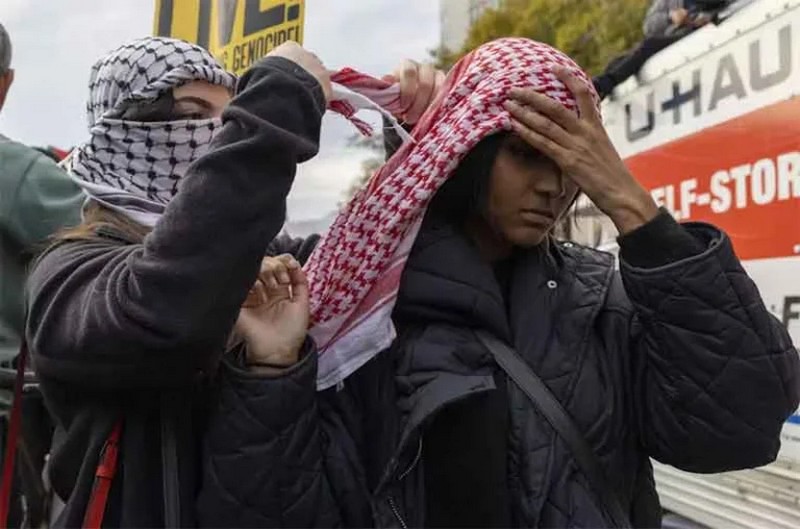
Though the symbols of this resistance – for example, the kuffiyeh, the flag, the map and the key – are part of this generation of meanings, they are mere signifiers of ideas, beliefs and values that are truly profound.

No matter how hard Israel has tried to discredit, ban or recounter these symbols, it has failed and will continue to fail.

In the early 2000s, for example, Israeli fashion designers created what was supposed to be Israeli kuffiyehs. The Israeli scarves, from a distance, looked similar to the Palestinian traditional scarves, except that they were mostly blue. At a closer look, one would be able to decipher that the Israeli replica of the Palestinian national symbol is often a clever manipulation of the Star of David.

This could easily be classified under the banner of cultural appropriation. In actuality, it is far more complex.

Palestinians did not invent the kuffiyeh, or hatta, one of the most common neck or even head scarves throughout the Middle East. But, what they did is that they took ownership of the kuffiyeh, giving it deeper meanings – dissent, revolution, unity.

The kuffiyeh’s prominence was partly compelled by Israel’s own actions and restrictions.

After occupying the remainder of historic Palestine, namely East Jerusalem, the West Bank and Gaza, Israel immediately banned the Palestinian flag. That ban was part of a much larger restrictive campaign aimed at preventing Palestinians from expressing their political aspirations, even if symbolic.

What the Israeli military administration could not prevent was the use of the kuffiyeh, which was a staple in every Palestinian home. Subsequently, the kuffiyeh quickly became the new symbol of Palestinian nationhood and resistance, at times even replacing the now banned flag.

The history of the kuffiyeh goes back to many years before the Nakba, the ethnic cleansing of historic Palestine by Zionist militias in 1947-48.

In fact, if one is to examine any revolt in the modern history of Palestine, from the 1936-39 Palestinian strike and rebellion to Palestinian resistance during the Nakba, to the Fedayeen movement in the early 1950s, all the way until the present, the kuffiyeh has featured prominently as arguably the most important Palestinian symbol.

Yet, the real rise of the kuffiyeh as the symbol of global solidarity with Palestine and the Palestinians did not become a truly international phenomenon until the First Intifada in 1987. It was then that the world watched in awe an empowered generation only armed with rocks facing the well-equipped Israeli army.

Two Types of Symbols 

It is worth noting that, when we talk about the ‘symbolism’ of Palestinian cultural symbols, and to counter Israeli cultural symbols, we refer to two types of symbols: one that is laden with intangible, although quintessential representations – for example, the watermelon – and another with tangible and consequential representations – for example, the Al-Aqsa Mosque.

The Al-Aqsa Mosque is a symbol of Palestinian spirituality, history, nationalism, and also an actual physical structure that is located in an occupied Palestinian city, Al-Quds, East Jerusalem. For many years, Israel has perceived the Mosque with alarm, countering the Palestinian claim by alleging that, beneath Al-Aqsa, there lie the ruins of the Jewish Temple, whose resurrection is critical for Jewish spirituality and purification.

Therefore, Al-Aqsa cannot be considered a mere symbol, serving the role of a political representation. To the contrary, it has grown in terms of imports to carry a much more profound meaning in the Palestinian struggle. It would not be an exaggeration to argue that the survival of Al-Aqsa is now directly linked to the very survival of the Palestinian people as a nation.

According to renowned Swiss linguist Fernand de Saussure, every sign or symbol is composed of a ‘signifier’, meaning the form that the sign takes, and the ‘signified’, the concept that it represents.

For example, although a map is commonly defined as the geographic representation of an area or a territory merely showing physical features and certain characteristics of the place, it can take on a different ‘signified’ when the territory or land in question is an occupied one, as Palestine is. Therefore, the physical representation of Palestine’s borders became, with time, a powerful symbol, reflecting the injustice inflicted upon the Palestinian people throughout history.

The same process was applied to the keys belonging to those very refugees, the victims of Israel’s ethnic cleansing of Palestine. The only difference is that, while the villages existed, then ceased to exist, the key existed as a physical object, before and after the Nakba. The house and the door are, perhaps, gone, but there is a physical key that still, symbolically, unlocks the dichotomy of the past, with the hope of, one day, restoring the door and the house as well.

In view of this, the segment of land stretching from the Jordan River to the Mediterranean Sea, ceased to be just sand, water, grass and stones, and became the representation of something else entirely.

It must be denoted that the slogan ‘From the River to the Sea’ neither references actual topography nor politics. It is based on the understanding that a disruptive historical event has wrought a great deal of injustice, pain and hurt to historic Palestine. Confronting this injustice cannot be segmented, and it must take place through a wholesome process that would allow the land but, more importantly, the native inhabitants of that land, to restore their dignity, rights and freedom.

Watermelons and Red Triangles  

Some symbols, although employed even before the beginning of the Al-Aqsa Flood Operation, became far more popular after October 7. The watermelon, for example, has been used, time and again, throughout Palestine’s modern history, specifically when Israel banned the ownership or the displaying of the Palestinian flag. The fruit itself, aside from being a symbol of the richness of the land of Palestine, also features the same colors of the flag: black, red, white and green.

Another related symbol is the red triangle. A small red triangle began appearing as a functional tool in videos produced by the Al-Qassam Brigades, merely to point at a specific Israeli military target before it was struck by a Yassin 105 or an RPJ shell, or any other.

With time, however, the red triangle began acquiring a new meaning, regardless of whether it was intended by those who designed the Qassam videos, or not.

The red triangle, as a symbol, was connected, by some, to the Palestinian flag, particularly to the red triangle on the left, situated over the white color, between black and green. In truth, the origins of the small, red triangle do not matter. Like other Palestinian symbols, it, too, has generative power to accumulate new meanings over time.

Culture and Counter-culture

Like the ‘Israeli kuffiyeh’, Israel has tried to counter Palestinian culture. They did so mostly by devising laws to prohibit Palestinians from communicating or embracing their cultural symbols.

Another tactic that Israel used was claiming Palestinian symbols as if their own. This is quite common in clothes, food and music. When Israel hosted the Miss Universe Beauty Pageant, in 2021, contestants were taken to the Arab Bedouin city of Rahat. Being obviously unaware that Bedouin culture, with its embroidered clothes, food, music and numerous cultural manifestations, is a uniquely Palestinian Arab culture, beauty pageants took to social media to express their excitement about being part of “a day in the life of a Bedouin”, with the hashtag #visit_israel.

Such episodes may highlight the degree of deception on the part of Israel, but also expose to a large extent Israel’s feeling of cultural inferiority. A quick examination of Israeli symbols, whether it is the flag with the star of David, the Lion of Judah or national war songs, such as Harbu Darbu, seem to be largely extracted from biblical references, and religious heroics that have existed even prior to the existence of Israel itself.

And, while Palestinian symbols reflect the desire of Palestinians to return to the land of their ancestors, and to reclaim the rights and justice which they have been long denied, Israeli symbols seem to merely lay claims – ancient, religious, unverifiable. If this reflects anything, it tells us that, despite nearly a century of Zionist colonialism, and 75 years of official existence as a state, Israel has failed to connect to the land of Palestine, to the cultures of the Middle East, let alone carve for itself a place in the yet to be written history of the region, a history that will surely be written by the native inhabitants of that land, the Palestinian people.

Romana Rubeo is an Italian writer and the managing editor of The Palestine Chronicle. Her articles appeared in many online newspapers and academic journals.

Dr. Ramzy Baroud is a journalist, author and the Editor of The Palestine Chronicle. He is the author of six books.

1 April 2024

Source: countercurrents.org

Words I Can’t Find Anymore

By Samina Salim

Children eating grass, innocent, hungry and lost
Mothers soaked in red, wombs tremble in terror

Searching for words I may write of the pain within
Searching for words I may speak of anger within
Words I can’t find anymore

Soft faces, hazel eyes, shiny pigtails, now wrapped in white
Stolen play, broken fairytales at the hands of a genocide

Searching for words I may use to vent at humanity in feign
Searching for words I may lament to oppose my own in vein
Words I can’t find anymore

Starving bodies, await to break bread on an empty spread
All in an empty stare say it is Ramadan, resilience is inbred

Searching for words so I may share the guilt of my abundance
Searching for words so I may reveal the truth of my negligence
Words I can’t find anymore

Bullets and bombs, rockets and shells, fire and flame, burn us all,
Scars and lesions, slash and gash, wounds and blisters, hurt us all

Searching for words so I may scream we hear you Gaza, we see you too
Searching for words so I may shriek we look for you Gaza, there for you too
Words I can’t find anymore

Civility no more, morality in a dump, humanity in a shock, what is left of us
Liberty is selective, equality a choice, freedom for few, what’s left to discuss

Searching for words so I may say justice, freedom and liberty for all or none
Searching for words so I may yell not fair today nor tomorrow, and forever
Words I can’t find anymore

Even if I find the words, how do I speak the unspeakable
Even if I find the words, how do I defend the undefendable

Samina Salim is Associate Professor, Department of Pharmacological & Pharmaceutical Sciences, University of Houston

1 April 2024

Source: countercurrents.org

The destruction of Gaza and American imperialism’s genocidal global war

By Andre Damon

Last week, Michigan Republican Congressman Tim Walberg urged the total destruction of Gaza in the manner of “Nagasaki and Hiroshima,” the Japanese cities the United States destroyed with atomic bombs in 1945 at the end of the Second World War.

“We shouldn’t be spending a dime on humanitarian aid,” Walberg said at a town hall meeting in Dundee, south of Ann Arbor. “It should be like Nagasaki and Hiroshima. Get it over quick,” he said.

The call by a congressman for the extermination of a completely defenseless and imprisoned population expresses the homicidal sentiments that have gripped the American ruling class. After decades of perpetual war, the United States is approaching a level of criminality hitherto associated only with Nazi Germany.

The expressions of feigned outrage from Democratic Party officials are the height of hypocrisy. Representative Ellisa Slotkin, one of the top “CIA Democrats,” called Walberg’s comments “a reprehensible thing for anyone to suggest.” In fact, the Republican congressman was expressing the fundamental content of the Biden administration’s policy toward Gaza.

The Netanyahu government, with the support of the White House, has made the decision to raze Gaza to the ground, to starve its people to death, and expel those left alive, as part of its “final solution” to the Palestinian question.

This is the meaning of Biden’s decision last week to send another 1,800 2,000-pound bombs to Israel.

Israel will not use nuclear weapons in the tiny enclave of Gaza, which would render Israel itself uninhabitable and irradiate the beachfront real estate Israel hopes to seize once the Palestinians are displaced. But Israel has already dropped over 65,000 tons of ordnance on Gaza, more than three times the explosive power of the bombs that leveled Hiroshima and Nagasaki.

As a result, over 54 percent of buildings in the Gaza strip were either damaged or destroyed, compared to 40 percent following the bombing of Nagasaki.

Just as significant as Walberg’s open call for the extermination of the Palestinians, however, was what he had to say about the relationship of the genocide in Gaza to the US proxy war with Russia in Ukraine, and its looming conflict with China.

Calling Israel “our greatest ally,” Walberg said that any moves to feed the starving population of Gaza would be a gift to “Iran and Russia” as well as “China.”

After proposing a “Nagasaki and Hiroshima” solution for Gaza, Walberg immediately added, “It should be the same in Ukraine,” declaring that the aim of the US should be to “wipe out Russian forces.”

Walberg later issued a clarification, declaring, “The sooner Hamas and Russia surrender, the easier it will be to move forward.”

In other words, Walberg’s open support of genocide in Gaza was accompanied by a call for all-out war with Russia aiming to “wipe out Russian forces” and force Russia to “surrender.”

Walberg is saying plainly what the entire US political establishment and media are seeking to conceal. The Biden administration has repeatedly declared that the United States is not at war with Russia, and that it does not seek “conflict” with China. All the while, NATO is sending tanks to Ukraine that have been driven over the Russian border by NATO-funded terrorist groups.

If the United States seeks to wage an offensive war against Russia in order to make it “surrender”—and succeed where Adolf Hitler failed—this will inevitably require a level of mass death and destruction not seen since the Second World War.

In this context, the Gaza genocide is the opening act of a global conflict whose death toll will be in the tens, or even hundreds, of millions.

The greatest horrors of the 20th century: world war, genocide, and the prospect of nuclear holocaust, are reemerging.

In its New Year’s statement, the World Socialist Web Site made the following warning:

As the war in Gaza has normalized genocide as an acceptable instrument of imperialist policy, the relentless escalation of the US-NATO war against Russia has been accompanied by the de facto acceptance of a high level of possibility, even probability, that the conflict may lead to the use of tactical and strategic nuclear weapons.

It concluded:

Taken as a whole, the normalization of different forms of social barbarism signifies that the capitalist class has arrived at a dead end. A class whose policies consist of different forms of sociocide has clearly exhausted its historical, economic, social, and political legitimacy.

In supporting the Gaza genocide, Biden speaks for the entire US political establishment. Last week, Biden held a fundraiser attended by former presidents Barack Obama and Bill Clinton, who unequivocally praised Biden’s support for the genocidal war in Gaza. “He genuinely cares about preserving the existence of Israel,” Clinton said of Biden.

When anti-genocide protesters voiced their opposition to US policy inside Radio City Music Hall, Obama intervened to defend Biden and criticize the protesters for not being willing to “listen” to Biden’s defense of Israeli genocide.

The universal endorsement of the Gaza genocide by the entire US political establishment contrasts with the growing mass opposition among workers and young people all over the world. Over the weekend, hundreds of thousands of people participated in demonstrations against the genocide. In Israel, tens of thousands of people took part in mass protests calling for the resignation of Netanyahu.

It is urgently necessary to arm the growing movement against genocide and war with a socialist program. In a statement on X responding to Walberg’s statement, Socialist Equality Party presidential candidate Joseph Kishore declared:

Opposition to the genocide must be developed as a fight against US-NATO imperialism. This requires the mobilization of the working class against the capitalist ruling elite and its normalization of genocide and nuclear war. In its election campaign, the Socialist Equality Party is developing a leadership in the working class, connecting the fight against war with the fight against inequality and the capitalist system. This is the basic and urgent task.

1 April 2024

Source: countercurrents.org