Skip to the content

Just International

  • Home
  • Just
    • About Us
    • Activities
    • Objective
    • Structure
    • Constitution
    • Volunteers
    • Internships
    • Just Friends
    • Vacancies
    • Contact Just
  • Media Statements
  • Articles
  • Publications
    • Just Commentary
    • Books
    • E-books
    • Library
  • Endorsements
  • Campaigns
  • Events
    • Just Events
    • Just-in-house-forums
    • IYEP
    • YLP
  • Home
  • Just
    • About Us
    • Activities
    • Objective
    • Structure
    • Constitution
    • Volunteers
    • Internships
    • Just Friends
    • Vacancies
    • Contact Just
  • Media Statements
  • Articles
  • Publications
    • Just Commentary
    • Books
    • E-books
    • Library
  • Endorsements
  • Campaigns
  • Events
    • Just Events
    • Just-in-house-forums
    • IYEP
    • YLP
Generic selectors
Exact matches only
Search in title
Search in content
Post Type Selectors

Archives: Articles

Israel Just Launched a Brutal Attack on Rafah. “Beyond Shame, Beyond Crime…”

  • Post author By admin
  • Post date May 4, 2024
  • No Comments on Israel Just Launched a Brutal Attack on Rafah. “Beyond Shame, Beyond Crime…”

By Peter Koenig

22 Apr 2024 – Brutality, atrocity no end.

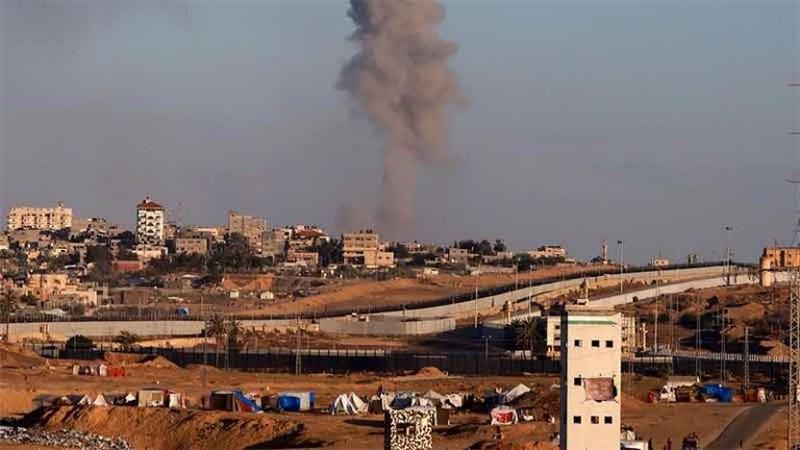
Horrendous indiscriminate firebombing of Gaza’s southernmost city, Rafah.

We know Netanyahu does not move a finger without Washington’s OK.

This was clearly proven by the benign counterattack on Iran – to “retaliate” against Iran’s 14 April “checkmate” (Scott Ritter) retaliatory attack on Israel. Retaliating against Israel’s blowing up Iran’s Consulate in Damascus on 1 April and killing seven Iranians, including two military officers.

President Biden demanded Netanyahu not to risk a large-scale war, to be soft with his retaliation.

By contrast, Biden must have given Netanyahu green light to do away with Rafah, where currently more than a million Palestinians are stranded – bombed from the North of Gaza to the southern tip, Rafah, the locked gate to Egypt.

See this 12-second video. It shows the horror these people must go through. No idea how many will be killed. Its extermination of an entire people – mandated by the Zionists in charge of the US of A and all the puppets in Europe.

[https://twitter.com/BRICSinfo/status/1782090165957095478]

This is way beyond shame – beyond crime, beyond evil – this crime inflicted by Zionist-Israel green-lighted by Washington and its Brussels vassals must be brought to justice. This, and the more than 75 years of “ethnic cleansing”, indiscriminate, never punished killing of Palestinians in Gaza and the West Bank.

The Open Prison Zionist-Israel has created of Gaza in 2008, closing all borders and militarily occupying the narrow strip of land at that time of 2.3 million people – no access to media, no access to witnesses – murders, tortures, indescribable atrocities committed, a Holocaust in hiding, of which occasional evidence leaked out.

Then the well-planned – at least three years ahead – Hamas assault of 7 October 2023 on Israel – organized between Zionist-Irael, the US, and UK Secret Services. The attack is now blamed on Hamas. Let us be clear, Hamas is a creation, including funding, by Zionist-Israel.

The purpose, partly to be a “terrorist” (Israel and the West) counterweight to the legitimate Palestinian Authority, partly, to have at any time a legit cause for a “false flag” – exactly as the world witnessed on 7 October.

Israel’s Defense Forces (IDF) reported that in the first hours of the Hamas attack, 1,200 Israelis were killed and more than 200 taken hostage. There is no proof for either claim. Yet, it is repeated ad nauseam even by the non-mainstream media, as if it were the truth.

There are Israeli witness accounts that the IDF was shooting and killing Israeli youth, participating in the Supernova Music Festival in the Negev desert, about five kilometers from the Gaza border on 7 October. The blame for murdering innocent party-goers was put on Hamas.

*

This “final” assault on Rafah was announced for weeks by Netanyahu – but he needed to wait for approval of the Zionists commanding Washington.

What will happen to the survivors? Will Israel eventually open the gate to the Sinai Desert, where Egypt, in connivance with Netanyahu and possibly co-paid by Israel, has already built tent cities to accommodate at least some of the Palestinian refugees, never to return to their home land? How long and how many will survive, without adequate food and water, and sanitary facilities, health services?

It looks like the final straw of a well-planned extermination of the Palestinian people, to illegally appropriate their land, and the tremendous gas resources offshore of Gaza, conservatively estimated already more than 20 years ago at a trillion cubic feet. An updated assessment might be exponentially higher. But under the circumstances nobody talks or writes about it.

The illegal creation of Israel dates back at least to the Balfour Declaration of 1917 during WWI. At that time Palestine was part of the Ottoman Empire with a small Jewish population, living in peace together with the Palestinian majority.

The Balfour Declaration was contained in a letter dated 2 November 1917 from the United Kingdom’s Foreign Secretary Arthur Balfour to Lord Rothschild, leader of the British Jewish Community, for transmission to the Zionist Federation of Great Britain and Ireland (Wikipedia).

This declaration served the British Government to propose to the United Nations in 1948, the creation of the State of Israel on the Palestine territory. This was illegal as Ottoman-occupied territories became free sovereign nations after WWI, including Palestine. The Mandate to the young, only 52-member strong United Nations in 1948 was illegal. See this “Israel Is an Illegal State”. Dr. Ralph Wilde at the ICJ (videos of ICJ court sessions of 2h 42min and Dr. Wilde’s Plaidoyer 26 min – 29 February 2024).

*

How much longer will the world stand by – or worse encourage this horror show? Make no mistake, not about the people of the world, we are strictly talking about the so-called leaders (sic) of the Western world – most of them were never really democratically elected, but put in their positions with legislative trickery from a selection of the World Economic Forum’s (WEF) Academy for Young Global Leaders (YGL).  

On more than one occasion, Klaus Schwab, the WEF’s CEO, boasted about being proud having been able to infiltrate YGLs in governments throughout the world. These so-called Western leaders, they appear to be non-humans, bred by the non-human WEF which is supported and funded by Big Capital, including BlackRock / Vanguard, plus an inter-mingled crop of top Wall Street Financiers. 

How long will the West, especially the European people, stand by such unelected tyrants, like Ms. Von der Leyen, named President of the EU and the WEF appointed puppets, such as Emmanuel Macron, Olaf Scholz and Rishi Sunak? 

The Rafah onslaught may be another nail in Zionist-Israel’s coffin, from which a free Palestine may emerge. May Palestinians return to their old-new sovereign Palestine homeland.

Peter Koenig is a geopolitical analyst and a former Senior Economist at the World Bank and the World Health Organization (WHO), where he worked for over 30 years around the world.

29 April 2024

Source: transcend.org


Arab Leadership Complicity to Support the US-Israeli War on Gaza

  • Post author By admin
  • Post date May 4, 2024
  • No Comments on Arab Leadership Complicity to Support the US-Israeli War on Gaza

By Mahboob A. Khawaja

Palestinains in Search of Global Humanity!

25 Apr 2024 – Once a people or a nation colonized by European imperialists, it remains colonized and subjugated by the Masters forever. The contemporary oil-producing Arab world represents that historic reality. The Israeli planned onslaught on Gaza for over six months and its catastrophic consequences of crimes against humanity and alleged genocide – all have imprints of complicity of modern Arab -Muslim leaders. Why have the learned and scholars (“Ulema”) and imams not spoken against the inept leaders and tyrants of the Arab-Muslim world? Does it signals the end of the Arab-Muslim failed leadership to protect the besieged people of Gaza?

Are the global institutions of peace, security and conflict management fast becoming obsolete in a real crisis situation? And global humanity is captive of the US-Israel’s intransigence and plans never experienced in history. Why should the global community allow arbitrary terror of killing and expulsion of 2.5 million people of Gaza? Philip Giraldi (Global Research: 2/21/24), “The United States Vetoes Yet Another UN Humanitarian Ceasefire Over Gaza” …. several interesting developments relating to Israel’s ongoing destruction of Gaza and its people, but one might well question the motives of at least one of the principal players in the drama, namely Joe Biden’s United States Government.

https://www.globalresearch.ca/united-states-vetoes-another-un-humanitarian-ceasefire-gaza/5850155:

How the War Dehumanized the Arab-Muslim World? The Arab-Muslim world is a world of bewildered fantasy – no strength, no power to think intelligently,no policies to defend Islam, dubious spectators watching Western military actions-reactions to assign a finished answer to the Palestinian movement for national freedom. If the people of Palestine had white anglo-saxon ethnicity like the Ukranians or the EU, the US-West European leaders would have rushed to help the victims and bomb the aggressor. Even drinking water, medicines, foods, shelters and clean oxygen are not allowed by the Israeli occupation forces. What is next after another inexplicable shocking cataclysm in the making seen on the political horizon?

Were Ancient Warriors More Civilized and Humane than Israel and the US?

Those bombing and destroying the Earth and its life cycle are not normal human beings. Were the ancient people of stone-age more intelligent and responsible for not having destroyed the earth and environment in wars and kept mankind in safety and unity? They fought but protected the environment and kept human races in tact.

American supplied weaponry massacred more than 34,500 innocent people of Gaza, 14,000 children, 9,500 women; and Israel bombed and destroyed the habitats and its citizens for no other reason except intransigence and animosity against Arabs and Muslims.The Earth belongs to all humanity and is a living entity and rotates itself at a speed of 1000 miles per hour at equator and orbits Sun at average speed of 67062 MPH. Earth is a trust to humanity and trust includes accountability. The Earth sustains all forms of living things(known and unknown), the essential foundation of our very existence. Pathologically wicked leaders and nations claiming to be most powerful start acting like God to challenge the sanctity and limits of the Laws of God; historically, they become an object of unthinkable natural calamities- earthquakes, wildfires, floods, deaths and destruction. “Say! Travel through the earth; And see what was the end of those who rejected Truth.” spell out the annals of human history. Those bombing and causing catastrophic events to destroy the planet Earth and mankind and all of its treasures and enrichments are not normal human beings.

There are No Arab-Muslim Leaders to Protect People of Gaza and Palestine

Steven Cook (“Arab Countries Have Israel’s Back—for Their Own Sake.” Foreign Policy: 4/18/24) explains that “Last weekend’s security cooperation in the Middle East doesn’t indicate a new future for the region.” Historically, wicked and aggressive people enjoin friendship and apathy for vicious plans against mankind. President Joe Biden pretended to support the Two States solution in the Middle East. He turned out to be an  imposter when vetoed Palestine full membership at the UNSC. Israelis friendly Arab leaders of Egypt, Saudi Arabia, UAE, Qatar and others were silent spectators, not challenging the wicked actions professed by the US diplomacy. They were submissive to the Master, not safeguarding the interest of their own people. Many Arab leaders including the Saudi and the UAE princes have investments in Israel via Jared Kushner- son-in-law of Donald Trump. America and Israel view all the Arab States as vulnerable to besiegement and political supremacy. Several centuries earlier, the Arabs were described as:

“Thus have We made of you An Ummah justly balanced,that ye might be witnesses over other nations……to Those guided by God. (Quran: 2: 143)

Living in the fantasy of time and power, Arab-Muslim states have no armies or leaders to protect the on-going civilians bloodbath in Gaza and the national interest of Palestine.America and Israel have working plans to conquer more Arab lands -Jordan, Syria, Saudi Arabia and others to resettle the Palestinians and put a finished answer on Palestine as a future State. Would the Arab-Muslim leaders rethink outside the imperial box to plan for a navigational change in relationships with the US and its military hegemony? The time, history and future generations of conscientious people will curse the so-called tribal agents for their wickedness and greed to be kings and queens and princes and nothing else to make their presence in the global arena of emerging conflicts. Please see: “How Did Arab Leaders Betrayed Islam and Defied the Logic of Political Change, Peace and Security.” 

https://www.uncommonthought.com/mtblog/archives/2023/10/07/how-did-arab-leaders-betrayed-islam-and defied-the-logic-of-political-change-peace-and-security.php

While the Arab leaders make melodramatic and misleading claims of security and peace with Israel and the West, the region is a highly militarized and destabilized landscape of continuous conflicts. To subdue and humiliate the “camel jockeys” of the oil producing Arab world, now the US exports wars, weapons and poisonous thoughts to divide and conquer the Arabian Peninsula.To change the future, America and Israel needed a just and a strong political challenge to stop the war on Gaza but it was nowhere to be seen on the Arabian leadership horizon. For too long, Arab leaders breathe oxygen in moral and intellectual decadence and a delusional fantasy of oil-run economic prosperity. Israeli and the US strategic plans are working, while the Arab-Muslim leaders never thought of proactive critical thinking about the future except transitory oil-fed happiness and sports and erecting hi-rise buildings defying conventional wisdom.

 Would the current so called Arabian princes, kings and ameers be phased-out by the new young conscientious generations of political activists? The time and opportunities call for new Arab leadership of educated and honest people, rethinking and new ideas to reject violence and vengeance as contrary to the nature of humanity, peace and intellect. To avoid most dreadful tragedies in the making, the new educated and responsible generations of Arab-Muslim leaders would reject tyranny of war as a means to solve political problems and take a firm stand with moral and intellectual strength to persuasive communication and dialogue for peace, security and conflict resolution.

Dr. Mahboob A. Khawaja specializes in international affairs-global security, peace and conflict resolution and has spent several academic years across the Russian-Ukrainian and Central Asian regions knowing the people, diverse cultures of thinking and political governance and a keen interest in Islamic-Western comparative cultures and civilizations, and author of several publications including the latest: One Humanity and the Remaking of Global Peace, Security and Conflict Resolution, Dec 2019.

29 April 2024

Source: transcend.org


An Entirely Avoidable Humanitarian Crisis—US Embargo Continues to Inflict Immense Suffering on Cuba

  • Post author By admin
  • Post date May 4, 2024
  • No Comments on An Entirely Avoidable Humanitarian Crisis—US Embargo Continues to Inflict Immense Suffering on Cuba

By Bharat Dogra

22 Apr 2024 – Cuba provides an inspiring example of a very small country whose doctors have reached some of the most difficult areas of human distress and disasters to provide their medical services to people who needed them the most. US President Barack Obama said—

“No one should deny the service that thousands of Cuban doctors have delivered for the poor suffering people.”

What is the reward that Cuba gets for this service? Often its people cannot get essential services and medical equipment. This is due to the embargo against Cuba imposed by the USA for over six decades.

In addition Cubans face problems in getting food, meeting other basic needs and trading with other countries, despite trade being integral to the development needs of this island nation. The UN Economic Commission for Latin America estimated embargo costs for Cuba at 130 billion dollars, or about 2 billion dollars per year. Other estimates mention a higher figure.

Don’t ask for any credible reasons to explain why the USA has done this because none exists. Have you ever seen a bully tormenting a small child? The bully does not have to give any reasons, he does what he is doing because he can go on doing this.

The only hopeful time for Cuba during these long decades was when President Obama removed many restrictions and initiated cooperation activities instead, giving very encouraging results. But this period lasted only for a short while, and President Trump made things worse by introducing terror sponsor charges as well against the country, without any evidence of course.

Such charges, which were first brought in during the tenure of Ronald Reagan, ignore the well-known fact that it is the Cubans who have been at the receiving end of several terror attacks launched by Cuban exiles from US territory and often with help from US sources, including the CIA. One of these attacks led to the death of 73 air travelers. Cuban hotels with tourists living there have also been attacked. There were several attacks on the Cuban President Fidel Castro to try to assassinate or harm him.

After the success of the Cuban revolution led by Castro which brought many equality and justice-based changes in Cuba, the USA embarked on a policy of disrupting Cuban government and economy. This is how the aims of US policy were summarized by Deputy Assistant Secretary of State, USA, Lester D. Mallory in 1960—

“Every possible means should be undertaken promptly to weaken the economic life of Cuba…denying money and supplies to Cuba, to decrease monetary and real wages, to bring about hunger, desperation and overthrow of government.”

When such a statement is made openly, is anything left to say regarding the glaring violation of all ethical considerations in US policies towards Cuba?

The utter lack of ethics in US embargo policy is also evident from the consistent opposition to this policy by an overwhelming majority of countries as reflected in UN General Assembly annual voting on Cuba’s resolution condemning US embargo. During the last year this was supported by 187 member countries, opposed by only two (who else but USA and Israel) with one absentee (Ukraine). Hence there is almost universal opposition to US embargo (which is called blockade by the Cuban government) and this embargo with all its extensive sanctions should be lifted immediately. This is a clear example of an entirely avoidable humanitarian crisis which can end very easily merely by a bit of enlightened decision making on the part of the US authorities.

Bharat Dogra is Honorary Convener, Campaign to Save Earth Now. His recent books include Planet in Peril, Protecting Earth for Children, A Day in 2071, and Earth without Borders.

29 April 2024

Source: transcend.org


Senior UN Aid Official Urges Comprehensive Response to Haiti Crisis

  • Post author By admin
  • Post date May 4, 2024
  • No Comments on Senior UN Aid Official Urges Comprehensive Response to Haiti Crisis

By UN News

25 Apr 2024 – The ongoing crisis in Haiti is having a “massive” and “devastating” impact, with over half the population acutely food insecure and more than one million staring at emergency levels of hunger, a senior UN World Food Programme (WFP) official said today.

Haitians have been facing a multitude of challenges over the years, encompassing political, security, social and economic issues. The protracted crisis has been further exacerbated by months of brutal gang violence that claimed more than 2,500 lives in the first quarter of 2024 alone.

Having recently returned from the country, Carl Skau, WFP Deputy Executive Director, told journalists at UN Headquarters in New York that the crisis was the worst since the 2010 Haiti earthquake.

“Half the population – some five million people are acutely food insecure,” he said, adding that over a million are in the IPC Phase 4 or Emergency level of hunger.

He stressed that a political and security response to the crisis needs to be accompanied by a robust humanitarian response.

“What I saw on the ground is that this can be done, also at the centre of the crisis, in Port-au-Prince. But that we need also to do more on resilience and development elsewhere to really try to break this vicious cycle,” he added.

‘Crisis felt everywhere’

About 90,200 people are displaced in the Port-au-Prince Metropolitan Area, with that number continuing to rise, according to the UN humanitarian affairs office (OCHA).

At the same time, trade is disrupted in other parts of the country, inflation is rising sharply, and supplies are beginning to run out.

“The crisis is felt everywhere,” Mr. Skau said, urging a differentiated response.

“What we need is an emergency response in Port-au-Prince, but we can continue to do other kinds of support, including development support in the rest of the country,” he said.

The WFP official noted that aid supplies are starting to run out on the ground.

“And so, we would need to replenish also with shipments. So, we are hoping, having seen that the international airport open at least for one flight, that that can be sustained and expanded, and also that there would be an opening of the port in Port-au-Prince.”

29 April 2024

Source: transcend.org


Sermon for Gaza

  • Post author By admin
  • Post date May 4, 2024
  • No Comments on Sermon for Gaza

By Chris Hedges

This is a sermon I gave Sunday April 28 at a service held at the encampment for Gaza at Princeton University. The service was organized by students from Princeton Theological Seminary.

28 Apr 2024 – In the conflicts I covered as a reporter in Latin America, Africa, the Middle East and the Balkans, I encountered singular individuals of varying creeds, religions, races and nationalities who majestically rose up to defy the oppressor on behalf of the oppressed. Some of them are dead. Some of them are forgotten. Most of them are unknown.

These individuals, despite their vast cultural differences, had common traits—a profound commitment to the truth, incorruptibility, courage, a distrust of power, a hatred of violence and a deep empathy that was extended to people who were different from them, even to people defined by the dominant culture as the enemy. They are the most remarkable men and women I met in my 20 years as a foreign correspondent. I set my life by the standards they set.

You have heard of some, such as Vaclav Havel, whom I and other foreign reporters met most evenings, during the 1989 Velvet Revolution in Czechoslovakia, in the Magic Lantern Theatre in Prague. Others, no less great, you probably do not know, such as the Jesuit priest Iganacio Ellacuria, who was gunned down by the death squads in El Salvador in 1989. And then there are those “ordinary” people, although, as the writer V.S. Pritchett said, no people are ordinary, who risked their lives in wartime to shelter and protect those of an opposing religion or ethnicity being persecuted and hunted. And to some of these “ordinary” people I owe my own life.

To resist radical evil, as you are doing, is to endure a life that by the standards of the wider society is a failure. It is to defy injustice at the cost of your career, your reputation, your financial solvency and at times your life. It is to be a lifelong heretic. And, perhaps this is the most important point, it is to accept that the dominant culture, even the liberal elites, will push you to the margins and attempt to discredit not only what you do, but your character. When I returned to the newsroom at The New York Times after being booed off a commencement stage in 2003 for denouncing the invasion of Iraq and being publicly reprimanded by the paper for my stance against the war, reporters and editors I had known and worked with for 15 years lowered their heads or turned away when I was nearby. They did not want to be contaminated by the same career-killing contagion.

Ruling institutions — the state, the press, the church, the courts, universities  — mouth the language of morality, but they serve the structures of power, no matter how venal, which provide them with money, status and authority. All of these institutions, including the academy, are complicit through their silence or their active collaboration with radical evil. This was true during the genocide we committed against native Americans, slavery, the witch hunts during the McCarthy era, the civil rights and anti-war movements and the fight against the apartheid regime of South Africa. The most courageous are purged and turned into pariahs.

All institutions, including the church, the theologian Paul Tillich once wrote, are inherently demonic. And a life dedicated to resistance has to accept that a relationship with any institution is often temporary, because sooner or later that institution is going to demand acts of silence or obedience your conscience will not allow you to make.

The theologian James Cone in his book “The Cross and the Lynching Tree” writes that for oppressed blacks the cross was a “paradoxical religious symbol because it inverts the world’s value system with the news that hope comes by way of defeat, that suffering and death do not have the last word, that the last shall be first and the first last.”

Cone continues: “That God could ‘make a way out of no way’ in Jesus’ cross was truly absurd to the intellect, yet profoundly real in the souls of black folk. Enslaved blacks who first heard the gospel message seized on the power of the cross. Christ crucified manifested God’s loving and liberating presence in the contradictions of black life—that transcendent presence in the lives of black Christians that empowered them to believe that ultimately, in God’s eschatological future, they would not be defeated by the ‘troubles of this world,’ no matter how great and painful their suffering. Believing this paradox, this absurd claim of faith, was only possible in humility and repentance. There was no place for the proud and the mighty, for people who think that God called them to rule over others. The cross was God’s critique of power—white power—with powerless love, snatching victory out of defeat.”

Reinhold Niebuhr labeled this capacity to defy the forces of repression “a sublime madness in the soul.” Niebuhr wrote that “nothing but madness will do battle with malignant power and ‘spiritual wickedness in high places.’ ” This sublime madness, as Niebuhr understood, is dangerous, but it is vital. Without it, “truth is obscured.” And Niebuhr also knew that traditional liberalism was a useless force in moments of extremity. Liberalism, Niebuhr said, “lacks the spirit of enthusiasm, not to say fanaticism, which is so necessary to move the world out of its beaten tracks. It is too intellectual and too little emotional to be an efficient force in history.”

The prophets in the Hebrew Bible had this sublime madness. The words of the Hebrew prophets, as Rabbi Abraham Heschel wrote, were “a scream in the night. While the world is at ease and asleep, the prophet feels the blast from heaven.” The prophet, because he or she saw and faced an unpleasant reality, was, as Heschel wrote, “compelled to proclaim the very opposite of what their heart expected.”

This sublime madness is the essential quality for a life of resistance. It is the acceptance that when you stand with the oppressed you will be treated like the oppressed. It is the acceptance that, although empirically all that we struggled to achieve during our lifetime may be worse, our struggle validates itself.

The radical Catholic priest Daniel Berrigan —  who was sentenced to three years in a federal prison for burning draft records during the war in Vietnam — told me that faith is the belief that the good draws to it the good. The Buddhists call this karma. But he said for us as Christians we did not know where it went. We trusted that it went somewhere. But we did not know where. We are called to do the good, or at least the good so far as we can determinate it, and then let it go.

As Hannah Arendt wrote, the only morally reliable people are not those who say “this is wrong” or “this should not be done,” but those who say “I can’t.” They know that as Immanuel Kant wrote: “If justice perishes, human life on earth has lost its meaning.” And this means that, like Socrates, we must come to a place where it is better to suffer wrong than to do wrong. We must at once see and act, and given what it means to see, this will require the surmounting of despair, not by reason, but by faith.

I saw in the conflicts I covered the power of this faith, which lies outside any religious or philosophical creed. This faith is what Havel called in his essay “The Power of the Powerless” living in truth. Living in truth exposes the corruption, lies and deceit of the state. It is a refusal to be a part of the charade.

James Baldwin, the son of a preacher and briefly a preacher himself, said he abandoned the pulpit to preach the Gospel. The Gospel, he knew, was not heard most Sundays in Christian houses of worship.

This is not to say that the church does not exist. This is not to say that I reject the church. On the contrary. The church today is not located in the cavernous, and largely empty houses of worship, but here, with you, with those who demand justice, those whose unofficial credo is the Beatitudes:

Blessed are the poor in spirit, for theirs is the kingdom of heaven. Blessed are they who mourn, for they shall be comforted. Blessed are the meek, for they shall possess the earth. Blessed are they who hunger and thirst for justice, for they shall be satisfied. Blessed are the merciful, for they shall obtain mercy. Blessed are the pure of heart, for they shall see God. Blessed are the peacemakers, for they shall be called sons and daughters of God. Blessed are they who suffer persecution for justice sake, for theirs is the kingdom of heaven.

Jesus, if he lived in contemporary society, would be undocumented. He was not a Roman citizen. He lived without rights, under Roman occupation. Jesus was a person of color. The Romans were white. And the Romans, who peddled their own version of white supremacy, nailed people of color to crosses almost as often as we finish them off with lethal injections, gun them down in the streets, lock them up in cages or slaughter them in Gaza. The Romans killed Jesus as an insurrectionist, a revolutionary. They feared the radicalism of the Christian Gospel. And they were right to fear it. The Roman state saw Jesus the way the American state saw Malcolm X and Martin Luther King Jr. Then, like now, prophets were killed.

The Bible unequivocally condemns the powerful. It is not a self-help manual to become rich. It does not bless America or any other nation. It was written for the powerless, for those James Cone calls the crucified of the earth. It was written to give a voice to, and affirm the dignity of, those being crushed by malignant power and empire.

There is nothing easy about faith. It demands we smash the idols that enslave us. It demands we die to the world. It demands self-sacrifice. It demands resistance. It calls us to see ourselves in the wretched of the earth. It separates us from all that is familiar. It knows that once we feel the suffering of others, we will act.

“But what of the price of peace?” Berrigan asks in his book “No Bars to Manhood.”

“I think of the good, decent, peace-loving people I have known by the thousands, and I wonder. How many of them are so afflicted with the wasting disease of normalcy that, even as they declare for the peace, their hands reach out with an instinctive spasm … in the direction of their comforts, their home, their security, their income, their future, their plans—that five-year plan of studies, that ten-year plan of professional status, that twenty-year plan of family growth and unity, that fifty-year plan of decent life and honorable natural demise. “Of course, let us have the peace,” we cry, “but at the same time let us have normalcy, let us lose nothing, let our lives stand intact, let us know neither prison nor ill repute nor disruption of ties.” And because we must encompass this and protect that, and because at all costs—at all costs—our hopes must march on schedule, and because it is unheard of that in the name of peace a sword should fall, disjoining that fine and cunning web that our lives have woven, because it is unheard of that good men should suffer injustice or families be sundered or good repute be lost—because of this we cry peace and cry peace, and there is no peace. There is no peace because there are no peacemakers. There are no makers of peace because the making of peace is at least as costly as the making of war—at least as exigent, at least as disruptive, at least as liable to bring disgrace and prison and death in its wake.”

Bearing the cross is not about the pursuit of happiness. It does not embrace the illusion of inevitable human progress. It is not about achieving status, wealth, celebrity or power. It entails sacrifice. It is about our neighbor. The organs of state security monitor and harass you. They amass huge files on your activities. They disrupt your life.

Why am I here today with you? I am here because I have tried, however imperfectly, to live by the radical message of the Gospel. I am here because I know that it is not what we say or profess but what we do. I am here because I have seen that it is possible to be a Jew, a Buddhist, a Muslim, a Christian, a Hindu or an atheist and carry the cross. The words are different but the self-sacrifice and thirst for justice are the same.

These men and women, who may not profess what I profess or believe what I believe, are my brothers and sisters. And I stand with them honoring and respecting our differences and finding hope and strength and love in our common commitment. At times like these I hear the voices of the saints who went before us. The suffragist Susan B. Anthony, who announced that resistance to tyranny is obedience to God, and the suffragist Elizabeth Cady Stanton, who said, “The moment we begin to fear the opinions of others and hesitate to tell the truth that is in us, and from motives of policy are silent when we should speak, the divine floods of light and life no longer flow into our souls.” Or Henry David Thoreau, who told us we should be men and women first and subjects afterward, that we should cultivate a respect not for the law but for what is right. And Frederick Douglass, who warned us: “Power concedes nothing without a demand. It never did and it never will. Find out just what any people will quietly submit to and you have found out the exact measure of injustice and wrong which will be imposed upon them, and these will continue till they are resisted with either words or blows, or both.

The limits of tyrants are prescribed by the endurance of those whom they oppress.” And the great 19th century populist Mary Elizabeth Lease, who thundered: “Wall Street owns the country. It is no longer a government of the people, by the people, and for the people, but a government of Wall Street, by Wall Street, and for Wall Street. The great common people of this country are slaves, and monopoly is the master.” And General Smedley Bulter, who said that after 33 years and four months in the Marine Corps he had come to understand that he had been nothing more than a gangster for capitalism, making Mexico safe for American oil interests, making Haiti and Cuba safe for banks and pacifying the Dominican Republic for sugar companies. War, he said, is a racket in which subjugated countries are exploited by the financial elites and Wall Street while the citizens foot the bill and sacrifice their young men and women on the battlefield for corporate greed.

Or Eugene V. Debs, the socialist presidential candidate, who in 1912 pulled almost a million votes, or 6 percent, and who was sent to prison by Woodrow Wilson for opposing the First World War, and who told the world: “While there is a lower class, I am in it, and while there is a criminal element I am of it, and while there is a soul in prison, I am not free.” And Rabbi Heschel, who when he was criticized for marching with Martin Luther King on the Sabbath in Selma answered: “I pray with my feet” and who quoted Samuel Johnson, who said: “The opposite of good is not evil. The opposite of good is indifference.” And Rosa Parks, who defied the segregated bus system and said “the only tired I was, was tired of giving in.” And Philip Berrigan, who said: “If enough Christians follow the Gospel, they can bring any state to its knees.” And Martin Luther King, who said: “On some positions, cowardice asks the question, ‘Is it safe?’ Expediency asks the question, ‘Is it politic?’ Vanity asks the question, ‘Is it popular?’ And there comes a time when a true follower of Jesus Christ must take a stand that’s neither safe nor politic nor popular but he must take a stand because it is right.”

Where were you when they crucified my Lord?

Were you there to halt the genocide of Native Americans? Were you there when Sitting Bull died on the cross? Were you there to halt the enslavement of African-Americans? Were you there to halt the mobs that terrorized black men, women and even children with lynching during Jim Crow? Were you there when they persecuted union organizers and Joe Hill died on the cross? Were you there to halt the incarceration of Japanese-Americans in World War II? Were you there to halt Bull Connor’s dogs as they were unleashed on civil rights marchers in Birmingham? Were you there when Martin Luther King died upon the cross? Were you there when Malcolm X died on the cross? Were you there to halt the hate crimes, discrimination and violence against gays, lesbians, bisexuals, queers and those who are transgender? Were you there when Matthew Shepard died on the cross? Were you there to halt the abuse and at times enslavement of workers in the farmlands of this country? Were you there to halt the murder of hundreds of thousands of innocent Vietnamese during the war in Vietnam or hundreds of thousands of Muslims in Iraq and Afghanistan? Were you there to halt the genocide in Gaza? Were you there when they crucified Refaat Alareer on the cross?

Where were you when they crucified my Lord?

I know where I was.

Here.

With you.

Amen.

_______________________

Chris Hedges is a Pulitzer Prize–winning journalist who was a foreign correspondent for fifteen years for The New York Times, where he served as the Middle East Bureau Chief and Balkan Bureau Chief.

29 April 2024

Source: transcend.org


Gen Z just Might Save the World

  • Post author By admin
  • Post date May 4, 2024
  • No Comments on Gen Z just Might Save the World

By Caitlin Johnstone

[From TMS Editor: Who Is Generation Z? Generation Z (also called Gen Z, Zoomers, or post-millennials) is the second-youngest generation, with Millennials before and Generation Alpha after. Gen Zers were born between the late 1990s and early 2012s. Currently, Gen Z makes up 20% of the US population.]

********************************

“There are so many reasons to feel pessimistic, but Gen Z’s fierce opposition to the Gaza genocide is a massive reason to have hope for the future.

28 Apr 2024 – Kids are taking over university campuses around the world for the noblest possible reason anyone could do such a thing in 2024. There are so many reasons to feel pessimistic, but Gen Z’s fierce opposition to the Gaza genocide is a massive reason to have hope for the future.

I talk all the time here about the need for a collective awakening and revolution in order to turn this disaster of a civilization around, but it could turn out that what ends up saving humankind is as mundane as a superior generation of humans emerging out of the information age and replacing inferior generations who’ve been far more indoctrinated by mass media propaganda.

❖

Northeastern University brought in the police to break up a pro-Palestine demonstration, claiming antisemitic slurs and hate speech were being used by the demonstrators, but witnesses say it was actually pro-Israel counter-demonstrators who’d been shouting the antisemitic slogans, and a video confirms this. The pro-Israel agitators got some 100 demonstrators arrested by standing near them and shouting “Kill the Jews”, but they themselves were not arrested.

Whoever got this on video is a goddamn hero. Now nobody can deny that this has been happening.

❖

[https://twitter.com/MaxBlumenthal/status/1784389687798366610]

29 April 2024

Source: transcend.org


US Campus Crackdowns Ignite Gaza Solidarity Movement

  • Post author By admin
  • Post date May 4, 2024
  • No Comments on US Campus Crackdowns Ignite Gaza Solidarity Movement

By Amy Goodman and Denis Moynihan

25 Apr 2024 – “What starts here changes the world. It starts with you and what you do each day.” So reads an encouraging sign that greets students at the University of Texas–Austin. The university’s actions tell a different story. A photo shared on social media this week shows the sign in front of a row of state troopers in riot gear. They assembled to disperse students protesting Israel’s assault on Gaza. Police, some armed with semi-automatic rifles, some mounted on horseback, proceeded to violently arrest at least 50 people, including a journalist.

The UT protest was part of a student uprising sweeping campuses nationally, inspired by a Palestinian solidarity encampment at Columbia University in New York City. Columbia President Minouche Shafik’s mishandling of that peaceful encampment has sparked the protest movement’s momentum.

The encampment followed months of anti-war protests following Hamas’s October 7th attack on Israel and Israel’s relentless bombing and ground invasion of Gaza. As President Shafik appeared before a Republican-controlled Congressional House committee last week, where Columbia was accused of tolerating widespread anti-semitism on campus, scores of students, many of them Jewish, pitched tents and a banner reading, “Gaza Solidarity Encampment.”

Later that night, President Shafik called in the New York Police, saying the protesters were a “clear and present danger.” While the police responded, arresting over 100 students, Police Chief John Chell described the protesters as peaceful and cooperative. After authorities dismantled the initial camp, more students quickly established a new one, which remains standing as this goes to press.

Following Columbia’s violent response, student groups across the nation are launching Palestine solidarity encampments of their own, from Harvard, Tufts and Emerson in greater Boston, to Emory in Atlanta, Princeton, Cornell, UC Berkeley, Cal Poly Humboldt in northern California, and at FIT, the Fashion Institute of Technology, in midtown Manhattan, to name just a few.

At Brown University in Providence, Rhode Island, students set up tents, chanting, “From Columbia to Brown, we will not let Gaza down!” It was last November when Palestinian-American Brown University student Hisham Awartani was shot with two of his friends while visiting his grandmother in Burlington, Vermont for Thanksgiving. He remains paralyzed.

It’s not surprising that Columbia was the locus of solidarity. In April 1968, students occupied buildings on campus to protest the Vietnam war as well as Columbia’s plans to build a gymnasium in the largely-Black adjoining neighborhood of Harlem (which they called “Gym Crow”). Columbia officials summoned the NYPD then, too. Over 700 people were arrested.

Democracy Now! co-host Juan Gonzalez was one of the student organizers of the 1968 Columbia occupation. He recalled those events this week, 56 years later, speaking on Democracy Now!

“The Columbia strike unfolded over several weeks. The first week was the week of the occupation, but because of the brutality of the attacks by the police — more than 150 people were hospitalized the night of April 30th — it led to a massive strike of the entire university. Over 10,000 students shut the university down for the rest of the semester.”

Juan compared Columbia’s response, then and now:

“We occupied buildings. We did not allow classes to go forward in 1968. But [now] classes are going forward. The students were camped out peacefully on the lawn. So, the disproportionate nature of the response of the university, the quickness with which it responded, without even consulting or listening to the faculty, is really astounding.”

The 1968 Columbia crackdown preceded the Chicago Democratic National Convention by three months. The DNC will be in Chicago again, in just over three months.

Columbia grad student Sarah King was arrested at the initial encampment, and has since been suspended and banned from campus.

“The camp itself is very beautiful. It’s been a real place of interfaith celebration and solidarity, in support of the people of Gaza, who are now at over 200 days of genocide,” she said on Democracy Now! King, who is Jewish, responded to accusations that the protests are anti-semitic:

“The worst persecution that the Jewish students on campus are facing is from Columbia University. We were disproportionately banned by Columbia because so many of us are part of the Gaza Solidarity Encampment, trying to prevent a genocide in our name.”

On Wednesday, President Biden signed into law a $95 billion military aid package for Ukraine, Taiwan and Israel, with $26 billion designated for Israel.

“The universities across America have to realize that the young people of this country do not support the constant imperial wars that our government is either participating in or funding, and that something has to change,” Juan González concluded.

What for the University of Texas is a slogan, “What starts here changes the world,” is quickly becoming, for thousands of students across the country, a call to action, demanding peace in Gaza.

Amy Goodman is the host of “Democracy Now!” a daily international TV/radio news hour airing on more than 900 stations in North America.

Denis Moynihan is the co-founder of Democracy Now! Since 2002, he has participated in the organization’s worldwide distribution, infrastructure development, and the coordination of complex live broadcasts from many continents.

29 April 2024

Source: transcend.org


Neville Alexander’s Struggle Against Racial Capitalism

  • Post author By admin
  • Post date May 4, 2024
  • No Comments on Neville Alexander’s Struggle Against Racial Capitalism

By Salim Vally, Enver Motala

Eleven years ago this month, Neville Alexander, a revolutionary South African scholar, educator, and former Robben Island political prisoner who seamlessly combined rigorous scholarship with activism, died at the age of seventy-five. He was arguably South Africa’s foremost public intellectual to emerge from the turmoil and ferment of the struggle for liberation and a reference point for understanding some of the most important debates in South Africa over the past half century—from the strategy and tactics of national liberation to the relationship between “race” and class, the continuities of racial capitalism in after the end of apartheid, the role and purpose of schooling and higher education, and the importance of nation building and multilingualism.

Alexander’s scholarship was not detached from, but deeply engaged with, the practical world around him. His life was a critique of the pretense of impartiality and the aloofness of the “disinterested” scholar, and he was constantly promoting anti-capitalist alternatives in the present in opposition to the neoliberal trajectory embarked upon by the post-apartheid establishment. For him, the boundaries constructed by the requirements of conventional scholarship were artificial since societal engagement was inseparable from serious scholarly activity. Alexander’s ideas were an orientation to activism in and outside the state, in the struggles of the poor and the marginalized, wherever injustice was found.

Alexander had a long view of history that fueled his consistent optimism. He was convinced that in the contradictory social spaces that characterized unequal relations and the struggles against it by the poor and workers, there were possibilities for a genuine democratic future. Alexander was appalled by the “looting of state resources” and profligacy he saw in post-apartheid society, and he was always reflective and humble and never wavered from his own self-description: a non-dogmatic Marxist, Pan Africanist, and internationalist. One of the most endearing characteristics of Alexander was his attentiveness to others, his self-effacing sacrifice, and tireless commitment to a radical humanism which made him such an outstanding revolutionary scholar. We mourn him deeply, but his praxis has enriched our lives and provided future generations with a compass to direct us to the decent society Alexander firmly believed it was possible to reach.

Alexander’s writings have been widely read and recognized not only for their perspicacity and their prescience, but also for their importance in provoking national debates about the theory and practice of the struggles against racial capitalism. Predictably, his political practice and his writings were also the subject of contestation since his thinking represented a strongly socialist perspective that was both irreconcilable and in conflict with the ideas and practices of strands in the liberation movement that favored a combination of liberal and nationalist perspectives on the liberation struggle. In particular, Alexander avoided both class-reductionist interpretations of social change and the essentialism of racist categorization.

Alexander was both a critical social analyst and an “argumentative” intellectual with a didactic commitment to organizing the premises and practices he hoped to engender for socialist outcomes. He refers to this issue in his seminal contribution to an analysis of state, society, and struggle in One Azania, One Nation: The National Question in South Africa, which he published in 1979 under the nom de guerre No Sizwe, and which could be regarded as perhaps his foundational thesis for all his subsequent writing and actions.

As we now know, Alexander clandestinely began drafting this book on Robben Island and completed it during his period of house arrest in Cape Town from 1974 to 1979. He was motivated to start writing the book after a celebrated debate with Nelson Mandela in Robben Island Prison. In his own words:

“I wrote [the book] really because of the debates I had with Mandela on the Island about post-apartheid South Africa, the new nation, nation-building, what it all means in terms of racial prejudice, racial attitudes, racial categories, class, gender and so on … The discussion took almost two years; we used to meet once a week and discuss whether there is a nation and how we would build a nation. Our position was that there is no nation, and we have to build a nation, and that this implied a whole lot of things about education, structural change and identity politics and so on.

Reflecting on his aim in authoring the book, he says:

“it should be stressed that my approach has been motivated throughout by the desire to facilitate the unification of the National Liberation Movement by fomenting a discussion on the basis of national unity and on the political-strategic implications of ideas about who constitutes the South African nation.

In other words, he was motivated not only by the need to clarify the abiding confusion about the national question but also by the deliberate and constructive purpose of producing unity among the contending political organizations in the liberation movement. Although this might seem quixotic, his intellectual and political orientation led him to believe in the necessity of seeking alliances with those forces that he considered to be potential participants in the realization of a new society. It was this that made him argue for and seek non-sectarian coalitions and principled forms of unity, especially against what he perceived to be the pervasive “reactionary nationalisms” in the ideas of both the apartheid regime and elements of the liberation movement itself. As he put it, he refuted the “propagation and proliferation of bogus nationalisms, the main purpose of which is to dissipate the force of the class struggle by deflecting it into channels that will nurture the dominant classes.” He explained that because social relations were mystified as “race relations,” there was a need to “illuminate the character of the real (socio-economic) basis of social inequality and the real (ideological) forms in which it is expressed,” in the pursuit of liberation and the demise of apartheid.

The necessity of demystifying ideas about “race” so dominant in South African society led him to set out a radical “non-racial” alternative that enjoined those opposed to racism to engage in anti-racist practices. (From the early 1950s, Alexander was profoundly influenced by the views of Ashley Montagu, as developed in his 1942 book Man’s Most Dangerous Myth: The Fallacy of Race.) These actions were intended to demonstrate the possibilities for developing forms of consciousness which counteracted the pernicious influence of racist ideas, and simultaneously to build the political and social movement for an anti-racist society. Although he spoke about this in terms of “non-racialism,” his conception cannot be interpreted to suggest a liberal or declassed orientation to the politics of “race,” since conceptions of “race” were for him inseparable from the exploitative nature of capitalist relations. For Alexander, the idea of “non-racialism” was simultaneously about the political and organizational forms of resistance to racial capitalism.

Although it could be said that his non-racialism represented a radical ontology and was deeply humanistic, these objectives were directly related to social mobilization and consciousness against a political regime and were not simply about the clarification of a concept. While it was important to lay bare the “nonsense of race,” for Alexander that was not an end in itself, since the purpose of clarification was as much about how the political struggle was to be prosecuted as it was about the socio-political and systemic implications of the deconstruction of racist ideas. This was inseparable from the forms of political and social mobilization needed to achieve these ends, as his trenchant argument in One Azania, One Nation about the entrenchment of a “race realism” by the Congress Movement in particular was to show. The very forms of racial organization predicated on the facticity of race were simply a capitulation to a social construct whose effects were pernicious and contradictory relative to any serious conception of nationhood or “national consciousness,” he argued. Indeed, that the weaknesses evinced by ideologues who maintained the unassailability of “race consciousness,” and who thus favored conceptions of “multi-racialism” and even “non-racialism,” led inevitably to the forms of racialized political mobilization whose consequences were likely to lead to the very socio-political morass which faces society today.

Alexander’s prescient approach was intended to avoid the problem of making “racial” difference a continuing political creed even in an ostensibly “non-racial” society. His overarching purpose, which he refers to explicitly in One Azania, One Nation, was to “foment” a political discussion about nationhood and how it might be constructed against the long history of racist division and the entrenchment of its forms of consciousness. This did not imply a negation of the existence of other forms of oppression since he perfectly understood the indivisibility of the multifaceted nature of oppressive and exploitative regimes. The choice of “race” as the primary metaphor for political division was self-evident, given its palpability and presence in the lives of oppressed and exploited communities. Yet it was simultaneously—in his writings about forms of oppression—not reducible to issues of “race,” because of his recognition that “almost everything, from religion to politics to economic systems to what we refer to as values, has to be revisited, reconceptualised and rearticulated in a language that frees us from the clichés and shibboleths of the 19th and 20th centuries.”

Alexander’s ideas about racial capitalism, in particular, developed out of his long engagement with such questions. As Charisse Burden-Stelly, Peter James Hudson, and Jemima Pierre, editors of The Black Agenda Report, have noted, Alexander was “among the most important figures using the term racial capitalism in the South African context.” As they put it:

“Alexander’s enduring contribution to the theory of racial capitalism comes from “Nation and Ethnicity in South Africa,” his address to the 1983 National Forum meeting in Hammanskraal, a town near Pretoria. Spurred by a call from Black Consciousness activists, the National Forum brought together some 200 organizations and some 800 delegates, most of whom were to the left of the African National Congress (ANC) and saw the ANC’s “Freedom Charter” as a compromised, liberal document. At the end of the conference, delegates unanimously adopted the Manifesto of the Azanian People; its opening sentences are drawn from Alexander’s talk.

Those sentences run as follows:

“The immediate goal of the national liberation struggle now being waged in South Africa is the destruction of the system of racial capitalism. Apartheid is simply a particular socio-political expression of this system. Our opposition to apartheid is therefore only a starting point for our struggle against the structures and interests which are the real basis of apartheid.

Alexander returns to this issue a few years later:

“It is simply a fallacy to claim that black workers are faced with two autonomous but intersecting systems of domination, viz. a system of ‘racial domination’ and a system of ‘class domination’. However valid it might be for specific analytical purposes to distinguish between the ‘racial’ and the ‘class’ elements that constitute the system of racial capitalism, it is impossible to transfer such a dichotomy on to the social reality in political and ideological practice, except in terms of, or for the purposes of, ruling class mystification of that reality.

In effect, Alexander’s analysis of racial capitalism in South Africa focused on three interrelated dynamics: racialized dispossession, racial exploitation, and racialized job reservations. Racialized dispossession refers to the conquest of land by white settlers, the forced displacement of “Africans,” and ongoing state laws that prevented “Africans” from owning or buying land in 87 per cent of South Africa. Alexander insisted that accumulation by racialized dispossession was not limited to the pre-capitalist era but was an ongoing, structural feature of racial capitalism in South Africa due to laws that “sanctified the original conquest” and facilitated further displacement and dispossession. For Alexander, racism and capitalism were not merely theoretical constructs requiring reconciliation but represented the very basis of material life for all society and expressed itself not only in the political economy of colonial and apartheid rule but also in the forms of social consciousness and organizational strategies adopted within the liberation movement.

At the same time, Alexander acknowledged that

“it is important to remember that even though they are constructed, social identities have a primordial dimension for most individuals, precisely because they are not aware of the historical, social and political ways in which their identities have been constructed. This is, ultimately, the psychological explanation for the tenacity of such identities.

It was in this connection that he warned against the genocidal opportunism of demagogues using racist constructs of identity and culture for political and socioeconomic ends. For that reason, too, it was necessary to promote a “national consciousness” that could counter the influence of ethnic, religious, and racialized social identities by advancing the goals of a broader African and internationalist consciousness. National consciousness was thus not an end in itself but part of a continuous project of forging wider human understanding. Alexander refers to the importance of understanding that the opposition to racist ideas is simultaneously about the quest for national unity, especially in the context of the divisive and racist practices of the apartheid regime.

His examination of the 1954 U.S. Supreme Court case Brown vs. Board of Education illustrates his understanding of the relationship between social identity and post-apartheid education’s potential role in shaping it. Alexander argues that social identities are not given but are constructed, and he warns about the danger of perpetuating apartheid-era racial identities in the pursuit of policies such as the affirmative action policies to which the post-apartheid government is committed. Thus, Alexander argues that “deracialisation should extend beyond formal desegregation to school integration, as exemplified in the non-racial ethos of the new curriculum. The eradication of racial thinking is identified as the next historic task facing the new South Africa.” His main arguments are that social identities are changeable and fluid, and that change can be facilitated by an approach that considers the material reality of the citizens of a society. Failure to pursue such an approach could lead to genocidal conflict. He is critical of the established approach in the United States based on “ethnic” identities and its effect on the continuity of racial prejudice, though he concedes that in practice, different approaches could be adopted to the problem of eliminating racial prejudice in each country.

Above all, Alexander warns against entrenching notions of identity, which heighten prejudice and social fragmentation. As he sees it, “race” discourse is the hegemonic discourse of those who wield power in society, even if its opposition mediates that power; the state is the final arbiter, by virtue of its monopoly on the use of force to shape identities historically. Premising the elimination of racism on the identification and enforced adoption of ‘race’ categories could simultaneously silence any discussion of its persistence and fail to create the society it envisages, he contends. He argues, moreover, that social identities are “inherently unstable” and are therefore changeable through conscious planning, which is necessary and possible through open and democratic processes. He acknowledges those such as Abebe Zegeye who argue that the majority of South Africans place a great deal of weight on “racial and ethnic identities and their role in shaping historical struggles.” But he also writes:

“As the ANC-led government’s vulnerability to a social paradigm that includes centrally the continuation of the notion of racial identities takes ever firmer hold on the consciousness of the population, reinforced by the cynical, profit-orientated and consumerist practices of the Establishment media, ever fewer people are willing to speak up for the possibility of that different world, the raceless and, let it not be forgotten, the classless, society that was the lodestar of the liberation struggle. I myself continue to take as my compass the views elaborated in their seminal study by Balibar and Wallerstein in which they assert, among other things that all social identities are ‘historical constructs’ that are ‘perpetually undergoing reconstruction’.

Alexander thus concludes that the state’s approach to affirmative action is truncated by its inability to alter the relations of power shaped by racial capitalism—neither regarding the power of the armed state nor in terms of the forms of wealth associated with the financing of the racist apartheid state and their continuities in the “non-racial” post-apartheid state.

Moreover, as a socialist internationalist Alexander remained open to the construction of a universal identity not constrained by national boundaries, while recognizing the variety of social orientations and identities which human beings are given to, provided these do not infract against the claims of a common humanity. The corollary is the need to use fluid rather than static concepts of culture that depend on specific cultural practices, traditions, and customs, thus recognizing that language is not merely a reflection of social reality but is also constitutive of it and can be transformative. For Alexander, identities are fluid and are constructed within relations of power which reflect ideological and material proclivities.

Today we are in many senses in an even more precarious world, wracked by even greater global, regional, and national conflicts than a decade ago. Alexander would have found the reason for this heightening of conflict in the complex relationships between history, culture, language, ideology, and the material socioeconomic and environmental conditions under which the great majority of humanity is forced to live. But he would have pointed to the inevitability of the struggles against these conditions, and the importance of finding both the analytical and organizational premises for resisting the many forms of exploitative oppression, patriarchy, racism, prejudice, and ecological catastrophes that shape people’s lives today.

Alexander’s life and work are important because exemplars of such highly developed consciousness are rare. His critical interventions are profoundly important for sustaining the life of struggle against rapacious and uncaring political and social systems, by providing an analytical framework that can be useful, at any time, for understanding and organizing against the powerful global and national interests at the root of inhumanity.

Editors’ Note: This essay is adapted from the introduction to Against Racial Capitalism, a selection of writings by Neville Alexander, edited by Salim Vally and Enver Motala and published by Pluto Press.

We’re interested in what you think. Submit a letter to the editors at letters@bostonreview.net. Boston Review is nonprofit, paywall-free, and reader-funded.

Salim Vally is Professor and Director of the Centre for Education Rights and Transformation at the University of Johannesburg.

Enver Motala is research associate with the Centre for Integrated Post-School Education and Training at Nelson Mandela University.

7 August 2023

Source: bostonreview.net


Feeding War, Killing Peace: Why the US Vetoed ‘Palestine’?

  • Post author By admin
  • Post date May 2, 2024
  • No Comments on Feeding War, Killing Peace: Why the US Vetoed ‘Palestine’?

By Dr Ramzy Baroud

The outcome of the Palestine vote and the American veto at the United Nations Security Council on April 18 was predictable. Though European countries are becoming increasingly supportive of a Palestinian state, the United States is not yet ready for this commitment.

These are some of the reasons that the US deputy envoy to the UN, Robert Wood, vetoed the resolution.

One, US foreign policy in the Middle East is still governed by Israeli priorities. And since the majority of Israelis reject the idea of a Palestinian state, or any ‘concessions’ or even the most basic rights for Palestinians, the weak US president neither has the courage, nor the desire to defy the Israeli position.

Two, the fact that Israel, as per the words of its ambassador at the UN, Gilad Erdan, saw that a vote for Palestine would be equivalent to ‘rewarding terror with a Palestinian state’, created the kind of political discourse that would have made a positive American vote, or an abstention, akin to supporting this so-called terrorism.

Three, Biden, in his own Democratic Party’s calculations, cannot politically afford supporting an independent Palestine only a few months ahead of one of the most contested and decisive elections in US history.

His position remains that of supporting a strong Palestinian Authority – which only exists to ‘secure’ Israel against Palestinian Resistance – while giving the illusion that a Palestinian state is forthcoming.

“There needs to be a Palestinian Authority. There needs to be a path to a Palestinian state,” Biden said in October 2023.

The same position was, for the lack of a better word, articulated by US Secretary of State Antony Blinken in January 2024: There is a need for a “pathway to a Palestinian state.”

But what does this mean in practice?

“The problem is getting from here to there, and of course, it requires very difficult, challenging decisions. It requires a mindset that is open to that perspective,” according to Blinken. In other words, more illusions and newspeak.

On the other hand, the Republican Party leadership made it clear that their support for Israel is blind and unconditional. They are also ready to exploit any comment – let alone action – by Biden and his officials that may seem critical of Israel in any way. All of these factors combined made the American veto quite predictable.

Important Lessons 

However, the vote was still important, as it, according to Palestinian political leaders and officials, showed that it is the US, not the Palestinians, who are isolated within the international community.

Indeed, the vote demonstrated that:

One, the international community remains largely united in its support of the Palestinians.

Two, the positive vote by France, an influential European country, signals a shift in the perception of the European body politic towards Palestine.

“The time has come for a comprehensive political settlement of the Israeli-Palestinian conflict, based on the two-state solution,” the French Delegation at the UN tweeted on April 19.

Three, the strong statements emanating from Ireland, Norway, Spain and others in this regard indicate that the trajectory of support of Palestine in Europe will continue in the coming months and years.

Ireland’s Foreign Minister, Michael Martin, expressed his disappointment “at the outcome of the UN Security Council vote on Palestinian UN membership,” he tweeted.

“It is past time for Palestine to take its rightful place amongst the nations of the world. (Ireland) fully supports UN membership and will vote in favor of any UNGA resolution to that end.”

The same position was also adopted by Norway.

“Norway regrets that the Security Council did not agree on admitting #Palestine as a full member of the UN,” Foreign Minister Espen Barth Eide tweeted, adding:“Norway is a staunch supporter of Palestine’s right to statehood. The #TwoStateSolution is the only way to durable peace.”

Four, the outcome of the vote further isolates the United States precisely as much as the Israeli genocide in Gaza has also exposed and isolated Washington.

Despite the Israeli genocide in the Strip, Washington remains the main line of defense for Tel Aviv, allowing it to violate the rights of the Palestinian people and to deny them the very political horizon needed for a just peace.

And, finally, the vote and veto further accentuate Biden’s inability to liberate himself from the stronghold imposed on him and his party by Israel’s supporters – Israel’s backers within the Democratic Party institution and the pro-Israel lobby from without.

Despite the negative outcome of the vote, however, Palestinians, now have a renewed resolve that they will ultimately prevail, despite the numerous obstacles created by the US and Israel.

In truth, this collective feeling of hope and empowerment is not the outcome of the strong support for Palestine at the UNSC and the General Assembly, but of the growing sympathy and support for Palestine worldwide and, even more important, the continued resistance of Palestinians in Gaza.

Dr. Ramzy Baroud is a journalist, author and the Editor of The Palestine Chronicle.

27 April 2024

Source: countercurrents.org

‘Miracle Baby’ Rouh Dies Days After Brought Out of Dead Mom’s Womb

  • Post author By admin
  • Post date May 2, 2024
  • No Comments on ‘Miracle Baby’ Rouh Dies Days After Brought Out of Dead Mom’s Womb

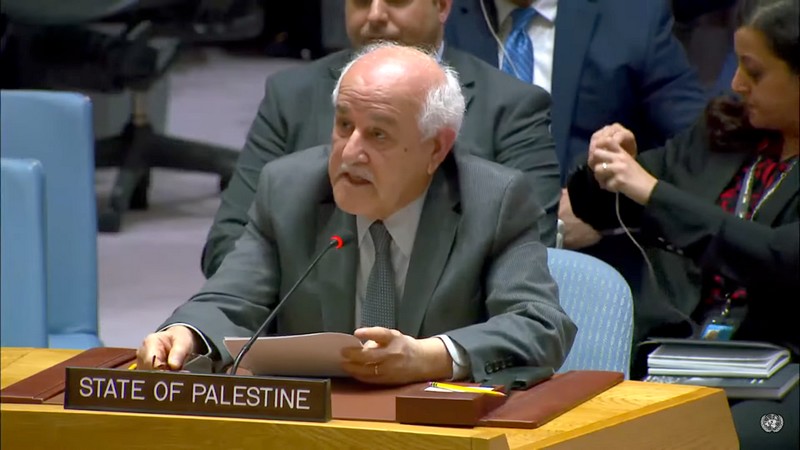
By Dr Marwan Asmar

It was supposed to be a miracle that unfortunately didn’t last for the Gaza baby Rouh (meaning life) Joudeh died four days after the doctors brought her out of the womb of her dying mother. It was a complicated procedure with death intertwining with life

[https://twitter.com/ahmedhijazee/status/1781779986002714662]

Her mother Sabreen was rushed into a Rafah hospital together with her father Shukri and her three-year-old sister Malak after an Israeli military strike on their house in the southern city of Gaza.

All died on the way to hospital because of their extensive injuries but the fetus was alive with her faint moves detected in the womb.

The doctors soon realized the mother, in her last breath of life, was 30-weeks pregnant and decided to do a c-section and take their chances. Miraculously, they brought the fetus into the world alive, weighing 1.4 kilograms despite the fact the mother had a full month to deliver and in a bad state.

[https://twitter.com/anan678/status/1783957489358090273]

Soon the social media was buzzing with news about the ‘miracle baby’ who was brought into this world despite all odds and violence. It was the cycle of life with her uncle naming her Rouh as per the wishes of her 29-year-old mother. He says he will now look after the baby.

Rouh was born in a field clinic but was soon transferred to a UAE hospital and put in an incubator but after four days, her lungs gave up. She represents the story of thousands of children, babies and infants killed by the Israeli war machine.

[https://twitter.com/i/status/1783085980662022350]

Already and according to UNICEF, around 13000 children were killed in the war since 7 October. The Gaza Ministry of Health says it can’t give accurate figures of those who have died in the wombs of their mothers because of the extent of daily deaths, however it’s  latest death toll figures currently stand at 34,388 martyrs with 77,437 injuries.

The Joudeh family were forced to leave their home in Gaza city and were among the 1.4 million Palestinians assembling in Rafah and awaiting their fate at the Israeli big guns with Israeli Prime Minister Benjamin Netanyahu promising to invade the city.

Dr Asmar is a Jordan-based writer covering Middle East affairs.

27 April 2024

Source: countercurrents.org

Posts pagination

← Newer Posts 1 … 210 211 212 … 932 Older Posts →

We discover that the spiritual and moral worldviews and values embodied in all religious and cultural philosophies can offer the human race much needed guidance in our common quest for a just world.

Follow Us
Facebook Twitter Youtube Linkedin
Browse by Category
  • Articles
  • Media Statements
  • Endorsement
  • Campaigns
  • About Us
  • Contact Us
  • Join Membership
Newsletter
Subscribe to our mailing list to receives daily updates direct to your inbox!
*we hate spam as much as you do

International Movement for a Just World. All rights reserved.