Just International

Israel’s Campaign to Defund and Dismantle UNRWA Continues Beyond the Gaza Strip into Jerusalem

The Israeli campaign against the United Nations Relief and Works Agency for Palestine Refugees (UNRWA) has escalated to taking measures to replace the Agency in the Gaza Strip and evict it from Jerusalem. As an UN mandated agency that acts in accordance with States’ international responsibilities towards Palestinian refugees, Israeli actions that hinder or disrupt its mandate constitute complete disregard of international will and law. Additionally, these actions are the precursor to eliminating the issue of Palestinian refugees, whose rights to return, property restitution and compensation (reparations) have been denied by Israel since 1948.

The UNRWA is an international agency with a permanent mandate until such time as UNGA Resolution 194 of 1948 and UNSC Resolution 237 of 1967 are put into effect. Israeli attempts to delegitimize and defund UNRWA, banning its work in Jerusalem, and obstructing and replacing its operations in the Gaza Strip, are part of its larger goal to completely dismantle UNRWA and eliminate the Palestinian refugee issue. These actions are in violation of international law, both with respect to UNRWA’s mandate, the international legal status of Jerusalem, and the obligation to provide reparations to Palestinian refugees and internally displaced persons. Further, the deliberate obstruction of UNRWA services in the Gaza Strip by Israel constitutes a violation of its obligation to prevent Genocide.

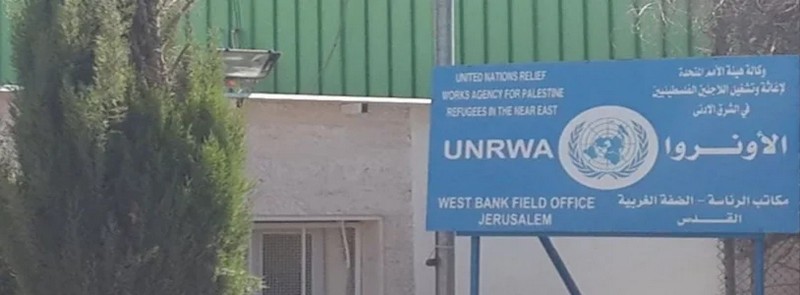
The so-called ‘Constitution and Judicial Committee’ in the Israeli Knesset approved on 11 February a new draft law to evict the UNRWA from Jerusalem. The draft law was passed to the Ministerial Committee for Legislation, in preparation for a first reading vote, as the Foreign Affairs and Security Committee in the Knesset will discuss this bill on 20 February. In 2018, the then Jerusalem mayor and Likud member, Nir Barkat, presented a similar bill to replace UNRWA services with municipal provisions. In cooperation with other Knesset members, he has submitted the bill again, hoping to take advantage of the current Israeli defamation campaign against UNRWA, which has led 16 states fully or partially suspending their funding. Additionally, last week Barkat organized demonstrations against UNRWA in front of its offices in Jerusalem, which were attended by representatives from the right-wing Zionist group Im Tirzu and the Tikva Forum. Former Foreign Ministry official Noga Arbell also spoke on stage, after releasing a video calling for the “destruction” of UNRWA at the Knesset.

On 12 February, the Construction and Housing Minister, Yitzhak Goldknopf, issued an immediate directive for the eviction of UNRWA from Jerusalem, specifically targeting the discontinuation of UNRWA’s office operations in Sheikh Jarrah and in Kufr ‘Aqab, along with halting further lease agreements.

Israeli campaigns to demonize, disable, defund, restrict and transfer UNRWA’s responsibilities are not new. They are a component of Israel’s colonial-apartheid regime, which aims at ongoing forced displacement and transfer of Palestinians, and liquidating the issue of the 9.17 million Palestinian refugees and internally displaced persons through the dismantlement of UNRWA.

Similar calls to expel UNRWA from Jerusalem were made following Trump’s so called “Deal of the Century” and his decision to end American funding for the agency in 2019. Amongst other issues, the Trump Deal contains provisions to cater to Israel’s strategy to end the Palestinian refugee issue through serious breaches of international law. The Biden administration restored funding to UNRWA in July 2021, but included conditions that impose securitization measures on the UN mandated humanitarian agency.

The USA was one of the first states to suspend its funds in response to Israel’s newest unfounded allegations against the Agency. Additionally, a newly proposed Republican bill called “Stop Support for UNRWA Act” is to be presented to Congress, and if passed, it would bar the USA from ever making any voluntary or assessed contributions to the Agency – in other words, permanently defund UNRWA. The defunding of UNRWA constitutes political blackmail by weaponizing humanitarian aid and deepens states’ involvement in the Israeli genocide in the Gaza Strip.

The targeting of the UNRWA’s presence and services in Jerusalem will have negative impact on the 375,000 Palestinians that reside there, but more importantly, it aims to end international presence in Jerusalem. For the Palestinian people, its presence is not just symbolic; rather, it has significant strategic political and legal ramifications. The international presence of UNRWA is a strong challenge to and firm rejection of the Israeli occupation, its sovereignty over the city, and its recognition of Jerusalem as the united capital of Israel.

Accordingly, to preserve UNRWA’s presence in Jerusalem and in the Gaza Strip, BADIL calls on:

  1. The UN Secretary General to reaffirm the entitlement of UNRWA to protection under the UN system, and states’ duty to fulfill their obligation to respect, support and facilitate UNRWA’s mandate, staff and facilities.
  2. The UN General Assembly to clearly condemn and declare the illegality of Israel’s measures aiming at delegitimizing the UNRWA presence in Jerusalem and the Gaza Strip and obstructing its operations;
  3. The UNRWA’s international and local staff to maintain its presence and services in Jerusalem and the Gaza Strip;
  4. States to reject the elimination or replacement of UNRWA’s presence and services in Jerusalem and the Gaza Strip, and to continue and increase their financial contributions to UNRWA.

14 February 2024

Source: www.badil.org

Khan v the generals

By Junaid S. Ahmad

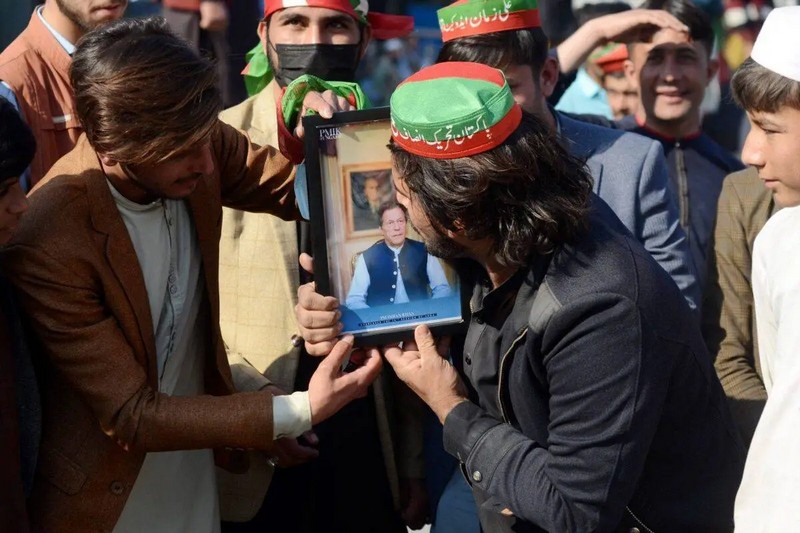
Pakistan’s election lived up to some expectations, but didn’t live up to other expectations. What was predicted was that there would vote rigging and outright fraud as a central feature of the Pakistani generals’ plan, and there was. What was not anticipated was that former Prime Minister Imran Khan’s party, the PTI (Movement for Justice), would win the most parliamentary seats of any single party. It was a miraculous outcome, given the horrendous levels of repression of the PTI, and the efforts by the military establishment to prevent the party from even contesting in the election.

What we know now is that the Pakistani military-intelligence establishment, following its violence and terror campaign against the population after Khan was ousted in April 2022, is the proverbial emperor with no clothes. It stands exposed not only for its reign of terror, corruption and fraud, but also for its incompetence by failing to deliver the election results desired by domestic and foreign power centres.

In many ways, perhaps the most analogous relatively recent event was the victory of Hamas in the 2006 Palestinian Legislative Council election. The Israelis, the Americans and the Gulf monarchies wanted to give legitimacy to their chosen occupation sub-contractor, the collaborationist and hopelessly corrupt Palestinian Authority (PA) largely controlled by Hamas rival Fatah. These forces believed that they had invested enough financial and political capital to enable Fatah candidates to win an “election under occupation”. To their great surprise — and to the surprise of Hamas, to be fair — the Islamic Resistance Movement won.

“Similarly, the military and political elites in Pakistan had guaranteed themselves and their patrons in Washington that the election in Pakistan was a done deal.

This narrative claimed that the appeal of the PTI had diminished, and any remaining popularity of Khan and his political party would be offset by the investment of tens of millions of dollars to buy off the military high command, politicians in all of the provinces and, crucially, the judges of the provincial high courts, as well as the Supreme Court.

The generals said that they had plan B, and if needed, plan C, ready in case plan A did not work. Plan A was the simple ousting of Khan from power in April 2022. It was thought that this would eradicate the “Khan virus”. To the surprise of many, including Khan himself, a massive, unprecedented outpouring of support erupted spontaneously, with rallies taking place in cities and towns in every province of the country.

So, the military elites began the charge sheet against Khan to get him embroiled in one court case after another: plan B. That failed to work, and Khan’s popularity continued to soar. Incessant reassurances were meted out from former Chief of Army Staff General Bajwa to Washington and the House of Sharif, the family in control of one of the two dominant dynastic political parties, the PML(N). Bajwa claimed that the situation was under control and that his successor, General Asim Munir, would finish the job. Bajwa was lucky. All he agreed to was to remove Khan from power, and he delivered. He was detested, but he was able to leave the political scene after a few months. Munir was not so fortunate.

Plan C needed to be activated. Public sentiment was turning so antagonistic towards the military top brass for their unashamed targeting of Khan that the “final solution” had to be implemented: assassination. Two attempts, one of which injured Khan in the shin, were unsuccessful.

There really was no plan D, and so one was concocted quickly. Khan faced the most absurd but very serious charges of terrorism and treason, and was imprisoned in complete isolation. He was charged with leaking state secrets in the now infamous “cypher-gate” case, with the allegation that he spoke recklessly about a top-secret diplomatic cable sent to the foreign ministry by Pakistan’s ambassador to the US. The cable stated, in no uncertain terms, Washington’s desire that Khan be removed from power.

Both the military elite as well as, sadly, many in the intellectual class, mocked Khan and his supporters for over a year for this “conspiracy theory” and for inventing this “fictional” cypher. Only when the The Intercept confirmed the veracity of the contents of the diplomatic cable as Khan had described them, did Munir and other senior army officers not only concede that such a cypher does exist, but that Khan would now face charges of treason for revealing its contents. This leak by the former prime minister constituted a grave threat to “national security”. In reality, it presented a palpable unmasking of the collusion of the US foreign policy establishment, Pakistani generals and Pakistani kleptocrats of the two major political parties — the House of Sharif and the House of Bhutto-Zardari – in wanting to depose the democratically-elected Khan from power.

Once the hastily assembled plan D was put in motion, the idea was that it would lead seamlessly to plan E, the ruthless repression of the PTI, so that by the time of this election there would be nothing left of Khan and his party. What the election results last week demonstrated, however, is that even though Khan’s party members could not run on their party ticket and had to run as independents, there is huge popular support for the PTI.

There doesn’t seem to be a plan F, considering the frantic responses of the army chief and the head of the intelligence agencies, or the Inter-Services Intelligence (ISI). Munir is no longer concerned with his big picture “obligations”. He has been reduced to trying to save himself. The only party that he is trying to please at this point is the one footing the bill: the House of Sharif. The general is now arguably the most hated Chief of Staff in Pakistan’s history, and there has been no shortage of competition for that title.

What about Washington’s planners? How are they reacting? One senior State Department official commented very bluntly: “These imbeciles can’t even crush a political novice like Khan. They command one of the largest armed forces in the world, nuclear armed. What is all that for?”

The US foreign policy establishment, after the ouster of Khan, had outsourced the job of managing the old “Af-Pak” (Afghanistan-Pakistan) theatre of the “Global War on Terror” to the Pentagon. Washington believed that its Cold War framework of dealing with the generals would produce a “stable” and pliant Pakistan. There is no entity as irate at the incompetence of the Pakistani military high command as the US Department of Defence, to which both Bajwa and Munir promised the moon. Actually, though, State Department officials are equally incensed since they were tasked to prevaricate for almost two years to conceal Washington’s role, as well as that of Pakistani generals, in this entire scenario.

The State Department had denied any knowledge of the cypher, but that position began to change after the Intercept’s publication of the contents of that damning diplomatic cable. At that point, it was not so much about asserting the non-existence of the cypher, but underscoring how such communication between two governments was nothing abnormal. Washington was willing to give Islamabad a few more months to fix everything by holding faux elections that would quash Khan and his party once and for all.

And now, it seems clear that the US foreign policy establishment is looking for vengeance, and keen on punishing the generals who promised to produce an unashamedly subservient Pakistani political establishment. This is why there has been such an explosion of harsh criticism of the Pakistani army from the State Department and numerous members of Congress.

There were, undoubtedly, members of Congress, such as Representative Ilhan Omar, who wanted to express their displeasure much earlier. But they also acquiesced to their Democratic Party leadership in the White House and in Congress, who hung on by a thread to the idea that “stability” would be brought about by the traditional political and military elites. The White House maintained unceasingly that “our guys” in Islamabad would facilitate a smooth and relatively quiet transition to the post-Khan period, without ringing any international alarm bells.

Of course, now it’s become patently obvious that Washington is revising its stance radically, one that effectively tells Pakistan’s generals, “You had your chance, you failed, and now you’re making things worse.” America’s 180-degree turnaround is an attempt to salvage some respect, or at least some tolerance, from the people of Pakistan who know full well Washington’s role in the regime change operation. The generals have put Washington in a deeply embarrassing situation.

However, Washington apparatchiks may be unfair in their treatment of their clients in khaki in Pakistan. The former do not realise that it’s the political has-beens who the generals can control, not the relative new boys on the block like Khan. The old political bigwigs know the rules of the game — proper balance between the enrichment of both the political and military elites — and abide by them. The newbies are too recalcitrant to even learn those rules properly, let alone abide by them. In sum, Washington now considers General Munir a dreadful liability, after only his first year as Chief of Staff, unlike General Pervez Musharraf, who provided Washington with “stability in Pakistan” for eight years until he also became a liability in 2007.

In this entire saga, what’s been truly disappointing is the role of the Pakistani media. The country’s leading and, deservedly, most respected periodical, Dawn, suddenly began to churn out columns praising the democratic “defiance” of the people in this election. It’s a shame that the people’s defiance was not covered over the past twenty months, when apparently it was simply an expression of a cult-following, and the totalitarian and conspicuously undemocratic repression was not worth reporting. The resistance of the Pakistani people could have certainly benefited from some coverage then. Now, such voices in the media are commonplace. It’s rather sad how the Pakistani media seems to be taking its cues from the US State Department about when to cover/report, and when not to. Dawn columnists had many months to praise the democratic will of the people, but did not.

At this point, the divisions within the military officer corps have become evident. Munir and others in the top brass realise how dangerous it is to give the wrong orders to junior officers and soldiers. How many times will the Pakistani armed forces be commanded to open fire, imprison, torture and disappear their population on a massive scale? The crimes of the military establishment in the provinces of Balochistan and KPK have been bad enough.

For almost two years now, the brutal suppression by the army was meant to instil paralysing trepidation in the population. But just as the people of Gaza, of Palestine, of West Asia, have overcome a psychological sense of fear of Israel, so too have the people of Pakistan lost any fear of their national security state and its violent shenanigans. This is a major development.

Whatever political configuration emerges after the election, one thing is certain: this round has been a resounding victory for former Prime Minister Imran Khan, smiling in his wretched jail cell, as well as the people of Pakistan, regardless of their political affiliation.

The views expressed in this article belong to the author and do not necessarily reflect the editorial policy of Middle East Monitor.

13 February 2024

Source: middleeastmonitor.com

Fundamentalists Have the Upper Hand in the Upcoming Parliamentary Elections in Iran

By Akbar E Torbat

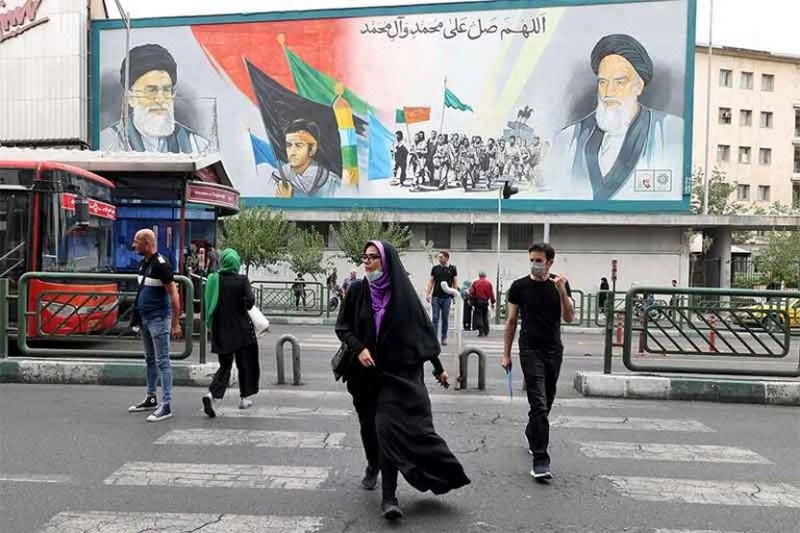
Iran’s Parliamentary elections is scheduled to be held on March 1, 2024. The elections will be for the twelfth term of the 290 seats of the Islamic Consultative Majles (House of Representatives). The elections for the Assembly of Leadership Experts, which is an entirely clerical body, will also be held at the same time.

Following the election of President Hassan Rouhani in 2013, the deterioration of the economic situation, and the emergence of protests in Iran in 2017, many people refrained from participating in the elections due to the disappointment of reforms and the lack of improvement in economic conditions. After the death of Mahsa Amini in the autumn of 2022, opposition to the regime intensified due to nationwide protests over women’s rights to oppose the enforcement of hijab law. The crackdown of the protestors resulted in hundreds of deaths and many injuries, and several thousands were arrested by security forces.

Despite the US sanctions, Iran’s economy has recently thrived thanks to increasing oil revenues, but skyrocketing inflation has deteriorated the standard of living and increased dissatisfaction among the Iranians. Yet, due to the tragic war of genocide in the Gaza Strip by Israel, the Islamic fundamentalists have gained support in Iran, and that may contribute to their victory in the elections. The genocide in Gaza and the Biden administration’s complicity in the war by providing money and weapons to Israel and even directly participating in the war by bombing the “Islamic Resistance Front” forces in the area have strengthened the fundamentalists’ position who oppose relations with the West.

Moreover, Islamic fundamentalists, via their influence in the Guardian Council, have engineered the election by pre-selecting their favorite candidates and have rejected many candidates from other parties. The Guardian Council has declared most reformist and moderate applicants ineligible to participate in the election. That has improved the chance of the candidates from the fundamentalist camp winning in the election. In Iran, theocracy has priority over democracy. Instead of people choosing qualified candidates, the 12-member clerics and Islamist jurists in the Guardian Council choose them. This is a gross violation of democratic principles. As a result, the outcome is a number of candidates that people do not have confidence in and are not qualified to represent the people.

This is the first time that candidates had to pre-register because of a new law that was passed in 2023. The Majles approved the law for the parliamentary elections, which specified a week duration for the applicants to pre-register. Some 48,847 applicants pre-registered to participate as candidates in the elections. The time for checking the candidates’ qualifications was November 4-18, 2023. On November 19, the examination of the applicants’ qualifications was completed. Then, 21,000 of them were approved by the Interior Ministry. Finally, on February 8, 2024, the Guardian Council announced that 14,912 applicants had been selected for the parliamentary elections; about 1,700 were female. The chosen candidates were primarily from factions that have fundamentalist tendencies. Twenty-six members of the current Parliament were disqualified. Among them were representatives who had opposed “hejab and chastity” law and/or “filtering of the Internet.” The disqualification of the critics of the government received widespread reactions in the Iranian media. Many called this issue a continuation of the fundamentalists’ domination over all organs of the government.

The Islamic Republic of Iran, under the leadership of Ali Khamenei, is trying to create legitimacy for itself by maneuvering this show election. The Supreme Leader, Khamenei, has declared that elections are a duty, and anyone who opposes the elections has opposed the Islamic Republic and Islam. Khamenei wants the electors to participate in the elections as a duty and fulfill the regime’s show election without having an intended candidate to vote for. Candidacies are given to individuals who believe in the absolute rule of the Guardianship of Islamic Jurist (Valiant-e Faghih), and their loyalty to the regime has been proven, and/or those who do not cause a serious threat to the clerical rule. Nonetheless, Khamenei is under pressure to free some of his opponents to encourage participation in the elections.

The government claims that many applicants have been approved to participate. However, the qualifications of the candidates are the most important matter, not the quantity of participants. Many highly qualified applicants who do not agree with the system do not participate, or if they participate, they will be rejected outright under such restrictive theocratic procedure. The applicants who oppose the clerical rule are disqualified to run.

At present, there is no popular political party in Iran that is supported by the secular political factions. Most of the parties have been organized by the Islamists in the regime or the former officials of the regime. Islamic Coalition Party has invited people to vote. This fundamentalist party favors economic liberalism. It represents the “religious bazaars” stratum within the political factions in Iran. Among the main political factions, the fundamentalists (Principalists) pursue their electoral activity in the form of two main alliance lists: the Coalition Council and the Unity Council. The Coalition Council (Shoraye Eatelaf) is a fundamentalist alliance that was formed by the Islamic Revolution Forces Front in 2016. Gholam-Ali Haddad-Adal, a former speaker of the Parliament, is the head of this council. The Unity Council (Shoraye Vahdat) is another alliance of the fundamentalists that has actively entered the parliamentary elections. Manouchehr Mottaki, a former foreign minister, is the spokesman for the unity council. The Unity Council is critical of the performance of the current 11th Parliament. Both alliances emphasize the need for unity in this election, but in practice, they run for elections independently.

In the reformist’s camp, the Iran Reform Front organization, a coalition of a few reformist parties, is planning to enter the elections.[1]  Other parties have abandoned the regime’s elections. All leftists, nationalists, and major secular parties are currently banned. In the absence of the parties that are banned or have boycotted the elections, the elections will be turned into an internal competition between different spectrums of fundamentalist factions.

The Assembly of Experts Elections

The sixth term election of the Assembly of LeadershipExperts will also be held on March 1 to select new members to serve eight years. The Assembly is composed of 88 Islamic clerics who are responsible for supervising the Supreme Leader and selecting a new leader. This body only meets two times each year. The public directly elects its members from a list of candidates vetted by the Guardian Council. However, the Assembly of Experts’ election is not an actual election since, in some parts of the country, only one candidate is running, which makes it a selection rather than an election. Among notable candidates in this body were former president Hassan Rouhani and his former intelligence Minister, Mahmoud Alavi, who are current members, but the Guardian Council rejected their candidacies. Rouhani was rejected as a candidate for the clerical Assembly presumably because of his disastrous concession with Western powers over the 2015 Nuclear deal (JCPOA). President Ebrahim Raisi, who is currently a member of the Assembly of Experts, is expected to run for re-election in Tehran. The Assembly expects to select the future Supreme Leader.

Despite authorities’ efforts to mobilize the public to vote, low turnout is expected in the elections compared to the prior elections. Iranians express deep frustration because of the lack of freedom and the deterioration of the standard of living.

Akbar E. Torbat (atorbat@calstatela.edu) is the author of “Politics of Oil and Nuclear Technology in Iran,” Palgrave Macmillan, (2020), https://www.palgrave.com/gp/book/9783030337650 .

11 February 2024

Source: countercurrents.org

After Rafah What Awaits the Palestinians?

By Dr Marwan Asmar

On the start of the fifth month of the war on Gaza, Israel is nowhere near to controlling the 365-kilometer Strip. While its army previously thought it would dominate the strip in a matter of weeks, today it is still fighting in what is being termed as the Gaza quagmire of defeat, bloodiness and mass loss in human lives and armory.

While it is true, they wreaked merciless havoc on the enclave and displaced up to 1.9 million of a population of 2.3 million, the majority of which were ordered to go south to Rafah, the Israelis, with their guns, planes, tanks, bulldozers and troop carriers, have not as they claimed subdued Gaza.

While the Israeli Defense Minister Yoav Gallant said the Israel army dominated the northern part of Gaza and dismantled the Hamas infrastructure, it soon became clear this was completely untrue with news of fighting and skirmishes dominating the headlines.

The Palestinian resistance, of mainly Hamas’s Izz Aldin Al Qassam and Saraya Al Qodus of Islamic Jihad, are still going strong in Gaza by the admission of the Israelis and the Americans with Washington talking openly about the formidable force being put up, despite the armor of the Israelis that is mostly US-made.

Bloody conflict

This is proving to be a difficult bloody conflict for the Israelis despite their carefully planned war strategy that was laid out and carefully planned in tandem with the 2000 American “advisors” sent to Tel Aviv soon after 7 October. This war strategy involved striking Gaza’s infrastructure from the air, sea and ground troop forces by splitting the region into north, middle and southern sectors.

It was supposed to have operated on a step-by-step basis – completing one step, ie, the north, combing it from Palestinian fighters, going to the middle, and then south to Rafah, the border town with Egypt. The problem today is the Israeli army and warplanes are fighting on all directions and more/or less at the same time.

They have not been able to control areas and/or sectors despite the heavy bombings. What they so far achieved, minus the ending of the military presence of Hamas and Islamic Jihad is to kill Palestinians, most of whom are civilians, destroy their homes, and apartment buildings and turn them into internal refugees.

The Israeli strategy since the beginning was to force the Palestinian population to start moving from the north, to the center and the south of the country. They were forced to do that by missiles but even here, they didn’t succeed for around 700,000 people still remain in the north of the Strip, right to down to the center of Gaza City and just below the refugee camps of Breij, Maghazi, Nuseirat down Khan Younis and its surrounding areas.

Israeli ground forces didn’t manage to enter Khan Younis because of stiff resistance despite the destruction and debris meted out from the air. They have been battling to enter the city for over two months but have not been able to despite the thousands of troops and tanks allocated for the task. In the end, many of the Israeli battalions and brigades had to draw back to the periphery of the Gaza Strip because of the huge loses in their ranks and which they wouldn’t divulge but carefully controlling their words.

Instead of uniting the Israeli political establishment, the war on Gaza added to their frustration and internal bickering. First, the relatives of the hostages taken by Hamas after 7 October, kept hounding the politicians for a ceasefire. They wanted their relatives to be brought out alive especially with news some of these hostages were being killed because of mass bombings by the Israeli force.

This lead also to bickering in the Israeli war cabinet about the conduct of the war that was personally led by Benjamin Netanyahu. Then, there was the main Israeli cabinet who met to consider with many problems coming out from that direction. There was frustration in the war cabinet about how Netanyahu conducted himself vis-à-vis Defense Minister Gallant and the army Chief of Staff Herzi Halevi whose soldiers were on the battlefield getting killed.

There was also a sense of paranoia as Netanyahu installed strict searching procedures of the war cabinet members themselves which created animosity. But then there was their conducted of the war which was strictly monitored by the larger Israeli cabinet, most of whom calling for the ethnic cleaning of Palestinians, reoccupation of Gaza, and the deportation of the people who came to Rafah into neighboring Egypt, into to the Sinai Peninsula.

The idea of deportation of Palestinians has long been seen as a dream of the extreme rightwing member of the Netanyahu cabinet, people like Itamar Bin Gvir and Bezalel Smotrich who saw this a valuable opportunity.

Rafah, where to next?

Is this the end of the road for the displaced Palestinians. Can they be deported under the eyes of the world and to where?

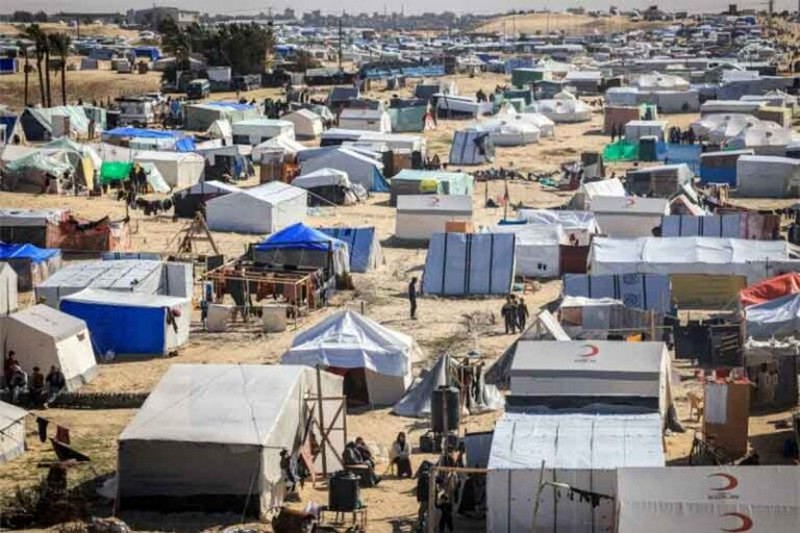
Rafah used to be a city with a population of 280,000. Today, its population quickly jumped to 1.3 million thanks to the Israelis coming to be called “tent city” because of the shabby material hoisted to house the displaced.

Everyone fears for their fate. After all, it is Israeli warplanes which forced them to move down here. The next logical step, unless they are stopped, is to tip them into the Sinai Peninsula, another wave of refugees, this time much worse than the 1948 debacle when Israel was created.

Will the Israelis do that under intense international pressure? There are two countries that can stop them: America and the Egypt. The Americans have long said they are against deportations and they want the creation of a Palestinian state.

But the problem is their opinions and statements have been interpreted as lifeless with no punch, after all they have been Israel’s main military suppliers in this war and their words don’t seem to carry much weight by Netanyahu and Gallant who are more interested in defeating Hamas and getting rid of the Palestinians.

Lastly, it might be up to Egypt to stand strong. It has already said it is against any attempt to change the demographics of the area. In a way, it still controls the entry key to crossing the border and can put its foot down. The problem here, the crossing continues to be under the watchful eye of the Israelis who keep bombing it if they see anything not according to their taste. They have already bombed it four times.

This time, together with the United Nations, the White House and the Egyptians will need to impose an enormous amount to pressure to force the Israelis to backdown.

We wait and see!

Marwan Asmar is a writer based in Amman, Jordan.

10 February 2024

Source: countercurrents.org

Israel announces plans for ethnic cleansing of Rafah

By Andre Damon

On Friday, the office of Prime Minister Benjamin Netanyahu issued a statement asserting that the prime minister had ordered the Israeli military to submit a plan for the forced evacuation of the southern town of Rafah, where one million refugees from other areas of Gaza have been driven.

Israel’s attack on Rafah would be a “massive operation,” Netanyahu’s office said.

Given that Israel has ordered the people of Gaza to evacuate effectively all other areas of the region, the clear implication is that the population will be expelled into the Sinai Desert, with or without the permission of Egypt.

Riyad Mansour, the Palestinian Permanent Observer to the UN, said Friday that “if the Israeli army … begins the so-called evacuating [of] the people from Rafah, where would they go?

“They’re saying they’re not allowing them to go to the north. They don’t want them to stay in Rafah—it doesn’t require a nuclear physicist to come to the conclusion that there is only one place for them to go, which is the Sinai Peninsula.”

In October, Israel ordered over one million people in northern Gaza to the south, calling it a “safe zone” and assuring them that they would not be bombed there. Then, in November, Israeli forces ordered the evacuation of the city of Khan Younis, forcing civilians in the area to flee south to Rafah. One after another, each of these “safe areas” have been bombed and then attacked by ground troops.

As a result, approximately 86 percent of Gaza’s population—1.7 million out of 2.3 million people—are internally displaced, with the majority of those sheltering in Rafah. The trapped refugees are facing famine and lack access to clean water, hygiene and medical care.

In a statement, Stéphane Dujarric, spokesman for UN Secretary-General António Guterres, stated, “We would not in any way support forced displacement, which goes against international law.” This statement effectively declares that the Netanyahu government has expressed intent to carry out ethnic cleansing.

The determination of the Netanyahu government to carry out the forced expulsions of the Palestinians from Rafah has produced hypocritical statements from the imperialist backers of the Israeli genocide. US President Joe Biden, speaking to reporters, said that Netanyahu’s “conduct of the response in Gaza in the Gaza Strip has been over the top.”

The EU’s foreign policy chief Josep Borell stated, “Reports of an Israeli military offensive on Rafah are alarming. … It would have catastrophic consequences, worsening the already dire humanitarian situation and the unbearable civilian toll.”

Regardless of such statements, the United States and European imperialist powers have systematically enabled Israel to carry out the genocide and ethnic cleansing of Gaza, with the United States repeatedly declaring that there are no “red lines” for the number of Palestinians allowed to be killed.

Reuters reported Friday that Egypt has massively expanded the number of military personnel stationed on its borders with Gaza, deploying 40 tanks and armored personnel carriers to the area over the past two weeks.

Ahead of the expected ground offensive, Israeli forces intensified their aerial bombardment of the city.

“There is a sense of growing anxiety, growing panic in Rafah,” Philippe Lazzarini, the head of the UNRWA agency, said Friday, adding, “People have no idea where to go.”

Gaza’s Ministry of Health said Friday that 27,947 Palestinians have been killed over the past three months, with thousands more unaccounted for. Between the afternoons of February 8 and 9, 107 Palestinians in Gaza were killed, the ministry said.

Even as Israel presses its assault on Gaza, it is systematically destroying buildings throughout the Gaza Strip, targeting in particular all structures that are near the Israeli border.

In a statement Friday, UN High Commissioner for Human Rights Volker Türk declared, “Israeli Defence Forces (IDF) are reportedly destroying all buildings within the Gaza Strip that are within a kilometre of the Israel-Gaza fence, clearing the area with the objective of creating a ‘buffer zone.’ Destructions carried out to create a ‘buffer zone’ for general security purposes do not appear consistent with the narrow ‘military operations’ exception set out in international humanitarian law. Since late October 2023, my Office has recorded widespread destruction and demolition by the IDF of civilian and other infrastructure, including residential buildings, schools, and universities in areas in which fighting is not or no longer taking place.”

The statement added, “Israel has not provided cogent reasons for such extensive destruction of civilian infrastructure.

“Such destruction of homes and other essential civilian infrastructure also entrenches the displacement of communities that were living in these areas prior to the escalation in hostilities and appears to be aimed at or has the effect of rendering the return of civilians to these areas impossible. I remind the authorities that forcible transfer of civilians may constitute a war crime.”

But this is precisely the plan of the Israeli government, operating with the full military and logistical support of the Biden administration and the European governments. Having seized upon the October 7 attacks as a pretext, Israel has moved to implement a long-term plan to render Gaza uninhabitable and either kill or expel its population. The assault on Rafah will mark a new stage in this vast crime.

10 February 2024

Source: countercurrents.org

U.S. Chooses Genocide Over Diplomacy in the Middle East

By Medea Benjamin and Nicolas J. S. Davies

On February 7, 2024, a U.S. drone strike assassinated an Iraqi militia leader, Abu Baqir al-Saadi, in the heart of Baghdad. This was a further U.S. escalation in a major new front in the U.S.-Israeli war on the Middle East, centered on the Israeli genocide in Gaza, but already also including ethnic cleansing in the West Bank, Israeli attacks on Lebanon and Syria, and the U.S. and U.K.’s bombing of Yemen.

This latest U.S. attack followed the U.S. bombing of seven targets on February 2, three in Iraq and four in Syria, with 125 bombs and missiles, killing at least 39 people, which Iran called “a strategic mistake” that would bring “disastrous consequences” for the Middle East.

At the same time, U.S. Secretary of State Antony Blinken has been touring the shrinking number of capitals in the region where leaders will still talk to him, playing the United States’ traditional role as a dishonest broker between Israel and its neighbors, in reality partnering with Israel to offer the Palestinians impossible, virtually suicidal terms for a ceasefire in Gaza.

What Israel and the United States have proposed, but not made public, appears to be a second temporary ceasefire, during which prisoners or hostages would be exchanged, possibly leading to the release of all the Israeli security prisoners held in Gaza, but in no way leading to the final end of the genocide. If the Palestinians in fact freed all their Israeli hostages as part of a prisoner swap, it would remove the only obstacle to a catastrophic escalation of the genocide.

When Hamas responded with a serious counter-proposal for a full ceasefire and Israeli withdrawal from Gaza, Biden dismissed it out of hand as “over the top,” and Netanyahu called it “bizarre” and “delusional.”

The position of the United States and Israel today is that ending a massacre that has already killed more than 27,700 people is not a serious option, even after the International Court of Justice has ruled it a plausible case of genocide under the Genocide Convention. Raphael Lemkin, the Polish holocaust survivor who coined the term genocide and drafted the Genocide Convention from his adopted home in New York City, must be turning in his grave in Mount Hebron Cemetery.

The United States’ support for Israel’s genocidal policies now goes way beyond Palestine, with the U.S. expansion of the war to Iraq, Syria and Yemen to punish other countries and forces in the region for intervening to defend or support the Palestinians. U.S. officials claimed the February 2 attacks were intended to stop Iraqi Resistance attacks on U.S. bases. But the leading Iraqi resistance force had already suspended attacks against U.S. targets on January 30th after they killed three U.S. troops, declaring a truce at the urging of the Iranian and Iraqi governments.

A senior Iraqi military officer told BBC Persian that at least one of the Iraqi military units the U.S. bombed on February 2nd had nothing to do with attacks on U.S. bases. Iraqi Prime Minister Mohammed Shia Al-Sudani negotiated an agreement a year ago to clearly differentiate between Popular Mobilization Force (PMF) units that were part of the “Axis of Resistance” fighting a low-grade war with U.S. occupation forces, and other PMF units that were not involved in attacks on U.S. bases.

Tragically, because the U.S. failed to coordinate its attacks with the Iraqi government, al-Sudani’s agreement failed to prevent the U.S. from attacking the wrong Iraqi forces. It is no wonder that some analysts have dubbed al-Sudani’s valiant efforts to prevent all-out war between U.S. forces and the Islamic Resistance in his country as “mission impossible.”

Following the elaborately staged but carelessly misdirected U.S. attacks, Resistance forces in Iraq began launching new strikes on U.S. bases, including a drone attack that killed six Kurdish troops at the largest U.S. base in Syria. So the predictable effect of the U.S. bombing was in fact to rebuff Iran and Iraq’s efforts to rein in resistance forces and to escalate a war that U.S. officials keep claiming they want to deter.

From experienced journalists and analysts to Middle Eastern governments, voices of caution are warning the United States in increasingly stark language of the dangers of its escalating bombing campaigns. “While the war rages in Gaza,” the BBC’s Orla Guerin wrote on February 4, “one false move could set the region alight.”

Three days later, Guerin would be surrounded by protesters chanting “America is the greatest devil,” as she reported from the site of the U.S. drone assassination of Kataib Hezbollah leader Abu Baqir al-Saadi in Baghdad – which could prove to be exactly the false move she feared.

But what Americans should be asking their government is this: Why are there still 2,500 U.S. troops in Iraq? It is 21 years since the United States invaded Iraq and plunged the nation into seemingly endless violence, chaos and corruption; 12 years since Iraq forced U.S. occupation forces to withdraw from Iraq at the end of 2011; and 7 years since the defeat of ISIS, which served as justification for the United States to send forces back into Iraq in 2014, and then to obliterate most of Mosul, Iraq’s second largest city, in 2017.

Successive Iraqi governments and parliaments have asked the United States to withdraw its forces from Iraq, and previously scheduled talks are about to begin. But the Iraqis and Americans have issued contradictory statements about the goal of the negotiations. Prime Minister al-Sudani and most Iraqis hope they will bring about the immediate withdrawal of U.S. forces, while U.S. officials insist that U.S. troops may remain for another two to five years, kicking this explosive can further down the road despite the obvious dangers it poses to the lives of U.S. troops and to peace in the region.

Behind these contradictory statements, the real value of Iraqi bases to the U.S. military does not seem to be about ISIS at all but about Iran. Although the United States has more than 40,000 troops stationed in 14 countries across the Middle East, and another 20,000 on warships in the seas surrounding them, the bases it uses in Iraq are its closest bases and airfields to Tehran and much of Iran. If the Pentagon loses these forward operating bases in Iraq, the closest bases from which it can attack Tehran will be Camp Arifjan and five other bases in Kuwait, where 13,500 U.S. troops would be vulnerable to Iranian counter-attacks – unless, of course, the U.S. withdraws them, too.

Toward the end of the Cold War, historian Gabriel Kolko observed in his book Confronting the Third World that the United States’ “endemic incapacity to avoid entangling, costly commitments in areas of the world that are of intrinsically secondary importance to [its] priorities has caused U.S. foreign policy and resources to whipsaw virtually arbitrarily from one problem and region to the other. The result has been the United States’ increasing loss of control over its political priorities, budget, military strategy and tactics, and, ultimately, its original economic goals.”

After the end of the Cold War, instead of restoring realistic goals and priorities, the neocons who gained control of U.S. foreign policy fooled themselves into believing that U.S. military and economic power could finally triumph over the frustratingly diverse social and political evolution of hundreds of countries and cultures all over the world. In addition to wreaking pointless mass destruction on country after country, this has turned the United States into the global enemy of the principles of democracy and self-determination that most Americans believe in.

The horror Americans feel at the plight of people in Gaza and the U.S. role in it is a shocking new low in this disconnect between the humanity of ordinary Americans and the insatiable ambitions of their undemocratic leaders.

While working for an end to the U.S. government’s support for Israel’s oppression of the Palestinian people, Americans should also be working for the long-overdue withdrawal of U.S. occupying forces from Iraq, Syria and elsewhere in the Middle East.

Medea Benjamin and Nicolas J. S. Davies are the authors of War in Ukraine: Making Sense of a Senseless Conflict, published by OR Books in November 2022.

9 February 2024

Source: countercurrents.org

Let Them Eat Dirt

By Chris Hedges

The final stage of Israel’s genocide in Gaza, an orchestrated mass starvation, has begun. The international community does not intend to stop it.

There was never any possibility that the Israeli government would agree to a pause in the fighting proposed by Secretary of State Antony Blinken, much less a ceasefire. Israel is on the verge of delivering the coup de grâce in its war on Palestinians in Gaza – mass starvation. When Israeli leaders use the term “absolute victory,” they mean total decimation, total elimination. The Nazis in 1942 systematically starved the 500,000 men, women and children in the Warsaw Ghetto. This is a number Israel intends to exceed.

Israel, and its chief patron the United States, by attempting to shut down the United Nations Relief and Works Agency for Palestine Refugees in the Near East (UNRWA), which provides food and aid to Gaza, is not only committing a war crime, but is in flagrant defiance of the International Court of Justice (ICJ). The court found the charges of genocide brought by South Africa, which included statements and facts gathered by UNWRA, plausible. It ordered Israel to abide by six provisional measures to prevent genocide and alleviate the humanitarian catastrophe. The fourth provisional measure calls on Israel to secure immediate and effective steps to provide humanitarian assistance and essential services in Gaza.

UNRWA’s reports on conditions in Gaza, which I covered as a reporter for seven years, and its documentation of indiscriminate Israeli attacks illustrate that, as UNRWA said, “unilaterally declared ‘safe zones’ are not safe at all. Nowhere in Gaza is safe.”

UNRWA’s role in documenting the genocide, as well as providing food and aid to the Palestinians, infuriates the Israeli government. Prime Minister Benjamin Netanyahu accused UNRWA after the ruling of providing false information to the ICJ. Already an Israeli target for decades, Israel decided that UNRWA, which supports 5.9 million Palestinian refugees across the Middle East with clinics, schools and food, had to be eliminated. Israel’s destruction of UNRWA serves a political as well as material objective.

The evidence-free Israeli accusations against UNRWA that a dozen of the 13,000 employees had links to those who carried out the attacks in Israel on Oct. 7, which saw some 1,200 Israelis killed, did the trick. It led 16 major donors, including the United States, the U.K., Germany, Italy, the Netherlands, Austria, Switzerland, Finland, Australia, Canada, Sweden, Estonia and Japan, to suspend financial support for the relief agency on which nearly every Palestinian in Gaza depends for food. Israel has killed 152 UNRWA workers and damaged 147 UNRWA installations since Oct. 7. Israel has also bombed UNRWA relief trucks.

More than 27,708 Palestinians have been killed in Gaza, some 67,000 have been wounded and at least 7,000 are missing, most likely dead and buried under the rubble.

More than half a million Palestinians – one in four – are starving in Gaza, according to the U.N. Starvation will soon be ubiquitous. Palestinians in Gaza, at least 1.9 million of whom have been internally displaced, lack not only sufficient food, but clean water, shelter and medicine. There are few fruits or vegetables. There is little flour to make bread. Pasta, along with meat, cheese and eggs, have disappeared. Black market prices for dry goods such as lentils and beans have increased 25 times from pre-war prices. A bag of flour on the black market has risen from $8.00 to $200 dollars. The healthcare system in Gaza, with only three of Gaza’s 36 hospitals left partially functioning, has largely collapsed. Some 1.3 million displaced Palestinians live on the streets of the southern city of Rafah, which Israel designated a “safe zone,” but has begun to bomb. Families shiver in the winter rains under flimsy tarps amid pools of raw sewage. An estimated 90 percent of Gaza’s 2.3 million people have been driven from their homes.

“There is no instance since the Second World War in which an entire population has been reduced to extreme hunger and destitution with such speed,” writes Alex de Waal, executive director of the World Peace Foundation at Tufts University and the author of “Mass Starvation: The History and Future of Famine,” in the Guardian. “And there’s no case in which the international obligation to stop it has been so clear.”

The United States, formerly UNRWA’s largest contributor, provided $422 million to the agency in 2023. The severance of funds ensures that UNRWA food deliveries, already in very short supply because of blockages by Israel, will largely come to a halt by the end of February or the beginning of March.

Israel has given the Palestinians in Gaza two choices. Leave or die.

I covered the famine in Sudan in 1988 that took 250,000 lives. There are streaks in my lungs, scars from standing amid hundreds of Sudanese who were dying of tuberculosis. I was strong and healthy and fought off the contagion. They were weak and emaciated and did not. The international community, as is in Gaza, did little to intervene.

The precursor to starvation – undernourishment – already affects most Palestinians in Gaza. Those who starve lack enough calories to sustain themselves. In desperation people begin to eat animal fodder, grass, leaves, insects, rodents, even dirt. They suffer from diarrhea and respiratory infections. They rip up tiny bits of food, often spoiled, and ration it.

Soon, lacking enough iron to produce hemoglobin, a protein in red blood cells that carries oxygen from the lungs to the body, and myoglobin, a protein that provides oxygen to muscles, coupled with a lack of vitamin B1they become anemic. The body feeds on itself. Tissue and muscle waste away. It is impossible to regulate body temperature. Kidneys shut down. Immune systems crash. Vital organs – brain, heart, lungs, ovaries and testes — atrophy. Blood circulation slows. The volume of blood decreases. Infectious diseases such as typhoid, tuberculosis and cholera become an epidemic, killing people by the thousands.

It is impossible to concentrate. Emaciated victims succumb to mental and emotional withdrawal and apathy. They do not want to be touched or moved. The heart muscle is weakened. Victims, even at rest, are in a state of virtual heart failure. Wounds do not heal. Vision is impaired with cataracts, even among the young. Finally, wracked by convulsions and hallucinations, the heart stops. This process can last up to 40 days for an adult. Children, the elderly and the sick expire at faster rates.

I saw hundreds of skeletal figures, specters of human beings, moving forlornly at a glacial pace across the barren Sudanese landscape. Hyenas, accustomed to eating human flesh, routinely picked off small children. I stood over clusters of bleached human bones on the outskirts of villages where dozens of people, too weak to walk, had laid down in a group and never gotten up. Many were the remains of entire families.

In the abandoned town of Maya Abun bats dangled from the rafters of the gutted Italian mission church. The streets were overgrown with tussocks of grass. The dirt airstrip was flanked by hundreds of human bones, skulls and the remnants of iron bracelets, colored beads, baskets and tattering strips of clothing. The palm trees had been cut in half. People had eaten the leaves and the pulp inside. There had been a rumor that food would be delivered by plane. People had walked for days to the airstrip. They waited and waited and waited. No plane arrived. No one buried the dead.

Now, from a distance, I watch this happen in another land in another time. I know the indifference that doomed the Sudanese, mostly Dinkas, and today dooms the Palestinians. The poor, especially when they are of color, do not count.  They can be killed like flies. The starvation in Gaza is not a natural disaster. It is Israel’s masterplan.

There will be scholars and historians who will write of this genocide, falsely believing that we can learn from the past, that we are different, that history can prevent us from being, once again, barbarians. They will hold academic conferences. They will say “Never again!” They will praise themselves for being more humane and civilized. But when it comes time to speak out with each new genocide, fearful of losing their status or academic positions, they will scurry like rats into their holes. Human history is one long atrocity for the world’s poor and vulnerable. Gaza is another chapter.

Chris Hedges is a Pulitzer Prize-winning journalist who was a foreign correspondent for fifteen years for The New York Times, where he served as the Middle East Bureau Chief and Balkan Bureau Chief for the paper.

9 February 2024

Source: countercurrents.org

Man Becomes Food For Stray Cats in Gaza

By Dr Marwan Asmar

EDITOR’S NOTE: This is citizen journalist Bissan for Gaza speaking on the horridness of war (loosely used because it’s more like ethnic cleansing) perpetrated by the Israelis on the enclave that seems to be stretching for months on end.  What follows is an edited version of what she said in a video clip.

“A man from Gaza City was going to out bring some food to his family using his bicycle – this is because there is no food, no transport, no markets, there is nothing in the north of the Gaza Strip,” Bissan talks to the camera.

“As he was searching for food he was killed, shot in the back by an Israeli sniper! So, instead of bringing some food, he became food for the strays, for the hungry cats roaming the streets of the city as elsewhere in the enclave.

And like hundreds he will be found as a human skeleton whose body decomposed after weeks of laying in the streets of Gaza that has already been torn apart by the relentless Israeli bombs and missiles.”

Bissan says “Gaza city for those who don’t know, and especially in the last five, years became the city of lights for us and its still – by the way, it’s one of the most beautiful places in the whole area, not only in the Gaza Strip, what I mean is that Gaza city was beautiful on the level of Palestinian cities.

But all this has changed now. Today, this city is full of people, starving and being killed in the streets.

I don’t how we can forget these unjust crimes. How can we deal with the terrible things we are living in now, how can this father’s children live with this pain. How can they deal with being without a father, that their father was killed because he was searching for food for them.

He represented all the other fathers that were killed in Gaza and his children represent all the other children that were also murdered in my once beautiful city, still is to my mind.

There are so many questions about these fathers, about these children, there is a sense of cold alienation. We will now never know the name of the father or his children nor of the other fathers and their siblings and of the many still under the wreckage and rubble, laying as decomposed skeletons.

So yes, the crimes continue with new sufferings persisting.

Thanks world on day 121 of the slaughter.”

Dr Marwan Asmar is a journalist from Amman, Jordan

8 February 2024

Source: countercurrents.org

Breaching the ‘Iron Wall’: How Palestinians Crushed Jabotinsky’s Century-Old Ideas

By Dr Ramzy Baroud

It seemed strange, if not out of context, when Israeli politician Moshe Feiglin told Arutz Sheva-Israel National News that “Muslims are not afraid of us anymore”.

Feiglin’s comments were made on October 25, less than three weeks following the Palestinian Al-Aqsa Flood operation and the genocidal Israeli war which followed.

The former Knesset member who, in 2012, challenged Israeli Prime Minister Benjamin Netanyahu for the leadership of the Likud party, proposed, in the same interview that, in order for the Muslims’ fear to be restored, the Israeli military has to turn “Gaza to ashes immediately”.

Feiglin perceives Gaza as something much larger than the 365 km² of land mass. He understood, rightly, that the war is not just about firepower but perceptions, and not only those of Gazans, Palestinians and Arabs, but all Muslims, as well.

The events of October 7 have exposed Israel as an essentially weak and vulnerable state, thus conveying the idea to Arabs, Muslims – in fact, the rest of the world – that the perceived power of Israel’s ‘invincible army’ is but an illusion.

Currently, the problem of perception is Israel’s greatest challenge. Feiglin has expressed this dichotomy in his usual far-right extremist language, but even the most ‘liberal’ of Israel’s leadership shares his anxiety.

When Israeli President Isaac Herzog, for example, declared on October 16 that “there are no innocent civilians in Gaza”, he was not only preparing his society and US-Western allies for one of the greatest acts of military revenge known in history. He, too, wanted to restore fear in the hearts of Israel’s perceived enemies.

In a more recent statement, on February 1, former Shin Bet chief Carmi Gillon asserted, in an interview with Channel 12, that Palestinians will not be able to carry out another October 7-like attack.

Gillon’s comments could easily be mistaken for a rational military assessment. But this cannot be the case, simply because Israel has failed miserably to prevent the Al-Aqsa Flood operation in the first place.

Gillon was speaking of psychology. In his mind, the war on Gaza has always been a revenge war, one that aimed at extracting the very idea from the collective mind of Palestinians that they can stand up to Israel.

To understand the relationship between Israel’s existence and the power – or the perception of power – of its military, one must examine the early political discourse of Zionism, Israel’s founding ideology.

Netanyahu’s right-wing Likud Party is the direct heir of the right-wing, in fact fascist, ideology that was largely articulated by early Zionist thinker, Vladimir Jabotinsky. Though Jabotinsky’s politics is deeply nationalistic, his ideas ultimately branched into, or at least inspired, the ideological school of religious Zionism.

Unlike more liberal leaning Zionists of that era, Jabotinsky was straightforward regarding the Zionist intentions and ultimate objectives in Palestine.

“A voluntary reconciliation with the Arabs is out of the question, either now or in the future,” he wrote in his book The Iron Wall in 1923, adding, “If you wish to colonize a land in which people are already living, you must provide a garrison on your behalf.”

For Jabotinsky, it all came down to this maxim: “Zionism is a colonizing adventure and therefore it stands or falls by the question of armed force”. Since then, Israel continues to invest in building ‘iron walls’, real or imagined.

In fact, Jabotinsky’s iron wall was a symbolic one. His was an impenetrable fortress of military power, cemented through violence, the relentless subjugation of the natives, which is designed for the purpose of their expulsion.

The fact that Israeli ministers and other leading politicians quickly began advancing plans for the ethnic cleansing of Gaza immediately after October 7, indicates that Zionism has never abandoned those early ideas. Indeed, the genocidal language in Israel is older than the state itself.

But, if Jabotinsky was still alive, he would be utterly ashamed of his descendants, who allowed their personal interests to trump their vigilance in keeping the Palestinians caged in, crushed by an ever-expanding iron wall. Instead, the wall has been breached, physically, on October 7, and psychologically, ever since. While physical damage can be easily repaired, psychological damage is hard to fix.

The ongoing genocide in Gaza is a desperate Israeli attempt at raising the costs for Palestinian resistance, so it may reach the future conclusion that resistance is, indeed, futile. This is unlikely to work.

But can Israel re-implant the fear in the collective heart of the Palestinian people? And why is such a fear a prerequisite for Israel’s survival?

Peace “will only be achieved when the hope of the Arabs to establish an Arab state on the ruins of the Jewish state is dashed,” Israel’s Finance Minister Bezalel Smotrich tweeted on February 1.

Even though the ‘Arabs’ are not calling for the destruction of anyone, Smotrich believes that the very idea of a Palestinian state will automatically lead to the destruction of the Zionist fantasy of racial purity.

Note how the Israeli politician did not speak of the Arab political discourse but rather of Arab ‘hope’. It is a different way of saying that the problem is the collective perception of Palestinians and Arabs that justice in Palestine is possible.

Again, this notion has nothing to do with October 7. In fact, three months before the war, precisely on July 1, Netanyahu was even more blunt in his description of the same idea, when he said that Palestinian hopes of establishing a sovereign state “must be crushed”.

This ‘crushing’ has been underway in Gaza and the West Bank for several months now.

This time around, Israel is adopting an even more extreme version of Jabotinsky’s ‘iron wall’ strategy because Israel’s ruling classes truly believe, in the words of Netanyahu, that “Israel is in the midst of a fight for (its) existence”.

By existence, Netanyahu is referencing Israel’s ability to maintain its status of Jewish racist supremacist, settler-colonial expansion and monopoly over violence. Israel calls this deterrence. Many countries and legal experts around the world refer to it as genocide.

In truth, even this genocide will hardly change the new perception that Palestinians have the kind of agency that will allow them, not only to fight back but, ultimately, win.

Dr. Ramzy Baroud is a journalist, author and the Editor of The Palestine Chronicle.

7 February 2024

Source: countercurrents.org

Gaza: The Ugly Face of War

By Dr Marwan Asmar

The daily killings continue in Gaza with graphic images, despite odd talk of peace and ceasefire. Numbers seem useless but we have to go on! In a statement, the Gaza Ministry of Health states that Israeli warplanes committed 12 massacres in the past 24 hours, killing 107 citizens and wounding 143 others.

It added thousands of casualties remain in the streets and under the rubble as Israel continues to prevent anyone from reaching them.

Until there is a ceasefire, this is to be the fate of the Gaza Palestinians, killing, injury, destruction of houses, starvation and lock-up.

Meanwhile the bombardment of Khan Younis in the south of the Gaza Strip continues. The Israeli air force have long been telling civilians to continue to move south to Rafah, the border city with Egypt.

One journalist, Ibtisam Mahdi, explains what it means to continue to move from one place to another, and how Israeli soldiers treat the displaced in an ugly, horrible manner. After all, the soldiers hold the guns and it’s easy to be brave against the vulnerable.

She tells of a tale when she had to argue to the soldier about the fact, she would be rather shot than leave her children behind or of the young man ordered to strip naked and cross the cold water.

Throughout the war, the Israelis continued to tell people to move to Rafah with historical similarities related to World War II. The city previously had a population of 200,000 which has today swollen to 1.3 million. No one exactly knows just where are they supposed to go from here.

Today, Gaza experiences painful scenes of misery and destructions. Videoclips show a tragedy that is never ending with some in hysteria because of the continuing deaths of members of their family who have been killed in scores at a time.

But Palestinians in this war have tended to display resilience. Despite the bombs literally falling on their heads and homes destroyed in an incredible way, they say “we are not leaving”. They have been video clips of them returning to their bombed-out houses and attempting to build and stay on their wrecked homes.

There is also heartache and fear. This war has not been against Hamas as Israel claims as the fighters and leaders of the Islamic organization are nowhere near to being destroyed.

Hamas members are not embedded in the population. They are in deep underground tunnels and only appear to fight Israeli soldiers and are beating the mighty Israelis, destroying their tanks, armor and falling men.

They are still fighting strongly by the admission of the Israelis and the Americans and are likely to do so for a long time with many saying “you can’t beat them.”

The Israeli army have put themselves in an embarrassingly position. They are not the “moral” army as they claim to be because they have simply been dropping bombs on mostly women and children.

These victims include toddlers and babies who are helpless. They live in a state of fear with horrific images being seen all over the world despite the attempt at censorship thanks to the social media.

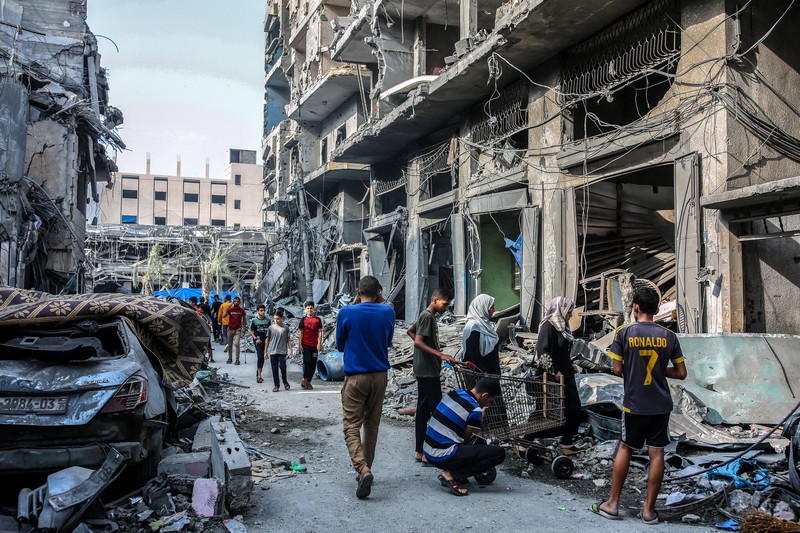
Literally whole cities, towns, villages, communities have been destroyed in Gaza.

Images of mayhem and destruction have been graphic with magnification added, showing the extent of Israeli vengeance. It would be wrong to talk about one city destroyed for there has been so many over the past months. This reflects the magnanimity of the Israeli destruction and firepower.

https://t.me/hamza20300/210700

And then there is the willful destruction of schools and the pupils. The Gaza Ministry of Education said Israel bombed 400 schools during this war on the Strip and killed 4895 students. This may not be too surprising since this war has been mainly against women and children with the fact many of these schools are run by UNRWA and used as refuge centers for that 1.9 million that were displaced in this war.

And then there was the videoclip of the youth who was shot at in the face while he was filming one of the destroyed neighborhoods of Gaza. He was filmed right at the time when an Israeli sniper fired at him point blank and when he was saying ‘we thank God of the blessings we are in.”

Israeli paranoia

Israelis today are in a state of paranoia. From its top politicians – including Prime Minister Benjamin Netanyahu, Defense Minister Yoav Gallant, army chief Herzi Halevi to the people-in-the street.

According to the British medical journal, The Lancet, the Israeli population are in a state of national psychological shock and deep depression – a situation that started on 7 October when Hamas operatives invaded the so-called Gaza enveloped and killed 1200 Israelis and took to the enclave about 250 hostages.

Different manifestations are appearing among Israeli soldiers with the most glaring is the fact – and according to their defense and army institutions – is the thousands in need of psychological help in their hospitals. This is being reported all the time, across the media especially by Jewish newspapers.

Interesting are three facts: Soldiers, more and more are shooting at would you believe it, sheep, 31 percent of the wives of reservist soldiers are calling for a divorce and more and more Jews are leaving Israel to elsewhere in the world. In just one day, 30,000 Israelis flew out of Ben Gurion airport.

Marwan Asmar is a writer based in Amman, Jordan.

7 February 2024

Source: countercurrents.org