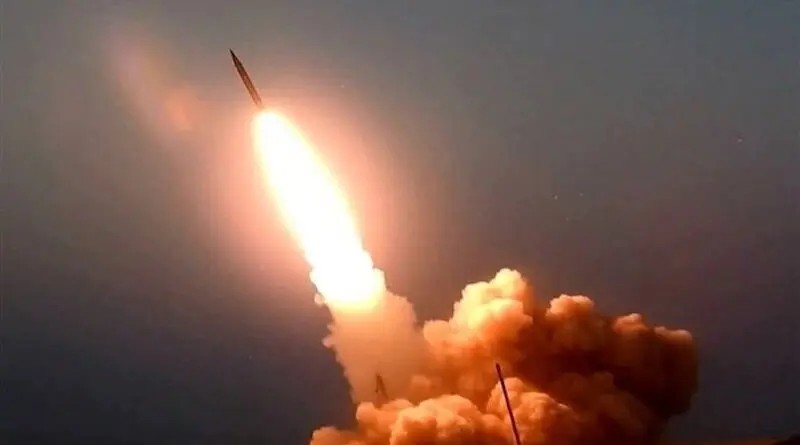
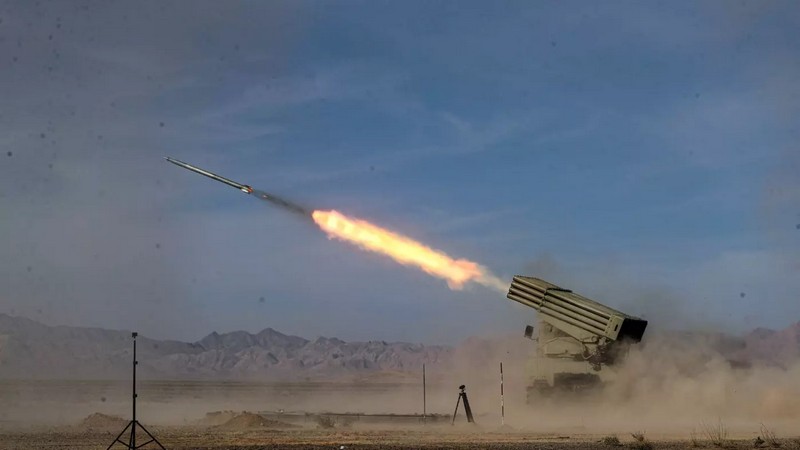
The imperialist powers have responded to Iran’s strikes on Israel Saturday with an outpouring of condemnation.
“I condemn these attacks in the strongest possible terms,” US President Joe Biden declared, reaffirming “America’s ironclad commitment to the security of Israel.”
The G7 group of imperialist powers said in a statement, “We … unequivocally condemn in the strongest terms Iran’s direct and unprecedented attack against Israel.” It added, “Iran has further stepped toward the destabilization of the region and risks provoking an uncontrollable regional escalation.”
These statements by the imperialist warmongers, repeated by every major NATO power, are the height of hypocrisy. The force “provoking an uncontrollable regional escalation” in the Middle East is Israel and its imperialist backers.
Let us get the timeline accurate. Iran’s strike was a response to the April 1 attack by Israel on an Iranian embassy in Syria that killed seven top-level Iranian military officers, including two generals.
In response to Israel’s flagrantly illegal and murderous attack on what was, under international law, Iranian soil, the imperialist powers effectively endorsed it. US Ambassador to the UN Robert Wood declared that “terrorist leaders and elements were allegedly present at this facility.” The US, France and the UK vetoed a resolution in the UN Security Council condemning Israel’s attack.
Now, the imperialists are falling over themselves to condemn Iran’s response to Israel’s action. This is all the more striking given that Iran’s action was largely symbolic. The Iranian government announced Saturday’s strike to countries in the region 72 hours in advance in an effort to limit the impact. As Reuters reported Sunday, “Iran gave wide notice days before Saturday’s drone and missile attack on Israel allowing mass casualties and rampant escalation to be averted.”
The imperialist powers are asserting that they and their proxies can kill as many people as they want, carry out targeted assassinations and act in complete violation of anything resembling international law. But any response, even of the most minimal character, is denounced as a crime. This is the basic law of colonialism and imperialism.
While Biden “condemns” the actions of Iran, he does not extend the same language to Israel’s onslaught against Gaza, which is being funded, armed and politically supported by the United States and other imperialist powers.
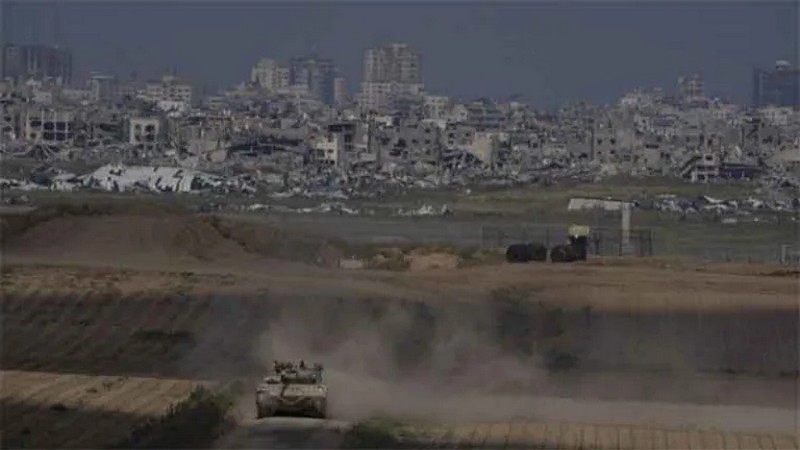
Israel is actively carrying out a genocide against the population of Gaza, already having killed at least 40,000 people. It is systematically displacing, starving and bombing an entire population of 2.2 million people and methodically and deliberately murdering doctors and aid workers.
The genocide in Gaza is developing into a regional war, which can very quickly draw in the entire globe.
To the extent that the Biden administration is stating, generally on background rather than through official pronuncements, that it would prefer that Israel not respond with immediate military strikes, this is determined by tactical considerations.
Some of these considerations were laid out in an op-ed in the New York Times by Bret Stephens under the headline, “For Israel, Revenge Should Be a Dish Served Cold.”
“As a matter of self-defense,” Stephens wrote, “Israel has every moral and legal right to respond in kind—and then some. It is not enough for Israel to demonstrate its capacity for defense, as it did over the weekend. It must also re-establish its capacity for deterrence. That is, it needs to show Iran’s leaders that the price for bringing their war against Israel out of the shadows will be unbearably high, and is therefore not to be repeated.”
Stephens counsels against, however, an all-out assault on Iran. “Israel has an unfinished war against Hamas in Gaza, and a direct Israeli attack on Iran could trigger a second full-scale war against Hezbollah in Lebanon, if not with Iran itself. Most Israelis understand that particular war will have to be fought sooner or later—perhaps before the end of the summer—and that it will be probably much tougher on them than the Gaza war has been so far.” (Emphasis added)
In other words, it is first necessary to finish the genocide in Gaza, before turning to the “much tougher” task of war with Iran.
Sections of the US political establishment are openly advocating a full-scale war, asserting that the Biden administration is not going far enough in supporting an Israeli war against Iran. The Wall Street Journal wrote in an editorial, “The attack should at least cause Mr. Biden and his fellow Democrats to end their cold war with Israel over Gaza and recognize that this is really a war against Iran.”
It continued, “Leaders in both parties should also start telling the truth to Americans about the new world of global threats. Russia, China, Iran and North Korea are all on the march and working together.”
The Israeli cabinet has been deliberating over the past day on what actions to take, and there are evidently divisions within the regime itself.
Moreover, while Israel is imperialism’s attack dog in the Middle East, the US is not in complete control of what it will do. In any event, the Biden administration has reaffirmed that if Israel does take action, it will have full support.
Appearing on Meet the Press, White House spokesman John Kirby declared, “Whether and how the Israelis respond is going to be up to them.”
Asked, “If Israel does decide to move forward with retaliatory strikes, will the United States support Israel?” Kirby replied that US “support for Israel’s self-defense will stay ironclad. It will not change.”
The United States responded to the events of October 7 by launching a major military offensive throughout the Middle East, with Iran as the central target. Within days, the US surged an armada of warships and hundreds of aircraft to the region, which it has used to launch dozens of illegal airstrikes over the past six months.
The US offensive in the Middle East is a crucial element of an unfolding global war, with Russia and China as the main targets. The subjugation of Iran, lying at the heart of Eurasia, is a critical component of the United States’ drive for global military domination.
Whatever the immediate developments in the coming days, the regional war throughout the Middle East, as part of an expanding global war, is spiraling dangerously out of control. The world stands closer to nuclear conflict than at any time since the Second World War. Nothing can stop this expanding global war except the development of a mass anti-war movement oriented to and based on the working class.
While the Australian government continues to pirouette with shallow constancy on the issue of Israel’s war in Gaza, making vacuous utterances on Palestinian statehood even as it denies supplying the Israeli Defense Forces (IDF) with weapons (spare parts, it would seem, are a different, footnoted matter), efforts made to unearth details of the defence relationship between the countries have so far come to naught.
The brief on Australian-Israel relations published by the Department of Trade and Foreign Affairs is deplorably skimpy, noting that both countries have, since 2017, “expanded cooperation on national security, defence and cyber security.” Since 2018, we are told that annual talks have been conducted between defence officials, while Australia appointed, in early 2018, a resident Defence Attaché to the embassy in Tel Aviv. What is conspicuously absent are details of the Memorandum of Understanding on defence cooperation both countries signed in 2017.
A little bit of scrapping around reveals that 2017 was something of a critical year, a true bumper return. The Australia-Israel Defence Industry Cooperation Joint Working Group was created that October. A following Australian Defence media release notes the group’s intention: “to strengthen ties between Australia and Israel, explore defence industry and innovation opportunities, identify export opportunities, and support our industries to cooperate in the development of innovative technologies for shared capability challenges.”
The intentions of the group were well borne out. Defence contracts followed with sweet indulgence: the February 2018 contract between Israel-based Rafael Advanced Defence Systems with Australia’s Bisalloy Steels worth A$900,000; an August 2018 joint venture between the Australian defence engineering company Varley Group and Rafael, behind such “leading weapons systems” as “the Spike LR2 anti-tank guided missile”; and the Electro Optic Systems-Elbit Systems agreement from 2019 responsible for developing “a modular medium-calibre turret that can be configured for a range of platforms, including lightweight reconnaissance and heavy fighting vehicles.”
In February this year, Elbit Systems, Israel’s notorious drone manufacturer and creator of the Hermes 450 aerial device responsible for this month’s killing of seven World Central Kitchen aid workers including the Australian national, Lalzawmi “Zomi” Frankcom, was rewarded with a A$917 million contract. Business, even over bodies, exerts a corrupting force.
In a heartbeat after the outbreak of the latest Gaza War last October, the Australian Greens filed a Freedom of Information (FOI) request seeking a copy of the barely mentioned MOU. After a period of three months, the Australian Defence Department reached the boring conclusion that the application should be rejected. It fell, the argument went, within the category of exemptions so treasured by secretive bureaucrats keen to make sure the “freedom” in FOI is kept spare and bare.
What follows is repulsive to intellect and denigrating to morality. “The document within the scope of this request,” went the letter from the Defence Department, “contains information which, if released, could reasonably be expected to damage the international relations of the Commonwealth.” The MOU “contains information communicated to Australia by a foreign government and its officials under the expectation that it would not be disclosed.” Releasing “such information could harm Australia’s international standing and reputation.”
A telling, and troubling role was played by Israel in the process. With characteristic, jellied spinelessness, Australian defence officials notified Israel of the FOI request in December 2023. In February, the Netanyahu government responded with its views, of which we can only speculate. The Greens were duly informed by the Australian Information Commissioner (OAIC) that the relevant decision maker in Defence “will consider the foreign government’s consultation response to make an informed and robust decision.” With such words, a negative response was nigh predictable.
Greens Senator David Shoebridge, in responding to the decision, was adamant that, “There is no place for secret arms treaties and secret arms deals between countries.” Furthermore, there was “no place for giving other countries veto power over what the Australian government tells the public about our government defence and arms deals.” The case is even more pressing given allegations of war crimes, crimes against humanity and genocide taking place in the Gaza strip.
This regrettable episode retains a certain familiar repulsiveness. Unfortunately for devotees of open government, a fraught term if ever there was one, Australia’s FOI regime remains stringently archaic and pathologically secretive.
Decision makers are given directions to frustrate, not aid applications to reveal information, notably on sensitive topics such as security, defence and international relations. Spurious notions about damage to international relations are advanced to ensure secrecy and the muzzling of debate. The OAIC has also shown itself to be lamentably weak, tardy and inefficient in reviewing applications. In March 2023, it was revealed that almost 600 unresolved FOI cases had bottled up over the course of three years.
The latest refusal from the Defence Department to disclose the Israel-Australian MOU to members of Parliament, a decision reached after discussions with a foreign power (that fact is staggering and disheartening in of itself), betrays much doubletalk regarding defence ties between Canberra, the IDF, and the Israeli government. More than that, it confirms that those in Canberra are being steered by other interests, longing for the approval of foreign eyes and foreign interests.
Dr. Binoy Kampmark was a Commonwealth Scholar at Selwyn College, Cambridge.
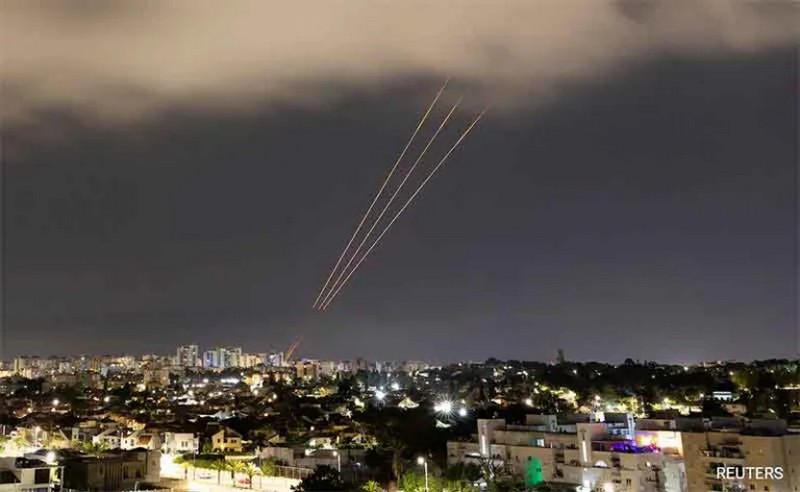
Israel is under attack by incoming Iranian drones and ballistic missiles. The Jordanian skies lit up with passing missiles and drones as they made their way to Israel
They were heard over the Jordanian skies at around 2 am local time, Sunday, 14 April, 2024. A series of booming noise was heard as the trajectory objects made their way over the Jordanian capital, Amman.
Later on, news sources suggested 400 and 500 missiles were expected to reach Israel’s strategic depth. And later another figure was branded about of 1500 missiles that targeted Israel.
But there was immediate speculation about the origins of these missiles with observers suggesting they may have come from Shiite groups in Iraq, Hezbollah in Lebanon and/or from the Houthis from Yemen.
Social media pundits were quick to videoclip the missiles over the skies of Amman which very quickly dominated the social media.
The United States on hearing about the launch of the drones and missiles from Iran’s western part, Saturday evening – around 1700 kilometers away from Israel -quickly promised it would seek to intercept these trajectories.
Very quickly also Jordan quickly closed its airspace to any incoming and outgoing flights with Iraq also closing to airspace.Jordan’s Civil Aviation Regulatory Authority (CARC) announced the extension of the closure of the Kingdom’s airspace until 11 a.m. local time (8 a.m. UTC). This came in a statement following an earlier announcement statement issued the previous evening.
Dr Asmar is an Amman-based writer covering Middle East Affairs
Iran made all the due preparations over the last few days and then struck Israel with a mighty series of blows with its drones and cruise missiles. Iran’s retaliation was its answer to the Israeli attack on the Iranian consulate in Damascus. Now the Iranians have answered, as they promised they would and have struck military and other targets in Israel.
Iran ensured that none of the US bases in the region, in Iraq, Syria, or the Gulf countries, or Turkey would retaliate – none! If the US did, the the Axis of Resistance would strike at the US bases, ensuring their utter destruction. Until now, the USS Carney too has not struck Iran, and the UK has backed out from any role whatsoever.
In case of Israeli attacks, the Axis of Resistance has further warned of great escalation on the Lebanese front, where the Hezbollah could take Israeli (Occupied Palestine 1948) territory all the way till Haifa. Syria too will move into the Golan Heights and reclaim its sovereign territory held by Israel since 1967.
The Yemeni Houthi government continues to stand guard on the Red Sea, with Iran controlling the Hormuz Strait, the entry to the Persian Gulf.
Iran’s attack on the psychopathic mass murderer Judeo-Nazi entity of Israel has boosted the morale of the people and nations across the region and across the world. There are celebrations on the streets of Palestine, Lebanon, Syria, Iraq, Iran, Yemen, Jordan, with more and more countries joining the celebrations.
Israel has made a great strategic error by directly attacking Iran, thus now directly drawing Iran into the fast unfolding regional war. Iran had no choice, but to retaliate against the Israeli attacks on its consulate in Damascus. Israel, after facing a strategic military defeat in Gaza, wanted to expand the war, drawing in Iran, and then would follow the US & the rest of the Anglo-Zionist Western alliance.
After the Iranian retaliation, now will Israel escalate the war further?
Will the US too attack Iran from its aircraft carriers on standby?
What will be the role of Russia in the fast-unfolding war? Russia has a strategic alliance with Iran, as is evident from their military & political cooperation in Syria to Ukraine. China too will surely stand with Russia and Iran.
So even as deep cracks are appearing within the Western alliance, the nations that constitute the Global South, the World Majority are fast uniting. The nations of Asia, Africa, the America’s, are fast uniting for the cause of Palestine, which is the central geopolitical issue and the greatest moral issue of our times.
If the US attacks Iran, its illegal bases, its illegal presence in Syria, in Iraq will come under massive attack and the US will yet again have to flee in ignominy, just as they did from Vietnam & Afghanistan.
Due to the ongoing Holocaust of the Palestinian people, Israel is deeply isolated internationally, a pariah, a war criminal entity. Israel is deeply divided within and not even the war has managed to unite the country. Netanyahu is highly unpopular, and his extreme rightwing bunch of extremist Judeo-Nazi psychopaths, the Gvir’s, the Smotrich’s, are dragging Israel towards certain defeat.
If the war came to a halt, Netanyahu will lose power, he will have to resign. He faces serious corruption charges with hearings still pending in the Supreme Court. Netanyahu will go to prison, which is why he is desperately prolonging the war.
If an election were held today, Netanyahu and his ultra-rightwing fanatical Jewish Bloc will lose. Israel has lost all sense of direction, be it in terms of political strategy, both at home or abroad, or on the battlefield. Thus, even after committing a Holocaust, Israel has been unable to defeat the Palestinian resistance, or break the will of the Palestinian people, who refuse to surrender. Thus, despite the Hiroshima-Nagasaki scale of bombings, the mass murder, the torture, the famine and starvation conditions created by the Israeli Nazi entity – Gaza still stands, Palestine still stands!!
Now, Iran, the Axis of the Regional Resistance, Palestine, Lebanon, Syria, Iraq and Yemen are ready to proceed with the “Last War of Independence”. The freedom and liberty of all of the West Asian region is at stake, of the World is at stake. We are witness to the collapse of US-led Western imperialism & Zionism.
The Global South, the Global Majority stand with Palestine! The People of the world, which include the majority of the people of the West, including a few governments like Ireland & Spain, too stand with Palestine. It’s now down to a handful of Zionist occupied regimes in the US, UK, Germany, France and Canada. They yet, shamefully support, arm, finance the colonial settler occupation, the ethnic cleansing, the war crimes, the genocide, and the Holocaust of the Palestinian nation. These Western regimes too are increasingly isolated, mere pariah states.
Israel is led by deranged, insane racist, supremacist cabal of Judeo-Nazi fanatics, and when a state is led by such delusional maniacs, their words, their actions and their misdeeds, lead to the eventual collapse and the destruction of that nation. The destruction of Israel is directly proportional to the growing Jewish fanaticism and the increasing genocidal war crimes against the Palestinian population.
The consequences of the “October 7 Gaza Ghetto Uprising” have indeed been far reaching & it has upset all of the Israeli & US calculations. They have been unable to comprehend and decipher the depth of its meaning and strategic impact that it would have.
The October 7 Palestinian uprising was a desperate “Call for Freedom”, a call that much of the world was deaf to, blind to, but is now hearing, seeing, heeding…..
The end of the Israeli Occupation of Palestine draws closer and closer.
Palestine will be free. After decades of Persecution and Crucifixion, the world is witnessing the Resurrection of the Palestinian nation.
All the Palestinians are soon coming back home, and We, with them.
Feroze Mithiborwala is Founder-National Gen. Sec. India Palestine Solidarity Forum
Gaza no more! All of its 364-kilometers have been totally destroyed and obliterated. If the Israeli army had the capability, they would have wiped it off the face of the earth. But the resistance is another story. They stand strong and unflinching.
Israel has barely scratched the surface in “eradicating” Hamas and the other Palestinian groups. By all counts, and despite its colossal destruction, they give as good as they get and even better.
The Israelis, their politicians and army stand bewildered. The only thing they are doing is more destruction and bombing. They are bombing towns, cities and neighborhoods a second, third and fourth times simply because the resistance is too strong. They are bogged down. In Gaza there is no “cleaning operations”.
But it has been tough for the Palestinians in this smallest enclave in the world. Its destruction has been magnified and brutal.
“Every time I walk the streets of Gaza, I am overwhelmed by the desire to cry over what the city has become,” Bayan Abu Sultan writes on her X platform page @BayanPalestine.
“The smell of the blood of the martyrs’ wafts in every neighborhood,” the journalist whose home behind Al Shifa hospital was destroyed by the Israeli army says.
“The rubble extends as far as the eye can see in every direction,” the journalist who lived some of the worst onslaught on Al Shifa hospital by the Israel army, and was thought killed at one time points out.
“The garbage has piled up to an extent that prevents the continuation of normal life, and the features of the people only appear helpless.
Gaza has become uninhabitable,” she adds.
Quoting from what she said the Quds News Network points out “female Palestinian journalist Bayan Abu Sultan says after more than six months of brutal Israeli genocide, Gaza has become uninhabitable.
At one time when the Israeli army raided Al Shifa Hospital and started killing many of its people and destroyed its surrounding the French Reporters Sans Frontiers sounded the alarm bells that she may have been killed by the Israelis because she disappeared from the radar screen after 18 March.
Despite the mass slaughter, killing and destruction – 33,000 killed, 76,000 injured, 1.9 million displaced out of a total population of 2.3 million – many observers, a lot are Jewish and Israelis says after seven months of war on Gaza, it is Israel which is being defeated.
Many of the Hebrew media and newspapers are talking about a major defeat for Israel in its seventh months of war on Gaza. The daily Yedioth Ahronot headlines its report as “Israel defeated and Isolated” saying “the Israeli regime” is “defeated in the war against the Gaza Strip and is in sever isolation.”
The daily paper says the government and army has failed and “the main reason for this failure is the short-sighted party policy pursued by Prime Minister Benjamin Netanyahu.”
Haaretz, another influential daily, writes: “We shouldn’t say that [word defeat] but there is no other option “We are defeated, it’s a total defeat.” Quoting the paper one blogger points out “admitting defeat is a matter of time…the entity is paying the price for its crimes”.
Adding insult to injury, he says none of the Israeli objectives were achieved in the war, only victories against women and children.
And Haim Ramon, an ex-Justice Minister, agrees. He says Israel has indeed, been strategically defeated in its war on Gaza. He made the comments in a radio interview quoted by the Hebrew Maariv newspaper.
And further to that, former Israeli Deputy Chief of Staff Yair Golan says that the Israeli army is stuck in Gaza without any real goals and/or exit strategy to leave the enclave.
One blogger (@HealthRanger) put it this way: “Israel’s only real military capabilities lie in bombing and slaughtering innocent, unarmed women and children who have no weapons, no air defenses and no armor.” He points out the IDF is “snowflake” and has been defeated whilst “Israel has only destroyed its reputation with the entire world.”
He says “Netanyahu has put Israel on a path of self-destruction that will earn the Zionists a place in history alongside the worst genocidal murderers the world has ever known”. Another blogger says Israel has “lost everything against the civilians of Gaza” whilst “Hamas has not been defeated and Israel appears for what it is: A genocidal state that aims only to take Gaza.
Finally, another Jewish blogger says in this war Israel sends the best of its soldiers but they return back handicapped, crippled and no longer of any use to the army that is if they are not killed.
Dr Asmar is based in Amman and covers Middle East affairs
The images are hard to fathom. How have well educated, well fed young Israelis been won to commit atrocities in Gaza similar to those perpetrated by Nazis against Jews? How do we explain the images of the military spending two weeks destroying Al-Shifa hospital, killing patients – including babies and children – unarmed civilians, medical and humanitarian workers? How do we explain watching soldiers shoot starving civilians approaching aid trucks or old women waving white flags? Ah, the government even had to explain how its soldiers shot down their own escaped hostages who were half-naked, unarmed, waving a white flag and yelling in Hebrew? I’m sure there are some soldiers who are revolted by what they’ve seen and whose words are suppressed if they try and speak them. But they must be the very few.
In Israel, 99% of the population is said to be in favor continuing the present level of force in Gaza. There may be large anti-government demonstrations, but that is only because the October 7 Hamas action caught Israel unprepared and/or hostages have not been rescued, it is only a tactical disagreement. Actual demonstrations against the occupation and the war involve only a very few, who are quickly and brutally beaten by the police.
Of course, the theory put forward to justify Zionist brutality in Gaza by the Israeli establishment and parroted by most of the world’s media and government, is that all Jews in Israel were traumatized by the holocaust, by the murder of six million of their number. And it was an unspeakably horrible event. What is also taught to all Israelis is that a holocaust is just waiting to happen again and cannot be prevented and Israel is seen as the only safe haven from the slaughter. Anti-Semitism is seen as different in character from other examples of racism and mass killing, something that cannot be explained by political or economic motivations.
In the US, the European settlers were won to the mass displacement and killing of Native Americans by viewing them as savages, as of lesser humanity. Later, many white Americans were won to endorse the enslavement of Africans as anti-black racism was purposely and successfully propagated. From 1915-16, the Turks murdered something like 1.5 million Armenians in the hopes of controlling their eastern provinces by stoking Muslim antagonism to Christians.
In Germany, building upon a long history of anti-Semitism, the Nazis appealed to German working class, suffering from defeat in WWI and rabid inflation, to believe they were the master race and that their enemies were Jews (among others), not capitalists. However, this is not the way the Holocaust is viewed in Israel. Instead of being seen as a horrific tactic of fascistic capitalism, it is seen as part of the inevitable role of Jews as the victims of mass slaughter – a dynamic that will continue forever and is unchangeable.
The Origin Stories
The origin of the inevitably of genocide is sometimes traced back to the biblical story of Amalek. In the time of Moses, the Amalek were said to have launched a merciless attack against Jews traveling to the promised land and God told Moses to annihilate them. Hundreds of years later, Saul did so, but he spared the king, whose descendants went on to kill all the Jews then living in Persia. In November, Netanyahu publicly compared Hamas to Amalek and said “You must remember what Amalek has done to you, says our Holy Bible. And we do remember.” 1
Other versions of the unique fate of Jews claim that Jews are God’s chosen people with a divine destiny to inhabit the promised land. Thus anyone else living there, for no matter how long, was an interloper in divinely ordained Jewish space. Moreover, the Arab failure to recognize this right makes them anti-Semitic. Some Zionist historians try and trace Islamic anti-Semitism to the Quran and the Prophet Muhammad.2 A more secular view, that existed in my family, is that Jews are resented because they are superior. Thus they are hated by all non-Jews and racism of Jews against “inferior” races is justified.
There is no guilt for what Jews have done to Arabs – they are the wrongdoers. One concrete example is the tale that all Jews immigrating from other Middle Eastern or North African countries in the 1940-50s did so because they were expelled, so that Israel took in as many refugees as Palestinians left in the Nakba. The reality is that the Jews came for a variety of reasons, including Zionism and false flag anti-Semitic incidents created by Zionists. Those that were expelled were usually in retaliation for the Nakba.
Israelis are primed to accept these narratives by the way they learn about and interact with Palestinians (if they do at all). An 80 year old Israeli friend of mine in Jewish Voice for Peace told me she never spoke to a Palestinian until she was 65, when her daughter brought her to a demonstration for a Palestinian family that had been evicted from their home in Jerusalem. Since the end of the Second Intifada in 2004, the separation wall and inability of most Palestinians to even work in Israel has ended almost all inter-group contact.
Throughout Israel one can see ruins of destroyed Palestinian villages destroyed in the Nakba. At many sites there are signs purporting to describe the history that completely obliterate Palestinians. For example, Bar’am National Park in northern Israel is renown as the site of ruins of two ancient synagogue, but the site also contains the remains of the Palestinian village of Kafr Bir’im, from which the residents were driven in 1948 and which existed since at least the 1800s.
Elsewhere the remains of Palestinian villages are described as Roman ruins.
As described in detail in another article on this blog, the Zionist plan has always been to eradicate the Palestinians from Palestine. To some this is God’s biblical plan and to others merely a necessity in view of the perceived threat of genocide against all Jews by all Arabs. In this view it is not only necessary to expel all Palestinians but it is justified, necessary to kill them. Ben Gurion, the first Prime Minister of Israel, summed up many sentiments that are as strong today:
· “[The Arabs] see but one thing: we have come and we have stolen their country. Why would they accept that?”
· “After the formation of a large army in the wake of the establishment of the state, we will abolish partition and expand to the whole of Palestine. “
· “We must expel the Arabs and take their places.” 3
Indoctrination Begins Early
In textbooks, from kindergarten through high school, Arabs are not pictured as playing any role in Israeli society. In images, they are only depicted as subservient, criminal and backward and often as terrorists. Palestinians are described as foreigners or migrants, and the refugee camps which many inhabit are an “ecological disaster” inflicted on Israel. Maps depict Israel as all the land from the Jordan to the sea.4
In Goliath, Max Blumenthal describes how children are indoctrinated into worship of the military from a preschool. In some elementary schools, “It is good to die for your country” is written atop every blackboard. Picture book exercises depict images of military hardware. Posters read Who Wants to Kill Us and give choices including the Pharoah, Nazis and Arabs. Female soldiers on leave, but in uniform, often assist in classrooms and portray the army as a loving family. All but very few students grow up looking forward to their involuntary military service.5
The teaching of history to older children and its depiction throughout the society is falsified to present Jews as heroic and just in their battle to defeat murderous Arabs. The Nakba, or expulsion of most Palestinians from Israel in 1947-8 is depicted as flight of anti-Semitic Arabs from the newly declared Jewish state, rather than as a planned massacre and expulsion. Very few Israelis or international Zionists have any idea about the true story. A friend in Tel Aviv who has taught high school for many years told me would be fired if he ever mentioned any accurate history. Every year, about 40,000 thousand Israeli high school students visit Auschwitz to see firsthand what the world wishes to do to them.
Every Jewish Israeli, save the Orthodox, is enlisted in the IDF at the age of 18, men for 3 years and women for two, with men remaining in the reserves for decades. The army “serves as a symbol of Israeli strength, efficiency and effectiveness,” according to the Jewish Agency.
There have always been a small number of leftist or pacifist students who refused to serve, known a Refuseniks. They are almost always sentenced to repeated sentences adding up to about 5 months in military prison. Refusal also usually leads to being ostracized by many Israelis and to losing employment prospects. Whereas 230 teens had signed a letter September, 2023 refusing to serve, only a few have actually resistedsinceOctober.7
What to Expect
Many Jews around the world are indoctrinated with the same Zionist world view as Israelis. The Israel lobby, AIPAC and wealthy donors ensure that all critics of Israel are branded as anti-Semites and suffer consequences, as documented in the previous blog article. However, the genocide in Gaza is beginning to weaken this movement, among anti-Zionist Jews and the general public and grow activism amongst Muslims. So strong is the opposition to the support of Israel that politicians from the US to Turkey have had to at least utter words of rebuke.
However, these rebukes will not lead to a divorce from Israel by Western leaders no matter what tactics Israel continues to use. Israel is too important as the most reliable pro-Western military in a region of the world central to the shipping, pipelines and sources of fossil fuels and inhibition of nationalist, fundamentalist or pro-Chinese movements in the area. Nor can we expect the Palestinians, under divided leaders, none of whom represent the interests of the masses of the workers, to attain a victory. Only a world-wide working class led movement for an anti-imperialist – a communist – society can bring a better world for all of us.
Ellen Isaacs is a physician, anti-war and anti-capitalist activist, and co-editor of multiracialunity.org. She can be reached at eisaacs66@gmail.com
Tensions between Israel and Iran reached new heights Thursday after the United States warned of an “imminent” attack being planned by Tehran. The Iranian regime has said since Israel’s bombing of its Syrian embassy at the start of this month, killing senior members of Iran’s military, that it would retaliate.
Israeli Foreign Minister Israel Katz threatened Thursday, “If Iran attacks from its territory, Israel will respond and attack in Iran.”
Speaking at the Tel Nof Air Base, Prime Minister Benjamin Netanyahu told air force personnel: “We are in challenging times. We are in the midst of a war in Gaza that is continuing with full force. In addition, we are continuing with ceaseless efforts to return our hostages, but we are also preparing for challenges from other fronts.
“We set a simple principle: Anyone who hits us, we hit them. We are ready to fulfil our responsibilities to Israel’s security, in defence and attack.”
According to Israeli news stations, the country’s air force recently conducted joint exercises with Cyprus to “simulate an attack in Iran.” The Israel Defense Forces are on high alert, with weekend leave cancelled and the army calling up extra reservists to the Aerial Defence Array.
America’s top general, Michael Kurilla, landed in Israel for talks with Defense Minister Yoav Gallant, who was assured by US Secretary of State Anthony Blinken in a call Wednesday evening that Washington would back Israel fully in any conflict with Iran. President Joe Biden had said in a press conference earlier that day, “As I told Prime Minister Netanyahu, our commitment to Israel’s security against these threats from Iran and its proxies is ironclad, ironclad.”
Republican Senator Marco Rubio, a member of the Intelligence Committee, described the situation as “the most dangerous Middle East moment since 1973,” warning, “Iran wants to launch a large-scale attack from their own territory against Israel. Israel will respond instantly with an even more severe counterattack inside of Iran.”
Even as they push Iran to respond to such provocations, the US and European powers have demanded Tehran show a “restraint” never expected of their ally Israel. American Middle East envoy Brett McGurk directed the foreign ministers of Saudi Arabia, UAE, Qatar and Iraq to speak with Tehran and urge its government to back down.
German foreign minister Annalena Baerbock urged “maximum restraint” in the name of “avoiding further regional escalation.”
But it is the imperialist powers who have constantly and deliberately driven the escalation, providing Israel with weapons and diplomatic and military support to carry out a genocide in Gaza and brazenly attack its opponents in Lebanon and Syria. Last December, Gallant described Israel as being engaged in a “multi-front war” across “seven theatres”.
At the very start of Israel’s war, the United States dispatched two aircraft carrier strike groups to the Eastern Mediterranean to insure the country against retaliation. These forces intercepted 11 drones launched by the Iran and Palestine-aligned Houthis in Yemen on Wednesday.
The most unashamedly hawkish voices in Israel and the imperialist centres have been urging Israel to attack Iran directly.
Danny Ayalon, former Israeli ambassador to the US, commented, “With this heightened tension, there is a novelty here. Iran, for the first time, is threatening to strike, itself, directly at Israel, and not through proxies,” adding, “I think that by striking at the head of the snake in Iran and in Tehran, this is probably the most effective way to bring Iran back, to keep it at bay.”
The UK Daily Telegraphs’ Richard Kemp, a former colonel, argued that “the UK should be ready to take direct military action against Iran” or “whatever is needed to help them [Israel] fight back.”
In the same paper, John Bolton, the former National Security Advisor under President Donald Trump, gnashed that “Israel has for too long delayed the Rafah offensive…
“Mopping up residual Hamas guerrilla/terrorist activities will be time-consuming, but dismantling it means Israel is freer and less at risk if it must confront Hezbollah full on. Or confronting Iran and its nuclear weapons programme now, before Iran has a reliable deliverable capacity.”
Israeli forces are already redoubling the campaign in Gaza, carrying out attacks in the central Strip focussed on the Nuseirat refugee camp. Raouf Abed resident of nearby Deir el-Balah, told Al Jazeera, “It was as if the occupation army is launching a new war.”
Referring to strikes launched from air and sea, he explained, “The explosions were non-stop, the sounds came from different directions. Every time we hope there will be a ceasefire, Israel escalates the aggression as if they are trying to pressure Hamas by hitting on us, the civilians.”
Al Jazeera journalist Tareq Abu Azzoum reported, “The situation on the ground is terrible and chaotic as the Israeli military has been scaling up its attacks… Battles have been raging in villages and towns that are adjacent to the Nuseirat refugee camp.
“We can see the Israeli military destroying entire neighbourhoods using heavy firepower from artillery units on the ground with cover from fighter jets and surveillance drones.”
Azzoum’s colleague Hani Mahmoud explained, “People find themselves trapped under heavy bombardment. This has caused a great deal of panic and people are starting to move out of Nuseirat camp and other parts of the central area. The situation is getting more difficult by the hour.”
Attacks were also carried out at the Jabalia refugee camp and Gaza City in the north of the Strip, and in the southern city of Rafah, to which the majority of Gaza’s population has fled.
In Rafah, a group of six on their way to visit family for Eid was killed by Israeli warplanes. In Gaza City, another six were killed when the Firas market was bombed.
A UNICEF aid convoy attempting to enter the north was hit by Israeli fire aimed at Palestinians. Spokeswoman Tess Ingram explained shots were fired “towards civilians who then ran in the other direction” and several hit the car. “It was shocking that this was happening to us on a coordinated mission in a designated holding area. We had colleagues outside the vehicle who very easily could have been injured or killed.”
On the front with Lebanon, Israeli aircraft launched raids against a Hezbollah military compound near the border town of al-Dahira, and against the southern town Tayr Harfa.
The world’s attention has, rightfully so, been focused on the fallout from Iran’s retaliatory strike against Israel on April 13-14, 2024. Iran’s purpose in launching the attack was to establish a deterrence posture designed to put Israel and the United States on notice that any attack against Iran, whether on Iranian soil or on the territory of other nations, would trigger a retaliation which would inflict more damage on the attacker than the attacker could hope to inflict on Iran.
To achieve this result, Iran had to prove itself capable of overcoming the ballistic missile defense systems of both Israel and the United States which were deployed in and around Israel at the time of the attack.
This Iran was able to accomplish, with at least nine missiles striking two Israeli air bases that fell under the protective umbrella of the Israeli-US missile defense shield.
The Iranian deterrence posture has implications that reach far beyond the environs of Israel or the Middle East.
By defeating the US-Israeli missile defense shield, Iran exposed the notion of US missile defense supremacy that serves as the heart of US force protection models used when projecting military power on a global scale.
The US defensive posture vis-à-vis Russia, China, and North Korea hinges on assumptions made regarding the efficacy of US ballistic missile defense capabilities. By successfully attacking Israeli air bases which had the benefit of the full range of US anti-ballistic missile technology, Iran exposed the vulnerability of the US missile defense shield to modern missile technologies involving maneuverable warheads, decoys, and hypersonic speed. US bases in Europe, the Pacific and the Middle East once thought to be well-protected, have suddenly been revealed to be vulnerable to hostile attack. So, too, are US Navy ships operating at sea.
Israel’s ballistic missile defenses were given a supercharged boost by the deployment of an advanced AN/TPY-2 X band radar on Israeli soil. The radar, operated by the US Army’s 13th Missile Defense Battery, is located on Har Qeren, a height which rises out of the Negev Desert near the city of Be’er Sheva. The AN/TPY-2 is a missile defense radar that can detect, track and discriminate ballistic missiles, discriminating between threats and non-threats (i.e., incoming missiles and space debris).
The AN/TPY-2 operates in two different modes. The first, known as the “forward-based mode,” detects and tracks ballistic missiles as they are launched. The second—“terminal mode”—is used to guide interceptors toward a descending missile. The AN/TPY-2 is optimized to work with the Terminal High Altitude Area Defense (THAAD) ballistic missile defense system by guiding the THAAD missile to its target.
The US had deployed at least one, and possibly two, THAAD missile batteries to Israel at the time of the Iranian missile attack. In addition to assisting the THAAD missiles in shooting down incoming threats, the AN/TPY-2 radar data was integrated with Israeli radar data and other technical intelligence collected by the Ballistic Missile Defense Organization’s (BMDO) network of early warning satellites deployed for the sole purpose of monitoring and reporting Iranian ballistic missile launches. This integrated early warning/surveillance/tracking system was tied into a multi-layered missile defense architecture which included the US THAAD and Israeli Arrow 2, Arrow 3, advanced Patriot, and David’s Sling anti-ballistic missile interceptor systems.
Adding to the capability and lethality of the US-Israeli ballistic missile defense architecture was the presence of at least two US Navy ballistic missile defense (BMD) system-capable Aegis-class destroyers equipped with the SPY-1 S band radar and SM-3/SM-6 interceptor missiles.
The Navy BMD-capable ships are configured to tie into the ground-based AN/TPY-2 X band radar as well as the broader BMD system through the Command and Control, Battle management, and Communications (C2BMC) system. The combination of ground-based radars and interceptors with the US Navy BMD system provides US military commanders with theater-wide protection from hostile ballistic missile threats. This integrated system is designed to detect, acquire, and track incoming threats and, using complex computer-drive algorithms, discriminate targets and destroy them using hit-to-kill kinetic warheads (i.e., a “bullet hitting a bullet”).
On April 13-14, 2023, this system failed. In short, the combination of US and Israeli anti-ballistic missile defense capabilities deployed in and around the Negev desert made the Israeli air bases located there the most protected locations in the world from threats posed by ballistic missiles.
And yet Iran successfully struck both locations with multiple missiles.
The global strategic implications of this stunning Iranian accomplishment are game-changing—the US has long struggled conceptually with the notion of what is referred to as “A2/AD” (anti-access/area denial) threats posed by hostile ballistic missiles.
However, the US had sought to mitigate against this AA/A2 threat by overlaying theater ballistic missile defense architecture like that that had been employed in Israel. The failure of the combined US-Israeli defense systems in the face of a concerted Iranian missile attack exposed the short-comings of the US ballistic missile defense capabilities world-wide.
In short, this means that the US and NATO forces in Europe are vulnerable to attack from advanced Russian missile technologies which match or exceed those used by Iran to attack Israel. It also means that China would most likely be able to strike and sink US navy ships in the Pacific Ocean in the event of a conflict over Taiwan. And that North Korea could do the same to US ships and forces ashore in the vicinity of Japan and South Korea.
Until which time the US can develop, produce and deploy missile defense systems capable of defeating the new missile technology being deployed by nations like Iran, Russia, China, and North Korea, US military power projection capabilities are in a state of checkmate by America’s potential adversaries.
The weekend strikes showed that Israel needed others to defend it and is not free to choose how to strike back
Israeli Prime Minister Benjamin Netanyahu knew exactly what he was doing when he ordered the attack on the Iranian consulate in Damascus two weeks ago, killing Iran’s top soldier Brigadier General Mohammad Reza Zahedi, among other Islamic Revolutionary Guard Corps (IRGC) commanders.
This attack went well beyond the existing tactics of limiting the arms flow to Hezbollah, the Lebanese movement, or pushing back Iranian-backed groups from its northern border.
This was an attempt to eliminate the Iranian leadership in Syria.
After six months, the war in Gaza is going badly. Israeli ground forces are facing stubborn Palestinian resistance which shows no sign of surrendering or fleeing, amid the biblical scale of destruction and the real suffering of its people.
If anything, the mood among Hamas fighters has hardened. They feel they have survived the worst and have nothing to lose. The people of Gaza have not turned against them and the occupation of Rafah, they claim, would make no difference to them. They pour scorn on Israel counting Hamas’ strength in battalions. After such an onslaught, they have a limitless supply of recruits and weapons.
Multiple messages
As Israel’s offensive in Gaza stalls, opposition to Netanyahu’s leadership is mounting and there is real pressure to strike a deal that would start returning the hostages alive.
The differences with his chief backer, US President Joe Biden, are now out in the open and he is rapidly losing world opinion. Israel, under Netanyahu’s stewardship, has become a pariah state.
Once again, Israel needed to play the victim, to sustain the myth that it is fighting for its existence. What better time for Netanyahu, the gambler, to throw the dice and attack an Iranian consulate, knowing full well what that meant?
The US also knew what Netanyahu was doing, which was to try to drag America into an attack on Iran for at least the third time in 14 years. That is why the US told the Iranians directly they had nothing to do with the strike and only knew about it when the planes were in the air.
Iran bided its time. It saw what happened in the Security Council, when a statement drafted by Russia condemning the consulate attack was vetoed by the US, the UK and France. It then said it would not strike Israel if there was a ceasefire in Gaza. This, too, was ignored. Then every western country told Iran not to strike Israel. Biden had one word of advice for Iran: “Don’t”.
When it came, the strike was carefully choreographed to deliver a number of messages to the US, Israel and the Arab region.
Tehran wanted to establish a precedent that it could hit Israel directly without triggering a full-scale war. It wanted to tell Israel that it could hit it. It wanted to tell the US that Iran was a power in the Gulf that was here to stay and which controlled the Strait of Hormuz. It wanted to tell every Arab regime that kowtows to Israel that the same could happen to them.
Only a handful of rockets got through to their target, but every message they sent got delivered. The attack was thus a strategic success and a setback to the reputation of Israel as the chief bully boy on the block.
The delivery of these multiple messages started with the seizure by Iran’s Revolutionary Guards of a Portuguese-flagged container ship the MSC Aries which, according to the state news agency (IRNA), is managed by a company whose chairman is the Israeli-born billionaire Eyal Ofer.
It then launched swarms of cheap drones at Israel and told everyone they had eight hours to prepare. It cost Israel more than $1bn to activate its air defence systems, Brigadier General Reem Aminoach told Ynet news.
That is likely to be the smaller part of the bill.
At least four countries are known to have helped Israel shoot down the drones – the US, UK, France and Jordan. A fifth is most likely to have been Saudi Arabia as it was on the flightpath from southern Iraq to Israel and the sixth could well have been Egypt.
This was a major defensive aerial effort which, as some Ukrainians bitterly noted on Sunday, the same countries are choosing not to provide them. It could certainly not be done regularly.
In return, Iran used up 170 cheap drones, while 25 of the 30 cruise missiles were shot down by Israel. They were the decoy. The weapons were the ballistic missiles and a small number of those got through Israel’s defences and hit the Nevatim airbase in southern Israel.
Israeli military spokesperson Daniel Hagari said those missiles caused light structural damage. We will never know, but the message was delivered to Israel that Iran has the capacity to strike it and hit their targets from a distance, without having to use Hezbollah, Ansar Allah of Yemen or its allies in Iraq.
The weapons used were a free sample of its real firepower. After the strike, Iran warned the US that if Israel were to reply in kind, their bases just across the water in the Gulf and throughout Iraq would become targets, as they were after the assassination of Qassem Soleimani, the head of the Quds Force in 2020.
The message to the US is equally forceful: Iran is ready to attack Israel with ballistic missiles and defy the West, including a direct warning to Biden. They could do the same against any US ally in the Gulf region. Iran does not want a war, but it is capable of responding.
So, if it does not want a war, the message to the US is that it has to restrain its wilful, adolescent child, Israel, the child that has been pampered by its parent for so long, it thinks it can do to the region whatever it wants.
Foreign policy blunders
Netanyahu is now in a dilemma. He could choose to satisfy the extreme right and deliver a crushing counterattack on Iran, but he would not have America’s help doing so. And if that did not materialise, he might find the airspace between Tel Aviv and Tehran slightly more difficult to navigate.
If Netanyahu attacks Iran, his shaky relationship with the US will go from bad to worse. He will also launch a major attack with real opposition from the defence and security establishment, which stopped him doing a similar thing in 2010.
If he does nothing, he looks even weaker than he does already and cedes ground to Benny Gantz, leader of the opposition and fellow member of the war cabinet who talked on Sunday of a diplomatic offensive against Tehran, exactly the same formula Arab states used each time they had received a crushing military defeat from Israel.
The US is similarly finding that for the fifth time in three decades a major plank of foreign policy is crumbling in its hands.
The decision to topple the Taliban in Afghanistan, the invasion of Iraq, the toppling of Libya‘s Muammar Gaddafi, the attempted toppling of Bashar al-Assad – all these foreign policy disasters are now topped by a fifth – the decision to back Israel’s invasion of Gaza.
It is, of course, slow to realise the scale of the misjudgement it made in backing Israel to the hilt after 7 October attack by Hamas. But it also took time to realise the scale of the blunder it made in invading Iraq.
US Defence Secretary Lloyd Austin has testified to Congress that the US had no evidence that Israel had committed genocide in Gaza was eerily reminiscent of Colin Powell’s UN speech in which he said he had evidence of Saddam Hussein’s weapons of mass destruction. Powell’s speech in 2003 was a seminal moment in the US’s loss of international credibility. It has been sinking faster each year since.
Powell later regretted what he said. Austin is destined in hindsight to do the same.
A hell hole
Israel has now led its backers into a hell hole in which there is no peace or even prospect of one, no defeat of Hamas, no prospect of a post-war government, dwindling deterrence to all the other armed groups in the region, and the prospect of a low-level regional war on all of Israel’s frontiers simultaneously.
Possibly the most stupid thing Israeli security sources did on Sunday was to crow publicly about the cooperation they got from the Jordanian air force which helped them shoot down the drones and the cruise missiles.
Israeli sources boasted that missiles headed for Jerusalem were intercepted on the Jordanian side of the Jordan Valley and others were intercepted near the Syrian border.
The message Israel wanted to put out was that despite appearances, Israel has allies in the region who are prepared to defend it.
But this is a foolish game to play if Israel wants to preserve a critically weak Jordanian monarchy, fighting a tidal flow of public opinion wanting to storm the border.
Jordan may have been two-faced in the past and King Hussein did pass intelligence to his fellow cigar-smoking friend, the late former prime minister Yitzhak Rabin.
But this is the first time I can remember that the Jordanian army, which still bears its original name from the time of the liberation from the Ottoman Empire as the “Arab Army”, actually joined in combat to protect Israel’s borders.
This is a huge mistake.
While the population of Jordan, both Palestinians and the East Bankers, cheered those missiles onto their targets, the Jordanian army shot them down on Israel’s behalf.
Israel only has relations with Arab leaders who defy their people’s will and impose their corrupt governance on them. Jordan’s action on Saturday may give short-term succour to Israel, but in the long term it spells trouble on Israel’s longest border.
Israel may be celebrating the fact they have real allies, but by doing so they are fatally undermining their friends’ legitimacy.
Iran has made its point and Israel is weaker as a result.
This is the first time it was attacked directly by Iran who, like Hamas, gave it the impression it was not interested in war. It is also the first time that Israel was told by Biden not to strike back. After such an attack the visuals look bad: Israel needs others to defend it and is not free to choose how to strike back.
The attack leaves its protector the US casting around for policy options.
All, at the moment, look bad.
The views expressed in this article belong to the author and do not necessarily reflect the editorial policy of Middle East Eye.
This article is available in French on Middle East Eye French edition.
David Hearst is co-founder and editor-in-chief of Middle East Eye. He is a commentator and speaker on the region and analyst on Saudi Arabia.
Journalists of wars prolonging U.S. and NATO nations media are providing cover for a monstrous genocidal crime against humanity by portraying the Israeli U.S. provisioned devastating bombing and air strikes on Israel’s military occupied Gaza Strip as ‘defensive war.’
“Israel can’t claim a right to defend itself from the people it oppresses and whose land it colonises,” UN Special Rapporteur on the Occupied Palestinian Territories Francesca Albanese, April 8, 2023.[1]
The successful Hamas guerrilla attack of October 7 was part of an ongoing many decades long Palestinian fight for freedom, and was so described by United Nations Secretary-General Antonio Guterres addressing the UN General Assembly on October 24 pointed out a second time that:
“The October 7 Hamas attack didn’t happen in a vacuum, The Palestinian people have been subjected to 56 years of suffocating occupation.”[2]
By international law, Israel is legally responsible for the well being of its captive, confined and illegally militarily occupied Palestinian population in the Gaza Strip, illegally militarily occupied and entrapped since 1967 in what amounts to an outdoor prison. Western journalists, dutifully serving as accessories to genocide, never mention this as Israel’s American warplanes go on (‘like shooting ducks in a pond.’) destroying the homes and murdering tens of thousands of Gaza’s residents, of whom most are women and children.
Under International Humanitarian Law, the occupying power must ensure the humane treatment of the population and provide for their basic needs, including food and medical care. Oct 30, 2023 GENEVA CONVENTION RELATIVE TO THE PROTECTION OF CIVILIAN PERSONS IN TIME OF WAR OF 12 AUGUST 1949, Article 60 II. Responsibilities of the Occupying Power. page 189
Since October 7, Israel has blocked, food, water, electricity and fuel from entering Gaza, with the unholy desired effect of the present famine with children now dying of malnutrition.[3] This has been very rarely even mentioned in pro-Israel journalism.
Newscast time is almost entirely devoted to the hostages.
Hegemonic Journalists Are Responsible For Prolonging the Genocide of Their Fellow Human Beings – almost Half of Them Children!!! by delaying the world from putting an end to Israel’s American provisioned and supported slaughter of Palestinians through air strikes and famine.
How many more children will soon die because Journalists working for the giant entertainment/news corporation conglomerates of the U.S.A. led hegemonic colonialist West have forsix months been underreporting this inhumane blockage of life sustaining aid, focusing its audiences attention instead on Israeli propaganda of mostly lies of horrendous atrocities* [4] during the Palestinian freedom fighters guerrilla attack on October 7, 2023, which Western journalists never fail to label a terrorist attack by Hamas repeating ‘which the U.S. and other nations have cited as a terrorist organisation.’
* U.S. Secretary of State Anthony Blinken on CSpan, YouTube, 12:19 PM · Oct 31, 2023, 3.4M Views
on family attacked by Hamas: “The father’s eye gouged out, the mother’s breast cut off, the girl’s foot amputated, the boy’s fingers cut off before they were executed, and then their executioners sat down and had a meal. That is what this society is dealing with.”
One Chris Christie tweeted in parody, “Is this before or after they beheaded 40 babies?” [Viewed in ‘Comments’ on Blinken’s…]
If the World had Peace Seeking Journalists Working for Honest Media –
they could remind Israelis that Hebrew terrorist organisations like the Irgun headed by Menachem Begin used terror to conquer Palestinian lands in 1948.
Excerpt of a Letter to the New York Times, December 4, 1948, from Albert Einstein and other prominent Jews.
“Attack on Arab Village [5]
A shocking example was their behavior in the Arab village of Deir Yassin. This village, off the main roads and surrounded by Jewish lands, had taken no part in the war, and had even fought off Arab bands who wanted to use the village as their base. On April 9 (THE NEW YORK TIMES), terrorist bands attacked this peaceful village, which was not a military objective in the fighting, killed most of its inhabitants ” 240 men, women, and children ” and kept a few of them alive to parade as captives through the streets of Jerusalem. Most of the Jewish community was horrified at the deed, and the Jewish Agency sent a telegram of apology to King Abdullah of Trans-Jordan. But the terrorists, far from being ashamed of their act, were proud of this massacre, publicised it widely, and invited all the foreign correspondents present in the country to view the heaped corpses and the general havoc at Deir Yassin.”
Most importantly, todays robot-likejournalists (many of who must be aware of their perfidious role in working for permanent war investor controlled Western media conglomerates), avoid all mention that Hamas and other Palestinian guerrilla groups are fighting against Israel’s generations long oppressive, often murderous, illegal military occupation of Palestinian land and illegal 600,000 settler colonisation of the West Bank and East Jerusalem.
Western ‘news’ media coverage audiences over these last six months have been subjected to listening, reading and watching Israeli government leaders and the families of hostages interviewed with the obvious intention of seeking to justify the horrific and massive genocide being perpetrated on the Palestinian population of Gaza by Israel and America, which has reportedly taken the lives of 33,360 (as of April 9) fellow human beings of these journalists, journalists, who in their work are cooperating with the perpetrators of genocide. It can be assumed that many of these corporate journalists realise this, but need to keep their job. And their ‘job’ is to keep the focus on hostages, and away from the annihilation ongoing in Gaza.
Worldwide reaching colonialist media journalism will not report the truth that Israel admits Apache helicopters fired on their own civilians running from the Supernova music festival – even when Tel Aviv Ynet reports it to Israelis.[6]
Western media features a readiness to re-examine 7 October long after those events took place.
Each and every time Western media conglomerates consider it necessary to report the number of thousands killed in Gaza, its journalists repeat words to the effect that this is “a response to October 7 terror attack by Hamas — considered a terrorist group by the United States and European Union.”
However, during public hearings at the International Court of Justice on Palestinian representatives’ accusation that Israel is creating a permanent and illegal occupation in the West Bank and East Jerusalem, China argued that Palestinians have the right to engage in “armed struggle” against Israel “in pursuit of the right to self-determination.”
[The Times of Israel, Feb. 22, 2024]
A single publication of something ‘uncomfortable to U.S.’
NATO member Turkey’s President Erdogan backs Hamas, calls Netanyahu’s Israel government ‘today’s Nazis’
[New York Post, March 9, 2024]
Turkey’s Erdogan says Hamas is not terrorist organisation, …
[Reuters, October 25, 2023]
January 1, tens of thousands of Turks poured on to the streets of Istanbul, chanting “Murderer Israel, get out of Palestine”. [BBC]
Simply not reporting reality is the most major crime in Western entertainment/news conglomerate journalism in hiding up to 90% of reality. Reporting, for example, as infrequently as possible, the reality of the immense and intense suffering of the Palestinians, which is the motive for the very existence of the Hamas militant group.
For more than half a century, Israel’s occupation of the West Bank, including East Jerusalem, and the Gaza Strip has resulted in systematic human rights violations against Palestinians living there. Israel maintains an illegal air, sea and land blockade on Gaza and maintains a so-called “access-restricted area” or buffer zone within Gaza. These have cut off more than 2 million Palestinians from other parts of the Occupied Palestinian Territories and the outside world. [Amnesty International on its website reported back in 2017] [7]
Under Reporting Israeli Killing of Palestinians
This writer found noticeable that during much of December and January, many news hours began simply covering other world and local events to the exclusion of any or little mention of the extermination of Palestinians in Gaza. Not reporting the bombing, the air strikes, the continuing day by day devastation, the dying and the dead, the agony, the constant burials, the amputations, pain and despair. Instead, diverting public attention to other places in the world, except for an occasional reference to the hostages, Has this type of non-reporting of what is obviously genocide not greatly lengthened the time it is taking for world outrage to reach a point of some kind of intervention to halt the American provisioned maniacal genocide reflecting years of Israeli hate?
Not Defending from Hamas –
“Complete Siege” of Gaza’s Palestinians from the beginning
Right away, on October 9, Israel’s defence minister announced a “complete siege” of Gaza, describing the Palestinian fighters who attacked Israel over the weekend as “human animals.” “We are imposing a complete siege on Gaza,” Gallant said. “There will be no electricity, no food, no water, no fuel. Everything will be closed.”[Oct. 9, 2023 HuffPost]
Once Reported – Thereafter Made to be Forgotten
‘Erase Gaza’: War Unleashes Incendiary Rhetoric in Israel
WEBNov 15, 2023 · “Erase Gaza. Don’t leave a single person there,” Yair Golan an Israeli politician and senior military officer, said in an interview with Channel 14 on Oct. 15. New York Times Nov. 15, 2023
Shall one attribute the massive indifference and some good deal of enthusiasm of the Israeli citizenry shown toward the genocidally insane bombing of thousands of Palestinian children to death in their homes and the maiming even more thousands,
in part to word for word belief in their sacred Torah, the first five books of the Hebrew Bible. (which also forms the beginning of the Old Testament of the Christian Bible). Seems agood amount of enthusiasm must be based on genocidal commands in the Bible, which have gone uncommented upon or even covered by our Western obligated journalists even thoughmass killing has been called for by a number of rabbis.
Genesis 15:18
“On that day the Lord made a covenant with Abram and said, “To your descendants I give this land, from the river of Egypt to the great river, the Euphrates.”
Deuteronomy 2:16
“However, you must not let any living thing survive among the cities of these people the Lord your God is giving you as an inheritance. You must completely destroy them – the Hethite, Amorite, Canaanite, Perizzite, Hivite, and Jebusite”
Joshua 6:21
“And they utterly destroyed all that was in the city, both man and woman, young and old, and ox, and sheep, and ass, with the edge of the sword.”[8]
Once Reported – Thereafter Made to be Forgotten?
Netanyahu’s references to violent biblical passages raise alarm among critics [Published November 7, 2023, NPR]
The passage from 1 Samuel 1 15:3 referenced,“Now go and smite Amalek, and utterly destroy all that they have, and spare them not; but slay both man and woman, infant and suckling, ox and sheep, camel and ass.”
World Remains Ignorant of What Israelis Well Know of the Indescribable Horror It’s Military is Creating
APRIL 8, 2024, Times of Israel, “Radical Israeli rabbis come under fire amid settler violence” [9]
The King’s Torah, a 2009 book by firebrand rabbis Yitzhak Shapira and Yosef Elitzur, is perhaps one of the most provocative texts.
It quotes religious sages as permitting, under certain conditions, the killing of non-Jews, including babies, “if there is a good chance they will grow up to be like their evil parents.” The book says “thou shalt not murder” does not necessarily apply to non-Jewish victims.
Its authors have said it is meant to be seen as religious theory and not a guidebook. The book has been endorsed by other rabbis, among them Rabbi Dov Lior, a longtime symbol of religious and nationalist extremism, and US-born Rabbi Yitzchak Ginsburgh, who heads a yeshiva in the hard-line West Bank settlement of Yitzhar.
Critics blame Ginsburgh’s writings — including a pamphlet that praises Baruch Goldstein, a settler who killed 29 Muslim worshippers at a West Bank shrine in 1994 — for fuelling the attacks by extremist Jews against Palestinian property, mosques and churches.
Rabbi Dov Lior, a national- religious leader and the chief rabbi of Kiryat Arba and Hebron, published a letter saying that Jewish law permits destroying the entire Gaza Strip[Jerusalem Post, July 23, 2014]
Media Falsified ‘Search for Peace in the Holy Land
For seventy-five years, the powerful media of the ‘Colonial Powers renamed ‘Free World’ and finally ‘the International Community of Nations’ have kept up a murderously deceitful pretence of trying to bring peace to Palestine and the oil rich Middle East. A quick glance at the provisions of the 1946 proposed UN partition that were fully expected and obviously intended to incite violence and create deadly conflict, permanent hostilities, destabilisation and facilitate Western imperialist penetration, exposes this pretending to search for a peace which that financial element that rules the United States and Wall St. has never wanted.
75 years of pro-Israel journalism for the same U.S. war investing business elite that once heavily invested in Hitler, was itself anti-Semitic in outlook, coldly indifferent and even complicit during the Holocaust its investments had made possible.
Colonialist Media Silence Re Horrible Injustice Perpetrated in 1948 with Anglo-American Backing
Palestinians were forced off their lands or fled en masse from deadly Jewish attacks during the civil war ignited intentionally by the announcement of a never meant to be implemented Partition Plan forced through a yet tiny United Nations by the United States that would eventually result in a Jewish population of 630,000 militarily occupying 77% of what had been British misgoverned Palestine, containing an Arab population of 1,970,000. This injustice of making refugees of so many Arab Palestinians whose homes and orchards were seized by Jews, is the basis for 75 years of massive bloodshed.
Genocide Enablers’: Gaza And The Corporate Media MediaLens, 5th April 2024
‘We have had genocides captured by video feed day by day.
‘We have IDF forces standing with their thumbs up as they blow up universities, mosques, hospitals, and apartment buildings—it’s unbelievable. We have members of the Israeli cabinet preaching hate.
‘We’ve seen these religious nationalist extremist rabbis talk about killing all the people in Gaza. “And do you mean the children?” the Rabbi is asked. “Yes, the children. They can grow up to be terrorists.”’
(Israeli troops laugh as they blow up a mosque in Gaza. https://www.instagram.com/reel/Cz1qTACALyr/)
Suddenly Western Press Freedom Shows Us
‘Nothing Left To Assault’
Australian writer Caitlin Johnstone wrote this week:
‘Israel has ended its assault on the al-Shifa Hospital in Gaza, because there is nothing left to assault. The facility — the largest medical complex in Gaza where hundreds of civilians had been sheltering — is now an empty, unusable, burnt-out husk. Witnesses report hundreds of corpses in and around the complex, with video footage showing human body parts protruding from the earth and bodies with zip ties on their wrists.’
British Palestinian reconstructive surgeon Ghassan Abu-Sittah, who spent over a month treating patients at Al-Shifa and Al-Ahli Baptist hospitals in Gaza,
‘I blame the Western journalists, who perpetuated the narrative that militarised the [Al-Shifa] hospital as a justifiable and an acceptable target to the Israelis. These genocide enablers, these Western journalists, from the very beginning, peddled these stories that the Israelis were feeding them about Shifa being on top of this massive complex of a command-and-control center. And their job was to enable the genocide to take place.
Western Media Journalists Avoid Mention of IDF Videos Showing Israeli soldiers Laughing as Universities, Mosques, Hospitals, and Apartment Buildings Are Blown Up
As hegemonic news media makes sure this macabre inhuman slaughter goes on and on, we can recall what hero publisher of Wikileaks, Julian Assange, cried out during the barbaric U.S.UK led war on Iraq. Assange suggested we ask ourselves:
– “of the complicit media, (which is the majority of the mainstream press), what is the average death child count that could be attributed to each journalist?”
When we understand that wars come about and are continued as a result of lies peddled to the British public and the American public and the publics all over Europe and other countries then who are the war criminals?
“Journalists Are War Criminals!”
“It is not just leaders, it is not just soldiers, it is journalists; journalists are war criminals. …the reality that is constructed around us is constructed by liars, …if wars can be started by lies, truth can be started, peace can be started by truth. So go and get the truth, and we’ll spread it all over the world.” [War By Media: “Journalists Are War Criminals,” Julian Assange “The Reality That Is Constructed Around Us Is Constructed By Liars.” Celia Farber, The Truth Barrier, Oct. 10, 2023]
Julian Assange spoke succinctly about those media journalists who read us selected, bent and twisted one-sided news to disinform, blind or subtly trick the public to support, accept or ignore ongoing atrocity wars even when massive amount of lives are being taken.
Julian Assange has brought to our attention the pleasant-looking evening news anchor who captivates TV audiences with alternating joviality and gravitas, asking whether they should be seen as insidiously evil as they generate support for horrific suffering, death, maiming and destruction.
Assange seems to have tasked us to awaken a critical number of decent but unwary citizens to the realisation that a trusted prime time personality of theirs is in fact a war criminal?
Countering the CIA-overseen giant entertainment/news/information conglomerates wars enabling deceptive journalism [11] with truth is more effective than attacking the wars ordering government officials, both those elected and those appointed, who in reality must take orders form the ‘deep state’ Financial-Military-Industrial-Complex ‘deep pocket’ war investors – just, for example, as President Eisenhower did when he ordered Laos bombed, and the Guatemalan and Congo governments overthrown.
The seemingly ubiquitous accessory to wars CIA overseen international media must and will eventually be taken down by a growing alternate media and new media from powerful greatly populated countries like China, India and other emerging nations of the awakening South. Today’s realities and their history will soon be apparent even to Americans.
Truth will out.
Notes
1. “Israel has a right to defend itself, but can’t claim it when it comes to the people it oppresses [or] whose land it colonizes,” [UN Special Rapporteur on the Occupied Palestinian Territories Francesca Albanese, tweeted on X, April 8, 2023]
3. In recent days, at least 15 children have died from malnutrition and dehydration at Gaza’s Kamal Adwan Hospital. Additionally, almost 350,000 children under the age of 5 are at risk of starvation. This man-made crisis demands urgent attention and action to prevent further loss of innocent lives.
The international community must come together to address this humanitarian catastrophe and ensure the safety and well-being of the vulnerable population in Gaza.
4. Outrageous allegations, such as the story of Hamas “beheading 40 babies’ made headlines and the front pages of countless western news outlets. President Biden claimed to have seen “confirmed photos of terrorists beheading babies,” and that Israeli women were “raped, assaulted, paraded as trophies” The New York Jewish newspaper Forward’s article on 11 October reported that the Israeli military acknowledged they had no evidence of such allegations. (The White House spokesperson’s retraction received minimal media coverage.)
6. Survivor Speaks: Israeli forces shot their own civilians, You Tube
Israeli Apache helicopters killed own soldiers, civilians on …New footage corroborates previous reports that say the Israeli military is responsible for many of the Israeli casualties
The Cradlecradle.com/articles-id/11993
IDF combat helicopter targeting Hamas fighters at Nova festival massacre shot some partygoers by mistake, says Haaretz.
A Hebrew-language Haaretz newspaper article published on 20 October quotes a kibbutz resident survivor trembling as he spoke of Israeli Defence Force shelling houses with all their occupants inside in order to eliminate the terrorists. Photos show that only the heavy munitions of the Israeli army could have destroyed residential homes in this manner. Yasmin Porat, another survivor from Kibbutz Be’eri, said in an interview for an Israeli radio-show, hosted by state-broadcaster Kan, that Israeli forces “eliminated everyone, including the hostages,” going on to state that “there was very, very heavy crossfire” and even noted tank shelling.
Chris Hedges Max Blumenthal – What Really Happened on Oct 8