Just International

AI Lavender Conclusively, Irrefutably Debunks IDF’s ‘Human Shields’ Lie

By Caitlin Johnstone

Israel isn’t being “forced” to kill Palestinian children, it is knowingly choosing to.

5 Apr 2024 – One aspect of the recent revelations about the IDF’s Lavender AI system that’s not getting enough consideration is the fact that it is completely devastating to the narrative that Israel has been killing so many civilians in Gaza because Hamas uses “human shields”.

If you missed this story, a major report from +972 revealed that Israel has been using an AI system called Lavender to compile kill lists of suspected members of Hamas and Palestinian Islamic Jihad which have been carried out with hardly any human verification. One automated system, psychopathically named “Where’s Daddy?”, tracks suspects to their homes so that they can be killed along with their entire families. The IDF has been knowingly killing 15 to 20 civilians at a time to kill one junior Hamas operative, and up to 100 civilians at a time to take out a senior official.

+972’s Yuval Abraham writes the following:

“Moreover, the Israeli army systematically attacked the targeted individuals while they were in their homes — usually at night while their whole families were present — rather than during the course of military activity. According to the sources, this was because, from what they regarded as an intelligence standpoint, it was easier to locate the individuals in their private houses. Additional automated systems, including one called ‘Where’s Daddy?’ also revealed here for the first time, were used specifically to track the targeted individuals and carry out bombings when they had entered their family’s residences.”

(Another +972 report by Abraham back in November revealed that IDF AI systems ensure that the Israeli military is fully aware of every child it’s going to be killing in each airstrike, and that it deliberately targets civilian infrastructure as a matter of policy.)

When questioned about these systems by +972, the IDF Spokesperson responded that “Hamas places its operatives and military assets in the heart of the civilian population, systematically uses the civilian population as human shields, and conducts fighting from within civilian structures, including sensitive sites such as hospitals, mosques, schools and UN facilities. The IDF is bound by and acts according to international law, directing its attacks only at military targets and military operatives.”

The “human shields” narrative that’s become so popular in Israel apologia insists that the reason the IDF kills so many civilians in its attacks on Gaza is because Hamas intentionally surrounds itself with noncombatants as a strategy to make the innocent Israelis reluctant to drop bombs on them. But as The Intercept’s Ryan Grim recently observed on Twitter, this is soundly refuted by the revelation that Israel has been intentionally waiting to target suspected Hamas members when it knows they’ll be surrounded by civilians.

“Israel’s argument that they kill so many civilians because Hamas uses ‘human shields’ is torn apart by the revelation that the IDF prefers to attack its ‘targets’ when they are at home with their families,” tweeted Grim. “It is not Hamas using human shields, it is Israel deliberately hunting families.”

“A human shield is only a shield if your enemy values human life and seeks to minimize civilian deaths,” Grim adds. “Israel deliberately maximizes the number of civilians it can kill by waiting until a target is with his entire family. Palestinians are not shields to Israel, they are all targets.”

Debunking Israel’s ‘Human Shield’ Defense in Gaza Massacre

This is such an important point. Advocates for Palestine like Abby Martin have for years been presenting compelling arguments against Israel’s “human shields” claims, and common sense shows that the presence of civilians is clearly not a deterrent to Israeli airstrikes, but because of these +972 revelations the lie has now been thoroughly, irrefutably debunked. Civilians aren’t getting killed because Hamas hides behind them, civilians are getting killed because the IDF waits until suspected Hamas members are around civilians to target them with high-powered military explosives.

A popular quote attributed to former Israeli Prime Minister Golda Meir says “Someday we may be able to forgive the Arabs for killing our children, but we will never forgive them for making us kill their children.” You see this quote pop up all the time in varying iterations, shared approvingly by Israel apologists around the world as though it’s something wise and brilliant instead of a horrific defense of murdering children. But it turns out this morally depraved quote isn’t even true by the most generous of interpretations: Israel isn’t being “forced” to kill Palestinian children, it is knowingly choosing to.

The “human shields” narrative is just one more instance in which Israel pretends to be the victim while actually being the victimizer. They lied about beheaded babies so that they could get away with murdering babies. They lied about mass rapes so that they could get away with committing rape. They lied about Hamas using civilians as human shields so that they could kill civilians. They lie about being victims so that they can victimize.

Caitlin Johnstone is a rogue journalist, poet, and utopia prepper.

8 April 2024

Source: transcend.org

Grotesque: We All Live in the Palestine Laboratory

By Antony Loewenstein

Israel is live-testing the most sophisticated killing machines and surveillance in its war of aggression against the population of Gaza.

3 Apr 2024 – Deadly robot dogs are in our future. Israel is using and testing them, both made in Israel and the US, in its destruction of Gaza.

It’s just one example, and there are so many more, of Israel not wanting to “waste” the opportunity in Gaza to show off its military hardware to an excited global market. My latest bookThe Palestine Laboratory, examines this globally (pre 7 October 2023).

It fits into a broader and mainstream Israeli narrative that Palestinians in Gaza don’t deserve safety or security. They’re not Jewish and therefore sub-human. If this sounds extreme, you haven’t been paying attention to Israel for a very long time.

The dehumanisation of Palestinians has been so complete that most Israelis, and many in the Jewish Diaspora, believe that destroying Gaza will make them safer. If anything, it’s achieving the complete opposite. Jewish lives are now vastly less safe after months of genocidal violence in Gaza.

Look at this to understand a very common view in Israel and the Zionist world:

TO READ THE FULL ARTICLE Go to Original – antonyloewenstein.substack.com

8 April 2024

Source: transcend.org

Six Months of Hell on Earth

By Caitlin Johnstone

3 Apr 2024 – Half a year of insulting our intelligence. Half a year of insulting our humanity. Half a year of unfathomable suffering. Half a year of irreparable trauma.

Six months of this now. Half a year.

Half a year of genocide apologia.

Half a year of the most outrageous lies you can possibly imagine.

Half a year of seeing children’s bodies ripped to pieces and starved to skeletons on our social media feeds.

Half a year of atrocities justified by something that happened way back in October, and didn’t even happen the way the news media tell us it happened.

Half a year of western government officials pretending obvious evidence of war crimes is just some ineffable mystery that we’ll hopefully have answers to someday.

Half a year of Israeli officials openly stating their genocidal intentions in Hebrew for their Israeli audience and paying lip service to human rights and compassion in English for their western liberal audience.

Half a year of seeing reports that the IDF did something unbelievably evil, thinking “That can’t be right, let me check it out,” and then going “Oh, nope, it’s actually even more evil than I thought.”

Half a year of the western political-media class trying to frame the direct sponsorship of an active genocide as something other than what it is.

Half a year of passive-language “Palestinian child walks into bullet” headlines from the mainstream press.

Half a year of insulting our intelligence.

Half a year of insulting our humanity.

Half a year of unfathomable suffering.

Half a year of irreparable trauma.

Half a year of irreplaceable loss.

This fucking sucks, man. It sucks so bad. I’ve always enjoyed doing commentary on the crimes of the empire, but these last six months have been truly harrowing. It’s awful having to stare directly at hell on earth from day to day with compassion in your heart. The only thing keeping this project going is the fact that it needs to be done, and the knowledge that my own suffering isn’t the faintest shadow of what the Palestinians are going through right now.

This needs to end. It needs to end with desperate urgency. But we’re seeing no signs that it’s about to.

I don’t have anything wise or insightful to add to any of this right now. Some days all you can do is point to the nightmare and call it what it is, and we can all just be real about reality and feel our feelings about that.

I guess all I can really say is that at least we’re not alone in seeing what we’re seeing. The whole world is watching Israel commit a horrifying mass atrocity backed by the full might of the empire, and more and more eyes are opening to the reality of what this means for their society and everything they’ve been told to believe about it.

Every positive change in human behavior is always preceded by an expansion of consciousness, and Gaza is expanding western consciousness like nothing ever before.

So at least there’s that. At least there’s the possibility that something good might one day grow out of this steaming pile of shit.

And that’s all I’ve got for you. That’s the best I can do right now.

Caitlin Johnstone is a rogue journalist, poet, and utopia prepper. Contact: admin@caitlinjohnstone.com

8 April 2024

Source: transcend.org

‘Obscene’: Biden Quietly OKs More 2,000-Pound Bombs, Warplanes for Israel

By Brett Wilkins

“Arming a war criminal makes you a war criminal,” one critic admonished the U.S. president.

29 Mar 2024 – Despite growing worldwide calls for an arms embargo, the Biden administration in recent days has approved the transfer of billions of dollars worth of new weapons shipments to Israel, including warplanes and 2,000-pound bombs that have been dropped on densely populated areas of Gaza with devastating results.

The Washington Post reported Friday that the administration has “quietly” authorized arms shipments including more than 1,800 MK84 2,000-pound bombs and 500 MK82 500-pound bombs, as well as 25 F-35A fighter jets and engines worth approximately $2.5 billion. The transfers are the latest of more than 100 arms shipments authorized by the Biden administration since the October 7 attacks on Israel.

“‘Quietly,’” Palestinian American writer and political analyst Yousef Munayyer scoffed in response to the report. “This is cowardly from the administration. If you are going to be full backers of genocide, own it. We see you and history sees you as well.”

“It is scary to think of the world U.S. support for Israel is creating. A world with no rules, no limits in war, where norms don’t exist, and where genocide is supportable,” he added. “Good luck getting anyone to listen to you about international law after this.”

Edward Ahmed Mitchell, deputy executive director of the Council on American Islamic Relations, said in a statement: “We strongly condemn the Biden administration’s unbelievable and unconscionable decision to secretly send hundreds of new 2,000-pound bombs and other weapons to support Benjamin Netanyahu’s genocide. Arming a war criminal makes you a war criminal.”

According to the Post:

The 2,000-pound bombs, capable of leveling city blocks and leaving craters in the earth 40 feet across and larger, are almost never used anymoreby Western militaries in densely populated locations due to the risk of civilian casualties.

Israel has used them extensively in Gaza, according to several reports, most notably in the bombing of Gaza’s Jabalia refugee camp October 31. U.N. officials decried the strike, which killed more than 100 people, as a “disproportionate attack that could amount to war crimes.” Israel defended the bombing, saying it resulted in the death of a Hamas leader.

The Biden administration’s arms shipments to Israel continue despite urgent pleas from United Nations officials, international human rights groups, and some progressive U.S. lawmakers to stop arming Israel’s 175-day Gaza onslaught, during which Israeli bombs and bullets have killed more than 32,600 Palestinians—mostly women and children—while wounding over 75,000 others and damaging or destroying hundreds of thousands of homes, schools, hospitals, mosques, and other structures.

The International Court of Justice in January found that Israel is plausibly committing genocide in Gaza and ordered the country to prevent genocidal acts. However, Israel has been accused of ignoring the ICJ order, and amid ongoing atrocities—including the forced starvation of Palestinians—the court on Thursday issued another order demanding that Israel allow desperately needed humanitarian aid into Gaza.

Last December, when the death toll in Gaza stood at approximately 18,000, President Joe Biden implored the far-right government of Israeli Prime Minister Benjamin Netanyahu to stop Israel’s “indiscriminate bombing” of Palestinian civilians in the embattled enclave.

However, U.S. support for Israel—which already included nearly $4 billion in annual military aid—has continued unabated, with the Biden administration seeking an additional $14.3 million in armed assistance and repeatedly bypassing Congress to fast-track emergency weapons shipments.

“The U.S. cannot beg Netanyahu to stop bombing civilians one day and the next send him thousands more 2,000-pound bombs that can level entire city blocks,” U.S. Sen. Bernie Sanders (I-Vt.) said on social media Friday. “This is obscene. We must end our complicity: No more bombs to Israel.”

Sen. Chris Van Hollen (D-Md.) told the Post that “the Biden administration needs to use their leverage effectively and, in my view, they should receive these basic commitments before greenlighting more bombs for Gaza. We need to back up what we say with what we do.”

Biden administration officials have claimed they don’t have any leverage over Israel, drawing ridicule from observers who point to the indispensable military and diplomatic support the U.S. provides.

The staggering death and destruction wrought by Israel’s assault on Gaza has drawn criticism from even staunch supporters of the key U.S. ally.

Referring to the worsening famine in Gaza—which one U.S. State Department official acknowledged anonymously to Reuters on Friday—New York Times columnist Nicholas Kristof wrote on social media: “Really, POTUS? With Gaza facing starvation and Netanyahu defying you over Rafah, you ship billions of dollars in additional weapons to Israel, including 2,000-pound bombs, without end-use restrictions? Bibi is rolling you.”

Brett Wilkins is a staff writer for Common Dreams.

8 April 2024

Source: transcend.org

What We Know about the Seven World Central Kitchen Workers Killed in Gaza

By Al Jazeera

Citizens from Australia, the UK and Poland were among seven people who were killed in an Israeli airstrike.

2 Apr 2024 – Seven people working with the United States-based NGO World Central Kitchen (WCK) have been killed in the Gaza Strip in what the group’s founder chef said was an Israeli air attack.

The NGO, which provides fresh meals in response to conflict and natural disasters, was set up by Michelin-starred chef Jose Andres and his wife Patricia in 2010, and has been supplying food assistance in Gaza, which the United Nations has warned is on the brink of famine.

Here is what we know so far about the attack:

What happened?

WCK said it was “devastated to confirm” that seven members of the organisation had been killed while travelling in a convoy in Deir el-Balah after unloading 100 tonnes of food aid at its central Gaza warehouse.

It said the group was travelling in a “deconflicted zone” in two armoured vehicles that were branded with the WCK logo and that it had coordinated their movements with the Israeli military.

Israel’s Prime Minister Benjamin Netanyahu on Tuesday described the air strike as “unintended” and “tragic”.

“These things happen in wartime,” Netanyahu said, adding that an investigation was under way. Officials are “checking this thoroughly” and “will do everything for this not to happen again”.

“This is not only an attack against WCK, this is an attack on humanitarian organizations showing up in the most dire of situations where food is being used as a weapon of war,” WCK CEO Erin Gore said in a statement on Tuesday. “This is unforgivable.”

WCK said its workers came from Australia, Poland, the United Kingdom and Palestine. One had dual Canada-US citizenship.

Australia earlier confirmed the death of Zomi Frankcom who had worked with WCK since 2019. She was most recently senior manager for Asia operations in Bangkok, according to her LinkedIn profile.

Gaza’s Ministry of Health also reported the attack.

“Today @WCKitchen lost several of our sisters and brothers in an IDF air strike in Gaza,” Andres wrote on X. “I am grieving for their families and friends and our whole WCK family. These are people.. angels… They are not faceless.. they are not nameless.”

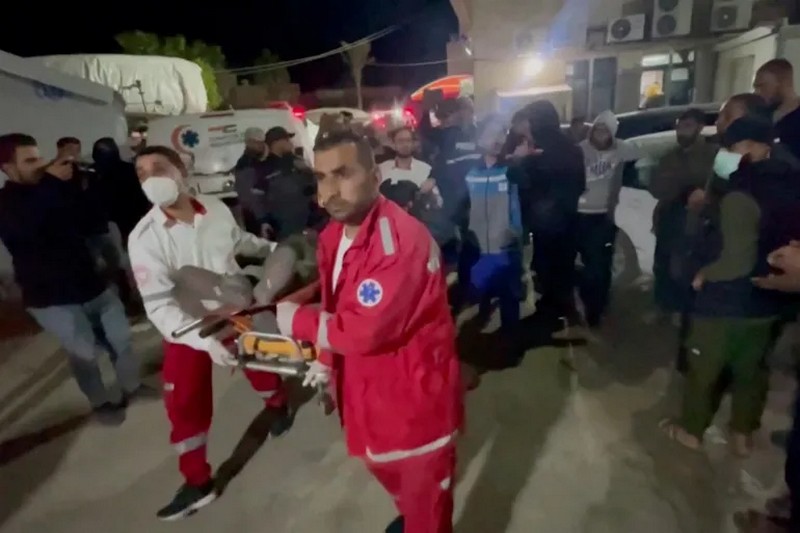
Their bodies were taken to the nearby Al-Aqsa Martyrs Hospital.

“Everyone in the hospital is amazed and astonished, they don’t believe Israeli forces targeted internationals,” Al Jazeera’s Hind Khoudary said.

The Israeli military said it was investigating “to understand all the circumstances of the incident” and making “extensive efforts to enable the safe delivery of humanitarian aid”.

Andres called on Israel to “stop this indiscriminate killing … stop restricting humanitarian aid … and stop using food as a weapon”.

What does WCK do in Gaza?

WCK was involved in the distribution of some 200 tonnes of food aid that was brought to Gaza via a sea corridor from Cyprus in March.

A second maritime aid shipment involving three ships carrying some 400 tonnes of food is expected to arrive imminently.

The vessels are carrying supplies to prepare more than one million meals, including rice, pasta, flour and canned vegetables.

WCK said it would pause its Gaza operations immediately. “We will be making decisions about the future of our work soon,” it said in the statement.

What is the food situation in Gaza?

The UN has issued stark warnings about the dire level of hunger now facing Gaza’s 2.4 million people.

A UN-backed report last month projected imminent famine in the territory’s north, and warned that half of all people in Gaza were feeling “catastrophic” hunger.

The International Court of Justice, which is investigating the war in Gaza as a potential genocide, has ordered Israel to “ensure urgent humanitarian assistance” in Gaza without delay, saying “famine is setting in”.

How have people reacted?

Australian Prime Minister Anthony Albanese called for “full accountability” for the attack as he confirmed Frankcom’s death.

“This news today is tragic,” Albanese said. “We want full accountability for this. This is a tragedy that should never have occurred.”

Officials in the US, where WCK is based, expressed dismay.

“We are heartbroken and deeply troubled by the strike that… killed @WCKitchen aid workers in Gaza,” White House National Security Council spokesperson Adrienne Watson wrote on social media platform X.

“Humanitarian aid workers must be protected as they deliver aid that is desperately needed, and we urge Israel to swiftly investigate what happened.”

What is WCK?

Andres, a Spanish-American chef, set up the NGO after an earthquake in Haiti killed an estimated 220,000 people. WCK initially provided emergency food aid to the survivors of the disaster and says it has now served more than 350 million meals in crisis situations around the world.

“When disaster strikes, WCK’s Relief Team mobilizes with the urgency of now to start cooking and serving meals to people in need,” the group says on its website.

As well as Gaza it is working in countries including Ukraine.

8 April 2024

Source: transcend.org

Ben Arad, Young Israeli Conscientious Objector: “I Will Not Take Part in a War of Vengeance” [BRAVO!!]

By Pressenza

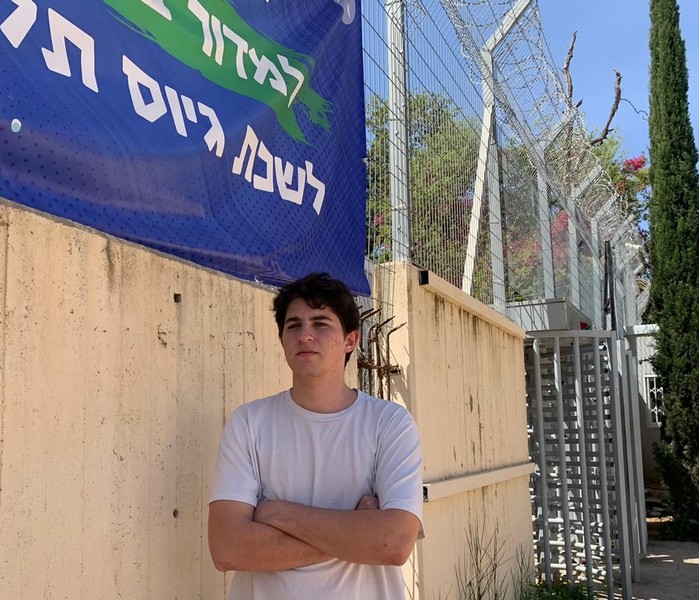
1 Apr 2024 – Ben Arad is the third young Israeli to refuse enlistment in protest over the war in Gaza publicly; this morning he was sentenced to 20 days in military prison.

Ben Arad, an 18-year-old from Ramat Hasharon, arrived this morning at the Tel Hashomer enlistment camp and refused to enlist in the Israeli army in protest over the war in Gaza. He was sentenced to 20 days in military prison, expected to be prolonged when he refuses enlistment again.

Arad will join Tal Mitnick and Sofia Orr, who are serving sentences of 105 and 40 days, respectively, for their refusal.

Ben Arad decided to refuse because of the war in Gaza. He noted Tal Mitnich’s refusal as showing him that there is value in publicly refusing.

This is his Refusal Statement:

My name is Ben Arad, I’m 18 years old, and I refuse to enlist in the IDF. I oppose senseless killing, the policy of intentional starvation and sickness, and the sacrifice of soldiers, civilians, and hostages for a war that cannot and will not achieve its declared objectives and that could escalate into a regional war. For these reasons and more, I refuse to enlist.

I will not take part in a war of vengeance, that only leads to destruction and will not bring security to the citizens of Israel.

“If all you have is a hammer, everything looks like a nail.” – I constantly think about this sentence when I consider Israel’s behavior since the beginning of the war. The only tool we know is the military. Therefore, the solution to every problem must be a military one.

But our deterrence strategy does not prove itself. Terrorism is not something that can be stopped with threats because terrorists don’t have much to lose. Moreover, the unprecedented killing of uninvolved citizens in Gaza, the hunger, the sickness, and the destruction of property only fuels Hamas’ flame of hate and terror, and sooner or later, we will pay for the grief of the Palestinians.

On October 7th, Israel woke up to a brutal attack it had never seen before. Children, women, and the elderly became victims of atrocities that no person should be exposed to. The barbarity and heartlessness of the attack were supposed to eradicate all hope for peace and a shared future. The impact of October 7th on the people of Israel is still immense, especially since more than 130 hostages are still being held captive in the Gaza Strip.

Since that Saturday, Israel has been conducting an unprecedented murderous campaign, not only against Hamas, but also against the entire Palestinian people. In Gaza, there are at least 30,000 dead – of which 70% are estimated to be women and children. Daily, Israeli officials are threatening a ground offensive in Rafah, where more than 1.5 million evacuated Palestinians are sheltering. Israeli entry into Rafah will claim the lives of dozens or hundreds of Israeli soldiers and thousands or tens of thousands of Palestinians. It will endanger the lives of the hostages and will significantly escalate the fighting with Hezbollah in Lebanon.

And for what? What does this fighting achieve? Fighting will not bring back the hostages. It will not resurrect the dead. It will not liberate the Gazans from Hamas and will not bring about peace. The contrary is true – the fighting will keep on killing hostages, it will put more Jews and Palestinians under threat, it will perpetuate the rule of terrorist organizations in Gaza, and it will guarantee that there will be no peaceful horizon.

The Israeli public is facing a choice: do we uphold the current cycle of violence and sustain a reality of destruction that will deepen the hate and create escalation on all fronts? Or do we choose another path – one based on the sanctity of life, in which we’ll stop sending beautiful people to be killed or injured in ugly battles? Could we guarantee the return of all living hostages, stop the senseless killing in Gaza, condemn settler violence in the West Bank, and prevent the breakout of another war against Hezbollah and the Axis of Resistance.

We are the public. We have a great power that the corrupt governments and organizations that represent us do not. Therefore, the push for change must come from us. We can move toward peace only through an uncompromising social movement that strives for communication and de-escalation. We must always use critical thinking, look at the bigger picture, and fight for peace, equality, and the truth.

8 April 2024

Source: transcend.org

Biden’s Warning to Netanyahu: Political Maneuver, Not Policy Shift

By Richard Falk

6 Apr 2024 – Responses to questions by Brazilian journalist Rodrigo Craveiro  of Correio Braziliense on 4 Apr, critical of Pres. Joe Biden’s ‘muscular approach’ to the conduct of foreign policy, specifically in relation to China, Russia and Israel, as played out at the expense of the peoples of the world, including the real interests of the North American people. Biden is guilty of war-mongering, reluctance to engage in peace diplomacy, and complicity crimes of support given to Israel while carrying out a prolonged genocide against the long abused civilian population of Gaza along with demonizing and dehumanizing the resistance leadership exhibited by Hamas. In reactions to past genocides, the US has done less to oppose their perpetrators than it should  have, but never before has it been an active accomplice, and in the process, undermining the authority of the most widely endorsed norms of international law and demeaned the institutions and procedures internationally available for purposes of interpretation and enforcement.

*************************

1– Biden urged Netanyahu to reach “immediate ceasefire” in Gaza and called on Israel to act in the “next hours and days” in the face of the humanitarian crisis in Gaza. How do you see that?

Biden’s call for concrete steps to ensure that humanitarian assistance reaches Palestinians in Gaza comes very late, given a genocidal assault on the civilian population that is in its sixth month. Also, the effort to persuade Netanyahu to reach a ceasefire was not elaborated with the same urgency or seriousness as the humanitarian insistence on allowing aid to reach starving Palestinians. A cessation of Gaza violence has long been vital if further devastation of Palestinians is to be minimized, if not avoided, as the International Court of Justice (ICJ) in its January 26 Interim Order decreed in support of South Africa’s plea for Provisional Measures as a response to its preliminary conclusion that it was ‘plausible’ to regard Israel’s violence in Gaza as genocide, the highest international crime that cannot be excused because of claims of self-defense or national security. It is notable that legal absolutism when it comes to genocide is supported by near unanimity among the 17 judges composing the adjudicating panel of jurists, and including judges from the United States, Germany, France, and Australia whose governments had supported Israel’s response to October 7. The ICJ was widely applauded for following the law rather than flags of national allegiance, analyzing facts and relevant norms of international law despite the face that the Security Council failed to implement its Interim Order and Israel defied its Interim Order. What the ICJ ordered influenced the symbolic domain of international by legitimating concerns about genocide in Gaza and legitimating the resolve of civil society groups.

Biden’s highly publicized move seems primarily motivated by two developments other than a late surge of empathy for Palestinian suffering: first, shifts in US public opinion away from unconditional support for Israel, which are endangering his prospects for victory in the November presidential election and the fact that Monday’s clearly deliberate attack on the aid convoy of the World Central Kitchen resulted in the death of seven Europeans, sparking media outrage and anger among those governments that had been among Israel’s supporters. No such anger in Washington or hostile media attention were given to prior and worse atrocities responsible for mass casualties among children and women so long as the victims were Palestinians. The surfacing of these concerns, especially in the US, help explain why the public disclosure of the Biden/Netanyahu phone call occurred with official blessings. Such sensitive tensions between previous allies are not normally addressed with such transparency. Such diplomatic moves are considered more effective if carried on secretly, or at least discreetly. Biden evidently was more concerned about winning back Democratic Party voters and reassuring European allies that Western lives should be treated as off-limits for Israel in the future.

Even more disturbing was the explicit support given by Biden to Israel’s recent provocative actions directed at Iran during the 30 minute phone call. The leaders spoke in the aftermath of a targeted attack on 1 Apr that killed seven Iranian military advisors (including three commanders) while they were present in Iran’s consular building in Damascus, a location entitled by international law to immunity from attack.

Such provocations risk a devastating wider war. Iran has declared its intention to retaliate rather than be passive in the face of Israeli military strikes and assassination of prominent Iranian military commanders, and other violations of Iranian sovereignty by Israel. Given this background, Biden publicized reassurance of support for Israel’s provocations acts as a signal to Netanyahu, facing frustrations in Gaza, rejection by Israelis, and possible imprisonment in Israel on past charges of corruption, to embark upon a wider war with Iran in ways that will exert great pressure on the US to become actively involved in the military operations likely to result and divert attention from policy failures of Israel during these past months.

2—How do you analyze this intensifying of pressure by United States against Israel now?

It seems belated, and partial at best, and easily managed by Tel Aviv without any changes in its approach to Hamas or Palestinian statehood. As suggested, it could tempt Netanyahu to embroil Israel, but also Iran, in a regional war with global dimensions. As suggested, Netanyahu is extremely unpopular among Israelis, with growing protests against his leadership. These factors undoubtedly creates temptations on Netanyahu’s part to divert attention from the failure of Hamas war policy, both as a military operation and in making Israel a pariah or rogue state in the eyes of the peoples of the world, and an increasing number of governments in the Global South.

Given reports of Netanyahu’s defiant response to these ‘pressures’ from the US are coming  come too late and even now have an ambiguous impact, taking too abstract a form, not including an arms embargo or international peace force, and not raising even a possibility of support for UN-backed sanctions. I would conclude that Biden’s much publicized warning to Netanyahu presaging a US shift will not have significant humanitarian or peacemaking influence on Israel’s resolve ‘to finish the job’ by an attack on Rafah that produces devastation and many casualties in that beleaguered city giving hazardous shelter to more than ten times its normal population of somewhat more than 100,000. And could, paradoxically make things worse if Netanyahu seizes upon Biden’s apparently unconscious message to Tel Aviv that the time may have come to shift the eyes and ears of the world to a confrontation with Iran.

3- I am preparing a special article on 6 months of war. How do you evaluate the impact of the last 6 months in the efforts of a peace process in the future and in the relations between Israel and Palestinian people?

At this point, there seems no credible positive scenario for future Israel/Palestine relations. An Israeli consensus, not just the government, is deeply opposed to the establishment of a viable Palestinian sovereign state while the world consensus insists on establishing a Palestinian state with international borders and the enjoyment of equal rights in all respects, including security as Israel. The Palestinian people have not been consulted by either side of this nationalist cleavage and seems more and more inclined to opt for a single secular state with equal rights of both peoples as long favored by independent Palestinian intellectuals such as Edward Said.

The UN attempted to impose a two-state solution in 1947 without taking account of the Arab majority indigenous population, and it led to failure, periodic wars, and much suffering. In my view, a sustainable future for both Palestinians and Jews depends on a peace process, with neutral international mediation, and respect for the right of self-determination in the framework of negotiations between legitimate, self-selected representatives of both peoples acting in a unified whole of their own devising.

At present, neither Palestine nor Israel, for differing reasons, is in any position to represent their respective constituencies in a manner that is either legitimate or effective. More specifically, Palestine remains divided between the PLO/Palestine Authority leadership in Ramallah and Hamas in Gaza, with additional elements seeking participation in representing the Palestinian people, including the 7 million refugees and exiles. Israel, in contrast, has had a coherent political elite during most of its existence, but now must act to soften tensions between religious and secular constituencies that have been intensifying in recent years to be a credible partner in the search for a political compromise that clears the path to sustainable peace for both peoples based on coexistence, equality, and effective internal and regional security arrangements jointly administered. Stating these conditions highlights how difficult it will be to make the transition from apartheid/genocide realities to the sort of solution roughly depicted.

The South African case, although vastly different, is instructive. It points to two factors that make what seems impossible happen in circumstances that seem hopeless: the release from prison of a unifying leader; a majority recognition that a win/win outcome for both peoples rests on genuine compromise and non-interference by third party governments and international institutions.

Prof. Richard Falk is a member of the TRANSCEND Network, Albert G. Milbank Professor Emeritus of International Law at Princeton University, Chair of Global Law, Faculty of Law, at Queen Mary University London, Research Associate the Orfalea Center of Global Studies at the University of California, Santa Barbara, and Fellow of the Tellus Institute.

8 April 2024

Source: transcend.org

Arakan Army Leadership Displays Deep-Seated Genocidal Racism Towards Rohingya in Myanmar

By Maung Zarni

The extreme racism that Rakhine nationalists have, over the generations, displayed – their sense of racial and religious superiority vis-à-vis Rakhine state’s largest minority population of Rohingya, largely Muslims, their dogged attempts to deny and destroy Rohingya identity – appears to be their Achilles’ heel.

2 Apr 2024 – On 26 March with his 31-words tweet on X (formerly Twitter), the leader of the Arakan Army Twan Mrat Naing gave away the genocidal character of the increasingly powerful armed Rakhine nationalist movement.

It was accompanied by two pictures of the pages about the poorly distorted description of “Bengali”. The AA leader did not offer where the pages were lifted from. The text said:

“Nothing is wrong with calling Bengalis “Bengalis”. They have been our neighbours, our friends and fellow citizens for centuries. Let’s be honest and embrace this reality to build a better future”.

The two pages the Arakan Army leader took pictures of, and presented as “evidence” that Rohingyas are nothing but Bengali have zero historical or intellectual value. As is typical of peoples along post-independent borders of newly birthed nation-states anywhere in the world, Rohingyas do have bi-national or bi-cultural ties to both West and East Bengal (now India and Bangladesh) and the Rakhine region of present day Myanmar. But they are, and identify themselves, as distinct from Bengalis of either India or Bangladesh (formerly East Pakistan). Neither state nor non-state organization such as the Arakan Army has any moral power or legal right to pigeonhole Rohingyas into the frozen box of “Bengali”. To do so is empirically false, shows an acute lack of understanding of ethnic group identity formation, and an utter breach of internationally recognized minorities’ right to self-identify.

His tweet followed his organization’s statement inviting foreign investors to Rakhine, increasingly under the AA control.

As a matter of fact, the Rakhine nationalist is oblivious to the fact that “Bengali” is the constitutional name of the citizens of the Republic of Bangladesh birthed in the civil war between East and West Pakistan in 1971.

It encompasses any citizen irrespective of their faith, ancestral or ethnic background, including Rakhine Buddhists with their root going back to the British time during which Bangladesh was a British protectorate of East Bengal. In fact, when I led a small delegation of international lawyers, genocide scholars and rights activists including Rohingya we met a Bangladeshi assistant to the Speaker of the House, Dr Shirim Sharmin Chaudury, who was a Rakhine Buddhist.

While the leadership of Bangladesh has advanced to the cultural and ideological space where they embrace as “Bengali” any citizen of their new republic, Rakhine nationalist leadership of Arakan Army and its political wing United League of Arakan evidently base their policies and collective outlook in the antiquated thinking which refuse to recognize Rohingyas for who they say they are: Rohingyas. Aside from the minorities’ rights to self-identify in the age of the Universal Declaration of Human Rights, Rohingyas are self-consciously and empirically not Bengali. Their Rohingya language is known have 60% overlap with the local Bengali language of Chittagong, and the majority of both Bengali and Rohingya share Islam as their faith; however, they certainly do not consider themselves as “Bengali”, ethnolinguistically or citizenship-wise.

Of all the ethnic groups of Myanmar, Rakhine nationalists and Rakhine public alike are best positioned to know that language affinity, shared religion and ever overlapping political histories do not make them Burmese. Burmese and Rakhine languages have so much overlap, in script and colloquialism. Buddhism is their common faith. Throughout the colonial period, ethnic Rakhine and Burmese forged a common oppositional identity against their common oppressor – the alien colonial British – under the single banner of Burmese. There have been so much Rakhine-Burmese interracial marriages and internal migration since Rakhine was annexed into the ethnic Burmese-dominated old political system since 1785. After independence, Rakhine nationalists re-established their ancestral identity as Rakhine and pushed for “internal sovereignty” and state autonomy.

In seeking to understand why the Rakhine nationalist leader’s tweet – and the AA’s invitation to foreign investors – is fundamentally genocidal in character, a word about the rich conception of genocide is necessary.

A chilling parallel between the way the Zionists construct their group identity, initially as “Palestinians”. A best-known case in point: the late Prime Minister Golda Meia, a Tsarist Kiev-born Ukrainian Jew who migrated first to Milwaukee, Wisconsin (USA) and subsequently and eventually to the British Protectorate of Palestine in the early 1920s, never tired of claiming herself “Palestinian”, while dismissing and denying that native Arabs were Palestinians. In her communications with the Burmese governments (both U Nu’s and General Ne Win’s), she had urged them how to vote on any UN resolution on Palestine while telling the latter not to call Palestinians Palestinians. On the streets of Israel over the last decade, the chilling echoes of Golda Mei’s racism towards the natives of Palestine can still be heard, in the settlers’ popular chant – “Death to the Arabs”.

Likewise, Myanmar’s Aung San Suu Kyi, the leader of the semi-democratic and popular government, had officially, and infamously, urged the United Nations agencies and other foreign diplomatic missions in Yangon “not to use the term ‘Rohingya’”. When I shared the Rule of Law Roundtable at the London School of Economics on 18 June 2012, Aung San Suu Kyi chose not to say a word about Myanmar military’s violence against Rohingya people. Because she wanted to keep her mouth shut on this emerging policy crisis I was pre-assigned by the panel chair Professor Mary Kaldor to handle any question from the audience regarding the violence against Rohingya people.

Again, in December 2019, Phillipe Sands, the renown British Jewish lawyer who represented Gambia in the African state’s case against Myanmar at the ICJ, pointedly called Aung San Suu Kyi out for her refusal to even mention the name Rohingya when she made her opening and closing statements defending Myanmar military against the allegations of genocide and denying that such crime was committed. Sands is the world’s leading scholar of Raphael Lemkin’s life and work, and he must have appreciated the multiple ways in which genocidal perpetrators seek to destroy their victim groups, not only physically but also culturally and symbolically.

Public understanding of genocide – the intentional destruction of a human group, or population, rests on the legal text of the Genocide Convention of 1948. Emphatically, the legal definition of genocide was a severely watered down version of the originally multi-layered and multi-faceted conception of genocide.

As a brief detour, Raphael Lemkin, the Polish Jewish refugee and a lifelong legal scholar activist, first introduced his concept “genocide” at Nuremberg Trials in 1945, which was mentioned once, and largely ignored throughout the trials. He was a legal assistant to the US legal team at the trials of the senior Nazis including Air Marshall Hermann von Goering.

In Lemkin’s original conception of “genocide”, a process of the intentionally destroying “nations under occupation,” has two main phases: one is the phase of “the (physical) destruction of the national pattern of the oppressed group” (typically a targeted, unwanted vulnerable minority group), and the other, “the imposition of the national pattern of the (genocidally successful) oppressor. (p. 79).” (“Genocide, Chapter IX, I. Genocide – A New Term and New Conception for Destruction of Nations,” In Raphael Lemkin, Axis Rule in Occupied Europe: Laws of Occupation, Analysis of Government, Proposals for Redress, Second Edition by the Law Book Exchange, Ltd., 2008, originally published in 1944).

Lemkin would certainly concur that the group identity – the name – is a crucial pillar of his conception of “the national pattern” which the (genocidal) oppressor seeks to impose on those who survive the Phase One, that is, physical destruction. In other words, the survivor population will be allowed to live only under the group name which the triumphant genocidal oppressor chose.

Again, a chilling parallel between Israel’s ongoing genocidal destruction of Gaza’s Palestinians and Myanmar’s genocidal process to which Rohingya as a group has remained subjected to, goes beyond the hysterical rally cry “Death to the Arabs”.

In his 29th March commentary on Israel’s attempt to severely restrict emergency aid to the besieged population of Palestinians in Gaza, James M. Dorsey, the Middle East specialist who is an Adjunct Senior Fellow at Nanyang Technological University’s S. Rajaratnam School of International Studiescalls attention to one major reason as to why Israel opposes the continuing existence of UNRWA (the UN-mandated aid agency created in 1949) in the Occupied Territories: Israel views UNRWA as “contribut(ing) to Palestinians’ national identity.”

Both genocidal states of Myanmar and Israel, founded in the same year, and once had “a love affair”, to borrow Golda Meir’s own characterisation of military, ideological and technical ties (see My Life: Golda Meir, The Orion Books, 2023) ended up before the United Nations’ highest court – the International Court of Justice (ICJ) for their all-too-obvious respective breaches of the Genocide Convention.

Noteworthy here is the ICJ has officially declared both victim populations, Rohingya and Palestinians, as “protected groups” under the convention, addressing them as Rohingyas and Palestinians, despite respective perpetrating states’ attempts to deny, erase and destroy the victim groups’ identities.

Against this conceptual and legal backdrop, the official tweets and policy statements issued by the Arakan Army/United League of Arakan leadership where the un-concealed, and dogged, attempts at group identity destruction of Rohingya ought to be taken seriously – as an integral to the on-going genocidal process, from which Rohingyas have continued to flee, taking life risking sea journeys across the Adaman and South China seas.

Importantly, a silver lining for the Rohingya is the majoritarian public opinion has shifted for better. Many ethnic Bama activists, including revolutionaries in exile in Thailand have screamed foul of the Rakhine nationalists for continuing to hold on – and express publicly – to the genocidal views towards Rohingya people. In a 180-degree reversal of their policy, even Myanmar’s genocidal military leadership are now resorting to forcibly conscripting young Rohingya men into the junta military, promising full citizenship, and shadow-organizing Rohingya “anti-war” mass protests in the predominantly Rohingya neighbourhoods in Rakhine state. No doubt the junta’s latest moves are sinister in that it seeks to replenish its lost troop strength in the face of a series of military defeats at the hands of the Rakhine nationalists, and to reignite the bilateral tensions between Rohingyas and Rakhine. After all Rakhine nationalists have consistently collaborated with the successive military regimes since General Ne Win’s era in the late 1970s, in the Myanmar military-orchestrated slow-burning genocide.

Finally, as a Burmese from the ethnic Burmese heartland of Myanmar, with 3-generations of tie to the genocidal national armed forces, and a scholar who has specialised in the study of genocides over the last 15 years, I take the continuing genocidal treatment of Rohingya people personally. I knew some of the architects and key players of my birth country’s triangular genocide.

My late great-uncle was the deputy commander of what was then known as All Rakhine Command headquartered in Sittwe, the capital of Rakhine State, Western Myanmar, in 1961-63. Besides the minorities’ internal legal right to self-identify, the authenticity of the Rohingya group identity is beyond dispute, if one is to base one’s assessment on primary historical records, official documentation by Myanmar governments and oral histories. As a matter of fact, I keep on my blog the type-written thank-you letter my relative, Major Ant Kywe, signed on behalf of his commander Lt-Colonel Ye Gaung, and sent to all the Rohingya community leaders, teachers, and other civil servants who assisted him in successfully holding the surrender ceremony of the armed “insurgents” known as Mujahideens, from the ranks of Rohingya in 1961.

The faculty adviser of the Burmese Association at the University of California at Davis where I started my American schooling in the late 1980’s was a Rakhine American atmospheric scientist named Kyaw Tha Paw Oo, whose grandfather was the best-known Rakhine politician who introduced the idea of “internal sovereignty” for Rakhine state in the national parliament during the 1st decade of Myanmar’s independence.

As fellow exiles in the United States in the 1990’s, I was friends with the late Rakhine nationalist historian Aye Kyaw, who was a drafter of the country’s 1982 Citizenship Act, designed primarily to strip Rohingya people of their citizenship. The early Rakhine nationalists of Aye Gyaw’s generation pushed, without success, the Citizenship Act drafting committing, to make 1785, the year Rakhine lost their independent kingdom to the ethnic Burmese, the cut-off year for “natural/ancestral” citizenship.

Through my interactions and conversations with these pioneering nationalists and their descendants, I know the strength of Rakhine ethno-nationalism.

Twan Mrat Naing and the Arakan Army leadership have been militarily successful in their attempts to repel what they rightly consider the occupying Bama junta troops from their ancestral land. Though an ethnic Bama, I unequivocally support their quest for the end of Bama control their ancestral land, exploitation of their resources and the politically autonomous or even independent sovereignty.

The extreme racism that Rakhine nationalists have, over the generations, displayed – their sense of racial and religious superiority vis-à-vis Rakhine state’s largest minority population of Rohingya, largely Muslims, their dogged attempts to deny and destroy Rohingya identity – appears to be their Achilles’ heel.

In spite of the business-friendly tone and liberal tongued narrative, Rakhine nationalist leadership display the lack of adherence to any human rights and democratic principles. Absent principles and any ideals, they change their tunes depending on the situation on the ground. Here several years ago the same Twan Mrat Naing was heard calling Rohingya by their group name: https://www.facebook.com/rooinga/videos/1257747735182919/

Rakhine nationalist leaders now want foreign investment and international businesses to strike deals with their new revolutionary government (as opposed to Myanmar’s junta), and “vow to safeguard their projects and operations, as well as the security and safety of their personnel.” But they threaten to crush any “Bengali” who collaborate with the “terrorist” and “fascist” Myanmar military, in spite of the fact that Rohingyas are caught between the two genocidal forces – Rakhine nationalists and Myanmar genocidal military.

We live in an age where the world’s public opinion is increasingly and widely aware of the death and devastation caused by genocidal states, particularly Israel. It is decidedly against genocide. Owing to the Palestinian-led Boycott, Divestment and Sanctions (BDS) movement worldwide, many foreign investors are aware of severe business and reputational risks in doing business in situations of genocide. They would be unlikely to be keen on pouring investment into another troubled part of the world – in the region of Rakhine, which I call “triangle of death” or “a genocide triangle.”

A Buddhist humanist from Burma (Myanmar), Maung Zarni is a member of the TRANSCEND Network for Peace Development Environment, former Visiting Lecturer with Harvard Medical School, specializing in racism and violence in Burma and Sri Lanka, and Non-resident Scholar in Genocide Studies with Documentation Center – Cambodia. Zarni s the co-founder of FORSEA, a grass-roots organization of Southeast Asian human rights defenders, coordinator for Strategic Affairs for Free Rohingya Coalition, and an adviser to the European Centre for the Study of Extremism, Cambridge.

8 April 2024

Source: transcend.org

 

October 7

By Al Jazeer

This film includes scenes that some viewers may find disturbing.

20 Mar 2024

Hamas’s incursion into Israel on October 7 transformed the politics of the Middle East. Al Jazeera’s Investigative Unit (I-Unit) has carried out a forensic analysis of the events of that day – examining seven hours of footage from CCTV, dashcams, personal phones and headcams of dead Hamas fighters, and drawing up a comprehensive list of those killed.

The investigation also found that many of the worst stories that came out in the days following the attack were false. This was especially true of atrocities that were used repeatedly by politicians in Israel and the West to justify the ferocity of the bombardment of the Gaza Strip, such as the mass killing of babies and allegations of widespread and systematic rape.

In particular the I-Unit reveals that claims by the Israel Defence Force that it found 8 burned babies at a house in Kibbutz Be’eri were entirely untrue. There were no babies in the house and the 12 civilians inside were killed by Israeli forces when they stormed the house. This was one of a number of incidents where the police and army appear to have killed Israeli citizens. October 7 is a deep dive into the events that led to the deaths of tens of thousands of people, the significance of which will reverberate for decades.

October 7 | Al Jazeera Investigations

TRANSCEND VIDEOS STAY POSTED FOR 2 WEEKS BEFORE BEING ARCHIVED

8 April 2024

Source: transcend.org
How Israel Weaponizes Water

By Vijay Prashad

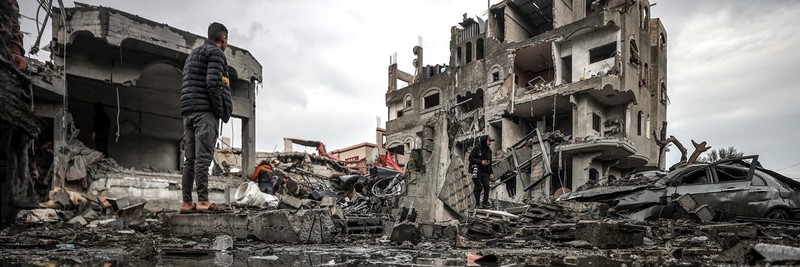
Thousands Have Lived without Love, but Not One without Water – Israel is using water as a weapon in its war of aggression against Palestinians by denying access and destroying infrastructure.

4 Apr 2024 – By November 2023, it was already clear that the Israeli government had begun to deny Palestinians in Gaza access to water. ‘Every hour that passes with Israel preventing the provision of safe drinking water in the Gaza strip, in brazen breach of international law, puts Gazans at risk of dying of thirst and diseases related to the lack of safe drinking water’, said Pedro Arrojo-Agudo, UN special rapporteur on the human rights to safe drinking water and sanitation. ‘Israel’, he noted, ‘must stop using water as a weapon of war’. Before Israel’s most recent attack on Gaza, 97 percent of the water in Gaza’s only coastal aquifer was already unsafe for human consumption based on World Health Organisation standards. Over the course of its many attacks, Israel has all but destroyed Gaza’s water purification system and prevented the entry of materials and chemicals needed for repair.

In early October 2023, Israeli officials indicated that they would use their control over Gaza’s water systems as a means to perpetrate a genocide. As Israeli Major General Ghassan Alian, the head of the Coordination of Government Activities in the Territories (COGAT), said on 10 October, ‘Human beasts are dealt with accordingly. Israel has imposed a total blockade on Gaza. No electricity, no water, just damage. You wanted hell, you will get hell’. On 19 March, UN Humanitarian Coordinator for Palestine Jamie McGoldrick noted that Gaza needed ‘spare parts for water and sanitation systems’ as well as ‘chemicals to treat water’, since the ‘lack of these critical items is one of the key drivers of the malnutrition crisis’. ‘Malnutrition crisis’ is one way to talk about a famine.

The assault on Gaza – whose entire population is ‘currently facing high levels of acute food insecurity’, according to Oxfam and the Integrated Food Security Phase Classification – has sharpened the contradictions that strike the world’s people with force. A UN report released on World Water Day (22 March) shows that, as of 2022, 2.2 billion people have no access to safely managed drinking water, that four out of five people in rural areas lack basic drinking water, and that 3.5 billion people do not have sanitation systems. As a consequence, every day, over a thousand children under the age of five die from diseases linked to inadequate water, sanitation, and hygiene. These children are among the 1.4 million people who die every year due to these deficiencies. The UN report notes that, since women and girls are the primary collectors of water, they spend more of their time finding water when water systems deteriorate due to inadequate or non-existent infrastructure or droughts exacerbated by climate change. This has resulted in higher dropout rates for girls in school.

A 2023 study by UN Women describes the perils of the water crisis for women and girls:

Inequalities in access to safe drinking water and sanitation do not affect everyone equally. The greater need for privacy during menstruation, for example, means women and girls and other people who menstruate may access shared sanitation facilities less frequently than people who do not, which increases the likelihood of urinary and reproductive tract infections. Where safe and secure facilities are not available, choices to use facilities are often limited to dawn and dusk, which exposes at-risk groups to violence.

The lack of access to public toilets is by itself a serious danger to women in cities across the world, such as Dhaka, Bangladesh, where there is one public toilet for every 200,000 people.

Access to drinking water is being further constricted by the climate catastrophe. For instance, a warming ocean means glacier melt, which lifts the sea levels and allows salt water to contaminate underground aquifers more easily. Meanwhile, with less snowfall, there is less water in reservoirs, which means less water to drink and use for agriculture. Already, as the UN Water report shows, we are seeing increased droughts that now impact at least 1.4 billion people directly.

According to the United Nations, half of the world’s population experiences severe water scarcity for at least part of the year, while one quarter faces ‘extremely high’ levels of water stress. ‘Climate change is projected to increase the frequency and severity of these phenomena, with acute risks for social stability’, the UN notes. The issue of social stability is key, since droughts have been forcing tens of millions of people into flight and starvation.

Climate change is certainly a major driver of the water crisis, but so is the rules-based international order. Capitalist governments must not be allowed to point to an ahistorical notion of climate change as an excuse to shirk their responsibility in creating the water crisis. For instance, over the past several decades, governments across the world have neglected to upgrade wastewater treatment facilities. Consequently, 42% of household wastewater is not treated properly, which damages ecosystems and aquifers. Even more damning is the fact that only 11% of domestic and industrial wastewater is being reused.

Increased investment in wastewater treatment would reduce the amount of pollution that enters water sources and allow for better harnessing of the freshwater available to us on the planet. There are several sensible policies that could be adopted to immediately address the water crisis, such as those proposed by UN Water to protect coastal mangroves and wetlands; harvest rainwater; reuse wastewater; and protect groundwater. But these are precisely the kinds of policies that are opposed by capitalist firms, whose profit line is improved by the destruction of nature.

In March 2018, we launched our second dossierCities Without Water. It is worthwhile to reflect on what we showed then, six years ago:

The Intergovernmental Panel on Climate Change’s Technical Paper VI (IPCC, June 2008) is on climate change and water. The scientific consensus in this document is that the changes in weather patterns – induced by carbon-intensive capitalism – have a negative effect on the water cycle. Areas where there will be higher rainfall might not see more groundwater due to the velocity of the rain, which will create a rapid movement of water to the oceans. Such high velocity rainfall neither refills aquifers (natural water sources), nor does it allow water to be stored by humans. The scientists also predict higher rates of drought in regions such as the Mediterranean and Southern Africa. It is this technical report that put forward the number that over a billion people will suffer from water scarcity.

For the past decade, the United Nations Environmental Programme has warned about the growth of water-intensive lifestyles and of water pollution. Both of these – lifestyles and pollution – are consequences of the spread of capitalist social relations and capitalist productive mechanisms across the planet. In terms of lifestyle use, the average resident in the United States consumes between 300 and 600 litres of water per day. This is a misleading figure. It does not mean that individuals consume such high amounts of water. Much of this water is used by water-intensive agriculture and by water-intensive industrial production, including energy production. The World Health Organisation (WHO) recommends per person usage of 20 litres of water per day for basic hygiene and food preparation. The gap between the two is not accidental. It is about a water-intensive lifestyle – use of washing machines and dishwashers, washing of cars and watering of gardens, as well as the use of water by factories and factory farms.

Water pollution is a serious problem. In Esquel, Argentina, the people saw that the contaminants from corporate gold mining were ruining their drinking water. ‘Water is worth more than gold’ (El agua vale más que el oro), they said. Ruthless techniques of extraction by mining corporations (by use of cyanide) and of cultivation by agribusiness (by use of fertilisers and pesticides) have ruined reservoirs of clean water. Their blue gold, say the people of Esquel, is more important than real gold. They held a public assembly in 2003 that asserted their right to their water against the interests of the private corporations.

It is worth pointing out that the amount of water it would take to support 4.7 billion people at the WHO daily minimum would be 9.5 billion litres – the exact amount used every day to water the world’s golf courses. The water used by 60,000 villages in Thailand, for instance, is used to water one golf course in Thailand. These are the priorities of our current system.

In other words, watering golf courses is more important than providing piped water to the thousand children under the age of five who die every day due to water deprivation. Those are the values of the capitalist system.

Vijay Prashad is an Indian historian, editor and journalist. He is a writing fellow and chief correspondent at Globetrotter.

8 April 2024

Source: transcend.org