By Richard Falk
9 Mar 2024 – This paper is devoted to several of my recent central concerns. It was initially published in Global Community: Yearbook of International Law and Jurisprudence, superbly edited by Giuliana Ziccardi (Oxford, 2023). Comments and conversation warmly invited. Adapted from annual Edward W Said Memorial Lecture entitled “The Enduring Legacies of Edward Said,” the American University in Cairo, 4 Nov 2023.
*****************************
Abstract
An exploration of forms of interaction bearing on the assessment of advocacy jurisprudence. This entails underlying reflections on relations between scholarly identity and public engagement as contextualized by Israel’s military response in Gaza. to the October 7 Hamas attack, featuring a comparison between partisanship in legal inquiry and in the interpretation of literature. It also involves a jurisprudential orientation that presupposes the inevitability of partisanship and favors an explicit acknowledgement rather than pretensions of objectivity, which implies my bias against legalism and its replacement by a disciplined insistence that political and moral contexts be brought into the open. The overall rationale for such an approach is to seek a better alignment between law as practice with justice as the embodiment of humane values exhibiting universal criteria. Although these considerations apply to any legal system, the preoccupation of the article is with conceptions and applications of international law.
Prelude
My career as a teacher and writer on international law has been devoted to realigning law with justice, which involved identifying and deconstructing Orientalist biases that reflected early European tendencies to use law to advance geopolitical interests while simultaneously promoting a illegitimating ideology of civilizational and racial superiority with countries associated with the Global West.[1] Of notable prominence in this regard, was the use of international law to accord legal respectability to European colonialism, including settler colonial offshoots in North America, Australia, and New Zealand. Jurists played their part by validating colonial relationships and obscuring the cruelties of colonialist behavior in many settings, including the acceptance of practices and policies now proscribed as ‘genocide’ but were treated neutrally as falling into the domain of conflictual politics, that is, beyond the limits of legal accountability so long as the perpetrators were white Christians and the victims were persons of color. Only when the victims were ‘European’ as with the Armenians (1915) and later, the Jews, was the idea of criminalizing such behavioral patterns given a name and taken seriously as ‘the crime of crimes.’ Yet the racist/civilizational elements have not been fully eradicated as the political violence in Gaza illustrates where the Palestinian victims are dehumanized and the Israeli perpetrators are given legal cover by speciously inapplicable claims of self-defense.
In the course of seeking concretely to align law with justice I often found greater inspiration and kinship less with my law colleagues in the Global West, with some notable exceptions, and more with what we now identify as dissenting public intellectuals in such cognate disciplines as cultural studies, history, humanities, and social science. In this personal professional trajectory I found Edward Said’s work and public life to be inspirationally congenial as well as motivated by similar humanistic goals that I loosely associate with justice, an admittedly subjective category that needs to be explicated in concrete circumstances.[2]
There are admittedly unsettling features of such a jurisprudential standpoint. The epistemology underlying such a viewpoint adopts certain juridical points of light while rejecting others and interprets them in context, such as the prohibitions imposed on genocide, apartheid, and ecocide, or the Charter llimitations on the use of force in international relations. In almost every concrete instance there is room for contradictory interpretations of what the law prescribes, suggesting that all assertions of unlawfulness or humanistic claims of justice involve advocacy, either for or against fand seek distance from the artificial clarity insisted upon in mainly prevailing legal traditions that strive for an ideals of objectivity.[3] Those that do government lawyering, perhaps motivated by ideology, ethical conceptions, or notions of stability and balance, are similarly selective in interpreting facts and law so as to ensure that international law conforms to their preferred foreign policy commitments. Law functions in such settings as a source of justification, and the articulation of intellectual support in scholarly or journalistic settings is also premised on advocacy jurisprudence, although typically disguised for the sake of persuasiveness. Such work is performed by what might be called ‘assenting public intellectuals’ who characteristically have access to the most influential media platforms as well are welcomed in the corridors of government. To reverse the slogan of dissenters, it is a matter of ‘power talking truth,’ which perceived by oppositional tendencies in civil society as legal cover for state propaganda.
It is my intention here is to discuss law and geopolitics in the inflamed atmosphere of the ongoing high intensity violence taking place in Gaza, alleged to be a response to the Hamas attack in a series of Israeli border communities on October 7, 2023. Edward Said’s life and work as a Palestinian public intellectual living in America seems highly relevant to gain insight into my underlying objective of achieving a better alignment of law and justice. Justice is here conceived in a first approximation as overcoming the hegemonic, hierarchical, and racializing nature of international law in its historical, cultural, and political roles as validating the civilization behavior and biased of the Global West/ A second approximation by reference to contemporary instruments of international human rights law, international humanitarian law, international criminal law, as well as the Nuremberg Principle and certain provisions of the UN Charter.[4] A third approximation occurs when a judicial tribunal issues a judgment that draws conclusions as to the law on the basis of considering the positions advocated by the contending parties. A fourth approximation occurs at levels of enforcement and accountability.
Without the strong support of Professor Giuliana Ziccardi, as the exceptional veteran editor of the Yearbook I would not have had the courage to attempt to link what was originally a lecture on the life and legacy of a great public intellectual in conjunction with my efforts to align law with justice in international public discourse and even more so in the behavior of sovereign states.
Edward Said’s Relevance
It would be insensitive to any remembrance of Edward to frame my reflections on his legacy without also highlighting the uncertain, presently unknowable significance of the extreme gravity of the historic tragedy deeply afflicting the entire, previously long abused civilian population of Gaza explained and now justified by Israel as a response to the Hamas attack of Oct 7th. With each passing day of devastation and atrocity associated with Israel’s military attack, the Hamas provocation, terrible as in its own way it was, it seems increasingly detached from Israel’s extended response. Israel tries to keep the connection to the attack relevant to its disproportionate response by stressing the plight of an estimated 240 or more hostages being held by Hamas, itself a distinct war crime, and by media reports about the deep fissures in Israeli confidence that they were living in a secure atmosphere.[5] Yet as far as public disclosure so far reveals, Israel’s government fails to negotiate a prisoner exchange, and engages in an an unlimited attack that does not seem to offer much of value. My attempt is to reflect on Edward’s amazing legacy while contextualizing these remarks in the current agonizing encounter that are darkening the storm clouds that have long haunted the future of the Palestinian people.
A Few Words on Edward’s Life
When thinking about what aspects of Edward’s varied, vivid personality and wide range of valuable writings I first felt overwhelmed. I took the easy way out by deciding to speak somewhat generally about Edward’s extraordinary legacy that makes his life, ideas, and perspectives more relevant 20 years after his death than when he was alive. Few scholars gain by their publications Edward’s influential intellectual afterlife.
It is difficult to talk about Edward without understanding what he meant to convey in his praise for a dissenting ‘public intellectual.’ Edward’s wished to affirm those for whom their signature trait was truth-telling and bearing witnessing to performative evil, especially embodying the public authority and the power of the modern sovereign state.
In a revealing interview with Tariq Ali not long before Edward’s death he acknowledged some related worries particularly by what he called ‘the commodification’ of public intellectuals in the US, personified by the then media stardom of Henry Kissinger and Zbigniew Brzezinski, two smart persons who clearly antagonized him by using their screen time to advance an imperial agenda on behalf of their preferred American foreign policy. More generally, Said felt that the think tanks in Washington were stealing the thunder of progressive thought and the high quality of debate that he hoped to engender in university settings and academic writing. It is my sense that that we as citizens are daily exposed to a post-truth public discourse currently deployed, and relied upon, by many world leaders that is far more regressive and alienating than the deteriorating role of public intellectuals that had so concerned Said while he was still alive. Part of what makes this discourse historically now so menacing is that it is rarely challenged by high tech media even in the constitutional democracies that continue to proclaim their political virtues of welcoming debate and tolerating dissent, now best construed as an Orwellian trope that obscures more than it reveals.
It is impossible to consider Edward’s legacy without venturing comments on the experience and contents of his breakthrough book, Orientalism.[6] It was this book that brought Edward fame but also several (mis)readings that bothered him deeply. Edward’s culturally grounded erudite approach to the relations of the West to the Arab world was always nuanced, pointing to the diversities and cultural failings on both sides of the civilizational divide. This made reductive interpretations of such dualisms as speaking of ‘the Orient’ or generalizing about ‘the Orientalist’ deeply misleading. Of course, Edward may have contributed to the confusion by his hostility to Bernard Lewis and his Arabist acolytes’ presentations of the Islamic world. He found such cultural stereotypes well-suited to adoption by imperialists in the post-colonial West as a policy tool, but more because of their policy agenda than their embrace of negative stereotypes about the Arab world and its behavior. There were other scholarly voices in the West whose academic assessments Said found deserving of attention, and often congenial even if containing criticisms of various aspects of Arab behavior. In other words, not all who studied and wrote about the Arab world were guilty of the sins of Orientalism.
Said was most convincing when arguing that the literary works in colonial Europe gave a moral underpinning to colonizing mentalities. These works brilliantly analyzed by Said did, perhaps unwittingly, serve indirectly the dark designs of imperial activists, and still do. It was a major contribution of Orientalism to make many aware of the Orientalizing tendencies of those seeking to exploit the resources and manipulate the strategic outlook of Islamic World elites in the Middle East.
It is such an implicit framing of the Zionist movement of forced displacement and subjugation of the native resident population of Palestine that underpinned Said’s profound critique of Israel’s 1948 celebratory self-righteous narrative. This narrative for Palestinians will be forever memorialized as the Nakba, of catastrophe and exclusion that was not only something that happened in 1948 but describes a process that has continued ever since, and is now is in the midst of one of its most traumatizing iterations. It is this Israeli sense of imperial destiny that is currently continuing the gruesome work of justifying forced displacement and dispossession of the Palestinian people living in northern Gaza, an undertaking done with distressing ferocity. The rationalizations emanating from Tel Aviv are situational, but the impact on Palestinian normalcy are similar, reawakening the nightmare of 1948. Yet in Orientalist centers of power of the West what shocks and angers most of the non-Western world as genocide is claimed to be permissible because characterized as a response to ‘terrorism.’[7] By the use of this word alone Israel frees itself from any need to claim it was acting within the law. Supposedly, the T-label confers on Israel a legal entitlement to forego any pretense that its response to the October 7 attack is proportional and properly restricted to military targets. Israel’s hasbara fictionalizes and distorts the realities of what is happening that either disseminates falsehoods or deflects attention from unpleasant truths.
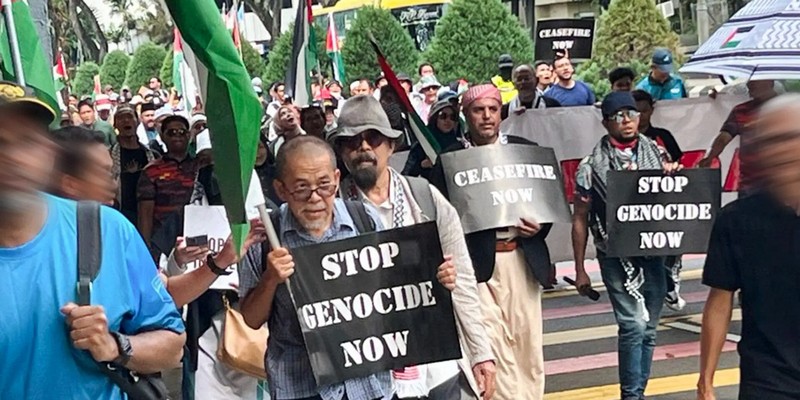
In contrast, the Palestinians, and the Arab street and peoples of the Global Souh spread throughout the world, including many less educated people than the pro-Israeli policymakers in the West are not fooled. They are moved to take spontaneous action by fiery images of huge bombs dropped on crowded refugee camps and on hospitals filled to capacity with wounded or dead infants, children, and severely injured adults. The peoples of the world, including many in the Global West, are smart enough to believe what they see and put aside the propaganda that they hear, becoming enraged by the steady flow of lame excuses for atrocities put forward by apologists and genocidal ideologues in Israel and their powerful allies in the Global West.
As with Orientalism it would be perverse to address Edward’s legacy without revisiting his approach to Israel/Palestine struggle. The special resonance at this time is certainly worse than what Edward’s darkest imaginings anticipated when contemplating what was the future of Palestine and its people twenty years ago.
While Edward was alive, the unresolved conflict involving Palestine increasingly defined his identity as a public intellectual. As well, the sufferings of the Palestinian people caused him great personal anguish. Edward came to possess one of the few keys that if properly turned decades ago might have avoided much of the ensuing misery for both peoples, allowing Jews and Arabs, despite their historic missteps to learn to live together peacefully and justly, rather than engage in what has become a macabre death dance. Edward’s humanistic vision of what should and could have been now seems as remote as the most distant star in the galaxy.
The horrifying events of recent weeks in Gaza account for this less comprehensive treatment of Edward’s legacy, but is not meant to detract from the pertinence of Said’s legacy to the Palestinian fate. These days it would be escapism, indeed denialism, to downplay the preoccupying bloody atrocities occurring in Gaza. In my view, it is not only Palestinians that are the victims. By its recourse to overt genocidal behavior Israel and Zionism have also irreparably tarnished their reputation, and that of Jews generally, overshadowing the prior historic horrifying experiences of victimization endured by the Jewish people and modernizing successes of Israel. Critical observers long have understood that Israel’s gains were achieved at a great human cost. Israel is now putting itself at risk of being perceived the world over as the most disreputable pariah state of our time.
The catastrophic events daily unfolding in Gaza also encourage a departure from standard academic ways of remembering a cherished scholarly friend from a safe aesthetic distance. Previously I might have mentioned a few anecdotes that displayed Edward’s joie de vivre and essentially comic sense of life. He was great fun to be with despite frequently teasing friends and colleagues in challenging ways, especially expecting friends to do better, whether it was on a tennis court or by an engagement with the Palestinian struggle.
It was my good fortune that our lives touched one another at several levels. Such contacts were apart from the convergence of our shared political commitment to a just and sustainable peace between Israel and Palestine, and elsewhere. To begin with, we both had close ties to Princeton University (Edward thrilled my graduate seminar by taking over the class each year for one session, which had its downside as I had to teach those same students the following week). Edward’s political mentors, Eqbal Ahmad and Ibrahim Abu-Lughod were separately my close friends and the four of us formed a kind of braintrust on Palestine/Israel that met periodically in Edward’s Columbia office. Beyond this, we both over-indulged racquet sports pretending that their value in our lives was partly free psychotherapy. In addition, our children became friends. My first secret adolescent crush was inspired by the daughter of my father’s closest friend who mfany years later she married Edward’s PhD advisor at Harvard with whom he became a lifelong friend, with droll side effect of reconnecting me with this lapsed romantic fantasy of my youth.
Of course, there were also fundamental differences in our lives and identities, which seem relevant to the nature of Edward’s particular worldview and ways of ‘being-in-the-world’:
- Edward’s birth in Palestine, childhood in Egypt, and adulthood in America gave him that ‘out of place’ sense of exile that his early memoir made famous, an image which puzzled others who regarded him as a role model of super-success in academic America. Yet as his enticing autobiography makes plain his sense of not fully belonging anywhere, while emotionally confusing for him at times, allowed him to feel somewhat at home everywhere. This hybridity was integral to his envisioning of reality as combining an intense national outlook associated with his ethnicity to a high culture brand of humanist cosmopolitanism.
In contrast, I was spatially exclusively rooted in the American experience from birth, but as I grew to maturity, so much so as to tempt me to say that I was ‘out of place, in place.’ Gradually I became more marginalized almost to a point that could be labeled a form of voluntary ‘inner exile.’ This strange identity became even stranger when combined with a later sense of being a partial expatriate (mainly thanks to my Turkish wife and the time we annually spend together in Turkey);
- To summarize, Edward and I, in our different ways, despite our different life trajectories, were both inside/outsiders, never rejected by our surroundings but neither were we fully accepted or accepting; although ironically Edward increasingly nurtured and clarified his sense of belonging almost exclusively to the torments and dreams of the Palestinian nation, while I continuously diluted my taken-for-granted childhood sense of belonging to the American nation (and even more so to the American nation-state);
- Undoubtedly the biggest difference between us was that Edward wrote Orientalism, with its worldwide persisting influence and impact, while I wrote books on international law that few read unless they were forced to do so by the few idiosyncratic progressive law teachers, always an endangered species in corridors of legal studies, at least in white settler colonial societies.
Israel’s War against the People of Gaza
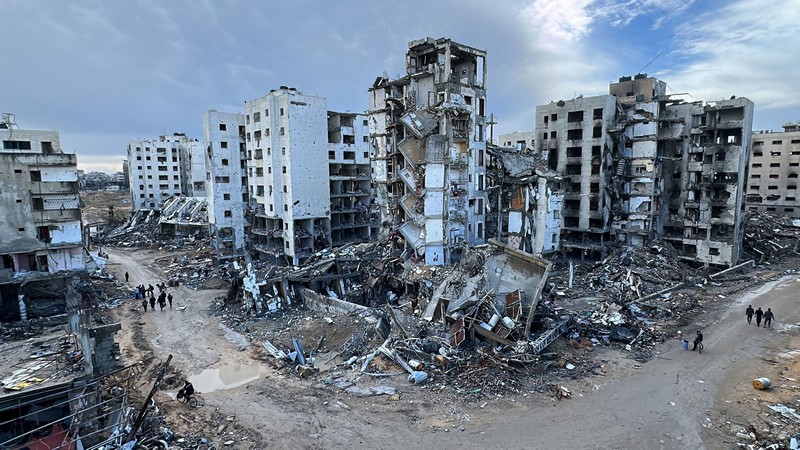
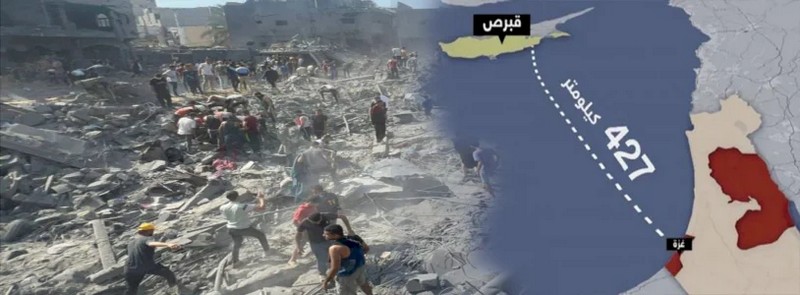
Despite the extreme grimness of the topic, as indicated, there is no responsible way to evade further commenting upon the horrifying Israeli response to the Hamas attack of October 7 as it relates to Edward’s legacy. This response dangerously reinforced by crucial diplomatic cheerleading and funding support by the United States, climaxing so far in the provocative movement of two aircraft carrier groups into the Eastern Mediterranean. Leading EU members along with the UK went out of their way to lend Israel a helping hand. In view of the ongoing genocidal saga in Gaza this is such a deeply disturbing and dangerous set of developments as to shape the present political consciousness of almost everyone. It has become as the bombs continue to fall in Gaza, especially in Middle Eastern venues, to consider anything other than this unfolding multi-dimensional crisis transparently and vividly portrayed day and night on TV, making the events in Gaza the most globally transparent instance of genocide in all of human history.
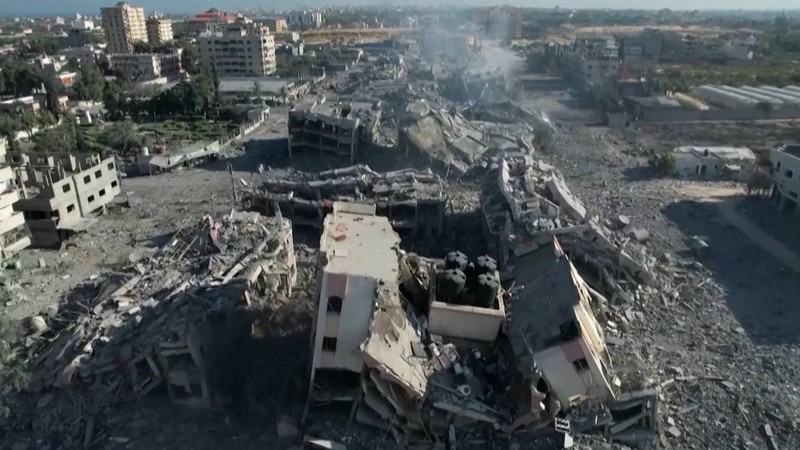
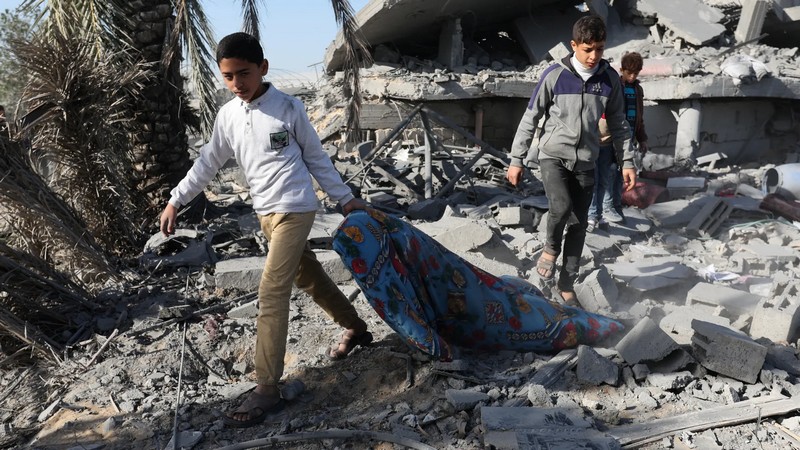
I believe this change of emphasis from what I had originally intended is faithful to the personality, character, and commitment of Edward Said. He possessed remarkable gifts of merging analytical mastery with a passionate ethical/political immersion in the historical present. Confronting what is happening in Gaza, and how it illuminates what is wrong with Israel and the Global West would have certainly aroused in Edward the most intense response of outrage, not only directed at the genocidal policies animating Israel’s leaders cruelly carried out a series of massacres against a totally vulnerable and captive civilian population of Gaza. This ordeal is epitomized by the death, maiming, and traumatizing of every child of Gaza, an outcome of the documented bombing of hospitals, medical convoys, refugee camps, schools, UN buildings. This extreme devastation is further aggravated by the official blood curdling Israeli decree issued by Israel’s Minister of Defense a month ago that totally cut off all deliveries of food, electricity, and fuel to the already impoverished Gazan population, a community already heavily burdened by the world’s highest unemployment and poverty rates, a consequence of 16 years of an economy-crippling blockade. If this were not enough, the Israel attack was waged in a manner that accentuated these terrifying conditions, most unacceptably by the impossible forced evacuation ordering 1.1 million Palestinians in the northern half of Gaza Strip to abandon their homes and livelihoods to go South with no place to go, no safe way to get there, and once there with no place to live and no prospect of a job. This was a fiendish mandatory directive that could neither be followed nor ignored, a nightmare in real life beyond even Kafka’s darkest imagining.
I am quite sure that if Edward was addressing an audience anywhere in the world he would also vent his rage at the complicity of the US government and the refusal of the corporate media to fulfill its commitment to approach world news as if truth and reality were truly its mission. What we find in much of the top tier media in the West is a style of news coverage that is generally faithful to the biases of government policy that has been energetically promoting the dissemination of a pro-Israeli narrative throughout the ‘war’ on Gaza. These views are backed by belligerent government spokespersons and think tanks in Washington that continue even now to present the crime of ‘genocide’ as if it is an instance of justifiable ‘self-defense.’ Instead of giving some attention to responsible critics of Israel’s behavior, even realist mainstreamers like John Mearsheimer, Stephen Walt, and Anatol Lieven, the most respected TV news channels, such as CNN, repeatedly invite as their guests IDF spokesmen or leaders, and an endless stream of generals and Washington foreign policy experts in the West who tend to dwell on the tactical obstacles facing Israel’s unquestioned alleged mission of destroying Hamas as an organization and killing as many of its leaders as it can find. The commentary rarely complicates the portrayal of Hamas as ‘terrorists’ although it often meaninglessly and disingenuously cautions a defiant Israel to conduct its future operations within the limits set by international law and with due regard to the protection of civilians. This is a ridiculous bit of guidance given the complete failure to criticize Israel’s ongoing reliance day after day on Israel’s lawless tactics and decrees from its leaders that lend unquestioning support to the toxic action of its military forces, seem intent on inflicting devastating damage on the person and property of Gazan civilians with no established link to Hamas, and utterly contemptuous of critical voices.
If we are to gain a measure of objectivity it is necessary to deconstruct the main items of state propaganda that has muddied the waters of understanding Gaza violence throughout the Global West, while as noted not fooling the street protests throughout most of the rest of the world. Five points stand out in this regard:
- First of all, the reductive presentation of Hamas as a terrorist organization when in fact it is the elected government of an Occupied Territory subject to the 4th Geneva Convention which outlines the obligations of the Occupying Power, with a special emphasis on the duty to protect the civilian population.
- Secondly, the manipulative identification of Hamas as nothing other than October 7 attack, which if it is as it seems to be, is certainly an undertaking, however provoked, fraught with extreme criminality and patent cruelly. The Hamas attack even if as barbaric in its execution as being portrayed, and on the basis of past reportage there is reason to be suspicious of Israeli battlefield justifications, overlooks other facts that more adequately delineate the true identity of Hamas. Hamas after being elected and taking control of the Gaza Strip from a corrupt and passive Fatah leadership associated with the Palestinian Authority has been administering Gaza since 2007 despite it being controlled by Israel as the world’s largest open air prison, its inmates further victimized by a punitive blockade years ago described by Israeli official advisors as explicitly implemented to keep all Gazans on a subsistence diet. Whatever else, Hamas is an elected political actor that since 2006 has been representing the people of Gaza, and as such is entitled to exercise rights of resistance although subject to limits set by international law.[8] Hamas earned legitimacy and Palestinian respect as a continuing and leading source of active resistance, something that has at least since Arafat’s death in 2004 eluded the international representation of the Palestinian people by the Palestinian Authority despite its well-known collaborative security relationship with Israel, especially resented in the West Bank in recent years.
- It should be appreciated that the commission of a war crime, however heinous does not reduce a political actor to such an isolated act that make its reality reducible to an embodiment of terrorism. If this logic prevailed Israel would have been a terrorist movement from the early days of the Nakba in 1948, and many times over before and since.[9] Extreme crimes of a non-state and state actors were perpetrated by the Zionist movement before 1948, and by Israel subsequently. These documented crimes included ‘collective punishment’ (Article 33, Geneva IV) and ‘apartheid.’[10]
- In the midst of the Israeli retaliatory fury the UN Secretary-General, Antonio Guterres, tried his best to overcome the good versus evil dualism of Israeli hasbara, as propagated in the West, by telling the assembled governments at the UN that the Hamas Attack, which he joined in strongly condemning, did not occur in a vacuum, which indirectly references Israeli crimes of oppression and Palestinian rights of resistance. For daring to speak truth to power Guterres was pilloried by Israel for suggesting, however mildly and indirectly, that Israel had severely provoked the people and Hamas leadership of Gaza for so long and cruelly that violent acts of resistance were the almost inevitable response, and as such called for self-scrutiny rather than a self-blinding orgy of vengeance. Once more Israel greeted criticism with an angry exaggerated response, demanding the resignation of Guterres and calling this self-evident truth a blood libel against the Jewish people. In this feverish pushback, it fortunately failed in its declared objective, and yet it achieved its most serious intended result of repudiating truth-telling and debate and shifting attention from the message to the messenger. What is remembered is not reminding governments of the context of the Hamas attack, but rather whether the call for the resignation of the Secretary-General was justified or not.
- Thirdly, even those seeking a post-Hamas role for the PLO and PA in Gaza with the status of being the sole continuing international representative of the Palestinian people, acknowledge an unspecified need for what is described as the ‘reconstituting’ of the PA. In coded language relying upon the abused word ‘moderate,’ it seems widely understood by Israel’s supporters as implying zero tolerance for the assertion of internationally certified legal rights of armed resistance and a low-profile advocacy of legal rights of Palestinians including the muting of objections to West Bank settlements and their further expansion. Such restrictions on Palestinian reactions to unlawful Israeli settlement expansion, land grabbing in the West Bank, and settler crimes against the occupied native population being carried out in an atmosphere of impunity and further often facilitated by the green-lighting of Israeli security forces to refrain from offering protection to Palestinians in the face of violent harassment. Security restrictions imposed on West Bank political activity disappear when it is the Jewish settlers rather than the Palestinian residents that embark on a violent rampage that kills and wounds even those Palestinians who have sullenly adapted to their fate as a permanently oppressed people living according to the whims of an apartheid regime. It is instructive to compare Israel’s middle of the night terrorizing arrests carried out against stone-throwing children or their predatory attacks on Palestinian rituals associated with the harvesting of olives with the forbearance exhibited toward the lethal violence of the Jewish settlers;
- Fourthly, this settler phenomena, itself a direct, defiant, continuous, and massive violation of Article 49(6) of Geneva IV, is the current combat front line of Zionist militants who have long sought sovereign control over the West Bank, and its encouragement is directly subversive of any prospect of a two-state solution, which despite this, remains the international mantra of advocates of a peaceful solution. One is led to wonder whether this advocacy is a cynical recognition of the futility of exerting real pressure on Israel or an example of evasive and naïve wishful thinking. In this sense, as with a skilled magician, some Israeli leaders seem content to have public attention preoccupied with Gaza rather than paying critical attention to the real endgame of Zionist maximalism, which centers on achieving Israeli sovereign control over the West Bank, the only part of ‘the promised land’ yet to be reabsorbed into the Jewish supremacist, apartheid state of Israel. While we rightly weep over the acute suffering of the Gazans, we should also be taking a hard look at the simultaneous tolerance, more accurately interpreted as encouragement, by Israel’s leaders of escalating settler lethal violence and ethnic cleansing politics in the West Bank.
- As with Gaza, the Israeli settlers are not shy about revealing their goals by way of menacing threats directed at the Palestinians. It went almost unnoticed in the Western media that after a recent violent settler demonstration in the West Bank, leaflets were affixed to Palestinian cars in the neighborhood with a simple chilling message ‘leave or we will kill you;’
- Fifthly, it needs to be stressed that the present unity government in Israel is put before the world as a temporary ‘war’ response to Oct. 7. It was intended to underscore the war narrative, and the need to overcame earlier sharp divisions among Jews about the nature of the Israeli Jewish state. It seems true that the current unity government reflects a broad ethnic consensus among Israeli Jews that ‘vengeance’ without restraint was justified in response to the Hamas attack, and indeed alleged necessary if Israel was to avoid future attacks. More tangibly this meant for those so believing, finding an alternative to Hamas to administer Gaza in ways that curbed Palestinian militancy, whether from Hamas or other Palestinian groups of which Islamic Jihad is best known but not the only one. Liberal Zionists tend to argue that such a policing approach has almost no chance of succeeding on its own in restoring Israeli security unless tied to a peace proposal. To have any chance it needs to be combined with giving the Palestinian people a collective belief that a fair peace can be peacefully achieved within the framework of a two-state solution. Such an envisioned future presumes that Israel is finally prepared ‘to walk the walk’ of a two-state solution comprising at the very least inclusion of the West Bank and East Jerusalem as the capital of the new Palestinian state, as well of course as Gaza. As of now, such a future is the stuff of dreams, and lacks a grounding in the realities of either Israel or the US to be a viable political project.
I find this moderate option to be a totally dubious day after tomorrow scenario—most of all because the Netanyahu-led government emphatically doesn’t want it, and never has; it has almost been erased in our collective memory that the Netanyahu coalition that took control at the beginning of 2023 was generally described even in Washington as the most extremist government when it came to the Palestinians during the entire history of Israel. If Tel Aviv has its way, and now may have more latitude than in the past to establish ‘Greater Israel’ under the smokescreen of Gaza and geopolitical worries about a wider war further damaging the world economy and destructive of fragile regional stability. I firmly believe that this total rejection of Palestinian territorial grievances and rights under international law is at the core of Israel’s real Peace Plan.[11]
Even in the highly unlikely event that Netanyahu is forced to resign for his responsibility in the Oct 7 intelligence/security failure, and the Netanyahu extremist coalition government collapses, this kind of future for Israel/Palestine seems a non-starter. Over half a million settlers in the West Bank will fight Tel Aviv rather than having their expansionist ambitions thwarted by implementing any kind of agreement that requires a durable and humane accommodation with the Palestinians. At minimum a sustainable peace presupposes a Palestinian governing authority that has credibility with most Palestinians and a freeze on further settlement construction or more radically, arrangements for a coerced settler withdrawal to within Israel’s pre-1967 Israel borders. It would also necessitate an Israeli willingness to dismantle apartheid within its own state and implement rights of return for long languishing Palestinian refugees in neighboring countries. Even mentioning the magnitude of these adjustments suggests that liberal Zionists living around the world in secure diaspora conditions have little insight into Israel’s resolve to complete the Zionist Project on its terms, and to accept a variety of political costs associated with such an ambition.
As of now the most probable morning after tomorrow setting is likely to produce Israeli victory claims in Gaza, Hamas nominally replaced by a secular grouping of moderate secular Gazans Israel thinks it can rely upon, and a continuing Israeli effort to secure sovereign control in the West Bank, which implies further measure of ethnic cleansing and is virtually certain to produce a new cycle of Palestinian resistance. The Palestinian response if faced with such prospects will undoubtedly shape new modes and styles of resistance reinforced by a greatly increased global solidarity movements at the grassroots level of people, with the UN essentially silent, and even Western governments wary of continuing unconditional support of Israel. If resistance is sustained in effective initiatives, and complemented by greatly increased support from the region and world, it might signal moves among Israeli elites of the type that produced the South African transformative response to the growing pressure from internal resistance and external solidarity initiatives to dismantle apartheid and constitute a new government based on inclusive human rights, including a long deferred Palestinian right of self-determination.
The outcomes in Gaza and West Bank, although weakening Israel’s standing regionally and globally may have the perverse effect of stiffening the Israeli willingness to risk everything by mounting a final campaign to erase the Palestinian challenge, and not primarily in Gaza, once and for all, even if this means a consummated genocide. It will be up to the mobilized peoples of the region, of the Islamic state, and of the Global West to rise up sufficiently to prevent the fulfillment of such a scenario. At present, there is no sign of this happening, but if the present onslaught in Gaza continues much longer and is accompanied by rising violence in the West Bank such an outcome cannot be ruled out.
Geopolitical Ramifications of Israel’s Campaign in Gaza
A first line of reflection in reaction to this series of alarming developments, is to step back from the immediacy of Gaza, and to suggest the relevance of the global context within which these events have occurred. Before Oct 7 and after the Feb 24, 2022 Russian attack on Ukraine some thoughtful persons began to be conscious that a contested geopolitical transition was underway that could affect drastically the world order that emerged after the fall of the Berlin Wall and the implosion of the Soviet Union. The outcome of such a transition could be something that either mitigated or aggravated the dangers of major warfare that were evident before Oct 7.
In the immediate aftermath of the end of the Cold War, there was a burst of enthusiasm in the West, not only for victory over the Soviet Union and what it stood for, but for a more peaceful and prosperous world order. Hopes were invested in a new kind of economistic global setting in which market forces associated with trade and investment would create a benevolent future for the whole world, geopolitical rivalries and militarism would recede, with peace and security anchored in the diplomatic and defensive military capabilities of the United States, given credibility by the war-prone foundation of ‘full-spectrum dominance.’ This sequel to the Cold War, often labeled ‘neoliberal globalization’ was preoccupied with the financialization of the world economy, with government responsibility for the wellbeing of people diminished, while a growing need to meet an ominous ecological challenge caused by the modern carbon-based economy and known to the public by the soothing words ‘climate change,’ a situation best handled by multilateralism, that is, cooperative problem-solving on a global scale.[12]
The real breakdown of this Global West vision came by way of a series of profound order-challenging developments: the spectacular rise of China between 1980 and 2020, the Russian return to the geopolitical stage, and the unresolved conflict between the Islamic world and the West playing out in the Middle East, with oil and Israel being the core issues. In these respects, the Ukraine War and the Gaza War are parallel pivotal developments in these confrontations between the forces of order and those of change that few persons remain reluctant to talk about. Those that champion a post-colonial reenactment of Western world hegemony as the best attainable framework for peace and security that humanity tend to be advocates of victory over Russian designs in Ukraine, restraint of China in relation to the future of Taiwan, and wish for Israeli success in overcoming Palestinian resistance the completion of the Zionist Project by way of the formal establishment of Greater Israel.
In effect, this is an argument in favor of a transition to a revival of a world order dominated by the interests, political rhetoric, and economic priorities of the Global West as presided over by a US-led coalition. The was the case in the aftermath of the other two global transformations of the past century: the end of World War II and the fall of the Berlin Wall, each of which coincided with defeats of fascism and communism, rival ideologies with their own conflictual world order agendas.
If considered from this wider perspective, the current Gaza/West Bank ordeal should be viewed as a conflict that is not just about Israel and Palestine. It is a conflict about the stability and structure of the region upon which many countries in the Global West continue to depend in meeting their energy needs. It also showcases Western fears and hostilities toward Islamic pressures whether from migration or anti-Western radical forms of nationalism.
This may help explain why, beyond the influence of Zionism, the U.S. has so blindly and unconditionally thrown its support to Israel despite its aggressive and discrediting behavior that undermines trust in the quality of US world order leadership. Israel has managed so far to retain the visible assurance of Western support no matter what it does to the Palestinian people and however arrogantly it flouts international law and the UN Charter. This reflects its strength as a strategic asset of the West and also its extraordinary influence on the domestic political life of the US and UK.
Looked at from the opposite angle, Hamas struck on Oct 7 not only to remind Tel Aviv and the world that the Palestinians were not going to stand by quietly as their presence was being publicly erased. Erasure is what Netanyahu seemed to boast about when he flashed before the UNGA in September 2023 a map of ‘the new Middle East’ with Palestine erased as a territorial presence in the region. This ethnic erasure was given further concreteness at the muddying of the waters at the G20 in September 9-10, 2023 meeting in Delhi that projected a Middle East corridor from India to the Arab World. Such an undertaking was widely interpreted to assume normalization of relations with Israel and the removal of Palestinian grievances from any relevance to this new policy agenda of the region.
The Middle East role in this transition from the post-Cold War reality has been openly ideologized as a new and latest phase of the West’s historic struggle against a reconstituted ‘axis of evil’ which the French leader, Emmanuel Macron, advocated within the framework of anti-terrorism. He put forward this controversial interpretation of world political trends while on a solidarity October visit to Israel during the attack on Gaza, in effect an anti-Islamic coalition of the willing was so overtly proposed in mid-October. He sought to downplay his openly civilizational initiative as an ‘anti-Hamas coalition,’ claiming resemblances to the anti-Daesh (or ISIS) coalition that emerged as a reaction to the US/UK invasion and occupation of Iraq in 2003, which included the dismantling of Iraqi armed forces. Macron seemed to magnify the already terrible drama of good and evil playing out in Gaza by referencing the connections with Hezbollah and Houthis, but also Syria, and above all Iran. Perhaps, also, it was Macron’s way of ingratiating himself to his Israeli hosts by deflecting attention away from the terrible happenings in Gaza to a wider conflict in which Israel was managing the conflict zone on behalf of the West.
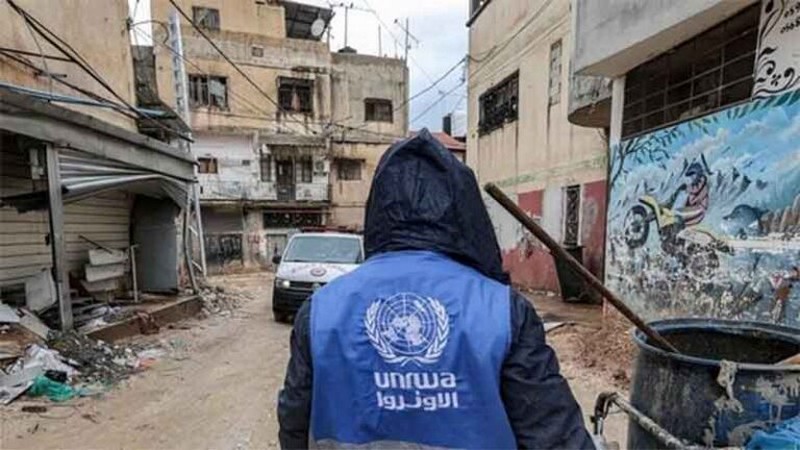
This recourse to a systemic explanation of the Hamas attack recalls the once fashionable ideas of Samuel Huntington who in 1993 alerted the world to an anticipated post-Cold War reconfiguration of world politics as ‘a clash of civilizations.’ Huntington expressed his doubts that peace would follow the end of the Cold War, believing rather in the emergence of a new cast of adversaries hostile to the Global West.[13] Such a civilizational encounter would reconfigure militarized conflict rather than promoting peace, justice, development, and ecological prudence to form the basis of post-1989 world order. If we step back from the transparent immediacy of horror generated by Israel’s targeting of hospitals, refugee camps, and UNWRA buildings in Gaza, and interpret the wider reaches of this violent drama our picture of what is strategically at stake is considerably enlarged. Taking account of the relevance of Hezbollah, Houthi, Syrian, and above all Iranian solidarity with Gaza, as reinforced by the persisting large protest rallies in the city streets in Islamic countries, and indeed throughout the Global South, Huntington’s expectations of 30 years ago seem to be a prophetic prelude to Macron’s initiative as well as to the 9/11 attacks. Huntington’s words resonate anew as they formerly did when articulated just after the Cold War “[n]ation-states remain the most powerful actors in world affairs, but the principal conflicts will occur between nationals and groups of different civilizations…The clash of civilizations will dominate global politics. The fault lines of civilizations will be the battle lines of the future.”[14]
Others have elsewhere observed that the conflict between Western civilization and Islam has a lineage that goes back 1300 years. Huntington’s ideological ally at the time was none other than Bernard Lewis who introduced an Orientalist twist by demeaning the whole of Islam as “a culture of rage” portraying those of Islamic faith, in Edward Said’s words, as nothing other than “a neurotic sexualized being.”
In a further twist, the Hamas leadership rationalized its attack on Oct 7 as a necessary way of conveying to Israel that the Palestinians were not going to consent to erasure. Further, in an inversion of the Western images of the Arab as responding only to force [see Raphael Patel, The Arab Mind (1973, updated 2007], Hamas argues with apparent plausibility that Israel only responds to force, and that Palestinian were led to mount an attack to awaken Israelis to the resolve of the Palestinians to resist erasure.
These contrary images of this clash of civilizational mentalities serves as an illuminating, if unconscious, backdrop for Israel’s Minister of Defense, Yoav Gallant, disgusting language describing the battle against Gazans in words that will be long remembered in the annals of genocidal rhetoric: “We are fighting against human animals, and we will act accordingly.” To so overtly dehumanize Palestinians, as well as its demeaning negation of animals, could make the often insurmountable challenge of establishing genocidal intent easy for prosecutors to meet. Of course, the quoted phrase is further incriminating as its role seemed a public explanation of why food, electricity, and fuel would be totally cut off from any form of transmission to Gaza. All in all Gallant’s notorious decree is fully consonant with Israel’s practices during this past month of violence. It also gains relevance by the failure of Netanyahu or other Israeli officials to modify or in any way soften Gallant’s self-incriminating language. What Galant said is consistent with other statements by Israeli leaders including Netanyahu and by IDF tactics and public rationales confirming such attitudes toward the whole of the Palestinian people.
There is little doubt that the outcome of these two ongoing ‘wars’ will deeply influence the prospects for the stability and acceptance of Western worldwide post-colonial and post-Cold War economic, political, and cultural patterns of hegemony. The hawkish interpretation insightfully, if indirectly, regards the active and undisguised complicity of the Western governments in relation to Gaza as a matter of grand strategy rather than as a testimonial to Zionist influence. This is important to understand, although in light of the rising chorus of moral/legal objections to Israel’s behavior in Gaza, it is rarely publicly acknowledged.
What is new with respect to Samuel Huntington sense of ‘the West against the rest’ was his failure to take note of the Islamic challenge being spearheaded by non-state actors adopting the pre-modern means of combat at their disposal and largely focused on resisting further Western penetration rather than through violence overseas as was the onetime tactic of Al-Qaeda. What 9/11 and later Islamic jihadism added was a religious rationale to resistance and conflict with the West whose identity took largely non-state forms. In effect, the geopolitically phrased assessments of Huntington acquired a moral fervor.
Instead of waging a geopolitical war to determine global power alignments, the war against Hamas can be, as Macron intimated, also internalized giving a fresh stimulus to European Islamophobia and anti-migrant politics. Even during the Cold War the Russians were never demonized as a people or was their civilization demeaned, partly because they were after all white Christians not ‘human animals.’
A politics of demonization, although used in an inflammatory way by Biden in relation to Ukraine, was confined to the person of Vladimir Putin. The main argument consisted of self-serving legalistic rationalizations for defending Ukraine, while excluding from consideration such contextual issues as prior internal violence against the Russian-oriented minority in the Donbas oblasts along with Kyiv’s repudiation of the Minsk 2014-15 agreements, and NATO’s increased engagement with the country’s security policies after the Maidan Coup in 2015.
There are revealing similarities in the Global West responses to these two violent conflicts that are bound to have transformative influences on the future of peace and security in the world. Those who favor a strong material and diplomatic commitment to Ukraine, as with those showing unconditional support of Israel, become hysterical if provocations of Russian aggression or the prehistory of the Hamas attack are taken seriously into account. This is because a fair appraisal of these two contexts subverts the high ground of moral purity and political justification implicit in the militarist modes of response, as well as rendering ambiguous the presume clarity of the claimed legal right of self-defense in the two instances.
The supposedly humanistic President of Israel, Isaac Herzog, adopted the good versus evil framework of Netanyahu that refuses to make the slightest concession to the realities witnessed by the peoples of world. Herzog’s entire effort was to draw the sharpest possible distinction between Israel as the agent of a humane future for all and the Palestinians as the exemplification of the worldview of their barbaric adversary. His words featured as a guest opinion piece in the NY Times are an example of the one-eyed crusading civilizing vision that a broad spectrum of Israelis endorse:
Against our will, we in Israel find ourselves at a tipping point for the Middle East and for the world and at the center of what is nothing less than an existential struggle. This is not a battle between Jews and Muslims. And it is not just between Israel and Hamas. It is between those who adhere to norms of humanity and those practicing a barbarism that has no place in the modern world.[15]
It would seem, at this point, that what is being endorsed in the West, is a second coming of the ‘clash of civilizations’ worldview as further embellished by invoking the dualism of good and evil. It is blended with a last-ditch effort to sustain the unipolar geopolitical alignment that emerged after the Cold War amid a world beset by ecological instabilities as never before. Biden made a lame effort to ideologize the latter stages of the post-Cold War atmosphere by describing the current era as an epic global struggle between ‘democracies’ and ‘autocracies,’ but it was largely ignored as the claim was beset by obvious empirical contradictions of inclusion and exclusion.
The outcome in Gaza for Israel also has major implications for the region and world, including possibly inducing a normalizing diplomacy with Iran, and greater respect for the norms of non-intervention in internal societies, especially Muslim majority countries in closer conformity to Article 2(7) of the UN Charter. All things considered, the world will be safer and more secure if the politics of self-determination are managed nationally rather than by a US-led NATO directorate. As well, a positive reappraisal of conflict-avoiding invisible geopolitical fault lines such as were the pragmatic contribution of World War II diplomats at Yalta and Potsdam, and their renewal in the present altered circumstances of seeking conflict management.
Some Alternative Futures for Palestine/Israel
Against this geopolitical background, it seems now appropriate to make conjectures about what sort of future will emerge the violence in Gaza and how it might shape the destiny of Palestinians and Israelis, including the roles will be played by regional and global forces.
As the bombs continue to fall and rockets fill the air in Gaza, some reaching Israel, various ideas are being advanced by outsiders about probable and desirable futures. Three future patterns emerge at this from the rubble and the rising death toll:
- The pessimist’s future: Israel despite alienating people throughout the world retains sufficient hard power leverage to win the peace, establishing a Greater Israel that incorporates the West Bank, reconstitutes the governance of Gaza under a Palestinian Authority leadership to serve as the sole representative of the Palestinian people, possibly even looking to recognize a Gaza micro-state as ‘Palestine.’ I think that this outcome would not satisfy internal or international demands for an acceptable Palestinian solution, and would not end or even mitigate the apartheid nature of present Israeli governance or inhibit resistance activities on the Palestinian side;
- Utopian envisioning: holding Israel responsible for the criminality of its Gaza campaign, requiring accountability of the main perpetrators for their crimes and imposing reparations for damage done to Palestinians homes and property; acknowledgement by the Israeli President and Prime Minister of the historic wrongs done to the Palestinian people by the Nakba and subsequent abuses, a point stressed by Edward Said and others with the accompanying sentiment ‘There will never be peace until there is such an acknowledgement is made.” Democratic secularism in a unified or co-existing states based on no ethnic nor religious criteria, featuring democratic elections, and human rights. A right of return of all Palestinian refugees and their descendants. Zionism would revert to the Balfour ethnic pledge of a Jewish ‘homeland’ but no state. The fact that something analogous along these lines happened in South Africa suggests that it could happen in Israel/Palestine, but it seems far beyond the reach of practical politics at present, although the Israeli NGO, International Committee Against Housing Demolition (ICAHD) has circulated a roughly comparable proposal in early November 2023;
- Stalemate renewed: a return to the status quo preceding the Hamas attacks, with modifications, but apartheid, border control and blockade roughly as before, resistance continues, global solidarity intensifies in ways that gradually shift the balance of forces in a Palestinian.
None of the Oslo hype clouds the present search for final outcomes of the Palestinian struggle to attain its long denied basic rights as a people and nation. Yet for the foreseeable future the outlook for peace remains dark, including in, maybe especially in Israel.
Concluding Remarks
I would like to believe that Edward would have agreed with most of what I have said, although among his many virtues, was that of intellectual independence, which on occasion could be experienced as a certain cantankerousness. It is entirely possible that after Edward listened to these remarks would approach me after these remarks with a scowl and his half ironic, half serious putdown: ‘Richard, you can’t be serious.’
Despite my intention to be engaged, my words may still have come across as too academic. Yet I must reaffirm that the events of the last month have resulted in the most tormenting emotions that I have ever experienced in reaction to public events. I confess that to some, my rather academic style may seem designed to hide partisanship. To counter such an impression I will conclude by removing any doubt as to where I stand.
- I firmly believe that this is a time for persons of conscience to take action as well as to pierce the propaganda manipulating feelings, perceptions, and allegiances.
- It is past time to confront the double standards and moral hypocrisy of the Global West.
- It is also a time to mourn and grieve the terrible human costs endured by the people of Gaza, but also a time to show solidarity with those seeking peace and justice at great risk.
- And finally, this is a time to repudiate the horrors of warfare and political violence, the disgrace of genocide, and better arrange our lives and organize our collective endeavors on the power of love, courage, struggle, justice, and hope.
As jurist, citizen, and human rights activist, the issues of aligning law in the books with justice in the life of Palestinians has both tested my commitment to a word order in which law and justice become closely aligned. This cannot happen so long as the UN and the management of power and security is left to the priorities of geopolitical actors, at present the US, China, and Russia, particularly if their relations are strained by the emergent struggles particularly evident in relation to Ukraine and Taiwan. The US seeks to retain the unipolarity—that is, the exclusion of other geopolitical aspirants from the managerial roles of global security—in the face of growing challenges not only from Russia and China, but also from the BRICS and a realigned Global South.
The lives of dissenting public intellectuals whether rooted in the scholarship of the humanities, at which Edward Said excelled, or the academic engagements of a social scientist devoted to the alignment of law and justice, the imperatives of values, thought, and action need to be fused and their impact on governmental and UN actors dramatically increased if world order challenges are to have any chance of being addressed in humane and effective ways. In a constructive sense, all legal analysis rests upon disclosed or suppressed what I have characterized as ‘advocacy jurisprudence.’ Such an assertion builds on the work of legal realism and critical legal studies, and in keeping with the Lasswell/McDougal explicit endorsement of liberal constitutionalism as the guiding principle of constructing legal outcomes, although slightly disguised by their claim of a scientific social science epistemological foundation for their normative preferences.
NOTES
[1] My jurisprudential orientation accords with and is influenced by Noura Erakat pathbreaking JUSTICE FOR SOME: LAW AND THE QUESTION OF PALESTINE (2019)
[2] Others I would mention in the same spirit are Noam Chomsky, Daniel Ellsberg, Cornel West, David Ray Griffin, and from a distance, Albert Camus, Jean-Paul Sartre, Bertrand Russell, Mahatma Gandhi, and Martin Buber. Within my disciplinary orientation of international law, I found the critical work and normative perspectives of TWAIL (Third World Approaches to International Law) as a compatible complement to the work of jurists in the Global West working toward a similar realignment of law and justice as are dissenting public intellectuals. In this regard I would mention Asli Bali, Noura Erakat, Darryl Lee, Lisa Hajjar, Victor Kattan, and Penny Green as currently active examples in the US/UK setting.
[3] See the influential writings of Hans Kelsen and the many conscious or unconscious Kelsenites. Also relevant is the writing of Max Weber trying to curtail the influence of religion in policy formation and give way to Enlightenment values privileging science. In some attempts to objectify a preferential set of values the issue of subjectivity is shifted but not eliminated. See Hans Kelsen, Principles of International Law (2003) The most notable undertaking of this sort was attempted by the New Haven School of International Law, as principally propounded by Harold Lasswell & Myres S. McDougal at Yale Law School. See their Jurisprudence for a Free Society (1991)
[4] By ‘first approximation’ I want to again emphasize that legal norms are not self-elucidating. Their ambiguity is somewhat arbitrarily overcome by leaving the authority to finalize the interpretation of norms to judicial bodies. The dissatisfaction among liberals about the outlook and judgments of the US Supreme court in recent years reveals tensions in the alignment between law and justice. During the Warren Court it was political conservatives that were distressed by what they regarded as misalignment of law and justice.
[5] There are enough discrepancies between the initial Israeli account of the Hamas attack and what actually happened on Oct 7 to support the appointment of an international commission should be arranged to produce a trusted objective and comprehensive account of what actually happened on that tragically eventful day.
[6] Edward W. Said, Orientalism (1978)
[7] No words in political discourse are more manipulated than are ‘genocide’ and ‘terrorism.’ The former to criminalize dehumanizing behavior, while the later suspends the laws of war be dehumanizing those that use political violence as an instrument of armed struggle, with more or less justification.
[8] Although indefinite in its contours, international law authorizes armed resistance to oppressive rule. See UN General Assembly Res. 2625 (1975). This makes the Hamas attack to be a hybrid event, both containing war crimes and a resistance rationale. This rationale points to the failure to find a peaceful solution after more than 75 years.
[9] See Thomas Suarez, How Terrorism Created Modern Israel (2016)
[10] See Convention on the Prevention and Punishment of the International Crime of Apartheid, 1973; recently documented by Michael Lynk 2021 report to the HRC in his role as SR, Michael Lynk in Richard Falk, John Dugard, Michael Lynk, PROTECTING HUMAN RIGHTS IN OCCUPIED PALESTINE: WORKING THROUGH THE UNITED NATIONS (2023), 297-312; also the authoritative reports of the UN’s ESCWA, and NGOs Human Rights Watch, Amnesty International, and B’Tselem.
[11] This reasoning of mine should be compared to the proposals published on October 22, 2023 in Foreign Affairs by the former PA Prime Minister, Fayyad Salam ideas.
[12] For elaboration see Richard Falk, PREDATORY GLOBALIZATION: A CRITIQUE (2001)
[13] Samuel P. Huntington, “The Clash of Civilizations,” Foreign Affairs 72: 22-49 (1993)
[14] Ibid, Note 13.
[15] The President of Israel: Isaac Herzog, “This Is Not a Battle Just Between Israel and Hamas,” NY Times, 3 Nov 2023.
Prof. Richard Falk is a member of the TRANSCEND Network, Albert G. Milbank Professor Emeritus of International Law at Princeton University, Chair of Global Law, Faculty of Law, at Queen Mary University London, Research Associate the Orfalea Center of Global Studies at the University of California, Santa Barbara, and Fellow of the Tellus Institute.
18 March 2024
Source: transcend.org