Just International

Al Jazeera documents more mass summary executions by Israeli troops

By Andre Damon

With each passing day, there is growing evidence that Israeli troops are functioning as mobile mass execution parties in Gaza.

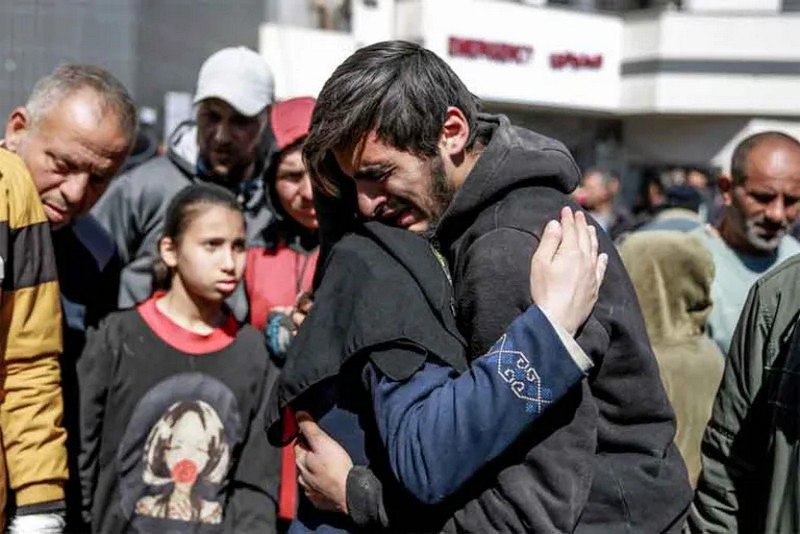
On Thursday, Al Jazeera published video interviews of residents of an apartment building in Gaza City, where residents said Israeli troops systematically tortured and executed 15 men.

Heba Selem, a witness, stated: “They stripped them of their clothes except for their boxers and forced them to lay on their stomachs on the floor. They started to execute the men on the floor. They didn’t leave anyone. I swear to God, they turned the entire place into a bloodbath.

“It’s a day you can’t forget, I can’t forget it.” Her husband was killed during the execution.

“After they tortured my husband in front of us and they broke his jaw, and beat up his face, they beat him until his arms were bleeding. They stripped all the men, tortured them, and humiliated them, then executed them. That all happened while we watched.”

Al Jazeera quoted William Schabas, professor of international law at Middlesex University, as saying the footage would constitute evidence of war crimes at the International Criminal Court. “I should add that it’s not really important to demonstrate that they’re civilians. Summary executions even of fighters, even of combatants is a war crime,” he told the news outlet.

In a subsequent interview, Muhammad Shehada, chief of programs and communications of the Euro-Med Human Rights Monitor, told Al Jazeera that there is a pattern of “systematic” killing in Gaza.

“In at least 13 of field executions, we corroborated that it was arbitrary on the part of the Israeli forces,” he said, adding: “We believe that the IDF [Israel Defense Forces] has dropped restraint in its conduct in Gaza, enabling soldiers to confidently conduct these atrocities, without fear of accountability, which is why we’re seeing them in multiple neighborhoods and parts of the Gaza Strip.”

On December 20, the United Nations Office of the High Commissioner for Human Rights (OHCHR) published a report alleging that Israeli forces carried out a mass execution of civilians in northern Gaza, separating 11 men from their families and summarily shooting them.

In its December 20 report, the OHCHR in the Occupied Palestinian Territories said it “has received disturbing information alleging that Israel Defense Forces (IDF) summarily killed at least 11 unarmed Palestinian men in front of their family members in Al Remal neighborhood, Gaza City, which raises alarm about the possible commission of a war crime.”

The UN agency wrote: “On 19 December 2023, between 2000 and 2300 hours, IDF reportedly surrounded and raided Al Awda building, also known as the ‘Annan building,’ in Al Remal neighborhood, Gaza City, where three related families were sheltering in addition to Annan family.”

Neither Al Jazeera’s latest revelations, nor the reports by the United Nations and Euro-Med, have been reported by the US and European media, which have largely dropped any systematic coverage of the genocide.

In a briefing, White House National Security spokesperson John Kirby denied that Israel was carrying out “deliberate” war crimes.

A journalist asked: “Yesterday, Mexico, and Chile requested the International Criminal Court to investigate potential crimes against civilians in Gaza. Any reaction?”

Kirby replied: “We don’t have any indications that there’s deliberate, deliberate efforts to commit war crimes by the Israeli Defense Forces.”

Kirby declared: “Currently, of course, we’re rightly focused on making sure Israel has what it—continues to has—have what it needs to defend itself.”

As Washington doubled down on its defense of Israel’s war crimes, the US further expanded its war in the Middle East.

On Friday, the US carried out yet another strike on Yemen, marking the sixth such strike in 10 days. Kirby claimed that the “pre-emptive” attacks were taken in “self-defense.”

Kirby threatened to launch more strikes, declaring: “They continue to have offensive capability, and they still continue to be willing to use it.” He added: “We also have plenty of defense capability available to us, and we continue to use it as well.”

These continuous, daily attacks on Yemen make clear that the United States has launched yet another endless war in the Middle East, centrally targeting Iran, as part of its global military offensive aimed at Russia and China.

According to the Euro-Med Human Rights Monitor, 32,246 people have been killed in Gaza since October 7, with 62,234 people injured. A staggering 1.95 million people are displaced.

The United Nations reported Friday: “Between the afternoons of 18 and 19 January, according to the Ministry of Health (MoH) in Gaza, 142 Palestinians were killed, and another 278 people were injured.”

Euro-Med said 72,440 homes in Gaza have been fully destroyed, and 190,250 homes have been partially destroyed.

According to the World Health Organization, most of Gaza’s hospitals have completely stopped functioning, while the 15 remaining hospitals are operating at up to three times their capacity.

Last week, Israeli Prime Minister Benjamin Netanyahu declared that Israel will continue its onslaught on Gaza in defiance of international law. “Nobody will stop us—not The Hague, not the [Iranian-led] axis of evil and not anybody else,” Netanyahu said.

20 January 2024

Source: countercurrents.org

“Depopulating” Palestine: Israel Through the Bifocal Lens of Hitler and Lemkin

By Maung Zarni

In fact, Lemkin, “the father of the term ‘genocide’”, drew on Hitler’s publicly available genocidal thoughts expressed in writing to hone his understanding of the destruction of human groups andsubsequently, imposing the perpetrators’ design on the surviving population, in the morning after.

That in turn took me to the ideological and technical source of modern genocides, Adolf Hitler’s blood-based view of a racially cleansed state, with the acquisition of land for the state’s – as opposed to biblically – “chosen people.” As a matter of fact, even, 20 years before Hitler, a fringe demagogue from Bavaria, began formulating his coherent if vile body of “National Socialist” vision of a racially superior Aryan nation, cleansed of inferior populations – most specifically “the Jude” which he termed “vermin” “bloodsuckers” “masters of deception” “parasites” and so on – pre-Nazi Germany under Kaisar Wilhem and Bismack were perpetrating the 1st modern genocide of the 20th century in Namibia (1904-08).

As students of genocide noted the colonizing German authorities and troops were driving hundreds of thousands of native peoples – Heroro and Nama – into African desert where they (the Germans) cut off water and any sources of essentials to sustain life for the marked populations whom the occupiers did not want, but whose land they lusted after and subsequently taken over to build German settlements. Three decades on, the Nazis, now in power, proceeded to hone the earlier successful genocidal techniques hatched in the deserts to realize their Aryan project on the local populations. So, Namibia Presidency condemned Germany when Berlin announced that it will officially support Netanyahu’s Israel as a 3rd party in S. Africa vs. Israel genocide case at the International Court of Justice (ICJ) on the day (12 January) Israel denied any wrongdoing in Gaza.

Land and Genocides

We are obliged to depopulate,” (italics original), he went on emphatically, as part of our mission of preserving the German population. We shall have to develop a technique of depopulation. If you ask me what I mean by depopulation, I mean the removal of the entire racial units. And that is what I intend to carry out….”

Those were Adolf Hitler’s words as quoted verbatim by his frequent guest and writer Dr Herman Rausching, uttered as early as 1932, a year before the Nazis came to power.

In the New York Times Book review (18 February 1940) of Rausching’s The Voice of Destruction (New York, 1940), the reviewer Ferdinand Khun Jr. wrote, quoting Rausching, “he (Hitler) said the war of the future would consist of ‘ariel attacks, stupendous in their mass effect, surprise, terror, sabotage, assassination from within, the murder of leading men, overwhelming attacks on all weak points, in the enemy’s defence.” While guests including Dr Rausching were sipping tea and nibbling Streuselkuchen, Hitler proceeded to thunder, “we may be destroyed, but if we are we shall drag the world with us, a world in flames.”

Rausching dubbed Hitler and his Nazi movement “apocalyptic riders of world annihilation.”

Google “100th day in Gaza,” and see what comes up in images, audiovisual materials and reports. Hiroshima- or post-war Berlin- or Warsaw-like scenes, to start with.

And enter the unfolding of “widening regional conflict” as US and UK have already gotten themselves involved in attacking Yemen in the direct context of the African country’s assault on the Israel-bound ships in the Red Sea, which the Yemenese organization bow will not stop until Israel ends its genocidal assault on Gaza’s population.

Now back to Hitler and Lemkin in Europe of those mass-murderous decades of 1930’s and 1940’s.

In Berlin, the newly elected Aryan Chancellor Hitler was elaborating his plan of genocide to a group of visitors over tea and German snacks in the early 1930’s, the Polish Jewish legal scholar Raphael Lemkin, recent graduate from the then Polish University in Lwow (now Lviv, in Ukraine) was reworking his earlier pre-Nazi era concerns and concepts about population destruction – the crime of barbarism and the crime of vandalism. Lemkin proposed, without success, these two new crimes be added to the existing body of international law at an international law conference in Madrid in 1933.

The result was his ground-breaking essay entitled in a single (newly coined) word “Genocide”, published as Chapter IX of Axis Rule in Occupied Europe: Laws of Occupation, Analysis of Government, Proposals for Redress, 2nd Edition by the Lawbook Exchange, Ltd. 2008, originally published in 1944. Within the narrow confines of the Genocide Convention, S. Africa’s case against Israeli genocide in Gaza only deals the Jewish State’s systematic and ongoing violent conduct towards the Palestinians under various types of siege for the last 17 years, and more ominously, “the total siege” since October 7 attacks against Israel by Palestinian resistance groups Hamas and Islamic Jihad. Seen through the framework of Lemkin’s rich sociological conception of genocide, the incessant talks of post-conflict Gaza – by Israel and its Euro-American genocide enablers such as USA, UK and EU – fall neatly in the Lemkinian second phase or stage of genocide: imposing the victorious scheme on the surviving segment of Palestinians. Neither the ICJ case nor the legally framed narrative will cover this deeply settler colonial policy and outlook, which Israel’s perpetrators pursue through genocidal techniques.

On 12 January 2024, during 3-hours of Israel’s presentations, the Jewish State’s Co-Agent Mr Sander had obviously deceived the ICJ when he accused S. Africa of depriving Palestinians of “their agency” by filing the Application. In social media and in street rallies and processions, I have only heard repeated public “Thank you” to S. Africa for anti-apartheid S. Africans’ well-established and decades-old ties and acts of solidarity with the Palestinian liberation struggle. It is Israel, as the colonizer and the grabber of Palestinian land, that has denied millions of Palestinians under its Occupied Territories and in the diaspora worldwide, the right of self-determination – and the right of return.

Speaking of Zionists’ landgrab of Palestinian land, in her biography “My Life, Golda Meir: Israel’s only female Prime Minister” (first published in 1975, 2023)” Meir, a Ukraine-born American Jewish settler, wrote, “… I am more than a little tired of hearing about how the Jews ‘stole’ land from Arabs in Palestine.” In the preceding paragraph, Meir wrote, “(w)hen the First World War ended and the Mandate over Palestine was awarded by the League of Nations to Great Britain (from Turkey), the new hopes raised by the Balfour Declaration for the establishment of a full-fledged Jewish national home seemed to be on the way towards fulfilment (p.78).”

Deeply drunk with her own fanaticism of Socialist Zionism, Gold Meir did not seem to be bothered by what the native Arabs of Palestine might feel about the unwelcome mass-implant of largely Eastern Europe’s persecuted Jews (from Ukraine, Russia and Lithuania) – which she rightly termed “the Christian problem”, not “the Jewish problem”. Nor was Meir troubled by the imperialistic decision by the League’s war-victorious Western powers to slice land (with people on it), nor by the unilateral decision by Britain’s Christian Zionist Secretary of State Lord Balfour. None of these historic moves involved any consultation with, much less consent by the residential population of Palestine.

It is noteworthy that ninety-six percent of Palestine’s population were Arabs of various faiths.

As a matter of fact, Meir definitely knew that the land was already predominantly populated by native, residential Arabs, and, equally important, that the latter were putting up resistance against the League’s colonialist imposition of mass immigration policies in Palestine.

Making a specific reference to her older sister Sheyna, a staunch Zionist, who decided to re-immigrate, with her two children, from Denver, Colorado to Palestine at “the worst possible time”. For, Meir wrote, “on 1 May 1921, following a series of attacks on the Jewish settlements in the north of the country (of Palestine), full-scale Arab riots against the Jews had broken out in Palestine. Over forty people, many of them new immigrants, had been murdered and mutilated. Only a year earlier, Jews had been murdered and raped by Arab gangs in the Old City of Jerusalem, and although it was hoped that the British civil administration (which had just taken over from the military) would deal sternly with those responsible for the riots and thus restore calm, violence had just erupted again. Within a few years, Shamai (Meir’s brother-in-law) argued, Palestine might be at peace; the Arab nationalists might no longer be able to incite Arab villagers to bloodshed; it might become a reasonably safe country in which to live! (p.64)”.

Three weeks after the 1 May riots against the unwelcome mass Jewish immigration in Palestine, driven by their Zionist zeal for “our conquest of the land” (p.74), the two sisters and their families set sail from New York to the biblical Zion aboard SS Pocahontas on 23 May.

Meir wrote, “(y)ears earlier, however, in 1901, the Jewish National Fund had already been formed by the Zionist movement for the exclusive purpose of buying and developing land in Palestine in the name of the entire Jewish people (italics added).

As a matter of fact, Theodor Herzl whom Meir called “the father of Israel”, was lobbying various imperial powers, 1st to the Ottoman sultan, later to German Kaisar Wilhelm and later the British Colonial Office, – depending on who was controlling the real estate in Palestine – to get a large slice of Palestine for the Jewish state. He apparently tried to entice the Sultan by promising to the latter that the Jewish financiers would pay off portions of the Ottoman debt. Herzl got nowhere when he died in 1915. (See False Messiahs: How Zionism’s dreams of liberation became entangled with colonialism, Barnett R. Rubin, The Boston Review, 4 January 2024, for a very thorough historical background to what I would call “secondary settler colonialism” adopted by Herzl and his ideological heirs. Secondary because the Zionists in search of “the living space”, to borrow the German term, were looking for European colonial powers to serve as “mother country”, a role that the United States has come to assume, out of its own strategic equations.

According to the New Historian of Israel Shlomo Sand, the author of The Invention of the Land of Israel: From Holy Land to Homeland and The Invention of the Jewish People, the biblical Zion, in sharp contrast to Herzl’s quest for land, using the biblical rhetoric, is a holy land where the observant Jews, (including one of his “selfish” great-uncles who sold everything of value in order to finance his voyage for his own resurrection, having left not a cent for his children or family), from all over Europe travelled to die where they believe they would be resurrected.

This religious custom is not dissimilar to the observant Hindus who travel their 5,000-years’ old holy city of Varanasi, Benare state, India to die and be cremated on the banks of River Ganges there. The sight of the 24/7 burning of heaven-bound corpses is a mesmerising spectacle which brings millions of international tourists (and their $$$) to India.

Choosing to go and die in one’s holy land is one thing. But taking over vast swarths of land already developed as a society and economy, and densely populated by another people – Palestinians – to build a new Zionist settler colony, justified on the biblical fairy tales and backed by the Old Europe’s imperialist policies which dressed themselves up as “international law”, is a radically different matter.

In sharp contrast to the Old Europe’s spiritual Zionists, political Zionists of late 19th century Eastern Europe – mainly Socialist and Labourite secularists – were solely driven to acquire large tracts of land to acquire, live and start a new sovereign country “on the ruins of the (native) people”, as the late Edward Said rightly and angrily pointed out in one of his TV interviews.

Tel Aviv’s biblically justified land deed and its Zombie-like deployment of “the right of return”, after the supposed 2,000 years of exile from Egypt, is as credible as the Chinese Communist Party’s diabolical rhetoric of the Middle Kingdom’s historical claim over the vast water bodies of South China Sea, holding up maps from antiquity. These claims from antiquity, based in maps or the old bible, put the claimant states above international law (for instance, the Genocide Convention or the Convention on the Law of the Sea).

To belabour the obvious, the now-100-years’ old hope of Golder Meir’s extended family that there might be peace in Palestine “in a few years” remains as elusive as the spiritualists’ “resurrection” in Zion.

As Mairead Mahguire the Northern Irish Nobel Laureate (1976 Peace Prize) and a friend of the late Yasar Arafat put it in her interview with me in her native Belfast, in December 2023, “Israel cannot build peace (or security) on genocide.”

Myanmar and Israel genocide cases and International Court of Justice

On the face of the available evidence that S. Africa submitted in its 84-page Application – as opposed to Gambia’s Application of 36 pages against Myanmar – to the International Court of Justice (ICJ), most non-Zionist (read impartial and objective) lawyers, students of genocide and legally informed journalists around the world certainly see that the ICJ judges will have a breezy job of ruling in favour of the Applicant S. Africa, on both the interim or “provisional measures” request by the Applicant state of S. Africa and in the Merit Phase. That is, if all 15 judges – and the two ad hoc judges handpicked by S. Africa and Israel – are independent, intellectually, ideologically and politically.

In Gambia vs. Myanmar case the ICJ reached a unanimous decision on 23 January 2020 that the case thus presented met the bar of “plausibility” (of Myanmar breaching the Genocide Convention) to warrant a full hearing, and hence the issuance of the interim ruling. Another landmark case, the Rohingya genocide proceedings are now in the Merit Phase, and its 5th year.

There are currently raging debates globally about the S. Africa vs. Israel genocide case anchored in the Convention on the Prevention and Punishment of the Crime of Genocide (The Genocide Convention). However, in my own attempts to understand Israel’s physical destruction of Gaza and the Zionist state’s policies and Zionist thought and mindset with respect to the native population of Palestine at large, I find exceedingly helpful to turn to Hitler’s own formulation of genocidal techniques which he shared in his private circles as early as 1932, and, conversely, Raphael Lemkin’s extremely rich, grounded and textured sociological conception of genocide a decade later, which were then being implemented by Hitler’s “executioners” throughout the Nazi-occupied Europe.

In the midst of the civil war between East and West Pakistan in 1971, made up of two different populations of Bengali speakers and Urdu speakers, West Pakistani general chillingly ordered his troops, “I want the land, not the people.” What ensued was a genocidal destruction of Bengalis in East Pakistan (now Bangladesh), still not recognized as such.

In all genocides forcibly removing and/or destroying an unwanted population, or “depopulating” the land – as Adolf Hitler put it, as a matter-of-factly – typically go hand in hand.

Obviously, the Architect of the Nazi Genocide, Hitler did not need to turn to the Heaven (or any edition of the bible), unlike Netanyahu and generations of political Zionists to make the baseless claim over the land.

In the brief sub-section entitled “Significance of the State’s Area” (of Mein Kempf, pp. 642-643), Hitler offered his non-biblical rationale for the need for “an adequately large space.”

In Hitler’s own written words, “Only an adequately large space on this earth assures a nation of freedom of existence (italic original). Moreover, the necessary size of the territory to be settled cannot be judged exclusively on the basis of present requirements, not even in fact on the basis of present requirement, not even in fact on the basis of the yield of the soil compared to the population. For, as I explained in the first volume, under ‘German Alliance Policy Before the War,’ in addition to its importance as a direct source of a people’s food, another significance, that is, a military and political one, must be attributed to the area of a state (italics original)If a nation’s sustenance as such is assured by the amount of its soil, the safeguarding of the existing soil itself must also be borne in mind. This lies in the general power-political strength of the state, which in turn to no small extent is determined by geo-military considerations (p.643).

Does this sound familiar in the current context of utterances with regard to Gaza-related security concerns for the officially Jewish State, coming out of Netanyahu’s War Cabinet?

The equally chilling parallel is the common ideological justification by the Third Reich and Israel – in terms of manufactured link between the two apartheid states and exclusionary mono-races.

Here Hitler is instructive, when he wrote, in Mein Kampf“(T)he foreign policy of the folkish (National Socialist) state must safeguard the existence on this planet of the race embodied in the state, by creating a healthy, viable natural relation between the nation’s population and growth on the one hand and the quantity and quality of its oil soil on the other hand (pp.642-643).”

However, going forward, Hitlerite notion of “depopulation” (or drastic reduction) of the land of unwanted group – in this case, 2.3 million residents of Gaza offers a crystal clear empirical lens through which judges and spectators alike should be invited to view Israel’s policies and practices.

As chilling and vile as he was, Hitler spelled out “depopulation” of the land as the crucial objective for the preservation (security) of the Aryan nation thus:

We are obliged to depopulate,” (italics original), he went on emphatically, as part of our mission of preserving the German population. We shall have to develop a technique of depopulation. If you ask me what I mean by depopulation, I mean the removal of the entire racial units. And that is what I intend to carry out – that, roughly, is my task. Nature is cruel, therefore we, too, may be cruel. If I can send the flower of the German nation into the hell of war without the smallest pity for the spilling of precious German blood, then surely I have the right to remove millions of an inferior race that breeds like vermin! By “remove”, I don’t necessarily mean destroy (italics mine); I shall simply take systematic measures to dam their great natural fertility. For example, I shall keep their men and women separated for years. Do you remember the falling birthrate of the world war? Why should we not do quite consciously and through a number of years what was at the time merely the inevitable consequence of the long war? There are many ways, systematical and comparatively painless, or at any rate bloodless, of causing undesirable races to die out.”
[Hitler’s statement to Rauschning, from “The Voice of Destruction,” by Hermann Rauschning (New York, 1940, pp. 137-138), quoted by Lemkin as Footnote 29, page 86, Chapter IX: Genocide)].

Published in 1942 in USA, when the Final Solution was well-underway in such dark sites as Auschwitz in the Nazi-occupied Poland under the Administration of Hitler’s lawyer Hans Frank, Lemkin’s Genocide Chapter included that crucial, extensive quote attributed to Hitler. Were Lemkin alive today and was asked to look at the conduct by the occupying state of Israel in Gaza (and other occupied territories of Palestine), the Polish Jewish legal genius would certainly be persuaded to reference Hitler’s articulation of his genocidal project and reach the inevitable conclusion: that Israel is committing a comprehensive genocide.

No two genocides in history are identical, to belabour the obvious.

Different genocidal regimes device different but coordinated and generally systematic plan of annihilation. The English proverb “there are many ways to skin a cat” springs to mind. Some genocides are executed over decades. Even the most industrially systematized genocide by the Nazis took over 10 years, with its accelerated phase of the “liquidation” of the unwanted populations, largely the European Jewry.

The push for out-migration, ghettoization, accompanying deprivation of the absolute essentials of life – food, water, medicine, electricity – , direct killings of the members of the targeted population, establishment of ever-expanding “living space” (or settlements, if you like) for “one chosen race”, state-chosen or biblically chosen, were all integral to Hitler’s scheme of “depopulating” the land earmarked for the ownership in the hands of the race-state, the (exclusively) Jewish State or the Third Reich and its Aryan race. The State of Israel now owns more than 93% of the land in Palestine while at the height of the apartheid, Pretoria owned about 70%.

Myanmar state which has long been captured by the country’s central military adopted consciously a policy of slow-genocide towards Myanmar’s Rohingya population concentrated in the Bangladesh-Myanmar border areas, as early as 1970’s. The two final waves of “depopulating” the western land of Myanmar drove out 740,000 people from 300+ villages in 2016 and 2017.

Amidst the physical destruction of much of Gaza which the world has witnessed over the last 100 days, Israeli politicians, officials and public openly talk of the natives of Gaza relocating to countries “for their own better future”.

In his essay “The Old and New Conversations” (On Palestine, Noam Chomsky and Iian Pappe, Penguin, 2015), a highly regarded Israeli scholar of Palestine at Britain’s Exeter University shed light on “the connection between Zionist ideology and the movement’s policies in the present.” Peppe wrote, “both aim to establish a Jewish state by taking over as much of historical Palestine as possible and leaving in it as few Palestinians as possible. The desire to turn the mixed ethnic Palestine into a pure ethnic space was and is at the heart of the conflict that has raged since 1882.”

He continues, “(t)his impulse, never condemned or rebuked by a world that watched by and did nothing, led to the massive expulsion of 750,000 people (half of the region’s population), the destruction of more than five hundred villages, and the demolition of a dozen towns in 1948.”

It is instructive to quote Peppe’s scathing indictment of Israel: “(t)he international silence in the face of this crime against humanity (which is how ethnic cleansing is defined in the dictionary of international law) transformed the ethnic cleansing into the ideological infrastructure on which the Jewish state was built. Ethnic cleansing became the DNA of Israeli Jewish society – and remains a daily pre-occupation for those in power and those who were engaged in one way or another with the various Palestinian communities controlled by Israel. It became the means for implementing a not yet fulfilled dream – if Israel wanted not only to survive but also to thrive, whatever the shape of the state, the fewer Arabs (Palestinians) in it, the better.”

One hears the echoes of Hitler’s words: We are obliged to depopulate”.

Whatever the ICJ’s ruling, interim or eventual, Israel’s genocidal dream of “depopulating” the land of Palestine in pursuit of the nearly 150-years of deadly Zionist Dream has been effectively shattered.

Both the world, including the anti-Zionist Jews, or “Jews with conscience”, as my Jewish American brother Stephen Shaw from Brooklyn put it, have called Israel out for its ongoing genocide. We roundly condemn Israel’s financial, political, and military backers such as USA, UK, Germany France and a majority of the EU states. They are criminal accomplices in Israel’s genocide, and they ought to be held to account, if only morally and reputationally, for their criminal complicity.

The historically genocidal colonising states with European root show no signs of humanity, nor have they “atoned” their colonial “sins” globally. After centuries of landgrab, loot, and colonialism of various hues, political classes in the Global North appear unable to see the non-white people as fully humans equally worthy of “life, liberty and happiness”.

Still, it is very fitting, morally, legally, ideologically and intellectually, the mono-racialized Jewish State found itself before the UN’s highest court of the states, being tried as it were under the very convention – the Convention on the Prevention and Punishment of the Crime of Genocide, whose emergence was triggered by the Shoah.

The same year when the United Nations adopted the Genocide Convention and the Universal Declaration of Human Rights, the UN chose to look the other way when Israel began its first large scale genocide – the Nakba – during which the settler colonial state laid its foundation for depopulation, destruction and displacement of Palestinian land. Its choice is coming back to haunt the world body while millions of Palestinians on their ancestral land – and in diaspora – continue to bear the brunt of the United Nations’ abysmal failures.

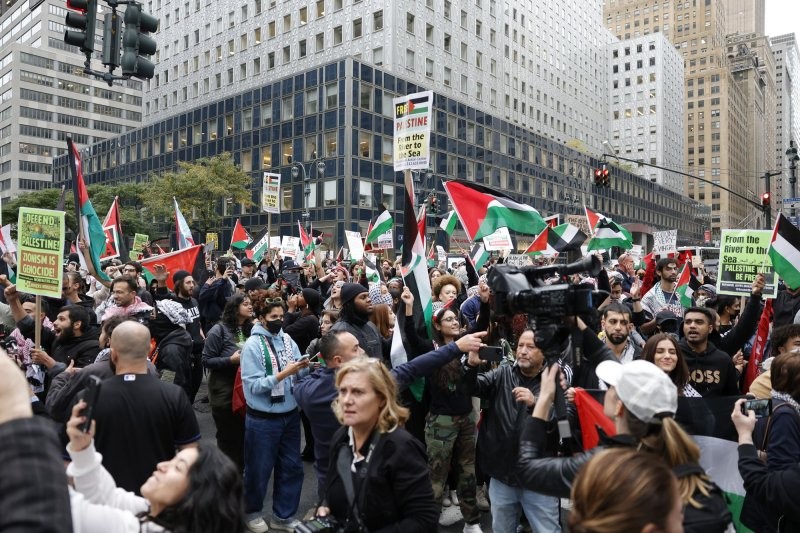
This time, the conscience of the world has been awoken – in the same way the Abolitionist Conscience had been awoken nearly 200 years ago – as evidenced in the vociferous and sustained protests and marches of Free Palestine supporters globally including in Western capitals.

It is cliché to say what is seen cannot be unseen; still, it is absolutely true that the world has seen with its collective eyes – might I add, also with moral clarity, not simply Israel’s immediate and unfolding Lemkinian “crime of barbarism” and “crime of vandalism”, but also the genocidal foundation of the Zionist settler colonial state and its un-repentant formulations of the post-Gaza genocidal vision for the natives of Palestinians.

With deep pain, Lemkin must be watching all this unfold from Heaven while Hitler turns in his un-marked grave, now a parking lot, in Berlin.

Dr Maung Zarni is a scholar, educator and human rights activist with 30-years of involvement in Burmese political affairs, Zarni has been denounced as an “enemy of the State” for his opposition to the Myanmar genocide.

20 January 2024

Source: forsea.co

Netanyahu outlines his plan to seize Gaza for Israel

By Jean Shaoul and Chris Marsden

Prime Minister Benjamin Netanyahu has bluntly spelled out his plan to ethnically cleanse and then seize Gaza for Israel. In doing so he rejected domestic demands for a ceasefire tied to the release of hostages and denied face-saving claims made by the United States administration to justify its support for genocide that there will be some form of Palestinian mini-state established in its aftermath.

Speaking at a press conference last Thursday, Netanyahu insisted, “I will not compromise on full Israeli security control over all the territory west of the Jordan River”. His statement also prefigures an assault on the West Bank and the seizure of all Palestinian-held territory.

War would “continue until the end, until the victory, until the elimination of Hamas” and “nothing will stop us.” Ending the war prematurely “would harm Israel’s security for generations,” he said, suggesting this could mean military action continuing until next year.

US President Joe Biden responded Saturday with what was reportedly his first phone call with Netanyahu for a month, after which he claimed that the Israeli leader would consider some “type” of two-state solution.

Netanyahu’s spokesman dismissed Biden’s claim Sunday, saying that “In his conversation with President Biden, prime minister Netanyahu reiterated his policy that, after Hamas is destroyed, Israel must retain security control over Gaza to ensure that Gaza will no longer pose a threat to Israel, a requirement that contradicts the demand for Palestinian sovereignty.”

Netanyahu said Sunday, “I emphasized to President Biden our determination to achieve all the goals of the war, and to ensure that Gaza never again constitutes a threat to Israel.” Under his leadership, Israel would wage a far wider regional war “on all fronts and in all sectors. We are not giving immunity to any terrorist: not in Gaza, not in Lebanon, not in Syria, and not anywhere.”

Netanyahu and his generals have repeatedly made clear that Israel is waging war not just on the Palestinians but Iran and its allies, with Defence Minister Yoav Gallant declaring that Israel faces a war on seven fronts: Gaza, the West Bank, and Iran and its allies in Lebanon, Syria, Iraq and the Houthis in Yemen. Replying to a reporter who asked why Israel was making do with attacks on Iran’s proxies rather than attacking Iran directly, Netanyahu said, “Who says we aren’t attacking Iran? We are attacking Iran.”

On Friday night, Israeli forces bombed Syria’s capital, Damascus, targeting Iranian forces allied to the Syrian government during NATO’s 13-year war for regime change in the country. Those killed included the Islamic Revolutionary Guard Corps’ (IRGC) Syria intelligence chief and four other IRGC members.

Emboldened by the prospect of a Trump victory in the US presidential elections in November to openly clash with Biden, Netanyahu threw down the gauntlet to his domestic opponents. Rejecting any possibility of holding elections, he said, “Going to elections would be irresponsible and would badly halt the war effort.”

Politically embarrassed by the confirmation that all talk of a Palestinian state, like appeals for Israel to avoid civilian casualties, is empty rhetoric for public consumption, Biden politely stressed that creating a Palestinian state was “still a possibility.”

A spokesman for UK Prime Minister Rishi Sunak called Netanyahu’s opposition “disappointing”, while the European Union on Monday leaked a policy document asserting that the block will press ahead with peace talks including a two-state solution without the involvement of Israel, because it was “unrealistic to assume that Israelis and Palestinians will in the near future directly engage in bilateral peace negotiations”.

On all fundamentals, Washington is at one with Netanyahu’s war aims, though it needs the fig leaf of a two-state solution to help regional allies including Saudi Arabia and Egypt justify their refusal to come to the aid of the Palestinians.

Israel’s attack on the Palestinians was planned with Washington and designed as the opening move in a military campaign aimed against Iran and its allies, as part of US imperialism’s broader preparations for war against China. Both Washington and its ally London dispatched warships to the Middle East within days of the October 7 attack to secure hegemony over the resource-rich region.

Netanyahu heads a crisis-ridden and deeply unpopular government and his efforts to play to his right-wing constituency have made this worse. Prior to October 7 and Netanyahu’s assault on Gaza, he faced mass protest movements against his far-right coalition.

Anti-Palestinian sentiment over the October 7 incursion and the launching of revenge attacks was used to suppress opposition, but public anger has grown over revelations that the intended attack was known of and allowed to take place in order to provide an excuse for launching war on Gaza. This has been fueled by the massive cost of the war, its brutality and the failure to prioritise the release of hostages.

The prime minister and his Likud party’s poll ratings have plummeted. The opposition National Unity—led by former army chiefs of staff Benny Gantz and Gadi Eisenkot, both now serving in Netanyahu’s war cabinet, and Yesh Atid leader Yair Lapid—is predicted to win an election.

On Monday, families of the hostages burst into a session of the Knesset Finance Committee demanding that the government do more to secure their family members’ release. Outside the Knesset, dozens of protesters called for new elections before being dragged away by security officers.

This followed days of small but growing protests in Israel’s major cities calling for talks to halt the war and secure the immediate release of the remaining 140 hostages, with some protesters also calling for fresh elections. On Saturday, thousands took part in a demonstration in Tel Aviv, whose streets are plastered with signs reading “Bring Them Home” and demanding the immediate dissolution of the Knesset and fresh elections.

Hundreds of anti-war protesters, organized by Partnership for Peace, a coalition of civil society groups, took part in a demonstration in the mixed city of Haifa calling for an end to the war, a hostage deal and elections. The protest had initially been banned by the police and was only allowed after an appeal to the Supreme Court and the imposition of a 700 attendee maximum.

The protests, though much smaller than last year’s demonstrations against Netanyahu’s attacks on Israel’s Supreme Court, suffer from the same political weaknesses. A retired general, Nimrod Sheffer, spoke at the Haifa demonstration and called on Eisenkot and Gantz to “choose whether you are in the government and continue to serve the government, or leave it now and start serving the people. The Israeli Knesset must return the mandate to the people, now.”

Demands for a ceasefire, the release of the hostages and fresh elections can never be achieved by appealing to the war criminals Eisenkot and Gantz. Both will continue to wage war alongside Netanyahu for as long as this is required. Speaking of Gaza, Gantz has declared, “The war here is for our existence and for Zionism, and so I can’t provide an estimate of the length of each stage in the war and the fighting that will continue after. We can’t retreat from our strategic objective,” and “On the question of the operation’s length, there are no limitations.”

Their pledge to the Israeli bourgeoisie and to US imperialism is that should a change of government become necessary, then National Unity and its coalition partners will continue to wage the war, only more effectively—especially in combining genocide in Gaza with the broader regional conflict with Iran and its allies.

In an interview with Israel’s Channel 12, Eisenkot declared his support for a temporary pause in the fighting for talks to secure the release of the hostages, to maintain public support for the escalating war. But he followed these remarks with the declaration, “For me, the mission to save civilians comes before killing the enemy. The enemy can be killed afterward.”

Eisenkot boasted of how the decision by National Unity to join the war cabinet and wage Israel’s genocide in Gaza had prevented Netanyahu plunging Israel into a disaster. According to the Times of Israel, “on October 11, Israel was on the verge of striking Hezbollah but he and Gantz managed to convince Netanyahu and the war cabinet to hold off. ‘Our presence there prevented Israel from making a grave strategic error,’ Eisenkot said.

“Had a decision been made to attack Hezbollah, ‘we would have fulfilled [Hamas’s Gaza leader Yahya] Sinwar’s strategic vision’ of bringing about a regional war, he said. The entire axis —‘Syria, Iraq, Iran’ — would have gotten involved, he said, and then ‘[the war against] Hamas, which caused us the greatest damage since the establishment of the state, would have become a secondary arena,’ he said.”

The Times of Israel adds, “Nonetheless, he did not rule out the potential for escalation to war.”

Creating the political conditions for continuing an agenda of genocide and war is what preoccupies Eisenkot and Gantz. The former explained that while both would continue for now to take full part in the war cabinet, “It is necessary, within a period of months, to bring the Israeli voter back to the polls and hold elections in order to renew trust, because right now there is no trust.”

23 January 2024

Source: countercurrents.org

Defunding UNRWA Contributes to the Ongoing Israeli Genocide in the Gaza Strip, in Contradiction to the ICJ’s Provisional Measures

In response to Israeli accusations claiming that 12 out of 13,000 UNRWA Gaza-based staff were involved in the 7 October 2023 operations, the USA, EU, UK, Canada, Italy, Australia, Germany, Netherlands, and Finland suspended funding to the UN agency. States’ decisions to suspend UNRWA funds serve Israel’s ongoing aim to eliminate UNRWA (and with it the Palestinian refugee issue). This also contradicts the ICJ’s provisional measures and further obstructs UNRWA’s ability to provide aid and assistance in the Gaza Strip. Moreover, the defunding of UNRWA constitutes political blackmail by using the prevention of humanitarian aid as a method of warfare and deepens states’ involvement in the Israeli genocide in the Gaza Strip.

Israel’s Minister of Foreign Affairs, Israel Katz, stated that “UNRWA will not be part of the day after” in the Gaza Strip and has already begun to lobby states – namely those that have suspended funding – to ensure this becomes a reality. At the same time, Benny Gantz, Israeli War Cabinet Minister, stated that the war in Gaza may take 10 years, if not more. It is clear from Israeli statements and actions since the ICJ ruling, it has no intention of following the provisional measures the court set forth on 26 January 2024.

Regardless of whether or not UNRWA staff were involved in the 7 October operations, defunding UNRWA and penalizing the dying, starving, thirsty, ill and displaced Palestinians of the Gaza Strip is, at the very minimum, collective punishment. These decisions contradict the ICJ’s binding provisional measure to ensure immediate humanitarian aid, and more critically, contribute to the Israeli genocidal war. In order to prevent the genocide of Palestinians in the Gaza Strip, states are obligated to facilitate the work of UN agencies and international organizations, not defund them and further cripple their abilities to provide life-saving aid. According to UN Special Rapporteur, Francesca Albanese, on the occupied Palestinian territory, the states that have defunded UNRWA are “collectively punishing millions of Palestinians at the most critical time, and most likely violating their obligations under the Genocide Convention.”

The Israeli allegations against UNRWA and its personnel are not new. Since its inception, UNRWA has been strategically targeted by Israel through defamation and slander campaigns in an attempt to eliminate the Agency. These campaigns intensified since the Oslo Accords and subsequent 30 years of “peace process,” severely hampering the Agency’s ability to fulfill its mandate to provide aid and services to Palestinian refugees. It is clear that the Israeli defamation and defunding campaigns against UNRWA are part of its strategy to obliterate the Palestinian refugee issue. UNRWA’s funding is particularly vulnerable as it is voluntary and therefore dependent on the goodwill of states and the political environment. Funding UNRWA is an international responsibility that stems from the UN and states’ obligations toward Palestinian refugees; it is not a favor. However, Israel has been continuously and deliberately manipulating the political environment to serve its agenda and goals – the recent allegations serve as an outstanding example.

In this particular instance, the allegations came after the ICJ ruling, which includes measures for Israel to ensure the provision of adequate humanitarian aid and assistance to Palestinians in the Gaza Strip. The recent allegations were preceded by a notable increase in UNRWA’s statements that included Israel’s deliberate targeting of UN staff and facilities in the Gaza Strip – several of which were cited in the ICJ ruling. It is quite apparent that the timing and nature of Israel’s allegations are deliberate, as they serve its ongoing strategy to weaponize humanitarian aid.

Since the launch of Israel’s genocidal war against the Gaza Strip, Israel has killed 152 UNRWA staff, damaged 141 installations, in addition to rendering only 4 out of 22 health facilities operational. Israel continues to target UN facilities, particularly UNRWA structures that are serving as extremely inadequate shelters for 1.7 million internally displaced Palestinians. As of 15 January, due to repeated Israeli bombardments of the Gaza Strip causing multiple displacements, UNRWA has been unable to keep track of the Palestinian internally displaced population which had previously been 1.9 million.

Rather than call for an investigation and prosecution of the killings of these UN employees, and compensation for the destroyed UN facilities, colonial states have decided based on Israel’s allegations to temporarily suspend funding to the UN agency with the most presence and legitimacy to provide humanitarian aid and services in the Gaza Strip. According to Philippe Lazzarini, the Agency’s Commissioner-General, “UNRWA is the primary humanitarian agency in Gaza, with over 2 million people depending on it for their sheer survival.”

The suspension of UNRWA funds serves Israel’s goal to eliminate the agency, its wider strategy to weaponize humanitarian aid and also contributes to the genocide in the Gaza Strip. As such, states that have taken these decisions are further involving themselves in the Israeli genocide of Palestinians.

In order to ensure that the 2 million plus Palestinians in the Gaza Strip receive the lifesaving aid and assistance they are entitled to, BADIL calls on:

  • States and the UN to immediately increase their contributions to UNRWA during this life-threatening time as a fulfilment of their obligation to prevent Genocide;
  • Private companies and individuals to make and/or increase their contributions to UNRWA to bridge the current financial gap resulting from states’ defunding decisions;
  • UN Secretary General to urgently seek an emergency fund resolution for UNRWA by the UN General Assembly;
  • The UN to take strategic and long-term measures to change UNRWA’s funding mechanism from voluntary to obligatory on member states in order to liberate UNRWA from colonial states’ political blackmail.

29 January 2024

Source: badil.org

Real Risks On The Prowl

By Ong Tee Keat

When the world was ushering in 2024 cautiously amid rife speculative analysis of the global security ahead in a relatively pessimistic mood, the foiled attempt of purported “colour revolution” in Belgrade, believably with the US fingerprints abound, cast a long shadow on the prospect of world peace.

Though geographically, Balkans is half a world away from Asia Pacific, a live tinderbox in the contemporary power play theatre, the message resonating across the world is loud and clear that the reigning hegemon would less likely scale down its “regime change” agenda through “colour revolutions”, albeit after setbacks in Hong Kong , Belarus and Belgrade, Serbia.

From the US perspective,  the deployment of ” soft power ” in precipitating the covert  ” colour revolution ” from within the target nations remains one of the key pillars of its global security warfare. Invariably it goes in tandem with its military deployment and arms sales across the region where Washington’s security interests lie.

The insurrectional “uprising” in Belgrade allegedly sparked off by protests against the electoral outcome in late December 2023 served to refresh the world’s memory of the modus operandus of the US-sponsored “regime change ” .

Prior to this, the US-based MintPress News, an independent watchdog journalism organization, reported that some leaked papers passed anonymously to it reveal the National Endowment for Democracy (NED), a notorious CIA front, is laying the foundations for a colour revolution in Indonesia.

By and large, the skulduggery deployed by the NED-inspired activists finds its commonality in the 2019 Hong Kong social unrest and mass protest in Southeast Asian countries like Thailand and Indonesia, where individuals and local NGOs can be stirred to activism or even violence at the behest of the local U.S. Embassy or Endowment chapter in return for even a small “grant”, according to the MintPress News.

As more beans were spilled at the trial of some insurrectionists and their masterminds in Hong Kong, the “money-for- protest” claim is no conspiratorial fabrication. This aligns with what Endowment cofounder Allen Weinstein openly admitted in 1991:
“A lot of what we do today was done covertly 25 years ago by the CIA.”

This is no less damaging to a target nation as compared to that inflicted by a kinetic military action. In the latter, physical devastation may be the endgame, whilst the extent of damage inflicted by the perpetrators in the former is far more overarching as hearts and minds targeted are reduced to absolute subservience.

A case in point is the inconceivable protest staged by the Indonesian labour groups against President Joko Widodo’s job creation legislation last August. The bone of contention is whose interest the labour rights activists are supposedly spearheading. Are they truly the voice of Indonesian labour ? Or are they mere pawns to play the mouthpiece for the foreign investors ?

In this context, Indonesia is certainly not the single target as the NED is known to have its operatives in over 100 countries with lavish fund disbursements in excess of 2,000 grants every year by its own reckoning.

In the run-up to election in Indonesia soon, these sums were said to have helped extend the NED’s tentacles into various NGOs, civil society groups and most crucially, opposition parties and candidates across the political spectrum in the country. Electoral grooming and training of individuals were provided alongside staging of mass protest should the electoral outcome run contrary to the preset aspirations of the NED. The latter is obviously reminiscent of the recent violent protest in Belgrade.

All in all, the investigative report by MintPress News simply lays bare the skulduggery cloaked in the outfit of ” advancing democracy ” that is now rearing its ugly head in the Southeast Asian Republic — the largest economy in ASEAN that has been pursuing a relatively independent diplomacy amid the rising Sino-US rivalry in Asia Pacific. Conceivably, this does not align well with the security interests of Washington.

From the US perspective, its security interests lie more in creating a geopolitical environment conducive to keep its primacy unchallenged. To this end, the reigning hegemon has to endeavour to keep its targeted region, if not the world, populated with client states.

Prior to the outbreak of Israel-Hamas conflict, the Association of Southeast Asian Nations ( ASEAN ) made the key target in Washington’s Indo-Pacific Strategy, notably in the realm of security concerns.

To veer the regional bloc from its present China-centric economic orbit, notably under the framework of Belt and Road Initiative  (BRI), is not as simple as a walk in the park. Driven by such a stratagem in mind, the best bet ever is none other than installing a pliant government in the target nations.

This modus operandus has long been in the playbook of NED, alongside the International Republican Institute (IRI), another US vehicle with a proclaimed tenet of advancing democracy worldwide.

The same was said to have been repeatedly used in the other Southeast Asian countries like Malaysia and Thailand in the recent past albeit the truth was deliberately well kept under wraps by the influential international media controlled by the West.

All these constitute the building blocks of US cognitive warfare across the world. Alongside its ” regime change ” operations in the name of advancing global values of democracy and freedom in the target nations, international media is fully weaponised to enhance the coverage of such undemocratic deeds in the positive light favouring the perpetrators.

Under its lenses, journalism is nothing but a mere tool for disseminating dis- information. Responsible reporting and news analysis are left with no place in the entire cognitive warfare architecture. China, having been labeled as the only country capable of and is well posed to challenge the US hegemonic primacy, makes the natural target of such a mammoth global warfare.

Against such a hostile backdrop, Washington is less likely to go on soft-pedal in 2024 despite that the Xi-Biden summit at Woodside helped arrest the free falling Sino-US relations. Asia Pacific, notably Southeast Asia looks set to be the main theatre for the cognitive tussles between the two powers.

On the other hand, though the military build-up pursuant to the US ‘ pivot to Asia Pacific finds its relevance and significance in Washington’s Indo-Pacific Strategy, its enhanced military presence alongside the hyping of the minilateral military partnership, QUAD in Asia Pacific do not necessarily elevate the probability of kinetic conflict hazards, particularly after the Israel-Hamas conflict has erupted.

Understandably, at this juncture, any military flare-up in the South China Sea, East China Sea or Taiwan Strait would simply be too heavy a new battlefront for Washington to bear, given the present domestic financial pressure confronting the largest economy.

In reality, time and again, the hard facts on the high seas of Asia Pacific should have dawned upon Washington that the continuous sabre rattling of the US warships in the name of Freedom of Navigation Operations (FONOPs) has proven no deterrent to Beijing’s assertiveness in safeguarding its territorial maritime integrity as it is intended for.

The recent attacks on commercial vessels with Israeli interests in the Red Sea by the Houthi militias from Yemen has indeed put the FONOPs to test. The intensity of  firepower defying the US-led FONOP and the disruption caused to the shipping lanes in Red Sea by the asymmetrically ill-equipped militias are sufficient to call into question the perceived invincibility of the US navy under the global watch.

The emergence of such grey rhinoceros as Hamas militias’ attack on Israel and the Houthi’s vengeful attacks purportedly in support of Palestinians’ resistance against the Israel genocide have ostensibly diverted the US military deployment focus from the Ukrainian battlefront to that of the Middle East. Unlike in the immediate past, Asia Pacific, a live tinderbox in hand , is too burdensome for Washington if at all a kinetic conflict were to flare up now.

In the run-up to the just concluded Presidential Election in Taiwan, Washington’s repeated reiteration on its commitment to upholding the One China Policy is, in itself, a subtle warning to the fore-running DPP Presidential candidate William Lai who has been going hellbent on his anti-China rhetoric. Reading between the lines, the remarks also signify Washington’s eagerness to de-escalate the rising tension across the Taiwan Strait amid the DPP’s campaign rhetoric that may infuriate Beijing.

Be that as it may, the security hazards across the Taiwan Strait remain looming large so long as the National Defense Authorization Act (NDAA), signed into law by the US President, continues to allow increasingly greater latitude for Washington to arm Taiwan year after year.

The progression of NDAA from the “authorization of up to US$10 billion in security assistance and fast-tracked weapons procurement for Taiwan over the next five years” in 2023 to establishing a “comprehensive training, advising and institutionalized capacity-building program” for Taiwan through Pentagon in 2024 is sufficient for any right thinking mind to doubt the sincerity of Washington in toeing the red line drawn by Beijing on the Taiwan issue. The juxtaposition of Washington on the renegade province is the real cause for concern. And no “guardrail” of whatever form could ever keep the wobbling Sino-US relation on track diplomatically if the same trick were to be recycled.

In this context, any insensitive move to invite Taiwan to the Rim of the Pacific exercise and have joint military exercises with the island regime as is provided for in the NDAA 2024 could easily turn out to be the last straw breaking the camel’s back that may risk edging the entire Asia Pacific , if not the world, to Armageddon.

ONG TEE KEAT,
President, Belt and Road Initiative Caucus for Asia Pacific (BRICAP)
13th Jan 2024.

In Gaza, the West Is Enabling the Most Transparent Genocide in Human History

By Richard Falk

Recall Samuel Huntington’s controversial, yet influential, 1993 Foreign Affairs article, “The Clash of Civilizations,” which ends with the provocative phrase, “The West against the rest.” Although the article seemed far-fetched 30 years ago, it now seems prophetic in its discernment of a post-Cold War pattern of inter-civilizational rivalry. It is rather pronounced in relation to the heightened Israel/Palestine conflict initiated by the October 7 Hamas attack on Israeli territory with the killing and abusing of Israeli civilians and IDF soldiers, as well as the seizure of some 200 hostages.

Clearly this attack has been accompanied by some suspicious circumstances such as Israel’s foreknowledge, slow reaction time to the penetration of its borders, and, perhaps most problematic, the quickness with which Israeli adopted a genocidal approach with a clear ethnic cleansing message. At the very least the Hamas attack, itself including serious war crimes, served almost too conveniently as the needed pretext for the 100 days of disproportionate and indiscriminate violence, sadistic atrocities, and the enactment of a scenario that looked toward making Gaza unlivable and its Palestinian residents dispossessed and unwanted.

Despite the transparency of the Israeli tactics, partly attributable to ongoing TV coverage of the devastating and heartbreaking Palestinian ordeal, what was notable was the way external state actors aligned with the antagonists. The Global West (white settler colonial states and former European colonial powers) lined up with Israel, while the most active pro-Palestinian governments and movements were initially exclusively Muslim, with support coming more broadly from the Global South. This racialization of alignments seems to take precedence over efforts to regulate violence of this intensity by the norms and procedures of international law, often mediated through the United Nations.

This pattern is quite extraordinary because the states supporting Israel, above all the United States, have claimed the high moral and legal ground for themselves and have long lectured the states of the Global South about the importance of the rule of law, human rights, and respect for international law. This is instead of urging compliance with international law and morality by both sides in the face of the most transparent genocide in all of human history. In the numerous pre-Gaza genocides, the existential horrors that occurred were largely known after the fact and through statistics and abstractions, occasionally vivified by the tales told by survivors. The events, although historically reconstructed, were not as immediately real as these events in Gaza with the daily reports from journalists on the scene for more than three months.

Liberal democracies failed not only by their refusal to make active efforts to prevent genocide, which is a central obligation of the Genocide Convention, but more brazenly by openly facilitating continuation of the genocidal onslaught. Israel’s frontline supporters have contributed weapons and munitions, as well as providing intelligence and assurance of active engagement by ground forces if requested, as well as providing diplomatic support at the U.N. and elsewhere throughout this crisis.

These performative elements that describe Israel’s recourse to genocide are undeniable, while the complicity crimes enabling Israel to continue with genocide remain indistinct, being situated in the shadowland of genocide. For instance, the complicity crimes are noted but remain on the periphery of South Africa’s laudable application to the International Court of Justice (ICJ) that includes a request for Provisional Measures crafted to stop the genocide pending a decision on the substance of the charges of genocide. The evidence of genocide is overwhelmingly documented in the 84-page South African submission, but the failure to address the organic link to the crimes of complicity is a weakness that could be reflected in what the court decides.

Even if the ICJ does impose these Provisional Measures, including ordering Israel to desist from further violence in Gaza, it may not achieve the desired result, at least not before the substantive decision is reached some three to five years from now. It seems unlikely that Israel will obey Provisional Measures. It has a record of consistently defying international law. It is likely that a favorable decision on these preliminary matters will give rise to a crisis of implementation.

The law is persuasively present, but the political will to enforce is lacking or even resistant, as here in certain parts of the Global West.

The degree to which the U.S. has supplied weaponry with U.S. taxpayer money would be an important supplement to rethinking the U.S. relationship to Israel that is so important and which is underway among the American people—even in the Washington think tanks that the foreign policy elites fund and rely upon. Proposing an arms embargo would be accepted as a timely and appropriate initiative in many sectors of U.S. public opinion. I hope that such proposals may be brought before the General Assembly and perhaps the Security Council. Even if not formally endorsed, such initiatives would have considerable symbolic and possibly even substantive impacts on further delegitimizing Israel’s behavior.

A third specific initiative worth carefully considering would be timely establishment of a People’s Tribunal on the Question of Genocide initiated by global persons of conscience. Such tribunals were established in relation to many issues that the formal governance structures failed to address in satisfactory ways. Important examples are the Russell Tribunal convened in 1965-66 to assess legal responsibilities of the U.S. in the Vietnam War and the Iraq War Tribunal of 2005 in response to the U.S. and U.K. attack and occupation of Iraq commencing in 2003.

Such a tribunal on Gaza could clarify and document what happened on and subsequently to October 7. By taking testimony of witnesses, it could provide an opportunity for the people of the world to speak and to feel represented in ways that governments and international procedures are unable to given their entanglement with geopolitical hegemony in relation to international criminal law and structures of global governance.

The South African World Court Case, Pariah State, and Popular Mobilization

The South African initiative is important as a welcome effort to enlist international law and procedures for its assessment and authority in a context of severe alleged criminality. If the ICJ, the highest tribunal on a supranational level, responds favorably to South Africa’s highly reasonable and morally imperative request for Provisional Measures to stop the ongoing Gaza onslaught, it will increase pressure on Israel and its supporters to comply. And if Israel refuses to do so, it will escalate pro-Palestinian solidarity efforts throughout the world and cast Israel into the darkest regions of pariah statehood.

In such an atmosphere, nonviolent activism and pressure for the imposition of an arms embargo and trade boycotts as well as sports, culture, and touristic boycotts will become more viable policy options. This approach by way of civil society activism proved very effective in the Euro-American peace efforts during the Vietnam War and in the struggle against apartheid South Africa, and elsewhere.

Israel is becoming a pariah state due to its behavior and defiance exhibited toward legal and moral norms. It has made itself notorious by its outrageously forthright acknowledgement of genocidal intent with respect to Palestinian civilians whom they are under a special obligation to protect as the occupying power.

Being a pariah country or rogue state makes Israel politically and economically vulnerable as never before. At this moment, a mobilized civil society can contribute to producing a new balance of forces in the world that has the potential to neutralize Western post-colonial imperial geopolitics.

It is also relevant to take note of the startling fact that the anti-colonial wars of the last century were in the end won by the weaker side militarily. This is an important lesson, as is the realization that anti-colonial struggle does not end with the attainment of political independence. It needs to continue to achieve control of national security and economic resources as the recent anti-French coups in former French colonies in sub-Saharan Africa illustrate.

In the 21st century weapons alone rarely control political outcomes. The U.S. should have learned this decades ago in Vietnam, having controlled the battlefield and dominated the military dimensions of the war, and yet having failed to achieve control over its political outcome.

The U.S. is disabled from learning lessons from such defeats. Such learning would weaken the leverage of the military-industrial-government complex, including the private sector arms industry. This would subvert the domestic balance in the U.S. and substantially discredit the global geopolitical role being played by the U.S. throughout the entire world.

So, it is a dilemma. We know what we should be doing to make amends, yet well-entrenched special interests preclude such rational adjustments, and the military malfunctions and accompanying geopolitical alignments persist, ignoring costly failures along the way.

We know what should be done, but do not have the political clout to get it done. But global public opinion is shifting, and demonstrations globally are building opposition to continuing the war.

Iran

There is a huge U.S./Israel propaganda effort to tie Iran to everything that is regarded as anti-West or anti-Israeli. It has intensified during this crisis, starting with the October 7 attack by Iran’s supposed proxy Hamas. You notice even the most influential mainstream print media as TheNew York Times routinely refers to what Hezbollah or the Houthis do as “Iran-backed.” Such actors are reduced misleadingly to being proxies of Iran.

This way of denying agency to pro-Palestinian actors and attributing behavior to Iran is a matter of state propaganda trying to promote belligerent attitudes toward Iran to the effect that Iran is our major enemy in the region, while Israel is our loyal friend. At the same time, it suppresses the reality that If Iran is backing countries and political movements, it obscures what the U.S. is doing more overtly and multiple times over.

It is largely unknown what Iran has been doing in the region to protect its interests. Without doubt, Iran has strong sympathies with the Palestinian struggle. Those sympathies coincide with its own political self interest in not being attacked and minimizing the U.S. role in the region. Additionally, Iran has lots of problems arising from opposition forces within its own society.

But I think dangerous state propaganda is building up this hostility toward Iran. It is highly misleading to regard Iran as the real enemy standing behind all anti-Israeli actions in the region. It is important to understand as accurately as possible the complexity and unknown elements present in this crisis situation that contains dangers of wider war in the region and beyond. As far as is publicly known, Iran has had an extremely limited degree of involvement in the direct shaping of the war and Israel’s all-out attack on the civilian population of Gaza.

Hamas and a Second Nakba

While I was special rapporteur for the U.N. on Israeli violations of human rights and international humanitarian law, I had the opportunity to meet and talk in detail with several of the Hamas leaders who are living either in Doha or Cairo and also in Gaza. In the period between 2010 and 2014, Hamas was publicly and by back channels pushing for a 50-year cease-fire with Israel. It was conditioned on Israel carrying out the unanimous 1967 Security Council mandate in SC Res 242 to withdraw its forces to the pre-war boundaries of “the green line.” Hamas had also sought a long-range cease-fire with Israel after its 2006 electoral victory for up to 50 years.

Neither Israel nor the U.S. would respond to those diplomatic initiatives. Hamas, Machel particularly who was perhaps the most intellectual of the Hamas leaders, told me that he warned Washington of the tragic consequences for both peoples if the conflict was allowed to go on without a cease-fire, which was confirmed by independent sources.

Where can Palestinians go as the population suffers from famine and continued bombing? What is Israel’s goal?

I see the so-called commitment to thinning the Palestinian presence in Gaza and to a functional second Nakba. This is a criminal policy. I don’t know that it has to have a formal name. It is not a policy designed to achieve anything but the decapitation of the Palestinian population. Israel seeks to move Gazans to the Egyptian Sinai, and the Egyptians have already indicated that they don’t welcome this.

This is not a policy. This is some kind of a threat of elimination. The Israeli campaign after October 7 was not directed toward Hamas’ terrorism nearly as much as it was directed toward the forced evacuation of the Palestinians from Gaza and for the related dispossession of Palestine in the West Bank.

If Israel really wanted to deal with its security in an effective way, much more efficient and effective methods would have been relied upon. There was no reason to treat the entire civilian population of Gaza as if it were implicated in the Hamas attack, and there was certainly no justification for the genocidal response. The Israeli motivations seem more related to completing the Zionist Project than to restoring territorial security. All indications are that Israel used the October 7 attack as a pretext for the preexisting master plan to get rid of the Palestinians whose presence blocks the establishment of Greater Israel with sovereign control over the West Bank and at least portions of Gaza.

For a proper perspective we should remember that before October 7, the Netanyahu coalition government that took power at the start of 2023 was known as the most extreme government ever to govern the country since its establishment in 1948. The new Netanyahu government in Israel immediately gave a green light to settler violence in the Occupied West Bank and appointed overtly racist religious leaders to administer the parts of Palestine still occupied.

This was part of the end game of the whole Zionist project of claiming territorial sovereignty over the whole of the so-called promised land, enabling Greater Israel to come into existence.

The Need for a Different Context

We need to establish a different context than the one that exists now. That means a different outlook on the part of the Western supporters of Israel. And a different internal Israeli sense of their own interests, their own future. And it’s only when substantive pressure is brought to bear on an elite that has gone to these lengths that it can shake commitments to this orientation.

The lengths that the Israeli government has gone to are characteristic of settler colonial states. All of them, including the U.S. and Canada, have acted violently to neutralize or exterminate the resident Indigenous people. That is what this genocidal interlude is all about. It is an effort to realize the goals of maximal versions of Zionism, which can only succeed by eliminating the Palestinians as rightful claimants. It should not be forgotten that in the weeks before the Hamas attack, including at the U.N., Prime Minister Benjamin Netanyahu was waving a map of “the new Middle East” that had erased the existence of Palestine.

Undoubtedly, one of Hamas’ motivations was to negate the view that Palestine had given up its right to self-determination, and that Palestine could be erased. Recall the old delusional pre-Balfour Zionist slogan: “A people without land for a land without people.” Such utterances of this early Zionist utopian phase literally erased the Palestinians who for generations lived in Palestine as an entitled Indigenous population. With the Balfour Declaration of 1917, this settler colonial vision became a political project with the blessings of the leading European colonial power.

Given post-colonial realities, the Israeli project is historically discordant and extreme. It exposes the reality of Israel’s policies and the inevitable resistance response to Israel as a supremacist state. Israeli state propaganda and management of the public discourse has obscured the maximalist agenda of Zionism over the years, and we are yet to know whether this was a deliberate tactic or just reflected the phases of Israel’s development.

This may turn out to be a moment of clarity with respect not only to Gaza, but to the overall prospects for sustainable peace and justice between these two embattled peoples.

Richard Falk is Albert G. Milbank Professor Emeritus of International Law at Princeton University and served as UN Special Rapporteur on Human Rights in Palestine and is currently co-convener of SHAPE (Save Humanity and Planet Earth).

19 January 2024

Source: countercurrents.org

Gaza Horrors: 1000 Amputations with No Anesthesia

By Dr Marwan Asmar

Over 1000 children in Gaza have had their limbs amputated without anaesthesia. It’s a doctor’s nightmare with little medical supplies.

The number has just been released by UNICEF, the UN children’s agency and points to the devastating situation of children in Gaza.

A doctor amputated his son’s limb without anaesthesia. The pain was so sever the son couldn’t take it and died. More than 75 per cent of those killed – over 60,000 – in Gaza are women and children.

Then there is the case of the doctor who amputated the limb of his niece on the kitchen table by a knife. It was a below-the-knee operation done without anaesthesia. It’s horrendous coming out of a true horror story with over 10,000 children dead by Israeli gunfire since 7 October.

Then there is the case of the doctor who amputated his 16-year-old’s daughter’s foot without anaesthesia. “What have we done to deserve this, please God have mercy on us…” he says choking.

The kids in cement

The Israeli horrors continue. An unbelievable image of two kids in cement after a house caved in on them as a result of the “friendly” air strikes.

Hamas kids that are a threat to Israel!

His future is lost. Will there be no end to white shrouds? How much longer the world needs to wake up to child killers and prosecute this madness.

And then there is the little girl who cries on the top of her mother wishing her to come out of her recently dug grave.

The massacres continue. We await for those to stop but will they? This is genocide that will not end and is remembered as one of the historical horrors of mankind.

Dr Marwan Asmar is a journalist from Amman, Jordan

19 January 2024

Source: countercurrents.org

The World’s Economic Centre of Gravity Is Returning to Asia

By Vijay Prashad

(This is Part-1 of a two-part article)

In October 2023, the United Nations Conference on Trade and Development (UNCTAD) published its annual Trade and Development Report. Nothing in the report came as a major surprise. The growth of the global Gross Domestic Product (GDP) continues to decline with no sign of a rebound. Following a modest post-pandemic recovery of 6.1% in 2021, economic growth in 2023 fell to 2.4%, below pre-pandemic levels, and is projected to remain at 2.5% in 2024. The global economy, UNCTAD says, is ‘flying at “stall speed”’, with all conventional indicators showing that most of the world is experiencing a recession.

The latest notebook from Tricontinental: Institute for Social Research, The World in Depression: A Marxist Analysis of Crisis, questions the use of the term ‘recession’ to describe the current situation, arguing that it acts as ‘a smokescreen meant to hide the true nature of the crisis’. Rather, the notebook explains that ‘the prolonged and profound crisis that we are experiencing today is… a great depression’.

Most governments in the world have used conventional tools to try and grow their way out of the great depression, but these approaches have placed an enormous cost on household budgets, which are already hit hard by high inflation, and have curbed the investments needed to improve employment prospects. As UNCTAD notes, central banks ‘prioritise short-term monetary stability over long-term financial sustainability. This trend, together with inadequate regulation in commodity markets and continuous neglect for rising inequality, are fracturing the world economy’. Our team in Brazil explores these matters further in the recently launched Financeirização do capital e a luta de classes (‘Financialisation of Capital and the Class Struggle’), the fourth issue of our Portuguese-language journal Revista Estudos do Sul Global (‘Journal of Global South Studies’).

There are some exceptions to this rule, however. UNCTAD projects that five of the G20 countries will experience better growth rates in 2024: Brazil, China, Japan, Mexico, and Russia. There are different reasons why these countries are exceptions: in Brazil, for instance, ‘booming commodity exports and bumper harvests are driving an uptick in growth’, as UNCTAD writes, while Mexico has benefited from ‘less aggressive monetary tightening and an inflow of new investment to establish new manufacturing capacity, triggered by the bottlenecks that emerged in East Asia in 2021 and 2022’. What seems to unite these countries is that they have not tightened monetary policy and have used various forms of state intervention to ensure that necessary investments are made in manufacturing and infrastructure.

The OECD’s Economic Outlook, published in November 2023, is consistent with UNCTAD’s assessment, suggesting that ‘global growth remains highly dependent on fast-growing Asian economies’. Over the next two years, the OECD estimates that this economic growth will be concentrated in India, China, and Indonesia, which collectively account for nearly 40% of the world population.

In a recent International Monetary Fund assessment entitled ‘China Stumbles But Is Unlikely to Fall’, Eswar Prasad writes that ‘China’s economic performance has been stellar over the past three decades’. Prasad, the former head of the IMF’s China desk, attributes this performance to the large volume of state investment in the economy and, in recent years, to the growth of household consumption (which is related to the eradication of extreme poverty).

Like others in the IMF and OECD, Prasad marvels at how China has been able to grow so fast ‘without many attributes that economists have identified as being crucial for growth – such as a well-functioning financial system, a strong institutional framework, a market-oriented economy, and a democratic and open system of government’. Prasad’s description of these four factors is ideologically driven and misleading. For instance, it is hard to think of the US financial system as ‘well-functioning’ in the wake of the housing crisis that triggered a banking crisis across the Atlantic world, or given that roughly $36 trillion – or a fifth of global liquidity – is sitting in illicit tax havens with no oversight or regulation.

What the data shows us is that a set of Asian countries is growing very quickly, with India and China in the lead and with the latter having the longest sustained period of rapid economic growth over at least the past thirty years. This is uncontested.

What is contested is the explanation for why China, in particular, has experienced such high rates of economic growth, how it has been able to eradicate extreme poverty, and, in recent decades, why it has struggled to overcome the perils of social inequality. The IMF and the OECD are unable to formulate a proper assessment of China because they reject – ab initio – that China is pioneering a new kind of socialist path. This fits within the West’s failure to comprehend the reasons for development and underdevelopment in the Global South more broadly.

Over the past year, Tricontinental: Institute for Social Research has engaged with Chinese scholars who have been trying to understand how their country was able to break free of the ‘development of underdevelopment’ cycle. As part of this process, we collaborate with the Chinese journal Wenhua Zongheng to produce an international quarterly edition that collects the work of Chinese scholars who are experts on the respective topics and brings voices from Africa, Asia, and Latin America into dialogue with China.

The first three issues have looked at the shifting geopolitical alignments in the world (‘On the Threshold of a New International Order’, March 2023), China’s decades-long pursuit of socialist modernisation (‘China’s Path from Extreme Poverty to Socialist Modernisation’, June 2023), and the relationship between China and Africa (‘China-Africa Relations in the Belt and Road Era’, October 2023).

The latest issue, ‘Chinese Perspectives on Twenty-First Century Socialism’ (December 2023), traces the evolution of the global socialist movement and tries to identify its future direction. In this issue, Yang Ping, the editor of the Chinese-language version of Wenhua Zongheng, and Pan Shiwei, the honorary president of the Institute of Cultural Marxism, Shanghai Academy of Social Sciences, contend that a new period in socialist history is currently emerging. For Yang and Pan, this new ‘wave’ or ‘form’ of socialism, following the birth of Marxism in nineteenth-century Europe and the rise of many socialist states and socialist-inspired national liberation movements in the twentieth century, began to emerge with China’s period of reform and opening up in the 1970s. They argue that, through a gradual process of reform and experimentation, China has developed a distinct socialist market economy. The authors both assess how China can strengthen its socialist system to overcome various domestic and international challenges as well as the global implications of China’s rise – that is, whether or not it can promote a new wave of socialist development in the world.

In the introduction to this issue, Marco Fernandes, a researcher at Tricontinental: Institute for Social Research, writes that China’s growth has been sharply distinct from that of the West since it has not relied upon colonial plunder or the predatory exploitation of natural resources in the Global South.

Instead, Fernandes argues that China has formulated its own socialist path, which has included public control over finance, state planning of the economy, heavy investments in key areas that generate not only growth but also social progress, and promoting a culture of science and technology. Public finance, investment, and planning allowed China to industrialise through advancements in science and technology and through improving human capital and human life.

China has shared many of its lessons with the world, such as the need to control finance, harness science and technology, and industrialise. The Belt and Road Initiative, now ten years old, is one avenue for such cooperation between China and the Global South. However, while China’s rise has provided developing countries with more choices and has improved their prospects for development, Fernandes is cautious about the possibility of a new ‘socialist wave’, warning that the obstinate facts facing the Global South, such as hunger and unemployment, cannot be overcome unless there is industrial development. He writes:

this will not be attainable merely through relations with China (or Russia). It is necessary to strengthen national popular projects with broad participation from progressive social sectors, especially the working classes, otherwise the fruits of any development are unlikely to be reaped by those who need them the most. Given that few countries in the Global South are currently experiencing an upsurge in mass movements, the prospects for a global ‘third socialist wave’ remain very challenging; rather, a new wave of development with the potential to take on a progressive character, seems more feasible.

This is precisely what we indicated in our July dossier, The World Needs a New Socialist Development Theory. A future that centres the well-being of humankind and the planet will not materialise on its own; it will only emerge from organised social struggles.

As we near the end of another year, I want to thank you for all your support.

***

First published in thetricontinental.org. December 28, 2023.

https://thetricontinental.org/newsletterissue/economic-outlook-2024/

Vijay Prashad is an Indian historian and journalist.

18 January 2024

Source: countercurrents.org

Cancelling the Journalist: The ABC’s Coverage of the Israel-Gaza War

By Dr Binoy Kampmark

What a cowardly act it was.  A national broadcaster, dedicated to what should be fearless reporting, cowed by the intemperate bellyaching of a lobby concerned about coverage of the Israel-Gaza war.  The investigation by The Age newspaper was revealing in showing that the dismissal of broadcaster Antoinette Lattouf last December 20 was the nasty fruit of a campaign waged against the corporation’s management.  This included its chair, Ita Buttrose, and managing director David Anderson.

The official reason for that dismissal was disturbingly ordinary.  Lattouf had not, for instance, decided to become a flag-swathed bomb thrower for the Palestinian cause.  She had engaged in no hostage taking campaign, nor intimidated any Israeli figure.  The sacking had purportedly been made over sharing a post by Human Rights Watch about Israel that mentioned “using starvation of civilians as a weapon of war in Gaza”, calling it “a war crime”.  It also noted the express intention by Israeli officials to pursue this strategy.   Actions are also documented: the deliberate blocking of the delivery of food, water and fuel “while wilfully obstructing the entry of aid.”  The sharing by Lattouf took place following a direction not to post on “matters of controversy”.

Human Rights Watch might be accused of many things: the dolled up corporate face of human rights activism; the activist transformed into fundraising agent and boardroom gaming strategist.  But to share material from the organisation on alleged abuses is hardly a daredevil act of dangerous hair-raising radicalism.

Prior to the revelations in The Age, much had been made of Lattouf’s fill-in role as a radio presenter, a stint that was to last for five shows.  The Australian, true to form, had its own issue with Lattouf’s statements made on various online platforms.  In December, the paper found it strange that she was appointed “despite her very public anti-Israel stance.”  She was also accused of denying the lurid interpretations put upon footage from protests outside Sydney Opera House, some of which called for gassing Jews.  And she dared accused the Israeli forces of committing rape.

It was also considered odd that she discuss such matters as food and water shortages in Gaza and “an advertising campaign showing corpses reminiscent of being wrapped in Muslim burial cloths”.  That “left ‘a lot of people really upset’.”  If war is hell, then Lattouf was evidently not allowed to go into quite so much detail about it – at least when concerning the fate of Palestinians at the hands of the Israeli war machine.

What also transpires is that the ABC managers were not merely targeting Lattouf on their own, sadistic initiative.  Pressure of some measure had been exercised from outside the organisation.  According to The Age, WhatsApp messages had been sent to the ABC as part of a coordinated campaign by a group called Lawyers for Israel.

The day Lattouf was sacked, Sydney property lawyer Nicky Stein buzzingly began proceedings by telling members of the group to contact the federal minister for communication asking “how Antoinette is hosting the morning ABC Sydney show.”  Employing Lattouff apparently breached Clause 4 of the ABC code of practice on impartiality.

Stein cockily went on to insist that, “It’s important ABC hears from not just individuals in the community but specifically from lawyers so they feel there is an actual legal threat.”  She goes on to read that a “proper” rather than “generic” response was expected “by COB [close of business] today or I would look to engage senior counsel.”

Did such windy threats have any basis?  No, according to Stein.  “I know there is probably no actionable offence against the ABC but I didn’t say I would be taking one – just investigating one.  I have said that they should be terminating her employment immediately.”  Utterly charming, and sufficiently so to attract attention from the ABC chairperson herself, who asked for further venting of concerns.

Indeed, another member of the haranguing clique, Robert Goot, also deputy president of the Executive Council of Australian Jewry, could boast of information he had received that Lattouf would be “gone from morning radio from Friday” because of her anti-Israeli stance.

There has been something of a journalistic exodus from the ABC of late.  Nour Haydar, an Australian journalist also of Lebanese descent, resigned expressing her concerns about the coverage of the Israel-Gaza conflict at the broadcaster.  There had been, for instance, the creation of a “Gaza advisory panel” at the behest of ABC News director Justin Stevens, ostensibly to improve the coverage of the conflict.  “Accuracy and impartiality are core to the service we offer audiences,” Stevens explained to staff.  “We must stay independent and not ‘take sides’.”

This pointless assertion can only ever be a threat because it acts as an injunction on staff and a judgment against sources that do not favour the accepted line, however credible they might be.  What proves acceptable, a condition that seems to have paralysed the ABC, is to never say that Israel massacres, commits war crimes, and brings about conditions approximating to genocide.  Little wonder that coverage on South Africa’s genocide case against Israel in the International Court of Justice does not get top billing on in the ABC news headlines.

Palestinians and Palestinian militias, on the other hand, can always be written about as brute savages, rapists and baby slayers.  Throw in fanaticism and Islam, and you have the complete package ready for transmission.  Coverage in the mainstays of most Western liberal democracies of the Israeli-Palestinian conflict, as the late Robert Fisk pointed out with pungency, repeatedly asserts these divisions.

After her signation Haydar told the Sydney Morning Herald that, “Commitment to diversity in the media cannot be skin deep.  Culturally diverse staff should be respected and supported even when they challenge the status quo.”  But Haydar’s argument about cultural diversity should not obscure the broader problem facing the ABC: policing the way opinions and material on war and any other divisive topic is shared.  The issue goes less to cultural diversity than permitted intellectual breadth, which is distinctly narrowing at the national broadcaster.

Lattouf, for her part, is pursuing remedies through the Fair Work Commission, and seeking funding through a GoFundMe page, steered by Lauren Dubois.  “We stand with Antoinette and support the rights of workers to be able to share news that expresses an opinion or reinforces a fact, without fear of retribution.”

Kenneth Roth, former head of Human Rights Watch, expressed his displeasure at the treatment of Lattouf for sharing HRW material, suggesting the ABC had erred.  ABC’s senior management, through a statement from managing director David Anderson, preferred the route of craven denial, rejecting “any claim that it has been influenced by any external pressure, whether it be an advocacy group or lobby group, a political party, or commercial entity.”  They would, wouldn’t they?

Dr. Binoy Kampmark was a Commonwealth Scholar at Selwyn College, Cambridge.  He currently lectures at RMIT University.

18 January 2024

Source: countercurrents.org

100 Days of War and Resistance: Legendary Palestinian Resistance Will Be Netanyahu’s Downfall

By Dr Ramzy Baroud

Law number one in the ‘law of holes’, is that “if you find yourself in a hole, stop digging.” Law number two, “if you are not digging, you are still in a hole”.

These adages sum up Israel’s ongoing political, military and strategic crises, 100 days following the start of the war on Gaza.

Israeli Prime Minister Benjamin Netanyahu was faced by the unprecedented challenge of having to react to a major attack launched by Palestinian Resistance in southern Israel on October 7.

This single event is already proving to be a game changer in the relationship between the Israelis and the Palestinians. Its impact will be felt for many years, if not generations, to come.

Netanyahu was already in a hole long before the Al-Aqsa Flood operation took place, and he has no one else to blame but himself.

To stay in power and to avoid three major corruption cases and subsequent trials, Netanyahu labored to fortify his position at the helm of Israeli politics with the help of the most extreme government ever assembled, in a state whose very existence is an outcome of an extremist ideology.

Even the anti-Netanyahu mass protests throughout Israel, which also took place for months prior to the war, did not alert the Israeli leader that the hole was getting deeper, and that the Palestinians, living under a perpetual military occupation and siege, could possibly find in Israel’s political and military crises an opportunity.

He simply kept on digging.

October 7 should not be perceived as a surprise attack, since the entire Gaza Division, the massive Israeli military build-up in the Gaza envelope, exists for the very purpose of ensuring that Gaza’s subjugation and siege were perfected according to state-of-the-art military technology.

According to the Global Firepower 2024 military strength ranking, Israel is number 17 in the world, mainly because of its military technology.

This advanced military capability meant that no surprise attacks should have been possible, because it is not humans, but sophisticated machines that scan, intercept and report on every perceived suspicious movement. In the Israeli case, the failure was profound and multi-layered.

Subsequently, following October 7, Netanyahu found himself in a much deeper hole. Instead of finding his way out by, for example, taking responsibility, unifying his people or, God forbid, acknowledging that war is never an answer in the face of a resisting, oppressed population, he kept on digging.

The Israeli leader, flanked by far-right ministers Itamar Ben-Gvir, Bezalel Smotrich and Amichai Eliyahu worsened matters by using the war on Gaza as an opportunity to implement long-dormant plans of ethnically cleansing Palestinians, not only from the Gaza Strip but also the West Bank.

Were it not for the steadfastness of the Palestinian people and strong rejection by Egypt and Jordan, the second Nakba would have been a reality.

All mainstream Israeli politicians, despite their ideological and political differences, unanimously outdid one another in their racist, violent, even genocidal language. While Defense Minister Yoav Gallant immediately announced that “there will be no electricity, no food, no fuel, everything is closed” to the Gaza population, Avi Dichter called for “another Nakba”.

Meanwhile, Eliyahu suggested the ‘option’ of “dropping a nuclear bomb on Gaza”.

Instead of saving Israel from itself by reminding the Tel Aviv government that the genocidal war on Gaza would also bode badly for Tel Aviv, the US Biden Administration served the role of cheerleader and outright partner.

Aside from an additional $14 billion of emergency aid package, Washington has reportedly sent, as of December 25, 230 airplanes and 20 ships loaded with armaments and munitions.

According to a New York Times report on January 12, the CIA is also actively involved in collecting information from Gaza and providing that intelligence to Israel.

US support for Israel, in all its forms, has been maintained, despite the shocking reports issued by every respected international charity that operates in Palestine and the Middle East.

The United Nations Relief and Works Agency (UNRWA) said that 1.9 million out of Gaza’s entire population of 2.3 million people have been displaced. Israeli rights group B’tselem said that 2.2 million are starving. Save the Children reported that over 100 Palestinian children are killed daily. Gaza’s government media office has said that about 70 percent of the Strip has been destroyed.

Even the Wall Street Journal concluded that the destruction of Gaza is greater than that of Dresden in WWII.

Yet, none of this concerned US Secretary of State Antony Blinken, who visited the region five times in less than 100 days, with the same message of support for Israel.

What is so astonishing, however, is that Gaza’s threshold of resilience continues to prove unequaled. This is how determined the Palestinians are to finally achieve their freedom.

Indeed, fathers, or mothers, in a scene repeated numerous times, would be carrying the bodies of their dead children while howling in pain, yet insisting that they would never leave their homeland.

This dignified pain has moved the world. Even though Washington has ensured no meaningful action will be taken at the UN Security Council, countries like South Africa sought the help of the world’s highest court to demand an immediate end to the war and to recognize Israel’s atrocities as an act of genocide.

South Africa’s efforts at the International Court of Justice soon galvanized other countries, mostly in the Global South.

But Netanyahu kept on digging, unmoved, or possibly unaware that the world around him is finally beginning to truly understand the generational suffering of the Palestinians.

The Israeli leader still speaks of ‘voluntary migration’, of wanting to manage Gaza and Palestine, and of reshaping the Middle East in ways consistent with his own illusions of grandeur and power.

100 days of war on Gaza has taught us that superior firepower no longer influences outcomes when a nation takes the collective decision of resisting.

It has also taught us that the US is no longer able to reorder the Middle East to fit Israeli priorities, and that relatively small countries in the Global South, when united, can alter the course of history.

Netanyahu may continue digging, but history has already been written: the spirit of the Palestinian people has won over Israel’s death machine.

Dr. Ramzy Baroud is a journalist, author and the Editor of The Palestine Chronicle.

18 January 2024

Source: countercurrents.org