Just International

Tunnels for Safety and Tunnels for Death

By Kathy Kelly

It’s one thing to burrow beneath the ground, digging to construct a tunnel for refuge, a passage of goods, or to store weapons during a time of war. It’s quite another to use one hand, as a small child, to try and dig your way out of the rubble that has collapsed upon you.

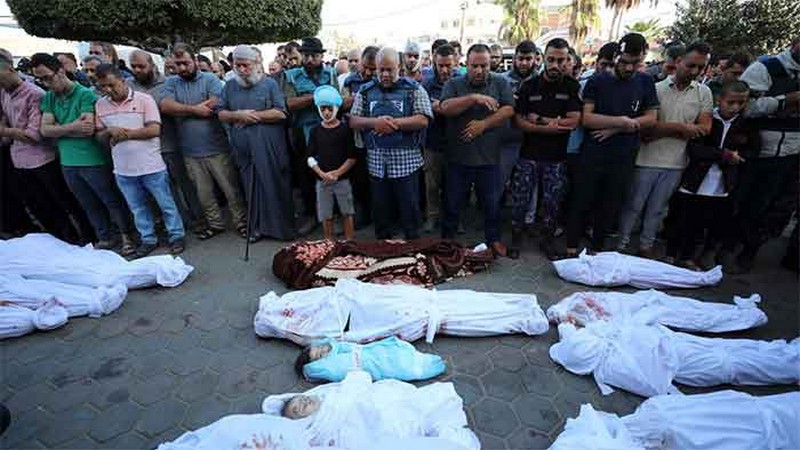
Professor Mustafa Abu Sway, a professor based in Jerusalem, spoke sadly of the reality in Gaza where, he said, “one child dies every ten minutes.”

“It was not the death of a child,” he said, ”but the survival of one, that made me really very, very sad.” He was speaking of a video which had emerged showing a child buried alive under rubble attempting to free herself with one hand.

When we think of how to rescue suffering children from the unbridled carnage of numerous wars that have forced people to go underground, the vast network of tunnels built by the Vietnamese come to mind. To this day, tourists in Viet Nam visit a network of tunnels created by the North Vietnamese, extending from the outskirts of Saigon to the borders of Cambodia. Construction of these tunnels, used both for shelter and by soldiers, began during the French occupation of Viet Nam. Eventually, the complex system gave the North Vietnamese a form of leverage in their effort to fight against the United States military.

Following the U.S. defeat in Viet Nam, weapon makers in the United States focused on developing  ordnance that could destroy underground tunnels and bases. Bombs like the Paveway (GBU-27) were used against Iraq in Operation Desert Storm where they were deployed on February 13, 1991 to attack the Amiriyah shelter in Baghdad. At that time, families in the Amiriyah neighborhood had huddled overnight in the basement shelter for a relatively safe night’s sleep. The smart bombs penetrated the “Achilles’ heel” of the building, the spot where ventilation shafts had been installed.

The first bomb exploded and expelled 17 bodies out of the building. The second bomb followed immediately after the first, and its explosion sealed the exits. The temperature inside the shelter  rose to 500 degrees Celsius and the pipes overhead burst, resulting in boiling water that  cascaded down on the innocents who slept. Hundreds of people were burned alive.

In Afghanistan, on April 13th, 2017, The United States used a Massive Ordnance Air Blast bomb nicknamed MOAB, the Mother of All Bombs, to destroy a network of tunnels in the Hindu Kush mountains. The United States had helped the Mujahideen construct these tunnels during their war against the Soviet Union in the late 1970s.

The 21,000 pound MOAB, designed to destroy tunnel complexes and hardened bunkers, still affects the area where it was used.

Locals say this harsh terrain has been haunted by a deadly, hidden hazard: chemical contamination. According to one local resident, Qudrat Wali, “All the people living in Asad Khel village became ill after that bomb was dropped.” The 27-year old farmer showed a journalist red bumps stretched across his calves and said, “I have it all over my body.” He said he got the skin disease from contamination left by the MOAB.

When Wali and his neighbors returned to their village, they found their land did not produce crops like it had before “We would get 150 kilograms of wheat from my land before, but now we cannot get half of that,” he says. “We came back because our homes and livelihoods are here, but this land is not safe. The plants are sick and so are we.”

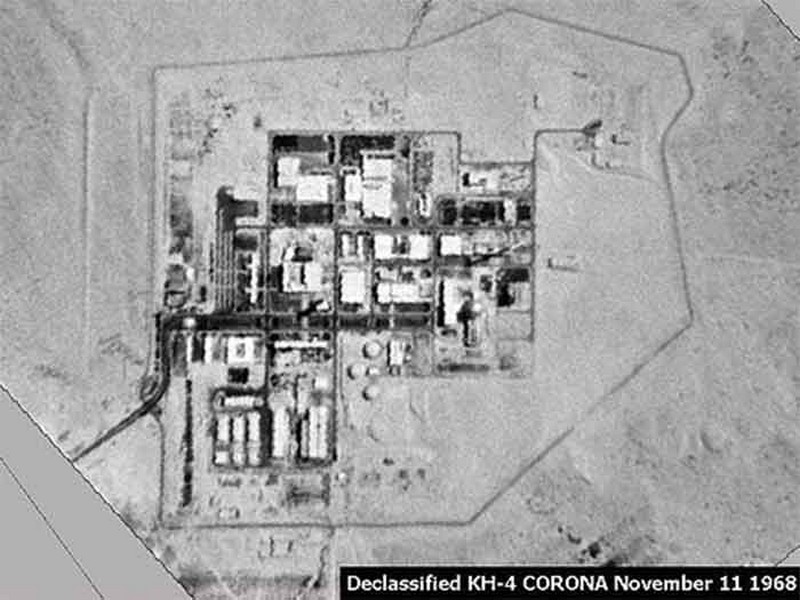
One of the most alarming underground concentrations for massive destruction is located 53 miles from Gaza, where a complex now called the Shimon Peres Negev Nuclear Research Center has developed at least 80 thermonuclear weapons. First built in 1958, the facility underwent a major renovation just two years ago.

“To this day,” writes Joshua Frank, “Israel has never openly admitted possessing such weaponry and yet has consistently refused to allow inspectors from the International Atomic Energy Agency to visit the secretive site.”

A classic 1956 film depicting the horror of a Nazi concentration camp, Alain Resnais’s “Night and Fog,” contains narration that at one point addresses how the terrible sites will be seen in the future.  “Nine million dead haunt this countryside… We pretend that it could only happen once, in this place at that time… The icy water fills the hollows of the mass graves, while war goes to sleep, but with one eye always open.”

Living as we do in a world where countries like the United States maintain a permanent warfare state, we must reckon with the horrific cost of war – and the obscene profits. The Merchants of Death War Crimes Tribunal notes that weapons makers’ stocks on Wall Street have risen 7% since the war started. Recognizing war never sleeps, we must keep our eyes wide open and acknowledge the horrendous toll as well as our responsibility to build a world beyond war.

As much as we might long to grasp the hand of the child trying to free herself from underneath a collapsed building’s rubble, we need to imagine and long for the chance to grasp the hand of someone outside our own community, someone we’ve been taught to regard as an enemy or an invisible “other.”

Writing these words from a safe, secure spot feels hollow, but in my memory I return to the pediatric ward of an Iraqi hospital when Iraq was under a siege imposed by U.S. and U.N. economic sanctions. Agonized and grieving, a young mother, her world crashing in on her, wept over the dying child she cradled. I came from the country that forbade medicine and food desperately needed by each of the dying children in this ward. “Believe me, I pray,” she whispered, “I pray that this will never happen to a mother who is from your country.”

Kathy Kelly (kathy.vcnv@gmail.com) is the board president of World BEYOND War (worldbeyondwar.org)and a co-coordinator of the Merchants of Death War Crimes Tribunal. (merchantsofdeath.org)

23 November 2023

Source: countercurrents.org

In this Truce, the Star of David is akin to a Swastika

By Rima Najjar

Even though the airwaves have long been agog with the voices of the Israeli government, the US and other so-called leaders of the free world about the war on Gaza, the leaders of Hamas and the rest of the Islamic resistance, dubbed “terrorists” in a preemptive Israeli-US propaganda campaign designed to legitimize their extraction by firepower, have managed to get their voices heard.

They’ve done so through a brilliant media campaign that has made a folk hero out of Abu ‘Obaidah, the spokesperson for Martyr Al Qassam’s Islamic Brigades, and put to shame Israel’s undeniably degenerate tactics of killing and maiming thousands of Palestinian civilians, including children, displaced families sheltering in UNRWA schools, the wounded and sick in hospitals and news reporters and flattening large swatches of the Gaza Strip.

And just as Netanyahu is resolved to continue the war on Gaza after the announced truce between Hamas and Israel, the Palestinian resistance is resolved to continue its heroic and already legendary fight against Israel.

This war, as well as being a national war of liberation on the Palestinian side and a settler-colonial war aided by Western powers on the Israeli side, is a religious war on both sides. The optics, as commentators love to use the term in analyzing the tragedy, are telling. It is religious Jews in the Israeli cabinet, wearing their kippot and holding up the Star of David that they have managed to turn into something akin to a swastika who have voted against the truce and who are most virulent in their call for ethnic cleansing and genocide.

On Al Jazeera Arabic and Al Mayadeen, Palestinians standing in the rubble over the dead bodies of their children invoke God to deal a blow for justice against Jews. Islamic resistance fighters call out loudly “God is great; praise be to God” with each hit on enemy tanks or soldiers. Hezbollah in southern Lebanon celebrate their martyrs as having fallen “on the road to Jerusalem,” where the desecrated Al Aqsa Mosque lies. “Al Aqsa Flood” is not named so for nothing. In Yemen, a spokesperson explained to Al Mayadeen that Houthi forces feared God’s displeasure if they did not come to the aid of Palestine. Moreover, this cause has unified Shia and Sunni Muslims.

When Blinken first arrived in Israel after Oct 7, he embraced Netanyahu by saying, “I am here as a Jew, not just as US State Secretary.” Jordan’s Minister of Foreign Affairs Ayman Al Safadi, on the other hand, did not say in any of his statements, “I am speaking here, not just as a Jordanian, but also as a Palestinian.”

I assume Safadi is of Palestinian origin because of his name. “Al Safadi” in Arabic means “from Safad.” Incidentally, Mahmoud Abbas is also from Safad: he was born there. Safad in the Galilee was predominantly Palestinian Arab before 1948. It was emptied from its Palestinian citizens by the Haganah Jewish force (the perpetrator of many massacres during the Nakba) when, according to the language of the Israeli narrative flooding Google, “the Arab population fled,” leaving Safad to its “rightful” owners, the Kabbalists of the mystical branch of Judaism.

More than half of the 6.3 million population of Jordan is of Palestinian origin, the vast majority, except for Palestinians from the Gaza Strip, have Jordanian citizenship. Jordan’s refugee camps are full of Palestinians holding on to the keys of their homes and their right of return to occupied Palestine. Ayman Al Safadi, speaking for the Jordanian government and for King Abdullah, are certainly not about to increase their ranks.

As so many Jewish-American officials have done before him, Blinken flaunts his Jewish supremacist privilege. He and his American family can “return” to Israel any time they please. Palestinian refugees in Lebanon, Syria, and Jordan, as well as all those in al-shatat,the diaspora, cannot.

What is to happen next? The best way to predict the future is to create it. Israel’s bombing of Gaza is to resume as soon as the truce is over. And so will the Palestinian resistance everywhere and in every form.

When the resistance is the entire body (as represented by Muslim, Christian and every free person of any persuasion holding up the Palestinian flag), you can’t have a “surgical operation,” as the US is now urging Israel to do as opposed to mayhem, without killing the patient.

Charlotte Kates, the international coordinator of Samidoun: Palestinian Prisoner Solidarity Network, recently expressed this determination by the resistance by saying: “We refuse to be silenced, we continue to organize, we continue to take to the streets; we refuse to be silenced by political power, by state repression or by corporate complicity, and we stand for the liberation of Palestine from the river to the sea.”

Biden, Blinken and Israel’s war criminals with their “Hannibal Procedure” will discover there isn’t enough anesthesia in the world to put down this body and perform their “surgical operation.” Let’s hope that the human-interest stories that will now flood the airwaves about the return of Israeli hostages to their families will also highlight the devastation that the Israeli colonial military judiciary and prison system have, for decades, imposed on Palestinian families.

Roni Sarig, a reader of my previous blog post titled, “Israel is a Rogue State,” made the following absurd comment there: “It is your right to have ‘righteous anger.’ But I would hope that you’ve also considered what end your righteous anger serves? Those of us who are pro-Israel but anti-Netanyahu and pro-Palestine but anti-Hamas could be allies with you. But too much righteous anger will get in the way of actually solving the issue — and probably will just lead to more suffering. We can be allies, but not if you’re advocating for the removal/killing of my people.”

“Palestinian and righteously angry” is the tagline of my blog on Medium. Sarig, apparently, wants me to modulate my outrage at what his government is doing to Palestinians and at the monumental suffering the creation of the Jewish entity on Palestinian territory in 1948 by violence and terror continues to engender — all in the guise of forging an alliance on his terms and in accordance with his own feelings. He presents himself as reasonable, and me as someone advocating the removal/killing of “his people,” disregarding the context of war I am discussing, and understanding decolonization to mean “killing Jews.” That Palestinian freedom means genocide for Jews is a ridiculous argument. I think it is also antisemitic, because it implies that Jews can only exist at the cost of others’ lives. As Lena Bloch says in a comment on this post, “This assumption is the basis for Jewish fascism. Kahane built his ideology on that and this is what ‘Never again’ that he introduced means: ‘If we kill and abuse, THEY will never dare to kill and abuse US.’”

In the name of “moderation,” he pushes a false Israeli narrative we have heard ad infinitum over the years. As a friend said to me, “Sincere allies know not to center a struggle in their own ‘feelings.’”

No doubt, Sarig, like his government, would also wish to modulate my joy at the release of Palestinian prisoners. Netanyahu’s government has already issued a warning to Palestinians in the West Bank and Jerusalem not to exhibit any signs of joy at their release.

Rima Najjar is a Palestinian whose father’s side of the family comes from the forcibly depopulated village of Lifta on the western outskirts of Jerusalem and whose mother’s side of the family is from Ijzim, south of Haifa.

23 November 2023

Source: countercurrents.org

Truth – and Journalists – Are the First Casualties of the War on Gaza

By Amy Goodman & Denis Moynihan

Truth – and journalists – are the first casualties of the war on Gaza. As Israel’s 7-week bombardment of the Gaza Strip has killed over 14,000 Palestinians, 5,000 of whom were children, courageous Palestinian journalists, working in Gaza under unbelievably difficult and dangerous circumstances, are being killed, one by one. This week, a grim milestone was reached, as the number of journalists killed in the conflict surpassed 50. While a negotiated pause gives civilians in Gaza a brief respite, and 50 Israeli hostages held in Gaza will be released, Israeli Prime Minister Benjamin Netanyahu has promised the violence will continue immediately afterwards.

According to the Committee to Protect Journalists (CPJ), at least 53 journalists and media workers have been killed in what the organization calls “the deadliest month for journalists since CPJ began gathering data in 1992.” To date, 46 Palestinians, four Israelis and three Lebanese reporters have been killed. Eleven have been injured, three remain missing, and 18 Palestinian journalists have been arrested by Israel.

“We’ve never seen anything like this. It’s unprecedented,” Sherif Mansour, CPJ’s Middle East and North Africa program coordinator, said on the Democracy Now! news hour. “For journalists in Gaza specifically, the exponential risk is possibly the most dangerous we have seen.”

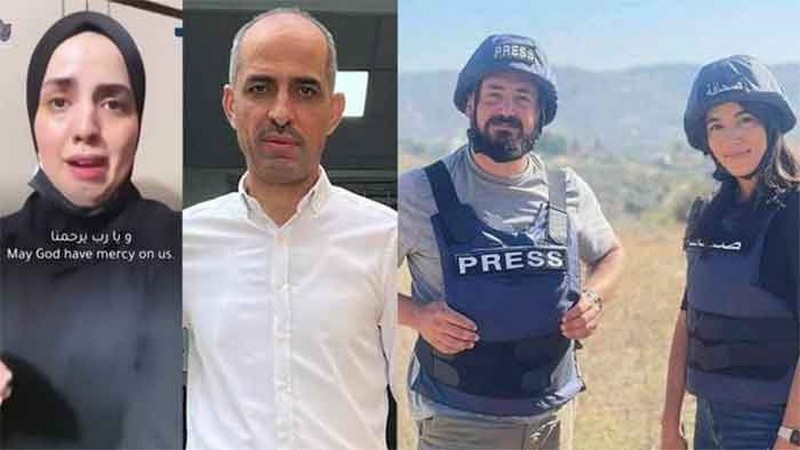
One of those killed was Ayat Khaddura, a 27-year-old independent journalist and podcast creator. She and her family were killed by an Israeli airstrike this week, at home in northern Gaza.

“This may be the last video for me,” Ayat said in Arabic, in a video she posted. “Today, the occupation dropped phosphorus bombs on the Beit Lahia project area and scary sound bombs and threw evacuation notices in the area. Almost the entire area has been evacuated. Everyone started running madly in the streets. No one knows where they’re going to or coming from. We’re separated…The situation is very terrifying. What is happening is very difficult. May God have mercy on us.”

Holding back tears, Ayat Khaddura ended what would be her last video.

Belal Jadallah, considered the “Godfather” of Palestinian journalism, was killed in his car by an Israeli tank shell. Jadallah was the chairman of the Gaza Press House, which trained young journalists.

“Belal Jadallah helped us document this deadly pattern of journalists being killed by Israeli fire over 21 years,” Sherif Mansour said, describing a CPJ report released on May 11th, the first anniversary of the killing of Palestinian-American journalist Shireen Abu Akleh by an Israeli army sniper in the occupied West Bank. “On Sunday, Belal became a victim of this same deadly pattern when he was killed in his car. Jadallah also provided crucial safety equipment for journalists in order to do their job safely. And he opened the Press House for journalists to use the electricity and internet when there was no other place.”

Belal Jadallah also facilitated the arrival and work of foreign journalists in Gaza, so his death will make it even harder for reporters to get in to report on the devastation of Gaza.

Fair, accurate reporting is essential, especially in a time of war and collective punishment. A report on the current four-day pause published by Politico included a short but revealing line, attributed to an unnamed Biden administration official:

“…there was some concern in the administration about an unintended consequence of the pause: that it would allow journalists broader access to Gaza and the opportunity to further illuminate the devastation there and turn public opinion on Israel.”

The U.S. media has primarily relied on reporting from inside Israel, venturing into Gaza only when “embedded” with the Israeli military, obligated to follow uniformed Israeli military spokespeople. What Palestinian would speak freely with a foreign journalist accompanied by an armed Israeli soldier? A condition of participating in this embedded reporting is that all footage must be reviewed and approved by Israeli military censors before being broadcast. What gets reported is little more than Israeli state propaganda.

No amount of censorship, though, can suppress the scale of chaos and carnage.

In one scene, journalist Salman Al-Bashir of the Palestine News Agency was reporting that his colleague, Mohammad Abu Hattab, had been killed in an Israeli airstrike, along with 11 members of his family. Clearly distraught during the live broadcast, Al-Bashir tore off his blue helmet and protective vest, labeled “press,” and threw them to the ground, asking, “Why do we bother wearing this if we’re going to be killed anyway?” Back in the studio, the news anchor interviewing Al-Bashir wept as he spoke.

The ceasefire will take place during the Thanksgiving holiday in the United States. As we mourn all those who have died in this conflict, let’s give thanks to the journalists who continue to bring us the truth from Gaza, at an enormous, unacceptably high price.

Amy Goodman is the host and executive producer of Democracy Now!, a national, daily, independent, award-winning news program airing on over 1,400 public television and radio stations worldwide.

Denis Moynihan has worked with Democracy Now! since 2000. He is a bestselling author and a syndicated columnist with King Features.

23 November 2023

Source: countercurrents.org

The old and new Nakba: Forced expulsion of Palestinians must be rejected

By Ramzy Baroud

It is simply inaccurate to claim that the ongoing Israeli attempt to displace all, or many Palestinian refugees from Gaza to Sinai is a new idea, compelled by recent circumstances.

Displacing Palestinians, or as it is known in Israeli political lexicon, the “transfer”, is an old idea — as old as Israel itself.

In fact, historically, population “transfer” has been more than an idea, but an actual government policy, with clear mechanisms. Yosef Weitz, director of the Land and Afforestation Department, was entrusted with setting up the Transfer Committee in May 1948 to oversee the expulsion of Palestinian Arabs from their towns and villages.

In other words, while Israel was concluding the initial phase of ethnic cleansing, it initiated another phase, that of “transfer”, the results of which are well known.

But even many of Israel’s so-called liberal intellectuals have, and continue to promote the idea, either proactively or in hindsight. “I don’t think that the expulsions of 1948 were war crimes,” Israeli historian Benny Morris said in an interview with Haaretz in 2004. “I think he [Israel’s founding father David Ben-Gurion] made a serious historical mistake in 1948 […] If he was already engaged in expulsion, maybe he should have done a complete job. […] You can’t make an omelet without breaking eggs. You have to dirty your hands.”

Morris was specifically referring to the Nakba, which began in earnest in December 1947, and did not conclude until 1949. Then, ethnic cleansing took on a different form, a slower campaign aimed at rejigging the demographic map of the newly founded Israel in favour of Israeli Jews at the expense of Palestinian Arabs.

Several campaigns targeting Palestinian Arab communities, which remained in Israel after the Nakba, were initiated under various guises. Though not a single community had survived the demographic onslaught by the Israeli government, Palestinian Bedouins received the lion’s share of displacement, a campaign that continues to this day.

After the war of June 1967, mass expulsion resumed once more. Approximately 430,000 Palestinians were forcibly displaced, especially from areas originally occupied in 1948. Over the years, up to the present, hundreds of thousands of Israeli Jewish settlers have taken the place of the displaced Palestinians, claiming their land, homes and orchards as if their own.

In fact, the slow ethnic cleansing of the West Bank is considered the epicentre of Israel’s ongoing colonialism in Occupied Palestine. And, from an international law perspective, it is one of its greatest war crimes, as it represents a stark violation of international norms, especially the Fourth Geneva Convention.

“The Occupying Power shall not deport or transfer parts of its own civilian population into the territory it occupies,” Article 49 of the Fourth Geneva Convention states. It also prohibits the “individual or mass forcible transfers, as well as deportations of protected persons from occupied territory”.

To claim that the recent call for mass expulsion of Palestinians from Gaza is a new event, compelled by the violent episode of October 7, and the subsequent genocide in Gaza, is both inaccurate and dishonest.

This claim ignores the fact that Israel, as a settler-colonial project, was founded on the concept of ethnic cleansing, and that Israeli politicians never stopped talking about mass displacing Palestinians, even under supposedly “normal” circumstances.

For example, in 2014, then foreign minister Avigdor Lieberman tried to rebrand the old “transfer” strategy, using not-so-clever new language.

“When I talk about land and population exchange, I mean the Little Triangle and Wadi Ara,” Lieberman said in a statement, referring to the predominantly Arab regions in central and northern Israel, insisting that “this is not a transfer”.

This context is critical if we wish to truly understand the story behind the enthusiastic return to the language of ethnic cleansing.

On November 11, Avi Dichter, Israel’s minister for agriculture and former head of the spy agency Shin Bet, specifically called for another Nakba. “We are now rolling out the Gaza Nakba,” Dichter said in a TV interview.

We can easily extract the following set of information from the Israeli minister’s statement: Israelis are very familiar with the term ‘Nakba’, thus what has befallen the Palestinian people 75 years ago, that of ethnic cleansing and genocide, and they remain unrepentant.

However, this was not a statement said in anger. A leaked government report dated October 13, six days into the war, suggested the mass transfer of Gaza’s population to the Sinai Desert.

Four days later, on October 17, the Israeli think tank “Misgav Institute for National Security & Zionist Strategy”, published a paper calling on the Israeli government to take advantage of this “unique and rare opportunity to evacuate the whole Gaza Strip”.

It makes little sense to assume that such extensive reports were all conjured up within a matter of days. Indeed, it takes years of planning and discussions for such complex schemes to be prepared, so that they become worthy of official consideration.

This is not the only evidence that the displacement of Palestinians in Gaza was not an urgent strategy propelled by recent events, as Palestinians in the West Bank, who were not involved in the October 7 operation, also found themselves under the threat of expulsion. This prompted Jordanian Prime Minister Bisher Khasawneh to state on November 7 that Amman considers any attempt to displace Palestinians a “red line”, in fact, a “declaration of war”.

Though Arab and international pressure has, thus far, failed to slow down the Israeli death machine in Gaza, Arab countries spoke firmly against any Israeli attempts to displace Palestinians.

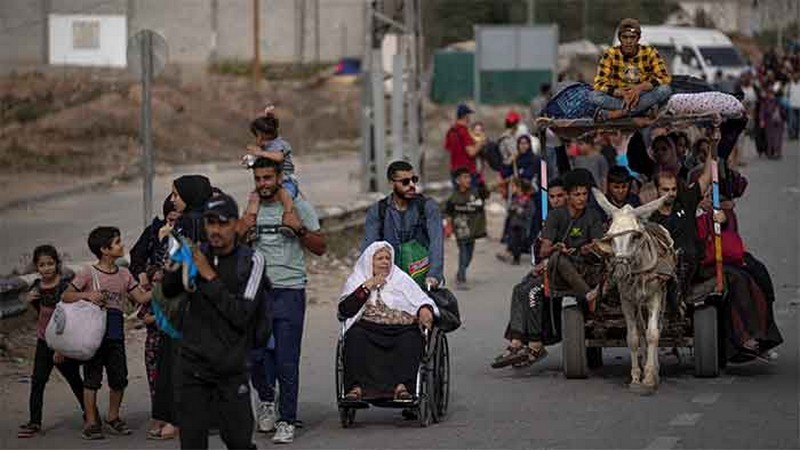
For now, the majority of Gaza’s 2.3 million inhabitants, most of whom are refugees from historic Palestine, are internally displaced within that tiny piece of land, denied water, food, electricity — in fact, life itself. But they remain steadfast and will not allow for another Nakba to take place, no matter the cost.

The “Gaza Nakba” must be rejected, not just by words, but through solid Arab and international action, to prevent Israel from taking advantage of the war to expel Palestinians out of their homeland, again. They must also work to hold Israel accountable for its war crimes, past and present, starting with the original Nakba of 1948.

Ramzy Baroud is a journalist, author and the editor of The Palestine Chronicle.

23 November 2023

Source: countercurrents.org

Israel Is Assassinating Journalists in Gaza

By Amanda Yee

Israel is intentionally assassinating journalists in Gaza. As it wages its genocidal onslaught on the enclave, having murdered at least 13,000 Palestinians so far, Israel is simultaneously killing media workers in order to prevent the world from seeing the unspeakable atrocities it carries out.

The situation at hand is as dire as it is unprecedented. Since October 7, the Israeli military has killed 60 media workers, according to the Gaza Government Media Office. The Committee to Protect Journalists has stated this is the deadliest month for attacks on journalists since it started keeping record in 1992. Additionally, many other Palestinian reporters outside of Gaza face intimidation and harassment by Israeli forces.

“We have never experienced anything like this and we are overwhelmed,” admitted Nasser Abu Bakr, head of the Palestinian Journalists’ Syndicate, a Ramallah-based trade union representing Palestinian media workers. “We are losing colleagues and friends every day as a result of the ongoing Israeli genocide against the Palestinian people and the policy of targeted killing against journalists.”

“We can’t keep up with the number of attacks against our journalists,” Abu Bakr continued. “We are receiving more calls and information about … incidents than we can process. Our journalists have always been a target for the Israeli military, but Israel moved from killing [an average of] one Palestinian journalist a year before October 7 to killing [over] one a day.”

And it’s not just Palestinian reporters the Israel Defense Forces (IDF)  is attacking—any journalist who may potentially disseminate information critical of Israel is a potential target.

Among the long list of reporter casualties is Reuters photojournalist Issam Abdallah, who was killed by an October 13 Israeli strike on the Lebanese border while covering clashes between Hezbollah and the IDF. According to an independent investigation by Reporters Without Borders (RWB), Abdallah was explicitly targeted by Israeli forces—he was clearly identified as a journalist through his press helmet and vest, and he was standing next to a vehicle marked “press” on its roof. Immediately before the attack, other journalists in the area had witnessed an Israeli helicopter flying overhead, so the military was able to clearly see that Abdallah was a non-combatant. According to ballistic analysis done by RWB, the missiles were launched from the side of the Israeli border and “two strikes in the same place in such a short space of time (just over 30 seconds), from the same direction, clearly indicate precise targeting.”

Not even the families of journalists are safe from Israeli retaliation. After learning on air that an Israeli air raid had killed his wife, son, daughter, and grandson, Gaza Al Jazeera bureau chief Wael Al-Dahdouh rushed to the hospital, followed by press cameras. Upon finding his son there, he knelt over his lifeless body and lamented, “They take revenge on us with our children.”

On November 7, Mohammad Abu Hasira, a correspondent for Palestinian news agency Wafa, was killed by an Israeli air raid, along with 42 members of his family. And just days before that, an Israeli strike killed Palestine TV reporter Mohammad Abu Hattab and 11 members of his family in south Gaza, including his wife, son, and brother.

Israel Invents Lies to Justify War Crimes

Just as it has claimed that Hamas was hiding in Gaza hospitals, near schools, and in ambulance convoys in order to justify its bombing and killing of civilians, Israel has peddled the same predictable excuses for these targeted assassinations of journalists. In a chilling November 2 article that effectively doubles as a hit list, the Jerusalem Post spotlighted several independent Palestinian journalists who had been reporting from Gaza and smeared them as part of “Hamas’s propaganda team.”

Then, pro-Israel media watchdog group HonestReporting released a report on November 8 claiming—with little evidence—that the Associated Press, CNN, The New York Times, and Reuters freelance photographers in Gaza knew in advance of the October 7 Palestinian Resistance counter-offensive and even collaborated with Hamas in order be on location to get their shots during the operation.

Israeli officials quickly jumped on the story to vindicate their assassination campaign against Palestinian reporters.

In response to the report, former Minister of Defense and current member of Israel’s war cabinet Benny Gantz said, “Journalists found to have known about the massacre, and [who] still chose to stand as idle bystanders while children were slaughtered, are no different than terrorists and should be treated as such.”

Danny Danon, Israel’s representative to the United Nations, went so far as to declare that these reporters would be put on a hit list, stating on X, “Israel’s internal security agency announced that they will eliminate all participants of the October 7 massacre. The ‘photojournalists’ who took part in recording the assault will be added to that list.”

Gil Hoffman, executive director of HonestReporting, later admitted that he had no evidence to substantiate the claims made, but was just “raising questions.” According to Hoffman, he and HonestReporting “don’t claim to be a news organization.”

Accusations that Palestinian reporters are embedded within and acting in coordination with Hamas lay the propaganda groundwork to depict journalists as legitimate military targets.

Israel Restricting Information Coming out of Gaza

Not only is the IDF killing Palestinian journalists on the ground, but the Israeli government is actively denying access to foreign press into Gaza. The only reporters allowed into the strip are those embedded within the IDF, and media outlets such as NBC and CNN have confirmed that in exchange for access, they must submit all materials to the Israeli military prior to broadcast for review and approval.

Additionally, the Palestinian Journalists’ Syndicate reported that as many as 50 media outlets in Gaza have been partially or entirely destroyed by Israeli air strikes since October 7. If Israel is not outright bombing news outlets, then they are actively trying to repress the flow of information coming out. In late October, the Israeli government approved regulations that would allow it to shut down any foreign news channel if it believed the outlet posed a threat to national security. This regulation was then used to block the programming and website of Lebanese outlet Al Mayadeen, because of its “wartime efforts to harm [Israel’s] security interests and to serve the enemy’s goals,” according to a statement released by the Israeli security cabinet.

In the absence of foreign press bearing witness to Israel’s atrocities in Gaza, Palestinian civilians have taken to documenting the horrors themselves and sharing them on social media sites such as X and TikTok for the outside world to see.

The Israeli government has responded by repeatedly shutting down internet and communications systems across Gaza, even further restricting the flow of information coming out.

History of Israel Targeting Journalists

Even before its current war on Gaza began on October 7, Israel had a long history of targeting reporters and news networks. During its 2021 military incursion on Gaza, Israel was accused of “silencing” journalists by press freedom advocates after it bombed the offices of Al Jazeera and the Associated Press. This occurred just days after it had bombed another building that housed a number of other news outlets, including Al Araby TV, Al Kofiya TV, and Watania News Agency, among others.

According to the Palestinian Journalists’ Syndicate, Israel killed 55 journalists from 2000 to 2022, either by live fire or bombardment. This figure includes Shireen Abu Akleh, the beloved Palestinian-American journalist and longtime Al Jazeera correspondent who was shot by Israeli forces while reporting on IDF raids in Jenin, as well as Yaser Murtaja, a cameraman for Palestinian network Ain Media, who was shot and killed by the IDF while covering the 2018 Great March of Return.

Like so many other Palestinian journalists Israel murdered on the job, Abu Akleh and Murtaja were both wearing their press vests at the time of their killings. Immediately after his death, Israel predictably—with no evidence—rushed to accuse Murtaja of being a Hamas fighter in order to cover its tracks.

The day after Murtaja’s killing, Israel’s then-Defense Minister Avigdor Lieberman bluntly stated, “In the march of terror, there were no innocent civilians. They were all Hamas.”

Israel Is Losing the Information War

Israel relies on its advanced military weaponry and billions of dollars in funding from the U.S. to carry out its genocidal violence against the Palestinian people across Gaza, Jerusalem, and the West Bank. Its Hasbara and “Brand Israel” campaigns work around the clock to justify its war crimes through outright lies and disinformation.

However, Israel has suffered significant losses in the information war as reports and images of the atrocities have reached millions across the world, many of whom have joined the mass mobilizations in support of the Palestinian cause. On the international stage, Israel is further politically isolated, with more and more countries cutting ties or recalling their diplomatic staff.

This battle of ideas cannot be won through sheer force and U.S.-backed military superiority. Israel cannot prevent information about its atrocities from leaking out, especially in an age of social media in which ordinary Palestinians are emboldened to act as citizen journalists, documenting what they are living through in Gaza for the world to see. As Israel escalates its assassination campaign against media workers, support for the Palestinian Resistance continues to grow.

Grim as the current situation may seem, it speaks to the reality at hand: The people of the world are waking up to the atrocities carried out by the Zionist state and refusing to allow it to continue.

And that speaks to another reality: Israel is living on borrowed time, and that time is running out.

Amanda Yee is a journalist and organizer based out of Brooklyn. She is the managing editor of Liberation News, and her writing has appeared in Monthly Review Online, The Real News Network, CounterPunch, and Peoples Dispatch.

23 November 2023

Source: countercurrents.org

Protest against Israel not allowed in Mumbai, 13 detained

By Syed Ali Mujtaba

Mumbai police picked up 13 individuals, 11 of whom are students belonging to the Muslim community for taking part in a prayer meeting in solidarity with children who were killed in Palestine. The prayer meeting was held on November 14, 2023, the Children’s Day, at the Juhu beach.

The detainees were charged under sections 37 (1), 37 (3), and 135 of the Maharashtra Police Act (MPA), according to a press note from the People’s Union for Civil Liberties (PUCL) Maharashtra.

According to the PUCL handout, the youth detained had responded to a multi-city call emanating from an Instagram account ‘solidaritymovement’ and had gone to Juhu beach to attend a peaceful prayer gathering there.

However, after the prayer, some students went to collect the posters and ply cards that they had earlier voluntarily kept in the police cabin near the beach.  The police there started questioning them and asked them to pose with the posters and placards and photographed them.

The police told them they would escort them to the Bus Stop to ensure they leave safely. As they proceeded, a police van arrived and they were forcibly pushed into the van and taken to the Juhu Police Station. Among the detainees 4 were under-age youth (2 boys and 2 girls), the PUCL press release said.

The youth were detained for almost 8 hours and when they were released were asked to return the next day and provide all their personal details along with their Aadhar Card xerox copy and 2 photographs.

PUCL Maharashtra expressed grave concern at the increasing trend of criminalizing public protest and deplored the manner in which police in Mumbai lodge cases against those participating in such democratic events.

The right to protest is a fundamental right of citizens guaranteed under the Indian Constitution. However, the increasing number of such instances shows that the right to protest of citizens is not only being infringed upon but being met with harsh and intimidatory police action and criminal sanctions. In many places in India, Civil society organizations are being denied and met with sanctions that are gatherings for anti-war public protests on the ongoing Israeli war on Palestine.

Syed Ali Mujtaba is a journalist based in Chennai. He can be contacted at syedalimujtaba2007@gmail.com

20 November 2023

Source: countercurrents.org

Israel is a Rogue State, and so say all of us

By Rima Najjar

If it is ultimately up to individuals to form their own opinions about Israel and if it’s all a matter of interpretation and debate, there are now millions of individuals who have already formed their own opinions and have no doubt that Israel is a rogue state. Millions refuse to condemn Hamas and equate its armed resistance with Israel’s 75-year history of violence, terror and dispossession against Palestinian civilians.

The term “rogue state” is a political term used to describe states that engage in aggressive and illegal behavior. You wouldn’t know this fact about Israel by listening to bellicose Western news sources and Western governments led by the US claiming that Israel has a “right to defend itself.”

Israel’s actions towards the Palestinians before Oct 7 included its illegal occupation of Palestinian territory, an occupation that has prevented the realization of the right to self-determination of the Palestinian people. Israel’s occupation is illegal and indistinguishable from a “settler-colonial” situation. It is “intentionally acquisitive, segregationist and repressive settler-colonial occupation,” and must end as a pre-condition for Palestinians to exercise their right to self-determination.

Because the United Nations Independent International Commission of Inquiry on the Occupied Palestinian Territory, including East Jerusalem, considers Israel to be an occupying power in the Palestinian territories, Israel has no right to self-defense.

What’s more, the United Nations General Assembly (UNGA) has explicitly affirmed the right of Palestinians to resist Israel’s military occupation, including through armed struggle. This right was affirmed in the context of the right to self-determination of all peoples under foreign and colonial rule. UNGA Resolution 3314 (1974) affirmed the right of self-determination, freedom, and independence for all “peoples under colonial and racist regimes or other forms of alien domination,” and affirmed the “right of these peoples to struggle to that end and to seek and receive support.” Although UNGA resolutions are not legally binding, they “accurately reflect the customary international legal opinion among the majority of the world’s sovereign states.”

Israel, therefore, cannot simultaneously occupy Palestinian land and attack it as a “foreign” threat, or treat those resisting as enemy combatants.

In the aftermath of Oct 7, UN experts are saying that Israel has committed grave violations against Palestinians, particularly in Gaza, and that these “point to a genocide in the making.”

South Africa has referred Israel to the International Criminal Court (ICC) for war crimes investigation in Gaza as have three Palestinian rights groups, which filed a lawsuit with the ICC, urging the body to investigate Israel for “apartheid” as well as “genocide” and issue arrest warrants for Israeli leaders.

But again, we are being led to believe that it’s all a matter of interpretation and debate. The issue is a “fraught and hotly debated question among observers to the conflict,” we are told.

Nevertheless, millions of individuals around the world know that genocide in Gaza has already been made. Writing in World Socialist Website, Barry Grey says,

The “Final Solution” to the Palestinian question being implemented by the fascistic regime of Benjamin Netanyahu is transparently aimed at “ethnically cleansing” Gaza, killing as many of its inhabitants as possible and driving the rest into Egypt’s Sinai Desert, so that the land can be populated by Israelis in pursuit of a “Greater Israel.”

Contrary to the claims by Washington and Tel Aviv that the current war on Gaza is a defensive response to Hamas’ October 7 raid directed against the group’s leaders and infrastructure and not ordinary Gazans, it is well known that plans for ethnic cleansing and displacement of the population were drawn up by Israeli officials many years ago.

These millions of individuals understand, as Nicholas Kristof put it, they will be judged in years to come by how they responded to genocide on their watch. They understand this stark fact better than Joe Biden, Rishi Sunak, Olaf Scholz, Emmanuel Macron, and Justin Trudeau do.

Now that an exchange of prisoners’ deal between Hamas and Israel is looming, it boggles the mind that the US and all its allies, including the UN and some Arab states, are bizarrely discussing the imposition of a political order led by the pathetic Abbas over the West Bank and the Gaza Strip and assuming that Hamas’ “embers” can and will be extinguished. Fat Chance!

A more likely scenario that no one is discussing is the one published by Al Ghad (a Jordanian Arabic newspaper) in both Hebrew and Arabic. The op-ed piece posits the question, “What after ‘Israel?’” The subtitle says, “The occupation faces an economic impasse, a military failure, an internal crisis and international criticism.”

“What after ‘Israel?’” is certainly a more conceivable proposition to discuss than “What after Hamas.” But the issue here is not “conceivability” or fairness or facts; rather it is ramming a US vision of its influence, its “interests” in the region down our throats and censoring opposition to that vision. Facebook has canceled Al Ghad’s Page, because the article in Hebrew was able to reach Israelis, most of whom appear to have little idea of what’s happening to them.

Rima Najjar is a Palestinian whose father’s side of the family comes from the forcibly depopulated village of Lifta on the western outskirts of Jerusalem and whose mother’s side of the family is from Ijzim, south of Haifa. She is an activist, researcher and retired professor of English literature, Al-Quds University, occupied West Bank.

20 November 2023

Source: countercurrents.org

AFRICA4PALESTINE PROUD, AS SOUTH AFRICAN PARLIAMENT RESOLVES TO CLOSE ISRAEL EMBASSY

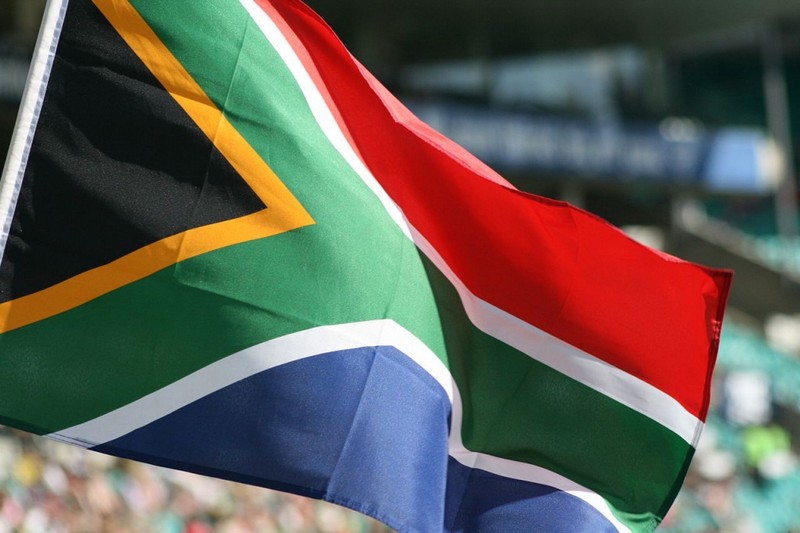
The human rights NGO Africa4Palestine joins millions of South Africans in welcoming today’s resolution to close the Israeli embassy in South Africa.

In an overwhelming majority, South African parliamentarians, earlier this afternoon, passed a motion to close the Israeli embassy in South Africa by a vote of 248 in favour (EFF, ANC, PAC, Al Jama-ah, NFP, ATM) and a pathetic 91 against (DA, IFP, FF+, ACDP)

The motion, which the Economic Freedom Fighters (EFF) initiated and was backed by the governing ANC party, accurately reflects the people of South Africa and our support for human rights, international law and justice for the Palestinians people. We commend the EFF, ANC and all other parties who today, in unison, voted in support of morality and our interconnected humanity.

In 2017 South Africa’s governing ANC party resolved to downgrade diplomatic relations with Israel. Subsequently, in 2018, the South African government withdrew its ambassador from Israel. Last night, ahead of today’s Parliamentary vote, the Israeli ambassador fled South Africa. As we speak, South Africa currently has no Ambassador in Israel, and Israel has no Ambassador in South Africa. South Africa joins a growing number of countries across the world who have taken and are continuing to take bold diplomatic steps to hold Israel accountable for its violations of international law and abuse of Palestinian human rights.

In addition, last week, South Africa joined several other countries in officially making a submission to the International Criminal Court for an investigation into Israel for war crimes. South Africa has also called for a warrant of arrest to be issued against Israel’s President Benjamin Netanyahu.

Indeed, the actions taken by the Government of South Africa and today’s vote by the Parliament of South Africa is a true representation of the people of South Africa who have in their millions elected political parties that stand in support of the human rights of the Palestinians.

We South Africans benefited during our struggle against Apartheid from support of the international community, including from the Palestinian people. Today, in that spirit of internationalism, we stand with the people of Palestine and all other oppressed nations.

PRESS STATEMENT ISSUED BY TISETSO MAGAMA ON BEHALF OF AFRICA4PALESTINE (21 NOVEMBER 2023)

Africa4Palestine Communications and Campaigns Manager, Alie Komape: +27 (0) 76 979 8801
Africa4Palestine Director, Muhammed Desai: +27 (0) 84 211 9988

AFRICA 4 PALESTINE
Suite 3 | Park Center | 75 12th Street | Parkhurst | Johannesburg
PO Box 2318 | Houghton | 2041 | Johannesburg
T: +27 (0) 11 403 2097 | F: +27 (0) 86 650 4836
W: www.africa4palestine.com | E: info@africa4palestine.com | TikTok: www.tiktok.com/@africa4_palestine
www.facebook.com/africa4palestine | www.twitter.com/africa4pal | www.instagram.com/africa4palestine | www.youtube.com/africa4palestine

Africa4Palestine is a registered Non-Profit Company. Registration Number: 2020/549404/08
Africa4Palestine is a registered Section 18 Public Benefit Organization. Registration Number: 930071587

21 November 2023

Source: africa4palestine.com

AFRICA4PALESTINE CELEBRATES DEPARTURE OF THE ISRAELI AMBASSADOR FROM SOUTH AFRICA

20 November 2023

The South African human rights NGO Africa4Palestine welcomes the sudden departure of Israel’s Ambassador from South Africa.

The Israeli ambassador has fled South Africa ahead of this week’s vote by the Parliament of South Africa to expel the Israeli ambassador and shut down the Israeli Embassy.

South Africa now has no Ambassador in Israel, and Israel has no ambassador in South Africa.

In the dying days of Apartheid in South Africa, the regime isolated itself. Similarly, Israel today is being isolated and is self-isolating from the peace and justice-loving peoples of the world. This marks a crucial step towards holding Apartheid Israel accountable for its violations of international law. People and countries across the globe are making it clear: no normal relations with an abnormal state.

Africa4Palestine salutes the hundreds of thousands of South Africans who have taken to the streets, to social media and other platforms in recent weeks supporting our government as well as calling for further and firmer action to be taken against Israel for its recent attacks on the Palestinians people as well as for its ongoing Apartheid policies and practices.

Similar to South Africa, for peace to be achieved for all who live between the River Jordan and the Mediterranean Sea (for Jews, Muslims, Christians, and all others), the root causes of the conflict need to be addressed including the dismantling of Israel’s apartheid regime, ceasing of Israel’s unlawful occupation and the ending of its violations of international law. This is the only path towards a sustainable and equitable solution – for all.

We again reiterate the African peoples support for the Palestinian people who have been resisting Israel’s apartheid regime, who have been withstanding Israel’s attempts to erase them and who are teaching the world the meaning of resilience and hope.

ISSUED BY TISETSO MAGAMA ON BEHALF OF AFRICA4PALESTINE

Africa4Palestine Media Liaison, Alie Komape: +27 (0) 76 979 8801
Africa4Palestine Director, Muhammed Desai: +27 (0) 84 211 9988

AFRICA 4 PALESTINE
Suite 3 | Park Center | 75 12th Street | Parkhurst | Johannesburg
PO Box 2318 | Houghton | 2041 | Johannesburg
T: +27 (0) 11 403 2097 | F: +27 (0) 86 650 4836
W: www.africa4palestine.com | E: info@africa4palestine.com | TikTok: www.tiktok.com/@africa4_palestine
www.facebook.com/africa4palestine | www.twitter.com/africa4pal | www.instagram.com/africa4palestine | www.youtube.com/africa4palestine

Africa4Palestine is a registered Non-Profit Company. Registration Number: 2020/549404/08
Africa4Palestine is a registered Section 18 Public Benefit Organization. Registration Number: 930071587

Source: africa4palestine.com

What Israel Wants? Why Genocide?

By Richard Falk

16 Nov 2023 – Stasa Sallacanin, an independent journalist, posed a series of questions on 29 Oct. I have modified my responses to take account of recent developments and to offer a more readable text. As the genocidal assault on Gaza continues in the face of rising calls for a ceasefire and a negotiated peace, Israel remains defiant and the US stands firm in support of Israel’s supposed goal of destroying Hamas as a presence in Gaza, but also seems intent on mounting an ethnic cleansing crusade, with a West Bank focus, but a Gaza subtext. Some of these elements are addressed below.

***************************************

Q 1: While Israel has vowed to destroy Hamas and has the capacity to severely damage its operational abilities, the question remains what is the future of Palestinian armed resistance?

In my judgment, Israel is inflicting important, but temporary, damage on the operational ability of Hamas to carry out military attacks against Israel, but in the disproportionate and indiscriminate manner of doing so it will exact heavy costs. Not only will Hamas’ support surge among the Palestinian people and globally, but the severe humanitarian catastrophe that has befalled the civilian population has already greatly strengthened the will of the Palestinians to mount armed resistance in the future. In addition, global mobilization in civil society will increase, as will UN efforts and even Global West governments to find a solution to the conflict that is more sympathetic with Palestinian grievances and aspirations than before October 7.

As the earlier anti-colonial wars revealed, the colonial side can dominate the combat zones, winning every battle, killing large numbers of the native population, and destroying their sources of livelihood, and yet go on to experience political defeat in. the end. This was the experience of France and the United States in Vietnam and Algeria. Despite. innovations in weaponry and tactics political defeat and frustration was subsequentially experienced by colonial actors and imperial interventions in a series of countries that lacked military capabilities to defend their territory against such external intrusions: Afghanistan, Iraq after 2003, Libya and Syria after 2011, the so-called ‘forever wars’ in which the state-building and neoliberal objectives sought through  military intervention and major state-building undertakings were not realized, despite huge expenditures of funds. Despite this dismal record of relying on military means to achieve political objectives, the Global West, especially the United States, along with Europe and Israel, mindlessly continues to ‘securitize’ disputes and conflicts rather than shifting tactics or adopting a more detached view of the outcome of internal power struggles in foreign countries. Part of this failure to adapt to the diminishing agency of military superiority in North/South settings reflects the interests and influence of arms dealers in the private sector, as augmented by a compliant Congress and a militarized bureaucracy in the American case.

Israel resembles the US in these respects, although with more overt racist overtones, as articulated by Netanyahu and other Israeli leaders in the current crisis. It seeks to justify its violence by insisting that Arabs, as epitomized by Hamas, only understand  ‘pressure,’ which in actuality has. been expressed by recourse to genocidal devastation. Israel and the US both subscribed to the reductive assessments of Raphael Patel’s The Arab Mind (1973). Somewhat ironically, Hamas leaders explained and justified the October 7 attack, somewhat more plausibly, by relying on the same reasoning. They claimed that armed attack was the only way to remind Israel that the Palestinians were still present and would not allow themselves to be erased by diplomatic fiat.

Q 2: Israel launched a ground invasion on Gaza to dismantle Hamas. Will new Palestinian armed groups continue to emerge and fight Israel and how successful they will be, considering the fact, that Israel will learn from its past mistakes and recent intelligence failure?

It is almost a sure thing that Hamas, whether under another name or not, will survive this Israeli onslaught, emerging stronger, smarter, and more resilient than previously in the period after the present encounter ends. Despite the high international reputational costs as related to the legitimacy of its claims, Israel’s genocidal assault has put its apparent victory strategy further from attainment than before.

Israel is likely to face that moment of truth that confronts all settler colonial projects—either the native population is exterminated or driven to outer margins of societal life, or it will eventually prevail. This has been the pattern since 1945 when it became apparent that indigenous nationalism could outlast the military might of the colonizers if they stood their ground and were prepared to accept shocking levels of casualties and devastation. Palestinian steadfastness has long been evident even as constantly challenged by Israeli apartheid and harsh policies and practices.

Israel will, of course, endeavor to fix the hard-to-believe failures of surveillance and border security that made the Hamas attack possible, if indeed the official narrative holds up, and current suspicions of a false flag operation put to rest. We would expect Israel to make other tactical shifts in its structures of apartheid control over a hostile Palestinian population that is more likely, as suggested above, to be mobilized, resentful, and resistant than ever.

In the background are questions about whether the Israeli security lapse was a side-effect of the Netanyahu extremist coalition’s calculated efforts to make the West Bank unlivable for Palestinians, and become a settler controlled mini-state under the sovereign control of a Greater Israel that may have further territorial goals on its policy agenda. Or this West Bank priority was coupled with an assurance of the economic benefits of an estimated $500 billion value to be realized by developing the oil and gas fields off the Gaza coast.

The only potentially winning strategy for Israel is extensive ethnic cleansing by way of forced displacement beyond the borders—the Sinai solution, and for the Palestinians a second nakba. So far Egypt has resisted pressures to enter such a Faustian Bargain, but the end-game scenario is yet to be played out. There are rumors of Israeli offers to draw down Egypt’s international indebtedness in exchange for allowing the entire Gaza Palestinian population to live in Sinai, which would facilitate Israel’s thinly disguised ambition to incorporate the West Bank into its territory as well as reap the anticipated economic benefits of reoccupying  and possibly resettling Gaza in the absence of a Palestinian presence..

Q 3: Moreover, do you think that Hamas attack/resistance could inspire armed resistance, even among Palestinians in the occupied West Bank, and Gaza in the future or conversely, if Hamas fails, do you expect the weakening of armed resistance?

As earlier responses suggest, the Israeli response to the Hamas attack  has already inspired resistance politics among the Palestinians, including among exile and foreign refugee communities, and further discredited the quasi-collaborative political groups aligned with Fatah as exemplified by the West Bank framework of governance and international representational status, the Palestinian Authority the sole surviving  now seriously disabled child of the defunct Oslo Diplomacy that has paralyzed the Palestinians for more than 20 years while giving the settlers time to consolidate, expand, and augment their movement. The pre-October 7 Netanyahu coalition government greenlighted settler violence, and associated lang grabbing and thinly disguised efforts to escalate a strategy seemingly intent on maximum Palestinian dispossession.

Q 4: However, would you agree that any military solution cannot bear any sustainable long-term results and that the lack of a political solution will only generate the emergence of new armed groups?

Yes, that is an accurate probable future unless Israel takes drastic steps to realize its victory scenario.  I believe the current leadership of Israel will, if it can, before the Gaza crisis is resolved move rapidly to implement an ethnic cleansing version of a ‘final solution’ of its Palestinian problem. How the world, especially the Global West responds, will determine whether such an outcome will actually succeed, or whether the future will exhibit what now seems impossible, the realization of Palestinian rights of at least partial self-determination, most likely in an unstable two-state outcome as proposed back in 2002 by the Arab countries meeting in Mecca and generally endorsed by governments throughout the world, although  it seems unimaginably difficult to implement given the certain extreme opposition of more than half a million settlers in the West Bank.

Another likely result of the Israeli onslaught in Gaza is the emergence of secular militancy to avoid perceived regional threats of political Islam and religious warfare that will be rationalized as counterterrorism along the propagandistic lines of ‘Hamas is our ISIS..’ The French president, Emmanuel Macron, carried the idea a step further by proposing ‘a new axis of evil’ composed of hostile Islamic governments and non-state actors in the Middle East. I suspect that policy wonks have already started rereading and updating Samuel Huntington’s 1993 vision of ‘a clash of civilizations.’ It follow from this perspective that such an approach will take center stage in forthcoming phases of regional politics more than 30 years after these ideas were first circulated in Huntington’s famous and influential Foreign Affairs article.

Q 5: In the occupied West Bank, a plethora of new Palestinian armed groups have emerged in response to repressive Israeli policies. Do you think that their factions and influence will spread to Gaza once the military action against Hamas is over and in case Hamas is defeated?

It is quite possible, but I think their main focus will be resistance to Israel’s attempt to gain sovereign control over the West Bank to the extent possible. Gaza in my view despite the genocidal ordeal inflicted on the Gazans remains almost a sideshow for militant Zionists who joined with Netanyahu in implementing patterns of extremist governance of the West Bank that were operationalized as soon as their authority was formalized at the start of 2023.

In effect, Gaza is distracted attention from the remaining critical goals of the maximal Zionist Project and Israeli extremes of violence are intended to deliver a warning to Palestinians on the West Bank to get out or face an eventual firestorm. Whether such thinking is part of why Israeli government allowed the security lapse to occur or it was the Hamas attack an opportunity seized upon by the Netanyahu leadership in the course of carrying out its violent and vengeful retaliatory attack. Another possibility is that the settlers, and allies in government somewhat autonomously saw the Israeli response in Gaza as creating an opening for their cleansing campaign in the West Bank.

Q 6: The poll, conducted by the Ramallah-based Palestinian Center for Policy and Survey Research, also showed that 52% of the Palestinians believe that the armed struggle against Israel is the most effective means to end the Israeli occupation and build a Palestinian state. Twenty-one percent said they supported achieving these goals through negotiations, while 22% preferred the “popular resistance.”  In addition, when asked what has been the most positive or the best thing that has happened to the Palestinian people since the Nakba in 1948  the largest percentage (24%) said it was the establishment of Islamic movements. So, will this percentage even grow after the war, and will new resistance groups be influenced by Islamic movements or they will focus and try to refocus on other matters and perhaps try to overcome political divisions within a deeply fragmented Palestinian bloc? 

As of now, the Islamic groups, especially Hamas, have dominated Palestinian resistance to the extent that recourse to armed struggle has characterized resistance, and this will likely become even more the case after the Israeli guns finally fall silent in Gaza. Yet I would suppose that in the next phase of struggle, assuming Israeli ethnic cleansing schemes do not succeed in erasing or marginalizing Palestinian resistance, there will emerge new political formations that are neither Islamic nor the opposite. In other words, Palestinian resistance is overdue for an integrative politics of unity without sectarian or ideological dogma being allowed to get in the way of the overriding goal of gaining leverage needed to achieve a sustainable and just peace. Israel has resorted to a variety of means, including its early funding of Hamas when it was most overtly antisemitic as well as targeted assassinations and imprisonment of potentially unifying Palestinian political leaders, including the harassment and possible murder of Arafat, and timely assassinations of those seeking a just and sustainable peace that stood in the way of Israel following through to the full realization of the Zionist vision. Prominent among such casualties were the Swedish mediator Count Folke Bernadotte murdered by the Zionist terrorist group Lehi in 1948 and even an Israeli Prime Minister, Yitzhak Rabin in 1995, the first period of the Oslo Accords that for years looked as though it might yield an accommodation based on a political compromise between Israel and Palestine.

Only If and when Israel becomes a pariah state, its national leaders might at last consider the option of emulating the South African surprising turn as adapted to Israel’s circumstances. The leaders in Pretoria surprised the world by releasing Nelson Mandela from prison and agreeing to a transition to a multi-racial constitutional democracy with equal rights for all. It seems like a dream at present to suppose that something similar will happen in Israel, but in history dreams happen but only if made by the dedicated struggles and sacrifices of martyrs.

Richard Falk is a member of the TRANSCEND Network, Albert G. Milbank Professor Emeritus of International Law at Princeton University, Chair of Global Law, Faculty of Law, at Queen Mary University London, Research Associate the Orfalea Center of Global Studies at the University of California, Santa Barbara, and Fellow of the Tellus Institute.

20 November 2023

Source: transcend.org