Just International

AFRICA4PALESTINE PROUD, AS SOUTH AFRICAN PARLIAMENT RESOLVES TO CLOSE ISRAEL EMBASSY

The human rights NGO Africa4Palestine joins millions of South Africans in welcoming today’s resolution to close the Israeli embassy in South Africa.

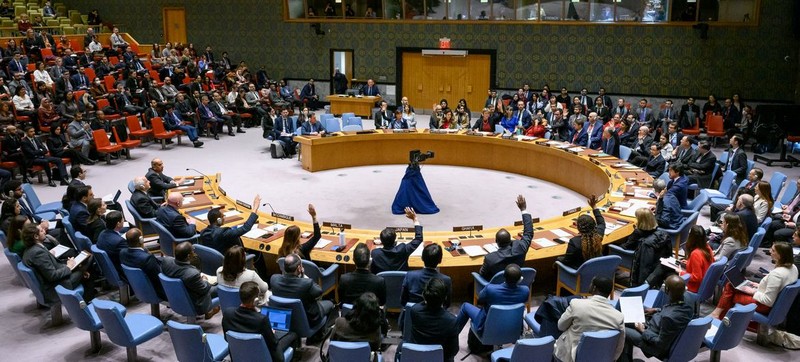
In an overwhelming majority, South African parliamentarians, earlier this afternoon, passed a motion to close the Israeli embassy in South Africa by a vote of 248 in favour (EFF, ANC, PAC, Al Jama-ah, NFP, ATM) and a pathetic 91 against (DA, IFP, FF+, ACDP)

The motion, which the Economic Freedom Fighters (EFF) initiated and was backed by the governing ANC party, accurately reflects the people of South Africa and our support for human rights, international law and justice for the Palestinians people. We commend the EFF, ANC and all other parties who today, in unison, voted in support of morality and our interconnected humanity.

In 2017 South Africa’s governing ANC party resolved to downgrade diplomatic relations with Israel. Subsequently, in 2018, the South African government withdrew its ambassador from Israel. Last night, ahead of today’s Parliamentary vote, the Israeli ambassador fled South Africa. As we speak, South Africa currently has no Ambassador in Israel, and Israel has no Ambassador in South Africa. South Africa joins a growing number of countries across the world who have taken and are continuing to take bold diplomatic steps to hold Israel accountable for its violations of international law and abuse of Palestinian human rights.

In addition, last week, South Africa joined several other countries in officially making a submission to the International Criminal Court for an investigation into Israel for war crimes. South Africa has also called for a warrant of arrest to be issued against Israel’s President Benjamin Netanyahu.

Indeed, the actions taken by the Government of South Africa and today’s vote by the Parliament of South Africa is a true representation of the people of South Africa who have in their millions elected political parties that stand in support of the human rights of the Palestinians.

We South Africans benefited during our struggle against Apartheid from support of the international community, including from the Palestinian people. Today, in that spirit of internationalism, we stand with the people of Palestine and all other oppressed nations.

PRESS STATEMENT ISSUED BY TISETSO MAGAMA ON BEHALF OF AFRICA4PALESTINE (21 NOVEMBER 2023)

Africa4Palestine Communications and Campaigns Manager, Alie Komape: +27 (0) 76 979 8801
Africa4Palestine Director, Muhammed Desai: +27 (0) 84 211 9988

AFRICA 4 PALESTINE
Suite 3 | Park Center | 75 12th Street | Parkhurst | Johannesburg
PO Box 2318 | Houghton | 2041 | Johannesburg
T: +27 (0) 11 403 2097 | F: +27 (0) 86 650 4836
W: www.africa4palestine.com | E: info@africa4palestine.com | TikTok: www.tiktok.com/@africa4_palestine
www.facebook.com/africa4palestine | www.twitter.com/africa4pal | www.instagram.com/africa4palestine | www.youtube.com/africa4palestine

Africa4Palestine is a registered Non-Profit Company. Registration Number: 2020/549404/08
Africa4Palestine is a registered Section 18 Public Benefit Organization. Registration Number: 930071587

21 November 2023

Source: africa4palestine.com

AFRICA4PALESTINE CELEBRATES DEPARTURE OF THE ISRAELI AMBASSADOR FROM SOUTH AFRICA

20 November 2023

The South African human rights NGO Africa4Palestine welcomes the sudden departure of Israel’s Ambassador from South Africa.

The Israeli ambassador has fled South Africa ahead of this week’s vote by the Parliament of South Africa to expel the Israeli ambassador and shut down the Israeli Embassy.

South Africa now has no Ambassador in Israel, and Israel has no ambassador in South Africa.

In the dying days of Apartheid in South Africa, the regime isolated itself. Similarly, Israel today is being isolated and is self-isolating from the peace and justice-loving peoples of the world. This marks a crucial step towards holding Apartheid Israel accountable for its violations of international law. People and countries across the globe are making it clear: no normal relations with an abnormal state.

Africa4Palestine salutes the hundreds of thousands of South Africans who have taken to the streets, to social media and other platforms in recent weeks supporting our government as well as calling for further and firmer action to be taken against Israel for its recent attacks on the Palestinians people as well as for its ongoing Apartheid policies and practices.

Similar to South Africa, for peace to be achieved for all who live between the River Jordan and the Mediterranean Sea (for Jews, Muslims, Christians, and all others), the root causes of the conflict need to be addressed including the dismantling of Israel’s apartheid regime, ceasing of Israel’s unlawful occupation and the ending of its violations of international law. This is the only path towards a sustainable and equitable solution – for all.

We again reiterate the African peoples support for the Palestinian people who have been resisting Israel’s apartheid regime, who have been withstanding Israel’s attempts to erase them and who are teaching the world the meaning of resilience and hope.

ISSUED BY TISETSO MAGAMA ON BEHALF OF AFRICA4PALESTINE

Africa4Palestine Media Liaison, Alie Komape: +27 (0) 76 979 8801
Africa4Palestine Director, Muhammed Desai: +27 (0) 84 211 9988

AFRICA 4 PALESTINE
Suite 3 | Park Center | 75 12th Street | Parkhurst | Johannesburg
PO Box 2318 | Houghton | 2041 | Johannesburg
T: +27 (0) 11 403 2097 | F: +27 (0) 86 650 4836
W: www.africa4palestine.com | E: info@africa4palestine.com | TikTok: www.tiktok.com/@africa4_palestine
www.facebook.com/africa4palestine | www.twitter.com/africa4pal | www.instagram.com/africa4palestine | www.youtube.com/africa4palestine

Africa4Palestine is a registered Non-Profit Company. Registration Number: 2020/549404/08
Africa4Palestine is a registered Section 18 Public Benefit Organization. Registration Number: 930071587

Source: africa4palestine.com

What Israel Wants? Why Genocide?

By Richard Falk

16 Nov 2023 – Stasa Sallacanin, an independent journalist, posed a series of questions on 29 Oct. I have modified my responses to take account of recent developments and to offer a more readable text. As the genocidal assault on Gaza continues in the face of rising calls for a ceasefire and a negotiated peace, Israel remains defiant and the US stands firm in support of Israel’s supposed goal of destroying Hamas as a presence in Gaza, but also seems intent on mounting an ethnic cleansing crusade, with a West Bank focus, but a Gaza subtext. Some of these elements are addressed below.

***************************************

Q 1: While Israel has vowed to destroy Hamas and has the capacity to severely damage its operational abilities, the question remains what is the future of Palestinian armed resistance?

In my judgment, Israel is inflicting important, but temporary, damage on the operational ability of Hamas to carry out military attacks against Israel, but in the disproportionate and indiscriminate manner of doing so it will exact heavy costs. Not only will Hamas’ support surge among the Palestinian people and globally, but the severe humanitarian catastrophe that has befalled the civilian population has already greatly strengthened the will of the Palestinians to mount armed resistance in the future. In addition, global mobilization in civil society will increase, as will UN efforts and even Global West governments to find a solution to the conflict that is more sympathetic with Palestinian grievances and aspirations than before October 7.

As the earlier anti-colonial wars revealed, the colonial side can dominate the combat zones, winning every battle, killing large numbers of the native population, and destroying their sources of livelihood, and yet go on to experience political defeat in. the end. This was the experience of France and the United States in Vietnam and Algeria. Despite. innovations in weaponry and tactics political defeat and frustration was subsequentially experienced by colonial actors and imperial interventions in a series of countries that lacked military capabilities to defend their territory against such external intrusions: Afghanistan, Iraq after 2003, Libya and Syria after 2011, the so-called ‘forever wars’ in which the state-building and neoliberal objectives sought through  military intervention and major state-building undertakings were not realized, despite huge expenditures of funds. Despite this dismal record of relying on military means to achieve political objectives, the Global West, especially the United States, along with Europe and Israel, mindlessly continues to ‘securitize’ disputes and conflicts rather than shifting tactics or adopting a more detached view of the outcome of internal power struggles in foreign countries. Part of this failure to adapt to the diminishing agency of military superiority in North/South settings reflects the interests and influence of arms dealers in the private sector, as augmented by a compliant Congress and a militarized bureaucracy in the American case.

Israel resembles the US in these respects, although with more overt racist overtones, as articulated by Netanyahu and other Israeli leaders in the current crisis. It seeks to justify its violence by insisting that Arabs, as epitomized by Hamas, only understand  ‘pressure,’ which in actuality has. been expressed by recourse to genocidal devastation. Israel and the US both subscribed to the reductive assessments of Raphael Patel’s The Arab Mind (1973). Somewhat ironically, Hamas leaders explained and justified the October 7 attack, somewhat more plausibly, by relying on the same reasoning. They claimed that armed attack was the only way to remind Israel that the Palestinians were still present and would not allow themselves to be erased by diplomatic fiat.

Q 2: Israel launched a ground invasion on Gaza to dismantle Hamas. Will new Palestinian armed groups continue to emerge and fight Israel and how successful they will be, considering the fact, that Israel will learn from its past mistakes and recent intelligence failure?

It is almost a sure thing that Hamas, whether under another name or not, will survive this Israeli onslaught, emerging stronger, smarter, and more resilient than previously in the period after the present encounter ends. Despite the high international reputational costs as related to the legitimacy of its claims, Israel’s genocidal assault has put its apparent victory strategy further from attainment than before.

Israel is likely to face that moment of truth that confronts all settler colonial projects—either the native population is exterminated or driven to outer margins of societal life, or it will eventually prevail. This has been the pattern since 1945 when it became apparent that indigenous nationalism could outlast the military might of the colonizers if they stood their ground and were prepared to accept shocking levels of casualties and devastation. Palestinian steadfastness has long been evident even as constantly challenged by Israeli apartheid and harsh policies and practices.

Israel will, of course, endeavor to fix the hard-to-believe failures of surveillance and border security that made the Hamas attack possible, if indeed the official narrative holds up, and current suspicions of a false flag operation put to rest. We would expect Israel to make other tactical shifts in its structures of apartheid control over a hostile Palestinian population that is more likely, as suggested above, to be mobilized, resentful, and resistant than ever.

In the background are questions about whether the Israeli security lapse was a side-effect of the Netanyahu extremist coalition’s calculated efforts to make the West Bank unlivable for Palestinians, and become a settler controlled mini-state under the sovereign control of a Greater Israel that may have further territorial goals on its policy agenda. Or this West Bank priority was coupled with an assurance of the economic benefits of an estimated $500 billion value to be realized by developing the oil and gas fields off the Gaza coast.

The only potentially winning strategy for Israel is extensive ethnic cleansing by way of forced displacement beyond the borders—the Sinai solution, and for the Palestinians a second nakba. So far Egypt has resisted pressures to enter such a Faustian Bargain, but the end-game scenario is yet to be played out. There are rumors of Israeli offers to draw down Egypt’s international indebtedness in exchange for allowing the entire Gaza Palestinian population to live in Sinai, which would facilitate Israel’s thinly disguised ambition to incorporate the West Bank into its territory as well as reap the anticipated economic benefits of reoccupying  and possibly resettling Gaza in the absence of a Palestinian presence..

Q 3: Moreover, do you think that Hamas attack/resistance could inspire armed resistance, even among Palestinians in the occupied West Bank, and Gaza in the future or conversely, if Hamas fails, do you expect the weakening of armed resistance?

As earlier responses suggest, the Israeli response to the Hamas attack  has already inspired resistance politics among the Palestinians, including among exile and foreign refugee communities, and further discredited the quasi-collaborative political groups aligned with Fatah as exemplified by the West Bank framework of governance and international representational status, the Palestinian Authority the sole surviving  now seriously disabled child of the defunct Oslo Diplomacy that has paralyzed the Palestinians for more than 20 years while giving the settlers time to consolidate, expand, and augment their movement. The pre-October 7 Netanyahu coalition government greenlighted settler violence, and associated lang grabbing and thinly disguised efforts to escalate a strategy seemingly intent on maximum Palestinian dispossession.

Q 4: However, would you agree that any military solution cannot bear any sustainable long-term results and that the lack of a political solution will only generate the emergence of new armed groups?

Yes, that is an accurate probable future unless Israel takes drastic steps to realize its victory scenario.  I believe the current leadership of Israel will, if it can, before the Gaza crisis is resolved move rapidly to implement an ethnic cleansing version of a ‘final solution’ of its Palestinian problem. How the world, especially the Global West responds, will determine whether such an outcome will actually succeed, or whether the future will exhibit what now seems impossible, the realization of Palestinian rights of at least partial self-determination, most likely in an unstable two-state outcome as proposed back in 2002 by the Arab countries meeting in Mecca and generally endorsed by governments throughout the world, although  it seems unimaginably difficult to implement given the certain extreme opposition of more than half a million settlers in the West Bank.

Another likely result of the Israeli onslaught in Gaza is the emergence of secular militancy to avoid perceived regional threats of political Islam and religious warfare that will be rationalized as counterterrorism along the propagandistic lines of ‘Hamas is our ISIS..’ The French president, Emmanuel Macron, carried the idea a step further by proposing ‘a new axis of evil’ composed of hostile Islamic governments and non-state actors in the Middle East. I suspect that policy wonks have already started rereading and updating Samuel Huntington’s 1993 vision of ‘a clash of civilizations.’ It follow from this perspective that such an approach will take center stage in forthcoming phases of regional politics more than 30 years after these ideas were first circulated in Huntington’s famous and influential Foreign Affairs article.

Q 5: In the occupied West Bank, a plethora of new Palestinian armed groups have emerged in response to repressive Israeli policies. Do you think that their factions and influence will spread to Gaza once the military action against Hamas is over and in case Hamas is defeated?

It is quite possible, but I think their main focus will be resistance to Israel’s attempt to gain sovereign control over the West Bank to the extent possible. Gaza in my view despite the genocidal ordeal inflicted on the Gazans remains almost a sideshow for militant Zionists who joined with Netanyahu in implementing patterns of extremist governance of the West Bank that were operationalized as soon as their authority was formalized at the start of 2023.

In effect, Gaza is distracted attention from the remaining critical goals of the maximal Zionist Project and Israeli extremes of violence are intended to deliver a warning to Palestinians on the West Bank to get out or face an eventual firestorm. Whether such thinking is part of why Israeli government allowed the security lapse to occur or it was the Hamas attack an opportunity seized upon by the Netanyahu leadership in the course of carrying out its violent and vengeful retaliatory attack. Another possibility is that the settlers, and allies in government somewhat autonomously saw the Israeli response in Gaza as creating an opening for their cleansing campaign in the West Bank.

Q 6: The poll, conducted by the Ramallah-based Palestinian Center for Policy and Survey Research, also showed that 52% of the Palestinians believe that the armed struggle against Israel is the most effective means to end the Israeli occupation and build a Palestinian state. Twenty-one percent said they supported achieving these goals through negotiations, while 22% preferred the “popular resistance.”  In addition, when asked what has been the most positive or the best thing that has happened to the Palestinian people since the Nakba in 1948  the largest percentage (24%) said it was the establishment of Islamic movements. So, will this percentage even grow after the war, and will new resistance groups be influenced by Islamic movements or they will focus and try to refocus on other matters and perhaps try to overcome political divisions within a deeply fragmented Palestinian bloc? 

As of now, the Islamic groups, especially Hamas, have dominated Palestinian resistance to the extent that recourse to armed struggle has characterized resistance, and this will likely become even more the case after the Israeli guns finally fall silent in Gaza. Yet I would suppose that in the next phase of struggle, assuming Israeli ethnic cleansing schemes do not succeed in erasing or marginalizing Palestinian resistance, there will emerge new political formations that are neither Islamic nor the opposite. In other words, Palestinian resistance is overdue for an integrative politics of unity without sectarian or ideological dogma being allowed to get in the way of the overriding goal of gaining leverage needed to achieve a sustainable and just peace. Israel has resorted to a variety of means, including its early funding of Hamas when it was most overtly antisemitic as well as targeted assassinations and imprisonment of potentially unifying Palestinian political leaders, including the harassment and possible murder of Arafat, and timely assassinations of those seeking a just and sustainable peace that stood in the way of Israel following through to the full realization of the Zionist vision. Prominent among such casualties were the Swedish mediator Count Folke Bernadotte murdered by the Zionist terrorist group Lehi in 1948 and even an Israeli Prime Minister, Yitzhak Rabin in 1995, the first period of the Oslo Accords that for years looked as though it might yield an accommodation based on a political compromise between Israel and Palestine.

Only If and when Israel becomes a pariah state, its national leaders might at last consider the option of emulating the South African surprising turn as adapted to Israel’s circumstances. The leaders in Pretoria surprised the world by releasing Nelson Mandela from prison and agreeing to a transition to a multi-racial constitutional democracy with equal rights for all. It seems like a dream at present to suppose that something similar will happen in Israel, but in history dreams happen but only if made by the dedicated struggles and sacrifices of martyrs.

Richard Falk is a member of the TRANSCEND Network, Albert G. Milbank Professor Emeritus of International Law at Princeton University, Chair of Global Law, Faculty of Law, at Queen Mary University London, Research Associate the Orfalea Center of Global Studies at the University of California, Santa Barbara, and Fellow of the Tellus Institute.

20 November 2023

Source: transcend.org
Israeli War Crimes and Propaganda Follow US Blueprint

By Medea Benjamin and Nicolas J. S. Davies

13 Nov 2023 – We have both been reporting on and protesting against U.S. war crimes for many years, and against identical crimes committed by U.S. allies and proxies like Israel and Saudi Arabia: illegal uses of military force to try to remove enemy governments or “regimes”; hostile military occupations; disproportionate military violence justified by claims of “terrorism”; the bombing and killing of civilians; and the mass destruction of whole cities.

Most Americans share a general aversion to war, but tend to accept this militarized foreign policy because we are tragically susceptible to propaganda, the machinery of public manipulation that works hand in hand with the machinery of killing to justify otherwise unthinkable horrors.

This process of “manufacturing consent” works in a number of ways. One of the most effective forms of propaganda is silence, simply not telling us, and certainly not showing us, what war is really doing to the people whose homes and communities have been turned into America’s latest battlefield.

The most devastating campaign the U.S. military has waged in recent years dropped over 100,000 bombs and missiles on Mosul in IraqRaqqa in Syria, and other areas occupied by ISIS or Da’esh. An Iraqi Kurdish intelligence report estimated that more than 40,000 civilians were killed in Mosul, while Raqqa was even more totally destroyed.

The shelling of Raqqa was the heaviest U.S. artillery bombardment since the Vietnam War, yet it was barely reported in the U.S. corporate media. A recent New York Times article about the traumatic brain injuries and PTSD suffered by U.S. artillerymen operating 155 mm howitzers, which each fired up to 10,000 shells into Raqqa, was appropriately titled A Secret War, Strange New Wounds and Silence from the Pentagon.

Shrouding such mass death and destruction in secrecy is a remarkable achievement. When British playwright Harold Pinter was awarded the Nobel Prize for Literature in 2005, in the midst of the Iraq War, he titled his Nobel speech “Art, Truth and Politics,” and used it to shine a light on this diabolical aspect of U.S. war-making.

After talking about the hundreds of thousands of killings in Indonesia, Greece, Uruguay, Brazil, Paraguay, Haiti, Turkey, the Philippines, Guatemala, El Salvador, Chile and Nicaragua, Pinter asked:  “Did they take place? And are they in all cases attributable to US foreign policy? The answer is yes, they did take place and they are attributable to American foreign policy,”

“But you wouldn’t know it,” he went on.”It never happened. Nothing ever happened. Even while it was happening it wasn’t happening. It didn’t matter. It was of no interest. The crimes of the United States have been systematic, constant, vicious, remorseless, but very few people have actually talked about them. You have to hand it to America. It has exercised a quite clinical manipulation of power worldwide while masquerading as a force for universal good. It’s a brilliant, even witty, highly successful act of hypnosis.”

But the wars and the killing go on, day after day, year after year, out of sight and out of mind for most Americans. Did you know that the United States and its allies have dropped more than 350,000 bombs and missiles on 9 countries since 2001 (including 14,000 in the current war on Gaza)? That’s an average of 44 airstrikes per day, day in, day out, for 22 years.

Israel, in its present war on Gaza, with children making up more than 40% of the more than 11,000 people killed to date, would surely like to mimic the extraordinary U.S. ability to hide its brutality. But despite Israel’s efforts to impose a media blackout, the massacre is taking place in a small, enclosed, densely-populated urban area, often called an open-air prison, where the world can see a great deal more than usual of how it impacts real people.

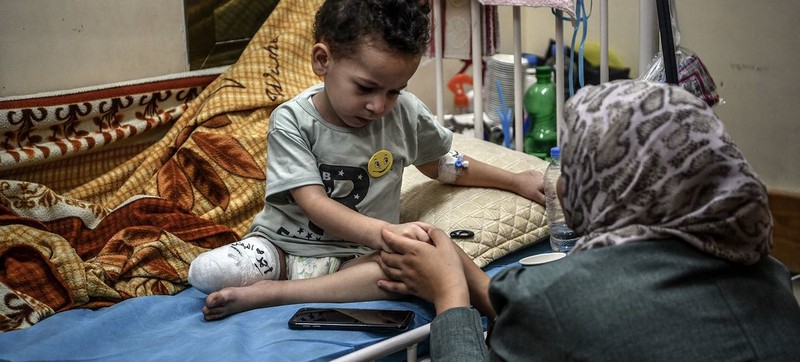
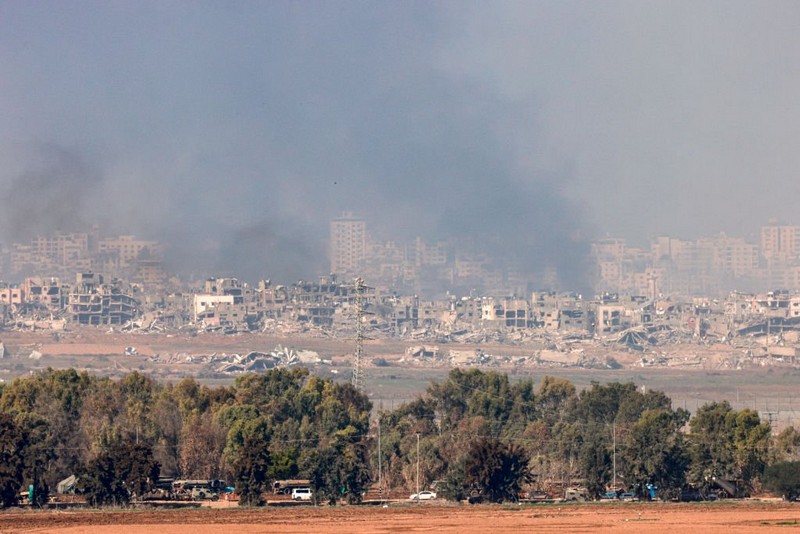
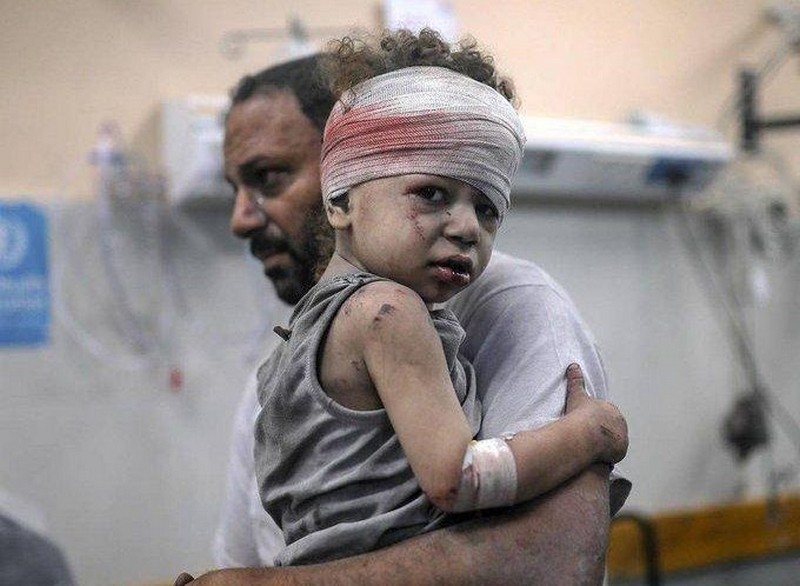
Israel has killed a record number of journalists in Gaza, and this appears to be a deliberate strategy, as when U.S. forces targeted journalists in Iraq. But we are still seeing horrifying video and photos of daily new atrocities: dead and wounded children; hospitals struggling to treat the injured; and desperate people fleeing from one place to another through the rubble of their destroyed homes.

Another reason this war is not so well hidden is because Israel is waging it, not the United States. The U.S. is supplying most of the weapons, has sent aircraft carriers to the region, and dispatched U.S. Marine General James Glynn to provide tactical advice based on his experience conducting similar massacres in Fallujah and Mosul in Iraq. But Israeli leaders seem to have overestimated the extent to which the U.S. information warfare machine would shield them from public scrutiny and political accountability.

Unlike in Fallujah, Mosul and Raqqa, people all over the world are seeing video of the unfolding catastrophe on their computers, phones and TVs. Netanyahu, Biden and the corrupt “defense analysts” on cable TV are no longer the ones creating the narrative, as they try to tack self-serving narratives onto the horrifying reality we can all see for ourselves.

With the reality of war and genocide staring the world in the face, people everywhere are challenging the impunity with which Israel is systematically violating international humanitarian law.

Michael Crowley and Edward Wong have reported in the New York Times that Israeli officials are defending their actions in Gaza by pointing to U.S. war crimes, insisting that they are simply interpreting the laws of war the same way that the United States has interpreted them in Iraq and other U.S. war zones. They compare Gaza to Fallujah, Mosul and even Hiroshima.

But copying U.S. war crimes is precisely what makes Israel’s actions illegal. And it is the world’s failure to hold the United States accountable that has emboldened Israel to believe it too can kill with impunity.

The United States systematically violates the UN Charter’s prohibition against the threat or use of force, manufacturing political justifications to suit each case and using its Security Council veto to evade international accountability. Its military lawyers employ unique, exceptional interpretations of the Fourth Geneva Convention, under which the universal protections the Convention guarantees to civilians are treated as secondary to U.S. military objectives.

The United States fiercely resists the jurisdiction of the International Court of Justice (ICJ) and the International Criminal Court (ICC), to ensure that its exceptional interpretations of international law are never subjected to impartial judicial scrutiny.

When the United States did allow the ICJ to rule on its war against Nicaragua in 1986, the ICJ ruled that its deployment of the “Contras” to invade and attack Nicaragua and its mining of Nicaragua’s ports were acts of aggression in violation of international law, and ordered the United States to pay war reparations to Nicaragua. When the United States declared that it would no longer recognize the jurisdiction of the ICJ and failed to pay up, Nicaragua asked the UN Security Council to enforce the reparations, but the U.S. vetoed the resolution.

Atrocities like Hiroshima, Nagasaki and the bombing of German and Japanese cities to “unhouse” the civilian population, as Winston Churchill called it, together with the horrors of Germany’s Nazi holocaust, led to the adoption of the new Fourth Geneva Convention in 1949, to protect civilians in war zones and under military occupation.

On the 50th anniversary of the Convention in 1999, the International Committee of the Red Cross (ICRC), which is responsible for monitoring international compliance with the Geneva Conventions, conducted a survey to see how well people in different countries understood the protections the Convention provides.

They surveyed people in twelve countries that had been victims of war, in four countries (France, Russia, the U.K. and the U.S.) that are permanent members of the UN Security Council, and in Switzerland where the ICRC is based. The ICRC published the results of the survey in 2000, in a report titled, People on War – Civilians in the Line of Fire.

The survey asked people to choose between a correct understanding of the Convention’s civilian protections and a watered-down interpretation of them that closely resembles that of U.S. and Israeli military lawyers.

The correct understanding was defined by a statement that combatants “must attack only other combatants and leave civilians alone.” The weaker, incorrect statement was that “combatants should avoid civilians as much as possible” as they conduct military operations.

Between 72% and 77% of the people in the other UNSC countries and Switzerland agreed with the correct statement, but the United States was an outlier, with only 52% agreeing. In fact 42% of Americans agreed with the weaker statement, twice as many as in the other countries. There were similar disparities between the United States and the others on questions about torture and the treatment of prisoners of war.

In U.S.-occupied Iraq, the United States’ exceptionally weak interpretations of the Geneva Conventions led to endless disputes with the ICRC and the UN Assistance Mission for Iraq (UNAMI), which issued damning quarterly human rights reports. UNAMI consistently maintained that U.S. airstrikes in densely populated civilian areas were violations of international law.

For instance, its human rights report for the 2nd quarter of 2007 documented UNAMI’s investigations of 15 incidents in which U.S. occupation forces killed 103 Iraqi civilians, including 27 killed in airstrikes in Khalidiya, near Ramadi, on April 3rd, and 7 children killed in a helicopter attack on an elementary school in Diyala province on May 8th.

UNAMI demanded that “all credible allegations of unlawful killings by MNF (Multi-National Force) forces be thoroughly, promptly and impartially investigated, and appropriate action taken against military personnel found to have used excessive or indiscriminate force.”

A footnote explained, “Customary international humanitarian law demands that, as much as possible, military objectives must not be located within areas densely populated by civilians. The presence of individual combatants among a great number of civilians does not alter the civilian character of an area.”

UNAMI also rejected U.S. claims that its widespread killing of civilians was the result of the Iraqi Resistance using civilians as “human shields,” another U.S. propaganda trope that Israel is mimicking today. Israeli accusations of human shielding are even more absurd in the densely populated, confined space of Gaza, where the whole world can see that it is Israel that is placing civilians in the line of fire as they desperately seek safety from Israeli bombardment.

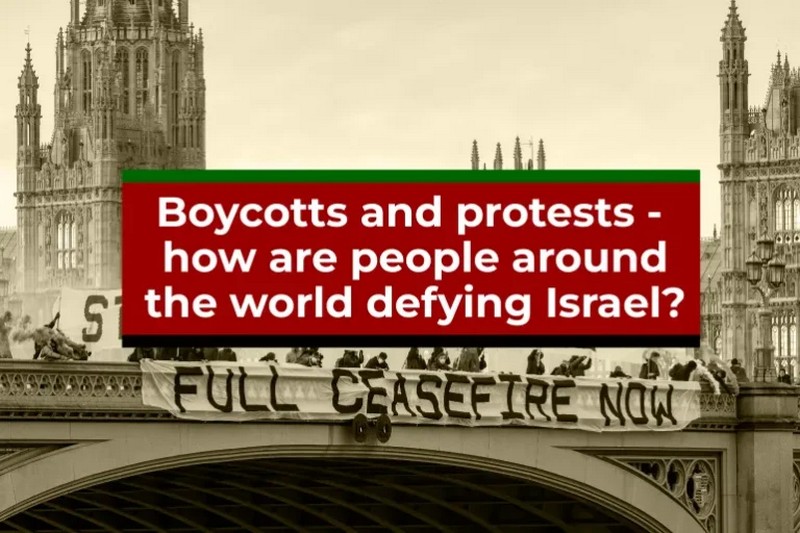
Calls for a ceasefire in Gaza are echoing around the world: through the halls of the United Nations; from the governments of traditional U.S. allies like France, Spain and Norway; from a newly united front of previously divided Middle Eastern leaders; and in the streets of London and Washington. The world is withdrawing its consent for a genocidal “two-state solution” in which Israel and the United States are the only two states that can settle the fate of Palestine.

If U.S. and Israeli leaders are hoping that they can squeak through this crisis, and that the public’s habitually short attention span will wash away the world’s horror at the crimes we are all witnessing, that may be yet another serious misjudgment. As Hannah Arendt wrote in 1950 in the preface to The Origins of Totalitarianism.

“We can no longer afford to take that which was good in the past and simply call it our heritage, to discard the bad and simply think of it as a dead load which by itself time will bury in oblivion. The subterranean stream of Western history has finally come to the surface and usurped the dignity of our tradition. This is the reality in which we live. And this is why all efforts to escape from the grimness of the present into nostalgia for a still intact past, or into the anticipated oblivion of a better future, are vain.”

Medea Benjamin and Nicolas J. S. Davies are the authors of War in Ukraine: Making Sense of a Senseless Conflict, available from OR Books in November 2022.

20 November 2023

Source: transcend.org


US Blows Off the Whole World to Punish Cuba

By Ann Garrison

15 Nov 2023 – On November 2, the UN General Assembly voted overwhelmingly for a resolution calling on the US to lift the trade embargo against Cuba that President John Kennedy imposed in 1962. The US and Israel were the only two nations to vote no, with Ukraine abstaining. Total dependence creates total compliance.

The US Treasury’s Office of Foreign Assets Control records complex specifics of sanctions on Cuba. There are so many that they amount to a virtual blockade.

“You talk about sanctions,” says Cuban journalist Liz Oliva Fernández, “you think ‘OK, maybe the United States has one, two, or three sanctions on Cuba,’ but I’m talking about a blockade—a system of sanctions. There are so many sanctions together on Cuba that it’s unique. This is the only country that has been suffering under so many sanctions for so long.

“The goal is to overthrow the government, to suffocate the people so hard that they want to overthrow their own government.”

Sanctions, she said, also isolate Cuba from the rest of the world, because US trade, banking, and business relations are so far- flung that doing business with other parts of the world also involves business with the US. In her six-part documentary series “The War on Cuba,” she gives the example of Ernesto, a farmer who needs two prosthetic legs. Ernesto has prosthetics but can’t get the flexible type he needs because they’re made by a German company that uses a US-manufactured material for more than 10% of their content.

“The 10% of the raw material that they use for these prosthetic legs is made in the United States, or by a United States company,” she says. “So that means it’s illegal for Cuba to buy the prosthetic legs that Ernesto needs.”

“I’d walk more. I’d even be able to work a lot more,” Ernesto says. “But we don’t have access to them because of the blockade.”

“And this is with everything,” says Fernández. “Imagine that you want to buy tractors. Maybe the seats of the tractors are made in Mexico but they have parts that are made in the US, or a US company owns part of the company that makes the tractors, so it’s a violation of US law for anyone to sell Cuba the whole tractor.”

Her docuseries includes Cuban farmers using horse-drawn plows.

“This is the United States. It’s an empire. So they have businesses around the world. They have stocks around the ` world in different companies. So we can’t even purchase what we most need to purchase in Cuba, including medicines and materials needed to manufacture medicines.

“US law makes it illegal for companies to do business with Cuba. If you do business with Cuba, you could lose your business with the United States. You have to choose between doing business with the United States and doing business with Cuba, and of course, if they’re forced to make that choice, most every company will choose to do business with the United States.”

Trump added Cuba to the State Sponsors of Terrorism list, which made foreign companies even more afraid of doing business there.

Uphill on the Hill

Fernández has been touring the US showing “Uphill on the Hill,” a film in which she narrates the story of her quest to ask members of the US Congress why they and the Biden Administration are so determined to sustain the brutal sanctions. In particular she seeks to speak to the Cuban American legislators who have most aggressively insisted that the sanctions be sustained.

Not surprisingly, they all give her the brush-off, and she wryly checks them off her list one by one. Ultimately she does manage to join a delegation meeting with Massachusetts Congressman Jim McGovern, a longtime opponent of the sanctions on Cuba. Pierre LaBossiere of Haiti Action Committee has a cameo in that scene in which he asks why the US punishes Cuba and lends so much support to Haiti, where the corrupt government kills its own people.

After the Cuban American legislators refuse to meet with her, Fernández meets Medea Benjamin and other members of Code Pink. Fernández then says she’s realized that Washington, DC is a Black city, so, being Afro Cuban, she’s going out to talk to people who look like her. One after another, they tell her that there’s no reason for the sanctions and they oppose them. In a choice comic moment, one says he’d like to see the sanctions lifted because he’s a cigar smoker.

Obama, Trump, and Biden

During his second term, when he no longer had to worry about the Miami Cuban vote in the swing state of Florida, President Obama loosened the trade restrictions, saying it did not serve US interests to make the Cuban state collapse. He even traveled to Cuba to announce his policy. This, Fernández said, brought a sudden, short-lived burst of optimism, trade and prosperity to Cuba, which she describes in Episode One of “The War on Cuba.” The Rolling Stones even appeared to perform in Havana after the embargo was lifted.

Trump reversed Obama’s policy, even though he himself had actually applied for licenses to do business in Cuba before becoming president. After becoming president, he tightened and even instituted new sanctions in order to placate the reactionary Miami Cubans.

“All the concessions that Barack Obama has granted the Castro regime were done through executive order, which means the next president can reverse them,” he said, speaking at a campaign rally in Miami. “And that I will do.” And he did.

Fernández said that Biden has not returned to Obama’s policies, most likely because he has unrealistic hopes of winning Florida in 2024.

Fernández on tour

The dates, times, and locations of Liz Fernández’s upcoming appearances in Seattle, Albuquerque, and Tampa are on the website bellyofthebeastcuba.com, where you can also find “The War on Cuba.”

During the Q&A at her appearance at Oakland’s La Pena Cultural Center, someone asked her how the Cuban economy works, to which she teared up and answered, “It doesn’t, because of the blockade.”

Ann Garrison is an independent journalist based in the San Francisco Bay Area. She attended Stanford University and is a member of the TRANSCEND Network for Peace Development Environment.

20 November 2023

Source: transcend.org

Six Unique Factors about Gaza Genocide

By Mazin Qumsiyeh

14 Nov 2023 – The genocide goes on: several babies died when taken out of incubators that had no power and many more cancer patients sent home died. Most injured people cannot be helped since the medical system is completely collapsed and there are 27,000 injured.  A friend I have in Gaza told me U.S. flag was seen on a tank and unusual soldiers not Israeli are seen (wonder if these are the US Delta forces that Biden was photographed shaking their hands in this country). Rotting dead human bodies are all over Gaza. Stray hungry dogs are eating some! Of course Israel does not allow international observers or even international journalists to enter Gaza to check on its lies and distortions. They even killed 1 Lebanese and 37 Palestinian  journalists (majority reporting for international agencies). I do not know if some people have yet thought of eating other humans to survive (at least in North Gaza were starvation and thirst are more since Israel carpet-bombed the area).  Now to be sure there are many genocides/holocausts in human history but there are six unique features of this ongoing one:

1) It is so blatantly obvious and live broadcast live 24 hours a day and available for anyone willing to switch off the mainstream media and go to live footage like  aljazeera.com or almayadeen or even telegram, Instagram, Facebook, TikTok, etc. The images and sounds are horrifying (imagine people there also feeling and smelling the death and dying)

2) It is self-admitted by the Zionists themselves including that they denied water, foo, medicine, fuel, electricity etc  to the 2.3 million inhabitants of Gaza and even proudly explained that there are “no civilians in Gaza” (Israeli president), and we deny food because we are dealing with human animals (Israeli minister of war), see https://popular-resistance.blogspot.com/2023/11/are-we-being-duped-to-focus-only-on.html

3) It is accompanied by the highest number of LIES spoken by Israeli officials and parroted by those with no conscience. Is anything the Israeli government say to be believed after a long history of past and present lies challenged by facts- see https://popular-resistance.blogspot.com/2023/11/does-truth-matter.html )??,

4) Due to the money and resources of strong lobbies (most of it funded by Western taxpayer money), the colonization, ethnic cleansing, and apartheid are supported by a) many western and arab governments, b) the mainstream media parroting the Israeli (false) talking points

5) Palestinians are not only victimized (8 million are refugees/displaced people, millions who remain in Palestine stored in ghettos/Bantustans/concentration camps and subjected for decades to the most brutal oppression. Bu Palestinians and their supporters asking for human rights are also dehumanized and defamed as hating Jews etc (ironic since thousands of Jews were willing to be arrested and even brutalized for their support of Palestinian rights)

6) There is a vicious brutalization of people for being Palestinian by Israeli occupation forces (and here there is no distinction between settlers and soldiers since everyone serves in the army and all behave similar). Collective punishment and torture are rampant. Beatings of and shooting civilians happen regularly. The attempt to suppress free speech goes on, destroying any semblance or pretense of “democracy”. A new law in Israel forbids people from watching some videos considered “terrorist propaganda” (and of course anything against Israeli apartheid si considered such). People under Israeli rule lost their jobs, were jailed or tortured or all for social media posts even mildly speaking of the horrors of Gaza. In Gaza now, if you post message critical of Israeli actions your home can be bombed. In the Western countries also, citizens showing sympathy to Palestine or working against apartheid or colonialism are targeted. There are laws in some US states against engaging in Boycotts, Divestments, Sanctions and in some European countries working for freedom for Palestine is considered illegal.

On the positive side this injustice has garnered unprecedented public outrage around the world. Millions were in the streets protesting and hundreds of thousands are acting and engaged in civil disobedience, in boycott of Israeli and US products that support colonization etc. (see ongaza.org item #  21) . That is also unique!! Everything helps so please keep the pressure on the cheerleaders and participants in genocide.

***********************

I wrote some open letters before and here for the sake of those who missed some of those letters here are the links:

Letter to Gaza https://popular-resistance.blogspot.com/2023/10/letter-to-gaza.html

Letter to the world https://popular-resistance.blogspot.com/2023/10/letter-to-world.html

Letter to US Citizens https://popular-resistance.blogspot.com/2023/11/open-letter-to-us-citizens.html

Letter to Israelis and Jews who support Israel https://popular-resistance.blogspot.com/2023/10/questions-to-israelis-and-jews.html

Letter to PLO https://popular-resistance.blogspot.com/2023/11/open-letter-to-plo.html

Letter to Mainstream media https://popular-resistance.blogspot.com/2023/11/mainstream-media-kills-truth.html

Update on numbers of victims from the UN https://www.ochaopt.org/updates

Chris Hedges The Horror https://scheerpost.com/2023/11/11/chris-hedges-the-horror-the-horror/

Israeli soldiers beat father in front of wife and child and mother tries to reassure child

https://tinyurl.com/fatherbeaten

Other interesting videos stripping prisoners (most with no charge or simple workers) and beating them while many are naked https://tinyurl.com/palestiniansabused

https://youtu.be/d3D0Vrn7DQ8

My podcast on 100 years of injustice

https://podcasts.apple.com/us/podcast/understanding-israel-palestine/id1656552317?i=1000632420017

An Open Letter from Palestinian Christians to Western Church Leaders and Theologians

Mazin Qumsiyeh, associate professor of genetics and director of cytogenetic services at Yale University School of Medicine, is founder and president of the Holy Land Conservation Foundation and ex-president of the Middle East Genetics Association.

20 November 2023

Source: transcend.org

South Africa Asks ICC to Investigate Israeli Crimes in Gaza

By teleSUR

In Gaza and the West Bank, 11,517 Palestinians have been killed and 32,000 injured in Israeli attacks since October 7.

16 Nov 2023 – South African President Cyril Ramaphosa today called on the International Criminal Court (ICC) to launch an investigation into Israel’s war crimes in the Gaza Strip.

“We join many other countries and organizations in asking the ICC to investigate what is happening and, in fact, we can see with our own eyes in Israel,” the president said in statements to the press.

Ramaphosa said that “war crimes are being committed” and brought up the case of the Al Shifa hospital, completely blockaded by Israeli forces, without water, electricity or food.

In Gaza and the West Bank, 11,517 Palestinians have been killed and 32,000 injured in Israeli attacks since October 7. In this regard, Ramaphosa said that there is no precedent in the history of a war that has claimed the lives of so many innocent children in such a short time.

The president also denounced Israel’s flagrant violation of international law. “We abhor what is happening in Gaza, which has become a concentration camp and a genocide,” Ramaphosa said.

The South African president called on the international community to join forces for an immediate ceasefire and ensure the protection of civilians.

The South African government announced last week that it would withdraw all its diplomats from Israel for consultations in rejection of Israel’s unbridled aggression against the Palestinian population of Gaza.

South Africa and China strengthen political and trade relations

20 November 2023

Source: transcend.org

Mairead Maguire on Ending the Current Wars

By Mairead Maguire

13 Nov 2023 – Talk World Radio
Making peace instead of wars in Gaza and Ukraine.

Talk World Radio: Mairead Maguire on Ending the Current Wars

Mairead Corrigan Maguire, co-founder of Peace People, is a member of the TRANSCEND Network for Peace Development Environment. She won the 1976 Nobel Peace Prize for her work for peace in Northern Ireland.

20 November 2023

Source: transcend.org

What ‘From the River to the Sea’ Really Means

By Maha Nassar

What does the call “From the river to the sea, Palestine will be free” mean to Palestinians who say it? And why do they keep using the slogan despite the controversy that surrounds its use?

As both a scholar of Palestinian history and someone from the Palestinian diaspora, I have observed the decades-old phrase gain new life—and scrutiny—in the massive pro-Palestinian marches in the U.S. and around the world that have occurred during the Israeli bombing campaign in the Gaza Strip in retaliation for Hamas’ October 7 attack on Israel.

Pro-Israel groups, including the U.S.-based Anti-Defamation League, have labeled the phrase “antisemitic.” It has even led to a rare censure of House Rep. Rashida Tlaib, the only Palestinian-American member of Congress, for using the phrase.

But to Tlaib, and countless others, the phrase isn’t antisemitic at all. Rather, it is, in Tlaib’s words, “an aspirational call for freedom, human rights, and peaceful coexistence.”

I cannot speak to what is in the heart of every person who uses the phrase. But I can speak to what the phrase has meant to various groups of Palestinians throughout history, and the intent behind most people who use it today.

Simply put, the majority of Palestinians who use this phrase do so because they believe that, in 10 short words, it sums up their personal ties, their national rights, and their vision for the land they call Palestine. And while attempts to police the slogan’s use may come from a place of genuine concern, there is a risk that tarring the slogan as antisemitic—and therefore beyond the pale—taps into a longer history of attempts to silence Palestinian voices.

An Expression of Personal Ties

One reason for the phrase’s appeal is that it speaks to Palestinians’ deep personal ties to the land. They have long identified themselves—and one another—by the town or village in Palestine from which they came.

And those places stretched across the land, from Jericho and Safed near the Jordan River in the east, to Jaffa and Haifa on the shores of the Mediterranean Sea in the west.

These deeply personal ties were passed down over generations through clothingcuisine, and subtle differences in Arabic dialects that are specific to locations within Palestine.

And those ties continue today. Children and grandchildren of Palestinian refugees often feel a personal connection to the specific places their ancestors hailed from.

A Demand for National Rights 

But the phrase is not simply a reference to geography. It’s political.

“From the river to the sea” also seeks to reaffirm Palestinians’ national rights over their homeland and a desire for a unified Palestine to form the basis of an independent state.

When Palestine was under British colonial rule from 1917 to 1948, its Arab inhabitants objected strongly to partition proposals advocated by British and Zionist interests. That’s because, buried deep in the proposals, were stipulations that would have forced hundreds of thousands of Palestinian Arabs off their ancestral lands.

In 1946, the Delegation of Arab Governments proposed instead a “unitary state” with a “democratic constitution” that would guarantee “freedom of religious practice” for all and would recognize “the right of Jews to employ the Hebrew language as a second official language.”

The following year, the United Nations instead approved a partition plan for Palestine, which would have forced 500,000 Palestinian Arabs living in the proposed Jewish state to choose between living as a minority in their own country or leaving.

It’s in this context that the call for a unified, independent Palestine emerges, according to Arabic scholar Elliott Colla.

During the 1948 war that led to the formation of the state of Israel, around 750,000 Palestinian Arabs fled or were expelled from their villages and towns. By the end of the war, Palestine was split into three: 78% of the land became part of the Jewish state of Israel, while the remainder fell under Jordanian or Egyptian rule.

Palestinian refugees believed they had a right to return to their homes in the new state of Israel. Israeli leaders, seeking to maintain the state’s Jewish majority, sought to have the refugees resettled far away. Meanwhile, a narrative emerged in the West in the 1950s claiming that Palestinians’ political claims were invalid.

Future Vision

Palestinians had to find a way to both assert their national rights and lay out an alternative vision for peace. After Israel occupied the West Bank, East Jerusalem, and Gaza Strip in the 1967 Arab-Israeli War, the call for a free Palestine “from the river to the sea” started to gain traction among those who believed that all the land should be returned to the Palestinians.

But it soon also came to represent the vision of a secular democratic state with equality for all.

In 1969, the Palestinian National Council, the highest decision-making body of the Palestinians in exile, formally called for a “Palestinian democratic state” that would be “free of all forms of religious and social discrimination.”

This remained a popular vision among Palestinians, even as some of their leaders inched toward the idea of establishing a truncated Palestinian state alongside Israel in the West Bank, Gaza Strip, and East Jerusalem.

Many Palestinians were skeptical of this two-state solution. For refugees exiled since 1948, a two-state solution would not allow them to return to their towns and villages in Israel. Some Palestinian citizens of Israel feared that a two-state solution would leave them even more isolated as an Arab minority in a Jewish state.

Even Palestinians in the West Bank and Gaza Strip—those who stood the most to gain from a two-state solution—were lukewarm to the idea. A 1986 poll found that 78% of respondents “supported the establishment of a democratic-secular Palestinian state encompassing all of Palestine,” while only 17% supported two states.

That helps explains why the call for a free Palestine “from the river to the sea” became popular in the protest chants of the First Intifada, or Palestinian uprising, from 1987 to 1992.

Notably, Hamas, an Islamist party founded in 1987, did not initially use “from the river to the sea,” likely due to the phrase’s long-standing ties to Palestinian secular nationalism.

Two States or One?

The 1993 signing of the Oslo Accords led many to believe that a two-state solution was just around the corner.

But as hopes for a two-state solution dimmed, some Palestinians returned to the idea of a single, democratic state from the river to the sea.

Meanwhile, Hamas picked up the slogan, adding the phrase “from the river to the sea” to its 2017 revised charter. The language was part of Hamas’ broader efforts to gain legitimacy at the expense of its secular rival, Fatah, which was seen by many as having failed the Palestinian people.

Today, broad swaths of Palestinians still favor the idea of equality. A 2022 poll found strong support among Palestinians for the idea of a single state with equal rights for all.

Offensive Phrase?

Perhaps colored by Hamas’ use of the phrase, some have claimed it is a genocidal call—the implication being that the slogan’s end is calling for Palestine to be “free from Jews.” It’s understandable where such fears come from, given the Hamas attacks on October 7 that killed 1,200 people, according to the Israeli foreign ministry.

But the Arabic original, “Filastin hurra,” means liberated Palestine. “Free from” would be a different Arabic word altogether.

Other critics of the slogan insist that by denying Israel’s right to exist as a Jewish state, the phrase itself is antisemitic. Under such thinking, protesters should instead be calling for a Palestinian state that exists alongside Israel—and not one that replaces it.

But this would seemingly ignore the current reality. There is strong scholarly consensus that a two-state solution is no longer viable. They argue that the extent of settlement building in the West Bank and the economic conditions in Gaza have eaten away at the cohesion and viability of any envisioned Palestinian state

Further Demonization 

There is another argument against the slogan’s use: That while not antisemitic in itself, the fact that some Jewish people see it that way—and as such see it as a threat—is enough for people to abandon its use.

But such an argument would, I contend, privilege the feelings of one group over that of another. And it risks further demonizing and silencing Palestinian voices in the West.

Over the last month, Europe has seen what pro-Palestine advocates describe as an “unprecedented crackdown” on their activism. Meanwhile, people across the U.S. are reporting widespread discriminationretaliation, and punishment for their pro-Palestinian views.

On November 14, George Washington University suspended the student group Students for Justice in Palestine, in part because the group projected the slogan “Free Palestine From the River to the Sea” on the campus library.

Principle, Not Platform 

None of this is to say that the phrase “From the river to the sea, Palestine will be free” doesn’t have multiple interpretations.

Palestinians themselves are divided over the specific political outcome they wish to see in their homeland.

But that misses the point. Most Palestinians using this chant do not see it as advocating for a specific political platform or as belonging to a specific political group. Rather, the majority of people using the phrase see it as a principled vision of freedom and coexistence.

Maha Nassar is an associate professor in the School of Middle Eastern and North African Studies at the University of Arizona and the author of Brothers Apart: Palestinian Citizens of Israel and the Arab World.

19 November 2023

Source: countercurrents.org

Israel Hits UN Run School: At Least 50 People Killed

By Countercurrents Collective

A Hamas health official said more than 80 people were killed Saturday in twin strikes on a northern Gaza refugee camp, including a UN school used as a shelter for people displaced by the Israel-Hamas war.

Social media videos — verified by AFP — showed bodies covered in blood and dust on the floor of a building, where mattresses had been wedged under school tables in Jabalia, the Palestinian territory’s biggest refugee camp.

“At least 50 people” were killed in a dawn strike on the UN-run Al-Fakhura school in the camp, which has been converted into a shelter for displaced Palestinians, a health ministry official in Hamas-controlled Gaza told AFP.

The army’s relentless air and ground campaign has since killed 12,300 people, more than 5,000 of them children, according to the Hamas government which has ruled Gaza since 2007.

According to UN figures, some 1.6 million people have been displaced inside the Gaza Strip by six weeks of fighting.

UN humanitarian chief Martin Griffiths denounced the “tragic news of the children, women and men killed”.

“Shelters are a place for safety,” he posted on X, formerly Twitter. “Schools are a place for learning.

“Civilians cannot and should not have to bear this any longer.”

A separate strike Saturday on another building in Jabalia camp killed 32 people from the same family, 19 of them children, the Hamas official said.

Israel has told Palestinians to move from north Gaza for their safety, but deadly air strikes continued to hit central and southern areas of the narrow coastal territory.

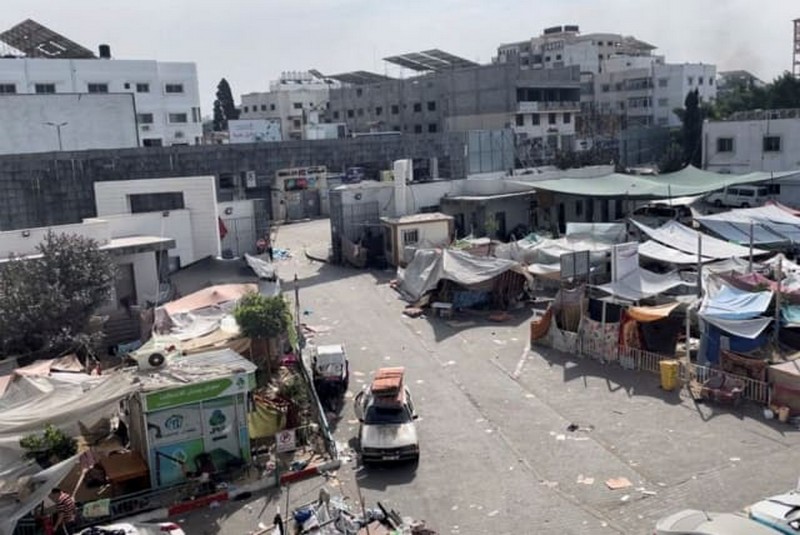
On Saturday, hundreds of people fled on foot after the director of Gaza’s main hospital said the Israeli army ordered the evacuation of the facility where some 2,000 people were trapped.

Columns of sick and injured — some of them amputees — were seen making their way out of Al-Shifa hospital towards the seafront without ambulances along with displaced people, doctors and nurses, as loud explosions were heard around the complex.

On the way, an AFP journalist saw at least 15 bodies, some in advanced stages of decomposition, along a road lined by heavily damaged shops and overturned vehicles.

The health ministry said 120 wounded, along with an unspecified number of premature babies, were still at Al-Shifa hospital.

Israel has been pressing military operations inside the hospital, searching for the Hamas operations centre it says lies under the sprawling complex — a charge Hamas denies.

In Gaza City, Israeli troops had called over loudspeakers to evacuate Al-Shifa “in the next hour”, an AFP journalist at the hospital reported.

They also called the hospital’s director, Mohammed Abu Salmiya, telling him to ensure “the evacuation of patients, wounded, the displaced and medical staff, and that they should move on foot towards the seafront”, he said.

According to Ahmed El Mokhallalati, a doctor at the hospital, “most of the medical staff and patients had left” but he was staying at Al-Shifa along with five other doctors.

Despite the evacuation order, “many patients cannot leave the hospital as they are in the ICU beds or the baby incubators,” Mokhallalati said on X.

19 November 2023

Source: countercurrents.org