Just International

The Niger Coup – Syria Military Escalation as U.S. Increases Pressure

By Vanessa Beeley

My Two Sections from 2 Aug 2023

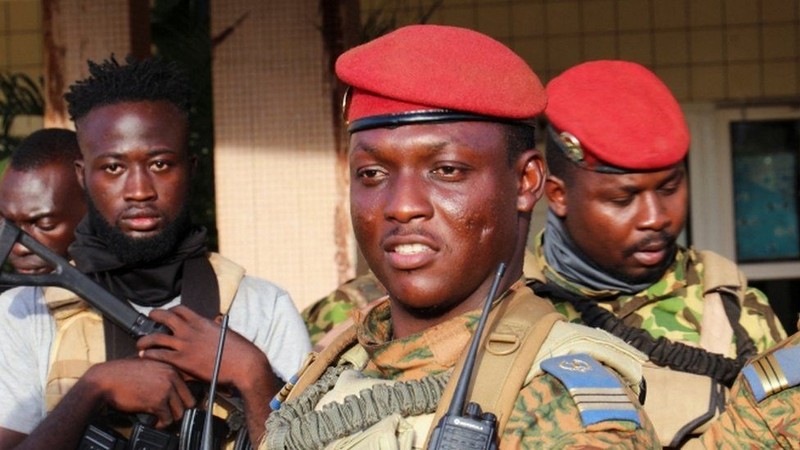
In section one I cover the recent military coup in Niger and the emergence of a new Pan-Africanist movement led by the Sahel nations of Burkina Faso, Niger and Mali with a combined population of 60 million. It is the 7th military coup to overthrow governments in thrall to French neocolonialism since 2020. The developing partnerships with Russia and China are strengthening African resolve to throw off the chains of colonialism. With Ibrhaim Traore we see a similar ideology to the assassinated Thomas Sankara, one of the most inspirational leaders of all time.

Watch: Niger, Burkina Faso leading the Sahel region war against Imperialism

Then in section two, I cover the recent events in Syria – the U.S. military build-up and the recent spate of ISIS attacks triggered by the U.S-led axis of terror occupying one third of Syrian territory.

Watch: Syria heads for military escalation as US increases pressure

Vanessa Beeley is a member of the TRANSCEND Network for Peace Development Environment.

7 August 2023

Source: transcend.org

The Causes of Hunger Are Manipulation of Food Prices and Corporate Land Grabbing

By Manlio Dinucci

Headline: “Russia starves the world, Italy’s Meloni confirms it.”The accusation that Russia is starving Africa by blocking Ukrainian grain shipments, falls in the face that all of the grain from Ukraine went to EU countries, not to poorer nations, to which only 2 ships out of 87 were sent.  

31 Jul 2023 – At the United Nations Food Systems Summit, Italy’s President Meloni confirmed the West’s accusation against Russia: 

“Russia’s war of aggression against Ukraine has exacerbated food insecurity in many African nations, had a major impact on the distribution of grains around the world exacerbating the global food security crisis. This would be the cause of the fact that 30 percent of humanity, 2.4 billion people, do not have access to adequate food, that more than 700 million people (according to official default estimates) are chronically undernourished, i.e., condemned to premature death from starvation.

What the real causes are is indicated by the World Bank’s own data: while wholesale prices of agricultural products and cereals have fallen by 4 percent and 12 percent respectively in one year, food prices have risen worldwide, often by 10 percent or more, affecting low-income countries the most. What the real causes of hunger are is shown by the growing phenomenon of “land grabbing”: the grabbing of arable land in Africa and other regions by large speculative groups. The same ones that speculate on all commodities, including grains: more than 6 million commodity buying and selling contracts are entered into daily at the Chicago Commodity Exchange for speculative purposes. 

The accusation that Russia is starving Africa because it is blocking Ukrainian grain shipments falls in the face of the fact that almost all of the grain sent by Ukraine went to European Union countries, not to poorer nations, to which only two ships out of 87 were sent.  

At the Second Russia-Africa Summit it was announced that Russia exported more than 11 million tons of grain to Africa last year and nearly 10 million tons in the first six months of 2023. All this took place despite illegal sanctions imposed on Russian exports.  In the coming months Russia will supply 50,000 tons of wheat each to Burkina Faso, Zimbabwe, Mali, Somalia, Central African Republic, and Eritrea, delivered at no cost.

Manlio Dinucci is a research associate of the Centre for Research on Globalization, a geographer, and geopolitical scientist.

7 August 2023

Source: transcend.org

Time to observe August 7 as “GN Saibaba Day”

By Gurpreet Singh

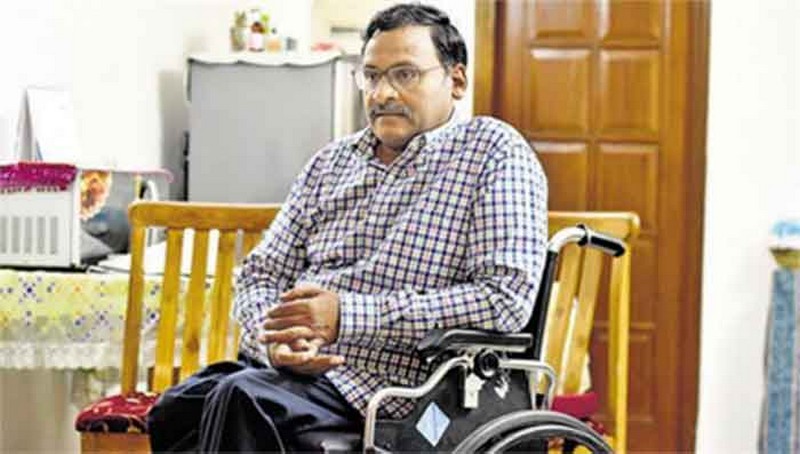
Let’s make the world’s so-called largest democracy accountable for incarcerating a disabled scholar. A wheelchair-bound former Delhi University Professor, who is struggling with multiple ailments, is serving a life sentence under trumped up charges, for merely questioning the power and standing up for the poor and marginalized, as well as for the religious minorities who are being persecuted in India. GN Saibaba was convicted on March 7, 2017,after being branded as a sympathizer of Maoist insurgents.

The United Nations Working Group on Arbitrary Detention has asked for his release on humanitarian grounds due to his deteriorating health and brutal jail conditions. Thousands of people across the world have signed petitions asking for his liberation. But the right wing Hindu nationalist government in New Delhi refuses to let him go. On the contrary, attacks on political dissidents and minorities have increased ever since Narendra Modi became the Prime Minister in 2014.

It is pertinent to mention that when Mahatma Gandhi, the father of the Indian nation and a towering leader of the passive resistance movement against British rule, was sentenced on March 18, 1922 his followers decided to observe the 18th of every month as “Gandhi Day” until he was released.

It’s a shame that the country that once fought against foreign occupation and its draconian laws is now being ruled by its own people, who have brought in even more stringent laws to suppress the voices of freedom. Saibaba is just one example of the extreme barbarity, while many continue to suffer the state violence in an independent India. Let’s reclaim the country of Gandhi’s dreams, and make noise for the release of Saibaba and all other political prisoners being jailed unfairly. For now, we can follow in the footsteps of the freedom fighters, and start observing every 7th of the month as “GN Saibaba Day” until he comes back home with dignity and respect. Nothing will be more fitting than to launch this initiative in the month of August, when the double-faced Indian leadership celebrates independence from the British, while continuing to oppress its own citizens to retain power and control by taking the refuge of patriotism.

Gurpreet Singh is a journalist

6 August 2023

Source: countercurrents.org

The US Government Once Called Hiroshima and Nagasaki ‘Nuclear Tests’

By Norman Solomon

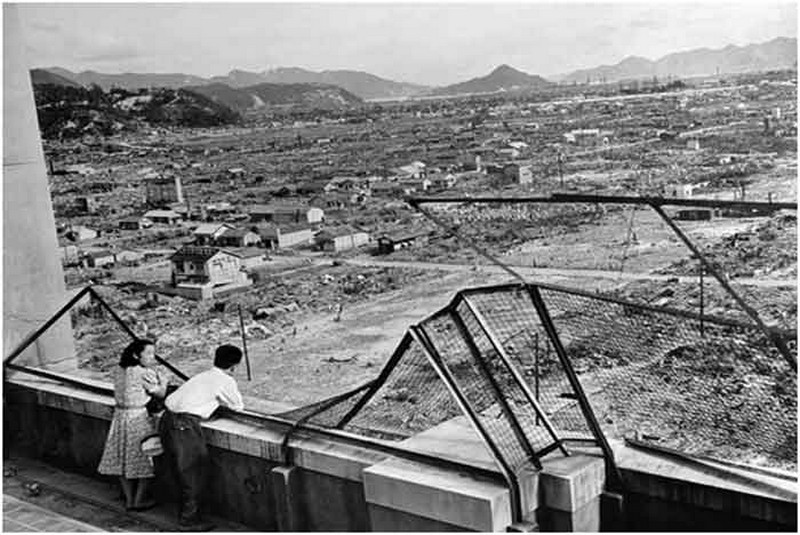
In 1980, when I asked the press office at the U.S. Department of Energy to send me a listing of nuclear bomb test explosions, the agency mailed me an official booklet with the title “Announced United States Nuclear Tests, July 1945 Through December 1979.” As you’d expect, the Trinity test in New Mexico was at the top of the list. Second on the list was Hiroshima. Third was Nagasaki.

So, 35 years after the atomic bombings of those Japanese cities in August 1945, the Energy Department—the agency in charge of nuclear weaponry—was categorizing them as “tests.”

Later on, the classification changed, apparently in an effort to avert a potential PR problem. By 1994, a new edition of the same document explained that the bombings of Hiroshima and Nagasaki “were not ‘tests’ in the sense that they were conducted to prove that the weapon would work as designed… or to advance weapon design, to determine weapons effects, or to verify weapon safety.”

But the atomic bombings of Hiroshima and Nagasaki actually were tests, in more ways than one.

Take it from the Manhattan Project’s director, Gen. Leslie Groves, who recalled: “To enable us to assess accurately the effects of the bomb, the targets should not have been previously damaged by air raids. It was also desirable that the first target be of such size that the damage would be confined within it, so that we could more definitely determine the power of the bomb.”

A physicist with the Manhattan Project, David H. Frisch, remembered that U.S. military strategists were eager “to use the bomb first where its effects would not only be politically effective but also technically measurable.”

For good measure, after the Trinitybomb test in the New Mexico desert used plutonium as its fission source on July 16, 1945, in early August the military was able to test both a uranium-fueled bomb on Hiroshima and a second plutonium bomb on Nagasaki to gauge their effects on big cities.

Public discussion of the nuclear era began when President Harry Truman issued a statement that announced the atomic bombing of Hiroshima—which he described only as “an important Japanese Army base.” It was a flagrant lie. A leading researcher of the atomic bombings of Japan, journalist Greg Mitchell, has pointed out: “Hiroshima was not an ‘army base’ but a city of 350,000. It did contain one important military headquarters, but the bomb had been aimed at the very center of a city—and far from its industrial area.”

Mitchell added: “Perhaps 10,000 military personnel lost their lives in the bomb but the vast majority of the 125,000 dead in Hiroshima would be women and children.” Three days later, when an atomic bomb fell on Nagasaki, “it was officially described as a ‘naval base’ yet less than 200 of the 90,000 dead were military personnel.”

Since then, presidents have routinely offered rhetorical camouflage for reckless nuclear policies, rolling the dice for global catastrophe. In recent years, the most insidious lies from leaders in Washington have come with silence—refusing to acknowledge, let alone address with genuine diplomacy, the worsening dangers of nuclear war. Those dangers have pushed the hands of the Doomsday Clock from the Bulletin of the Atomic Scientists to an unprecedented mere 90 seconds to cataclysmic Midnight.

The ruthless Russian invasion of Ukraine in February 2022 quickly escalated the chances of nuclear war. President Joe Biden’s response was to pretend otherwise, beginning with his State of the Union address that came just days after the invasion; the long speech did not include a single word about nuclear weapons, the risks of nuclear war, or any other such concern.

Today, in some elite circles of Russia and the United States, normalized talk of using “tactical” nuclear weapons has upped the madness ante. It can be shocking to read wildly irresponsible comments coming from top Russian officials about perhaps using nuclear weaponry in the Ukraine war. We might forget that they are giving voice to Russia’s strategic doctrine that is basically the same as ongoing U.S. strategic doctrine—avowedly retaining the option of first use of nuclear weapons if losing too much ground in a military conflict.

Daniel Ellsberg wrote near the close of his vital book The Doomsday Machine: “What is missing—what is foregone—in the typical discussion and analysis of historical or current nuclear policies is the recognition that what is being discussed is dizzyingly insane and immoral: in its almost-incalculable and inconceivable destructiveness and deliberate murderousness, its disproportionality of risked and planned destructiveness to either declared or unacknowledged objectives, the infeasibility of its secretly pursued aims (damage limitation to the United States and allies, ‘victory’ in two-sided nuclear war), its criminality (to a degree that explodes ordinary visions of law, justice, crime), its lack of wisdom or compassion, its sinfulness and evil.”

Dan dedicated the book “to those who struggle for a human future.”

A similar message came from Albert Einstein in 1947 when he wrote about “the release of atomic energy,” warning against “the outmoded concept of narrow nationalisms” and declaring: “For there is no secret and there is no defense; there is no possibility of control except through the aroused understanding and insistence of the peoples of the world.”

Norman Solomon is the national director of RootsAction.org and executive director of the Institute for Public Accuracy.

6 August 2023

Source: countercurrents.org

Violence in Haryana: Fascism with Indian Characteristics

By Arjun Banerjee

The news cycle this week has been taken up with the rapidly escalating violence in Haryana’s Gurugram, Mewat, and Nuh. This is occurring against the backdrop of months of violence in the state of Manipur, where the hill-dwelling Christian Kuki tribals are facing an onslaught by the dominant Hindu Meitei community of the plains. Ever since the BJP assumed power under the leadership of Modi in 2014, such instances of collective violence and terrorization of minorities (especially Muslims) has become commonplace in India. This comes as no surprise given the RSS-BJP’s ideology and the fact that it has been putting ‘fascism with Indian characteristics’ in practice for the past nine years that it has been in power at the Centre and various states.

Predictable reproduction of anti-Muslim violence

Haryana is hardly the first state to witness the mobilization of Hindus against Muslims. The saffron-clad mobs going about the streets in tandem with the online mobs have been a constant in public life on one pretext or the other. In context of Haryana, news has it that the violence was set off by a Hindu procession being pelted with stones, allegedly by Muslims. The animosity and violence were then aggravated by social media posts and talk of known lyncher, anti-Muslim bigot, and self-appointed cow vigilante Monu Manesar calling on his ‘followers’ to participate in further mobilizations that target Muslims.

In a systematic collusion to erase Muslim identity and visibility, Hindutva groups in Gurugram have previously campaigned against Muslims offering prayers in public while the administration has capitulated.

The administration’s response and actions in the current violence are all too predictable. Anti-establishment voices online claim that the police are ignoring violence and its incitement. Late-night attacks and looting of homes is being reported, along with arrests of Muslim youth. As expected, “law and order” became the excuse to shut down the internet (but not the right-wing TV channels and their ceaseless anti-Muslim tirades), making you wonder whether social media platforms and not the governments at the city and state level are responsible for maintaining order. One may reasonably believe that the true intent of these internet shutdowns is to prevent any communication and documentation of events that may go against the grain of the official narrative and the political interests of the forces orchestrating the violence.

The Hindutva right-wing is always on the lookout for ways to present Muslims as a threat to the Hindus and the ‘nation’ as a whole, which by virtue of having a common enemy are assumed to be interchangeable in their imagination. The Allegations of attacks by Muslims on Hindu ‘processions’ has a history that goes all the way back to the pre-Independence era and is meant to underscore the fear of Muslims as a threat to Hindus. More recently, this tactic of mobilizing Hindu mobs with hostile intent and then painting them as a religious procession was deployed in 2021 when Muslims and their homes and properties were targeted in the wake of Ram Navami ‘celebrations’ in as many as six states, and the same pattern played out in the state of Tripura that year. What inevitably follows in the destruction of Muslim homes, shops, and mosques, either by Hindutva mobs or more blatantly with the State itself razing their houses with bulldozers.

Victimizers as victims

A cynical ploy by the Bajrang Dal, VHP, and their political protectors is to falsify and invert the historical reality of Brahmanical oppression of oppressed castes, religious minorities, and women and claim instead that it is they who are oppressed. At present, Twitter is awash with posts claiming that these militant groups are the ‘first line of defence’ and calls for unconditional and “unapologetic” support for them. This is very clearly a pushback against a growing rejection of their lawless actions and the illegitimate pressure that they are able to exert on public life thanks to the hands that hold their reins.

This language of ‘Hindus under attack’ being in need of protection and defence is meant to reflexively justify the aims and methods of such groups. The reality, however, is that these militant groups function as the muscle of the Hindutva agenda while its ideologues present their unprovoked aggression against Muslims and minorities as desperate self-defence on behalf of an entire ‘community’. While they may cynically allege that the violence in Nuh, Mewat, and Gurugram is being perpetrated with Hindus as the target, in actuality it is they who instigate and initiate the violence in order to make possible the very spectacles which they use as an example of Hindu victimization.

These appeals to a sense of being constantly under threat by undesirable minorities are calculated to cement their own legitimacy and to allow them to stake claim as the sole representatives of ‘Hindu interests’.

The false category of ‘Hindu’

It must be emphasized that the word ‘Hindu’ is an imaginary category and a rhetorical stand-in to express the political goals of Brahmanism in a religious idiom. The first census of 1831 made it clear that numerical strength would be of great significance the new politics of the subcontinent, prompting the savarna (upper-caste) overlords of this supposed religion to consolidate the greatest possible headcount under the umbrella term of ‘Hindu’. Any attempts to destabilize this consolidation and expose ‘Hinduism’ as an opportunistic unification is met with fierce resistance.

The Brahmanical Hindutva forces know that this concocted Hindu identity is a cornerstone of their ploy to project their interests as the desires of the ‘majority’ and ‘the nation’. This explains why there has not been a Census since 2011: the politically strong OBCs have raised a demand for the enumeration of caste groups that cannot be easily shunted aside. This anxiety to ride atop the poorly-put-together Frankenstein monster of Hinduism is what causes Brahmanism such consternation at the imagined menace of Muslims and Christians going around converting people from their ‘original’ religion into theirs.

Conclusion

In the end, popular resistance under a common banner of socialism, Ambedkarism, and women’s leadership is the only effective counter to the Hindutva onslaught that is backed by nearly unlimited financial resources and muscle. An electoral opposition such as the recently consolidated “INDIA” has no ideological alternative and has only a limited utility.

Arjun Banerjee is a writer and journalist.

5 August 2023

Source: countercurrents.org

Hello!… Manipur is still burning! Is there anyone in charge?

By George Abraham

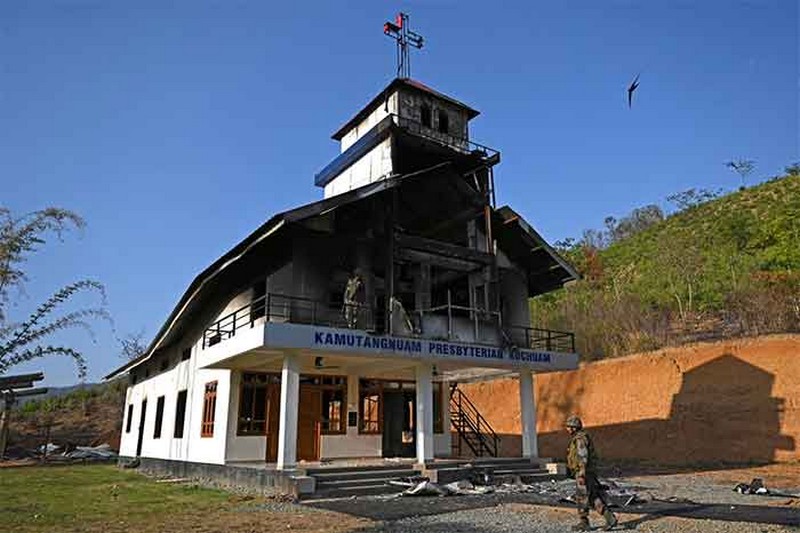
It has been almost three months since the State of Manipur in India has been in flames. The latest news reports speak about 140 or more people killed, 50,000 or more people made destitute and homeless, many hiding in forests, 317 churches burned, and 6137 homes set ablaze. It is indeed a colossal human tragedy that is unfolding before our eyes, and the power centers in the State or at the Center seem to be cavalier in their approach to a resolution.

The Godi media in India is spinning the story as an age-old rivalry between two ethnic groups, and many pundits have dismissed it as some tribal infighting that occurs relatively often. However, there is little doubt that since the 3rd of May, the Kuki-Zomi tribals have been at the receiving end of this horrible attack, which has all the designs of a well-orchestrated and planned campaign of ethnic cleansing. Kuki-Zomi forms about 16% of the population of Manipur, and the Meiteis, predominantly Hindus, make up about 53% of the State.

There is a raging debate over whether this ongoing crisis has any religious undertones! There is no doubt that it all started with an effort by the State Government to empower the Hindu majority at the expense of the Scheduled Tribes (mostly Christians) as regards their land rights. A writ petition filed in the High Court by members of the Meitei Tribe Union towards that goal appeared to have produced a ruling in favor of Meities, triggering the current mayhem. These anti-tribal policies are increasingly put in place in various states by the BJP government. Fr. Stan Swamy is a victim of those disastrous initiatives supporting crony capitalists that have hurt the indigenous and tribal people across India.

The attacks appeared to have been pre-meditated and well-planned. In the valley, the reports indicate the precision pinpointing of minority houses that were selected and burnt. The Hindu militants, who mostly belong to Arambai Tenngol and Meitei Leepun, appeared to have the tacit support of the Police and the law enforcement authorities. As per sources, it has now been revealed that over 4000 weapons, including sophisticated ones, have been looted from different locations in Manipur since the unrest began. These arms appeared to have played a critical role in exacerbating the violence. Using mortars against fleeing Kukis-zomi refugees to the forest to escape death and destruction may point to a higher-level conspiracy in aiding and abetting these militant groups.

It is also a known fact that there are Christians among the Meities. According to Dominic Lumon, the Archbishop of Imphal,  249 churches belonging to the Meitei Christians had been destroyed within 36 hours since the start of the violence. He said, “The wonder is, amid the fight between the Kukis and the Meiteis, why did the Meitei mob burn down and destroy 249 churches in the Meitei heartland? How is it that there was almost a natural attack on the church in the Meitei localities itself, and how did the mob know where the churches were located if not previously planned”. He attributed these attacks to the revival of Sanamahism, and the emergence of groups like Arambai Tenggol and Meitie Leepun.

Therefore, the theory that has been promoted by vested interests that there is hardly any religious angle to the whole unrest is quite suspect. BJP has long been critical of Northeastern states and blamed foreigners, especially missionaries, for their separatist tendencies. Although people in those states are apprehensive about the Hindutva agenda, they have given in to supporting the party because it allows proximity to state power and, more importantly, to central funds. After the BJP took control of the central government in 2014, political leaders in these states gradually switched loyalties to the BJP. Now, they are beginning to pay a heavy price for their wanton disregard for making crucial decisions.

While looking back at recent BJP history, the initial grabbing of power in Manipur and the subsequent unrest and violence come directly from the BJP playbook. According to Human Rights Watch, a majority of the reported incidents of violence against Christians in 1998 occurred in the western State of Gujarat, the same year that the BJP came to power in the State. The year began with an unprecedented hate campaign by Hindutva groups and culminated with ten days of nonstop violence against Christian tribals and the destruction of churches and Christian institutions in the southeastern districts at the year’s end. Human Rights Watch investigated these attacks in Dangs district in southeastern Gujarat. The events were preceded by escalating violence throughout the State in which many police and state officials were implicated. Biren Singh, the Chief Minister of Manipur, seems to be following the same model. Before the current crisis, his government bulldozed three churches in the name of an anti-encroachment drive, though some have existed since the early 70s in Imphal’s’ East district Tribal colony.

Despite widespread destruction and human loss of lives, India’s Prime Minister Narendra Modi has kept a vow of silence until now while making several important state visits to various capitals around the world, including the United States. His primary constitutional duty is to protect the lives and property of every citizen of India, regardless of caste, religion, or region. Yet, this leader of a great nation, whose aim is to make India the Vishwaguru and would readily tweet if a cricketer is involved in an accident, found it convenient to close his eyes to a State ablaze under his premiership. On his foreign visits, he often asks foreign leaders, especially in Christian-majority countries, to protect Hindu shrines and safeguard their sanctity. Yet, he is pretty undaunted about the destruction of 300 or more Christian Churches under his watch. His External Affairs Minister S. Jaishankar who has specialized in propaganda, could always rationalize his thoughts in the name of traditions and culture, and even as he has redefined human rights, one that would fit the people of his stripes abroad and the other for the marginalized communities in his homeland.

For astute political observers, Manipur is coming apart at its seams, and so does the rest of India. The politics of polarization championed by the Modi administration is taking its toll on human lives and personal properties. However, more than anything else, transforming trajectories are not only causing the alienation of its people and the dismantlement of its institutions but also destroying the moral underpinnings of a great country. The party that prides itself on nationalism has given the impetus to the extremist elements to tear the nation apart for the selfish pursuit of power regardless of its consequences. Who is anti-national now: is that someone who drives the country towards disintegration with odious policies using religion as a tool with disastrous results or who honestly criticizes the downward spiral of a nation under the current governance? This question remains to be answered!

Writer is a former Chief Technology Officer of the United Nations

3 August 2023

Source: countercurrents.org

Ousted Niger President Calls For U.S. Intervention In Own Country

By Countercurrents Collective

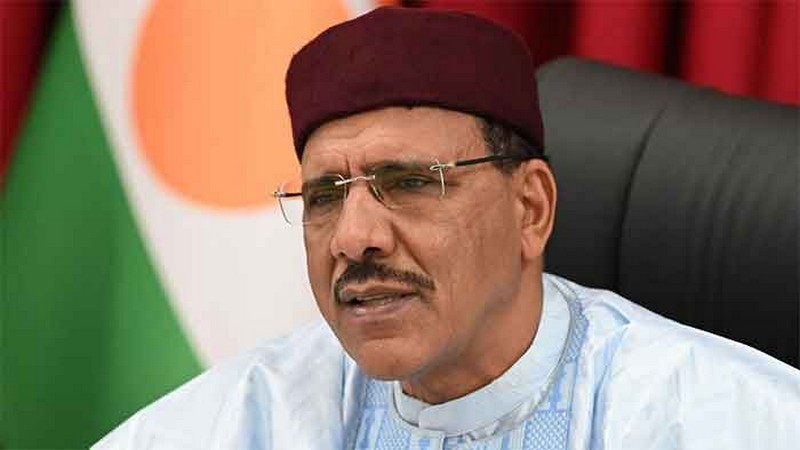
The ousted Nigerien president Mohamed Bazoum has asked for U.S. help to defeat the military junta that seized power last week. The Washington Post on Thursday evening published an op-ed purportedly written by Mohamed Bazoum in which the ousted President made the call for U.S. intervention.

“I write this as a hostage. Niger is under attack from a military junta that is trying to overthrow our democracy,” Bazoum said.

The coup “has no justification whatsoever” and is a “cynical effort to undermine the remarkable progress Niger has made under democracy,” he insisted.

The ousted President wrote: “I call on the U.S. government and the entire international community to help us restore our constitutional order. Fighting for our shared values, including democratic pluralism and respect for the rule of law, is the only way to make sustainable progress against poverty and terrorism.”

As a key argument, Bazoum brought up that earlier this year, U.S. Secretary of State Antony Blinken called Niger “a model of resilience, a model of democracy, a model of cooperation.”

Bazoum argued his government had made great progress in economic and social areas, partnering with the U.S. Indiana National Guard to reduce terrorist threats, while USAID shifted its focus from humanitarian work to “building sustainable energy, improving agricultural productivity and educating the next generation of Nigerian leaders.”

He revealed that foreign aid makes up 40% of the country’s budget, but is now blocked due to sanctions by the Economic Community of West African States (ECOWAS), which Bazoum endorsed.

Bazoum criticized Mali and Burkina Faso for employing “criminal Russian mercenaries” such as the Wagner Group.

Unless the U.S. and the ECOWAS intervene, Wagner will have an “open invitation” into the region and all of central Sahel “could fall to Russian influence,” Bazoum wrote.

The ousted President did not make a single reference to uranium, Niger’s key export to former colonial master France.

The Coup

Nigerien soldiers led by General Abdourahamane Tchiani ousted President Mohamed Bazoum last Wednesday, and has formed National Council for Safeguarding the Homeland (NCSH).

The coup leaders have justified their action as a means of safeguarding the country from a “deteriorating” security situation, as well as “poor economic and social governance.”

General Abdourahamane, the former head of Niger’s presidential guard, masterminded the country’s June 26 coup and has since detained President Mohamed Bazoum in the presidential palace.

On Monday, the junta leaders accused France of planning a military strike at the presidential palace to free the detained leader.

Niger’s Military Ties with France Scrapped

An AFP report said:

Niger’s NCSH on Thursday denounced the military pact with France and warned the neighboring African states not to intervene.

General Abdourahamane said that Niger will “immediately” suspend all military cooperation agreements with France, including the deal under which Paris has deployed around 1,500 troops in the Sahel country.

According to AFP, earlier in the day, on the 63rd anniversary of Niger’s independence from Paris, the junta blocked the signal of French broadcasters France 24 and Radio France Internationale (RFI).

The new military leader also condemned the ECOWAS sanctions and said his government will respond with force to any outside intervention. The junta “rejects all sanctions and refuses to yield to any threat, wherever it may come from,” the chief of the military government said in a televised speech on Wednesday. “If they pursue their destructive logic to the end, may Allah watch over Niger and ensure that this is the final great battle we will fight together for a true independence of our nation.”

He described the “illegal” sanctions imposed unilaterally by ECOWAS and the West African Economic and Monetary Union (WAEMU) as “unjust and inhumane” acts against the people of Niger.

He claimed that the West African blocs acted under the influence of “certain” foreign powers, disregarding Niger’s sovereignty and the suffering of its population. He said: The CNSP rejects these sanctions as a whole and refuses to give to any threat wherever it comes from. We refuse any interference in the internal affairs of Niger.

Uranium, Gold, Slaves

On Sunday, the new military government of Niger announced it would suspend the export of uranium and gold to France, to the accolades of some of the local population.

“We have uranium, diamonds, gold, oil, and we live like slaves? We do not need the French to keep us safe,” one pro-government demonstrator told the local news portal Wazobia Reporters.

Landlocked Niger is the world’s seventh-largest producer of uranium, accounting for 4% of the global output. A French company controls about two-thirds of the country’s output.

ECOWAS

The ECOWAS has condemned the coup and issued an ultimatum for the junta to reinstate Bazoum within seven days. If its demands are not met, the body has threatened to “take all measures to restore constitutional order in the Republic of Niger,” including the use of force.

African Union

The African Union denounced the coup on Friday and gave the junta in Niamey 15 days to stand down or face “punitive measures.”

Algeria, Libya

Algeria and Libya have signaled support for the new government in Niger.

Nigeria

Niger’s southern neighbor Nigeria has already begun mustering troops on the border, according to local media.

A Nigerian delegation flew into capital Niamey on Thursday for talks with the junta. It was led by Abdulsalami Abubakar, a retired general who headed Nigeria’s own military government in 1998-99.

Another delegation was dispatched for talks with Algeria and Libya, both of which have signaled support for the new government in Niamey.

Nigerian President Bola Tinubu issued a statement that he instructed both delegations to do “whatever it takes to ensure a conclusive and amicable resolution of the situation in Niger.”

Senegal

Senegal announced on Thursday that it would join an ECOWAS intervention against Niamey.

Biden

U.S. President Joe Biden called for Bazoum’s immediate release on Thursday, the first time the U.S. leader has spoken out about the situation in Niger.

In a statement congratulating the former French colony on its independence day, Biden said Niger faces a “grave challenge to its democracy.”

Russia

Russia has denounced the coup in Niger as an “anti-constitutional act,” and the Russian Foreign Ministry called on all parties to refrain from using force.

Intervention In Niger Would Mean Declaration Of War, Say Burkina Faso And Mali

The military governments in neighboring Mali and Burkina Faso have warned the West and other African countries not to intervene in Niger.

Mali and Burkina Faso said in a joint statement on Monday that any such move would be considered an attack on their respective countries.

Bamako and Ouagadougou would consider any such move as an attack on their own countries, the two countries said.

“Any military intervention against Niger would amount to a declaration of war against Burkina Faso and Mali,” said the joint communique, which a Burkinabe military spokesman deliberately repeated three times during a state television broadcast.

In case of an intervention, the two countries would withdraw from the ECOWAS and “adopt self-defense measures in support of the armed forces and the people of Niger,” according to the statement.

The joint communique said: A military intervention against Niger “could destabilize the entire region, as had the unilateral NATO intervention in Libya, which was at the root of the expansion of the terrorism in the Sahel and West Africa.”

Mali and Burkina Faso condemned the sanctions ECOWAS announced on Saturday as “illegal, illegitimate and inhumane.”

The two countries also expressed “fraternal solidarity” with the Nigerien people, “who have decided to take destiny into their own hands and to assume before history the fullness of their sovereignty,” according to their joint communique.

The military governments of the two former French colonies have sought to sever their ties to Paris and rebuild their statehood with Russian assistance.

French And U.S. Bases In Niger

France currently has 1,500 troops and a drone base in Niger, while the US has 1,100 troops and two drone bases, according to the Financial Times.

Coup Supporters Protest Inhumane Sanctions

Supporters of Niger’s new ruling junta gathered in the capital, Niamey, on Thursday to protest sanctions imposed on the country in the aftermath of last week’s coup, as well as to oppose foreign meddling.

The mass rally was taking place as the country marks 63 years of independence, in response to a joint call by junta leader General Abdourahamane and a coalition of civil society groups.

One participant was reportedly seen carrying a sign that read “Long Live Niger, Russia, Mali, and Burkina Faso. Down With France, ECOWAS, and the EU.”

One of the protesters was quoted by Reuters as saying: “We are going to do a demonstration against all the countries of ECOWAS and all who are taking inhumane and unpopular measures toward Niger.”

A protester told Al Jazeera that Niger’s main priority was security, regardless of whether it is provided by “Russia, China, or Turkey.”

No Evidence Russia Involved In Coup, Says Italian FM

The government in Rome has no evidence of Moscow’s involvement in the military coup in Niamey, Italian Foreign Minister Antonio Tajani told the daily La Repubblica on Thursday. The turmoil in Niger took both the U.S. and France by surprise, he also revealed.

“We have no information of Russia’s involvement in the Nigerien events, or the preparation of the coup, Tajani told the outlet when asked whether Moscow was playing some kind of game in the Sahel nation. He dismissed the Nigerien protesters carrying photos of Russian President Vladimir Putin as “more anti-French than anything else.”

“Many, perhaps all in Europe, have been taken by surprise” by the coup, Tajani said. “Nobody knew about it, neither the U.S. nor France.”

There are 350 Italian soldiers currently in Niger, and they are keeping to their barracks for now, the foreign minister said.

The Nigerien authorities were also blindsided, Tajani added, noting that the Nigerien PM Uhumudu Mahamadou was in Rome for a UN food summit.

When pressed about the Russian role in the region, he said that the alleged presence of Wagner Group members was “another matter” and that Russia has “infiltrated that region skillfully for years.”

Tajani told La Repubblica: We have always been against the proposal of any European military intervention.”

He added that his French counterpart Catherine Colonna “never” broached the subject of intervention with him.

Wagner Group

Wagner Group head Yevgeny Prigozhin has described the events in Niger as a justified rebellion of the people against Western exploitation, citing the example of uranium shipped to France. He argued the Nigeriens have been “kept in fear for decades” by the gangs of terrorists backed by the West, and that their presence was then cited to justify the deployment of troops to the West African country.

Sanctions Could Force Niger Into Default, Says Moody’s

Economic and financial sanctions imposed on Niger by its regional and Western partners following the military coup could result in the country defaulting on its debt, ratings agency Moody’s has warned.

The ECOWAS and the WAEMU imposed restrictions on the government of Niger, including the suspension of all commercial and financial transactions, and the freezing of Niger’s assets in ECOWAS central banks and commercial lenders. All financial assistance from regional development banks was also suspended.

International donors, including the EU and France, suspended financial support and security cooperation. The U.S. and the African Union threatened to follow suit if constitutional order is not restored soon.

The restrictions prompted Moody’s to downgrade Niger’s long-term foreign and local currency issuer ratings on Wednesday from B3 (judged to have speculative elements and a significant credit risk) to Caa2 (rated as poor quality and very high credit risk) and place them under review for further downgrade.

In a press release announcing the downgrade, Moody’s warned that if maintained, the sanctions “will likely prevent Niger from making upcoming principal or interest payment to creditors outside the country which would constitute a default under Moody’s definition.”

About 80% of Niger’s outstanding local currency debt is held by other West African countries.

Niger, a landlocked country in West Africa, is one of the world’s poorest nations, receiving close to $2 billion a year in development aid.

Niger also has a critical stock of natural resources, including uranium, coal, gold, iron ore, petroleum, molybdenum, and salt. It is the world’s seventh-biggest producer of uranium.

U.S. Evacuates Embassy Staff From Niger

The U.S. State Department has ordered a partial pullout for diplomatic workers stationed in Niger, amid ongoing unrest following a recent coup in the African nation.

Officials announced the decision on Wednesday, outlining that non-emergency personnel and family members were ordered to leave the US Embassy in Niamey.

A number of other Western states have announced their own evacuations. Spain and Germany have issued notices for citizens to leave, warning of a deteriorating security situation in the wake of the coup.

Though Washington has so far declined to describe the abrupt transfer of power as a “coup,” U.S. officials continue to recognize Bazoum as Niger’s legitimate leader. Secretary of State Antony Blinken claimed on Wednesday he had spoken with the deposed president, and called for the “restoration of the democratically-elected government.”

France And Italy Evacuate Citizens

France will begin evacuating its nationals from Niger on Tuesday following the military coup and subsequent attacks on the French embassy in Niamey, the Foreign Ministry in Paris has said.

In a statement on Tuesday, the French authorities also announced that it was helping move citizens of other European countries out of Niger.

Anti-French protests were held outside France’s embassy in Niamey on Sunday following the coup.

France has condemned the putsch and maintained that it recognizes Bazoum as the only legitimate power in the country.

French Foreign Affairs Minister Catherine Colonna replied that the “accusations that have been made since are false and shocking.”

The Italian government also announced on Tuesday that it would repatriate citizens from Niamey.

The Italian government will arrange a “special flight” for the evacuation mission, according to Foreign Minister Antonio Tajani.

Countercurrents is answerable only to our readers.

5 August 2023

Source: countercurrents.org

Extremely Extreme

By Tom Engelhardt

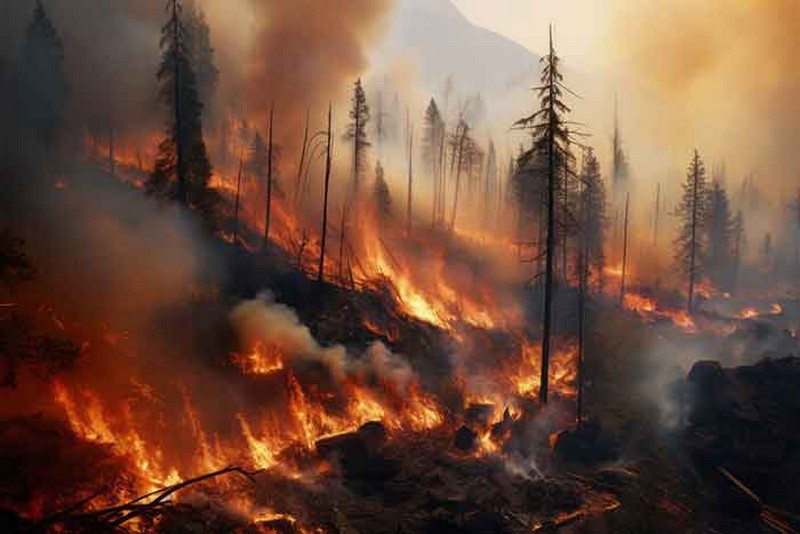
Hey, who knows? It could be the Gulf Stream collapsing or the planet eternally breaking heat records. But whatever the specifics, we’re living it right now, not in the next century, the next decade, or even next year. You couldn’t miss it — at least so you might think — if you were living in the sweltering Southwest; especially in broiling, record-setting Phoenix with 30 straight days of temperatures above 110 degrees Fahrenheit; or in flaming Greece or western China on the day the temperature hit 126 degrees Fahrenheit or sweltering, blazing Algeria when the temperature reached an almost unimaginable 135 (yes, 135!) degrees Fahrenheit; not to speak of broiling Canada with its more than 1,000 fires now burning (a figure that still seems to be rising by the week) and its 29 million acres already flamed out; and don’t forget Italy’s 1,400 fires; or Florida’s hot-tub-style seawater, which recently hit an unheard-of 101-plus degrees Fahrenheit. And though I’m still writing this as the month is ending, July is more or less guaranteed to set the record for the hottest month in history. And don’t assume that “record” will stand for long, either.

Who even remembers that this June was the hottest since records have been kept or that July 6th was the hottest day in recorded history (and July 3rd through 6th, the hottest four days ever)? And don’t be surprised if 2023 ends up setting a record for the hottest year or assume that such a record will last long on a planet where the previous eight years were the warmest ever. And if I’m already boring you, then one thing is guaranteed: you’re going to be bored out of your mind in the years to come.

And with all that’s burning across significant parts of southern Europe, northern Africa, Canada, and elsewhere, yet more carbon dioxide is being released into the atmosphere, preparing the way for a truly scorching world to come. Just keep in mind, in fact, that, by the time this piece is published, I could undoubtedly produce a startling new paragraph or two of updated, overheated horrors to send your way.

Yes, as U.N. Secretary-General António Guterres recently put it, the era of “global warming” should be considered over, since we’re now clearly living at the beginning of a time of “global boiling.” And as you sit there sweating and reading this, if that doesn’t strike you as extreme, consider something else: fossil-fuel companies are still bringing in staggering profits (even if poor Shell’s second-quarter profits in 2023 were down to a mere $5.1 billion) as they — yes! — continue to expand their oil and natural gas operations globally. And can you blame them? After all, the companies whose executives have long known what their products would do to this planet and even sometimes responded by funding think tanks that promoted climate change denial, have little choice but (if you’ll excuse the phrase) to cover their assets. Meanwhile, last year, China, at the forefront of the alternative energy boom now underway, also granted permits to build, on average, two new coal plants a week (while burning more coal than the rest of the planet combined).

Environmental Extremism

Now, tell me that you’re not sweating at least a little and that we don’t live on an increasingly extreme planet. And just to add a cheery note to that, check out blistering Texas. El Paso has had more than 41 days in a row of temperatures at or above 100 degrees Fahrenheit (just short of — yes, Ron! — Miami at 45 while I was writing this). However, Texas’s Republican-controlled legislature is now striving to dramatically curb that state’s remarkable advances in solar and wind power while raising their cost, even as many of its members push for public investment in the construction of new natural gas plants (which, as a recent study indicates, could prove as greenhouse-gas dirty as coal).

Just remind me: What planet are they living on?

If, however, you truly want to see American extremism up close and personal, don’t even bother to check out Ron DeSantis, the governor of Florida, who charmingly enough launched his now-faltering presidential campaign by forswearing the “politicization of the weather.” Under the circumstances, I know you won’t be faintly surprised to learn that he had previously rejected the very idea of climate change as “leftwing stuff.” (Of course, if the left turns out to be our future, then maybe he’ll prove to be… oh, my gosh, so sorry, but what other word can I use than “right”?)

No, skip Ron. After all, if you don’t happen to live in Florida, he couldn’t be more skippable. Look instead at Donald Trump. Yes, our much-indicted (or soon to-be-indicted-again) former president and (“Be there, will be wild!”) aspiring autocrat, who shows every sign of once again becoming the “Republican” candidate for president.

Were he indeed to become that and then — also anything but unimaginable — win the 2024 election and end up back in the White House, the extremity of the world we could find ourselves in might be almost beyond imagining. We’re talking about the guy who claimed that, when it comes to climate change, its full effect could be — uh-oh! — that “the ocean will rise by 1/100th of an inch over the next 350 years.” (Actually, if global temperature rise is kept to 2 degrees Celsius, the sea level near Mar-a-Lago would be expected to rise three feet by 2150, a mere 3,500 times the former president’s estimate in half the time — and that’s if we don’t truly turn out to be on a climate-boiling planet.)

Of course, should Donald Trump win not just the Republican nomination but the 2024 election, this sweltering country will have put someone back in the White House who has spent his political career mocking the very idea of global warming and supporting to the hilt the production of fossil fuels. His administration reversed, rolled back, or wiped out nearly 100 environmental rules and regulations, many related to climate change, including “Obama-era limits on planet-warming carbon dioxide emissions from power plants and from cars and trucks.” Meanwhile, he appointed cabinet members who openly dismissed the very idea of global warming.

And, by the way, if you want to measure the mad extremism of Republicans today, try to recall a once-upon-a-time era when they held a hardly less environmental outlook than Democrats. (It’s easy to forget that it was the otherwise lamentable Republican President Richard Nixon whose administration established the Environmental Protection Agency.) If you want to measure the extremism of what can hardly be called the Republican — as opposed to Trumpublican — Party of 2023, check out the positions on climate change of most of its possible presidential candidates.

If, in fact, you want a gauge of how extreme this country has already become in this century, just stop and think for a moment about the fact that, as of now, few polling professionals believe a 2024 Biden-Trump election wouldn’t prove a total nail-biter. That should make you sweat a little more.

Be There, Will Be Wild!

On this sweltering planet of ours, Donald Trump and his Trumpublicans should indeed be considered up-close-and-personal versions of American extremism. Yes, in 2016, Trump won the election by catching the mood of all too many voters with the slogan “make America great again!” or MAGA! (exclamation point included). As I wrote at the time, “With that ‘again,’ Donald Trump crossed a line in American politics that, until his escalator moment, represented a kind of psychological taboo for politicians of any stripe, of either party.” And with his inaugural address, he added another unforgettable slogan: “America First.” (“From this moment on, it’s going to be America First,” he insisted.)

But America first? Today, don’t make me laugh. Donald Trump is, of course, running for president as the potential leader of a party that now bears next to no relation to the Republican Party of the not-so-distant past and he’s doing so not on an America First but on a Me-First ticket against a crew of other candidates, most of whom have either rejected outright or simply ignored the very idea that there might be a climate crisis on planet Earth.

In such a state, Trump could become the Me-First candidate of all time and, for him, especially in climate terms, it’s undoubtedly America 19th. Or do I mean 29th or 129th or 1,029th?

Now, I hardly want to claim that President Joe Biden is the perfect anti-climate-broiling candidate. Still, give him credit. He and a Democratic Congress did pass the Inflation Reduction Act, which represented significant climate legislation that, in the years to come, will put hundreds of billions of dollars into reducing American fossil-fuel use and so help cut U.S. greenhouse gas emissions in significant ways. In addition, unlike the Trumpublicans, he at least seems to worry about Americans living through a heat emergency (though the present Congress will let him do all too little about it).

Still, being the politician he is, despite pledging “no more drilling on federal lands, period, period, period” in his 2020 election campaign, he couldn’t bring himself to say no when it came to the new ConocoPhillips Willow Project on federal land in Arctic Alaska (already among the fastest warming places on Earth). It’s slated to produce — hold your hats! — almost 600 million barrels of oil over the next three decades. Nor could he do so when it came to the completion of Senator Joe Manchin’s baby, the West Virginia Mountain Valley natural gas pipeline that his administration (and only recently the Supreme Court as well) approved in what’s distinctly too much of a Me-First (or at least fossil-fuel-producing companies first) world even without Donald Trump.

But count on one thing, the Donald himself is no longer living on this planet of ours — you know, the one where only recently more than 190 million Americans were under heat advisory alerts and 250 million to 275 million of us faced heat indexes of at least (and do put the emphasis on that “at least”) 90 degrees Fahrenheit. He now exists on one that’s sprung directly from what passes for his imagination. Forget the extremist positions he and so many of his followers (not to speak of his Republican presidential opponents) hold on everything from abortion and what books school libraries can contain to what’s gender acceptable (not much) in this all-American world of ours.

The crucial thing here is that, in the Me-First world that’s him all the way — even one that could, in the end, leave this country in the dust of climate and history — one thing is guaranteed: were he to make it back into the White House, the future would be Me-First all the way to… well, either the bank or the outhouse. And he and his advisors are making no secret of that fact. Thanks to fine reporting by Jonathan Swan, Charlie Savage, and Maggie Haberman of the New York Times, we already know that, were they to make it back into the White House, they would be intent on instantly enhancing the powers of his presidency by concentrating “far greater authority in his hands,” and altering “the balance of power by increasing the president’s authority over every part of the federal government that now operates, by either law or tradition, with any measure of independence from political interference by the White House.” And all of this, they are already openly discussing more than a year before the 2024 election.

In other words, Donald Trump is intent on winning the power to create, at best, a Hungarian version of “democracy” here in America and that, make no mistake, would help add more than three feet of sea-level rise to the area of Florida near Mar-a-Lago. As for the rest of us, if you’re hot now, just wait for the return of the Donald’s Me-First World. Believe me, you don’t know nothin’ yet when it comes to heat. Be there, will be wild!

Tom Engelhardt created and runs the website TomDispatch.com.

3 August 2023

Source: countercurrents.org
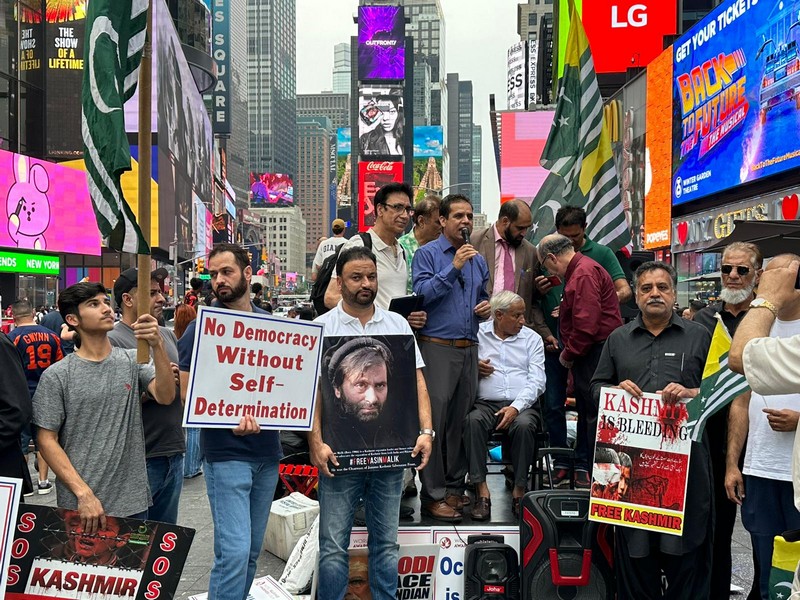
Kashmir gets resounding response at Iconic Times Square

August 5, 2023

Kashmiri Americans along with friends of Kashmir, including women and children gathered at historic Times Square, New York to reject India’s settler colonialism and show solidarity with the people of Kashmir. The rally was jointly organized by all Kashmiri American Diaspora organizations. The protestors held up placards and banners which read: ‘Decolonize Kashmir’ ‘UN UN Wake UP UN’ “Release Release: Yasin Malik’ ’Kashmiris Reject Indian occupation’  ‘Kashmiris demand human rights’, ‘Kashmir for Kashmiris.’

Sardar Haleem Khan, Chairman, Jammu Kashmir Liberation Front, North America, the Emcee of the rally made a passionate appeal to the peace-loving people and nations of the world to pay attention to the pain and suffering of the people of occupied Kashmir. Mohmmad Yasin Malik, Haleem Khan added, is undisputed leader of Kashmiri political resistance movement. We demand the unconditional release of all political leaders, including Yasin Malik.

Dr. Ghulam Nabi Fai, Secretary General, World Kashmir Awareness Forum said “August 5, 2019, is considered to be one of the darkest chapters in the history of Kashmir. It was on that fateful day that Fascist Narendra Modi abrogated Article 370 and Article 35A that paved the way for the enactment of Domicile Law which is designed to change the demography of Kashmir. India being so called ‘largest democracy’ is an illusion, delusion, and hallucination. It is a mirage. One can call it the modern form of settler colonialism. New York Times (August 24, 2022) said it the best, ‘Modi’s India is where global democracy dies’ and Huffington Post described it in these words, ‘As Kashmir is Erased, Indian democracy dies in silence.’

Dr. Fai added that recently, Modi administration wanted to give an impression of false normalcy by holding G20 tourism meeting in Kashmir. While expressing his disappointment, Dr. Fernard de Varennes, ‘United Nations Special Rapporteur on Minority Issue’ said India is seeking to normalize the ‘brutal and repressive denial of democratic rights of Kashmiri Muslims’ by holding G20 meeting in Kashmir. However, G20 meeting in Kashmir turned out to be a fiasco and failure because China, Saudi Arabia, Turkey Oman and Egypt boycotted the meeting. China’s absence was on the basis of a principle when its foreign ministry issued a statement that ‘China firmly opposes holding any form of G20 meetings on disputed territory (of Kashmir). We will not attend such meetings.’

Dr. Fai appealed to the UN Secretary General that now is the time to invoke Article 99 to intervene in Kashmir as Dr. Gregory Stanton, Chairman, Genocide Watch has said that ‘Kashmir was at the brink of genocide.’

Dr Imtiaz khan, Professor at George Washington University Medical Center spoke about the escalation of human right abuses in Indian occupied Kashmir. Killings of youth and molestation of women continues in an unabated manner. Since august 5, 2019 India is pursuing the policy to alter the demographics of the territory. Hundreds of thousand militant Hindus and army personnel have been provided domicile certificates and allotted land that has been grabbed from local Muslim population. Currently almost hundred percent of top-level bureaucracy and police official are Hindu outsiders who don’t demur to implement oppressive measures on the people of Kashmir. The final objective is to deprive people of their livelihood, convert Muslim majority to Hindu Majority and restrict the local population to ghettos.

Dr. Khan added that amongst all this gloom and despair there is a silver lining. To gain international acceptability for the annexation of Kashmir, India hosted G20 tourism meeting in the region few months ago. But many countries like China, Turkey, Saudi Arabia, Oman and Egypt refused to attend. Even other member countries sent a low-level delegation showing minimal presence. This can be called as splattering of diplomatic on India’s face and positive signal for peace loving people of Kashmir. International community succinctly stated their position on IOK and refused to buy Indian line that everything was hunky dory there.

Sardar Sawar Khan, former member of =Azad Kashmir Legislative Council narrated the history of broken promise given tot eh people of Kashmir. We are asking nothing more than what was achieved through the intervention of the United Nations in East Timor, Sothern Sudan, Namibia and else, that is right to self-determination.

Tariq Rehman of ICNA Council of Social Justice underscored that Kashmir issue does not belong the people of Kashmir alone and Palestine does not belong to the Palestinians alone. It is a clear wound on the body of Ummah. Their needs to eb a collective effort on the part of American Muslim community to join hands with Kashmiri American community.

Sardar Zarif Khan, Honorary Advisory to the Prime Minister of Azad Kashmir and the Secretary general of Kashmir American Welfare Association (KAWA) expressed his unhappiness that our President – President Biden who is a person of integrity and honor, somehow, did not tell Prime Minister Modi that he should act as a statesman, stop genocide in Kashmir and give the people of Kashmir the right to self-determination which India and Pakistan has pledged at the United Nations as early as 1948.

Khalid Awan, President of PPP America narrated the historic role that his leadership has played for decades in internalizing the issue of Kashmir. The people of Pakistan will never let the sacrifices of the people of Kashmir go in vain, Khalid Awan added.

Raja Razak, prominent Kashmiri leader said that never underestimate the significance of the se protests. It sends a clear message to our hapless brothers and sisters in occupied Kashmir that they are not alone.

Raja Mukhtar, Senior Vice President, JKLF said that our compatriots in occupied Kashmir are sacrificing their lives for the cause of freedom. That challenge needs to be embraced by Kashmiri diaspora by doing everything they can by highlighting the pain and suffering of our people.

Maqbool Gujjar, Former minister of Azad Kashmir spoke about the role of Azad Kashmir. To be free in Azad Kashmir is also a test how far we are willing to leave our comfort zone in easing the grief of our brothers in occupied Kashmir.

Sardar Taj Khan, Vice Chairman of Kashmir Mission, USA said that the denial of right of self-determination to the people of Kashmir has brought both India and Pakistan to the brink of nuclear catastrophe. The resolution of Kashmir dispute is in the interest of the world peace.

Sardar Imtiaz Geralvi, Secretary General, Kashmir Mission, USA, expressed his dissatisfaction about the apathy and passivity of the world powers towards the longest issue that is pending on the agenda of the United Nations Security Council – Kashmir.

Saghir Khan, President, Kashmiri American Alliance highlighted the role of Kashmiri American community in educating the policy making personalities and agencies of the United States.

Sardar Sajid Sawar, young Kashmiri youth leader demanded the unconditional release of Khurram Parvez, an internationally known human rights activist who has received more than half a dozen international awards for documenting the human rights violations in Kashmir.

Sardar Aftab Roshan Khan said the cries of the innocent women and children coming from the streets of Kashmir cannot and should not go unheard in the corridors of power.

Farooq Mirza, President 4thpillar media watchdog said that press freedom in Kashmir being muzzled and silenced so that the world community does not know what is going on in there.

Muhammad Manzoor of Dunya News described the role that ethnic media has played and can play in highlighting the aspirations and expectations of the people of Indian occupied Kashmir.

Zahid Shahbaz of Pak Watan Tv said that the bystanders at Times Square feel amazed while seeing the human rights violations depicted on the placards and banners.

Sister Amna Habib highlighted the role of women in the Kashmiri freedom struggle in Kashmir. She particularly mentioned Aasia Andrabi’s sacrifices who has been languishing in the jail now for years.

Others who spoke included. Dr. Shafique, Shahid Comrade of Human Rights Freedom Moment, Rizwan Hameed, Thaseen Hussain, Owais Munsif, Faisal Qureshi, Raja Hameed, Vilesh Pratap

Dr. Fai is the Chairman, World Forum for Peace & Justice.

The Power and the Glory

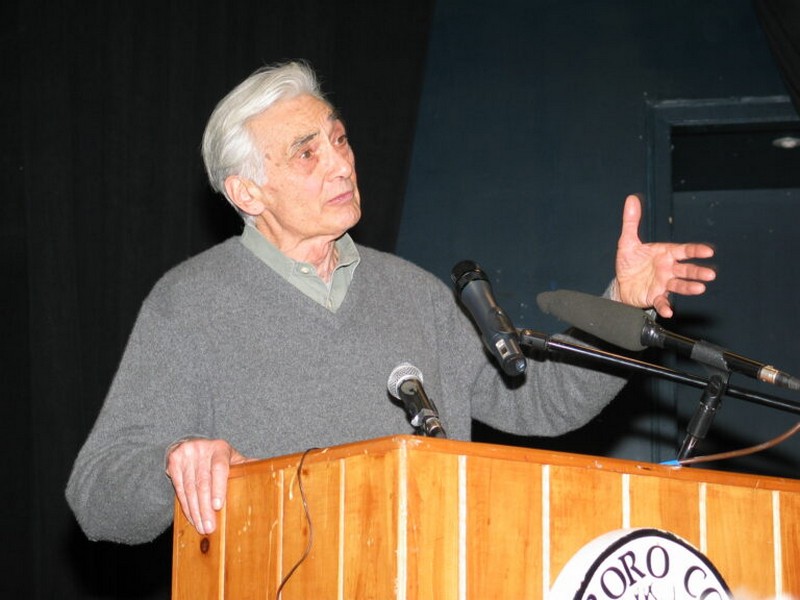
By Howard Zinn

The notion of American exceptionalism—that the United States alone has the right, whether by divine sanction or moral obligation, to bring civilization, or democracy, or liberty to the rest of the world, by violence if necessary—is not new. It started as early as 1630 in the Massachusetts Bay Colony when Governor John Winthrop uttered the words that centuries later would be quoted by Ronald Reagan. Winthrop called the Massachusetts Bay Colony a “city upon a hill.” Reagan embellished a little, calling it a “shining city on a hill.”

The idea of a city on a hill is heartwarming. It suggests what George Bush has spoken of: that the United States is a beacon of liberty and democracy. People can look to us and learn from and emulate us.

In reality, we have never been just a city on a hill. A few years after Governor Winthrop uttered his famous words, the people in the city on a hill moved out to massacre the Pequot Indians. Here’s a description by William Bradford, an early settler, of Captain John Mason’s attack on a Pequot village.

“Those that escaped the fire were slain with the sword, some hewed to pieces, others run through with their rapiers, so as they were quickly dispatched and very few escaped. It was conceived that they thus destroyed about 400 at this time. It was a fearful sight to see them thus frying in the fire and the streams of blood quenching the same, and horrible was the stink and scent thereof; but the victory seemed a sweet sacrifice, and they gave the praise thereof to God, who had wrought so wonderfully for them, thus to enclose their enemies in their hands and give them so speedy a victory over so proud and insulting an enemy.

The kind of massacre described by Bradford occurs again and again as Americans march west to the Pacific and south to the Gulf of Mexico. (In fact our celebrated war of liberation, the American Revolution, was disastrous for the Indians. Colonists had been restrained from encroaching on the Indian territory by the British and the boundary set up in their Proclamation of 1763. American independence wiped out that boundary.)

Expanding into another territory, occupying that territory, and dealing harshly with people who resist occupation has been a persistent fact of American history from the first settlements to the present day. And this was often accompanied from very early on with a particular form of American exceptionalism: the idea that American expansion is divinely ordained. On the eve of the war with Mexico in the middle of the 19th century, just after the United States annexed Texas, the editor and writer John O’Sullivan coined the famous phrase “manifest destiny.” He said it was “the fulfillment of our manifest destiny to overspread the continent allotted by Providence for the free development of our yearly multiplying millions.” At the beginning of the 20th century, when the United States invaded the Philippines, President McKinley said that the decision to take the Philippines came to him one night when he got down on his knees and prayed, and God told him to take the Philippines.

Invoking God has been a habit for American presidents throughout the nation’s history, but George W. Bush has made a specialty of it. For an article in the Israeli newspaper Ha’aretz, the reporter talked with Palestinian leaders who had met with Bush. One of them reported that Bush told him, “God told me to strike at al Qaeda. And I struck them. And then he instructed me to strike at Saddam, which I did. And now I am determined to solve the problem in the Middle East.” It’s hard to know if the quote is authentic, especially because it is so literate. But it certainly is consistent with Bush’s oft-expressed claims. A more credible story comes from a Bush supporter, Richard Lamb, the president of the Ethics and Religious Liberty Commission of the Southern Baptist Convention, who says that during the election campaign Bush told him, “I believe God wants me to be president. But if that doesn’t happen, that’s okay.”

Divine ordination is a very dangerous idea, especially when combined with military power (the United States has 10,000 nuclear weapons, with military bases in a hundred different countries and warships on every sea). With God’s approval, you need no human standard of morality. Anyone today who claims the support of God might be embarrassed to recall that the Nazi storm troopers had inscribed on their belts, “Gott mit uns” (“God with us”).

Not every American leader claimed divine sanction, but the idea persisted that the United States was uniquely justified in using its power to expand throughout the world. In 1945, at the end of World War II, Henry Luce, the owner of a vast chain of media enterprises—Time, Life, Fortune—declared that this would be “the American Century,” that victory in the war gave the United States the right “to exert upon the world the full impact of our influence, for such purposes as we see fit and by such means as we see fit.”

This confident prophecy was acted out all through the rest of the 20th century. Almost immediately after World War II the United States penetrated the oil regions of the Middle East by special arrangement with Saudi Arabia. It established military bases in Japan, Korea, the Philippines, and a number of Pacific islands. In the next decades it orchestrated right-wing coups in Iran, Guatemala, and Chile, and gave military aid to various dictatorships in the Caribbean. In an attempt to establish a foothold in Southeast Asia it invaded Vietnam and bombed Laos and Cambodia.

The existence of the Soviet Union, even with its acquisition of nuclear weapons, did not block this expansion. In fact, the exaggerated threat of “world communism” gave the United States a powerful justification for expanding all over the globe, and soon it had military bases in a hundred countries. Presumably, only the United States stood in the way of the Soviet conquest of the world.

Can we believe that it was the existence of the Soviet Union that brought about the aggressive militarism of the United States? If so, how do we explain all the violent expansion before 1917? A hundred years before the Bolshevik Revolution, American armies were annihilating Indian tribes, clearing the great expanse of the West in an early example of what we now call “ethnic cleansing.” And with the continent conquered, the nation began to look overseas.

On the eve of the 20th century, as American armies moved into Cuba and the Philippines, American exceptionalism did not always mean that the United States wanted to go it alone. The nation was willing—indeed, eager—to join the small group of Western imperial powers that it would one day supersede. Senator Henry Cabot Lodge wrote at the time, “The great nations are rapidly absorbing for their future expansion, and their present defense all the waste places of the earth. . . . As one of the great nations of the world the United States must not fall out of the line of march.” Surely, the nationalistic spirit in other countries has often led them to see their expansion as uniquely moral, but this country has carried the claim farthest.

American exceptionalism was never more clearly expressed than by Secretary of War Elihu Root, who in 1899 declared, “The American soldier is different from all other soldiers of all other countries since the world began. He is the advance guard of liberty and justice, of law and order, and of peace and happiness.” At the time he was saying this, American soldiers in the Philippines were starting a bloodbath which would take the lives of 600,000 Filipinos.

The idea that America is different because its military actions are for the benefit of others becomes particularly persuasive when it is put forth by leaders presumed to be liberals, orprogressives. For instance, Woodrow Wilson, always high on the list of “liberal” presidents, labeled both by scholars and the popular culture as an “idealist,” was ruthless in his use of military power against weaker nations. He sent the navy to bombard and occupy the Mexican port of Vera Cruz in 1914 because the Mexicans had arrested some American sailors. He sent the marines into Haiti in 1915, and when the Haitians resisted, thousands were killed.

The following year American marines occupied the Dominican Republic. The occupations of Haiti and the Dominican Republic lasted many years. And Wilson, who had been elected in 1916 saying, “There is such a thing as a nation being too proud to fight,” soon sent young Americans into the slaughterhouse of the European war.

Theodore Roosevelt was considered a “progressive” and indeed ran for president on the Progressive Party ticket in 1912. But he was a lover of war and a supporter of the conquest of the Philippines—he had congratulated the general who wiped out a Filipino village of 600 people in 1906. He had promulgated the 1904 “Roosevelt Corollary” to the Monroe Doctrine, which justified the occupation of small countries in the Caribbean as bringing them “stability.”

During the Cold War, many American “liberals” became caught up in a kind of hysteria about the Soviet expansion, which was certainly real in Eastern Europe but was greatly exaggerated as a threat to western Europe and the United States. During the period of McCarthyism the Senate’s quintessential liberal, Hubert Humphrey, proposed detention camps for suspected subversives who in times of “national emergency” could be held without trial.

After the disintegration of the Soviet Union and the end of the Cold War, terrorism replaced communism as the justification for expansion. Terrorism was real, but its threat was magnified to the point of hysteria, permitting excessive military action abroad and the curtailment of civil liberties at home.

The idea of American exceptionalism persisted as the first President Bush declared, extending Henry Luce’s prediction, that the nation was about to embark on a “new American Century.” Though the Soviet Union was gone, the policy of military intervention abroad did not end. The elder Bush invaded Panama and then went to war against Iraq.

The terrible attacks of September 11 gave a new impetus to the idea that the United States was uniquely responsible for the security of the world, defending us all against terrorism as it once did against communism. President George W. Bush carried the idea of American exceptionalism to its limits by putting forth in his national-security strategy the principles of unilateral war.

This was a repudiation of the United Nations charter, which is based on the idea that security is a collective matter, and that war could only be justified in self-defense. We might note that the Bush doctrine also violates the principles laid out at Nuremberg, when Nazi leaders were convicted and hanged for aggressive war, preventive war, far from self-defense.

Bush’s national-security strategy and its bold statement that the United States is uniquely responsible for peace and democracy in the world has been shocking to many Americans.

But it is not really a dramatic departure from the historical practice of the United States, which for a long time has acted as an aggressor, bombing and invading other countries (Vietnam, Cambodia, Laos, Grenada, Panama, Iraq) and insisting on maintaining nuclear and non-nuclear supremacy. Unilateral military action, under the guise of prevention, is a familiar part of American foreign policy.

Sometimes bombings and invasions have been cloaked as international action by bringing in the United Nations, as in Korea, or NATO, as in Serbia, but basically our wars have been American enterprises. It was Bill Clinton’s secretary of state, Madeleine Albright, who said at one point, “If possible we will act in the world multilaterally, but if necessary, we will act unilaterally.” Henry Kissinger, hearing this, responded with his customary solemnity that this principle “should not be universalized.” Exceptionalism was never clearer.

Some liberals in this country, opposed to Bush, nevertheless are closer to his principles on foreign affairs than they want to acknowledge. It is clear that 9/11 had a powerful psychological effect on everybody in America, and for certain liberal intellectuals a kind of hysterical reaction has distorted their ability to think clearly about our nation’s role in the world.

In a recent issue of the liberal magazine The American Prospect, the editors write,

“Today Islamist terrorists with global reach pose the greatest immediate threat to our lives and liberties. . . . When facing a substantial, immediate, and provable threat, the United States has both the right and the obligation to strike preemptively and, if need be, unilaterally against terrorists or states that support them.

Preemptively and, if need be, unilaterally; and against “states that support” terrorists, not just terrorists themselves. Those are large steps in the direction of the Bush doctrine, though the editors do qualify their support for preemption by adding that the threat must be “substantial, immediate, and provable.” But when intellectuals endorse abstract principles, even with qualifications, they need to keep in mind that the principles will be applied by the people who run the U.S. government. This is all the more important to keep in mind when the abstract principle is about the use of violence by the state—in fact, about preemptively initiating the use of violence.

There may be an acceptable case for initiating military action in the face of an immediate threat, but only if the action is limited and focused directly on the threatening party—just as we might accept the squelching of someone falsely shouting “fire” in a crowded theater if that really were the situation and not some guy distributing anti-war leaflets on the street. But accepting action not just against “terrorists” (can we identify them as we do the person shouting “fire”?) but against “states that support them” invites unfocused and indiscriminate violence, as in Afghanistan, where our government killed at least 3,000 civilians in a claimed pursuit of terrorists.

It seems that the idea of American exceptionalism is pervasive across the political spectrum.

The idea is not challenged because the history of American expansion in the world is not a history that is taught very much in our educational system. A couple of years ago Bush addressed the Philippine National Assembly and said, “America is proud of its part in the great story of the Filipino people. Together our soldiers liberated the Philippines from colonial rule.” The president apparently never learned the story of the bloody conquest of the Philippines.

And last year, when the Mexican ambassador to the UN said something undiplomatic about how the United States has been treating Mexico as its “backyard” he was immediately reprimanded by then–Secretary of State Colin Powell. Powell, denying the accusation, said, “We have too much of a history that we have gone through together.” (Had he not learned about the Mexican War or the military forays into Mexico?) The ambassador was soon removed from his post.

The major newspapers, television news shows, and radio talk shows appear not to know history, or prefer to forget it. There was an outpouring of praise for Bush’s second inaugural speech in the press, including the so-called liberal press (The Washington Post, The New York Times). The editorial writers eagerly embraced Bush’s words about spreading liberty in the world, as if they were ignorant of the history of such claims, as if the past two years’ worth of news from Iraq were meaningless.

Only a couple of days before Bush uttered those words about spreading liberty in the world, The New York Times published a photo of a crouching, bleeding Iraqi girl. She was screaming. Her parents, taking her somewhere in their car, had just been shot to death by nervous American soldiers.

One of the consequences of American exceptionalism is that the U.S. government considers itself exempt from legal and moral standards accepted by other nations in the world. There is a long list of such self-exemptions: the refusal to sign the Kyoto Treaty regulating the pollution of the environment, the refusal to strengthen the convention on biological weapons. The United States has failed to join the hundred-plus nations that have agreed to ban land mines, in spite of the appalling statistics about amputations performed on children mutilated by those mines. It refuses to ban the use of napalm and cluster bombs. It insists that it must not be subject, as are other countries, to the jurisdiction of the International Criminal Court.

What is the answer to the insistence on American exceptionalism? Those of us in the United States and in the world who do not accept it must declare forcibly that the ethical norms concerning peace and human rights should be observed. It should be understood that the children of Iraq, of China, and of Africa, children everywhere in the world, have the same right to life as American children.

These are fundamental moral principles. If our government doesn’t uphold them, the citizenry must. At certain times in recent history, imperial powers—the British in India and East Africa, the Belgians in the Congo, the French in Algeria, the Dutch and French in Southeast Asia, the Portuguese in Angola—have reluctantly surrendered their possessions and swallowed their pride when they were forced to by massive resistance.

Fortunately, there are people all over the world who believe that human beings everywhere deserve the same rights to life and liberty. On February 15, 2003, on the eve of the invasion of Iraq, more than ten million people in more than 60 countries around the world demonstrated against that war.

There is a growing refusal to accept U.S. domination and the idea of American exceptionalism. Recently, when the State Department issued its annual report listing countries guilty of torture and other human-rights abuses, there were indignant responses from around the world commenting on the absence of the United States from that list. A Turkish newspaper said, “There’s not even mention of the incidents in Abu Ghraib prison, no mention of Guantánamo.” A newspaper in Sydney pointed out that the United States sends suspects—people who have not been tried or found guilty of anything—to prisons in Morocco, Egypt, Libya, and Uzbekistan, countries that the State Department itself says use torture.

Here in the United States, despite the media’s failure to report it, there is a growing resistance to the war in Iraq. Public-opinion polls show that at least half the citizenry no longer believe in the war. Perhaps most significant is that among the armed forces, and families of those in the armed forces, there is more and more opposition to it.

After the horrors of the first World War, Albert Einstein said, “Wars will stop when men refuse to fight.” We are now seeing the refusal of soldiers to fight, the refusal of families to let their loved ones go to war, the insistence of the parents of high-school kids that recruiters stay away from their schools. These incidents, occurring more and more frequently, may finally, as happened in the case of Vietnam, make it impossible for the government to continue the war, and it will come to an end.

The true heroes of our history are those Americans who refused to accept that we have a special claim to morality and the right to exert our force on the rest of the world. I think of William Lloyd Garrison, the abolitionist. On the masthead of his antislavery newspaper, The Liberator, were the words, “My country is the world. My countrymen are mankind.”

Howard Zinn (1922—2010), author of A People’s History of the United States, was a historian and playwright.

1 June

Source: bostonreview.net