Just International

Dutch Royal House Earned Over Half A Billion Dollar From Its Colonies In A Single Century During Slave Trade Peak

By Countercurrents Collective

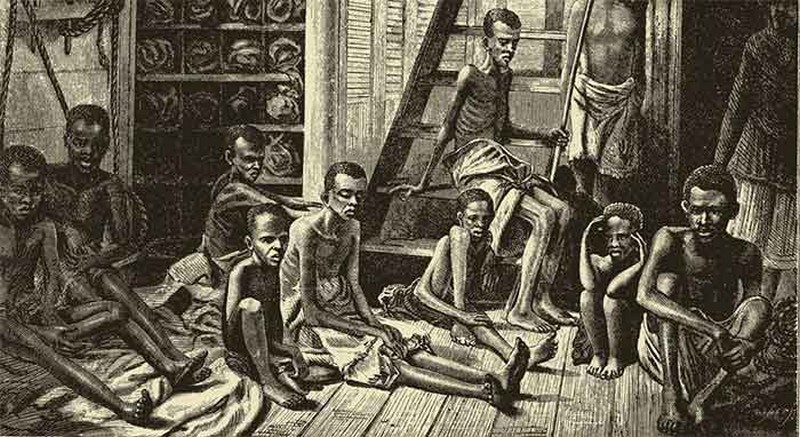
The House of Oranje-Nassau, the Royal House of the Netherlands, earned at least 545 million euros (about 3 million guilders – $600 million) in modern money from the Dutch colonies, where slavery was widespread. The figure has been adjusted for inflation, and covers the period from 1675 to 1770. It is one of the results of the investigation into the country’s connection to the slave trade. The investigation was commissioned by the Ministry of the Interior and Kingdom Relations at the request of Members of the Tweede Kamer, the lower house of Parliament.

Media reports said:

The study is an effort to study the role of the Dutch government and “related institutions” in slavery and its aftermath.

The country is also looking into returning looted artworks. While the country abolished slavery in 1863, some argue the pinnacle of its economic and cultural achievements was accomplished on the backs of forced laborers.

King Willem-Alexander is expected to publicly apologize for the country’s colonial predations on July 1, the 150th anniversary of the Dutch abolition of slavery in its former colonies. Prime Minister Mark Rutte made an official apology of his own in December for the country’s 250-year involvement in the slave trade, which he called a “crime against humanity,” but some activists argued this was not sufficient and demanded a further apology from the monarch.

Willem III, IV and V had an important political function as stead holder in the Republic of the Seven United Netherlands, a predecessor to the present-day Netherlands. As stead holders, they were essentially leaders, and their “colonial profit” accounts for half of the now known income that the stead holders received during the period that was researched.

The House of Oranje-Nassau benefited in various ways from the colonies and thus from slavery, the research showed. For example, the Dutch East India Company (VOC) was an important source of colonial revenue. The noble family did not invest in the VOC directly, but at the time of incorporation the shareholders arranged to pay the Oranjes as if they owned approximately 3 percent of the shares. They then regularly used their influence to solve problems for the trading company.

Internal Affairs Minister Hanke Bruins Slot received the book, which will form the basis for further research, on Thursday at the Koninklijke Schouwburg in The Hague. The research was carried out by several institutes and was led by the Royal Institute for Language, Land and Ethnology in Leiden.

Historians have long said that the Van Oranje-Nassau family was very much involved in the colonial rule of the former Dutch East Indies, Suriname and the Caribbean islands. It had not been known how large their financial interests were. The authors of the book have made an initial estimate based on the sources currently known.

“Slavery was deliberately made a foundation in the colonial actions by the Netherlands in Africa, the Americas and Asia. The Dutch State and its predecessors were directly responsible for this,” said International Institute of Social History researcher Matthias van Rossum on Thursday. For example, policies were made and initiatives supported that “enabled” colonial slavery.

The University of Curaçao said the impact of colonial slavery on the Caribbean parts of the kingdom is enormous and that little has been discussed or studied for far too long. “The effects of slavery did not stop with abolition.” The effects can still be clearly seen in the countries which were colonized.

The study published on Thursday is therefore not only important for the Netherlands, but also “particularly for Suriname and other former colonized societies. It shows how formative the Dutch colonial slavery past has been and how much impact these effects still have.” NiNsee is the national institute for the Dutch history involving slavery.

The results were released at a sensitive time. On July 1, a commemoration will be held for the 150th anniversary of the practical abolition of slavery under Dutch rule. King Willem-Alexander will give a speech that day at an event at the National Slavery Monument in the Oosterpark in Amsterdam. Sources expect him to repeat the apologies that Prime Minister Mark Rutte previously offered for the country’s dubious past.

Former Leiden University professor Gert Oostindie is leading a more extensive study into the role of the House of Oranje-Nassau during colonial history. He started this at the end of 2022 and expects the research to take three years.

The Netherlands established a national advisory panel to interrogate its colonial history in 2020 after the death in police custody of black man George Floyd in the US initiated a wave of racial self-examination, protests, and recriminations globally.

The Dutch colonial empire included parts of what are now the Virgin Islands, Brazil, Mauritius, Suriname, Ceylon, and several Indonesian islands. Much of their Asian territory, administered by the Dutch East India Company, was captured from the Portuguese, who had previously colonized the area.

The Netherlands is not the only former colonial power investigating the possibility of atoning for its past sins against once-oppressed populations. The government of Jamaica last month announced it would introduce a bill that could potentially sever its centuries-old relationship with the British monarchy, which claimed the island as a colony in 1655 and allowed it nominal independence in 1962. A recent poll found that the majority of populations in nearly half of the British Commonwealth nations would become republics if they had the option.

In the U.S., New York recently became the second state to take the first steps toward establishing a commission to investigate financial reparations for the descendants of black slaves imported from Africa.

Countercurrents is answerable only to our readers. Support honest journalism because we have no PLANET B.

18 June 2023

Source: countercurrents.org

Why Turkey and Hungary Are Currently Blocking Sweden From Joining NATO

By Vijay Prashad

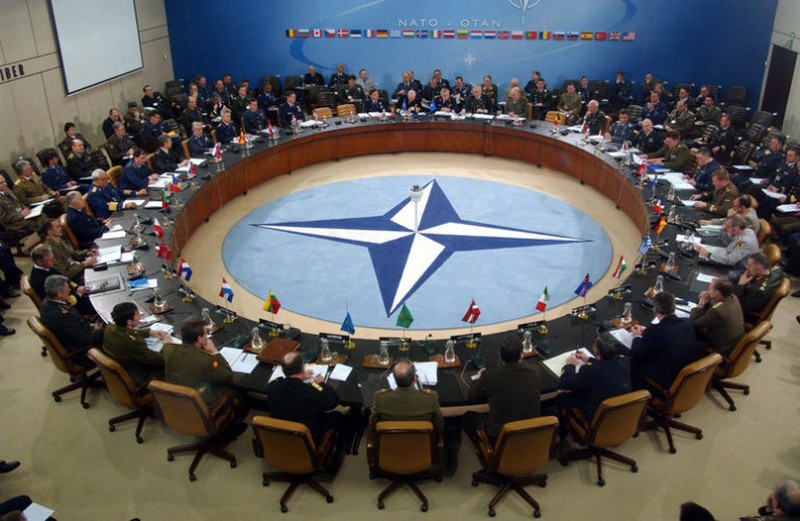
On July 11-12, 2023, the 31 members of the North Atlantic Treaty Organization (NATO) will hold their annual summit in Vilnius, Lithuania. To prepare for the summit, NATO Secretary General Jens Stoltenberg met with U.S. President Joe Biden to discuss the agenda for the summit. They spoke about the importance of Western support for Ukraine “for the long haul” and Stoltenberg told Biden that “he looks forward to welcoming Sweden as a full member of NATO as soon as possible.”

In their joint press conference on June 13, neither Biden nor Stoltenberg mentioned anything about Ukraine’s membership of NATO, although both hoped that Sweden would become a member, “hopefully….very shortly,” as Biden said. Despite noises in the German Bundestag from Christian Democratic members—such as urging by Roderich Kiesewetter—to bring Ukraine into NATO, there seems to be no appetite for any such move at present, least of all from German Chancellor Olaf Scholz who is being very cautious. Germany is wary of allowing Ukraine into NATO during a war, but has no problem—in principle—with Ukraine’s membership in NATO. With Sweden, the chessboard is far more complicated.

Finland Joins, but Not Sweden

In May 2022, Finland and Sweden applied to join NATO, a military alliance that had—at that time—consisted of thirty countries (the most recent entrant being North Macedonia in 2020). At that time, Stoltenberg said of the applications, “It is great to see you both.” Indeed, it was widely expected that these applications would be fast-tracked and that all four Scandinavian states would be within the military camp of NATO. Norway and Denmark were both founder members in 1949 (Denmark’s accession was particularly necessary so that the U.S. could build a vast base on Danish colonized Greenland—Pituffik Space Base, the northernmost U.S. military base—in 1951, displacing the local Inuit population).

Just short of a year later—on April 4, 2023—NATO welcomed Finland into the alliance. “Joining NATO is good for Finland,” said NATO’s Stoltenberg. “It is good for Nordic security, and it is good for NATO as a whole.” Finland shares a very long (832-mile) border with Russia, the longest border of any European Union or NATO state. By joining NATO, Finland has doubled the NATO-Russia border. Finland began to build a border fence along the “riskiest areas,” notably where Russian migrants might try to cross over. Social media in Finland mocked pictures released by the Border Guard of the fence, saying that it was just about useful for stopping horses; the “fence is not for horses,” responded Lieutenant Colonel Jukka Lukkari.

At the ceremony to welcome Finland into NATO, Finland’s President Sauli Niinistö said that his country’s membership is “not complete without Sweden.” Standing beside him, NATO’s Stoltenberg said, “I look forward to also welcoming Sweden as soon as possible.”

Why was Sweden not taken into the Western military alliance? In 1949, when NATO was established, the principle of decision-making adopted by the members was that of “consensus,” which means that all countries must agree to any decision; this consensus decision-making applies particularly to the question of membership. Two NATO members—Hungary and Turkey—ratified Finland’s entry into NATO but blocked that of Sweden. That they allowed NATO to welcome Finland, which—unlike Sweden—has a direct border with Russia, shows that it is not the war in Ukraine that troubles these two countries. They have other problems, directly with Sweden.

The Sweden Problem

At a press conference in Washington with U.S. Secretary of State Antony Blinken and NATO’s Stoltenberg, Vivian Salama of the Wall Street Journal asked, “Are you concerned that Turkey is increasingly becoming a disruptive ally?” Both Blinken and Stoltenberg ducked the question, which led Kylie Atwood of CNN to ask directly about NATO membership for Sweden. Stoltenberg obliquely noted Turkey’s concerns regarding the presence of the Kurdistan Workers’ Party (PKK) in Sweden. “All NATO allies are of course ready to sit down and address those concerns, including the threats posed to Turkey by PKK,” Stoltenberg said.

In 2009, when Sweden held the presidency of the Council of Europe, then-Prime Minister Fredrik Reinfeldt promised to shepherd Turkey into the European Union. Relations, at that time, were robust. Turkey’s war in recent years on the Kurdish minorities in the southeast of the country and in northern Syria roused the exiled Kurdish community in Sweden. Protests in Stockholm have annoyed Turkish President Recep Tayyip Erdogan, who has repeatedly called in the Swedish ambassador to Ankara to complain about these protests. When an effigy of Erdogan was burnt by the Rojava Committee of Sweden, Sweden’s foreign minister Tobias Billström wrote on Twitter, “Portraying a popularly elected president as being executed outside City Hall is abhorrent.” This statement was not sufficient. Sweden’s Prime Minister Ulf Kristersson said that his country had weak “anti-terror” laws and that his government was in talks with Ankara to see what could be done.

On his way to Azerbaijan on June 14, Erdogan dismissed the possibility that Sweden would be allowed to enter NATO this July.

In May 2023, Hungary’s president Viktor Orban went to Doha to attend the Qatar Economic Forum. He was asked why his ruling alliance, Fidesz-KDNP, which dominates the parliament (135 out of 199 seats), refuses to ratify Sweden’s entry into NATO. Orban bluntly said that he would not back down because “Sweden unfairly expresses a damaging opinion about the situation of democracy and the rule of law in Hungary.” Sweden is not alone in these concerns, which have been made very strongly by thirteen Hungarian intellectuals in a powerful book (“Igazságosság—demokrácia—fenntarthatóság”) last year.

Orban was very upset with Sweden for its support of a European Union parliamentary report from September 2022 that described the Hungarian political system as “a hybrid regime with parliamentary autocracy.” Unless Sweden revokes this attitude, Budapest says, it will not allow it to join NATO.

Vijay Prashad is an Indian historian, editor, and journalist. He is a writing fellow and chief correspondent at Globetrotter.

17 June 2023

Source: countercurrents.org

Daniel Ellsberg Of The Pentagon Papers Keeps Alive Anti-War Activism

By Countercurrents Collective

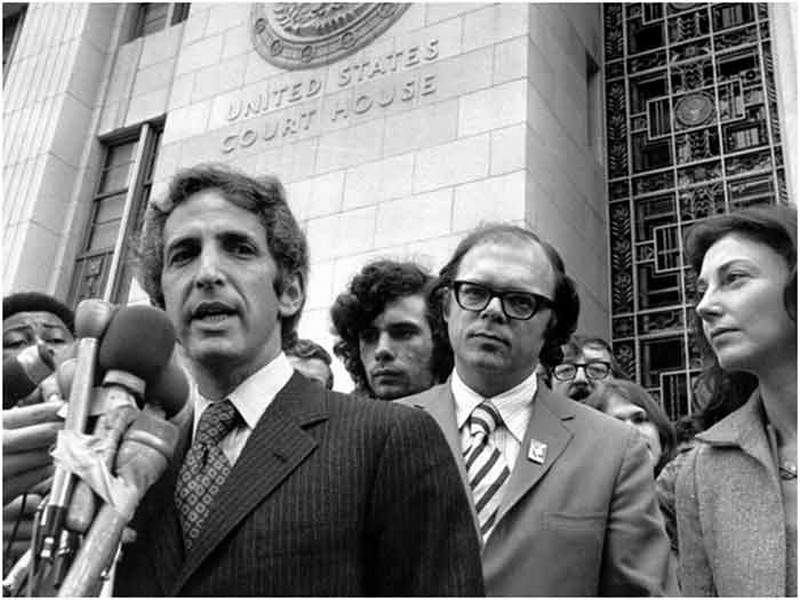
Daniel Ellsberg, a former U.S. military analyst who revealed a years-long U.S. campaign to hide the true scale of U.S.’s the Vietnam War, has died Friday at this home in Kensington, California, U.S. He was 92.

Ellsberg passed away after a short battle with pancreatic cancer, but continued his anti-war activism until his final days.

Ellsberg never ran for office and only occasionally appeared on TV. But he altered the course of U.S. history in a way few private citizens ever have.

In March, Ellsberg posted on his Facebook page that doctors diagnosed him with inoperable pancreatic cancer on Feb. 17 following a CT scan and MRI.

In a statement, Ellsberg family said that in the months since the diagnosis, “he continued to speak out urgently to the media about nuclear dangers, especially the danger of nuclear war posed by the Ukraine war and Taiwan.”

“Daniel was a seeker of truth and a patriotic truth-teller, an antiwar activist, a beloved husband, father, grandfather, and great-grandfather, a dear friend to many, and an inspiration to countless more. He will be dearly missed by all of us,” according to the statement

An NPR report said:

As a military analyst working on a Pentagon project in 1971, Ellsberg chose to release to the public an extensive, documentary record of U.S. involvement in the Vietnam War. Known as the “Pentagon Papers,” Ellsberg’s mammoth disclosure would help to end the longest U.S. war of the 20th century. It would also prompt a landmark Supreme Court decision on freedom of the press. And it would provoke a response from President Richard Nixon that led directly to the scandals that ended his presidency.

By the time he got to the Pentagon, Ellsberg, then 40, was a Marine Corps veteran with a Harvard doctorate who had worked for the Defense and State departments and the Rand Corporation. A “hawk” before going to Vietnam in 1965, Ellsberg had since turned against the war and the official justifications given for it.

Since 1969 he had been one of dozens of analysts studying and writing about the decisions behind the escalating U.S. involvement in the Vietnam War. The study covered the years from 1945 to 1968, and had first been commissioned by Defense Secretary Robert S. McNamara toward the end of that period.

Ellsberg and a Rand colleague, Anthony Russo, had access to a copy of the 7,000-pages of classified documents and historical narrative kept at Rand. The pair photocopied them at night, one page at a time over a period of months.

Ellsberg showed the material to a few senators who had been critics of the war. He said he hoped they would hold hearings, or enter the report in the Congressional Record. But they were not willing to do so, and one encouraged him to go to the New York Times.

Ellsberg did just that, contacting a legendary reporter at the New York Times whom he had known in Vietnam, Neal Sheehan. Supported by the top editors at the Times, Sheehan led a team of writers and editors in distilling the immense document for newspaper use. On June 13, 1971, the first story ran atop the front page.

Sheehan wrote that the U.S. had gone to war not to save the Vietnamese from Communism but to maintain “the power, influence and prestige of the United States … irrespective of conditions in Vietnam.”

Revealing A Quarter Century Of War And Denial

The NPR report said:

The report that came to be known as the Pentagon papers said the U.S. had first been involved in Vietnam during World War II, when Americans helped Vietnamese resist Japanese occupation. After the war, the U.S. supported France’s attempt to reclaim its colonies in Southeast Asia, largely to keep France in the alliance against the Soviet Union.

As the French forces faltered in Vietnam, the U.S. shouldered more and more of the cost of the war. And when the French gave up and left in 1954, the U.S. remained to protect Western investments and bolster an anti-communist government in Saigon (South Vietnam) while a Communist regime in Hanoi held sway in the country’s northern half.

But almost none of this was known to the American public at the time, and when John F. Kennedy became president in 1961 he extended the commitments made by previous presidents. His successor, Lyndon B. Johnson, greatly expanded these commitments, escalating the war with hundreds of thousands of U.S. troops and relentless bombing campaigns in the mid-1960s.

Richard Nixon came to office in 1969 promising to end the war, but even as he reduced the U.S. troop presence he also widened the war into Cambodia and stepped up the bombing.

The most shocking revelation in Ellsberg’s report was the willingness of one president and one administration after another to continue the commitment — and the upbeat assessments of the situation — even as they each came to believe the mission would ultimately fail, that no amount of conventional military force would subdue the Vietnamese resistance.

Some of the papers from the archive of Daniel Ellsberg are shown in 2019. Ellsberg donated his archive to the University of Massachusetts’ flagship campus. Boston Globe/Boston Globe via Getty Images

Ellsberg later summed it up by saying: “We always knew we could never win.” Yet the war went on and more lives were lost because American leaders were unwilling to acknowledge the futility of the war or to accept the humiliation of defeat.

Although he himself had been part of the war machinery for years, and remained silent even after turning against the war, Ellsberg later reported having a dramatic conversion at a conference for draft resisters at Haverford College in August 1969.

In an interview 50 years later on NPR’s Fresh Air, Ellsberg said: “Without young men going to prison for nonviolent protests against the draft, men that I met on their way to prison, [there would have been] no Pentagon Papers. It wouldn’t have occurred to me simply to do something that would put myself in prison for the rest of my life, as I assumed that would do.”

The Threat Of Prison Was Quite Real

The NPR report said:

The reaction to the papers’ publication was immediate. President Richard Nixon’s Justice Department got a federal judge to order the Times to cease publishing the stories. But Ellsberg was able to share another copy of the report with The Washington Post, which took up where its rival paper had left off. Other papers also stepped up. Besides the Times and the Post, at least 15 other newspapers stepped up to publish the Pentagon material in the critical days following the original release.

In that month, while the FBI searched frantically for the leaker, Ellsberg managed to elude his pursuers for11 days before turning himself inThe government charged him for violating the Espionage Act of 1917, a law passed during World War I and often abused to suppress dissent in that era. The sum total of the charges against him threatened a total jail term of 115 years, prompting reporters to ask if he had second thoughts about what he had done.

“How can I measure the jeopardy I’m in,” Ellsberg asked, “… to the penalty that has already been paid by 50,000 American families and hundreds of thousands of Vietnamese families?”

After his arrest, Ellsberg entered a period of legal limbo while awaiting trial, a period that would last nearly two years.

Meanwhile, the orders against the newspapers went to the Supreme Court on an expedited basis that June. The justices voted 6-3 to say “prior restraint” of publication required the government to meet a high test of necessity and irreparable harm — a test the court said had not been meant. The Times resumed publishing on July 1.

Why Did Nixon Pursue Ellsberg So Vigorously?

The report said:

The events and actions chronicled in the Pentagon Papers preceded Nixon’s time in the Oval Office and could be blamed on his predecessors (most of them Democrats). But Nixon was angered and dismayed at their publication, convinced it would undercut support for the war and undermine respect for the government.

“The principle of confidentiality either exists or it does not exist,” he said at a press conference. Tapes made in the Oval Office at the time recorded Nixon’s profanity-laced denunciations of Ellsberg: “Let’s get the son of a bitch into jail.”

Nixon’s national security adviser, Henry Kissinger, who had known Ellsberg as a military analyst years earlier, now labeled him “the most dangerous man in America.” Both Nixon and Kissinger feared the revelations would torpedo their secret negotiations with Hanoi and Beijing. (As it happened, the Nixon administration was able to complete a withdrawal agreement for U.S. troops and a “breakthrough” diplomatic opening with China in the year after the papers were published.)

Ellsberg and others (including Nixon biographer John Farrell) have also contended that Nixon was worried by what Ellsberg would reveal about Nixon’s backdoor negotiations with the Saigon government before he was president. While still a private citizen and a candidate for president in 1968, Nixon had signaled the South Vietnamese not to agree to peace terms proposed by President Johnson — promising them better terms if Nixon became president.

In 1971, a secret operations unit known as “the plumbers” broke into Daniel Ellsberg’s psychiatrist’s office looking for damaging information. This event was the first in a series of plumbers’ break-ins that included the Watergate Hotel, which eventually brought down Richard Nixon’s presidency.

Whatever the source of his concerns, Nixon was not willing to wait for Ellsberg to come to trialHe directed various government agencies, including the CIA and the FBI, to find ways to discredit Ellsberg. In one conversation with his Attorney General John Mitchell (captured on the White House taping system in 1971) Nixon says: “Don’t worry about his trial. Just get everything out. Try him in the press. Everything, John, that there is on the investigation, get it out, leak it out. We want to destroy him in the press. Is that clear?”

To that end, the White House created a covert squad known as “the plumbers” because they were hired to stop leaks of government documents that were embarrassing the administration — particular those leaked by Ellsberg. The operatives broke into Ellsberg’s psychiatrist’s office in Los Angeles but failed to find his file. When these and other illegal activities came to light, a federal judge overseeing Ellsberg’s trial dismissed the charges. They were never reinstated.

While Ellsberg was still awaiting trial, the “plumbers” unit relocated from the White House to Nixon’s reelection campaign organization and carried on their unlawful activities. These included two subsequent burglaries at the headquarters of the Democratic National Committee in Washington, D.C., located in the Watergate office complex not far from the White House.

On their second visit, the burglars were discovered and arrested in June 1972. Thus began the unraveling and revelation of numerous crimes, “dirty tricks” and official cover-ups known collectively as the Watergate scandal. Investigations and impeachment proceedings would push Nixon to resign in August 1974.

A Quieter Life With Episodes Of Controversy

The NPR report said:

Ellsberg’s name and prominence receded as time went on, and he devoted most of his time to teaching and writing. But he was often seen and heard at various protests involving war and peace, nuclear weapons and the actions the federal government took against whistleblowers.

His name became synonymous with resistance to government power, especially power exercised in secret. And he continued that career of resistance into his tenth decade of life, as an advocate for peace and a critic of government secrecy.

Ellsberg opposed the war in Iraq that began in 2003 and was a speaker at numerous rallies and events protesting that war and the suppression of its critics. In 2013 he said on Democracy Now that the U.S. had never taken responsibility for the Iraqi and Afghani lives lost in the U.S. invasions of those countries.

He also spoke out in defense of Wikileaks and its founder, Julian Assange, who has been fighting extradition to the U.S. for more than a dozen years. Ellsberg defended Wikileaks in 2010 for helping to build a better government. He also testified for Assange at an extradition hearing in 2020.

Assange has accused the U.S. of committing war crimes in Iraq and has published classified material such as diplomatic cables between the U.S. and other countries as well as documents on surveillance by the CIA and the National Security Agency. During the 2016 presidential campaign, Wikileaks released emails from the Democratic National Committee to Hillary Clinton’s campaign manager.

Ellsberg also championed two of the whistleblowers Assange helped to make famous for releasing classified documents. The first was Chelsea Manning, a U.S. Army soldier and intelligence analyst who shared 750,000 records with Wikileaks in 2010. These included diplomatic cables, Army logs and diaries and videos of events such as a 2007 helicopter strike on a Baghdad street and another airstrike in Afghanistan in 2009, both of which appeared to have killed civilians.

Manning faced 22 charges, some under the Espionage Act and one of aiding the enemy, which could have carried a death sentence. She was sentenced to 35 years in confinement but had her sentence commuted by President Barack Obama in 2017 after she had served seven years.

Ellsberg also traveled to Moscow to visit and be photographed with Edward Snowden, a one-time computer intelligence consultant for the National Security Agency who had also worked for the CIA. In 2013, Snowden leaked information about surveillance programs run by the NSA and similar agencies of allied governments. Stories based on the documents involved appeared in The Washington PostThe Guardian and other publications.

Snowden was charged with stealing government property and, like Manning and Ellsberg, for violating the Espionage Act. He left the country and received temporary asylum in Russia at the time. In September 2022, Snowden was granted Russian citizenship

A Life Of Ordinary Beginnings, Extraordinary Events

The report said:

Ellsberg was born in Chicago in 1931. His parents were European Jews who came to America and converted to Christian Science. He attended public schools in Chicago and Detroit and won a scholarship to Harvard, where he graduated summa cum laude in 1952 and won a Marshall Scholarship to attend the University of Cambridge in England. In 1954 he enlisted in the Marines and was commissioned as an officer, mustering out in 1957 and returning to Harvard to work on his doctoral degree in economics.

While still a graduate student in 1958 he began working for Rand. There, he studied nuclear defense policy, worked on an elaborate plan by which the U.S. could preserve its nuclear forces in the event of a first strike by the Soviet Union and saw war plans drawn up in that era for striking the USSR and China. In 2017 he published a book about this phase of his career called The Doomsday Machine. In 2021, Ellsberg released documents he had from that period because he said he was concerned about mounting tensions between the U.S. and China.

Ellsberg was married twice, the first time to the daughter of a brigadier general in the Marine Corps. The couple divorced in 1965. Five years later, Ellsberg married Patricia Marx, the daughter of a wealthy toy manufacturer, Louis Marx.

Current Risk Of Nuclear War

Other media reports said:

Back in March, Ellsberg announced that he had been diagnosed with inoperable pancreatic cancer, and had been given between three and six months to live. Ellsberg refused to undergo chemotherapy, and in a final statement to the press and his supporters, warned that “the current risk of nuclear war, over Ukraine, is as great as the world has ever seen.”

Ellsberg condemned both the U.S. and Russia for maintaining “first-use” nuclear doctrines, and called nuclear war plans and drills by both sides “immoral and insane.”

“Dan Ellsberg was a true American hero,” journalist Glenn Greenwald wrote on Twitter, pointing out that he “knowingly risked life in prison to show his fellow citizens that the U.S. government was lying about the war in Vietnam,”

Former CIA agent and fellow whistleblower John Kiriakou described Ellsberg as a “giant of modern American history, of transparency, truth, and human rights,” adding “we need more Americans like him.”

“When I spoke with Dan one month ago – who knew well how few grains of sand remained in his glass – he assessed the risk of a nuclear exchange to be escalating beyond 10%,” NSA whistleblower Edward Snowden wrote on Twitter. “He had hoped to dedicate his final hours to reducing it, for all those he would leave behind. A hero to the end.”

Countercurrents is answerable only to our readers. Support honest journalism because we have no PLANET B.

17 June 2023

Source: countercurrents.org

A debt ridden Sri Lanka and a desperate President seeking debt relief

By Thambu Kanagasabai

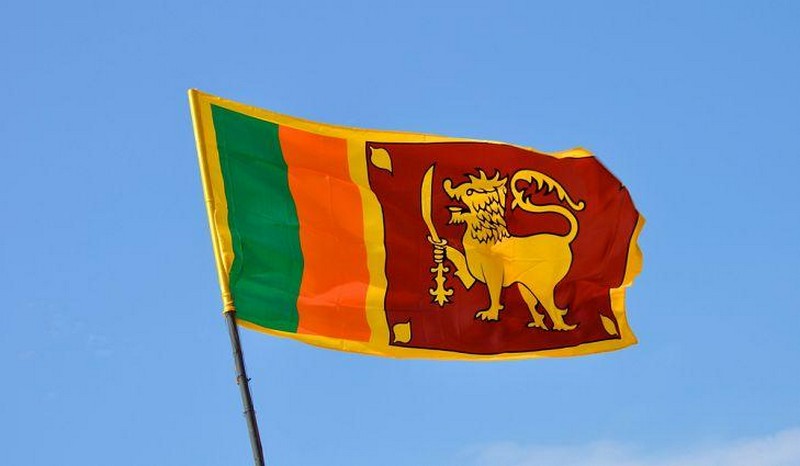
President Ranil is expected to visit India from July 20 to 30 and a meeting with Prime Minister Modi is scheduled for on the 21st July 2023. So far neither the agenda nor the issues to be discussed between them has been made public. It is highly likely that focus will be mainly on financial assistance for the desperate Sri Lanka. It is to be noted that the external debt of Sri Lanka now stands at more than $5 billion. Ranil’s statement while serving as a Prime Minister expressed his appreciation of India’s role when he acknowledged on June 19, 2022 that “India has really helped Sri Lanka in its reforms to cope with the Island’s economic crash” and added that “aid coming from different sources has put Sri Lanka in the middle of geopolitics” and further said on June 06, 2022 that “no country except India is providing money to the crisis hit nation for fuel”.

It is to be noted that India has provided emergency assistance of about $4 billion during the financial crisis in 2022 and already $1 billion credit line for Sri Lanka for a period of one year to back up infusion of dollars for essential imports. It is to be noted that Sri Lanka owes $7.1 billion to bilateral creditors with $4 billion owed to China, $2.40 billion to the Paris Club and $1.4 billion to India which had already provided nearly $4 billion as food and financial assistance to Sri Lanka in 2022.

With these commitments pressing Sri Lanka, Ranil made a conciliatory gesture when he visited Jaffna to celebrate “Thai Pongal” where he said that his government hopes to fully implement the 13th Amendment not only in the Tamil’s North but also in the South”. This is nothing but a gesture of appeasement to the international community.

Earlier during India’s Foreign Minister Jaishankar’s visit to Sri Lanka in January 2023, Ranil assured him that “provincial council elections would be held and the devolution of powers would begin in all sincerity and seriousness”.

Above all, India’s moral and legal obligations to Tamils in Sri Lanka who possess cultural and historical ties with Tamil Nadu can never be forgotten, ignored, discarded or denied.

India’s commitment to implement the Indo-Ceylon Accord 1987 remains statutory and legally binding and it is India’s unshakable obligation and duty to ensure its full implementation to vindicate it’s role, standing, reputation and status while cementing the relationship with Sri Lanka.

However, it is disappointing to note that most of the provisions of the Accord remain on paper and unfulfilled, almost ignored like the provisions of internal or external investigative mechanism, release of all political prisoners, release of civilian lands occupied by security forces and has to be mentioned about the non-implementation of most of the UN and UNHRC Resolutions and their Recommendations passed since 2012.

It is a question, with no answer in sight whether Ranil would keep his promise to implement all the provisions of the 13th Amendment and fulfill Sri Lanka’s obligations and commitments.

Past experiences with Sri Lanka’s past generous and readily granted promises and undertakings to UN, UNHRC and international community and how most of them have been discarded while some being flouted and some allowed to remain untouched except some piecemeal measures all of which show lack of seriousness and sincere commitment including genuine good-faith and intention. As such a complacent attitude should never be adopted by the UNHRC, UN and international community regarding Sri Lanka’s past and present numerous undertakings, promises and commitments.

With Sri Lanka carrying a $2.5 billion debt to the IMF, $5 billion to the World Bank and Asian Development Bank, Sri Lanka is in dire straits economically and financially coupled with a politically unstable government headed by a president un-elected by popular support but by members of parliament, most of whom belonging to the Rajapaksa group. As such it is just a hope against hope that Sri Lanka will emerge unscathed successfully by beating out is economic and political pitfalls and uncertainties.

In conclusion, it can be stated that unless and until all the Sri Lanka’s political parties and their leaders unitedly get together to discuss and hold talks on the all the issues afflicting Sri Lanka particularly the festering 70-year-old ethnic problem which is the core and the root cause of Sri Lanka’s continuing malaise and reach a consensus with a written unanimous agreement, Sri Lanka’s economic and political survival will most likely remain a distant day dream if not a pipe dream. In this respect, India’s role and participation in reaching this goal is crucial and it is hoped India will play its role to maintain Sri Lanka’s political and economic stability, progress and prosperity ensuring equality of all its citizens and their rights.

Thambu Kanagasabai LLM (Lond), Former Lecturer of University of Colombo, Sri Lanka.

15 June 2023

Source: countercurrents.org
Soft power abroad and muscle power at home

By Sumanta Banerjee

India  under  the  stewardship  of  our  Prime  Minister  is  gaining  accolades  from  global  authorities  of  all  hues  –  ranging  from  world  leaders  seeking  commercial  collaboration  on  the  one  hand,  to   international    entertainment   houses  promoting  Indian  female  dress  fashions  on  the  other.  In  fact,  Narendra  Modi  has made  himself   into  a  brand  –  like  a commodity  that  is  given  maximum  exposure  in  advertisements  to    highlight  its  USP  (Unique  Selling  Point).

Under  his  guidance  over  the  years,  a  meticulously  fashioned  strategy  of  public  relations  and  staging  of  events  both  at  home  and  abroad,  has  been framed   by  communication  professionals  to  promote  his  image .   As  a  result,  Narendra  Modi  today  appears  to  be  the  cynosure  of  all  across  the  world  –  if  one  goes  by  the  reports  sent  by   Indian  correspondents  covering  Modi’s  recent  whirlwind  tour.  Newspapers  splashed  pictures  of  the  head  of  one  state  bending  to  touch  Modi’s  feet.  There  were  reports  of  the  US  President  Biden  patting  him  and  telling  him  that  he (Biden)  had  been  so  overwhelmed  by  requests  from  his  constituency  in  America  to  listen  to  Modi’s  upcoming  speech  when  he  visits  the  US  in  June   that  he  has  no  invitation  cards  left !   Yet  another  Prime  Minister  –  from  Australia  –  described  him  as  the  `Boss’  !

At  around  the  same  time,   actresses  from   Modi’s  India  were  being  wooed  by  the  luxury  business  world.  During  recent  times,  they  have  been  gaining  attention  through  an  aggressive  style  of  promoting  Indian  films  at  international  film  festivals  by  our  government.  As  a  result,  they  are  now  sought  after  by  fashion  manufacturing  houses  to  promote  their  brands.  Deepika  Padukone  parades   as  the  global  ambassador  of  French  luxury  brands  Cartier  and  Louis  Vuitton,  Alia  Bhatt  captures  headlines  as  Gucci’s  latest  representative,  Priyanka  Chopra  dazzles  the  world  as  the  sales  promoter  of  BVLGARI’s  jewellery  at  Venice,  and  Ananya  Panday   represents  Dior’s  latest  handbag  designed  to  suit  Indian consumers.  India  is  set  to  be the  world’s  third  largest  fashion  market,  with  a  wide- spread  spectrum  of  nouveau  rich  consumers  who  are  seeking  expensive  luxury  items  from  these  global  agencies  so  that  they  can  display  them  as  marks  of  their  status.

Thus,  the  honeyed,  syrupy  rhetoric  indulged  in  by    Narendra  Modi  and  his  foreign  minister  Jaishankar   at  one  or  other  international  forum  to  woo  foreign  investors ,  and  the  simultaneous  ramp  walk  and  photo  shoots  of  Indian  actresses  at  global  advertisement  campaigns  by  luxury  brands  –  are  two  sides  of  the  same  strategy . It  is  a  strategy  known  as  `soft  power.’

Modi  brand  of  `soft  power’  –  foreign  and  domestic.

The  term  `soft  power’  was  coined  and  popularized  by  the  sociologist  Joseph  Nye  in  the  late  1980s.  It  implied  that  a  nation  could  exercise  power  through economic  and  cultural  influences  rather  than  coercion  or  military  strength.

Narendra  Modi  has  been  following  this  strategy  of  `soft  power’  in  his  foreign  policy  –  as  evident  from  his  speeches  where  he  cajoles  world  powers  by  offering  economic  opportunities,  and  at  the  same  time  reassuring  them  of  a  peaceful  environment  by    recalling  the  religio-cultural  tradition  of   India  (talking  of  Buddha)  and  uttering  the  slogan  `Basudhaiva  Kutumbakam’   (the  entire  world  is  our  family).

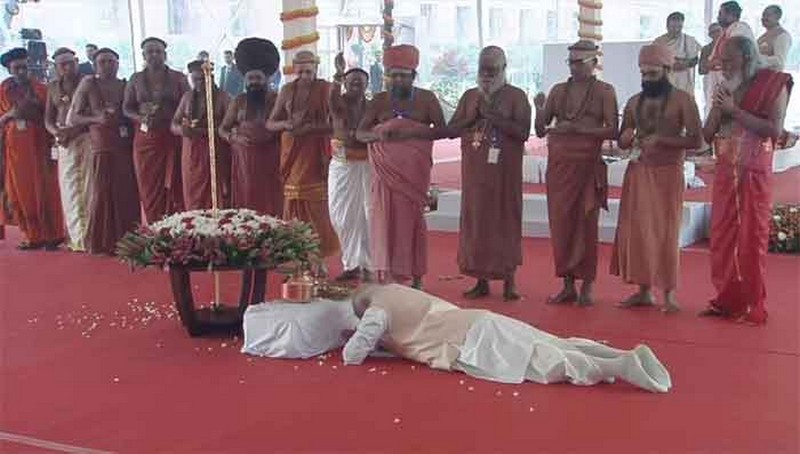
In  the  domestic  sphere,  Modi  has  successfully  used  his  `soft  power’  in  mesmerizing  vast  sections  of  the  people.   He  has  won  over  the  Hindu  majority  by    instilling   in  them  a  sense  of  national  pride  through  the  ostentatious  display  of  traditional  Hindu  religious  rituals ,  claiming  them  to  be  the  sole  symbols  of  Indian  nationalism.   The  latest   example  was  the  inauguration  of  the  new  Parliament  building  which  was  marked  by  the  installation  of  a  scepter  called  `Sengol’  –  an   antiquated  symbol  of  royal  power  that  was  in  use  in ancient  Hindu  kingdoms  in  south  India.

Through  his  contacts  in  the  Hindu  mutts  in  the  south,  Modi  discovered  that  a  replica  of  this  scepter was  presented  to  Jawaharlal  Nehru  on  the  eve  of  Independence  by  the  ancestors  of  these  mutt  priests.  Those  priests  welcomed  Nehru  as  their  new  ruler,  and  gifted  him  the  `Sengol’,  reassuring  him  that  this  scepter  would  protect  him  during  his  reign.   Nehru  in  his  usual  dismissive  attitude  towards  superstitious  religious  beliefs  and  symbols ,  dumped  away  this  particular  item   along  with  many  other  gifts  that  he  had  received  during  the  ceremony,  to  a  museum  set  up  in  his  ancestral  birthplace  in  Allahabad  (now  renamed  Prayagraj).

Modi  resuscitated  this  limp  stick  from  that  museum  and  installed  it  in  an  erectile  position  behind  the  chair  of  the  Lok  Sabha  Speaker.  The  occasion  was  marked  by  prayers  conducted  by  a  host  of  half-naked  male  sadhus  with  bulging  tummies  –  a  demonstration  which  would  have  otherwise  been   considered  obscene,  but  now  sanctioned  because  they  happened  to  be  Hindu  priests  with  their  lower parts  clad  in  the  sacrosanct   saffron  attire.  Their  performance  was  displayed  through  the  media,  and  watched  by  the  TV  audience  which  gleefully  hailed  it  as  the  revival  of  the  Hindu  roots  of  Indian  nationalism  made  possible   under  Narendra  Modi’s  leadership.  It  is  such  state-sponsored  religio-cultural  displays  which  appeal  to  popular  sentiments,  and   win  over  large  sections  of  the  Indian  people,  and  also  reinforce Narendra  Modi’s  image  as  the  saviour  and  protector  of  India’s  heritage.  Thus,  Modi’s  `soft  power`  strategy  in  the  domestic  sphere  has  worked  out  well  in  his  favour.

At  the  same  time,  he  is  extending  the  `soft  power’  to  the  Muslim  community  by  wooing  the  `Pasmanda’  sections  which  comprise  the  poor  laboring  classes  who  are  discriminated against  by  the  Muslim  elite.  He  is  promising  them  economic  opportunities  if  they  join  his  political  game,  and  vote  for  him  in  2024 .

The  other  side  of  the  picture  –  `Muscle  Power’ 

Parallel  to  this  overwhelming  flood  of  `soft  power’  propaganda  under  which  we  are  submerged,  there  is another  equally  overwhelming  downpour  of  `muscle  power’  that  the  Modi  government  has  been  demonstrating  in  the  domestic  sphere.  Incapable  of  using   his  muscle  power  to  oust  the  Chinese  aggressors  from  our  soil,  Modi   is  diverting  that  muscle  power  to  arm  the  recruits  of  the  Hindu  Sangh  Parivar  to  which  he  belongs.  These  young  recruits,   indoctrinated  in  the  ideology  of  Hindutva,     are  being  encouraged  to  satisfy  their  macho  instincts  and  demonstrate  their  power  in  public,  by  indulging  in  acts  like  lynching  of  Muslims  and  Dalits,  destruction  of  their  homes,  and  vandalizing  of  Christian  churches.  They  operate  under  various  names  in  different  states (Bajrang  Dal,  Hindu  Sena….). They  are  in  fact  acting  as  mercenaries  in  Modi’s  strategy  to  threaten  and  force  the  minorities  into  subjugation   to  his  rule.

At  the  administrative   level,   Modi’s  muscle  power  is  demonstrated  by  his  police  force  which  beats  up  women  wrestlers  who  demand  the  arrest  of  his  protégé ,  a  BJP  MP  accused  of  sexual  harassment.   He  further  uses  the   draconian  laws  to  suppress  his  political  opponents.  A  host  of  such  laws  like  the  National  Security  Act,  Unlawful  Activities (Prevention)  Act,  Public  Safety  Act,  Armed  Forces  (Special  Powers)  Act,   are  being  used  to  arrest  social  activists,  journalists,  lawyers  and  academics  among  others,  and  dragging  them  in  cases  that  go  on  for  years  –  thanks  to  our  slow  moving  judiciary.  The  most  notorious  example  of  such  denial  of  justice  is  the  Bhima  Koregaon  case,  on  which  the  judges  have  been  sitting  for  the  last  several  years  and  prevaricating  on  deciding  the  fate  of  some  of  the  most  eminent  academics,  lawyers  and  human  rights  activists,  who  are  languishing  in  jail.

In  this  connection,  we  must  admit  that  Narendra  Modi  has  been  lucky  enough  to  receive  blessings  from  a  section  of  the  judiciary.  Even  the  Supreme  Court  gave  sanction  to  the  building  of  a  Ram  temple  on  the  ruins  of  a  mosque  that  was  destroyed  by  members  of  his  Sangh  Parivar  –  an  act  that  was  demonstrated  in  public  view.  At  the  lower  level  of  the  judiciary,  in  the  high  courts  in  the  states,  we  hear  reports  of  judges  quoting  Manusmriti,  recalling  Hindu  mythological  legends  to  justify  their  verdicts.

With  such  allies  in  the  judiciary,  and  the  academic  institutions  which  he  has  filled  with  heads  and  members  aligned  with  the  RSS  ideology  (who  are `saffronizing’   the  syllabus  for  school  students),  Modi  hopes  to  win  over  the  urban  middle  class.

Thus,  Narendra  Modi  has  crafted  a  strategy  that   combines  extra-judicial  displays  of   muscle-power  by  his  followers  in  the  Sangh  Parivar  (e.g.  lynching  and  destruction  of  homes  and  places  of  worship  of  the  religious  minorities)  at  the  ground  level,   with  administrative  measures  sanctioned  by  the  judiciary  at  the  upper  level  that  allow  him  to  use  executive  agencies  like  the  CBI  and  ED  to  persecute  his  political  rivals.  It  is  a  stick  and  carrot  policy.  His  threat  of  a  CBI  or  ED  raid  is  dangled  as  a  stick  before  his  rivals,  along  with  the  carrot  that  offers  them  immunity  if  they  join  his  party.  Many  are  falling  for  the  carrot  –  as  evident  from  the  rush  at  the  doors  of  the  BJP  offices  in  many  states  by  Opposition  party  politicians  seeking  entry  into  the  party.

Limitations  of  Modi’s  strategy  of   `Soft  Power’  abroad  and  `Muscle  Power’  at  home

But  however  much  Narendra  Modi  may  try  to  woo  the  US  and other  global  powers  in  his  foreign  policy  endeavours,  the  abominable  record  of  his  regime  in  his  domestic  sphere  has  drawn  condemnation  from  reputable  international  organizations  which  index  the  level  of  success  and  failure  of  states  in  the  spheres  of  health  care,  human  rights,  freedom  of  the  press,  treatment  of  religious  minorities,  and  other  similar  areas  of  humanitarian  concerns.  The  UN Children’s  Fund,  the  World  Health  Organization  and  the  World  Bank  have  jointly  come  out  with  a  report  entitled  `Child  Malnutrition  Levels,’  this  year  in  2023,  which  reveals  that  every  fourth  stunted  child  in  the  world  is  to  be  found  in  India  –  indicating  the  extent  of  malnutrition.

Added  to  this  alarming  statistics  of  poverty  and  hunger,  is  the    data  relating  to  threats  to  press freedom.  In  the  annual  Press  Freedom  index  published  by  Reporters  Without  Borders,  India  fell  to  the  rank  of  150  in  2022.  Even Modi’s  hugging  friend,  the  US  President  Biden  disappointed  him  by  releasing  in  2020  the  US  Department  of  State’s  `Country  Reports  on  Human  Rights  Practices,’  which  highlighted  cases of  the  Modi  government’s  harassment   of  media  outlets  which  were  critical  of  him,  and  the  use  of  draconian  laws  against  journalists.   His  Secretary  of  State  Anthony  Blinken  in  2022,  released  the  International  Religious  Freedom  Report,  which  branded  India  as  one  of  the  worst  violators  of  religious  freedom  by  citing  cases  of  killing  of  Muslim  and  Christian  minorities  and  destruction  of  their  homes  and  places  of  worship.

Lest  these  reports  be  dismissed  and  denounced  by  the  Modi  government  as  `foreign  inspired  conspiracies,’  (the  term  usually  used  by  the  spokespersons  of  the  External  Affairs  Ministry)  we  should  reiterate  that  long  before  these  reports  by  global  agencies  came  out,  Indian  domestic  press  organizations  like  the  Editors  Guild,  Press  Club  of  India,  National  Alliance  of  Journalists  and  journalists’  trade  unions  had  been  protesting  all  these  years   against  the  Modi  government’s   persecution  of  journalists.  Similarly,  domestic  human  rights  bodies  like  the  PUCL  (Peoples  Union for Civil  Liberties),  PUDR  (Peoples  Union  for  Democratic  Rights)  and  other  groups  of  social  activists  have  also  over  the  last  several  years,   been  condemning  the  persecution  of  religious  minorities  by  Hindu  fanatical  groups   which  enjoy  the  patronage  of  Prime  Minister  Narendra  Modi’s   party  BJP.  The  investigative  reports  by  Indian  organizations  into  these  cases  of  atrocities  by  his  followers  are  available   on  the  web  sites.  It  is  these  domestic  reports  that  are  being  confirmed  now  by  the  international agencies,  which  independently  carried  out  investigation  into  allegations  of  human  rights  violation  in  India.

It  is  yet  to  be  seen  what  results  emanate  from   Narendra  Modi’s  forthcoming  visit  to  the  US  –  which  is  being  hailed  by  the  Indian  mainstream  media  (known  as  `GodiModi’)  as  a  once  in  a  life  time  historical  event.  Biden  recently  paid  a  left-handed  jocular  compliment  to  Modi,  saying  that  White  House  is  overwhelmed  by  demands  for  invitation  cards  for  attending  Modi’s  meeting !  The  joke  seems  to  have  gone  over  the  head  of  our  Prime  Minister  and  his  advisers  who  are  taking  it  at  its  face  value.  Let  us  see  what  happens  in  Washington.  Modi  may  be greeted  by  a  vast  audience  from  the  Indian  diaspora.  But  coming  down  to  brass  tacks  –  will  Biden  prioritize  his  commercial  and  military  deals  with  Modi,  and  ignore  the  issue  of  human  rights  violation  by  Modi  in  his  domestic  sphere,  that  is   being  raised  and  objected  to  by  Biden’s  own  administration  ?  How  will  the  two  wily  state  heads  reconcile  the  contradictory  positions  ?

Sumanta Banerjee is a political commentator and writer, is the author of In The Wake of Naxalbari’ (1980 and 2008)

15 June 2023

Source: countercurrents.org
This Kennedy speech is still the most sincere voice by any US president on world peace

By Bharat Dogra

Recently a speech made by President John Kennedy 60 years back on June 10, 1963 at the American University, Washington has been widely cited in the context of the peace efforts particularly to improve US-Russia relations. At the same time, however, its wider significance should not be missed.

This wider significance rests partly in the greatness that Kennedy had already achieved while, together with Nikita Khrushchev, pulling the world back from the very edge of a likely exchange of nuclear weapons. In the case of Kennedy the credit was even greater than that for Khrushchev because Kennedy had to take this step in the face of opposition of some of his own top military and intelligence officials. He was thus taking a great personal risk in this effort ( as events later proved the series of steps he took to make the US systems more responsive to peace and justice ultimately led to a very severe backlash by entrenched powerful interests, culminating in his assassination).

Kennedy’s deep commitment to peace was enhanced by his wisdom in maintaining a dialogue with Khrushchev to increase trust which was of vital importance for securing a deal that relied a lot on verbal assurance—while the Soviet Union was to withdraw nuclear missiles immediately, the USA made secret promises to withdraw its nuclear missiles from Turkey after some time, a promise it kept. Thus with their wisdom and mutual trust these two leaders were able to save the world from nuclear war despite a flashpoint having been reached.

Thus President Kennedy was very sincerely and firmly on the path of world peace when he made this speech; he had a lot of moral strength to back what he said. This cannot be said of any recent Presidents, whether Clinton or Obama or Bush, who reminded one of hypocrisy whenever they spoke of peace, and as far as Joe Biden is concerned, the least said the better. Of course even in the speech of Kennedy sometimes the USA’s commitment to peace at that time is described to be more than the reality, but this is because the President is trying to take his people forward on the path of peace in a more gentle and less controversial way, knowing well how much opposition there is from powerful interests. Let us not forget that when this speech was made, the previous president Eisenhower’s famous warning regarding the military industrial complex had already been voiced.

While making a strong pitch for world peace, President Kennedy asked—“what kind of peace do I mean? What kind of peace do we seek?” He replied—“Not a Pax Americana enforced on the world by American weapons of war. Not the peace of the grave or the security of the slave. I am talking about genuine peace, the kind of peace that makes life on earth worth living, the kind that enables men and nations to grow and to hope and to build a better life for their children–not merely peace for Americans but peace for all men and women–not merely peace in our time but peace for all time.”

This definition of peace—the kind of peace President Kennedy advocated—must be considered by the present US leadership because at present when they speak of peace it is the kind that was very specifically negated by President Kennedy.

Then he spoke words which are clearly even more relevant today—“Total war makes no sense in an age when great powers can maintain large and relatively invulnerable nuclear forces and refuse to surrender without resort to those forces. It makes no sense in an age when a single nuclear weapon contains almost ten times the explosive force delivered by all the allied air forces in the Second World War. It makes no sense in an age when the deadly poisons produced by a nuclear exchange would be carried by wind and water and soil and seed to the far corners of the globe and to generations yet unborn.”

Looking at some contradictions of world’s understanding of security he said, “Today the expenditure of billions of dollars every year on weapons acquired for the purpose of making sure we never need to use them is essential to keeping the peace. But surely the acquisition of such idle stockpiles–which can only destroy and never create–is not the only, much less the most efficient, means of assuring peace.”

Then he spoke of the great importance of the agenda of peace and why it should not just look at rivals or supposed enemies but must look inwards at our own attitudes. President Kennedy said—

“I speak of peace, therefore, as the necessary rational end of rational men. I realize that the pursuit of peace is not as dramatic as the pursuit of war–and frequently the words of the pursuer fall on deaf ears. But we have no more urgent task.

“Some say that it is useless to speak of world peace or world law or world disarmament–and that it will be useless until the leaders of the Soviet Union adopt a more enlightened attitude. I hope they do. I believe we can help them do it. But I also believe that we must reexamine our own attitude–as individuals and as a Nation–for our attitude is as essential as theirs. And every graduate of this school, every thoughtful citizen who despairs of war and wishes to bring peace, should begin by looking inward–by examining his own attitude toward the possibilities of peace, toward the Soviet Union, toward the course of the cold war and toward freedom and peace here at home.”

Speaking on more practical aspects of a peace program he invited his audience to focus on “more attainable peace– based not on a sudden revolution in human nature but on a gradual evolution in human institutions–on a series of concrete actions and effective agreements which are in the interest of all concerned. There is no single, simple key to this peace–no grand or magic formula to be adopted by one or two powers. Genuine peace must be the product of many nations, the sum of many acts. It must be dynamic, not static, changing to meet the challenge of each new generation. For peace is a process–a way of solving problems.

“With such a peace, there will still be quarrels and conflicting interests, as there are within families and nations. World peace, like community peace, does not require that each man love his neighbor–it requires only that they live together in mutual tolerance, submitting their disputes to a just and peaceful settlement. And history teaches us that enmities between nations, as between individuals, do not last forever. However fixed our likes and dislikes may seem, the tide of time and events will often bring surprising changes in the relations between nations and neighbors.”

Speaking of Soviet Union, he asked his people to go beyond narrow view to see the common stake of both countries in peace, He said—“Among the many traits the peoples of our two countries have in common, none is stronger than our mutual abhorrence of war. Almost unique among the major world powers, we have never been at war with each other. And no nation in the history of battle ever suffered more than the Soviet Union suffered in the course of the Second World War. At least 20 million lost their lives. Countless millions of homes and farms were burned or sacked. A third of the nation’s territory, including nearly two thirds of its industrial base, was turned into a wasteland–a loss equivalent to the devastation of this country east of Chicago.

“Today, should total war ever break out again–no matter how–our two countries would become the primary targets. It is an ironic but accurate fact that the two strongest powers are the two in the most danger of devastation. All we have built, all we have worked for, would be destroyed in the first 24 hours. And even in the cold war, which brings burdens and dangers to so many nations, including this Nation’s closest allies–our two countries bear the heaviest burdens. For we are both devoting massive sums of money to weapons that could be better devoted to combating ignorance, poverty, and disease. We are both caught up in a vicious and dangerous cycle in which suspicion on one side breeds suspicion on the other, and new weapons beget counter weapons.

“In short, both the United States and its allies, and the Soviet Union and its allies, have a mutually deep interest in a just and genuine peace and in halting the arms race. Agreements to this end are in the interests of the Soviet Union as well as ours–and even the most hostile nations can be relied upon to accept and keep those treaty obligations, and only those treaty obligations, which are in their own interest.”

President Kennedy pleaded—“If we cannot end now our differences, at least we can help make the world safe for diversity. For, in the final analysis, our most basic common link is that we all inhabit this small planet. We all breathe the same air. We all cherish our children’s future. And we are all mortal.”

Now we come to words which are very relevant in the context of very recent events. President Kennedy said, we must “persevere in the search for peace in the hope that constructive changes within the Communist bloc might bring within reach solutions which now seem beyond us. We must conduct our affairs in such a way that it becomes in the Communists’ interest to agree on a genuine peace. Above all, while defending our own vital interests, nuclear powers must avert those confrontations which bring an adversary to a choice of either a humiliating retreat or a nuclear war. To adopt that kind of course in the nuclear age would be evidence only of the bankruptcy of our policy–or of a collective death-wish for the world.”

Expressing commitment to diversity of views and systems, President Kennedy said—“We are unwilling to impose our system on any unwilling people–but we are willing and able to engage in peaceful competition with any people on earth…There can be no doubt that, if all nations could refrain from interfering in the self-determination of others, the peace would be much more assured.”

Calling for increased understanding with the Soviets, he said that increased understanding will require increased contact and communication. One step in this direction is the proposed arrangement for a direct line between Moscow and Washington, to avoid on each side the dangerous delays, misunderstandings, and misreading of the other’s actions which might occur at a time of crisis.

President Kennedy said, “We have also been talking in Geneva about the other first-step measures of arms control designed to limit the intensity of the arms race and to reduce the risks of accidental war. Our primary long range interest in Geneva, however, is general and complete disarmament– designed to take place by stages, permitting parallel political developments to build the new institutions of peace which would take the place of arms.

“The one major area of these negotiations where the end is in sight, yet where a fresh start is badly needed, is in a treaty to outlaw nuclear tests. The conclusion of such a treaty, so near and yet so far, would check the spiraling arms race in one of its most dangerous areas. It would place the nuclear powers in a position to deal more effectively with one of the greatest hazards which man faces in 1963, the further spread of nuclear arms. It would increase our security–it would decrease the prospects of war. Surely this goal is sufficiently important to require our steady pursuit, yielding neither to the temptation to give up the whole effort nor the temptation to give up our insistence on vital and responsible safeguards.”

Making an important announcement he stated, “I am taking this opportunity, therefore, to announce two important decisions in this regard.

First: Chairman Khrushchev, Prime Minister Macmillan, and I have agreed that high-level discussions will shortly begin in Moscow looking toward early agreement on a comprehensive test ban treaty. Our hopes must be tempered with the caution of history–but with our hopes go the hopes of all mankind.

Second: To make clear our good faith and solemn convictions on the matter, I now declare that the United States does not propose to conduct nuclear tests in the atmosphere so long as other states do not do so. We will not be the first to resume.”

Finally, President Kennedy drew a close link between the pursuit of world peace and domestic reforms, something that is all too often ignored in foreign policy. He called upon fellow Americans—“let us examine our attitude toward peace and freedom here at home. The quality and spirit of our own society must justify and support our efforts abroad. We must show it in the dedication of our own lives… Wherever we are, we must all, in our daily lives, live up to the age-old faith that peace and freedom walk together. In too many of our cities today, the peace is not secure because the freedom is incomplete. It is the responsibility of the executive branch at all levels of government–local, State, and National–to provide and protect that freedom for all of our citizens by all means within their authority. It is the responsibility of the legislative branch at all levels, wherever that authority is not now adequate, to make it adequate. And it is the responsibility of all citizens in all sections of this country to respect the rights of all others and to respect the law of the land.”

Thus at various levels President Kennedy seeks to chart out a path of peace and disarmament which is idealistic yet also practical enough to be implemented in real conditions and goes on to make important announcements which are significant breakthroughs in this direction on their own and also clear the path for further actions. It is also an exceptionally well-written speech, an inspiring document that still gives hope. As a historical document, it provides firm evidence of how firmly committed President Kennedy had become to the pursuit of world peace at a relatively early stage of his presidency. Surely he would have achieved much more by the time he completed his first term , and much, much more if the highly popular president was re-elected, as was likely, to serve two full terms ( 8 years).

Very sadly, very unfortunately, President Kennedy was assassinated less than six months after making this speech.

Bharat Dogra is Honorary Convener, Campaign to Save Earth Now.

15 June 2023

Source: countercurrents.org
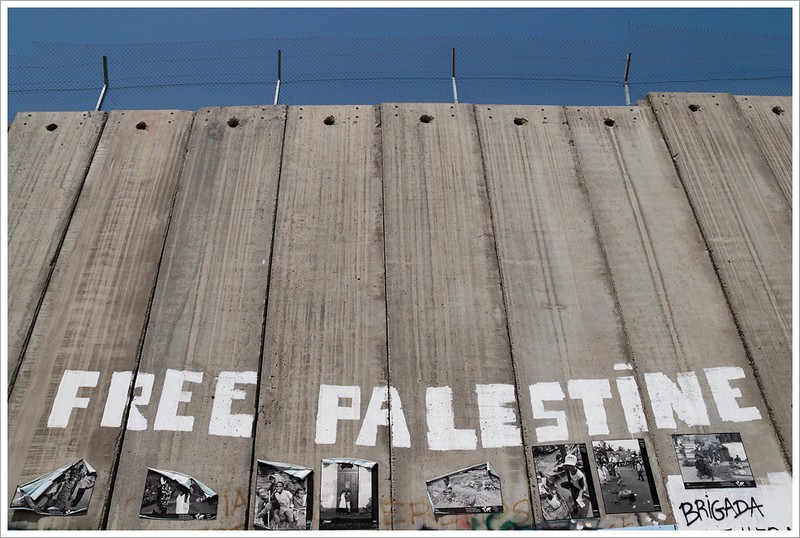
Permanent Apartheid in Palestine: This is Why Israel Wants to Reactivate E1 Plan

By Dr Ramzy Baroud

The Israeli government is at it again, actively discussing the construction of thousands of illegal settlement units as part of a massive settlement expansion scheme known as E1.

Though Israeli construction in the East Jerusalem area has supposedly been halted under international pressure, the Israeli government has found ways to keep the plan alive.

It did so through constant expansion of the various settlements in the name of ‘natural expansion’, confiscation of Palestinian land and the ruthless yet routine demolition of Palestinian homes.

But why does Washington, Israel’s main defender and benefactor, oppose, at least verbally, the construction in E1, while turning a blind eye to illegal construction throughout the West Bank?

The answer lies in the fact that E1 will further expand the Jerusalem municipal boundaries, minimize any Palestinian demographic presence in the city (from the current 42 percent to about 20 percent), and prejudice any political solution that includes East Jerusalem.

East Jerusalem is a Palestinian city, occupied by Israel during the June 1967 war. It is recognized by the United Nations and international law as part of the Occupied Palestinian Territory. Israel should have neither legal rights nor jurisdiction there.

Washington, which rarely cares about the rights of Palestinians, is concerned that, without East Jerusalem as part of the political equation, any discussion of a ‘two-state solution’ will become forever obsolete.

In other words, the US is more worried about the political, not territorial consequences of the Israeli decision. Indeed, the US’ entire political program in Palestine and Israel is situated within the two-state solution template. Without it, Washington’s role would cease to serve any purpose.

This is precisely why US Secretary of State Antony Blinken criticized Israeli settlements during his speech to the American Israel Public Affairs Committee (AIPAC) on June 5.

Though he covered the habitual US commitment to Israel’s security, describing it as “non-negotiable” and “ironclad”, he also warned against “any move toward annexation of the West Bank … disruption of the historic status quo at holy sites (and) the continuing demolitions of homes.”

These steps, and more, will “damage prospects for two states”, the cornerstone of US foreign policy in the Middle East.

Israel, on the other hand, is neither interested in a two-state, one-state or any ‘solution’ to its military occupation and apartheid in Palestine. Instead, Tel Aviv is working towards a specific end, a formula of permanent domination, one that would satisfy its quest for ‘security’, demographic superiority and ‘defensible’ borders.

It matters little that Israel’s vision for its own border lines is largely inconsistent with international law. All that matters to the current, in fact, all Israeli governments, are the ‘national interests’ of the country’s Jewish population, whose future has been linked to the crushing of political aspirations and civil rights of the country’s native Arab, Palestinian inhabitants.

Jerusalem’s particular significance stems from two factors: one, its historical, spiritual, economic and administrative centrality to all Palestinians and, two, the fact that it has been the Holy Grail of Israel’s settler colonialism in Palestine for the last 75 years.

A quick look at the map of Occupied East Jerusalem is enough to explain Israel’s ultimate motive in the Palestinian city: Maximum land with an absolute Jewish majority.

For this to take place, much work has to be done, namely ensuring the territorial continuity between the massive illegal Jewish settlement of Ma’ale Adumim and Jerusalem.

Israel’s motives are not a secret. A long report by the Zionist Jerusalem Center for Public Affairs champions and illustrates Tel Aviv’s objectives in detail. The report warns against allowing “security and urban discontinuity between Jerusalem and Ma’ale Adumim, or the reversion of Jerusalem to a border-town status … that would preclude the city’s eastward development.”

The reference to ‘eastward development’ is particularly dangerous, as many illegal Jewish settlements have purposely been planted in various parts of the West Bank, all the way to the Jordan Valley for the sole purpose of linking them all up, thus dividing the West Bank into two main regions, south and north.

Considering the current administration and ‘security’ divisions of the Occupied West Bank, a major territorial division will deny Palestinians any sense of physical continuity, let alone statehood. In other words, apartheid will become permanent and, from Israel’s perspective, also sustainable.

As for the westward expansion, connecting Ma’ale Adumim to the so-called “metropolitan Jerusalem” through construction in E1 will help Israel resolve a fundamental component of its expansionist strategy. According to the Zionist Jerusalem Center, such a merger will “incorporate both settlement and security as two vital, complementary components of Israel’s national interest.”

And, wherever there is Israeli construction in Occupied Palestine, there is always the destruction of Palestinian properties and confiscation of land.

According to the European Union Office in Palestine, in 2022, 28,208 illegal settlement units “were advanced” in East Jerusalem and the West Bank, compared to 22,030 in 2021. A higher number is expected in 2023.

As for Palestinian home demolition, the United Nations Office for the Coordination of Humanitarian Affairs (OCHA) paints a grim picture: in the first quarter of 2023 alone, 290 Palestinian structures in East Jerusalem and the West Bank were demolished or seized. This represents an increase of 46 percent, compared to the same period of the previous year.

East Jerusalem has had a major share of this destruction, specifically 95 homes and other structures between January 1 and March 28, according to the World Council of Churches. The outcome has been the displacement of 149 Palestinians. Among them, 88 children have been rendered homeless.

The price of Israel’s major plans in East Jerusalem and the rest of the West Bank is not just humanitarian. It is essentially political, aimed at cutting off Palestinian communities from one another, isolating Jerusalem completely, and ensuring a Jewish demographic majority for generations to come.

Though Secretary Blinken tries to emphasize the danger of such actions to the two-state solution, the real danger lies in the fact that such measures threaten the very fabric of Palestinian society and the political future of the Palestinian people.

Israel’s quest to reactivate its E1 plan requires not just mere condemnation, but tangible and decisive action, especially as Benjamin Netanyahu’s far-right government is more unhinged than ever before.

Dr. Ramzy Baroud is a journalist, author and the Editor of The Palestine Chronicle.

15 June 2023

Source: countercurrents.org
Indigenous people stage heroic protests against law stripping them of land rights in Brazil

By Harsh Thakor

Lawmakers in Brazil authorised a proposal that will unleash a mortal blow to Indigenous land rights and environmental protection.

On the 30th of May the National Congress of Brazil passed a new law draft, officially titled PL 490 or PL 2903, or the Marco Temporal. It would strip indigenous people of their claims to rights of their ancestral lands if they cannot prove that they were the actual inhabitants of the land before 5th of October 1988, when the current constitution of Brazil was chartered.. This is the most lethal privatization of land in the history of Brazil backing the vested interests of large landowners.

This change in titling rules will make the tribal communities vulnerable to land sharks who will find it easier to divert forest land for natural resource exploration and mining, experts said. This will threaten their lives and livelihoods.

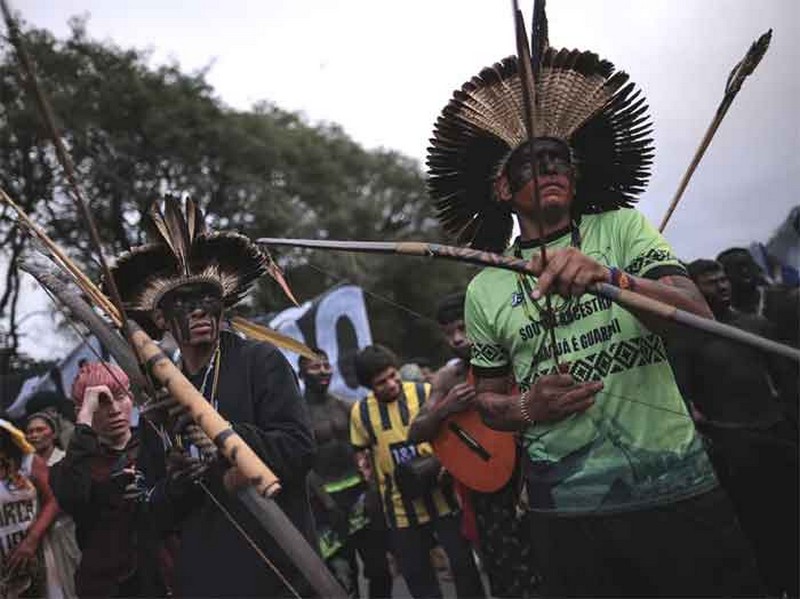
On the aftermath of the imposition of the law in the congress, protests by various indigenous peoples were ignited in ten federal states of Brazil, propagating the central demand of land for the indigenous people.

Some truly heroic forms of resistance ignited in Pirituba, Xingu River and Paar highway. Illustrates their striking capacity to confront a powerful enemy. Remarkable the manner they combated the police onslaught with traditional weapons, like bows and arrows.

Background

There are 764 Indigenous territories prevailing in Brazil, but more than 300 have yet to be officially chalked and remain in legal domain. Most are situated in the Amazon and are considered insulation from deforestation.

President Luiz Inácio Lula da Silva identified six new territories back in April. He has promised to protect Indigenous rights and reverse years of rainforest destruction. Under the previous far-right administration of President Jair Bolsonaro, Indigenous land demarcation was initiated.

Lula had constructed a new Ministry of Indigenous Peoples. Its minister, Sonia Guajarara, called the new bill a “genocide against Indigenous peoples” as well as an “attack on the environment.”

The indigenous people were mercilessly displaced from their lands on innumerable occasions by large landowners and corporations, which made it an arduous task to prove their occupation of land. Indigenous organizations criticized the law for obliterating the history of the indigenous people before 1988, as well as paying a deaf ear the violence they experienced. The time span of 1988 is a pure legal document to justify the land robbing.

The Supreme Court of Brazil was assigned to give a ruling on the constitutionality of the law on the 7th of June, but the judge pleaded for more time to consider the issue, giving also the lawmakers’ greater time to induct the law before the ruling.

Protests (reports from A Nova Democracia)

In São Paulo the Guarani people obstructed the Bandeirantes highway, and faced the wrath of merciless repression from the military police, who suppressed the protest with water cannons, tear gas and pepper spray.

In the north-eastern federal states of Ceará, Bahia and Maranhão numerous highways were blocked for hours while in the northern Rondônia, Pará, Amazonas and Acre there were massive protests.

In Rondônia, the state’s main highway was besieged by protesters, who installed burning barricades comprising logs and tires.

In the south-western part of Pará, in the municipality of Bom Jesus, there was a protest lodged with burning barricades, and the highway BR-222 was besieged for over three hours. In the capital city of Pará, Belém, protests too, flared.

The Transamazônica Highway was blocked in Amazonas and in Acre; with banners against the new law distributed. In the Federal District indigenous peoples marched to the National Congress, fluttering banners protesting the law.

A ferry inlet of the Xingu river was blocked by Kayapó people. In Mato Grosso, Indigenous people obstructed the highway in Pará. Protest in Ceará.

On June 4th a large protest erupted in Pirituba, North Zone of São Paulo ,raising banners against the law and for land. The protesters at the fiercest scale protested the repression amidst a barrage of threats carried out by the military police against protesters at the blockade of the Bandeirantes highway. The decision of the Court of Justice of São Paulo ruling that further protests on the highway are prohibited and designating the military police to prevent any new attempts was vociferously condemned.

The military police manhandled the participants of the march. The law is now in the process of being be passed by the Senate and ultimately endorsed by President Lula. Lula and his government have been criticized by indigenous activists for pardoning such a law despite his promises of defending the welfare and rights of the indigenous people.

Harsh Thakor is a freelance journalist who has covered mass movements.

13 June 2023

Source: countercurrents.org
The Fuel Shortages in Cuba are Worse Than You Think

By Kaitlin Blanchard and Eli Smith

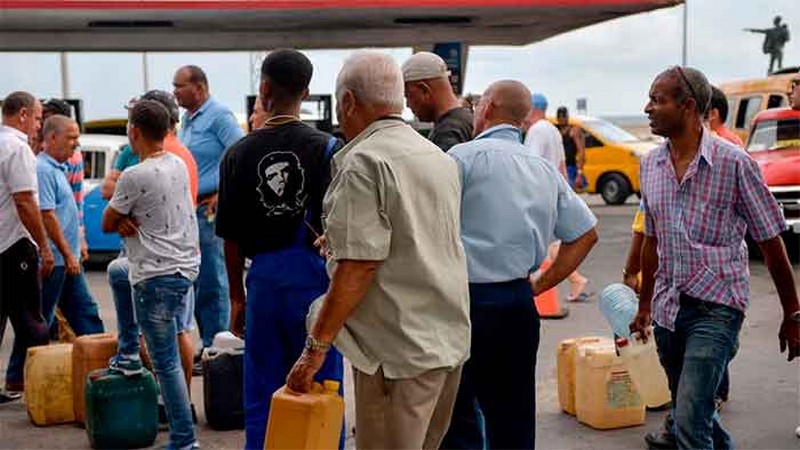
One hundred and fifty young people from the United States and Canada arrived in Cuba in late April 2023, just days before International Workers Day. As members of CODEPINK’s youth cohort, our goal was to understand the Cuban political system, the US blockade and its impacts on everyday life. We sat in a room upon our arrival, listening to our trip hosts explain the issue of fuel shortages on the island. Before they were done talking, the microphones went silent. The power had gone out. The rest of the presentation sounded like faint whispers to the delegates sitting in the back of the room. We tried our best to hear, trying to silence all the background noise to no avail. Thinking of it now, there was no better way to understand how dire the situation was than to see it for ourselves.

In 1960, following the Cuban Revolution that propelled Fidel Castro to power, a memorandum from the Deputy Assistant Secretary of State for Inter-American Affairs to the Assistant Secretary of State for Inter-American Affairs was written and later declassified. It stated that a majority of Cubans supported Fidel, and if the US wanted to counter the rise of communism in its backyard, it would have to deny “money and supplies to Cuba, decrease monetary and real wages, to bring about hunger, desperation, and an overthrow of the government.”

The US imposed a blockade which still restricts necessary items from entering Cuba and prevents other countries from selling them to the island. On top of the embargo, the Biden Administration keeps Cuba on a state-sponsor of terrorism list, further restricting economic development. The goal of these policies are explicit in the 1960 memorandum: the US is trying to starve socialism out of Cuba. The purpose of the US policy towards Cuba is to create misery, and it’s proudly displayed on the State Department website.

And we certainly saw misery with our own eyes. Usually for May Day, millions of Cubans rally in Havana, celebrating socialism and workers. May Day was scaled down this year due to fuel shortages – Cuba has to conserve the fuel it has for farming and other necessities. US media certainly reported on it, but without any mention that it was the US government that was causing shortages of all kinds in Cuba.

Leading up to May Day, a massive storm swept through the island, causing emergencies that the Cuban government couldn’t effectively deal with because of the lack of fuel. We sat through multiple power outages, even in a hotel that had decent fuel access. We toured neighborhoods in transformation, learning how Cubans were developing their own communities to have better access to medical care, food and other life affirming services. Even those tours, full of hope and self determination, were plagued by outages. Tourism is a huge industry that helps sustain the Cuban economy, so tourists like us are usually shielded from occurrences like this. We had no way of truly grasping the day to day effects that these power shortages were having on Cubans outside of Havana.

Even though the people we met in Cuba had a thorough understanding of what our country was doing to theirs, they welcomed us with open arms. Not only were they kind to us, they were also hopeful for the kind of future we would build together – one where our two countries can base foreign policy on the person-to-person relationships we build rather than deferring to the dinosaurs in Washington who value the victory of their ideologies over millions of Cuban lives.

Our cohort visited the Blas Roca Contingent where we were warmly welcomed with fresh coconuts, t-shirts, and hats. We joined delegations from all over the world: Switzerland, Australia, Uruguay, Panama, just to name a few. It was amazing to see union leaders and organizers from all over the world come to Cuba to show support for the Cuban project. It was also transformative to see how well Cuban workers are taken care of. The entire facility we were in was a place for the workers and their entire families to come for food, community, and fun. The union even obtained 3 farms in the area in order to grow food for the workers and their families.

Later, a smaller group of us took a tour with a worker at the facility. He told us how his father had grown up very poor before the revolution and how much his family’s life changed for the better after the revolution. He spoke of the hardships of the blockade, especially not having access to fertilizers for farming which could easily double their yields. He also mentioned how he has had family emigrate to the USA and while he doesnt fault them for leaving, he himself could never leave the Cuban revolutionary project behind. He is a revolutionary through and through. His story is the kind that the policy makers in the US choose to ignore. Cubans on the island are charting their own course outside US hegemony and it is clear that the US’s policy is to try and deny them that right.

All of us, like the delegations that have gone before us and the countless ones who will go after, returned to the US with a deeply held commitment to end our country’s blockade on the Cuban people.

Eli Smith and Kaitlin Blanchard are members of the CODEPINK youth cohort the Peace Collective.

13 June 2023

Source: countercurrents.org
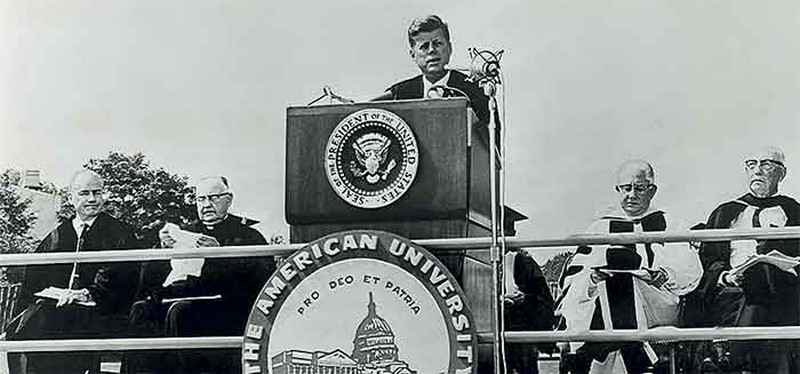
Vienna’s International Summit for Peace in Ukraine Issues a Global Call for Action

By Medea Benjamin

During the  weekend of June 10-11 in Vienna, Austria, over 300 people representing peace organizations from 32 countries came together for the first time since the Russian invasion of Ukraine to demand an end to the fighting. In a formal conference declaration, participants declared, “We are a broad and politically diverse coalition that represents peace movements and civil society. We are firmly united in our belief that war is a crime against humanity and there is no military solution to the current crisis.”

To amplify their call for a ceasefire, Summit participants committed themselves to organizing Global Weeks of Action–protests, street vigils and political lobbying–during the days of September 30-October 8.

Summit organizers chose Austria as the location of the peace conference because  Austria is one of only a few neutral non-NATO states left in Europe. Ireland, Switzerland and Malta are a mere handful of neutral European states, now that previously neutral states Finland has joined NATO and Sweden is next in line. Austria’s capital, Vienna, is known as “UN City,” and is also home to the Secretariat of the OSCE (the Organization for Security and Cooperation in Europe), which monitored the ceasefire in the Donbas from the signing of the Minsk II agreement in 2015 until the Russian invasion of Ukraine in 2022.

Surprisingly, neutral Austria turned out to be quite hostile to the Peace Summit. The union federation caved in to pressure from the Ukrainian Ambassador to Austria and other detractors, who smeared the events as a fifth column for the Russian invaders. The ambassador had objected to some of the speakers, including world-renowned economist Jeffrey Sachs and European Union Parliament member Clare Daly.

Even the press club, where the final press conference was scheduled, canceled at the last minute. The Austrian liberal/left newspaper Der Standard piled on, panning the conference both beforehand, during and afterwards, alleging that the speakers were too pro-Russian. Undaunted, local organizers quickly found other locations.The conference took place in a lovely concert center, and the press conference in a local cafe.

The most moving panel of the conference was the one with representatives from Ukraine, Russia and Belarus, who risked their lives to participate in the Summit. Yurii Sheliazhenko, secretary treasurer of the Ukrainian Pacifist Movement, is unable to leave the country and therefore spoke to attendees from Kyiv via Zoom.

“Like many Ukrainians, I am a victim of aggression of Russian army, which bombs my city, and a victim of human rights violations by the Ukrainian army, which tries to drag me to the meat grinder, denying my right to refuse to kill, to leave the country for my studies in University of Münster … Think about it: all men from 18 to 60 are prohibited from leaving the country, they are hunted on the streets and forcibly abducted to the army’s serfdom.”

Sheliazhenko told the Summit that the Armed Forces of Ukraine had tried to deny conscientious objector status to Ukrainian war resisters, but relented when international pressure demanded that the Ukrainian military recognize rights secured under the European Convention on Human Rights.

Several groups at the Summit pledged to provide support for conscientious objectors from Ukraine, Russia and Belarus, and also took up a collection for Ukrainian families lacking access to clean water following the recent destruction of the Kakhovka dam.

Highlights of the Summit also included remarks by representatives from the Global South, who came from China, Cameroon, Ghana, Mexico and Bolivia. Bolivia’s Vice President  David Choquehuanca inspired the crowd as he spoke of the need to heed the wisdom of indigenous cultures and their mediation practices.

Many speakers said the real impetus to end this war will come from the Global South, where politicians can see the widespread hunger and inflation that this conflict is causing, and are taking leading roles in offering their services as mediators.

Almost all of Europe was represented, including dozens from Italy, the country  mobilizing the continent’s largest peace demonstrations, with over 100,000 protesters. Unlike in the United States, where the demonstrations have been small, Italian organizers have successfully built coalitions that include trade unions and the religious community, as well as traditional peace groups. Their advice to others was to narrow and simplify their demands in order to broaden their appeal and build a mass anti-war movement.

The eight-person U.S. delegation included representatives from CODEPINK, Peace in Ukraine, the Fellowship of Reconciliation and Veterans for Peace. U.S. retired colonel and diplomat Ann Wright was a featured speaker, along with former Congressman Dennis Kucinich, who joined remotely.

Despite the uniform bottom line of the participants, which was a call for peace talks, there were plenty of disagreements, especially in the workshops. Some people believed that we should continue to send weapons while pushing for talks; others called for an immediate end to weapons transfers. Some insisted on calling for the immediate withdrawal of Russian troops, while others believed that should be the result of negotiations, not a pre-condition. Some put more blame on the role of NATO expansion and the interference of the U.S. in Ukraine’s internal affairs, while others said the blame belongs exclusively at the doorstep of the Russian invaders.

Some of these differences were reflected in discussions surrounding the final declaration, where there was plenty of back and forth about what should and should not be mentioned. There were strong calls to condemn NATO provocations and the role of the U.S./UK in sabotaging early attempts at mediation. These sentiments, along with others condemning the West, were left out of the final document, which some criticized as too bland. References to NATO provocations that led to the Russian invasion were deleted and replaced with the following language:

“The institutions established to ensure peace and security in Europe fell short, and the failure of diplomacy led to war. Now diplomacy is urgently needed to end the war before it destroys Ukraine and endangers humanity.”

But the most important segment of the final document and the gathering itself was the call for further actions.

“This weekend should be seen as just the start,” said organizer Reiner Braun. “We need more days of action, more gatherings, more outreach to students and environmentalists, more educational events. But this was a great beginning of global coordination.”

Medea Benjamin is cofounder of CODEPINK for Peace, and author of several books, including Peace in Ukraine: Making Sense of a Senseless Conflict.

13 June 2023

Source: countercurrents.org