Just International

Nuclear Powers Expanding Nuclear Arsenals, Says SIPRI

By Countercurrents Collective

Nuclear powers are actively modernizing and expanding their arsenals amid rising geopolitical tensions, said SIPRI Yearbook 2023, a report by the Stockholm International Peace Research Institute (SIPRI) released on Monday.

Of the total global inventory of an estimated 12 512 warheads in January 2023, about 9576 were in military stockpiles for potential use — 86 more than in January 2022 (see the table below). Of those, an estimated 3844 warheads were deployed with missiles and aircraft, and around 2000 — nearly all of which belonged to Russia or the USA — were kept in a state of high operational alert, meaning that they were fitted to missiles or held at airbases hosting nuclear bombers.

World nuclear forces, January 2023

– = nil or a negligible value.
Notes: All estimates are approximate. SIPRI revises its world nuclear forces data each year based on new information and updates to earlier assessments. The data for Jan. 2023 replaces all previously published SIPRI data on world nuclear forces. Countries are ordered by date of first known nuclear test. There is no conclusive open-source evidence that Israel has tested its nuclear weapons. The figures for Russia and the USA do not necessarily correspond to those in their 2010 Treaty on Measures for the Further Reduction and Limitation of Strategic Offensive Arms (New START) declarations because of the treaty’s counting rules.
a ‘Deployed warheads’ refers to warheads placed on missiles or located on bases with operational forces.
b ‘Stored warheads’ refers to stored or reserve warheads that would require some preparation (e.g. transport and loading on to launchers) before they could be deployed.
c ‘Total stockpile’ refers to warheads that are intended for use by the armed forces.
d ‘Total inventory’ includes both stockpiled warheads and retired warheads awaiting dismantlement.
e SIPRI previously estimated that the UK had about 45 retired warheads awaiting dismantlement; however, SIPRI’s assessment as of Jan. 2023 is that these warheads are likely to be reconstituted to become part of the UK’s growing stockpile over the coming years and the stockpile number remained at 225 in Jan. 2022.
f The British government declared in 2010 that its nuclear weapon inventory would not exceed 225 warheads. It is estimated here that the inventory remained at that number in Jan. 2023. A planned reduction to an inventory of 180 warheads by the mid 2020s was ended by a government review published in 2021. The review introduced a new ceiling of 260 warheads.
g Information about the status and capability of North Korea’s nuclear arsenal comes with significant uncertainty. North Korea might have produced enough fissile material to build 50–70 nuclear warheads; however, it is likely that it has assembled fewer warheads, perhaps around 30.

Table: SIPRI ©  Source: SIPRI Yearbook 2023.

The SIPRI analysts warn the world is “drifting into one of the most dangerous periods in human history”.

The SIPRI estimated that as of January 2023, Russia, the U.S., the UK, France, China, India, Pakistan, North Korea and Israel had a total of 12,512 warheads, with 9,576 stored in military stockpiles for potential use – an increase of 86 from one year previously.

The report also claimed that as of January, Russia and the U.S. – which between them possess almost 90% of the world’s nuclear weapons – had 1,674 and 1,770 deployed warheads respectively. Last year, Russia had approximately 1,588 warheads while the US had 1,744.

The SIPRI noted that “the sizes of their respective nuclear arsenals seem to have remained relatively stable in 2022, although transparency regarding nuclear forces declined in both countries” following the outbreak of hostilities in Ukraine.

Over the course of the year, China’s nuclear arsenal grew from 350 warheads to 410, SIPRI estimated, adding that by the end of the decade China “could potentially have at least as many intercontinental ballistic missiles as either the USA or Russia.”

Elsewhere, the UK is not thought to have increased its arsenal in 2022, although its number of warheads is expected to grow in the years to come.

France has continued its nuclear development program, while India and Pakistan appear to be expanding their nuclear arsenals, the report said.

North Korea is said to be prioritizing its nuclear program and is estimated to have assembled some 30 warheads. Israel, which has not publicly admitted to possessing nuclear weapons, is also believed to be modernizing its nuclear arsenal, SIPRI added.

The SIPRI also pointed to the erosion of global arms control architecture amid the Ukraine conflict, noting Washington’s decision to freeze strategic stability dialogue with Russia and Moscow’s suspension of the 2010 New START Treaty, which places limits on U.S. and Russian nuclear arsenals.

Russian President Vladimir Putin announced the move in February, pointing to the refusal of Western powers to permit inspections of their nuclear facilities. He confirmed that Moscow would continue to abide by the deal’s limits on deployed warheads.

A SIPRI news said:

‘Most of the nuclear-armed states are hardening their rhetoric about the importance of nuclear weapons, and some are even issuing explicit or implicit threats about potentially using them,’ said Matt Korda, Associate Researcher with SIPRI’s Weapons of Mass Destruction Programme and Senior Research Associate with the FAS Nuclear Information Project. ‘This elevated nuclear competition has dramatically increased the risk that nuclear weapons might be used in anger for the first time since World War II.’

‘With billion-dollar programmes to modernize, and in some cases expand, nuclear arsenals, the five nuclear weapon states recognized by the Nuclear Non-Proliferation Treaty seem to be moving further and further from their commitment to disarmament under the treaty,’ said Wilfred Wan, Director of SIPRI’s Weapons of Mass Destruction Programme.

It said:

The USA and the UK both declined to release information to the public concerning their nuclear forces in 2022, which they had done in previous years.

‘In this period of high geopolitical tension and mistrust, with communication channels between nuclear-armed rivals closed or barely functioning, the risks of miscalculation, misunderstanding or accident are unacceptably high,’ says Dan Smith, SIPRI Director. ‘There is an urgent need to restore nuclear diplomacy and strengthen international controls on nuclear arms.’

Global security and stability in increasing peril

The 54th edition of the SIPRI Yearbook reveals the continuing deterioration of global security over the past year. The impacts of the war in Ukraine are visible in almost every aspect of the issues connected to armaments, disarmament and international security examined in the Yearbook. Nevertheless, it was far from being the only major conflict being waged in 2022.

‘We are drifting into one of the most dangerous periods in human history,’ says Dan Smith, SIPRI Director. ‘It is imperative that the world’s governments find ways to cooperate in order to calm geopolitical tensions, slow arms races and deal with the worsening consequences of environmental breakdown and rising world hunger.’

Countercurrents is answerable only to our readers. Support honest journalism because we have no PLANET B.

13 June 2023

Source: countercurrents.org

Amritsar: The Indian city where no one goes hungry

By Srishti Chaudhary & Raphael Reichel

Amritsar, a north Indian city of two million people, is famous for many things: delectable cuisine, its historical old town and the spectacular Golden Temple – the most significant shrine of the Sikh religion. Yet, what stands out everywhere, from the temple to the people in the streets, is a feeling of generosity that is linked to the very founding of the city.

Amritsar was established in the 16th Century by a Sikh guru and is located in the region of Punjab where Sikhism originated. The religion is known for its tradition of seva – a voluntary service performed for others without any expectations or reciprocity. Sikhs all over the world do seva in gurudwaras (Sikh temples), most often in simple acts like cleaning the floors, serving meals and maintaining order in the temple. Others perform seva in their private life through acts of generosity and charity. In April 2021 when Covid devastated families across India, the Sikh community rose to the challenge of delivering oxygen cylinders and other medical supplies to those in desperate need.

“Seva means selfless service, and in Sikhism it is not just an exhortation and a guide but a daily practice,” writes Jasreen Mayal Khanna in her book Seva: Sikh Wisdom for Living Well by Doing Good. “Kind has been cool among Sikhs way before it became a Brooklyn hipster motto.”

“The other name for seva is love,” said 23-year-old Abhinandan Chaudhary, who has been doing seva with his family since he was eight. “A common teaching is that one should be so discreet and selfless, that if you are doing seva from the left hand, even your right hand should not find out about it.”

In an increasingly individualised and capitalistic world, it is a refreshing way of living.

The spirit of generosity in Sikhism can be seen across the world. During Covid lockdown, Sikh volunteers in a gurudwara in England delivered thousands of meals a day to NHS staff, while Sikhs in various US cities cooked hundreds of thousands of free meals. In crisis or emergency situations, Sikhs have rallied their full force to help those in need, whether it may be storm-hit Canada or cyclone-struck New Zealand.

But in Amritsar, the beating heart of the Sikh religion, the fulfilment of seva is taken to another level. It is known throughout India that no person ever has to go to bed hungry in Amritsar. That’s because there is always a hot meal ready for anyone who should want it at the Golden Temple, the most significant shrine of the Sikh religion.

The Golden Temple’s langar, a free, communal kitchen, is the largest in the world, serving 100,000 people per day, seven days a week. Everybody is welcome to eat here, without discrimination, for as long as they need shelter and food, and meals are available 24 hours a day.

The New York based, Michelin-star chef Vikas Khanna, who distributed millions of meals in India during Covid lockdown, pointed out: “I was born and raised in Amritsar and we have a huge community kitchen where everyone gets fed. The entire city can eat there… My sense of hunger came from New York, when I was struggling here from the very bottom.”

I was born and raised in Amritsar and we have a huge community kitchen where everyone gets fed

Like all gurudwaras, the Golden Temple is run smoothly and with utmost discipline by an armada of volunteers, who serve up a basic yet delicious meal of lentils, chapattis (flatbread), chickpea stew and yoghurt on stainless steel plates day in, day out. People sit cross-legged on the floor in huge halls that can easily accommodate 200 people at a time: men and women, old and young, rich and poor. There is an implicit choreography behind it that everyone seems to know. While some people ask for more food, others just quickly finish their plates and leave. After every 15 minutes or so, volunteers clean up and prepare the hall for the next round of hungry eaters. It is a never-ending cycle of eating and serving.

Right from the temple to the people on the streets, friendliness, generosity and helpfulness are a given in Amritsar. When we visited, smiles followed us around and we only needed to look lost or confused before somebody would approach to ask if they could help. Walking on the street at night, random passersby told us to take care of our bags in busy areas. When we arrived at Kesar da Dhaba, a famous eatery with long waiting times, people squeezed up at the communal tables to make space for us, even if it meant banging elbows while eating. A sense of welcome and sharing was ubiquitous; an affable glance and a smile was enough for strangers to invite us to tea and talk about their lives.

“Growing up in Amritsar, there was a feeling of living within a big community,” said Rahat Sharma, who was born and raised here. “I grew up playing hide-and-seek in the Golden Temple, where all of us did seva. Everyone would look out for each other, and the Sikhs and Hindus, the two majority faiths in the city, lived together lovingly, despite often opposing political circumstances.”

It only makes sense that the city is so full of vigour, for as much as Amritsar is a city of the divine, it is a city of life. The local, streetside cuisine, with its kulchas (flatbreads) and chole (chickpea stew), phirni (rice pudding) in traditional clay pots and hearty glasses of buttermilk, is the stuff of envy across India. The stunning although neglected old town, a maze of narrow streets, junctions and small squares, is full of lively and bustling bazaars and seems to be lost in time.

However, at the heart of Amritsar’s magnanimous and open character is a dark contemporary history that has played a crucial part in shaping the city’s – as well as Sikhism’s – self-conception and dynamics.

As the second-biggest city in Punjab, Amritsar was often a hotspot for gatherings and protests during British colonial rule. One such event took a brutal turn in 1919, when a British general gave orders to fire upon a peaceful meeting of people, which came to be known as the Jallianwala Bagh Massacre, where up to 1,500 people died.

Additionally, when the British hastily left India in 1947, the violence that engulfed Indian Partition heavily affected Amritsar due to the city’s location next to the newly drawn border. (Due to this history, India’s first and only Partition Museum opened in Amritsar in 2017.)

In 1984, Amritsar once again became the site of tragic events. A momentous military operation ordered by Prime Minister Indira Gandhi involved the storming of the Golden Temple by military forces to weed out secessionists, the jitters of which are felt even today. It led to the assassination of Gandhi by her two Sikh bodyguards some months later, and a massacre of thousands of innocent Sikhs across India in the subsequent days.

It is important for the Sikhs to preserve the memories of these events; tales of Sikh martyrs are a large part of their cultural memory, even recited in their prayer, the ardas. “But these tales weren’t retold to incite hatred or seek revenge. On the contrary, our legacy of being protectors was emphasised,” Khanna wrote.

And that is why it is even more admirable that a community that has suffered so many collective traumas is still so giving and accepting of all. According to Khanna, these traits are an integral part of being Sikh. “Guru Nanak (the founder of Sikhism) made seva the song of the Sikhs… Sikhs just choose to make selflessness a big part of their lives, inspired by their gurus’ words and deeds.”

The tradition of seva and Sikhs’ acceptance and welcoming of people regardless of their faith or creed, is testament to their generosity – and of the city that grounds this sentiment in the most exemplary way. In Amritsar, no matter how bleak and dark things may seem, a spirit of kindness, love and generosity seems to always prevail.

*

If you liked this story, sign up for the weekly bbc.com features newsletter called “The Essential List”. A handpicked selection of stories from BBC Future, Culture, Worklife and Travel, delivered to your inbox every Friday.

13 June 2023

Source: www.bbc.com

Haiti: Stop the Destruction of a Nation

By Seth Donnelly

“As the people of Haiti continually attest, we women in the Grandans are clear that since the coup d’etat of February 29, 2004, this has been the plan to wipe out the Haitian people and our country. We call on all women’s organizations, popular organizations, students and all to stand against this system that generates the high cost of living, misery, corruption and rape that are destroying our lives…”

– From a press release on March 17th, 2023, by Haitian women’s and popular organizations in the Grandans Department of Haiti

6 Jun 2023 – As the current crisis in Haiti has metastasized into one of the worst human rights disasters in the Americas, Haitian activists in the popular movement and in diaspora are increasingly charging the US government– the key force behind the 2004 coup and subsequent occupation of Haiti– with genocide, as reflected in the above quote. They recognize that the ongoing, systematic destruction of the Haitian people as a sovereign nation is not some “random” work of “gangs’, but instead the deliberate outcome of the efforts by the US and “Core Group” powers– in collaboration with members of the Haitian oligarchy– to prevent the vast majority of Haitians from exercising genuine self-determination and popular democracy.

Ever since the Haitian people successfully overthrew slavery and colonialism in 1804, they have been subjected to interventions and policies by the French and US governments– from devastating “debt” collection to brutal military occupation, from coups to neocolonial puppet dictatorships– designed to destroy their existence as sovereign people, as an independent nation. There is extensive evidence to prove the genocidal nature of these historical interventions, including the brutality of the US invasion and occupation of Haiti between 1915-1934. The subsequent US-backed dictatorship of “Papa Doc” Duvalier who ruled Haiti from 1957–1971. Tens of thousands of Haitians were tortured, murdered, and disappeared while even more perished through the structural genocide of impoverishment, malnutrition, death by preventable disease, and extreme exploitation. As journalist Nathalie Baptiste stated:

“Papa Doc presided over the murders of an estimated 30,000 people. Thousands of others simply disappeared or were imprisoned at the notorious Fort Dimanche, a prison known for torture, mutilation and death.”

After “Papa Doc” Duvalier died in 1971, even The New York Times conceded that this US-backed dictator– who had been maintained in power and showered with millions of dollars by the US government– left this legacy in Haiti:

“The Tontons [Papa Doc’s private deathsquad system], sunglass‐wearing thugs whose fanatical loyal ty to Duvalier was rewarded with virtual licenses to torture and kill, murdered thousands of their fellow Haitians. Often they slit the throats of their victims and left them tied to chairs or hanging in market places for days as “examples”of what could happen to anti Duvalierists…By 1971, more than 13 years after he assumed power, little had changed for the great majority. Almost 90 per cent of the people were illiterate and were plagued by yaws, tuberculosis and malnutrition. Per capita income for Haiti’s 4.5‐million people was about $75 a year, compared with the Latin‐American average of about $400.” [emphasis mine]

It is documented that the notorious Tonton Macoutes received training by the US military.

Between 1971 and 1986, the US government maintained and funded the dictatorship of “Baby Doc” Duvalier, perpetuating the same system of terror and exploitation considered a “favorable investment climate” for US corporations.

Openly admitting the US domination of Haiti, Forbes magazine noted on September 22nd, 2022, that “Haiti has been a ward of the US government and international agencies for decades.” And what have been the consequences?

Compare these basic life indicators in Haiti to those in revolutionary Cuba, which broke free from US control in 1959. According to UN data compiled by the Macrotrends, Haiti’s infant mortality rate in 1959 was a staggering 192 deaths per 1000 live births. Despite advances in global health and vaccines over the past 70 years, leading to a dramatic, global reduction in infant mortality, the infant mortality rate in Haiti today remains one of the highest in the world, at 48 deaths per 1000 live births. In stark contrast, as David Blumenthal, former President of the Commonwealth Club, noted in 2016: “Since its 1959 revolution, Cuba’s infant mortality rate has fallen from 37.3 to 4.3 per 1000 live births—a rate equivalent to Australia’s and lower than the United States’ (5.8).” How is that in Haiti today, under US/ UN occupation, the infant mortality remains twelves times higher than that of revolutionary Cuba? This disparity between the countries cannot be explained by the pre-existing 1959 disparity ratio in which Haiti’s infant mortality was only approximately five times higher than that of Cuba. In other words, the disparity ratio in deaths between the two countries has more than doubled following Cuba’s revolution while Haiti has remained firmly under US domination during the ensuing decades to the present.

A similar picture of disparity emerges when it comes to indicators of acute hunger and malnutrition in Haiti and Cuba. According to data by the World Food Programme, “A total of 4.9 million Haitians – nearly half the population – do not have enough to eat, and 1.8 million are facing emergency levels of food insecurity.” [emph.mine] In contrast, regarding Cuba, the World Food Programme states: “Over the last 50 years, comprehensive social protection programmes have largely eradicated poverty and hunger.”

It is impossible to understand these disparities without taking into account and centering the significance of genocidal interventions by the US and French governments in reaction to the Haitian revolution of 1804 and the recolonization of Haiti by the US in the 20th century.

The pattern of US domination was interrupted briefly when the grassroots, non-violent mass movement of the Haitian people later called Lavalas (meaning flood in Kreyol) successfully dismantled the US-backed Duvalier dictatorship in 1986. This created the conditions for the first truly fair and free elections in 1990, resulting in the landslide election of Jean-Bertrand Aristide. The US quickly moved to support the Haitian military and elite to violently overthrow this democracy within 8 months. During the following 3 years of military dictatorship, the US-funded Haitian military and US-funded paramilitary death squad known as FRAPH killed thousands of Haitians. FRAPH leader Emmanuel (Toto) Constant was on the CIA payroll during this reign of terror, threatening to restore the old order.

The democratic resistance by the Haitian people, joined by intensive international solidarity, pressured President Clinton to support President Aristide’s return, although Clinton tried to coerce Aristide into accepting destructive US-prescribed economic policies. Aristide and the Lavalas popular movement refused to follow Clinton’s prescription. The popular, democratic Fanmi Lavalas governments headed by President Aristide– in power at two intervals between 1994 and 2004– pursued development policies that were created and driven by the Haitian people for the benefit of the Haitian people. These policies involved refusing to privatize national resources, increasing the minimum wage, investing public funds in healthcare, education, and cooperatives, subsidizing access to vital resources, and much more. The achievements in poverty reduction and human rights during this decade of popular democracy were undeniable, explaining Aristide’s vast popularity with the Haitian people and the respect for Fanmi Lavalas by international humanitarian leaders such as the late Dr. Paul Farmer. Yet these achievements, just like the brief opening to democracy in 1990, would be destroyed in a second US-backed coup in 2004, waged against President Aristide and thousands of other democratically elected officials on all levels.

Following this coup, Haitians have once again experienced the systematic destruction of their democracy and the social-economic conditions that permit them to exist as a sovereign people, as an independent nation. Crimes against humanity have returned and are intensifying.

Today, there is not a single elected official left in the entire country since the ruling US-installed Haitian Tet Kale Party (PHTK) regime has failed to hold, nor is capable of holding, fair and free elections. On January 9th, 2023, the terms of the last ten remaining Senators in Haiti’s parliament expired, leaving Haitians with no Constitutional representation at any state level. This latest development only lays bare that Haitians have been deprived of meaningful, consistent representation since the 2004 coup, through political repression and US-sponsored fraudulent elections that brought the PHTK into power.

Immediately after the 2004 coup, there was a massive wave of violent repression, targeting officials and activists with Fanmi Lavalas, the most popular political party in the country. Thousands upon thousands of people were killed. In an investigative report published by the British medical journal The Lancet on August 31st, 2006, Athena R. Kolbe and Dr. Royce A. Hutson found that during the first 22-months of the U.S.-backed coup regime, 8,000 people were murdered in the greater Port-au Prince area alone. 35,000 women and girls were raped or sexually assaulted. The violence was politically motivated as part of the coup regime’s war on Haiti’s popular movement.

Subsequent US-sponsored “elections” cemented this political repression by excluding Fanmi Lavalas from participation, as in the 2010–2011 election— dominated by the US and personally manipulated by Secretary of State Hillary Clinton– that resulted in the “victory” of PHTK godfather Michel Martelly. The next election in 2016 that put PHTK puppet Jovenel Moise in power was likewise based on blatant fraud. The result of this political repression is to deprive the Haitian people of political sovereignty.

Under the US/UN occupation, Haitians– particularly in impoverished neighborhoods that are bases of pro-democracy, pro-Lavalas activism– have been subjected to relentless massacres: first those perpetrated directly by UN occupation forces such as the 2005 massacre in Site Soley (Cite Soleil), and in more recent years those perpetrated by the US-funded/ trained Haitian National Police (HNP) and heavily weaponized paramilitaries, most notably the G9 Family and Allies, working with the PHTK dictatorship, such as the 2018 Lasalin massacre (see this video) and the 2019 massacres in the Tokyo and Site Vensan (Cite Vincent) neighborhoods. The Harvard Law School International Human Rights Clinic documented this pattern in its 2021 report “Killing with Impunity: State-Sanctioned Massacres in Haiti”. On May 21st, 2023, the National Human Rights Defense Network in Haiti released a detailed report on recent massacres in Bel Air and Cite Soleil, noting that from “2018 to the present, at least twelve (12) massacres and armed attacks have been carried out in the disadvantaged neighborhoods of Port-au-Prince. In the first 10 cases, the survivors lodged a complaint with the judicial authorities against their aggressors, most of whom were notorious armed bandits and well-known state authorities” [emphasis mine].

The paramilitaries, an outgrowth of the PHTK regime, have also utilized other forms of terror to expand their power. Rape and kidnappings have proliferated along with the massacres under the US/UN occupation and the PHTK regime. The paramilitaries have taken over neighborhoods, burning down houses, and creating a massive internal refugee crisis. In October, 2022, the International Organization for Migration (IOM) released a report showing that the number of people displaced by “gang violence” in Port-au-Prince over the past five months had tripled. Between June and August of 2022 alone, the IOM documented that 96,000 people in Port-au-Prince had been forced into internal exile. Within my own relatively small number of close friends in Haiti, there have already been several deaths and widespread displacement.

Of course, the paramilitary violence has the political function of terrorizing impoverished communities like Bel Air, Cite Soleil, and Lasalin as well as rural areas that are bases of Lavalas resistance, making it all the more difficult for people to assemble and protest for fear of their lives and the lives of their loved ones. But the violence also has the economic function of depopulating these communities, thereby facilitating land grabs. Such brutal dispossession was evident in the early years of the PHTK dictatorship under President Martelly.

Moreover, the paramilitary violence is designed to force people to accept the structural genocide being imposed onto them by the PHTK regime, implementing the austerity dictates of the IMF and the US model of neoliberal “development”, something the Haitians have called the “death plan”. Like IMF-imposed “structural adjustment programs” throughout the Global South, the “death plan” involves these measures by the ruling regime backed by the US and the IMF:

+ Engaging in pervasive corruption and the massive looting of public funds.

+ Perpetuating land grabs and the dispossession of Haitian farmers, including by former PHTK President Jovenel Moise himself to enlarge his personal banana republic, as well as the plunder of Haiti’s vast natural resources (gold, petroleum, bauxite and more) by domestic oligarchs and foreign corporations. The “open” investment climate supported by the PHTK regime is noted in this 2018 US State Department Report on “doing business in Haiti”.

+ Underwriting the super-exploitation of Haitian workers like the Caracol Industrial Park initiative with the Clintons.

+ Eliminating government subsidies on staples such as fuel, consequently plunging even more people into misery.

Predictably, in the aftermath of an agreement with the IMF made in June, 2022, the PHTK regime proceeded to eliminate fuel subsidies in September, 2022, resulting in cost-push inflation ruthlessly punishing the poor majority. By March 2023, a record 4.9 million people were experiencing acute hunger, nearly half the population. Haiti’s food inflation is among the highest in the world, increasing by 48% between February 2022 and February 2023.

The Haitian people have consistently shown steadfast resistance to the US-backed coup and to the neo-colonial policies of the “death plan”. Witness the huge mobilizations right after the coup calling for the return of President Aristide, as captured by the documentary “We Must Kill the Bandits”. Witness the immense protests against Jovenel Moise despite lethal police repression. Witness the courage of activist students like Gregory Saint-Hilaire who organized on his campus and was assassinated by police on October 2nd, 2020. Witness the courage of journalists like Romelson Vilsaint who was shot in the head and killed by police on October 30th, 2022, for his activism. Witness the courage of so many survivors who are still willing to speak out in the face of ongoing terror. Witness the singular act of resistance by Karl Udson Azor on May 21st, 2023, a medical student who publicly took off his shirt and shoes and laid them alongside a Haitian flag on the steps of the Monument of the Heroes of Vèrtières in Cap-Haitien, erected to the last battle of Haitian independence. Azor handed out his money to passing strangers, then sat down, doused himself with gasoline, and burned himself to death in protest over the ongoing destruction of Haiti, as reported in the Haitian media.

In the face of this resistance to mounting genocide, the Haiti Action Committee put out a call for protests throughout the US and the world on May 18th, 2023, Haitian Flag Day. The actions were coordinated to raise international solidarity with the Haitian people and their struggle for national liberation against the US-installed PHTK dictatorship and ongoing US/ UN occupation.

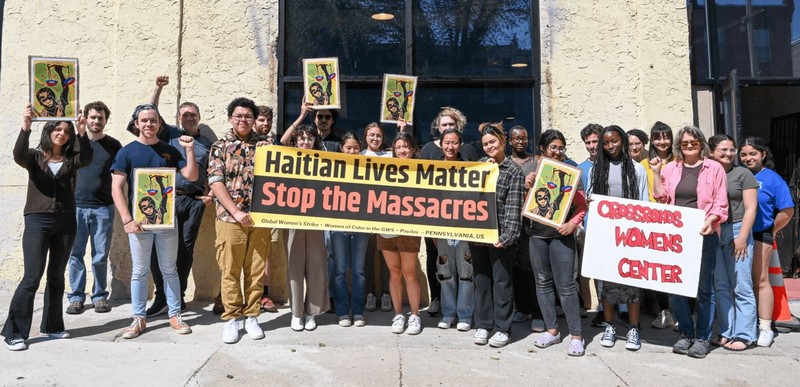
Emory Douglas, revolutionary artist and former Minister of Culture of the Black Panther Party, recently created this art in solidarity with the people of Haiti. His art was widely taken up by solidarity activists around the US and the world for May 18th Day of Action. At the top of his art, he chose the words: “Stop the Genocide”, based upon internationally recognized criteria. Similarly, the ongoing, systematic destruction of Haiti as a nation conforms to the criteria established in The Convention on the Prevention and Punishment of the Crime of Genocide (1948) by the United Nations.

Dozens of organizations within and beyond the US endorsed and participated in these actions. Protests inside of the US were held in San Francisco, Washington, D.C., Los Angeles, San Pedro, Atlanta, and Philadelphia. Beyond the US, there were protests in London, Belize, and Guyana. All protests were unified in demanding that the US government and the Core Group:

  • No more foreign intervention in Haiti. Support the right of the Haitian people to establish their own transition government free from US and Core Group interference. Oppose the fiction– being perpetuated by the Biden Administration– that the Ariel Henry dictatorship is capable of organizing fair and free elections.

It is past time for the world to act in solidarity with the Haitian people. Haiti, historically and currently, continues to live up to the true meanings of revolution, liberation, and solidarity. The mobilizations on May 18th were another step towards this goal of intensifying international solidarity. As called for in the press release of the women’s and popular organizations of the Grandans, international solidarity is needed now to stop the genocide that is unfolding in Haiti, a genocide made in the USA, subsidized by US tax dollars, and aided and abetted by the “Core Group” and the UN. The array of attacks against Haiti’s grassroots movement for national liberation includes military interventions, fraudulent elections, phony economic assistance, media disinformation to maintain the status quo that benefits foreign multinationals and the Haitian oligarchy. Mobilizations are needed globally to condemn US and UN support for the Ariel Henry dictatorship and to end their policies that are destroying lives in Haiti. Solidarity actions including disruptive non-violent forms of resistance will need to be employed on greater and greater scales–in coordination with the decisive resistance on the ground in Haiti– until the Haitian people can complete their heroic revolution of 1804 and claim true victory once and for all.

___________________________________________________

Seth Donnelly is a member of the Haiti Action Committee and the author of The Lie of Global Prosperity: How Neoliberals Distort Data to Mask Poverty and Exploitation (MR Press 2019).

19 June 2023

Source: www.transcend.org

A History of Ceasefires & Peace in Ukraine

By Ann Wright

14 Jun 2023 – Negotiations, ceasefires, armistices and peace agreements are as old as wars themselves.

Every war ends with some version of one of them.

Wars have been studied endlessly, but lessons learned on how to end the wars have generally been ignored by those conducting the world’s latest wars.

To stop the killing in the Russia-Ukraine conflict, people of conscience must do everything they can to make negotiations for a ceasefire become a reality.

That was the purpose of the International Summit for Peace in Ukraine held in Vienna last weekend.

Over 300 persons from 32 countries attended the conference and participated in the robust program to discuss how to create conditions for a ceasefire and ultimately an agreement to stop the killing.  The websites for the International Peace Bureau and the Peace in Ukraine summit were hacked the day after the conference but should be up and running soon.

If history is our guide, negotiations for peace will take weeks, months or perhaps years, to get Ukraine and its allies to agree on a negotiating strategy — and even longer to come to an agreement with Russia after negotiations begin.

Even if all parties, Ukraine, Russia, U.S./NATO, would agree to negotiations tomorrow, and if the talks would ultimately succeed, it could possibly be months or years before the killing would end. That’s why negotiations must begin now.

History gives us an important insight into negotiations during a war and what we might expect to end today’s extremely dangerous international violence.

In the case of the Korean armistice finally signed 70 years ago on July 27, 1953, 575 meetings between North Korea, China, the U.S. and South Korea were required over two years from 1951 to 1953 to finalize the nearly 40 pages of the agreement. During those two years, millions of Koreans, 500,000 Chinese and 35,000 U.S. and tens of thousands of U.N. Command soldiers were killed.

Vietnam Peace Talks

Fifteen years later, U.S. and North Vietnamese representatives met in Paris on May 10, 1968, to begin peace negotiations, the first time negotiators from both nations met face-to-face. Formal negotiations opened three days later, but immediately came to a standstill.

Five years after the 1968 meeting, on Jan. 27, 1973, the “Agreement on Ending the War and Restoring Peace in Vietnam,” otherwise known as the Paris Peace Accords, was signed by the Democratic Republic of Vietnam, the Republic of Vietnam, the Provisional Revolutionary Government (Viet Cong) and the United States.

The Paris Peace Accords officially ended U.S. involvement in the Vietnam War, although the majority of U.S. troops would not leave until August 1973 and the fighting between North and South Vietnam continued until April 30, 1975, when North Vietnamese Army (NVA) tanks rolled through the gate of the Presidential Palace in Saigon, South Vietnam, effectively ending the war.

Millions of Vietnamese and tens of thousands of U.S. military were killed during the years of negotiations.

We know much about the lead-up to negotiations to end the U.S. war on Vietnam. In a nationally televised speech on March 31, 1968, President Lyndon Johnson announced that he was “taking the first step to de-escalate the conflict” by halting the bombing of North Vietnam (except in the areas near the DMZ) and that the United States was prepared to send representatives to any forum to seek a negotiated end to the war.

Johnson followed this declaration with surprising news that he did not intend to seek reelection that year.

Three days later Hanoi announced that it was prepared to talk to the Americans. Discussions began in Paris on May 13 but led nowhere. Hanoi insisted that, before serious negotiations could begin, the United States would have to halt its bombing of the rest of Vietnam.

However, fierce fighting continued. The North Vietnamese high command followed the Tet attacks with two more waves in May and August 1968. At the same time, U.S. General William Westmoreland ordered his commanders to “keep maximum pressure” on the communist forces in the South, which he believed had been seriously weakened by their losses at Tet. The result was the fiercest fighting of the war.

In the eight weeks following Johnson’s speech, 3,700 Americans were killed in Vietnam and 18,000 wounded.  Westmoreland’s headquarters, which was notorious for inflated body counts, reported 43,000 North Vietnamese and Viet Cong killed. The South Vietnamese military’s (ARVN) losses were not recorded, but they were usually twice that of the U.S. forces.

After winning the 1968 election, President Richard Nixon, with his National Security Advisor Henry Kissinger, decided to follow the Tet offensive with a “maximum pressure” campaign with increased U.S. bombing of North Vietnam and Cambodia which ended up with large death counts of North Vietnamese, South Vietnamese and Cambodians, as well as U.S. military

“Maximum pressure” is already a part of the U.S./NATO approach to Russia with its extensive sanctions regime and its provision of a massive number of weapons to Ukraine.

48 Ceasefires Between 1946 & 1997 

We can look to many more examples of how negotiations ultimately have brought killing to an end in other conflicts .

Using data from 48 conflicts between 1946 and 1997, political scientist Virginia Page Fortna has shown that strong agreements that arrange for demilitarized zones, third-party guarantees, peacekeeping, or joint commissions for dispute resolution and contain specific (versus vague) language produced more lasting cease-fires that provide conditions for dialogue for an armistice or agreement.

Figuring out how to make the cease-fire be effective will be the key task.  Despite its less-than-stellar track record, the U.S. as a co-belligerent should work with the Ukrainian government to figure out effective cease-fire measures.

Ukrainian President Volodymyr Zelensky has already described any new negotiations as “Minsk 3,” a reference to the two cease-fire deals that were brokered with Russia in the Belarusian capital in 2014 and 2015, after its annexation of Crimea and fighting in the Donbass region.

The Minsk 1 and 2 agreements included no effective mechanisms for ensuring the parties’ compliance and failed to end the violence. Minsk 1 and 2 were later acknowledged by NATO and the European Union as a ploy for “buying time” for the West’s buildup of Ukrainian forces and equipment.

Ceasefire Do’s & Don’t, for the Record

Having been in the U.S. Army/Army Reserves for 29 years and working as a U.S. diplomat for 16 years, I can testify to the results of endless studies of the consequences of war. One example is the year-long U.S. Department of State Iraq Study Group, being ignored by U.S. politicians and policy makers, and lessons learned on how to end deadly conflicts being ignored by U.S. military and national security experts.

I suspect that few Ukrainian, Russian, U.S. and NATO policy makers know of the United Nations’ 18-page guide to the Do’s and Don’ts of Ceasefire Agreements, based on their experience in conflicts.

Therefore, for the record, I want to mention the main points of the “Do’s and Don’ts of Ceasefire Agreements,” so no one can say, “We Didn’t Know” such work has been done already and the pitfalls of ceasefire agreements well identified.

Each of the following elements has an entire section written about it in the 18-page guide.

PART A Who, When & Where 

  1. No room for “creative” ambiguity;
  2. The need for precision in regard to the geography of the ceasefire;
  3. The need for a precise specification of the dates and times on which the obligations imposed by the ceasefire fall due;
  4. Designating or qualifying permitted activities;
  5. Application of the provisions of the agreement to all members of all armed forces.

PART B Monitoring and Enforcement 

  1. Provision for monitoring;
  2. Verification;
  3. Complaints mechanism;
  4. Enforcement;
  5. Providing for the political resolution of disputes by the parties.

PART C Organization & Conduct of Armed Forces 

  1. Military Mission and Mandate;
  2. Codes of Conduct;
  3. Confidence building measures;
  4. Long term treatment of combatants and casualties;
  5. Command & Control;
  6. Liaison & Information Exchange;
  7. Integration;
  8. Disarmament, Demobilization and Downsizing.

PART D Humanitarian Matters 

  1. Demining & Civilian Protection Generally;
  2. POW’s and other Political Prisoners;
  3. Free movement of goods, people and aid;
  4. Dealing with the past.

PART E Implementation 

  1. Funding
  2. Information to rank-and-file and to civilians
  3. Verification of size of forces
  4. Amendment of the agreement
  5. Anticipating lead times
  6. Avoiding Media Warfare
  7. Collateral Agreements/Legislation
  8. Civil Security
  9. Buy-in by Regional Powers

What Else Can Be Done? 

To show how militarized is the U.S. government’s thinking, while an entire new U.S. military command element, the Security Assistance Group–Ukraine, led by a three-star general with a staff of 300, has been set up by the U.S. government, currently, there is not a single official in the U.S. government whose full-time job is conflict diplomacy to end the killing in the Russia-Ukraine war.

If the U.S. becomes serious about the loss of life in Ukraine, which it currently appears not to be, President Joe Biden should appoint a special presidential envoy who can begin informal discussions with Ukraine and among its allies in the G-7 and NATO about the endgame of negotiations.

Additionally, the United States must establish a regular channel of communication regarding the war that includes Ukraine, U.S. allies and Russia to allow participants to interact continually, instead of in one-off encounters.

This would be similar to the contact group model used during the Balkan wars, when an informal grouping of representatives from key states and international institutions met regularly and privately.

Satisfaction Not Guaranteed

We must acknowledge that even if negotiations did produce a ceasefire and then an agreement of some sort, neither Ukraine, Russia, the U.S. or NATO would be fully satisfied.

In spite of its recent history in Afghanistan and Iraq, many politicians, especially in the U.S. and now in Ukraine and Russia, want absolute victories, not long wars without a clear resolution.

But if we look to the Korean armistice, which was not viewed as the best U.S. foreign policy at the time it was signed, in the nearly 70 years after, the armistice has held and there has not been another war on the peninsula.

However, converting the armistice to a peace treaty has been one step too far for the U.S. while the North Koreans continue to ask for a peace declaration from the U.S and South Korea before they abandon their nuclear and missile programs.

In the case of the U.S. war on Vietnam, 60 years later, after the 1973 peace agreement, the country has now become a trading partner of the U.S. and the West.

How the negotiations for a ceasefire would work out is anyone’s guess.

But a ceasefire followed by an armistice would give Ukraine the opportunity to end the destruction of more of its infrastructure, to begin recovering economically and most importantly to end the death of more Ukrainians and the return of millions of Ukrainians to their homes.

An armistice would give the Russian Federation an opportunity to possibly come out from some of the sanctions the West has imposed, to work within the international community on common issues and end its military mobilization and the death of more Russians.

For the entire world, a Russian-Ukrainian armistice would reduce the risks of a direct military clash with the U.S./NATO that could include use of nuclear weapons with its terrible global consequences for all of us on this planet.

At the International Summit on Peace in Ukraine, the “Campaign for a Global Ban on Weaponized Drones” was launched. This campaign reflects the opinion of many in the world that the use of this weapons system should be ended by all countries.

We know it is an uphill battle to call for an end of types of military weapons and even if there are treaties enacted by the United Nations, such as on cluster munitions, land mines and nuclear weapons, some countries, led by the United States, will not abide by the treaties.  But, as people of conscience, we must continue to act on what our conscience tells us is wrong.

Likewise, people of conscience in this world must continue to wo

rk for peace and non-violent resolution of international issues despite politicians’ seeming thirst for continuation of violence in the name of peace.

____________________________________________

Ann Wright is a 29-year US Army/Army Reserves veteran, a retired United States Army colonel and retired U.S. State Department official, known for her outspoken opposition to the Iraq War.

19 June 2023

Source: www.transcend.org

Emergence of a New Non-Alignment

By Vijay Prashad

15 Jun 2023 – A new mood of defiance in the Global South has generated bewilderment in the capitals of the Triad (the United States, Europe, and Japan), where officials are struggling to answer why governments in the Global South have not accepted the Western view of the conflict in Ukraine or universally supported the North Atlantic Treaty Organisation (NATO) in its efforts to ‘weaken Russia’. Governments that had long been pliant to the Triad’s wishes, such as the administrations of Narendra Modi in India and Recep Tayyip Erdoğan in Türkiye (despite the toxicity of their own regimes), are no longer as reliable.

Since the start of the war in Ukraine, India’s Foreign Minister S. Jaishankar has been vocal in defending his government’s refusal to accede to Washington’s pressure. In April 2022, at a joint press conference in Washington, DC with US Secretary of State Antony Blinken, Jaishankar was asked to explain India’s continued purchase of oil from Russia. His answer was blunt: ‘I noticed you refer to oil purchases. If you are looking at energy purchases from Russia, I would suggest that your attention should be focused on Europe… We do buy some energy which is necessary for our energy security. But I suspect, looking at the figures, probably our total purchases for the month would be less than what Europe does in an afternoon’.

However, such comments have not deterred Washington’s efforts to win India over to its agenda. On 24 May, the US Congress’s Select Committee on the Chinese Communist Party released a policy statement on Taiwan which asserted that ‘[t]he United States should strengthen the NATO Plus arrangement to include India’. This policy statement was released shortly after the G7 summit in Hiroshima, Japan, where India’s Prime Minister Narendra Modi met with the various G7 leaders, including US President Joe Biden, as well as Ukraine’s President Volodymyr Zelenskyy.

The Indian government’s response to this ‘NATO Plus’ formulation echoed the sentiment of its earlier remarks about purchasing Russian oil. ‘A lot of Americans still have that NATO treaty construct in their heads’, Jaishankar said in a press conference on 9 June. ‘It seems almost like that is the only template or viewpoint with which they look at the world… That is not a template that applies to India’. India, he said, is not interested in being part of NATO Plus, wishing to maintain a greater degree of geopolitical flexibility. ‘One of the challenges of a changing world’, Jaishankar said, ‘is how do you get people to accept and adjust to those changes’.

There are two significant takeaways from Jaishankar’s statements. First, the Indian government – which does not oppose the United States, either in terms of its programme or temperament – is uninterested in being drawn into a US-led bloc system (the ‘NATO treaty construct’, as Jaishankar put it). Second, like many governments in the Global South, it recognises that we live in ‘changing world’ and that the traditional major powers – especially the United States – need to ‘adjust to those changes’.

In its Investment Outlook 2023 report, Credit Suisse pointed to the ‘deep and persistent fractures’ that have opened up in the international order – another way of referring to what Jaishankar called the ‘changing world’. Credit Suisse describes these ‘fractures’ accurately: ‘The global West (Western developed countries and allies) has drifted away from the global East (China, Russia, and allies) in terms of core strategic interests, while the Global South (Brazil, Russia, India, and China and most developing countries) is reorganising to pursue its own interests’. These final words bear repeating: ‘the Global South… is reorganising to pursue its own interests’

In mid-April, the Japanese Ministry of Foreign Affairs released its Diplomatic Bluebook 2023, in which it noted that we are now at the ‘end of the post-Cold War era’. After the Soviet Union collapsed in 1991, the United States asserted its primacy over the international order and, along with its Triad vassals, established what it called the ‘rules-based international order’. This thirty-year-old US-led project is now floundering, partly due to the internal weaknesses of the Triad countries (including their weakened position in the global economy) and partly due to the rise of the ‘locomotives of the South’ (led by China, but including Brazil, India, Indonesia, Mexico, and Nigeria). Our calculations, based on the IMF datamapper, show that for the first time in centuries, the Gross Domestic Product of the Global South countries surpassed that of the Global North countries this year. The rise of these developing countries – despite the great social inequality that exists within them – has produced a new attitude amongst their middle classes which is reflected in the increased confidence of their governments: they no longer accept the parochial views of the Triad countries as universal truths, and they have a greater wish to exert their own national and regional interests.

It is this re-assertion of national and regional interests within the Global South that has revived a set of regional processes, including the Community of Latin American and Caribbean States (CELAC) and the BRICS (Brazil-Russia-India-China-South Africa) process. On 1 June, the BRICS foreign ministers met in Cape Town (South Africa) ahead of the summit between their heads of states that is set to take place this August in Johannesburg. The joint statement they issued is instructive: twice, they warned about the negative impact of ‘unilateral economic coercive measures, such as sanctions, boycotts, embargoes, and blockades’ which have ‘produced negative effects, notably in the developing world’. The language in this statement represents a feeling that is shared across the entirety of the Global South. From Bolivia to Sri Lanka, these countries, which make up the majority of the world, are fed up with the IMF-driven debt-austerity cycle and the Triad’s bullying. They are beginning to assert their own sovereign agendas.

Interestingly, this revival of sovereign politics is not being driven by inward-looking nationalism, but by a non-aligned internationalism. The BRICS ministers’ statement focuses on ‘strengthening multilateralism and upholding international law, including the purposes and principles enshrined in the Charter of the United Nations as its indispensable cornerstone’ (incidentally, both China and Russia are part of the twenty-member Group of Friends in Defence of the UN Charter). The implicit argument being made here is that the US-led Triad states have unilaterally imposed their narrow worldview, based on the interests of their elites, on the countries of the South under the guise of the ‘rules-based international order’. Now, the states of the Global South argue, it is time to return to the source – the UN Charter – and build a genuinely democratic international order.

The word ‘non-aligned’ has increasingly been used to refer to this new trend in international politics. The term has its origins in the Non-Aligned Conference held in Belgrade (Yugoslavia) in 1961, which was built upon the foundations laid at the Asian-African Conference held in Bandung (Indonesia) in 1955. In those days, non-alignment referred to countries led by movements rooted in the deeply anti-colonial Third World Project, which sought to establish the sovereignty of the new states and the dignity of their people. That moment of non-alignment was killed off by the debt crisis of the 1980s, which began with Mexico’s default in 1982. What we have now is not a return of the old non-alignment, but the emergence of a new political atmosphere and a new political constellation that requires careful study. For now, we can say that this new non-alignment is being demanded by the larger states of the Global South that are uninterested in being subordinated by the Triad’s agenda, but which have not yet established a project of their own – a Global South Project, for instance.

As part of our efforts to understand this emerging dynamic, Tricontinental: Institute for Social Research will be joining with the No Cold War campaign, ALBA Movimientos, Pan-Africanism Today, the International Strategy Center (South Korea), and the International Peoples’ Assembly to host the webinar ‘The New Non-Alignment and the New Cold War’ on 17 June. Speakers will include Ronnie Kasrils (former minister of intelligence, South Africa), Sevim Dağdelen (deputy party leader for Die Linke in the German Bundestag), Stephanie Weatherbee (International Peoples’ Assembly), and Srujana Bodapati (Tricontinental: Institute for Social Research).

In 1931, the Jamaican poet and journalist Una Marson (1905–1965) wrote ‘There Will Come a Time’, a poem of hopefulness for a future ‘where love and brotherhood should have full sway’. People in the colonised world, she wrote, would have to pursue a sustained battle to attain their freedom. We are nowhere near the end of that fight, yet we are not in the position of almost total subordination that we were in during the height of the Triad’s primacy, which ran from 1991 to now. It is worthwhile to go back to Marson, who knew with certainty that a more just world would come, even if she would not be alive to witness it:

What matter that we be as caged birds
Who beat their breasts against the iron bars
Till blood-drops fall, and in heartbreaking songs
Our souls pass out to God? These very words,
In anguish sung, will mightily prevail.
We will not be among the happy heirs
Of this grand heritage – but unto us
Will come their gratitude and praise,
And children yet unborn will reap in joy
What we have sown in tears.

_______________________________________________

Vijay Prashad is an Indian historian, editor and journalist. He is a writing fellow and chief correspondent at Globetrotter.

19 June 2023

Source: www.transcend.org

Assange: An Unholy Masquerade of Tyranny Disguised as Justice

By Craig Murray

15 Jun 2023 – There has never existed any government so evil and repugnant that it has been unable to find lawyers, and particularly judges, to do its bidding.

Hitler did not need to manufacture lawyers and judges. A very significant number, indeed the majority, of established and reputable German lawyers were prepared to participate actively in Nazi law, both its development and implementation.

That of course includes Roland Freisler, a Doctor of Law from the University of Jena, who was a practising solicitor before his elevation.

This was prosecutor Telford Thomas, opening the trial of Nazi lawyers at Nuremberg:

“This case is unusual, in that the defendants are charged with crimes committed in the name of the law. These men, together with their deceased or fugitive colleagues, were the embodiment of what passed for justice in the Third Reich.

Most of the defendants have served, at various times, as judges, as state prosecutors, and as officials of the Reich Ministry of Justice. ALL BUT ONE ARE PROFESSIONAL JURISTS. They are well accustomed to courts, and courtrooms, though their present role may be new to them.

But a court is far more than a courtroom; it is a process and a spirit. It is the house of law. This the defendants know, or must have known in times past. I doubt that they ever forgot.

Indeed, the root of the accusation in this case is that these men, leaders of the German judicial system, consciously and deliberately suppressed the law, engaged in an unholy masquerade of tyranny disguised as justice, and converted the German judicial systems to an engine of despotism, conquest, pillage and slaughter.”

Thomas’ quote “an unholy masquerade of tyranny disguised as justice” is a phrase that has been rattling around my head as a perfect encapsulation of the state “legal” process against Julian Assange, which I have been detailing this last several years.

Together, of course, with the fact that the NATO states hate Assange – and seek his judicial murder – precisely for revealing truths that embarrassed their system of “conquest, pillage and slaughter” in Iraq, Afghanistan, Libya, Yemen, Syria and elsewhere.

It is worth noting Hitler was by no means alone in being able to call on the respected lawyers to do his bidding.

The prosecutor of Stalin’s show trials, Andrei Vishinski, whom Freisler traveled to Moscow to see in action and whose screaming and taunting Freisler consciously copied, was also a “proper” lawyer, a graduate of the University of Kiev with a background of practice in Moscow.

(I should note in passing the counter case that Stalin’s favourite judge, Ulrich, was an auto-didact out of military tribunals).

We are brought up with an innate respect for the rule of law and belief that, though it makes mistakes, it is impartial and honest. Unfortunately, that is merely one of the myths by which our society functions. That is something I have reluctantly come to understand.

I was, nonetheless, so taken aback by Justice Jonathan Swift’s current and curt ruling, dismissing Assange’s High Court appeal in the extradition saga, that I thought I would dig a little deeper.

I therefore started with Swift’s surprising December ruling, in cahoots with Judge Lewis, that the Tory government’s scheme to deport refugees to Rwanda is lawful.

His judgment depends above all on the notion that any fiction concocted by the U.K. government has more legal force than actual fact. There is no real world doubt that Rwanda is a ghastly dictatorship and kills opponents. Nor that it has killed the inhabitants of refugee camps on its soil.

But that is OK, say Swift and Lewis, because the government of Rwanda has said in an MOU that it won’t do that to our refugees, who are different to those other refugees:

“73. The Claimants rely on what happened in 2018 when refugees from neighbouring countries at Kiziba refugee camp protested at the conditions in the camp. It has been reported (for example, by Human Rights Watch) that the police who entered the camp in response to the protests used excessive force. They fired on the refugees and some were killed. The Claimants also point more generally to limits in Rwanda on the freedom to express political opinion if that opinion is critical of the Rwandan authorities.

74. We do not consider that any direct inference can be drawn from the events at Kiziba refugee camp in 2018. The circumstances that led to those protests are unlikely to be repeated for any person transferred to Rwanda under the MEDP. The treatment of transferred persons, both prior to and after determination of their asylum claims is provided for in the MOU (at paragraphs 8 and 10) and in the Support NV. For the reasons already given, we consider the Rwandan authorities will abide by the terms set out in those documents.”

On top of which, the Refugee Convention, according to Swift and Lewis, says that refugees must be treated no worse than a state’s own citizens. So if Rwanda persecutes its own people, then there is no breach in persecuting the refugees we send too.

“…the Claimants’ case comes to the proposition that, following removal to Rwanda, it is possible that one or more of those transferred might come to hold opinions critical of the Rwandan authorities, and that possibility means that now, the Soering threshold is passed.

77. There is evidence that opportunities for political opposition in Rwanda are very limited and closely regulated. The position is set out in the “General Human Rights in Rwanda” assessment document, one of the documents published by the Home Secretary on 9 May 2022. There are restrictions on the right of peaceful assembly, freedom of the press and freedom of speech. The Claimants submitted that this state of affairs might mean that any transfer to Rwanda would entail a breach of article 15 of the Refugee Convention (which provides that refugees must be accorded the most favourable treatment accorded to nationals in respect of non-political and non-profit-making associations and trade unions). However, we do not consider there is any force in this submission at all. Putting to one side the fact that article 15 does not extend to all rights of association, it is, in any event, a non-discrimination provision – i.e., persons protected under the Refugee Convention must not be less favourably treated than the receiving country’s own citizens. There is no evidence to that effect in this case.”

Indeed, Swift and Lewis tell us, the defendant’s case is “speculative”. There is no evidence that the government of Rwanda will wish to torture them, simply because the government of Rwanda hasn’t even met them yet. Besides, the government of Rwanda has promised not to mistreat people under an agreement with the U.K., “the MEDP”, which gives the Rwandan government 120 million of cash to steal, or spend on Rwanda’s economic development.

“Returning to the material covered in the Home Secretary’s assessment document, there is also evidence (from a U.S. State Department report of 2020) that political opponents have been detained in “unofficial” detention centres and that persons so detained have been subjected to torture and article 3 ill-treatment short of torture. Further, there is evidence that prisons in Rwanda are over-crowded and the conditions are very poor. Nevertheless, the Claimants’ submission is speculative. It does not rest on any evidence of any presently-held opinion. There is no suggestion that any of the individual Claimants would be required to conceal presently-held political or other views. The Claimants’ submission also assumes that the response of the Rwandan authorities to any opinion that may in future be held by any transferred person would (or might) involve article 3 ill-treatment. Given that the person concerned would have been transferred under the terms of the MEDP that possibility is not a real risk.”

Swift and Lewis argue further, at paras 81 to 84, that in U.K. domestic law, the Home Secretary’s certification of Rwanda as a safe country is “irrebuttable” – ie there is no legal avenue to question its truth, and nor does it require parliamentary approval. The “safety” of Rwanda is a fact in law simply because Home Secretary Suella Braverman certifies that it is.

Having stated that under Tory immigration legislation the Home Secretary can certify anywhere she feels like as safe, irrespective of objective truth (provide certain procedural steps are taken) Swift and Lewis then go on to the non-sequitur on which their judgment depends, that because a country has been certified “safe” for the purposes of U.K. domestic law, that makes it actually eligible for receipt of U.K. deportees in terms of the U.N. Refugee Convention.

The U.N. Refugee Convention says this:

“No Contracting State shall expel or return (“refouler”) a refugee in any manner whatsoever to the frontiers of territories where his life or freedom would be threatened on account of his race, religion, nationality, membership of a particular social group or political opinion.”

That is the obligation under international law, incorporated into British law. It does not disappear with a signature from the Home Secretary, but depends on the actual, real state of affairs.

It would not, in real life or in the Refugee Convention, be safe to deport people to Yemen, Eastern Ukraine nor the Sudan just because Braverman signed something. The Refugee Convention is not subject to the fantasy propositions of “irrebuttable” Whitehall certificates.

As devoted servants of the Executive, Lewis and Swift undeniably have one thing in common with Freisler, Ullrich and Vishinski, which is an impatience with pesky defendants bothering them with evidence, troublesome arguments and annoying amounts of paper, and trying to save their own lives.

Lewis and Swift begin their judgment on Rwanda with a full throttled rant at the annoyance of having to wade through the paperwork that the deportees had the downright cheek to produce in defence:

“36. The pleadings in these proceedings are not models of good practice. Practice Direction 54A requires Statements of Facts and Grounds to be clear and concise. None of the pleadings meets this requirement, even though many if not all have been revised one or more times since the proceedings were issued. On the Claimants’ side the pleading in claim CO/2032/2022 (AAA and others) has taken pole position, setting out various generic grounds of challenge as well as grounds specific to the facts of the cases of the individual claimants in that case. Seven generic grounds of challenge are pleaded (Grounds 1, 1A – 1C, 2A and 3-6). However, these grounds tend to overlap or circle back on one another. Other claims brought by other Claimants have adopted these generic grounds of challenge or formulated variations on them, as well as pleading complaints based on their own circumstances. The pleading in CO/2056/2022 (the Asylum Aid case) raises complaints about the Home Secretary’s decision-making procedure. What is said about procedural fairness in this case largely overlap with the complaints on procedural fairness raised in CO/2023/2022 and other claims. Asylum Aid contends that these matters demonstrate there is systemic unfairness in the procedure adopted to deal with the inadmissibility and removal decisions. The Home Secretary pleading is a response in kind. The Amended Detailed Grounds of Defence (to all claims) runs to some 215 pages.

37. At the court’s request the parties prepared an agreed list of issues. However, that exercise failed to simplify the position: the list identifies 29 generic issues, many of which are repetitive or overlapping; and many more issues specific to each claim.

38. The same approach has been repeated in the Skeleton Arguments. Mention should be made of the Skeleton Argument in CO/2032/2022 and CO/2104/2022 (262 pages), and the Skeleton Argument in CO/2094/2022 (63 pages). Each comfortably exceeds the maximum length permitted by Practice Direction 54A (25 pages). Permission to file skeleton arguments longer than the maximum permitted was not requested in advance; each document was presented to the court as a fait accompli. The length of these documents has not served to clarify the way in which the various complaints are put. The documents meander and repeat themselves.”

This is plainly a particular bugbear of Swift. My examination of his ruling on Rwanda deportations is only a prelude, to put into context this ruling on the Assange appeal. What I have found common to both decisions is an insistence that narrative put forward by the executive is not to be questioned, and an extreme distaste for having to entertain lengthy arguments on behalf of those individuals whose lives hang in the balance.

The Assange Appeal

I consider the High Court appeal of Julian Assange to be, in itself a document of historic importance. I have therefore decided to publish it in full, and I recommend you at the very least to dip in to it.

assangehighcourtappeal

The very first sentence of Assange’s Appeal rings out loud, and explains why his extradition proceedings were held effectively in closed court and why the High Court are determined to avoid any substantive public hearing:

“Julian Assange and Wikileaks were responsible for the exposure of criminality on the part of the U.S. Government on a massive and unprecedented scale.”

In the first 3 pages (of 150), it outlines the argument and the ground it covers (DJ is District Judge Vanessa Baraitser):

“IN THE MATTER OF AN APPEAL UNDER S.103 OF THE EXTRADITION ACT 2003
B E T W E E N:
JULIAN ASSANGE
Appellant
v
GOVERNMENT OF THE UNITED STATES OF AMERICA
Respondent
__________________________________________________________
PERFECTED GROUNDS OF APPEAL
____________________________________________________________
References to CB/X are references to the core permission bundle.
EB/X are references to the section 103 evidence bundle.
1. Introduction
1.1. Julian Assange and Wikileaks were responsible for the exposure of criminality on the part of the U.S. Government on a massive and unprecedented scale. The publication in 2010 and 2011 of materials sent by a serving military officer, Private Manning, sit at the very apex of publicinterest disclosures. By publishing this material ‘WikiLeaks…exposed outrageous, even murderous wrongdoing [including] war crimes, torture and atrocities on civilians’
(Feldstein, EB/10, §4).
1.2. Julian Assange’s work, dedicated to ensuring public accountability by exposing global human rights abuses, and facilitating the investigation of and prosecution for state criminality, has contributed to the saving of countless lives, stopped human rights abuses in their tracks, and brought down despotic and autocratic regimes.
1.3. Those who expose grave state criminality, defenders of fundamental human rights, are, and always have been, vulnerable to acts of political retaliation and persecution from the regimes whose criminality they expose. Julian Assange is no exception.
1.4. The law is fiercely protective of human rights defenders. Exposure of state criminality is, in law, a protected political act, the product of a political opinion. Prosecutions ‘on account of’ such acts are straightforwardly prohibited by s.81 of the 2003 Act.
1.5. The history of this prosecution, between Mr Assange’s exposures in 2010 and 2011 and the indictment in 2018, is a textbook example of political persecution. The course of this case since 2011 is simply extraordinary. It involves, inter alia, U.S. Governmental plots to interfere with judges who investigate the matters Mr Assange exposed; to silence the International Criminal Court (ICC) who have taken up Mr Assange’s disclosures; and to kidnap and rendition Mr Assange himself, or else murder him. What follows below is conduct of the type one would normally expect from a military dictatorship. The DJ failed to act upon (or even address) these issues from the perspective of s.81 because (despite having the law drawn squarely and repeatedly to her attention) she failed to recognise or acknowledge that exposure of state criminality is, in law, a protected ‘political’ act, engaging s.81.
1.6. The evidence in this case has, moreover, developed since the DJ’s decision in January 2021. Investigations in America now provide a fuller picture of the U.S. state-level plans to kidnap, rendition and murder Mr Assange. They also reveal that the initiation of criminal proceedings in this case – by a criminal complaint in December 2017 resulted after obstacles (some reported as having been erected by the U.K.) to those criminal plans.
1.7. The prosecution that the U.S. were forced to resort to instead, commenced in 2018, is no less extraordinary. (a) It is unprecedented in law. (b) It cuts clean across established principles of free speech. (c) To deal with that, it anticipates a trial at which Mr Assange, as a foreigner, can be denied reliance on the First Amendment (d) indeed, a trial outwith protections of the U.S. Constitution altogether, and (e) is accompanied by exposure to a grossly disproportionate sentence. In short, the circumstances of the prosecution are so stark and unusual that they engage bars to extradition in their own right.
1.8. As to the circumstances of the ensuing extradition request. (f) It violates the prohibition on extradition for political offences expressly provided for in the relevant treaty and under international law. (g) It deliberately misstates the core facts. The DJ took these issues one by one and reasoned that none offended the 2003 Act. For reasons which follow, she was plainly wrong in multiple respects.
1.9. But even if she were right on each of these issues when viewed separately, the DJ then needed, but failed entirely, to stand back and examine what they cumulatively told her about the political origins of this case. They were all, in short, individually and cumulatively, the clearest evidence of a prosecution mounted ‘on account of’ Mr Assange’s political opinions – namely his stated and proven commitment to the exposure of U.S.-state-level criminality.
1.10. These Perfected Grounds of Appeal, served in accordance with Crim PR r.50.20(5), are structured as follows:
1.11. Part A: addresses Ground of Appeal 1, namely that the judge wrongly rejected the argument that the request was being made for the purposes of prosecuting or punishing Julian Assange for his political opinions, and therefore barred by s.81(a).1 Accordingly Part A provides an overview of the history of this matter, and explains the over-arching s.81 case the DJ failed to engage with. This includes:

(i) Section 2: the evidence before the DJ concerning Mr Assange’s political opinions;
(ii) Section 3: the evidence before the DJ about the criminality Mr Assange exposed.
1 Ground 1 also encompasses the allegation of abuse of process, by reason of ulterior motivation of the request and the underlying prosecution, which is dealt with in Part D.
(iii) Section 4: The law the DJ ignored;
(iv) Section 5 and 6: the other evidence before the DJ concerning the origins of the 2018 prosecution.
(v) Section 7: The DJ’s decision
1.12. Part B: addresses Grounds of Appeal 2 to 6. That is the various egregious aspects of the prosecution, eventually commenced in 2018, which individually bar extradition, regardless of
s.81; including: (i) Section 9: An unprecedented prosecution (Ground of Appeal 2: Article 7 ECHR);
(ii) Section 10: A prosecution for protected speech (Ground of Appeal 3: Article 10 ECHR);
(iii) Section 11: A prosecution designed to secure a guilty verdict (Ground of Appeal 4: Article 6 ECHR);
(iv) Section 12: A prosecution with no Convention Rights protections at all (Ground of Appeal 5);
(v) Section 13: Followed by a grossly disproportionate sentence (Ground of Appeal 6).
1.13. Part C: addresses Grounds of Appeal 7 to 8. That is the aspects of the ensuing extradition request which individually bar extradition, regardless of s.81; including:
(i) Section 14: An extradition request for political offences, in violation of the treaty and international law (Ground of Appeal 7);
(ii) Section 15: An extradition request which deliberately misstates the core facts, unfairly improperly and inaccurately (Ground of Appeal 8).
1.14. Part D: returns to s.81 and abuse of process (Ground of Appeal 1), as the DJ ought to have done, in Section 16. Finally, Sections 17 and 18 address the new evidence in this case.”

There follows a further 147 pages of outstanding legal argument, including compelling evidence. The summary of the crimes of the U.S. Government exposed by Julian Assange at pages 9 to 18 is simply mind-blowing. That section starts thus:

“Every single one of the five ‘national security’ publications that are the subject of this extradition request exposed U.S. Governmental involvement in crimes of the first order of magnitude. These disclosures exposed irrefutable evidence of, inter alia, illegal rendition, torture, and black site C.I.A. prisons across Europe, as well as aggressive steps taken to maintain impunity and prevent the prosecution of any American operatives involved in these crimes. The following represents the unchallenged evidence before the DJ of the atrocities Mr Assange exposed.”

Here is just one example of the ensuing evidence:

“3.3. Mr Stafford-Smith’s unchallenged evidence was that cables, for example, revealed by WikiLeaks regarding U.S. government drone killings in Pakistan ‘contributed to [subsequent] court findings that U.S. drone strikes are criminal offences and that criminal proceedings should be initiated against senior U.S. officials involved in such strikes’ (Stafford-Smith, EB/22, §84, 91). ‘Those were very important in litigation in Pakistan’ (EB/40 Tr 8.9.20, xic, p4). The Peshawar High Court ruled, inter alia, that the drone strikes carried out by the C.I.A. and U.S. authorities were a ‘blatant violation of basic human rights’ including ‘a blatant breach of the absolute right to life’ and ‘a war crime’ (Stafford-Smith, EB/22, §91). What ‘we have to term criminal offences were taking place’ (EB/40 Tr 8.9.230, xic. p4). Moreover, and as a result, ‘the drone strikes, which were in their hundreds and causing many…innocent deaths, stopped very rapidly’ such that ‘there were none reported…in 2019’ (Stafford-Smith, EB/22, §93). WikiLeaks had ‘put a stop to a massive human rights abuse’ (Stafford-Smith, EB/22, §92-93). ‘Pakistan was an American ally. It was not like we were doing that to an enemy, and that again is just extraordinary to me’ (Stafford-Smith, EB/40 Tr 8.9.20, re-x, 26-
27). Without the WikiLeaks disclosures, it ‘would have been very, very different and very difficult’ to prevent this crime (Stafford-Smith, EB/40 Tr 8.9.20, xic, p5).”

There is much other material in the appeal which the U.S. and U.K. governments would not wish to be rehearsed in public:

“Secondly, the report provides further, corroborative, evidence (not available to the DJ) of the fruit of the resulting ‘no limits’ discussions. Namely, the emergence of U.S. Governmental plans about which Witness 2 (EB/2) gave evidence to the DJ to:
(i) Kidnap Mr Assange:
‘This Yahoo News investigation, based on conversations with more than 30 former U.S. officials — eight of whom described details of the C.I.A.’s proposals to abduct Assange’ (p2)
‘Pompeo and [Deputy C.I.A. Director Gina] Haspel wanted vengeance on Assange. At meetings between senior Trump administration officials after WikiLeaks started publishing the Vault 7 materials, Pompeo began discussing kidnapping Assange’ (p18)
(ii) In order to rendition Mr Assange to the U.S.:
‘Pompeo and others at the agency proposed abducting Assange from the embassy and surreptitiously bringing him back to the United States via a third country — a process known as rendition. The idea was to ‘break into the embassy, drag [Assange] out and bring him to where we want,’ said a former intelligence official’ (p18)
(iii) Or else murder Mr Assange:
‘Some senior officials inside the C.I.A. and the Trump administration even discussed killing Assange, going so far as to request ‘sketches’ or ‘options’ for how to assassinate him. Discussions over kidnapping or killing Assange occurred ‘at the highest levels’ of the Trump administration, said a former senior counterintelligence official. ‘There seemed to be no boundaries’’ (p1)
‘Some discussions even went beyond kidnapping. U.S. officials had also considered killing Assange, according to three former officials. One of those officials said he was briefed on a spring 2017 meeting in which the president asked whether the C.I.A. could assassinate Assange and provide him ‘options’ for how to do so’ (p20) ‘agency executives requested and received ‘sketches’ of plans for killing Assange … said a former intelligence official. There were discussions ‘on whether killing Assange was possible and whether it was legal,’ the former official said’ (p20).”

Swift dismisses the 150 page appeal in just three pages, with a curt and sneering rejection.

“There are 8 proposed grounds of appeal. They are set out at great length (some 100pp), but the extraordinary length of the pleading serves only to make clear that the proposed appeal comes to no more than an attempt to re-run the extensive arguments made to and rejected by the District Judge.”

Swift then stipulates that if Assange’s lawyers apply for a hearing for their request for an appeal to be heard, then that hearing will be limited to 30 minutes.

Furthermore, he limits Assange’s defence to just 20 pages. 20 pages and 30 minutes (the latter being the time for the entire hearing, including the response by the U.S. government). That is the value Swift places on pleadings for a man’s life. Swift even aims a prim taunt at the defence: “The present grounds of appeal are unwieldy and do not comply with any known rules of pleading”.

Swift states that “the issue is the one posed by section 103 of the 2003 (Extradition Act); ought the judge to have decided a question at the extradition heariing differently”. Swift then subjects this “issue” to impossible constraints. The judge’s evaluation of fact nor their assassment of argument can be revisited. He also objects to new evidence, even though new evidence at appeal is specifically allowed by the Extradition Act.

Swift’s background is as a government lawyer. He revealed something of himself in this interview with a legal magazine, where he stated that:

“Favourite clients were the security and intelligence agencies. ‘They take preparation and evidence-gathering seriously: a real commitment to getting things right.’”

and

“What really matters is that the bond of confidence between Executive and Judiciary is maintained.”

But perhaps even more revealing is that in this brief interview about his career, he chooses to throw in an entirely gratuitous and pointed anecdote about how unpleasant left wing people are, which perforce implies he was coming from an opposite position:

“The first member of his family to go to university and the first to be a lawyer, he remembers his welcome at New College. ‘I unpacked and knocked on the door opposite to introduce myself. ‘Hello, I’m Jonathan,’ only to get the response ‘I’m Dave. I’m a Militant. F*** off!’’ After all, it was the mid-1980s.”

It is perfectly plain what Swift is, and that he could be entirely relied on to dismiss Assange’s appeal with no discussion of any difficult subject matter on state crimes.

UPDATE

It turns out that Swift’s reputation is well established. I was sent a copy of this revealing tweet.

In the District Court, Judge Baraitser ruled against Assange on the eight grounds, but had ruled for him on the grounds of mental health and U.S. prison conditions. This resulted in the complicated process of successive High Court appeals.

First the United States was permitted to appeal on health and U.S. prison conditions. After they won, it was Assange’s turn to appeal on those other eight grounds, on which he had lost at the District Court.

The difference between the High Court treatment of the U.S. appeal, which was accepted and eventually won, and Assange’s appeal, which is dismissed out of hand, is highly instructive.

The U.S. appeal turned very largely on new evidence. That consisted of new diplomatic assurances from the USA in which they stated that Assange would not be placed in a super-max prison pre-trial and would not be subjected to Special Administrative Measures – unless it became necessary to do so.

These “assurances” could have been given during the original hearing but were not, because of course the U.S. has every intention of placing Julian in super-max prison. Judges Burnett and Holroyde, ruling in favour of the USA, airily stated that the new assurances were admissible because assurances were not “evidence”:

“A diplomatic note or assurance letter is not “evidence” in the sense contemplated by section 106(5)(a) of the 2003 Act: it is neither a statement going to prove the existence of a past fact, nor a statement of expert opinion on a relevant matter. Rather, it is a statement about the intentions of the requesting state as to its future conduct …”

So they ruled that, while new evidence is excluded, new “assurances” are not, a bit of special pleading they simply picked out of their capacious arses.

Compare this to the evidence submitted by Assange that the USA spied on his legal defence team and plotted to kidnap him, while actively discussing his assassination. That is excluded on the basis that it is “new evidence”, and on the fact that it is in part based on journalistic reports. The fact that the U.S. government’s star witness has admitted he lied and gave his evidence for money, has also been dismissed on the grounds that information is available from journalistic reports.

Yet a media interview with one of the psychiatrist witnesses for Julian Assange, introduced by the U.S. as part of their High Court appeal, was accepted, and not excluded as either “new evidence” or a “press report”.

You can read the entire the Burnett and Holroyde judgment, discussing the District Judge’s assessment of the evidence of Julian Assange’s mental health and U.S. prison conditions, and it is impossible not to conclude that they are absolutely “second guessing the original judge’s evaluation of the facts and assessment of the arguments”.

There is literally nothing else they are doing.

Therefore, in finding for the USA appeal, the High Court conducted precisely the exercise which Swift rules is out of order when argued for the other side of the case, for the Assange appeal.

My favourite bit of stinking hypocrisy from Holroyde and Burnett comes at para 45:

“Extradition proceedings are not private law proceedings but a process through which solemn treaty obligations are satisfied in the context of a framework which ensures that a requested person is provided with proper safeguards.”

The phrase “solemn treaty obligations are satisfied” should cause an immediate revulsion. The Treaty in question is the U.S./U.K. Extradition Treaty of 2003, and it states at Article 2 that there can be no political extradition.

The District Court ruling, specifically upheld by Swift now, is that the U.K./U.S. Extradition Treaty has no legal standing and therefore the bar on political extradition it contains does not apply. Swift accepts the argument, that as the 2003 Extradition Act does not include a bar on political extradition, that provision of the Treaty does not apply.

The Extradition Treaty, Swift baldly states, is “not justiciable”, ie cannot be taken into legal account.

How it can both be that, and be a “solemn obligation” at the base of these entire proceedings, is an extraordinary contradiction which worries none of these judges in their concern to quickly and efficiently impose the brute force of the state. The entire process is designed as punishment for Assange’s unauthorised revelation of truth.

How an extradition can take place specifically under a Treaty whose provisions cannot be applied to that extradition, is a logical conundrum to which only the sophisticates of the U.K. judiciary could adapt their flexible intellects and – more to the point – consciences.

The executive will always find the judiciary needed to do its dirty work. Any executive. There may be occasional blips in periods of political convulsion. There was a temporary standoff with the Supreme Court over facets of Brexit, for example. But the judiciary will realign themselves with the executive in quick time. The power of the State is the constant.

Julian’s persecution has nothing to do with the law. It is a simple demonstration of the crushing power of the state.

Craig John Murray (born 17 Oct 1958) is a Scottish author, human rights campaigner, journalist, and former diplomat for the UK Foreign and Commonwealth Office.

19 June 2023

Source: www.transcend.org

Another Act of Terror–How the Media Do PR for Biden and Zelensky

By Jonathan Cook

Coverage of the destruction of the Kakhovka dam and Nord Stream pipelines shows a western media willing to prioritise anti-Russian propaganda over facts.

14 Jun 2023 – The hypocrisy gets starker by the day. The same western media that strains to warn of the dangers of disinformation – at least when it comes to rivals on social media – barely bothers to conceal its own role in purveying disinformation in the Ukraine war.

In fact, the propaganda peddled by the media grows more audacious by the day – as two stories last week from the frontlines illustrate only too clearly.

Dominating headlines has been the environmental catastrophe created by the destruction of the Nova Kakhovka dam under Russian control. Flood waters from the Dnipro river have ruined vast swathes of land downriver from the dam and forced many tens of thousands to flee their homes.

Rightly, the wrecking of the dam is being called an act of “ecological terrorism” – the second major one associated with the war, following last September’s blowing up of the Nord Stream pipelines supplying Russian gas to Europe.

The costs associated with keeping this war going and avoiding peace talks so that Russia can be “weakened”, as Biden administration officials insist is the priority, have grown much steeper than most people could have imagined.

This is why a clear understanding of what is going on – and what interests are being served by fuelling the fighting rather than resolving the war – is so vitally important.

There have always been at least two narratives in Ukraine, even if western audiences are rarely exposed to the Russian one – outside of mocking commentary from western reporters.

In the immediate aftermath of the breaching of the Kakhovka dam, the BBC’s Moscow correspondent, Steve Rosenberg, visibly sneered as he reported that Russian media were insisting Ukrainian “terrorists” were behind the destruction. Russians, he suggested, were being brainwashed by their government and media.

He obviously failed to spot the irony that his own reporting, like that of colleagues, has served to reinforce the impression that the only plausible culprit in the dam’s ruin – despite a lack of evidence so far – is Moscow. Like the Russian media, Rosenberg has been hawking precisely the line his own government, and its Nato allies, want from him.

Pall of fog

The BBC recently launched its Verify service, ostensibly to root out disinformation. In similar vein, western media have started appending to any report of Russian assertions the warning: “This claim could not be verified.”

Like a nervous tic, the media added just such an alert to Russian statements that large numbers of Ukrainian soldiers had been killed in what looked like the first stages of Kyiv’s so-called “counter-offensive”.

But no such warnings have been attached to Ukrainian President Volodymyr Zelensky’s claims that Russia blew up the dam.

Instead, reporters have been quick to regurgitate, unverified, his self-serving assertions that Moscow caused the destruction, supposedly to ward off the imminent counter-offensive, and that only western help evicting Russia from the areas it has occupied can prevent further “terrorist” acts.

As has so often been the case in this war, a thick pall of fog is likely to shroud what happened at the Kakhovka dam for the foreseeable future.

Which means that, if the media is determined to recycle speculation, what it should be doing at this stage – apart from keeping an open mind and investigating for itself – is applying the principle of “cui bono?” or “who profits?”

And if it bothered to do that properly, it might be far more reluctant to pin responsibility on Russia.

Rallying support

As Scott Ritter, a former US marine and United Nations weapons inspector, has noted, the chief beneficiary of the attack has been Ukraine, both militarily and politically.

After all, the western media has been documenting a series of fortifications – from trenches and mines to concrete spikes – that the Russian army has constructed along its front lines during the long wait for the Ukrainian counter-offensive. As has often been pointed out, they are so extensive, they can easily be seen from space.

And yet if it did blow up the dam, Moscow just washed away all its carefully built defences in a key area that Ukraine has set its eyes on recapturing – and just at the time Kyiv is said to be preparing for a dramatic military offensive.

Further, the swollen river behind the dam was a significant obstacle to Ukrainian forces crossing the Dnipro river for many tens of miles. It will be much less of a barrier now its waters have receded as the river gushes into the Black Sea. The dam explosion punches a surprise hole in a key, natural part of Russia’s defensive line.

Another critical concern for the Kremlin will be that the explosion poses a direct threat to water supplies to the arid Crimean peninsula – the first piece of Ukrainian territory Russia annexed. After a US-backed overthrow of Ukraine’s government in 2014, Russia made a priority of securing Crimea, long the site of a strategic, warm-water naval base.

And to top it all, Russia’s control of the Zaporizhzhia nuclear plant, upstream of the dam, has already come under renewed international scrutiny as questions are raised about Moscow’s ability to cope with a possible meltdown there as water supplies, needed for cooling, dramatically diminish.

There are political advantages in the dam’s destruction for Kyiv too. As Ritter observes: “There is a lot of ‘Ukraine fatigue’ right now. The world is just tired of Ukraine, of funding Ukraine… What Ukraine needs is a catastrophic event that rallies international support around Ukraine by blaming Russia for something big.”

The dam blast does just that. It thrusts the war back into the spotlight, it casts Moscow as a “terrorist” threat not just to Ukraine but to wider humanity, and it will prove a very effective tool to justify yet more weapons and aid to “weaken” Russia, even if Ukraine’s counter-offensive proves a damp squib.

Reckless ‘test’ strike

The western media has not only largely ignored these factors, it has also drawn a veil over its own recent reporting that might implicate Ukraine as chief culprit in blowing up the dam.

As the Washington Post reported back in December, the Ukrainian military had previously considered plans to destroy the Kakhovka – in other words, to carry out what is universally understood now as a major act of ecological terrorism. At the time, the plan barely raised an eyebrow in the West.

The preparations included what now looks like a reckless “test strike” with a HIMARS missile – supplied courtesy of the US – “making three holes in the metal [of the floodgates] to see if the Dnieper’s water could be raised enough to stymie Russian crossings but not flood nearby villages”.

“The test was a success,” the Post reported Maj Gen Andriy Kovalchuk, a Ukrainian commander, saying back in December. “But the step [of destroying the dam] remained a last resort.”

Might that “test” or a similar one – possibly in preparation for a Ukrainian offensive – have accidentally undermined the dam’s integrity, making it gradually crumble from the pressure of the water?

Or could the dam’s destruction have been intentional – part of Ukraine’s offensive – spreading chaos to areas under Russian control, either to force Moscow to redirect its energies away from countering a Ukrainian attack, or deflect western public attention away from any difficulties Kyiv may have launching a credible military operation?

And why, anyway, would Moscow decide to destroy the dam, forfeiting control over water flow, when it could have simply opened the gates to flood areas downstream at any time of its choosing, such as when faced with an attempt to cross the river by the Ukrainian military?

These questions aren’t even being posed, let alone answered.

James Bond mission

There has been an established pattern with the media during the Ukraine war, one that may serve as a guide in understanding how the story of the breaching of the dam will unfold.

The reticence of western outlets to ask basic questions, contextualise with relevant background, or pursue obvious lines of inquiry has been equally glaring in another act of ecological terrorism: the explosions on the Nord Stream pipelines back in September. They released enormous quantities of the prime global-warming gas methane.

Again, the media spoke as one. First, they echoed western officials in ascribing the explosions to Moscow, without a shred of evidence and even though the blasts were a huge blow to Russia.

The Kremlin lost the bountiful income stream that came from supplying Europe with natural gas. Meanwhile, diplomatically, it was stripped of its chief leverage over its biggest energy customer, Germany – leverage it might have used to induce Berlin to break with the West’s sanctions policy.

All of this was hard to obscure. Soon the western media simply dropped the Nord Stream story entirely.

Interest surfaced again only much later, in March, when the New York Times and a German publication, Die Zeit, published separate and quite preposterous accounts, based on unnamed intelligence sources.

According to these accounts, a group of six rogue Ukrainians chartered a yacht and blew up the pipelines off the coast of Denmark in a James Bond-style mission. The story was widely amplified by the western media, even though independent analysts ridiculed it as wildly implausible and technically unfeasible.

‘Ukraine did it’

The problem the media has faced is that a very much more plausible account of the Nord Stream blasts had already been produced by the legendary investigative journalist Seymour Hersh in February. His unnamed intelligence source offered a far more credible and detailed account, and one that blamed the US itself.

The circumstantial evidence for US responsibility – or at least involvement – was already substantial, even if the media again ignored it.

From Joe Biden downwards, US officials either expressed a determination beforehand to stop more Russian gas from reaching Europe through Nord Stream or celebrated the pipelines’ destruction after the fact.

The Biden administration also had a prime motive for blowing up Nord Stream: a desire to end Europe’s energy dependence on Russia, especially when Washington wanted to line up Moscow and Beijing as the new targets in its permanent “war on terror”.

Hersh’s source argued that the explosives were placed by special US Navy divers, with Norwegian assistance, during an annual naval exercise, Baltops, and remotely detonated three months later.

The media studiously ignored this version. When it was referenced on the odd occasion, the story was dismissed because it was attributed to a single unnamed source. None of the media, however, appeared to have similar reservations about the fantastical yacht version, also supplied by an unidentified intelligence source.

Hersh’s account has refused to go away, gaining ever more traction on social media so long as no credible alternative emerged.

And so – bingo! The fantastical claim that a group of amateurs was able to locate and blow up the pipelines deep on the ocean floor has been dropped.

Last week the Washington Post reported that an unnamed European intelligence service had warned the Biden administration of an impending attack on the Nord Stream pipelines three months before it took place. According to this account, a small crack team sent by the Ukrainian military carried out the “covert” operation – again acting, it was stressed, without Zelensky’s knowledge.

The Post reported that “officials in multiple countries” confirmed that the US had received advance warning.

White House lied?

The story raises all kinds of deeply troubling questions – none of which the media seem interested in addressing.

Not least, if true, it means that the Biden administration has blatantly lied for months in promoting a fiction: that Russia carried out the attack. The White House and European capitals knowingly misled the western media and publics.

If Biden officials have indeed conspired in maintaining a grand lie about such a momentous act of industrial terror – one that caused untold environmental damage and is contributing to a mounting recession in Europe – what other lies have they been telling? How can anything they claim about the Ukraine war, such as who is responsible for the Kakhovka dam’s destruction, be trusted?

And yet the western media – which, according to this new account, was deceived for months – seems completely unconcerned.

Further, if Washington knew of the impending act of terror – which was directed at European energy sources as much as at a nuclear-armed Russia – why did it not intervene?

The media’s coverage of this new version largely frames the US as impotent, incapable of stopping the Ukrainians from blowing up the pipelines.

But Washington is the world’s sole superpower. Ukraine is entirely dependent on its support – financially and militarily. If the US withdrew its backing, Ukraine would be forced to engage in peace talks with Russia. The idea that Washington could not have stopped the attack is no more credible than the claim a group of sailing enthusiasts blew up the pipelines.

If this latest account is true, Washington had the leverage to stop the attack on Europe’s energy infrastructure but failed to act. By any reasonable assessment, it should be considered to have willed the pipelines’ destruction, despite the devastating toll on Europe and the environment.

And thirdly, based on this account, Ukraine – or at least its military – has proven itself quite capable of committing the most heinous act of terrorism, even against its allies in Europe. Why should anyone, least of all the media, now be so dismissive of Russian claims of Ukrainian war crimes, including destroying the Kakhovka dam?

‘Good Nazis’

The truth, however, is that the western media are not concerned by the implications of this latest account, any more than they are by Hersh’s earlier one – not if it means turning the US and its allies into the bad guys. The story was reported cursorily, and will be filed away as another piece of a puzzle no one has any interest in solving.

The western media’s role in foreign affairs is to prop up a narrative that turns our leaders into good people doing their best in a bad world, one that forces on them difficult, sometimes morally compromised choices.

But what if Biden and Zelensky aren’t really heroes, or even good people? What if they are just as ignoble, just as callous and inhumane, as the foreign leaders we so readily dismiss as the “new Hitler”? It’s just that they receive far better public relations from our complicit media.

Coverage of the destruction of the Kakhovka dam and Nord Stream pipelines alludes to a double problem: that western leaders and their allies may be implicated in the most terrible crimes, but we can rarely be sure because our media are so determined not to find out.

This week, the New York Times finally admitted on its pages something that it and the rest of the western media once openly acknowledged but have cast as a taboo since Russia’s invasion: that the Ukrainian military is awash with neo-Nazi symbols.

However, even as the paper of record admitted what it had previously condemned as “disinformation” whenever it appeared on social media, the New York Times insisted on an absurd distinction.

Yes, the paper agreed that Ukrainian soldiers are proud to decorate themselves in Nazi insignia. And yes, much of wider Ukrainian society commemorates notorious Nazi figures from the Second World War such as Stepan Bandera. But no, Ukraine’s prolific use of Nazi symbols does not translate into any attachment to Nazi ideology.

This is the argument being made by western publications that at the same time have taken seriously claims that a rock star, Roger Waters, is antisemitic for performing a track from his four-decade-old album The Wall satirising a fascist dictator… dressed as a fascist dictator.

Waters’ real crime is that now Jeremy Corbyn has been ousted from the Labour Party, he is the most visible supporter of Palestinian rights in the western world.

If the New York Times and the rest of the western media are willing to give Ukrainian Nazis a makeover, making them look good, what are they doing for Biden, Zelensky and European leaders?

One thing we know for sure: we cannot look to the western media for an answer.

___________________________________________

Jonathan Cook is an award-winning British journalist based in Nazareth, Israel, since 2001.

19 June 2023

Source: www.transcend.org
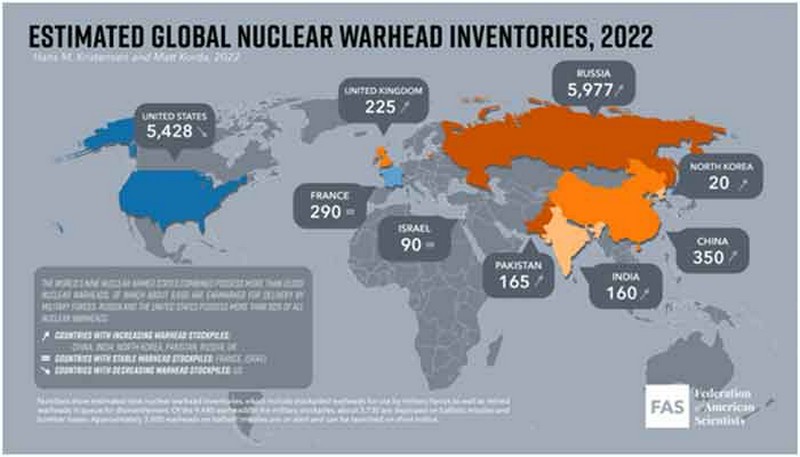
How Exxon Captured a Country Without Firing a Shot

By Amy Westervelt

18 Jun 2023 – Guyana’s high court handed down a historic ruling in May against both the country’s Environmental Protection Agency and Exxon Mobil’s subsidiary in the region. If it sounds strange that the EPA and Exxon were co-defendants in a case, yes, that’s precisely the point.

The case was brought on behalf of two Guyanese citizens, Frederick Collins and Godfrey Whyte. They accused the EPA of failing to enforce the requirements of its own permits by never securing a guarantee from Exxon or its subsidiary, Esso Exploration and Production Guyana Limited, that the company would cover all costs related to a possible oil spill.

“Guyana taxpayers are currently exposed,” Tom Sanzillo, director of financial analysis for the Institute for Energy Economics and Financial Analysis, said. “The potential consequences for Guyana are catastrophic.”

That’s because Exxon’s drilling project in Guyana is the riskiest kind: deep-water offshore drilling, which involves intense pressure bearing down on complex equipment. The conditions are similar to those that preceded the Deepwater Horizon explosion in 2010, which spewed oil and gas throughout the Gulf of Mexico, costing BP $69 billion.

Exxon’s own environmental impact assessments indicate that such a disaster in Guyana could send oil to the beaches of 14 different Caribbean islands, most of which depend on fishing and tourism — and all of which could hold Guyana liable for damages. The costs would be astronomical, which is why the permits for offshore drilling in Guyana require not only an independent liability insurance policy from Esso, but also an unlimited financial guarantee from its parent company to cover costs that exceed those covered by insurance.

Esso joined the case with the EPA, arguing that the plaintiffs were misinterpreting the law, that a deal had been worked out between the company and the agency, and that Guyanese citizens didn’t have standing to bring these sorts of cases anyway. Justice Sandil Kissoon ruled in favor of Collins and Whyte across the board, concluding that the insurance and guarantee requirements were clearly stated in Esso’s permit, the EPA failed to secure those assurances, and Guyanese citizens had every reason to question that failure.

“The EPA has relegated itself to a state of laxity of enforcement … putting this nation and its people in grave potential danger of calamitous disaster,” Kissoon wrote in a blistering 56-page ruling that called Esso “disingenuous and deceptive” and the EPA “derelict, pliant, and submissive.” Taking aim at the government and Exxon Mobil at the same time is a bold move that has some in the country worried for Kissoon’s safety, but advocates point to the ruling as confirmation that Guyana’s courts, at least, have not been captured by the oil business.

In Guyana, it’s become hard to distinguish where the oil company ends and the government begins. Exxon executives join the Guyanese president in his suite at cricket matches, and the vice president regularly hosts press conferences to defend the oil company. Vincent Adams, a Guyanese petroleum engineer and former head of the country’s EPA, has been one of the agency’s harshest critics.

“When I was working in the United States, we always had people at the offshore site 24/7 with the oil companies,” said Adams, who spent decades at the U.S. Department of Energy. “Because 99 percent of the time what they tell you is happening out there is not what is happening.” When Adams was tapped to run Guyana’s EPA, he planned to have monitors on board Exxon’s floating production vessels. “That’s all been canceled. Even Exxon’s files and permits, which used to be in the document center with everyone else’s, are under lock and key in the director’s office,” he said. “There’s no oversight happening because Exxon does not want oversight.”

“There’s no oversight happening because Exxon does not want oversight.”

“We have complied with all applicable laws at every step of the exploration, appraisal, development, and production stages,” said Meghan Macdonald, who handles media and communications for Exxon Mobil in Guyana. “We are committed to responsibly developing the resources offshore Guyana to maximize value for all stakeholders, including the government and people of Guyana.”

Nonetheless, Kissoon ordered the EPA to issue an immediate enforcement action against Esso, requiring that it provide an unlimited financial guarantee from ExxonMobil and proof of sufficient liability insurance, or its drilling permit would be suspended. The EPA appealed, and on June 8, an appeals court judge temporarily stayed the order until the appeal is heard but required Exxon to put up a $2 billion guarantee in the meantime. It’s a significant pumping of the brakes on Exxon’s operation in Guyana, which the company has projected could outpace the Texas Permian Basin, making Guyana Exxon’s top oil-producing region, responsible for more than a quarter of the company’s global output, within five years.

The local attorney on the case, Melinda Janki, has been working to stop oil drilling in her home country for more than a decade. For Janki, the ruling is significant no matter the outcome of the appeals process. “The top line is that two ordinary citizens in this little country, which most people can’t find on the map, have gone to court and they’ve beaten the EPA, but they’ve also beaten Exxon Mobil, and this is really a victory for the people, by the people.”

Janki said the ruling should send a message to people on the ground that they have the power to oppose projects like these. “Justice Kissoon put the rule of law above the interests of Exxon Mobil, and that’s massive,” Janki said. “That’s what every judge in every country should be doing, and I think this decision sets the standard for judges everywhere, not just in Guyana.”

What’s been happening over the past five years in Guyana is emblematic of a broader wave of extractive colonialism playing out in countries across the Global South. As Carroll Muffett, president of the Center for International Environmental Law, put it, “Countries that don’t have a history or any significant history of oil and gas development or oil and gas dependence are being pushed into that at the very moment when the world knows we need to be phasing out fossil fuels.”

Right to a Healthy Environment

In 2015, when Exxon Mobil announced it had found oil — lots of it — off the coast of Guyana, only a handful of people there knew what that news really meant. One of them was Janki. “My heart just sank,” she said. “Because I know oil is a disaster, and it’s the worst possible thing that could have happened to Guyana.”

Janki came to her conclusions about oil in a somewhat surprising way: working for BP in the U.K. Janki grew up in Guyana, but her family left when she was around 12 due to political turmoil kicked off by U.S. and U.K. concerns that Guyana was becoming a “new Cuba.” Infiltrating various political groups and stoking racial tensions, the CIA and its allies in Britain successfully destabilized the country and installed a leader who suited them. Janki’s family moved to Zambia and then Trinidad. Eventually, Janki made her way to the University of Oxford. She went to law school and, after a few years working at a corporate firm in London, started looking for a new challenge.

“At the time, it seemed like BP was a good place to go,” she said. Janki negotiated deals and traveled all over Europe for BP, learning some key lessons along the way. “I think sometimes people don’t realize that the purpose of an oil company is to make money, and they have no other purpose,” she said. “They’re not there to promote human rights. They’re not there to protect the environment. They’re there to put the share price up and to give big, fat dividends to their shareholders. … They’re very good at what they do, and they’re very good at telling people a story about how beneficial they are for the world.”

When the appeal of working for BP wore off and political tensions back home had cooled, Janki returned to Guyana, moving back to the capital, Georgetown. At the time, Guyana was just beginning to build an independent democracy. In 1992, the country had its first completely free elections, and Cheddi Jagan — the candidate the CIA had spent decades trying to defeat — was elected president. His government made two significant moves: It proposed major reforms to the constitution and passed a comprehensive Environmental Protection Act that established Guyana’s EPA. Although she was still working in the corporate sphere at the time, Janki had a keen interest in environmental law.

The government began drafting the Environmental Protection Act in 1994. “There was a meeting at the Pegasus Hotel, which is this big hotel in Georgetown,” Janki said. “I had no way to go because I was just this completely unimportant individual.” But a friend helped her score an invite.

“It was interminably boring, but in the break, I was able to talk to one of the government officials and say to him that I had looked at their draft environmental act and I thought that it was inadequate.”

It wasn’t the sort of thing that a “completely unimportant individual” would generally say, but the official didn’t brush her off. “He said, ‘Well, send me something about it,’ and maybe that was a brush-off, but I saw it as a really exciting opportunity,” Janki said. “So I wrote a paper explaining why I thought this act was inadequate.”

The official asked Janki if she’d like to work as a consultant on drafting the act, and she jumped at the chance. “I put in all the stuff on the environmental impact assessments,” she said. “I put in the impact on the climate, the impact on the atmosphere, and I put in principles of environmental management, so things like the polluter pays and the precautionary principle and principles of natural capital.”

Janki’s version of the act was ratified by Jagan’s government in 1996. Just a few years later, the country signed its first contract with an oil company: a partnership between Exxon Mobil and Shell. The contract granted the partnership the right to explore for oil in Guyana, but for several years, the companies didn’t do much with their permits. Oil was plentiful and easier to get in other South American countries, so Guyana wasn’t a priority.

Meanwhile, Janki began lobbying Guyana’s Constitutional Reform Commission to add an amendment protecting the human right to a healthy environment. “I looked at constitutions around the world that, at that time, had the right to a healthy environment written into them. And then I put forward the arguments for having it in Guyana’s constitution.”

Once again, it worked. The right to a healthy environment for current and future generations was ratified as part of Guyana’s constitution in 2003.

The Boom

It wasn’t until 2008, a few months after Venezuela nationalized oil and booted out most of the foreign oil majors, that the companies began exploring the waters offshore Guyana in earnest. Still, they came up empty. Shell left the partnership in 2014, while Exxon brought on two new partners: Hess Corporation, an independent American oil company best known as an early mover in the fracking boom, and the China National Offshore Oil Corporation. The very next year, Exxon announced it had found oil, more than 10 billion barrels of it. And not just any oil: It was light, sweet crude, the oil that’s easiest to refine, commanding the highest price on the global market.

“Suddenly, in 2015, Exxon announced that they had found oil, and people were going crazy talking about oil wealth,” Janki said.

It wasn’t just people talking about oil wealth. Exxon was pushing this idea, and so was the government. The company moved quickly to capture the hearts and minds not only of state officials, but also other members of civil society. One of Exxon’s first big public investments in Guyana was to sponsor the Caribbean Premier League, a popular regional cricket tournament, and the country’s cricket team, the Amazon Warriors. Players have Exxon Mobil emblazoned across the front of their uniforms. The company also helped get cricket games broadcast on TV.

“When you walked in the streets, you would hear every Guyanese saying, ‘Thank God for Exxon!’”

“When you walked in the streets, you would hear every Guyanese saying, ‘Thank God for Exxon! If it wasn’t for Exxon, we would’ve never been able to see cricket live on television,’” Glenn Lall, the publisher of a local newspaper, Kaieteur News, said. “You see how dangerous that is?”

The company and the government hired journalists working on the oil and gas beat away from the country’s papers and into corporate public relations and state-run newsrooms. One such journalist, who asked that their name be withheld to avoid retaliation, said the standard offer included a big pay bump, a lofty title, and a free car.

“I had some journalists that used to work with me, and the government tried to steal them with big pay. And it worked — they left,” Lall said. “A few of them after a while said, ‘No man, I can’t do what you want me to do,’ so they left there too, but none of them are doing journalism anymore.”

As a consequence, Lall said, there are few journalists left who report on oil drilling with a critical eye. Of the six reporters who once covered oil and gas for Kaieteur News, only one remains.

Since Exxon shipped its first barrel of oil in 2019, Janki has filed seven separate lawsuits against the Guyanese government asking it to do one thing: enforce the environmental laws she helped draft.

She had an early win in 2020 when the government reduced Exxon’s drilling permit from 23 years, as it was originally issued, to five years, the maximum allowed by law. And the recent insurance ruling, if it stands, will require the EPA to follow the country’s environmental and permitting laws. The rest of Janki’s cases are still making their way through the Guyanese courts. One argues that the offshore drilling project violates citizens’ constitutional right to a healthy environment. Others urge the government to do something about the constant burning of excess gas from Exxon’s offshore production platforms, a practice called flaring.

Janki said she’s struggled to find lawyers and clerks to work with her. Given how many firms Exxon and its partners, subsidiaries, and suppliers have contracted with in Guyana, it’s hard to find someone who’s not conflicted out. “I couldn’t get anybody to help with cases until a senior counsel who was based in Trinidad agreed to do it with me,” she said. “We had no clerk. I had to go and line up at the court registry with the documents and wait my turn.”

Exxon has also funded conservation organizations that might object to oil drilling in the country, including the Iwokrama International Center for Rain Forest Conservation and Development, Guyana’s crown jewel of conservation and a global leader on sustainable forestry.

“Yes, the obvious question is, you know, should we be taking money from the oil company?” Iwokrama CEO Dane Gobin said. “And my answer to that is, OK, oil will be there. We are not advocates. We run a rainforest. We don’t get involved in politics. But we have to take care of our people. And if somebody is saying, ‘Here’s a grant. You can do capacity building and training. You could improve the livelihoods of Guyanese. You could do all kinds of things, mangroves, all of that.’ Why should we say no?”

For Janki, the reason is simple: If you’re taking the oil companies’ money, you’re helping them deceive the public.

“I think it’s disingenuous to be claiming to be a conservation organization and at the same time trying to make allowances for the fossil fuel sector.”

“The oil industry always tells you how good it is for you,” Janki said. “And that has a way of removing every other narrative. … They say, ‘Well, we power the world. We are the energy that keeps the economy going. We heat your homes, we enable you to cook.’ And people say, ‘Oh yes, that’s wonderful.’ The companies don’t say, ‘We’re frying the planet so that we can make money, and we are going to make sure that renewable energy doesn’t get anywhere because that will put us out of business.’”

Whenever it can, Exxon reminds the public of its cricket sponsorship and conservation efforts. A marketing video the company released last year to address controversy around its contract with Guyana is a perfect example. Even the International Monetary Fund and the World Bank, traditionally conservative and pro-oil, have described the deal as unfair to Guyana. So Exxon’s marketing team put together a Facebook video that starts — where else? — at the national cricket stadium. The first minute and a half focuses on the company’s investments in cricket before Exxon’s public relations lead takes to the streets, picking people “at random” to talk to about the contract. And then back to the cricket stadium for a recap.

It’s a master class in building social license. And the cricket sponsorship must be paying off because in March, Exxon increased its investment in Guyanese cricket in a big way, announcing funding for a new stadium in the easternmost part of the country, near the border of Suriname. The Greater Guyana Initiative, a local nonprofit funded by Exxon and its partners in Guyana, is paying $17.7 million to build the state-of-the-art facility, which will host sporting events and concerts in a region that will soon be home to a major oil and gas export port.

“If they didn’t give, they’d be knocked for not giving something back,” Gobin said. Since 2017, his organization has received $7 million from the Exxon Mobil Foundation.

“I think it’s disingenuous to be claiming to be a conservation organization and at the same time trying to make allowances for the fossil fuel sector,” Janki said.

But it’s an approach the government has taken as well. Guyana’s vice president, Bharrat Jagdeo, often talks about how the oil project will fund climate adaptation — and how the country needs to get the oil extracted and sold before anyone has to make good on their net-zero commitments. “We support the vision of a fast-paced development of the resources offshore, particularly in the context of net zero,” he told a crowd of oil executives at the annual CERAWeek conference. “We believe it’s a wise strategy to do as much exploration as possible now, prove the resources, and then have them removed and transferred into financial assets to transform the country.”

The trillion-dollar question is whether Guyana can get rich off oil before it suffers a catastrophic spill, the bottom falls out of the oil market, or the country’s coast — where 90 percent of the population lives — is swallowed by the sea, which is predicted to happen by 2030.

The Resource Curse

Throughout Latin America, the Caribbean, and Africa, the fossil fuel industry is very busy telling the story of fossil fuels as the solution to poverty. As more and more Global North countries pass laws regulating emissions or incentivizing a shift away from fossil fuels, the race is on for the industry to sell as much oil and gas as possible before they have to strand assets. No one wants to be the company left with the most untapped, unmonetized oil and gas reserves dragging down their balance sheets.

In the Global South, the message is simple: Having your own fossil fuel industry means everyone will have access to energy and your country will get rich. Only that story hasn’t panned out for any Global South country in decades. Even when it comes to solving energy poverty — a term that describes inadequate access to energy for basic needs like cooking, lights, and temperature control — the industry has not delivered on its promises. Nigeria, which has been in the oil business for more than 50 years, has the lowest access to electricity globally; about 92 million of the country’s 200 million people lack access to power.

Janki knows that Guyana needs money to lift its people out of poverty. She just doesn’t think another cycle of what development economists call “the resource curse” — the phenomenon of countries with an abundance of natural resources winding up with less economic growth, democracy, or development — is going to do that. “Where is the money from the gold? Where is the money from the bauxite? Where is the money from the diamonds? Where is the money from the sugar? Where is the money from the agriculture? Where is the money from the fishing, etc.? The list is almost endless because we are so full of wealth,” she said. “And yet the people in this country are poor.”

She’s in favor of Guyana monetizing its value to the world as a carbon sink, although she doesn’t endorse the government’s recent move to sell $750 million worth of carbon credits to Exxon’s partner, Hess Corporation. Critics of carbon credits argue that they should only be used to offset the emissions of “difficult to abate” sectors — industries or processes for which there are no alternatives — not continued fossil fuel expansion.

Ultimately, Janki said she’d like to see those in the Global North take some responsibility for hundreds of years of colonialism and step up to prevent companies from leading yet another round of it.

“I think it’s really important that people stop thinking of Guyana as a developing country that needs to be helped and start looking at us and saying, ‘Wow, these guys are a carbon sink, and they are under threat because of Exxon Mobil and other oil companies,” Janki said. “And we have a responsibility to rein in those oil companies because those are oil companies coming from the Global North.”

Meanwhile, the outcome of her insurance case could set a precedent that changes the math entirely for drilling in Latin America and the Caribbean. If the ruling is overturned, the case could be taken up by the Caribbean Court of Justice, which sets legal precedents for the entire region. The industry will be watching to see whether bets placed not just in Guyana, but also in Suriname, Trinidad, Argentina, Mexico, and Colombia will suddenly become a whole lot riskier. Whether the ruling sticks or not, the case is likely to inspire similar legal action, according to Muffett of the Center for International Environmental Law.

“Lawyers from around the world who are fighting oil and gas — off the coasts of southern Africa, off the coast of Mozambique, and in other places in the Caribbean — are going to be looking at this decision,” he said, “paying close attention to whether the financial guarantees being provided in other oil and gas exploration and development permits are at an equivalent level.”

Additional reporting: Kiana Wilburg

19 June 2023

Source: www.transcend.org
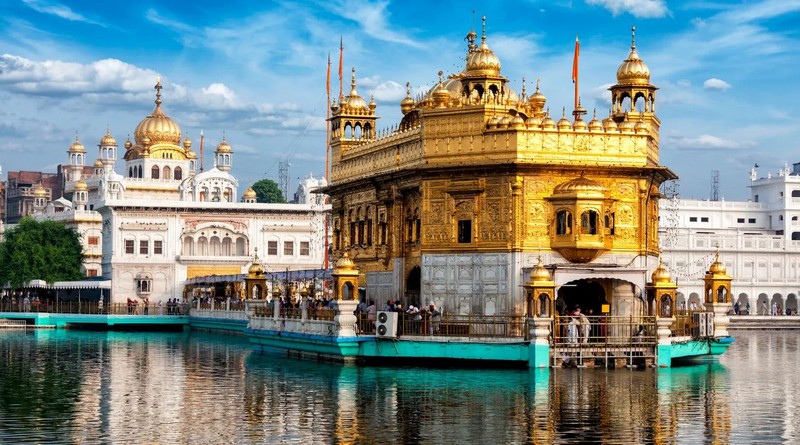
Fears of hottest year on record as global temperatures spike

Early data shows June temperatures hitting record highs ahead of El Niño that experts say will have significant heating effect

By Oliver Milman

Global temperatures have accelerated to record-setting levels this month, an ominous sign in the climate crisis ahead of a gathering El Niño that could potentially propel 2023 to become the hottest year ever recorded.

Preliminary global average temperatures taken so far in June are nearly 1C (1.8F) above levels previously recorded for the same month, going back to 1979. While the month is not yet complete and may not set a new June record, climate scientists say it follows a pattern of strengthening global heating that could see this year named the hottest ever recorded, topping 2016.

There has been “remarkable global warmth” so far in June, confirmed Copernicus, the European Union’s Earth observation arm, which said that the first few days of the month even breached a 1.5C increase compared with pre-industrial times. This is probably the first time this has happened since industrialization, the agency said.

The long-term warming conditions caused by the burning of fossil fuels will probably receive a further pulse of heat via El Niño, a naturally recurring phenomenon where sections of the Pacific Ocean heat up, typically causing temperatures to spike across the world.

Last week, the National Oceanic and Atmospheric Administration (Noaa) said El Niño conditions are now present and will “gradually strengthen” into early next year. Michael Mann, a climate scientist at the University of Pennsylvania, said human-caused warming will be exacerbated by an event that typically adds between 0.1C to 0.2C (0.18F to 0.36F) to the overall global temperature.

“The global surface temperature anomaly is at or near record levels right now, and 2023 will almost certainly be the warmest year on record,” said Mann. “That is likely to be true for just about every El Niño year in the future as well, as long as we continue to warm the planet with fossil fuel burning and carbon pollution.”

Mika Rantanen, a Finnish meteorologist, said that the spiking heat so far this month was “extraordinary” and that it was “pretty certain” it would result in a record warm June.

This year has already seen severe, record heatwaves roil places from Puerto Rico to Siberia to Spain, while blistering heat in Canada helped spur huge wildfires that blotted the skies above New York City and Washington with toxic smoke last week.

According to an update issued by Noaa on Wednesday, the world had its third warmest May in a 174-year temperature record last month, with North America and South America both having their hottest May ever recorded.

Noaa is more circumspect about the prospects of an annual heat record in 2023, placing the odds at about 12%, but has said it is almost certain the year will rank in the top 10 warmest and is very likely to be in the top five.

In May, the World Meteorological Organization warned that global temperatures will probably soar over the next five years, fueled by El Niño as well as emissions, with a new record hot year almost guaranteed during this period.

There is also a good chance the average temperature will exceed 1.5C (2.7F) beyond pre-industrial times, a key threshold agreed by governments at which point heatwaves, droughts, flooding and other climate impacts become significantly worse.

While people are feeling the heat on land, an even more remarkable burst of warmth is occurring in the seas, with Noaa confirming a second consecutive month of record high ocean surface temperatures in May. Excess heat in the oceans, which cover 70% of the globe’s surface, influences overall global temperatures, as well as warping fish populations, bleaching coral reefs and driving coastal sea level rises.

“The oceans have been warming steadily but we are now seeing record temperatures which is certainly alarming given we are expecting El Niño to strengthen,” said Ellen Bartow-Gillies, a climate scientist at Noaa. “That will undoubtedly have an impact on the rest of the world.”

Bartow-Gillies said Noaa had not yet processed its temperature data for June but that it appeared the elevated heat will continue this month, although El Niño will not be a major factor until later in the year. “We are off to a pretty warm start to the year, it’s not unprecedented, but we could be getting even warmer due to El Niño,” she said.

Regardless of whether 2023 ends up the hottest ever recorded, scientists caution that the escalating impacts of the climate crisis are now starkly evident and will not be slowed until greenhouse gas emissions are radically cut.

Without stronger emission cuts, the changes we are seeing are just the start of the adverse impacts we can expect to see,” said Natalie Mahowald, an atmospheric scientist at Cornell University. “This year and the extreme events we have seen so far should serve as a warning.”

15 June 2023

Source: www.theguardian.com

First German Lawsuit Brought Against BioNTech Over COVID-19 Vaccine Side Effects

By Paul Anthony Taylor

Biotech firm BioNTech is facing a lawsuit filed by a German woman over side effects she suffered after receiving its mRNA-based COVID-19 vaccine. The woman, a healthcare worker whose identity remains private under German privacy laws, is claiming at least €150,000 ($164,000) in damages for bodily harm and compensation for material damage. She reports experiencing upper-body pain, swollen extremities, fatigue, and sleeping disorders after receiving the vaccine. The case, the first of potentially hundreds in Germany, is being heard by the regional court in Hamburg.

The woman’s lawyer says he intends to challenge the positive risk-benefit analysis given to the BioNTech injection by European Union (EU) regulators and German vaccine assessment bodies. Under German pharmaceutical law, vaccine manufacturers are only liable for damages if it can be shown that the shots cause disproportionate harm relative to their claimed benefits, or if labeling information is incorrect.

BioNTech, which developed its vaccine with Pfizer and holds the marketing authorization for the product in Germany, predictably claims that the woman’s case lacks merit. The position of the European Medicines Agency is that the BioNTech vaccine has a very low incidence of side effects. A recent study sharply contradicts this, however, confirming that mRNA COVID-19 vaccines are associated with more serious harms than originally thought.

As some of the EU’s bulk purchase agreements with COVID-19 vaccine makers reportedly include liability waivers, the BioNTech lawsuit raises important questions regarding responsibility for legal costs and compensation. Observers suggest that in cases brought in EU countries, governments, and ultimately therefore taxpayers, could be forced to bear the payment of any damages.

A growing number of lawsuits

The German case is one of a growing number of COVID-19 vaccine lawsuits being filed around the world.

In the UK around 90 families are said to be pursuing legal action against vaccine maker AstraZeneca. Many of the plaintiffs say the firm’s COVID-19 vaccine caused them to develop vaccine-induced thrombotic thrombocytopenia, a condition that can cause deadly blood clots. Others developed Guillan-Barre syndrome, which can result in paralysis. Some have even had limbs amputated.

The UK lawsuit currently involves over two dozen fatalities, some of whom were aged as young as 18-years-old. The compensation bill for British victims killed or maimed by the AstraZeneca vaccine could theoretically exceed £1 billion ($1.28 billion). But as the UK government’s contract with the firm included an indemnity clause, the final bill will end up being footed by taxpayers.

A COVID-19 vaccine injury lawsuit has also been filed in Australia. This case reportedly has 500 members and is seeking redress for citizens left injured or bereaved by COVID-19 vaccines. The Australian government, its drug regulatory agency and its department of health are all named as parties to the class action, as also are a number of senior public servants.

The lead claimants in the Australian case include a man who developed a severe heart condition after receiving the Pfizer/BioNTech vaccine, another who developed encephalomyelitis (inflammation in the brain and spinal cord) following the AstraZeneca vaccine, and a third who developed cognitive impairment and chronic fatigue after having the Moderna vaccine.

Additional countries in which cases have recently been filed include Italy, Canada, and the United States. Lawsuits in further countries are expected to follow.

With total worldwide revenue from COVID-19 vaccines reaching $64.4 billion in 2021 and $60.9 billion in 2022, the maximizing of corporate profits has resulted in widespread human suffering. With death and injury tolls continuing to mount, vaccine manufacturers and their stakeholders must be called to account.

Executive Director of the Dr. Rath Health Foundation and one of the coauthors of our explosive book, “The Nazi Roots of the ‘Brussels EU’”, Paul is also our expert on the Codex Alimentarius Commission and has had eye-witness experience, as an official observer delegate, at its meetings.

16 June 2023

Source: www.globalresearch.ca