Just International

Winner Takes All: John Perkins on the Global Economy

By Stephanie Hiller

“Senate Finance Chief: Nothing Unites GOP More Than Helping Rich People Cheat on Their Taxes” headline, Common Dreams, 20 Apr 2023.

But actually that has been the strategy of both parties in US development programs for decades, according to John Perkins, who was a “hit man” for MAIN, an engineering company building infrastructure all over the world. His job consisted of persuading leaders of developing countries that his company could help their country modernize.

For a price.

The price, paid in the form of loans, enables the rich, in our country and theirs, to rake in enormous profits, while chaining the country to the U.S. by growing debt.

He calls it a four pillar strategy: fear, debt, anxiety, and divide and conquer.

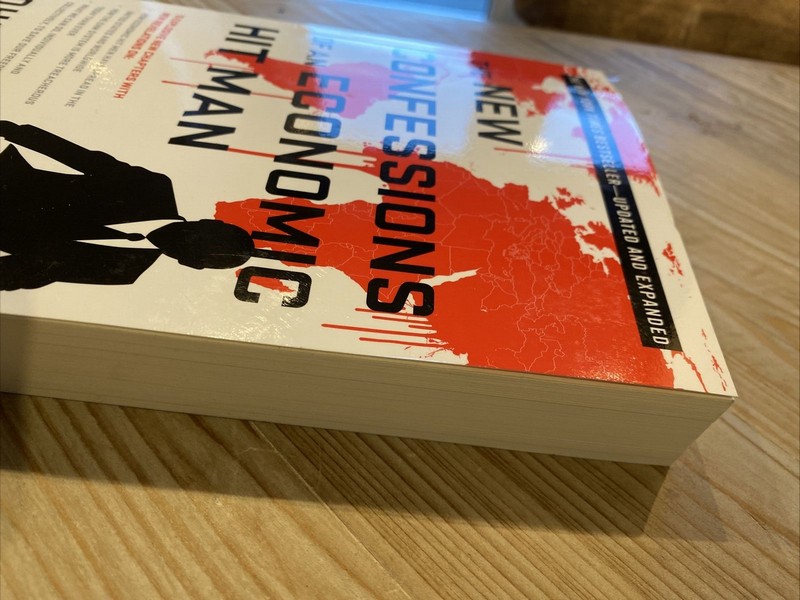
John Perkins spoke to the members of Praxis Peace, a Sonoma-based organization, on April 17 via zoom. The third edition of his book, Confessions of an Economic Hitman, has just been published. It contains 12 new chapters about how China’s development policy is spreading Chinese influence throughout the world.

The job of the hit man is to identify countries that have resources the company wants, such as oil or lithium, and then to arrange a loan from American-dominated lenders like the World Bank to pay the cost of developing the resource.

“But the money didn’t actually go to the country. It never saw the money. Instead, the money went to corporations in the United States to build big infrastructure projects in those countries. Power plants, industrial parks, highways, ports, airports, things that help the very rich people because they own the businesses and the industries that benefited from big infrastructure.

“But in the long run it hurt just about everybody else, because money was diverted from healthcare, education and other social services to pay the interest on the debt, and in the end the debt couldn’t be repaid. So we’d go back and say, Hey, since you can’t pay your debt, we’ll help you restructure it.

“But you need to implement neoliberal economic policies, which essentially means reduce taxes on your rich, reduce just everything else on everybody else, and, you know, cut back on your regulations, privatize your utility companies, or water and sewage systems, and so forth to private investors.

“Vote with us at the United Nations on some issue. That’s important to us. Let us build a military base on your soil.

“What we were doing was creating a global empire.”

If leaders don’t accept this deal, they will be pursued by “jackals” and overthrown or perhaps assassinated.

If that sounds nasty, the book conveys in greater detail, country by country, chapter by chapter, how sleazy, corrupt and inhumane all this high-power money-making is. And there’s a lot of money involved. While Perkins does not spell out how much he made, the money and the perks – travel expenses, elegant restaurants and hotels, and so on – allowed him a very plush lifestyle and powerful sense of identity and purpose to which one easily becomes addicted. That’s essential because “once you’re in, you can never get out,” said Perkins’ mysterious mentor Claudine before he accepted the job.

Money and belief kept hit men in the game, as well as the threat of punishment mafia-style if they tried to quit. Couched in reassuring language and, for some, including Perkins at the beginning of his career, that was the dirty game that has been masquerading as “foreign aid” since the Cold War, its tactics employed because the existence of the nuclear bomb had made the prospect of war untenable. (Alas, that is no longer the case. The weapons trade has its own perverted modus operandi.)  But despite its attractions, Perkins became increasingly disturbed by his role, and eventually found a way to get out.

In the meantime, China has developed another way to conduct international business, offering a more alluring, superficially less damaging way to spread its influence throughout the world. Promising “peace and stability,” China has succeeded largely by reassuring developing countries that unlike the U.S., (whom many of these leaders have come to hate) it does not intend to take over their country but to help them connect with the rest of the world. Likely it is even more dangerous,” Perkins writes, “since it is controlled by an authoritarian government.” Also the Chinese are sloppy engineers, he adds.

The book is well worth reading, offering both memoir and political history as Perkin struggles to find the good and the noble amidst the shreds of corruption, extortion and deceit. It’s not an easy struggle, but a modern-style hero’s journey with which progressives can empathize. Significantly, Perkins does not believe this is all a conspiracy of some sort; rather he finds good people trapped in an evil system, a “death economy, an economic system that’s consuming and polluting itself into extinction and causing climate change”, that must become a “life economy” if people and planet are to survive. He describes what we can do to expedite that transformation in the last chapter of his book.

In the one-hour zoom format Georgia Kelly, Executive Director of Praxis Peace, selects three or four salient questions to guide the interview to its key points, with the second half reserved for questions from the audience. In that short time, Perkins addressed some of the central subjects of his book, including China’s dominance in the global marketplace, which appears to be very threatening to America’s hegemonic ambitions, as well as the features of a “life economy” which we must create if we are to survive. It was a lively discussion.

Regarding the life economy he said, “It’s something that has been happening. We’ve seen the idea of conscious capitalism. “B Corporations.”, benefit corporations, great new deal. The tremendous boom in technologies that are taking us toward a life economy.

“And I want to emphasize that this is not about stopping growth. This is about transforming growth from things that are ravaging the earth like much of the materialism that we currently advocate, and the idea that corporations need to maximize short-term profits. They need to make some profits, because that’s how they keep going, but the tremendous amounts of profits that hedge funds and other industries are looking at is outrageous.”

How to change it? That will have to be another discussion, based on the last chapter of the book. Suffice it to say that a life economy is one designed to help everybody thrive. Not just the rich people.

That change of intention could change everything.

Stephanie Hiller is a free lance writer who blogs at Particle Beams, Sonoma Sun and Medium.

1 May 2023

Source: www.transcend.org

Big Tech Companies Are More Powerful Than Nation-States

By Tom Valovic

They are already richer than many countries, and the rise of AI looks set to increase their influence.

25 Apr 2023 – A few years ago, I was having dinner with a friend who worked at Google. As we were discussing the ins and outs of the tech world, he casually remarked: “Google is going to take over the world you know.” Driving home and reflecting on that remark I thought: “How curious.” But now, as I contemplate the shambles our democracy has become, I’m more inclined to think: “How prescient.”

Democracy is under threat—not just in the U.S. but in many other countries as well. But the precipitous actions of newly minted authoritarian leaders and the turmoil in Western democracies are just a few of the puzzle pieces needed to figure out how we got to this point. Another less discussed trend is that U.S. citizens are being subjected to a relentless onslaught from intrusive technologies that have become embedded in the everyday fabric of our lives, creating unprecedented levels of social and political upheaval.

Advanced computer technology and the internet have given us many wonderful gifts when rightly applied. But we now know they can also be terrible taskmasters, impersonal forces that can dehumanize our personal interactions, cause severe mental health problems (especially for teenage girls), and serve as a de-facto wealth transfer mechanism to the billionaire class. Still, we accept the negatives because of the positive benefits. In this sense we might even call hyper-technology a Grand Seduction. Now, AI has exploded onto the scene and threatens to monkey wrench our lives in unimaginable ways.

U.S. citizens are being subjected to a relentless onslaught from intrusive technologies that have become embedded in the everyday fabric of our lives, creating unprecedented levels of social and political upheaval.

The limitations of these widely used technologies are well known. They include social media and what Harvard professor Shoshanna Zuboff calls “surveillance capitalism”—the buying and selling of our personal info and even our DNA in the corporate marketplace. But powerful new ones are poised to create another wave of radical change. Under the mantle of the “Fourth Industrial Revolution,” these include artificial intelligence or AI, the metaverse, the Internet of Things, the Internet of Bodies (in which our physical and health data is added into the mix to be processed by AI), and my personal favorite, police robots. All of these technologies will be enhanced and amplified by the use of 5G and 6G communications via a rapidly expanding satellite system provided by Elon Musk.

This is a two-pronged effort involving both powerful corporations and government initiatives. These tech-based systems are operating “below the radar” and rarely discussed in the mainstream media. In addition to corporate surveillance, governments are also busy beefing up their own systems. While we tend to associate these sorts of initiatives with the NSA and the Department of Homeland Security, a groundbreaking article in the Boston Globe has described how pervasive and intrusive surveillance has become even at the state level. The article methodically details how law enforcement agencies in Massachusetts operate a huge apparatus of drones, license plate readers, and devices called cell-site simulators, which pretend to be cell towers in order to capture cellphone signals to pinpoint the location of individuals.

The AI “Arms Race”

AI’s precipitous and dramatic entry into the technology mix has ushered in what Time magazine and other mainstream publications are calling an “AI Arms Race.” The designation is telling, given that AI has been developed with significant funding from the defense and government sectors. This accelerated deployment is happening without the benefit of thoughtful political oversight because elected officials, often at a disadvantage in the face of technologies they don’t completely understand, are providing little guidance, regulation, or pushback.

Parsing the subtler impact of technology in our lives is tricky. That’s because it sneaks up on us. It doesn’t happen by a vote or by some distinct series of events. Rather, it just creeps along, establishing itself in maddeningly minute increments. The sum total of these technological intrusions, fostered by government and corporations often working together, constitutes a semi-invisible overlay of technocratic governance that has no central organizing principle, unlike the traditional government structures we’re familiar with. Just because these systems are “distributed” (to use a little computer jargon) doesn’t mean that they are any less powerful. And while the internet presents the appearance of democratized participation, it’s important to remember that its ultimate Oz-like control is centralized in the deep corridors of Big Tech companies.

Goodbye Nation States?

As we see democratic principles slowly vaporize even in Western nations, the fact that Big Tech continues to consolidate its power globally over and above that of nation-states is deeply concerning. However (just to keep things nice and confusing) sometimes it does this in cooperation with governments via public/private partnerships, a kind of Faustian bargain.

The Time magazine article cited above offered this startling observation: “Even if computer scientists succeed in making sure the AIs don’t wipe us out, their increasing centrality to the global economy could make the Big Tech companies who control it vastly more powerful. They could become not just the richest corporations in the world—charging whatever they want for commercial use of this critical infrastructure—but also geopolitical actors to rival nation-states.”

The world’s biggest tech companies are now richer and more powerful than most countries.

Some might argue that this has already happened and the nexus of world power is now corporate-leaning. The world’s biggest tech companies are now richer and more powerful than most countries. According to an article in PC Week in 2021 discussing Apple’s dominance: “By taking the current valuation of Apple, Microsoft, Amazon, and others, then comparing them to the GDP of countries on a map, we can see just how crazy things have become… Valued at $2.2 trillion, the Cupertino company is richer than 96% of the world. In fact, only seven countries currently outrank the maker of the iPhone financially.”

For the moment, these trends appear to be unstoppable, given the levels of corporate investment already at stake and the supine posture and dependency of governments on their largesse. The best available response for the moment is simply greater public awareness and a commitment to face the contours of this brave new technocratic world head-on and with clear vision. Given the astonishingly out-of-control power of the Big Tech sector, it’s also crucial to realize that simply regulating these systems while allowing them to continue to siphon off the power of traditional governments will not be enough to preserve our quality of life going forward.

Tom Valovic is a journalist and the author of Digital Mythologies (Rutgers University Press), a series of essays that explored emerging social and political issues raised by the advent of the Internet.

1 May 2023

Source: www.transcend.org

Khader Adnan is not a Don Quixote tilting at windmills; he is a patriot

By Rima Najjar

“We don’t feel desolate on a path because of the scarcity of travelers.”

When Sheikh Khader Adnan of Islamic Jihad first went on hunger strike in 2011, the term “administrative detention” entered the vocabulary of many people around the world for the first time. His action became the longest one-man strike in history. Administrative detention is when a state arrests and detains an individual without trial. Human rights groups rallied behind Sheikh Khader’s action. On the brink of death, he was finally freed as a result of local and international pressure and his own amazing will.

International law allows a state to use administrative detention “only in emergencies, and only if a fair hearing can be provided where the detainee can challenge the allegations against her or him.” Israel heeds neither injunction, claiming that it acts in this way for security. As a settler-colonial occupying state, Israel is perpetually in an emergency, because Palestinians continue to resist their dispossession. No peace for the wicked.

Today, Sheikh Khader Adnan is popularizing another term — “arbitrary arrest and detention” — i.e., ‘deprivation of liberty’ imposed inappropriately, unjustly and without predictability. In the Palestinian case, “arbitrarily” does not mean “against the law,” because the military law Israel imposes on Palestinians is unjust and an instrument of oppression. As independent journalist Jonathan Cook says in the documentary The Law and the Prophets, “The story here is an uncomfortable one for Western audiences to hear….” The discomfort comes from the realization that their conception of what Israel stands for is nothing but a staged smokescreen. Listening to what Sheikh Khader Adnan’s wife has to say about her husband, who was on his 79th day of hunger strike, is very uncomfortable but compelling.

On Monday, April 24, an online event in support of Sheikh Adnan’s current heroic hunger strike (it was his 79th day on strike) was organized by Samidoun Palestinian Prisoner Solidarity Network, which was established in 2011 as a response to Sheikh Adnan’s call during his hunger strike then. The event was titled “Khader Adnan: Free him now! With Randa Musa,” or Umm Abdel-Rahman, the Sheikh’s wife.

Randa spoke passionately about her husband’s ordeal and what he stands for. With occasional noises in the background coming from her children (she has nine, the oldest of whom is fourteen), and speaking from behind the niqāb, the face covering she wears as a religious obligation, she graphically detailed the horror her whole family was experiencing. Following are excerpts from her witness:

Randa Musa: Assalamu Alaikum; I am Randa Musa the wife of Sheikh Khader Musa. My husband has been on hunger strike for 79 days now. A short while ago we heard from the lawyer who had been visiting him. We were told that he had collapsed and was taken to Ramleh hospital. His medical condition is difficult. The prison administration refuses to send him to a civilian hospital, refuses to allow medical personnel from human rights organizations to check up on him. The Red Cross is allowed to visit and what they convey back to us are bromides like: “His medical condition is difficult,” or “We visited today, and he sends salaam to you.” — there is no effective action from the Red Cross. The organization comes across as collaborators with the Israeli regime.

We were scheduled to visit the Sheikh last Thursday, but we were denied visitation at the last moment on the grounds that the Sheikh is on hunger strike and is not allowed visitors as punishment for his action. When he was detained on May 2nd, he announced his hunger strike as a protest to his arbitrary arrest there and then before he even left the house. What is known about the Sheikh is that he was the one who had initiated the movement of individual resistance efforts through hunger strike against Israeli administrative detention, and he was followed in this action by a group of other prisoners. This time, the Sheikh knew that they would not be charging him again with administrative detention.

He was freed in 2018 and rearrested in 2023. That is four years of freedom by the grace of God as a result of the hunger strike. Before that each time administrative detention was deployed against him, he would be released for only a month or two before being rearrested. Today he is going on hunger strike against what is called arbitrary detention. He believes he is a free man and freedom suits him. We are a free people and prisons are not created for us.

Detention, as used by Israel against Palestinians, is a weapon. When a person is detained administratively, he or she is arrested or rearrested based on a secret file from Israel’s intelligence agencies. The Sheikh was arrested this time based on the confessions of others during interrogations and is charged with crimes on that basis. The Sheikh himself refuses to utter a single word from the moment they detain him to the moment he is freed. The charges are based on the confessions of others, something that is easy to come by in the West Bank, especially against an individual who is a leader, who is active and sociable in all fields. It’s easy for them to collect a bunch of confessions, which are turned into a sword against him.

The Sheikh’s battle with the occupation is possibly the first of its kind, and some might find it strange. Many journalists, activists, factions, public and national figures might wonder how one individual could stand up to a military occupation. They see the charges against him and surmise that, whereas he had been able to be victorious when he went on hunger strike as an administrative detainee, this is a different type of situation, and he should let go of the hunger strike. Because no one knows my husband as I do, I tell them this: If every individual in Palestine decides to resist this occupier based on the equation that one plus one equals two, then none of us would be able to resist, to counter oppression or wield a knife and stab at a check point, or strike a bullet at an armored tank, and no one would go down to Al Aqsa to quarrel with them in hand-to-hand combat.

That’s because the balance of power is too great in favor of the occupier, as we know. Technology and capabilities are on the side of the occupier; the EU and the great powers support it — all of them are on its side. So, if we consider resistance as an equation, then we wouldn’t resist at all. We have a deep and certain faith that we are the owners of this land and our right to resist is valid; that is to say, we don’t feel desolate on a path because of the scarcity of travelers. If no one has taken this step before us, that does not mean it’s incorrect. May he be victorious this time around just as he was in the previous rounds God willing.

Yesterday there was a court appearance, an appeal to release the Sheikh on bail. It was so very painful to see him in his pitiful state. We were in and out of the courtroom within minutes. Nevertheless, the Sheikh fainted four times during the proceeding. He wasn’t physically in the courtroom; he was on a video conference. When they revived him after the fourth time, he spoke only to say he would like to speak to Umm Abdel-Rahman. Frankly it was all I could do to control myself or even to stand on my legs from the horror of what I was seeing. First, there was the way he looked! His appearance was like that of the Companions of the Cave, as if a human being had been sitting in a cave for 79 days and had just emerged. His hair was long, as were his nails. He wore a moustache and a very long beard. His clothes were filthy. The Sheikh has not changed his clothes since the day he was detained. He hasn’t bathed for 79 days; the Sheikh has not seen the sun for 79 days. The Sheikh hasn’t been out of his prison cell for 79 days despite his dire physical condition; the cell is 1 by 8 meters.

According to human rights medics who managed to visit him yesterday, his bed in the cell is crawling with bedbugs that bite him and torture him. He is especially sensitive to them and sleeps on the floor to try to avoid them. After refusing bail, the female judge in the courtroom said to the Sheikh, “There is a buzzer in your room that you can press whenever you feel in danger.” I learned later that this buzzer is near the toilet and not handy. It’s as if one who falls or is about to faint or enter a coma would know in advance when that is going to happen and then take hours or days crawling to get to the buzzer for aid. This is a disregard of human souls. Even though the cells are watched on camera all the time, prison administrators don’t care if a prisoner dies or not.

To go back to the subject of the courtroom. The situation was very difficult. When I stood up to address the Sheikh, his legs cramped and he raised up his head, which toppled his chair backwards and him along with it. It was a horrifying scene. In my whole life I have never seen such a thing or bemoaned him like this; I never feared for the Sheikh as much as I did yesterday. His fall led to his fainting again and they wheeled him out and the trial ended like this. I remained in the courthouse for an hour and a half, as I was told, lying distraught on the floor with them trying to revive me with artificial respiration. They did not call an ambulance to take me to the hospital. They waited and coordinated with a Palestinian ambulance, and I was taken to hospital where I went through a battery of examinations. I was told that I had a nervous breakdown and a mild stroke. I don’t care what my medical state is like. Once I eat and drink, my health comes back. But I return to the fear and pain we live in. The Sheikh is being between martyrdom and martyrdom at any moment. Every ring of the phone is anxiety provoking; every piece of news is anxiety provoking.

What does the occupation want of Khader? I expect they want him dead. The Israeli intelligence officer who came to arrest him said to me, “Do you think I am happy to come here to arrest him? My devout wish is to shatter his head with a bullet, because he can move a country with one wag of his finger.” The officer referred to how much trouble Khader was giving them. To the children, he said, “The Sheikh declares openly that he deals with blood, and he inspires youth to commit acts of resistance within Israel.” He said this to the children who were present in the room where they arrested Khader. How do you imagine a mother feels that her children are hearing such things about their father? Do you expect an occupation to care for the medical condition of the Sheikh who is now in their hands, who has been on hunger strike for 79 days and who is now collapsing in fainting fits? They won’t. But they will never break our resolve and sumoud (steadfastness). The Sheikh believes the occupation can and will be defeated, despite the imbalance of power. Don’t let anyone tell you different.

Note: First published on Medium
______________
Rima Najjar is a Palestinian whose father’s side of the family comes from the forcibly depopulated village of Lifta on the western outskirts of Jerusalem and whose mother’s side of the family is from Ijzim, south of Haifa.

27 April 2023

Source: countercurrents.org

Young People From the U.S. Travel to Cuba and Break the Siege

By Manolo De Los Santos and Kate Gonzales

It’s a hot and crowded Tuesday morning in the Yoruba Cultural Center in Havana, and the air sticks to the skin. You can hear the fluttering of paper as people fan themselves, and a surprise blackout takes out the sound system with a flicker of the lights. And yet, 150 young organizers from the U.S. sit shoulder to shoulder, listening attentively to two leaders of the cultural movement in Cuba. They line up and down the hall with the hope of squeezing in their question—on climate change, on housing, on fighting racism, about hope in the future—before time is up.

This energy permeates through and drives the 2023 May Day Brigade: a sharp sense of curiosity honed by the responsibility of this historic undertaking. The International Peoples’ Assembly invited young grassroots activists from across the diversity of struggles in the U.S. to participate in a crucial exchange in Cuba, an experience deprived of them and their generation by the 60-year-old blockade. The largest group to travel in decades, this brigade is an intervention into the endless attempts of the United States to silence and strangle the successes of the Cuban socialist project. As Zuleica Romay, director of the Afro-American Studies program at Casa de las Américas, said in their morning panel, “Cuba is also a victim of its own success.”

And yet, these successes are contagious and hard-earned. On their very first day, these young people spoke to leaders pioneering the very sectors they fight to build back at home. Tenant organizers learned about the housing situation, as over 80 percent of Cubans are homeowners (the rest are on a path to ownership), but also the difficulty of building enough for a growing population burdened by the blockade. Black leaders asked about anti-racism efforts after 500 years of colonialism sowed the seeds of segregation and violence on the island. Those fighting for queer liberation in the U.S. learned about the historic Families Code, passed and edited by six million Cubans who proposed hundreds of thousands of changes. The breakthrough code spans all issues of the family unit from same-sex marriage to elder care, to surrogacy, to non-normative family structures. Abel Prieto, president of Casa de las Américas, told us: “There is something the U.S. government has never understood which is that something was planted here in Cuba, this principle of social justice, of people’s democracy, of equality, of people’s participation in the political process. And this has not been weakened.” Meanwhile, these young organizers repeatedly explain the current regression of trans rights in Florida as the state passes a broad ban on trans-affirming care—a ban that goes as far as stripping parental rights from those who support their trans children. Many in the crowd nod their heads in agreement.

Still, it is not lost on these young organizers that they have arrived in Cuba in a moment of profound economic crisis. As they admire the famous Cuban cars from the ’50s roll through Old Havana, they know how precious fuel is at this very moment, prevented by the blockade. Biden shows no sign of lifting the sanctions, nor taking the country off the State Sponsors of Terrorism list that prevents it from accessing the global financial system. It is this system of unilateral coercive measures that makes it almost impossible for young people to witness the achievements of a socialist process. It is U.S. foreign policy at its most irrational and its most deadly, as it continues its siege on Cuba. It has never been more urgent to lift the blockade, for the survival of the Cuban people, and for the future of the United States. These young organizers are fighting for a better world, and this first day is just a glimpse into a future with normal relations between the U.S. and this island just 90 miles away.

Manolo De Los Santos is the co-executive director of the People’s Forum and is a researcher at Tricontinental: Institute for Social Research.

Kate Gonzales is the editorial coordinator at 1804 Books. Born and raised in New York City, she has worked in development and education for arts and political organizations, and organized with grassroots movements in Hungary and New Jersey.

27 April 2023

Source: countercurrents.org

Important Chinese Intervention In Ukraine Imbroglio

By Countercurrents Collective

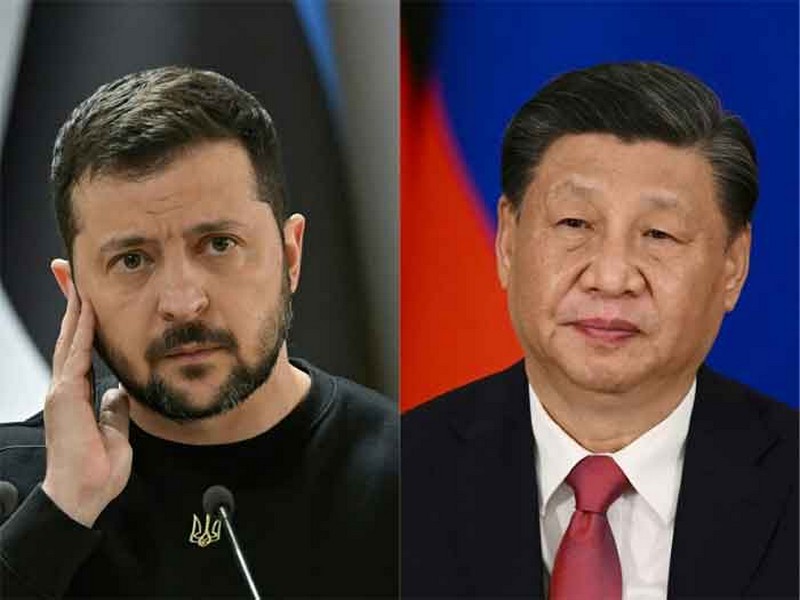
Chinese President Xi Jinping and his Ukrainian counterpart, Vladimir Zelensky, have spoken over the phone, in their first official conversation since Moscow launched its military operation in Ukraine more than a year ago.

Media reports said:

Xi told Zelensky that “dialogue and negotiations are only viable way out.”

“China will neither watch the fire from the other side, nor add fuel to the fire, let alone take advantage of the opportunity to make profits,” Xi said. The Chinese president urged all sides to remain “calm” and restrained” when dealing with the possibility of the conflict spiraling into a larger confrontation. “No one wins a nuclear war,” he said.

Zelensky tweeted that the dialogue was “long and meaningful.” He said the call, along with the appointment of an ambassador to China, will “give a powerful impetus to the development of our bilateral relations.”

Xi promised to dispatch “a special envoy” to Ukraine and other countries to “conduct in-depth communication” regarding a resolution of the conflict.

In February, Beijing unveiled a 12-point roadmap for peace between Moscow and Kiev, expressing willingness to take part in mediating an end to the hostilities. China, unlike many Western nations, has refused to condemn Russia, its strategic partner, and to impose sanctions on Moscow.

Xi traveled to Moscow last month, where he met with Russian President Vladimir Putin. The leaders vowed to work to increase trade and other areas of cooperation. Xi said that the ties between the two countries have “acquired critical importance for the global landscape and the future of humanity,” according to the Chinese Foreign Ministry.

Moscow’s Reaction To Xi-Zelensky Call 

Media reports added:

Ukraine’s “unrealistic” demands are standing in the way of peace negotiations, Russian Foreign Ministry spokeswoman Maria Zakharova has stated. She made her comments in response to a question about the phone call between Ukrainian President Vladimir Zelensky and Chinese President Xi Jinping.

Zakharova praised Beijing for its efforts to help restart meaningful negotiations. She said Russian and Chinese visions for a path to peace were “broadly in tune” with one another. “The problem lies not with the lack of good plans,” Zakharova said.

She said: The Kiev regime has so far not been receptive to any reasonable initiative of the Ukrainian crisis. Its occasional agreement to hold negotiations is being tied to ultimatums with obviously unrealistic demands.

The spokeswoman blamed Kiev for the eventual breakdown of negotiations last spring when Russian and Ukrainian teams held several rounds of meetings. Kiev, meanwhile, has repeatedly said that negotiations can resume only after Russia surrenders its recently incorporated territories. Moscow has called such demands unacceptable.

In October, Zelensky signed a decree that declared the “impossibility” of conducting negotiations with Russian President Vladimir Putin.

Beijing, which unveiled a 12-point roadmap for peace in Ukraine in February, has maintained that the conflict can only end through dialogue. China, unlike many Western countries, has also refused to condemn Russia for its actions.

China’s Special Envoy To Ukraine

Another media report said:

China named diplomat Li Hui its special envoy to Ukraine and “other countries” on Wednesday.

Xi said that the envoy would be tasked with conducting “in-depth communication with all parties on political settlement of the Ukraine crisis,” Li was China’s ambassador to Moscow from 2009 to 2019.

Ukraine’s Ambassador To China

Zelensky, meanwhile, has appointed former strategic industries minister Pavel Ryabkin as the country’s new ambassador to China.

U.S. Annoyed By Macron’s Ukraine Push, Says Bloomberg

An earlier report by Bloomberg said:

The White House is “annoyed” by French President Emmanuel Macron’s unilateral attempt to initiate diplomatic negotiations on the Russia-Ukraine conflict with mediation by China.

According to people familiar with the U.S. government’s thinking on the issue, the recent move by the French leader has not gone down well in Washington,” the agency reported on Sunday.

The sources claimed that “the White House was annoyed by what they see as Macron freelancing on a delicate diplomatic issue without consulting with allies.”

The people quoted by Bloomberg also said they did not believe the French president’s initiative would be successful, pointing out that he had proposed other peace plans during the conflict, but later backtracked on them.

They claimed it was “clear” that Beijing had no intention of using its influence on Moscow regarding the situation in Ukraine, the report said.

Last week, Bloomberg cited anonymous sources as saying France has been looking to revive peace talks between Russia and Ukraine by this summer with Chinese help.

Macron was claimed to have asked his foreign policy adviser, Emmanuel Bonne, to work directly with Wang Yi, the top Chinese official in charge of foreign relations, on formulating a roadmap for settling the crisis.

Beijing has been saying for months that peace talks are needed in Ukraine, while stressing that any settlement should respect the interests of all parties. Chinese officials have also blamed the outbreak of the conflict on the actions of the US and its allies, including NATO’s eastward expansion.

Following his trip to Beijing, Macron tried to distance Paris from Washington’s aggressive line on China, saying “the Europeans cannot resolve the crisis in Ukraine,” so they must not allow themselves to be dragged into the confrontation between the U.S. and China over Taiwan. Europe should look for “strategic autonomy,” he insisted.

Macron’s efforts to improve relations with China and get involved in the peace process in Ukraine have been criticized by other EU nations as premature and jeopardizing the bloc’s unity.

German And Polish Position

A media report said:

German Foreign Minister Annalena Baerbock, who also visited China, has fully backed the US stance on Taiwan.

Her Polish counterpart Mateusz Morawiecki said that the EU will be “shooting into our own knee” if it tries looking for “strategic autonomy” because it will only make the bloc dependent on Beijing.

China Backs Macron’s Ukraine Peace Efforts

Media report said:

Beijing supports European efforts to kick start peace talks on Ukraine and eventually create a balanced and sustainable security framework for the continent, Chinese Foreign Ministry spokesman Wang Wenbin has said.

Negotiations should be based on Europe’s “fundamental long-term interests” and should take into account the “legitimate concerns of all parties,” the Chinese official said during a daily media briefing on Wednesday.

Wang was commenting on a reported attempt by French President Emmanuel Macron to enlist Chinese assistance to de-escalate the conflict.

The spokesman noted the comments made by President Xi Jinping during Macron’s visit to Beijing earlier this month, when the Chinese leader stated there can be no panacea to the crisis. All parties must work to build mutual trust before progress can be made, Wang argued.

The French effort to revive peace talks by this summer with Chinese help was reported by Bloomberg.

France is among the nations to have supplied Ukraine with weapons, and has supported Washington’s claim that Moscow’s military operation against its neighbor was “unprovoked.”

Russia sees the hostilities as part of a wider proxy war against Russia waged by the U.S. and its allies.

It is unknown if Macron’s plan has received any support from Kiev or its allies, who have repeatedly dismissed any cease-fires or peace negotiations so long as Russian troops remain in territories Ukraine claims as its own. President Vladimir Zelensky has signed a law that makes it illegal to negotiate with Moscow so long as Russian President Vladimir Putin remains in office.

Macron’s office has confirmed that Bonne is expected to speak to Wang, who heads up foreign affairs for the Chinese Communist Party’s central committee, but has declined to provide any details on the planned talks.

China’s Foreign Ministry said it was unaware of the French peace plan disclosed by Bloomberg, while Kremlin spokesperson Dmitry Peskov has told journalists that Moscow does not possess any information on Macron’s initiative.

The news comes shortly after Macron’s recent trip to China.

Following talk between the Chinese and French leaders at the Great Hall of the People, the Chinese leader reiterated that China continues to call for peace negotiations and urged respect for the “reasonable security concerns” of both Russia and Ukraine.

Zelensky’s Top Advisor Blames U.S. For Ukraine Conflict

Ukrainian president Vladimir Zelensky’s top adviser, Mikhail Podoliak, praised a ‘Ukrainian victory’ resolution proposed by  U.S. lawmakers on Wednesday. Washington, he said, seeks to make amends for a ‘historical mistake’ by admitting Kiev into NATO and endorsing its war aims.

“The House of Representative’s resolution is unequivocal: The United States, unfortunately, along with other Western countries, encouraged Ukraine to give up nuclear and other weapons to ensure security and stability in the region under safeguards. This was a wrong policy that was misinterpreted by the aggressor and led to a major war in Europe,” Podoliak tweeted.

Kiev has insisted for years that the U.S. was obligated to protect it from Moscow because Ukraine agreed to return atomic weapons to Moscow under in the 1994 Budapest Memorandum, in exchange for guarantees of territorial integrity. Former US President Bill Clinton offered an “apology” for that in an interview with the Irish broadcaster RTE earlier this month.

Moscow has maintained that the arsenal was not Ukraine’s to begin with, but belonged to the Soviet Union, of which Russia was recognized as the sole heir. Russia has also pointed to Zelensky’s statements about re-acquiring nuclear weapons, made in January 2022, as justification for its current military operation.

Podoliak’s comments came in response to a resolution proposed by U.S. representatives Joe Wilson and Steve Cohen, a South Carolina Republican and a Tennessee Democrat. Though its text has not been made public, the Ukrainian government appears to be familiar with its contents. Kiev’s ambassador in Washington, Oksana Markarova, tweeted on Tuesday that it “includes important elements” of Zelensky’s “peace formula.”

From what anonymous congressional staffers told Yahoo News, the resolution practically echoes Zelensky’s talking points, declaring the U.S. policy to be restoring Ukraine’s 1991 borders and having Russia pay reparations and for its leadership to be put on trial for war crimes.

“Perhaps the most important feature of Western civilization culture is the ability to analyze past experience and acknowledge mistakes,” Podoliak told Yahoo when reached for comment about the resolution on Tuesday. This was presumably a reference to the resolution’s claim that the US had wrongly pressured Ukraine to give up nuclear weapons.

The U.S. continues to claim it is not a participant in the conflict, but has provided more than $100 billion in financial and military aid to Kiev over the past year.

Zelensky’s Right-hand Man Contradicts U.S. General

Other media reports said:

Ukraine still needs more weapons and equipment for the much-hyped spring “counteroffensive,” especially artillery ammunition, President Vladimir Zelensky’s adviser Mikhail Podoliak said on Wednesday.

He disagreed with the U.S. general commanding NATO forces in Europe, who told Congress earlier in the day that 98% of promised combat vehicles had already been delivered.

General Christopher Cavoli gave that statistic to the House Armed Services Committee on Wednesday morning. “I am very confident that we have delivered the material that they need and we will continue a pipeline to sustain their operations as well,” Cavoli added, responding to questions about the expected Ukrainian attack.

Podoliak challenged that assessment later in the day, speaking during a telethon hosted by Ukrainian television. He said only the Ukrainian General Staff can offer accurate numbers, and that Cavoli’s statistics weren’t up to date.

“in my opinion, 98% is too much, too large a number. He proceeds from certain mathematical data, things he knows today,” the adviser said, referring to Cavoli. “There should be much more equipment, there is a real shortage of shells, especially of heavy calibers. We are trying to solve this problem.”

The current rate of supply allows the Ukrainian military to take “certain actions” at the frontline, Podoliak said, adding that there is “never enough” weapons and equipment when facing an enemy such as Russia.

The much-anticipated counteroffensive may have already begun, he suggested, urging the public not to regard it as a single event but a large number of engagements on various fronts

Multiple U.S. outlets have sought to temper expectations about the Ukrainian attack over the past week, citing anonymous government officials worried about the political fallout from its possible failure. Last Friday, the White House even warned of a possible Russian offensive taking place instead.

Ukraine Risks Losing Western Support If Counteroffensive Fails, Says New York Times

Ukraine has no guarantees of success with a counteroffensive against Russia, despite receiving Western weapons, training, and intelligence support, the New York Times has reported. An underwhelming outcome would likely prompt Kiev’s backers to press it to negotiate for peace, the newspaper predicted.

Kiev has long touted an upcoming push as the next decisive phase of the conflict with Russia. The New York Times claimed on Monday that the offensive could be launched as early as May, although Ukrainian Prime Minister Denis Shmigal recently assessed that it might not get underway until the summer.

According to classified documents shared as part of the Pentagon leaks, Ukraine is planning to use 12 combat brigades of about 4,000 troops each in its renewed campaign against Russian forces. The U.S. and its allies have helped train nine of those units, with soldiers being taught to use Western-provided equipment and receiving tactical advice at American military facilities in Germany. Ukraine’s backers are also expected to provide it with intelligence for the proposed assault.

“Everything hinges on this counteroffensive,” Alexander Vershbow, a former U.S. ambassador to Russia and senior NATO official, said of the future operation. “Everybody is hopeful, may be over-optimistic. But it will determine whether there is going to be a decent outcome for the Ukrainians.”

Even with all Western help, “big gains are not guaranteed, or even necessarily likely,” the New York Times warned. The newspaper cited Ukrainian battlefield losses, heavy expenditure of munitions, and Russian troops digging in and preventing the enemy from using Western-taught warfare as working against Kiev.

After the push is over, “there is little chance that the West can recreate the buildup for the foreseeable future” the report argued. The U.S. and its allies have largely exhausted their military inventories after flooding Kiev with military aid, causing gaps that are unlikely to be filled until next year, experts assessed.

“The window to make significant gains may not remain open indefinitely,” the New York Times stated. With larger reserves at its disposal, Moscow could emerge victorious in the conflict, it acknowledged.

Politico previously reported that the White House was bracing itself to mitigate the fallout from a potentially poorly-executed Ukrainian counteroffensive. A temporary truce could give Kiev time for a military buildup before another offensive at a later point, U.S. officials claimed to the outlet.

27 April 2023

Source: countercurrents.org

With $2,240 Billion, Global Military Expenditure Reaches New Record High In 2022

By Countercurrents Collective

Global military expenditure increased by 3.7 % in 2022 and reached a new record high of $2,240 billion, with the three largest spenders being the U.S., China and Russia, according to new data published on Monday by the Stockholm International Peace Research Institute (SIPRI).

The U.S. remains the world’s biggest military spender with its military expenditure having reached $877 billion last year, which is 39% of total global military spending.

“The 0.7 per cent real-terms increase in U.S. spending in 2022 would have been even greater had it not been for the highest levels of inflation since 1981,” SIPRI said.

“World military spending grew for the eighth consecutive year in 2022 to an all-time high of $2,240 billion. By far the sharpest rise in spending (+13 per cent) was seen in Europe,” SIPRI said in its report.

According to SIPRI, China was the world’s second largest military spender in 2022, having spent $292 billion, or 4.2% more than in 2021.

SIPRI said: “Russian military spending grew by an estimated 9.2 per cent in 2022, to around $86.4 billion. This was equivalent to 4.1 per cent of Russia’s gross domestic product (GDP) in 2022, up from 3.7 per cent of GDP in 2021.”

Ukraine’s military spending saw the highest single-year increase in a country’s military expenditure ever recorded in SIPRI data, reaching $44.0 billion in 2022, which was a 640% increase.

“U.S. financial military aid to Ukraine totalled $19.9 billion in 2022,” SIPRIS said, adding that this was “the largest amount of military aid given by any country to a single beneficiary in any year since the cold war.”

The aid that Washington allocated to Kiev last year was 2.3% of total US military spending.

Defense outlays among NATO members have been going up since at least 2014.

Germany has planned an additional €100 billion last year for its armed forces.

The additional sum, which comes on top of Germany’s regular defense budget, is not reflected in the SIPRI data because none of it was ready to be spent last year.

Today, the arms industry is booming.

Among European nations, military spending rose by 13% last year alone, the greatest increase in weapons spending in the region since the end of the Cold War.

NATO’s latest annual budget, approved at the end of last year, represented a 25.8% annual increase in military spending.

Belgium, Netherlands, and Poland increased military spending by more than 10% last year.

In 2021, SIPRI estimated that Ukraine spent $5.9 billion on its military. Last year, that figure increased to $44.0 billion, a 640% increase – the highest ever recorded by a single country since SIPRI began tracking military budget data. That increase of roughly $38 billion was easily more than three times that of the nation with the second-largest increase, China.

China, a nation with 30 times more people than Ukraine’s, spent 47 times Ukraine’s military budget in 2020. By 2022, Ukraine’s weapons spending ballooned to one-sixth that of the Chinese military budget, and a little more than half of Russia’s.

The U.S. spends more than twice the combined military spending of Russia and China in 2022.

Surge in arms imports to Europe, while US dominance of the global arms trade increases

An earlier report by SIPRI said:

Imports of major arms by European states increased by 47 per cent between 2013–17 and 2018–22, while the global level of international arms transfers decreased by 5.1 per cent. Arms imports fell overall in Africa (–40 per cent), the Americas (–21 per cent), Asia and Oceania (–7.5 per cent) and the Middle East (–8.8 per cent)—but imports to East Asia and certain states in other areas of high geopolitical tension rose sharply. The United States’ share of global arms exports increased from 33 to 40 per cent while Russia’s fell from 22 to 16 per cent.

‘Even as arms transfers have declined globally, those to Europe have risen sharply due to the tensions between Russia and most other European states,’ said Pieter D. Wezeman, Senior Researcher with the SIPRI Arms Transfers Programme. ‘Following Russia’s invasion of Ukraine, European states want to import more arms, faster. Strategic competition also continues elsewhere: arms imports to East Asia have increased and those to the Middle East remain at a high level.’

U.S. and French arms exports increase as Russian exports decline

Global arms exports have long been dominated by the USA and Russia (consistently the largest and second largest arms exporters for the past three decades). However, the gap between the two has been widening significantly, while that between Russia and the third largest supplier, France, has narrowed. US arms exports increased by 14 per cent between 2013–17 and 2018–22, and the USA accounted for 40 per cent of global arms exports in 2018–22. Russia’s arms exports fell by 31 per cent between 2013–17 and 2018–22, and its share of global arms exports decreased from 22 per cent to 16 per cent, while France’s share increased from 7.1 per cent to 11 per cent.

Russian arms exports decreased to 8 of its 10 biggest recipients between 2013–17 and 2018–22. Exports to India, the largest recipient of Russian arms, fell by 37 per cent, while exports to the other 7 decreased by an average of 59 per cent. However, Russian arms exports increased to China (+39 per cent) and Egypt (+44 per cent), and they became Russia’s second and third largest recipients.

‘It is likely that the invasion of Ukraine will further limit Russia’s arms exports. This is because Russia will prioritize supplying its armed forces and demand from other states will remain low due to trade sanctions on Russia and increasing pressure from the USA and its allies not to buy Russian arms,’ said Siemon T. Wezeman, Senior Researcher with the SIPRI Arms Transfers Programme.

France’s arms exports increased by 44 per cent between 2013–17 and 2018–22. Most of these exports were to states in Asia and Oceania and the Middle East. India received 30 per cent of France’s arms exports in 2018–22, and France displaced the USA as the second largest supplier of arms to India after Russia.

‘France is gaining a bigger share of the global arms market as Russian arms exports decline, as seen in India, for example,’ said Pieter D. Wezeman. ‘This seems likely to continue, as by the end of 2022, France had far more outstanding orders for arms exports than Russia.’

Ukraine becomes world’s third largest arms importer in 2022

From 1991 until the end of 2021, Ukraine imported few major arms. As a result of military aid from the USA and many European states following the Russian invasion of Ukraine in February 2022, Ukraine became the 3rd biggest importer of major arms during 2022 (after Qatar and India) and the 14th biggest for 2018–22. Ukraine accounted for 2.0 per cent of global arms imports in the five-year period.

‘Due to concerns about how the supply of combat aircraft and long-range missiles could further escalate the war in Ukraine, NATO states declined Ukraine’s requests for them in 2022. At the same time, they supplied such arms to other states involved in conflict, particularly in the Middle East and South Asia,’ said Pieter D. Wezeman.

Asia and Oceania still the top importing region

Asia and Oceania received 41 per cent of major arms transfers in 2018–22, a slightly smaller share than in 2013–17. Despite the overall decline in transfers to the region, there were marked increases in some states, and marked decreases in others. Six states in the region were among the 10 largest importers globally in 2018–22: India, Australia, China, South Korea, Pakistan and Japan.

Arms imports by East Asian states increased by 21 per cent between 2013–17 and 2018–22. Arms imports by China rose by 4.1 per cent, with most coming from Russia. However, the biggest increases in East Asia were by US treaty allies South Korea (+61 per cent) and Japan (+171 per cent). Australia, the largest arms importer in Oceania, increased its imports by 23 per cent.

‘Growing perceptions of threats from China and North Korea have driven rising demand for arms imports by Japan, South Korea and Australia, notably including for long-range strike weapons,’ said Siemon T. Wezeman. ‘The main supplier for all three is the USA.’

India remains the world’s top arms importer, but its arms imports declined by 11 per cent between 2013–17 and 2018–22. This decline was linked to a complex procurement process, efforts to diversify arms suppliers and attempts to replace imports with local designs. Imports by Pakistan, the world’s eighth largest arms importer in 2018–22, increased by 14 per cent, with China as its main supplier.

Middle East receives high-end US and European arms

Three of the top 10 importers in 2018–22 were in the Middle East: Saudi Arabia, Qatar and Egypt. Saudi Arabia was the world’s second largest arms importer in 2018–22 and received 9.6 per cent of all arms imports in the period. Qatar’s arms imports increased by 311 per cent between 2013–17 and 2018–22, making it the world’s third biggest arms importer in 2018–22.

The great majority of arms imports to the Middle East came from the USA (54 per cent), followed by France (12 per cent), Russia (8.6 per cent) and Italy (8.4 per cent). They included more than 260 advanced combat aircraft, 516 new tanks and 13 frigates. Arab states in the Gulf region alone have placed orders for another more than 180 combat aircraft, while 24 have been ordered from Russia by Iran (which received virtually no major arms during 2018–22).

Other notable developments:

  • Arms imports to South East Asia decreased by 42 per cent between 2013–17 and 2018–22. This decrease was at least partly because states are still absorbing equipment delivered before 2018. The Philippines bucked this trend, with an increase in arms imports of 64 per cent.
  • European NATO states increased their arms imports by 65 per cent as they sought to strengthen their arsenals in response to a perceived heightened threat from Russia.
  • The USA’s arms exports to Türkiye decreased dramatically between 2013–17 and 2018–22 due to bilateral tensions. Türkiye fell from 7th to 27th largest recipient of US arms.
  • Arms imports by states in sub-Saharan Africa fell by 23 per cent, with Angola, Nigeria and Mali the biggest recipients. Russia overtook China as the largest arms supplier to the subregion.
  • Arms imports by three states in the Americas rose significantly: the USA (+31 per cent), Brazil (+48 per cent) and Chile (+56 per cent).
  • Among the top seven arms exporters after the USA, Russia and France, five countries saw falling arms exports—China (–23 per cent), Germany (–35 per cent), the United Kingdom (–35 per cent), Spain (–4.4 per cent) and Israel (–15 per cent)—while two saw large increases—Italy (+45 per cent) and South Korea (+74 per cent).

Thousands Protest Sweden’s NATO Accession

A media report said:

Thousands of people gathered in Gothenburg, Sweden, on Saturday to protest against the country’s accession to the NATO, as well as against the Aurora-2023 military drills hosted by the Nordic state. As per the police estimates, between 2,000 and 2,500 people attended the rally.

Holding banners such as “No to NATO”, the demonstration marched through the city.

Protesters dubbed NATO a “war machine of the United States” and expressed concern that the alliance will drag Sweden into numerous conflicts.

The protest was supported by local civil organizations, including the Swedish Peace and Arbitration Society and several pacifist networks promoting the idea of nuclear disarmament. Nukes were another topic of protest – Swedes expressed concern that Nordic countries will lose their nuclear-free status should Stockholm join NATO. In this case, the territory may become a target should a full-scale nuclear war break out.

Another concern was taxes – protesters argued that should Sweden join NATO, taxes will rise and the funds will go to financing the U.S. war machine instead of education and social care.

Traditionally, Swedish citizens have been negative towards joining NATO or any other military bloc. However, in the wake of hostilities in Ukraine, the Swedish government decided to access the North Atlantic Alliance. On March, 22, the Swedish parliament, the Riksdagen, supported the idea of joining NATO.

24 April 2023

Source: countercurrents.org
Sudan: Coups, Imperialists and Resistance

By Ellen Isaacs

January 30, 2022. Update added April 23, 2023

Like all the nations of the Horn of Africa that abut the Red Sea, the main passageway for the transit of Middle Eastern oil, Sudan has been a prize desired by many imperialist nations. (For a background summary of the region, see this.) For 75 years, there has been a large leftist opposition within the country. Now another military coup has taken place and led to mass protests. We international anti-racists and anti-capitalists should take note, support, and assess what chance there is that these large, valiant rebellions with their great human costs will actually bring about the kind of worker run society we need and strive for everywhere.

A Brief History

The Islamist dictator Omar al-Bashir, who had been in power for 30 years, was overthrown in December, 2018 following months of violently repressed protests over massive price increases and other injustices. Power was seized by the military, but resistance continued, culminating in a nationwide strike and the workers’ threat to turn off the nation’s electricity. On June 3, 2019, the army massacred over 100 strikers which only increased the ranks of protestors. Finally, the military signed an agreement to share power with opposition civilians, a coalition of political parties called Forces for Freedom and Change (FFC). The US, the European Union, Saudi Arabia and the United Arab Emirates all supported this fragile arrangement, as did the International Monetary Fund (IMF), which implemented privatization, removal of subsidies for basic goods and currency devaluation. The cost of living rose 300 percent in one year.1

This latest coalition lasted until October 25, 2021, when another military coup took place, led by General Abdel Fattah al- Burhan. The civilian prime minister appointed by the FFC, Abdalla Hamdok, was jailed along with other civilian cabinet members, and protestors were violently attacked. Hamdok, however, had not been unfriendly to the military and was fully in agreement with the policies of the IMF and World Bank. His only difference with the military was over the issue of criminal prosecution of al-Bashir over crimes against Darfur. The US demanded Hamdok’s release and a decrease in violence against demonstrators, to which the government acceded.2

A Pawn of Many Powers

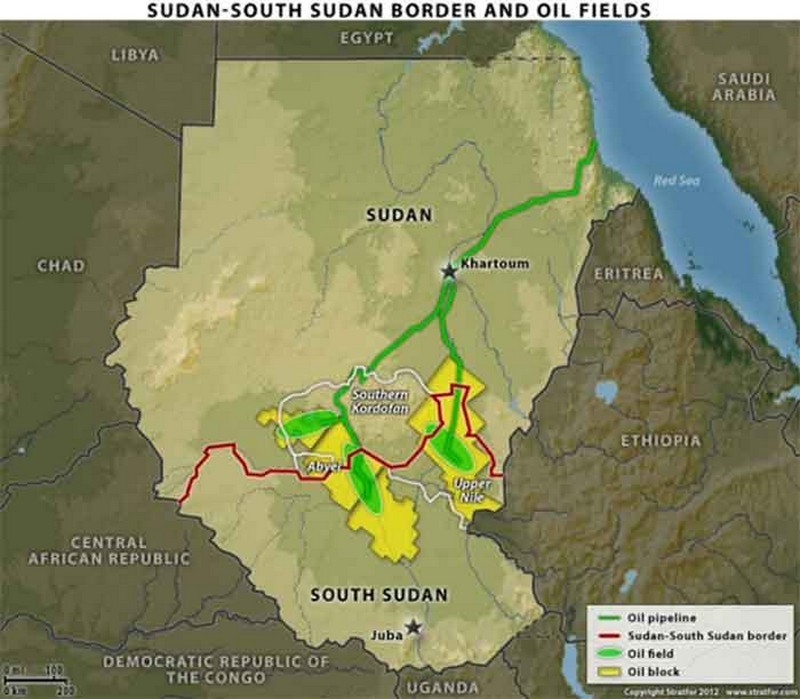
Sudan has long been a prize valued by many more powerful nations. In an immensely abbreviated summary, Sudan was ruled by the British in 1898-1953, then underwent a series of regimes and civil wars until 1972. The Addis Ababa agreement in that year ended civilian-military conflict and ushered in multinational corporate and IMF funded development of wheat, sugar, cotton, and infrastructure. But corruption and inefficiency brought only financial crises and led to a long period of Islamist rule. In 2011, the long-standing brutal conflict between the mostly Muslim Arab north and non-Arab Christian and oil-rich south was resolved by the establishment of the independent country of South Sudan.

Today, many world powers have interests in Sudan. Most of the 156,000 daily barrels of oil produced come from South Sudan, of which some is refined in Khartoum in the north and much of the rest travels by pipeline through Sudan to ports where China is the largest customer. China also has large investments in infrastructure and sees Sudan’s Red Sea ports as important to its Belt and Road Initiative. Russia has a naval base on the coast, which is supported by the Sudanese military. The ruling generals wish the country to be taken off the US terrorist list, where it landed after Islamists bombed US embassies in Africa and the USS Cole. To this end, Sudan with four other Arab nations recently signed an accord with Israel. Egypt, along with Sudan, is anxious to stop construction of the Ethiopian Renaissance Dam, which would limit flow of the Nile into both countries, and wary of protests in Sudan which might encourage rebellion against Egyptian dictator Sisi. The EU is anxious to stop immigration from Sudan, which had been promised by Hamdok. The Sudanese military has supplied soldiers to Saudi Arabia to fight in Yemen and to the Russian backed forces of the Libyan National Army.3,4

US policy in Sudan has been in disarray as there hasn’t been an ambassador to the country since 1996 until a new one was appointed two months ago. Recently State Department officials visited Sudan just before the military coup and again before a crackdown on protestors, both of which then occurred without US concurrence. This is very unlike sixteen years ago when the US was a major player in bringing about the new state of South Sudan. Even the recent suspension of $700 million in annual aid was not enough to influence Sudan’s generals this time.9  Indeed, as in many areas, US influence is fading in comparison to China, Russia and other regional players.

The Long History of Opposition

Years before independence from Britain, the anti-colonial Sudanese Movement for National Liberation (SMNL) was formed by students and workers, along with nationalist and Islamist parties. The SMNL was the forerunner of the Sudanese Communist Party (SCP), which was founded in 1946, initially instigated by Egyptian and British communists. The party organized students, farmers, unions and for women’s rights, literacy and secularism.The SCP attempted to overthrow the government of Nimeri in 1971, after which it was destroyed by repression and executions, but it re-emerged from 1985-9. In 1989 the SCP participated in elections calling for a secular democratic constitution and repeal of Islamic law, and under the al-Bashir regime in 2007, the SCP joined the national Consensus Forces, a coalition of anti-government parties.

The SCP also began building resistance committees in neighborhoods, as well as seventeen unions and the Sudanese Professionals Association (SPA).1,5,6  The resistance committees have used strikes, civil disobedience and barricades to oppose the new military regime, which in November alone killed at least 42 civilians, injured over 500, imprisoned hundreds, and even seized hospitals.1 The demands of the uprisings are for rejection of military rule and a transitional government led by civilians leading towards democracy a civil state.7  According to an interview  with SCP leader Dr. Fathi al-Fadl, published in January in the Turkish e-zine Kaldıraç, the SCP is trying to establish a national democratic front around which it can build a broad alliance, and the main weapon is the intensification of the mass peaceful protest actions.2

A Winning Strategy?

The valor of the lengthy resistance in Sudan, in which the SCP has played a large role for decades, cannot be denied. Despite mass killings and detentions by the military, the movement has remained large and militant. However, what appears to be the main weakness of Sudanese communists is not to call for communism. Like so many parties that were under the direction of the USSR after the 1930s, the main goal was opposition to imperialist powers that were enemies of the Soviets and growth of influence through building coalitions with

local liberal parties. Although there was apparently relatively little direct contact between Sudan and Moscow, the Sudanese were heavily influenced by Egyptian communists, who certainly followed the Soviet line. Despite having a strong base amongst workers, moreso than was the case in Egypt, there is not a call by the SCP for workers’ power and a communist economy. Before the latest military coup, in August, 2021, the SCP met with Prime Minister Hamdok and made many agreements, including protecting landowners’ rights.8

As in the many armed national independence struggles of the last century, from the Congo to South Africa, and the election of many “socialists” such as Allende in Chile or Lula in Brazil, if the goal is not to establish a society run by the working class and the method does not include an armed body of workers who aim to control the state, the forces of capitalism will continue to rule. Such communist revolutions have only been made in the USSR and China, which despite many early successes, have devolved back to capitalism. So we cannot say it is an easy process, but instead of giving up the goal, we must analyze their mistakes and attempt to come closer to our goal of an egalitarian society which prioritizes the quality of life of all workers. Otherwise we will not only suffer cruel and impoverished life, as do most Sudanese, but face the ever worsening consequences of fascism, climate change and war which may obliterate workers worldwide.

Update

Currently the fighting is between the regular army, led by General al-Burhan, and the Rapid support forces, led by Lt Gen Hamdan., since power was never handed over to a civilian government as promised. Hamdan, who now has the best equipped forces, has been making money in business deals with the United Arab Emirates, including shipping them Sudanese gold. He also has a contract to mine gold for Russia’s Wagner group since the start of the war in Ukraine and is now receiving weapons from Russia as well as from Libyan warlord Khalifa Hifter. Egypt, whose military is highly funded by the US, opposes the Hamdan militia that surrounded one if its bases near the border, and is siding with the regular military (NYT 4/23/03). According to one source, Burhan is also supported by the CIA, having given heavy support to a US supported coup attempt against Ethiopia (https://countercurrents.org/2023/04/bombing-khartoum-cias-latest-attempted-coup-in-africa/).

Meanwhile, the SCP is now the leading member of a coalition called the Forces for Radical Change (FRC), which disavows any connections with military leaders. “The victims of the continuing violence and counter-violence are the people who have been striving for the continuation of the revolution and achieving full democratic civil power…. The way back to normal life begins with an immediate and comprehensive ceasefire, the departure of armies and militias from the cities and villages and keeping them far from citizens’ gatherings in towns and rural areas.” (https://morningstaronline.co.uk/article/w/sudanese-communists-call-for-immediate-ceasefire-bitter-power-struggle-leaves-least-50) There still does not appear to be a movement that sees the necessity to struggle to seize power in the name of the working class.

Ellen Isaacs is a physician, anti-racist and anti-capitalist activist, and co-editor of multiracialunity.org.

24 April 2023

Source: countercurrents.org

Time Mustn’t Be Allowed to Run out on Julian Assange

By Kim Petersen

Review of Guilty of Journalism by Kevin Gosztola

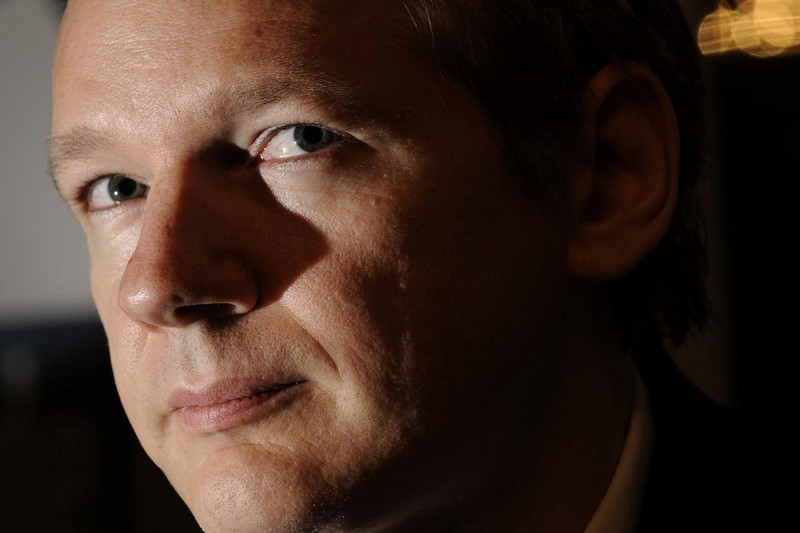
Despite whatever charges Julian Assange may be accused of, it is well known that the WikiLeaks publisher was targeted for exposing the war crimes of the US government. In an upside-down Bizarro World, the screws are being ever so gradually tightened on Assange by the war criminals and their criminal accomplices. It is, in fact, a slow-motion assassination being played out before the open and closed eyes of the world.

— “The Slow-motion Assassination of Julian Assange

The above was written in 2020. Little has changed. In the foreword to Guilty of Journalism by Kevin Gosztola, American journalist Abby Martin writes, “Assange was only publishing the leaks. He never committed any crime. He only published evidence of the crimes.” (p xiii)

Assange’s “crime” is exposing the crimes of the US; especially revelatory was the Collateral Murder video where US troops in an Apache helicopter gleefully gunned dead 12 civilians on a street in New Baghdad. The murderers remain scot-free. For exposing war crimes, Assange and Chelsea Manning have been punished.

Kevin Gosztola who has followed much of the judicial proceedings against Manning and Assange presents his knowledge of the cases, in particular that of Assange, in Guilty of Journalism: The Political Case against Julian Assange (Seven Stories Press, 2023).

What is readily apparent is that the releases by WikiLeaks triggered a tsunamic vendetta. This has resulted in a brazen miscarriage of justice manipulated by a red-faced United States with the connivance of allied nation states such as Australia; Sweden; Britain; after a change of presidents, Ecuador; and the bystander nations of the world.

The US seeks to try Assange under the Espionage Act, a relic from WWI designed to control the release of information (see chapter 4). Yet, such a prosecution of Assange is hampered by the US Constitution, as the First Amendment protects the freedom of the press. Prosecuting a publisher/journalist would entail grave implications for journalism and publishing in the US.

The book’s title, Guilty of Journalism, is apt. It speaks to the legal perturbations to eliminate a perceived threat to the US’s full-spectrum hegemony. For a hegemon to operate unhindered, it must control the medium and its messages. Thus, the US asserts that Assange is not a journalist, this despite Assange being recognized as a journalist by the US-based Committee to Protect Journalists, being a member of the International Federation of Journalists, being published in several media around the world, and having been awarded several prizes for his journalism. It is akin to blithely stating someone is not a lawyer despite having a law degree from a recognized law school, having passed the bar exam, having worked as a lawyer for several years, and having been celebrated for her accomplishments as a lawyer. It is patently a non sequitur to reject evidence purely on someone’s say-so.

The US government prefers to keep its sordid business in some dark corner under wraps. Assange and WikiLeaks, however, cast a light on the inner workings of governments. Many people hold a principle that states the people have a right to know what their governments are doing in their name.

The US persists in its claim that Assange is not a journalist. He is depicted variously as an anarchist or a hacker posing as a journalist. Ponder this: if a teacher hacks computer systems at home in the evening, is she no longer a teacher? Nonetheless, WikiLeaks publishes journalism and the monopoly media (Gosztola uses the term “prestige media” in his book) has even indulged in publication of the WikiLeaks‘s releases.

The US also holds that Assange is guilty of “aiding the enemy” and asserts that the information published by WikiLeaks would be used by enemies such as Al Qaeda.

Gosztola quotes Assange’s civilian defense attorney David Coombs: “No case has ever been prosecuted under this type of theory, that an individual by nature of giving information to a journalistic organization would then be subject to [aiding the enemy].” (p 51)

There seems to be a causal link missing in the chain of the US legal strategy: if the US personnel had not been committing undeniable war crimes, then there would have been no story to be published about it in the media. No war crimes, no story, then no need to fear alleged succor being provided to an enemy. A question then: who is primarily culpable in this chain of events?

Harvard professor Yochai Benkler found that there was no evidence “that any enemy had, in fact, used WikiLeaks.” (p 57) Nonetheless, Gosztola noted that judge Colleen Kollar-Kotelly had eased the burden of proof for prosecutors with her ruling that they need not show that information could potentially damage the US. (p 66)

Gosztola writes, “It does not matter who received the information. It does not matter if damage occurred as a result of the disclosure or publication of the information. It is all the same to DOJ prosecutors.” (p 79)

WikiLeaks was branded a “non-state hostile intelligence service” by then director of the Central Intelligence Agency Mike Pompeo. (p 87) One ought to consider the nature of the organization previously headed by Pompeo vis-à-vis WikiLeaks. Douglas Valentine wrote a book that lays out what the CIA is: The CIA as Organized Crime: How Illegal Operations Corrupt America and the World. Sounds an awful lot like the pot calling the kettle black; except WikiLeaks is no kettle. “WikiLeaks has a perfect in document authentication and resistance to all censorship attempts.”

Besides, some might consider any claims by a character such as Pompeo to be rich given that he once chuckled: “I was the CIA director. We lied, we cheated, we stole.”

A question: “Who to Believe: The CIA and Corporate Media or WikiLeaks?

The criminality of the US government is such that its intelligence services considered assassinating Assange; spied on him while in asylum; relied on the testimony of a sociopath — Sigudur Ingi Thordarson, known for engaging in sex with underage boys — to fraudulently smear Assange; subpoenaed witnesses to appear before the fishing expeditions of a grand jury (for which Chelsea Manning was again imprisoned and fined daily for refusing to testify). They even deprived Assange of his razor so that when he was hauled out of the Ecuadorian embassy he appeared with an unkempt beard. (p 107)

If only stolen razors were the extent of the criminality of the US authorities, but Gosztola brings to light additional crimes in chapter 9: “Retaliation for Exposing Torture, Rendition, and War Crimes.” Guilty of Journalism seamlessly segues into the next chapter detailing what happens to those brave souls who expose the rampant criminality of the state. The US prison system, to be generous, is sorely lacking in decency for the humanity, health, and sanity of those housed within its walls.

Gosztola examines the behavior of the moneyed media and its lies of omission and commission. Assange and WikiLeaks were heavily criticized for putting lives at risk, but: “Notably, WikiLeaks never called attention to any names in the war logs, but prestige media did so, as they helped the US government stir panic, which distracted from the contents of the historical records.” (p 206)

Media allegations lacked evidence, and later the entire fiasco would morph into the prestige media’s discredited Russiagate conspiracy. (ch 13)

Currently, Assange finds himself still incarcerated in the maximum security Belmarsh Prison in southeast London awaiting the outcome of an appeal against extradition to the US, where the deck will be stacked against him should he be sent there. In the US, Assange will be charged under the Espionage Act which, in actuality, is a contrived criminal indictment for exposing criminal acts.

Assange is one man, one man who has had the might of the American government and the supporting machinery of several nation states, who feel aggrieved and antagonized by the media exposures in WikiLeaks, arrayed against him. Assange is not alone. He is beloved by family and friends; he is backed by colleagues in WikiLeaks; he is vital to the readers of WikiLeaks missives; and he is supported by many independent media, attested to by Guilty of Journalism.

The irony and perversity of the vicious web in which Assange is entangled is laid bare in Guilty of Journalism. People who care about access to information, who want their governments to honor their constitutions and operate transparently, and who care about justice ought to read Guilty of Journalism, become further informed, and add their voices to justice for Julian Assange and to all the others who have sacrificed themselves to bring to light the corruption and crimes of governmental nexuses and the complicit prestige media.

Kim Petersen is an independent writer.

22 April 2023

Source: countercurrents.org

Leaks Reveal Reality Behind U.S. Propaganda in Ukraine

By Medea Benjamin and Nicolas J. S. Davies

The U.S. corporate media’s first response to the leaking of secret documents about the war in Ukraine was to throw some mud in the water, declare “nothing to see here,” and cover it as a depoliticized crime story about a 21-year-old Air National Guardsman who published secret documents to impress his friends. President Biden dismissed the leaks as revealing nothing of “great consequence.”

What these documents reveal, however, is that the war is going worse for Ukraine than our political leaders have admitted to us, while going badly for Russia too, so that neither side is likely to break the stalemate this year, and this will lead to “a protracted war beyond 2023,” as one of the documents says.

The publication of these assessments should lead to renewed calls for our government to level with the public about what it realistically hopes to achieve by prolonging the bloodshed, and why it continues to reject the resumption of the promising peace negotiations it blocked in April 2022.

We believe that blocking those talks was a dreadful mistake, in which the Biden administration capitulated to the warmongering, since-disgraced U.K. Prime Minister Boris Johnson, and that current U.S. policy is compounding that mistake at the cost of tens of thousands more Ukrainian lives and the destruction of even more of their country.

In most wars, while the warring parties strenuously suppress the reporting of civilian casualties for which they are responsible, professional militaries generally treat accurate reporting of their own military casualties as a basic responsibility. But in the virulent propaganda surrounding the war in Ukraine, all sides have treated military casualty figures as fair game, systematically exaggerating enemy casualties and understating their own.

Publicly available U.S. estimates have supported the idea that many more Russians are being killed than Ukrainians, deliberately skewing public perceptions to support the notion that Ukraine can somehow win the war, as long as we just keep sending more weapons.

The leaked documents provide internal U.S. military intelligence assessments of casualties on both sides. But different documents, and different copies of the documents circulating online, show conflicting numbers, so the propaganda war rages on despite the leak.

The most detailed assessment of attrition rates of troops says explicitly that U.S. military intelligence has “low confidence” in the attrition rates it cites. It attributes that partly to “potential bias” in Ukraine’s information sharing, and notes that casualty assessments “fluctuate according to the source.”

So, despite denials by the Pentagon, a document that shows a higher death toll on the Ukrainian side may be correct, since it has been widely reported that Russia has been firing several times the number of artillery shells as Ukraine, in a bloody war of attrition in which artillery appears to be the main instrument of death. Altogether, some of the documents estimate a total death toll on both sides approaching 100,000 and total casualties, killed and wounded, of up to 350,000.

Another document reveals that, after using up the stocks sent by NATO countries, Ukraine is running out of missiles for the S-300 and BUK systems that make up 89% of its air defenses. By May or June, Ukraine will therefore be vulnerable, for the first time, to the full strength of the Russian air force, which has until now been limited mainly to long-range missile strikes and drone attacks.

Recent Western arms shipments have been justified to the public by predictions that Ukraine will soon be able to launch new counter-offensives to take back territory from Russia. Twelve brigades, or up to 60,000 troops, were assembled to train on newly delivered Western tanks for this “spring offensive,” with three brigades in Ukraine and nine more in Poland, Romania and Slovenia.

But a leaked document from the end of February reveals that the nine brigades being equipped and trained abroad had less than half their equipment and, on average, were only 15% trained. Meanwhile, Ukraine faced a stark choice to either send reinforcements to Bakhmut or withdraw from the town entirely, and it chose to sacrifice some of its “spring offensive” forces to prevent the imminent fall of Bakhmut.

Ever since the U.S. and NATO started training Ukrainian forces to fight in Donbas in 2015, and while it has been training them in other countries since the Russian invasion, NATO has provided six-month training courses to bring Ukraine’s forces up to basic NATO standards. On this basis, it appears that many of the forces being assembled for the “spring offensive” would not be fully trained and equipped before July or August.

But another document says the offensive will begin around April 30th, meaning that many troops may be thrown into combat less than fully trained, by NATO standards, even as they have to contend with more severe shortages of ammunition and a whole new scale of Russian airstrikes. The incredibly bloody fighting that has already decimated Ukrainian forces will surely be even more brutal than before.

The leaked documents conclude that “enduring Ukrainian deficiencies in training and munitions supplies probably will strain progress and exacerbate casualties during the offensive,” and that the most likely outcome remains only modest territorial gains.

The documents also reveal serious deficiencies on the Russian side, deficiencies revealed by the failure of their winter offensive to take much ground. The fighting in Bakhmut has raged on for months, leaving thousands of fallen soldiers on both sides and a burned out city still not 100% controlled by Russia.

The inability of either side to decisively defeat the other in the ruins of Bakhmut and other front-line towns in Donbas is why one of the most important documents predicted that the war was locked in a “grinding campaign of attrition” and was “likely heading toward a stalemate.”

Adding to the concerns about where this conflict is headed is the revelation in the leaked documents about the presence of 97 special forces from NATO countries, including from the U.K. and the U.S. This is in addition to previous reports about the presence of CIA personnel, trainers and Pentagon contractors, and the unexplained deployment of 20,000 troops from the 82nd and 101st Airborne Brigades near the border between Poland and Ukraine.

Worried about the ever-increasing direct U.S. military involvement, Republican Congressman Matt Gaetz has introduced a Privileged Resolution of Inquiry to force President Biden to notify the House of the exact number of U.S. military personnel inside Ukraine and precise U.S. plans to assist Ukraine militarily.

We can’t help wondering what President Biden’s plan could be, or if he even has one. But it turns out that we’re not alone. In what amounts to a second leak that the corporate media have studiously ignored, U.S. intelligence sources have told veteran investigative reporter Seymour Hersh that they are asking the same questions, and they describe a “total breakdown” between the White House and the U.S. intelligence community.

Hersh’s sources describe a pattern that echoes the use of fabricated and unvetted intelligence to justify U.S. aggression against Iraq in 2003, in which Secretary of State Antony Blinken and National Security Advisor Sullivan are by-passing regular intelligence analysis and procedures and running the Ukraine War as their own private fiefdom. They reportedly smear all criticism of President Zelenskyy as “pro-Putin,” and leave U.S. intelligence agencies out in the cold trying to understand a policy that makes no sense to them.

What U.S. intelligence officials know, but the White House is doggedly ignoring, is that, as in Afghanistan and Iraq, top Ukrainian officials running this endemically corrupt country are making fortunes skimming money from the over $100 billion in aid and weapons that America has sent them.

According to Hersh’s report, the CIA assesses that Ukrainian officials, including President Zelenskyy, have embezzled $400 million from money the United States sent Ukraine to buy diesel fuel for its war effort, in a scheme that involves buying cheap, discounted fuel from Russia. Meanwhile, Hersh says, Ukrainian government ministries literally compete with each other to sell weapons paid for by U.S. taxpayers to private arms dealers in Poland, the Czech Republic and around the world.

Hersh writes that, in January 2023, after the CIA heard from Ukrainian generals that they were angry with Zelenskyy for taking a larger share of the rake-off from these schemes than his generals, CIA Director William Burns went to Kyiv to meet with him. Burns allegedly told Zelenskyy he was taking too much of the “skim money,” and handed him a list of 35 generals and senior officials the CIA knew were involved in this corrupt scheme.

Zelenskyy fired about ten of those officials, but failed to alter his own behavior. Hersh’s sources tell him that the White House’s lack of interest in doing anything about these goings-on is a major factor in the breakdown of trust between the White House and the intelligence community.

First-hand reporting from inside Ukraine by New Cold War has described the same systematic pyramid of corruption as Hersh. A member of parliament, formerly in Zelenskyy’s party, told New Cold War that Zelenskyy and other officials skimmed 170 million euros from money that was supposed to pay for Bulgarian artillery shells.

The corruption reportedly extends to bribes to avoid conscription. The Open Ukraine Telegram channel was told by a military recruitment office that it could get the son of one of its writers released from the front line in Bakhmut and sent out of the country for $32,000.

As has happened in Vietnam, Iraq, Afghanistan and all the wars the United States has been involved in for many decades, the longer the war goes on, the more the web of corruption, lies and distortions unravels.

The torpedoing of peace talks, the Nord Stream sabotage, the hiding of corruption, the politicization of casualty figures, and the suppressed history of broken promises and prescient warnings about the danger of NATO expansion are all examples of how our leaders have distorted the truth to shore up U.S. public support for perpetuating an unwinnable war that is killing a generation of young Ukrainians.

These leaks and investigative reports are not the first, nor will they be the last, to shine a light through the veil of propaganda that permits these wars to destroy young people’s lives in faraway places, so that oligarchs in Russia, Ukraine and the United States can amass wealth and power.

The only way this will stop is if more and more people get active in opposing those companies and individuals that profit from war–who Pope Francis calls the Merchants of Death–and boot out the politicians who do their bidding, before they make an even more fatal misstep and start a nuclear war.

Medea Benjamin and Nicolas J. S. Davies are the authors of War in Ukraine: Making Sense of a Senseless Conflict, published by OR Books in November 2022.

20 April 2023

Source: countercurrents.org

U.S. Dollar Losing Reserve Status At Stunning Pace, Says Eurizon CEO

By Countercurrents Collective

Western sanctions against Russia have accelerated the move away from the U.S. dollar worldwide, Stephen Jen, the CEO of London-based asset management company Eurizon, warned on Tuesday.

The dollar’s share in global reserves fell ten times faster last year than over the past two decades, Jen said, as cited by Bloomberg. The process began as some countries started to look for alternatives after seeing Russia’s assets frozen abroad and the country cut off from the global financial messaging system known as SWIFT, according to Jen.

Adjusting for “wild” exchange rate fluctuations last year, the U.S. dollar has lost roughly 11% of its market share since 2016 and double that amount since 2008, Jen and his Eurizon colleague Joana Freire wrote in a note.

“The dollar suffered a stunning collapse in 2022 its market share as a reserve currency, presumably due to its muscular use of sanctions,” the note reads. “Exceptional actions taken by the U.S. and its allies against Russia have startled large reserve-holding countries,” most of which are emerging economies, Jen and Freire explained.

The greenback now represents about 58% of total global reserves, down from 73% in 2001 when it was the “indisputable hegemonic reserve” the experts said.

China and India are working to use their own currencies to settle international trade, while Russia started to accept payments for its exports from a number of countries in rubles and Chinese yuan.

Earlier this week, Brazilian President Luiz Inacio Lula da Silva called on developing nations to move away from the U.S. dollar in favor of their own currencies.

Following Lula’s comments, U.S. Secretary of the Treasury Janet Yellen admitted that the role of the U.S. dollar as the world reserve currency could diminish due to Washington using its leverage over the global financial system to pursue its geopolitical goals through sanctions.

Biden Is Willing To Damage U.S. Economy To Counter China, Says Yellen

Media reports including a report by Barron’s (April 20, 2023,  https://www.barrons.com/articles/yellen-china-speech-xi-biden-4cde3450?siteid=yhoof2)  said:

U.S. President Joe Biden will stop at nothing to protect the U.S. against security threats posed by China, even if the actions he must take damage his own nation’s economy, U.S. Treasury Secretary Janet Yellen has claimed.

“National security is of paramount importance in our relationship with China,” Yellen said on Wednesday in a speech in Washington. She gave the example of blocking China from obtaining certain technologies, adding, “We will not compromise on those concerns, even when they force trade-offs with our economic interests.”

Yellen accused China of “unfair” economic practices and of “taking a more confrontational posture” toward the U.S. and its allies in recent years. Washington has a “broad set of tools” to deal with security threats from China, she added, such as export controls and sanctions against entities that provide support to the People’s Liberation Army (PLA).

“The Treasury Department has sanctions authorities to address threats related to cybersecurity and China’s military-civil fusion,” Yellen said. “We also carefully review foreign investments in the United States for national security risks and take necessary actions to address any such risks. And we are considering a program to restrict certain U.S. outbound investments in specific sensitive technologies with significant national security implications.”

The Biden administration has already taken steps to block Chinese companies from securing advanced semiconductor technologies, such as restricting exports of chip-making equipment. Yellen insisted that Washington doesn’t take such actions to gain an economic advantage or to stifle China’s growth and modernization.

Yellen also scolded China for alleged human rights abuses and alleged “no limits” support for Russia amid the Ukraine crisis. She warned that consequences would be severe if China provided material support or helped Russia evade sanctions, and she added that the U.S. would use its “tools” to deter human rights abuses.

Beijing has balked at U.S. accusations, suggesting that Washington should “make more efforts in solving its own human rights problems.” Chinese leaders also have faulted Washington for a “Cold War mentality” in which Beijing is demonized as a security threat as Biden’s administration tries to contain its economic progress.

“Containment and suppression will not make America great again, nor will it stop China from moving towards national rejuvenation,” Chinese Foreign Minister Qin Gang told reporters last month.

Yellen admitted earlier this week that Washington’s use of its leverage over the global financial system to sanction other countries could diminish the role of the US dollar as the world’s reserve currency. Asked about “weaponization” of the U.S. currency, she told CNN that such tactics “could undermine the hegemony of the dollar.”

Treasury Secretary Janet Yellen is set to confirm what investors have increasingly feared: The U.S. is viewing its relationship with China through a national security lens — and that may come with some economic costs.

Yellen’s speech takes a hawkish tone.

Yellen’s comments were delivered in a set-piece speech on U.S.-China economic relations at Johns Hopkins University’s School of Advanced International Studies.

Yellen did manage to strike a delicate balance between national security and economic concerns, hitting all the familiar talking points from defending U.S. national interests and supporting human rights, to an openness for greater economic cooperation. She reiterated the primacy of national security in economic affairs, and stated that proposals to limit specific U.S. foreign investment in China were being considered.

The high point of her speech to potentially reignite better relations came when she said the goal was “not to use these tools to gain competitive economic advantage.”

Yellen’s speech also lacked any concrete new initiatives. She had no new vision of a future in which countries with such wildly divergent worldviews could find a way toward compromise. And her emphasis on limiting only a narrow range of economic activity on national security grounds, chip technology for example, is unlikely to be viewed as less offensive than restricting a range of trade and investment.

Yellen said she plans to travel to China “at the appropriate time,” without offering details.

U.S. Debt Default A Matter Of Time, Says Musk

Tesla and Twitter chief executive Elon Musk, who has been calling for U.S. government spending reductions, said on Wednesday that a debt default was just a question of time.

“Given federal expenditure, it is a matter of when, not if, we default,” Musk wrote responding to a Twitter post by the White House that the Republican plan may be to default on U.S. debt.

Earlier this week, US House of Representatives Speaker Kevin McCarthy warned in a speech at the New York Stock Exchange that the U.S. debt is unsustainable and poses a threat to the nation. He said that Republicans would not allow the country to default on its debt, taking a jab at President Biden for refusing to negotiate on cost-cutting measures.

McCarthy added that the House of Representatives would soon vote on a bill to raise the debt ceiling through 2023.

U.S. President Joe Biden urged the Republicans to first release their proposed budget, with the White House stressing it would not negotiate the debt ceiling until the GOP releases its counterproposal to the administration’s budget plan, which was put out in March.

In January, the U.S. Treasury Department notified Congress of the start of “extraordinary measures” until June 5 in order to continue paying the government’s obligations as the US has reached its $31.4 trillion debt limit. Treasury Secretary Janet Yellen then called on lawmakers to “act promptly” to increase borrowing limits in order to avoid a default.

EU Done With Russia Sanctions, Say Officials

The European Union has exhausted its options for further economic restrictions against Russia, the Financial Times (FT) reported on Thursday, citing EU officials.

The bloc has so far adopted ten rounds of sanctions in response to the Ukraine conflict and is currently working on an eleventh package of punitive measures against Moscow. Meetings between the European Commission and member state officials to informally discuss new actions will start on Friday, FT wrote.

Officials working on further sanctions told the outlet that they are likely to be limited to expanding the list of individuals subject to asset freezes and travel bans, as well as steps to scale up existing measures by closing loopholes.

Most officials reportedly admitted that those parts of the Russian economy that were left unsanctioned are parts that one or more EU member states “cannot live without,” and thus measures targeting them would be vetoed.

“We are done,” one of the officials told FT, adding: “If we do more sanctions, there will be more exemptions than measures.”

New restrictions could reportedly target Russia’s nuclear fuel and services exports, but those would be opposed by some member-states, such as France, Hungary, and others.

Sweeping EU sanctions have targeted various sectors of the Russian economy as well as individuals and entities.

According to FT, almost 1,500 people and more than 200 entities are currently subject to asset freezes and travel bans. The report indicated that the bloc’s restrictive measures have banned bilateral trade flows worth more than €135 billion ($148 billion), including energy imports from Russia, as well as exports of technology, machinery, and electronic goods. Some €21.5 billion worth of assets belonging to sanctioned individuals and entities has been frozen, alongside €300 billion of Russian central bank reserves.

Many economists and politicians, however, have argued that the embargos harm the West more than Moscow.

Hungarian President Viktor Orban has repeatedly called for “the failed policy of Brussels” to be changed, noting that the sanctions “did not fulfill the hopes were pinned on them,” while Europe is “slowly bleeding.”

Meanwhile, Russian President Vladimir Putin has likened the bloc’s attempts to cut itself off from Russian fossil fuels to economic “suicide.”

Countercurrents is answerable only to our readers. Support honest journalism because we have no PLANET B.

21 April 2023

Source: countercurrents.org