Just International

The Spark

By Jafar M Ramini

Maybe it’s a quirk in my character that in times of calamity I always look for the silver lining. It doesn’t often appear, but in this darkest hour of despair, when nothing seemed possible and the collapse of hope was profound, I found it. The spark.

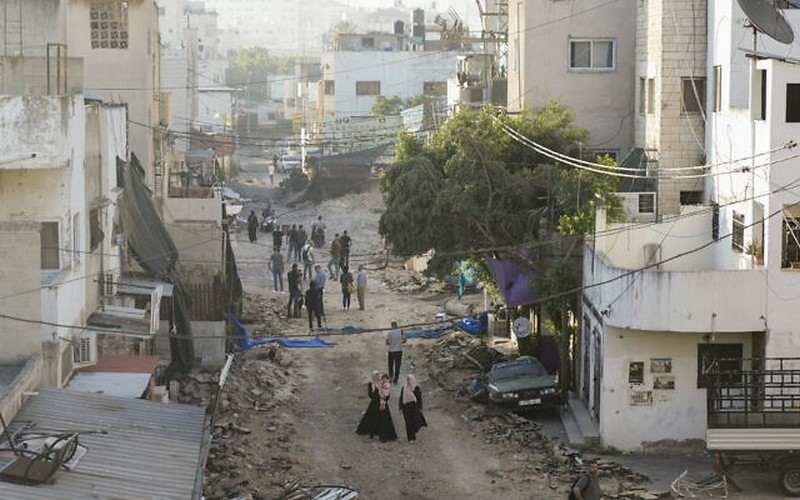
I found it growing in the refugee camps of my home town of Jenin, in Tulkarim, in Jericho, Beit Ummer, Hebron, in Nablus and even Jerusalem.  Brave, angry, determined young men, who were born into despair, whose only experience of life has been under the boot of the Israeli occupation and repression, have had enough. Their so-called leaders, the shameful Palestinian Authority and the equally damaged Hamas are being ignored. They call themselves The Lions’ Den and these defiant young lions are taking matters into their own hands. They are fighting back against all odds.

Yes, many will die. Even their brothers and sisters, the smallest and the oldest will not be safe. Many will suffer the savage brutality of Israeli ‘justice’ and Israeli prisons. Their homes will be demolished, their families will be humiliated, their whole village could suffer collective punishment.  But others will go on and they are making a difference. “We are alive,” they’re saying, “ We are human beings,” and Palestine, almost broken, almost on her knees is responding. Cry Freedom! It’s time.

Palestinian mothers, who cover themselves in sackcloth and ashes, but who continue to pledge their children to the cause, have been vilified for embracing death.  Believe me, if we could see life, touch it, believe it might someday be ours, we would embrace it with all our hearts. But when the mighty American war machine continues to back every Israeli move, and pay billions of dollars for the privilege, what chance have we got unless we free ourselves from the fear of death?

As I am writing these words, Mr Anthony Blinken, the US Secretary of State, was paying homage, as usual,  to AIPAC in Washington when he pledged his country’s unwavering support for the security and supremacy of Israel.  He then went on, as usual, to try to flog the long deceased ‘Two-State Solution’.  Why does Mr Blinken continue to ignore the facts on the ground in Palestine, and instead acknowledge the reality of Israeli expansionism that leaves no room for any Palestinian State in any shape or form to take place? Are Mr Blinken, and his government, unaware that the current Prime Minister of Israel, Mr Benjamin Netanyahu, has said on many occasions that there will never be a sovereign Palestinian State while he is Prime Minister? Most recently according to  the New York Times translation of an interview posted to website NRG in April, 2019.

‘When the reporter asked if that meant he would not establish a Palestinian state were he to win re-election, Netanyahu replied, “Correct.”

Do they know, or don’t they? The obvious answer is, “yes, of course,” but they choose to ignore it.

After fifty-six years of a brutal, Apartheid system in Palestine and thirty years of futile, so-called ‘peace processes’, what other options are left for those young, desperate Palestinians to take, other than to carry a gun?

Today is Friday and the various groupings of the Young Lions have called on every able-bodied Palestinian to converge on Al-Aqsa Mosque in Jerusalem to defend it against continued Israeli encroachment and attacks.

I’m holding my breath.

Jafar M Ramini is a Palestinian writer and political analyst.

9 June 2023

Source: countercurrents.org

Neoliberalism, Geopolitics and Ideology: The Taming of Giorgia Meloni

By Dr Ramzy Baroud

Europe keeps reminding us that geopolitical interests trump ideology.

European politics is the prime example of how states and political parties are willing to ditch their very ideological foundations to hold onto power, even if briefly.

The unmistakable political shift of attitude in Italian Prime Minister Giorgia Meloni and her Fratelli d’Italia party is the latest evidence that European politicians use ideology merely as a vehicle. Once in power, they are governed by the same neoliberal policies that control the rest of Europe.

This assertion applies equally to the Right and the Left.

For example, in 2015, Greece’s Radical Left-Progressive Alliance shocked Europe and the world by winning nearly half of the parliament’s seats. It was a success story that invigorated the Left everywhere.

For years, Alexis Tsipras, the leader of the once small radical left party, Syriza, has raged against the neoliberal policies of Europe, blaming it for much of the financial crisis in 2008.

Once in power, however, Tsipras’s leftist ideology began shifting, whether by choice or under pressure. At the end of his term, in 2019, the new icon of the European Left contributed to the very undoing of any leftist resurgence in Europe, as the Greek economy became hostage to powerful European governments and multinational corporations.

That ‘pragmatism’ which tamed Syriza, turning it into yet another mainstream European political party, is at work in Italy today. The irony is that Meloni’s Fratelli d’Italia – ‘Brothers of Italy’ – has occupied the seat of power in Rome from the very extreme political Right, not Left.

Meloni became Italy’s Prime Minister in October 2022. Her party has won the largest share of seats in parliament, but could only rule through a coalition comprising equally or more extreme right-wing parties – Silvio Berlusconi’s Forza Italia, and Matteo Salvini’s Lega.

Though far-right political tendencies have been increasing throughout much of Europe recently, Meloni’s government was the starkest and most alarming manifestation of this phenomenon.

Soon after forming her government, Meloni’s rhetoric intensified, suggesting a serious departure from mainstream European political discourse.  This was exemplified in a fiery speech by Meloni in November, where she shockingly attacked France’s exploitation of African resources, peoples and financial institutions. Her words were blistering to the extent that many in the Left nodded in agreement.

Posing as the alternative to France’s unfair trade and economic practices, Meloni flew to Algeria in January to sign a landmark gas deal.

As the US-led economic war on China began intensifying in recent months, Italy found itself in a difficult position, one that cannot be resolved through hardened far-right ideology or angry rhetoric.

It must now choose between the US and China.

Writing in the Italian daily newspaper, La Stampa, on May 3, Italy’s former NATO ambassador, Stefano Stefanini declared that Rome’s “international balancing act is over” and “there are no safety nets”.

Since Italy signed a Memorandum of Understanding to join China’s massive maritime economic ‘Belt and Road Initiative,’ in 2019, the Italian government has come under attack.

Neither Washington nor Brussels was happy that Italy had joined what they chose to understand to be a Chinese push to dominate the global economy.

Although many other countries had already joined the lucrative Chinese deal, the inclusion of Italy set a dangerous precedent from the West’s perspective. Italy is a member of the EU, NATO, the G7 and is the third-largest economy in Europe. It was the first major Western power to join BRI.

Though the MoU is not a politically binding document, granting China access to Italian ports is both a symbolic and strategic victory for Beijing over its US-western rivals.

On May 28, however, Meloni told Il Messaggero daily newspaper that her country is thinking of abandoning its partnership with China.

“Our assessment is very delicate and touches upon many interests,” she said.

But are these ‘interests’ Italian ones?

Even before joining BRI, Italy raked in massive profits from its growing trade relations with the Chinese. Between 2001 and 2019, total trade between the two countries jumped from $9.6 billion to $49.9 billion.

These numbers are critical for the Italian economy, especially as it continues to teeter on the precipice of inflation, stagnation and dwindling wages.

The growth rate has slowed down in recent years, but that happened mostly as a result of a global recession and rising energy costs resulting from the COVID pandemic and the Russia-Ukraine war, respectively.

Much can also be said about Italy’s mismanagement of its own economy, corruption and the EU’s failure to stimulate European-wide growth.

Certainly, Meloni had threatened to leave BRI even before she became prime minister. But her rhetoric, then, was motivated by her political program that breached full Italian independence from any foreign influence.

However, her views on the matter now are motivated by something else entirely: the fear of repercussions by Western allies, mainly the United States. Following their G7 summit in Hiroshima, Japan, on May 19-21, Western leaders and Japan agreed to a strange formula, ‘de-risking’ without ‘decoupling’ from China.

To Meloni’s understanding, this means having “good relations … with Beijing, without necessarily these being part of an overall strategic design,” she told Il Messaggero.

Meloni has now become the ideal ‘pragmatist’, speaking the fine, archetypal language of a well-behaved European leader.

In Europe, ideology proves, again, to be mere rhetoric, utilized for domestic, electoral purposes. When national politics is confronted with geopolitical interests, however, neoliberal policies emerge as the winner, from Greece to Italy, to all the rest.

Dr. Ramzy Baroud is a journalist, author and the Editor of The Palestine Chronicle. He is the author of six books.

12 June 2023

Source: countercurrents.org

Deadly wildfire smoke spreads across much of northeast US

By Daniel de Vries

Toxic smoke from raging fires in Canada continued to impact large swaths of eastern North America Thursday. Overnight and into the morning, air quality deteriorated to record-shattering levels. In Lancaster, Pennsylvania, the hourly Air Quality Index peaked at 491 Thursday, far surpassing the threshold of 300 considered “hazardous.” In Philadelphia, monitors topped out at 425 overnight, while in the Washington D.C. area, levels reached 315 just in time for the morning commute.

Lower but still highly dangerous levels of smoke prevailed throughout much of the East Coast and Midwest. Officials issued air quality alerts in more than a dozen states Thursday. In New York City, air quality was rated at “very unhealthy” or “unhealthy” levels much of the day, down from the extreme conditions prevailing 24 hours before.

The experience in the New York metropolitan area, the largest in the US and home to more than 20 million people, testifies to the unprecedented intensity of the current wildfire disaster. Air quality was degraded since early in the week, with an acrid, campfire-like scent detectible as early as Monday. By Wednesday, however, what was unfolding resembled a surreal scene straight out of a science fiction film. Around 2:00 p.m., the thick, greenish-gray fog transformed into Armageddon orange. The sky darkened, and a chill set in as the smoke scattered the sun’s light and heat. The ordinarily busy Manhattan streets began emptying.

Air monitors crossed the “hazardous” threshold for the first time since the modern monitoring network was established. The scent, which took on an increasingly stinging character, was perceptible even indoors. The noxious air caused lungs to burn, triggered headaches and irritated eyes. Other, far more severe and lasting maladies, including severe illnesses and deaths, remain to be tallied. But public health researchers know such outcomes are inevitable.

Fine particulate matter found in wildfire smoke is known to cause serious impacts on the respiratory system, from triggering asthma attacks to lung cancer. The tiny particles can also penetrate the bloodstream and cause damage to vital organs, including the heart and brain. Even short-term exposure at such levels can mean lasting damage, especially in children and other vulnerable populations.

Despite the known risks, schools in New York City remained open Wednesday at the peak of the disaster. Children and teachers peered out of classroom windows onto a cloud of glowing orange. In schools across the city, educators and students reported unbearable air inundating their buildings, many of which are dilapidated structures with no ventilation system upgrades even after three years of the pandemic. As schools let out, the Air Quality Index rose above 400.

Officials across the region replicated the criminal indifference to children’s health in New York City on Wednesday. Philadelphia and Washington D.C. public schools remained open during their cities’ hazardous peaks on Thursday.

Like schools, most businesses refused to prepare for the extreme conditions enveloping the region. There was no pause in construction, package delivery, transit service or many other jobs that left workers highly exposed. The back-to-the-office push led by figures such as New York Mayor Eric Adams meant that many office workers who could just as easily work remotely were forced to commute in dangerous conditions.

In the absence of any coordinated response, residents were forced to take action on their own. On Wednesday morning, N-95 masks were already a fairly common sight in the city, though by no means ubiquitous. By the afternoon, those with extras on hand were passing them out to colleagues, friends or passersby in need.

Much of New York City shut down on its own by late afternoon. Usually bustling shopping streets in the boroughs went largely vacant. Subway cars during the evening rush were half full. Many evening events were canceled, sometimes more out of necessity than forethought. The Broadway show Prima Facie, for example, ended just 10 minutes after it began, as star Jodie Comer was overcome with breathing problems.

In cities across the region, workplaces were only shuttered when it became apparent that not enough employees were willing to risk their health to come to work.

The refusal of officials to prepare for such a disaster, despite warnings made by scientists about the increasing danger from intensifying wildfires, mirrors the inaction taken with the onset of the pandemic. Then as now, the driving policy considerations were placating the immediate economic concerns of businesses regardless of the risk to public health. Only now, Eric Adams, Kathy Hochul and Joe Biden sit in the chairs once occupied by Bill de Blasio, Andrew Cuomo and Donald Trump.

The present levels of air pollution are unlike anything the area has seen in decades, if ever. While more than 117 million people across the country, including all of the New York metro area, live in areas that do not meet federal air quality standards, the bad old days, where persistent smog and other air pollutants rose to crisis proportions, were thought to be a thing of the past. New York City has not experienced anything approaching the scale of the current disaster since before the advent of modern pollution controls.

Now, even as most high-polluting heavy industries, once located in cities like New York, have shifted overseas, climate change is driving a return to shocking levels of air pollution. The fires raging in Quebec are just the latest in a string of extreme events erupting across the globe. Population centers once spared are now confronted with new deadly threats.

With global capitalism on a trajectory to blow through the targets set to limit catastrophic warming, the deadly fog over much of the eastern United States is a harbinger of what is to come. The only viable way forward to protect human health and limit the climate catastrophe is a struggle of the working class to take power into its own hands and reorganize society based on human needs, not profits.

9 June 2023

Source: countercurrents.org

The Wound of the War on Terror, Up Close and Personal

By Andrea Mazzarino

America’s War on Terror, launched in response to the September 11, 2001, attacks on the World Trade Center and the Pentagon, has had a staggering impact on our world. The Costs of War Project at Brown University, which I helped found, paints as full a picture as possible of the toll of those “forever wars” both in human lives and in dollars. The wars, we estimate, have killed nearly one million people, including close to 400,000 civilians in Afghanistan, Iraq, and Pakistan alone. Worse yet, they sickened or injured several times more than that — leading to illnesses and injuries that, we estimate, resulted in millions of non-battlefield deaths.

And don’t forget that those figures include dead and wounded Americans, too. Most of us, however, have little awareness of any of this. If you live outside the archipelago of American military bases that extends across this country and the planet — an estimated 750 of them outside the U.S. on every continent except Antarctica — it’s easy enough not to meet stressed-out military service members and their families. It’s easy enough, in fact, not to grasp just how America’s wars of this century rippled out to touch military communities.

In recent times, those bases have become ever more difficult for the public to enter and often aren’t close to the cities where so many of us live. All of this means that, if you’re a civilian, the odds are you haven’t met the grieving spouses of the soldiers who never came home or the shaken children of the ones who did, forever changed, sometimes with amputated limbs or post-traumatic stress disorder (PTSD). I’m thinking of the ones with those far-off gazes and the pain they have to deal with in their heads, their limbs, their backs.

Personally, I find it overwhelmingly hard to write about such human-shaped holes in our disturbed world. That’s probably why the Costs of War Project has a 35-person (and counting) team of journalists, physicians, social scientists, and other experts to portion out the research and the pain that goes with it as they deal with the fact that the monumental death and injury counts they’ve produced are likely to be underestimates.

As I write this, my chest tightens and my breath gets short, reminding me that some realities are impossible to contemplate without a physical reaction. And I begin to understand why so many Americans, including those not in the military — an estimated 50 million in fact! — experience chronic pain. New York Times columnist Nicholas Kristof is writing a stunning series of pieces reporting on what many in the public-health world term “diseases of despair” like depression, suicidality, and addiction. A significant portion of those Americans don’t have injuries that are detectable via X-rays, CT scans, MRIs, or the like. Often, pain is linked with major depression, other symptoms of PTSD, or anxiety. Something is happening in the minds of Americans that’s not easily traceable in the body because its causes may lie in our wider world.

The Costs of War on the Homefront

Know one thing: in the U.S., so many of us do feel the painful results of our disastrous distant wars of this century, whether we know it or not. For instance, ever more Americans attend crumbling, understaffed schools, drive on roads in disrepair, and go to hospitals and health clinics (not just Veterans Administration ones with their seemingly endless waiting lists!) that don’t have enough doctors and mental-health therapists to meet our needs. Arguably, a major culprit is the war on terror. To take just one example, we could have fully staffed and equipped our whole healthcare system and made it significantly more pandemic resilient had we spent just a fraction of the $8 trillion or more this country put out for our foreign wars.

And the sting of war on our society doesn’t end with decrepit infrastructure, but extends to civil liberties and human rights. For example, our police are armed to the teeth with military-grade weaponry and other equipment provided by an overfed Pentagon and in this century have grown more aggressive towards unarmed people here at home.

And believe me, pain from American war-making is felt elsewhere, too, often all too directly in the dozens of countries around the world where the U.S. arms and trains militaries, continues to fight counterinsurgency wars, and runs prisons and intelligence operations. There are the air strikes and shootings, the father or brother who can no longer be the breadwinner because he was collateral damage in a drone strike, the millions of displaced and malnourished people — many of them mothers with children — in countries where Washington has supported authoritarian regimes in questionable counterinsurgency wars.

Pain That Is Difficult to Trace

Given global events since those 9/11 attacks, it shouldn’t be surprising that pain is so frequently experienced by people in our military communities. Somewhere between 31% and 44% of active-duty American soldiers report chronic pain of some sort. That’s significantly higher than in the general population. And no surprise in this either: veterans are about 40% more likely to report chronic pain than non-veterans.

Chronic pain is, in fact, part of a category of neurological conditions that ranks as the fifth most common source of disability for service members treated at on-installation clinics and hospitals. Worse yet, military pain-related diagnoses have been growing. Back pain, neck pain, knee pain, migraines, and chest pain are becoming the norm.

As a military spouse and a therapist who has treated many soldiers and veterans, I’ve all too often observed how such pain, while sometimes untraceable to a visible source, is all too real — real enough, in fact, to immobilize some soldiers, or even keep them from successfully stringing together sentences. (And while I’ve seldom found that commonly recommended medication treatments truly alleviate such pain in a sustainable way, I have watched it subside over time thanks to the sorts of things that also boost mental health — talk therapy, exercise, and deepening friendships.)

Of course, military communities aren’t the only places where such pain is commonplace. It’s also experienced all too often by poor Americans without college degrees, especially women and people of color — in other words, the most vulnerable slices of our American pie.

The portraits in Kristof’s pieces reveal some surprising findings about pain. First, the amount of pain you experience depends not just on the physical injury that may show up on an X-ray or CT scan or, in the case of soldiers, the wound you got, but on what you think and feel. Two-thirds of people with depression have unexplained chronic pain, for example. Doctors have even discovered that some people reporting knee pain have no discernable anatomical problem.

By the same token, the brain has a certain ability to heal or ameliorate pain. In some cases, through the use of “mirror therapy,” people have been able to ease pain from an amputated limb or “phantom limb” by looking repeatedly at the intact one and somehow creating the impression that they’re okay.

Some people, military or not, with chronic depression, anxiety, or PTSD symptoms like exaggerated startle reflexes or sleep problems experience greater sensitivity to pain if they get physically injured again. Their brains, it turns out, have been trained by trauma to believe something’s wrong with their bodies.

Common diagnoses that have seeped into household parlance tend to reinforce this notion for many. Medical categories like fibromyalgia and irritable bowel symptom make pain sound as though it’s related to something tangible, except that all too often, it’s “just” pain.

It’s hardly a surprise anymore that the go-to treatment for pain in America is opioids, and look where that’s left us — with an epidemic of addiction and deaths to the tune of tens of thousands of lives lost yearly. Somehow, that approach to dealing with pain brings me back to the way the U.S. fought “terrorism” after the 9/11 attacks — with our own brand of terror (war!) globally and, indeed, it not only proved all too addictive but so much more costly to us and so many others on this planet than the original blow.

The Phantom Limb of American Society

If this comparison seems kind of out there to you, that’s my point. The problems experienced by Americans in pain are often all too hard to pin down, because at least in part they derive from survival guilt at having watched fellow soldiers getting blown to pieces by improvised explosive devices, or your parents dying from Covid because their jobs as janitors didn’t allow them to quarantine, or intense loneliness in a pandemic that made high school a virtual solo performance for all too many students. And get this: you don’t even need to go through one of those nightmarish scenarios personally to be in pain. Just hearing about economic insecurity in our world can exacerbate whatever aches you have.

This makes me wonder what it was like for so many to watch the recent coverage of Congress reaching the precipice over whether to raise the debt ceiling so that the government could pay its bills. How did it affect already struggling people to contemplate imminent economic catastrophe in the form of potentially soaring interest rates, inflation, job loss, and potential cutoffs in social services like healthcare? As a therapist who relies heavily on state-funded health insurance for my income and whose spouse is a soon-to-be veteran, I can’t help but scoff at congressional representatives who claim to be supporting our military by insisting on raising already astronomic Pentagon funding yet higher, while trying to gut the very systems that would let even a family as privileged as mine make ends meet once a soldier finishes his or her service.

Now look a little farther out if you want to be anxious. Most Americans don’t realize that our forever wars have been funded almost entirely by borrowing. A fundamental reason why we have to talk about a debt ceiling and continue to borrow ever more money to pay bills like those due for Medicare, Medicaid, and food stamps is war. One key reason why we need to worry at all about making college graduates start paying their exorbitant loans back again is… yes, our debts from war-making. Notice a theme here?

Of course, war means that the remedies for pain that have proven to be most effective in the long run are not as available to those who experience the most pain. Exercise, certain types of talk therapy, and community are key and yet can be all too sparsely available to those working multiple jobs and struggling to pay their bills, not to mention those being shipped from base to base amid the grinding pace of military life.

In the meantime, military families and veterans are left to pay the costs of war directly via just about every kind of stress and distress imaginable. I remember someone I knew at one military post. A person of color and a veteran of the Vietnam war, he’d often be outside his house in the early mornings and evenings, smoking weed in order to alleviate leg pain that was untraceable to any particular injury. What he did talk about frequently were his painful memories of shooting at rural, dark-skinned villagers in Vietnam who resembled his own farmworker family in the U.S. when he was growing up. Trauma and pain were his frequent travel companions and yet the source of his pain remained unidentifiable in his small, fit body.

As then-President Donald Trump had banned or suspended the entry of people from eight different majority Muslim nations (as well as other refugees) to this country, I knew life wasn’t easy for him. He was, after all, often mistaken for a Muslim, called racial slurs, and told by passersby to go back where he came from. And even so many years later, that veteran and all too many soldiers like him may still not find a healthy part of our country to look at in order to convince themselves that life indeed will be okay.

Yes, there are all too many sick parts of our land, including a shaky social safety net, the hate and violence that continue to spread, and the long lines to get anywhere near a doctor or therapist. Contemplating all of this can be like gazing at a phantom limb that still smarts, even as so many of the original injuries — from 9/11 to our disastrous military response to it — seem all too forgettable to so many of us. Sad to say, but it’s vital that we remember the costs of war not only for ourselves but for those millions of people out there who experienced the — in every sense — wounds we inflicted in the name of an injured America in our nightmarish war on terror. Otherwise, don’t be surprised if we do it again.

Andrea Mazzarino, a TomDispatch regular, co-founded Brown University’s Costs of War Project.

12 June 2023

Source: countercurrents.org

Australia’s PM AUKUS’ Disrespectful Address In Singapore

By Dr Vacy Vlazna

At the 20th Shangri-La Dialogue, the regional security forum, in Singapore, on 2 June 2023, PM Aukus (Albanese) presented his most cringeworthy undiplomatic address that publicly insulted a world superpower, which is also Australia’s largest trade partner – China, in a foot-in-mouth effort to make China be nice to USA.

Yes, the same USA that for years has aggressively bashed China’s reputation to the world, with deliberate misinformation about its ‘internal conflicts’ that are actually CIA-sponsored separatist movements of Uyghur, Hong Kong and now Taiwan, to poke the Great Panda to war.

China, in response to USA’s disrespect, has withheld communications as it had with the Australian Morrison government for its obedient babbling the USA’s insolent and fake accusation that China was responsible for Covid.

To lure China to open communication with the USA, PM Aukus, ironically drew from his shallow font of his negotiation experience with the USA to release innocent Australian journalist, Julian Assange, from US & UK torture that doesn’t hold “to the standards that the rest of us respect”.

Note each of the quotes below from Albanese’s address are directed to, though not named, imply China. Ironically, they are psychological projection of his appalling silent refusal to  pick up the phone to directly demand Assange’s (and also Daniel Duggan’s) freedom by PM’s AUKUS partners who are “too big for the rules”:

“the silence of the diplomatic deep freeze”

“But we begin from the principle that whatever the issue, whether we agree or disagree, it is always better and more effective if we deal direct.”

“If you don’t have the capacity – at a decision-making level – to pick up the phone, to seek some clarity or provide some context, then there is always a much greater risk of assumptions spilling over into irretrievable action and reaction.

“If this breaks down, if one nation imagines itself too big for the rules, or too powerful to be held to the standards that the rest of us respect, then our region’s strategic stability is undermined,” he warned.

“I can assure you that when Australia looks north, we don’t see a void for others to impose their will.”

These offensive clangers of PM Aukus’ public humiliation of China would have shocked his Asian audience of ‘close friends” of “nearly 600 delegates from more than 40 countries and regions, including the defense ministers of the U.S. and China”. Their politeness must have been strained to control their shock at Albanese’s appalling tactless and undeserved insinuations about China that violate Asian cultural protocol in which  RESPECT is the core of relationships.

Obviously, in a coma of post-colonial smugness, both the PM and his speech writer neglected to respect the Chinese pride in their 5000 years of civilisation and importantly, ignored respect for President Xi Jinping’s reemergence of Confucian values for the establishment of the Chinese national moral identity.

If PM Aukus’ blundering pedagogy was bad enough, he excelled his ignorance with this blatant lie:

“Australia’s goal is not to prepare for war,”

The assembly must have shifted from shock to bemusement;

Firstly, the Australian mainstream media has been spruiking, since the election of the Labor War Party, its secret AUKUS deal which provides “the US with access to Australian minerals[esp. lithium]”, “a joint US-UK submarine presence” and a permanent Japanese military presence.

Albanese, Marles,Wong have been on a endless circuit through Pacific and Asian nations to recruit allies and undermine China’s enterprises in the Asia-Pacific region while boosting up Australia’s military preparations for US, UK, and Japanese bases here to lead the US proxy war on China because “AUKUS commits Australia to fight China if America does, simply because the AUKUS deal will be off if we don’t.” (Hugh White)

Secondly, the Asian and Pacific nations must be laughing in the aisles about the decrepit AUKUS members who since WWII have lost every US led-wars: PM Aukus is the tin pot leader of a 50,000 military force (including some war criminals and falling numbers) plus one operational Collins submarine out of 6, that will be replaced, with exorbitant cost, for 8 US nuclear submarines by possibly 2050 by which they will be redundant. The UK’s military is facing its winter of discontent, and the USA military and empire is in decline and its economy is bankrupt..nevertheless will likely cause “conflicts and chaos” as the Chinese military twitter states:

#China’s senior military expert: “During the past 40 years, the #US and #NATO caused a series of conflicts, turmoil, and even wars in the #MiddleEast and #Europe, resulting in severe humanitarian crises and disasters. We have reasons to be concerned that the US-led NATO intervention in the Asia-Pacific region may bring about instability and unrest, and may even lead to conflicts and chaos.”

#WestWatch #USA #war #NATOExpansion #InsideShangriLaDialogue From Frontline, Media Beijing

Despite PM Albanese’s didactic insights and threats, China is busy elsewhere, with real diplomacy resolving conflicts in the Middle East and winning hearts and minds around the globe by spreading prosperity, unlike the USA and its western thugs that attack hearts and minds with bombs, drones and death.

Over 91% of Australians want the government to rescue Assange, and last week Queensland Labor delegates voted against AUKUS.

Australians, not their political leaders, will decide at the next election, to either vote for warmongering major parties that blithely handed over our sovereignty that, ultimately, risks our children’s lives – or vote for a cooperating parliament of Independents who sustain a world of peace along a modernised Silk Road to prosperity.

Dr. Vacy Vlazna is the author of  East Timor: Reveille for CourageEditor of a volume of Palestinian poetry, I remember my name.and writes political commentary for a number of independent online magazines.

12 June 2023

Source: countercurrents.org

I Wish I Was Wrong

By Jonathan Kuttab

When the current right-wing Israeli government was formed, I wrote that this was predictable, inevitable, and irreversible. I wish I was wrong.

What I meant by this is that the current crisis within Zionism and the Israeli state is merely the logical extension of long-held policies and that it is impossible for the result to have been other than what we are witnessing today. I also predicted that Israel had embarked on a path that necessarily resulted in it being more openly racist, discriminatory, fascist, and brutal, and that there is no way for that not to have happened. The current situation is not an aberration but simply a logical extension, and there is no way to return somehow to a gentler, kinder Israel that is both “Jewish and democratic.” There has never been such an Israel in the experience of Palestinians. All that happened is that the mask has been removed.  The current government no longer feels the need or even has the ability to hide reality. In fact, every week brings us new actions and legislation that both reveal and openly promote such bigotry and fascism. Once the mask has been removed, it can no longer be worn again.

The latest legislation to be proposed speaks clearly of the desire to permit larger and larger communities the ability to openly exclude Arabs, including Israeli citizens, from living in Jewish communities. The law speaks openly of “judaizing the Galilee, the Negev, and Judea and Samaria,” making it abundantly clear that apartheid is practiced not only within the Occupied Territories, where different systems and laws apply to Arabs and Jewish settlers, but also within the boundaries of “Israel proper.” One minister in the new government linked this to the need to appoint new judges “who know that Jews do not want Arabs to live next to them and in their communities.”

Gone forever are the days when the Israeli government could pretend to be interested in a two-state solution, claim equality for Arabs and Jews, or maintain a liberal façade. There are even reports that in the weekly demonstrations against “judicial reforms,” a majority of demonstrators and organizers are becoming even more hostile to those demanding an end to the occupation and are cooperating with police to crush the small minority that insists on raising the Palestinian flag or introducing concepts of equality to the protesters’ demands for democracy.

The real losers in this are those liberal Zionists who find the ground cutting away from under their feet. They are forced to make the choice between a bigoted Zionism that is blatantly fascist, and which can only result in an open and unapologetic system of apartheid, or a disquieting rejection of such Zionism and the pursuit of equality. They can no longer have their cake and eat it too, whereby they can speak of liberalism and democracy while simultaneously benefiting from Jewish supremacy and dominance in an unjust apartheid reality. The choice is truly wrenching for those with a moral conscience yet who still want to keep their state Jewish.

To be sure, one reason why this is no longer a choice is Palestinian resilience and resistance, and the insistence, against all odds, on their rights, their identity, their flag, their nationalism, and their humanity. They are doing this all without proper leadership and with no help from the wider Arab world, a world willing to normalize relations with Israel without requiring justice first for the Palestinians and that is indifferent to the international community.

The right wing has no such dilemma. In a frank and detailed article, appearing in Hebrew, Bezalel Smotrich describes his vision for the end result he seeks. Labeling it a “peace plan,” he contrasted it with what he considers to be those pathetic plans which sought to make peace with Palestinians. He correctly recognizes the death of a two-state solution, claiming that there is no room for two nationalisms or two states between the river and the sea and that only one group can win. All other plans lead to ongoing struggle and are doomed to fail. His plan, therefore, is to seek the total victory of Zionism over Palestinians, to insist that they have no national rights whatsoever and that the entire land belongs to the Jewish people. Non-Jews will be allowed to stay, with no civil rights or voting, but only if they accept this reality. Those who do not will be “encouraged” to leave and seek their fortunes elsewhere. If they choose to resist, they will be crushed. Initially, the international community may not like this and view it as blatant apartheid and ethnic cleansing, but that does not bother him. The world will learn to accept this reality, as it has done with so much else. After all, Israel has the power and the means to carry out this plan, and “ …it does not matter what the gentiles say, but what the Jews do.” Thus, and only thus, can peace be reached. He believes his views will eventually be accepted by the vast majority of Israeli Jews. He despises those liberals who still speak of accommodation with Palestinians as being weak, hypocritical, and unrealistic. He seeks an open declaration and acknowledgement that this land, river to sea, is only for Jews, and he advocates for specific laws and actions that make this abundantly clear.

While presenting his plan in secular terms, he also admits that he believes God himself is behind this plan and was the driving force in both the creation of and the victories of the state of Israel. He states that the plan will succeed if only Jewish people had the faith and the will to make it happen.

People of faith, both Jewish and Christian, have a real challenge in dealing with Smotrich and the vision he espouses. In theological terms, we must reject his notion of a racist and exclusivist God who cares only for the Jewish People and who expresses His will in terms of their earthly power (much like Jesus’ contemporaries who wanted to see a restored earthly Kingdom to the Jews). We also must reject his vision of racial and ethnic supremacy. Even as we reject racism and anti-jewish bigotry, we must also reject ideologies and practices that impose Jewish domination over others and racism towards  Palestinians and Arabs. We must hold forth a vision of equality and universal justice.

8 June 2022

Source: www.fosna.org

The Great Betrayal of June 8, 1967: Israel’s Attack on the USS Liberty is Never Mentioned by the US Political Establishment and the Mainstream Media

By Timothy Alexander Guzman

Fifty-Six Years Ago, June 8, 1967

With a very few exceptions, it’s barely mentioned in the mainstream media whether it’s CNN, MSNBC, FOX news, The New York Times, or the Washington Post. It is never mentioned in public school history books and forget Hollywood, no movie would ever be produced on that tragic day since Zionists conspirators run the movie industry. And of course, the most treasonous people to their own country, the Israeli-controlled US political establishment would never dare mention what happened on June 8th, 1967 when America’s most treasured ally, the ‘Jewish State’ of Israel attacked the USS Liberty, a US Navy technical research ship which was basically a spy ship, killing 34 and injured over 171 crew members including marines, US Naval personal including officers, seamen and even a civilian employee from the National Security Agency (NSA).

The attack on the USS Liberty happened during the height of the Six-Day War between Israel and the Arab world that included Egypt, Jordan, Lebanon, Syria and to an extent Iraq, however, the US had claimed ‘neutral status’ and was in international waters towards the north of the Sinai Peninsula before the war had even started.

Then the USS Liberty was ordered to sail towards the eastern Mediterranean Sea to collect intelligence close to the north coast of Sinai, Egypt. During their mission, the Israel Air Force (IAF) had flown over the USS Liberty supposedly searching for Egyptian submarines that was previously located near the coast. At around 2 pm, the IAF sent two Mirage III fighter jets to monitor the USS Liberty which the Israelis say had no “distinguishable markings” or any flag on the ship which was a lie and then the Mirage fighters opened fire on the USS Liberty.

Here is where it gets complicated, right before the attack, the Mirage fighter jets, codename Kursa had communicated with an Israeli command post weapons systems officer, air controllers and a chief air controller who reportedly questioned whether there was a US ship in the area, so at around 1:57 pm, the chief air controller, Lieutenant-Colonel Shmuel Kislev gave the orders to attack the USS Liberty.

The Israeli fighter jets unleashed 30-mm cannons, rockets, and napalm thus killing and injuring many of the US crew members. The Israelis even managed to jam-up the US communications systems right before the attack which means that the Israelis knew that it was an American Naval ship. On top of the Israeli fighter jets already attacking the USS Liberty, there were three additional Israeli torpedo boats who also launched an attack on the ship with cannons, mounted machine guns and torpedoes. One of the torpedo’s killed 25 crew members instantly. The Israeli torpedo boats also targeted life rafts as the crew tried to abandon the ship.

It was clear that Israel and the Lyndon B. Johnson regime wanted no witnesses who could have exposed Israel’s attack to the American public.

How do we know this?

At 3:15, two Israeli helicopters armed with IDF soldiers were most likely supposed to kill the remaining US naval survivors, for whatever reason, that did not happen. Meanwhile, the ship was still under an immense attack as the crew called for help through open lines of communications. Two US Naval ships, the USS Saratoga and the USS America received the message and ordered US fighter jets to rescue the ship from the attack, but in a rather strange move, the mission was called off by Washington.

Israel also knew that the US fighter jets were ordered to stop the attack from an intercepted transmission. So they immediately called off their attack and recalled their torpedo boats and helicopters. Then the Israeli government notified Washington that they “mistakenly” attacked an American ship and told them that they had ordered its fighter jets to return back to their airbase.

Call it what you want, but it is a legitimate conspiracy fact that US President Lyndon B. Johnson and his Defense Secretary, Robert McNamara halted a rescue mission to save the remaining survivors.

It seems that it was a false-flag operation to get the US to enter the conflict and support Israel at all costs against several Arab countries. A high-ranking official by the name of Admiral L. R. Geis, who was the commander of the Sixth Fleet carrier force told Lt. Commander, David Lewis of the USS Liberty that he challenged McNamara’s orders to cancel the rescue operation. It was reported that McNamara responded by saying that “President Johnson is not going to go to war or embarrass an American ally over a few sailors.” A communications officer, J.Q. “Tony” Hart from a U.S. Navy communications relay station in Morocco oversaw the entire transmission, also gave the same testimony.

There were multiple investigations on what happened to the USS Liberty, and of course, both the US and Israeli governments declared that it was a “mistake”, but crew members said it was deliberate. Who was right? The crew members of course, but no one knows about their experiences because these same politicians who claim they care about their military veterans never mention what happened on that day.

It’s an important day to remember. So, the question we must ask is why most people in the US don’t know what happened on June 8th, 1967? Every single politician, whether they are presidents, senators, the US congress, governors, etc., no one ever mentions the Israeli attack on the USS liberty. Do these same politicians and the Anti-Defamation League (ADL) consider it “Anti-Semitic” to mention what happened on that day? I would have to say, yes.

The Chicago Tribune’s 2007 Article

On October 7th, 2007, The Chicago Tribune published a controversial story called New Revelations in Attack on American Spy ship‘, although there was nothing to suggest that it was a “new revelation” since the veterans or shall we call them victims of the USS liberty attack have been speaking out since the day it happened. However, the Chicago Tribune did report on the anger and betrayal felt by the USS Liberty veterans by their government on behalf of their most treasured ally, Israel “that it never intercepted the communications of the attacking Israeli pilots — communications, according to those who remember seeing them, that showed the Israelis knew they were attacking an American naval vessel.” Was there a joint cover-up by Washington and Tel Aviv? You decide, “The documents also suggest that the U.S. government, anxious to spare Israel’s reputation and preserve its alliance with the U.S., closed the case with what even some of its participants now say was a hasty and seriously flawed investigation.” The National Security Agency (NSA) also made itself conveniently neutral on the matter:

In declassifying the most recent and largest batch of materials last June 8, the 40th anniversary of the attack, the NSA, this country’s chief U.S. electronic-intelligence-gatherer and code-breaker, acknowledged that the attack had “become the center of considerable controversy and debate.” It was not the agency’s intention, it said, “to prove or disprove any one set of conclusions, many of which can be drawn from a thorough review of this material,” available here.

One of the most absurd explanations on the USS Liberty attack was published in the Jewish Virtual Library by a New York born and former Israeli Ambassador to the United States, Michael Oren who published The USS Liberty Incident: “The USS Liberty: Case Closed. Of course, Oren’s claims that the media, journalists and even websites who exposed the attack on the USS Liberty are anti-Semitic hatemongers and Arab propagandists:

The claim that Israel’s attack on the Liberty was premeditated has also appeared persistently in the press.  In 1992, nationally syndicated columnists Roland Evans and Robert Novak dedicated a column, “Twenty-Five Years of Cover-Up,” to this charge. Similar accusations have been aired on television programs such as ABC’s 20/20 and Geraldo Rivera’s Now It Can Be Told.  The claim is particularly widespread on the Internet, where a search for the “USS Liberty” yields dozens of sites, from those of Arab propagandists (Birzeit.edu, Salam.org, Palestine Forever) and anti-Semitic hate mongers (The Tangled Web, Jew Watch) to the award-winning USS Liberty Homepage, posted by Ennes and other veterans.  But while the tenor of these pages may differ – the veterans abjure any anti-Semitism, stressing that several of their crewmates were Jewish – their conclusions are indistinguishable: Israel wantonly attacked the Liberty with the intention of killing every man on board, and then thwarted attempts to investigate the crime.

Refuting this accusation was difficult if not impossible in the past when the official records on the Liberty were designated top-secret and closed to the general public. With the recent declassification of these documents in the United States and Israel, however, researchers have gained access to a wealth of primary sources – Israel Defense Forces (IDF) and U.S. military records, Israeli diplomatic correspondence, and memoranda from both the State Department and the White House. With the aid of these materials, the attack on the Liberty can now be reconstructed virtually minute-by-minute and with remarkable detail. The picture that emerges is not one of crime at all, nor even of criminal negligence, but of a string of failed communications, human errors, unfortunate coincidences, and equipment failures on both the American and Israeli sides – the kind of tragic, senseless mistake that is all too common in the thick of war

In Oren’s conclusion, he does blame Israel, but for numerous “errors” it had committed at the height of the attack. “The Israelis, too, committed their own share of fateful errors, as the Yerushalmi report points out: The erroneous reports of bombardment at El-Arish, the failure to replace the Liberty’s marker on the board after it had been cleared, the over-eagerness of naval commanders, and worst of all, Ensign Yifrah’s miscalculation of the ship’s speed.” Now that’s a lame excuse:

Though Yerushalmi’s report suggested reasons for these errors – inflexible naval procedures, the inaccuracy of speed-measuring devices – one is still left with a sense of poor organization and sloppy execution. Moreover, there were breakdowns in communications between the Israeli navy and air force stemming from inadequate command structure and the immense pressures of a multi-front war. To these factors must be added Israel’s general sensitivity about its coastal defenses, and the exhaustion of its pilots after four days of uninterrupted combat. Yet none of these amount to the kind of gross negligence of which the Israelis have been accused.

And then there were “bad breaks” that are unfortunately commonplace in war: The U.S. planes that were called back because of their nuclear payload (their mere presence might have warded off the torpedo boats); the Liberty’s inability to signal the approaching Israeli boats, and the machine gunner who fired on them; and the smoke that hid the identities of both the attackers and the attacked.

All of these elements combined to create a tragic “friendly fire” incident of the kind that claimed the lives of at least fifty Israeli soldiers in the Six Day War, and caused 5,373 American casualties in Vietnam in 1967 alone.53 Obviously, these findings can do little to lessen the suffering of those American servicemen who were wounded in the incident, nor can they be expected to offer comfort to the families of the dead. But they should at least permit us to bring to a close what has for a generation remained one of the most painful chapters in the history of America’s relationship with the State of Israel

Michael Oren says the attack was not a crime, but a timeline of failures that included failed communications to human errors as an unfortunate coincidence, in other words, he concludes that the Israeli attack on the USS Liberty was a “friendly fire” incident.

In an article from April 22nd, 2021, I mentioned an interesting research project published by the US Army War College called the Assault on the USS Liberty: Deliberate or Tragic Accident?by Colonel Peyton E. Smith. Colonel Smith concluded that the attack on the USS Liberty was a deliberate act, “The attack was most likely deliberate for reasons far too sensitive to be disclosed by the US (or) Israeli government and that the truth may never be known.” According to Smith, the US and Israeli governments need to release the data, “Based on the testimony of many eyewitnesses and the memoirs of senior government officials, the attack on the USS Liberty was most likely deliberate. Unfortunately, this issue may go to the grave unresolved unless the US government and the government of Israel release all data related to the incident” but as we all know, that won’t never happen.      

The truth is that Israel attacked the USS Liberty as a false-flag operation to get the US into the Six-Day War just like they did many years later with their relentless propaganda for the US to lead the war against Iraq. And as we all know, the big lie on the Weapons of Mass Destruction (WMDs) that Iraqi President Saddam Hussein had in his arsenal by the Israel-backed Bush regime led to the tragic war killing and injuring countless Iraqis. Israel has a plan to dominate the Middle East as it attempts to destroy another major country in the Middle East and that country is Iran, a major obstacle to its long-term plan to ultimately control the Arab world.

Make no mistake, Israel wants the US to continue to sacrifice its sons and daughters as cannon fodder in another Middle East conflict to defend and protect ‘God’s chosen people.

As we all know, the US political establishment is bought and paid for by the American-Israel Public Affairs Committee (AIPAC) and we must include the US Bible Belt fanatics who support Israel at all costs. But there is another unique problem for the former US president, Donald J. Trump who said that Israel does not control congress anymore and for 2024 GOP candidate, that’s a problem.

The US political establishment, both Democrats and Republicans and of course, the Zionist controlled mainstream media never talk about what happened on June 8th, 1967. No politicians from Lyndon B. Johnson to Joe Biden, none of them would ever dare to mention what happened on that day because all of them are financed and controlled, and that’s not a conspiracy theory.

Listen to the words of Ron Grantski, USS Liberty Survivor: ‘Attack on the USS Liberty Recalled’:

Attack on USS Liberty recalled

Timothy Alexander Guzman writes on his own blog site, Silent Crow News, where this article was originally published.

8 June 2022

Source: www.globalresearch.ca


China and Palestine: No To ‘Piecemeal Crisis Management’

By Dr Ramzy Baroud

Remarks by China’s United Nations Ambassador, Geng Shuang, on the situation in Occupied Palestine on May 24 were impeccable, in terms of their consistency with international law.

Compared to the United States’ position, which perceives the UN, and particularly the Security Council, as a battleground to defend Israeli interests, the Chinese political discourse reflects a legal stance based on a deep understanding of the realities on the ground.

Articulating the Chinese thinking during a UNSC ‘Briefing on the Situation in the Middle East, including the Palestine Question’, Geng did not mince his words. He spoke forcefully about the “irreplaceable” need for a “comprehensive and just solution”, that is based on ending Israel’s “provocations” in Jerusalem and the respect for the right of “Muslim worshipers” as well as the “custodianship of Jordan” in the city’s holy sites.

Widening the context of the reasons behind the latest violence in Palestine, and the May 9 Israeli war on Gaza, Geng went on to state a position that both Tel Aviv and Washington find utterly objectionable. He unapologetically condemned the ‘illegal expansion of (Israeli Jewish) settlements’ in Occupied Palestine and Israel’s “unilateral action”, urging Tel Aviv to “immediately halt” all its illegal activities.

Geng proceeded to discuss issues that have been relatively ignored, including “the plight of the Palestinian refugees”.

In doing so, Geng has enunciated his country’s political vision regarding a just solution in Palestine, one that is predicated on ending the Israeli occupation, halting Tel Aviv’s expansionist policies, and respecting the rights of the Palestinian people.

But is this position new?

While it is true that China’s policies on Palestine and Israel have historically been consistent with international law, China, in recent years, attempted to tailor a more ‘balanced’ position, one that does not impede growing Israeli-Chinese trade, particularly in the area of advanced microchips technology.

However, the China-Israel affinity was motivated by more than mere trade.

Since its official launch, China’s Belt and Road Initiative (BRI) has served as the cornerstone of Beijing’s global outlook. The massive project involves nearly 150 countries and aims at connecting Asia with Europe and Africa via land and maritime networks.

Due to its location on the Mediterranean Sea, Israel’s strategic importance to China which, for years, has been keen on gaining access to Israeli seaports, has doubled.

Expectedly, such ambitions have been of great concern to Washington, whose naval vessels often dock at the Haifa Port.

Washington has repeatedly cautioned Tel Aviv against its growing proximity to Beijing. US Secretary of State, Mike Pompeo, went as far as warning Israel in March 2019 that, until Tel Aviv re-evaluates its cooperation with China, the US could reduce “intelligence sharing and co-location of security facilities.”

Fully appreciating the current, but also the potential global power of China, Israel labored to find a balance that would allow it to maintain its ‘special relationship’ with the US, while financially and strategically benefiting from its closeness to China.

Israel’s balancing act encouraged China to translate its growing economic prowess in the Middle East into a political and diplomatic investment as well. For example, in 2017, China put into motion a peace plan – initially formulated in 2013 – called the Four-Point Proposal. The plan offered Chinese mediation as a substitution for US bias and, ultimately, failed ‘peace process’.

The Palestinian leadership welcomed China’s involvement, while Israel refused to engage, causing an embarrassment to a government that insists on respect and recognition of its rising importance in every arena.

If balancing acts in geopolitics were possible back then, the Russia-Ukraine war brought it all to a sudden end. The new geopolitical reality can be expressed in the words of a former Italian diplomat, Stefano Stefanini. Italy’s former ambassador to NATO wrote in an article in La Stampa that the “international balancing act is over” and “there are no safety nets.”

Ironically, Stefanini made this reference to Italy’s need to choose between the West and China. The same logic can also be applied to Israel and China.

Soon after China succeeded in striking a landmark deal between Saudi Arabia and Iran on April 6, it again floated the idea of brokering peace between Palestine and Israel. China’s new Foreign Minister, Qin Gang, reportedly consulted with both sides on “steps to resume peace talks”. Again, the Palestinians accepted while Israel ignored the subject.

This partly explains China’s frustration with Israel, and also with the US. As China’s former ambassador to Washington (2021-23), Qin must be familiar with the inherent US bias towards Israel. This knowledge was expressed by Chinese Foreign Ministry spokesman, Hua Chunying, during the latest Israeli war on Gaza.

“The United States should realize that the lives of Palestinian Muslims are equally precious,” Hua said on May 14.

A simple discourse analysis of the Chinese language regarding the situation in Palestine clarifies that Beijing sees a direct link between the US and the continued conflict, or the failure to find a just solution.

This assertion can also be gleaned from Ambassador Geng’s most recent UNSC remarks, where he criticized “piecemeal crisis management”, a direct reference to US diplomacy in the region, offering a Chinese alternative that is based on a “comprehensive and just solution”.

Equally important is that the Chinese position seems to be intrinsically linked to that of Arab countries. The more Palestine takes center stage in Arab political discourse, the greater emphasis the issue receives in China’s foreign policy agenda.

In the recent Arab Summit held in Jeddah, Arab governments agreed to prioritize Palestine as the central Arab cause. Allies, such as China, with great and growing economic interests in the region, immediately took notice.

All of this must not suggest that China will be severing its ties with Israel, but it certainly indicates that China remains committed to its principled stance on Palestine, as it has over the decades.

Soon, the relationship between China and Israel will face the litmus test of US pressures and ultimatums. Considering Washington’s unparalleled importance to Israel, on the one hand, and the Arab-Muslim world’s significance to China on the other, the future is easy to foresee.

Judging by China’s political discourse on Palestine – situated within international and humanitarian laws – it seems that China has already made its choice.

Dr. Ramzy Baroud is a journalist, author and the Editor of The Palestine Chronicle.

8 June 2023

Source: countercurrents.org

750 U.S. Military Bases Globally, $7.2 Trillion US Nuclear Weapons Expenditure Since Hiroshima, Nagasaki

By Shane Quinn

Statistics provided by the US Department of Defense, in 2003, outlined that there were around 725 American military bases positioned that year overseas in 38 countries, including the presence of 100,000 American soldiers in Europe. 

A decade later, by 2012 there was an increase to 750 US military bases in existence globally, including 1.4 million American troops on active duty, figures which are reported through to today. Other estimates suggest the Americans have owned, or maintain authority over, more than 1,000 military installations abroad. The network of bases is so expansive that even the Pentagon may not be sure of the exact number.

In Europe, some of the US military facilities currently in operation date to the Cold War era. Much has changed over the past generation, as many European states have joined the Washington-dominated NATO, an increasingly aggressive military association. NATO enlargement of course continues, despite the fact that membership leads inevitably to significant erosion of sovereignty and independence, especially for the smaller countries which have chosen to join NATO.

Since 2004 NATO-operated spy planes (Airborne Warning and Control System) have been patrolling the Baltic Sea nations and NATO states such as Estonia and Latvia, at the actual borders of Russia, a nuclear superpower. Such actions by NATO as these have resulted in a clear potential for nuclear war erupting, a threat which is increasing as tensions escalate in the Ukraine crisis.

From 1940 to 1996, Washington spent about $5.5 trillion on its nuclear program. This figure does not include the $320 billion, pertaining to the annual storage and removal costs of more than 50 years worth of accumulated radioactive waste, and the $20 billion needed for the dismantling of nuclear weapons systems and removal of surplus nuclear material.

A study by the Brooking Institution in Washington calculated that, from the World War II years until 2007, US governments spent in total $7.2 trillion on nuclear weapons. Washington’s overall military expenditure in the same 6 decade period, taking into account conventional weaponry, amounted to $22.8 trillion. Since the atomic bombings of Hiroshima and Nagasaki, America has produced around 70,000 nuclear weapons. When the Cold War was said to have officially ended in 1991, Washington had an arsenal that year of 23,000 nuclear warheads.

The Americans, in the Cold War era, stationed their nuclear bombs in 27 different nations and territories including Greenland, Germany, Turkey and Japan. In spite of the major decline of communism in the early 1990s, the Pentagon in 2006 still possessed 9,962 intact nuclear warheads, including 5,736 warheads believed to be active and operational. The plan has been to maintain between 150 to 200 nuclear bombs in Europe; but one of the final initiatives, of president Bill Clinton (1993-2001), was to sign into law on 29 November 2000 the Presidential Decision Directive/NSC-74, which authorised the Department of Defense to stockpile 480 nuclear warheads in Europe, a substantial amount of them in US-run bases in Germany.

Brazilian historian Moniz Bandeira asked,

“What could be the purpose of keeping 480 nuclear warheads in Europe after the end of the Cold War? Fighting terrorism? President George W. Bush didn’t reduce this level of armament, and all President Barack Obama did was replace antiquated and obsolete nuclear bombs of the free fall variety by other, more sophisticated precision guided systems that could be transported by modern planes at a cost of US$ 6 billion”.

Washington planned to construct infrastructure for the Ballistic Missile Defense System, in NATO countries Poland and the Czech Republic, relating to nuclear weapons, moves which were opposed by the bulk of populations in both states.

According to the US Department of Defense’s 2010 Base Structure Report, the Pentagon altogether maintained 4,999 military installations within America itself, in 7 of the country’s territorial possessions, and in 38 foreign countries. The facilities comprise of bases relating to its army, navy, air force, Marine Corps and Washington Headquarters Services. The US military installations are most densely located in Germany (218), Japan (115) and South Korea (86). Germany has harboured a particularly large number of American troops stationed abroad at any one time at 53,766, with Japan accommodating 39,222 American troops, and South Korea next with 28,500.

As we see, Germany and Japan have lacked true independence, and continue paying a price for their defeats in the Second World War. Though the Americans with British assistance undoubtedly defeated the Japanese, Westerners are rarely informed that the Germans were in fact beaten by the Russians, not by the Western allies; as the war in Europe had effectively been won by Soviet Russia beside Moscow and then confirmed at Stalingrad, many months before the D-Day landings of June 1944 in northern France.

Part of the reason for NATO’s establishment in 1949, and ongoing existence and expansion, is to ensure that Europe, and especially Germany, remains dependent upon America and also obedient. One can witness top level German backing for America’s conflicts on the other side of the world, with future chancellor Angela Merkel publicly supporting the 2003 US invasion of Iraq, even ignoring opposition from within her own party, the Christian Democratic Union (CDU). Merkel said before the offensive had begun that military action against Iraq had “become unavoidable. Not acting would have caused more damage”.

No American government since the Dwight D. Eisenhower administration (1953-61) has managed to reduce the nation’s arms budget. Regardless of president Eisenhower’s warnings, the military-industrial complex has long since embedded itself in the American economy. Cuts in US weapons spending would, it is true, negatively affect the economies of various American states, particularly those like Texas, California, New York and Florida. After 1980, California became more reliant than any other US state on Pentagon military expenditure. By 1986, the Pentagon contractors in California were receiving 20% of the US Department of Defense’s budget, while New York, Texas and Massachusetts were granted another 21% of the budget.

Much of the US military outlay has gone towards producing highly advanced military hardware, like the B-1 heavy bomber (introduced in 1986) and B-2 heavy bomber (introduced in 1997), along with the Trident I and II missiles, the MX missiles, the Strategic Defense Initiative Program, and the Milstar (Military Strategic and Tactical Relay Satellites). The B-1 and B-2 heavy bombers, to provide examples, remain in service in the US military today.

In the same period, as neoliberal policies were introduced from the early 1980s under president Ronald Reagan (1981-89), inequality was spreading across America. In 1982 the highest earning 1% of Americans received 10.8% of national income, while the bottom 90% received 64.7% of national income. Three decades later, in 2012 the highest earning 1% of Americans received 22.5% of national income, having more than doubled their share, while the remaining 90%’s total had dropped to 49.6%.

At this stage, it would take a very considerable effort for the American public to address the unequal nature of their country’s society; where billionaires, of which America now has 735 of them and more than any other country, can influence politicians with little restraint.

A similar scenario unfolded in Britain under Reagan’s close ally, prime minister Margaret Thatcher (1979-90), another strong advocate of neoliberalism, which equates to rampant capitalism. Thatcher’s most telling legacy was the prodigious increase in social and economic inequality, which occurred in Britain under her leadership, particularly from 1985.

US governments have relied on their armed forces, and in waging successive military offensives, so as to maintain its economy, to avoid the collapse of its war industry and production chain; to prevent the bankruptcy of American states, including some of its largest like Texas and California which, as mentioned, depend on weapons production for their revenues.

The US military budget currently accounts for at least 40% of the world’s total expenditure on arms. This shows Washington’s unabated ambition for global hegemony, despite the fact that American power has continued to gradually decline from its peak in the mid-1940s – with US regression beginning in 1949 with the “loss of China” to communism that year, the failure to obtain its maximum goals in the Korean War, resulting in the northern half of Korea forever exiting Washington’s control, failure to obtain its maximum goals in the Vietnam War, Russia’s return this century as a powerful country, China’s continuing rise, along with military defeats suffered in Iraq and Afghanistan.

The US weapons industry wants to try out its military technology in warfare; so that the Pentagon can promote its armaments, sell them to other countries, and then place new orders to replenish the depleted arsenals and generate commissions. The cash accrued from the arms deals has influenced the electoral campaigns of America’s two political organisations, the Democrats and Republicans. The military-industrial complex also holds sway over the US Congress and Western mainstream media.

Washington’s military arm has been facing economic limits, as a result of fiscal mismanagement, high budget deficits and high foreign debt, a permanent trade balance deficit and unrestrained public spending. America’s national public debt had reached $10 trillion in 2008 and, were it not for foreign loans which could not be paid back, Washington would have been unable to continue its military campaigns in Afghanistan and Iraq, let alone its other expensive foreign and domestic policies.

One of the factors behind the decline of America’s great ally, England, was London’s policy of assuming debts to sustain its colonial empire and wars. British regression can probably be traced to around 1870, as America overtook Britain as the world’s largest economy in the early 1870s; but the British Empire was clearly in trouble by 1895.

England’s unnecessary involvement in the First World War (1914-18), through which she squandered vast quantities of money and men, sped up her decline. By 1933 Britain had dropped to become the planet’s 6th wealthiest nation, and during the Second World War (1939-45) London used up what was left of its reserves in gold and cash.

In 1945 Britain, which similar to Japan had always been a resource-poor island, was on the verge of bankruptcy. Prime minister Winston Churchill, rather than seeking closer ties to the Soviet Union, pledged most of his country’s remaining sovereignty to America in a junior partnership role, which has remained the case to the present.

In return the British received from Washington food, raw materials, industrial equipment and arms, the sorts of commodities which Britain could easily have received from resource-rich Russia without giving up its independence. Moniz Bandeira wrote that Churchill “didn’t realize that the main threat to British interests came not from Russia, but from the United States”.

By this century, America was facing problems which had similarly hindered Britain before. The US has become an indebted superpower, especially in its relationship to China, and America consumes more than it produces. Washington can only sustain its growth pattern through debt, issuing treasury bonds without guarantees, and so in the space of a few decades has gone from being the main creditor nation to the main debtor nation.

*

Shane Quinn obtained an honors journalism degree and he writes primarily on foreign affairs and historical subjects.

3 June 2022

Source: www.globalresearch.ca

Conflict, Migration, and Demography in Russia and Its Border Regions

By John P Ruehl

For centuries, Russian authorities have modified their approach to managing the country’s large, diverse population, held together by an ethnic Russian core. The war in Ukraine has again altered the Kremlin’s strategy of managing its complex domestic demographics.

Despite the absence of a clear definition of “ethnic group,” the term generally refers to people with a common history, culture, and ancestry. Russians are widely considered the largest ethnic group in Europe, and historically they have lived in a multiethnic state where they formed a majority of the population. Within the country’s vast territory, imperial Russia and later Soviet authorities often encouraged internal migration to help populate barren regions for economic exploitation, typically resulting in cooperation and assimilation between ethnic and social groups.

But cultural fusion has not always been possible nor desired, and conflicts and forced population transfers have occurred both internally and in Russia’s border regions for centuries. Since the Soviet collapse, the Kremlin has attempted to enforce a sense of patriotism among its diverse citizenry by synthesizing Russia’s ethnic and national identities, while weakening the links between the two in other post-Soviet states.

Early Russia to Tsardom

The Russian identity begins with the Slavs, a diverse collection of tribal societies with common linguistic, religious, and other cultural ties who settled across Eastern and southeast Europe in the 5th Century AD. The first Slavic-majority state was the Kievan Rus, declared in 882 and centered around Kyiv. Its Viking and Finnic minorities steadily Slavicized through intermarriage and cultural assimilation, and the Rus adopted Orthodox Christianity from the neighboring Byzantine Empire in 988. But the Slavic-majority state soon became weakened by internal political divisions and in 1240 was destroyed by the expanding Mongol Empire. This left Moscow, a small city on the Rus’ periphery, subservient to the Mongol yoke.

After the Grand Duchy of Moscow, or Muscovy, was established in 1263, the young Russian state, defined largely by its Eastern Slavic and Orthodox heritage, expanded across its sparsely populated territories in the west and north over the next two and a half centuries. It steadily absorbed other Slavic and Orthodox communities, as well as several others, into the developing Russian identity.

By the 15th century, expansion into what is now southern Russia and Ukraine brought the Duchy into significant contact with Cossacks. Typically a mix of runaway serfs, hunters, bandits, mercenaries, and fugitives from Eastern Europe, Cossacks lived in militarized yet lightly organized settlements across border regions in Russia’s south and east. Their diverse ethnic origins and semi-nomadic societies prevented Cossack groups from developing a strong national identity. Many, however, belonged to the Russian Orthodox Church and spoke “in dialects of Russian.”

Following the establishment of the Tsardom of Russia under Ivan the Terrible in 1533, Cossack groups became essential to wider Russian military campaigns against regional Tatar groupsWhile Tatar origins are often debated, they have generally been portrayed as descendants of Turkic nomadic tribes who invaded Eurasia with the Mongol Empire and remained there after the empire dissolved in 1368.

The Russian state also sought to reunify what it saw as “Russian lands,” namely the Orthodox and Eastern Slavic populations in modern-day Belarus and Ukraine, including the Cossacks living in these lands. In 1654, Russia signed the Pereiaslav Agreement, facilitating the absorption of parts of eastern Ukraine, and in 1686 it gained additional former territories of the Kievan Rus. Education, intermarriage, and government service also instigated the “Russification” of Ukrainian nobility. However, there was significant tension between the relatively autonomous Cossacks and the organized states that sought their assistance and incorporation, including Russia. Cossack groups launched several rebellions against Russia in the 1600s and 1700s, which often spurred Russian serfs and other minority groups to join. Cossack military campaigns against Russia, sometimes in coordination with other states, were also common.

But Russian authorities could offer Cossacks something other states could not—an open frontier. In return for military service, Cossacks enjoyed vastly reduced taxes, freedom of movement, and significant autonomy. Cossack groups steadily helped conquer smaller, often warring Finnic, Turkic, Ugric, and Tatar tribes across Siberia and into Alaska, establishing many settlements that later became major cities. Russian expansion was often brutal, but agreements with local elites permitted conquered communities to retain elements of their culture and assimilate into the empire by accepting Tsarist rule. Russians and Cossacks would also adapt to local cultures, and intermarriage between groups was common.

Russian Empire

Following the establishment of the Russian Empire in 1721, Cossack groups steadily became integrated into Russian military command and proved integral to Russian campaigns to expel local Muslim populations to Russia’s south and west. Between 1784 and 1790, 300,000 Crimean Tatars (out of a population of roughly 1 million) left or were forced to leave the peninsula. Hundreds of thousands of Circassians also left or were forced to leave the mountainous Caucasus region in the 1800s.

In both instances, most displaced Muslims settled in the nearby Ottoman Empire, paving the way for Russian settlers to move in. Yet population transfers in primarily Muslim lands were not universally carried out. In the Caucasus, Russian authorities created alliances with some local communities between the 16th and 18th centuries, who were wary of Ottoman and Persian influences in the region. Russian authorities also sought to use the empire’s Muslim minorities to expand into other Muslim regions. Tatar communities who accepted Tsarist rule, for example, were used as cultural emissaries in Central Asia, building relationships with the local populations as the Russian Empire spread further into this region in the 1700s and 1800s. Additionally, many “noble Russian families were of Tatar descent and there was frequent intermarriage between the Russians and Tatars.”

Lacking the population to hold territory as Russia’s empire continued to expand, Catherine the Great’s second manifesto in 1763 invited European settlers to Russia. Without requiring citizenship and enticed by tax breaks, loans, land grants, and religious freedom, hundreds of thousands of immigrants from Germany, the Balkans, and other parts of Europe moved to the sprawling empire and its new territories over the next few decades, often maintaining their distinct cultures.

However, the rise of nationalism in Europe in the 1800s began to threaten the loose national identity that Russian authorities had nurtured for centuries. Following the emancipation of Russian serfs in 1861, integration problems also arose as the Russian government began giving land only to citizens and began to more forcefully promote Russification. This included introducing conscription and other obligations for non-Russians, expanding the use of the Russian language among ethnic groups, and identifying “potential Russians” in the European part of the empire. Violence against the Jewish population meant that roughly 2 million Jews also left the empire between 1881 and 1914. But because the Russian Empire required a larger population to sustain industrialization and its enormous territory, a net migration of 4.5 million people arrived in Russia from 1860 to 1917. Immigration and territorial expansion meanwhile meant that ethnic Russians went from roughly 77 percent of the population at the time of the establishment of the Russian Empire to roughly 44 percent at the time of the 1897 census.

In addition, Russification policies caused tension with some minority communities and were one of the major causes of the Russian Revolution in 1905. Ethnic violence among minority groups also broke out across the empire, such as the Armenian-Tatar massacres from 1905 to 1907.

World Wars and the Soviet Union

Ethnic tensions persisted even after Russia became embroiled in World War I in 1914. Disputes between Russian authorities and local populations in Central Asia, including over the unfair distribution of land to Russians and Ukrainians, conscription in the Russian army, and other issues, resulted in the 1916 Central Asian Revolt. Thousands of Slavic settlers were killed, while reprisal attacks, famine, and disease saw 100,000 to 270,000 deaths of mostly Kazakhs and Kyrgyz afterward. Ethnic tensions persisted throughout the empire, and many countries and ethnic groups declared their independence from Russia after the Russian Revolution in 1917. The ensuing Russian civil war saw the establishment of the Union of Soviet Socialist Republics (USSR), or Soviet Union, in 1922. Though Soviet forces were able to recapture much of the Russian Empire’s territories by the early 1920s, Finland, the Baltic states, and Poland gained their independence, while resistance to Soviet rule continued throughout the 1920s in Central Asia.

After consolidating power, Soviet authorities kickstarted a more calculated and ruthless management of the country’s sprawling, multiethnic society. Smaller clan and region-based identities were homogenized in accordance with Soviet nation-building policies, and “by the end of the 1920s people who had not really thought in national terms before the World War [I] found that they now had a national language, a national culture, national histories and national political structures—in short, they had become members of a nation.” Internal borders were established based on ethnic identity under a policy known as national delimitation, followed by Korenizatsiya, or “indigenization,” where minority nations and populations were given significant autonomy as well as power in the national government.

Eventually, 15 major Soviet republics emerged. The Russian Soviet Federative Socialist Republic (RSFSR), the largest, was further divided into autonomous ethnic minority territories. Both inside the RSFSR and the Soviet Union, Russian cultural dominance was reduced considerably. However, in the 1930s, Soviet political leader Joseph Stalin reversed much of this process to harness Russian nationalism and consolidate power against separatist-inclined republics and regions. While the specter of “Great Russian chauvinism” was carefully repressed in the Soviet Union until its collapse, power began to be recentralized in Moscow and the “petty bourgeois nationalism” of smaller ethnic groups was also curtailed.

Beginning in the 1930s, Stalin also began large-scale forced population transfers of entire ethnic groups, which continued during World War II. Mass rail transit systems allowed Soviet authorities to deport more than 3 million people between 1936 and 1952 belonging to 20 social and ethnic groups. Several were largely removed from their “ancestral homelands,” including the Volga Germans, Kalmyks, Karachai, Balkars, Crimean Tatars, and Meskhetians. And whether true or not, many minority groups—among them Chechens, Ingush, and Cossacks—were accused of working with Nazi Germany during the war. Like others, they were sent to Siberia and Central Asia to labor camps or “special settlements,” where hundreds of thousands perished.

Slavic migration to Central Asia also increased during WWII, as populations sought to avoid the encroaching German army. Additionally, the redistribution of industrial capacity to Central Asia during WWII, as well as urbanization, further changed the ethnic layout of the Soviet Union.

Stalin’s death in 1953 largely ended massive, forced population transfers, and most groups were able to return to their ancestral homelands over the next few years. But Soviet authorities maintained the Stalin-era borders to divide and weaken ethnic groups. By avoiding the creation of homogenous republics, they could more easily suppress separatism and compel ethnic groups to require the assistance of the Kremlin to manage their territorial disputes. Soviet authorities also sought to continue redistributing the labor force, and in the years following WWII until the mid-1970s, 2.7 million Russians left the RSFSR to Ukraine, Belarus, the Baltic states, and Central Asia. However, by the 1970s this trend reversed, and 2.5 million Soviet citizens flocked to the RSFSR from 1975 to 1991.

While Russians (and their culture) enjoyed a privileged position of “first among equals” in the Soviet Union, overt Russification policies were mostly abandoned in favor of “Sovietization,” which instead promoted a non-ethnic national identity. By the 1960s, Soviet sociologists advocated for the existence of a Soviet people “with a shared identity based on common territory, state, economic system, culture, and the goal of building communism.” Yet despite a rise in interethnic marriages, traditional ethnic and cultural ties, as well as grievances, proved difficult to dislodge. Tied by a common east Slavic and Orthodox heritage, Russians, Ukrainians, and Belarusians dominated the Soviet Union’s political structures. Ethnic solidarity could also affect foreign policy—Central Asian soldiers, for example, were initially used during the Soviet invasion of Afghanistan in 1979, but due to fraternization with local Afghans, were largely replaced by Slavic troops in 1980.

The synchronization of Russian cultural identity with that of the Soviet one meant Soviet culture steadily lost its appeal among the non-Russian population, while many Russians also grew disenfranchised by the 1980s. And by 1989, the ethnic Russian majority of the Soviet Union had fallen to roughly 51 percent. Growing avenues for ethnic nationalism among minority groups as a result of Soviet leader Mikhail Gorbachev’s reforms, as well as ethnic Russian frustration with these policies, played an essential role in the Soviet collapse in 1991.

Russian Federation

In the aftermath of the Soviet Union’s collapse, the 15 republics became independent countries. Millions of ethnic Russians returned to the Russian Federation in the 1990s from across the former Soviet Union, in addition to non-Russians who sought to live and work in Russia. Initially from European former Soviet states, migrant groups have increasingly arrived from former Soviet states in the Caucasus region and Central Asia in recent years.

Government authority was decentralized away from Moscow to Russia’s other regions throughout the 1990s. And like other post-Soviet states, Russia was afflicted by demands for greater autonomy from ethnic and social groups, as well as outright secession movements. In Chechnya, Russian troops were forced to secede from the region in 1996 following their defeat in the first Chechen war.

Upon his rise to power in 1999 as acting President Vladimir Putin began reestablishing centralized, top-down rule over Russia. His path to the presidency coincided with the launch of the second Chechen war that brought the region back under Russian control in the 2000s. And while Cossack groups were permitted to reemerge as distinct cultural entities in the 1990s, Putin took more formal steps to reintegrate them into national military command, including using them in Chechen counterinsurgency operations.

Russian officials also became increasingly critical of Western-style multiculturalism. Though cultural and political rights were afforded to non-Russians and Putin warned against promoting Russian ethno-nationalism, the Kremlin has supported the need to build a patriotic identity within Russia through a civic identity of common values and traditions—notably the widespread adoption of the Russian language. Non-Russians would be welcomed in the Russian Federation, but it was ethnic Russians that would “cement this civilization.” The ethnic Russian population has declined slightly since 1989, the year of the last Soviet census. Ethnic Russians composed roughly 81.5 percent of Russia’s population in 1989, 79.8 percent in 2002, and 77.7 percent in 2010. The 2021 census showed a remarkable drop to 71.7 percent, though this can largely be explained by “the declining importance of ethnicity as an identifier in ethnically homogeneous areas, such as the predominantly ethnic Russian oblasts of central Russia”, and the rising number of ethnic Russians declining to declare their nationality.

To complement the country’s political and cultural restructuring, the Kremlin merged several territories in the 2000s, and with the addition of Crimea in 2014, Russia boasted 85 federal subjects. Forty-six are ethnic-Russian dominated oblasts, with 22 republics that are home to an ethnic minority. Additionally, there are four autonomous okrugs or districts (with significant ethnic minority populations), nine krais (similar to oblasts), three federal cities, and one Jewish autonomous oblast.

Ethnicity and 21st Century Post-Soviet Conflicts

Russia’s relatively successful efforts to foment patriotism among its multiethnic population and reforge a powerful, centralized state since 2000 contrasts to some other post-Soviet states. Ethnic rivalries within them have been exploited by the Kremlin to challenge their stability and sovereignty. Alongside using ethnic Russians living outside Russia to achieve these aims, Russia’s own ethnic and social minorities have been primary participants in various conflicts and disputes abroad.

From 1989 to the early 1990s, for example, two Georgian separatist territories populated by ethnic minorities, Abkhazia and South Ossetia, waged wars against Georgian forces. Russia provided Abkhazians and South Ossetians with considerable military and economic aid, which increased after Georgia began drifting toward the West following the 2003 Rose Revolution. As Abkhazia and South Ossetia gained increasing autonomy from Georgia, tensions culminated in the 2008 Russo-Georgia War. In addition to aiding the ethnic separatists, the Russian military employed Cossack and Chechen militant groups against the Georgian armed forces in 2008. In the aftermath, the remaining ethnic Georgian populations were largely expelled from Abkhazia and South Ossetia.

Both Cossacks and Chechens were also utilized by Russia during the 2014 annexation of Crimea and the launch of the proxy war in Russian-speaking eastern Ukraine. Russian-speaking Ukrainians (including Ukrainian Cossacks), ethnic Russians in the south and east Ukraine, as well as those from across the former Soviet Union and beyond, filled the ranks of the pro-Russian separatist groups. These militants maintained a proxy conflict for Russia in Donetsk and Luhansk until the official Russian invasion of Ukraine began in February 2022, and continue to take part in Russia’s ongoing “special military operation.” Additionally, Russia has used non-ethnic Russian minorities within Russia to fight at the frontline of the conflict, and they are reportedly dying at higher rates in Ukraine than their Slavic counterparts.

After reigniting conflicts in Georgia and launching one in Ukraine, Russia has also taken steps to annex their separatist territories. In the years before Russia’s 2008 campaign in Georgia, the Kremlin steadily gave Russian passports to Abkhazians and South Ossetians, a tactic now known as passportization. The need to protect Russian citizens helped Russia justify the war and allowed it to more easily absorb these territories by granting them freedom of movement to Russia. Days after the war had concluded, the Kremlin recognized Abkhazia’s and South Ossetia’s independence in August 2008, and in 2022, South Ossetian leader Anatoly Bibilov declared the region’s intention to join Russia, its “historical homeland.”

And following Ukraine’s lurch to the West in 2014, significant passportization took place in Ukraine. Days before the February 24, 2022, Russian invasion of Ukraine, the Kremlin recognized the independence of Donetsk and Luhansk, likely in anticipation of future calls to join Russia. These two regions were annexed by Russia in September 2022, joining Russia as republics, while two oblasts (Kherson and Zaporozhye) were also annexed from Ukraine by Russia. Russian forces, however, have been unable to establish complete control over all of the claimed territories.

But the Kremlin also sees the Ukrainian war as an opportunity to “integrate” the country’s population with its own amid Russia’s declining population. For centuries, Russian strategists have believed that Ukrainians, viewed as a subcategory of the Russian ethnic identity, could help Russify parts of the country where ethnic Russians do not form a dominant majority. In 2014, more than 1 million Ukrainians fled the country’s southeast to Russia, mostly just across the border. However, in keeping with the Kremlin’s desire to populate other regions, Ukrainian refugees began moving to the Volga Basin, the Ural Mountains, the Far East, and other areas. Since the outbreak of full conflict in 2022, millions of Ukrainians have fled to Russia or been forcibly removed, and have been resettled across the country. Thus, while the war in Ukraine is central to Putin’s foreign policy ambitions, encouraging Ukrainian immigration to Russia is also an important domestic imperative.

Other regions across the former Soviet Union remain vulnerable to Russian attempts to use ethnicity to destabilize them. Since a 1992 ceasefire, Moldova’s separatist region of Transnistria, populated largely by Russians and Russian-speaking Ukrainians, has been under the control of separatist authorities. Additionally, the Soviet 14th Army, which was stationed in Transnistria, was inherited by Russia after the Soviet collapse. Today, its remnants form Russia’s part of the trilateral peacekeeping force (with Moldovan and Transnistrian soldiers) and the Operational Group of Russian Forces (OGRF), which guards old Soviet arms depots in the separatist region. Cultivating pro-Russian sentiment among Transnistria’s Slavic majority, could quickly reignite the conflict. Russian military figures stated in April 2022 that the “second phase” of Russia’s military campaign would annex enough of Ukraine to connect it to Transnistria, though this appears unfeasible for the foreseeable future.

After annexing Crimea in 2014, the Kremlin’s declaration that it would protect ethnic Russians everywhere resonated with many of the millions of Russians scattered mostly in former Soviet states. In Central Asia and the Baltic states, where they are most numerous, ethnic Russians have faced restrictions on the use of the Russian language and other forms of cultural expression since the Soviet collapse, making exploitation easier. Kazakhstan’s roughly 3.5 million Russians make up roughly 18 percent of the total population. Most ethnic Russians migrated primarily to northern Kazakhstan beginning in the 19th century and during the Soviet period, and have significant economic and political power. In Estonia and Latvia, ethnic Russians largely migrated during the Soviet period, and today form roughly 25 percent of the populations in both these countries. In addition to higher rates of unemploymenthundreds of thousands of Russians remain stateless persons in the Baltic states, as their citizenship (and those of their descendants) was denied after the Soviet collapse. Russia has leveraged these realities to help inflame social unrest, such as Estonia’s 2007 Bronze Night incident, as well as wield indirect political representation through Estonia’s Center party and Latvia’s Harmony partySignificant passportization among Russians in the Baltic states has also taken place in the last few years.

Millions of ethnic Russians living in former Soviet states left for Russia in the 1990s and 2000s, reducing the Kremlin’s influence over these countries. However, the Baltic states have seen more Russians immigrate than emigrate in recent years, while more than 200,000 Russians avoiding conscription during the ongoing war fled to Kazakhstan in September 2022. How the Kremlin exploits these changing circumstances remains to be seen. And as in Transnistria, Ukrainian and Belarusian communities in these countries also look to Russia for protection, particularly, in defending the use of the Russian language in their societies.

Predictions

Russia’s ability to use ethnicity for domestic stability and as a foreign policy tool is not without risk. Nurturing ethnic Russian nationalism is unnerving to minority groups and has occasionally led to the eruption of ethnic violence, such as in the city of Kondopoga in 2006 and in Stavropol in 2007. Historical persecution has led to significant emigration even in modern times, which occurred among Russian Germans and Russian Jews in the 1990s. Giving minority groups greater rights could meanwhile instigate secession attempts, while failed attempts to merge additional federal subjects in 2020 demonstrate the limits of Russia’s federal authority.

Russia’s birth rate has rebounded from a record low of 1.25 children per woman in 2000 and was expected to reach 1.8 children per woman by 2020. But it is still below replacement level and there has been a significant population decline in Russia for years. While the population grew slightly during the 2010s, it is again shrinking. Minority groups often have higher birthrates than ethnic Russians, and though no ethnic minority groups equate to greater than 5 percent of Russia’s total population, its various Muslim minorities amount to 10 to 15 percent of the population. Radical Islam came to partly define the Chechen independence movement in the 1990s, and many volunteer Muslim-Russians from across the country arrived to fight against Russian forces. The Kremlin is fearful of a similar situation in the future with its growing Muslim population.

The Kremlin will also have to contend with managing the delicate alliances it has with its minority groups. Clashes were reported in Ukraine between Chechen soldiers and those belonging to the Buryat minority group in 2022, while tension between Cossack groups and Russian nationalists has been evident since 2014. Russia will also inherit ethnic disputes as it seeks to expand its territory. More than 260,000 Crimean Tatars returned to Crimea after the Soviet collapse, reviving historical animosity between them and local Cossack communities. Russia’s war in Ukraine also risks solidifying anti-Russian sentiment in much of Ukraine’s population.

Regardless of these threats, the Kremlin continues to push ahead with its vision to remake Russian society and disrupt its border regions. Russian officials increasingly define Russianness in cultural terms, inviting minority groups to be absorbed more effectively. Highlighting the importance of revered “Russian” leaders, such as Joseph Stalin (Georgian) and Catherine the Great (German) showcase the important leadership roles that non-Slavs have played in Russian history. Russia has also shown initiative in using other elements of minority cultures to expand its influence abroad. Russia has been an observer state of the Organization of Islamic Cooperation Countries (OIC) since 2005, and Putin has promoted the idea of the “similarity of the Russian and ‘Islamic’ approaches to many international issues.” Chechen military personnel have been used in Russia’s military campaign in Syria, while Tatar minorities are often responsible for Russian diplomatic and cultural outreach to Central Asia.

The Kremlin has, however, suppressed minority languages in Russia. This policy forms part of its efforts to promote Russian movies, television, social media, literature, and other media forms to Russify other countries. In 1939, for example, more than 80 percent of all Belarus inhabitants spoke Belarusian at home. By 1989, that had fallen to 65 percent, and by 2009, almost 70 percent of Belarusians spoke Russian at home. In 2017, Belarusian President Aleksandr Lukashenko expressed open alarm over this linguistic evolution, declaring that “[i]f we lose our ability to speak Belarusian, we will cease to be a nation.” But Lukashenko’s need to defeat the widespread protests against him after the 2020 election only deepened his reliance on Russia. The use of Belarusian territory to assist in the invasion of Ukraine and Lukashenko’s cooperation with Putin will now completely isolate Belarus from the West, increasing its dependence on Russia further. The potential for even greater political, economic, and military integration between Russia and Belarus, formalized through the Union State, will only be further augmented by Belarus’ steady adoption of the Russian language.

But the Kremlin’s campaign in Ukraine will remain its most pressing imperative, and it has focused on efforts to alter and weaken Ukraine’s demographics. For example, the war has prompted millions of Ukrainian citizens to leave the country, and the longer they are away, the less likely they are to return. Reports on the forced transfer of Ukrainian minors from Ukraine to Russia have also been apparent since the beginning of the war, and roughly 20,000 Ukrainian children are estimated to have been sent to Russia, according to Ukrainian authorities. In March 2023, the International Criminal Court (ICC) issued arrest warrants for both Putin and Maria Lvova-Belova, the Russian commissioner for children’s rights, in connection with the affair. It is unlikely that either of them will ever be prosecuted, while Russia has stated that the population transfers are part of a humanitarian response to young Ukrainians made orphans by the war. Reducing Ukraine’s population by creating refugees and bolstering Russia’s by transferring orphans further demonstrate the demographic aspect to the conflict.

With centuries of experience in using ethnicity and conflict to redraw borders, the Kremlin has aimed to reconceptualize Ukrainian statehood. Reinforcing the notion that Russians, Belarusians, and Ukrainians are “one people” may help Russia expand its territory through conflict, and reverse its declining population by assimilating millions of potential Russians into the country. Whether this will be worth the consequences of sanctions and isolation from the West for the Kremlin will remain up for debate for the foreseeable future. A clear Russian defeat, however, would have disastrous implications for Russia’s territorial integrity, and would likely inspire greater calls for separatism in Russia not only from ethnic minorities, but also ethnic Russian communities dissatisfied with living under Moscow’s thumb. Thus, like Ukraine, Russia’s fate will depend on the outcome of the war and its ability to consolidate its diverse population once hostilities decline.

John P. Ruehl is an Australian-American journalist living in Washington, D.C.

6 June 2023

Source: countercurrents.org