Just International

Taiwanese president’s trip to US exacerbates tensions with China

By Peter Symonds

In another move that is deliberately raising tensions with China, Taiwanese President Tsai Ing-wen held a series of high-level meetings in New York on Wednesday and Thursday with American politicians and representatives.

The trip to the US is being held under the guise of a “transit” by Tsai as she proceeds to visit Guatemala and Belize in central America—two of the 13 small countries around the world that maintain diplomatic relations with Taiwan, rather than China. While not formally announced, Tsai reportedly will meet with US congressional House Speaker Kevin McCarthy as she “transits” in Los Angeles on her return to Taiwan on April 7.

China has reacted angrily to the trip. Zhu Fenglian, spokesperson for China’s Taiwan Affairs Office, made the obvious point that Tsai’s transits go well beyond waiting at airports and hotels. She warned that if Tsai meets with House Speaker McCarthy, it would be “another provocation that seriously violates the ‘One China’ principle, harms China’s sovereignty and territorial integrity, and destroys peace and stability in the Taiwan Strait.”

Under the ‘One China’ principle, Beijing regards Taiwan as a renegade province that is an integral part of China. It has called for peaceful reunification on the basis of “one country, two systems,” but has long warned that it would forcibly incorporate the island if the Taiwanese government formally declared independence from China.

The Biden administration responded by dismissing China’s concerns. White House national security spokesman John Kirby told reporters that Tsai’s trip was in line with what she and previous Taiwanese presidents have done in the past. Her “transit is consistent with our longstanding unofficial relationship with Taiwan and is consistent with the United States’ one-China policy, which remains unchanged,” he said, warning China against using it “as a pretext to step up any aggressive activity around the Taiwan Strait.”

In reality, it is US imperialism that is inflaming tensions across the Taiwan Strait as it accelerates its plans for war with China. Under Trump and now Biden, Washington has fundamentally altered the delicate balancing act that led to the establishment of formal diplomatic relations between Beijing and Washington in 1979.

At the time, the US acknowledged that China regarded Taiwan as part of its territory, but did not formally endorse Beijing’s position. Its actions, however, in effect embraced the One China principle: Washington cut formal diplomatic ties and ended its military alliance with Taipei and withdrew US military forces from the island.

For decades, while selling defensive weapons to Taiwan, the US refused to unambiguously commit to waging war against China in the event of conflict. It also maintained low-key unofficial contact with Taipei through a quasi-embassy—the American Institute in Taiwan. Under Trump and Biden, these diplomatic protocols have been torn up.

It is enough to consider the incident that triggered what became known as the Third Taiwan Strait crisis—the visit by Taiwanese President Lee Teng-hui to the US in June 1995, nominally as a private citizen, to deliver a speech to his alma mater, Cornell University. In line with past policy, the Clinton administration initially refused to grant a visa, following a decision a year earlier to refuse a visa when Lee transited in Hawaii on his return from a visit to South America.

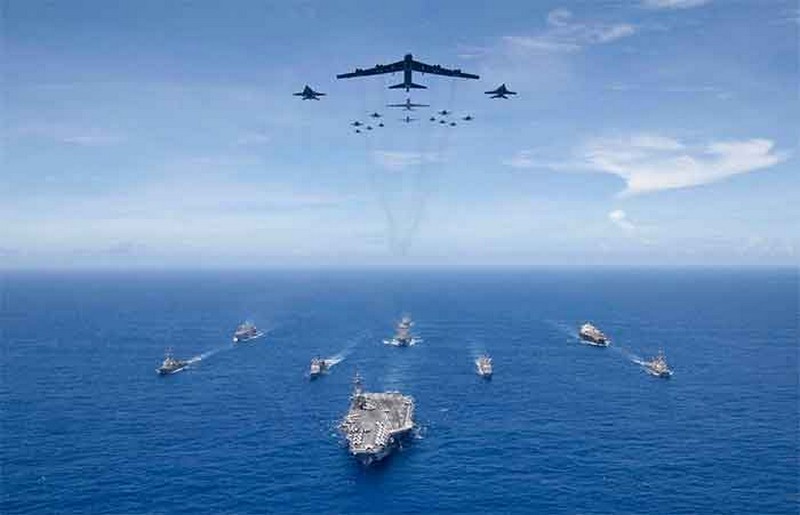
Faced with congressional opposition, the Clinton administration relented and Lee made his speech, setting off a military confrontation that could have led to direct conflict. China accused Lee of trying to “split China” and branded him a traitor. It mobilised military forces across the strait from Taiwan and announced missile tests, as well as naval and amphibious landing drills. The US responded with a huge show of military force, with multiple transits through the Taiwan Strait by US warships, including the aircraft carrier USS Nimitz and its battle group. The crisis continued into 1996 before Beijing backed off.

By comparison with Lee’s 1995 trip, Tsai’s “transit” through New York is a calculated provocation by Taipei and Washington, to which Beijing is responding with considerable restraint. While her meetings have been behind closed doors, details leaked to the media make clear that Tsai is cementing ties with the US as it ramps up its economic and strategic confrontation with China.

After arriving on Wednesday night, Tsai told a meeting in New York that relations between Taiwan and the US were “closer than ever” and boasted of “significant progress” in economic and military cooperation. Tsai belongs to the Democratic Progressive Party (DPP), which advocates a more independent Taiwan but stops short of declaring formal separation from China.

She told the meeting that Taiwan was a “beacon of democracy in Asia” that would not allow itself to be isolated by Beijing, adding “we have demonstrated a firm will and resolve to defend ourselves.” Those attending included New Jersey Governor Phil Murphy and Laura Rosenberger, chair of the American Institute in Taiwan.

On Thursday night, Tsai gave a speech at a meeting hosted by the right-wing Hudson Institute think tank, which awarded her its Global Leadership Award. According to Hudson Institute director Miles Yu, Tsai declared that “the defense of Taiwan is actually the defense of America.” In other words, the US must be unambiguously committed to fighting a war with China over Taiwan.

Significantly, also on Thursday, the top Democrat in the US House of Representatives, Hakeem Jeffries, met with Tsai, but no details were released. Last August when the Democrats controlled the house, Nancy Pelosi, as House speaker, made a provocative trip to Taipei that triggered a major military standoff in waters surrounding Taiwan. As the Chinese military conducted missile tests and deployed warships into the Taiwan Strait, the US and its allies mounted major naval operations adjacent to Taiwan.

Any meeting by current House Speaker McCarthy, the Republican who succeeded Pelosi, with Tsai in Los Angeles in the coming week threatens to trigger another confrontation. While it has not formally condoned the meeting, the Biden administration will exploit any crisis to further its strategy of creating a pretext for war with China, by goading it into attacking Taiwan.

In a similar fashion to the US-NATO war in Ukraine against Russia, the US is seeking to draw Beijing into a debilitating conflict over Taiwan as the means to destabilise and ultimately fracture China, which Washington regards as the chief threat to its global dominance.

2 April 2023

Source: countercurrents.org

Iraq War Remembrance, March 20, 2023: How the U.S. Contaminated Iraq with Depleted Uranium

Unspoken War Crimes

By Prof Souad N. Al-Azzawi

The following text was presented to the Kuala Lumpur International Conference to Criminalise War, Putra World Trade Centre, 28-31 October 2009.

For more than three decades [since 1991], the United States of America and the United Kingdom have been waging continuous wars on Iraq to occupy this oil rich country.

The armed forces of those two countries attacked civilians with different kinds of conventional, non-conventional, and banned weapons such as cluster bombs ammunitions, napalm bombs, white phosphorous weapons and depleted Uranium weapons.

Depleted Uranium (DU) is a radioactive and chemically toxic heavy metal. If ingested, inhaled, or it enters the human body through wounds or skin, it remains there for decades.

Within the human body the (DU) particles would be a continuous source for emitting alpha particles. With its toxic effects, published research & epidemiological studies have proved that it causes serious health damages to the human body. Some of the damage to the human body is to lymph tissue, kidneys, developing fetuses, neurological system, the bones, lung fibrosis, and an increase in the risk of many types of cancer and malignancies.

Hundreds of tons of (DU) expenditure have been fired & exploded on Iraqi highly populated areas like Basrah, Baghdad, Nasriya, Dewania, Samawa, and other cities.

Exploration programs and site measurements by Iraqi and non-Iraqi researchers all proved the existence of (DU) related contamination over most Iraqi territories.

Iraq’s Minister of Environment admitted in July 23, 2007 in Cairo that “at least 350 sites in Iraq are contaminated with (DU)”. She added that the nation is facing a tremendous number of cancer cases and called for the international community to help Iraq cope with this problem.

A few years after exposure to (DU) contamination, multifold increase of malignancies, congenital malformations, miscarriages, children leukemia, and sterility cases have been registered in suburb areas of Basrah and other surrounding areas. Similar problems appeared in Falluja, where illegal weapons were also used intensively in the 2004 attack of occupation forces on the city. More than two million of the Iraqi population died since 1991 because of the synergic multiple impact of using (DU) weapons, economical sanctions, and the destruction of the health care systems.

The economical sanction that were also imposed by USA and UK administrations deprived the children and people of Iraq their rights in food,  potable water, health care, sanitation and other life supporting necessities.

The USA and UK administrations have subjected the whole nation of Iraq for two decades to torture and slow death through the intentional use of radioactive weapons and the sanctions. The continuous and intentional use of radioactive weapons is a crime against humanity due to its undifferentiating harmful health effects on civilians in contaminated areas tens of years to come after the military engagements. The existence of (DU) radioactive contamination in the surrounding environment is a continuous source of exposure to low level radiation. This exposure can be considered as a systematic attack on Iraqi civilians in an armed conflict, according to Article 4 of the official regulations and Article 7 of the ICC.

This paper is submitted to present the facts and scientific evidence regarding the intentional use by the USA and UK of depleted uranium weapons against the people and environment of Iraq, in addition to the health consequences that have been result from them.

Introduction

The administrations of the United States of America and the United Kingdom have been continuously waging wars against Iraq since 1991.

The armed forces of these two administrations have been using different kinds and new generations of conventional, nonconventional, and illegal weapons like Napalm, cluster bombs, white phosphorous, microwave, and Depleted Uranium weapons [1][2][3][4] against the human population and the environment of Iraq. Invasion and occupation of Iraq proved to the world that oil flow is the main reason behind these criminal attacks.

As a result of using these weapons, with the economical sanctions that were also imposed on Iraq by the same administration more than two million Iraqi people died and the count continues.

In this paper, we present the consequences and damage resulting from the use of Depleted Uranium weaponry against Iraq, backed by scientific fact and research.

What is Depleted Uranium?

Depleted Uranium (DU) is a man-made, radioactive, heavy metal extracted from Uranium ore. Since (DU) is a byproduct of the Uranium enrichment process to produce spent fuel for nuclear reactors. Natural Uranium has an isotopic content of 99.274% of U-238 by weight, 0.072% of U-235, & 0.0057% of U-234 [5].

Due to its highly pyrophoric and spontaneously ignitable properties, the DU penetrator ignites on impact generating extremely high temperatures. As the projectile pierces, it leaves its jacket behind dispersing DU dust into the environment during the impact. The quantity of the aerosol production is proportional to DU mass within the projectile and the hardness of the impact.

It is estimated that up to 70%of DU in the projectiles to be aerosolized when on the impact DU catches fire [6]. The explosion generates high temperatures of (3000-6000) °C. The aerosols particles are smaller than 5µm in size [6]. These nano-particles act more like a gas than a particle. The DU aerosols remain windborne for an extended time and this is the most dangerous pathway on civilian population around the battlefield areas.

Depleted Uranium within the human body

There is empirical documentation that suggests that DU aerosols can travel up to 26 miles [5], others suggest even further distances. The full radiation effect of DU occurs six months after production [6]. One milligram of U-238 can give of 1, 07, 000 alpha particles in one day. Each alpha particle releases over 4 MeV (million-electron-volts) of energy. If swallowed or inhaled, this much energy will hit up to 6 nearby cells away in the organ [6]. Just 6-10ev (electron volt) is needed to cleave the nuclear DNA strand in the cell.

Dr. Rosalie Bertell, an epidemiologist with 30-years experience in the field of low level radiation explains DU potential harm to the human body [6]:

After inhalation (DU) nano-particle aerosols cross the lung-blood barrier and gain entrance to the cells. They create free radicals. As a heavy metal, DU toxicity attacks the proteins in the cell which normally fight the free radicals, and creates extra free radicals. This amount of free radicals creates total oxidative stress in the human body. This stress causes failure to protective enzymes, leaving cells vulnerable to viruses and mycoplasmas, damage to cellular communication system and the mitochondria.

As a heavy metal, DU replaces the magnesium in the organ’s molecules that normally function as antioxidants, and causes the destruction of the body’s repair mechanisms. Consequences of this destruction are chronic diseases and tumors. Free radicals can also totally disrupt the folding process and manufacturing of the molecule proteins which is sequenced by DNA and manufactured by the RNA. Some of the diseases resulted from misrouted proteins include cystic fibrosis, diabetes insipidus and cancer. [6]

Amassing and accumulation of misfolded proteins leads to neurodegenerative diseases, Parkinson’s Diseases and early onset Alzheimer’s disease. In these diseases, amyloids are formed from protein fragments and dysfunctional proteins and that “Misfolded proteins” are the central pathogenic mechanism.

Gulf War veterans have manifested many of the symptoms of these neurodegenerative diseases.[6]

Other health effects of DU within the human body are:

–           Lou Gehrig’s disease is twice as commonly diagnosed in Gulf War veterans as expected.

–           Immune and Hormonal system damage

–           Disturbance of thyroid function

–           Mycoplasmas invasion into human cells.

–           Initiation or promotion of cancer

–           Tetratogenic toxicity which causes mental retardation, congenital malformations.

–           GW veterans were twice-three times as likely to report children with birth defects as their counter partner who did not serve in the first Gulf War.

–           Miscarriages

Dr. Hari Sharma, formerly of the University of Waterloo, tested the urine of some US, UK and Canadian veterans as well as Iraqi civilians from Basra and Baghdad.

Using 24hr urine samples, his isotopic analysis revealed a range of DU in the sample of (81-1,340) nanogram. Results showed that two of the three Iraqis from Al Basra had 147 – 426 nanograms respectively in their urine. Also it showed that 2 out of 5 Iraqis from Baghdad have DU in their urine

Other Important Scientific Evidence:

•           Dr Alexandra C. Miller and her team at the Armed Forces Radiological Research Institute, Bethesda, MD and the University of Paris, France used human cell models (the human Osteoblast cell HOS) to evaluate the carcinogenic potential of DU in vitro through assessing morphological transformation, genotoxicity [7] (chromosomal aberration), mutagenic (HRRT Ioci) and genomic instability.

Published data of the results have demonstrated that DU exposure in vitro to immortalized HOS cells is neoplatically transforming, mutagenic, genotoxic, and induces genomic instability. Other results showed:

–           Exposure to embedded DU pellets could induce leukemia in mice.

–           Internalized DU resulted in significant increases in the mutagenic frequency in the Lac gene in the tests of the exposed mice.

–           Internalized DU resulted in the development of bladder carcinoma in 75% of all animal exposed within 90 days of initial DU exposure.

As we can see all these results suggest that long-term exposure to internalized DU could be critical to the development of neoplastic disease in humans.

•           Pub. Radiation Protection Dosimetry Schroder, Heike 2003. A molecular biologist conducted research about the chromosomal aberration on white blood cells of 16 British Gulf War veterans of 1991. The veterans have suffered from symptoms ranging from headache, to chronic fatigue, depression, muscle and joint pains, impaired short-term memory and other cognitive defects. [8]

The results showed that the mean frequency of their blood cells chromosomal aberrations is 5-fold elevation higher than the control blood samples. This strongly indicated previous exposure to ionizing radiations.

The intercellular distribution of the Dicentric and  Centric ring chromosomes indicates significant over dispersion on the group level for the veterans who served in the Gulf War. Dic and CR are a known consequence of non uniform irradiation on the human body. [8]

•           Dr. Huda Ammash, Professor of Molecular Biology in Baghdad University and her team [9] conducted and published the results of genetic hematological analysis for a group of individuals living in DU contaminated areas in southern Iraq. Blood tests for the (47) individuals who lived in Basrah contaminated areas and another 30 as a control group. The control group individuals lived in Baghdad.

–           Blood tests showed that 21% of the studied individuals in Basrah group suffered a reduction in hemoglobin concentration of (9-13) g/d.

–           The blood packed cell volume (PCV) test results showed that 25.5% of Basrah studied group showed abnormal (PCV) rates of (30-39)% less than the normal rate.

–           Total white Blood Cells count (WBC) results showed that 8% of the individuals in the Basrah study group with (WBC) less than normal which is (4000)c/ml or higher than normal rate (1100)c/ml.

–           Compound chromosomal changes in the lymphocytes of periphal blood of the individuals of Basrah studied group had been found at a ratio of (0.1118)% which is significantly higher than that of the control group.

–           The ratio of dicentric and ring centric chromosomal abnormality fraction was found to be (0.04479) which is higher than ordinary ratio chromosomal damages where mostly in male veteran individuals. One case was for a 13 year old young boy at the time of the exposure in Al-Zubair contaminated area.

•           Rita Hindin, et al [5] published a paper “Teratogenicity of Depleted Uranium aerosols: A review from an epidemiological perspective” in which they stated that animal studies firmly support the possibility that DU is a teratogen. They also concluded that the human epidemiological evidence is consistent with the increased risk of birth defects in offspring of persons exposed to DU.

•           For further scientific evidences by Iraqi researchers, check: ”Depleted Uranium Contamination: Iraq: An overview” (Global Research)

Contaminating Iraq with Depleted Uranium

The USA and UK armed forces used Depleted Uranium ammunition for the first time in the history of their wars during the Gulf War of 1991. About one million bullets, projectiles, and missiles were fired along the highway from Kuwait to Basrah then up to Nasriya and other Iraqi cities. About 60-65% of this ammunition and expenditure were fired within Iraqi territories, Figure 1 shows areas where DU expenditure have been used in the Gulf War of 1991 [11].

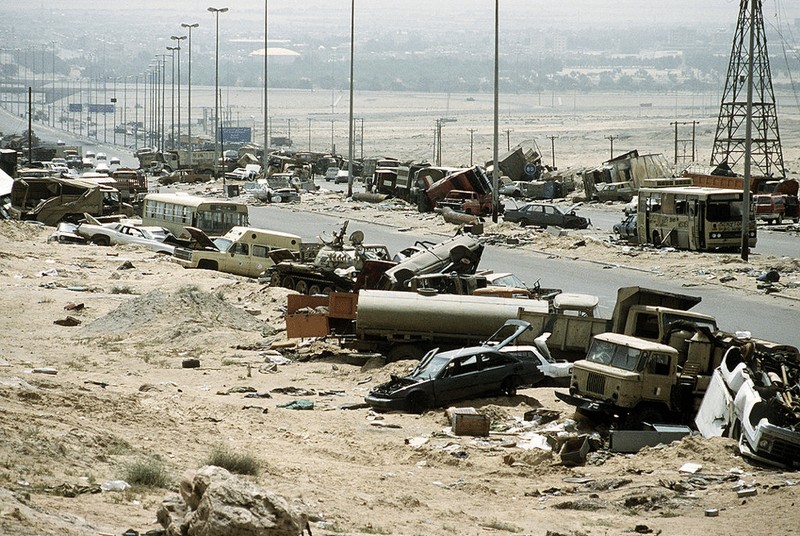
Figure 2 represents a photo of the Iraqi army artilleries and vehicles destroyed on that highway by (DU) weaponry [12].

As stated previously, as soon as DU projectiles hit the target, it will ignite with a huge explosion that generates Depleted Uranium oxide aerosols. Mixing height of the aerosols in the atmosphere gets to 250m [13]. Area of Basrah War Zone and highway warzone [10] [14] were calculated to be around 2400km2. This area was the major continuous source of DU aerosols and contaminants to surrounding areas years to come.

Types of Depleted Uranium contaminants in the studied areas were:

1.         Destroyed tanks and artilleries.

2.         DU projectiles shells (exploded and unexploded)

3.         DU shrapnel’s (different sizes)

4.         Deposited DU particles

5.         Deposited DU oxide aerosols

Modeling mechanisms of spreading of DU pollutants from the source to surrounding populated areas were done by the Environmental Engineering department of Baghdad University [10] [14] [15]. The results of modeling spreading of pollutants through different environmental pathways to human population suggested that total calculated annual body dose received from DU aerosols inhalation pathway for the period from 1991-1996 in Basrah warzone was between 0.1768 Sv and 0.2309 Sv [10] (for a person both in normal or active duty respectively). Compared to normal background annual effective dose people should receive of 2.4 mSv only. In the highway warzone, these values came up to 0.4425 Sv and 0.577 Sv [14] respectively.

DU Contaminated Dust Storms In Iraq

Spreading and dispersion of DU contamination to surrounding areas also occurs through wind storms, dust storms, sandstorms, and rainstorms. Mechanisms of surface migration of DU radionuclide’s in soil include [16]:

–           Siltation, creeping, and suspension from contaminated soil to atmosphere.

–           Suspension and re-suspension of deposited DU aerosols are the most dangerous and critical pathway of transfer and spreading from source to the human population.

DU nano-particles through this mechanism stay suspended in the atmosphere for tens of days. With each dust storm a new DU attack on the civilians within populated cities occurs. Published data indicate a significant increase in the frequency of annual dust storms in both Iraq and Kuwait areas [17]. The first 8 months of 2009 witnessed 20 dust storms, as declared by the Iraqi Minister of Health [18]. Figures (3) and (4) show sites of these dust storms.

DU contaminated dust storms can be considered as new systematic attacks by USA armed forces, on civilians, since it adds an extra harmful radioactive dose received by the people internally and externally.

The USA and UK administrations should be held responsible for exposing a whole nation to the risk of continually receiving high radioactive and toxic persistent contaminants such as DU.

Cumulative effects of these additional doses add additional risk to residents of these areas. Intentional denial and cover up of the types, locations and amounts of DU ammunitions by the US and UK armed forces prevent Iraq from taking any precautionary measures to reduce exposure to additional radioactive doses.

To understand how persistent these pollutants are; Soil and dust samples from areas near NL Industries site in Colonie, NY, USA proved containing DU after more than 20 years of the closure of these DU manufacturing industries [19].

A total of 5 to 10 metric tons of DU dust and aerosols settled from air on soil, rooftops, and other surfaces near the plant during its operation. The plant was closed in 1984 and contaminated soil was removed. In 2006, twenty-two years later, dust samples that had been collected from residents in the area proved the existence of DU significantly above the clean up standard. People working near NL Industries also tested positive for DU in their bodies. Results of these tests are being published in the international journal “Science of the Total Environment” [20].

If we compare this case study with Basra DU contamination where (320 tons of DU * 0.65 in Iraqi territories * 0.6 aerosolized) we end up with about 114.80 metric tons of DU aerosols spreading through winds to huge inside Iraq and the Gulf countries’ areas, then pre-suspension of these contaminants to larger areas with each dust and sand storm that hits the area.

In 2003, it is estimated the US & UK armed forces used about (700-800) tons of DU [21]. The aerosolized portion of this amount is about 420 metric tons, a quantity large enough to cover the soil of the whole country after the dispersion of plumes with the previously mentioned mechanisms.

DU Contamination Casualties in Iraq:

Epidemiological studies in contaminated areas indicated a drastic rise in the incidences rate of malignancies amongst children to be far more noticeable from 1995 onward, namely a four times increase than prior to 1991, the distribution of this increase specifically in contaminated areas west of Basra City [22].

Moreover, the shift in Leukemia to younger children supports the criteria of biological plausibility specificity and is consistent with findings of correlating such incidents to exposure to ionized radiations [23].

Also a six fold increase in congenital malformations among births in Basra City since 1995 onward, have been registered [24]. Congenital heart diseases and chromosomal aberrations have been also reported.

Another crime of the occupation forces is the destruction of the evidence targeting the Iraqi research centers related to this issue.

Two decades of suffering, pain, and human life losses, the Minister of Environment in Iraq finally announced in 2007 the disaster of DU contamination in Iraq. She pointed out that more than 300 sites have been contaminated with these radioactive weapons [25]. She also called for the Japanese authorities and the international community to help Iraq with coping with the drastic increase of cancer incident rates [26].

To prove our case: Kuwait DU waste & wreckage from Gulf wars are shipped back to be dumped in USA.

After 18 years, Kuwait required US dept. of defense to remove the DU contaminated wreckage from their land [21]. Over 6,700 tons of contaminated soil, sand and other residues were collected and shipped back to the USA for burial by American Ecology at Bios, Idaho.

The US administration and pentagon officials still insist that DU has no significant health hazards, if so, why would they have to ship back their dirty radioactive wreckage back home from Kuwait?

Stand of the International Community on DU Weaponry

The Hague and Geneva conventions and its protocols and subsequent treaties clearly declare that weapons which cannot discriminate between civilians and military or combatants are prohibited from not only use but also from manufacture and sale [27].

The Nuremberg principles were incorporated into the Charter of the UN, a treaty which is supposed to be “Supreme Law” in the USA. When the American Administration ratified it, the 7th principle declares that “Complicity with a crime against Humanity is a war crime”.

UN resolutions since 1996 called DU weaponry “incompatible” (i.e. illegal) under existing humanitarian law and human rights [UN Doc. E/CN.4/Sub.2/1997/27 and additions; E/CN.4/Sub.2/2002/38 and E/CN.4/Sub.2/2003/35] [28].

Uranium radiation hazards are covered up and misrepresented through the obsolete models of risk and derived standards of allowable exposure set by the International Commission on Radiological Protection (ICRP).

This model was derived from invalid assumptions due to secrecy and cover up about the health effects of the Hiroshima and Nagasaki bombs then, around the cold war developments of nuclear power and weapons [28].

The ICRP risk model was built from studies of the atomic bomb survivors, which overlooked the effects from the internal radiation source and ignored cancer that in some cases takes decades to appear.

It was certainly developed before the DNA and the human genome knowledge existed the way it does to date.

Cover-ups and deception are expected from American and UK administrations the perpetrators of all radiological wars and illegal weapons, which should face liability for war crimes, military and civilian casualties, as well as contamination of the environment.

The US has refused to disclose information about DU during the invasion military operations of Iraq in 2003, and did not let UNEP team study DU contamination Iraq [29].

With the great efforts of anti-nuclear weapons groups, NGO, peace organizations and international figures, the call of these organizations to ban the all Uranium weapons, including DU, have earned very good momentum especially among the NATO countries.

–           On March 23rd, 2007, the Belgian Chamber Commission on National Defense voted unanimously in favor of banning the use of DU ammunitions and armor plates [30].

–           On November 1, 2008, a UN committee passed a resolution with an overwhelming majority, highlighting concerns over the military use of Uranium. The resolution entitled “Effects of the use of armaments and ammunitions containing Depleted Uranium 1” urges the UN member states to re-examine the health hazards posted by the use of Uranium weapons [31].

–           Another historic sentence was pronounced on January 13, 2009 by a court in Florence, Italy asking the Italian Ministry of Defense to compensate Gianbattista Marica with Euro 545,061, a parachutist who was deployed in Somalia for eight months in 1993. The sentence is very important because it states “the casual link between the presence of depleted uranium and the illness (cancer) of the Soldier” [32]. The courts statement includes the report of technical consultant who maintains that there is a causal link between the Hodgkin Lymphoma developed by the soldier and the exposure to DU.

–           In September 2009, a British jury at Smethwick Council House ruled that DU was likely cause of death of Gulf War veteran Stuart Dysan in June 2008. Dyson had been a Lance Corporal with the Royal Pioneer Corps and had cleaned tanks after the 1991 Gulf War. He developed colon cancer that killed him last year [33].

The European Parliament on 22nd of May 2008 passed its fourth resolution against the use Uranium weapons. MEP’s have called for EU and NATO-wide moratorium and global ban [29].

Concluding Remarks:

1. The US and UK administrations have been using Depleted Uranium weapons against the civilian population and the environment of Iraq since 1991.

2. Laboratory studies and scientific evidence prove the link and causal relationship between exposure to Depleted Uranium and the increased risk of inducing neurodegenerative diseases, immune and hormonal system damage, initiation or promotion of cancer, Tetratogenic Toxicity which causes mental retardation and congenital malformations, miscarriages, and sterility.

3. Intentional denial and refusal of the US and UK administrations to release any information about the types, locations, and amounts of DU weapons that have been used against Iraq have caused additional radioactive doses, and health damages to the people in contaminated areas. Both administrations should be held responsible for this crime.

4. The drastic increase of cancer incidences in Iraq since 1995 to date and the DU related diseases like congenital malformation, miscarriages, etc, are all attributed to the use of prohibited weapons including Depleted Uranium.

5. DU contaminated areas all over the country are continuous source of radioactive pollution. Without cleaning and other measures, resuspension of these contaminants with each dust and sand storm can be considered as systematic attacks by the US and UK armies on civilians in an armed conflict.

This is a crime against humanity to its undifferentiated harmful health impacts on civilians long times to come after the military operations (Article 4 of the official regulations and Article 7 of ICC).

Notes

1. Simon Helweg-Larsen, “Irregular Weapons Used against Iraq”. ZNET http://www.znet.org/welser.htm ,April 2003

2. Sarah Meyer. “What Kind of Incendiary Bomb Was Used Against People in Iraq” http://www.globalresearch.ca/index.php?context=va&aid=1226  November 14, 2005.

3. Steven D. “US Army Admits Use of White Phosphorus as Weapon”. Daily KOS.

4. Scott Peterson Remains of Toxic Bullets Litter Iraq, May 18, 2003, Christian Science Monitor.

5. Rita Hindin, Doug Brugge, and Bindu Panikkar, “Teratogenicity of Depleted Uranium aerosols: A review from an epidemiological perspective ” Environmental Health: A Global Access Science Source 2005. http://www.ehjournal.net/info/instructions/

6. Rosali Bertell “Depleted Uranium: All the questions about DU and Gulf War Syndrome are not yet answered”. International Journal of Health Service 36(3), 503-520, 2006

7. Alexandra C. Miller, Mike Stewart, Rafael Rivas, Robert Marlot, and Paul Lison, “Depleted Uranium” internal contamination: Carcinogenisis and Leukeinogenisis in Vivo. Proc. Am Assoc Cancer Res. Volume 46, 2005.

8. Chroder, H. et al. “Chromosome aberration analysis in peripheral lymphocytes of Gulf War and Balkans War veterans”. Radiation Prot. Dosimetry. Vol. 103(3) 2003 (PP. 211-219).

9. Ammash, H., Alwan, L., and Maarouf, B.,”Genetic hematological study for a selected population from DU contaminated areas in Basra.” Proceeding of the conference on the effects of the use of DU weapons on human and environment in Iraq, Baghdad, Iraq 2002.

10. Al-Azzawi, S. N. and Al-Naemi, A. “Assessment of radiological doses and risks resulted from DU contamination in Basrah war zone.” Proceeding of the conference on the effects of the use of DU

11. Gulf War Resource Center “Primary Areas of DU Expenditure”, USA, 1999.

12. Turnley, P.; News Week Magazine; (January-20), 1992.

13. Neboysha, L. “Environmental Impact on Humans During the Gulf War”, Communications between Professor Neboysha and Professor Sharma, 1999.

14. Al-Azzawi, S., and Al Naemi, A., 2002, “Assessment of radiological doses and risks resulted from DU contamination in the highway war zone in Al-Basra governorate”, proceedings of the conference on the effects of the use of DU weaponry on human and environment in Iraq, March 26-27 2002, Baghdad, Iraq.

15. Al-Azzawi, S. et al, “ Environmental Pollution Resulting from the Use of Depleted Uranium Weaponry Against Iraq During 1991, World International Conference on DU, Hamburg, Germany, 2003 http://www.grassrootspeace.org/wuwc_reader2_science.pdf  – p.41

16. Al-Heli, W.M. “Effects of DU Weapons on Air and Soil Pollution in Southern Iraq”, M.Sc. Thesis in Environmental Engineering, College of Engineering, University of Baghdad, Iraq. 1998.

17. Draxler R. R., et al, “Estimating PM10 Air concentrations from Dust storms in Iraq, Kuwait and Kingdom Saudi Arabia. Atmospheric Environment” vol35:4115-4330.

18. Middle East Online, “Draught steals Iraqi’s nutrition”, September 1st 2009

19. ICBUW, “Robert shows New Yorkers Contaminated with DU over 20 years after exposure” http://www.banddepleteduranium.org/

20. William, D. “Hazards of Uranium Weapons in the Proposed War on Iraq” full report.. The Eos life resources center. Oct, 2002.

21. ICBUW, “Statement by the DU positive testees” http://www.banddepleteduranium.org/

22. Yaqoub, A., et.al., 1999, “Depleted Uranium and health of people in Basrah: an epidemiological evidence; 1-The incidence and pattern of malignant diseases among children in Basrah with specific reference to leukemia during the period of 1990-1998”, the medical journal of Basrah University (MJBU), vol.17, no.1&2, 1999, Basrah, Iraq.

23. Yaqoub, A., Ajeel, N., and Al-Wiswasy, M., 1998, “Incidence and pattern of malignant diseases (excluding leukemia) during 1990-1997”, Proceeding of the conference on health and environmental consequences of DU used by U.S. and British forces in the 1991 Gulf War, Dec. 2-3, 1998, Baghdad, Iraq. http://www.irak.be/ned/archief/Depleted%20Uranium_bestanden/DEPLETED%20URANIUM-3-%20INCIDENCE.htm

24. Al-Sadoon, I., Hassan, J., and Yaqoub, A., 1998, “Incidence and pattern of congenital anomalies among birth in Basrah during the period 1990-1998”, Proceeding of the conference on health and environmental consequences of DU used by U.S. and British forces in the 1991 Gulf War, Dec. 2-3, 1998. http://www.irak.be/ned/archief/Depleted%20Uranium_bestanden/DEPLETED%20URANIUM-1-%20INCIDENCE.htm

25.  RIA Novoski “Iraqis blame US depleted Uranium for surge in cancer”

26.  Tokyo Newspapers “Iraqi Minister of Environment Appeals to Japanese Government for Assistance in Dealing with DU contmination”. September 10th 2008 http://www.tokyo-np.co.jp

27. Proceeding of World Uranium weapons conference 2003, Hamburg, Germany. Page 192

28. Protr Bein “Uranium Weapons cover-ups in our midst”. Proceedings of world Uranium Weapons conference, 2003, Hamburg, Germany.

29. David Goliath “The Adversary’s Tactics and Effectiveness”. Proceedings of world conference, 2003 Hamburg, Germany, Page 204.

30. William Van Den Panhuysen. “Belgium Bans Uranium Weapons and Armor”. ISBUW, March 24, 2007.

31. ICBUW, “UN First Committee Passes DU Resolution in Landslide Vote” Nov. , 2007 http://www.bandepleteduranium.org/

32. Stefania Divertito “Historic sentence in Florence, Italian court recognizes the link between cancer and Depleted Uranium”. 13th Jan. 2009 http://www.peaclink.it

33. ICBUW, DU was a likely cause of dead Gulf Veteran’s cancer”. Sept. 11, 2009 http://www.bandepleteduranium.org

34. ICBUW “European Parliament passes far reaching DU resolution in landslide vote”, May 22, 2008. http://www.bandepleteduranium.org

23 March 2023

Source: www.globalresearch.ca

Global Governance by Artificial Intelligence: The Ultimate Unaccountable Tyranny

The WEF cites AI as the singular key to the “Fourth Industrial Revolution.” In their view, there can be no human progress without the influence of AI algorithms, making human input almost obsolete.

By Brandon Smith

It’s no secret that globalist institutions are obsessed with Artificial Intelligence as some kind of technological prophecy. They treat it as if it is almost supernatural in its potential and often argue that every meaningful industrial and social innovation in the near future will owe its existence to AI.

The World Economic Forum cites AI as the singular key to the rise of what they call the “Fourth Industrial Revolution.” In their view, there can be no human progress without the influence of AI algorithms, making human input almost obsolete.

This delusion is often promoted by globalist propagandists.  For example, take a look at the summarized vision of WEF member Yuval Harari, who actually believes that AI has creative ability that will replace human imagination and innovation.  Not only that, but Harari has consistently argued in the past that AI will run the world much better than human beings ever could.

AI and Useless Class | Yuval Noah Harari | GREAT MINDS

Harari’s examples of AI creativity might sound like extreme naivety to many of us, but he knows exactly what he is doing in misrepresenting the capabilities of algorithms.  Games like chess and Go are games of patterns restricted by rules, there are only so many permutations of these patterns in any given scenario and AI is simply faster at spotting them than most humans because that is what it is designed to do by software creators.  This is no different than solving a mathematical equation; just because a calculator is faster than you does not mean it is “creative.”

There is a big difference between cognitive automation and cognitive autonomy.

AI is purely automation; it will play the games it is programmed to play and will learn to play them well, but it will never have an epiphany one day and create a new and unique game from scratch unless it is coded to do so.  AI will never have fun playing this new game it made, or feel the joy of sharing that game with others, so why would it bother?  It will never seek to contribute to the world any more than it is pre-programmed to do.

The manner in which globalists hype AI is very tactical, however.  When Harari claims that many people will become part of the “useless class” once AI takes over the economy, he is hinting at another globalist ideology based on elitism – Transhumanism.  The goal of transhumanism is to one day merge human bodies and human minds with technology and AI, and only a limited group of people will have the resources to accomplish this (the globalists).

Are you afraid of becoming part of the “useless class”?

Well, if you scrape and beg and serve every whim of the elitist establishment then maybe you will be lucky enough to get implants which allow you to interface with AI, and then your future employment and “usefulness” will be secured.  Doesn’t that sound nice?

But, like all the visions of narcissists there are delusions of godhood and then there is reality.  I continue to have serious doubts that AI will ever be legitimately autonomous or legitimately beneficial to humanity in any way beyond having the ability to calculate quickly within mathematical rules. Speedy data analysis can be useful in many areas of science, but it’s not really proof of autonomous intelligence, and algorithms can be predictive but not any more predictive than human beings looking at the same statistical data. There is nothing about AI that is impressive when one considers what little it actually accomplishes.

AI is a toy, a parlor trick, not a living entity with independent observations and conclusions. And, it’s certainly not a god-like being capable of showering us with scientific ambrosia or building a perfect civilization.  I predict that a society dependent on AI will actually stagnate and remain trapped in stasis, never really inventing anything of much value and never progressing.  It will only ever be concerned with homogenization – The merging of people with the algorithm.  That is where ALL the society’s energies will go.

As a point of reference to why AI is overrated, all we have to do is look at the behavior of AI programs like ChatGPT; the algorithm has been discovered on numerous occasions to contain extreme political biases always leaning to the far-left, including biases based in beliefs not backed in any way by scientific evidence. Interestingly, ChatGPT will even at times display a seemingly hostile response to conservative concepts or inconvenient facts. The bot will then DENY it is giving personal opinions even when its responses are consistently pro-leftist.

How is political bias possible for a piece of software unless it was programmed to display that bias? There is no objectivity to be found in AI, nor any creativity, it will simply regurgitate the personal opinions or biases of the people that created it and that engineered how it processes data.

Unlike a typical human teenager that seeks to adopt the opposing social or political beliefs of their parents in order set themselves apart, AI will never metaphorically dye its hair blue, pierce its nose and proclaim itself vegan – It will always do what its creators want it to do.  Another example of this dynamic is AI art, which essentially steals the stylistic properties of numerous human artists entered into its database and copies them. While imitation might be considered the highest form of flattery, it’s not the same as creativity.

This might not sound like much of a problem when it comes to a simple chatbot or the making of cartoons. But, it’s a massive problem when we start talking about AI influencing social and governmental policies.

The globalists argue that AI will be everywhere – In business, in schools, in corporate operations, in scientific enterprises, and even within government. It MUST run everything. Why? They don’t really say why other than to make vague promises of incredible advancements and previously unimaginable benefits. To date, there have been no profound innovations produced by AI, but I suppose pro-AI propagandists will say that the golden age is “right around the corner.”

The uses for AI are truly limited to helping humans with simple tasks, but there is still a cost.  A self driving car might be great for a person that is physically handicapped, but it can also be a crutch that convinces a population to never learn to drive themselves. By extension, AI is in a lot of ways the ULTIMATE crutch which leads to ultimate tyranny. If people are convinced to hand over normal human processes and decision making opportunities to automation, then they have handed over their freedoms in exchange for convenience.

More importantly, if algorithms are allowed to dictate a large portion of choices and conclusions, people will no longer feel a sense of accountability for their actions. Regardless of the consequences, all they have to do for the rest of their lives is tell themselves they were only following the suggestions (or orders) of AI. The AI becomes a form of external collectivized conscience; an artificial moral compass for the hive mind.

But who will really be controlling that moral compass and bottle-necking the decisions of millions of people? Will it be the AI, or the elites behind the curtain that manipulate the algorithm?

For many people this probably sounds like science fiction. Yes, there have been many fictional imaginings of what the world would be like in the shadow of AI – I would highly recommend the French New Wave film ‘Alphaville’ as one of the most accurate predictions on the horrors of AI and technocracy. However, what I am warning about here is not some far off theoretical future, it is already here. Take a look at this disturbing video on AI from the World Government Summit:

World Government Summit 2018 – Global A.I. Governance Forum Highlights

These are the blatant goals of globalists in plain view, with a sugar coating to make them more palatable. I wrote about the motivations of the elites and their worshipful reverence for AI in my article ‘Artificial Intelligence: A Secular Look At The Digital Antichrist’. That piece was focused on the philosophical drives that make globalists desire AI.

In this article I want to stress the issue of AI governance and how it might be made to appeal to the masses. In order to achieve the dystopian future the globalists want, they still have to convince a large percentage of the population to applaud it and embrace it.

The comfort of having a system that makes difficult decisions for us is an obvious factor, as mentioned above. But, AI governance is not just about removing choice, it’s also about removing the information we might need to be educated enough to make choices. We saw this recently with the covid pandemic restrictions and the collusion between governments, corporate media and social media. Algorithms were widely used by web media conglomerates from Facebook to YouTube to disrupt the flow of information that might run contrary to the official narrative.

In some cases the censorship targeted people merely asking pertinent questions or fielding alternative theories. In other cases, the censorship outright targeted provably factual data that was contrary to government policies. A multitude of government claims on covid origins, masking, lockdowns and vaccines have been proven false over the past few years, and yet millions of people still blindly believe the original narrative because they were bombarded with it nonstop by the algorithms. They were never exposed to the conflicting information, so they were never able to come to their own conclusions.

Luckily, unlike bots, human intelligence is filled with anomalies – People who act on intuition and skepticism in order to question preconceived or fabricated assertions. The lack of contrary information immediately causes suspicion for many, and this is what authoritarian governments often refuse to grasp.

The great promise globalists hold up in the name of AI is the idea of a purely objective state; a social and governmental system without biases and without emotional content. It’s the notion that society can be run by machine thinking in order to “save human beings from themselves” and their own frailties. It is a false promise, because there will never be such a thing as objective AI, nor any AI that understand the complexities of human psychological development.

Furthermore, the globalist dream of AI is driven not by adventure, but by fear. It’s about the fear of responsibility, the fear of merit, the fear of inferiority, the fear of struggle and the fear of freedom. The greatest accomplishments of mankind are admirable because they are achieved with emotional content, not in spite of it. It is that content that inspires us to delve into the unknown and overcome our fears. AI governance and an AI integrated society would be nothing more than a desperate action to deny the necessity of struggle and the will to overcome.

Globalists are more than happy to offer a way out of the struggle, and they will do it with AI as the face of their benevolence. All you will have to do is trade your freedoms and perhaps your soul in exchange for never having to face the sheer terror of your own quiet thoughts. Some people, sadly, believe this is a fair trade.

The elites will present AI as the great adjudicator, the pure and logical intercessor of the correct path; not just for nations and for populations at large but for each individual life. With the algorithm falsely accepted as infallible and purely unbiased, the elites can then rule the world through their faceless creation without any oversight – For they can then claim that it’s not them making decisions, it’s the AI.  How does one question or even punish an AI for being wrong, or causing disaster? And, if the AI happens to make all its decisions in favor of the globalist agenda, well, that will be treated as merely coincidental.

*

Note to readers: Please click the share button above. Follow us on Instagram and Twitter and subscribe to our Telegram Channel. Feel free to repost and share widely Global Research articles.

29 March 2023

Source: www.globalresearch.ca

Imran Khan Threatens Pakistan’s Military-Civilian Hybrid Model

Khan isn’t just a threat to the current government; he threatens the entire governance system instituted by the Pakistani military.

By Ali Malik

Pakistan finds itself at a critical juncture at the hands of former Prime Minister Imran Khan. The decision to delay elections due to “security concerns” is disingenuous and signals to the broader public and the world at large that the hybrid system instituted by the Pakistani military is in danger. The issue is not whether Khan has committed crimes, or that the security situation in Pakistan is unsuitable for an election – the real problem is the existential threat that Khan poses to the hybrid system, which fundamentally relies on the tacit approval of the two major dynastic political parties.

As most observers of Pakistan know, the hybrid model tilts the balance of power toward the Pakistani military, which chooses the dynastic political party that will come into power. It is an unwritten rule in Islamabad that the military generals in Rawalpindi have the final word. The current prime minister acknowledged this fact in a recent interview.

Khan ignored this rule and forced the military and political establishment into a corner by refusing to fall in line.

The old political establishment is desperately clinging to power, with the support of the military, by preventing Imran Khan from running for office. Khan’s political party, the Pakistan Tehreek-e-Insaaf (PTI), enjoys overwhelming support from the Pakistani middle class and, most importantly, its youth. Many analysts believe that if elections were to be held soon, the PTI would win overwhelming support.

The old political establishment, composed of the Pakistan Muslim League-Nawaz (PML-N) and Pakistan People’s Party (PPP), has lost much of its luster over the years. Their decline has only accelerated with the current caretaker government’s incompetence, best demonstrated through their mishandling of the most recent loan negotiations with the International Monetary Fund.

What is different about the current political situation is the negative discourse directed toward the military. The narrative being spun by Khan alleges that his removal from power in April 2022 was due to his interference in the selection of the next Army chief. The general discourse within Pakistan is that Khan wanted to keep the previous head of the Inter-Services Intelligence (ISI), Lieutenant General Faiz Hameed, in charge of the ISI and appoint him as the next army chief to secure upcoming elections. Hameed’s removal as ISI chief led to a standoff between Khan and the Army brass in the fall of 2021, when the then-prime minister at first refused to approve the new ISI head’s appointment.

Following the clumsy and heavy-handed raid on Khan’s residence on March 18, Khan tweeted that “this is part of [the] London Plan where commitments were made to bring absconder Nawaz Sharif to power as quid pro quo for agreeing to one appointment.” Khan is alluding to a meeting last November where the current prime minister, Shehbaz Sharif, traveled to London to discuss the appointment of the next army chief with his brother in exile, former Prime Minister Nawaz Sharif.

Adding legitimacy to Khan’s claim is the public fallout he had while in office with the Sharif-appointed Chief of Army Staff, Asim Munir, who at the time was in charge of the ISI and subsequently removed.

Furthermore, Khan has publicly stated that the nomination of the current head of the Election Commission of Pakistan (ECP), Sikandar Sultan Raja, was made at the behest of the military. The decision by the ECP to delay elections is not only unconstitutional but strengthens Khan’s argument that the military and political establishment is deliberately crafting measures to prevent Khan from running for elections.

Reinforcing this view are recent remarks made by the PML-N leadership stating that “if Mr. Khan goes to jail… it will be much easier for his opponents, especially the PML-N, to manage the election in Punjab.” Statements such as these only ingrain political gridlock, strengthen Khan’s resolve to defy court orders, and embolden Khan’s supporters to challenge the state’s authority.

What truly complicates the situation and threatens the hybrid model is Khan’s unique ability to exploit the inherent weakness embedded within the model itself. The dynastic political parties (PPP and PML-N) have historically enjoyed a symbiotic relationship with the military that has allowed the two entities to cyclically enjoy the financial benefits of being in office. In exchange, the military as an institution gains autonomy and an unrestricted budget to pursue whatever it deems significant. The system, up until now, has relied on the corruption and ineffectiveness of the dynastic political parties to justify the military’s autonomy and to uphold the myth that Pakistan’s military is the only institution capable of protecting and preserving Pakistan’s interests.

Khan’s political party breaks from the unwritten contract agreed upon by the dynastic political parties and threatens the sanctity of the military. While the hybrid system has faced its fair share of challenges, the current situation breaks from precedent. The PTI enjoys overwhelming support in three Pakistani provinces (Punjab, Khyber Pakhtunkhwa, and Gilgit-Baltistan) and has morphed into a national force with overwhelming support instead of the regional support that the dynastic political parties hold. Furthermore, Khan’s rhetoric and deft use of social media, since his ouster from office, have not only chipped away at the myth of the military’s infallibility but actively encouraged public ridicule and contempt toward the institution. The generals in Rawalpindi have yet to find an effective way to silence their critics within social media.

Khan has successfully leveraged this position and even stoked divisions within the Pakistani military as an institution. Following his removal from office, Khan was able to gain the support of a multitude of retired military officers and junior personnel. The most notable is the support of the former director-general of the ISI, Zaheerul Islam, who pledged his support for Khan and promised to help his reelection campaign.

To maintain discipline within the ranks, the army was forced to cancel the pensions of five retired army officers last year that were supposedly involved in the PTI’s “anti-army campaign.” Rumors circulating in Pakistan suggested that around 150 ex-servicemen from the rank of major to major general were being investigated for crossing the military’s redline – rumors that the General Headquarters vehemently denied.

The old establishment is terrified and cannot find a way out of its current predicament. They cannot allow Imran Khan to run in the elections because they know that he would enjoy an overwhelming electoral mandate that would ultimately force the military and the dynastic political parties out of power and dismantle the hybrid system that has dictated Pakistani politics over the past decade.

Khan’s demands for real democracy, his use of social media to garner the support of Pakistan’s youth, and his consistent message to the Pakistani people that he alone can eliminate the practice of bribery that is at the heart of Pakistani politics have left the old establishment with three options. The military can intervene and take a greater role in governance, force Khan into imprisonment, or remove the problem of Khan altogether. None of these options would bode well for Pakistan or the old establishment.

In this game of political chess, both Khan and the old establishment need to tread carefully. Pakistan and its people are facing a multitude of challenges. The two warring sides would be wise to let democracy run its course and reflect the will of the people.

Ali Malik is a public service fellow at the Johns Hopkins University School of Advanced International Studies (SAIS).

28 March 2023

Source: thediplomat.com

Israel/USA fall out over Netanyahu’s plan to overhaul judicial system

Palestine Update 637
Comment

Israel/USA fall out over Netanyahu’s plan to overhaul judicial system
“Israel is a sovereign country which makes its decisions by the will of its people and not based on pressures from abroad, claimed  Netanyahu, while accusing the US President while accusing the U.S. president of meddling in Israeli politics. It was a public outbreak, the kind of which usually takes place behind the curtains.  But there were other factors at work that had been brewing for many years. President Biden bluntly warned Prime Minister Benjamin Netanyahu that he “cannot continue down this road” of overhauling his country’s judiciary. This fracture in relations will have consequences, but it is doubtful that the lobbies will allow relations to falter beyond the Rubicon.

There is no love lost between the two leaders, despite their polite facade when it comes to their decades-long relationship and their common commitment to Israel’s defense. Mr. Netanyahu made no particular effort to hide his backing for President Donald J. Trump in the 2020 election, making clear his preference for an incumbent who gave him everything he asked for, including moving the United States Embassy to Jerusalem and paying little attention to the Palestinians while siding with Israel on its claims over Palestinian territory in the West Bank.

Despite the pause in his government’s incredibly controversial efforts to overhaul the judicial system, members of his coalition have been quietly moving ahead with a push of six equally radical legislative measures. These include bills allowing public servants to accept gifts and the police to search private homes without a warrant; legalizing the death penalty for terrorists; banning bread from hospitals over the Passover holiday; and significantly expanding the jurisdiction of Israeli rabbinical courts.”

Middle East Eye reports how “what started with 37 pilots, who changed the track and mood of the protest, is now turning into an avalanche of hundreds. Reservists from other units, including Unit 8200, an Israeli intelligence corps unit, have also threatened to not turn up for duty. Netanyahu will need more than his normal defiance and resilience to come out of this landslide of anger and resentment against his policies and politics.

Netanyahu stops at nothing. The Israeli right is planning to ban Palestinian parties. If the Netanyahu government secures a forever majority, it will bolster the argument that an apartheid regime reigns between the river and the sea. International human rights organizations Amnesty International and Human Rights Watch – that in Israel there exists a regime of apartheid against Palestinians on both sides of the Green Line.” Netanyahu may just fall into a hole that he is digging without thinking too much about the consequences.
These are challenging times and opportunities for those who are at the resistance of apartheid Israel.

On behalf of MLN Palestine Updates

Ranjan Solomon

___________________________________________________

Biden’s Confrontation with Netanyahu brewing for Years

“When President Biden bluntly warned Prime Minister Benjamin Netanyahu that he “cannot continue down this road” of overhauling his country’s judiciary, he touched off the kind of response usually expressed by America’s adversaries rather than its allies. “Israel is a sovereign country which makes its decisions by the will of its people and not based on pressures from abroad, including from the best of friends,” Mr. Netanyahu said on Wednesday, accusing the U.S. president of meddling in another country’s politics — which is exactly what Mr. Biden was intending to do. It was a remarkably public outbreak of the kind of disagreement that usually takes place in private. But there were other factors at work that had been brewing for many years.”
Read more in New York Times

Liberal Israelis and the US empowered the settler right. Now it’s out of control
“Itamar Ben Gvir, a serial racist who leads the Jewish Power party and serves as national security minister, was promised by Netanyahu that the state would move forward with creating a national guard under Ben Gvir’s authority – dubbed by some commentators as his “private militia”. This deal speaks volumes to the intimate connection between the two crises simultaneously gripping Israel: the internal polarisation around judicial reforms, and the government-empowered escalation of extremism against Palestinians. That connection is glaringly obvious, but rarely acknowledged in Israeli political circles…Israeli society is experiencing what French-Martinique anti-colonial author and politician Aime Cesaire called the “boomerang effect of colonisation”. The work of Cesaire and others looked at how policies used on the colonised by colonial states could then be brought back to the imperial metropole and deployed against citizens.” … Huwwara is the present, but it also offers a link to the past and a glimpse of a potential future. A second Nakba is something that Israeli right-wing politicians openly threaten with increased frequency, and for which settler militias under Israeli military cover are testing the ground. The insipid politics of the Zionist centre and centre-left cannot reverse these trends. For outside powers, the choice is between complicity in apartheid or holding Israel accountable. And while Palestinians have always paid the price for Israel’s impunity, many Israelis are now discovering that it carries costs for them too.” “Itamar Ben Gvir, a serial racist who leads the Jewish Power party and serves as national security minister, was promised by Netanyahu that the state would move forward with creating a national guard under Ben Gvir’s authority – dubbed by some commentators as his “private militia”. This deal speaks volumes to the intimate connection between the two crises simultaneously gripping Israel: the internal polarisation around judicial reforms, and the government-empowered escalation of extremism against Palestinians. That connection is glaringly obvious, but rarely acknowledged in Israeli political circles…Israeli society is experiencing what French-Martinique anti-colonial author and politician Aime Cesaire called the “boomerang effect of colonisation”. The work of Cesaire and others looked at how policies used on the colonised by colonial states could then be brought back to the imperial metropole and deployed against citizens.” … Huwwara is the present, but it also offers a link to the past and a glimpse of a potential future. A second Nakba is something that Israeli right-wing politicians openly threaten with increased frequency, and for which settler militias under Israeli military cover are testing the ground. The insipid politics of the Zionist centre and centre-left cannot reverse these trends. For outside powers, the choice is between complicity in apartheid or holding Israel accountable. And while Palestinians have always paid the price for Israel’s impunity, many Israelis are now discovering that it carries costs for them too.”
Read more in Middle East Eye
No air force, no Israel: Why the fighter pilots’ protest is an existential issue
“What started with 37 pilots, who changed the track and mood of the protest, is now turning into an avalanche of hundreds. Reservists from other units, including Unit 8200, an Israeli intelligence corps unit, have also threatened to not turn up for duty. Meanwhile, reservists and veterans from the Golani combat infantry brigade have announced their refusal to serve as long as the “dictatorship legislation” continues. Reservists from other elite formations, such as the Flotilla 13 naval commandos and the air force’s Shaldag special forces unit have also said they will either refuse call-up orders or cease volunteering extra time…Neri Yarkoni, a retired colonel and combat pilot for over 30 years, told Middle East Eye that the actions of the 37 pilots were a major turning point for the protest movement. “Israel does not have that many fighter pilots. Unlike in other Israeli army units, almost all of the pilots are reservists and not young soldiers performing a mandatory service,” he said…Everybody understands that without them, there is no air force and without the air force, there is no Israel.
Read more in Middle East Eye

The Israeli right is planning to ban Palestinian parties. Here’s how
If the Netanyahu government secures a forever majority, it will bolster the argument that an apartheid regime reigns between the river and the sea.
“The fundamental motivation for the proposed law is not just to decrease the number of Arab representatives in the Knesset, but to eliminate that representation altogether. The political participation of Arab citizens of Israel in the Knesset is contingent on unequal grounds for disqualification and is founded on a constitutional framework that requires them to abstain from all activity that could be interpreted as rejection of the Jewish character of the State of Israel, which has already led to statements from various bodies — such as the international human rights organizations Amnesty International and Human Rights Watch – that in Israel there exists a regime of apartheid against Palestinians on both sides of the Green Line.”
Read more in 972 Mag.com

Palestinians expect new intifada to erupt, according to polling

 “According to a survey carried out by the Palestinian Center for Policy and Survey Research, 61 percent of Palestinians expect a new uprising, while 68 percent support the formation of armed groups, such as the Nablus-based Lions’ Den, who do not take orders from the Palestinian Authority. While 52 percent said they were worried that the formation of such groups could lead to armed clashes with the PA security services, 52 percent also said that “the Palestinian people’s interest lies in the collapse or dissolution of the PA”.|
Read more in Middle East Eye

1 April 2023

Source: nakbaliberation.com

Urgency of Stepping Up Backward Class Schemes as only 6% of Allocated Funds Spent in First Nine Months of Financial Year

By Bharat Dogra

Backward classes are supposed to be increasingly a politically influential segment of Indian society. So it should come as a surprise that only 6% of allocated funds for all backward class schemes in the financial year 2022-23 were actually spent in the first nine months of this financial year ie up to 31 December 2022 by the Department for Social Justice and Empowerment (DJSE).  INR 1803 crore were allocated and INR 113 crore were spent up to 31 December.

This is all the more distressing as Extremely Backward Classes, nomadic and semi-nomadic communities as well as denotified tribes are also affected by the extremely low spending in in some of the schemes.

In the case of the backward class component of PM Dakshta scheme (an important scheme in the context of protecting /promoting skills and livelihoods, INR 44 crore was allocated but amount spent was zero. In the case of backward class component of VISWAS scheme meant for economic help of deprived groups, INR 30 crore was allocated but nothing was spent. In the PM Yasasvi meant for various scholarships to students in this category INR 1581 crore was allocated but only INR 42 crore was spent.

Clearly such low spending can increase the distress of many poor households for whose benefits these schemes are supposed to function.

To complete the story, moreover, it needs to be mentioned that the overall allocation has also deceased. As against the allocation of INR 2015 crore  in 2020-21 for various backward class schemes being implemented by the DJSE, the allocation in 2022-23 was 1803 crore in 2022-23 and has deceased further to INR 1785 crore in the allocations made for the year 2023-34.

Further if we look at the non-scheme expenditure, the allocation for the National Backward Classes Finance and Development Corporation (NBCFDC) has also been declining. In 2020-21 this was INR 200 crore, next year this came down to INR 100 crore, in 2022-23 this was further reduced to INR 50 crore while in 2023-24 this has been drastically reduced to INR 15 crore.

What is more, as far as the actual spending is concerned, it is really surprising that against the allocation of INR 50 crore in 2022-23 for NBCFDC , the actual spending in the first nine months up to 31 December, 2022 was zero.

Clearly these allocations on several important aspects of development relating to Other Backward Classes should increase in the near future to make up for past lapses.

Why Two Ministries Have Been So Reluctant to Spend Their Allotted Funds?

Two important Union Ministries have shown extraordinary reluctance to spend their allotted funds this year. What makes the situation more distressing is that both of these ministries have responsibility for important schemes which are important for more vulnerable and poorer sections.

One such Ministry is the Ministry of Social Justice and Empowerment, or more specifically the Department of Social Justice and Environment (DSJE). This is the department which deals with very important issues regarding welfare of scheduled castes, extremely backward classes, other backward classes, nomadic, semi-nomadic communities and denotified tribes. The original budget allocation during 2022-23 for DSJE amounted to INR 11922 crore ( one crore=10 million) which was later revised downwards to INR 10709 crore. However what is most surprising and shocking is that the actual spending  up to February 15, 2023 ( ie for ten and a half months out of the 12 months of the financial year 2022-23) amounted to just 3488  crore, or just 29% of the original allocation. It is seldom that till such a late date of the financial year such a low spending takes place, that too in a ministry where the spending directly concerns the needs of some of the poorest persons in the country. The fact that the Revised Estimate had been brought down allocation only modestly in relative terms would indicate that till rather late in the financial year the need for sticking to the original allocation was felt and funds were available too, so why actual expenditure has been so inadequate is difficult to understand, considering also that those affected are really needy sections.

To give one example of various programs for the poor which were very adversely affected, the allocation of INR 70 crore for the self-employment program of those engaged earlier in manual scavenging (for which the revised estimate was maintained at the same level) was reduced to actual spending of only INR 5 crore. The allocation of INR 15 crore for rehabilitation of beggars was reduced to 0.2 crore. The allocation for the strengthening of arrangements for protecting civil rights and preventing atrocities was INR 600 crore but spending was reduced to INR 75 crore. The program of economic empowerment of nomadic and denotified tribes was allotted INR 28 crore but spending was only INR 2 crore. ( All spending figures are up to February 15 2022).

The second ministry in this context is the Ministry of Minority Affairs where the spending was an even lower percentage of the allocation. In this context the original budget allocation for the Ministry was INR 5020 crore while the spending up to February 13 was just INR 668 crore, or just 13% of the original budget. It is seldom seen that in the 10 and a half months out of 12 months only 13% of the funds are spent. There is no credible explanation for this—as far as procedural issues and regulations are concerned, these have been created by the government and have to be corrected by the government.

Clearly these serious lapses should be made up as early as possible by stepping up important welfare-oriented programs in the new financial year.

Note about data-source--All data given here is taken from the report of the Demand on Grants for 2023-24 of the Parliamentary Standing Committee for Social Justice and Empowerment (2022-23), 17th Lok Sabha, 46th Report.

Bharat Dogra is Honorary Convener, Campaign to Save Earth Now.

30 March 2023

Source: countercurrents.org

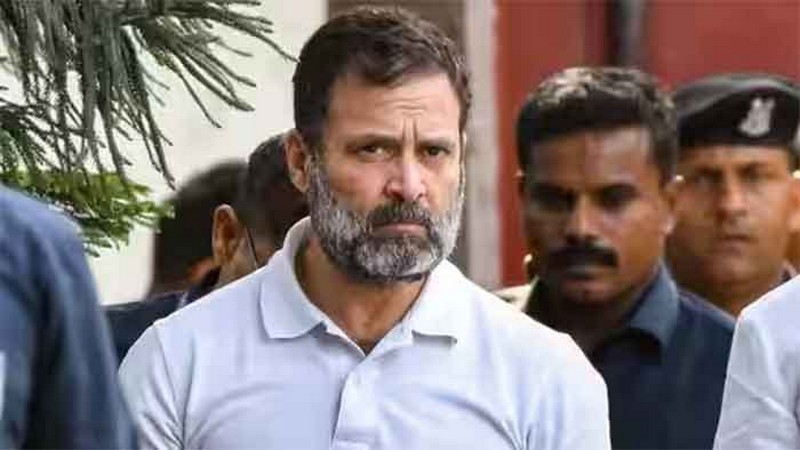
Whither democracy after Rahul Gandhi’s unseating?

By Dr Ranjan Solomon

Congress leader Rahul Gandhi MP from Wayanad lost his membership of Parliament after the verdict of a court in Surat.  The Lok Sabha Secretariat hurriedly issued a notification declaring that the Rahul Gandhi is no longer a Member of Parliament. Such swift action is rare, but not surprising. It’s hard to guess what the higher courts will dispense as justice. We have heard more abusive insults hurled by politicians at each other than what Rahul said about the ‘Modis’. The BJP has called the Gandhi family by expressions unworthy of being used in respectable fora. But, they claim, out of ignorance, that Gandhi’s statement was an insult to the OBCs. False! The three Modi’s under question are not close to being either disadvantaged or OBCs.

Insulting the opponent is the uncouth nature and very method of politics itself – wherever in the world. But this does not quite apply to what Rahul Gandhi said. Gandhi’s statement, uttered in jest, might be embarrassing to those who carry similar names and geographical origins. What Gandhi opined was humor applied to political facts. There was logic in his query. Wikipedia’s list of Fugitive Economic Offenders currently residing abroad is one which raises many eyebrows.  By the end of 2021, Parliament learned that 33 financial fugitives from India are still hiding abroad. The government claims that action has been taken as per law and requests for extradition issued to the countries where these men are hiding. Our, otherwise aggressive media, makes very little mention of these actions. Nor does it function as a watchdog on such corruption. There is the other question too. The nation was told in the run-up to the 2014 elections, that the Modi government would bring back all money held in tax havens. Each citizen would receive a gain of 15 lakhs. That was later termed as a ‘jumla’ – something common sense told everyone when it was first declared. In much the same way, we now have 33 unofficial NRI’s doing business illegally. Is this claim by the government like the black money ‘jumla’? Colonial UK is the official sponsor. By its lack of aggressive intent, the government is complicit.

India has ‘requested’ the extradition of these offenders. Interpol ‘Red Comer notices’ have been issued to Interpol. Gandhi has raised valid questions and the government’s response should ideally be to vigorously go after the conmen who have stolen public money and are persisting with their uninhibited luxurious lives overseas. The wealth they still roll in should be snatched away and returned to the coffers for welfare schemes.  The street thinks India has the clout to bring them back and put them away for their heinous crimes, but political will is lacking. Instead the government has gone after the man who asked the question. In an era of ‘revenge-politics’, the average citizen and even powerful politicians are being tacitly told: ‘Watch your words. You risk being viciously punished’. True. If Rahul Gandhi can be punished, who are we- the common folk to speak?

The BJP which spent a good part of its time ruling the country targeting Gandhi as “Pappu” has realized that this designation is invalid by miles. Gandhi is no ‘novice’, nor is he politically ‘naïve’. He has used these years as MP to apply the humility needed to be schooled in ‘Study-centres of Politics’ overseas. This is qualitatively far different from the type of trainings that MLAs are put through at humongous costs (crores in fact) within the country. If only the latter had any serious content, one would have witnessed tangible and qualitative differences in Assembly debates and in serious enhancements of ‘socio-economic-political’ facts-on-the-ground. In the case of Goa, such trainings are fairly frequent. Concrete results are hopelessly invisible.

Legal experts opine that Gandhi can now challenge this decision in the court. Legal luminaries argue that only the President can disqualify MPs in consultation with the Election Commission. There will now be a challenge in the High Court and, should that fail, the doors of the Supreme Court will be knocked at. Kapil Sibal says, “If it (court) only suspends the sentence, it will not be enough. There should be a stay on suspension or conviction. Gandhi can continue as a Member of Parliament only if there is a stay on the conviction.” If the High Court does not cancel the decision, then Rahul Gandhi will not be allowed to contest elections for the next 8 years. That raises a hornets’ nest. It takes us to the crux of the real questions that surround this verdict and the case itself.

The manner in which this case has been constructed reveals two bare facts. First, Gandhi is not “Pappu” by any stretch of imagination. With his Bharath Jodo Yatra, he has claimed his distinct political space and identity. He has demonstrated that he can mobilize the masses in a way far different from others and with conviviality. He is an orator in his own mode. Those who believe oratory consists in talking loudly or put-on gesticulations with voice modulations that are meant to be smart and eye-catching have got it wrong. After nine years, people are looking for tangibles not smart rhetoric or political aerobatics.

Second, the BJP wants Rahul Gandhi swept away politically, and silenced in the democratic arena.  The BJP has underperformed and voter fatigue is rapidly deepening. After 2014 the public saw poorly conceived schemes – demonetization, GST and failed economics. Post-2019 the sheen began to further vanish. CAA/NRC protests, farmers struggle, and Covid exposed the frailties of a government unable to cope with serious political challenges. It was always seen in its unpreparedness to cope with the Covid and other disasters.  The BJP now fears Gandhi’s presence in the fast-emerging national alliance of all parties regardless of their ideological differences. This is the BJP’s lone reason to unseat Gandhi.

Ranjan Solomon is a political commentator

30 March 2023

Source: countercurrents.org

Targeting China, US Navy to purchase 100 new ships

By Andre Damon

Speaking at a hearing of the Senate Appropriations defense subcommittee Tuesday, the US Navy’s operations chief said the United States Navy is currently building 56 new warships and has contracted the building of 76 more, as part of a massive military buildup in preparation for conflict with China.

“We have 56 ships under construction and another 76 that are under contract,” said Admiral Michael M. Gilday.

The move is part of a plan by the US navy to have a total of 373 manned and 150 unmanned ships, up from 296 this year.

Opening the hearing, Democratic Committee Chairman Jon Tester declared that “China remains our number one pacing threat, we must continue to modernize our military to stay ahead of that threat.”

Earlier this month, Congressman Mike Gallagher said the United States’ “competition” with China will not be “polite,” describing the US conflict with China as an “existential struggle over what life will look like in the 21st century.”

He later added, “If you think about what a coherent grand strategy vis a vis China would be, hard power would be the most important part of that and the Navy would be the most important component of your hard power investments.”

China currently has two operational aircraft carriers, both of which are diesel-fueled. In contrast, the United States has a fleet of 11 nuclear-powered aircraft carriers, which can carry more than 1,000 attack aircraft, exceeding the combined number of attack aircraft carried by all other nations’ navies.

The Navy’s budget for the fiscal year 2024 exceeds $250 billion, representing an increase of $11 billion from the previous year. It sets aside $32.8 billion in Fiscal Year 2024 for the acquisition of nine ships. These ships include one Columbia-class ballistic missile submarine, two Virginia-class attack submarines, two Arleigh Burke-class destroyers, two Constellation-class frigates.

In fiscal year 2025, the Navy plans to purchase seven more vessels, which includes two submarines, two destroyers, one frigate, one ocean surveillance ship and its initial Landing Ship Medium.

“We are modernizing our capabilities, ensuring that our forces today stay combat ready now and into the future… we’re continuing to build our capacity, ensuring that we have relevant lethal platforms to achieve warfighting advantage,” Gilday said at the hearing.

General David H. Berger, Commandant of the Marine Corps added, “We’re not waiting for 2030 or 2027 or 2025. Our Marines are ready to handle any crisis anywhere now.”

As the United States actively builds up its navy for a conflict with China, US military officials are openly discussing what a naval war with China would look like.

In an interview with “60 Minutes” last week, Admiral Samuel J. Paparo, head of the US Pacific Fleet, said that if China were to invade Taiwan, “the bulk of the United States Navy will be deployed rapidly to the Western Pacific to come to the aid of Taiwan. If the order comes to aid Taiwan in thwarting that invasion is the US Navy ready?

He added, “the Navy is always on alert. 1/3 of the Navy is always deployed and operating at all times. The Navy’s mustering right now about 300 ships, and there are about 100 ships at sea right now all around the globe.”

Beyond merely expanding and modernizing the Navy, the Biden administration has used the war in Ukraine as a pretext for the implementation of multi-year, no-bid arms procurement contracts that will massively expand the US arsenal.

“Ukraine’s war has taught us that we must transition from just in time stockpiles of weapons and munitions to just in case stockpiles,” Republican Senator Susan Collins said at the hearing.

A signal is “being sent by the department of defense that we will be purchasing these missiles for a long period of time,” said Navy Secretary Carlos Del Toro.

“Our industrial base can’t be just in time, if we have to go to a conflict. We got to… have the depth in that industrial base to account for a big surge,” Berger said.

In January, Air Force Gen. Michael Minihan told his command that he anticipates the US to engage in warfare with China by 2025. He stated, “My gut tells me we will fight in 2025,” and recommended that airmen under his command prepare themselves for war by getting their “personal affairs” in order.

On March 11, Director of National Intelligence Avril Haines, said that President Biden’s declaration that the US would go to war with China over Taiwan was not simply the president’s individual belief, but rather an actual policy of the United States.

30 March 2023

Source: countercurrents.org

In memory of Hugo Chavez on 10th death Anniversary

By Harsh Thakor

A few weeks s ago on March 5th, we commemorated the 10th death anniversary of Hugo Chavez of Venezuela. Without doubt one of the most progressive or impactful leaders in shaping the destiny of a Latin American nation ,who confronted and gave a mortal blow to American imperialism at it’s strongest point, and paved the path towards liberation. Few Third world leaders in the last few decades have created such an electric effect in crystallising anti-imperialist consciousness and people’s striking power. Chavez checked the infiltration and monopoly of neo-colonial capital as no third world leader in recent times.

As president of Venezuela, Chavez was the target of a coup attempt in 2002 and countless campaigns of vilification by the US and the Venezuelan reactionaries. Still he always managed to come out stronger than ever before. He was part and parcel of the great Latin American tradition of patriotic military officers in the 19th century, like Simon Bolivar, Simon Rodriguez and Ezequiel Zamora and those military officers of the ruling system who embarked o the road of revolution and anti-imperialism in the 20th century, like Luis Carlos Prestes of Brazil, Jacobo Guzman Arbenz of Guatemala, Juan Alvarado Velasco of Peru and Omar Herrera Torrijos of Panama.

When Chávez addressed the workers and peasants, the spirit of the masses underwent an elevation, reminiscent of lightning and thunder. Hugo Chávez was simply the mascot of the poor and downtrodden He resurrected life in them and they saw themselves in him. For them, Hugo Chávez and the Revolution had one and the same meaning.

Comrade Chavez in his lifetime shimmered the spark unflinchingly for   national independence and socialism .He shimmered the banner of Bolivarian Revolution in order to initiate major social, economic, political and cultural reforms to improve the lot of the impoverished and toiling masses of workers and peasants, the women and indigenous people.

Comrade Chavez was an outstanding fighter against imperialism, neoliberal economic policy and the wars of aggression unleashed by the US and NATO, in defended peoples, nations, countries and governments under attack by imperialism and relentlessly advocated socialism as the banner of the 21st century

For decades Venezuela was governed by a ruthless, decadent corrupt and degenerate oligarchy. There was a so-called two party system in which both parties manifested the interests of the oligarchy. When Chávez founded the Bolivarian Movement, he wished to give a striking blow to Venezuelan political life.

Today with wind of imperialism and globalisation sweeping the world as never before to strangulate or tighten the noose on people in every corner of the globe, it is vital that a Hugo Chavez is ressurected.

Background

He originated from a working class family and experienced the pangs of hunger and poverty. From dire straits, he entered the military academy and became a military officer. There he developed contempt for   the ruling system of the local oligarchy bowing down to US imperialism. He wished to fight to the last tooth for national independence and social justice. Thus, he founded the clandestine Revolutionary Bolivarian Movement (MBR)-200 among military officers in the early 1980s in order to overthrow the ruling system

On 27 February 1989, the poor people living in the shanty towns surrounding Caracas poured over the streets in protest against a new hike on public transportation prices. It became a nationwide uprising known as the Caracazo. The government of Carlos Andres Perez sent armed troops to mercilessly impart bloodshed. Official figures place the death toll at just under 300, but other estimates indicate up to 3,000 were gunned down. In 1989, up to 3,000 were gunned down in a nationwide uprising known as the Caracazo ..Image: Prensa Presidencial Government of Venezuela

Without the Caracazo possibly Hugo Chávez might have remained an army officer pursuing a normal military career unknown to the public.

The Caracazo and the mortal counter blow simmering discontent, led to an unsuccessful military uprising led by Chávez in 1992. He was imprisoned but subsequently released under pressure from the masses. From the standpoint of the poor and downtrodden, Hugo Chávez was the man who made them rise like a phoenix from the ashes , by his great reserves of   personal courage, to acts of heroism, almost unparalleled..

The MBR launched a coup d’etat in 1992 and failed. However it was a blessing in disguise as it made known to the entire nation Hugo Chavez and what he and his movement represented.. After release from prison, he established the   social democratic party, the Fifth Republic Movement, and engaged in alliances with communist and other Left forces in order to obtain the presidency of Venezuela in the elections of 1998 and in subsequent elections up to 2012. He established the United Socialist Party of Venezuela as a democratic socialist party in 2007.

. When Chávez addressed the workers and peasants, the spirit of the masses underwent an elevation, reminiscent of lightning and thunder. Hugo Chávez was simply the mascot of the poor and downtrodden He resurrected life in them and they saw themselves in him. For them, Hugo Chávez and the Revolution had one and the same meaning.

Achievements

Chavez e will always be cherished or renowned for the formulation of a constitution beneficial to the people, the institution of participatory democratic councils, the nationalization of the oil and other key industries, the establishment of worker-managed cooperatives, a program of land reform, greatly increased government funding for health care, education and housing and the significant reduction of poverty

He would always be loved and remembered for the anti-imperialist foreign policy orientation of his government. He maintained and developed strong alliances with the Cuban and other governments assertive of national independence in Latin America. He was a key leader in Latin American and Caribbean cooperation. Chavez was an architect in establishing the Union of South American Nations, the Bolivarian Alliance for the Americas, the Bank of the South and the regional television network Telesur.

Chavez procured great strides in domestic and foreign policy because he placed complete faith on the  broad masses of the people, especially the workers and peasants.

He led the people to snatch from the imperialists and the local oligarchs control over the oil resources of his country and used the income to benefit the people and support the cooperation and development of countries subjected to imperialist plunder under the Washington Consensus.

Chavez, left no stone unturned in confronting the power of the oligarchy and combating the iron feet of American imperialism. Even his known enemies and critics acknowledged his great colossal courage. And in giving a courageous example he conjured up tremendous forces that have lain dormant in the depths of Venezuelan society for generations.

Hugo Chávez was the very soul of the “wretched of the earth”, and he built a tunnel or avenues to those millions with no voice. They never forgot it. He won another sweeping endorsement when he was triumphantly re-elected as president last October.

The Revolution undertook serious reforms in the interest of the workers and the poor in the key fields of and health. It constructed 250,000 homes and delivered to families who needed them in the last 2 years, while in Spain, for instance, in the same period there have been 250,000 mortgage repossessions.

At a time when every other government was  declaring staggering  cuts in spending on public health and education, Venezuela had developed  a system of free public medicine and on huge scale magnified  availability of  education at all levels including free of charge university education. In Europe, but particularly in the weakest capitalist countries in the South of Europe, unemployment is reaching unscaled proportions and in Spain and Greece over 60% of the youth are unemployed. The Bolivarian revolution eradicated poverty and unemployment, to a considerable extent. Yet the capitalist media hypocritically talks about “economic chaos” in Venezuela!

However, the most important achievement  of the was that it instilled in  the masses pride, a sense of their own self-respect or dignity  as human beings, it has created an awareness for  justice, it has given them a renewed confidence to enhance and establish  their  own striking power, and placed in  them hope for the future. From the standpoint of the ruling class and imperialism, it was a mortal blow.

Hugo Chávez’s Bolivarian Revolution struck  US imperialism in it’s very belly  setting a  model  to the oppressed masses in the rest of Latin America. Ever since the Monroe Doctrine was announced, the rulers of the USA have seen Latin America as their own private backyard. A revolutionary current swept the Latin American continent and Hugo Chávez palyed a major role in shaping   the revolutionary movement throughout the continent. This made him public enemy number one for Washington.

Chavez represented  a faction of the bourgeoisie itself; but it is a less powerful sector, a group which formerly was not directly involved in the management of the state administration but which, for decades, have been displaced and today feel affected, therefore they were interested in uprooting the government. Chavez has assumed an anti-oligarchic discourse; in his electoral campaigns he has targeted that sector of the bourgeoisie that has dominated that country for decades. In his actions there are nationalist overtones of resistance to foreign domination with  these positions consolidating the  struggle of the people against imperialist domination.

In the beginning, the Venezuelan oligarchy estimated Chavez   was for sale. As soon as they realised that they could not buy Chávez, they chalked out plans to overthrow him. On 11 April 2002, they organized a coup. Backed by the landlords, bankers, capitalists,  the media, the Church, generals, police chiefs, corrupt trade union leaders and the CIA.

Chávez was arrested and hijacked. The plotters installed themselves in the palace of Miraflores. But within 48 hours they were overpowered by a spontaneous uprising of the masses. Units of the army loyal to Chávez went over to the masses, and the coup was brought to an abrupt end on April 13. For the first time in the history of Venezuela, the masses overthrew a coup. Morally powers was in their hands, but tragically were unaware of it.

Similarity of Chavez with Mao Tse Tung

Chavez’s ideas had strong overtones of MaoTse Tung’s ideas. There are interesting similarities between Chávez and Mao. Chávez established close relations with China, which he called a “strategic ally.” He used to tickle the Chinese leaders, because he would bring up Mao when he was with them, quoting from the Little Red Book. He treated Mao just as he treated Bolívar, that is, as someone who is alive and among us. Still the Chinese leadership preferred Mao to be treated as something more distant and static – more like an icon – because of course most of them embarked on the capitalist-path..

There was a very important resemblance between Chavez’s conception of the transition to socialism and some key Maoist ideas. When Chávez decided that the commune was the road to socialism, he popularised the reading of Inside a People’s Commune: Report from Chiliying, the book by Chu Li and Tien Chieh-yun.

In fact, in his last major discourse, the so-called Strike at the Helm [2012], Chávez criticized his ministers for not having read the book, which he had published as a pamphlet and from which he read sections on national television. Chávez thought that the experience of Chinese communes – which was a landmark Maoist policy undertaken in the Great Leap Forward – was an important guideline or model   for Venezuelan commune and a basic foundation of socialism in Venezuela.

There   is an extraordinary similarity between the ideas of István Mészáros, who was the most important Marxist thinker for Chávez, and Mao’s project in the Cultural Revolution.. The coincidence between Mészáros’s thought and the project of the Cultural Revolution [1966-1976], shows how the key ideas of socialism are part of a universal legacy because they respond to the same problems and challenges (namely, the problems of overcoming capitalism, which is a world system). Mao and Mészáros faced the same problems of real socialism at roughly the same time. The central problem was the persistence of the logic of capital – what Maoists called bourgeois practices and capitalist tendencies (in spite of the fact that the bourgeoisie had been defeated and removed in China).

Just as Maoists aspired, during the Cultural Revolution, to wipe out these bourgeois practices that prevailed  in the bureaucracy, party, and management in China, so Mészáros argued in his book Beyond Capital [1995] that even though a society might cease to be  capitalist, it might be dictated  by the logic of capital.

Weaknesses of Chavez

There was no real revolution in Venezuela. Chavez did not embark on the programme of an agrarian revolution, completely put a stamp on foreign capital or eradicate bourgeois parliamentary democracy. In important ways he deviated from Marxism-Leninism.

One  must be sufficiently objective to gauge , in his politics, Chavez has also approved laws to protect the interests of the banks; his policies have also included the implementing of privatization in certain areas, which does not exactly make him an opponent of neo-liberalism. That is the contradiction in Chavez’s politics.

It is because of what we have just mentioned that many problems that affect the popular sectors have not been addressed, much less resolved. In 2001. Poverty and hunger was  rampant  in Venezuela, unemployment and corruption is staggering, the crisis is getting more acute  and the social effects are not greater only due to the great production and export of oil, which last year benefited from the increase in the price of oil on the international market. If we look at the total picture, the Venezuelan economy is among those that experienced the lowest growth in the year 2001. All this has been used to justify the campaign unleashed by the oligarchy to overthrow Chavez.

The national oil-strike of 2002, and the continuous spate of hunger strikes of medicos, nurses, and member of civil society, made evident that the benefits of this Socialist Revolution were limited only to a selected few.

Venezuela Today

10 Year since death of Hugo Chavez what is the road for those committed to establish socialism in Venezuela? In the last period of his life Chávez would frequently visit a project site and turn to those present, usually including a few of his cadres, who would then become sheepish, querying: “Where is socialism here?” I think that question was Chávez’s admission that only by investigating those concrete points of rebellion against the existing order could socialism proceed in Venezuela. Remember that Chávez had already tried to decree socialism with the constitutional reform of 2007, which led to his first and only electoral defeat. That defeat enabled him to realize that socialism could be constructed by championing concrete, grassroots experiments from below. Socialism would be built not from above, but only through practice and struggle from the very grassroots.

Today ideology of Socialism, has frugal presence in the government’s main .Socialism in Venezuela has it’s place  in those junctures of rebellion against the prevailing capitalist order: the few and always embattled communes, the campesinos who continue to seize and occupy land, the Pobladores movement that propels  self-organized housing projects, trying to reconstruct  urban life beyond the logic of capital.

Alarmingly, most people who engage with the Venezuelan project from abroad seem uninterested in the question of where socialism exists in the country or whether it can be restored.They feel Venezuelan socialism is a merely local trend that they, as outsiders, are not involved in. On the contrary, socialism, more than any other political project, is a shared and international endeavour. Adapting Chávez’s question and integrating it with Mao’s injunction to remember class struggle we should be asking ourselves: “Where is popular rebellion against the capitalist order in Venezuela?”

The socialist goal in Venezuela will probably be defeated (for both internal and external reasons). Without advancing, without crystallising people’s resistance up from below, socialism will meet it’s doom. It means intensifying privatizations mercantilization, and a general orientation championing local bourgeoisies (both emergent and old) and international capital.

Harsh Thakor is a freelance journalist who has extensively studied liberation Movements.

28 March 2023

Source: countercurrents.org

Xi’s ‘Chilling’ Remarks: A Multipolar World Offers Challenges and Opportunities to the Middle East and Africa

By Dr Ramzy Baroud

The final exchange, caught on camera between visiting Chinese President Xi Jinping and his Russian host and counterpart, Vladimir Putin, sums up the current geopolitical conflict, still in its nascent stages, between the United States and its Western allies on the one hand, and Russia, China and their allies, on the other.

Xi was leaving the Kremlin following a three-day visit that can only be described as historic. “Change is coming that hasn’t happened in 100 years and we are driving this change together,” Xi said while clasping Putin’s hand.

“I agree,” Putin replied while holding Xi’s arm. ‘Please take care, dear friend,” he added.

In no time, social media exploded by sharing that scene repeatedly. Corporate western media analysts went into overdrive, trying to understand what these few words meant.

“Is that part of the change that is coming, that they will drive together?” Ian Williamson raised the question in the Spectator. Though he did not offer a straight answer, he alluded to one: “It is a chilling prospect, for which the west needs to be prepared.”

Xi’s statement was, of course, uttered by design. It means that the Chinese-Russian strong ties, and possible future unity, are not an outcome of immediate geopolitical interests resulting from the Ukraine war, or a response to US provocations in Taiwan. Even before the Ukraine war commenced in February 2022, much evidence pointed to the fact that Russia and China’s goal was hardly temporary or impulsive. Indeed, it runs deep.

The very language of multipolarity has defined both countries’ discourse for years, a discourse that was mostly inspired by the two countries’ displeasure with US militarism from the Middle East to Southeast Asia; their frustration with Washington’s bullying tactics whenever a disagreement arises, be it in trade or border demarcations; the punitive language; the constant threats; the military expansion of NATO and much more.

One month before the war, I argued with my co-writer, Romana Rubeo, that both Russia and China might be at the cusp of some kind of unity. That conclusion was drawn based on a simple discourse analysis of the official language emanating from both capitals and the actual deepening of relations.

At the time, we wrote,

“Some kind of an alliance is already forming between China and Russia. The fact that the Chinese people are taking note of this and are supporting their government’s drive towards greater integration – political, economic and geostrategic – between Beijing and Moscow, indicates that the informal and potentially formal alliance is a long-term strategy for both nations”.

Even then, like other analysts, we did not expect that such a possibility could be realized so quickly. The Ukraine war, in itself, was not indicative that Moscow and Beijing will grow closer. Instead, it was Washington’s response, threatening and humiliating China, that did most of the work. The visit by then-US House Speaker, Nancy Pelosi, to Taiwan in August 2022 was a diplomatic disaster. It left Beijing with no alternative but to escalate and strengthen its ties with Russia, with the hope that the latter would fortify its naval presence in the Sea of Japan. In fact, this was the case.

But the “100 years” reference by Xi tells of a much bigger geopolitical story than any of us had expected. As Washington continues to pursue aggressive policies – with US President Joe Biden prioritizing Russia and his Republican foes prioritizing China as the main enemy of the US – the two Asian giants are now forced to merge into one unified political unit, with a common political discourse.

“We signed a statement on deepening the strategic partnership and bilateral ties which are entering a new era,” Xi said in his final statement.

This ‘no-limits friendship’ is more possible now than ever before, as neither country is constrained by ideological confines or competition. Moreover, they are both keen on ending the US global hegemony, not only in the Asia and Pacific region, but in Africa, the Middle East and, eventually, worldwide as well.

On the first day of Xi’s visit to Moscow, Russia’s President Putin issued a decree in which he has written off debts of African countries worth more than $20 billion. Moreover, he promised that Russia is “ready to supply the whole volume sent during the past time to African countries particularly requiring it, from Russia free of charge ..,” should Moscow decide “not to extend the (grain) deal in sixty days”.

For both countries, Africa is a major ally in the upcoming global conflict. The Middle East, too, is vital. The latest agreement, which normalized ties between Iran and Saudi Arabia is earth-shattering, not only because it ends seven years of animosity and conflict, but because the arbitrator was no other than China itself. Beijing is now a peace broker in the very Middle East which was dominated by failed US diplomacy for decades.

What this means for the Palestinians remains to be seen, as too many variables are still at work. But for these global shifts to serve Palestinian interests in any way, the current leadership, or a new leadership, would have to slowly break away from its reliance on western handouts and validation, and, with the support of Arab and African allies, adopt a different political strategy.

The US government, however, continues to read the situation entirely within the Russia-Ukraine war context. US Secretary of State Antony Blinken responded to Xi’s trip to Moscow by saying that “the world should not be fooled by any tactical move by Russia, supported by China or any other country, to freeze the war (in Ukraine) on its own terms.” It is rather strange, but also telling that the outright rejection of the potential call for a ceasefire was made by Washington, not Kyiv.

Xi’s visit, however, is truly historic from a geopolitical sense. It is comparable in scope and possible consequences to former US President Richard Nixon’s visit to Beijing, which contributed to the deterioration of ties between the Soviet Union and China under Chairman Mao Zedong.

The improved relationship between China and the US back then helped Washington further extend its global dominance, while putting the USSR on the defensive. The rest is history, one that was rife with geostrategic rivalry and divisions in Asia, thus, ultimately, the rise of the US as the uncontested power in that region.

Nixon’s visit to Beijing was described by then-Ambassador Nicholas Platt as “the week that changed the world”. Judging that statement from an American-centric view of the world, Platt was, in fact, correct in his assessment. The world, however, seems to be changing back. Though it took 51 years for that reversal to take place, the consequences are likely to be earth-shattering, to say the least.

Regions that have long been dominated by the US and its western allies, like the Middle East and Africa, are processing all of these changes and potential opportunities. If this geopolitical shift continues, the world will, once again, find itself divided into camps. While it is too early to determine, with any degree of certainty, the winners and losers of this new configuration, it is most certain that a US-western-dominated world is no longer possible.

Dr. Ramzy Baroud is a journalist, author and the Editor of The Palestine Chronicle.

28 March 2023

Source: countercurrents.org