Just International

Hunger Strikes and Administrative Detention

By Jonathan Kuttab

News of the death of Sheikh Khader Adnan, after 86 days on a hunger strike protesting his administrative detention, has shocked the entire Palestinian population. His passing is being marked with nationwide strikes, protests, and a renewed determination for resistance.

The logic of a hunger strike is firmly founded in the theory and philosophy of nonviolence. It is an important tactic in a moral and spiritual battle, where an activist asserts the truth, legitimacy, and moral righteousness of one’s case, not by attacking one’s tormentors, but by voluntarily taking upon oneself the punishment and suffering. It is an eloquent and impressive assertion that draws widespread attention to a particular issue. It challenges one and all (including one’s enemies) to support one’s claims and, in the case of one’s enemies, to change their course of action. It represents a sort of “moral jiu jitsu” whereby the weaker party allows the full strength of their powerful opponent to fall on them, and rather than resist their opponent head-on, to let the weight of the opponent cause them to fall.

In this case, the injustice against which Sheikh Khader Adnan was protesting is that of administrative detention. Why should he have been jailed, without charges or trial? If Israel is accusing him of anything, they have all the machinery of an unjust military court system to try and convict him. Yet, they could not do that, because they had no proof that he had done anything wrong. Instead, they arrogantly and repeatedly jailed him for extended periods of “administrative detention.” This is an evil tool that represents the utter arrogance and unrestrained power that the Israelis hold over Palestinians, and which they have been using with increasing frequency. Any Palestinian, certainly anyone politically or socially active, is subject to the use or threat of this unjust measure. Currently more than 1,000 Palestinians are detained under administrative detention, without charge or trial. Merely a determination by the commander, or whoever he has delegated this power, that a certain individual should be kept in detention—for up to six months, renewable indefinitely. This device has been used during interrogations. After a prisoner refuses to “confess,” he is  simply told that he can just be held indefinitely under administrative detention. Other prisoners who have served their sentence in full are often not released but continue to be incarcerated under administrative detention. The power over Palestinian lives that this device grants to Israeli authorities must be intoxicating, as it is almost unlimited.

To be sure, in typical Israeli fashion, a pseudo-legal procedure does exist, allowing one “to object” to their administrative detention before an Objections Committee. Anyone, however, who attempts to make such an objection will quickly realize it is a sham. This committee hears arguments and evidence in secret and in the absence of both the detainee making the objection as well as his or her attorney. It routinely rejects the objections it receives and “confirms” the decision of the military commanders. The whole process can be seen as a cross between a charade and a kangaroo court.

Khader, who had attempted the “objections” route, realized that going on a hunger strike as a nonviolent tactic was the only route open to him. He had become quite a warrior in this nonviolent battle. He fought several bouts, with lengthy hunger strikes five separate times. In 2012, he went on a hunger strike for 66 days; in 2015 for 56 days; in 2018 for 59 days; and in 2021 for 25 days, before his last strike. At one time, after a lengthy hunger strike, the Israeli authorities relented and promised not to renew his administrative detention so long as he suspended his hunger strike. He did so, and the army released him following the end of his period of detention. He was allowed to go to a Palestinian hospital, where he stayed long enough to gather his strength. Then, they reneged on their promise and issued a new administrative detention order.

When a prisoner goes on hunger strike, he does not wish to die but to live as a free person. He is  reclaiming his agency and humanity, willing to pay a heavy price for his  beliefs. When Khader’s health declined, he refused to accept medical attention in an Israeli jail until they agreed to a visit by an independent doctor, with a promise not to share his medical information with his jailors. The Israeli authorities refused and sent him back to his prison cell, where he was later found dead.

In his famous, “Man’s Search for Meaning,” psychiatrist Viktor Frankl, who was an inmate of the Nazi concentration camps, wrote that your oppressors can sometimes hold total power over you, but the one thing they cannot control, and which is totally within your power, is how you react to that oppression. Israelis can use all the power at their disposal, but they cannot control how one reacts. Khader Adnan chose to react nonviolently using the tactic of a hunger strike.

In a final, pathetic attempt to assert their power in this matter, the Israel authorities refused to release his body to his family for a decent burial. And, against his express wishes not to have an autopsy, they sent his body to the pathology institute of Abu Kabir.

The least we can do, as we mourn the death of this hero, is to work for an end to the brutal practice of administrative detention he died protesting. The battle after all is a moral and spiritual battle. Israel and its friends should be put to shame and pressured into ending this immoral practice. Even in South Africa under apartheid, such a practice was not permitted. We may not be able in the near future to end all injustice, or resolve all outstanding issues, but at the very least, we should work to end the inhuman practice of indefinite imprisonment without charges or trial.

4 May 2023

Source: www.fosna.org

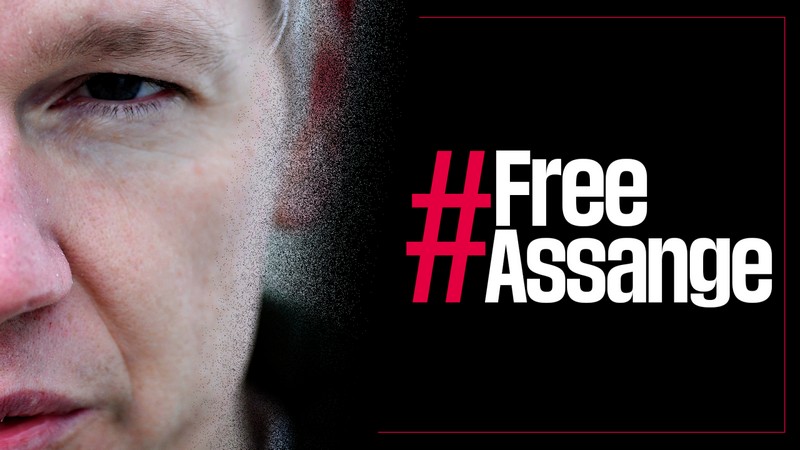
A Kingly Proposal: Letter from Julian Assange to King Charles III By Julian Assange

By Julian Assange

To His Majesty King Charles III,

On the coronation of my liege, I thought it only fitting to extend a heartfelt invitation to you to commemorate this momentous occasion by visiting your very own kingdom within a kingdom: His Majesty’s Prison Belmarsh.

You will no doubt recall the wise words of a renowned playwright: “The quality of mercy is not strained. It droppeth as the gentle rain from heaven upon the place beneath.”

Ah, but what would that bard know of mercy faced with the reckoning at the dawn of your historic reign? After all, one can truly know the measure of a society by how it treats its prisoners, and your kingdom has surely excelled in that regard.

Your Majesty’s Prison Belmarsh is located at the prestigious address of One Western Way, London, just a short foxhunt from the Old Royal Naval College in Greenwich. How delightful it must be to have such an esteemed establishment bear your name.

It is here that 687 of your loyal subjects are held, supporting the United Kingdom’s record as the nation with the largest prison population in Western Europe. As your noble government has recently declared, your kingdom is currently undergoing “the biggest expansion of prison places in over a century”, with its ambitious projections showing an increase of the prison population from 82,000 to 106,000 within the next four years. Quite the legacy, indeed.

As a political prisoner, held at Your Majesty’s pleasure on behalf of an embarrassed foreign sovereign, I am honoured to reside within the walls of this world class institution. Truly, your kingdom knows no bounds.

During your visit, you will have the opportunity to feast upon the culinary delights prepared for your loyal subjects on a generous budget of two pounds per day. Savour the blended tuna heads and the ubiquitous reconstituted forms that are purportedly made from chicken. And worry not, for unlike lesser institutions such as Alcatraz or San Quentin, there is no communal dining in a mess hall. At Belmarsh, prisoners dine alone in their cells, ensuring the utmost intimacy with their meal.

Beyond the gustatory pleasures, I can assure you that Belmarsh provides ample educational opportunities for your subjects. As Proverbs 22:6 has it: “Train up a child in the way he should go: and when he is old, he will not depart from it.” Observe the shuffling queues at the medicine hatch, where inmates gather their prescriptions, not for daily use, but for the horizon-expanding experience of a “big day out”—all at once.

You will also have the opportunity to pay your respects to my late friend Manoel Santos, a gay man facing deportation to Bolsonaro’s Brazil, who took his own life just eight yards from my cell using a crude rope fashioned from his bedsheets. His exquisite tenor voice now silenced forever.

Venture further into the depths of Belmarsh and you will find the most isolated place within its walls: Healthcare, or “Hellcare” as its inhabitants lovingly call it. Here, you will marvel at sensible rules designed for everyone’s safety, such as the prohibition of chess, whilst permitting the far less dangerous game of checkers.

Deep within Hellcare lies the most gloriously uplifting place in all of Belmarsh, nay, the whole of the United Kingdom: the sublimely named Belmarsh End of Life Suite. Listen closely, and you may hear the prisoners’ cries of “Brother, I’m going to die in here”, a testament to the quality of both life and death within your prison.

But fear not, for there is beauty to be found within these walls. Feast your eyes upon the picturesque crows nesting in the razor wire and the hundreds of hungry rats that call Belmarsh home. And if you come in the spring, you may even catch a glimpse of the ducklings laid by wayward mallards within the prison grounds. But don’t delay, for the ravenous rats ensure their lives are fleeting.

I implore you, King Charles, to visit His Majesty’s Prison Belmarsh, for it is an honour befitting a king. As you embark upon your reign, may you always remember the words of the King James Bible: “Blessed are the merciful, for they shall obtain mercy” (Matthew 5:7). And may mercy be the guiding light of your kingdom, both within and without the walls of Belmarsh.

Your most devoted subject,

Julian Assange

A9379AY

8 May 2023

Source: www.globalresearch.ca


JUST-IS denounces Political Terror against the Ahmadiyya in Pakistan

By Press Release

In no uncertain terms, JUST-IS (A Network of Interfaith Solidarity Activists against Global Militarism and for Social Justice) harshly denounces the recent spate of attacks against houses of worship of the minority Ahmadiyya religious community in Pakistan. The most recent one, https://countercurrents.org/2023/05/desecration-of-yet-another-ahmadi-mosque-in-pakistan/, has been the most heinous.

Of course, mainstream Muslim orthodoxy has had a profound theological problem with certain beliefs of the Ahmadiyya community since the latter emerged in the late 19th century. The overwhelming majority of that conflict involved polemical debates both under British colonial rule and after the independence of India and Pakistan in 1947. But occasionally, riots led by religious hardliners have broken out and violence has ensued.

Nevertheless, it was not until 1974 that the most egregious step was undertaken to virtually permit state-sanctioned official popular persecution of the Ahmadis. It was that year that the country’s ‘progressive’ leader instituted a law that officially declared the Ahmadiyya community as non-Muslims. And it has been a sordid story since then, with periodic targeting of Ahmadis taking place time and time again.

However, there is a central context to what is going on right now. A brief review of history will do us some good here. The conservative, orthodox, but mainly non-violent sections of Islam in Pakistan, mostly young children and young adults in the madrassas (religious seminaries) of Pakistan in the 1970s, were deliberately forced into becoming repugnant forms of fundamentalist and sectarian groups directly created by the Pakistani state, the Saudis, and the entire Western political establishment (but especially Washington) in the late 1970s and 1980s to accomplish their secular aim of defeating the ‘evil commies’ in Afghanistan. As one of the architects of this maddening policy admitted later, National Security Advisor to President Jimmy Carter, Zbignew Berzinski: “What was more important in the worldview of history? The Taliban or the fall of the Soviet Empire?” A few stirred-up Muslims or the liberation of Central Europe and the end of the Cold War.” Sadly, his own country suffered the blowback from this policy a few tragic times, while the tragedy of the infliction of horrendous harm by these groups on not just Ahmadis, but other religious minorities and especially those Muslims not considered Muslim enough (the latter being the overwhelming majority of victims), has been a daily experience for Pakistanis since that time.

The US’s immoral and illegal ‘War on Terror,’ and specifically its ‘Af-Pak’ theatre of that war, only compounded this problem later by fueling militancy, terrorism, and suicide bombings in Pakistan for the first two decades in of the 21st century.

However, the crucial aspect to also emphasize is how the Pakistani national security state, most of the time in cahoots with a hopelessly corrupt and venal political class, has instrumentalized these violent, sectarian militant groups to target individuals and groups that the Pakistani state has deemed to be a threat to the status quo of gross inequality and oppression.

And herein lies the context of what is so patently obvious to any intellectually honest observer right now. As the country has witnessed its most historic popular mobilization for social justice and against the crooks in both the military and civilian elites for an entire year now after the ouster of the most popular politician in the country, former Prime Minister Imran Khan who was ousted in a regime change operation, all of a sudden – after virtually five years of barely hearing a blimp of any serious threat coming from these groups – Pakistanis are now being bombarded by state propaganda of the rising threat of extremism and militancy.

So, at precisely the point where the overwhelming majority of Pakistanis want fresh elections which everyone knows Imran Khan’s party will sweep, the current ‘hybrid regime’ of the national security state/military high command and their twelve-party coalition allies are screaming ‘national emergency’ and attempting their best to deflect attention away from popular mobilization for elections and social justice, and towards the ostensible rising tide of militancy.

The government itself has embarrassingly spent all of this past year in utterly bogus charges against Khan to arrest him. But even more than that, openly speaking of assassinating him! Khan barely survived one assassination attempt already, and the state blamed an ‘Islamic extremist’ who supposedly believed that Khan is a ‘Jewish agent,’ is not really Muslim, etc.

Just two months ago, Pakistanis were told that the Pakistani Taliban are now miraculously making a comeback after being definitively beaten five years ago and that the country really needs to be focused on that rather than anything else like, say, the massive inflation and impoverishment engrossing the nation.

Now, the leading extremist movement behind the specific targeting of the Ahmadiyya community is a group known as the Tehreek-e-Labbaik Pakistan (TLP). By now, it has become crystal clear that this group is the handmaiden fascist brownshirts of the national security state itself. They are summoned at a dime’s notice to riot and protest and kill whenever the military top brass demands.

And that is exactly what is going on now. Both the military high command (not the entire military itself, the ranks in which Khan is deeply popular) and the twelve-party coalition government are ordering their TLP storm-troopers to both target the Ahmadiyyas, and what senior military officials say with high probability, go for another shot at an assassination attempt on Khan – again, because Khan does not denounce the Ahmadi community for their views and is deeply committed to religious pluralism in Pakistan. Some of his first actions when coming to power was restoring and renovating sites of religious minorities that had either been desecrated or were in disrepair.

To emphasize again, we at JUST-IS believe in taking the strongest possible positions on these abominable acts of extremist terror against religious houses of worship.

However, we are a group that will never allow ruling elites to fool us by stating that these are unfortunate theological/religious issues within society, rather than what’s the true reality: the ruling elites’ own creation and weaponization of these extremist groups to target movements for progressive social change, such as the historic one happening right now in Pakistan.

JUST IS is an Inter-Faith Solidarity Network of Activists against global militarism and for social justice. 

8 May 2023

Source: countercurrents.org

“A Guiding Light for 9/11 Truth.” A Tribute to Graeme MacQueen

By Michael Welch, James Corbett, Edward Curtin, Ted Walter, Barrie Zwicker, and Richard Gage

“Suppose our imaginations can embrace the possibility that the 9/11 attacks were orchestrated by elements in the U.S. government. In that case what do we do next? There is no mystery. Once the imagination stops filtering out a hypothesis and allows it into the realm of the possible, it can be put to the test. Evidence and reason must now do the job. Imagination cannot settle the question of truth or falsity any more than ideology, morality, or ‘common sense.’ ” —Graeme MacQueen, 2017 [1]

“Along with his remarkable intelligence and wide-ranging analytical skills, MacQueen’s dedication to peace and justice made him a force to be reckoned with. Although he became the leading expert on testimonies related to 9/11, including those from firefighters, first responders, and media sources, he contributed much more to the cause and his contributions will continue to light the way forward.”

 Kevin Ryan, co-editor with Graham MacQueen of Journal of 9/11 Studies (April 26, 2023)[2]

LISTEN TO THE SHOW

“A Guiding Light for 9/11 Truth.” A Tribute to Graeme MacQueen

Click to download the audio (MP3 format)

At a time on the world stage when multiple events seem to be happening simultaneously – a drone attack on the Russian Kremlin, additional bank stock collapses in the U.S., the restoration of Iran-Saudi diplomatic ties under the watch of China, the fighting between rival generals battling for control of resource-rich Sudan taking hundreds of lives and displacing hundreds of thousands more, and the ongoing general strikes and mass demonstrations in France in response to the French government’s pension reforms, it can seem difficult to decide which topic should be highlighted first. However, at a time when a prominent and profound voice in the 9/11 Truth movement has been silenced by the expiration of its mortal coil, at that time, it’s not hard at all for this show to make up its mind.

Graeme MacQueen, a Religious Studies Professor, and the founding Director of the Centre for Peace Studies, both at McMaster University, and also what would become a major brain developing the cogent arguments that the official narrative of the September 11 attacks, like the damaged buildings themselves, could no longer stand erect in the face of the flawless logic directed against them!

MacQueen, also the co-editor of Journal of 9/11 studies, the organizer of the Toronto Hearings on 9/11: Uncovering Ten Years of Deception, and author of The 2001 Anthrax Deception: The Case for a Domestic Conspiracy and the more recent ebook The Pentagon’s B-Movie. Looking Closely at the September 2001 Attacks has passed away on April 25, following a long trial with cancer.

Graeme MacQueen is a Research Associate of the Centre for Research on Globalization (CRG). Archive of Graeme MacQueen’s GR articles.

Not only has he left behind his beloved wife, daughter, brother and sisters. He has left an enormous number of admirers and fans, sitting in disarray and knowing that they will never again hear his dulcet tones explaining to us carefully the details of a terrible attack on our nation apparently coming from those we expected to look after us.

As you will hear in this episode of the Global Research News Hour, we have assembled a number of people who welcomed the opportunity to express their thoughts about this remarkable man, and the impact he had on their own vision, not only on 9/11, but on peace, and the ways in which activism can spring us to another level of conscious commitment to a righteous path.

Our remarkable roster includes former journalist Barrie Zwicker, 9/11 activist and researcher Ted Walter, former AE911 Truth head Richard Gage AIA, James Corbett of the Corbett Report, Professor Emeritus Michael Keefer, sociology professor Edward Curtin, writer and tech researcher Dave Ratcliffe, and energy healer Kathleen Mackay.

We have attached their stories separately in the YouTubes below. We start though with a written contribution on Graeme’s legacy available from his widow, Sharon MacQueen.

Barrie Zwicker is a former journalist and media critic. He wrote for the Globe and Mail, Toronto StarVancouver ProvinceSudbury StarDetroit News, and Lansing State Journal. He is the author of the 2006 book, Towers of deception: The Media Coverup of 9/11.

Ted Walter was the director of strategy and development for AE911Truth from 2015 until early 2023. He is the author of AE911Truth’s 2015 publication Beyond Misinformation: What Science Says About the Destruction of World Trade Center Buildings 1, 2, and 7 and its 2016 publication World Trade Center Physics: Why Constant Acceleration Disproves Progressive Collapse and co-author of AE911Truth’s 2017 preliminary assessment of the Plasco Building collapse in Tehran. He holds a Master of Public Policy degree from the University of California, Berkeley.

Richard Gage, AIA is a 30-year San Francisco Bay Area architect and member of the American Institute of Architects. He is the founder and former  CEO of Architects & Engineers for 9/11 Truth. He now leads the charge for a new WTC investigation.His current site is RichardGage911.org

James Corbett started The Corbett Report website in 2007 as an outlet for independent critical analysis of politics, society, history, and economics. He is an award-winning investigative journalist and based in Japan.

Michael Keefer is an Emeritus Professor of Literary Studies from the University of Guelph. He has been researching and analyzing electoral interference in the 2011 Canadian Federal election. He has also been active investigating 9/11 Truth.

Edward Curtin is a prominent author, researcher and sociologist based in Western Massachusetts.  He is a Research Associate of the Centre for Research on Globalization (CRG).

Dave Ratcliffe is a technology buff active in preserving crucial historical materials on his website. He helped produce Graeme MacQueen’s latest ebook The Pentagon’s B-Movie. Looking Closely at the September 2001 Attacks.

Kathleen Mackay is an energy healer in Ontario.

Global Research News Hour Episode 390

LISTEN TO THE SHOW

“A Guiding Light for 9/11 Truth.” A Tribute to Graeme MacQueen

Click to download the audio (MP3 format)

Statement by Sharon MacQueen, wife of Graeme MacQueen:

“One of the things that many people might not know about Graeme was his love of ancient languages. Even as a boy, he used to pore over his father’s Greek bibles, fascinated by the Greek language.  While he was studying Buddhism at Harvard, he loved learning Sanskrit, Pali, Tibetan and Classical Chinese.  His PhD thesis actually included nine languages.

In celebration of the 40th anniversary​‌ of World Literacy of Canada, Graeme collaborated with Griffin Ondaatje and a number of well known Canadian authors to retell traditional tales from the East. At first Graeme’s role was to translate some of the stories from their original languages that would then be re-told. At some point, it was suggested that Graeme re-tell a couple of the stories he had translated, which he did.  The stories were anthologized and published by Harper Collins in 1995 :”The Monkey King and Other Stories”.  (I think it may have since been re-published under a different title).

A few years later, we were thrilled to learn that one of Graeme’s stories had been adapted by the Indian school curriculum and included in a Grade 6 Reader to be used by hundreds of thousands of Indian children to learn to read English.

As a result of Graeme’s love of languages which began when he was still a child, he brought an Indian story that had lain dormant for 2,500 years to Canada centuries later which was then given back to Indian children as part of their heritage.  I think this is a wonderful example of the interconnectedness of life and stories across time, space and culture.

And to brag a bit: some of the other stories in The Grade 6 Reader were written by literary greats such as Oscar Wilde, Louisa May Alcott, Guy de Maupassant, and Alexander Dumas. Graeme’s story sits between one by William Wordsworth and Alfred Lord Tennyson.”

Statement by Barrie Zwicker:

Barrie Zwicker on Graeme MacQueen

Statement by Ted Walter:

Ted Walter on Graeme MacQueen

Statement by Richard Gage, AIA

Richard Gage AIA on Graeme MacQueen

Statement by James Corbett:

James Corbett on Graeme MacQueen

Statement by Michael Keefer:

Michael Keefer on Graeme MacQueen

Statement by Edward Curtin:

Edward Curtin on Graeme MacQueen

Statement by Dave Ratcliffe:

Dave Ratcliffe on Graeme MacQueen

Statement by Kathleen Mackay:

Kathleen Mackay on Graeme MacQueen

—————————————————-

Other stations airing the show:

CIXX 106.9 FM, broadcasting from Fanshawe College in London, Ontario. It airs Sundays at 6am.

WZBC 90.3 FM in Newton Massachusetts is Boston College Radio and broadcasts to the greater Boston area. The Global Research News Hour airs during Truth and Justice Radio which starts Sunday at 6am.

Campus and community radio CFMH 107.3fm in  Saint John, N.B. airs the Global Research News Hour Fridays at 7pm.

CJMP 90.1 FM, Powell River Community Radio, airs the Global Research News Hour every Saturday at 8am.

Caper Radio CJBU 107.3FM in Sydney, Cape Breton, Nova Scotia airs the Global Research News Hour starting Wednesday afternoon from 3-4pm.

Cowichan Valley Community Radio CICV 98.7 FM serving the Cowichan Lake area of Vancouver Island, BC airs the program Thursdays at 9am pacific time.

Notes:

  1. Graeme MacQueen (2023), ‘The Pentagon’s B-Movie: Looking Closely at the September Attacks’, published by Ratical.org; https://ratical.org/ratville/JFK/Sep11PentagonsBMovie/Contents.html
  2. https://digwithin.net/2023/04/26/remembering-graeme-macqueen/

5 May 2023

Source: www.globalresearch.ca

Although Scarred by Violence, We Must Not be Scared Into Silence

By Edward Curtin

The world has been haunted by human violence since time immemorial. There are untold millions (billions?) of people all over the world who have been scarred by it in all its forms. There are two basic responses: one is to try to return that violence with violence and defeat one’s enemy; the other is, in Martin Luther King, Jr.’s words, to “not seek to defeat or humiliate the opponent, but to win his friendship and understanding” through a non-violent response. Politicians usually embrace the former, while those who are called dreamers advocate the latter.

Between these two, there are various mixed responses, with sane political leaders calling for mutual respect between countries and an end to aggressive provocations leading to warfare, such has occurred with the United States provoking the war in Ukraine.

We have entered the time when the destruction of all life on earth through nuclear war is imminent unless a radical transformation occurs. If the word imminent sounds extreme, it is worth considering that there will be no announcement.  The time to speak up is now. It is always now.

Great literature speaks to the issue of violence at the deepest levels.

Homer’s Odyssey is the classic case of violent revenge. At the end of the story, Odysseus, who was scarred in youth by a wild boar, finally returns home from the Trojan War after ten years of wandering. Doubly scarred now by the horrors of war with its horrendous slaughters (see The Iliad), he arrives at his home disguised in a beggar’s rags. His nursemaid from childhood recognizes him from the scar on his thigh. In his house he finds scores of suitors who are hitting on his wife Penelope. He is enraged and  steps onto the threshold, rips off his rags, and systematically massacres every last one of them. Flesh and gore swim in the blood-drenched room, while in the courtyard twelve unfaithful serving maids hang from their necks. This is the quintessential western story of revenge where the wounded hero kills the bad guys and the violent beat goes on and on.

It appeals to our lesser angels, for while Odysseus’s rage is understandable, its consequences leave a toxic legacy.

But there is another response that draws on another tradition that is symbolized by Jesus on the cross, executed by the Roman state as a subversive criminal. He didn’t die on a private cross, for his crime was public. Martin Luther King, Jr. and Mahatma Gandhi are famous exemplars of non-violent resistance in modern times, as they too were executed by the state. Non-violence seems, on the surface at least, to be less effective than violence and contrary to much of human history.

If it is, however, we are doomed. For we have nuclear weapons now, not bows and arrows and spears. We have nuclear weapons hitched to computers. Digital weapons of multiple sorts and mad leaders intent on pushing us to the brink of extinction.

The United States’ instigation of the war in Ukraine against Russia and its push for war with China are current prime examples.  They are part of the continuing vast tapestry of lies that Harold Pinter spoke of in his 2005 Nobel Address. He said, in part:

The United States supported and in many cases engendered every right wing military dictatorship in the world after the end of the Second World War. I refer to Indonesia, Greece, Uruguay, Brazil, Paraguay, Haiti, Turkey, the Philippines, Guatemala, El Salvador, and, of course, Chile. The horror the United States inflicted upon Chile in 1973 can never be purged and can never be forgiven. . . . The crimes of the United States have been systematic, constant, vicious, remorseless, but very few people have actually talked about them.

This is still true, as John Pilger has just warned us in a powerful article: “There Is A War Coming Shrouded In Propaganda. It Will Involve Us. Speak Up”

The rise of fascism in Europe is uncontroversial. Or ‘neo-Nazism’ or ‘extreme nationalism,’ as you prefer. Ukraine as modern Europe’s fascist beehive has seen the re-emergence of the cult of Stepan Bandera, the passionate anti-Semite and mass murderer who lauded Hitler’s ‘Jewish policy,’ which left 1.5 million Ukrainian Jews slaughtered. ‘We will lay your heads at Hitler’s feet,’ a Banderist pamphlet proclaimed to Ukrainian Jews.

Today, Bandera is hero-worshipped in western Ukraine and scores of statues of him and his fellow-fascists have been paid for by the EU and the U.S., replacing those of Russian cultural giants and others who liberated Ukraine from the original Nazis.

In 2014, neo Nazis played a key role in an American bankrolled coup against the elected president, Viktor Yanukovych, who was accused of being “pro-Moscow.” The coup regime included prominent “extreme nationalists” — Nazis in all but name.

The U.S. led support for this war must stop.  Who will stop it?

Homer told us something quite important once upon a time, as did many poets, artists, and writers in the twentieth-century. They warned us of the monsters we were spawning, as Pilger says: “Arthur Miller, Myra Page, Lillian Hellman, Dashiell Hammett warned that fascism was rising, often disguised, and the responsibility lay with writers and journalists to speak out.”  He rightly bemoans the absence of such voices now, as writers have disappeared into post-modern silence, a part of the cultural war on dissent.

On a subtler and more personal note than Homer’s tale of revenge, we have the testimony of Albert Camus who was part of the Resistance to the German occupation of France during WW II. At the beginning of his beautiful, posthumous, and autobiographical novel, The First Man, Camus tells us about Jacques Cormery (Camus), who never knew his father, a French soldier killed in World War I – the misnamed grotesque War to End All Wars – when Jacques was eleven months old.  Years later, when he is forty years old and horrors of WW II have concluded, Jacques visits the cemetery in France where his father is buried.  As he stands over the gravestone in this massive field of the dead, silence engulfs him.  Camus writes:

And the wave of tenderness and pity that at once filled his heart was not the stirring of the soul that leads the son to the memory of the vanished father, but the overwhelming passion that a grown man feels for an unjustly murdered child – something here was not in the natural order and, in truth, there was no order but only madness and chaos when the son was older than the father. The course of time was shattering around him while he remained motionless among those tombs he no longer saw, and the years no longer kept to their places in the great river that flows to its end.

The tale continues, as did Camus’s, who always supported the victims of violence despite harsh criticism from many corners, from the left and from the right. He wrote a famous essay, “Reflections on the Guillotine,” against capital punishment, based on his father’s nauseating experience of seeing a man executed by the state. After hearing this story from his grandmother, he would regularly have ”a recurrent nightmare” that “would haunt him, taking many forms, but always having the one theme: they were always coming to take him, Jacques, to be executed.”

Furthermore, Camus warned us not to become murderers and executioners and to create more victims, when he wrote a series of essays shortly after WW II for the French Resistance paper, Combat. – Neither Victims nor Executioners. He wrote that yes, we must raise our voices:

It demands only that we reflect and then decide, clearly, whether humanity’s lot must be made still more miserable in order to achieve far-off and shadowy ends, whether we should accept a world bristling with arms where brother kills brother; or whether, on the contrary, we should avoid bloodshed and misery as much as possible so that we give a chance for survival to later generations better equipped than we are. 

Which leads me to Robert F. Kennedy, Jr. and his run for the U.S. presidency in this most dangerous time. He is a man not scared into silence despite all the efforts to censor him.

From a very tender age he was scarred by death; is surely a wounded warrior, not one of those who went to an actual war, but one who had a different war forced upon him when he was nine and fourteen years-old, when his uncle and father were assassinated by the CIA.  Some repress the implications of such memories; he has faced them and allowed them to spur him to truth and action.

No boar gored him, nor has he slain suitors in his house, because he has taken, not the road of revenge, but that of reconciliation, despite having lost his father and others to demonic government forces. This is the way of non-violence, a path unfamiliar to most of those seeking political office.

I don’t know his inner thoughts about this, but I read his words and actions to decipher where he is trying to take this very violent country. He is a non-violent warrior in the spirit of Gandhi’s truth force or satyagraha. Not a passive non-action, but an active resistance to evil and violence. Not one seeking revenge on all the warmongers and Covid liars (which does not preclude legal prosecutions for crimes), but one who seeks to reconcile the warring parties. To appeal to our higher angels and not the demons urging us to renounce the good, but to the love that is our only hope.

I am not saying he is a pacifist. Such a term muddies the water. He is clearly committed to the defense of the country if it were ever attacked. But he is emphatically opposed to the endless U.S. attacks on other countries. He knows the vicious history of the CIA. He is a very rare political candidate committed to reconciliation at home and abroad. He is waging peace.

Like his father Senator Robert Kennedy and his uncle, President John F. Kennedy, he is anti-war, committed to ending the endless cycle of overseas wars sustained by the military-industrial complex and the corporations who feed at the trough of war spending. He opposes the policies of those politicians who support such endless carnage, which is most of them, including most emphatically Joe Biden. He realizes the danger of nuclear war. He tells us on his website, Kennedy24:

As President, Robert F. Kennedy, Jr. will start the process of unwinding empire. We will bring the troops home. We will stop racking up unpayable debt to fight one war after another. The military will return to its proper role of defending our country. We will end the proxy wars, bombing campaigns, covert operations, coups, paramilitaries, and everything else that has become so normal most people don’t know it’s happening. But it is happening, a constant drain on our strength. It’s time to come home and restore this country. . . . We will lead by example. When a warlike imperial nation disarms of its own accord, it sets a template for peace everywhere. It is not too late for us to voluntarily let go of empire and serve peace instead, as a strong and healthy nation.

Those are very strong words and I am sure he means them. But he is opposed by demonic forces within the U.S., what former CIA analyst Ray McGovern aptly calls the Military-Industrial-Congressional-Intelligence-MEDIA-Academia-Think-Tank complex (MICIMATT). They run the propaganda shit show and will throw lie after lie (have already done so) at Kennedy and exert all their pressure to make sure he can not fulfill his promises. Their propaganda is endless and aims to hypnotize. Pinter described it thus: “I put to you that the United States is without doubt the greatest show on the road. Brutal, indifferent, scornful and ruthless it may be but it is also very clever. As a salesman it is out on its own and its most saleable commodity is self-love.”

It is this self-love and American exceptionalism that Bobby Kennedy will have to counteract by emphasizing the humanity of all people and their desire to live in peace. He will have to make it very clear that the U.S. government’s involvement in Ukraine was never humanitarian, but from the start was part of a plan to disable Russia. That is was an effort to continue the Cold War by pushing closer to Russia’s borders.

Only fools think that revenge and violence will lead to a better world.  It may feel good – and I know the feeling – to strike back in anger, but it is only a vicious circle as all history has shown. Revenge only brings bitterness, a cycle of recriminations and reactions. Reconciliation is the way forward, but it can only become a reality by an upswelling of resistance of good people everywhere to the lies of the war-loving propagandists who are leading us to annihilation.

RFK, Jr. can not do it alone. He can lead, but we need a vast chorus of millions of voices to resist, in Pilger’s words, “the all-powerful elite of the corporation merged with the state and the demands of ‘identity’.” If not, democracy will remain notional.  Kennedy is so right to say that the U.S.A. cannot be an empire abroad and continue to be a democracy at home. Silence must be replaced with resistance and his words made real by millions of people opposing the killers.

Writing in another time of extremity, but writing truly, Camus, said:

At the end of this tunnel of darkness, however, there is inevitably a light, which we already divine and for which we only have to fight to ensure its coming. All of us, among the ruins, are preparing a renaissance beyond the limits of nihilism. But few of us know it.

So let us fight with words and actions. As MLK, Jr. told us about the U.S. war against Vietnam: “There comes a time when silence is betrayal.”

*

Note to readers: Please click the share button above. Follow us on Instagram and Twitter and subscribe to our Telegram Channel. Feel free to repost and share widely Global Research articles.

This article was originally published on the author’s blog site, Behind the Curtain.

Edward Curtin is a prominent author, researcher and sociologist based in Western Massachusetts.

3 May 2023

Source: www.globalresearch.ca

Khader Adnan, who yearned to live free, dies in Israeli prison

By Tamara Nassar

Khader Adnan died after 86 days of refusing food in protest of his detention by Israel.

The news early Tuesday prompted outpourings of anger and grief among Palestinians who see him as an icon of courageous and steadfast resistance to Israeli oppression.

Adnan is the first Palestinian to die during a hunger strike in almost 40 years.

His death brings to 237 the number of Palestinian prisoners who have died in Israeli custody since 1967.

Israeli prison authorities said they found the 45-year-old father of nine unresponsive in his cell at the Nitzan Prison in central Israel in the early hours of Tuesday, and he was pronounced dead at the Shamir Medical Center.

Israel had for weeks refused to move him to a proper hospital or to allow his family to visit him, even as his condition deteriorated.

Hailing from the occupied West Bank village of Arraba near Jenin, Adnan spent some eight years in Israeli detention, mostly without charge or trial.

baker by profession whose job was to feed others, he refused any sustenance except water and salt in pursuit of a greater cause.

Over the years, he gained his freedom or limits on his detention by undertaking several long hunger strikes.

They include 25 days in 2004, 66 days in 2011 and 201255 days in 201558 days in 2018 and 25 days in 2021.

Those successive protests took a toll on his body, causing several long-term health problems.

Palestinian writer Yousef Aljamal recalled speaking to Adnan by phone in 2021 while co-editing with Norma Hashim the book, A Shared Struggle—Stories of Palestinian & Irish Republican Hunger Strikers.

“I remember his voice was very weak and he was barely able to talk due to his illness and the damage his vocal cords suffered from past hunger strikes,” Aljamal wrote in a tribute to Adnan.

But if Israel broke and finally destroyed Adnan physically, it did not do so spiritually.

“Our freedom is the most precious thing we have,” Adnan explained in an essay published in the book.

“Being locked in a dark dungeon, where Israeli soldiers beat my chained body was deeply humiliating and oppressing,” Adnan said. “Their punches and their weapons have left permanent scars on my body. Their barbarism itself stood before me, literally.”

“Freedom beckoned me from the moment I was first imprisoned, it haunted me. My quest for liberty also drove me to bolster the morale of my friends and brothers.”

By waging his hunger strikes, Adnan said he was determined “to teach the occupiers a lesson in dignity and defiance.”

He also recalled how his captors moved his “weak, faint and emaciated body from one prison to another.”

“Their hatred, oppression and brutality still live with me,” he said. “They pretend to act humanely in front of the rest of the world, but they don’t.”

Adnan never lost sight of what motivated him: his devotion to his people, his land and his family.

“During my struggle I occupied my mind by recalling the sun on the distant green lands. I missed most of all the feel of grains of sand, the scent of the almond and lemon trees,” he said.

“I demanded to go home, to my family, to my daughters, who had spent long periods of their childhoods without me since I was jailed.”

According to Aljamal, Adnan did “not subscribe to Palestinian factionalism. His discourse tended to be focused on Palestinian unity and nationalism, and one could find him at different political and social events across the West Bank.”

The love he showed his people was returned by Palestinians across various political factions.

“Pride and honor”

Following his death, Adnan’s captors transferred his body to Israel’s Abu Kabir Forensic Institute for an autopsy.

Adnan’s lawyer is reportedly appealing to Israel’s high court that they hand his body over to his family for burial.

The International Committee of the Red Cross offered its condolences to Adnan’s family and called on Israel to release his body so his loved ones “can mourn and arrange a dignified burial.”

Adnan’s wife Randa Musa said Tuesday that his family would not open a traditional mourning tent to receive condolences, but would instead accept congratulations on his martyrdom.

“He is our pride and honor, even though we would have liked him to return to us victorious,” Musa said.

Musa has long stood by her husband, campaigning for him, speaking to the media and celebrating with him and their children on the previous occasions when he did come home victorious.

She urged all Palestinian resistance factions to honor her husband’s wishes.

“Not a single drop of blood fell or was seen during Sheikh [Adnan’s] last five hunger strikes,” Musa said.

“We do not want a drop of blood to be spilled now. We do not want anyone to respond to their sheikh’s martyrdom. We do not want someone to fire rockets and for Gaza to be subsequently hit.”

“Calculated” killing

Adnan’s passing on Tuesday came after weeks of increasingly urgent warnings from family, lawyers and physicians that his health was deteriorating rapidly, but Israeli authorities consistently refused to release him or care for him properly.

The Palestinian Human Rights Organizations Council described Adnan’s death as a “calculated and cold-blooded slow-killing.”

Adnan began his final hunger strike after Israeli occupation authorities arrested him on 5 February and imposed an administrative detention order.

Typically issued for six-month periods, these orders can be renewed indefinitely. Detainees are held without charge or trial and they and their attorneys are not allowed to see evidence against them.

Adnan’s latest detention came as the number of Palestinians Israel is holding without charge or trial soared to a 20 year high.

An Israeli military court reportedly later charged Adnan with “terror-related offenses” but he had had no trial even in Israel’s military courts which have a near 100 percent conviction rate for Palestinians.

Israeli occupation authorities accused Adnan of being a senior member of Palestinian resistance group Islamic Jihad.

Israel considers virtually all Palestinian political parties and even prominent human rights organizations to be “terrorist” organizations – a pretext to routinely arrest Palestinians for political activity or for documenting Israel’s crimes.

Adnan’s wife Randa Musa told reporters last month that her husband is “quite literally” dying after a lawyer affiliated with Physicians for Human Rights-Israel visited him.

Physicians for Human Rights Israel said it tried for weeks to convince the Israeli health ministry, prison authorities and the Kaplan medical center to keep Adnan hospitalized, but to no avail.

The prison clinic “was not equipped to monitor Adnan and could not provide emergency intervention in case of sudden deterioration,” the group said.

“Unfortunately, our efforts to raise these concerns judicially and individually fell on deaf ears. Even the request to allow Adnan’s family to visit him in prison – when it was clear this may be their final meeting – was denied by the Israeli prison service.”

Grief and protests

Adnan’s death was met with widespread outrage among Palestinians in the occupied West Bank. General strikes were declared in several Palestinian cities.

Birzeit University in Ramallah, where Adnan earned his Master’s degree in economics, halted all activities in his honor.

Similar outrage was felt in Gaza, from where rockets were fired into Israel in response to Adnan’s death.

The Israeli military fired missiles into Gaza in response, and the joint operations room of Palestinian armed resistance factions retaliated by firing rockets as an “initial response” into southern Israeli cities.

The secretary of the Bobby Sands Trust, Danny Morrison, who previously called on the Israeli government to immediately release Adnan during his 2012 hunger strike, expressed sadness over his death and offered “condolences to his wife, children and family, to his friends and comrades.”

Bobby Sands died almost 42 years to the day, on 5 May 1981, after 66 days on hunger strike against British refusal to grant political status to him and other Irish republican prisoners.

Tamara Nassar is an assistant editor at The Electronic Intifada.

3 May 2023

Source: countercurrents.org

Masar Badil, Samidoun usher bolder activism — and growing backlash, as they march in Ottawa

By Rima Najjar

Both Networks are challenging Zionist manufactured smears and their power to twist governments as they like

It was overcast, rainy and windy when my brother and I arrived at the Canadian Tribute to Human Rights in Ottawa on Sunday, April 30 at 2:00 pm to join the May Day Liberation March organized by Masar Badil and Samidoun and sponsored by many pro-Palestine organizations in Canada. The route took us from the Monument via Elgin as we headed toward the Parliament of Canada on Wellington St and then past the American Embassy on Sussex Dr through downtown and back.

The bleak atmosphere brightened as protestors began to mill about and the organizers set the stage up for the speeches of support and solidarity that followed. Two young activists climbed 20 feet up on either side of the Monument and stood precariously on ledges holding the Palestinian flag, the wind keeping the flags unfurled. Samidoun international coordinator Charlotte Kates gave a short rousing speech in which she spoke about the sanctions and warmongering against Iran among other issues and then introduced the speakers: Toronto 4 Palestine, Montreal 4 Palestine, Neturei Karta, Anti Imperialist Alliance, Communist Party of Canada, Young Communist League, Communist Party of Canada, Marxist-Leninist; Khaled Barakat of Masar Badil, Anakbayan Ottawa (a Filipino youth organization) and Tito Martinez, singer from Guatemala.

And then quietly, the protestors made a formation and began the march following a front line of Neturei Karta members headed by an activist waving a huge Palestinian flag. But we weren’t quiet for long.

In its report on trends in Palestine advocacy and backlash in 2022, Palestine Legal states: “Palestine solidarity activism in 2022 was characterized by bold campaigns, particularly by students and faculty, to draw attention to the Palestinian liberation struggle and to invite concrete acts of solidarity from a growing community of allies.”

It’s safe to say that few campaigns rival in boldness the campaigns of Masar Badil and Samidoun. The Ottawa Declaration of the Masar Badil conference in North America published on May 1st does not mince words: “… the conference [which bore the name, “Palestine: Envisioning Liberation, Confronting Colonialism.”] of our movement extends a Palestinian, Arab and international salute to the resistance forces in occupied Palestine, with all of its battalions, brigades, committees, and heroic armed forces, and to the forces of the ‘Lion’s Den’ and the fighters of the cities, villages and camps of the West Bank, and to the masses of activists throughout the land of Palestine, led by the Palestinian prisoners’ movement in the prisons and detention centers of the occupation.” The chants on the march were just as bold and explicit.

Part of Masar Badil’s Khaled Barakat’s speech at the march, the part that affirms Palestinian armed resistance, quickly found its way on Twitter. CIJA- The Centre for Israel and Jewish Affairs in Canada posted the clip and tweeted: “‘Enough is enough!’ We’ve long urged @Safety_Canada to list Samidoun as a terrorist entity due to its ties to PFLP terror group This weekend in Ottawa, Samidoun called for support of ‘Palestinian resistance,’ directly referring to Hamas, Palestinian Islamic Jihad & PFLP #cdnpoli”

Samir Abed-Rabbo @OneDemState retorted: “The only terror I see here is CIJA’s working on behalf of settler colonial apartheid Israel …”

Zionism is a form of Nazism. Both Masar Badil and Samidoun are challenging Zionist manufactured smears and their power to twist governments as they like — in Canada as well as Germany. Palestinians have a legal right to armed struggle. As Stanley L Cohen put it, “It’s time for Israel to accept that as an occupied people, Palestinians have a right to resist — in every way possible.”

Both Samidoun and Masar Badil published fighting words eulogizing Sheikh Khader Adnan of Islamic Jihad. He was a Palestinian prisoner, hunger striker and resistance leader who was martyred in the early morning hours of Tuesday, 2 May 2023 after 86 days of hunger strike. As one of the much-repeated chants on the march says: “نموت وتحيا فلسطين |We die and Palestine lives.” Read his wife’s appeal on the 79th day of his strike here.

https://www.youtube.com/shorts/_qDY_uFfh4w
Caption: “We die and Palestine lives.”

Samidoun wrote: “The only response to his martyrdom must be continued and escalated action, resistance, protest and struggle, and for people around the world and Palestinian and Arab communities in exile and diaspora, it is urgent that we take the streets to make it clear that Khader Adnan, a great symbol of freedom, will never be eliminated by the Zionist assassination policy. He must live on in each of us and our actions, in honor of his sacrifice, commitment and willingness to put his body and life on the line not only for his own freedom, but for the liberation of Palestine. The great crime of the assassination of Sheikh Khader Adnan must not be allowed to pass without real accountability imposed by the people.”

Likewise, Masar Badil published a statement by the joint leadership of the Popular Democratic Party and the Arab Socialist Action Party in Lebanon emphasizing “that the response to the martyrdom of the leader Khader Adnan and the ongoing Zionist crimes against thousands of Palestinian prisoners is to escalate the resistance in all of its forms, at the top of which is the armed struggle, to unify all fronts and perpetuate the struggle with the occupier throughout historic Palestine.

The wonderful part of the march for me, other than the euphoria and pride I experienced, was the heartening reception we received from Ottawans, as we marched and chanted “From the river to the sea, Palestine will be free.” They honked their cars, raised fists and walked out of shops. A group of young men and women even spontaneously joined the march.

https://youtu.be/Gc1-eHTpobY
Caption: Ottawans honk cars in solidarity with Palestine

We Palestinians have had enough of “ideological debate,” “battle of narratives” and “peace talks,” thank you. It’s been seventy-five years and counting. We will return.

Rima Najjar is a Palestinian whose father’s side of the family comes from the forcibly depopulated village of Lifta on the western outskirts of Jerusalem and whose mother’s side of the family is from Ijzim, south of Haifa.

3 May 2023

Source: countercurrents.org

Winners and Losers in Sudan: On Proxy Wars and Superpower Rivalries in the Global South

By Dr Ramzy Baroud

The world is changing. In fact, it has been undergoing seismic change that long preceded the Russian-Ukraine war, and the recent US-Chinese tensions in the Taiwan Strait.

In fact, the US debacle in Iraq and the Middle East, and the humiliating retreat from Afghanistan were only signs of the decline in US power.

Leading US neoconservative strategists have once argued in “Rebuilding America’s Defenses: Strategies, Forces, and Resources For a New Century” that aggressive intervention policies were meant to keep emerging great powers, like China, out of areas designated as US geopolitical domains. They sought to “preserve and extend (US) position of global leadership (through) maintaining the preeminence of U.S. military forces.”

They failed, and the future seems to head in a different direction than what the likes of Dick Cheney, John Bolton, Richard Perle and Paul Wolfowitz had hoped for.

Instead, a whole new world order is emerging, one that is hardly centered round US-western priorities alone.

Indeed, what has taken place since the start of the Russia-Ukraine war in February 2022, and the provocative visit by then-US House Speaker, Nancy Pelosi, to Taipei in August of the same year, are an acceleration of an existing momentum of global shifts, that ranged from the emergence of new economic alliances, geopolitical formations, turf wars and, of course, competing political discourses.

These changes are currently on full display in the Middle East, Africa and, indeed, much of the Global South.

While this can be considered a positive development, in the sense that a bipolar or multipolar world can offer alternatives to countries that have been at the receiving end of US-western exploitation and violence, it can – and will – have negative manifestations as well.

More Than a Power Struggle

Though the current war in Sudan is understood to be a power struggle between two rival generals or, more accurately, corrupt warlords, General Abdel Fattah al-Burhan and General Mohamed Hamdan Dagalo, or Hemedti, it is also partly the outcome of a regional, and, increasingly, global power struggle as well. The regional and global dimension of the conflict in Sudan is itself an expression of the changing world order and the intense fight over resources and critical geographies.

Sudan is one of the richest African countries in terms of raw material, much of which remains un-exploited due to the country’s multifront and multilayered conflicts, starting in the South – which has led to the secession of the Republic of South Sudan, then West, namely Darfur and, as of now, everywhere else.

The North-South civil war and the Darfur crisis, too, were sustained and prolonged by outside parties, whether Sudan’s own neighbors or global powers. Sadly, in all these cases, the outcome was horrific in terms of human and material losses.

Sudan, however, was not the exception. Proxy wars in the Global South were one of the main features of the Cold War between Washington and Moscow, until the collapse of the Soviet Union in 1989-92. The dismantlement of the USSR, however, only exacerbated violence, this time channeled mostly through US-led or championed wars in the Middle East, Africa and Asia. Now that global rivalry is back with a vengeance, global conflicts, especially in resource-rich and strategic regions with no clear political allegiances, are also back.

Sudan will not be the last of such conflicts.

What complicates the picture in Sudan now is the involvement of other regional actors, each with a specific set of interests, as they take advantage of the quickly dwindling US leadership, which, till recently – was the Middle East’s primary political and military hegemon.

The current shifts in power relations in the Middle East – as in other parts of the world – are also significant within historical, not merely current political contexts.

History Reversed

Since the Sykes-Picot Agreement was signed in 1916 between old colonial powers – France and Britain – with a minor, but still important involvement of Tsarist Russia, the Middle East and North Africa, along with Central Asia, were divided into various spheres of influence. Global priorities then were almost entirely Western.

The Bolshevik Revolution in 1917 was a watershed moment in world history, as it sowed the seeds for a possibility of a new global bloc to rival Western domination.

It took decades for that new bloc to emerge. In 1955, the Warsaw Pact was born, “unifying the Soviet Union and its allies against the North Atlantic Treaty Organization (NATO), a Western military alliance that saw the light six years earlier.

The rivalry between both camps was expressed in fierce economic competition, a political Cold War, a low-grade military conflict, proxy wars and two distinctly ideological discourses that defined our understanding of world politics for much of the 20th Century.

All of this came to a bitter end in the early 1990s. NATO won, while the Warsaw Pact, along with the USSR, disintegrated rapidly and in the most humiliating fashion. It was “the end of history”, Francis Fukuyama declared. It was the age of Western triumphalism and, by extension, more colonial wars, starting in Panama, then Iraq, Serbia, Afghanistan, Iraq again, and elsewhere.

China factored in all of this, not as a major global political player, yet, but as a worthy adversary and prized ally. The historic visit by US President Richard Nixon to Beijing in 1972 thwarted efforts to unify the East against US-Western imperialism. That trip, which supposedly ‘changed the world’ – per the assessment of then-Ambassador Nicholas Plat, was indeed consequential. It was the beginning of the end of the Soviet Union as it gave Washington a massive advantage and strategic boost over its rivals.

But history is now being reversed in ways that only a few geopoliticians could have possibly predicted.

The New Powers

The road ahead is not entirely clear. But numerous signs, accompanied by tangible changes, suggest that the world is transforming. However, this metamorphosis is more visible in some regions than others. The geopolitical tug-of-war between old and new global rivals is most visible in the Middle East and Africa, in addition, of course, to South America, East Asia and Pacific regions. Each of these regions is undergoing its own re-ordering of power relations and dynamics.

In the Middle East, for example, Iran seems to be breaking away from its West-imposed isolation, while Saudi Arabia is challenging its old client regime status.

The latter move is particularly troubling for Washington, as it challenges two layers of Western domination of the Middle East: one which followed the Sykes-Picot agreement in 1916 – thus dividing the region into subregions under Western ‘protection’ and influence; and the other which resulted from the US-NATO invasion of Iraq. With massive political sway, an ever-growing military presence, and a weaponized US currency, Washington had dominated the Middle East with no serious competition for many years. This is no longer the case.

For years, Russia and China have been staking claims in the region, though using mechanisms that are wholly removed from the Western style of old colonialism and neocolonialism. While the Russians tapped into their long Soviet tradition of cooperation, the Chinese resorted to a more ancient history of friendly trade and cultural exchanges.

Now that Beijing has developed a more candid and unapologetic approach to foreign policy, China’s status as a new superpower shall demonstrate its effectiveness in the Middle East in unprecedented ways. In fact, it already has. The recent Iran-Saudi Accords was a tremendous achievement for the new politically-oriented China, but the road ahead is still very challenging, as the region is rife with foreign contenders, and old and new conflicts. For China to succeed, it must present itself as a new and better model, to be contrasted with Western exploitation and violence.

But China does not hold all the keys, as the US and its Western and regional allies continue to hold significant influence. For example, the UAE is emerging as a powerful player in the current war in Sudan.

What is certain is that the consequences of the current fight for resources, influence and domination are likely to lead to smaller, though bloody conflicts, especially in countries that are politically and socially unstable. Sudan fits perfectly into this category, which makes its current war particularly alarming.

Although much has been said and written about Sudan’s gold, agriculture potential and massive wealth of raw materials, the fight over Sudan by outside parties is essentially a turf war due to Sudan’s unparalleled geopolitical location. Egypt, Ethiopia, UAE, Israel, and others are all keen to emerge winners in the ongoing war. Russia is monitoring the situation closely from its various African bases. The US, Britain and France are wary of the dire consequences of direct intervention and the equally costly price of no intervention at all. China is still gauging the challenges and opportunities.

The outcome of the bloody Sudan war is likely to redefine, not only Sudan’s own political balances but the power relations of the whole region as well.

Dr. Ramzy Baroud is a journalist, author and the Editor of The Palestine Chronicle.

3 May 2023

Source: countercurrents.org

Euro-imperialism ready for new colonial wars in Africa

By John Graversgaard

Where is Danish foreign policy headed? Everything now revolves around the war in Ukraine and rearmament against Russia, which is quite openly called our enemy, and where sanctions are being extended and trade and contacts are being cut off in all areas. NATO now also talks about China in its new strategy papers. But what about Africa, which has for decades received Danish development aid? What does the government say about Africa, which belongs to the Global South, today a widely used term?

Denmark is a member of NATO, and has increasingly become an active participant in wars outside Europe. Danish governments have sent military forces into hotspots where Denmark is not exactly remembered for any positive role. Except in their own self-glorification, strongly supported by uncritical media. The so-called activist foreign policy has broad support in Parliament, and the military has been trained to be able to send missions to distant targets to defend what? Yes, that is the good question, which is most often answered with the fact that it is about defending our values. Values ​​that are called liberal, although it can be difficult to see when it comes to the choice of business partners. These are usually corrupt governments that line their own pockets and are hated by large sections of the population. We can only mention Libya, Iraq and Afghanistan. And most recently Mali in West Africa, where a new government has thrown Denmark and the old colonial power France at the door.

The government’s security policy analysis group

The analysis was published by the Mette Frederiksen government in October 2022 and was carried out under the leadership of Michael Zilmer-Johns and a number of experts and researchers. Mention is made of analyzes carried out by e.g. Center for Military Studies, DIIS, the Defense Academy and Foreign Economic Analysis Unit. The analysis was therefore made after the Russian invasion of Ukraine.

The fact that Denmark is a small state does not exactly characterize the analysis. Denmark wants to eat cherries with the big ones, and aligns itself closely with the US’s foreign policy, as has been the tradition since joining NATO in 1949. It’s like the mouse saying to the elephant when they cross the bridge: Hear where we rock.

China has gained a growing role as a great power, which challenges the United States, which understands itself as the leading great power. This also permeates the latest strategic scenarios from Washington. The analysis believes that the US will be more focused on China and therefore “Europe will have to provide a much larger part of both NATO’s defense against Russia and the efforts against terror and irregular migration from the Middle East and Africa” ​​(quote) towards 2035. In short, Africa will move more into the center, also militarily.

There is talk of the “southern agenda”, which has not diminished since Russia’s invasion of Ukraine. The activist foreign policy, where Denmark was a willing actor in the US and NATO wars during the changing government, has not been cancelled. There are threats in both the east and the south, and in the south it is “international terrorism, geopolitical and societal instability, irregular migration etc.” In short – you must be prepared for evacuation on all front sections.

The challenge from the Global South

The analysis also resumes the old scare picture from the Cold War. That the non-aligned movement, which then had its heyday, is being revived. That there are countries that do not choose a side, i.e. above all, it does not support the so-called “free Western world”, but goes its own way and chooses its partners based on its own interests. Imperialism is based on capital exports and access to raw materials, and a development where Western groups are exposed to increased competition is therefore a threat. The analysis formulates it as follows: “A value-based division of the world risks standing in the way of handling one of the most important global axes in the long-term great power competition – namely the relations with the group of countries that during the Cold War belonged to the “non-aligned” grouping. The West i.e. needs to cooperate with many of these countries on replacing Russian energy and on raw materials for the green transition”.

As I said, this group of countries has its own interests, and there are countries that want to break the neo-colonial ties with the West, and maintain and expand ties with China and Russia. The analysis indicates that there is considerable skepticism towards the West’s intentions.

“In many countries, the West is suspected of double standards, and neither leaders nor populations see the big difference between Russia’s actions and US-led interventions in Iraq or the bombing of Serbia and the recognition of Kosovo’s independence”.

“In the African countries, Russia and China have gradually gained greater influence, while the EU has had difficulty converting its large development aid and importance as an export market into political influence”.

The West’s heavy emphasis on having an agenda of values ​​has run into major problems when it comes to demonstrating those values ​​in practice. That this value agenda creates more distance than it promotes the West’s interests. Internally, too, the West is weakened by internal problems with e.g. populism and increased polarization. A large number of large nations in the Global South do not immediately buy this value agenda. The analysis indicates that the EU is far less ready than the US to face these challenges. But that there is untapped potential in the EU, which Denmark can also contribute to. The TEAM Europe mechanism is mentioned as a plan that can ensure greater decision-making power. TEAM Europe (2021) is an initiative that seeks to create a good narrative about the EU vis-à-vis the EU’s partners and global competitors. An initiative which must portray the EU as a global and visible leader and as a “soft power” in order to gain influence, not least in the Global South. But which also covers the fact that EU member states have been particularly active in exercising hard military power through actions with the USA and/or NATO.

A double agenda for Denmark

The analysis says that towards 2035 the period will be characterized by a “double agenda with threats and challenges from both the east and the south”. The previous strategy, where one wanted to change from territorial defense to international operations, is now being revised. They have their eyes fixed on the East, and the USA and NATO throw in immeasurable sums of money for arms aid and rearmament with the stated aim of Ukraine winning the war against Russia. One imagines that “an amputated Ukraine will have great difficulty in restoring a sustainable economy and its physical and human infrastructure. There will be a need for very extensive international aid, which will be difficult to finance for Western donors who are already under pressure from higher energy prices and lower growth as a result of the war”.

When peace hopefully comes before long, it will cost enormous sums to rebuild Ukraine. Not to mention the huge profits that can be made from this. The Western powers are determined that Russia should not be “rewarded” for its invasion, and in this game everyone is the loser, but the poor countries also pay a heavy price. The analysis then also points out that “a large part of the aid to Ukraine will be given at the expense of support for weak and fragile countries in Africa, thus increasing the security challenges from there”. In short, development aid will be reduced, at the same time as poverty and crises grow in Africa. A development which can only support the forces in Africa who say we must find African solutions to African problems. And not to attach unilaterally to the West.

The EU’s military arm is growing

The EU would like to appear as a “soft superpower” that provides humanitarian support and opens doors to its huge trading area. But the EU is also closely linked to NATO and the USA, and EU countries participate in both multilateral and bilateral actions globally. So you can’t exactly call the EU a continent of peace, even though the EU has a colossal ideological superstructure with lots of positive words about development and peace. With the massive rearmament and the growth of the military-industrial complex, the course is set towards becoming a great power, a “force for good” (CEPA, 2023). The discussions between France, the UK and Germany about where the emphasis should be placed have been going on for years. Whether it was a more independent military power, or whether one should continue to lean completely on NATO/USA. With the Treaty of Lisbon in 2009, it became clearer that the EU had set a course for more militarization, and in 2011 a unit was established for the EU’s Foreign Service and external actions: the European External Action Service (EEAS). With the Ukraine war, even more momentum has been set in the development of what Jürgen Wegner (2022) has called a TURBO MILITARISATION.

The southern flank and Europe’s backyard

Military presence in Africa is constantly wrapped in beautiful declarations of intent about missions that are about stabilization, but of what? The EU’s foreign affairs chief, the Social Democrat Josep Borrell, caused a diplomatic storm when he spoke in October 2022 about “Europe with a well-functioning “garden” which is surrounded by a somewhat dangerous and uncertain “jungle.”. “Most of the rest of the world is a jungle, and the jungle can invade the garden”, he stated in a speech” (DR, 2022). He also stated that “the gardeners must go into the jungle. The Europeans will have to be much more engaged with the rest of the world. Otherwise, the rest of the world will invade us in different ways and by different means”. He was heavily criticized by several countries for being racist; and a Russian spokesman took the opportunity to say: “This “garden” was built by Europe as a result of their barbaric approach to plundering the “jungle.” “Borrell could not have said it better: The most prosperous system that has been created in Europe has been nurtured by its colonial roots”. Then the lines were drawn up. The colonial and Eurocentric mindset is alive and well.

But just as it was during the cold war the fight against communism spreading to Africa through the freedom movements, a new cold war is now underway, where, with increased great power competition, it is important to keep China and Russia out. The ongoing crisis in Africa, which has lasted for decades, is producing flows of migrants seeking Europe. There is a lack of offers from the EU for social and economic solutions, and therefore the military dimension has grown in importance. In a Danish analysis by Mathiesen & Tetzlaff (2022) called ‘Sydflanken’, it is pointed out that the EU is “the obvious supplier” of solutions to “the strategic problem in the South”. Fort Europe has become a reality, they say, and with the EU’s Strategic Compass as a basis, one must learn to “speak the language of power”. Appropriations for a new instrument, the European Peace Facility (EPF), allow arms to be sent to states in the South. Through a combination of soft and hard power, the EU will signal its support for operations reminiscent of the deployment of colonial troops in the old days. Money is taken from the development aid and plans are made for the civil and military to be more coordinated.

The Danish abolition of the defense reservation opens up increased engagement in the South, and makes it easier to deploy military forces. With the Ukraine war, the focus has shifted sharply to the East, but NATO’s strategic concept also includes the South. However, the analysis honestly writes that there is “a declining political appetite” and quotes Pia Olsen Dyhr for having spoken of “meaningless desert wars”. But Africa’s importance as a raw material supplier and intervention arena for the multinational groups and the great powers remains high on the agenda. The growing cooperation of some African countries with China and the international pariah Russia is getting big headlines. The living conditions of the African population do not trigger great missions, but are often met with a resigned shrug. The growing awareness in Africa of securing more sovereignty and control over its own resources is a positive development, but it is difficult to break with the neo-colonial structures which have been built up over many years and which have the support of the ruling classes.

New missions in Africa

12 Dec. 2022, the Council of Europe decided on military cooperation with the state of Niger in the Sahel belt. It is considered a military mission, where Denmark also has the option of sending soldiers. It has caused panic in the EU that France, but also Denmark, have been forced out of Mali. Where Denmark has been militarily present together with France for a number of years in the so-called Operation Barkhane. The Malian government does not believe that they have been effective in the fight against Islamist groups, and has therefore turned to Russia and made an agreement with a Russian militia group, Wagner. The same development has occurred in Burkina Faso. In order to maintain its footing after what observers (JP, 26 Dec. 2022) have described as a failed Western effort, an agreement has been made with Niger. A country which also has strategically important uranium mines, not least of importance for France’s many nuclear power plants. But also in Niger there are “very anti-Western tendencies, where people also have protested against France, which has a complicated past as a colonial power (JyllandsPosten, 26 Dec. 2022).

A recent decision in the Danish Parliament on joining PESCO, which is the EU’s enhanced military cooperation, showed that we have a government and a majority that are ready for interventions in Africa when called upon (Arbejderen, 2 March 2023). The proposal states: “With the proposal, the government requests the consent of the Parliament of Denmark to participate in the European Defense Agency and the permanent, structured cooperation in the field of defense (PESCO), both of which are central parts of the EU’s defense cooperation.

The background for the resolution proposal is the abolition of the EU defense reservation in June 2022, which meant that Denmark fully entered into European cooperation on security and defense on 1 July 2022. According to the government, participation in the two collaborations will mean that Denmark will be able to help set the strategic direction for the EU’s security and defense policy, including with a view to ensuring that the collaboration aligns to an even greater degree with Danish security interests”.

Africa says no to new cold war

The Africans have historically bad experiences with great power rivalry on their continent, and have great skepticism about the West’s attempts to involve them in a new intensified cold war, not least after the start of the Ukraine war. At the UN General Assembly, the Chairperson of the African Union, the President of Senegal, Macky Sall, stated: ‘Africa has suffered enough from the burden of history and does not want to be the breeding ground for a new Cold War, but rather a center of stability and opportunity, open to all its partners on a mutually beneficial basis’ (Tricontinental, Nov.2022).

The US works systematically to maintain and expand its influence, both politically and militarily, and here uses AFRICOM as a tool. Morocco is a key country here, which has closely linked itself to the USA (US Embassy. Oct. 2022). Annual military exercises are held, called African Lion, and in 2022 they held their largest exercise to date with observers from Israel and NATO. Just as the United States has begun to speak more directly about its plans to fight Africa’s choice of other partners.

The US military command for Africa, called AFRICOM, has for many years applied for a headquarters in Africa, but has so far been rejected. AFRICOM Says About Itself: AFRICOM, with partners, counters transnational threats and malign actors, strengthens security forces, and responds to crises to advance U.S. national interests and promote regional security, stability, and prosperity. AFRICOM was formed in 2007 to secure US interests in Africa and, according to Nick Turse (2020), has established at least 29 military bases on the continent.

Africa is seen by the US and its allies as a battleground in the new Cold War against China and Russia. This is also reflected in the US’s strategic plans (US Strategy, 2022) for Africa. The US claims that it does not want to dictate anything to the Africans, but has begun to put increased pressure after the war in Ukraine.

What Africa has in store for the US was exemplified in the disastrous military intervention in Libya by the US and NATO (here also Denmark), which smashed a country that had ranked highest on the UN’s index of human development in Africa.

Africa is seen as NATO’s southern flank or our southern neighborhood, and this is a point of view we find again in the Danish and European security analyzes of Africa. It is strongly reminiscent of the Americans’ Monroe Doctrine, where they designated Latin America as their backyard. There is an almost paternalistic view of Africa, which is warned against seeking increased cooperation with others, here especially Russia after Russia’s invasion of Ukraine. Here, the US and the West seek to create a united front, but the Africans have a natural skepticism towards the West’s intentions. The aggressive policy of the USA towards Africa was shown in a decision in the House of Representatives in the USA, where in April 2022 a law was passed by an overwhelming majority: “Countering Malign Russian Influence Activities in Africa Act”. The threats are obvious and the USA/NATO is ready to intervene to secure the interests of their monopolies, regardless of what the Africans think.

Defense of sovereignty

There are many examples of Africa not passively putting up with this big brother mentality. The US is trying to compensate for its economic decline with military means. The USA has, so to speak, lost on the basis of rules for world trade that they themselves have been behind. Developing countries, and especially China, have made tremendous progress and have increasingly represented economic alternatives. This changed political strategy is also found in the strategies of the EU and NATO, which here show their vassal status in relation to the USA.

Examples of political analyzes that will strengthen Africa’s sovereignty can be found in a document prepared by Tricontinental and The Socialist Movement of Ghana’s Research Group: “Defending Our Sovereignty: US Military Bases in Africa and the Future of African Unity” (Tricontinental, 2021). It is pointed out here that there are 2 important principles in a Pan-African movement, namely political unity and territorial sovereignty. Here, foreign military bases are an expression of a lack of unity and sovereignty, and it reinforces the division and subjugation of the continent’s peoples and governments.

Instead of supporting and cooperating with an Africa that suffers from poverty, the climate crisis and the consequences of the Ukraine war, they want to send military. It cannot be seen as anything other than continued colonialism.

John Graversgaard is a political activist from Aarhus, Denmark

3 May 2023

Source: countercurrents.org

After Years of Attacking Protesters, Sudan’s Army and Paramilitary RSF Turn on Each Other

By Pavan Kulkarni and Prasanth Radhakrishnan

More than 500 people have been killed and 4,000 injured since fighting broke out between the Sudanese Armed Forces (SAF) and the paramilitary Rapid Support Forces (RSF) on April 15.

Groups such as the Sudan Doctors Union are worried the fighting could escalate after the evacuation of foreign nationals. Thousands have already fled the country. Over 69 percent of the hospitals in and around the conflict zones are inoperable. There is a severe shortage of medicine, food, water, and electricity.

The fighting is the latest in a series of political convulsions since massive pro-democracy protests overthrew long-time dictator Omar al-Bashir in April 2019. Army chief General Abdel-Fattah Burhan, who is the chair of the ruling military junta, and his deputy and RSF head, General Mohamed Hamdan Dagalo, aka Hemeti, were key members of Bashir’s regime. The RSF was formed out of janjaweed militias who were responsible for mass killings in Darfur during Bashir’s reign.

Burhan and Hemeti took over de facto control after Bashir’s fall and were responsible for the massacre of more than 100 protesters who were demanding civilian rule at a sit-in in Khartoum in June 2019. In its aftermath, they negotiated with right-wing parties in the Forces for Freedom and Change (FFC) coalition and inaugurated a civilian-military transitional government in August.

While this government had a civilian Prime Minister, Abdalla Hamdok, defense, police, and foreign policy were under the control of the army, with Burhan heading a ‘Sovereignty Council.’ The army controls a substantial chunk of the economy while the RSF has gorged on the mineral wealth of Darfur.

The transitional arrangement was supposed to pave the way for civilian rule. Instead, in October 2021, Burhan and Hemeti took complete control in a coup.

Throughout the years since the coup, protesters took to the streets, often in the hundreds of thousands, refusing any compromise with the junta and demanding genuine democracy and civilian control of the military. The protests were spearheaded by the Resistance Committees (RCs), a network of over 5,000 neighborhood organizations. Left forces, including the Sudanese Communist Party, were a key force too. Over 120 people were killed in the attacks on demonstrations in the months following the October 2021 coup.

Disregarding popular sentiment against any negotiations with the junta, the international community—the UN, U.S., UK, European Union, African Union, and the regional Intergovernmental Authority on Development—supported renewed talks between the junta and the FFC.

This negotiation led to the Framework Agreement in December 2022, which was to be concluded with a final political agreement that would have led to the formation of another joint government with civilians on April 11, 2023.

This plan did not materialize as the SAF and RSF turned on each other after disagreeing over the timespan for the integration of the latter into the former.

The Sudanese Communist Party has reiterated its rejection of any compromise with the junta. It maintains that international support for another power-sharing compromise after the October coup served to legitimize the junta, which eventually led to this infighting.

Pavan Kulkarni and Prasanth Radhakrishnan are journalists with Peoples Dispatch and Newsclick.

2 May 2023

Source: countercurrents.org