Just International

All Roads Lead to Beijing

By Pepe Escobar

This is the tale of two pilgrims following the road that really matters in the young 21st century.

15 Apr 2023 – This is the tale of two pilgrims following the road that really matters in the young 21st century; one coming from NATOstan and another one from BRICS.

Let’s start with Le Petit Roi, Emmanuel Macron. Picture him with a plastic grin in his face strolling alongside Xi Jinping in Guangzhou. Following the – long and gentle – sound of classic “High Mountain and Flowing Water”, they enter the Baiyun Hall  to listen to it played by the 1000-year-old Guqin (a beautiful instrument). They taste the fragrance of 1000-year-old tea – and muse on the rise and fall of great powers in the new millennium.

And what does Xi tell Le Petit Roi? He explains that when you hear this eternal music played by this eternal instrument, you expect to be in the company of a bosom friend; you are in synch as much as the high mountain and the flowing water. That’s the deeper meaning of the ancient tale of musicians Yu Boya and Zhong Ziqi, 25 centuries ago in the Kingdom of Chu: bosom friendship. Only bosom friends can understand the music.

And with that, as Chinese scholars explained, Xi brought up the concept of Zhiyin. After Zhong Ziqi died, Yu Boya broke his Guqin: he thought that no one else could understand his music. Their story imprinted the term “Zhiyin”: someone who understands music, with the added meaning of close friends that can completely understand each other.

All bets are off on whether a narcissist puppet like Macron would ever be cultured enough to understand Xi’s subtle, sophisticated message: those that get it are true soul mates. Moreover, Macron was not dispatched to Beijing and Guangzhou by his masters to do soul mating, but to try to bend Xi towards NATO on Russia/Ukraine.

His body language is a dead giveaway – complete with crossing his arms demonstrating boredom. He may at first have been impervious to the notion that true friendship requires mutual understanding and appreciation.

But then something extraordinary happened. Xi’s message may have touched a key spot in the tortured inner depths of the narcissist Petit Roi. What if, in international relations, mutual understanding and appreciation is the key for nations to find common ground and work together towards common goals?

What a revolutionary notion; not exactly the Hegemon-imposed “rules-based international order”.

Are you a true Sovereign?

By inviting Le Petit Roi to China, and personally spending no less than 6 hours with his guest, Xi enacted millenniums-old diplomacy at its best. He reminded his guest of the turbulent history between France and the Anglo-Saxon powers; and he talked about sovereignty.

The key subtle sub-plot: “Europe” better think hard about being subservient to the Hegemon and minimize as best as possible the massive economic turbulence when Confrontation Day with the U.S. arrives. Implied is Beijing’s priority of breaking up growing U.S. attempts to encircle China.

So Xi treated France as a potential true Sovereign even under the EU; or somewhat splitting from EU dogma.

Of course another key message was implied under this Confucian invitation to epistemological growth. For those not willing to be friendly to China because of complex geopolitical layers, it will never be too late for Beijing to show the less “friendly” side of the Chinese state – if the situation arises.

Translation: if the West goes for Total Machiavelli, China will apply Total Sun Tzu. Even if Beijing would rather go for international relations under the aegis of Beauty, Goodness and Truth rather than “you’re with us or against us”, war of terror and sanctions dementia.

So did Petit Roi have a “road to Damascus” moment? The verdict is open. He literally freaked the Hegemon out with his outburst that Europe must resist pressure to become “America’s followers”. That’s pretty much in synch with the 51 points agreed upon by Beijing and Paris, with emphasis on “legitimate security concerns of all parties”.

The Americans got even more spooked when Macron asserted that Europe should become an independent “third superpower”. Le Petit Roi even advanced some baby steps in favor of de-dollarization (certainly under supervision of his financial masters) and not in favor of Forever Wars.

So the Americans, in panic, had to send German 5th column Annalena “360 Degrees” Bearbock in a hurry to Beijing to try to undo Le Petit Roi’s outbursts – and reaffirm the Washington Dictates Brussels official script. No one, anywhere, paid the slightest attention.

That came on top of the most glaring subplot of the whole tale: how European Commission dominatrix Ursula von der Leyen was treated by Beijing as worse than irrelevant. A Chinese scholar scathingly described her as “just the mouthpiece of a canine organization with no teeth. Even her bark sounds like whimpering from a terminally ill dog that is about to be euthanized.”

The “terminally ill dog” had to go through passport control and customs (“Anything to declare”?) No diplomatic status. No official invitation. No sovereignty. And no, you cannot take the special high-speed train alongside Macron to go to Guangzhou. So here’s another message – this one quite graphic: Don’t mess with the 3,000-old Middle Kingdom ethos.

Lula and “Zhiyin”

Top Chinese scholars were absolutely riveted by Xi applying diplomatic stratagems that had been so useful 25 centuries ago, now re-enacted on the road-to-multipolarity global stage.

Some are calling for a new “Strategies for the Warring States” rewritten for the 21st century. The massive round table set up by Chinese protocol with the “jungle” in the middle and Macron and von der Leyen positioned as if for a job interview was a monster hit on Weibo and We Chat. That led to endless discussions on how China is now finally able to “drive a wedge among the barbarians”.

Compared to all this hoopla, the tale of Brazilian President Lula coming to Shanghai and Beijing reads like a graphic illustration of Zhiyin.

Lula went for the jugular right from the start, during the inauguration of former President Dilma Rousseff  as the new president of the NDB, the BRICS bank.

In simple, direct language that anyone from Sahara to Siberia can understand, Lula said, “Every night I ask myself why should every country need to be tied to the dollar for trade? Why can’t we trade in our own currencies? And why don’t we have the commitment to innovate?”

Directly implied is the fact that the expanding BRICS+ should design and promote its own currency (the long, complex process has already started), on top of allowing trade in national currencies.

Lula’s powerful message was addressed to the whole Global South. A Brazilian example is China’s ICBC setting up a clearing house in Brazil allowing direct yuan-real exchange.

It’s no wonder that the CIA official rag, the Washington Post, foaming at the mouth, immediately issued the Deep State verdict: Lula is not obeying the “rules-based international order” diktat.

That means the Deep State will come after Lula and his government – all over again, and will go no holds barred to destabilize it. Because what Lula said is exactly what Saddam Hussein and Colonel Gadaffi said – and tried to implement – in the past.

So Lula will need all the help he can get. Enter, once again, “Zhiyin”.

This is how Xi officially welcomed Lula in Beijing. Very few people around the world, non-Chinese, understand that when someone of Xi’s stature tells you, right in front of you, that you are “an old friend of China”, this is it.

All doors are open. They trust you, embrace you, protect you, listen to you, help you in times of need and will always do their best to keep the friendship close to their hearts.

And that ends, for now, our tale of “bosom friends” taking the road to Beijing. The BRICS friend certainly understood all there is to know. As for the NATOstan Little King dreaming of becoming a true sovereign leader, the moment of truth is knocking at his door.

Pepe Escobar, born in Brazil, is a correspondent and editor-at-large at Asia Times and columnist for Consortium News and Strategic Culture in Moscow.

17 April 2023

Source: www.transcend.org

BRICS Bank De-dollarizing, New Chief Dilma Rousseff Says

By Ben Norton

The new chief of the BRICS bloc’s New Development Bank, Brazil’s leftist ex-President Dilma Rousseff, revealed they are gradually moving away from the US dollar, promising at least 30% of loans in local currencies of members.

16 Apr 2023 – The new president of the BRICS Bank has revealed that the Global South-led bloc is advancing toward de-dollarization, gradually moving away from use of the US dollar.

The New Development Bank plans to give nearly one-third (30%) of its loans in the local currencies of the financial institution’s members.

Dilma Rousseff, the left-wing former president of Brazil, took over the leadership of the Shanghai, China-based New Development Bank (NDB) this March.

The NDB was created in 2014, by the BRICS bloc of Brazil, Russia, India, China, and South Africa, as a Global South-oriented alternative to the US-dominated World Bank, which is infamous for imposing neoliberal economic reforms on impoverished countries, which hinder their development.

In an interview with China’s major media outlet CGTN on April 14, Rousseff explained, “It is necessary to find ways to avoid foreign exchange risk and other issues, such as being dependent on a single currency, such as the US dollar”.

BRICS Bank is de-dollarizing, promises loans in local currencies to help Global South develop

“The good news is that we are seeing many countries choosing to trade using their own currencies. China and Brazil, for instance, are agreeing to exchange with RMB (renminbi) and the Brazilian real”, she said.

“At the NDB, we have committed to it in our strategy. For the period from 2022 to 2026, the NDB has to lend 30% in local currencies, so 30% of our loan book will be financed in the currencies of our member countries”, Rousseff added.

“That will be extremely important to help our countries avoid exchange rate risks and shortages in finance that hinder long-term investments”, the new NDB president stressed.

Members of the NDB not only include the founders of the BRICS but also Bangladesh, the UAE, and Egypt. Uruguay is likewise in the process of joining, and many other countries have expressed interest.

Argentina, Iran, and Algeria have formally applied to join the extended BRICS+ bloc, and according to the foreign minister of Russia, Sergei Lavrov, other nations that are interested “include Egypt, Turkey, Saudi Arabia, the United Arab Emirates, Indonesia, Argentina, Mexico, and a number of African nations”.

South Africa’s foreign minister, Naledi Pandor, revealed in January that BRICS plans to “develop a fairer system of monetary exchange” in order to weaken the “dominance of the dollar”.

“The systems currently in place tend to privilege very wealthy countries and tend to be really a challenge for countries, such as ourselves, which have to make payments in dollars, which costs much more in terms of our various currencies”, she said.

“So I do think a fairer system has to be developed, and it’s something we’re discussing with the BRICS ministers in the economic sector discussions”, Pandor added.

This April, Brazil’s current president, Lula da Silva, a fellow member of Dilma’s leftist Workers’ Party, took a historic trip to China, where he called to challenge US dollar dominance.

While in Shanghai, Lula was the first head of state to visit the NDB headquarters, where he attended the swearing in ceremony for Dilma.

Lula said the NDB’s goal is “creating a world with less poverty, less inequality, and more sustainability”.

He added that the bank should play a “leading role in achieving a better world, without poverty or hunger”.

Dilma also commented, “As a former president of Brazil, I know the importance of the work of multilateral banks to support developing countries, particularly NDB, in addressing their economic, social, and environmental needs”.

“Becoming the president of the NDB is undoubtedly a great opportunity to do more for the BRICS, the emerging markets, and developing countries”, she said.

In her interview with CGTN, Rousseff explained her goals with the BRICS Bank:

It is very important to me that New Development Bank, the bank of the BRICS, acts as the tool to support the development priorities of the BRICS and other developing countries.

We need to invest in projects that contribute to three fundamental areas:

First, we need to support the countries with regards to climate change and sustainable development goals.

Second, we should promote social inclusion at every opportunity we have.

And I believe we should finance their most critical and strategic infrastructure projects.

That said, we want to promote quality development.

Developing countries still don’t have the necessary infrastructure. They don’t have enough ports, airports, and highways to meet their needs. And many times, the ones they have are not adequate.

They still have to build alternatives and more modern models of transportation, for instance.

I see China, a country that has developed capability for alternative transportation at the scale and quality it needs.

NDB has to support the other countries to also build their quality infrastructure as well, like high-speed trains.

It is very important to invest in technology and innovation, invest in universities for example.

Our countries will not overcome extreme poverty if we don’t invest in education, science, and technology.

When asked what challenges the BRICS and NDB face, Rousseff replied:

The world now is under the threat of high inflation and restrictive monetary policy, particularly in developed countries.

Such monetary policy means a higher interest rate, and therefore a higher probability of reduction in growth and a higher probability of recession.

This presents an important question for the BRICS. We need a mechanism, a so-called anti-crisis mechanism, which must be counter-cyclical and support stabilization.

It is necessary to find ways to avoid foreign exchange risk and other issues, such as being dependent on a single currency, such as the US dollar.

The good news is that we are seeing many countries choosing to trade using their own currencies.

China and Brazil, for instance, are agreeing to exchange with RMB (renminbi) and the Brazilian real.

At the NDB, we have committed to it in our strategy. For the period from 2022 to 2026, the NDB has to lend 30% in local currencies, so 30% of our loan book will be financed in the currencies of our member countries.

That will be extremely important to help our countries avoid exchange rate risks and shortages in finance that hinder long-term investments.

Benjamin Norton is an investigative journalist, analyst, writer and filmmaker.

17 April 2023

Source: www.transcend.org

Why the Media Don’t Want to Know the Truth about the Nord Stream Blasts

By Jonathan Cook

First, journalists lapped up Russian culpability. Now they peddle a preposterous James Bond-style story. Anything to ignore the US role.

11 Apr 2023 – No one but the terminally naïve should be surprised that security services lie – and that they are all but certain to cover their tracks when they carry out operations that either violate domestic or international law or that would be near-universally rejected by their own populations.

Which is reason enough why anyone following the fallout from explosions last September that ripped holes in three of the four Nord Stream pipelines in the Baltic Sea supplying Russian gas to Europe should be wary of accepting anything Western agencies have to say on the matter.

In fact, the only thing that Western publics should trust is the consensus among “investigators” that the three simultaneous blasts deep underwater on the pipelines – a fourth charge apparently failed to detonate – were sabotage, not some freak coincidental accident.

Someone blew up the Nord Stream pipelines, creating an untold environmental catastrophe as the pipes leaked huge quantities of methane, a supremely active global-warming gas. It was an act of unrivaled industrial and environmental terrorism.

If Washington had been able to pin the explosions on Russia, as it initially hoped, it would have done so with full vigor. There is nothing Western states would like more than to intensify world fury against Moscow, especially in the context of NATO’s express efforts to “weaken” Russia through a proxy war waged in Ukraine.

Who Blew Up Nord Stream Pipelines? | A Mystery!

But, after the claim made the rounds of front pages for a week or two, the story of Russia destroying its own pipelines was quietly shelved. That was partly because it seemed too difficult to maintain a narrative in which Moscow chose to destroy a critical part of its own energy infrastructure.

Not only did the explosions cause Russia great financial harm – the country’s gas and oil revenues regularly financed nearly half of its annual budget – but the blasts removed Moscow’s chief influence over Germany, which had been until then heavily dependent on Russian gas. The initial media story required the Western public to believe that President Vladimir Putin willingly shot himself in the foot, losing his only leverage over European resolve to impose economic sanctions on his country.

But even more than the complete lack of a Russian motive, Western states knew they would be unable to build a plausible forensic case against Moscow for the Nord Stream blasts.

Instead, with no chance to milk the explosions for propaganda value, official Western interest in explaining what had happened to the Nord Stream pipelines wilted, despite the enormity of the event. That was reflected for months in an almost complete absence of media coverage.

When the matter was raised, it was to argue that separate investigations by Sweden, Germany and Denmark were all drawing a blank. Sweden even refused to share any of its findings with Germany and Denmark, arguing that to do so would harm its “national security.”

No one, again including the Western media, raised an eyebrow or showed a flicker of interest in what might be really going on behind the scenes. Western states and their compliant corporate media seemed quite ready to settle for the conclusion that this was a mystery cocooned in an enigma.

Isolated and friendless

It might have stayed that way forever, except that in February, a journalist – one of the most acclaimed investigative reporters of the past half-century – produced an accountthat finally demystified the explosions. Drawing on at least one anonymous, highly placed informant, Seymour Hersh pointed the finger for the explosions directly at the US administration and President Joe Biden himself.

Hersh’s detailed retelling of the planning and execution of the Nord Stream blasts had the advantage – at least for those interested in getting to the truth of what took place – that his account fitted the known circumstantial evidence.

Key Washington figures, from President Biden to Secretary of State Anthony Blinken and his senior neoconservative official Victoria Nuland – a stalwart of the murky US, anti-Russia meddling in Ukraine over the past decade – had either called for the destruction of the Nord Stream pipelines or celebrated the blasts shortly after they took place.

If anyone had a motive for blowing up the Russian pipelines – and a self-declared one at that – it was the Biden administration. They opposed the Nord Stream 1 and 2 projects from the outset – and for exactly the same reason that Moscow so richly prized them.

In particular, the second pair of pipelines, Nord Stream 2, which was completed in September 2021, would double the amount of cheap Russian gas available to Germany and Western Europe. The only obstacle in its path was the hesitancy of German regulators. They delayed approval in November 2021.

Nord Stream meant major European countries, most especially Germany, would be completely dependent for the bulk of their energy supplies on Russia. That deeply conflicted with US interests. For two decades, Washington had been expanding NATO as an anti-Moscow military alliance embracing ever more of Europe, to the point of butting up aggressively against Russia’s borders.

The Ukrainian government’s covert efforts to become a NATO member – thereby destroying a long-standing mutual and fragile nuclear deterrence between Washington and Moscow – were among the stated reasons why Russia invaded its neighbor in February last year.

Washington wanted Moscow isolated and friendless in Europe. The goal was to turn Russia into Enemy No. 2 – after China – not leave Europeans looking to Moscow for energy salvation.

The Nord Stream explosions achieved precisely that outcome. They severed the main reason European states had for cozying up to Moscow. Instead, the US started shipping its expensive liquified natural gas across the Atlantic to Europe, both forcing Europeans to become more energy dependent on Washington and, at the same time, fleecing them for the privilege.

But even if Hersh’s story fitted the circumstantial evidence, could his account stand up to further scrutiny?

Peculiarly incurious

This is where the real story begins. Because one might have assumed that Western states would be queuing up to investigate the facts Hersh laid bare, if only to see if they stacked up or to find a more plausible alternative account of what happened.

Dennis Kucinich, a former chair of a US Congressional investigative subcommittee on government oversight, has noted that it is simply astonishing no one in Congress has been pushing to use its powers to subpoena senior American officials, such as the secretary of the Navy, to test Hersh’s version of events. As Kucinich observes, such subpoenas could be issued under Congress’s Article One, Section 8, Clause 18, providing “constitutional powers to gather information, including to inquire on the administrative conduct of office.”

Similarly, and even more extraordinarily, when a vote was called by Russia at the United Nations Security Council late last month to set up an independent international commission to investigate the blasts, the proposal was roundly rejected.

If adopted, the UN Secretary-General himself would have appointed expert investigators and aided their work with a large secretariat.

Three Security Council members, Russia, China and Brazil, voted in favor of the commission. The other 12 – the US and its allies or small states it could easily pressure – abstained, the safest way to quietly foil the creation of such an investigative commission.

Excuses for rejecting an independent commission failed to pass the sniff test. The claim was that it would interfere with the existing investigations of Denmark, Sweden and Germany. And yet all three have demonstrated that they are in no hurry to reach a conclusion, arguing that they may need years to carry out their work. As previously noted, they have indicated great reluctance to cooperate. And last week, Sweden once again stated that it may never get to the bottom of the events in the Baltic Sea.

As one European diplomat reportedly observed of meetings between NATO policymakers, the motto is: “Don’t talk about Nord Stream.” The diplomat added: “It’s like a corpse at a family gathering. It’s better not to know.”

It may not be so surprising that Western states are devoted to ignorance about who carried out a major act of international terrorism in blowing up the Nord Stream pipelines, considering that the most likely culprit is the world’s only superpower and the one state that can make their lives a misery.

But what should be more peculiar is that Western media have shown precisely no interestin getting to the truth of the matter either. They have remained completely incurious to an event of enormous international significance and consequence.

It is not only that Hersh’s account has been ignored by the Western press as if it did not even exist. It is that none of the media appear to have made any effort to follow up with their own investigations to test his account for plausibility.

‘Act of war’

Hersh’s investigation is filled with details that could be checked ­– and verified or rebutted – if anyone wished to do so.

He set out a lengthy planning stage that began in the second half of 2021. He names the unit responsible for the attack on the pipeline: the US Navy’s Diving and Salvage Center, based in Panama City, Florida. And he explains why it was chosen for the task over the US Special Operations Command: because any covert operation by the former would not need to be reported to Congress.

In December 2021, according to his highly placed informant, National Security Adviser Jake Sullivan convened a task force of senior administration and Pentagon officials at the request of Biden himself. They agreed that the explosions must not be traceable back to Washington; otherwise, as the source noted: “It’s an act of war.”

The CIA brought in the Norwegians, stalwarts of NATO and strongly hostile to Russia, to carry out the logistics of where and how to attack the pipelines. Oslo had its own additional commercial interests in play, as the blasts would make Germany more dependent on Norwegian gas, as well as American supplies, to make up the shortfall from Nord Stream.

By March last year, shortly after Russia’s invasion of Ukraine, the precise site for the attack had been selected: in the Baltic’s shallow waters off Denmark’s Bornholm Island, where the sea floor was only 260ft below the surface, the four pipelines were close together and there were no strong tidal currents.

A small number of Swedish and Danish officials were given a general briefing about unusual diving activities to avoid the danger that their navies might raise the alarm.

The Norwegians also helped develop a way to disguise the US explosive charges so that, after they were laid, they would not be detected by Russian surveillance in the area.

Next, the US found the ideal cover. For more than two decades, Washington has sponsored an annual NATO naval exercise in the Baltic every June. The US arranged that the 2022 event, Baltops 22, would take place close to Bornholm Island, allowing the divers to plant the charges unnoticed.

The explosives would be detonated through the use of a sonar buoy dropped by plane at the time of President Biden’s choosing. Complex arrangements had to be taken to make sure the explosives would not be accidentally triggered by passing ships, underwater drilling, seismic events or sea creatures.

Three months later, on September 26, the sonar buoy was dropped by a Norwegian plane, and a few hours later three of the four pipelines were put out of commission.

Disinformation campaign

The Western media’s response to Hersh’s account has perhaps been the most revealing aspect of the entire saga.

It is not just that the establishment media have been so uniformly and remarkably reticent to dig deeper into making sense of this momentous crime – beyond making predictable, unevidenced accusations against Russia. It is that they have so obviously sought to dismiss Hersh’s account before making even cursory efforts to confirm or deny its specifics.

The knee-jerk pretext has been that Hersh has only one anonymous source for his claims. Hersh himself has noted that, as with other of his famous investigations, he cannot always refer to additional sources he uses to confirm details because those sources impose a condition of invisibility for agreeing to speak to him.

That should hardly be surprising when informants are drawn from a small, select group of Washington insiders and are at great risk of being identified – at great personal cost to themselves, given the US administration’s proven track record of persecuting whistleblowers.

But the fact that this was indeed just a pretext from the establishment media becomes much clearer when we consider that those same journalists dismissive of Hersh’s account happily gave prominence to an alternative, highly implausible, semi-official version of events.

In what looked suspiciously like a coordinated publication in early March, The New York Times and Germany’s Die Zeit newspapers printed separate accounts promising to solve “one of the central mysteries of the war in Ukraine.” The Times headline asked a question it implied it was about to answer: “Who Blew Up the Nord Stream Pipelines?”

Instead, both papers offered an account of the Nord Stream attack that lacked detail, and any detail that was supplied was completely implausible. This new version of events was vaguely attributed to anonymous American and German intelligence sources – the very actors, in Hersh’s account, responsible both for carrying out and covering up the Nord Stream blasts.

In fact, the story had all the hallmarks of a disinformation campaign to distract from Hersh’s investigation. It threw the establishment media a bone: the chief purpose was to lift any pressure from journalists to pursue Hersh’s leads. Now they could scurry around, looking like they were doing their job as a “free press” by chasing a complete red herring supplied by U.S. intelligence agencies.

Which is why the story was widely reported, notably far more widely than Hersh’s much more credible account.

So what did the New York Times’ account claim? That a mysterious group of six people had hired a 50ft yacht and sailed off to Bornholm Island, where they had carried out a James Bond-style mission to blow up the pipelines. Those involved, it was suggested, were a group of “pro-Ukrainian saboteurs”– with no apparent ties to President Volodymyr Zelenskiy – who were keen to seek revenge on Russia for its invasion. They used fake passports.

The Times further muddied the waters, reporting sources that claimed some 45 “ghost ships” had passed close to the site of the explosion when their transponders were not working.

The crucial point was that the story shifted attention away from the sole plausible possibility, the one underscored by Hersh’s source: that only a state actor could have carried out the attack on the Nord Stream pipelines. The highly sophisticated, extremely difficult operation needed to be concealed from other states, including Russia that were closely surveilling the area.

Now the establishment media was heading off on a completely different tangent. They were looking not at states – and most especially not the one with the biggest motive, the greatest capability and the proven opportunity.

Instead, they had an excuse to play at being reporters, visiting Danish yachting communities to ask if anyone remembered the implicated yacht, the Andromeda, or suspicious characters aboard it, and trying to track down the Polish company that hired the sailing boat. The media had the story they preferred: one that Hollywood would have created, of a crack team of Jason Bournes giving Moscow a good slapping and then disappearing into the night.

Welcome mystery

A month on, the media discussion is still exclusively about the mysterious yacht crew, though – after reaching a series of dead-ends in a story that was only ever meant to have dead-ends – establishment journalists are asking a few tentative questions. Though, let us note, most determinedly not questions about any possible US involvement in the Nord Stream sabotage.

Britain’s Guardian newspaper ran a story last week in which a German “security expert” wondered whether a group of six sailors was really capable of carrying out a highly complex operation to blow up the Nord Stream pipelines. That is something that might have occurred to a less credulous newspaper a month earlier when the Guardian simply regurgitated the Times’ disinformation story.

But despite the security expert’s skepticism, the Guardian is still not eager to get to the bottom of the story. It conveniently concludes that the “investigation” conducted by the Swedish public prosecutor, Mats Ljungqvist, will be unlikely ever to “yield a conclusive answer”.

Or as Ljungqvist observes: “Our hope is to be able to confirm who has committed this crime, but it should be noted that it likely will be difficult given the circumstances.”

Hersh’s account continues to be ignored by the Guardian – beyond a dismissive reference to several “theories” and “speculation” other than the laughable yacht story. The Guardian does not name Hersh in its report or the fact that his highly placed source fingered the US for the Nord Stream sabotage. Instead, it notes simply that one theory – Hersh’s – has been “zeroing on a Nato Baltops 22 wargame two months before” the attack. 

It’s all still a mystery for the Guardian – and a very welcome one by the tenor of its reports.

The Washington Post has been performing a similar service for the Biden administration on the other side of the Atlantic. A month on, it is using the yacht story to widen the enigma rather than narrow it down.

The paper reports that unnamed “law enforcement officials” now believe the Andromeda yacht was not the only vessel involved, adding: “The boat may have been a decoy, put to sea to distract from the true perpetrators, who remain at large, according to officials with knowledge of an investigation led by Germany’s attorney general.”

The Washington Post’s uncritical reporting surely proves a boon to Western “investigators”. It continues to build an ever more elaborate mystery, or “international whodunnit,” as the paper gleefully describes it. Its report argues that unnamed officials “wonder if the explosive traces – collected months after the rented boat was returned to its owners – were meant to falsely lead investigators to the Andromeda as the vessel used in the attack.”

The paper then quotes someone with “knowledge of the investigation”: “The question is whether the story with the sailboat is something to distract or only part of the picture.”

How does the paper respond? By ignoring that very warning and dutifully distracting itself across much of its own report by puzzling whether Poland might have been involved too in the blasts. Remember, a mysterious Polish company hired that red-herring yacht.

Poland, notes the paper, had a motive because it had long warned that the Nord Stream pipelines would make Europe more energy dependent on Russia. Exactly the same motive, we might note – though, of course, the Washington Post refuses to do so – that the Biden administration demonstrably had.

The paper does inadvertently offer one clue as to where the mystery yacht story most likely originated. The Washington Post quotes a German security official saying that Berlin “first became interested in the [Andromeda] vessel after the country’s domestic intelligence agency received a ‘very concrete tip’ from a Western intelligence service that the boat may have been involved in the sabotage”.

The German official “declined to name the country that shared the information” – information that helpfully draws attention away from any US involvement in the pipeline blasts and redirects it to a group of untraceable, rogue Ukraine sympathizers.

The Washington Post concludes that Western leaders “would rather not have to deal with the possibility that Ukraine or allies were involved”. And, it seems the Western media – our supposed watchdogs on power – feel exactly the same way.

‘Parody’ intelligence

In a follow-up story last week, Hersh revealed that Holger Stark, the journalist behind Die Zeit’s piece on the mystery yacht and someone Hersh knew when they worked together in Washington, had imparted to him an interesting additional piece of information divulged by his country’s intelligence services.

Hersh reports: “Officials in Germany, Sweden, and Denmark had decided shortly after the pipeline bombings to send teams to the site to recover the one mine that has not gone off. [Holger] said they were too late; an American ship had sped to the site within a day or two and recovered the mine and other materials.”

Holger, Hersh says, was entirely uninterested in Washington’s haste and determination to have exclusive access to this critical piece of evidence: “He answered, with a wave of his hand, ‘You know what Americans are like. Always wanting to be first.’” Hersh points out: “There was another very obvious explanation.”

Hersh also spoke with an intelligence expert about the plausibility of the mystery yacht story being advanced by the New York Times and Die Zeit. He described it as a “parody” of intelligence that only fooled the media because it was exactly the kind of story they wanted to hear. He noted some of the most glaring flaws in the account:

‘Any serious student of the event would know that you cannot anchor a sailboat in waters that are 260 feet deep’ – the depth at which the four pipelines were destroyed – ‘but the story was not aimed at him but at the press who would not know a parody when presented with one.’

Further:

‘You cannot just walk off the street with a fake passport and lease a boat. You either need to accept a captain who was supplied by the leasing agent or owner of the yacht, or have a captain who comes with a certificate of competency as mandated by maritime law. Anyone who’s ever chartered a yacht would know that.’ Similar proof of expertise and competence for deep sea diving involving the use of a specialized mix of gases would be required by the divers and the doctor.

And:

‘How does a 49-foot sailboat find the pipelines in the Baltic Sea? The pipelines are not that big and they are not on the charts that come with the lease. Maybe the thought was to put the two divers into the water’– not very easy to do so from a small yacht – ‘and let the divers look for it. How long can a diver stay down in their suits? Maybe fifteen minutes. Which means it would take the diver four years to search one square mile.’

The truth is that the Western press has zero interest in determining who blew up the Nord Stream pipelines because, just like Western diplomats and politicians, media corporations don’t want to know the truth if it cannot be weaponized against an official enemy state.

The Western media are not there to help the public monitor the centers of power, keep our governments honest and transparent, or bring to book those who commit state crimes. They are there to keep us ignorant and willing accomplices when such crimes are seen as advancing on the global stage the interests of Western elites – including the very transnational corporations that run our media.

Which is precisely why the Nord Stream blasts took place. The Biden administration knew not only that its allies would be too fearful to expose its unprecedented act of industrial and environmental terrorism but that the media would dutifully line up behind their national governments in turning a blind eye.

The very ease with which Washington has been able to carry out an atrocity – one that has caused a surge in the cost of living for Europeans, leaving them cold and out of pocket during the winter, and added considerably to existing pressures that have been gradually de-industrializing Europe’s economies – will embolden the US to act in equally rogue ways in the future.

In the context of a Ukraine war in which there is the constant threat of a resort to nuclear weapons, where that could ultimately lead should be only too obvious.

Jonathan Cook is an award-winning British journalist based in Nazareth, Israel, since 2001.

17 April 2023

Source: www.transcend.org

The West Is Facing the Nightmare of Peace in the Middle East

By Vanessa Beeley

13 Apr 2023 – President Bashar Al Assad of #Syria during a meeting with US Peace Council delegation in July 2016 (I was present):

“The North Americans are so far up the lie tree, we have to find a way to allow them to come down without humiliating them.”

Macmillan Backed Syria Assassination Plot

Documents show White House and No 10 conspired over oil-fueled invasion plan

Nearly 50 years before the war in Iraq, Britain and America sought a secretive “regime change” in another Arab country they accused of spreading terror and threatening the west’s oil supplies, by planning the invasion of Syria and the assassination of leading figures.

Newly discovered documents show how in 1957 Harold Macmillan and President Dwight Eisenhower approved a CIA-MI6 plan to stage fake border incidents as an excuse for an invasion by Syria’s pro-western neighbours, and then to “eliminate” the most influential triumvirate in Damascus.

The plans, frighteningly frank in their discussion, were discovered in the private papers of Duncan Sandys, Mr. Macmillan’s defence secretary, by Matthew Jones, a reader in international history at Royal Holloway, University of London.

Although historians know that intelligence services had sought to topple the Syrian regime in the autumn of 1957, this is the first time any document has been found showing that the assassination of three leading figures was at the heart of the scheme. In the document drawn up by a top secret and high-level working group that met in Washington in September 1957, Mr Macmillan and President Eisenhower were left in no doubt about the need to assassinate the top men in Damascus.

Part of the “preferred plan” reads: “In order to facilitate the action of liberative forces, reduce the capabilities of the Syrian regime to organise and direct its military actions, to hold losses and destruction to a minimum, and to bring about desired results in the shortest possible time, a special effort should be made to eliminate certain key individuals. Their removal should be accomplished early in the course of the uprising and intervention and in the light of circumstances existing at the time.”

The document, approved by London and Washington, named three men: Abd al-Hamid Sarraj, head of Syrian military intelligence; Afif al-Bizri, chief of the Syrian general staff; and Khalid Bakdash, leader of the Syrian Communist party.

For a prime minister who had largely come to power on the back of Anthony Eden’s disastrous antics in Suez just a year before, Mr Macmillan was remarkably bellicose. He described it in his diary as “a most formidable report”. Secrecy was so great, Mr Macmillan ordered the plan withheld even from British chiefs of staff, because of their tendency “to chatter”.

Concern about the increasingly anti-western and pro-Soviet sympathies of Syria had been growing in Downing Street and the White House since the overthrow of the conservative military regime of Colonel Adib Shishakli by an alliance of Ba’ath party and Communist party politicians and their allies in the Syrian army, in 1954.

Driving the call for action was the CIA’s Middle East chief Kermit Roosevelt, grandson of former president Theodore Roosevelt. He identified Colonel Sarraj, General al-Bizri and Mr Bakdash as the real power behind a figurehead president. The triumvirate had moved even closer to Nikita Khrushchev’s orbit after the previous year’s disastrous attempt by Britain and France, in collusion with Israel, to reverse the nationalisation of the Suez canal.

By 1957, despite America’s opposition to the Suez move, President Eisenhower felt he could no longer ignore the danger of Syria becoming a centre for Moscow to spread communism throughout the Middle East. He and Mr Macmillan feared Syria would destabilise pro-western neighbours by exporting terrorism and encouraging internal dissent. More importantly, Syria also had control of one of the main oil arteries of the Middle East, the pipeline which connected pro-western Iraq’s oilfields to Turkey.

The “preferred plan”adds: “Once a political decision is reached to proceed with internal disturbances in Syria, CIA is prepared, and SIS [MI6] will attempt, to mount minor sabotage and coup de main incidents within Syria, working through contacts with individuals.

“The two services should consult, as appropriate, to avoid any overlapping or interference with each other’s activities… Incidents should not be concentrated in Damascus; the operation should not be overdone; and to the extent possible care should be taken to avoid causing key leaders of the Syrian regime to take additional personal protection measures.”

Sabotage

The report said that once the necessary degree of fear had been created, frontier incidents and border clashes would be staged to provide a pretext for Iraqi and Jordanian military intervention. Syria had to be “made to appear as the sponsor of plots, sabotage and violence directed against neighbouring governments,” the report says. “CIA and SIS should use their capabilities in both the psychological and action fields to augment tension.” That meant operations in Jordan, Iraq, and Lebanon, taking the form of “sabotage, national conspiracies and various strong-arm activities” to be blamed on Damascus.

The plan called for funding of a “Free Syria Committee”, and the arming of “political factions with paramilitary or other actionist capabilities” within Syria. The CIA and MI6 would instigate internal uprisings, for instance by the Druze in the south, help to free political prisoners held in the Mezze prison, and stir up the Muslim Brotherhood in Damascus.

The planners envisaged replacing the Ba’ath/Communist regime with one that was firmly anti-Soviet, but they conceded that this would not be popular and “would probably need to rely first upon repressive measures and arbitrary exercise of power”.

The plan was never used, chiefly because Syria’s Arab neighbours could not be persuaded to take action and an attack from Turkey alone was thought to be unacceptable. The following year, the Ba’athists moved against their Communist former allies and took Syria into a federation with Gen Nasser’s Egypt, which lasted until 1963.

Vanessa Beeley is a member of the TRANSCEND Network for Peace Development Environment.

17 April 2023

Source: www.transcend.org

If the U.S. Can’t Boss the World, It Will Spitefully Destroy It

By Jeremy Kuzmarov

13 Apr 2023 – In May 2022, Henry Kissinger gave a remarkable speech at the World Economic Forum meeting in Davos, Switzerland, where he urged the Biden administration to seek a peace agreement in Ukraine that satisfies the Russians because “pursuing the war beyond this point would not be about the freedom of Ukraine but a new war against Russia itself.”

Kissinger in his speech further reflected back on his experience negotiating détente with Beijing in the 1970s, noting that the potentially adversarial aspect of the U.S.-China relationship should be mitigated and common interests should be pursued and upheld. “The U.S.,” he says, “must realize that China’s strategic and technical competence has evolved. Diplomatic negotiations must be sensitive, informed and unilaterally strive for peace.”

Kissinger was a hawk throughout his career, supporting escalation of the Korean and Vietnam Wars and, in 1957, publishing a book sponsored by the Council on Foreign Relations advocating for the utility of what he called “restricted nuclear war.”

Fashioning himself as a modern-day Metternich (Austrian practitioner of realpolitik), Kissinger raised the question in that book of whether the USSR “did not have more to lose from an all-out war than we did.” Be that as it may, he said, “our announced reluctance to engage in all out war gave the Soviet bloc a psychological advantage.”[1]

Kissinger’s change of face has unfortunately come too late to alter U.S. foreign policy.

At 99, he no longer has influence in Washington, which is dominated by neo-conservative and liberal war hawks who have grown ever more aggressive and reckless in provoking conflicts with two nuclear armed powers at the same time.

The country’s growing rapacious intent for war was apparent during the May 15, 2022, segment of NBC’s Meet the Press, which simulated a U.S. war against China over Taiwan.

Like a Cornered Dog with Sharp Teeth

Monthly Review has published an important new book, Washington’s New Cold War: A Socialist Perspective, that helps place Washington’s increasingly dangerous and reckless foreign policies in historical context.

A key theme is that Washington is behaving like a wounded and cornered dog with sharp teeth.

With its economy reeling, the country’s oligarchic elite is increasingly nervous and jealous about a rising China and its alliance with Russia.

Growing Eurasian integration further threatens to undercut American influence and power in a region that imperial planners believe the U.S. needs to control to achieve global domination.

Following the end of the Cold War, defense intellectual Paul Wolfowitz drafted an influential policy blueprint (“Defense Policy Guidance”) that considered expanding U.S. military power into the former Soviet Union’s sphere of influence and saw weakening Russia as key to establishing a unipolar world order led by the U.S.

The integration of Ukraine into the North Atlantic Treaty Organization (NATO) and Western sphere was to be the culmination of this project, which has been thwarted to a large extent by Vladimir Putin and his nationalistic policies.

Regime-Change Russia, Target China

John Ross, a senior fellow at Chongyang Institute for Financial Studies, Renmin University of China, emphasizes in his essay in Washington’s New Cold War that the U.S. lured Russia into a conflict in Ukraine by launching a coup d’état in February 2014 against a democratically elected pro-Russian leader and then building up Ukraine’s military as it attacked the people of eastern Ukraine who were more oriented toward Russia and strove for autonomy.

The Ukrainians have been used as cannon fodder by the U.S., whose overarching aim is to weaken Putin’s regime by a) bogging him down in a quagmire; b) ratcheting up sanctions that ruin Russia’s economy; and c) sustaining an information war directed against him.

Ideally, as the Russian people rise up, the U.S. could help “install a government in Moscow which no longer defends Russia’s national interests [like that led by Mikhail Gorbachev and Boris Yeltsin]—and one which is hostile to China and subordinate to the U.S.”[2]

“If that were achieved,” Ross writes, “not only would China face a greatly increased military threat from the U.S., but its long northern border with Russia would become a strategic threat.”

Following this up, Ross quotes Sergei Glazyev, a Russian commissioner on the executive body of the Eurasian Economic Union, who said: “After failing to weaken China head-on through a trade war, the Americans shifted the main blow to Russia, which they see as a weak link in the global geopolitics and economy. The Anglo-Saxons are trying to implement their eternal Russophobic ideas to destroy our country, and at the same time to weaken China, because the strategic alliance of the Russian Federation and the PRC is too tough for the United States.”

Old Cold War Versus New

Ross interestingly compares the economic and military positions of the U.S. during what he calls the “old Cold War,” lasting roughly from 1946 to 1991, to the “new Cold War” in the present.

In 1950, the U.S. accounted for 27.3% of world Gross Domestic Product (GDP) compared to 9.6% for the Soviet Union. Today, the figure is between 15 and 25%. China’s economic growth has for some time been much faster than that of the U.S. and its economy is already 18% larger than the U.S. and projected to be 35% larger by 2026.

China is now the world’s largest manufacturing power with a share of global manufacturing 70% larger than the U.S. In 2021, China’s trade in goods outpaced the U.S. by 31% and its exports were 91% higher.

The U.S. is now far in the lead in only one area—military spending.

And U.S. leaders appear increasingly willing to unleash the military because they cannot accept a new multipolar world order in which the U.S. is not the pre-eminent economic power.

The sabotage of the Nord Stream II pipeline is an example of the terrorist tactics adopted by the Biden administration to try to sustain U.S. economic pre-eminence. With Russia’s economy cut off from Germany, Ross points out that, by 2026, the U.S. is expected to become Germany’s top liquefied natural gas supplier.

Who Is Leading the United States to War?

Deborah Veneziale’s essay, “Who is leading the United States to war,” includes an interesting discussion of the class interests driving aggressive U.S. policies in the new Cold War.

A Venice-based journalist, Veneziale suggests that the majority of America’s business elite seeks the overthrow of the Chinese communist government and its replacement with a neo-liberal one that would allow for greater U.S. economic penetration of China.

U.S. tech giants such as Google, Amazon, IBM and Facebook are particularly hostile to China where they have virtually no market, but would like to obtain one under a new regime.

Veneziale writes that “Eric Schmidt, the former CEO and Executive Chairman of Google, led the establishment of the U.S. government’s Defense Innovation Unit in 2016 and the National Security Commission on Artificial Intelligence in 2018. His fervent promotion of the ‘China threat’ theory reflects the prevailing opinion of the U.S. tech community, which also shapes public discourse.”

According to Veneziale, many of the Big Tech companies have formed close bonds with the U.S. military, signing thousands of contracts worth tens of billions of dollars in recent decades while also collecting data in the vast U.S. intelligence empire. Consequently, they are keen to embrace gargantuan military and intelligence agency budgets that are justified under the guise of the New Cold War.

The weakening of domestic resistance to U.S. militarism has resulted from the abolition of the draft and distancing of war from the public because of the reliance on private military contractors and sophisticated military technologies like drones. Of the more than 241,000 people killed in Afghanistan between 2001 and 2021, only one percent were U.S. military personnel.

Trump and other Republicans have effectively directed the lower-middle class’s resentment of the deteriorating economic and political situation toward China, whereas Obama, Clinton and Biden and the Democrats have done the same with the upper-middle class and Russia. The political climate in the U.S. increasingly resembles the McCarthyist period of the 1950s consequently, and in certain ways that of Germany in the early 1930s.

Notes on Exterminism

The final essay in Washington’s New Cold War is by Monthly Review editor John Bellamy Foster, who warns of the twin threats of climate catastrophe and nuclear armaggedon that 21st century capitalism has produced.

Foster reminds readers of the prognosis by scientists in the early 1980s that, if nuclear weapons were again unleashed, they could reduce the Earth’s temperature considerably by causing mega-fires in cities that would release soot and smoke into the atmosphere, which would block solar radiation in a process known as nuclear winter.[3]

The fear of this coming to pass had helped to ignite a strong movement to dismantle nuclear weapons in the 1970s and 1980s that is urgently needed today—as the U.S. government embarks on a massive expansion of its nuclear weapons program and tears up nuclear arms control agreements, like the Intermediate Range Nuclear Forces (INF) Treaty that Donald Trump abrogated in 2019.

The Biden administration, like its predecessors, is committed to nuclear dominance over Russia and China and threatens nuclear first-use to decapitate its rivals’ arsenals.

This has prompted Russia and China to push ahead of the U.S. in the development of hypersonic missiles that can maneuver aerodynamically, and anti-satellite counterspace weapons designed to remove the U.S. advantage of high precision nuclear and non-nuclear weapons.

According to Foster, the search for nuclear primacy is leading to an insane arms race that threatens global omnicide—a threat magnified by U.S. interference in Ukraine and Taiwan.

The only solution that he sees is a socialist revolution that would establish a government not beholden to a tiny elite intent on sustaining its enormous wealth and privilege no matter what the human cost.

NOTES:

  1. Henry A. Kissinger, Nuclear Weapons and Foreign Policy, foreword by Gordon Dean, published for the Council on Foreign Relations (New York: Harper Brothers, 1957), 43, 47, 49.
  2. Alexei Navalny has been fingered as Putin’s hoped-for replacement, though he has very limited popular support within Russia and is a crook, so they had to concoct a fake story of him being poisoned and turn him into a martyr by having him sent to jail as a “political prisoner.”
  3. Foster discusses how the power elite in the U.S. saw warnings about a nuclear winter as a direct attack on the nuclear armaments industry and Pentagon, and efforts of the Reagan administration to create a space-based nuclear defense shield known as Star Wars. They responded by engaging in a campaign of denialism similar to the later campaign denying the existence of global warming.

Jeremy Kuzmarov is Managing Editor of CovertAction Magazine and author of four books on U.S. foreign policy, including Obama’s Unending Wars (Clarity Press, 2019) and The Russians Are Coming, Again, with John Marciano (Monthly Review Press, 2018).

17 April 2023

Source: www.transcend.org

Daniel Ellsberg Has Foiled Those Who Want Him Confined to the Past

By Norman Solomon

11 Apr 2023 – In just a few words — “those who control the present, control the past and those who control the past control the future” — George Orwell summed up why narratives about history can be crucial. And so, ever since the final helicopter liftoff from the U.S. Embassy’s roof in Saigon on April 30, 1975, the retrospective meaning of the Vietnam War has been a matter of intense dispute.

The dominant spin has been dismal and bipartisan. “We went to Vietnam without any desire to capture territory or to impose American will on other people,” Jimmy Carter declared soon after entering the White House in early 1977. “We went there to defend the freedom of the South Vietnamese.” During the next decade, presidents ordered direct American military interventions on a much smaller scale, while the rationales were equally mendacious. Ronald Reagan ordered the 1983 invasion of Grenada, and George H.W. Bush ordered the 1989 invasion of Panama.

In early 1991, President Bush triumphantly proclaimed that reluctance to use U.S. military might after the Vietnam War had at last been vanquished. His exultation came after a five-week air war that enabled the Pentagon to kill upwards of 100,000 Iraqi civilians. “It’s a proud day for America,” Bush said. “And, by God, we’ve kicked the Vietnam syndrome once and for all.”

Two decades later — delivering what the White House titled “Remarks by the President at the Commemoration Ceremony of the 50th Anniversary of the Vietnam War” — Barack Obama did not even hint that the U.S. war in Vietnam was based on deception. Speaking in May 2012, after he had more than tripled the number of U.S. troops in Afghanistan, Obama said: “Let us resolve to never forget the costs of war, including the terrible loss of innocent civilians — not just in Vietnam, but in all wars.”

Moments later, Obama flatly claimed: “When we fight, we do so to protect ourselves because it’s necessary.”

Such lies are the opposite of what Daniel Ellsberg has been illuminating for more than five decades. He says about the Vietnam War: “It wasn’t that we were on the wrong side; we were the wrong side.”

Outlooks like that are rarely heard or read in U.S. mass media. And overall, news outlets have much preferred to make only sanitized references to Ellsberg as a historic figure. Much less acceptable is the Daniel Ellsberg who, since the end of the Vietnam War, was arrested nearly a hundred times for engaging in nonviolent civil disobedience against nuclear weapons and other aspects of the warfare industry.

After working inside the U.S. war machinery, Ellsberg became its highest-ranking operative to opt out — bravely throwing sand in its gears by revealing the top-secret Pentagon Papers, at the risk of spending the rest of his life in prison. The 7,000-page study exposed lies about U.S. policies in Vietnam told by four successive presidents. During the 52 years since then, Ellsberg has continually provided key information and cogent analysis of pretexts for U.S. wars. And he has focused on what they’ve actually meant in human terms.

Ellsberg has explained, most comprehensively in his 2017 landmark book The Doomsday Machine, what is worst of all: The nation’s military-industrial-media establishment refuses to acknowledge, let alone mitigate, the insanity of the militarism that is logically headed toward nuclear war.

Helping to prevent nuclear war has been an overriding preoccupation of Ellsberg’s adult life. In The Doomsday Machine — subtitled “Confessions of a Nuclear War Planner” — he shares exceptional insights from working for the doomsday system as an insider and then working to defuse the doomsday system as an outsider.

An upsurge of media attention to Ellsberg resulted from the emergence of other heroic whistleblowers. In 2010, U.S. Army private Chelsea Manning was arrested for leaking a vast quantity of documents that exposed countless lies and war crimes. Three years later, a former employee of a National Security Agency contractor, Edward Snowden, went public with proof of mass surveillance by a digital Big Brother with mind-boggling reach.

By then, Ellsberg’s stature as the Pentagon Papers whistleblower had risen to near-veneration among many liberals in media and others happy to consign the virtues of such whistleblowing to the Vietnam War era. But Ellsberg emphatically rejected the “Ellsberg good, Snowden bad” paradigm, which appealed to some eminent apologists for the status quo (such as Malcolm Gladwell, who wrote a specious New Yorker piece contrasting the two). Ellsberg has always vigorously supported Snowden, Manning and other “national security” whistleblowers at every turn.

Ellsberg disclosed in a public letter in early March that he was diagnosed with pancreatic cancer, with a prognosis of three to six months to live. Now, in the closing time of his life, he continues to speak out with urgency, in particular about the need for genuine diplomacy between the U.S. and Russia, as well as the U.S. and China, to avert nuclear war.

Many recent interviews are posted on the Ellsberg website. Ellsberg remains busy talking with journalists as well as activist groups. Last Sunday, vibrant and eloquent as ever, he spoke on a livestream video sponsored by Progressive Democrats of America.

Grassroots activists are organizing for the national Daniel Ellsberg Week, April 24-30, “a week of education and action,” which the Ellsberg Initiative for Peace and Democracy, based at the University of Massachusetts in Amherst, is co-sponsoring with the RootsAction Education Fund (where I’m national director). A central theme is “to celebrate the life’s work of Daniel Ellsberg, to take action in support of whistleblowers and peacemakers, and to call on state and local governments around the country to honor the spirit of difficult truth-telling with a commemorative week.”

No matter how much the defenders of the militaristic status quo have tried to relegate Daniel Ellsberg to the past, he has insisted on being present — with a vast reservoir of knowledge, an awesome intellect, deep compassion and commitment to nonviolent resistance — challenging systems of mass murder that go by other names.

Norman Solomon is the national director of RootsAction.org and executive director of the Institute for Public Accuracy.

17 April 2023

Source: www.transcend.org

Bombing Khartoum; CIA’s Latest Attempted Coup in Africa

By Thomas C Mountain

As I write the Sudanese Air Force is bombing Sudan’s capital city of Khartoum, an act of desperation really, because the war launched by the CIA backed coup attempt is not going very well for the coupsters. Reliable reports from Sudan say over 75% of the country is under the control of “opposition” fighters of the Rapid Strike Forces (RSF) with the head of Sudans National Intelligence surrendering along with a senior general and with another senior general being captured.

The CIA’s henchman, Sudanese Supreme Commander Gen. Burhan and self styled “Sultan of Sudan” was set on dismantling/crushing his main opposition, Gen. Hemeti, head of the RSF and preventing a civilian government from taking power from him, something Gen. Hemeti supports. Hemeti was the one who first pushed through the return to civilian rule after the former gangster President Bashir was overthrown in a palace coup by…Gen. Burhan (https://www.counterpunch.org/2019/07/18/africans-solving-african-problems-bringing-peace-to-sudan/). Burhan has since staged another coup against the civilian government, and is the absolute ruler of Sudan today.

Apparently the CIA couldn’t get Gen. Burhan to act quickly enough to wipe out the RSF and arrest Hemeti, his main rival. The RSF, true to their name, struck first last week and the Sudanese Army under Burhan has been on the back foot from the get go.

The RSF has captured a long rumored Egyptian Air Force base in south Sudan, broadcasting images of Egyptian Air Force personnel and several Egyptian Air Force fighter bombers. This base was where the Egyptian military, whose salaries are paid by $1.5 billion in US funds dispersed by the CIA, were threatening to launch an attack on Ethiopia’s Grand Renaissance Dam if  Ethiopia didnt agree to give Egypt control of the Nile River’s water.

Gen. Burhan is well known for sending dozens of flights of heavy Antonov cargo planes with hundreds of tons of weapons to the CIA backed TPLF attempted coup against the Ethiopia government during the “ceasefires” the CIA forced the Ethiopians to accept during the war from 2020-2022.

Hemeti is supported by the Eritreans, from which he returned from a visit last month, and the Ethiopians, who have been threatened repeatedly by the Egyptians. Last year Hemeti visited Russian for an extended period and when he returned it turns out, thanks to a Burhan press conference, that Sudan and Russia had agreed to a Red Sea naval base for the Russian Navy.

Burhan is the one who has been pressing for normalization of relations with Israel, something not popular with the Sudanese people but very much supported by the CIA.

Now Burhan has sent “his” air force force to bomb “his” capital city, something never before done in history. Questions are being raised about who is actually piloting the planes dropping high explosives on the citizens of Khartoum for most of the families of the Sudanese Air Force pilots live in Khartoum. Speculation is that Egyptian pilots are the only ones Burhan can rely on to carry out some pretty desperate acts, war crimes really, as his forces on the ground are being routed.

Hopefully this war, which came out of the blue and has developed rapidly will come to an end soon and the long suffering Sudanese people will be able to live in peace once again. Unfortunately, not if the CIA has its way, they want their henchman Burhan or no one, the US way or let all hell break loose. Happily, it looks so far that the latest CIA coup attempt in the Horn of Africa is being defeated. We will see what the future brings for Sudan. One thing is for sure, Eritrea and Ethiopia are not going to sit by and watch the CIA destroy peace in Sudan like they tried to do in Ethiopia.

Thomas C. Mountain is an historian and educator with 40 years background in Africa, living and reporting from Eritrea from 2006-2021.

18 April 2023

Source: countercurrents.org

Political Opportunism!

By Cedric Prakash

‘Opportunism’ is normally defined as “the practice of using situations unfairly to get an advantage for yourself without thinking about the consequences, of how your actions will affect other people”. At a different and far serious level is ‘political opportunism’ which is based on the political philosophy of Niccolò Machiavelli, as described in The Prince and which is often regarded as a classic manual of opportunist scheming; a Machiavellian is nowadays ‘a cunning, immoral, and opportunist person’; today, several of our politicians very easily fit the bill. Political opportunism therefore refers ‘to the attempt to maintain political support, or to increase political influence, possibly in a way which disregards relevant ethical or political principles. At the top, are those who have mastered the art of political chicanery- and we all know who!!

So, when the Prime Minister Narendra Modi paid a visit to the Sacred Heart Cathedral in Delhi on 9 April 2023, Easter Sunday, it definitely raised several eyebrows and more! Not that it was unique in any way. Prime Ministers and Presidents of India have visited Churches and participated in Christian religious events before; besides, it is within their legitimate right to visit and even pray not only in a Church, but also in a mosque, in a gurudwara or in fire- temple! We have that classic image of Pope Francis praying in the Blue Dome Mosque in Istanbul. There is the fact that once the Prime Minister expresses his desire to visit a Church, the Church authorities would certainly do everything within their means, with the ceremony and protocol. to accord a welcome befitting of the office of the Prime Minister,

The reality in India however, is different today. Given the constant attacks on the miniscule Christian population today, no one is willing to accept (with the exception of the gullible, the naive and the ‘bhakts ‘) that the visit of the Prime to the Cathedral was but one of sheer ‘political opportunism’. The attacks on Christians in India today (and also on other minorities, particularly the Muslims) take place with frightening regularity. These are not aberrations or isolated instances, as even some of the Christian prelates have the spinelessness to make them out to be. Christians in several BJP – ruled states are hounded and harassed; prayer services are disrupted; places of prayer and worship are demolished; false cases are foisted on pastors and Christian worshippers. The votaries of the Sangh Parivar spew hate and instigate violence on the Christians. Then we have the draconian and unconstitutional anti -conversion laws that have been promulgated in several states that denies one the Fundamental right to legitimately preach, practise and propagate one’s religion. The Constitutional provisions of rights to minorities are downscaled and are even being scrapped altogether. There is substantial documentation to evidence all of this.

It is important to note that those who indulge in the attacks against Christians, do so, because they know that nothing will happen to them! They have all the protection and immunity they need from their political bosses. They attack with impunity because they know they have the immunity! FIRs are not registered against these goons as we saw in the blatant intimidation of a couple of Catholic schools in Gujarat a few weeks ago. Many Christians are certainly not ready to accept second – class citizenship in a country which belongs to them and are fighting for their Constitutional rights. There was a massive protest in Delhi against the persecution of Christians in mid- February and one in Bombay as recently as 12 April!

The Prime Minister is in the know of all this! If he has any genuine concern for the Christian citizens of the country he should first openly and directly stop his regimes and ilk for all the irreparable harm that is being done not only to the Christians, but to the Constitution of the country, and particularly to its pluralistic fabric. He should be publicly stating, over and over again, that no one would be spared for demonizing, denigrating, discriminating against the minorities particularly the Christians and Muslims; and ensure appropriate action on them!

Visiting a Church, lighting a candle before the statue of the Risen Lord, listening to an English hymn are all good, if done in the right spirit and attitude. Otherwise, they are mere ‘theatrics and this Prime Minister, the world knows, is high on drama. What did he say when he visited the Cathedral? Did he assure the bishops and the others present, that he would abide by the Constitution and would protect their Constitutional rights and freedoms at whatever the cost? There is absolutely no record in the print or electronic media of what the Prime Minister said – just visuals: photo- ops for all! The fact is that the elections in Karnataka and Kerala are due shortly and that General elections will take place in 2024 – is not lost on concerned citizens of the country and particularly on discerning political analysts.

It is also interesting to see what the Bishops who welcomed the Prime Minister had to say to him? Were there only pleasantries and small talk (and some ‘prayers’) exchanged? Could not the Bishops have made it an occasion to highlight and in writing, the abysmal depths the country has fallen to in every sphere – and particularly the lot of the poor and the marginalised, the small farmers and the migrant workers, the excluded and the exploited? Should they have not made a strong statement on the plight of the Christians (and the Muslims) in India? Here was certainly a golden opportunity which was badly missed; a real opportunity which cannot be compared with the political opportunism of the Prime Minister!

Interestingly it is good to be reminded that Archbishop Anil Couto of Delhi who was the main prelate to welcome the Prime Minister to the Cathedral, wrote a letter to his diocese on 8 May 2018. At that time the country was burning with several issues as it is today. The modified media instead of taking on the Government on its lack of governance took on the Archbishop and made his innocuous letter prime time news. In his letter. Archbishop Couto requested special prayers until the General Elections of 2019. The letter was a call for prayer beginning on “May 13, 2018 which marks the Anniversary of the Apparition of the Blessed Mother at Fatima, consecrating ourselves and our nation to the Immaculate Heart”. At that time most thinking citizens had the following conclusions to make:

  • As an Indian citizen, the Archbishop has every right to voice his opinions/views
  • As the Archbishop of Delhi, it is his duty to be a Pastor and instruct the Catholics under his care both on spiritual and temporal matters
  • It is an age-old practice for Bishops all over the world to send out Circular or Pastoral Letters before any major event (including elections) which could affect their people in any way!
  • The letter clearly does NOT take sides; does not name any political party; does not tell people whom to vote for
  • The letter is addressed to a particular group of people (that is the Catholics of Delhi) it is directional in nature; a request and certainly not mandatory
  • The letter is a call to prayer! (anything wrong with that?)

Archbishop Anil begins his letter with the words “We are witnessing a turbulent political atmosphere which poses a threat to the democratic principles enshrined in our Constitution and the secular fabric of our nation.” There could not be perhaps a better opening statement, so down-to-earth, so contextual- which sets the tone of why one needs to pray and fast. Can one deny the fact that what we witness in India is not ‘a turbulent political atmosphere’? When a ‘few’ decide what one should eat and wear; see and write; or whom to worship; when the very core of the country’s secular and pluralistic fabric stands to be destroyed; when all that is sacred in the Constitution is being eroded – how can one ever abstain from making such a statement? It is a sin not to do so.

It would be appropriate at this juncture that Archbishop Anil and in fact all the Bishops of India should write another relevant pastoral letter (in the lines of Pope Francis) and in the context of the realities which today have gripped the nation. Can the Church take a visible and vocal stand on the brutal murder of Atique Ahmed and several others in encounters by the State of Uttar Pradesh?  Should we not speak out about the thousands of Christian and Muslim names missing from the Electoral rolls in Karnataka? What is the stand of the Church on corruption – and on the manner in which the likes of Adani have looted the nation? Can we dare accompany the likes of Bilkis Bano in her relentless struggle for justice? Many issues and many more unanswered questions!

Mohan Bhagwat, the Supremo of the Rashtriya Swayamsevak Sangh (RSS), is very clear of his agenda: to make of India a state based on the ‘Hindutva’ ideology. He has been using every possible occasion to lambast Christianity, missionaries and foreigners. On 17 April, addressing a gathering in Burhanpur, Madhya Pradesh he slammed the missionaries saying that the missionaries took advantage of the situations wherein people feel the society is not with them, in an apparent reference to ‘religious conversions. On Ambedkar Jayanti (14 April) addressing a gathering of RSS workers in Ahmedabad, without decrying the caste system he said, “we were once united, but we created divisions in the form of castes which were later widened by foreigners. For the progress of our country, we must strive to become one again.” On Good Friday (7 April) at a three-day Rashtriya Sewa Sangam of the RSS in Jaipur, once again took on the Christians, saying that, “when we talk of services, common people mention the names of missionaries who run schools and many organizations across the world. However, the service rendered by Hindu saints are no less. It came to my notice that the services of the saints who are engaged in spiritual works in four states of south India are many times more than the service of the missionaries put together.”

St Oscar Romero was a bishop of and for his suffering people. He was brutally gunned down by the brutal regime of his country El Salvador on 24 March 1980. The day before he was killed in his Sunday homily, he called out to his government saying, “In the name of God, and in the name of his suffering people; those who have suffered so much and whose laments cry out to heaven with greater intensity each day, I implore you, I beg you, I order you in the name of God: stop the repression immediately! “The Christian hierarchy and clerics have much to learn from Romero; in India today, we desperately need to emulate his prophetic courage based on the person and message of Jesus.

The American poet Lawrence Ferlinghetti in his poem ‘Pity the Nation’ puts it incisively


Pity the nation whose people are sheep

And whose shepherds mislead them

Pity the nation whose leaders are liars

Whose sages are silenced

And whose bigots haunt the airwaves

Pity the nation that raises not its voice

Except to praise conquerors

And acclaim the bully as hero

And aims to rule the world

By force and by torture

Pity the nation that knows

No other language but its own

And no other culture but its own

Pity the nation whose breath is money

And sleeps the sleep of the too well fed

Pity the nation oh pity the people

who allow their rights to erode

and their freedoms to be washed away

My country, tears of thee
Sweet land of liberty!”

His poem is truly worth reflecting upon given the reality we are gripped with today as a nation Succumbing to sheer political opportunism will be the death knell of our nation. We need to awake now- before its too late!

(Fr Cedric Prakash SJ is a Human Rights, Reconciliation and Peace activist/ writer.

19 April 2023

Source: countercurrents.org
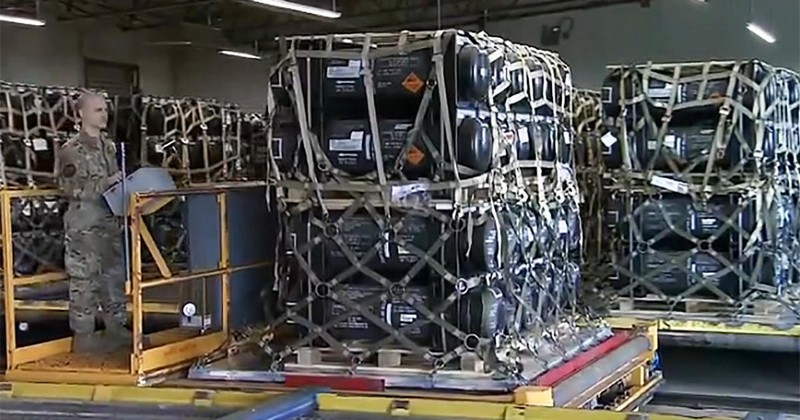
80th Anniversary of Warsaw Ghetto Uprising

By Harsh Thakor

80 years ago the world witnessed one of the most heroic uprisings in the history of the world. Manifesting the spirit of liberation from tyranny, courage scaled heights almost unparalleled in rebellion of a persecuted community  On the eve of Passover 1943 — the nineteenth of April — a group of several hundred poorly armed young Jews lit the spark of  the Warsaw Ghetto Uprising, rising like a phoenix from the Ashes to mark the first insurrections against Nazism. The Jewish uprising in Warsaw testified how people’s organised revolt with Marxist spirit could challenge the most brutal or mightiest of oppressors. It integrated the proletarian Marxist spirit at a helm in regard to liberation of the Jewish community. It expressed the action of a proletarian core, and overall had an electrifying effect on the Polish Resistance.

Quoting Ernest Erber “Only those with a sense of history, with an understanding of the political meaning of resistance to the end, that is to say, the political idealists, choose to fight, not in blind desperation, but to die with a purpose. The heroes of the Ghetto fell with arms in hand because all their Socialist convictions had prepared them for that course of action. Their struggle was not a mere last act of vengeance against the hated enemy. It was a blow for freedom – the Socialist freedom to which they had dedicated their lives.”

For a small group of fighters, realizing that “dying with arms is more beautiful than without,” an isolated group of Jewish militants reminiscent of David confronting the Goliath, resisted for twenty-nine days against a much larger force, aiming to give the most mortal blow to the fascists as they could before they themselves were killed. The uprising, etched into the collective memory of postwar Jewry, lives in people’s minds like an inextinguishable flame

Their heroism was far from being a spontaneous one of the masses, was the product of organisation, planning and preparation from a relatively small — incredibly young — group of Jewish radicals, knitted together in a cohesive force.

Within a few weeks of the Nazi invasion of Poland, Governor Hans Frank ordered four hundred thousand Warsaw Jews to enter a ghetto. By November 1940, around five hundred thousand Jews from across Poland had been entrapped behind its walls, isolated from the outside world and placed in social oblivion.. Surrounded by a ten-foot-high barrier, the creation of the ghetto meant the relocation of approximately 30 percent of Warsaw’s population into 2.6 percent of the city, the designated area being no more than two and a half miles long and having previously housed fewer than 160,000 people.

In the ghetto, Jews were subjected to chronic hunger and poverty. Many families inhabited single rooms, and the dire lack of food meant that roughly one hundred thousand people survived on no more than a single bowl of soup per day. By March 1942 onwards, five thousand people died each month from disease and malnutrition, with entire collapse of sanitation system and breeding of diseases.

The initial response of the Jewish community leadership was passive. Following the creation of the Judenrat Jewish Council) — a collaborationist organization established with Nazi approval to permit easier implementation of anti-Jewish policies — some inhabitants fell into a false sense of security. A predominate idea engulfed the ghetto, examined through the glasses  of Jewish history, that Nazism was an inevitable  form of persecution that the Jewish people must accept.

Withstanding this demoralization, circles of defiance could be located in the self-organization of the left-wing of the Jewish community. Communists, Socialist-Zionists of varying descriptions, and social democrats organized themselves into sections in the ghetto, aiming to convert the misery into a constructive political organization. All parties — the Bund , a social-democratic mass organization that had enjoyed huge pre-war popularity; the Marxist-Zionist youth group Hashomer Hatzair the left-wing Zionist party Left Poale Zion  and the Communist Party dedicated themselves to this strategy, organizing cells that aimed to resurrect collectivist approach  among an emotionally battered d Jewish youth.

In dark times, the cell structures of youth organizations built base for combating hunger and depression. “The day I was able to re-establish contact with my group,” wrote the Young Communist militant Dora Goldkorn, “was one of the happiest days in my hard, tragic ghetto life.” In the project to cultivate resistance leadership among the youth, keeping morale high was crucial; acts of friendship such as the sharing of food were as important as distributing anti-Nazi literature.

By 1942, the various youth organizations felt confident enough to establish the formation of an “Anti-Fascist Bloc.” On the insistence of the Communists, a manifesto was drafted that advocated to unite the Jewish left in the Warsaw Ghetto, with the hope of crystallising  this political unity across other ghettos.

Calling for a “national front” against the occupation, for the unity of all progressive forces on the basis of common demands and for armed antifascism, the manifesto projected the pre-war Popular Fronts in its organizational methodology.

The Left Poale Zion enthusiastically joined, as did the Hashomer Hatzair — who re-emphasized their fidelity to the Soviet Union, despite the Kremlin’s opposition to Zionism. The Bund, however, were less reliable, due to their historic anticommunism and rejection of specifically Jewish armed action; a party that resolutely stated Poland was the home for Polish Jews, many Bundists refused avenues other than Polish-Jewish unity of action.

The paper of the Anti-Fascist Bloc, Der Ruf, reached publication twice. Its contents placed great accent on upholding Soviet resistance and urging the ghetto inhabitants to accept unconditionally, liberation at the hands of the Red Army.

The bloc’s fighting squads contained militants belonging to all varieties of labour movement groups, but the lynchpin of the organization was Pinkus Kartin  A stalwart of communism in prewar Poland and a veteran of the International Brigades to Spain, Kartin was a leader both politically and militarily. It was the arrest and murder of Kartin in June 1943 that culminated the end for the Anti-Fascist Bloc. His arrest ignited an intense repression against the prominent Young Communists, who saw their numbers dwindling and were forced into hiding.

During this period, figures from the right-wing of the Jewish community formed a rival group, the Jewish Military Union (ZZW). Led by the right-wing Zionist group Betar and funded by high society, the ZZW relied upon ex-army officers who could fight orthodox warfare with the Nazis using regular army discipline — unlike the ZOB, which considered itself the armed manifestation of the Jewish workers’ movement..

By contrast, in the eyes of Israel Gutman, the typical ZOB volunteers were “young men in their twenties, Zionists, Communists, socialists — idealists with no battle experience, no military training.” While the propaganda of the ZZW was principally nationalistic, the ZOB’s propaganda and literature propounded antiracist internationalism, offered intellectual positions on the world situation, and debated the labour movement.

Resistance

The ZOB set out to launch an anti-Nazi insurrection. However, it recognized that it was an imperative task in consolidating of the organization’s position in the wider community — it was decided that it had to carry out the intimidation and execution of Jewish collaborators with the occupiers.

For ZOB militants, collaborators represented an auxiliary wing of fascism that was instrumental in facilitating the deportation of Polish Jewry. ZOB militants chose to execute Jewish policeman Jacob Lejkin. For his “dedication” in deporting Jews to Auschwitz, Lejkin was shot, and his example shook the collaborating establishment to its knees.. This was followed by the execution of Alfred Nossig in February 1943. Józef Szeryński, the former head of the ghetto police, committed suicide to avoid his own fate.

These acts ensured ZOB’s vanguard role in the resistance movement, and also sparked resistance from beyond their ranks. In a short period of time they won over many ghetto inhabitants to this position.

Between June and September 1942, three hundred thousand Jews had been deported or murdered. People lost everyone and many young people began to dispense with anxieties about protecting their families and commit instead to militant political activity.

Contempt was shown for the self-determined martyrdom of Adam Czerniakow, the Judenrat leader who committed suicide in July 1942. For young Jewish socialists such as the prominent Bundist Marek Edelman, Czerniakow had “made his death his own private business,” a symbol of privilege in contrast to Edelman and his working-class comrades awaiting their turn on the deportation lists. For them, he said, the overwhelming sentiment in these times was that political leadership necessitated that “one should die with a bang.”

Uprising

On the morning of Monday, January 18, six months after the first mass deportations of Warsaw Jews (which reduced the number of ghetto inhabitants from four hundred thousand to approximately seventy to eighty thousand), ZOB militants sprouted from the crowds of deportees to attack German soldiers, killing several. A protracted combat followed over four days, where militants infiltrated lines of slave labourers marching towards the Umschlagplatz [Deportation of Jews], stepped out of rank at a given signal, and assassinated their German guards. Though scores of ZOB fighters succumbed, the confusion created by the fighting paved way for some to escape — and demonstrated to others that Nazi bodies were not infallible.

By April 1943, there was a general sensation that the ghetto was to be entirely liquidated. On April 19, five thousand soldiers led by SS general Jürgen Stroop entered the ghetto to remove the final inhabitants; in response, approximately 220 ZOB volunteers spectacularly began their attack, located in ersatz positions in cellars, apartments, and rooftops, each armed with a single pistol and several Molotov cocktails.

The revolt created pandemonium, taking the Nazis by complete surprise and killing many Wehrmacht and SS soldiers. In response, the humiliated German army, suffering losses at the hands of prisoners they thought long vanquished, formulated a policy of systematically burning out the fighters. Intense hand-to-hand combat broke was waged for days, and by late April coordinated warfare by the ZOB collapsed, with the conflict now reaching stage of the Germans burning small groups of armed Jews out of bunker hideouts created to evade capture.

Both the red flag and the blue-and-white flag of the Zionist movement fluttered over ZOB-seized buildings. The youngest fighter killed had been a Bundist activist aged thirteen. Though clearly inexperienced as a fighting force, an anonymously authored Bund internal document that reached London in June 1943 stressed the outstanding political unity and “fraternity” between leftist groups in combat. The relentless dedication to which the young fighters of the ZOB exhibited to their dreams of socialism was manifested to perfection in a May Day rally staged in the scenario of ghetto’s ruins.

The entire world, was celebrating May Day on that day but never in history had the Internationale been sung amist conditions where an entire nation was on the verge of perishing. The words and the song reverberated from the charred ruins portrayed that socialist youth [were] still waging combat in the ghetto, and that even in the face of death they were remained relentless in pursuit of their ideals.

Leading militants of the ZOB committed mass suicide on May 8, surrounded by the German army at their base on Mila 18. By mid-May, the ghetto had been razed, and the Great Synagogue of Warsaw personally blown up by General Stroop on May 16 to celebrate the end of Jewish resistance. A mere forty ZOB combatants had escaped onto the “Aryan” side of Warsaw, where scores more fell before war’s end in the subsequent city-wide uprising of 1944.

Relevance Today

This very spirit of the April 1943 Warsaw ghetto uprising needs to be resurrected with neo-fascism engulfing every corner of our globe, and rising to unparalleled heights. Today in similar light the Palestinians are facing the most perilous conditions. Farmers and workers are facing torments of the worst ever economic crisis, with neo-colonialism enslaving them in another form. Nation chauvinism,Racism,intolerance of religions  and victimisation of immigrant communities is rampant, or fervouring at a height, as never earlier. In India, Hindutva saffron fascism is embarking on the same path as the Nazi fascists, stripping the Muslim minorities and dalits of their rights, and political dissent is crushed to dust. Thousands of political prisoners languish within prison walls world over, being denied proper human rights.

Important that the event is not treated with a Zionist tilt but upheld with a Marxist-Leninist perspective.

Harsh Thakor is a freelance journalist who has extensively studied liberation movements.

19 April 2023

Source: countercurrents.org
Japan Signals an Attitude Shift to the Growing Power of the Global South

By Vijay Prashad

In mid-April, the Japanese Ministry of Foreign Affairs released its Diplomatic Bluebook 2023, its most important guidebook on international affairs. Japan’s foreign minister, Yoshimasa Hayashi, wrote the foreword, which begins: “The world is now at a turning point in history.” This phrase is key to understanding the Japanese approach to the war in Ukraine. Hours after Russian forces entered Ukraine, the Japanese government signed the G7 statement that condemned the “large-scale military aggression” and called for “severe and coordinated economic and financial sanctions.” The next day, Hayashi announced that Japan would sanction “designated individuals related to Russia,” freeze assets of three Russian banks, and sanction exports to Russia’s military. In its Diplomatic Bluebook 2022, Japan condemned Russia and urged the Russian government to “withdraw its troops immediately, and comply with international law.” Russia’s war, the Japanese argued, “shakes the very foundation of the international order,” an order whose attrition, as the new Bluebook argues, has brought the world to this “turning point.”

National Interests

Despite all the talk of sanctions, Japan continues to import energy from Russia. In 2022, 9.5 percent of Japan’s imported liquefied natural gas came from Russia (up from 8.8 percent in 2021). Most of this energy came from Russia’s Sakhalin Island, where Japanese companies and the government have made substantial investments. In July 2022, Hayashi was asked about Japan’s continued imports from Sakhalin-2. His answer was clear: “Sakhalin-2 is an important project for energy security, including the stable supply of electricity and gas in Japan.” Since July, Japan’s officials have continued to emphasize Japan’s national interests—including through the Sakhalin-2 natural gas project—over its obligations to the G7 and to its own statements about the war. In August 2022, the Japanese government asked two private firms—Mitsui and Mitsubishi—to deepen its involvement in Russia’s Sakhalin-2; “We will respond by working with the public and private sectors to protect the interests of the companies and secure [a] stable supply of liquefied natural gas,” said former Minister of Economy, Trade and Industry Kōichi Hagiuda.

In March 2022, Kyodo News reported that a leaked version of the Diplomatic Bluebook 2022 used a rather startling phrase—“illegal occupation”—to describe Russian control over islands north of Hokkaido. The Japanese government had not used that phrase since 2003, largely because of increased diplomatic activity between Japan and Russia driven by the collaboration over the development of Sakhalin-2. As it turned out, the draft that Kyodo News had seen was altered so that the officialDiplomatic Bluebook of 2022 did not use this phrase. Instead, the Bluebook noted that the “greatest concern between Japan and Russia is the Northern Territories issue,” which “is yet to be resolved.” Japan could have taken advantage of the Western animosity against Russia to press its claim on these islands, but instead, the Japanese government merely hoped that Russia would withdraw from Ukraine and return to “negotiations on a peace treaty” regarding the islands north of Japan.

Three New Points

The Diplomatic Bluebook 2023 makes three important points: that the post-Cold War era has ended, that China is Japan’s “greatest strategic challenge” (p. 43), and that Global South countries must be taken seriously. The Bluebook highlights Japan’s confusion, caught between its reliance upon Russian energy and the growing confidence of the Global South.

The Bluebook from 2022 noted, “The international community is currently undergoing an era-defining change.” Now, however, the Bluebook 2023 points to the “end of the post-Cold War era” (p. 3), which is illustrated by the collapse of the U.S.-led world order (which both the United States and Japan call the “rules-based international order”). Washington’s power has declined, but it is not clear what comes next.

Anxiety about the growing role of China in Asia is not new for Japan, which has long contested the Diaoyu (China)/Senkaku (Japan) islands. But now, there is a much more pronounced—and dangerous—assessment of the situation. The Bluebook 2023 notes the close alignment between China and Russia, although it does not focus on that strategic partnership. Rather, the Japanese government focuses on China, which it now sees as Japan’s “greatest strategic challenge.” Even here, the Japanese government acknowledges that the two countries “have held a series of dialogues to discuss common issues.” The “efforts of both Japan and China” are important, says the Bluebook, to build a “constructive and stable” relationship (p. 43).

Finally, the Japanese government accepts that there is a new mood in the Global South, with countries across Africa, Asia, and Latin America unwilling to submit any longer to the will of the Western states. In January 2023, a reporter from Yomiuri Shimbun asked the Foreign Ministry’s press secretary Hikariko Ono how Japan defined the “Global South.” Her tentative reply is instructive. “The Government of Japan does not have a precise definition of the term Global South,” she said, but “it is my understanding that in general, it often refers to emerging and developing countries.” The Ministry of Foreign Affairs, she noted, must “strengthen engagement with the Global South.” In the Bluebook 2023, the Japanese recognize that Global South countries are not following the Western position on Ukraine and that berating the countries of the Global South raises accusations of “double standards” (wars by the West are acceptable, but wars by others are unacceptable) (p. 3). Japan will promote multilateralism, building “an inclusive approach that bridges differences.” A new “attitude is required,” says the Bluebook.

In March, Japan’s Prime Minister Fumio Kishida met with President Volodymyr Zelenskyy in Ukraine. Both sides said that they were working to share security information, but Japan once more refused to send weapons to Ukraine. A few weeks after Kishida left Ukraine, Mitsuko Shino, Japan’s Deputy Permanent Representative to the United Nations warned in a guarded statement about the “risks stemming from violations of the agreements regulating the export of weapons and military equipment” and about the importance of the Arms Trade Treaty. Japan remains caught in the horns of its own dilemma.

Vijay Prashad is an Indian historian, editor, and journalist. He is a writing fellow and chief correspondent at Globetrotter.

19 April 2023

Source: countercurrents.org