Just International

Look at How the 1% Are Doing Right Now, and Tell Me the System Isn’t Rigged

By Nesrine Malik

The world’s super-rich have amassed so much wealth since the pandemic that even a Tory minister can see something is amiss.

23 Jan 2023 – You may have forgotten by now, but there was a brief moment during the pandemic when hopes were raised for a new “roaring 20s”. The Yale sociology professor Nicholas Christakis predicted that as in the 1920s, after the 1918 Spanish flu, society would embrace indulgence, with a rise in “sexual licentiousness” as well as a “reverse of religiosity”. We were poised to emerge from lockdown randy and flush. We certainly weren’t supposed to plunge, as we have in Britain, right into political crises and strikes, have three prime ministers in as many months, and sit at home too skint to turn on the heating or socialise.

But a roaring 20s is actually happening, just not for most of us. According to Oxfam’s annual inequality report, released to coincide with the World Economic Forum meetings in Davos, the richest 1% of people have captured nearly twice as much new wealth as the rest of the world combined since the pandemic. Their fortune soared by $26tn, increasing their share of new wealth from 50% to two-thirds.

The breakdown of these figures exposes how on a global basis, extreme wealth is accumulated not by innovating or increasing production, but by taking advantage of rising prices and exploiting labour. In this effort, wealthy people are enabled by lack of regulation and taxation. The result is a bonanza of plunder with no sheriff in town.

This has been happening for a while, but the pandemic accelerated the trend. Rich people benefited from everything – every positive intervention from the state and negative impact of the crisis somehow still ended up increasing their wealth. They benefited from rising costs by using them as an alibi to charge higher-than-inflation prices, then distributing the rewards as dividends instead of higher wages. Food and energy corporations made a killing, making $306bn in windfall profits in 2022, then distributing 84% to shareholders.

They benefited from stimulus packages that pushed up asset prices. They benefited from low interest rates that helped them to expand their property empires. According to Credit Suisse, lower interest rates and government support programmes resulted in “a huge transfer” of wealth from the public sector to private households, which saw their debts lowered and the value of their assets, shares and properties, rise.

The obscenity of the system is made possible by the dramatically diminished bargaining power of labour. Weak labour is cheap labour. More lucratively, the world’s workers can increasingly be mobilised according to employers’ precise needs, so not a penny is wasted. The purpose is to transform the human worker into a machine that can be switched off when not in use (although at least machines are tended with maintenance). In 2020, Amazon’s UK sales soared by half to £19.4bn. In 2021, an investigation in Britain found that the company was bypassing its own employment standards by hiring thousands of zero-hours workers through agencies. These workers have no employment protections, their shifts can be cancelled at the last minute, and there is no guarantee of tenure of employment.

But it is successful tax avoidance that is the strongest pillar propping up global inequality, and its dismantling would be the quickest solution. There is little chance of that happening soon. Tax regimes, like much of the conventional economic wisdom about the benefits of wealth creation to all, are increasingly out of step with not only the needs of poor people, but with what is required for the health of our economies. The political class has been captured by the outdated ideology of trickle-down economics. And if any of those politicians have dissenting thoughts and consider raising taxes, financial elites threaten to abscond with their wealth, or protest that their entrepreneurial ambitions will be extinguished. The media framing redistributive policies as radical or destructive is a powerful shock collar, too. Oxfam found that 143 of 161 countries actually froze tax rates for the rich during the pandemic, and 11 countries reduced them.

What’s most striking about the post-pandemic profit boom is the truly global nature of the problem. It’s not only the hope of a world recalibrated by Covid towards stronger public infrastructure that is turning to dust in our mouths. An older dream is dying too: of a post-cold-war globalisation that was supposed to bring us all closer, usher in a utopia of free trade, growth, employment and sustainable development. What this model of globalisation ended up achieving was standardising ways for wealthy people to pay as little as possible, concentrating economic activity on those with purchasing power and hanging the rest out to dry. Our lives are indeed becoming more similar across the world. In the global south, affluent people now all have access to the same consumer goods and services, from Netflix to Vitamix, and live in new-build developments with names like Beverly Hills (Cairo), and Bel Air (Nairobi). Poor people are pushed to the margins, the public services they depend on dismantled.

None of this has happened by accident, according to Peter Goodman, the author of Davos Man: How the Billionaires Devoured the World. “It’s not an accident,” he tells me, “that our economies have concentrated greater wealth in fewer hands. Quite simply, wealthy people have used their wealth to purchase democracy, to warp democracy in their own interests. They’ve done that through a global template that involves lowering taxes, privatising formerly public attempts to deal with common problems, liquidating the spending that went into things like social services, and then putting that money into their own pockets.” The main power of the billionaire class, Goodman says, is in their creation of values, not value, that maintain a friendly political climate. Davos, he says, is “a prophylactic against change, an elaborate reinforcement of the status quo served up as the pursuit of human progress”.

But the disparities are becoming too stark for these branding efforts to work as well as they used to. Even rightwing politicians are beginning to point out that the promise of social mobility no longer has purchase. Last week, in a speech that very much sounded like the observations of someone who has awoken from a decades-long slumber, UK cabinet minister Penny Mordaunt said that “many people think things don’t work, at least for them”, adding that “for those with the least, the whole system can seem rigged against them”.

So close and yet so far. The system doesn’t seem to be rigged. It is rigged. I guess it’s a step in the right direction that terms which in the past would have consigned a speaker to the pile of conspiracy theorists and commies are making their way into the mainstream. Mordaunt went further. “The very continuation and success of capitalism,” she said, “hangs in the balance.” But for the powerful tiny minority that owns half the world’s wealth, this sort of capitalism is succeeding better than ever before. What hangs in the balance, as the billionaires’ riches increase, is their ability to argue that it’s working for us too.

Nesrine Malik is a Guardian columnist.

30 January 2023

Source: transcend.org

Armed Struggle and Nonviolence

By Jonathan Kuttab

Many Palestinians are considering joining or supporting the armed resistance these days. Daily attacks by settlers and soldiers are being carried out with impunity (at least one Palestinian has been killed on average every day this year), as well as daily acts of intentional provocation. Palestinians feel they have no protection either from their own Palestinian Authority or from the international community. Recently, 144 attacks on people and property by settlers were reported in a single evening. In addition, the current  Israeli government has made it clear it believes only Jews are entitled to self determination and that Jews have unquestioned rights to the land in the entire area between the River and the Sea. Extremist ministers publicly call for a Second Nakba and for ethnic cleansing in Masafer Yatta, Khan al Ahmar, Area C and areas in East Jerusalem. No political process is in place, and armed struggle seems to be the only method available. Even international law guarantees the right of people to fight for their independence and freedom (provided of course that violence is not aimed at innocent civilians). It is infuriating when the Western world is quick to applaud Ukrainian resistance to Russian invasion, and it rushes to provide them with weapons and tanks, while simultaneously labeling Palestinian resistance as illegitimate terrorism.

Yet, like the majority of Palestinian Christians, Sabeel has taken a different approach, remaining steadfastly pacifist and refusing to use or advocate violence—however legitimate and justified it might be. They (and FOSNA as well) understand the teachings of Christ to prohibit his followers from taking up the sword and taking the lives of enemies or oppressors. For this reason (in the proven tradition of Tutu, King, Gandhi, Bonhoeffer, Tolstoy, and others), they have opted for creative nonviolence in their fight for freedom. Sabeel has advocated for and asked their supporters in the West to show their solidarity by supporting nonviolent tactics such as BDS (Boycotts, Divestment, and Sanctions) as well as the application of international law and resorting to the International Criminal Court. Nonviolence is never an easy or simple option. It is not merely about refraining from shedding blood, but it is an active practice of opposition to injustice and principled confrontation with the oppressors while aimed at a proper solution based on equality, dignity, and justice.

Doing so, we believe we are standing in obedience to Jesus’ commandments. Yet, we also believe nonviolence is the most effective strategy for Palestinians at this juncture in their history. Even just attempting to out-violence the Israeli war machine would lead to horrific results. Palestinian armed resistance is not only ineffective; it can also be counterproductive. Violent resistance, however justified, is not likely to result in liberation. Imposing pain and suffering on the other side may fulfill an emotional need, but it leads neither to liberation nor a better future.

It is important therefore to assert once again our position regarding nonviolence:

  • We believe that violence, weapons, and warfare are not the answer. As followers of Jesus, we do not practice violence, even when it appears justified or provoked.

  • All life matters and must be respected.

  • All God’s children are equally entitled to human rights and dignity

  • We oppose racism, discrimination, and apartheid and believe in equality.

  • We are called to speak truth to power and challenge unjust institutions and actions, but we must not do so with unjust and evil methods ourselves

  • Nonviolence is not only refraining from violence but working to create just and fair structures.

  • We are called to be “peacemakers.” Yet, the peace we seek is not about passively accepting injustice or maintaining the status quo, but it is a dynamic challenge to evil institutions and the building of situations that more closely approximate the Kingdom of God.

  • Occupation, repression, and the denial of Palestinian self-determination are evils that must be resisted continuously, These are the true violence.and resisting such injustice must be done even at great personal cost and sacrifice.

  • Israeli violence is reflected not only in bullets, bombs, and guns but also in bulldozers, checkpoints, the Segregation Wall, and the whole system of apartheid in all its manifestations.

  • The siege of Gaza is one of the greatest manifestations of Israeli violence.

This is what Sabeel, Palestinian Liberation Theology, and FOSNA stands for on this issue.

31 January 2023

Source: fosna.org

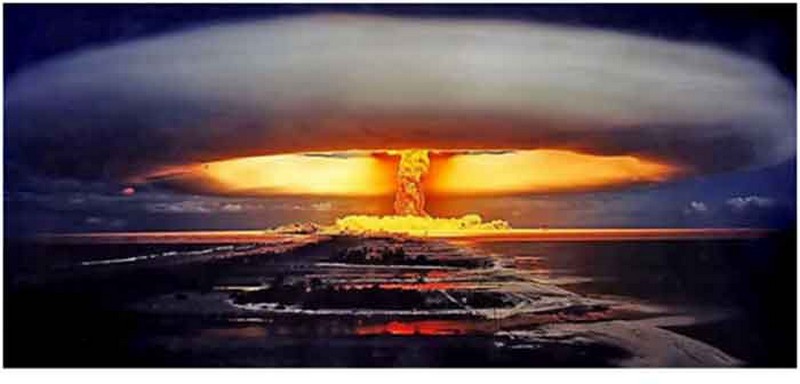
“In a Nuclear War the Collateral Damage would be the Life of All Humanity”. Fidel Castro

Conversations with Fidel Castro. The Threat of Nuclear War is Real. “The imminence of a dangerous and probable war that could very rapidly evolve towards a nuclear war”

By Fidel Castro Ruz and Prof Michel Chossudovsky

Fidel Castro was both an incisive analyst as well a powerful voice against nuclear weapons.

In the light of recent developments in Ukraine. Global Research is reposting this article first published in November 2010 which includes Fidel’s statement on the dangers of nuclear war, which are now imminent in relation to ongoing war in Ukraine.

Today, the dangers of military escalation are beyond description.

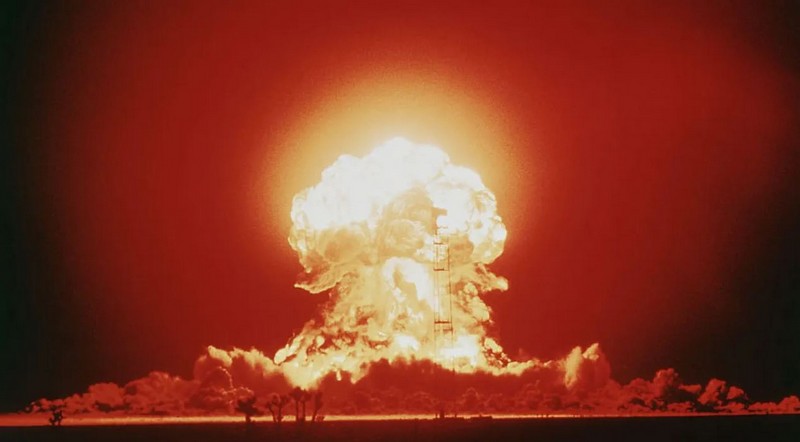
What is now happening in Ukraine has serious geopolitical implications. It could lead us into a World War III scenario.

It is important that a peace process be initiated with a view to preventing escalation.

A Bilateral Peace Agreement is required.

View Fidel Castro’s  October 2010 Warning (GRTV Video Below):

“In a Nuclear War the Collateral Damage would be the Life of All Humanity. Let us have the courage to proclaim that all nuclear or conventional weapons, everything that is used to make war, must disappear!”.

Michel Chossudovsky, Global Research, March 4, 2022, January 30, 2023

***

From October 12 to 15, 2010, I had extensive and detailed discussions with Fidel Castro in Havana, pertaining to the dangers of nuclear war, the global economic crisis and the nature of the New World Order. These meetings resulted in a wide-ranging and fruitful interview.

The first part of this interview published by Global Research and Cuba Debate focuses on the dangers of nuclear war.

The World is at a dangerous crossroads. We have reached a critical turning point in our history.

This interview with Fidel Castro provides an understanding of the nature of modern warfare: Were a military operation to be launched against the Islamic Republic of Iran, the US and its allies would be unable to win a conventional war, with the possibility that this war could evolve towards a nuclear war.

The details of ongoing war preparations in relation to Iran have been withheld from the public eye.

How to confront the diabolical and absurd proposition put forth by the US administration that using tactical nuclear weapons against Iran will  “make the World a safer place”?

A central concept put forth by Fidel Castro in the interview is the ‘Battle of Ideas”. The leader of the Cuban Revolution believes that only a far-reaching “Battle of Ideas” could  change the course of World history. The  objective is to prevent the unthinkable, a nuclear war which threatens to destroy life on earth.

The corporate media is involved in acts of camouflage. The devastating impacts of a nuclear war are either trivialized or not mentioned. Against this backdrop, Fidel’s message to the World must be heard;  people across the land, nationally and internationally, should understand the gravity of the present situation and act forcefully at all levels of society to reverse the tide of war.

The “Battle of Ideas” is part of a revolutionary process. Against a barrage of media disinformation, Fidel Castro’s resolve is to spread the word far and wide, to inform world public opinion, to “make the impossible possible”, to thwart a military adventure which in the real sense of the word threatens the future of humanity.

When a US sponsored nuclear war becomes an “instrument of peace”, condoned and accepted by the World’s institutions and the highest authority including the United Nations, there is no turning back: human society has indelibly been precipitated headlong onto the path of self-destruction.

Fidel’s “Battle of Ideas” must be translated into a worldwide movement. People must mobilize against this diabolical military agenda.

This war can be prevented if people pressure their governments and elected representatives, organize at the local level in towns, villages and municipalities, spread the word, inform their fellow citizens regarding the implications of a thermonuclear war, initiate debate and discussion within the armed forces.

What is required is a mass movement of people which forcefully challenges the legitimacy of war, a global people’s movement which criminalizes war.

In his October 15 message (see video below), Fidel Castro warned the World on the dangers of nuclear war:

There would be “collateral damage”, as the American political and military leaders always affirm, to justify the deaths of innocent people. In a nuclear war the “collateral damage” would be the life of all humanity. Let us have the courage to proclaim that all nuclear or conventional weapons, everything that is used to make war, must disappear!”

The “Battle of Ideas” consists in confronting the war criminals in high office, in breaking the US-led consensus in favor of a global war, in changing the mindset of hundreds of millions of people, in abolishing nuclear weapons.  In essence, the “Battle of Ideas” consists in restoring the truth and establishing the foundations of World peace.

Michel Chossudovsky, Global Research, November 2010 

***

Fidel Castro’s Message to the World, Havana, October 15, 2010

“The conventional war would be lost by the US and the nuclear war is no alternative for anyone.  On the other hand, nuclear war would inevitably become global”

“I think nobody on Earth wishes the human species to disappear.  And that is the reason why I am of the opinion that what should disappear are not just nuclear weapons, but also conventional weapons.  We must provide a guarantee for peace to all peoples without distinction

“In a nuclear war the collateral damage would be the life of humankind.  Let us have the courage to proclaim that all nuclear or conventional weapons, everything that is used to make war, must disappear!”

“It is about demanding that the world is not led into a nuclear catastrophe, it is to preserve life.”

Video: Fidel Castro’s Message against Nuclear War. Calling for World Peace

CONVERSATIONS

Professor Michel Chossudovsky: I am very honored to have this opportunity to exchange views concerning several fundamental issues affecting human society as a whole. I think that the notion that you have raised in your recent texts regarding the threat against Homo sapiens is fundamental.

What is that threat, the risk of a nuclear war and the threat to human beings, to Homo sapiens?

Commander in Chief Fidel Castro Ruz: Since quite a long time –years I would say- but especially for some months now, I began to worry about the imminence of a dangerous and probable war that could very rapidly evolve towards a nuclear war.

Before that I had concentrated all my efforts on the analysis of the capitalist system in general and the methods that the imperial tyranny has imposed on humanity.  The United States applies to the world the violation of the most fundamental rights.

During the Cold War, no one spoke about war or nuclear weapons; people talked about an apparent peace, that is, between the USSR and the United States, the famous MAD (Mutual Assured Destruction) was guaranteed.  It seemed that the world was going to enjoy the delights of a peace that would last for an unlimited time.

Michel Chossudovsky: … This notion of “mutual assured destruction” ended with the Cold War and after that the nuclear doctrine was redefined, because we never really thought about a nuclear war during the Cold War.  Well, obviously, there was a danger –as even Robert McNamara said at some point in time.

But, after the Cold War, particularly after September 11 [2001],  America’s nuclear doctrine started to be redefined.

Fidel Castro Ruz: You asked me when was it that we became aware of the imminent risk of a nuclear war, and that dates back to the period I talked to you about previously, barely six months ago.  One of the things that called our attention the most regarding such a war danger was the sinking of the Cheonan during a military maneuver. That was the flagship of the South Korean Navy; an extremely sophisticated vessel.  It was at the time when we found on GlobalReasearch the journalist’s report that offered a clear and truly coherent information about the sinking of the Cheonan, which could not have been the work of a submarine that had been manufactured by the USSR more than sixty years ago, using an outdated technology which did not require the sophisticated equipment that could be detected by the Cheonan, during a joint maneuver with the most modern US vessels.

The provocation against the Democratic Republic of Korea added up to our own earlier concerns about an aggression against Iran.  We had been closely following the political process in that country. We knew perfectly well what happened there during the 1950s, when Iran nationalized the assets of the British Petroleum in that country- which at the time was called the Anglo Persian Oil Company.

In my opinion, the threats against Iran became imminent in June [2010], after the adoption of Resolution 1929 on the 9th of June, 2010, when the United Nations Security Council condemned Iran for the research it is carrying out and the production of small amounts of 20 per cent enriched uranium, and accused it of being a threat to the world.  The position adopted by each and every member of the Security Council is known: 12 member States voted in favor –five of them had the right to veto; one of them abstained and 2 –Brazil and Turkey- voted against. Shortly after the Resolution was adopted –the most aggressive resolution of of them all– one US aircraft carrier, embedded in a combat unit, plus a nuclear submarine, went through the Suez Canal with the help of the Egyptian government.  Naval units from Israel joined, heading for the Persian Gulf and the seas nearby Iran.

The sanctions imposed by the United States and its NATO allies against Iran was absolutely abusive and unjust.  I cannot understand the reason why Russia and China did not veto the dangerous Resolution 1929 of the United Nations Security Council.  In my opinion this has complicated the political situation terribly and has placed the world on the brink of war.

I remember previous  Israeli attacks against the Arab nuclear research centers.  They first attacked and destroyed the one in Iraq in June 1981.  They did not ask for anyone’s permission, they did not talk to anybody; they just attacked them and the Iraqis had to endure the strikes.

In 2007 they repeated that same operation against a research center that was being built by Syria.  There is something in that episode that I really don’t quite understand:  what was not clear to me were the underlying tactics, or the reasons why Syria did not denounce the Israeli attack against that research center where, undoubtedly, they were doing something, they were working on something for which, as it is known, they were receiving some cooperation from North Korea.  That was something legal; they did not commit any violation.

I am saying this here and I am being very honest: I don’t understand why this was not denounced, because, in my opinion, that would have been important. Those are two very important antecedents.

I believe there are many reasons to think that they will try to do the same against Iran:  destroy its research centers or the power generation centers of that country.  As is known, the power generation uranium residues are the raw material to produce plutonium.

Michel Chossudovsky:  It is true that that Security Council Resolution has to some extent contributed to cancelling the program of military cooperation that Russia and China have with Iran, especially Russia cooperates with Iran in the context of the Air Defence System by supplying its S-300 System.

I remember that just after the Security Council’s decision, with the endorsement of China and Russia, the Russian minister of  Foreign Affairs said: “Well, we have approved the Resolution but that is not going to invalidate our military cooperation with Iran”. That was in June.  But a few months later, Moscow confirmed that military cooperation [with Iran] was going to be frozen, so now Iran is facing a very serious situation, because it needs Russian technology to maintain its security, namely its [S-300] air defence system.

But I think that all the threats against Russia and China are intent upon preventing the two countries from getting involved in the Iran issue. In other words, if there is a war with Iran  the other powers, which are China and Russia, aren’t going to intervene in any way; they will be freezing their military cooperation with Iran and therefore this is a way [for the US and NATO] of extending their war in the Middle East without there being a confrontation with China and Russia  and I think that this more or less is the scenario right now.

There are many types of threats directed against Russia and China. The fact that China’s borders are militarized –China’s South Sea, the Yellow Sea, the border with Afghanistan, and also the Straits of Taiwan- it is in some way a threat to dissuade China and Russia from playing the role of powers in world geopolitics, thus paving the way and even creating consensus in favour of a war with Iran which is happening under conditions where Iran’s  air defence system is being weakened.   [With the freeze of its military cooperation agreement with Russia] Iran is a “sitting duck” from the point of view of its ability to defend itself using its air defence system.

Fidel Castro Ruz:  In my modest and serene opinion  that resolution should have been vetoed.  Because, in my opinion, everything has become more complicated in several ways.

Militarily, because of what you are explaining regarding, for example, the commitment that existed and the contract that had been signed to supply Iran the S-300, which are very efficient anti-aircraft weapons in the first place.

There are other things regarding fuel supplies, which are very important for China, because China is the country with the highest economic growth.  Its growing economy generates greater demand for oil and gas.  Even though there are agreements with Russia for oil and gas supplies, they are also developing wind energy and other forms of renewable energy. They have enormous coal reserves;  nuclear energy will not increase much, only 5% for many years. In other words, the need for gas and oil in the Chinese economy is huge, and I cannot imagine, really, how they will be able to get all that energy, and at what price, if the country where they have important investments is destroyed by the US.  But the worst risk is the very nature of that war in Iran.  Iran is a Muslim country that has millions of trained combatants who are strongly motivated.

There are tens of millions of people who are under [military] orders,  they are being politically educated and trained, men and women alike.  There are millions of combatants trained and determined to die.  These are people who will not be intimidated and who cannot be forced to changing [their behavior]. On the other hand, there are the Afghans –they are being murdered by US drones –there are the Pakistanis, the Iraqis, who have seen one to two million compatriots die as a result of the antiterrorist war invented by Bush.  You cannot win a war against the Muslim world; that is sheer madness.

Michel Chossudovsky:  But it’s true, their conventional forces are very large,  Iran can mobilize in a single day several million troops and they are on the border with Afghanistan and Iraq, and even if there is a blitzkrieg war, the US cannot avoid a conventional war that is waged very close to its military bases in that region.

Fidel Castro Ruz: But the fact is that the US would lose that conventional war. The problem is that nobody can win a conventional war against millions of people; they would not concentrate their forces in large numbers in a single location for the Americans to kill them.

Well, I was a guerrilla fighter and I recall that I had to think seriously about how to use the forces we had and I would never have made the mistake of concentrating those forces in a single location, because the more concentrated the forces, the greater the casualties caused by weapons of mass destruction….

Michel Chossudovsky: As you mentioned previously, a matter of utmost importance: China and Russia’s decision in the Security Council, their support of Resolution 1929, is in fact harmful to them because, first, Russia cannot export weapons, thus its main source of income is now frozen.  Iran was one of the main customers or buyers of Russian weapons, and that was an important source of hard currency earnings which supported Russia`s consumer goods economy thereby covering the needs of the population.

And, on the other hand China requires access to sources of energy as you mentioned. The fact that China and Russia have accepted the consensus in the UN Security Council, is tantamount to saying: “We accept that you kill our economy and, in some ways, our commercial agreements with a third country”.  That’s very serious because it [the UNSC Resolution] not only does harm to Iran; is also harms those two countries, and I suppose –even though I am not a politician –that there must be tremendous divisions within the leadership, both in Russia and in China, for that to happen, for Russia to accept not to use its veto power in the Security Council.

I spoke with Russian journalists, who told me that there wasn’t exactly a consensus within the government per se; it was a guideline.  But there are people in the government with a different point of view regarding the interests of Russia and its stance in the UN Security Council.  How do you see this?

Fidel Castro Ruz: How do I see the general situation? The alternative in Iran –let me put it this way –the conventional war would be lost by the US and the nuclear war is not an alternative for anyone.

On the other hand, nuclear war would inevitably become global.  Thus the danger in my opinion exists with the current situation in Iran, bearing in mind the reasons you are presenting and many other facts; which brings me to the conclusion that the war would end up being a nuclear war.

Michel Chossudovsky: In other words, since the US and its allies are unable to win the conventional war, they are going to use nuclear weapons, but that too would be a war they couldn’t win, because we are going to lose everything.

Fidel Castro Ruz: Everyone would be losing that war; that would be a war that everyone would lose. What would Russia gain if a nuclear war were unleashed over there? What would China gain?  What kind of war would that be? How would the world react? What effect would it have on the world economy? You explained it at the university when you spoke about the centralized defence system designed by the Pentagon.  It sounds like science fiction; it doesn’t even remotely resemble the last world war.  The other thing which is also very important is the attempt [by the Pentagon] to transform nuclear weapons into conventional tactical weapons.

Today, October 13th, I was reading about the same thing in a news dispatch stating that the citizens of Hiroshima and Nagasaki were drawing up strong protests about the fact that the US had just carried out subcritical nuclear tests.  They’re called subcritical, which means the use of the nuclear weapon without deploying all the energy that might be achieved with the critical mass.

It reads:  “Indignation in Hiroshima and Nagasaki because of a United States nuclear test.”…

“The Japanese cities of Hiroshima and Nagasaki that suffered a nuclear attack at the end of WW II, deplored today the nuclear test carried out by the US on September last, called sub critical because it does not unleash chain nuclear reactions.

“The test, the first of this kind in that country since 2006, took place on September 15th somewhere in Nevada, United States.  It was officially confirmed by the Department of Energy of that country, the Japan Times informed.”

What did that newspaper say?

“I deeply deplore it because I was hoping that President Barack Obama would take on the leadership in eliminating nuclear weapons”, the governor of Nagasaki, Hodo Nakamura, stated today at a press conference.

A series of news items related to that follows.

“The test has also caused several protests among the citizens of Hiroshima and Nagasaki, including several survivors of the atomic bombs attacks that devastated both cities in August of 1945.

“We cannot tolerate any action of the United States that betrays President Barack Obama’s promise of moving forward to a world without nuclear arms, said Yukio Yoshioka, the deputy director of the Council for the Victims of the Hiroshima Atomic Bomb.

“The government stated that it has no intention of protesting.”  It relegates the protest to a social level and then said: “With this, the number of subcritical nuclear tests made by the United States reaches the figure of 26, since July 1997 when the first of them took place.”

Now it says:

“Washington considers that these tests do not violate the Comprehensive Nuclear Test Ban Treaty (CTBT) since they do not unleash any chain reactions, and therefore do not release any nuclear energy, and so they can be considered to be laboratory tests.”

The US says that it has to make these tests because they are necessary to maintain the “security of its nuclear arsenal”, which is the same as saying: since we have these great nuclear arsenals, we are doing this in order to ensure our security.

Michel Chossudovsky:  Let us return to the issue of the threat against Iran, because you said that the US and its allies could not win a conventional war.  That is true; but nuclear weapons could be used as an alternative to conventional warfare, and this evidently is a threat against humanity, as you have emphasized in your writings.

The reason for my concern is that after the Cold War the idea of nuclear weapons with a “humanitarian face” was developed, saying that those weapons were not really dangerous, that they do not harm civilians, and in some way the nuclear weapons label was changed.  Therefore, according to their criteria, [tactical] nuclear weapons are no different from conventional weapons, and now in the military manuals they say that tactical nuclear weapons are weapons that pose no harm to civilians.

Therefore, we might have a situation in which those who decide to attack Iran with a nuclear weapon would not be aware of the consequences that this might have for the Middle East, central Asia, but also for humanity as a whole, because they are going to say: “Well, according to our criteria, these [tactical] nuclear weapons [safe for civilians] are different from those deployed during the Cold War and so, we can use them against Iran as a weapon which does not [affect civilians and] does not threaten global security.”

How do you view that?  It’s extremely dangerous, because they themselves believe their own propaganda.  It is internal propaganda within the armed forces, within the political apparatus.

When tactical nuclear weapons were recategorized in 2002-2003, Senator Edward Kennedy said at that time that it was a way of blurring the boundary between conventional and nuclear weapons.

But that’s where we are today; we are in an era where nuclear weapons are considered to be no different from the Kalashnikov. I’m exaggerating, but somehow nuclear weapons are now part of the tool box –that’s the word they use, “tool box” –and from there you choose the type of weapon you are going to use, so the nuclear weapon could be used in the conventional war theatre, leading us to the unthinkable, a nuclear war scenario on a regional level, but also with repercussions at the global level.

Fidel Castro Ruz: I heard what you said on the Round Table [Cuban TV] program about such weapons, presumably harmless to people living in the vicinity of the areas where they are to be targeted,  the power [explosive yield] could range from one-third of the one that was used in Hiroshima up to six times the power [explosive yield] of that weapon, and today we know perfectly well the terrible damage it causes.  One single bomb instantly killed 100,000 people.  Just imagine a bomb having six times the power of that one [Hiroshima bomb], or two times that power, or an equivalent power, or 30 per cent that power.  It is absurd.

There is also what you explained at the university about the attempt to present it as a humanitarian weapon that could also be available to the troops in the theatre of operations.  So at any given moment any commander in the theatre of operations could be authorized to use that weapon as one that was more efficient than other weapons, something that would be considered his duty according to military doctrine and the training he/she received at the military academies.

Michel Chossudovsky:  In that sense, I don’t think that this nuclear weapon would be used without the approval, let’s say, of the Pentagon, namely  its centralised command structures [e.g. Strategic Command]; but I do think that it could be used without the approval of the President of the United States and Commander in Chief.  In other words, it isn’t quite the same logic as that which prevailed during the Cold War where there was the Red Telephone and…

Fidel Castro Ruz: I understand, Professor, what you are saying regarding the use of that weapon as authorized by the senior levels of the Pentagon, and it seems right to me that you should make that clarification so that you won’t be blamed for exaggerating the dangers of that weapon.

But look, after one has learned about the antagonisms and arguments between the Pentagon and the President of the United States, there are really not too many doubts about what the Pentagon decision would be if the chief of the theatre of operations  requests to use that weapon because he feels it is necessary or indispensable.

Michel Chossudovsky: There is also another element.  The deployment of tactical nuclear weapons now, as far as I know, is being undertaken by several European countries which belong to NATO.  This is the case of Belgium, Holland, Turkey, Italy and Germany.  Thus, there are plenty of these “little nuclear bombs” very close to the theatre of war, and on the other hand we also have Israel.

Now then, I don’t think that Israel is going to start a war on its own; that would be impossible in terms of strategy and decision-making.  In modern warfare, with the centralization of communications, logistics and everything else, starting a major war would be a centralized decision.  However, Israel might act if the US gives Israel the green light to launch the first attack.  That’s within the realm of possibilities, even though there are some analysts who now say that the war on Iran will start in Lebanon and Syria with a conventional border war, and then that would provide the pretext for an escalation in military operations.

Fidel Castro Ruz: Yesterday, October 13th, a crowd of people welcomed Ahmadinejad in Lebanon like a national hero of that country.  I was reading a cable about that this morning.

Besides, we also know about Israel’s concerns regarding that, given the fact that the Lebanese are people with a great fighting spirit who have three times the number of reactive missiles they had in the former conflict with Israel and Lebanon, which was a great concern for Israel because they need –as the Israeli technicians have asserted – the air force to confront that weapon.  And so, they state, they could only be attacking Iran for a number of hours, not three days, because they should be paying attention to such a danger.  That’s the reason why, from these viewpoints, every day that goes by they are more concerned, because those weapons are part of the Iranian arsenal of conventional weapons. For example, among their conventional weapons, they have hundreds of rocket launchers to fight surface warships in that area of the Caspian Sea.  We know that, from the time of the Falklands war, a surface warship can dodge one, two or three rockets.  But imagine how a large warship can protect itself against a shower of weapons of that kind.  Those are rapid vessels operated by well-trained people, because the Iranians have been training people for 30 years now and they have developed efficient conventional weapons.

You yourself know that, and you know what happened during the last World War, before the emergence of nuclear weapons.  Fifty million people died as a result of the destructive power of conventional weaponry.

A war today is not like the war that was waged in the nineteenth century, before the appearance of nuclear weapons.  And wars were already highly destructive.  Nuclear arms appeared at the very last minute, because Truman wanted to use them.  He wanted to test the Hiroshima bomb, creating the critical mass from uranium, and the other one in Nagasaki, which created a critical mass from plutonium.  The two bombs killed around 100,000 persons immediately.  We don’t know how many were wounded and affected by radiation, who died later on or suffered for long years from these effects. Besides, a nuclear war would create a nuclear winter.

I am talking to you about the dangers of a war, considering  the immediate damage it might cause.  It would be enough if we only had a limited number of them, the amount of weapons owned by one of the least mighty [nuclear] powers, India or Pakistan.  Their explosion would be sufficient to create a nuclear winter from which no human being would survive.  That would be impossible, since it would last for 8 to 10 years.  In a matter of weeks the sunlight would no longer be visible.

Mankind is less than 200,000 years old.  So far everything was normalcy.  The laws of nature were being fulfilled; the laws of life developed on planet Earth for more than 3 billion years.  Men, the Homo sapiens, the intelligent beings did not exist after 8 tenths of a million years had elapsed, according to all studies.  Two hundred years ago, everything was virtually unknown.  Today we know the laws governing the evolution of the species.  Scientists, theologians, even the most devout religious people who initially echoed the campaign launched by the great ecclesiastical institutions against the Darwinian Theory, today accept the laws of evolution as real, without it preventing their sincere practice of their religious beliefs where, quite often, people find comfort for their most heartfelt hardships.

I think nobody on Earth wishes the human species to disappear.  And that is the reason why I am of the opinion that what should disappear are not just nuclear weapons, but also conventional weapons.  We must provide a guarantee for peace to all peoples without distinction, to the Iranians as well as the Israelis.  Natural resources should be distributed.  They should!  I don’t mean they will, or that it would be easy to do it.  But there would be no other alternative for humanity, in a world of limited dimensions and resources, even if all the scientific potential to create renewable sources of energy is developed. We are almost 7 billion inhabitants, and so we need to implement a demographic policy.  We need many things, and when you put them all together and you ask yourself the following question:  will human beings be capable of understanding that and overcome all those difficulties? You realize that only enthusiasm can truly lead a person to say that he or she will confront and easily resolve a problem of such proportions.

Michel Chossudovsky:  What you have just said is extremely important, when you spoke of Truman.  Truman said that Hiroshima was a military base and that there would be no harm to civilians.

This notion of collateral damage; reflects continuity in [America’s] nuclear doctrine ever since the year 1945 up until today.  That is, not at the level of reality but at the level of [military] doctrine and propaganda.  I mean, in 1945 it was said: Let’s save humanity by killing 100,000 people and deny the fact that Hiroshima was a populated city, namely that it was a military base.  But nowadays the falsehoods have become much more sophisticated, more widespread, and nuclear weapons are more advanced.  So, we are dealing with the future of humanity and the threat of a nuclear war at a global level. The lies and fiction underlying [US] political and military discourse would lead us to a Worldwide catastrophe in which politicians would be unable to make head or tails of their own lies.

Then, you said that intelligent human beings have existed for 200,000 years, but that same intelligence, which has now been incorporated in various institutions, namely the media, the intelligence services, the United Nations, happens to be what is now going to destroy us.  Because we believe our own lies, which leads us towards nuclear war, without realizing that this would be the last war, as Einstein clearly stated. A nuclear war cannot ensure the continuation of humanity; it is a threat against the world.

Fidel Castro Ruz: Those are very good words, Professor.  The collateral damage, in this case, could be humanity.

War is a crime and there is no need for any new law to describe it as such, because since Nuremberg, war has already been considered a crime, the biggest crime against humanity and peace, and the most horrible of all crimes.

Michel Chossudovsky.-  The Nuremberg texts clearly state: “War is a criminal act, it is the ultimate act of war against peace.” This part of the Nuremberg texts is often quoted. After the Second World War, the Allies wanted to use it against the conquered, and I am not saying that this is not valid, but the crimes that they committed, including the crimes committed against Germany and Japan, are never mentioned.  With a nuclear weapon, in the case of Japan.

Michel Chossudovsky.-  It is an extremely important issue for me and if we are talking about a “counter-alliance for peace”, the criminalization of war seems to me to be a fundamental aspect. I’m talking about the abolition of war; it is a criminal act that must be eliminated.

Fidel Castro Ruz –  Well, who would judge the main criminals?

Michel Chossudovsky.- The problem is that they also control the judicial system and the courts, so the judges are criminals as well. What can we do?

Fidel Castro Ruz   I say that this is part of the Battle of Ideas.

It is about demanding that the world not be spearheaded into a nuclear catastrophe, it is to preserve life.

We do not know, but we presume that if man becomes aware of his own existence, that of his people, that of his loved ones, even the U.S. military leaders would be aware of the outcome; although they are taught in life to follow orders, not infrequently genocide, as in the use of tactical or strategic nuclear weapons, because that is what they were taught in the [military] academies.

As all of this is sheer madness, no politician is exempt from the duty of conveying these truths to the people. One must believe in them, otherwise there would be nothing to fight for.        

Michel Chossudovsky .- I think what you are saying is that at the present time, the great debate in human history should focus on the danger of nuclear war that threatens the future of humanity, and that any discussion we have about basic needs or economics requires that we prevent the occurrence of war and instate global peace so that we can then plan living standards worldwide based on basic needs;  but if we do not solve the problem of war, capitalism will not survive, right?          

Fidel Castro Ruz.– No, it cannot survive, in terms of all the analysis we’ve undertaken, it cannot survive. The capitalist system and the market economy that suffocate human life, are not going to disappear overnight, but imperialism based on force, nuclear weapons and conventional weapons with modern technology, has to disappear if we want humanity to survive.

Now, there something occurring at this very moment which characterizes the Worldwide process of disinformation, and it is the following: In Chile 33 miners were trapped 700 meters underground, and the world is rejoicing at the news that 33 miners have been saved. Well, simply, what will the world do if it becomes aware that 6,877,596,300 people need to be saved, if 33 have created universal joy and all the mass media speak only of that these days, why not save the nearly 7 billion people trapped by the terrible danger of perishing in a horrible death like those of Hiroshima or Nagasaki?

Michel Chossudovsky. -This is also, clearly, the issue of media coverage that is given to different events and the propaganda emanating from the media.

I think it was an incredible humanitarian operation that the Chileans undertook, but it is true that if there is a threat to humanity,  as you mentioned, it  should be on the front page of every newspaper in the world because human society in its totality could be the victim of a decision that has been made, even by a three-star general who is unaware of the consequences [of nuclear weapons].

But here we are talking about how the media, particularly in the West, are hiding the most serious issue that potentially affects the world today, which is the danger of nuclear war and we must take it seriously, because both Hillary Clinton and Obama have said that they have contemplated using nuclear weapon in a so-called preventive war against Iran.

Well, how do we answer? What do you say to Hillary Clinton and Barak Obama regarding their statements pertaining to the unilateral use of nuclear weapons against Iran, a country that poses no danger to anyone?      

Fidel Castro Ruz.- Yes, I know two things: What was discussed. This has been revealed recently, namely far-reaching arguments within the Security Council of the United States.  That is the value of the book written by Bob Woodward, because it revealed how all these discussions occurred. We know the positions of Biden, Hillary, Obama, and indeed in those discussions, who was firmer against the extension of the war, who was able to argue with the military, it was Obama, that is a fact.

I am writing the latest reflection, actually, about that. The only one who got there, and gave him advice, who had been an opponent because of his Republican Party membership, was Colin Powell. He reminded him that he was the President of the United States, encouraging advice.

I think we should ensure that this message reaches everybody; what we have discussed. I think many read the articles you have published in Global Research.  I think we need to disclose, and to the extent that we have these discussions and harbor the idea of disclosure. I am delighted every time you argue, reasonably, and put forth these issues, simply, in my opinion, there is a real deficit of information for the reasons you explained.

Now, we must invent. What are the ways to make all this known? At the time of the Twelve Apostles, there were 12 and no more, and they were given the task of disseminating the teachings a preacher transmitted to them. Sure, they had hundreds of years ahead of them. We, however, we do not have that. But I was looking at the list of personalities, and there are more than 20 prominent people who have been working with Global Research, prestigious people, asking the same questions, but they do not have hundreds of years, but, well, very little time.

Michel Chossudovsky. –  The antiwar movement in the United States, Canada and Europe is divided. Some people think the threat comes from Iran, others say they [the Iranians] are terrorists, and there is a lot of disinformation in the movement itself.

Besides, at the World Social Forum the issue of nuclear war is not part of the debate between people of the Left or progressives. During the Cold War there was talk of the danger of nuclear conflict, and people had this awareness.

At the last meeting held in New York on non-proliferation, under the United Nations, the emphasis was on the nuclear threat from non-state entities, from terrorists.

President Obama said that the threat comes from Al Qaeda, which has nuclear weapons.  Also, if someone reads Obama’s speeches he is suggesting that the terrorists have the ability of producing small nuclear bombs, what they call “dirty bombs”. Well, it’s a way of [distorting the issues] and shifting the emphasis.

Fidel Castro Ruz. – That is what they tell him [Obama], that is what his own people tell him and have him believe.

Look, what do I do with the reflections? They are distributed in the United Nations, they are sent to all governments, the reflections, of course, are short, to send them to all the governments, and I know there are many people who read them. The problem is whether you are telling the truth or not. Of course, when one collects all this information in relation to a particular problem because the reflections are also diluted on many issues, but I think you have to concentrate on our part, the disclosure of essentials, I cannot cover everything.

Michel Chossudovsky. – I have a question, because there is an important aspect related to the Cuban Revolution. In my opinion, the debate on the future of humanity is also part of a revolutionary discourse.  If society as a whole were to be threatened by nuclear war, it is necessary in some form, to have a revolution at the levels of ideas as well as actions against this event, [namely nuclear war].

Fidel Castro Ruz .- We have to say, I repeat,  that humanity is trapped 800 meters underground and that we must get it out, we need to do a rescue operation. That is the message we must convey to a large number of people. If  people in large numbers believe in that message, they will do what you are doing and they will support what you are supporting. It will no longer depend on who are those who say it, but on the fact that somebody [and eventually everybody] says it.

You have to figure out how you can reach the informed masses. The solution is not the newspapers. There is the Internet, Internet is cheaper, Internet is more accessible. I approached you through the Internet looking for news, not through news agencies, not through the press, not from CNN, but news through a newsletter I receive daily articles on the Internet . Over 100 pages each day.

Yesterday you were arguing that in the United States some time ago two thirds of public opinion was against the war on Iran, and today, fifty-some percent favored military action against Iran.

Michel Chossudovsky .- What happened, even in recent months, it was said: “Yes, nuclear war is very dangerous, it is a threat, but the threat comes from Iran,” and there were signs in New York City  saying: ” Say no to nuclear Iran, “and the message of these posters was to present Iran as a threat to global security, even if the threat did not exist because they do not have nuclear weapons.

Anyway, that’s the situation, and The New York Times earlier this week published a text that says, yes, political assassinations are legal.

Then, when we have a press that gives us things like that, with the distribution that they have, it is a lot of work [on our part]. We have limited capabilities to reverse this process [of media disinformation] within the limited distribution outlets of the alternative media. In addition to that, now many of these alternative media are financed by the economic establishment.            

Fidel Castro Ruz.- And yet we have to fight.

Michel Chossudovsky .- Yes, we keep struggling, but the message was what you said yesterday. That in the case of a nuclear war, the collateral damage would be humanity as a whole.

Fidel Castro Ruz.- It would be humanity, the life of humanity.

Michel Chossudovsky.-   It is true that the Internet should continue to function as an outreach tool to avoid the war.

Fidel Castro Ruz.- Well, it’s the only way we can prevent it. If we were to create world opinion, it’s like the example I mentioned: there are nearly 7 billion people trapped 800 meters underground, we use the phenomenon of Chile to disclose these things.

Michel Chossudovsky .- The comparison you make with the rescue of 33 miners, saying that there are 33 miners below ground there to be rescued, which received extensive media coverage, and you say that we have almost 7 billion people that are  800 meters underground and do not understand what is happening, but we have to rescue them, because humanity as a whole is threatened by the nuclear weapons of the United States and its allies, because they are the ones who say they intend to use them.        

Fidel Castro Ruz.- And will use them [the nuclear weapons] if there is no opposition, if there is no resistance. They are deceived; they are drugged with military superiority and modern technology and do not know what they are doing.

They do not understand the consequences; they believe that the prevailed situation can be maintained. It is impossible.

Michel Chossudovsky. – Or they believe that this is simply some sort of conventional weapon.           

Fidel Castro Ruz. – Yes, they are deluded and believe that you can still use that weapon. They believe they are in another era, they do not remember what Einstein said when he stated he did not know with what weapons World War III would be fought with, but the World War IV would be fought with sticks and stones. I added there: “… there wouldn’t be anyone to handle the sticks and stones.” That is the reality; I have it written there in the short speech you suggested I develop.

Michel Chossudovsky .- The problem I see is that the use of nuclear weapons will not necessarily lead to the end of humankind from one day to the next, because the radioactive impact is cumulative.

Fidel Castro Ruz. – Repeat that, please.

Michel Chossudovsky. – The nuclear weapon has several different consequences: one is the explosion and destruction in the theater of war, which is the phenomenon of Hiroshima, and the other are the impacts of radiation which increases over time.           

Fidel Castro Ruz.- Yes, nuclear winter, as we call it. The prestigious American researcher, University of Rutgers (New Jersey) Professor Emeritus Alan Robock irrefutably showed that the outbreak of a war between two of the eight nuclear powers who possess the least amount of weapons of this kind would result in “nuclear winter”.

He disclosed that at the fore of a group of researchers who used ultra-scientific computer models.

It would be enough to have 100 strategic nuclear weapons of the 25,000 possessed by the eight powers mentioned exploding in order to create temperatures below freezing all over the planet and a long night that would last approximately eight years.  Professor Robock exclaims that it is so terrible that people are falling into a “state of denial”, not wanting to think about it; it is easier to pretend that it doesn’t exist”.  He told me that personally, at an international conference he was giving, where I had the honor of conversing with him.

Well, but I start from an assumption: If a war breaks out in Iran, it will inevitably become nuclear war and a global war. So that’s why yesterday we were saying it was not right to allow such an agreement in the Security Council, because it makes everything easier, do you see?

Such a war in Iran today would not remain confined to the local level, because the Iranians would not give in to use of force. If it remained conventional, it would be a war the United States and Europe could not win, and I argue that it would rapidly turn into a nuclear war. If the United States were to make the mistake of using tactical nuclear weapons, there would be consternation throughout the world and the US would eventually lose control of the situation.

Obama has had a heated discussion with the Pentagon about what to do in Afghanistan; imagine Obama’s situation with American and Israeli soldiers fighting against millions of Iranians. The Saudis are not going to fight in Iran, nor are the Pakistanis or any other Arab or Muslim soldiers. What could happen is that the Yanks have serious conflicts with the Pakistani tribes which they are attacking and killing with their drones,  and they know that. When you strike a blow against those tribes, first attacking and then warning the government, not saying anything beforehand;  that is one of the things that irritates the Pakistanis. There is a strong anti-American feeling there.

It’s a mistake to think that the Iranians would give up if they used tactical nuclear weapons against them, and the world really would be shocked, but then it may be too late.

Michel Chossudovsky .- They cannot win a conventional war.          

Fidel Castro Ruz .- They cannot win.

Michel Chossudovsky. – And that we can see in Iraq; in Afghanistan they can destroy an entire country, but they cannot win from a military standpoint.          

Fidel Castro Ruz. – But to destroy it [a country] at what price, at what cost to the world, at what economic costs, in the march towards catastrophe? The problems you mentioned are compounded, the American people would react, because the American people are often slow to react, but they react in the end. The American people react to casualties, the dead.

A lot of people supported the Nixon administration during the war in Vietnam, he even suggested the use of nuclear weapons in that country to Kissinger, but he dissuaded him from taking that criminal step. The United States was obliged by the American people to end the war; it had to negotiate and had to hand over the south. Iran would have to give up the oil in the area. In Vietnam what did they hand over? An expense. Ultimately, they are now back in Vietnam, buying oil, trading. In Iran they would lose many lives, and perhaps a large part of the oil facilities in the area would be destroyed.

In the present situation, is likely they would not understand our message. If war breaks out, my opinion is that they, and the world, would gain nothing. If it were solely a conventional war, which is very unlikely, they would lose irretrievably, and if it becomes a global nuclear war, humanity would lose.

Michel Chossudovsky.- Iran has conventional forces that are …significant.

Fidel Castro Ruz.-   Millions.

Michel Chossudovsky.-  Land forces, but also rockets and also Iran has the ability to defend itself.

 Fidel Castro Ruz.-   While there remains one single man with a gun, this is an enemy they will have to defeat.

Michel Chossudovsky.-  And there are several millions with guns.

 Fidel Castro Ruz.-   Millions, and they will have to sacrifice many American lives, unfortunately it would be only then that Americans would react, if they don’t react now they will react later when it will be too late; we must write, we must divulge this as much as we can.   Remember that the Christians were persecuted, they led them off to the catacombs, they killed them, they threw them to the lions, but they held on to their beliefs for centuries and later that was what they did to the Moslems, and the Moslems never yielded.

There is a real war against the Moslem world.  Why are those lessons of history being forgotten?  I have read many of the articles you wrote about the risks of that war.

Michel Chossudovsky.-  Let us return to the matter of Iran.  I believe that it is very important that world opinion comprehends the war scenario.  You clearly state that they would lose the war, the conventional war, they are losing it in Iraq and Afghanistan, Iran has more conventional forces than those of NATO in Afghanistan.

 Fidel Castro Ruz.-   Much more experienced and motivated.  They are now in conflict with those forces in Afghanistan and Iraq and one they don’t mention: the Pakistanis of the same ethnic group as those in the resistance in Afghanistan. In White House discussions,  they consider that the war is lost, that’s what the book by Bob Woodward entitled “Obama’s Wars” tells us.  Imagine the  situation if in addition to that, they append a war to liquidate whatever remains after the initial blows they inflict on Iran.

So they will be thrust into a conventional war situation that they cannot win, or they will be obliged to wage a global nuclear war, under conditions of a worldwide upheaval.  And I don’t know who can justify the type of war they have to wage; they have 450 targets marked out in Iran, and of these some, according to them, will have to be attacked with tactical nuclear warheads because of their location in mountainous areas and at the depth at which they are situated [underground].  Many Russian personnel and persons from other nationalities collaborating with them will die in that confrontation.

What will be the reaction of world opinion in the face of that blow which today is being irresponsibly promoted by the media with the backing of many Americans?

Michel Chossudovsky.-  One issue, Iran, Iraq, Afghanistan, they are all neighbouring countries in a certain way.  Iran shares borders with Afghanistan and with Iraq, and the United States and NATO have military facilities in the countries they occupy.  What’s going to happen? I suppose that the Iranian troops are immediately going to cross the border.

Fidel Castro Ruz.-   Well, I don’t know what tactic they’re going to use, but if one were in their place, the most advisable is to not concentrate their troops, because if the troops are concentrated they will be victims of the attack with tactical nuclear weapons. In other words, in accordance with the nature of the threat as it is being described, the best thing would be for them to use a tactic similar to ours in southern Angola when we suspected that South Africa had nuclear weapons; we created tactical groups of 1000 men with land and anti-air fire power.  Nuclear weapons could never within their reach target a large number of soldiers. Anti-air rocketry and other similar weapons was supporting our forces.  Weapons and the conditions of the terrain change and tactics must continuously change.

Michel Chossudovsky.-  Dispersed.

Fidel Castro Ruz.-   Dispersed, but not isolated men, there were around 1000 men with appropriate weapons, the terrain was sandy, wherever they got to they had to dig in and protect themselves underground, always keeping the maximum distance between components.  The enemy was never given an opportunity to aim a decisive blow against the 60,000 Cuban and Angolan soldiers in southern Angola.

What we did in that sister country is what, a thousand strong army, operating with traditional criteria, would have done.  Fine, we were not 100 000, in southern Angola there were 60,000 men, Cubans and Angolans; due to technical requirements the tactical groups were mainly made up of Cubans because they handled tanks, rockets, anti-aircraft guns, communications, but the infantry was made up of Cuban and Angolan soldiers, with great fighting spirit, who didn’t hesitate one second in confronting the white Apartheid army supported by the United States and Israel.  Who handled the numerous nuclear weapons that they had at that moment?

In the case of Iran,   we are getting news that they are digging into the ground, and when they are asked about it, they say that they are making cemeteries to bury the invaders. I don’t know if this is meant to be ironic, but I think that one would really have to dig quite a lot to protect their forces from the attack which is threatening them.

Michel Chossudovsky.-  Sure, but Iran has the possibility of mobilizing millions of troops.

Fidel Castro Ruz.-   Not just troops, but the command posts are also decisive.  In my opinion, dispersion is very important.  The attackers will try to prevent the transmission of orders.  Every combat unit must know beforehand what they have to do under different  circumstances.  The attacker will try to strike and destabilize the chain of command with its radio-electronic weapons.  All those factors must be kept in mind.  Mankind has never experienced a similar predicament.

Anyway,  Afghanistan is “a joke” and Iraq, too, when you compare them with what they are going to bump into in Iran: the weaponry, the training, the mentality, the kind of soldier…  If 31 years ago, Iranian combatants cleaned the mine fields by advancing over them, they will undoubtedly be the most fearsome adversaries that the United States has ever come across.

Our thanks and appreciation to Cuba Debate for the transcription as well as the translation from Spanish.

Fidel’s Message on the Dangers of Nuclear War

Recorded on the last day of the Conversations, October 15, 2010 the original Global Research/Cuba Debate video (our copyright) was removed on alleged copyright infringements alongside many other Youtube postings.

Fidel Castro’s Message Against Nuclear War: Calling for World Peace

TRANSCRIPT

The use of nuclear weapons in a new war would mean the end of humanity. This was candidly foreseen by scientist Albert Einstein who was able to measure their destructive capability to generate millions of degrees of heat, which would vaporize everything within a wide radius of action. This brilliant researcher had promoted the development of this weapon so that it would not become available to the genocidal Nazi regime.

Each and every government in the world has the obligation to respect the right to life of each and every nation and of the totality of all the peoples on the planet.

Today there is an imminent risk of war with the use of that kind of weapon and I don’t harbour the least doubt that an attack by the United States and Israel against the Islamic Republic of Iran would inevitably evolve towards a global nuclear conflict.

The World’s peoples have an obligation to demand of their political leaders their Right to Live. When the life of humankind, of your people and your most beloved human beings run such a risk, nobody can afford to be indifferent; not one minute can be lost in demanding respect for that right; tomorrow will be too late.

Albert Einstein himself stated unmistakably: “I do not know with what weapons World War III will be fought, but World War IV will be fought with sticks and stones”. We fully comprehend what he wanted to convey, and he was absolutely right, yet in the wake of a global nuclear war, there wouldn’t be anybody around to make use of those sticks and stones.

There would be “collateral damage”, as the American political and military leaders always affirm, to justify the deaths of innocent people.

In a nuclear war the “collateral damage” would be the life of all humanity.

Let us have the courage to proclaim that all nuclear or conventional weapons, everything that is used to make war, must disappear!

Fidel Castro Ruz

October 15, 2010

30 January 2023

Source: globalresearch.ca

 

Israel’s insecurities are rooted in their injustices

Palestine Update 624
Comment

Israel’s insecurities are rooted in their injustices
The very founding of Israel was politically flawed. It has remained an artificial construct ever since. Predicting its future has been equally difficult. Gideon Levy has observed “A society cannot go far with its head buried in the sand, and will certainly be unable to cope with the real challenges confronting it”.    He adds: “If there is one thing completely missing from the public agenda in Israel, it is the long-term view. Israel does not look ahead, not even by half a generation… There is not a single Israeli, not one, who knows where his country is headed. Ask any ordinary Israeli or any politician, any journalist or scientist, from the political centre or the right or the left: where are you going? How will your country look in another 20 years? Or 50? They can’t even describe what 10 years from now might be like. Few Israelis could even say where they would like their country to be going, apart from empty slogans about peace and security and prosperity”.

In a political commentary in Palestine Chronicle, a team of writers conclude from their studies how “according to Israeli statistics, two months after the start of the war in Ukraine, about 1,800 Russian Jews out of the 5,600 who benefited from the ‘Law of Return’ – actually returned to Moscow with their Israeli passports. This means that a third of the Russian Jews who arrived in Israel rushed to leave the country”. The team further observes that in the aftermath of the November elections, which resulted in the formation of the most extremist government in Israel’s history, the number of Israeli citizens who sought European citizenship significantly increased.   Israelis applying for French citizenship increased by 13 percent; Portuguese authorities recorded a 68% increase in citizenship applications from Israelis, and the Polish and German authorities recorded a 10% increase in the same applications over the past two months. The departure of Jewish immigrants from Israel is not a new phenomenon.

Gideon Levy in his article “For Israelis, the future is impossible to see” he notes: the Israeli habit of burying their heads in the sand about the future of their country disguises a deep-seated, and possibly very realistic, fear about what the future may hold. Israelis are afraid of the future of their country. They brag about their country’s power and ability, a righteous nation, a chosen people, a light unto the nations; they are exceedingly boastful about their army, about their skills, while at the same time a primordial fear gnaws at their innards”.

It is impossible to foresee an Israel that will survive its colonial-racist ways. Israel may like to think it is pure and religious and destined to eternity. They know deep inside that “God’s eternal promise to Israel” is a political façade created by right wing theologians and Christian Zionists, and nobody has a hint what tomorrow will resemble. They are fleeing what promised to be a wonderland, the only democracy in the region, a civilization in the midst of the uncivilized with an alacrity that astonishes. But, no.! They were wrong and now they’re running scared. .

Levy puts it aptly: “History has taught us that a people fighting to be free generally win and rotten regimes, like the military occupation of the Palestinian people by Israel, collapse of their own accord, crumbling internally from the decay that always pervades them. But as the Israeli occupation drags on and its future continually recedes, doubts have risen that something will surely happen soon to bring down the occupation, like a tree that looks robust but has rotted from within”.

Please always read the news items in Palestine Updates from the perspective of people like Gideon Levy and the Palestine Chronicle Team. They inform us about the how and why of Israel’s colonialist cruelties. Such awareness can strengthen and give substance to our advocacy and solidarity.

On behalf of MLN Palestine Updates

Ranjan Solomon

____________________________________________________

Curse of ‘Yordim’: Why Israeli Jews Are Leaving the Country
The departure of Jewish immigrants from Israel is not a new phenomenon. 
By Palestine Chronicle Staff
Following the start of the war between Russia and Ukraine on February 24, a large number of Jews decided to immigrate to Israel under the so-called Israeli Law of Return, which allows every Jewish person in the world to immigrate to Israel and acquire citizenship. At the end of 2022, the Jewish Agency published data regarding the number of new immigrants who arrived in Israel, boasting that the country welcomed around 70,000 new immigrants, the largest number of immigrants in 23 years. Expectedly, most of these newcomers arrived from Ukraine and Russia.

The problem for Israel, however, is not with new immigrants, but rather with the phenomenon known in Hebrew as ‘Yordim’ – ‘Yerida’ means ‘descent’ – a term used to describe Jews who leave the Jewish state.  According to Israeli statistics, two months after the start of the war in Ukraine, about 1,800 Russian Jews out of the 5,600 who benefited from the ‘Law of Return’ – actually returned to Moscow with their Israeli passports. This means that a third of the Russian Jews who arrived in Israel rushed to leave the country.  Following the November elections, which resulted in the formation of the most extremist government in Israel’s history, the number of Israeli citizens who sought European citizenship significantly increased.  For example, Israelis applying for French citizenship increased by 13 percent; Portuguese authorities recorded a 68% increase in citizenship applications from Israelis, and the Polish and German authorities recorded a 10% increase in the same applications over the past two months. The departure of Jewish immigrants from Israel is not a new phenomenon.

Between 1948 and1950 10% of Jewish immigrants promptly left the newly established state.  To slow down the reversed immigration, the Israeli government enacted tough measures often denying exit visas to Israeli applicants. Despite the restrictions, by 1967 more than 180,000 Israelis had immigrated. During the 1970s, fears of war, economic stagnation, and strong Palestinian Resistance, a sharp decline in immigration to Israel was recorded, forcing the Jewish Agency to close three immigration centers in the United States alone.
Source:

The sin of neutrality: Why Churches must unapologetically take the side of Palestine
Last Sunday I attended a live talk online featuring Palestinian human rights lawyer and activist, Jonathan Kuttab. The talk, entitled “What is required of our church to be in solidarity with Palestine?”, was hosted by the Middle East Working Group—comprised of the Toronto-based Bathurst, Bloor Street and Trinity-St. Paul’s congregations, part of the United Church of Canada (UCC).  Kuttab discussed a lot about what’s been happening in Palestine, present and historically and certainly did not shy away from addressing Israel’s oppressive role therein such as the expansion of illegal, Jewish-only settlements in the West Bank that have displaced and disposed of countless Palestinians.

What really stuck out for me is what Kuttab shared from the very outset of the talk. That is, his understandable and justifiable frustration over the UCC’s failure to—in any substantive sense—commit itself to Palestinian justice. Articulating this Kuttab stated: “Very briefly I want to communicate that Sabeel [Palestinian Christian group] in Jerusalem and Palestinians generally were very upset by what happened at the convention where a number of initiatives by UCC churches [strongly opposed to Israeli apartheid] were totally sidelined and the whole issue was pushed off [by influential UCC members]. …This is actually the fight. The fight is a spiritual fight that’s taking place. And it’s taking place in the churches, as well as the community at large. “

Kuttab’s observation has since left me thinking about what a “church”, let alone a Christian one like the UCC, is in essence. Often people think of it physically, namely a building or structure where people go to worship.
Read more in Palestine Chronicle

Palestinians call PA not to return to security coordination with Israel

Factions in Gaza call on Arab states to stop normalising ties with the occupation

Palestinian factions today called on the Palestinian Authority in Ramallah not to backtrack on its decision to stop security coordination with the Israeli occupation. This came in an event held in rejection of US Secretary of State Antony Blinken’s visit to Israel and the Occupied Palestinian Territories. The factions said the US administration will not impose any punishment on the Israeli occupation and called for the formation of a unified national leadership to confront the fascist Israeli government. Arab countries, they added, must stop normalising ties with the Israeli occupation.
Source

Blinken Wraps Up Mideast Visit with No Breakthrough in Efforts to End Violence

As he completed a two-day visit to Israel and the occupied West Bank on Tuesday, US Secretary of State Antony Blinken met Palestinian President Mahmoud Abbas in Ramallah there were no signs he was making progress on even the modest goal of halting the latest wave of violence, much less of addressing the broader issues surrounding potential peace talks. Abbas placed all of the blame for the spike in violence on Israel and berated the international community for not doing more to put pressure on Israeli authorities.

Blinken criticized Israel for its actions that Washington believes create barriers to the two-state solution. In particular, he highlighted “settlement expansion, the legalization of (settlement) outposts, demolitions and evictions, disruptions to the historic status of the holy sites and, of course, incitement and acquiescence to the violence.” After the meeting with Abbas, Blinken said the US would provide an additional $50 million for the UN’s agency for Palestinians and announced that he had reached an agreement with the Israeli government to provide 4G telecoms services for the Palestinian people. Abbas called for “the complete cessation of unilateral Israeli actions, which violate the signed agreements and international law.” He reiterated the longstanding demand by Palestinians for Israel to end its occupation of their territory.
Read more

Jewish Artist Targeted in Germany over Pro-Palestine Stance

Hamburg’s Antisemitism Commissioner disparaged photographer Adam Broomberg for his support of the BDS movement.
Hamburg’s first antisemitism commissioner Stefan Hensel, who was appointed in July 2021 for a three-year term, has repeatedly criticized artist Adam Broomberg over his involvement in what he calls the “antisemitic” Boycott, Divestment, and Sanctions (BDS) campaign. Broomberg, a Jewish photographer who was raised in South Africa and now lives in Berlin, has frequently denounced what he characterizes as Israeli’s apartheid system in the Occupied Palestinian Territories. In statements made to Jüdische AllgemeineZeit Online and in a post on Hensel’s Facebook account (among other platforms), Hensel described Broomberg as someone who “repeatedly defames [Israel] as an apartheid state and advocates a boycott against Israel,” “seems to hate Israel,” and “does not shy away from legitimizing terror against Jews.”

In an interview with Hyperallergic, Broomberg said that Hensel’s comments come from an “extremely right-wing and Zionist, and racist, perspective…For a commissioner of antisemitism, for his first and most vehement and powerful attack to be on a Jew and to put a Jew’s life and profession at risk, is totally ironic,” he said.
Source:

Arrest of Jewish anti-Zionist activist ‘reminiscent of how Palestinians are treated’

Today, an Israeli Magistrate Court judge decided to extend the detention of left-wing anti-Zionist activist Jonathan Pollak until February 7, after police decided to file charges yesterday, alleging he assaulted a Border Police officer based on the testimonies of three Border Police officers — testimonies which apparently fail to even match one another and are not accompanied by evidence.  Pollak was arrested on Friday, January 27, at the weekly protest in the Palestinian village of Beita, after being confronted by an Israeli Border Police officer.  Israeli Police have requested he remain in detention until the end of legal proceedings, and a decision to grant their request or release him will be made on February 7. Furthermore, despite Pollak’s lawyer demanding from three different judges that he be given adequate food, as of the time of writing, he has been given almost no food that conforms with his dietary needs, as Pollak suffers from diabetes and celiac disease and is also vegan.

Pollak frequently participates in the weekly protests in Beita, which have been held every Friday since May 2021, when Israeli settlers established the outpost of Evyatar on Palestinian lands belonging to residents of Beita. Pollak has long been a target of both right-wing groups and the Israeli Police for decades due to his outspoken anti-Zionist activism and support of the Boycott, Divestment, and Sanctions (BDS) campaign. He was one of the founders of Anarchists Against the Wall in the early 2000’s, a grassroots group that stood weekly alongside Palestinians to protest against Israel’s construction of the apartheid wall on Palestinian lands. Since then, he has remained active in standing with Palestinians in their continued struggle against Israeli colonialism and apartheid. Soon after Pollak’s arrest, an Israeli settler opened fire on the protesters at the entrance to Beita, and three were hospitalized.
Read more in Mondoweiss

Palestinian landowner says he faces threats by illegal Israeli settlers: ‘I want to live in peace’
Israeli settlement expansion is illegal under international law and opposed by the US, UK, EU and the UN.
View video in Sky.com

Palestine Updates from Movement for Liberation from Nakba is a clearing house for historical and current information about happenings in the colonised Palestinian territories.

1 February 2023

Source: nakbaliberation.com

Support Iran Women struggle, but Avoid US Trap

By Bharat Dogra

The ongoing struggle of the women of Iran for equality and gender justice is a very justified struggle which deserves full support as the right to dress in accordance with one’s wishes is a basic right of all women, both in itself and as a symbol of wider aspects of social rights and gender based equality. Authorities or morality police who deny these rights must be opposed.

At the same time, however, while extending this support, due caution must be exercised to ensure that our support is not caught in the trap of the USA and its close allies using these protests as a means of advancing their main objective of weakening Iran politically and economically and isolating it internationally.

In recent times the US policy has been extremely hostile towards Iran. The USA has imposed very harsh sanctions against Iran. While this hostility has many contexts, the most discussed recent factor has been the nuclear program of Iran and its implications for nuclear weapons. However Iran had agreed to cooperate with the international community on this matter and a settlement was reached. It was the US which went back on this first, followed by a series of further hostilities on two sides. Many people believe that the Iraq-Iran war started by Saddam Hussein was encouraged by the USA, even though the USA later turned against Saddam himself whose once- strong army had been weakened and exhausted by this long war.

However the original sin goes back to 1953 when the democratically elected, progressive government of Prime Minister Mohammad Mosaddegh was ousted by the intelligence agencies of the USA and the UK in a coup, an action which has been officially admitted by the USA. Their main grievance against the popular Prime Minister was that he wanted to use the resources of Iran for the benefit of people of Iran and towards this end he was willing to take actions against oil multinational companies in which western countries had dominant interests. He also initiated steps for greater equality of women. Mosaddegh was imprisoned, when he died he was denied a proper burial and in fact buried in his living room as the new pro-west rulers feared the outpouring of people’s support that may follow.

While many objectionable practices were followed in this coup, in which Winston Churchill took a keen interest, one that may be particularly noted is that payments were arranged for protesters and protest gatherings, and other actions were taken to create a false impression that the people were highly agitated against someone who was essentially a leader well liked by the people and elected by them only recently. This has a lesson for present times as well. This is why our suggestion is that special precautions should be taken to ensure that while supporting the struggles of women and others standing up with them for gender equality, we should at the same time assert that we oppose the various hostile actions of the US government and its allies against Iran. The Iran government also needs to look inwards and agree to significantly revise its gender polices to make them much more progressive and consistent with gender justice, in matters relating to dress as well as other socio-cultural issues and livelihood and educational opportunities. In fact the Iran government is only weakening the country by going slow on gender equality and rights.

Bharat Dogra is Honorary Convener, Campaign to Save Earth Now. His recent books include Man over Machine, When the Two Streams Met and A Day in 2071.

29 January 2023

Source: countercurrents.org

Violence begets violence!

By Jafar M Ramini

After the raid in Jenin, there was a reaction from Gaza. Immediately, Israel sent in the airforce with its normal venom and brute force. More Palestinians were killed, more destruction of property, and more disruption of life.

That was followed yesterday by an attack on a synagogue outside Jerusalem which resulted in eight Israelis killed. Netanyahu said that he will react to this act of terrorism after the Sabbath is over. From past records, we can all guess what his reaction will be.

I am against this kind of retaliation, no matter what the provocation was. Civilian lives, especially in a place of worship, should be spared and protected. We should not stoop to the level of the IDF and Zionists politicians who vie for our blood and celebrate with glee when it’s spilled. This is but one example of what I am saying.

Almog Cohen, a member of the Israeli parliament and “Jewish Power” party, celebrated the massacre yesterday, tweeting: “Nice and professional work by the fighters in Jenin. Keep killing them.” This kind of open call for genocide against the Palestinians is not new. Israeli citizens often demand it.

I am very angry and disgusted by what I see, hear, and read from pro-Israeli activists and politicians. But, I’ll never allow them to drag me down to their level of inhumanity and depravity. After all, I am a Palestinian looking for justice, not revenge.

Jafar M Ramini is a Palestinian writer and political analyst. He was born in Jenin in 1943 and was five years old when he and his family had to flee the terror of the Urgun and Stern gangs. Justice for the people of Palestine is a life-long commitment.

28 January 2023

Source: countercurrents.org

A State for Some of Its Citizens: Captured Black Soldier’s Saga Highlights Racism in Israel

By Dr Ramzy Baroud

“For how long will I be in captivity? After so many years, where are the state and the people of Israel?” These were the words, uttered in Hebrew, of a person believed to be Avera Mengistu, an Israeli soldier of Ethiopian origin who was captured and held in Gaza in 2014.

Footage of Mengistu, looking nervous but also somewhat defiant, calling on his countrymen to end his 9-year incarceration, mostly ended speculation in Israel on whether the soldier was alive or dead.

The timing of the release of the footage by Hamas was obvious, and is directly linked to the Palestinian group’s efforts aimed at conducting a prisoner exchange similar to the one carried out in 2011, which saw the release of captured Israeli soldier Gilad Shalit, in exchange for the release of over 1,000 Palestinian prisoners.

The main target audience of Hamas’ message is the new government and, specifically, the new military leadership. Israel now has a new army chief, Lt. Gen. Herzi Halevi, who has replaced the departing chief, Aviv Kochavi. The latter seemed disinterested in Mengistu’s cause, while the new chief arrives with lofty promises about uniting the country behind its military and opening a new page where the army is no longer involved in everyday politics.

It may appear that Hamas and other Gaza groups are in a stronger position than the one they enjoyed during Shalit’s captivity, between 2006 and 2011. Not only are they militarily stronger but, instead of capturing one Israeli, they have four: aside from Mengistu, they also have Hisham al-Sayed, and what is believed to be the remains of two other soldiers, Hadar Goldin and Oron Shaul.

But this is when the story gets particularly complicated. Unlike Shalit, who is white and holds dual Israeli-French citizenship, Mengistu and al-Sayed are Ethiopian Jew and Bedouin, respectively.

Racism based on color and ethnicity is rife in Israel. Although no Israeli officials will admit to this openly, Israel is in no rush to rescue two men who are not members of the dominant Ashkenazi group, or even of the socially less privileged Sephardic or Mizrahi Jews.

Black Jews and Bedouins have always been placed at the bottom of Israel’s socio-economic indicators. In 2011, the Israeli newspaper The Jerusalem Post shared numbers from a disturbing report, which placed poverty among children of Ethiopian immigrants at a whopping 65 percent. The number is particularly staggering when compared to the average poverty rate in Israel, of 21 percent.

Things have not improved much since then. The Israeli Justice Ministry’s annual report on racism complaints shows that 24 percent of all complaints are filed by Ethiopians. This racism covers most aspects of public life, from education to services to police mistreatment.

Not even enlisting in the military – Israel’s most revered institution – is enough to change Ethiopians’ position in Israeli society.

The famous story of Demas Fikadey in 2015 is a case in point. Then only 21, the Ethiopian soldier was beaten up severely by two Israeli police officers in a Tel Aviv suburb for no reason at all. The whole episode was caught on camera, leading to mass protests and even violent clashes. For Ethiopian Jews, the humiliation and violence carried out against Fikadey was a representation of years of suffering, racism and discrimination.

Many believe that the government’s lackluster response to Mengistu’s prolonged capture is directly linked to the fact that he is black.

Israel’s discriminatory behavior against African asylum seekers, which often leads to forceful deportation following humiliating treatment, is well known. Amnesty International described this in a report in 2018 as “a cruel and misguided abandonment of responsibility”.

But discriminating against a black soldier, who, by Israel’s own estimation, is believed to suffer from mental illness, is a whole different kind of ‘abandonment’.

A former Israeli army official, Col. Moshe Tal did not mince words in a recent national radio interview when he said that Mengistu and al-Sayed are a low priority for the public “on the account of their race”, Haaretz reported.

“If we were speaking about two other citizens from other backgrounds and socio-economic statuses … the amount of interest would be different,” Tal said. In contrast to Shalit’s story, the government’s “attention to the affair (and) the media pulse, is close to zero.”

Israel’s Ethiopian Jews number around 170,000, hardly an important political constituency in a remarkably divided and polarized society. Most of them are immigrants or descendants of immigrants who arrived in Israel between 1980 and 1992. Though they are still known as the Falasha, they are sometimes referred to by the more dignified name of ‘Beta Israel’, or ‘House of Israel’.

Superficial language alterations aside, their struggle is evident in everyday Israel. The plight of Mengistu, as expressed in his own question, “where are the state and the people of Israel?” sums up the sense of collective loss and alienation this community has felt for nearly two generations.

When Mengistu arrived with his family at the age of 5 in Israel, escaping a bloody civil war in Ethiopia and historic discrimination there, the family, like most Ethiopians, hardly knew that discrimination would follow them, even in the supposed land of ‘milk and honey’.

And, most likely, they also knew little about the plight of Palestinians, the native inhabitants of that historic land, who are victims of terrible violence, racism and much more.

Palestinians know well why Israel has done little to free the black soldier; Mengistu and his Ethiopian community also understand how race is an important factor in Israeli politics. Although a prisoner exchange could potentially free Mengistu and an unspecified number of Palestinian prisoners held in Israel, the suffering of the Palestinians at the hands of Israel and discrimination against Ethiopian Jews will carry on for much longer.

While Palestinians are resisting Israel’s military occupation and apartheid, Ethiopian Jews should mount their own resistance for greater rights. Their resistance must be predicated on the understanding that Palestinians and Arabs are not the enemy but potential allies in a joint fight against racism, apartheid and socio-economic marginalization.

Dr. Ramzy Baroud is a journalist, author and the Editor of The Palestine Chronicle.

27 January 2023

Source: countercurrents.org

The U.S. Foreign Policy Establishment Proves in Ukraine That It Forgot the Lessons of Vietnam

By James W Carden

Friday, January 27th, marks 50 years since the signing of the Paris Peace Accords by representatives from the United States, North and South Vietnam effectively ending American participation in the Vietnamese civil conflict. What the Georgetown University international relations scholar Charles Kuphan calls an “isolationist impulse” made a “significant comeback in response to the Vietnam War, which severely strained the liberal internationalist consensus.”

As the Cold War historian John Lamberton Harper points out, President Jimmy Carter’s hawkish Polish-born national security adviser Zbigniew Brzezinski scorned his intra-administration rival, the cautious, gentlemanly secretary of state Cyrus Vance as “a nice man but burned by Vietnam.” Indeed, Vance and a number of his generation carried with them a profound disillusionment in the aftermath of Vietnam which shaped their approach to the world. And for a short time, the “Vietnam Syndrome,” (shorthand for a wariness and suspicion of unnecessary and unsupportable foreign interventions) occasionally informed policy at the highest levels and manifested itself in the promulgations of the Wienberger and Powell Doctrines which, in theory anyway, were set up as a kind of break on unnecessary military adventures.

But only hours after the successful conclusion of the First Gulf War, President George H.W. Bush declared, “By God, we’ve kicked the Vietnam Syndrome once and for all.”

And kick it Bush did: In the decades following his 1991 pronouncement, the United States has been at war in one form or another (either as a belligerent or unofficial co-belligerent as is the case with our involvement in Saudi Arabia’s war on Yemen and in Ukraine) for all but 2 of the 32 years that have followed.

The political-media atmosphere that now prevails in Washington makes it exceedingly difficult to believe such a thing as a ‘Vietnam Syndrome’ ever existed. Indeed, President Joe Biden’s handling of the war in Ukraine has been met with rapturous approval from the Washington media establishment, winning plaudits from all the usual suspects.

But what kind of success is it really, when the entire thing might have been avoided by judicious diplomatic engagement? Are we really to believe that a war resulting, so far, in 200,000 dead and 8 million displaced, has been worth an empty promise of NATO membership?

While the war has currently ground to a stalemate, the legacy media and various and sundry think-tank-talking-heads issue regular assurances of steady progress in the field and victory soon to come.

  • Writing in the Journal of Democracy this past September, political scientist and author of the End of History and The Last Man Francis Fukuyama exulted: “Ukraine will win. Slava Ukraini!”
  • Washington Post reporter Liz Sly told readers in early January 2023 that “If 2023 continues as it began, there is a good chance Ukraine will be able to fulfill President Volodymyr Zelensky’s New Year’s pledge to retake all of Ukraine by the end of the year — or at least enough territory to definitively end Russia’s threat, Western officials and analysts say.”
  • Newsweek, reporting in October 2022, informed readers by way of activist Ilya Ponomarev, a former member of the Russian parliament, that “Russia is not yet on the brink of revolution…but is not far off.”
  • Rutgers University professor Alexander J. Motyl agrees. In a January 2023 article for Foreign Policy magazine titled ‘It’s High Time to Prepare for Russia’s Collapse’ Motyl decried as “stunning” what he believes is a “near-total absence of any discussion among politicians, policymakers, analysts, and journalists of the consequences of defeat for Russia. … considering the potential for Russia’s collapse and disintegration.”
  • Also in early January, the former head of the U.S. Army in Europe, Lt. General Ben Hodges told the Euromaidan Press that, “The decisive phase of the campaign…will be the liberation of Crimea. Ukrainian forces are going to spend a lot of time knocking out or disrupting the logistical networks that are important for Crimea…That is going to be a critical part that leads or sets the conditions for the liberation of Crimea, which I expect will be finished by the end of August.”

As Gore Vidal once quipped, “There is little respite for a people so routinely—so fiercely—disinformed.”

Conspicuous by its absence in what passes for foreign policy discourse in the American capital is the question of American interests: How does the allocation of vast sums to a wondrously corrupt regime in Kiev in any way materially benefit everyday Americans? Is the imposition of a narrow, sectarian Galician nationalism over the whole of Ukraine truly a core American interest? Does the prolongation of a proxy war between NATO and Russia further European and American security interests?

In truth, the lessons of Vietnam were forgotten long ago. The generation that now largely populates the ranks of the Washington media and political establishment came of age when Vietnam was already in the rearview. Today, the unabashed liberal interventionists who staff the Biden administration came up in the 1990s when it was commonly thought the United States didn’t do enough, notably in Bosnia and in Rwanda. As such, and almost without exception, they have supported every American mis-adventure abroad since 9/11.

The caution which, albeit all-too-temporarily, stemmed from the “Vietnam Syndrome” is today utterly absent in the corridors of power in Joe Biden’s Washington. The Vietnam Syndrome is indeed kicked: Dead and buried.

But we may soon regret its passing.

James W. Carden is a former advisor on Russia to the Special Representative for Intergovernmental Affairs at the State Department and a member of the Board of ACURA.

27 January 2023

Source: countercurrents.org

Nuclear Fusion Won’t Save the Climate, But It Might Blow Up the World

By Joshua Frank

I awoke on December 13th to news about what could be the most significant scientific breakthrough since the Food and Drug Administration authorized the first Covid vaccine for emergency use two years ago. This time, however, the achievement had nothing to do with that ongoing public health crisis. Instead, as the New York Times and CNN alerted me that morning, at stake was a new technology that could potentially solve the worst dilemma humanity faces: climate change and the desperate overheating of our planet. Net-energy-gain fusion, a long-sought-after panacea for all that’s wrong with traditional nuclear-fission energy (read: accidents, radioactive waste), had finally been achieved at the Lawrence Livermore National Laboratory in California.

“This is such a wonderful example of a possibility realized, a scientific milestone achieved, and a road ahead to the possibilities for clean energy,” exclaimed White House science adviser Arati Prabhakar.

The New York Times was quick to follow Prabhakar’s lead, boasting that fusion is an “energy source devoid of the pollution and greenhouse gasses caused by the burning of fossil fuels.” Even Fox News, not exactly at the top of anyone’s list of places focused on climate change, jumped on the bandwagon, declaring fusion “a technology that has the potential to accelerate the planet’s shift away from fossil fuels and produce nearly limitless, carbon-free energy.”

All in all, the reviews for fusion were positively glowing and it seemed to make instant sense. What could possibly be wrong with something that might end our reliance on fossil fuels, even as it reduced the risks posed by our aging nuclear industry? The message, repeated again and again in the days that followed: this was a genuine global-warming game-changer.

After all, in the fusion process, no atoms have to be split to create heat. Gigantic lasers are used, not uranium, so there’s no toxic mining involved, nor do thousands of gallons of cold water have to be pumped in to cool overheated reactors, nor will there be radioactive waste byproducts lasting hundreds of thousands of years. And not a risk of a nuclear meltdown in sight! Fusion, so the cheery news went, is safe, effective, and efficient!

Or is it?

The Big Catch

On a very basic level, fusion is the stuff of stars. Within the Earth’s sun, hydrogen combines with helium to create heat in the form of sunlight. Inside the walls of the Livermore Lab, this natural process was imitated by blasting 192 gigantic lasers into a tube the size of a baby’s toe. Inside that cylinder sat a “hydrogen-encased diamond.” When the laser shot through the small hole, it destroyed that diamond quicker than the blink of an eye. In doing so, it created a bunch of invisible x-rays that compressed a small pellet of deuterium and tritium, which scientists refer to as “heavy hydrogen.”

“In a brief moment lasting less than 100 trillionths of a second, 2.05 megajoules of energy — roughly the equivalent of a pound of TNT — bombarded the hydrogen pellet,” explained New York Times reporter Kenneth Chang. “Out flowed a flood of neutron particles — the product of fusion — which carried about 3 megajoules of energy, a factor of 1.5 in energy gain.”

As with so many breakthroughs, there was a catch. First, 3 megajoules isn’t much energy. After all, it takes 360,000 megajoules to create 300 hours of light from a single 100-watt light bulb. So, Livermore’s fusion development isn’t going to electrify a single home, let alone a million homes, anytime soon. And there was another nagging issue with this little fusion creation as well: it took 300 megajoules to power up those 192 lasers. Simply put, at the moment, they require 100 times more energy to charge than the energy they ended up producing.

“The reality is that fusion energy will not be viable at scale anytime within the next decade, a time frame over which carbon emissions must be reduced by 50% to avoid catastrophic warming of more than 1.5°C,” says climate expert Michael Mann, a professor of earth and environmental science at the University of Pennsylvania. “That task will only be achievable through the scaling up of existing clean energy — renewable sources such as wind and solar — along with energy storage capability and efficiency and conservation measures.”

Tritium Trials and Tribulations

The secretive and heavily secured National Ignition Facility where that test took place is the size of a sprawling sports arena. It could, in fact, hold three football fields. Which makes me wonder: how much space would be needed to do fusion on a commercial scale? No good answer is yet available. Then there’s the trouble with that isotope tritium needed to help along the fusion reaction. It’s not easy to come by and costs about as much as diamonds, around $30,000 per gram. Right now, even some of the bigwigs at the Department of Defense are worried that we’re running out of usable tritium.

“Fusion advocates often boast that the fuel for their reactors will be cheap and plentiful. That is certainly true for deuterium,” writes Daniel Clery in Science. “Roughly one in every 5,000 hydrogen atoms in the oceans is deuterium, and it sells for about $13 per gram. But tritium, with a half-life of 12.3 years, exists naturally only in trace amounts in the upper atmosphere, the product of cosmic ray bombardment.”

Fusion boosters brush this unwelcome fact aside, pointing out that “tritium breeding” — a process in which tritium is endlessly produced in a loop-like fashion — is entirely possible in a fully operating fusion reactor. In theory, this may seem plausible, but you need a bunch of tritium to jumpstart the initial chain reaction and doubt abounds that there’s enough of it out there to begin with. On top of that, the reactors themselves will have to be lined with a lot of lithium, itself an expensive chemical element at $71 a kilogram (copper, by contrast, is around $9.44 a kilogram), to allow the process to work correctly.

Then there’s also a commonly repeated misstatement that fusion doesn’t create significant radioactive waste, a haunting reality for the world’s current fleet of nuclear plants. True, plutonium, which can be used as fuel in atomic weapons, isn’t a natural byproduct of fusion, but tritium is the radioactive form of hydrogen. Its little isotopes are great at permeating metals and finding ways to escape tight enclosures. Obviously, this will pose a significant problem for those who want to continuously breed tritium in a fusion reactor. It also presents a concern for people worried about radioactivity making its way out of such facilities and into the environment.

“Cancer is the main risk from humans ingesting tritium. When tritium decays it spits out a low-energy electron (roughly 18,000 electron volts) that escapes and slams into DNA, a ribosome, or some other biologically important molecule,” David Biello explains in Scientific American. “And, unlike other radionuclides, tritium is usually part of water, so it ends up in all parts of the body and therefore can, in theory, promote any kind of cancer. But that also helps reduce the risk: any tritiated water is typically excreted in less than a month.”

If that sounds problematic, that’s because it is. This country’s above-ground atomic bomb testing in the 1950s and 1960s was responsible for most of the man-made tritium that’s lingering in the environment. And it will be at least 2046, 84 years after the last American atmospheric nuclear detonation in Nevada, before tritium there will no longer pose a problem for the area.

Of course, tritium also escapes from our existing nuclear reactors and is routinely found near such facilities where it occurs “naturally” during the fission process. In fact, after Illinois farmers discovered their wells had been contaminated by the nearby Braidwood nuclear plant, they successfully sued the site’s operator Exelon, which, in 2005, was caught discharging 6.2 million gallons of tritium-laden water into the soil.

In the United States, the Nuclear Regulatory Commission (NRC) allows the industry to monitor for tritium releases at nuclear sites; the industry is politely asked to alert the NRC in a “timely manner” if tritium is either intentionally or accidentally released. But a June 2011 report issued by the Government Accountability Office cast doubt on the NRC’s archaic system for assessing tritium discharges, suggesting that it’s anything but effective. (“Absent such an assessment, we continue to believe that NRC has no assurance that the Groundwater Protection Initiative will lead to prompt detection of underground piping system leaks as nuclear power plants age.”)

Consider all of this a way of saying that, if the NRC isn’t doing an adequate job of monitoring tritium leaks already occurring with regularity at the country’s nuclear plants, how the heck will it do a better job of tracking the stuff at fusion plants in the future? And as I suggest in my new book, Atomic Days: The Untold Story of the Most Toxic Place in America, the NRC is plain awful at just about everything it does.

Instruments of Death

All of that got me wondering: if tritium, vital for the fusion process, is radioactive, and if they aren’t going to be operating those lasers in time to put the brakes on climate change, what’s really going on here?

Maybe some clues lie (as is so often the case) in history. The initial idea for a fusion reaction was proposed by English physicist Arthur Eddington in 1920. More than 30 years later, on November 1, 1952, the first full-scale U.S. test of a thermonuclear device, “Operation Ivy,” took place in the Marshall Islands in the Pacific Ocean. It yielded a mushroom-cloud explosion from a fusion reaction equivalent in its power to 10.4 Megatons of TNT. That was 450 times more powerful than the atomic bomb the U.S. had dropped on the Japanese city of Nagasaki only seven years earlier to end World War II. It created an underwater crater 6,240 feet wide and 164 feet deep.

“The Shot, as witnessed aboard the various vessels at sea, is not easily described,” noted a military report on that nuclear experiment. “Accompanied by a brilliant light, the heat wave was felt immediately at distances of thirty to thirty-five miles. The tremendous fireball, appearing on the horizon like the sun when half-risen, quickly expanded after a momentary hover time.”

Nicknamed “Ivy Mike,” the bomb was a Teller-Ulam thermonuclear device, named after its creators Edward Teller and Stanislaw Ulam. It was also the United States’ first full-scale hydrogen bomb, an altogether different beast than the two awful nukes dropped on Japan in August 1945. Those bombs utilized fission in their cores to create massive explosions. But Ivy Mike gave a little insight into what was still possible for future weapons of annihilation.

The details of how the Teller-Ulam device works are still classified, but historian of science Alex Wellerstein explained the concept well in the New Yorker:

“The basic idea is, as far as we know, as follows. Take a fission weapon — call it the primary. Take a capsule of fusionable material, cover it with depleted uranium, and call it the secondary. Take both the primary and the secondary and put them inside a radiation case — a box made of very heavy materials. When the primary detonates, radiation flows out of it, filling the case with X rays. This process, which is known as radiation implosion, will, through one mechanism or another… compress the secondary to very high densities, inaugurating fusion reactions on a large scale. These fusion reactions will, in turn, let off neutrons of such a high energy that they can make the normally inert depleted uranium of the secondary’s casing undergo fission.”

Got it? Ivy Mike was, in fact, a fission explosion that initiated a fusion reaction. But ultimately, the science of how those instruments of death work isn’t all that important. The takeaway here is that, since first tried out in that monstrous Marshall Islands explosion, fusion has been intended as a tool of war. And sadly, so it remains, despite all the publicity about its possible use some distant day in relation to climate change. In truth, any fusion breakthroughs are potentially of critical importance not as a remedy for our warming climate but for a future apocalyptic world of war. Despite all the fantastic media publicity, that’s how the U.S. government has always seen it and that’s why the latest fusion test to create “energy” was executed in the utmost secrecy at the Lawrence Livermore National Laboratory. One thing should be taken for granted: the American government is interested not in using fusion technology to power the energy grid, but in using it to further strengthen this country’s already massive arsenal of atomic weapons.

Consider it an irony, under the circumstances, but in its announcement about the success at Livermore — though this obviously wasn’t what made the headlines — the Department of Energy didn’t skirt around the issue of gains for future atomic weaponry. Jill Hruby, the department’s undersecretary for nuclear security, admitted that, in achieving a fusion ignition, researchers had “opened a new chapter in NNSA’s science-based Stockpile Stewardship Program.” (NNSA stands for the National Nuclear Security Administration.) That “chapter” Hruby was bragging about has a lot more to do with “modernizing” the country’s nuclear weapons capabilities than with using laser fusion to end our reliance on fossil fuels.

“Had we not pursued the hydrogen bomb,” Edward Teller once said, “there is a very real threat that we would now all be speaking Russian. I have no regrets.” Some attitudes die hard.

Buried deep in the Lawrence Livermore National Laboratory’s website, the government comes clean about what these fusion experiments at the $3.5 billion National Ignition Facility (NIF) are really all about:

“NIF’s high energy density and inertial confinement fusion experiments, coupled with the increasingly sophisticated simulations available from some of the world’s most powerful supercomputers, increase our understanding of weapon physics, including the properties and survivability of weapons-relevant materials… The high rigor and multidisciplinary nature of NIF experiments play a key role in attracting, training, testing, and retaining new generations of skilled stockpile stewards who will continue the mission to protect America into the future.”

Yes, despite all the media attention to climate change, this is a rare yet intentional admission, surely meant to frighten officials in China and Russia. It leaves little doubt about what this fusion breakthrough means. It’s not about creating future clean energy and never has been. It’s about “protecting” the world’s greatest capitalist superpower. Competitors beware.

Sadly, fusion won’t save the Arctic from melting, but if we don’t put a stop to it, that breakthrough technology could someday melt us all.

Joshua Frank is an award-winning California-based journalist and co-editor of CounterPunch.

27 January 2023

Source: countercurrents.org

Ukraine War To Cost Germany 4.5% of GDP In 2024, Finds Study

By Countercurrents Collective

The war in Ukraine will cost Germany, Europe’s largest economy, €175 billion ($190 billion) this year, which equates to €2,000 per inhabitant, German media outlet Deutsche Welle reported on Monday, citing a report by the Institute of German Economics (IW).

Authors of the study compared the current situation to an imaginary scenario in which there was no military operation in Ukraine or problems related to it, such as skyrocketing energy prices, spiraling inflation and supply disruptions. They calculated that the real loss to the German economy from the conflict in Ukraine will be as high as 4.5% of the GDP next year.

The study pointed out that the outbreak of hostilities in Ukraine coincided with an already difficult economic situation in Germany.

The economists pointed out that the country’s federal development bank KfW had already warned of a threat to prosperity in Germany due to a lack of qualified personnel and insufficient productivity growth.

In 2020, Germany recorded a loss of about €175 billion, another €125 billion in 2021, and almost €120 billion in 2022. The expected €175 billion in losses this year brings the total damage to the country’s economy between 2020 and 2023 amid Covid-19 and the conflict in Ukraine to €595 billion, the report said.

The situation with the economy will remain “extremely unstable” in the coming months, hindering growth in prosperity in Germany, according to German Economic Institute professor IW Michael Gromling.

He said uncertainty in the energy sector, surging prices on energy and other raw materials, and the associated restraint in investment will continue causing headwinds to the country’s economy.

Energy Subsidies, At Huge Cost For German Economy

A financial aid package aimed at helping German businesses and households deal with the energy crisis will cost the federal government more than €16.6 billion ($18 billion) by the end of May, shows a document seen by Reuters.

Berlin is expected to spend some €14.5 billion ($15.75 billion) to set an electricity price cap, and an additional €2.14 billion ($2.33 billion) on subsidizing transmission network costs over the next two months, according to a document signed by Finance State Secretary Florian Toncar, addressed to parliament’s budget committee.

The electricity price cap, which is projected to relieve the pressure of skyrocketing prices on consumers, will be entirely funded by the federal government. The cost of the measure, which is set to expire in April 2024, is expected to considerably top the €16.6 billion ($18 billion) Berlin will spend through May.

The German parliament’s budget committee is expected to approve the spending plan on Wednesday.

Last year, Berlin announced plans to spend some €83.3 billion ($82.8 billion) on funding the electricity price cap for 2023. It is part of the €200 billion ($199 billion) “defensive shield” which the government said it would allocate to help the country’s business and households cope with soaring energy prices.

Over the past several months, European benchmark gas prices have been lower than anticipated thanks to mild weather that helped to keep gas inventories at higher-than-usual levels. Moreover, weak demand for the fuel from Asian consumers helped European buyers acquire the redirected cargoes that were initially destined for Asia.

Germans Believe State Becoming ‘Dysfunctional’, Says MP

Germany faces a serious risk of going bankrupt due to the government’s inability to find a viable solution to the current energy crisis, the vice president of the Bundestag and FDP member, Wolfgang Kubicki, said in an interview published in the national Sunday newspaper Bild am Sonntag.

According to the official, Germans now have the impression that their country is on the way to becoming a “dysfunctional state.”

“Infrastructure, energy prices and the inability of the Bundeswehr [the country’s armed forces] to protect us are challenges that require immediate action from the German authorities, otherwise things will go wrong,” he said.

Kubicki blasted Economy Minister Robert Habeck over purchases of liquefied natural gas (LNG) from Qatar, the United Arab Emirates and the U.S. for “a lot of money” while at the same time refusing to mine cheaper shale gas in Germany “for purely ideological reasons.”

He added that the German authorities should revise their approach to nuclear power plants, which should continue operating while the country is facing an energy crisis.

“We do not want gas and oil supplies from Russia any more, at the same time our ‘green’ friends are restarting coal-fired power plants, while preventing a reasonable extension of the nuclear power plants,” Kubicki said, commenting on Habeck’s latest decisions

The MP called for a change in the government’s strategy and the rejection of excessive financial assistance in the face of the energy crisis.

“If we continue to pursue the policies of paying out money for years as part of the fight against the energy crisis, then we are at risk of national bankruptcy if not state socialism,” Kubicki warned.

According to the vice speaker, the funds that Berlin is planning to spend on additional purchases of energy resources amid the crunch were originally destined for investments in other areas.

“This money cannot be printed or covered by taxpayers. We cannot exist in a state of financial crisis for a long time due to the risk of shortage of funds to support other areas,” he said.

26 January 2023

Source: countercurrents.org