Just International

Murder on the march in Palestine

By Jafar M Ramini

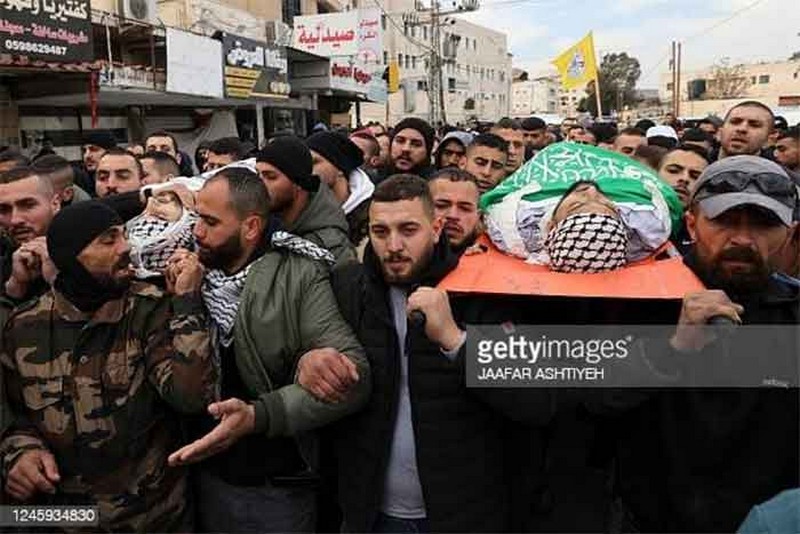
Three days into the New Year. Three murders in Palestine.

Don’t let us allow these martyrs to become just the opening numbers in the Israeli score of dead Palestinians, 2023.

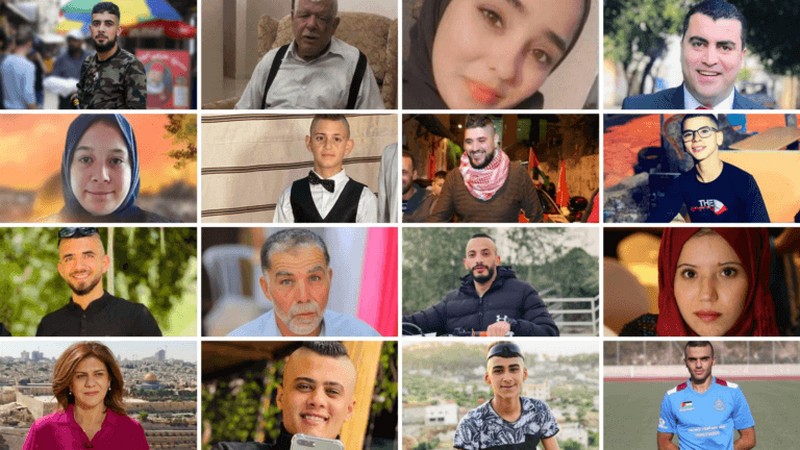
Three young men, filled with hope and with anger had families, loved ones. They had dreams and ambitions, so let us name them, respect them and mourn their short lives.

Muhammad Samer Hoshieh, 21 years old from Alyamoun, near Jenin.

Fuad Mahmoud Ahmed Abed, 17 years old from Kafr Dan, also near Jenin.

15 year old Adam Ayyad, from the camp near Bethlehem, who was killed yesterday

Omar seemed to know what was coming. He left a note, saying he was proud to be a Palestinian and would be proud to die for the cause. Is this all the young can expect in Palestine? Dreams others may have are denied to young Palestinians. Cut short by a member of the Israeli occupation forces who was despatched by his superiors to do just that. Kill and Kill and Kill again.

This has been the norm in Palestine for the last 56 years, since Israel occupied the entire land mass of Palestine from the River Jordan to the Mediterranean. The heavily armed Israeli forces march in, kill, destroy and then march out. And the world is witnessing and the world is silent.

Has the world become so numbed and cowed that our lives have become worthless? It would seem so. Every morning, every news bulletin, every hour of the day, Russia is condemned for the killing and destruction of Ukraine. Yet, you hear almost nothing about Palestinian losses.

Here I will allow Gideon Levy, the renowned Israeli columnist for the Israel daily newspaper Haaretz , to say it for me.

“Maybe the West will have to accept that there is no legal or moral difference between the occupation in Ukraine and the occupation in Palestine – Gideon Levy, Middle East Eye.” 16 December 2022.

Jafar M Ramini is a Palestinian writer and political analyst.

4 January 2023

Source: countercurrents.org

Can NATO and the Pentagon Find a Diplomatic Off-Ramp From the Ukraine War?

By Medea Benjamin and Nicolas J. S. Davies

NATO Secretary General Jens Stoltenberg, known for his staunch support for Ukraine, recently revealed his greatest fear for this winter to a TV interviewer in his native Norway: that the fighting in Ukraine could spin out of control and become a major war between NATO and Russia. “If things go wrong,” he cautioned solemnly, “they can go horribly wrong.”

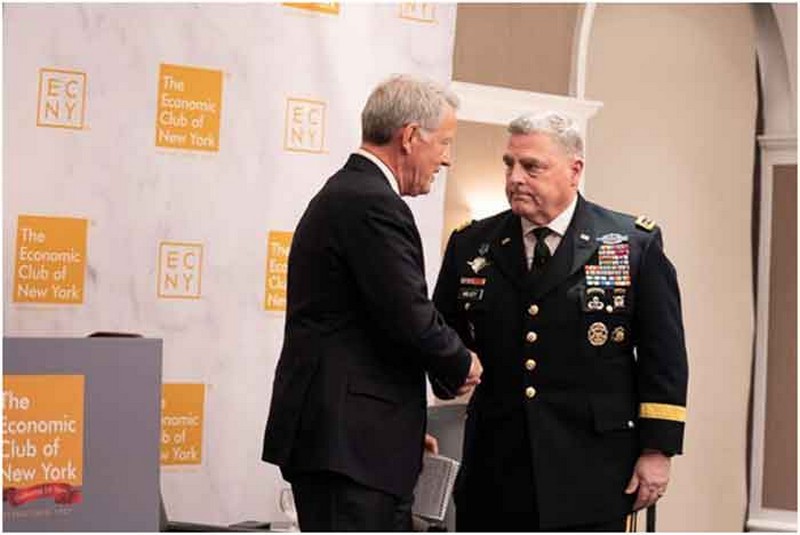
It was a rare admission from someone so involved in the war, and reflects the dichotomy in recent statements between U.S. and NATO political leaders on one hand and military officials on the other. Civilian leaders still appear committed to waging a long, open-ended war in Ukraine, while military leaders, such as the U.S. Chair of the Joint Chiefs of Staff General Mark Milley, have spoken out and urged Ukraine to “seize the moment” for peace talks.

Retired Admiral Michael Mullen, a former Joint Chiefs of Staff Chair, spoke out first, maybe testing the waters for Milley, telling ABC News that the United States should “do everything we possibly can to try to get to the table to resolve this thing.”

Asia Times reported that other NATO military leaders share Milley’s view that neither Russia nor Ukraine can achieve an outright military victory, while French and German military assessments conclude that the stronger negotiating position Ukraine has gained through its recent military successes will be short-lived if it fails to heed Milley’s advice.

So why are U.S. and NATO military leaders speaking out so urgently to reject the perpetuation of their own central role in the war in Ukraine? And why do they see such danger in the offing if their political bosses miss or ignore their cues for the shift to diplomacy?

A Pentagon-commissioned Rand Corporation study published in December, titled Responding to a Russian Attack on NATO During the Ukraine War, provides clues as to what Milley and his military colleagues find so alarming. The study examines U.S. options for responding to four scenarios in which Russia attacks a range of NATO targets, from a U.S. intelligence satellite or a NATO arms depot in Poland to larger-scale missile attacks on NATO air bases and ports, including Ramstein U.S. Air Base and the port of Rotterdam.

These four scenarios are all hypothetical and premised on a Russian escalation beyond the borders of Ukraine. But the authors’ analysis reveals just how fine and precarious the line is between limited and proportionate military responses to Russian escalation and a spiral of escalation that can spin out of control and lead to nuclear war.

The final sentence of the study’s conclusion reads: “The potential for nuclear use adds weight to the U.S. goal of avoiding further escalation, a goal which might seem increasingly critical in the aftermath of a limited Russian conventional attack.” Yet other parts of the study argue against de-escalation or less-than-proportionate responses to Russian escalations, based on the same concerns with U.S. “credibility” that drove devastating but ultimately futile rounds of escalation in Vietnam, Iraq, Afghanistan and other lost wars.

U.S. political leaders are always afraid that if they do not respond forcefully enough to enemy actions, their enemies (now including China) will conclude that their military moves can decisively impact U.S. policy and force the United States and its allies to retreat. But escalations driven by such fears have consistently led only to even more decisive and humiliating U.S. defeats.

In Ukraine, U.S. concerns about “credibility” are compounded by the need to demonstrate to its allies that NATO’s Article 5—which says that an attack on one NATO member will be considered an attack on all—is a truly watertight commitment to defend them.

So U.S. policy in Ukraine is caught between the reputational need to intimidate its enemies and support its allies on the one hand, and the unthinkable real-world dangers of escalation on the other. If U.S. leaders continue to act as they have in the past, favoring escalation over loss of “credibility,” they will be flirting with nuclear war, and the danger will only increase with each twist of the escalatory spiral.

As the absence of a “military solution” slowly dawns on the armchair warriors in Washington and NATO capitals, they are quietly slipping more conciliatory positions into their public statements. Most notably, they are replacing their previous insistence that Ukraine must be restored to its pre-2014 borders, meaning a return of all the Donbas and Crimea, with a call for Russia to withdraw only to pre-February 24, 2022, positions, which Russia had previously agreed to in negotiations in Turkey in March.

U.S. Secretary of State Antony Blinken told The Wall Street Journal on December 5th that the goal of the war is now “to take back territory that’s been seized from [Ukraine] since February 24th.” The WSJ reported that “Two European diplomats… said [U.S. National Security Adviser Jake] Sullivan recommended that Mr. Zelenskyy’s team start thinking about its realistic demands and priorities for negotiations, including a reconsideration of its stated aim for Ukraine to regain Crimea, which was annexed in 2014.”

In another article, The Wall Street Journal quoted German officials saying, “they believe it is unrealistic to expect the Russian troops will be fully expelled from all the occupied territories,” while British officials defined the minimum basis for negotiations as Russia’s willingness to “withdraw to positions it occupied on February 23rd.”

One of Rishi Sunak’s first actions as U.K. Prime Minister at the end of October was to have Defence Minister Ben Wallace call Russian Defense Minister Sergei Shoigu for the first time since the Russian invasion in February. Wallace told Shoigu the U.K. wanted to de-escalate the conflict, a significant shift from the policies of former Prime Ministers Boris Johnson and Liz Truss.

A major stumbling block holding Western diplomats back from the peace table is the maximalist rhetoric and negotiating positions of President Zelenskyy and the Ukrainian government, which has insisted since April that it will not settle for anything short of full sovereignty over every inch of territory that Ukraine possessed before 2014.

But that maximalist position was itself a remarkable reversal from the position Ukraine took at cease-fire talks in Turkey in March, when it agreed to give up its ambition to join NATO and not to host foreign military bases in exchange for a Russian withdrawal to its pre-invasion positions. At those talks, Ukraine agreed to negotiate the future of Donbas and to postpone a final decision on the future of Crimea for up to 15 years.

The Financial Times broke the story of that 15-point peace plan on March 16, and Zelenskyy explained the “neutrality agreement” to his people in a national TV broadcast on March 27, promising to submit it to a national referendum before it could take effect.

But then U.K. Prime Minister Boris Johnson intervened on April 9 to quash that agreement. He told Zelenskyy that the U.K. and the “collective West” were “in it for the long run” and would back Ukraine to fight a long war, but would not sign on to any agreements Ukraine made with Russia.

This helps to explain why Zelenskyy is now so offended by Western suggestions that he should return to the negotiating table. Johnson has since resigned in disgrace, but he left Zelenskyy and the people of Ukraine hanging on his promises.

In April, Johnson claimed to be speaking for the “collective West,” but only the United States publicly took a similar position, while France, Germany and Italy all called for new cease-fire negotiations in May. Now Johnson himself has done an about-face, writing in an Op-Ed for The Wall Street Journal on December 9 only that “Russian forces must be pushed back to the de facto boundary of February 24th.”

Johnson and Biden have made a shambles of Western policy on Ukraine, politically gluing themselves to a policy of unconditional, endless war that NATO military advisers reject for the soundest of reasons: to avoid the world-ending World War III that Biden himself promised to avoid.

U.S. and NATO leaders are finally taking baby steps toward negotiations, but the critical question facing the world in 2023 is whether the warring parties will get to the negotiating table before the spiral of escalation spins catastrophically out of control.

Medea Benjamin and Nicolas J. S. Davies are the authors of War in Ukraine: Making Sense of a Senseless Conflict, published by OR Books in November 2022.

4 January 2023

Source: countercurrents.org

Alexander Mercouris: “Something Big Is on the Way”

By Mike Whitney

“The Russians have decided there is no way to negotiate an end to this. No one will negotiate in good faith; therefore we must crush the enemy. And that’s what’s coming.” — Colonel Douglas MacGregor (9:35 minute)

“Strictly speaking, we haven’t started anything yet.” — Vladimir Putin

The war in Ukraine is not going to end in a negotiated settlement. The Russians have already made it clear that they don’t trust the United States, so they’re not going to waste their time in a pointless gabfest. What the Russians are going to do is pursue the only option that is available to them: They are going to obliterate the Ukrainian Army, reduce a large part of the country to rubble, and force the political leadership to comply with their security demands. It’s a bloody and wasteful course of action, but there’s really no other option. Putin is not going to allow NATO to place its hostile army and missile sites on Russia’s border.

He’s going to defend his country as best as he can by proactively eliminating emerging threats in Ukraine. This is why Putin has called up an additional 300,000 reservists to serve in Ukraine; because the Russians are committed to defeating the Ukrainian army and bringing the war to a swift end. Here’s a brief recap from Colonel Douglas MacGregor:

Washington’s proxy war with Russia is the result of a carefully constructed plan to embroil Russia in conflict with its Ukrainian neighbor. From the moment that President Putin indicated that his government would not tolerate a NATO military presence on Russia’s doorstep in Ukraine, Washington sought to expedite Ukraine’s development into a regional military power hostile to Russia. The Maidan coup allowed Washington’s agents in Kiev to install a government that would cooperate with this project. PM Merkel’s recent admission that she and her European colleagues sought to exploit the Minsk Accords to buy time for the military building in Ukraine confirms the tragic truth of this matter.” (“US Colonel explains America’s role in provoking Russia-Ukraine conflict“, Lifesite)

This is an excellent summary of the events leading up to the present day although we should spend a bit more time on Angela Merkel’s comments. What Merkel actually said in her interview with Die Zeit was the following:

“The 2014 Minsk Agreement was an attempt to buy time for Ukraine. Ukraine used this time to become stronger, as you can see today.” According to the ex-Chancellor, “it was clear for everyone” that the conflict was suspended and the problem was not resolved, “but it was exactly what gave Ukraine the priceless time.” (Tass News Agency)

Merkel has been sharply criticized for admitting that she and the other western leaders deliberately deceived Russia about their true intentions vis a vis Minsk. The fact is, they had no intention of pressuring Ukraine to comply with the terms of the treaty and they knew it from the very beginning. What we know for a fact is that neither Merkel nor her allies were ever interested in peace.Second, we now know that they maintained the fraud for 7 years before she spilled the beans and admitted what they were really up-to. And finally, we now know from Merkel’s comments that Washington’s strategic objective was the opposite of the Minsk agreement. The real goal was to create a heavily-militarized Ukraine that would prosecute Washington’s proxy-war on Russia. That was the primary objective, war on Russia.

So, why would Putin even consider negotiating with people like that; people who just lied-to-his-face for 7 years while they flooded the country with weapons that would be used to kill Russian servicemen?

And what was the objective that compelled Merkel and her Washington colleagues to lie?

They wanted a war, which is the same reason why Boris Johnson put the kibosh on an agreement that Zelensky had negotiated with Moscow in March. Johnson sabotaged the deal because Washington wanted a war. It’s that simple.

But there is a price to pay for lying, and that price comes in the form of distrust, which is the pernicious erosion of confidence that makes it impossible to resolve issues of mutual concern. Russia’s deputy chair of the national Security Council, Dmitry Medvedev, expressed his views on the matter just this week in the bitterest terms. He said:

The behavior of Washington and others this year “is the last warning to all nations: there can be no business with the Anglo-Saxon world [because] it is a thief, a swindler, a card-sharp that could do anything…. From now on we will do without them until a new generation of sensible politicians comes to power… There is nobody in the West we could deal with about anything for any reason.” (Ex-Russian President outlines timeline for reconciliation with the West, RT)

Of course, the Washington warhawks will not be bothered by the prospect of severed relations with Russia, in fact they probably welcome it. But the same cannot be said for Europe.

Europe is going to regret that it tied itself to Washington’s anvil and threw itself into the sea. Sometime in the near future –when they finally realize that their economic survival is inextricably linked to access to cheap fossil fuel– EU leaders will change course and implement a policy that ensures their own prosperity. They will withdraw from NATO’s ‘forever war’ and join the ranks of civilized nations seeking a secure and economically-integrated future. We expect that even NordStream, which was destroyed in the greatest act of industrial sabotage in the modern era, will be reconnected establishing the main energy artery that binds Russia to the EU in the world’s biggest free trade zone. Eventually, common sense will prevail and Europe will emerge from the slump brought on by its alliance with Washington. But, first, the conflagration between Russia and the West must play out in Ukraine, and the “Guarantor of Global Security” must be replaced by the one nation willing to fight Goliath on his own terms in a winner-take-all contest.Ukraine is shaping up to be the decisive battle in the war against the “rules-based system”, a war in which the United States is going to use ‘every trick in the book’ to maintain its grip on power. Check out this short blurb from political analyst John Mearsheimer who explains the means by which the US has preserved its dominant role in the global order:

“You cannot underestimate how ruthless the United States is. This is all covered-up in the textbooks and the classes that we take growing up because it’s all part of nationalism. Nationalism is all about creating myths about how wonderful your country is. It’s America right or wrong; we never do anything wrong. (But) if you really look at the way the United States has operated over time, its’ really amazing how ruthless we’ve been. And the British, the same is true of them as well But we cover it up. So, I’m just saying, if you are Ukraine and you’re living next to a powerful state like Russia Or you’re Cuba and you’re living next to a powerful state like the United States, you should be very, very careful because this is like sleeping in bed with an elephant. If that elephant rolls over on top of you, you’re dead. You’ve got to be very careful. Am I happy about the fact that this is the way the world works? No, I’m not. But it is the way the world works for better or worse.” (John Mearsheimer, “How the World Works“, You Tube; 1 minute)

Bottom line: The prospects for peace in Ukraine are zilch. The US foreign policy establishment has decided that the only way it can reverse America’s accelerating decline is through direct military confrontation. The war is Ukraine is the first manifestation of that decision. On the other hand, Russia no longer puts any stock in negotiations with the West, because western leaders cannot be trusted to honor their commitments or fulfill their treaty obligations. The irreconcilable differences of the two main parties makes escalation inevitable. Absent a partner that can be trusted, Putin has just one option for resolving the conflict: Overwhelming military force. That’s why he called up 300,000 reservists to serve in Ukraine, and that’s why he’ll call up 300,000 more if they are needed. Putin realizes that the only way forward is by lowering-the-boom quickly and imposing his own settlement on the vanquished. This is exactly what Mearsheimer predicted just weeks ago when he said this:

“The Russians are not going to roll over and play dead. In fact, what the Russians are going to do is crush the Ukrainians. They are going to bring out the big guns. They are going to turn places like Kiev, and other cities in Ukraine into rubble. They’re going to do Fallujas, they’re going to do Mosuls, they’re going to do Groznys …. When a great power feels threatened…the Russians are going to pull out all stops in Ukraine to make sure they win. …You want to understand that what we are talking about doing here, is backing a nuclear-armed great power– that sees what’s happening as an existential threat– into a corner. This is really dangerous.” (John Mearsheimer, Twitter)

Source: PressTV via The Unz Review

So, if we know that Russia is going to try to end the war by defeating the Ukrainian Army, then what should we expect in the near future?

That’s a question that has been answered by a number of analysts who have followed the war closely from the very beginning. We will provide a few paragraphs from each of them in a minute, but first, here’s a recap of the meetings that took place last week that suggest a major Russian offensive may be just weeks away. The excerpt is from an article at Consortium News by Patrick Lawrence:

Alexander Mercouris… recently listed the exceptional series of meetings Putin has held over the past couple of weeks with the entire…. military and national security establishment. In Moscow, the Russian leader met with all of his top military commanders and national security officials (including) Sergei Surovikan, the general he put in charge of the Ukrainian operation….

Putin subsequently flew to Minsk with Foreign Minister Sergei Lavrov and Defense Minister Sergei Shoigu for exchanges with the Belarus political and military leadership. Then it was onward to meet with the leaders of the two republics, Donetsk and Lugansk, that were incorporated via referenda into the Russian Federation last autumn.

It is impossible to avoid concluding that these back-to-back meetings, barely covered in the Western press, portend a new, near- or medium-term military initiative in Ukraine. As Mercouris put it, “Something very big is on the way.”

Among the most interesting encounters in all of this took place in Beijing last week, when Dmitry Medvedev, currently deputy chairman of the Russian Security Council and long close to Putin, had talks with Xi Jinping….

At some point in the not-distant future, the war of hollow rhetoric in behalf of imperial hubris will weaken and drift toward collapse. This degree of Surreal detachment from reality simply cannot be sustained indefinitely — not in the face of a new Russian initiative, whatever the form it turns out to take.” (PATRICK LAWRENCE: “A War of Rhetoric & Reality“, Consortium News)

Is Lawrence, right? Is “something big on the way”?

It certainly looks like it. In the space below I have transcribed quotes from recent videos with Colonel MacGregor and Alexander Mercouris, two of the best and most reliable analysts of the war in Ukraine. Both agree that a Russian “winter offensive” will take place in the near future, and both agree on the strategic objectives of the operation. Here’s a clip from MacGregor:

“The American people don’t really understand that the Ukrainian Army in the Donbas is on the verge of collapse.They’ve taken hundreds of thousands of casualties… (and) they’re closing in on one hundred and fifty thousand dead. The 93rd Ukrainian Army Brigade was just withdrawn from Bahkmut– which has been turned into a Ukrainian bloodbath by the Russians– and they left after suffering 70 percent casualties. For them, that means that out of 4,000 men… they pulled out with about 1,200 men. That is a catastrophe, but that is what’s really happening. And when the Russians finally launch their offensive, Americans are going to watch this entire house of cards collapse. Then the only question is, will someone finally stand up and put an end to this utterly false narrative.” (“Colonel Douglas MacGregor”, Real America, Rumble; 8:45 min)

REAL AMERICA — Dan Ball W/ Col. Doug Macgregor, Zelensky Begs Congress For More $$, 12/22/22

And here’s more MacGregor:

It is looking more and more like the Russians would like to complete their task in Donbas first. They want to eliminate all the Ukrainian forces that are in the Donbas… Remember, this was always an economy-of-force measure. It was designed to grind up as many Ukrainians as possible at the lowest possible cost to the Russians. That’s what’s been going on in southern Ukraine (and) it continues. It has worked brilliantly. And Surovikin, the theatre commander, has said that will continue until he’s ready to launch his offensive. When the offensive is launched, it will be a very different battle. But the interesting thing is, that the Ukrainians have taken so many casualties in the South, we are beginning to hear reports that they are on the verge of collapse. And that’s why we’re hearing about teenage boys age 14 or 15 pressed into service. …and we’re getting videos from Ukrainian soldiers saying,”The people in Kiev had better hope that the Russians get to them before we do… because we’ll kill them.” They are talking about people in the government, because they see no evidence that Zelensky’s government …gives a damn about them. They are running out of food and clothes; they are freezing, they are taking heavy casualties, and they are being driven back.” (“Will Ukraine have enough Fire Power?”, Col MacGregor, Judging Freedom, You Tube; 17:35 min)

Will Ukraine ever have enough Fire Power? Col Doug Macgregor at 3:00p est TODAY

Both MacGregor and Mercouris appear to agree that the Russian strategy involves “grinding down” the enemy, (killing as many Ukrainian troops as possible) consolidating Russian gains while expanding their control over areas in the east and along the Black Sea, and, eventually, partitioning of Ukraine into 2 separate entities; a “dysfunctional rump state” in the west, and an industrialized, prosperous state in the east. Here’s Alexander Mercouris from a recent update on You Tube:

My strong impression is that ...the focus of the Russian winter offensive –which is indeed coming– will be on ending the battle in Donbas, breaking Ukrainian resistance in Donbas, clearing Ukrainian forces from the Donetsk People’s Republic. It does not look to me as if the Russians are planning some great advance on Kiev or on western Ukraine.That is not what these comments of General Gerasimov say. …the Russians are focusing on Donetsk… It’s ‘low risk’ but it is highly-effective. It is grinding down the Ukrainian Army exactly as General Surovikin said. It is weakening Ukraine’s future ability to continue the war and — at the same time– it fulfills Russia’s primary mission which, from the start, has been the liberation of Donbas.

Now, it is not going to end there. Other Russian officials have been saying that in 2023, we should see the recapture of Kherson region … and there will most surely be other Russian advances in other places. But the main battle was, and remains, Donbas. Once that battle is won, once Ukrainian resistance is broken, the Ukrainian army will be fatally weakened… which means that Ukraine will not only have lost its most heavily industrialized region, and its most heavily fortified zone. It will also mean the Russians will have unimpeded access all the way to the east bank of the Dnieper River. At that point, they will be in a position to cut Ukraine in half. This seems logical to me and it seems clearly to me that this is the Russian plan. They are not making a secret of it, but they are keeping people on-their-toes and guessing about the troops that are in Belarus. But I suspect the primary purpose of those forces is to pin Ukrainian soldiers down …around Kiev from a possible Russian offensive there, and to counter the very big buildup of Polish troops. So that is what Gerasimov has been saying.” (“Alexander Mercouris on Ukraine”, You Tube; 31:35 min)

Russia in Soledar, Ukraine Bakhmut Last Stand, Russia Focus Donbass, Putin confirms New Cold War

While no one can predict the future with absolute certainly, it seems that both MacGregor and Mercouris have a good-enough grip on the facts that their scenario cannot be dismissed out-of-hand. In fact, the present trajectory of the conflict suggests that their predictions are probably “dead on”. In any event, we won’t have to wait long to find out. Temperatures are dropping fast across Ukraine which allows for the unencumbered movement of tanks and armored vehicles. Russia’s winter offensive is probably just weeks away.

*

Michael Whitney is a renowned geopolitical and social analyst based in Washington State.

4 January 2023

Source: globalresearch.ca

Kashmir Diaspora Coalition for right to self-determination:

Washington DC (January 5, 2023)-

The Kashmir Diaspora Coalition (KDC) and its international affiliate
organizations—-World Kashmir Awareness Forum, Washington DC; Kashmir House Istanbul; Kashmir Civitas, Canada; World Kashmir Freedom Movement, London; Tehreek-Kashmir, UK and EU and Kashmir Campaign Global, London are issuing the following press statement in complete solidarity with the 23 million people of Jammu & Kashmir who are observing January 5, 2023, as Right to Self-Determination Day across the world:

On January 5, 1949, the UN Commission for India and Pakistan (UNCIP) passed its resolution giving the people right to self determination. Under this right the people of the state of Jammu & Kashmir were authorized to hold a free and unfettered plebiscite under the UN supervision. Unfortunately, the Indian state has failed to cooperate with the UNCIP in implementing Commission’s explicit mission and its underlying UNSC resolution 47 of April 21, 1948, mandating such plebiscite in Kashmir.

Non-compliance of India with the implementation of UN mandated right to self-determination in Jammu and Kashmir and UN’s failure to implement its decision over 76 years has led to enormous ongoing suffering on the people of Jammu & Kashmir. It includes three major wars between India and Pakistan, numerous massacres of Muslims and an ongoing genocide by Indian military, paramilitary and civilian militias. Indian regimes have incrementally hollowed out any internal autonomy granted to Kashmiris. Since August 5, 2019, with the abrogation of Article -370 and 35-A by the extremist supremacist regime of Narendra Modi has converted Kashmir from an illegal occupation to a fragmented lawless ‘Union Territory’ with no due process and no system of justice for the indigenous Muslim population.

Jammu & Kashmir is now undergoing a rapid transition from illegal
occupation into an Indian settler-colonialist and apartheid project. It
is following the Israeli model with forced demographic change —
millions of illegal Hindu importees granted Kashmiri domicile, right to
vote, settlement in expropriated and stolen Kashmiri land and jobs.
Local Muslims dwellings are demolished to make space for Hindu Indians. Plans are being made to hold farcical elections to disenfranchise Muslims and win elections. Most Muslim political leaders, intellectuals, human rights defenders, and religious figures are imprisoned, tortured, or killed in custody or fake encounters.

Kashmiris will never give in or give up their right to self-determination despite the suffering and neglect on the part of the UN and the human rights bodies.

We appeal to the UN Secretary General, the UNSC, the UNHCHR, OIC and international NGO’s to support the oppressed people of Jammu & Kashmir to achieve their UNSC-guaranteed right to self- determination.

Kashmir Diaspora Coalition (KDC) is an international umbrella of
Kashmiri diaspora organizations based on the right to self-determination of the people of Jammu and Kashmir as guaranteed by UNSC-resolution 47 of April 21, 1948.

Japan Rearms Under Washington’s Pressure

The Dec. 16 announcement by Japan’s Prime Minister Fumio Kishida of a new defense strategy, while doubling military spending by 2027 to implement it, is the largest defense shake-up in decades and a wake-up call to the antiwar movement.

The decision includes openly acquiring offensive weapons and reshaping its military command structure for its expanded armed forces. On Dec. 23, the draft budget was approved by Kishida’s cabinet.

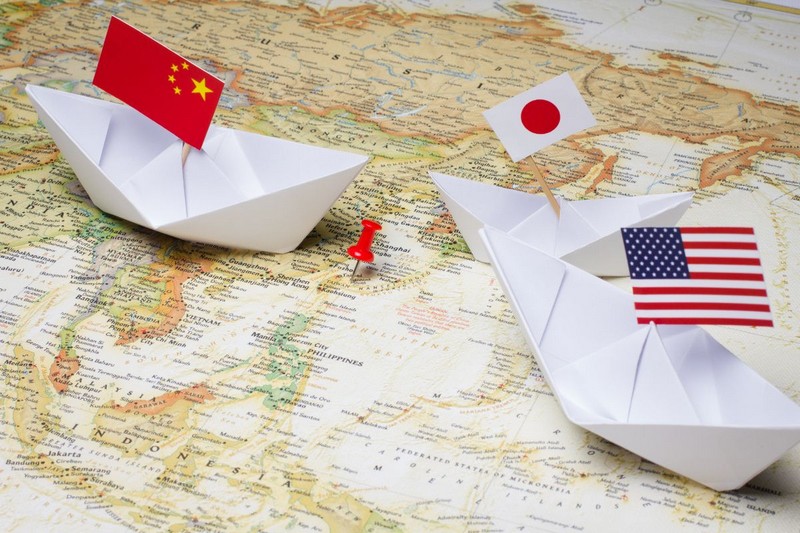
Japan’s dangerous military expansion should set off international alarm bells. This major escalation is taking place based on intense U.S. imperialist pressure. It is the next step in the “Pivot to Asia,” aimed at threatening and surrounding China and attempting to reassert U.S. dominance in the Asia Pacific.

The movements opposing endless U.S. wars must begin to prepare material and draw mass attention to this ominous threat.

The plan to double military spending will add $315 billion to Japan’s defense budget over the next five years and make Japan’s military the world’s third largest, after the U.S. and China. Defense spending will escalate to 2% of gross domestic product, equal to the goal the U.S. sets for its NATO allies. Japan’s economy is the world’s third largest.

The Japanese government plans to buy up to 500 Lockheed Martin Tomahawk missiles and Joint Air-to-Surface Standoff Missiles (JASSM), procure more naval vessels and fighter aircraft, increase cyber warfare capabilities, manufacture its own hypersonic guided missiles and produce its own advanced fighter jets, along with other weapons. The plan shifts from relying solely on missile defense to also embracing “counterstrike” capabilities.

Three key security documents — the National Security Strategy (NSS), as well as the National Defense Strategy (NDS) and the Defense Buildup Program (DBP) — shed some of the postwar constraints on the Japanese military.

Article 9 – a class struggle against military rearmament

Although the U.S. occupation force, after defeating Japan’s military in World War II, imposed a “pacifist” constitution on Japan, for decades now U.S. strategists have pressured Japan’s government to aggressively rearm, and especially to buy U.S.-made weapons, to act as a junior partner to U.S. efforts to dominate the Asia-Pacific region.

Article 9 of the imposed Japanese constitution prohibits Japan from maintaining an army, navy and air force. To get around this, the “Japanese Self-Defense Forces” (JSDF) have since 1952 been treated as a legal extension of the police and prison system. The U.S. occupiers considered the JSDF an essential repressive tool defending capitalist property relations against the workers’ movement.

The decision for aggressive military expansion is in open violation of Japan’s supposedly pacifist constitution.

The effort to “reinterpret” Article 9 has been a continuing political struggle inside Japan. Mass rallies of hundreds of thousands have mobilized many times in defense of Article 9, which offers a clear prohibition of Japan’s maintaining a military force. The widespread opposition to the Japanese military and to constitutional change comes from working people, mobilized by the unions and the communist and socialist movements.

This movement pointed out to everyone how the wartime militarist regime of the 1930s and 1940s carried out brutal repression and led Japan into WWII. The people know from bitter experience that these ultrarightist forces, whose roots are in historic Japanese colonialism, are the real threat to their rights and the social gains they have made.

The present doubling of the defense budget will be funded by raising taxes. A huge military budget will inevitably mean severe cuts to the country’s limited social spending.

The Liberal Democratic Party, which has held power almost continually since the 1950s, is right-wing, pro-military and allied to U.S. imperialism, especially against China and the DPRK. They have been pushing for an end to the constitutional and legal restrictions on the country’s military.

The assassination of retired President Shinzo Abe on July 8, 2022, just two days before Japan’s election, brought additional votes to the LDP. It was able to win the two-thirds supermajority in Parliament, needed to move forward aggressively with its military plans.

Targeting China

Japan’s military expansion fits in with Washington’s aggression aimed at China, the DPRK and Russia. U.S. strategists’ goal is to use the U.S. alliance with Japan, South Korea and Australia, just as it uses the U.S.-led NATO alliance in Europe.

The doubling of NATO’s membership and NATO’s targeting of Russia have led to war in Ukraine, when the U.S. government imposed thousands of new sanctions against Russia, and the U.S. has ruptured the European Union’s mutually beneficial trade with Russia.

China is Japan’s largest trading partner in both imports and exports. Previous National Strategy Documents said Japan was seeking a “mutually beneficial strategic partnership” with China. Suddenly Japanese strategists started labeling China “the greatest strategic challenge in ensuring the peace and security of Japan.” (U.S. Institute of Peace, Dec. 19)

Japan had expanded trade with Russia in gas, oil, autos and machinery. Previously Japan’s Dec. 17, 2013, National Security Strategy document called for “enhanced ties and cooperation with Russia.” Now Japan considers Russia a “strong security concern.” (USIP, Dec. 19)

A U.S.-Japan alliance is now defined as a “cornerstone” of Japan’s security policy. (Japan Times, Dec. 17)

U.S. praise of Japan’s rising militarism

The U.S. media praised Japan’s new security strategy document as a “bold and historic step.” U.S. National Security Advisor Jake Sullivan praised the defense spending hike, which “will strengthen and modernize the U.S.-Japan alliance.” U.S. Secretary of State Antony Blinken called Japan an “indispensable partner” and cheered that the changed security documents reshape the ability to “protect the rules-based order in the Indo-Pacific region and around the world.” (quotes, whitehouse.gov, Dec. 16)

U.S. corporate power is the immediate beneficiary of this sharp turn in policy, built on military threats and economic sanctions.

Foreign Affairs Magazine calls the announcement “a profound transformation” and states: “The new national security strategy, however, represents a stunning change. … [T]he government is enacting policies that have been debated for decades but were always blocked. Until now … Japan’s new national security strategy should be applauded. ” (Foreign Affairs, Dec. 23)

U.S. needs collaborators

U.S. policy toward the defeated capitalist class in Germany, Italy and Japan was remarkably similar. At the end of WWII, many of the industrial leaders who had backed these fascist regimes were quietly protected and rehabilitated in Japan, Germany and Italy, along with the fascist collaborators who fled from workers’ control in Eastern Europe.

The U.S. and later NATO used the rehabilitated fascists against a rising workers movement in West Europe and against socialist construction in Eastern Europe. U.S. corporations, who had aggressively moved into the defeated Axis countries, needed insurance that their investments would be protected from the strike waves.

By 1950 the U.S. was at war on the Korean peninsula and, while using U.S. troops in Korea, needed a military force for “peacekeeping and self-defense” of capitalist property relations in Japan. Germany, Italy and Japan began to rearm during that period.

The impact on Okinawa

A chain of 150 islands called the Ryukyu Archipelago, of which the largest island is Okinawa, 400 miles from the Japanese mainland, is in reality a colony of Japan. Its population of 1.74 million people suffers from Tokyo’s rule and from the occupation by U.S. military bases. Okinawa is geographically closer to Taiwan than it is to the main islands of Japan.

Upgrading and strengthening Japanese ground units on Okinawa is part of the new National Security Strategy (NSS). Other islands, which are part of the chain southwest of Japan, will be further militarized.

Upgrading of Japan’s 15th Brigade on these islands for future electronic warfare, cyber warfare and joint operations of the ground, maritime and air forces are clearly a sign of plans to intervene in the Taiwan Straits.

In recent years, Japan has deployed anti-ship and air-defense missiles on its southwest islands of Amami Oshima, Okinawa Main Island, Miyako Island and a missile base on Ishigaki Island, the island closest to Taiwan.

More than 50,000 U.S. troops remain as an occupying force in Japan, at present the largest U.S. occupation force in any country. More than half of U.S. troops are based on Okinawa.

Okinawa residents, the Indigenous Ryukyu people, have spent decades protesting the constant presence of the U.S. military in their daily lives. There are now 31 U.S. military installations on the island prefecture of Okinawa, which accounts for 74% of the area of all U.S. military bases in Japan, although Okinawa only constitutes 0.6% of Japanese territory.

The U.S. maintains 73 military bases and 28,500 troops in South Korea. Both South Korea and Japan are forced to pay for “hosting” these troops of occupation.

‘Using North Korea threat as cover’

Japan has previously justified its remilitarization by claiming North Korea is a threat. However, retired Maritime Self-Defense Force (MSDF) Admiral Tomohisa Takei told the media that China has been the main target for which Japan has been preparing, “by using North Korea’s threat as cover.” (AP, Dec. 17)

Both Japan and South Korea engage on a regular basis in coordinated military drills under U.S. command threatening Korea DPRK. Massive demonstrations in South Korea and missiles fired from targeted North Korea respond to these military provocations.

This cynical admission of the planning and preparation for war, while claiming self-defense, is similar to former German Chancellor Angela Merkel’s Dec. 8 admission that the signing of the 2014 Minsk Agreement was not a peace treaty with Russia. Merkel confirmed that NATO wanted war from the start but needed time to prepare Ukraine militarily. (interview in Die Zeit, Dec. 7)

Having goaded Russia into an invasion of Ukraine in a bid to weaken and fragment Russia, the U.S. is next seeking to turn Taiwan into a military quagmire for China. The Biden administration is facilitating Taiwan’s purchase of advanced weaponry from the U.S. and greater diplomatic ties with the island.

Part of an effort to focus political attention through fact sheets, talking points, videos and webinars on the growing threat of U.S. pressure for Japan’s rearming is the short video, posted on the International Action Center website titled: “Japan’s constitutional amendment: a dangerous signal.” (tinyurl.com/mwjdt8rm)

The video was made in China and includes U.S. participation. People from many countries will need to cooperate to confront the growing militarism in Japan, the U.S. and their allies.

*

Sara Flounders is an American political writer active in progressive and anti-war organizing since the 1960s.

2 January 2023

Source: globalresearch.ca
As 2022 ends, Israeli forces and settlers killed 231 Palestinians

By Ranjan Solomon

Palestine Update 618
Comment

A year of acute violence has just passed with 231 Palestinians killed by Israeli forces and settlers. The apartheid-colonialist regime has been relentless and shows no tolerance for legitimate protest even when the form of protest does not pose danger to the Israeli army. To kill those who resist and weaken the Palestinian resistance is the intent. The stories are ones of horror and barbarity and show reckless disregard for minimum human rights standards. Rights groups deemed that those killed did not even pose an explicit threat to the lives of the Israeli soldiers when they were killed. Israel discounts human rights when it comes to Palestinians but labours to express shock when the United Nations deems UN votes against Israel as ‘despicable’. The real question is Israel’s stubborn refusal to decolonize, and refuse to act by the UN Convention on Human Rights to which it is a signatory since 3 July 1990 (further ratified on 4 August 1991.

In this issue of MLN Palestine Updates, we share a new factsheet from OCHA, highlighting the humanitarian impact of the Separation Barrier over the past 20 years. We also share a report from the UN General Assembly Friday which asks its highest judicial authority, the International Court of Justice (ICJ), to provide an opinion on the legality of Israeli settlements located on Palestinian territory. The ICJ is expected to consider Israel’s occupation and settlement of Palestinian land as well as the adoption of related discriminatory legislation and measures.

Israel’s conceited dismissal of the practice of human rights law is also exposed in a report where The Greek Orthodox Patriarchate of Jerusalem has condemned the storming and takeover by a radical Israeli settler group on December 27 of its land in the Silwan neighborhood of occupied East Jerusalem. The Patriarch condemning the act stated: “This radical group has no right or judicial backing in their favor to allow them to enter or occupy the land.” The Patriarchate noted that the raid took place under the eyes of armed Israeli police and border guards. Land grabs are part of the occupation’s tactics and a design of the colonialist designs of the Israeli government.

Finally, we share with abhorrence and disappointment India’s decision to abstain from the vote in the U.N. General Assembly on a resolution that asked the International Court of Justice for its opinion on the legal consequences of Israel’s “prolonged occupation” and annexation of the Palestinian territory. The resolution titled ‘Israeli practices affecting the human rights of the Palestinian people in the Occupied Palestinian Territory, including East Jerusalem’ was adopted by a recorded vote on Friday, with 87 votes in favour, 26 against and 53 abstentions. India’s abstention exposes the closeting of ties between Israel and India with both countries adopting practices typical to extreme right wing ethno-religious nationalism. India, once an ‘influencer’ in the Non Alignment Movement used to assumestrong political postures in support of the liberation of Palestine. In the last decade, in particular, there has been a reversal of this political posture. This counter-trend disappoints Palestinians and progressive Indians, and people around the world, who seek a just and lasting solution to the Question of Palestine. India claims to be the largest democracy in the world, but chooses to support Israel’s fascist regime only because its own ideological positions against religious minorities suits it to side with Israel and coalesce with her. Additionally, Israel is India’s largest supplier of military hardware and defence interests.

Please read these items of news and disseminate widely.

In solidarity

Ranjan Solomon On behalf of MLN Palestine Updates

2 January 2023

Source: Palestine Update

231 Palestinians were killed in 2022. These are their stories.

By Yumna Patel

2022 has been the deadliest year for Palestinians living under Israeli occupation in decades. In the occupied West Bank and East Jerusalem specifically, this year marked the highest number of killings of Palestinians in the territories since the UN began recording fatalities in 2005. The killings began almost instantaneously, with the first two Palestinians killed within the first week of January — one by an Israeli soldier, and one by an Israeli settler. From then on, the killings did not stop.

Mondoweiss has kept a record of all the Palestinians killed by Israeli forces and settlers. At the time of publication, the total number of Palestinians killed in 2022 stood at 231. This number also includes 53 killed in Gaza, 49 of whom were killed during Operation Breaking Dawn in August, and five Palestinians with Israeli citizenship who were killed inside the territory of the Israeli state. The vast majority of the deaths this year, however, came from the occupied West Bank, with 173 Palestinians killed. For the purpose of this report, we will focus on those who were killed in the West Bank and East Jerusalem, or those who were residents of the West Bank and Jerusalem but were killed in other parts of occupied Palestine. This list also includes Palestinian political prisoners who died inside Israeli prisons as a result of “direct medical negligence,” or those who died while resisting Israeli apartheid and colonialism, and are thus considered “martyrs” — those who died for the cause — by the Palestinian public. Among the 173 killed in the West Bank and East Jerusalem were 39 children aged 17 and under, making them close to 27% of the total deaths in the territory.

Within the West Bank, the highest number of casualties occurred in two specific regions: Nablus and Jenin, representing 19% and 34% of the total casualties, respectively. The particularly high number of deaths in the two regions of the northern West Bank can be attributed to the resurgence of armed resistance witnessed in both areas, which the Israeli military focused its efforts on quashing this year. In late 2021, the Israeli army amended its already loose open-fire regulations in the occupied West Bank, officially allowing troops to shoot at Palestinians who had thrown rocks or Molotov cocktails at civilian vehicles, even if the Palestinian no longer presented an immediate threat. The military spokesperson has maintained that the amended regulations only apply when rocks or fire bombs are thrown towards civilian vehicles, not when such objects are thrown towards forces during military raids, and that soldiers are to follow a protocol in which the use of deadly force is a last resort. The nature of the killings this year, however, tells a different story.

According to Mondoweiss, the vast majority of those killed were shot by Israeli police, border police, and the military during confrontations with Israeli forces. While there was a significant rise in armed confrontation between Palestinians and Israeli armed forces this year, many of those killed were shot while unarmed, or while throwing stones or Molotov cocktails towards Israeli army vehicles and armed soldiers. In many cases, rights groups deemed that those killed did not pose an explicit threat to the lives of the Israeli soldiers when they were killed.

Read full narrative in The Mondoweiss

Source: Palestine Update

New factsheet, highlighting the humanitarian impact of the Barrier over the past 20 years

As the year comes to an end, we are sharing with you a new factsheet, highlighting the humanitarian impact of the Barrier over the past 20 years: bit.ly/BackToTheWall20

Throughout 2022, we have been marking 20 years since the construction of the 700-kilometre long Israeli Barrier. It was built with the stated aim of preventing violent attacks by Palestinians in Israel and it deviates from the Green Line by running mostly inside the West Bank. The Barrier separates Palestinian communities and farmland from the rest of the occupied Palestinian territory, hinders access to workplaces and essential services, and transforms geography, economy and social life. Those who can cross the Barrier may only do so with special permits or other arrangements that have become more and more restrictive over the years. As such, the Barrier has increased the humanitarian needs to which we have to respond. In 2004, the International Court of Justice established that sections of the Barrier running inside the West Bank, as well as the associated permit and gate regime, violate Israel’s obligations under international law, and should be dismantled. Almost two decades on, this has not been acted upon.

Read the factsheet new factsheet here:

Source: Palestine Update

Zelensky’s “Surprise” Visit. Lock Up the White House Silverware!

By Philip Giraldi

In my humble opinion the surfacing of Ukrainian President Volodymyr Zelensky in Washington last week was possibly the most disgusting example of the corruption of our country and its values since Israeli President Benjamin Netanyahu arranged for a similar invitation to address a rapturous Congress back in 2015. Zelensky’s “surprise” visit had in fact been arranged over the course of several months and was a carefully choreographed performance intended to pay political dividends for both the White House, for the Democratic Party in Congress and for Zelensky and his political supporters at home.

He met privately with President Joe Biden in the White House, where he presumably received most of what he was seeking as well as a pledge of total support until “Ukraine wins.” He subsequently was invited to address a Joint Session of Congress, a privilege that was most definitely not arranged at short notice, with House of Representatives Speaker Nancy Pelosi predictably calling on all Congressmen to attend. The session began with a three minute standing ovation from the assembled Representatives and Senators.

So the creepy little con-man was enabled to have his say in a video link that reached a global audience. That it consisted of a gaggle of lies to justify the rapid passage of hundreds of billions of dollars from the struggling American taxpayer to a nation renowned only for its reputation as the most corrupt in Europe was not noted by the audience. As it has been from the start Joe Biden’s war, it is inevitable that the Democrats in Congress should leap around and fill the chamber with cheers every time Zelensky opened his mouth to emit yet another inanity.

But to their shame, many Republicans joined in on the celebration of the odd diminutive man Zelensky, whose beatification was passionately embraced by the national media to make sure no one missed out on the importance of the event. The New York Times report on the visit began by describing Zelensky’s status as “a national hero and global superstar, having forged a leadership style blending personal daring with deft messaging to rally his people at home and his allies abroad.” In part, that message included describing his struggle as engaging in a battle pitting “good against evil.”

Image: President Joe Biden meets with Ukrainian President Volodymyr Zelenskyy, Wednesday, December 21, 2022, in the Oval Office of the White House. (Official White House Photo by Adam Schultz)

Nevertheless, those Republicans whose heads were not wedged up their keesters did boycott the event, to the tune of only 86 out of 213 being present. It seems that some Republicans are against the war generally speaking while others actually believe that the billions going to Ukraine should be audited to determine whether it is being stolen or not. Congressmen Matt Gaetz and Lauren Boebert attended but played with their cell phones and did not rise and applaud the stirring rhetoric coming from Zelensky, who was basically seeking many new weapons and lots more money justified not as “charity” but as an “investment” so he and Ukraine could work to bring rule of law, global security, democracy and freedom to the world. In the aftermath, one particularly delusional commentator has enthused how

“There can be no more compelling or effective leader of the democratic free world today than Ukrainian President Volodymyr Zelensky. Fate has called upon him to rise to a level of courage and clarity few figures in history have demonstrated.”

In his speech, Zelensky clearly forgot to mention how he has eliminated freedom of speech and association in his own country as part of his war agenda, while also banning opposition parties and media and even harassing the Russian Orthodox Church. But the tweetosphere inevitably ignored those issues and erupted instead over the alleged bad behavior by some Republicans in not supporting such a great leader. One Michael Beschloss (@BeschlossDC), who is the anointed NBC television network’s Presidential Historian, tweeted, “For any members of Congress who refused to clap for Zelenskyy, we need to know from them exactly why.” Independent journalist Glenn Greenwald (@ggreenwald) responded sarcastically to Beschloss, “Haul them before a Committee and force them to pledge allegiance to Ukraine and Zelensky or else face long-term imprisonment in a supermax. Refusing to clap for a foreign leader on command is a form of treason.”

And politicians too were inevitably prone to bombastic misrepresentation. Congressman Don Beyer of Virginia tweeted how

“This disrespect is embarrassing. It embarrasses you, your constituents, the body we serve in, and our country. Huge numbers of President Zelensky’s people have been killed in a bloody war they did not seek. We must be able to debate foreign policy without mocking human suffering.”

Another lunkhead Democrat Representative Jake Auchincloss of Massachusetts declared war, asserting that

“We’re in a global struggle between democracy and autocracy. And Ukraine is fighting on the frontlines of that struggle. Our support for Ukraine is sending a message to Moscow, it’s sending a message to Beijing. And it’s sending a message to other authoritarian regimes.”

Auchincloss was apparently unaware that it is the United States government that has itself become more autocratic/despotic in that it is generally accepted that the president now has extralegally assumed the authority to allow war crimes to be committed in places like Syria, Afghanistan and Libya while also torturing people to death in secret prisons. The president and his Attorney General Merrick Garland are also rooting out “domestic terrorists” who generally speaking are white people who oppose Democratic Party policies.

Clearly, neither Beyer nor Auchincloss understands that a principled “debate” on foreign policy is not taking place at all in America, largely due to the ability of their party and colleagues to manage and control the process whereby it is possible to start an illegal/unconstitutional war that just might go nuclear without any real pushback from critics or the public.

When it comes to controlling the narrative on Ukraine, the normally inept Biden Administration has unleashed the most effective propaganda machine that has ever existed, even if one is taking into consideration George W. Bush’s many lies relating to Afghanistan/Iraq. It is interesting to note that nor did Beyer find Zelensky’s macho sporting of a “wartime uniform” featuring combat style sweatshirt and fatigue cargo pants, which Tucker Carlson described as befitting the “manager of a strip club,” as disrespectful of the august body that he was addressing.

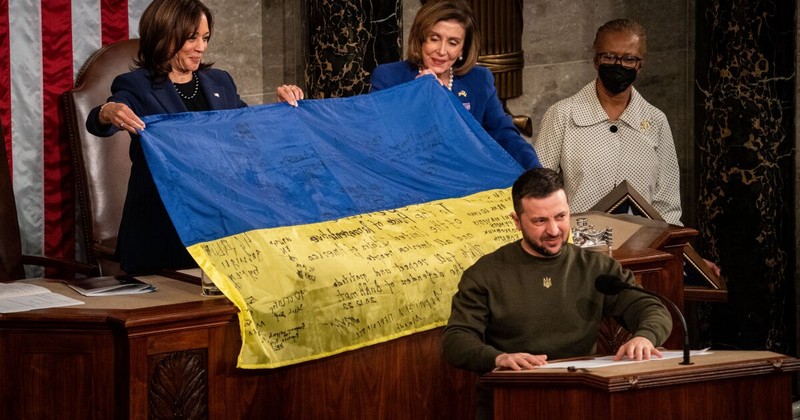
Nor was Beyer apparently affronted when Pelosi and Vice President Kamala Harris unfurled and waved a huge Ukrainian flag at the speaker’s rostrum. And speaking of Zelensky’s performance itself, one has to wonder who wrote Zelensky’s speech? He has neither the experience nor the smarts necessary to appeal to the most basic instincts of the American people, so one might rather expect that the piece was written and the presentation coached by the usual neocon handlers that have presumably surrounded him since his ascent to power.

The chinless and gutless wonder Senate Minority Leader Mitch McConnell made up for the lack of ardor exhibited by some of his colleagues by saying on the day before Zelensky’s arrival that arming Kiev to “defeat” Russia tops the agenda of “most Republicans.” He elaborated that

“Making sure the Defense Department can deal with the major threats coming from Russia and China, providing assistance for the Ukrainians to defeat the Russians, that’s the number one priority of the United States right now, according to most Republicans.”

Mitch calls defeating the Russians the number one priority for the United States, not the open southern border nor the economy suffering from inflation, shortages and recession. And then there is Senator he/she Lindsey Graham, who clearly endorsed that hardline in spades, calling for the “assassination of Russian President Vladimir Putin,” an act that would surely initiate World War 3.

I rather suspect that the passion unleashed for the Jewish Zelensky is at least in part engineered by the usual suspects among the politically powerful Jewish groups, lobbyists and media personalities, where criticism of Ukraine, which has a large Jewish population, is considered a capital offense. Jewish media in the US hailed the impending news of the Zelensky visit, enthusing in seasonal fashion over how “Ukraine’s survival” under Zelensky had been a “modern day Hanukkah miracle.”

Hatred of Russia (and of course Iran) is also a sine qua non among such groups and media outlets and they will twist every argument to urge US military intervention in both those countries. That is precisely what Zelensky himself does when he calls for NATO intervention even when he is the one who bombs neighboring Poland.

In the current situation, you will not find the totally “reliable” New York Times debunking the ridiculous claim that throwing hundreds of billions of dollars at Zelensky and his band of thieves is in any way related to US national security requirements. No one was threatening the United States and the war that erupted in February was clearly negotiable on two major issues: implementation of the Minsk accords of 2014-5 over autonomy for Donbas and demands for neutrality for Ukraine, i.e. no joining NATO. It was the United States that encouraged Ukraine’s abrupt tilt towards and west and refused to negotiate in any seriousness with Russia over issues that were vital to that country’s actual security.

So did the Zelensky bit of kabuki theater largely engineered by the White House and Nancy Pelosi succeed in getting everything the Ukrainians wanted? Probably not, as offensive missile systems that could be used to strike deep into Russia are still on hold, but the money and other weapons are now in the pipeline. And there surely will be more to come, certain to include US military “advisers” on the ground.

No matter how it turns out, the Ukraine is a tragedy writ large and the fools sitting complacently on Capitol Hill are largely to blame for not recognizing that US interests do not necessarily coincide with the aspirations of Volodymyr Zelensky and his fellow accomplices. Maybe in two years’ time when the whole house of cards has collapsed and Americans, feeling a great deal of economic and political pain, begin to wonder what took place, it will be time to throw all the bums out and replace them with folks who really care about what happens to this country.

Philip M. Giraldi, Ph.D., is Executive Director of the Council for the National Interest, a 501(c)3 tax deductible educational foundation (Federal ID Number #52-1739023) that seeks a more interests-based U.S. foreign policy in the Middle East.

28 December 2022

Source: globalresearch.ca

New Resistance Model Shows Palestinian Unity Has Changed – OpEd

By Ramzy Baroud

Just when Israel, and even some Palestinians, began talking about the Lions’ Den phenomenon in the past tense, a large number of fighters belonging to the newly formed Palestinian group marched in the city of Nablus this month.

Compared to the group’s first appearance on Sept. 2, the number of fighters who took part in the rally in Nablus on Dec. 9 was significantly larger and they were better equipped, with matching military fatigues and greater security precautions.

“The Den belongs to all of Palestine and believes in the unity of blood, struggle and rifles,” one fighter said in a speech, referring to the kind of collective resistance that surpasses factional interests.

Needless to say, the event was significant. Only two months ago, Israeli Defense Minister Benny Gantz undermined the group in terms of number and influence, estimating it to be “of some 30 members” and pledging to “get our hands on them … and eliminate them.”

The Palestinian Authority was also actively involved in suppressing the group, although using a different approach. Palestinian and Arab media reported generous PA offers of jobs and money to Lions’ Den fighters should they agree to put down their weapons.

Both the Israeli and Palestinian leaderships have greatly misread the situation. They have wrongly assumed that the Nablus-born movement is a regional and provisional phenomenon that, like others in the past, can easily be crushed or bought. The Lions’ Den, however, seems to have increased in numbers and has already branched out to Jenin, Hebron, Balata and elsewhere.

For Israel, but also for some Palestinians, the Lions’ Den is an unprecedented problem, the consequences of which threaten to change the political dynamics in the occupied West Bank entirely.

As Lions’ Den insignias are now appearing in every Palestinian neighborhood throughout the Occupied Territories, the group has succeeded in branching out from a specific Nablus neighborhood — Al-Qasaba — to become a collective Palestinian experience.

A recent survey conducted by the Palestinian Center for Policy and Survey Research demonstrated this claim in an unmistakable way. Its poll showed that 72 percent of all Palestinians support the creation of more such armed groups in the West Bank. Nearly 60 percent fear that an armed rebellion risks a direct confrontation with the PA. A whopping 79 percent and 87 percent, respectively, refuse the surrender of the fighters to PA forces and reject the very idea that the PA has the right to even carry out such arrests.

Such numbers attest to the reality on the street, pointing to the near complete lack of trust in the PA and the belief that only armed resistance, similar to that seen in Gaza, is capable of challenging the Israeli occupation.

These notions are driven by empirical evidence: Lead among them being the failure of the financially and politically corrupt PA to advance Palestinian aspirations in any way; Israel’s complete disinterest in any form of peace negotiations; and the growing far-right, fascist trend in Israeli society, which is directly linked to the daily violence meted out against Palestinians in occupied East Jerusalem and the West Bank.

UN Middle East Envoy Tor Wennesland recently reported that 2022 is “on course to be the deadliest year for Palestinians in the West Bank since … 2005.” The Palestinian Health Ministry reported that at least 167 Palestinians have been killed in the West Bank this year.

These numbers are likely to increase during the term of incoming right-wing Israeli Prime Minister Benjamin Netanyahu. The new government can only remain in power with the support of Bezalel Smotrich from the Religious Zionist party and Itamar Ben-Gvir from the Jewish Power party. Ben-Gvir, a notorious extremist, is, ironically though not surprisingly, slated to become Israel’s new security minister.

But there is more to the brewing armed rebellion in the West Bank than Israeli violence alone.

Nearly three decades after the signing of the Oslo Accords, Palestinians have achieved none of their basic political or legal rights. On the contrary, emboldened right-wing politicians in Israel are now speaking of unilateral “soft annexation” of large parts of the West Bank. None of the issues deemed important in 1993 — the status of occupied Jerusalem, refugees, borders, water, etc. — are even on the agenda today.

Since then, Israel has invested more in racial laws and apartheid policies, making it an apartheid regime par excellence. Major international human rights groups have accepted and reported on the new, fully racist identity of Israel.

With total US backing and no international pressure on Israel that is worthy of mention, Palestinian society is mobilizing beyond the traditional channels of the past three decades. Despite the admirable work of some Palestinian nongovernmental organizations, the “NGO-ization” of Palestinian society, operating on funds largely obtained from Israel’s Western backers, has further accentuated class divisions among Palestinians. With Ramallah and a few other urban centers serving as the headquarters of the PA and a massive list of NGOs, Jenin, Nablus and their adjacent refugee camps have subsisted in economic marginalization, Israeli violence and political neglect.

Disenchanted by the PA’s failed political model and increasingly impressed by the armed resistance in Gaza, an armed rebellion in the West Bank is simply a matter of time.

What differentiates the early signs of a mass armed intifada in the West Bank from the so-called Jerusalem Intifada of 2015 is that the latter was a series of disorganized individual acts carried out by oppressed West Bank youths, while the former is a well-organized, grassroots phenomenon with a unique political discourse that appeals to the majority of Palestinian society. And unlike the Second Intifada of 2000 to 2005, the ensuing armed rebellion is rooted in a popular base, not in the PA’s security forces.

The closest historical reference to this phenomenon is the 1936-39 Palestinian Revolt, led by thousands of fellahin — peasants — in the Palestine countryside. The last year of that rebellion witnessed a large split between the fellahin leadership and the urban-based political parties.

History is repeating itself. And, like the 1936 revolt, the future of Palestine and the Palestinian resistance — in fact, the entire social fabric of Palestinian society — is on the line.

Ramzy Baroud (www.ramzybaroud.net) is an internationally-syndicated columnist and the editor of PalestineChronicle.com.

21 December 2022

Source: www.eurasiareview.com