Just International

The War Crime of Usurpation of Sovereignty by the US against the Hawaiian Islands since 1898

By Hawaiian Kingdom Blog

9 Dec 2022 – Usurpation of sovereignty during military occupation was listed as a war crime in a 1919 report by the Commission on Responsibilities of the Paris Peace Conference that was established by the Allied and Associated Powers at war with Germany and its allies in the First World War. The Commission was especially concerned with acts perpetrated in occupied territories against non-combatants and civilians.

Usurpation of sovereignty during military occupation is the imposition of the laws and administrative measures of the Occupying State over the territory of the Occupied State. Usurpation, according to Black’s Law dictionary, is “The unlawful encroachment or assumption of the use of property, power or authority which belongs to another.”

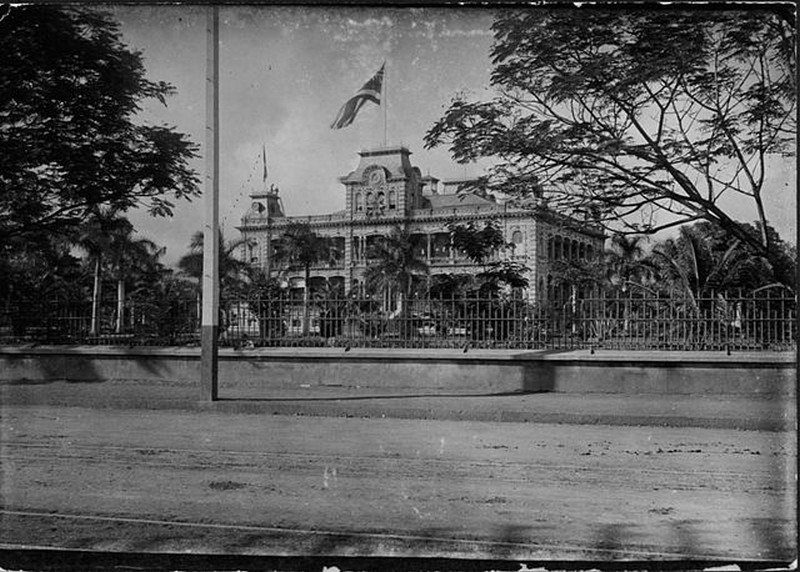
The Commission did not indicate the source of this crime in treaty law but it would appear to be Article 43 of the 1907 Hague Regulations, which states, “The authority of the legitimate power having in fact passed into the hands of the occupant, the latter shall take all the measures in his power to restore, and ensure, as far as possible, public order and safety, while respecting, unless absolutely prevented, the laws in force in the country.” Article 43 is the codification of customary international law that existed on January 17, 1893, when the United States unlawfully overthrew the government of the Hawaiian Kingdom and began its prolonged belligerent occupation.

In the annex of its 1919 report, the Commission charged that in Poland the German and Austrian forces had “prevented the populations from organising themselves to maintain order and public security” and that they had “[a]ided the Bolshevist hordes that invaded the territories.” It said that in Romania the German authorities had instituted German civil courts to try disputes between subjects of the Central Powers or between a subject of these powers and a Romanian, a neutral, or subjects of Germany’s enemies. In Serbia, the Bulgarian authorities had “[p]roclaimed that the Serbian State no longer existed, and that Serbian territory had become Bulgarian.” It listed several other war crimes committed by Bulgaria in occupied Serbia: “Serbian law, courts and administration ousted;” “Taxes collected under Bulgarian fiscal regime;” “Serbian currency suppressed;” “Public property removed or destroyed, including books, archives and MSS (e.g., from the National Library, the University Library, Serbian Legation at Sofia, French Consulate at Uskub);” “Prohibited sending Serbian Red Cross to occupied Serbia.” It also charged that in Serbia the German and Austrian authorities had committed several war crimes: “The Austrians suspended many Serbian laws and substituted their own, especially in penal matters, in procedure, judicial organisation, etc.;” “Museums belonging to the State (e.g., Belgrade, Detchani) were emptied and the contents taken to Vienna.”

The crime of usurpation of sovereignty during military occupation was referred to by Judge Blair of the American Military Commission in a separate opinion in the Justice Case, holding that “This rule is incident to military occupation and was clearly intended to protect the inhabitants of any occupied territory against the unnecessary exercise of sovereignty by a military occupant.” Australia, Netherlands and China enacted laws making usurpation of sovereignty during military occupation a war crime. In the case of Australia, the Parliament enacted the Australian War Crimes Act in 1945 that included the war crime of usurpation of sovereignty during military occupation.

The war crime of usurpation of sovereignty during military occupation has not been included in more recent codifications of war crimes, casting some doubt on its status as a crime under customary international law. And there do not appear to have been any prosecutions for that crime by international criminal tribunals of late. However, the war crime of usurpation of sovereignty during military occupation is a war crime under “particular” customary international law. According to the International Law Commission, “A rule of particular customary international law, whether regional, local or other, is a rule of customary international law that applies only among a limited number of States.” In the 1919 report of the Commission, the United States, as a member of the commission, did not contest the listing of the war crime of usurpation of sovereignty during military occupation, but rather only disagreed, inter alia, with the Commission’s position on the means of prosecuting heads of state for the listed war crimes by conduct of omission.

The Hawaiian Kingdom Royal Commission Inquiry views usurpation of sovereignty during military occupation as a war crime under “particular” customary international law and binding upon the Allied and Associated Powers of the First World War—United States of America, Great Britain, France, Italy and Japan, principal Allied Powers and Associated Powers that include Belgium, Bolivia, Brazil, China, Cuba, Ecuador, Greece, Guatemala, Haiti, Honduras, Liberia, Nicaragua, Panama, Peru, Poland, Portugal, Romania, Thailand, Czech Republic, formerly known as Czechoslovakia, and Uruguay. Great Britain, as an empire at the time, included Canada, Australia, New Zealand, and South Africa who also fought in the First World War. Therefore, as an international crime under particular customary international law, these countries are obligated to prosecute this war crime in their courts.

In the Hawaiian situation, usurpation of sovereignty during military occupation serves as a source for the commission of other war crimes within the territory of the Hawaiian Kingdom, which includes the war crimes of compulsory enlistment, denationalization, pillage, destruction of property, deprivation of fair and regular trial, deporting civilians of the occupied territory, and transferring populations into an occupied territory. The reasoning for the prohibition of imposing extraterritorial prescriptions or measures of the occupying State is addressed by Professor Eyal Benvenisti:

The occupant may not surpass its limits under international law through extra­territorial prescriptions emanating from its national institutions: the legislature, government, and courts. The reason for this rule is, of course, the functional symmetry, with respect to the occupied territory, among the various lawmak­ing authorities of the occupying state. Without this symmetry, Article 43 could become meaningless as a constraint upon the occupant, since the occupation administration would then choose to operate through extraterritorial prescription of its national institutions.

Usurpation of sovereignty during military occupation came before the Permanent Court of Arbitration (“PCA”) in 1999. In Larsen v. Hawaiian Kingdom, the Permanent Court of Arbitration convened an arbitral tribunal to resolve a dispute where Larsen, the claimant, alleged that the Government of the Hawaiian Kingdom, by its Council of Regency, the respondent, was liable “for allowing the unlawful imposition of American municipal laws over the claimant’s person within the territorial jurisdiction of the Hawaiian Kingdom.” The PCA accepted the case as a dispute between a “State” and a “private party” and acknowledged the Hawaiian Kingdom to be a non-Contracting State in accordance with Article 47 of the 1907 Hague Convention. The PCA annual reports of 2000 through 2011 specifically states that the Larsen v. Hawaiian Kingdom proceedings were done “Pursuant to article 47 of the 1907 Convention.” According to Bederman and Hilbert of the American Journal of International Law:

At the center of the PCA proceeding was the argument that … the Hawaiian Kingdom continues to exist and that the Council of Regency (representing the Hawaiian Kingdom) is legally responsible under international law for the protection of Hawaiian subjects, including the claimant. In other words, the Hawaiian Kingdom was legally obligated to protect Larsen from the United States’ “unlawful imposition [over him] of [its] municipal laws” through its political subdivision, the State of Hawai‘i [and its County of Hawai‘i].

In the situation of Hawai‘i, the usurpation of sovereignty during military occupation would appear to have been total since the beginning of the twentieth century. This is an ongoing crime where the criminal act would consist of the imposition of legislation or administrative measures by the occupying power that goes beyond what is required necessary for military purposes of the occupation. Since 1898, when the United States Congress enacted an American municipal law purporting to have annexed the Hawaiian Islands, it began to impose its legislation and administrative measures to the present in violation of the laws of occupation.

Given that this is essentially a crime involving government action or policy or the action or policies of an occupying State’s proxies such as the State of Hawai‘i and its Counties, a perpetrator who participated in the act would be required to do so intentionally and with knowledge that the act went beyond what was required for military purposes or the protection of fundamental human rights.

Usurpation of sovereignty has not only victimized the civilian population in the Hawaiian Islands for over a century, but it has also victimized the civilians of other countries that have visited the islands since 1898 who were unlawfully subjected to American municipal laws and administrative measures. These include State of Hawai‘i sales tax on goods purchased in the islands but also taxes placed exclusively on tourists’ accommodations collected by the State of Hawai‘i and the Counties.

The Counties have recently added 3% surcharges to the State of Hawai‘i’s 10.25% transient accommodations tax. Added with the State of Hawai‘i’s general excise tax of 4% in addition to the 0.5% County general excise tax surcharges, civilians who are visiting the islands will be paying a total of 17.75% to the occupying power. In addition, those civilians of foreign countries doing business in the Hawaiian Islands are also subjected to paying American duties on goods that are imported to the United States destined to Hawai‘i. These duty rates are collected by the United States according to the United States Tariff Act of 1930, as amended, and the Trade Agreements Act of 1979.

The far reach of the victims of war crimes committed in the Hawaiian Islands includes civilians throughout the world in various countries.

At the United Nations World Summit in 2005, the Responsibility to Protect was unanimously adopted. The principle of the Responsibility to Protect has three pillars: (1) every State has the Responsibility to Protect its populations from four mass atrocity crimes—genocide, war crimes, crimes against humanity and ethnic cleansing; (2) the wider international community has the responsibility to encourage and assist individual States in meeting that responsibility; and (3) if a state is manifestly failing to protect its populations, the international community must be prepared to take appropriate collective action, in a timely and decisive manner and in accordance with the UN Charter. In 2009, the General Assembly reaffirmed the three pillars of State’s Responsibility to Protect their populations from war crimes and crimes against humanity under resolution A/63/308, and in 2021, the UN General Assembly passed resolution A/75/277 on “The responsibility to protect and the prevention of genocide, war crimes, ethnic cleansing and crimes against humanity.”

Rule 158 of the International Committee of the Red Cross Study on Customary International Humanitarian Law specifies that “States must investigate war crimes allegedly committed by their nationals or armed forces, or on their territory, and, if appropriate, prosecute the suspects. They must also investigate other war crimes over which they have jurisdiction and, if appropriate, prosecute the suspects.” This “rule that States must investigate war crimes and prosecute the suspects is set forth in numerous military manuals, with respect to grave breaches, but also more broadly with respect to war crimes in general.”

Determined to hold to account individuals who have committed war crimes and human rights violations throughout the territorial jurisdiction of the Hawaiian Kingdom, the Council of Regency, by Proclamation on April 17, 2019, established a Royal Commission of Inquiry in similar fashion to the United States proposal of establishing a Commission of Inquiry after the First World War “to consider generally the relative culpability of the authors of the war and also the question of their culpability as to the violations of the laws and customs of war committed during its course.”

In mid-November of 2022, the Royal Commission of Inquiry published War Criminal Reports no. 22-0002, 22-0002-1, 22-0003, 22-0003-1, 22-0004, 22-0004-1, 22-0005, 22-0005-1, 22-0007, and 22-0007-1 that provides the evidence that U.S. President Joseph Biden, Jr., Vice-President Kamala Harris, Admiral John Aquilino, IRS Commissioner Charles Rettig, Senator Charles Schumer, Representative Nancy Pelosi, State of Hawai‘i Governor David Ige, Commissioner Ty Nohara, Tax Director Isaac Choy, Hawai‘i County Mayor Mitchell Roth, Hawai‘i County Council Chairwoman Maile David, Maui County Mayor Michael Victorino, Maui County Council Chairwoman Alice Lee, County of Kaua‘i Mayor Derek Kawakami, and Kaua‘i County Council Chair Arryl Kaneshiro have committed the war crime of usurpation of sovereignty during military occupation. Accomplices to this war crime include: U.S. Attorneys Brian Boynton, Anthony Coppolino, and Michael Gerardi; State of Hawai‘i Attorneys Holly T. Shikada and Amanda J. Weston; County of Hawai‘i Attorneys Elizabeth Strance, Mark Disher and Dakota Frenz; County of Maui Attorneys Moana Lutey, Caleb Rowe and Iwalani Mountcastle; and County of Kaua‘i Attorneys Matthew Bracken and Mark Bradbury.

The reports have documented the necessary evidence that satisfies the elements of the war crime of usurpation of sovereignty during military occupation: (1) the perpetrators imposed imposed or applied legislative or administrative measures of the occupying power going beyond those required by what is necessary for military purposes of the occupation, which is the actus reus or the criminal act; (2) the perpetrators were aware that the measures went beyond what was required for military purposes or the protection of fundamental human rights, which is the mens rea or the guilty mind; (3) their conduct took place in the context of and was associated with a military occupation; and (4) the perpetrators were aware of factual circumstances that established the existence of the military occupation.

With regard to the last two elements listed for the war crime of usurpation of sovereignty during military occupation: (1) there is no requirement for a legal evaluation by the perpetrator as to the existence of an armed conflict or its character as international or non-international; (2) in that context there is no requirement for awareness by the perpetrator of the facts that established the character of the conflict as international or non-international; and (3) there is only a requirement for the awareness of the factual circumstance that established the existence of an armed conflict that is implicit in the terms “took place in the context of and was associated with.”

According to Professor Dietrich Schindler, “the existence of an [international] armed conflict within the meaning of Article 2 common to the Geneva Conventions can always be assumed when parts of the armed forces of two States clash with each other. … Any kind of use of arms between two States brings the Conventions into effect.” Dr. Stuart Casey-Maslen, author of The War Report 2012, further concludes that an international armed conflict “also exists whenever one state uses any form of armed force against another state, irrespective of whether the latter state fights back.”

The Hawaiian Kingdom has been in an international armed conflict with the United States since January 16, 1893, when U.S. troops invaded the city of Honolulu. The Hawaiian Kingdom has been under military occupation since January 17, 1893, when Queen Lili‘uokalani conditionally surrendered to the United States forces. For a comprehensive legal narrative and analysis of this international armed conflict download the Royal Commission of Inquiry’s ebook The Royal Commission of Inquiry: Investigating War Crimes and Human Rights Violations Committed in the Hawaiian Kingdom (2020).

The 123 countries who are States Parties to the Rome Statute of the International Criminal Court have primary responsibility to prosecute war criminals under complementary and universal jurisdiction. This type of jurisdiction gives State Parties the first responsibility before the International Criminal Court can initiate proceedings and authority to prosecute individuals for international crimes to include the war crime of usurpation of sovereignty during military occupation without regard to the place the war crime was committed or the nationality of the perpetrator. With the exception of the United States, China, Cuba, Haiti, Nicaragua, and Thailand, the Allied Powers and Associated Powers of the First World War are State Parties to the Rome Statute.

In this situation where the citizenry of these countries have become victims of the war crime of usurpation of sovereignty during military occupation, they can seek extradition warrants in their national courts in order for their governments to prosecute these war criminals under the passive personality principle. The passive personality principle provides countries with jurisdiction for crimes committed against their nationals while they were abroad in the Hawaiian Islands. This has the potential of opening the floodgate to lawsuits from all over the world.

The commission of the war crime of usurpation of sovereignty during military occupation can stop when the United States, the State of Hawai‘i and the Counties begin to comply with Article 43 of the 1907 Hague Regulations and administer the laws of the Occupied State—the Hawaiian Kingdom.

Hawaiian Kingdom Blog – Weblog of the acting government of the Hawaiian Kingdom presently operating within the occupied State of the Hawaiian Islands by the USA

19 December 2022

Source: www.transcend.org

Corruption (II): Europe Doing Nothing

By Baher Kamal

7 Dec 2022 – “Western Europe and the European Union remain the highest scoring regions in the world’s corruption index; progress has halted and worrying signs of backsliding have emerged.”

This is how Transparency International’s 2021 Corruption Perceptions Index (CPI) report introduces its section: A Decade of Stagnating Corruption Levels In Western Europe Amidst Ongoing Scandals.

The report shows that while corruption levels remain at a standstill worldwide, “in Western Europe and the European Union, 84% of countries have declined or made little to no progress in the last 10 years.”

The COVID-19 pandemic has given European countries “an excuse for complacency in anti-corruption efforts” as accountability and transparency measures are “neglected or even rolled back.”

Transparency International further explains that “weakening good governance and checks and balances heightens the risk of human rights violations and further corruption.”

An excuse

The Transparency International’s 2021 Corruption Perceptions Index (CPI) ranks 180 countries and territories by their perceived levels of public sector corruption on a scale of zero (highly corrupt) to 100 (very clean).

According to the 2021 ranking, the Western Europe and European Union average holds at 66, and these are the region’s most signalled States:

  • Countries like Poland (56) and Hungary (43) have backslid, with harsh crackdowns on rights and freedom of expression.
  • Others still near the top like Germany (80), the United Kingdom (78) and Austria (74) faced serious corruption scandals.
  • Denmark (88) and Finland (88) top the region and the world (alongside New Zealand), with Norway (85) and Sweden (85) rounding out the top.
  • Romania (45), and Bulgaria (42) remain the worst performers in the region.
  • Switzerland (84), Netherlands (82), Belgium (73), Slovenia (57), Italy (56), Cyprus (53), and Greece (49) are all at historic lows on the 2021 Index.

For each country’s individual score and changes over time, as well as analysis for each region, see the region’s 2021 CPI page.

In short, in the last decade, 26 countries in the region have either declined or made little to no significant progress.

Allowing corruption to fester

On this, Flora Cresswell, Western Europe regional coordinator of Transparency International said:

“Stagnation spells trouble across Europe. Even the region’s best performers are falling prey to major scandals, revealing the danger of inaction. Others have allowed corruption to fester, and are now seeing serious violations of freedoms…

… Nor does the region exist in a vacuum: lack of national enforcement in Europe means corruption is exported globally as foreign actors utilise weak laws to hide money and fund corruption back home.”

In the last decade, 26 countries in the region have either declined or made little to no significant progress, it warns.

Since its inception in 1995, the Corruption Perceptions Index has become the leading global indicator of public sector corruption. The Index uses data from 13 external sources, including the World Bank, World Economic Forum, private risk and consulting companies, think tanks and others.

The scores reflect the views of experts and business people. (See: The ABCs of the CPI: How the Corruption Perceptions Index is calculated.”

“European countries watered down a landmark proposal to clean up business and stop corporate abuse. It is a loss for the women and men who work in terrible conditions around the world to make the goods that end up in our shopping trolleys. The only ones celebrating today is the regressive business lobby.”

— Marc-Olivier Herman, Oxfam EU’s Economic Justice Policy Lead

Europe waters down a law to clean up business

The European Justice ministers on 1 December 2022 agreed on a proposal for a law to make companies accountable for the damage they cause to people and the planet.

In response, Oxfam EU’s Economic Justice Policy Lead, Marc-Olivier Herman, said:

“Today, European countries watered down a landmark proposal to clean up business and stop corporate abuse. It is a loss for the women and men who work in terrible conditions around the world to make the goods that end up in our shopping trolleys. The only ones celebrating today is the regressive business lobby.”

The original proposal was already a far cry from the game-changer law we expected. Now, after EU countries played their part, it is only weaker, warns Herman.

Many loopholes

“There are more and more loopholes allowing companies to escape their obligations to clean up their business.”

“The financial sector can continue to bankroll human rights violations and damage to the planet without being held accountable as it remains up to each European country to decide whether they want to make banks and other financial players clean up business.”

Anti-Corruption?

The 2022 International Anti-Corruption Day on 9 December, states that the world today faces some of its greatest challenges in many generations – challenges which threaten prosperity and stability for people across the globe. The plague of corruption is intertwined in most of them.

An outstanding world body fighting crime: the UN Office on Drugs and Crime (UNODC), reveals the following findings about the consequences of corruption:

Two Trillion US dollars in procurement is lost to corruption each year (OECD 2016)

89 billion US dollars a year is lost to corruption in Africa, close to double its 48 billion US dollars in foreign aid (UNCTAD 2020).

What else is needed to fight this human rights violation?

Baher Kamal, a member of the TRANSCEND Network for Peace Development Environment, is an Egyptian-born, Spanish national, secular journalist, with over 45 years of professional experience — from reporter to special envoy to chief editor of national dailies and an international news agency.

19 December 2022

Source: www.transcend.org
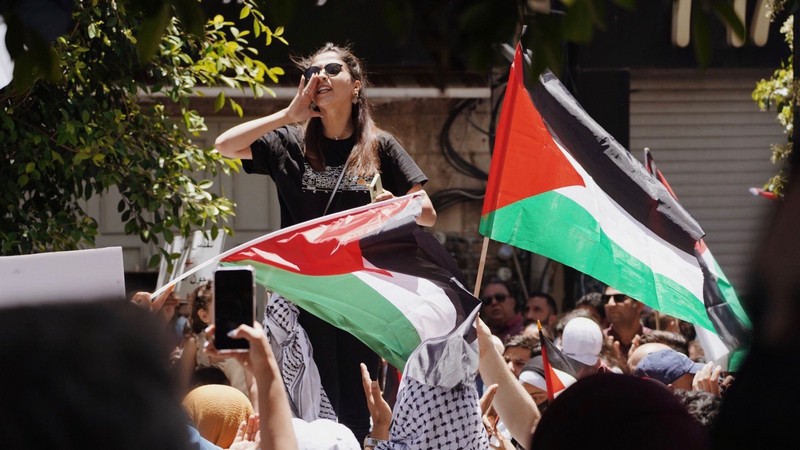
Palestinian defiance meets Israeli aggression

Palestine Update 613
Editorial comment

By Ranjan Solomon

Israel’s far right government threatens Palestinians in West Bank, Gaza, and Israel with vindictive military measures. It stems from base-level political attitudes. In a poll, 48 percent of Jewish Israelis approved that “Arabs should be expelled or transferred from Israel.” In line with this way of thinking in the polity, Israel’s violent repression of Palestinians will only increase in the near future. Not just that, Jewish critics of the government are also going to face forms of persecution. It might be less than what the Palestinians have to cope with; but it will be political hounding all the same.

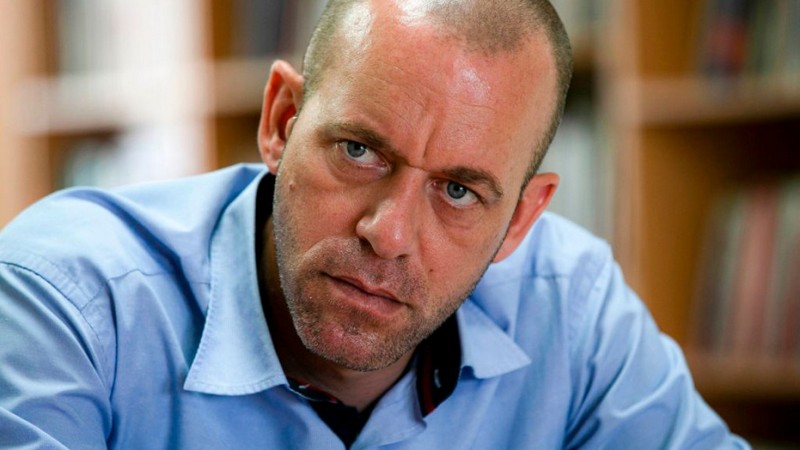
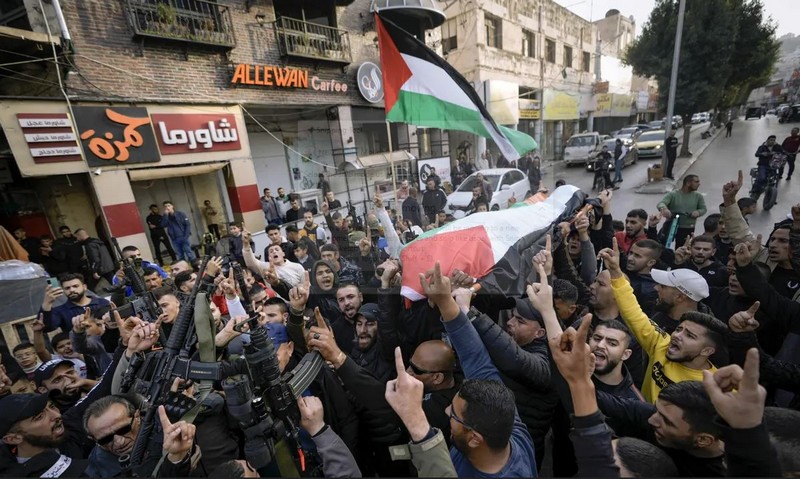
As Settlers dig in their heels and reap political capital from the new government, Palestinians anticipate a ‘Hebron-ization’ of the rest of Israel. Clearly, these are tough times for those who are not die-hard Zionists.  And yet, as we see day-after-day, Palestinians in Gaza and the West Bank have dropped their support for the two-state solution alongside rising support for armed groups. They see no hope in dialogue, or co-existence that is socially and politically asymmetric. These thoughts are best articulated by Salah Hammouri from his prison cell on the possible eve of his deportation. “This settler-colonial project wants your land without you on it, confiscates your dream, destroys your reality, tries to deny your memories, whilst accusing you of terrorism and vandalism…But homeland, belonging, and challenging Zionist settler colonialism do not need an identity card. They need political consciousness, a sense of oneself and a project, a will, and vision. Each of us faces these same challenges from our own position and place in the world, always confronting and resisting. For this we do not ask permission and do not apologize.”  A full blown war will occur sooner-than-later given that political movement by Israel is on a downward trajectory. Israel does not recognize any red lines anymore and will stop at nothing including cementing the occupation now, and an impotent international community watch sitting on their hands.

Readers are invited to read these items of news and disseminate widely.

On behalf of MLN Updates

Ranjan Solomon

18 December 2022

Rise of Israel’s far right puts focus back on the West Bank occupation

By Shira Rubin

HEBRON, West Bank – Last month, as tens of thousands of right-wing Jewish pilgrims paraded through Hebron’s old city under the protection of the Israeli army, 18-year-old Aisha Alazza ventured on to her balcony to catch a glimpse. As she sipped coffee and watched the march spiral into violence, a gang of Israeli men approached from across the road, shouting “Whore!” at her in Arabic and throwing stones. She was struck in the face.

Since Palestinian cars are banned from this neighbourhood, an ambulance was out of the question. Instead, Alazza’s four sisters took her inside, applied ice and oils to the swelling wound and waited for the men to go away.

Alazza knows she will see them again – after all, they are her neighbours. They are also directly linked to members of Religious Zionism, the once-fringe, far-right political bloc that has championed asserting Israeli sovereignty in the West Bank and will be the second largest force in the new Israeli government.

Even before Religious Zionism assumes office – taking on influential cabinet portfolios that will give them unprecedented control over this contested territory – their promises to set the stage for annexation are exacerbating the daily dangers and indignities of life in the occupied West Bank, residents say. Many warn that Hebron’s bloody, biblically tinged conflict, between its 800 hardline Israeli settlers and its 200 000 Palestinians, is a test case for the future of relations between the two peoples under the next government.

Some of the faces in incoming Prime Minister Benjamin Netanyahu’s new administration are familiar ones to Hebron. Both Itamar Ben Gvir and Orit Strook are residents of the nearby hardline settlement of Kiryat Arba and have harassed and assaulted Palestinians for decades.

“Netanyahu has given Ben Gvir the jurisdiction to do whatever he wants, and what he wants is us gone,” said Alazza this week, from the balcony where she was struck.

Israel’s most far-right and pro-settler government in its history is being sworn in during one of the deadliest years for both Israelis and Palestinians. Since last spring, a string of Palestinian attacks in Israeli cities and many military posts has been met with near nightly Israeli military raids across the West Bank, leaving at least 150 Palestinians and 31 Israelis dead.

For activist Tal Sagi, however, the violence and deteriorating relations have had one positive side effect – Israelis are paying attention to the occupation again.

The former soldier with the anti-occupation group Breaking the Silence said that many Israelis are shocked by the images coming out of Hebron, where on the same day that Ben Gvir was appointed head of the expanded National Security Ministry, Israeli soldiers violently confronted left-wing Israeli activists.

Viral videos show a soldier pinning an activist to the ground and punching him repeatedly, and another, from the same unit, saying, “Ben Gvir will make order in this whole place … You’re screwed … You’re done making this place into your ‘whorehouse’.“

“There’s something good about Hebron being in the news,” said Sagi, who grew up in a West Bank settlement and later served in Hebron. “There’s so much normalisation, so much silence that many Israelis – people I know – aren’t even aware that entire swaths of land and groups of people are under Israeli military control.”

Religious Zionism’s head, Bezalel Smotrich, will be granted oversight of the Defence Ministry, as well as access to billions of shekels as alternate leader of the Finance Ministry. He has vowed to enshrine in law the rights of residents in all settlements, especially to facilitate further building in the West Bank.

Smotrich and Ben Gvir were both suspected of being involved in terrorism in their youth, supporting attacks against Palestinians and Israeli politicians who sought to sign peace deals to end the conflict.

“I’m going to make sure that Israel takes responsibility for Judea and Samaria,” Smotrich told 103fm Radio on Monday, using the biblical name for the West Bank. He added that previous administrations have “choked” the growth of the half million strong population of settlers.

Harel Chorev, a researcher at Tel Aviv University’s Moshe Dayan Center for Middle Eastern and African Studies, said that though the Religious Zionism bloc represents a small minority of the Israeli electorate with just 14 seats in the 120-member Knesset, their critical role in the next coalition will give them outsized power.

“They are a minority, but one that is determined and dogmatic, that thinks it is the pioneers of the new frontier,” he said. “They will be able to dictate the policy in a territorial struggle, in which they want to limit their opponents’ ability to expand.”

A former high ranking official in Cogat, the Israeli military agency responsible for civil affairs in the occupied West Bank, who spoke on condition of anonymity about sensitive military issues, called Religious Zionism’s expected authority in the West Bank “a creeping annexation, taking away all options for a two state solution”.

Smotrich and Ben Gvir, he said, “could bring about all kinds of explosions”.

Issa Amro, a Palestinian activist who gives tours to bring attention to the occupation, said those explosions were already happening in Hebron, which he said should be a cautionary tale for the rest of Israel.

“In the past two years, there’s been a gradual Hebron-isation of the rest of Israel,” he said on his first tour since being released from an intermittent week-long detention for filming the video of the soldier that went viral.

As he walked through the streets with his group, Amro was confronted by a young settler who harangued him. When Amro just walked away, the man shouted repeatedly “where are you running away to, Issa?”

“For years, we have known about the oppression and the brutality, but now there’s also the fascism in the next government, and that makes it harder for everyone to close their eyes,” Amro said, struggling to make himself heard over the settler’s shouting.

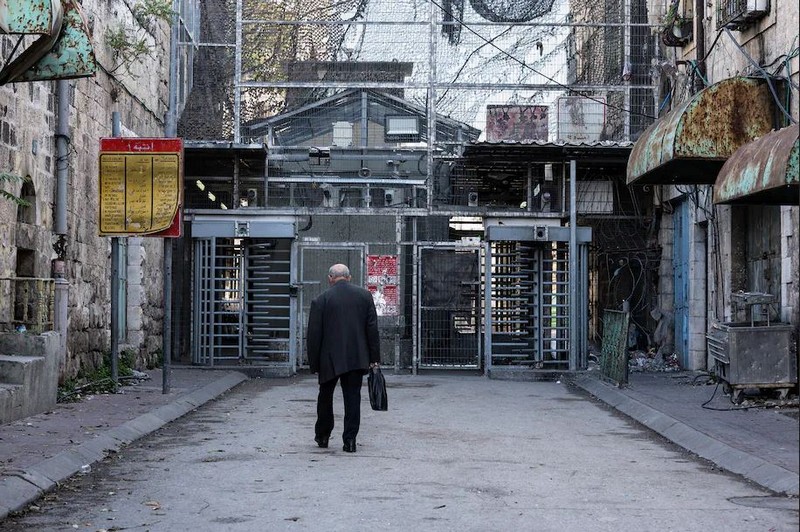
The tour then turned a corner onto Shuhada Street, once the bustling heart of the old city that is now a ghost town of shuttered buildings. At one end is the Bab al-Zawiyah checkpoint, where since the right wing election victory, the wait for Palestinians coming back into the city from work or errands has stretched up to six hours.

A remote control machine gun that can be loaded with stun grenades, sponge-tipped bullets and other anti-riot tools, was attached to the upper level of the gate in September. For weeks, Palestinians who passed underneath it had thought it was just a camera.

Suddenly a police officer backed by two armoured vehicles pulled up around Amro and his group and informed him he’d been detained. The angry settler from earlier had called them in claiming that Amro was violating a restraining order supposedly barring him from the city.

“We don’t want you making trouble, any provocations,” said the Israeli officer, as he handed back the group’s IDs after recording the numbers, and letting the tour resume.

“Is it a provocation for me to discuss my own rights?” asked Amro repeatedly. The officer ignored him.

Shira Rubin is a journalist for The Washington Post based in Tel Aviv, covering news from Israel, the Palestinian territories and the region.

10 December 2022

Source: washingtonpost.com

How this government will turn its Jewish critics into dissidents

By Edo Konrad

Most left-wing Israeli Jews do not generally think of themselves as political dissidents, and have likely never aspired to such a status. Despite the lavish praise they receive for their bravery, Israeli-Jewish leftists have the ability to speak out without suffering the consequences faced by Palestinians, not to mention activists in other undemocratic states. Leftist Jews have very often been afforded the privilege of being opponents of the right, rather than its enemies.

But all that seems like it may change, and far quicker than even the biggest pessimists in my camp anticipated. In just the last month, since Itamar Ben Gvir was appointed as presumptive national security minister, Bezalel Smotrich given the power to lord over the day-to-day lives of millions of Palestinians in the occupied territories, and Avi Maoz granted the power to implement his homophobic agenda in school curriculums, the shifts have been palpable for Jewish critics of the state and its occupation. The government has not yet been formed, but it is clear to everybody which way the wind is blowing.

Israeli police have since summoned Israel Frey, a left-wing Haredi journalist, for interrogation over a tweet praising a Palestinian who sought security forces, rather than civilians, for a planned attack (Frey has thus far refused to appear before the police). Israeli soldiers attacked and threatened leftists, some of them journalists, during a tour in occupied Hebron (a routine event for Palestinians in the city). Right-wing activists managed to pressure the Pardes Hanna-Karkur Local Council to cancel a screening of my colleague Noam Sheizaf’s new film on the occupation due to his politics. And on Thursday, during a hearing by the Knesset’s Constitution, Law and Justice Committee, Likud MK Hanoch Milwidsky interrupted Breaking the Silence Executive Director Avner Gvaryahu to call him a “traitor” and an “informant” who should “be imprisoned.”

The path to this moment was paved long ago. While loud and unabashed, there have been relatively few Jewish left-wing dissidents in Israeli history who have challenged the Israeli regime — from conscientious objectors, to nuclear whistleblowers, to groups such as the Israeli Black Panthers and the smattering of other independent left-wing groups — while most have focused on reforming specific policies. Meanwhile, Israel has an increasingly right-wing public that has become accustomed to managing an endless military dictatorship over the West Bank and a lethal siege on Gaza, and has little patience for anyone who criticizes it, or even speaks about it openly. The political right, from former Prime Minister Naftali Bennett — the hero of the “government of change” — to Smotrich and Ben Gvir, believe in forcing Palestinians to kneel before Israel (lest we forget that Bennett’s government dissolved over his coalition’s failure to re-authorize separate West Bank legal systems for Palestinians and Israeli Jews).

Meanwhile, much of the Zionist left no longer has anything of value to say about the occupation, and very often closes ranks with its opponents on the right in attacking Palestinians and the radical left. In Jewish-Israeli society, this has left behind a shrinking cadre of left-wing Jewish activists who recognize that dismantling apartheid and colonialism is the only way to move toward a more just future for Palestinians and Israelis.

Into that vacuum left by the Zionist left swept far-right groups with connections to the Israeli government that have made it their duty to seek out those Jewish Israelis who refuse to toe the party line. A little less than a decade ago, these organizations were behind a chillingly concerted bottom-up effort to delegitimize anti-occupation groups such as Breaking the Silence, B’Tselem, Ta’ayush, and others because they refused to remain silent in the face of Israel’s human rights abuses. What seemed like a novel phenomenon in 2015 is now part of the playbook for every single aspiring right-wing politician. In this sense, the attacks of the last month are not new, but they carry a great deal of weight given the makeup of the new government.

Over the last few weeks, we have witnessed how, time and time again, it is Palestinians who are repeatedly on the front lines of Israel’s repression, most prominently in the story of Dr. Ahmad Mahajna, who is still fighting for his job after he was falsely accused of handing sweets to a 16-year-old Palestinian who carried out a stabbing attack and who was in his care at Hadassah Medical Center. For over a month, Mahajna was ceaselessly attacked by the media and far-right activists for his so-called support for “terrorism,” until enough people came forward to put an end to the witch hunt. If left-wing Israeli Jews are being transformed into dissidents, Palestinians are always one false move from being labeled enemies of the state, simply by their very existence.

Yet this transformation of Israeli leftists into dissidents is a reminder that no one is safe from Ben Gvir, Smotrich, and Maoz’s attempts to suss out the “wrong kind of Jews.” After they come for Palestinians — particularly in Area C of the West Bank, so-called mixed cities, and the Naqab/Negev — they will come for the anti-apartheid activists. After that, it could be anyone who resists the religious coercion of the agents of Jewish theocracy.

Jewish dissidents-to-be need to know the path will be fraught and often dangerous. Some of us will inevitably leave (plenty already have), while others, particularly those without anywhere to go, will either stay and fight alongside Palestinians, asylum seekers, the LGBTQ community, and any other group this government comes after, or step away from activism altogether. Those looking from the outside at what is transpiring on the ground at lightning speed need to know that we are only at the very beginning.

Edo Konrad is the editor-in-chief of +972 Magazine.

16 December 2022

Source: www.972mag.com

72 Percent of Palestinians Support Forming Armed Groups in West Bank, Poll Finds

By Jack Khoury

A large majority of Palestinians supports the formation of armed groups in the cities of the West Bank, according to a poll surveying Palestinian public opinion on several issues.

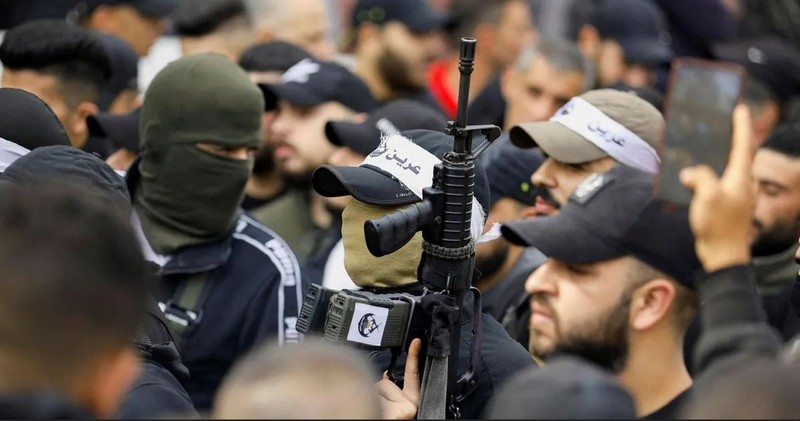
The poll, conducted by the Palestinian Center for Policy and Survey Research and released on Wednesday, found that 72 percent of respondents supported forming armed groups similar to the Lion’s Den, which is based around Nablus.

Twenty-two percent were opposed to the idea. In addition, 87 percent of respondents said the Palestinian Authority did not have the right to arrest members of such groups to prevent them from attacking Israeli military forces.

As for the potential expansion of such groups, 59 percent said they expected new ones to be established in other parts of the West Bank, while 15 percent thought Israel would manage to arrest or kill members of armed groups, and 14 percent thought the Palestinian Authority would manage to contain them.

The survey also found that 79 percent of respondents were opposed to members of armed groups surrendering and handing over their weapons to the PA in order to prevent their capture by Israel, while 17 percent supported the idea.

Khalil Shikaki, director of the research center, said the poll results suggest a clear shift in Palestinian public opinion, particularly in the West Bank, reflected in the growing support for armed struggle against Israel. Support for armed groups has risen conspicuously over the past three months, Shikaki said, as a consequence of the escalation of violence in the West Bank and the death toll, which is growing by the week.

He also noted another figure: support for a diplomatic resolution to the conflict with Israel in the framework of the two-state solution has receded over the course of three months, now standing at 32 percent, according to the poll. A decade ago, support was at 55 percent.

“We are seeing a fairly clear decline in the percentage who support the two-state solution, given the lack of diplomatic negotiations and the ongoing killings of Palestinians throughout the West Bank,” he said.

The poll also asked Palestinians about their opinions on the results in Israel’s November election. It found that 61 percent of respondents thought the presumed next government, headed by Benjamin Netanyahu, would be more extreme, while 30 percent thought there would be no difference compared to the current government.

Four percent said they thought the new government would be less extreme than the government formed by Naftali Bennett and Yair Lapid. The rest had no opinion.

Concerns about expulsions are also evident in the poll, with 64 percent of respondents expecting the upcoming government to expel Palestinian families from East Jerusalem’s Sheikh Jarrah neighborhood and 68 percent expecting Israel to expel the Palestinian Bedouin communities living in the area between Jerusalem and Jericho such as Jahalin and Khan al-Ahmar.

Fifty-eight percent thought the next government would act to change the status quo at Jerusalem’s Al-Aqsa Mosque, while 69 percent believed the government would also move to annex large parts of the West Bank.

The poll was conducted on December 7-10 and had a sample of 1,200 people representing Palestinians in both the West Bank and the Gaza Strip. The margin of error is 3 percent. The poll was conducted via personal meetings with the respondents, all of them adults, of whom 487 were from Gaza and 722 from the West Bank and East Jerusalem.

15 December 2022

Source: www.haaretz.com

Israelis Have Put Benjamin Netanyahu Back in Power. Palestinians Will Surely Pay the Price.

By Diana Buttu

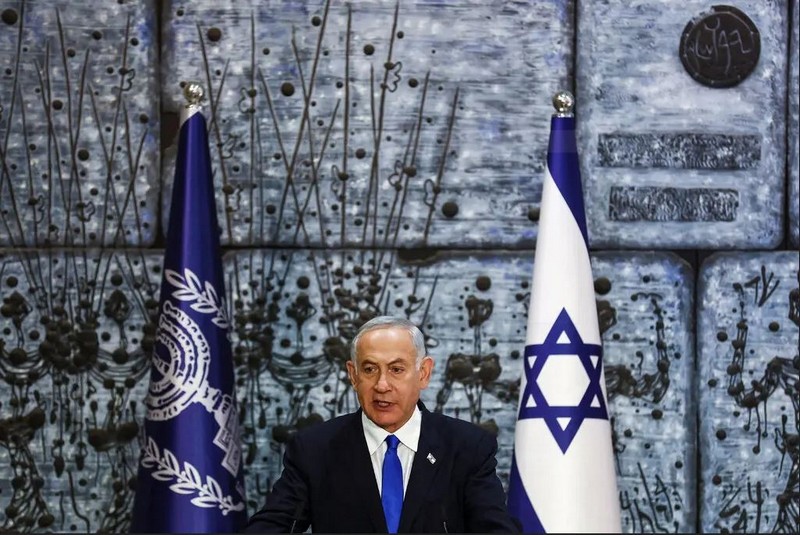
HAIFA, Israel — As the prime minister-designate, Benjamin Netanyahu, finalizes the formation of Israel’s most extreme right-wing government to date, I, along with other Palestinians in Israel and in the occupied territories, am filled with dread about what the next few years will bring.

Every day since the elections, Palestinians wake up with a “What now?” apprehension, and more often than not, there’s yet another bit of news that adds to our anxiety. The atmosphere of racism is so acute that I hesitate to speak or read Arabic on public transportation. Palestinian rights have been pushed to the back burner.

We Palestinians live knowing that a vast majority of Israeli politicians don’t support an end to Israel’s military rule over the West Bank and Gaza Strip or equality for all of its citizens. We are made to feel we are interlopers whose presence is temporary and simply being tolerated until such time as it is feasible to get rid of us.

According to a 2016 Pew Research Center survey, 48 percent of Jewish Israelis agree that “Arabs should be expelled or transferred from Israel.” I look around in my mixed Haifa neighborhood and wonder which of my neighbors voted for the extremist candidates who have voiced similar opinions. “It is only a matter of time before we are gone,” my friends tell me. To add insult to injury, Israelis blame Palestinians for the rise in extremism and racism, rather than look at how racism has become normalized in Israeli society. It is blaming the victim rather than the aggressor.

Since his recent election, Mr. Netanyahu has been offering important positions in government to vocal anti-Palestinian politicians. The incoming governing coalition includes the extremist and racist Otzma Yehudit, or Jewish Power, party, whose leaders have a history of supporting violence against Palestinians.

Itamar Ben-Gvir, a settler who leads the Jewish Power party, has been convicted of incitement to racism and supporting a terrorist group. This month he reportedly hailed an Israeli soldier who fatally shot a Palestinian young man in the West Bank during a scuffle — an act caught on video and widely circulated on social media — by remarking, “Precise action, you really fulfilled the honor of all of us and did what was assigned to you.” Israel’s current police chief blamed Mr. Ben-Gvir for helping ignite the surge in violence in May 2021. He will now be minister for national security, putting him in charge of Israel’s domestic police and border police in the occupied West Bank, home to roughly three million Palestinians.

Over the course of decades, and especially since the erection of the wall along the West Bank, Israelis seem to have become immune to how Palestinians live under Israeli military rule and what it is to be Palestinian in Israel. Conversations with neighbors in Haifa about the nakba — or “catastrophe,” in which hundreds of thousands of Arabs fled or were expelled with the creation of Israel in 1948 — or Israel’s military occupation that amounts to apartheid or even racism in Israel are always met with denial or with justification, so we have learned never to speak to each other.

On Dec. 1, Mr. Netanyahu inked a coalition agreement with Bezalel Smotrich, another settler and the head of the Religious Zionism party, naming him minister of finance and giving him control over a Defense Ministry department. Mr. Smotrich has called himself a “proud homophobe” and has said that the 2015 firebombing of a Palestinian home in the West Bank in which an 18-month-old child and his parents were burned to death was not a terrorist attack. In 2016 he said that he was in favor of segregation of Jewish and Palestinian women in Israeli hospital maternity wards.

Last year he mentioned that David Ben-Gurion, Israel’s first prime minister, didn’t “finish the job” of expelling Palestinians in 1948. Mr. Smotrich has also promoted a subjugation plan in which Palestinians (who accept the plan) would be considered “resident aliens” while those who do not would be dealt with by the Israeli Army. As part of his Defense Ministry post, he will have unprecedented authority over the policy on Israeli settlements in the West Bank and over Palestinian construction and will be able to appoint the heads of the administration responsible for the government’s civil policy in the West Bank.

Both the Jewish Power and the Religious Zionism party platforms are almost exclusively focused on Palestinians and ensuring that Jewish supremacy reigns. The Religious Zionism party aims to retroactively legitimize settlements in the West Bank.

I fear that Israel’s violent repression of Palestinians will only increase in the near future as I consider the record of Mr. Netanyahu and his previous coalitions — a history of relentless race-baiting and incitement of prejudice against Palestinians in Israel, the passage of the Jewish Nation-State law (which enshrines the privileging of Jewish citizens), the open fire policy, Israel’s policy of destroying Palestinian homes, its continued colonization of the West Bank and repeated mass bombings of Gaza.

With Mr. Ben-Gvir, Mr. Smotrich and other extremists in his coalition, Mr. Netanyahu will very likely continue on this path, particularly since he has been the enabler of so many of these policies. Jewish Power and Religious Zionism are natural extensions of Mr. Netanyahu’s policies. Failing to recognize this is akin to putting one’s head in the sand.

If there is any silver lining to our grim situation, it might be that the rise of Mr. Ben-Gvir and his fellow extremists will open the eyes of more Americans. Some former State Department officials and diplomats have already called on the Biden administration not to deal with the most extreme members of the new Israeli coalition. American Jewish groups have also expressed alarm at the new coalition. But American policy is unlikely to change in response to these dark tidings. Secretary of State Antony Blinken has spoken of “equal measures of freedom, security, opportunity, justice and dignity” for Israelis and Palestinians, but what will he offer to ensure that Palestinians live in freedom and security with this new government?

As Israel lurched further to the right, the United States and other Western governments continued to normalize and legitimize extremists once deemed beyond the pale — from the notorious former general Ariel Sharon when he became prime minister to the race-baiting ultranationalist and settler Avigdor Lieberman when Mr. Netanyahu, during his second run as prime minister, made him a cabinet minister in 2009.

At the time, the appointment of Mr. Lieberman — who had called for loyalty oaths for Israel’s Palestinian and Jewish citizens and a redrawing of borders that would strip Palestinians of their Israeli citizenship — was widely criticized. But soon enough, American and European officials were meeting with Mr. Leiberman.

There is little hope that this won’t happen this time, too, and what was unthinkable but a few years ago will become a reality, with Palestinians inevitably paying the heaviest price for Israel’s electoral choices.

Diana Buttu is a lawyer and former adviser to the negotiating team of the Palestine Liberation Organization.

13 December 2022

Source: www.nytimes.com

Salah Hammouri from prison: The persecuted speaks up and does not apologise

By Salah Hammouri

Detained by Israel and threatened with deportation, Palestinian human rights lawyer writes from prison a letter of defiance, refusing to apologise for standing up to the occupation and colonisation of his homeland.

This was written in November by French-Palestinian human rights defender Salah Hammouri from his cell in Hadarim prison. Salah has been held without charge by Israel since March this year when he was arrested in his home in Jerusalem. Since then, Israeli Interior Minister, Ayelet Shaked, reaffirmed her decision to revoke his residency and earlier this month, and he faces imminent deportation to France.

This is the latest in Israel’s longstanding judicial harassment of him.

Update: Hammouri was deported on Sunday 18 December, days after this article was published.

“Get up, get up!”

These were the words I woke up to at 4:00am, finding myself surrounded by 15 heavily armed members of the ‘Yamam’ force (Israel’s National Counter Terror Unit). For a brief moment, the green lasers emitting from their assault rifles were the only illumination in an otherwise dark room. When the lights eventually came on, I realised I was awakening to a reality which the Israeli occupation excels in creating.

In this reality, Fairouz’s voice is replaced by the sound of plastic handcuffs locking hands together, informing you that your journey has begun.

This is their eighth attempt to expel me.

In their sixth attempt I was arrested and held under ‘administrative detention’, detained with neither a trial nor reason. In the seventh, I was put under house arrest and my family was forcibly deported from our homeland. This time, they revoked my Jerusalem identity card.

These are the means of forcible expulsion, of gradual uprooting from my land, my home, my social surroundings, my history in this place.

But these are not my memories alone, but those of a people whose Nakba has not ceased since 1948, experiencing daily arrest, expulsion, surveillance, monitoring, harassment, killing and displacement. I am therefore both the individual and the collective, I am the prisoners and the homeland.

This settler-colonial project wants your land without you on it, confiscates your dream, destroys your reality, tries to deny your memories, whilst accusing you of terrorism and vandalism. It attempts to wear you down, to strip you of your very humanity and to subjugate you by all available methods, even holding you responsible for the murder, torture, persecution and harassment they visit upon you daily.

It turns you into a site of experimentation for their weapons, old and new, and for their means of surveillance and suppression.

Even our mobile phones do not escape the comprehensive control of Zionist colonialism, a fact I discovered for myself last year. Me, my people, my family, our land, our identity, our culture and our memory are all comprehensively targeted.

You no longer have an ID card demonstrating that you are a Jerusalemite Palestinian by birth and identity, but why should you need such a certificate?! It is the alleys of the Old City and the neighbourhoods of Jerusalem, its soil, its walls and its people that provide this identity and belonging.

Israel can exile you to the West Bank, or deport you like those they expelled in 1948. You may be divided between the Palestinians of the outside and those of the inside, between those on the land occupied by Israel in 1948 and those in the West Bank, and between Jerusalem and Gaza.

Each sub-group has adopted a culture and identity, and its borders are the borders of our geography – the geography of colonialism mobilised against Palestine’s ancient Arab identity. It’s a geography that creates fragmenting ideas and visions, and divides one group into several smaller ones, imposing customs that seek to annihilate a people and their cause.

They do not guard a sacred fire, but guard a crime.

Israel deports French-Palestinian lawyer Salah Hammouri

This geography prevents a love story between a young man and a young woman, destroying human connections. It tries to produce a new identity on this basis and a culture defined by a limited political ‘solution’, a shackle and a barbed wire one is forbidden to cross.

However, as we have always said, we will hold back oblivion and challenge those who try to impose it on us. The reality they enforce cannot prevent our will to come together, our power of belonging: it cannot defeat our identity.

We challenge them everywhere, and still believe in a national project of one people, one cause and total resistance – based on the principles of mass participation – that fights for liberation from this geography of colonialism.

Wherever a Palestinian goes, he takes with him these principles and the cause of his people: his homeland carried with him to wherever he ends up.

I am still waiting, and perhaps I will be deported and forced to confront this first-hand. But homeland, belonging, and challenging Zionist settler colonialism do not need an identity card. They need political consciousness, a sense of oneself and a project, a will, and vision.

Each of us faces these same challenges from our own position and place in the world, always confronting and resisting. For this we do not ask permission and do not apologise.

Salah Hammouri is a French-Palestinian human rights lawyer and a native Jerusalemite. His residency status was officially revoked by Israel’s interior minister, Ayelet Shaked, in October 2021 under the pretext of a “breach of allegiance to the State of Israel.” Following his arrest in March, he now faces deportation to France.

16 December 2022

Source: www.newarab.com

Fears of full-blown Israeli-Palestinian conflict grow after bloodiest year since 2005

By Bethan McKernan

Surge in violence either side of the ‘green line’ has led people to wonder if a third intifada is on the cards

Late on Sunday night, like almost every other night in Jenin, the fighting started. The Israeli army said it entered the occupied West Bank city to arrest three suspected Palestinian terrorists and militants responded by throwing firebombs and opening fire.

According to two members of her family, 16-year-old Jana Zakaran ventured up to the roof of her home when gunfire erupted nearby to bring her cat inside to safety. When Zakaran’s father went to look for her, he found her dead in a pool of blood, the cat by her side.

In a rare admission of error, the Israel Defence Forces (IDF) said the teenager had been accidentally shot by a sniper.

“She was killed in cold blood by the Israelis. She was alone on the roof,” said the girl’s uncle, Majed Zakaran. “She was just a child and they shot her four times in the head and chest.”

Zakaran is the latest victim of the bloodiest year on record in the West Bank and Jerusalem since the end of the second intifada in 2005. About 150 Palestinians have been killed, most of them in relation to a huge IDF offensive largely focused on Jenin and nearby Nablus. The well-known Al Jazeera journalist Shireen Abu Akleh was shot dead while reporting on a raid on Jenin’s refugee camp in May.

The fighting has been raging since March, making it one of the biggest IDF operations outside wartime, and shows no sign of slowing down. In the blockaded Gaza Strip in August, another 49 Palestinians died in a surprise three-day Israeli bombing campaign. Palestinian terrorist attacks have killed 30 Israelis – the most since 2008. The numbers suggest that 2022 was a quasi-intifada.

Whenever there is a surge in violence in the decades-old conflict, people on both sides of the “green line” begin to wonder whether a third popular uprising is on the horizon. A combination of worsening security and political factors, however, means a return to full-blown fighting between Israel and the Palestinians is more likely now than it has been in years. Polling released this week by the Palestinian Centre for Policy and Survey Research found that 65% of people in the West Bank now support armed struggle.

Diana Buttu, a lawyer and former adviser to the Palestine Liberation Organisation (PLO), said: “If you look back at 2022, the numbers are very high … But this is an ongoing occupation, and occupation is by nature violent. This has been happening for more than five decades, so in some ways it feels arbitrary to pick a date and say: ‘This is a particularly bad year.’

“That said, it is clear we are on a downward trajectory. I think it’s got to a point in Israel where they don’t see any red lines any more. No one in Israel talks about ending the occupation now, and no one in the international community is prepared to make them stop.”

In a statement, the IDF said: “In March 2022, a wave of terrorist attacks erupted in Israel. Following it, the IDF began to carry out counter-terrorism activities in various locations in [the West Bank] … based on precise intelligence and situational assessments.

“During these activities, individuals suspected of carrying out security offences were apprehended, and many illegal weapons and munitions were seized. We currently consider the operation a success in terms of countering terrorism and preventing it before it occurs.”

Several hallmarks of the 2000-05 intifada have returned this year, including the use of punishing sieges on Palestinian neighbourhoods and cities and targeted assassinations in the West Bank. Last month, the first bus bombings in Jerusalem in years killed two Israelis waiting for busy morning rush hour services.

Many of those doing the fighting now, however, are too young to remember those five years of bloodshed, which claimed about 3,000 Palestinian and 1,000 Israeli lives – let alone the peace process of the 1990s.

Israelis doing military service are generally about 19 or 20 years old. Almost everyone the Guardian met during visits to Jenin and Nablus this year said that since there is no hope for a better future, young Palestinians believe the only alternative is to pick up a gun. That is increasingly easy to do: the West Bank is awash with weapons smuggled over the border from Jordan and stolen from IDF bases.

Political developments are adding fuel to the fire. After 16 years without elections, the Palestinian Authority, which controls parts of the West Bank, is viewed by most of the population as corrupt and impotent. The elderly president, Mahmoud Abbas, is in ill health and has not appointed an official successor; his decline or death is likely to further destabilise the situation.

Most worrying of all, however, is the rise of the far right in Israel. In November’s election, the Religious Zionists, an extremist anti-Arab slate in former prime minister Benjamin Netanyahu’s coalition bloc, managed to more than double their number of seats, propelling Netanyahu back into office.

Bezalel Smotrich, the leader of the Religious Zionists, along with Itamar Ben-Gvir, the head of the far-right Otzma Yehudit party, will receive important cabinet positions in the incoming government, giving them expanded powers over Israel’s police and control over settlement building in the West Bank, which they are sure to accelerate.

The pair are also seeking to change the status quo on Jerusalem’s holy Temple Mount to allow Jewish worship, and Ben-Gvir has said he intends to visit soon. A similar stunt by the then leader of the opposition, Ariel Sharon, in 2000 helped ignite the second intifada. To Muslims, the sacred area is known as the Noble Sanctuary, or Haram al-Sharif.

A new Palestinian uprising will not look like the two that came before it. The young men fighting in Jenin and Nablus at the moment are for now acting only locally, and are not necessarily affiliated with established Palestinian militias such as the al-Aqsa Martyrs’ Brigades and Hamas’s al-Qassam Brigades.

Suicide bombings are not as likely to feature prominently: the third intifada is instead expected to rely on the firearms that have proliferated in Palestinian society in recent years. Israel’s use of invasive surveillance technology and its as-yet unfulfilled threat to use armed drones in the West Bank would also make it much more difficult for Palestinian factions to operate.

“The Israelis have calculated there is a level of violence they can tolerate but there is only so much that is within their control,” Buttu said. “There are a lot of weapons around now. It’s just a matter of time before the violence in the West Bank boomerangs back around to them.”

… as 2022 draws to a close, and you’re joining us today from Malaysia, we have a small favour to ask. It’s been a challenging year for millions – from the war in Ukraine, to floods in Pakistan, heatwaves across Europe, protests in Iran, global economic turbulence, and continued repercussions from the global pandemic. The Guardian has delivered rigorous, fiercely independent reporting every day. It’s been no mean feat. Will you support our work today?

Being a reader-funded news publication allows us to keep our journalism open and free for everyone across the world. This feels more vital than ever. In 2022, millions have turned to us for trusted reporting on the events that shaped our world. We believe equal access to fact-checked news is essential for all of us.

Unlike many others, the Guardian has no shareholders and no billionaire owner, so our reporting is always free from commercial and political influence. This emboldens us to seek out the truth, and fearlessly demand better from the powerful.

Bethan McKernan is Jerusalem correspondent for the Guardian.

15 December 2022

Source: www.theguardian.com

Israel Is the Perpetual Loser of the FIFA 2022 World Cup in Qatar

Israeli media crews were surprised by the treatment they received at the World Cup.

By Yousef M. Aljamal

As the FIFA 2022 World Cup in Qatar kicked off on November 20, 2022, and with hundreds of thousands of football fans across the globe making their way to the Gulf country to attend the significant sports event, Israel seems to be the only loser of the tournament. Here is how Israel lost the battle of public opinion at the FIFA 2022 World Cup in Qatar.

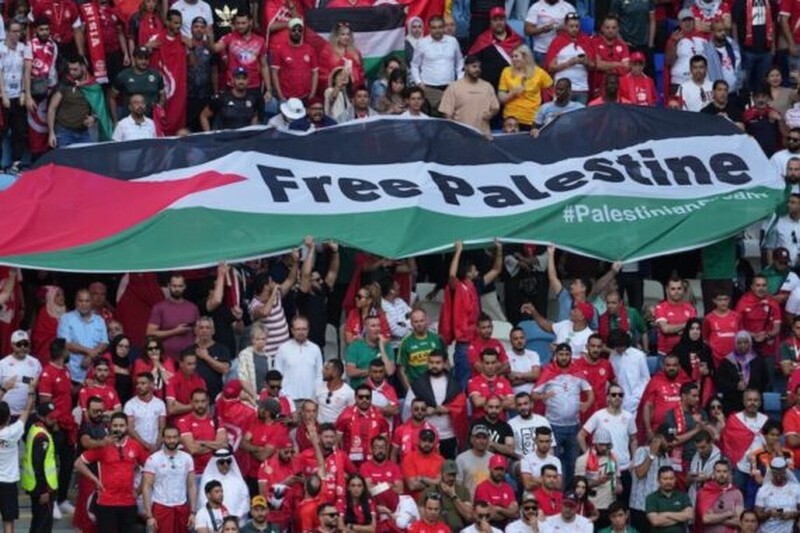
The solidarity with the Palestinian people expressed both in the streets of Qatar and in the stadiums during the World Cup was remarkable. The Palestinian flag, keffiyehs, and chants for the freedom of the Palestinian people were repeatedly reported to the shock of Israeli reporters who travelled to cover the global football event.

Four Arab teams had qualified for the World Cup, namely Qatar, Saudi Arabia, Morocco, and Tunisia, and the solidarity with Palestine expressed through the waving of Palestinian flags or wearing the traditional Palestinian keffiyeh was very visible not only at the matches of the Arab teams but at matches of other teams as well as in the streets. Football fans who came from all over the world persistently expressed solidarity with Palestine.

Israeli media coverage of the World Cup has shown that fans from Japan to England have expressed solidarity with the Palestinian people by either chanting “Free Palestine” or refusing to speak to Israeli media about their experience during the World Cup.

Should we be surprised?

The truth is that many Palestinians are astonished that Israeli media crews were surprised by the treatment they received at the World Cup. There is no explanation for the Israelis’ surprise other than the general feeling of isolation many Israelis experience today as a result of being out of touch with reality and their inability to see the implications of 74 years of occupation and displacement, and what these years have meant for the Palestinian people.

In contrast, Palestinians are not surprised by this wave of solidarity, which was especially remarkable this year as it coincided with the International Day of Solidarity with the Palestinian People on November 29.

Israeli successive governments have historically normalized ties with certain Arab governments, but not with the Arab peoples. The Israeli government, and some people in Israel, were always aware of this fact, but they tried to sell a different narrative to the Israelis, namely that the publics in the region are also fond of having ties with their state in its current form. The World Cup in Qatar has just proved the exact opposite.

Israel’s ongoing violations

In the span of one week from November 28 to December 3, Israel has killed 10 Palestinians. The latest of Israel’s victims was Omar Manaa, 22, who was killed near the West Bank city of Bethlehem. This year, Israel has killed around 150 Palestinians and its forces continue to break into Palestinian towns and cities every day, leaving behind more wounds that time cannot heal.

The manner in which the Israeli soldier killed Omar Manaa, which was caught on camera, shows without a shadow of a doubt that Israeli forces feel completely immune. Omar clashed with an Israeli soldier and during the clash in which Omar posed no threat to the Israeli soldier, the soldier decided to take out his pistol and kill him. It is certain that the Israeli soldier knew very well that he will not be held accountable for the crime he was about to commit.

On the contrary, in fact, he might have felt that he would be rewarded for his action. Itamar Ben Gvir tweeted that he supports the soldier’s “heroic act.” This is the current state of Israeli politics: Palestinians have to choose between right-wing politics and extreme right-wing politics. Ben Gvir, who was once banned from practicing law for his radical views and later defended settlers who assault Palestinians when the ban was lifted, is most likely to serve as Israel’s next national security minister with unlimited powers.

On December 4, Palestinians woke up again to the sounds of Israeli airstrikes in Gaza, targeting the coastal enclave, which has been under a tight Israeli siege since 2007. The discourse of Israeli politicians today resembles that of the founders of Israel who were more open about their Zionist ideology that was based on the removal of the Palestinian people by force in order for the Zionist dream to come true. Today, we are back in the era of the iron wall, where Israel brags about the use of force to get Palestinians to surrender.

Solidarity with Palestine and the way forward

The FIFA World Cup in Qatar has shown once again that the issues of Palestine and the injustice its people have been and are still suffering are alive in the hearts of many people across the globe. The World Cup in Qatar sent the message to Israeli leaders that lasting justice will only be realized when Palestinians are given their rights back and the wrongdoings of the Nakba are reversed without further delay.

Football fans in today’s world can’t be separated from politics. In fact, stadiums have always been used to express political messages and the message from the stadiums in Qatar was loud and clear: the Palestinian people will eventually be victorious and have equal rights on their land.

Palestinians were not surprised by this transnational wave of solidarity, as this has always been the case. Israeli leaders have to finally wake up from their Zionist dream, give up its exclusive ideology that denies the Palestinian people their rights, and confront the reality on the ground.

That reality ascertains that much of the world is fed up with Israeli practices and policies which are exposed to the rest of the world via social media on a daily basis, and defending killing Palestinians for no reason has become increasingly transparent and unsustainable.

Even Israel’s close allies can no longer explain its behavior. As the tide is changing, it is high time to end the exclusive system Israel has created and allow Palestinians to enjoy their full rights. Most likely, Israeli leaders will continue to lecture the world from their ivory towers.

However, as the global solidarity with Palestine at the FIFA World Cup in Qatar has shown us, this approach has grown old, and Palestinians might in fact enjoy their full rights sooner rather than later despite the wishes of right-wing politicians in Israel.

Yousef M. Aljamal is a researcher in Middle Eastern Studies and the author and translator of a number of books.

13 December 2022

Source: politicstoday.org