Just International

Urging Peace with Russia, Top US General Challenges DC’s Proxy War

By Aaron Maté

A series of leaks, including a call for diplomacy from Gen. Mark Milley, show that some US officials are ready for a settlement in Ukraine.

12 Nov 2022 – When the Congressional Progressive Caucus was bullied into withdrawing a letter urging diplomacy with Russia to end the war in Ukraine, everyone from neoconservative pundits to Sen. Bernie Sanders came forward to scold them. But now the same call is coming from a source that cannot be so easily ignored, and intimidated.

“A disagreement has emerged at the highest levels of the United States government over whether to press Ukraine to seek a diplomatic end to its war with Russia,” the New York Times reports. Leading the call for talks with Moscow is Gen. Mark Milley, the chairman of the Joint Chiefs of Staff. According to US officials, Milley “has made the case in internal meetings that the Ukrainians have achieved about as much as they could reasonably expect on the battlefield before winter sets in and so they should try to cement their gains at the bargaining table.”

The top US general has made no secret of his stance. “When there’s an opportunity to negotiate, when peace can be achieved, seize it,” Milley declared in a public speech this week.

Milley’s view “is not shared” by President Biden or his National Security Adviser, Jake Sullivan, the Times claims. Nor by the top US diplomat, Secretary of State Antony Blinken. As one US official explained to CNN, “the State Department is on the opposite side of the pole,” leading to “a unique situation where military brass are more fervently pushing for diplomacy than US diplomats.”

While US “diplomats” oppose diplomacy, White House officials would not be disclosing that Milley, the nation’s highest military officer, is challenging their stance if he were alone. Indeed, the Milley revelation is only the latest in a series of leaks suggesting that, despite the uproar over the progressives’ pro-diplomacy letter, at least some close to the president agree with its message.

Aaron Maté is a journalist with The Grayzone, where he hosts “Pushback.” He is also a contributor to Real Clear Investigations and the temporary co-host of “Useful Idiots.” In 2019, Maté won the Izzy Award for outstanding achievement in independent media for Russiagate coverage in The Nation.

14 November 2022

Source: www.transcend.org

What to Expect from Netanyahu & Religious Zionism

By Richard Falk

12 Nov 2022 – This is a slightly modified version of my 6 Nov 2022 responses to questions by Iranian journalist Javad Heirian-Nia.

A Preliminary Appraisal

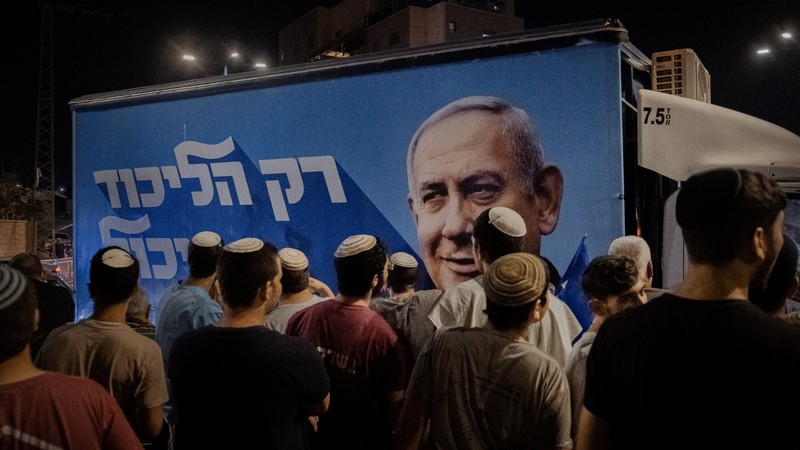
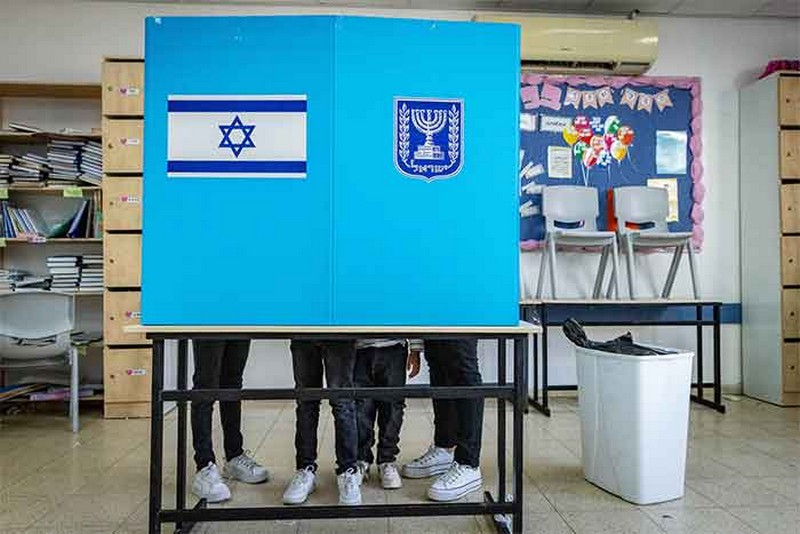
1. Israel’s Knesset elections ended with the victory of Benjamin Netanyahu’s right-wing coalition. Many analysts believe that the cabinet headed by him will be the most right-wing cabinet in Israel. What is the effect of Netanyahu’s victory on the region?

The anti-Netanyahu political parties in Israel were united around a platform that contained few substantive changes from the policies expected to be pursued by the Netanyahu coalition. Their faulty focus was devoted almost exclusively to stopping Netanyahu from having an incredible fifth opportunity to become the next Prime Minister of the country.

It is now generally agreed that the election results are  significant beyond this failure to block Netanyahu’s return to governing authority. What has emerged as potentially important is that Likud’s winning coalition depended on teaming up with the openly racist and exclusionary Religious Zionism Party, a political alliance of two far right religious parties that put the completion of the settler colonialist project at the top of their explicit agenda, although phrased in the language of Zionism and their understanding of ‘the promised land’ and what is meant to be truly a state of the Jewish people. It also reflected the growing strength of religious Zionism as compared to secular Zionism, and thus poses serious issues about the future character of Israel as a sovereign state.

The alliance of these two extremist ultra-religious parties gained 14 seats in the Knesset, the third most, and emerged not only as a strategic partner in Netanyahu’s triumphal return to power, but seems likely to provide the indispensable political glue needed by Netanyahu to prevent a crash landing of his tenuous coalition in the months and years ahead. This vulnerability will make Netanyahu, a master tactician and opportunist, pragmatically responsive to the extremist priorities of these ultra-Zionist allies. If current expectations are correct the first sign forming a cabinet that includes accords important ministerial portfolios to the leaders of the two political groupings making up the Religious Zionism (RZ) Party, such notoriously Israeli political personalities as Itamar Ben Gvir, and possibly even Bezabel Smotrich.

I think the regional impacts of these political developments will be a gradual downgrading of overt normalization diplomacy by the UAE, Bahrain, Oman, Sudan, and even Morocco initiated during the Trump presidency under the banner of the Abraham Accords, continued by Biden within a less flamboyant framing as ‘normalization and peace diplomacy.’ These arrangements were significant legitimizing victories for Israel within the Arab world, the result of bargains by the highly pragmatic Arab governing elites that had long dealt with Israel on economic and security matters of joint interests covertly. Such reactions against formalizing normalization will undoubtedly take more seriously the sentiments of the outraged public opinion of Arab masses who remain overwhelmingly supportive of the Palestinian struggle for basic rights, and regard their national elites as betraying the just cause of fellow Arabs and Muslims. I expect that this Israeli election, more than previous ones, will give rise to a new wave of pro-Palestinian activism in the Islamic World, but also at the UN, and perhaps more widely, including in the Global South.

But Netanyahu’s leadership is also extremely worrisome on other grounds, especially his obsessive hostility to Iran that centers on exaggerated concerns about Iran’s nuclear program. Such a belligerent approach to Iran is likely to produce Israeli militarist provocations that will increase risks of a major regional war. We should recall that Netanyahu, then also Prime Minister, was fiercely opposed to the Obama approach that resulted in the 2015 Nuclear Agreement (JCPOA). Netanyahu also exhibits a seeming willingness to take unilateral military action against Iran with the goal of disrupting if not destroying its alleged ambitions to acquire nuclear weapons once and for all, as well as supporting initiatives aimed at destabilizing the government in Tehran.

At the same time, we can expect Netanyahu to ignore, if not renounce, the widely supported recent UN General Assembly urging Israel to give up its nuclear arsenal and abide by the inspection provisions of the Nonproliferation Treaty regime. The Resolution (A/C.1/77/L.2) adopted on October 30, 2022 by a vote of 152-5 (24 abstentions) in the First Committee of the General Assembly; of the five were unsurprisingly U.S., Israel, and Canada, joined by Palau and Micronesia. Such a resolution introduces a semblance of balance at the global level, at least, with respect to negotiations pertaining to Iran, which in the public aspects of the Vienna negotiations designed to revive the 2015 JCPOA have so far ignored the relevance of Israel’s nuclear weapons capability, which both undermines regional proliferation constraints and disregards denuclearizing imperatives.

2. Netanyahu won while the Arab League meeting emphasized the Arab peace plan. What actions may Netanyahu take to undermine the Arab peace plan?

Netanyahu’s primary concerns in the period ahead will be to gain acceptance within Israel of his rightest leadership that will probably emphasize the threats posed by Iran to Israeli security, or unity through fear. Even prior to these Israeli elections there were growing indications of discontent with the normalization diplomacy initiated by Trump and continued by Biden. For instance, the leading Israeli liberal Zionist print media platform, Haaretz editorialized: “The Israeli election dealt a grievous blow to Judaism.” In effect, Jews elected a leadership that was programmed to push this already expansionist Zionist political entity in the direction of openly embracing and strengthening ethno-nationalist values and policies, which because of Palestinian demographic presence and continuing resistance will exert strong societal pressures to introduce new ugly episodes of ethnic cleansing combined with territorial expansionism particularly in the form of futher annexationist encroachments in the occupied West Bank.

Even without the problem of a coalition dependent on the RZ, Netanyahu and the Likud Party have not the slightest intention of lending credibility to any Arab proposal for a negotiated peace, and especially one that revives the 2002 Plan put forward by King Abdullah of Saudi Arabia. Israel public opinion seems firmly committed to the idea that there is no longer any security need to offer, even as was the case earlier, but even if only for the sake of public relations, the Palestinians national sovereignty or a meaningful form of statehood. The whole spectrum of opinion in the new Knesset lineup is to secure Jewish supremacy quickly as much of ‘the promised land’ as possible, while the world is distracted by Ukraine, COVID, and climate change. Concretely this means accelerated settlement expansion in the West Bank, punitive occupation in Gaza, and Israeli governance and further Judaization of Jerusalem as the eternal capital of the Jewish people. This entails increasing pressures on Palestinians by way of terminating tenuous residence rights, raising pressures to live elsewhere, preferably outside of Israel. For almost a decade it has become clear to anyone with eyes that wanted to see the realities on the ground that Israel had abandoned all pretenses nurtured by the Oslo Diplomacy to bring peace through negotiations of the parties prepared to compromise, and instead chose to rely on an imposed ‘peace’ sustained by what is now widely understood to be the Israeli apartheid state.

3. Netanyahu’s victory comes while the democratic government is at work in America and insists on the two-state solution. What will be the relationship between Israel and the US considering Netanyahu’s rise to power?

Contrary to the wording of your questions there is no U.S. ‘insistence’ on the two-state solution, only an empty rhetorical posture belied by the language of ‘strategic partnership’ highlighted in the Biden-Lapid Jerusalem Declaration of last July. If Netanyahu is openly collaborating with and dependent on religious extremists, his new indispensable allies, it will make Washington Democrats and liberal Zionists nervous and uncomfortable, gradually producing some lowering of public enthusiasm for Israel. Even this happens it will be without foreseeable policy consequences. It seems inconceivable at this point that there will be a groundswell of opposition in the U.S. calling for an abandonment of the bilateral partnership on regional security issues, including the annual $3.8 billion U.S. economic assistance given to Israel or American continuing efforts at the UN and elsewhere to shield Israeli policies and practices when it comes to  dealing with Palestinian resistance or grievances, compliance with international law, and even with its special status as a known but still undeclared nuclear weapons state. Since the outcome of the 1967 War Israel has been valued as a vital strategic asset by the U.S. Government, which is societally reinforce by the strong pro-Israeli influence wielded by such powerful domestic grouping as the AIPAC lobbying organization and Christian evangelists.

4. Considering Netanyahu’s serious opposition to the JCPOA, how do you see the prospect of reviving the JCPOA?

I think it highly unlikely that JCPOA will be revived. The U.S. might be prepared to reach agreement with Iran absent Netanyahu’s record of opposition that goes back to its origins during the Obama presidency. Biden has strongly indicated that the domestic political costs are too high to break openly with Israel on such a crucial security issue. The power struggle for political control of the United States is at a critical phase and no mainstream liberal leader, such as Biden, is remotely likely to weaken Jewish support by openly alienating Netanyahu. Besides, even before the Israeli elections, Israeli back-channel pressures were influencing the Biden presidency to insist on unacceptable concessions from Iran. Given the background of Trump’s 2018 withdrawal and repudiation of JCPOA, coupled with the ramping up of sanctions despite Iran’s internationally verified compliance with the agreement, the U.S. from the outset approached negotiations arrogantly. If seeking agreement and hoping for normalization, the U.S. should been prepared to offer apologies and an incremental removal of sanctions rather than put forward additional conditions that needed to be satisfied before it would rejoin JCPOA. The Trump/Biden sanctions have brought prolonged economic hardship to the people of Iran in recent years, and it undoubtedly colored the Iranian approach even if it seemed not to matter to the U.S.

5. Netanyahu is Putin’s friend, and the relations between Israel and Russia are bad after the war in Ukraine. It seems that Netanyahu has to choose between America and Russia. What is your assessment?

I think there is little doubt that if such an existential choice ever were to confront Netanyahu, he would have not have a moment’s hesitation about choosing America. It is not only the years of closeness, but the U.S. is the more formidable geopolitical actor in the Middle East and the world than Russia, and massively helps Israel militarily, ideologically, and diplomatically. Besides, the Jewish presence in the United States has great leverage over foreign policy, and although somewhat less supportive of Israeli behavior than in the past, continues to regard Israel’s security and wellbeing as an unconditional commitment, ignoring and defying the apartheid consensus that has emerged in the last five years, by shamelessly continuing to include Israel in the ranks of countries governed as ‘democracies.’

Of course, Netanyahu would like to maintain friendship with both Russia and the United States if this can be managed. The Ukraine War, should it be further prolonged, might induce Netanyahu to side more openly with the U.S./NATO, especially in light of the difficulties arising from including the religious extremists in his governing process with their undeniable hostility to a two-state solution. Their priority is to move toward ethnic cleansing of Palestinians to complete the ultra-Zionist project of settler colonialism, which either requires the elimination of the Palestinians from Israel altogether or at minimum their complete marginalization through crushing Palestinian resistance morale. How Netanyahu handles this open departure from Washington’s two-state mantra will give hints as to his approach to other issues where pressure arises if Israel rejects the American effort to adopt a posture, however insincere, that does not explicitly reject basic Palestinian objectives. We must wait and see how this likely political drama unfolds.

Netanyahu has early tried to convey an impression that he is not captive of the RZ by indicating his continuing support for LGBTQ freedoms and rights. Whether this is a true demonstration of Netanyahu’s political independence or a symbolic marginal gesture that is to be soon offset by an unpopular implementation of the radical policy views of RZ. It is this cloud of uncertainty that hangs over what this renewed Netanyahu/Likud governance of Israel will mean for regional politics, the Palestinian people, and Israel’s standing in the world.

Richard Falk is a member of the TRANSCEND Network, Albert G. Milbank Professor Emeritus of International Law at Princeton University, Chair of Global Law, Faculty of Law, at Queen Mary University London,  Research Associate the Orfalea Center of Global Studies at the University of California, Santa Barbara, and Fellow of the Tellus Institute.

14 November 2022

Source: www.transcend.org

UN Expert Calls for Lifting Unilateral Sanctions ‘Suffocating’ Syrian People

By UN High Commissioner for Human Rights

10 Nov 2022 – UN Special Rapporteur on unilateral coercive measures and human rights Alena Douhan today urged sanctioning States to lift unilateral sanctions against Syria, warning that they were perpetuating and exacerbating the destruction and trauma suffered by the Syrian people since 2011.

“I am struck by the pervasiveness of the human rights and humanitarian impact of the unilateral coercive measures imposed on Syria and the total economic and financial isolation of a country whose people are struggling to rebuild a life with dignity, following the decade-long war,” Douhan said.

In a statement following her 12-day visit to Syria, the Special Rapporteur presented detailed information about the catastrophic effects of unilateral sanctions across all walks of life in the country.

Douhan said 90 per cent of Syria’s population was currently living below the poverty line, with limited access to food, water, electricity, shelter, cooking and heating fuel, transportation and healthcare and warned that the country was facing a massive brain-drain due to growing economic hardship.

“With more than half of the vital infrastructure either completely destroyed or severely damaged, the imposition of unilateral sanctions on key economic sectors, including oil, gas, electricity, trade, construction and engineering have quashed national income, and undermine efforts towards economic recovery and reconstruction.

The expert said blocking of payments and refusal of deliveries by foreign producers and banks, coupled with sanctions-induced limited foreign currency reserves have caused serious shortages in medicines and specialised medical equipment, particularly for chronic and rare diseases. She warned that rehabilitation and development of water distribution networks for drinking and irrigation had stalled due to the unavailability of equipment and spare parts, creating serious public health and food security implications.

“In the current dramatic and still-deteriorating humanitarian situation as 12 million Syrians grapple with food insecurity, I urge the immediate lifting of all unilateral sanctions that severely harm human rights and prevent any efforts for early recovery, rebuilding and reconstruction,” Douhan said.

“No reference to good objectives of unilateral sanctions justifies the violation of fundamental human rights. The international community has an obligation of solidarity and assistance to the Syrian people.”

The Special Rapporteur also dealt with other issues showcasing the multifaceted negative impact of sanctions, including international cooperation in the areas of science, arts, sports, preservation of national cultural heritage and restitution of cultural artifacts, access to new technologies, cyberspace and online information platforms, criminality and regional/international security, as well as the issue of frozen foreign assets of Syrian financial institutions and other entities.

“I urge the international community and the sanctioning states in particular, to pay heed to the devastating effects of sanctions and to take prompt and concrete steps to address over-compliance by businesses and banks in accordance with international human right law,” she said.

“In the words of one of my interlocutors, echoing numerous others: ‘I saw much suffering, but now I see the hope die,’” Douhan said.

During her visit the UN expert met representatives from national and local government institutions, non-governmental organisations, associations, humanitarian actors, businesses, UN entities, academia, religious leaders and faith-based organisations, as well as the diplomatic community. In addition to the capital Damascus, she also visited Homs city, rural Homs, and rural Damascus.

The Special Rapporteur will present a report to the Human Rights Council in September 2023.

***********************************************

Ms Alena Douhan (Belarus) was appointed as Special Rapporteur on the negative impact of the unilateral coercive measures on the enjoyment of human rights by the Human Rights Council in March 2020. Ms. Douhan has extensive experience in the fields of international law and human rights as, a professor of international law at the Belarusian State University (Minsk), a visiting Professor at the Institute for International Law of Peace and Armed conflict, (Bochum, Germany) and the Director of the Peace Research Centre (Minsk). She received her PhD at the Belarusian State University in 2005 and obtained Dr. hab. in International Law and European Law in 2015 (Belarus).

Ms. Douhan’s academic and research interests are in the fields of international law, sanctions and human rights law, international security law, law of international organizations, international dispute settlement, and international environmental law.

Special Rapporteurs are part of what is known as the Special Procedures of the Human Rights Council. Special Procedures, the largest body of independent experts in the UN Human Rights system, is the general name of the Council’s independent fact-finding and monitoring mechanisms that address either specific country situations or thematic issues in all parts of the world. Special Procedures’ experts work on a voluntary basis; they are not UN staff and do not receive a salary for their work. They are independent from any government or organization and serve in their individual capacity.

14 November 2022

Source: www.transcend.org

COP 27 Opens: Past Eight Years Were The Eight Hottest Ever, Says WMO

By Countercurrents Collective

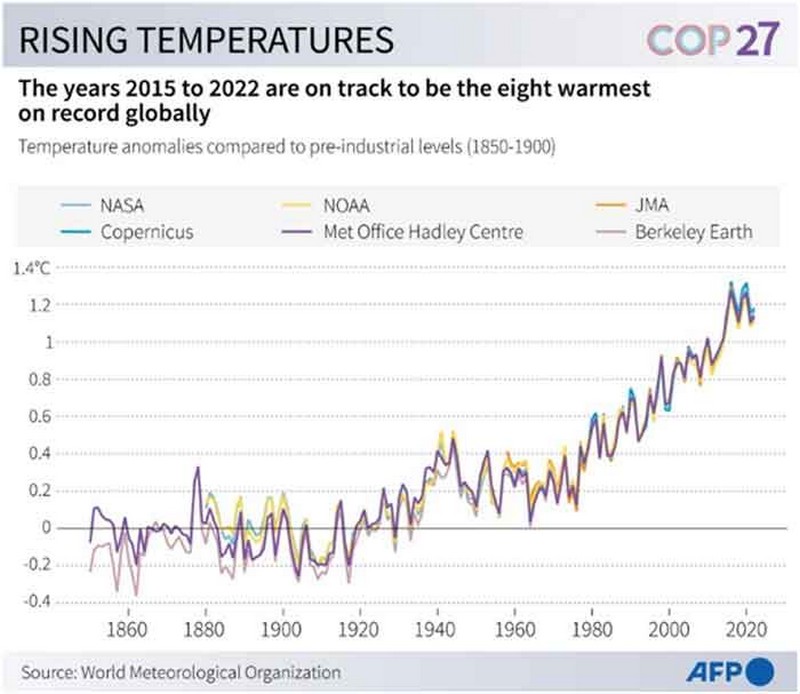
The past eight years were the eight hottest ever recorded, says a new UN report.

The report by the UN’s World Meteorological Organization (WMO) indicates: The world is now deep into the climate crisis.

Earth has warmed more than 1.1 degrees Celsius since the late 19th century, with roughly half of that increase occurring in the past 30 years, the report said.

Surface water in the ocean — which soaks up more than 90 percent of accumulated heat from human carbon emissions — hit record high temperatures in 2021, warming especially fast during the past 20 years.

The WMO report — Provisional State of the Global Climate in 2022 (https://library.wmo.int/doc_num.php?explnum_id=11359) — said: Internationally agreed 1.5C limit for global heating is now “barely within reach.”

The report sets out how record high greenhouse gases in the atmosphere are driving sea level and ice melting to new highs and supercharging extreme weather from Pakistan to Puerto Rico.

Sea level rise, glacier melt, torrential rains, heat waves — and the deadly disasters they cause — have all accelerated, the WMO said in its report as the COP27 UN Climate Summit opened in Sharm el-Sheikh, Egypt.

Nearly 200 nations gathered in Egypt have set their sights on holding the rise in temperatures to 1.5C, a goal some scientists believe is now beyond reach.

The UN secretary-general Antonio Guterres has warned that “our planet is on course to reach tipping points that will make climate chaos irreversible”.

The report said:

  • Marine heat waves were on the rise, with devastating consequences for coral reefs and the half-billion people who depend on them for food and livelihoods.
  • Overall, 55 percent of the ocean surface experienced at least one marine heatwave in 2022.
  • Driven by melting ice sheets and glaciers, the pace of sea level rise has doubled in the past 30 years, threatening tens of millions in low-lying coastal areas.
  • A two-month heatwave in South Asia in March and April bearing the unmistakable fingerprint of man-made warming was followed by floods in Pakistan that left a third of the country under water. At least 1,700 people died, and eight million were displaced.

The WMO estimates that the global average temperature in 2022 will be about 1.15C above the pre-industrial average (1850-1900), meaning every year since 2016 has been one of the warmest on record.

The WMO report said:

  • Carbon dioxide, methane and nitrous oxide are at record levels in the atmosphereas emissions continue. The annual increase in methane, a potent greenhouse gas, was the highest on record.
  • The oceans are hotter than ever.
  • Records for glacier melting in the Alps were shattered in 2022, with an average of 13ft (4 metres) in height lost.
  • Rain – not snow– was recorded on the 3,200m-high summit of the Greenland ice sheet for the first time.
  • The Antarctic sea-ice area fell to its lowest level on record, almost 1m km2below the long-term average.
  • A series of cyclones that battered southern Africa, whichhit Madagascar hardest with torrential rain.
  • Exceptional heatwaves and droughts in the northern hemisphere, with China enduring its longest heatwaveon record, the UK passing 40C for the first time, and European rivers including the Rhine, Loire and Danube falling to critically low levels.
  • Hurricane Ian wreaking extensive damage and loss of life in Cuba and Florida.
  • In East Africa, rainfall has been below average in four consecutive wet seasons, the longest in 40 years, with 2022 set to deepen the drought.
  • With the longest and most intense heatwave on record, China saw the second-driest summer.
  • Falling water levels disrupted or threatened commercial river traffic along China’s Yangtze, the Mississippi in the U.S. and several major inland waterways in Europe, which also suffered repeated bouts of sweltering heat.
  • Switzerland has lost more than a third of its glacier volume since 2001.

“The greater the warming, the worse the impacts,” said the WMO secretary-general, Prof Petteri Taalas. “We have such high levels of CO2 in the atmosphere now that the lower 1.5C [target] of the Paris Agreement is barely within reach. It’s already too late for many glaciers [and] sea level rise is a long-term and major threat to many millions of coastal dwellers and low-lying states.”

António Guterres said ahead of COP 27: “Emissions are still growing at record levels. That means our planet is on course for reaching tipping point that will make climate chaos irreversible. We need to move from tipping points to turning points for hope.”

A series of recent reports signaled how near the planet is to climate catastrophe, with “no credible pathway to 1.5C in place” and the current level of action set to see no fall in emissions and global temperature rise by a devastating 2.5C.

Rising global heating is making extreme weather more severe and more frequent around the world. The WMO report highlighted the drought in east Africa, where rainfall has been below average for four consecutive seasons, the longest in 40 years. About 19 million people are now suffering a food crisis.

“All too often, those least responsible for climate change suffer most, but even well-prepared societies this year have been ravaged by extremes,” said Prof Taalas.

Highlights of the report:

  • Concentrations of the three main greenhouse gases – carbon dioxide, methane, and nitrous oxide – reached record highs in 2021. The annual increase in methane concentration was the highest on record. Real time data from specific locations show levels of the three gases continued to increase in 2022.
  • Global mean temperature in 2022 is currently estimated to be 1.15 ± 0.13 °C above the 1850-1900 average. The eight years 2015 to 2022 are likely to be the eight warmest years on record, with 2022 most likely to be 5th or 6th warmest.
  • La Niña conditions have continued with short interruptions since late 2020 and are expected to continue through late 2022. This would mark the third consecutive year of La Niña. Such a triple-dip La Niña is unusual and has kept global temperature low for the second year in a row.
  • Sea level continued to rise in 2022, reaching a new record high. Since January 2020, global mean sea level has risen by nearly 10mm, approximately 10% of the overall rise in sea level since satellite measurements began in 1993.
  • A low winter snowpack in 2021/22 combined with an exceptionally warm summer in Europe led to record glacier mass losses in Switzerland with 6% of the glacier ice volume lost between 2021 and 2022. Between 2001 and 2022 the volume of glacier ice in Switzerland decreased from 77 km3 to 49 km3, a decline of more than a third.
  • In east Africa, rainfall has been below average in four consecutive wet seasons, the longest sequence in 40 years with early indications that the current season could also be drier than average. Across the region, under the effects of the drought and other shocks, an estimated 18.4 to 19.3 million people have faced food Crisis or worse levels of acute food insecurity before June 2022.
  • Record breaking rain in July and August led to extensive flooding in Pakistan. At least 33 million people affected by the flood.
  • Record breaking heatwaves affected China and Europe during the summer coupled with exceptionally dry conditions in places.
  • The southern Africa region has been battered by a series of cyclones over two months, leading to a surge in the need for protection and shelter for hundreds of thousands of affected persons.

The State of the Global Climate in 2022 is produced on an annual basis, complementing the most recent long assessment cycle provided by the sixth IPCC Assessment Report. This is the provisional version; the full and final report is expected to be published in March 2023. The report provides an authoritative voice on the current state of the climate using key climate indicators and reporting on extreme events and their impacts. Collecting and analyzing data from these variables takes time, where 2022 data is not yet available, figures from 2021 are provided.

7 November 2022

Source: countercurrents.org

Chasing a Mirage: How Israel Arab Parties Validate Israeli Apartheid

By Dr Ramzy Baroud

Regardless of the outcome of the latest Israeli elections, Arab parties will not reap meaningful political benefits, even if they collectively achieve their highest representation ever. The reason is not about the parties themselves, but in Israel’s skewed political system which is predicated on racism and marginalization of non-Jews.

Israel was established on a problematic premise of being a homeland of all Jews, everywhere – not of Palestine’s own native inhabitants – and on a bloody foundation, that of the Nakba and the destruction of historic Palestine and the expulsion of its people.

Such beginnings were hardly conducive to the establishment of a real democracy, perfect or blemished. Not only did Israel’s discriminatory attitude persist throughout the years, it actually worsened, especially as the Palestinian Arab population rose disproportionally compared to the Jewish population between the Jordan River and the Mediterranean Sea.

The unfortunate reality is that some Arab parties have participated in Israeli elections since 1949, some independently and others under the ruling Mapei party umbrella. They did so despite Arab communities in Israel being ruled by a military government (1951-1966) and practically governed, until this day, by the unlawful ‘Defense (Emergency Regulations)’. This participation has constantly been touted by Israel and its supporters as proof of the state’s democratic nature.

This claim alone has served as the backbone of Israeli hasbara throughout the decades. Though often unwittingly, Arab political parties in Israel have provided the fodder for such propaganda, making it difficult for Palestinians to argue that the Israeli political system is fundamentally flawed and racist.

Palestinian citizens have always debated among themselves about the pros and cons of taking part in Israeli elections. Some understood that their participation validates the Zionist ideology and Israeli apartheid, while others argued that refraining from participating in the political process denies Palestinians the opportunity to change the system from within.

The latter argument has lost much of its merit, as Israel sank deeper into apartheid, while social, political and legal conditions for Palestinians worsened. The Legal Center for Arab Minority Rights in Israel (Adalah) reports on dozens of discriminatory laws in Israel that exclusively target Arab communities. Additionally, in a report published in February, Amnesty International describes thoroughly how the “representation of Palestinian citizens of Israel in the decision making process … has been restricted and undermined by an array of Israeli laws and policies.”

This reality has existed for decades, long before July 19, 2018, when the Israeli parliament approved the so-called Jewish Nation-State Basic Law. The Law was the most glaring example of political and legal racism, which made Israel a full-fledged apartheid regime.

The Law was also the most articulate proclamation of Jewish supremacy over Palestinians in all aspects of life, including the right to self-determination.

Those who have argued that Arab participation in Israeli politics served a purpose in the past should have done more than collectively denounce the Nation-State law, by resigning en masse, effective immediately. They should have taken advantage of the international uproar to convert their struggle from a parliamentary to a popular grassroots one.

Alas, they have not. They continued to participate in Israeli elections, arguing that if they achieved greater representation in the Israeli Knesset, they should be able to challenge the tsunami of Israeli discriminatory laws.

This did not happen, even after the Joint List, which unified four Arab parties in the March 2020 elections, achieved its greatest turnout ever, becoming the Knesset’s third largest political bloc.

The supposed historic victory culminated to nil because all mainstream Jewish parties, regardless of their ideological backgrounds, refused to include Arab parties in their potential coalitions.

The enthusiasm that mobilized Arab voters behind the Joint List began to dwindle, and the List itself fragmented, thanks to Mansour Abbas, the head of the Arab party, Ra’am.

In the March 2021 elections, Abbas wanted to change the dynamics of Arab politics in Israel altogether. “We focus on the issues and problems of the Arab citizens of Israel within the Green Line,” Abbas told TIME magazine in June 2021, adding “we want to heal our own problems”, as if declaring a historic delink from the rest of the Palestinian struggle.

Abbas was wrong, as Israel perceives him, his followers, the Joint List and all Palestinians to be obstacles in its efforts to maintain the exclusivist ‘Jewish identity’ of the state. The Abbas experiment, however, became even more interesting, when Ra’am won 4 seats and joined a government coalition led by far-right, anti-Palestinian politician Naftali Bennet.

By the time the coalition collapsed in June, Abbas achieved little, aside from splitting the Arab vote and proving, again, that changing Israeli politics from within has always been a fantasy.

Even after all of this, Arab parties in Israel still insisted on participating in a political system that, despite its numerous contradictions, agreed on one thing: Palestinians are, and will always be, the enemy.

Even the violent events of May 2021, where Palestinians found themselves fighting on multiple fronts – against the Israeli army, police, intelligence services, armed settlers and even ordinary citizens – did not seem to change the Arab politicians’ mindset. Arab population centers in Umm Al-Fahm, Lydda and Jaffa, were attacked with the same racist mentality as Gaza and Sheikh Jarrah, illustrating that nearly 75 years of supposed integration between Jews and Arabs under Israel’s political system hardly changed the racist view towards Palestinians.

Instead of converting the energy of what Palestinians dubbed the ‘Unity Intifada’ to invest in Palestinian unity, Arab Israeli politicians returned to the Israeli Knesset, as if they still had hope in salvaging Israel’s inherently corrupt political system.

The self-delusion continues. On September 29, Israel’s Central Election Committee disqualified an Arab party, Balad, from running in the November elections. The decision was eventually overturned by the country’s Supreme Court, urging an Arab legal organization in Israel to describe the decision as ‘historic’. In essence, they suggested that Israel’s apartheid system still carries the hope of true democracy.

The future of Arab politics in Israel will remain grim if Arab politicians continue to pursue this failed tactic. Though Palestinian citizens of Israel are socio-economically privileged if compared to Palestinians in the Occupied Territories, they enjoy nominal or no substantive political or legal rights. By remaining loyal participants in Israel’s democracy charade, these politicians continue to validate the Israeli establishment, thus harming, not only Palestinian communities in Israel but, in fact, Palestinians everywhere.

Dr. Ramzy Baroud is a journalist, author and the Editor of The Palestine Chronicle.

7 November 2022

Source: countercurrents.org

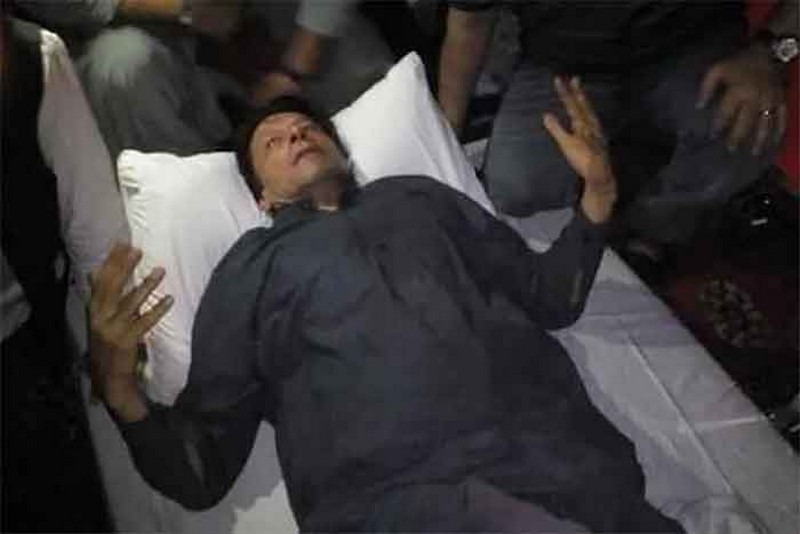
Attempt to assassinate Pakistan’s former PM Imran Khan

By Prof Abdul Jabbar

The enemies of the most honest and most popular political leader in Pakistan’s history tried to assassinate him. Since they suffered major defeats in election after election, could not succeed in their repeated efforts to have him declared ineligible for election, they realized that they could not beat Khan electorally. So they tried to kill him. He and many of his party leadership were injured, and one of them, sadly, did not survive. The assassin’s statement that he was acting alone and not influenced by anyone could have been credible if, just recently, a prominent investigative journalist, Arshad Sharif, had not been assassinated in Kenya, where he was trying to hide after numerous threats to his life by Pakistan’s establishment. Those very people who had Arshad Sharif assassinated are responsible for this cowardly assassination attempt on Khan’s life. Their action signals a clear and decisive end to their decades long corruption and looting of the country’s wealth because now every Pakistani except a very few people have united behind Khan and expressed an unshakable resolve to rid the country of the foreign-installed imported government, murderers, and mafia leeches, who have been sucking the blood of the masses for decades.

The Day of Reckoning is Fast Approaching in Pakistan

I am still grappling with the reality of what is happening in Pakistan. It continues to unroll like scenes from a nightmare. It is shocking that whereas anyone can file an FIR (First Information Report) with police for the most trivial of reasons, Imran Khan is not being allowed that basic protection from further attempts on his life. The Supreme Court has to intervene here.

If Pakistan’s judiciary fails to do its duty and safeguard Pakistan’s constitution and the rule of law, the criminals in all branches of the government, including the traitors in the army, will be tried in the People’s Court, consisting of nearly 90% of the country’s population, in a revolution that has already been forced on Pakistan’s people by the dastardly assassination attempt on their leader, Imran Khan. In addition, the murders of the journalist Arshad Sharif and numerous other killings of honest government officials who unveiled the mafia’s corruption will not go unpunished. The Day of Reckoning is fast approaching. Loyal Pakistanis are confident that their brethren, the overwhelming majority in all branches of the government, including the army, who are controlled by just a handful of villainous, self-seeking, and country-betraying oppressors, will get rid of them in a peaceful transfer of power to those who have the people’s mandate and trust.

Prof. Abdul Jabbar has been teaching for more than half a century in San Francisco, California. He is a specialist in world literatures and the politics of the Muslim world.

6 November 2022

Source: countercurrents.org

The Forgotten Mughal

By Binoj Nair

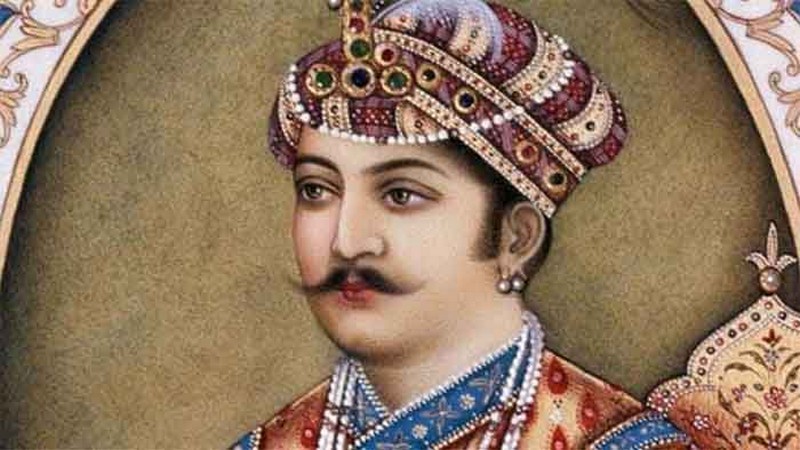
History is small fry to seasoned craftsmen like the RSS who can come up with dummies that look more authentic than the real. There is no better testimony to this statement than the mangled legacy of the greatest of all Mughals, Emperor Akbar, who is deservedly called Akbar the Great. A malicious campaign against the peerless monarch has been going full throttle since the ascension to power of the Hindutva-propelled BJP government in New Delhi under Narendra Modi. Myths, fantasies, hearsay and deliberate falsification of history have been rolled into melodramatic TV shows, fake documentaries, spiteful social media posts and state-sponsored mudslinging at the noble emperor who is being deliberately portrayed as a blood-thirsty Muslim bigot.

Back in 2017, the Union Home Minister Rajnath Singh blared his indignation at the historians for denying the brave Rajput king Maharana Pratap “his fair share of veneration”. He seemed flabbergasted at the preferential treatment given to Akbar through the adulation ‘Akbar the Great’ while Pratap, who despite being equally great was never treated like one! The BJP ruled Rajasthan’s School board was quick to toe the minister’s line and promptly ‘corrected’ history to magically turn the fortunes of the epic Battle of Haldighatti in Pratap’s favor in school text books. The Minister, understandably, was annoyed more by the defeat of a Hindu king at the hands of a Muslim than anything else. Fact, if anyone cares, has it that Pratap was routed in the battle and was forced to retreat by Akbar’s Mughal forces. The effect of a spurious Hindutva-friendly television soap was such that a blogger who took to social media about it, revealed that her five-year-old neighbor, who is yet to start school, hates Akbar already! The Minister, while trying to portray the Battle of Haldighatti as a Hindu-Muslim war, was ignorant of the fact that Akbar wasn’t even involved in the battle, and that it was the Hindu, Raja Man Singh, his trusted general who thwarted Pratap on the battle field to keep the pride of the Mughal Empire. On the other side, one of the commanders of Pratap’s army was the Pathan general Hakim Khan Suri, who laid down his life fighting for the Hindu king.  Now, a quick peek at the real story of the Emperor. Historians who have approached the matter with propriety are united in their opinion that Akbar was quite possibly the most tolerant and benevolent of all Mughal rulers. Having realized the importance of keeping the majority non-Muslim population amused with his reign, he used a conciliatory path to maintain peace and stability in his highly diverse empire. Like his grandfather Babur, he advanced ‘marriage diplomacy’ as a tool to bridge the gap with the Hindu community. Akbar was a true egalitarian who firmly believed that all people in his kingdom should be treated with the same respect.

Akbar quite persuasively broke away from the conservative clutches of the Islamic clergy to widen his mental horizons beyond the limits of his religion. One of his ambitious and encompassing moves was the promulgation of a new faith framework, the ‘Din-i-Ilahi’ (The Divine Faith), where he pulled in ideas from all the major religions including the polytheistic Hinduism, in a bid to foster a ‘catch-all’ secular empire and reduce communal tensions. His Ibadat Khana at his capital Fatehpur Sikri became an assembly of the best brains from various religions. He conscientiously participated in the debates every Thursday, and had a keen attachment to Sufism, which he called “the wisdom of the Vedanta”. Akbar was a champion of social justice too, and was a pioneer in fighting the evil Sati. There is literature about his rescuing the daughters of the Raja of Jodhpur and Raja Udai Singh of Jaipur from self-immolation. Akbar also encouraged widow re-marriage among Hindus, but didn’t really enforce social reforms through legislations so not to offend the strong traditionalist lobby.

Despite being illiterate, Akbar had a penchant for literature and owned a massive library in his palace with collections in a variety of languages and topics. He was well ahead of his time to open a library for women only. He oversaw an ambitious project of the rendering of religious texts like Ramayana, Mahabharata and the Bible to Persian, and set up a translations department to enable the work. While the work on Ramayana took Akbar’s court historian Mulla Abdul Qadir Badauni four years to complete, the Mahabharata was adapted first into Hindi, and later into Persian in a two-step process. The style of architecture fostered during his rule is a strong touchstone of his openness to diversity and inclusion. Traditional Hindu ingredients were an outstanding feature of the Indo-Islamic architectural scheme that was conceived during the time. His capital city of Fatehpur Sikri is an impressive tribute to the sublime synthesis of dissimilar and distinctive traditions. The elephant-shaped brackets that adorn the pillars of the Lahore fort are redolent evidences of a strong Hindu influence on the structural patterns followed in those days.

An enduring testimonial of Akbar’s remarkable ‘easement’ with other religions is his long-standing camaraderie with his advisor and friend, Birbal. The witty Brahmin gained respect and adulation of the entire Mughal Empire as the “brightest jewel” among the ‘Navratnas’ (the nine jewels) of Akbar’s court. Akbar’s trust in his intimate friend of three decades was unshakeable, and Birbal was the only member of his court to reside within the palace complex and the only other subscriber to his new religion. Historians Abu’l Fazl and Abdul Qadir Badauni have recorded Akbar’s desolation and anguish at the death of his friend, and state that he refused to eat or drink in grief for two days. The king was despondent over his inability to confine the unclaimed body of his friend to flames as per Hindu tradition. Birbal was killed in his master’s service fighting the intruding Afghani Yousafzai tribe, and as a mark of respect to the unflinching devotion of his friend, Akbar named one of the seven gates to his palace after his close confidante. Together, they derived the best out of the synthesis of the exquisite features of Hindu and Islamic traditions.

The progressive and all-encompassing policies of Akbar are detested heavily in the neighboring Pakistan for understandable reasons. While they have invoked the more orthodox legacies of Babar, the Ghazni and the Ghori in their missile programs, they have purposefully downplayed Akbar’s significance over the years and have hit the delete key on his rich and libertarian legacy. On the Indian side of the fence, Akbar has historically been referred to as the Mughal-e-azam or the Great Emperor until recently. The country’s Supreme Court hailed him “the architect of modern India” while the first Prime Minister Pandit Jawaharlal Nehru paid him rich tributes in his phenomenal work The Discovery of India. Nehru showered abundant praise on the dynamic ruler for creating a “sense of oneness among the diverse elements of north and central India”. However, the launch of the Sangh Parivar-led government in New Delhi under Narendra Modi in 2014 marked the beginning of the befouling of the Muslim heritage associated with India’s past. Keeping with its persistent attack on the Mughal phase of India’s history, the Hindutva right wing has been trying to smudge the prestige and splendor of Akbar’s legacy. Attempts ranging from distorting history to defacing signs of streets named after the Great Mughal are living examples of the fast diminishing tolerance of a large section of the country’s Hindu population towards Muslim artifacts.

The Sangh Parivar, while distorting history to show Akbar in a bad light, is essentially discrediting a glorious phase of India’s history, which was, in fact, profusely benevolent towards the Hindu culture. Sheer hatred for Islam has numbed their common sense to prompt such disgraceful disfiguring of history as ‘re-writing’ the Battle of Haldighatti with the ease of editing a movie script. It is quite emotive for a passionate student of history that it was at the trusted hands of a Hindu Rajput prince Man Singh, who was his chief commander and governor of a Mughal province, that Akbar left the reins of his critical military offensive against Maharana Pratap. Historian Rima Hooja has testified that on the ground, the battle was essentially fought between two Rajputs, Man Singh and Pratap. Contrary to the distorted narrative popularized by some Hindu fascist corners, Akbar was not even in the field brandishing his sword at Hindu self-respect. So it was Man Singh, who convincingly overpowered the mighty forces of Mewar under Pratap, to save the dignity of the Mughal Empire.

Historical accounts of the socio-political climate of Akbar’s period validates the boundless freedom the Hindu population enjoyed under him, which also drew them closer to their Muslim brethren more than ever before during the period. Thus, the period served to be the triumphant prototype of the secular India that came into being after independence from colonial rule. Sadly, we are presently up against the perturbing sight of those secular pillars of the country corroding away rapidly, at the connivance of the RSS-family. The Hindu-Muslim discord has hit such an alarming peak that, all evidences factored in, it can be safely concluded that Akbar’s Mughal India was way more secular and tolerant than Narendra Modi’s ‘Atmanirbhar Bharat’.

My tributes to the Mughal-e-Azam on the 417th anniversary of his death.

1 November 2022

Binoj Nair
Edmonton, CANADA

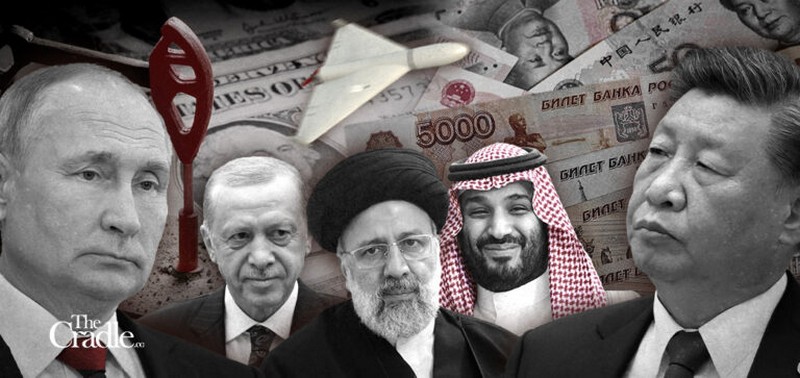
Everybody Wants to Hop On the BRICS Express

By Pepe Escobar

Eurasia is about to get a whole lot larger as countries line up to join the Chinese and Russian-led BRICS and SCO, to the detriment of the West.

27 Oct 2022 – Let’s start with what is in fact a tale of Global South trade between two members of the Shanghai Cooperation Organization (SCO). At its heart is the already notorious Shahed-136 drone – or Geranium-2, in its Russian denomination: the AK-47 of postmodern aerial warfare.

The US, in yet another trademark hysteria fit rife with irony, accused Tehran of weaponizing the Russian Armed Forces. For both Tehran and Moscow, the superstar, value-for-money, and terribly efficient drone let loose in the Ukrainian battlefield is a state secret: its deployment prompted a flurry of denials from both sides. Whether these are made in Iran drones, or the design was bought and manufacturing takes place in Russia (the realistic option), is immaterial.

The record shows that the US weaponizes Ukraine to the hilt against Russia. The Empire is a de facto war combatant via an array of “consultants,” advisers, trainers, mercenaries, heavy weapons, munitions, satellite intel, and electronic warfare. And yet imperial functionaries swear they are not part of the war. They are, once again, lying.

Welcome to yet another graphic instance of the “rules-based international order” at work. The Hegemon always decides which rules apply, and when. Anyone opposing it is an enemy of “freedom,” “democracy,” or whatever platitude du jour, and should be – what else – punished by arbitrary sanctions.

In the case of sanctioned-to-oblivion Iran, for decades now, the result has been predictably another round of sanctions. That’s irrelevant. What matters is that, according to Iran’s Islamic Revolutionary Guard Corps (IRGC), no less than 22 nations – and counting – are joining the queue because they also want to get into the Shahed groove.

Even Leader of the Islamic Revolution, Ayatollah Ali Khamenei, gleefully joined the fray, commenting on how the Shahed-136 is no photoshop.

The race towards BRICS+

What the new sanctions package against Iran really “accomplished” is to deliver an additional blow to the increasingly problematic signing of the revived nuclear deal in Vienna. More Iranian oil on the market would actually relieve Washington’s predicament after the recent epic snub by OPEC+.

A categorical imperative though remains. Iranophobia – just like Russophobia – always prevails for the Straussians/neo-con war advocates in charge of US foreign policy and their European vassals.

So here we have yet another hostile escalation in both Iran-US and Iran-EU relations, as the unelected junta in Brussels also sanctioned manufacturer Shahed Aviation Industries and three Iranian generals.

Now compare this with the fate of the Turkish Bayraktar TB2 drone – which unlike the “flowers in the sky” (Russia’s Geraniums) has performed miserably in the battlefield.

Kiev tried to convince the Turks to use a Motor Sich weapons factory in Ukraine or come up with a new company in Transcarpathia/Lviv to build Bayraktars. Motor Sich’s oligarch President Vyacheslav Boguslayev, aged 84, has been charged with treason because of his links to Russia, and may be exchanged for Ukrainian prisoners of war.

In the end, the deal fizzled out because of Ankara’s exceptional enthusiasm in working to establish a new gas hub in Turkey – a personal suggestion from Russian President Vladimir Putin to his Turkish counterpart Recep Tayyip Erdogan.

And that bring us to the advancing interconnection between BRICS and the 9-member SCO – to which this Russia-Iran instance of military trade is inextricably linked.

The SCO, led by China and Russia, is a pan-Eurasian institution originally focused on counter-terrorism but now increasingly geared towards geoeconomic – and geopolitical – cooperation. BRICS, led by the triad of Russia, India, and China overlaps with the SCO agenda geoeconomically and geopoliticallly, expanding it to Africa, Latin America and beyond: that’s the concept of BRICS+, analyzed in detail in a recent Valdai Club report, and fully embraced by the Russia-China strategic partnership.

The report weighs the pros and cons of three scenarios involving possible, upcoming BRICS+ candidates:

First, nations that were invited by Beijing to be part of the 2017 BRICS summit (Egypt, Kenya, Mexico, Thailand, Tajikistan).

Second, nations that were part of the BRICS foreign ministers’ meeting in May this year (Argentina, Egypt, Indonesia, Kazakhstan, Nigeria, UAE, Saudi Arabia, Senegal, Thailand).

Third, key G20 economies (Argentina, Indonesia, Mexico, Saudi Arabia, Turkiye).

And then there’s Iran, which has already already shown interest in joining BRICS.

South African President Cyril Ramaphosa has recently confirmed that “several countries” are absolutely dying to join BRICS. Among them, a crucial West Asia player: Saudi Arabia.

What makes it even more astonishing is that only three years ago, under former US President Donald Trump’s administration, Crown Prince Muhammad bin Salman (MbS) – the kingdom’s de fact ruler – was dead set on joining a sort of Arab NATO as a privileged imperial ally.

Diplomatic sources confirm that the day after the US pulled out of Afghanistan, MbS’s envoys started seriously negotiating with both Moscow and Beijing.

Assuming BRICS approves Riyadh’s candidacy in 2023 by the necessary consensus, one can barely imagine its earth-shattering consequences for the petrodollar. At the same time, it is important not to underestimate the capacity of US foreign policy controllers to wreak havoc.

The only reason Washington tolerates Riyadh’s regime is the petrodollar. The Saudis cannot be allowed to pursue an independent, truly sovereign foreign policy. If that happens, the geopolitical realignment will concern not only Saudi Arabia but the entire Persian Gulf.

Yet that’s increasingly likely after OPEC+ de facto chose the BRICS/SCO path led by Russia-China – in what can be interpreted as a “soft” preamble for the end of the petrodollar.

The Riyadh-Tehran-Ankara triad

Iran made known its interest to join BRICS even before Saudi Arabia. According to Persian Gulf diplomatic sources, they are already engaged in a somewhat secret channel via Iraq trying to get their act together. Turkey will soon follow – certainly on BRICS and possibly the SCO, where Ankara currently carries the status of extremely interested observer.

Now imagine this triad – Riyadh, Tehran, Ankara – closely joined with Russia, India, China (the actual core of the BRICS), and eventually in the SCO, where Iran is as yet the only West Asian nation to be inducted as a full member.

The strategic blow to the Empire will go off the charts. The discussions leading to BRICS+ are focusing on the challenging path towards a commodity-backed global currency capable of bypassing US dollar primacy.

Several interconnected steps point towards increasing symbiosis between BRICS+ and SCO. The latter’s members states have already agreed on a road map for gradually increasing trade in national currencies in mutual settlements.

The State Bank of India – the nation’s top lender – is opening special rupee accounts for Russia-related trade.

Russian natural gas to Turkey will be paid 25 percent in rubles and Turkish lira, complete with a 25 percent discount Erdogan personally asked of Putin.

Russian bank VTB has launched money transfers to China in yuan, bypassing SWIFT, while Sberbank has started lending out money in yuan. Russian energy behemoth Gazprom agreed with China that gas supply payments should shift to rubles and yuan, split evenly.

Iran and Russia are unifying their banking systems for trade in rubles/rial.

Egypt’s Central Bank is moving to establish an index for the pound – through a group of currencies plus gold – to move the national currency away from the US dollar.

And then there’s the TurkStream saga.

That gas hub gift

Ankara for years has been trying to position itself as a privileged East-West gas hub. After the sabotage of the Nord Streams, Putin has handed it on a plate by offering Turkey the possibility to increase Russian gas supplies to the EU via such a hub. The Turkish Energy Ministry stated that Ankara and Moscow have already reached an agreement in principle.

This will mean in practice Turkey controlling the gas flow to Europe not only from Russia but also Azerbaijan and a great deal of West Asia, perhaps even including Iran, as well as Libya in northeast Africa. LNG terminals in Egypt, Greece and Turkiye itself may complete the network.

Russian gas travels via the TurkStream and Blue Stream pipelines. The total capacity of Russian pipelines is 39 billion cubic meters a year.

TurkStream was initially projected as a four-strand pipeline, with a nominal capacity of 63 million cubic meters a year. As it stands, only two strands – with a total capacity of 31,5 billion cubic meters – have been built.

So an extension in theory is more than feasible – with all the equipment made in Russia. The problem, once again, is laying the pipes. The necessary vessels belong to the Swiss Allseas Group – and Switzerland is part of the sanctions craze. In the Baltic Sea, Russian vessels were used to finish building Nord Stream 2. But for a TurkStream extension, they would need to operate much deeper in the ocean.

TurkStream would not be able to completely replace Nord Stream; it carries much smaller volumes. The upside for Russia is not being canceled from the EU market. Evidently Gazprom would only tackle the substantial investment on an extension if there are ironclad guarantees about its security. And there’s the additional drawback that the extension would also carry gas from Russia’s competitors.

Whatever happens, the fact remains that the US-UK combo still exerts a lot of influence in Turkey – and BP, Exxon Mobil, and Shell, for instance, are actors in virtually every oil extraction project across West Asia. So they would certainly interfere on the way the Turkish gas hub functions, as well on determining the gas price. Moscow has to weigh all these variables before committing to such a project.

NATO, of course, will be livid. But never underestimate hedging bet specialist Sultan Erdogan. His love story with both the BRICS and the SCO is just beginning.

Pepe Escobar, born in Brazil, is a correspondent and editor-at-large at Asia Times and columnist for Consortium News and Strategic Culture in Moscow.

31 October 2022

Source: www.transcend.org

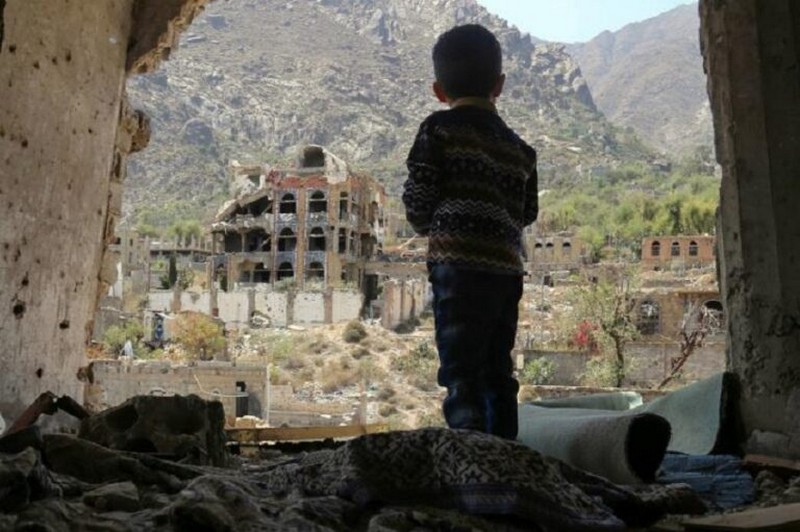
Yemeni Children Starve to Death amid Endless War

By CETRI

26 Oct 2022 – The shocking images of around 2.2 million children under the age of 5 are not well fed. More than half a million are severely malnourished. More than a million pregnant or lactating women suffered from severe malnutrition this year. Every 10 minutes, a child in Yemen dies from a preventable disease.

Hunger has long threatened the lives of hundreds of thousands of Yemeni children. Now the war between the country’s Iranian-backed Houthi rebels and a Saudi-led coalition threatens to escalate after months of a tenuous truce. Yemenis and international aid groups fear the situation will get even worse.

In the city of Hodeida, with a population of about 3 million, al-Thawra Hospital receives 2,500 patients daily, including « super malnourished » children, said Joyce Msuya, the UN’s assistant secretary-general for humanitarian affairs.

« This is one of the saddest visits I have ever made in my professional life, » Msuya said, after visiting the country in a video released by the UN. “There are huge needs. Half of Yemeni hospitals are non-functional or completely destroyed by the war. We need more support to save lives in Yemen, children, women and men.”

As the war continues in Ukraine, the situation will continue to escalate. The Yemeni diet relies heavily on wheat. Ukraine supplied Yemen with 40% of its grain, until the Russian invasion cut off the flow. In developed countries, people are working harder to pay higher bills. In Yemen, food is 60% more expensive than last year. And in poor countries, inflation can spell death.

« Yemen has been hit three times by the Russian invasion of Ukraine, » said Peter Salisbury, a Yemen expert at the International Crisis Group. “First, because of the loss of food supplies from Ukraine and higher prices on international markets. Then, due to higher fuel prices. And third, due to a change in the international approach.”

War has raged for eight years in Yemen between Shiite Houthi rebels and pro-government forces backed by a coalition of Sunni Arab Gulf states. The Iranian-backed Houthis descended from the mountains in 2014, occupying northern Yemen and the country’s capital, Sanaa, forcing the internationally recognized government into exile in Saudi Arabia.

Since then, more than 150,000 people have been killed in the violence and 3 million have been displaced. Two thirds of the population receive food assistance. There is now a truce even though the two sides did not renew it this month. Hafsa and more than half a million Yemeni children are severely malnourished. Every 10 minutes, a child in Yemen dies from a preventable disease, according to Save the Children. Hafsa is the youngest of six. One died of malnutrition. Her father, Ahmed, 47, works as a day laborer. Every day he can only afford a little flour and cooking oil.

He and his family live in Hays district, about 120 kilometers (74 miles) south of the port city of Hodeida, which has seen some of the fiercest fighting in Yemen’s conflict. The children at Hays Hospital have swollen bellies and limbs like twigs. Eventually, prolonged malnutrition « causes their organs to stop working, » said Dr. Nabouta Hassan.

Hassan, who oversees the hospital’s malnutrition ward, said that every month he receives up to 30 children suffering from illnesses related to acute malnutrition. Hodeida, along with the northern province of Hajjah, includes the areas most affected by extremely severe food insecurity and acute malnutrition, according to the UN. Mohammed Hussein, 49, a father of five, lives in a camp for displaced people on the outskirts of the city of Abs, in the northern province of Hajjah.

He said he has been displaced four times since the war began in 2014.

« I lost my house, farmland, everything, » he said by phone. She lost a 9 month old son three years ago. She has a 1 year old and a 3 year old who are starving. His main dish is bread mixed with water and salt. Some days, the neighbors give his family meat, chicken or pasta. Hussein is too poor to take his children to the hospital.

“There is no money and I am unemployed,” he said. “They could also starve to death.”

The UN food agency has cut rations for millions of people due to critical funding gaps and rising global food prices. The World Food Program has for months prioritized the 13.5 million most vulnerable Yemenis, according to the United Nations Office for the Coordination of Humanitarian Affairs (OCHA).

The UN said that as of the end of September, its humanitarian response plan for Yemen secured $2 billion of the $4.27 billion needed to provide life-saving humanitarian assistance and protection services to 17.9 million people. Abdulwasea Mohammed, Oxfam’s advocacy, media and campaigns manager in Yemen, said his group needs more money, more consistent access to the most vulnerable and a peaceful resolution of the conflict.

«The answer is to save lives every day despite this,» he said.

31 October 2022

Source: www.transcend.org
Musk Takes Twitter Helm, Enacts Sweeping Change as Deal Closes

By Katie Roof, Ed Hammond and Kurt Wagner

28 Oct 2022 – Elon Musk wasted no time taking complete control of Twitter Inc. The billionaire appointed himself chief executive officer, dismissed senior management and immediately began reshaping strategy at one of the world’s most influential social media platforms as his $44 billion take-private deal closed.

Musk, 51, is replacing Parag Agrawal, who was fired along with three other top executives, a person familiar with the matter said, asking not to be identified discussing internal deliberations. The mercurial entrepreneur, who also leads Tesla Inc. and SpaceX, may eventually cede the Twitter CEO role in the longer term, the person added. Twitter representatives declined to comment.

Musk’s acquisition puts the world’s richest man in charge of a struggling social network after six months of public and legal wrangling. Among Musk’s first moves: changing the leadership. Departures include Vijaya Gadde, the head of legal, policy and trust; Chief Financial Officer Ned Segal, who joined Twitter in 2017; and Sean Edgett, who has been general counsel at Twitter since 2012. Edgett was escorted out of the building, Bloomberg News reported.

Musk also intends to do away with permanent bans on users because he doesn’t believe in lifelong prohibitions, the person said. That means people previously booted off the platform may be allowed to return, a category that would include former president Donald Trump, the person said. It’s unclear however if Trump would be allowed back on Twitter in the near term.

In response to a Twitter user complaining they are being “shadowbanned, ghostbanned, searchbanned,” as well as having followers removed, Musk said in a tweet on Friday that he will be “digging in more today.”

The takeover caps a convoluted saga that began in January with the billionaire’s quiet accumulation of a major stake in the company, his growing exasperation with how it’s run and an eventual merger accord that he later spent months trying to unravel. Musk’s buyout marks the end of nine years of public trading. Twitter debuted with a bang on the New York Stock Exchange in 2013 but failed to match the rocket ride achieved by some other tech heavyweights.

The change in leadership will bring immediate disruption to Twitter’s operations, in part because many of Musk’s ideas for how to change the company are at odds with how it has been run for years. He’s said he wants to ensure “free speech” on the social network.

Twitter banned Trump days after the 2021 Capitol insurrection, citing the “risk of further incitement of violence.” With the former president widely expected to make another run for the White House in 2024, a return to Twitter could grant him an opportunity to turbocharge his message.

More broadly, Musk’s initiatives threaten to undo years of Twitter’s efforts to reduce bullying and abuse on the platform.

The prospect of less restrictive content moderation under Musk’s leadership has prompted concerns that dialogue on the social network will deteriorate, eroding years of efforts by the company and its “trust and safety” team to limit offensive or dangerous posts. On Thursday, Musk posted a note to advertisers seeking to reassure them he doesn’t want Twitter to become a “free-for-all hellscape.”

As the Oct. 28 deadline neared, Musk began putting his stamp on the company, posting a video of himself walking into the headquarters and changing his profile descriptor on the platform he now owns to “Chief Twit.”

He arranged meetings between Tesla engineers and product leadership at Twitter, and he planned to address the staff on Friday, people familiar with the matter said. Twitter’s engineers could no longer make changes to code as of noon Thursday in San Francisco, part of an effort to ensure that nothing about the product changes ahead of the deal closing, the people said.

Twitter employees have been bracing for layoffs since the transaction was announced in April, and Musk floated the idea of cost cuts to banking partners when he was initially fundraising for the deal. Some potential investors were told Musk plans to cut 75% of Twitter’s workforce, which now numbers about 7,500, and expects to double revenue within three years, a person familiar with the matter said earlier this month.

While visiting Twitter headquarters on Wednesday, Musk told employees that he doesn’t plan to cut 75% of the staff when he takes over the company, according to people familiar with the matter.

The past six months have been challenging for Twitter employees, who have primarily followed the ups and downs of the roller-coaster deal through the news headlines.

Many have been unhappy with Musk’s involvement and some have questioned his qualifications to run a social networking company. His support of a far-right political candidate in Texas, plus sexual harassment accusations from a former SpaceX flight attendant in May, have raised additional concerns. During a video Q&A with Musk in June, some employees mocked Musk on internal Slack channels. Others have ridiculed or chided him publicly on Twitter throughout the deal process.

31 October 2022

Source: www.transcend.org