Just International

Ukraine and the West’s quest for a perfect solution

Ukraine and the West’s quest for a perfect solution, The Straits Times, 1 July 2022, SPH-ID : 47112238

Travel is back!

I say this with confidence because I have been to Europe on
three separate trips (Davos in May, Venice and Zurich in June). And just before Davos, I was in the United States for three weeks. It was difficult to get seats on flights (and, by the way, this column was written on SQ345 from Zurich to Singapore).

Why do I say all this? Having visited both the US and Europe in
recent weeks, I can say with some confidence that the West is a
deeply troubled place. The populations are angry. And the
best-educated Western elites, who are supposed to lead their societies in the right direction, are instead leading them in the wrong direction. As a friend of the West, I would like to suggest a wiser course of action.

This wiser course of action is based on a simple principle: the
perfect is the enemy of the good. The West should accept imperfect solutions which will make their people happier. Equally
importantly, it will also help the billions of poor people in the Third World who are suffering from higher food and energy prices.

Here, I would also like to inject an important point from moral
philosophy. At the end of the day, we have to give moral priority to
the sufferings of the poor, the bottom 10 or 20 per cent of the
world’s population. Indeed, it would be cruel and callous to
ignore their sufferings.

This is why the greatest American political philosopher of recent
times, John Rawls, emphasised that the most just society was the one that took care of the bottom 10 per cent. As he outlined in his seminal work, A Theory Of Justice, any social or economic inequalities, if they are to satisfy the principles of justice, “are to be to the greatest benefit of the least-advantaged members of society”.

THREE CRITICAL FACTORS

And why are the very poor suffering? It’s the result of three
critical factors.

First, the massive stimulus packages post-Covid-19, especially
in the US, have unleashed global inflation. As Martin Wolf wrote in the Financial Times, “The combination of fiscal and
monetary policies implemented in 2020 and 2021 ignited an
inflationary fire”.

Second, the illegal Russian invasion of Ukraine, followed by
the massive Western sanctions on Russia, have led to a massive spike in energy prices.

Ironically, despite (or perhaps, because of) these sanctions, the
European Union, has paid more money for Russian gas. Since the
war began on Feb 24 this year, the Europeans have paid more than
US$60 billion (S$83 billion) for Russian oil and gas, while
complaining that India and China were buying too much Russian oil This led to the now famous quip from the Indian Foreign Minister, Dr S. Jaishankar, who said “our total purchases for the month would be less than what Europe does in an afternoon”

Third. the Omicron virus, a tricky virus, has broken through
the defences of China’s zero-Covid policy. This led to massive
shutdowns including in Shanghai from March. Since China is the
factory of the world, supply shocks have also contributed to global
inflation. In short, we have had an almost perfect storm.

In short, we have had an almost perfect storm. What
should be the rational response? To find a perfect
solution? Or to accept an imperfect solution that
alleviates the sufferings of many people, including the
people of Ukraine and the massive number of poor
people in the world? The West has been pushing for
a perfect solution. The rest of the world would prefer to
see their sufferings decrease from an imperfect solution.

What should be the rational response? To find a perfect
solution? Or to accept an imperfect solution that alleviates
the sufferings of many people, including the people of Ukraine
and the massive number of poor people in the world?
The West has been pushing for a perfect solution. The rest of the
world would prefer to see their sufferings decrease from an
imperfect solution What’s the perfect solution?
This is what the West is pursuing in Ukraine: total withdrawal of
Russian forces from Ukraine. No compromise.

Certainly, if the West could accomplish it, it should go for it.
But what are the prospects of the West achieving this perfect
solution in Ukraine? The answer is zero.

In short, the apparently rational West is pursuing an impossible
solution. And in the process, the people of Ukraine are suffering.
And, equally importantly, the Western search for a perfect
solution is causing enormous suffering for a massive number of
poor people.

World Trade Organisation (WTO) director-general Ngozi
Okonjo-Iweala said: “The war in Ukraine has created immense
human suffering, but it has also damaged the global economy at a
critical juncture. Its impact will be felt around the world, particularly in low-income countries, where accounts for a large fraction of household spending… Smaller supplies and higher prices for food mean that the world’s poor could be forced to do without.

CALL A CEASEFIRE

So what is the imperfect solution for Ukraine?
The first step is to call for an immediate ceasefire. Why? Each
day that the war continues hundreds are dying. Plus, if
Ukraine is going to feed the world again in 2023, it needs to get
fertiliser so its farmers can start planting in 2022. More food in
2023 equals less suffering for the global poor.

The second step is to start talking to Russia. There should be
two levels of talks. The first should be between Ukraine and Russia. The second should between the West and Russia. And what would be the outcome of these two steps? Ukrainian lives would be saved And the whole world would breathe a sigh of relief.
Then comes the hard slog, Given the huge chasm between Western and Russian positions on Ukraine there will be no immediate long-term solution. But we’re more likely to get one if talks begin And we’re more likely to get one if we can get more countries in the world to talk to Russia

This is why it’s a huge strategic mistake by the west to get
Indonesia, as the host of the G-20 meeting on Nov 15-16, to disinvite President Putin from this meeting. And it would be an even bigger mistake for the West to boycott this G-20 meeting if Mr Putin attends.

There’s one statistic that every Western leader should memorise
and repeat each night before going to sleep: the West comprises 12 per cent of the world’s population. The rest make up 88 per cent.

If Mr Putin comes to Jakarta in November, as he should, he will
hear the views of the West. And he will hear the views of the rest. Mr Putin is not likely to listen to the West since there’s zero trust
between Russia and the West. But he wiIl listen to the rest. The West is therefore stabbing itself in the foot by calling for Mr Putin to be disinvited.

And why is the West pushing for Mr Putin to be excluded? Here we come back to the main theme of his essay: because the West is
pushing for the perfect solution of trying to defeat Russia. But this
perfect solution will never come about.

Hence, the West should listen to Indonesia and all the non-Western members of the G-20 (who electively represent 88 percent
of the world’s population) and try to find some kind of a compromise solution for Ukraine. Such a compromise solution will save the lives of Ukrainians. And it will alleviate the sufferings of the hundreds of millions of poor people in the world.
In short, the pragmatic solution is also the ethical solution.

1 July 2022

Kishore Mahbubani, a veteran diplomat, is a distinguished fellow at
the Asia Research Institute at the National University of Singapore.

Source: The Straits Times © SPH Media Limited. Permission required for reproduction”.

https://www.straitstimes.com/opinion/byinvitation-ukraine-and-the-wests-quest-for-a-perfect-solution


Popular Opposition To Wickremesinghe’s Election Could Spill Over Into Violence In Sri Lanka

By Countercurrents Collective

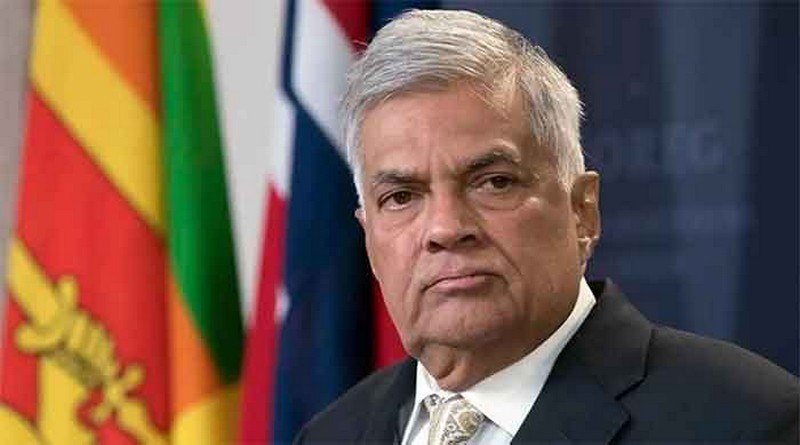
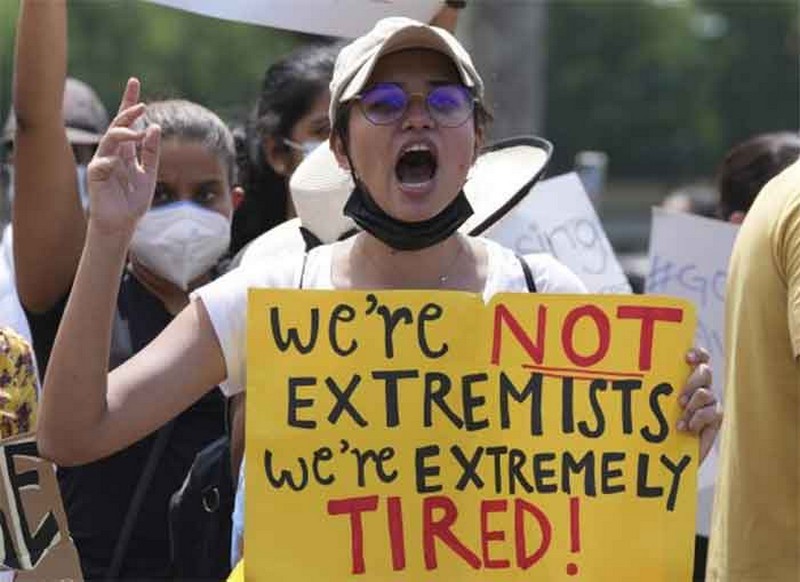
Sri Lanka was braced for more unrest after newly appointed president Ranil Wickremesinghe vowed to crack down on the protests that toppled his predecessor, condemning them as “against the law”.

Speaking after being MPs picked him as successor to Gotabaya Rajapaksa, Wickremesinghe made it clear he would not tolerate those he perceived to be stirring up violence.

“If you try to topple the government, occupy the president’s office and the prime minister’s office, that is not democracy; it is against the law,” he said.

“We will deal with them firmly according to the law. We will not allow a minority of protesters to suppress the aspirations of the silent majority clamoring for a change in the political system.”

Wickremesinghe is expected to name the leader of the parliament and old schoolmate Dinesh Gunawardena as prime minister on Thursday. Gunawardena is known as a strong Rajapaksa loyalist, and served as a cabinet when Mahinda Rajapaksa was president, and then again when Gotabaya Rajapaksa was president.

In recent days, Wickremesinghe, who declared a state of emergency this week, had made statements calling protesters “fascists” and indicating he would not be afraid to crack down on the demonstrations.

Less than an hour after he was declared president on Wednesday, a court order was issued prohibiting anyone from congregating within a 50-metre radius of a statue that stands at Galle Face in Colombo, where protesters spurred by the country’s economic collapse have been camped out for months.

People Defy Order

However, people defied the order and dozens gathered on the steps of the president’s offices, which are still occupied by the protest movement, to shout rallying cries of “deal Ranil” – a reference to Wickremesinghe’s reputation as a scheming politician – as well as “Ranil bank robber”, referring to a bank bond scam he was implicated in. Hundreds of police and military stood on the periphery but did not interfere in the rally.

After being selected by MPs as president, Wickremesinghe called on the opposition parties for an “end to division” and said he wanted to “bring everyone together so that a national consensus is formed as to the way forward”.

But questions remain over whether Wickremesinghe would be able to put together a cross-party unity government acceptable to the people, after the major opposition parties had pledged their support for the presidential candidate he defeated.

Wickremesinghe has been prime minister six times and is close to the Rajapaksa family. Protesters fear that he will protect the Rajapaksas from being held accountable, as he has been accused of doing in the past, and would not instigate the constitutional change being demanded by the protest movement, including an end to the system of executive presidency.

Wickremesinghe is due to serve for the rest of Rajapaksa’s term, until November 2024.

Ranil Does Not Have Mandate

“Ranil will be chased away, he is a crook and he does not have a mandate,” said Anura Goonaratna, 53, a toy exporter. “This protest movement is going to get worse. There has to be an end to this and the only ending we will accept is throwing Ranil out, whatever it takes.”

China’s Loan

Analysts have disputed the China debt-trap narrative in Sri Lanka. China only accounts for 10% of Sri Lanka’s debts, most of which were concessionary loans and the repayments only accounted for less than 5% of the country’s annual foreign debt servicing.

US: High Interest Rate

A much greater drain on the country’s foreign exchange reserves were international sovereign bonds, much of which are from the US, which were borrowed by the country at high interest rates. It was these bond repayments – which were due to total over $1.5bn in 2022 – that drained Sri Lanka’s reserves and ultimately forced them to default in May, as the country was virtually bankrupt.

People Are Unhappy

Ranil Wickremesinghe’s election as President could again plunge Sri Lanka into another round of political unrest and instability.

Ranil has little credibility with the general public. In some places, protests called for Ranil Wickremesinghe to quit ahead of today’s elections but these were not mass rallies.

According to some analysts it may not be as easy to mobilize protests.

Anticipating possible demonstrations, the Colombo Port Magistrate’s Court issued an order Wednesday preventing anyone from reaching within a 50 meter radius of the S.W.R.D. Bandarnaike statute which is located at the protest site at the Galle face green in the capital.

Neither Ranil nor the members of parliament have credibility with the voters.

The fear is that this may lead to another round of street protests, calling for Ranil to quit.

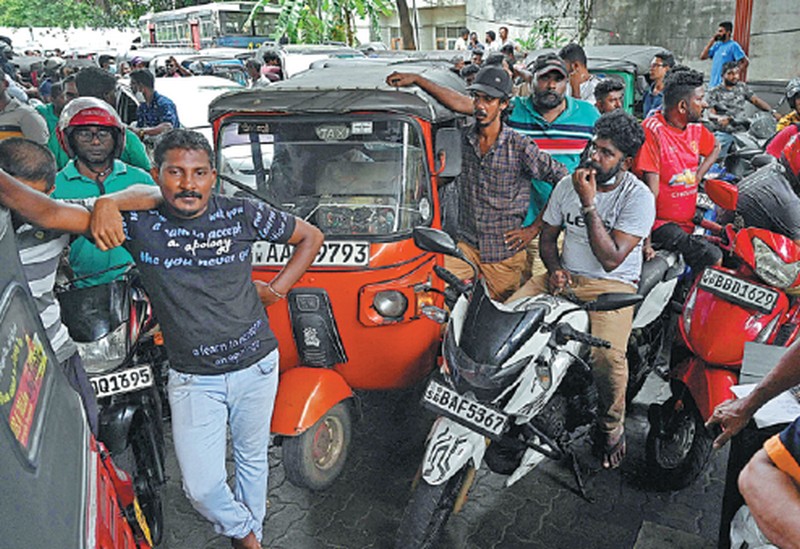
Sri Lanka at the moment can ill afford another political turmoil when the President and the new government he appoints has to focus on getting the economy back on track. That won’t be an easy job. Much will depend on whether the protesters are back on the street and how the President tackles the fresh volley of unrest.

Rumor mills in Sri Lankans are now pointing fingers at New Delhi for ensuring Wickremesinghe’s victory.

Denying these charges, the Indian High Commission in Colombo tweeted : “We have seen baseless and purely speculative media reports about efforts at political level from India to influence political leaders in Sri Lanka regarding elections in the Sri Lankan Parliament to the post of the President of Sri Lanka.’’ And again “(We) categorically deny these media reports as completely false. They are clearly a figment of someone’s imagination.” Another tweet said that India   “does not interfere in internal affairs and democratic processes of another country”.

Numbers in Parliament Do not Depict True Composition On The Ground: Says AKD

Claiming that the composition of Parliament did not represent the true desire of the people, NPP leader Anura Kumara Dissanayake reiterated that an opportunity should be given for a new mandate as there was no genuineness for any form of government established in the current Parliament.

He told Parliament that the composition which is shown through numbers in Parliament was not the real composition on the ground.

“There is a huge contradiction between the desire of the people outside and the Parliament,” he said.
He said they always stood for an interim government for a short period of time headed by a President and a Prime Minister who had no future political agendas.

He said however, they failed to come to a consensus despite discussions with several political parties.
Dissanayake alleged that MPs had been bought over this time also just as in the past.

“When I saw the number of parties extending support for Dullas Alahapperuma, I thought he would received more than 113 votes. It is now clear that the members in the political parties do not always stay with the policies of the parties. We have a past where MPs were sold for money. This situation has not changed,” he said.

Our Candidate Could not Win: Rajapaksa

Former President Mahinda Rajapaksa said that his party’s candidate was unable to win the Presidential election in Parliament yesterday.

“We presented Dullas. We voted for him, but lost. Somebody has to win,” he told media in Parliament.

“He (Ranil) got more votes, so he became the President. That’s what has happened. We are waiting to see what will happen in the future. Whatever the government is, it must work for the people of the country,” he said.
“There are different opinions. Some say this is the opinion of the people. We say this is not the opinion of the people,” he also said.

Commenting about the protesters, the former President said “I think the struggle is over now. The youth who are engaged in the struggle at Galle Face must understand that now. They must now leave and get on with their work,” the former Premier said

Arson Attack On Ranil’s Private Residence: Four Suspects Remanded

Four suspects arrested over the incident of setting fire to Acting President Ranil Wickremesinghe’s private residence in Colombo were yesterday remanded till July 27 by Colombo Fort Magistrate’s Court.

These four suspects are to be produced before an identification parade on  the next hearing date.

Defence Counsel appearing for the suspects alleged that police have failed to arrest the main suspect involved in the incident. In reply, the CID informed Colombo Fort Magistrate Thilina Gamage that an individual named Ivan Perera wanted for questioning over the incident has already fled the country and further said the airport authorities have been informed in this regard.

Countercurrents is answerable only to our readers. Support honest journalism because we have no PLANET B.

21 July 2022

Source: countercurrents.org

When will Tel Aviv yield to mounting calls for an end to apartheid?

Palestine Update 575
_Opinion_

When will Tel Aviv yield to mounting calls for an end to apartheid?
The Episcopal Church, based in the United States with additional
dioceses elsewhere, is a member church of the worldwide Anglican
Communion has doggedly pursued the question of justice for Palestinians.
Four powerful resolutions have spelt out a pathway to be navigated to
get the church to gain authority to act more proactively on behalf of
Palestinians. That represents positive news in the solidarity movement
for Palestine.

On the other hand, the predictable has happened. Israel has resumed
settlement activity with revenge immediately after President Biden left
the region following his short visit. Did Biden know it would happen?
Almost certainly! Israel has declared steps to seize hundreds of dunums
of Palestinian in the occupied West Bank in order to build 30,000 new
settlement housing units.

Not directly pertaining to the Palestinian struggle, a blog by
Representative of the European Union, Josep Borrell, seems to have
accepted the painful truth that the West is losing what he termed “the
global battle of narratives”. Nothing new in this! Europe has eternally
played double games in the region. Josep Borrell lies to himself, the
EU, and the world when he pretends that Europe is playing by rules when,
in fact, it is not. Ramzy Baroud a writer-thinker on Palestine, points
to how “The immediate impression … is that the West is the global
vanguard of multilateralism and territorial sovereignty.” Ramzy argues
that “the opposite is true. The US-western military interventions [1]
in Iraq [2], Bosnia, Afghanistan, Syria, Libya [3] and many other
regions around the world have largely taken place without international
consent and without any regard for the sovereignty of nations. In the
case of the NATO war on Libya, a massively destructive military campaign
was initiated based on the intentional misinterpretation of United
Nations Security Council resolution 1973, which called [4] for the use
of “all means necessary to protect civilians”.
Palestine suffers from this two-faced political conduct of Europe.

The Western political establishment is firmly held under a vice-like
grip by the Zionist forces in Israel. At the same time, churches, human
rights groups, student unions, and trade unions in the West are drawing
up rock-solid lines of support to the Palestinian struggle. At the end
of the day, this will make the difference. As in the case of South
Africa, most western nations stubbornly held on to support the apartheid
regime. The streets were equally inflexible and when their numbers
extended hugely, governments started exerting pressure on the government
in Pretoria. Nelson Mandela was freed and apartheid ended. In
anticipation, we might ask in hope: “How long more will it take before
the regime in Tel Aviv is compelled to yield?”

Ranjan Solomon

21 July 2022

Source: palestineupdates.com

Claims of Sri Lanka ‘debt trap’ dismissed

By XU WEIWEI

Persistent claims in Western media that Sri Lanka is falling into a “Chinese debt trap” fly in the face of the facts, say analysts who stress the need for the crisis-hit country to receive concrete assistance as lawmakers lay down a path for a return to stability.

The alleged “debt trap” is a deliberate fabrication, according to Bernard Goonetilleke, chairman of the Pathfinder Foundation, a Sri Lankan think tank.

Sri Lanka’s debt to China represents around 10 percent of its total external debt, he said. “One has to examine carefully to determine which other countries and financial institutions have provided the remainder,” he said.

Goonetilleke, a former Sri Lankan ambassador to China, said the country’s problems stem from “Sri Lanka living beyond its means, by bridging budget deficits by external loans over the past two decades, for which interested parties try to make China the scapegoat”.

Goonetilleke’s comments came after the speaker of Sri Lanka’s Parliament on Monday said the leaders of political parties had agreed to a vote in the legislature on July 20 for a new president.

Speaker Mahinda Yapa Abeywardena said in a statement that following a meeting with all the party leaders it was decided to convene on Friday a parliamentary session in which the presidency would be declared vacant. Nominations will be called on July 19.

Amid the deepening financial and humanitarian crisis, Prime Minister Ranil Wickremesinghe declared the island nation bankrupt on July 5.

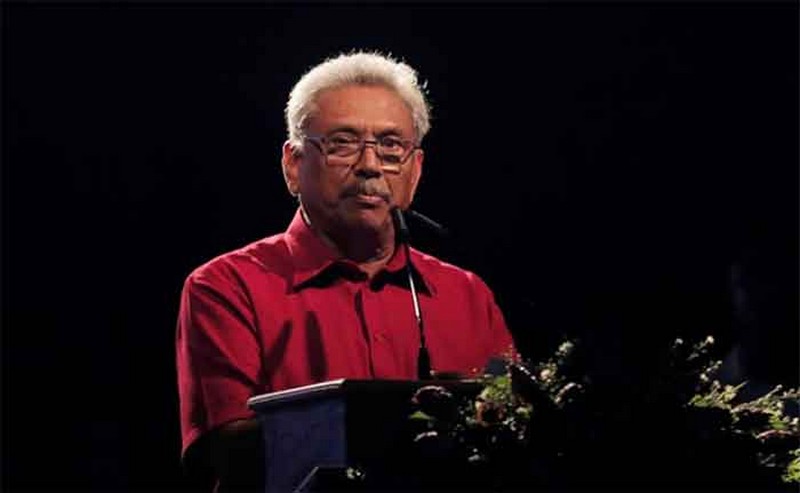
Sri Lankan President Gotabaya Rajapaksa on Monday confirmed that he would step down from the presidency on Wednesday.

Commenting on the country’s economic difficulties, Goonetilleke said foreign debt is a serious issue. “The general reference is Sri Lanka owes foreign lenders around $51 billion.”

According to statistics from Sri Lanka’s Department of External Resources, the government’s total outstanding external debt had hit $35.1 billion by the end of April 2021. China accounts for less than 10 percent of the nation’s external debt. Japan accounts for a similar percentage to China, while the Asian Development Bank and the World Bank provided 13 percent and 9 percent, respectively. Some 47 percent of the debt comes from market borrowings, the department’s figures show.

Massive blow

Goonetilleke said the pandemic and the subsequent lockdown dealt a massive blow to the economy.

Lawrence Loh, director of the Centre for Governance and Sustainability at the National University of Singapore Business School, said: “There have been fundamental mishaps over the years in how the overall economic governance has been conducted. This obviously affected the country’s ability to service all its debts, including supranational and bilateral obligations.”

Rajiv Biswas, an Asia-Pacific chief economist at S&P Global Market Intelligence, said Sri Lanka’s foreign exchange reserves have “fallen sharply in the past two years, from $7.6 billion in January 2020 to $1.6 billion by April 2022”.

“One factor has been the high costs of repayments for the nation’s external debt,” Biswas said. “Second, surging world oil prices since mid-2021 have also sharply increased the foreign exchange costs of paying for oil imports.”

He said Sri Lanka’s foreign exchange problems have been “compounded by the collapse of international tourism during the COVID-19 pandemic”.

Although tourist arrivals improved in the first half of this year, Biswas said the economic crisis made it difficult for Sri Lanka to continue rebuilding the vital sector.

Remittance inflows from Sri Lankan workers abroad slumped 53 percent year-on-year from January to May, adding to Sri Lanka’s difficulties, Biswas said.

Loh said: “The foreign debt problem of Sri Lanka is probably more nuanced than definitive in nature-we have to get to the root of understanding how and why the borrowings were made.”

The Singaporean academic said Sri Lanka, to be fair, has made developmental progress through its tapping of overseas funds-and “there is a difference between a tap and trap”.

In fact, projects under the China-proposed Belt and Road Initiative, including the Colombo Port City and Hambantota Port infrastructure, have become known as Sri Lanka’s key economic drivers.

Chinese Foreign Ministry spokesman Wang Wenbin said on Monday that China hopes that people from all walks of life in Sri Lanka can work together to overcome difficulties and realize social stability, economic recovery and improved livelihoods for the people as soon as possible.

In June, another Foreign Ministry spokesman, Zhao Lijian, said China would provide emergency assistance worth 500 million yuan ($74.2 million) to Sri Lanka.

Xinhua contributed to this story.

13 July 2022

Source: chinadaily.com.cn

The Downing of Malaysian Airlines MH17: The Quest for Truth and Justice. Review of the Evidence

By Prof Michel Chossudovsky

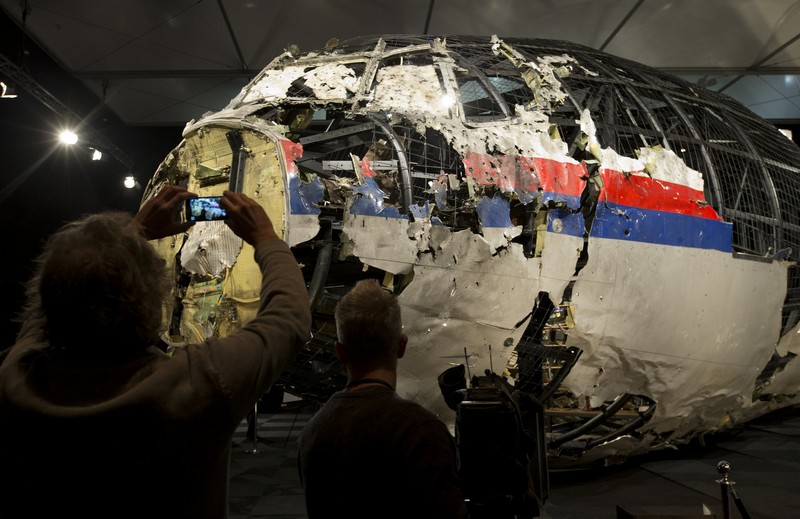
Eight years ago, on 17 July 2014, Malaysia Airlines Flight 17 (MH17) was shot down in Eastern Ukraine.

This background text was prepared in the context of the Kuala Lumpur MH17 Conference entitled MH17: The Quest for Justice, organized by JUST, the PGPF and the CRG in August 2019. This comprehensive report provides detailed evidence that Russia was not involved in the downing of MH17.

It also confirms the insidious role of Ukraine’s intelligence agency.

****

The underlying objective is to examine the evidence, reveal the truth and uphold the rule of law.

Today, July 29th 2021, our thoughts are with the families of the victims of the Malaysian Airlines MH17 tragedy.

The 2019 Conference was dedicated to the memory of the victims.

It is also a national tragedy for the people of Malaysia. The downing of MH17 with 283 passengers and 15 crew on board, took place barely a few months following the mysterious disappearance of Malaysian Airlines flight MH370 after departing on March 8, 2014 from Kuala Lumpur for Beijing, with 227 passengers and 12 crew members on board.

It is worth recalling that immediately after the MH17 plane crash on July 17 2014, prior to the conduct of a preliminary investigation, Secretary of State John Kerry and US Ambassador to the UN Samantha Power pointed their finger at Moscow without a shred of evidence. In turn, the allegations directed against Russia were used to justify the imposition of sweeping economic sanctions against the Russian Federation.

According to President Obama (hours after the tragedy):

“… the downing of MH17 should be “a wake-up call” to Europe to get serious about confronting Russia over Ukraine after EU leaders have proved reluctant to impose tought sanctions.” (Telegraph, July 18,2019)

The Wall Street Journal reports (July 18, 2014) that “Obama is getting his wish and Brussels is now weighing new sanctions”:

European governments, jolted by the downing of a passenger plane over eastern Ukraine that killed nearly 300 people, are contemplating a major expansion of sanctions on Russia as early as next week.

European Union leaders decided in recent days to expand the penalties to a broad new category of people and companies. But the apparent shooting down of a plane carrying more than 200 EU citizens has intensified a desire to act quickly and forcefully, including sanctions against oligarchs with ties to the Kremlin.

In Brussels, some diplomats described the incident as a game-changer. “It would have major consequences if it was certain it came from the rebels— major consequences,” said one official. (WSJ, July 18, 2014)

On July 22, 2014, The European Union decided to expand its sanctions blacklist against Moscow including Vladimir Putin’s inner circle.

EU foreign ministers decided to “draw up further broad measures including an arms embargo and financial restrictions on Russian businesses, … following the downing of Malaysia Airlines Flight MH17.” (Guardian, July 22, 2019)

Michel Chossudovsky, August 2019, updated July 17, 2020, July 16, 2022
____________________________________________

DATE : 17th AUGUST 2019 (SATURDAY)
Time: 7:30am-6:00pm
Venue: Main Auditorium, International Islamic University Malaysia (IIUM), Kuala Lumpur
____________________________________________

According to the official narrative, Malaysian Airlines MH 17 was downed by a BUK anti-aircraft missile by “pro-Russian separatists” with the support of Moscow.

The MH17 Inquiry has been conducted in an insidious fashion, largely responding to political interests.

Important pieces of evidence including eye witness reports, audio and video material transmitted through Ukraine Intelligence (SBU) have either been manipulated or excluded from the Dutch inquiry, which largely endorses Washington’s accusations directed against Moscow.

According to Prime Minister Tun Dr. Mahathir Mohamad in a statement at the Prime Minister’s office in May 2019:

“They never allowed us to be involved from the very beginning. This is unfair and unusual. So we can see they are not really looking at the causes of the crash and who was responsible. But already they have decided it must be Russia. So we cannot accept that kind of attitude. We are interested in the rule of law, in justice for everyone irrespective of who is involved.

“They [the West] are accusing Russia but where is the evidence?

Introduction

The Dutch investigation

Moscow was accused without evidence of being behind the downing of MH17 from the very outset. Both Kiev and Washington concluded prior to the conduct of an investigation that:

“MH17 had likely been brought down by a ground-to-air missile fired from separatist-controlled territory in eastern Ukraine.”

There are three distinct reports:

The first official report on behalf of the Ukrainian government was released by Ukraine’s SBU secret service on August 7 2014, barely three weeks after the MH 17 tragedy (July 17, 2014).

The SBU report (which is discussed later in more detail) accuses pro-Russian rebels of having downed the plane with Moscow’s support.

The Dutch Safety Board Report released in September 2015 largely endorses the BUK missile narrative.

And, a year later in September 2016,  The Dutch Joint investigation Team (JIT)  as part of a criminal investigation “confirmed” that the Malaysian airlines plane was “hit by a Russian-made BUK surface-to-air missile that was brought into Ukraine from Russia before the shootdown and subsequently taken back across the border.”

The assumption prior to the conduct of the DSB investigation was that a BUK missile had brought down MH17, and Russia was behind it.

Concrete evidence supporting other interpretations (including  on site testimonies and the presence of a second aircraft) was casually dismissed by the DSB:

Dutch Safety Board, September 2015 report  (p 9)

The inquiry became increasingly politicized.

President Barack Obama had called up Malaysia’s (former) Prime Minister Najib Razak. At a press conference (July 18, 2014),  “Najib told the press that he had spoken to the Dutch prime minister and the Ukrainian president; In subsequent developments, Prime Minister Najib Razak tacitly accepted the consensus imposed by Washington prior to the conduct of an investigation.

‘Obama and I agreed that the investigation will not be hidden and the international teams have to be given access to the crash scene.’

In August 2016, Ukraine president Poroshenko visited Malaysia for discussions with Prime Minister Razak Najib:

Prime Minister Datuk Seri Najib Razak said Malaysia will work with Ukraine to bring the perpetrators to justice. “We will do whatever we can to find the truth for the sake of families who lost their loved ones in this tragic incident. “We are waiting for the criminal investigation report, which is expected to be tabled by the year-end, followed by a meeting to decide on the next course of action,” said Najib. (New Straits Times, August 4, 2016)

Washington’s agenda in liaison with the Kiev regime was to blame Russia. This agenda was never questioned by the Najib government.

Erasing the Initial Evidence

Much of the initial evidence and testimony including eyewitness reports (from various independent sources), recorded in July-August 2014 (in the immediate wake of the event) contradicts the official version. This body of evidence has been dismissed and in some cases destroyed.

In September 2015, in its final report, the Dutch Safety Board presented its findings regarding the Buk TELAR surface-to-air missile system which allegedly shot down MH-17 over eastern Ukraine on July 17, 2014.

Flash forward to 2018

On 24 May 2018 the Joint Investigation Team (JIT) published an update of its findings pointing (without firm evidence) to the role of the 53 Anti-Missile Brigade of the Russian Army. In May 2018, they launched an appeal for people in Donesk to come forward to corroborate their “findings” re. the deployment of the BUK missile system:

Update in criminal investigation MH17 disaster

On the following day, the governments of Australia and the Netherlands officially declared that “they hold Russia responsible for the incident”. (see Polygraph Info, May 25, 2018)

Moscow remains the “main suspect” in this politically twisted investigation, which has now led to a legal procedure in the Netherlands directed against the alleged perpetrators.

On June 19, 2019, the International Joint Investigation Team (JIT) announced (video) that international arrest warrants have been issued against four “separatist commanders” of the Donetsk People’s Republic (DNR). These warrants concern Ukrainian citizen Leonid Kharchenko, and Russian citizens Sergei Dubinsky, Oleg Pulatov, and Igor Girkin.

Moreover, Britain’s Foreign Secretary Jeremy Hunt announced in mid-July 2019 that “the UK will provide financial support to the specialist criminal court in the Hague” which is slated to host the trial of the four suspects.

In this report we will first focus on the Timeline as well as selected evidence which has been suppressed including the presence of a second aircraft.

We will then review the official report of the Kiev government prepared by Ukraine’s intelligence service (SBU) as well as the role of the SBU in feeding “evidence” to the Dutch Safety Board (DSB) and the Joint Investigation Team (JIT)

Analysis of the Evidence

Timeline

July 15, 2014. Two Days Before the Tragic Event

A division of Buk missile systems of the Ukrainian Armed Forces was, according to Pravda, deployed to the Donetsk Oblast on July 15, two days before the downing of the Malaysian airlines MH17 flight. The Buk missile system has the capabilities of downing an aircraft flying at 35,000 feet.

Russian Defense sources confirmed the presence of several Ukraine missile batteries in the Donesk oblast operated by the Ukraine armed forces:

‘The Ukrainian military has several batteries of Buk surface-to-air missile systems with at least 27 launchers, capable of bringing down high-flying jets, in the Donetsk region where the Malaysian passenger plane crashed, Russian Defense Ministry said”(RT, July 17, 2014) 

The Prosecutor General of Ukraine Vitaliy Yarema confirmed that the Donesk rebels did not have [Ukrainian] Buk or S 300 ground to air missiles which could have downed the plane, which suggests that the missiles of the Ukraine armed forces had been deployed but they were not in the possession of the rebels, a premise which remains central to the US-Kiev official version that the rebels, supported by Moscow, were responsible for attacking Malaysian Airlines MH17.

According to the Kiev Post report: “Ukrainian prosecutor general says militants did not seize Ukrainian air defense launchers”:

“Members of illegal armed units have not seized air defense launchers of the Ukrainian Armed Forces in Donetsk, Ukrainian Prosecutor General Vitaliy Yarema said.” (Kiev Post, July 19, 2014)

According to Russia’s Itar-Tass report (July 2014)

“After the passenger airliner was downed, the military reported to the president that terrorists do not have our air defense missile systems Buk and S-300,” the general prosecutor [of Ukraine] said. “These weapons were not seized,” he added.

Ukrainian Interior Minister Anton Gerashchenko said on July 17 that the Malaysia Airlines Boeing 777 airliner had been downed by an air defense missile system Buk.

From both Russian and Ukrainian sources there was evidence of Ukrainian BUK missiles deployed in Eastern Ukraine and official statements that the Donesk rebel forces had no access to the Ukraine Buk air missiles. The Kiev Post report did not (in this July 19 report) mention the presence of Russia BUK missiles in Donetsk oblast.

July 17, 2014. Day of the MH17 Tragedy 

The Boeing-777 of the Malaysian Airlines flight MH17 from Amsterdam to Kuala Lumpur “disappeared from the radars and crashed on Thursday evening July 17 near Grabovo in Ukraine’s Donetsk oblast.

The Flight Path of MH17 Was Changed?  July 17 Plane Route was over the Ukraine War-zone

The maps below clearly indicate a change in flight path for Malaysian airlines MH17 on July 17. They also indicate on the map the two regions of Ukraine which are part of the warzone, namely Donetsk and Lugansk.

The first dynamic map compares the two flight paths:

It indicates the regular flight path on July 16th which takes the plane in a Southeasterly direction across the Sea of Azov.

The second flight path which is that of July 17th takes the plane over the Donesk oblast warzone, bordering onto Lugansk oblast.

The four static images  indicate screen shots of the Flight Paths of MH17 for July 14-17, 2014

The information conveyed in these maps suggests that the flight path on July 17 was changed.

MH17 was diverted from the normal South Easterly route over the sea of Azov to a path over the Donetsk oblast.

Who was behind the change of  the flight path? And why was the flight path changed?

CLICK IMAGES TO ENLARGE

Changing MH17 Route From July 14, 2014 to July 17, 2014

The Presence of a Second Aircraft

The presence of another aircraft is corroborated by the Russian Ministry of Defense which pointed to the presence of a Ukrainian Su-25 jet in the flight corridor of the MH17, within proximity of the plane.

While Russian official sources may be considered unreliable and politically inclined, the presence of a second aircraft was also confirmed by numerous witnesses in Donesk oblast as well as by a BBC  report conducted at the crash site on July 23.

“eyewitnesses in the Donetsk region saw Ukrainian warplanes near the passenger jet. They say they heard sounds of powerful blasts and saw a Ukraine warplane shortly before the crash. (ITAR Tass)

The presence of a second aircraft was also confirmed by air traffic controller Luis Lopez reporting in real time (on his twitter) from the Borisopol airport. This source is controversial and cannot be corroborated.  His twitter account was closed down. He was reported to have left Ukraine. He gave a couple of interviews and then disappeared. Was his life threatened?

Suppressed BBC Report

All the eyewitnesses  interviewed by the BBC confirmed the presence of a Ukrainian military aircraft flying within proximity of Malaysian Airlines MH17 at the time that it was shot down:

Eyewitness #1: There were two explosions in the air. And this is how it broke apart. And [the fragments] blew apart like this, to the sides. And when …

Eyewitness #2: … And there was another aircraft, a military one, beside it. Everybody saw it.

Eyewitness #1: Yes, yes. It [second aircraft] was flying under it, because it could be seen. It was proceeding underneath, below the civilian one.

Eyewitness #3: There were sounds of an explosion. But they were in the sky. They came from the sky. Then this plane [second plane] made a sharp turn-around like this. It changed its trajectory and headed in that direction [indicating the direction with her hands].

The original BBC Video Report published by BBC Russian Service on July 23, 2014 was removed by the BBC.

In a bitter irony, The BBC is suppressing its own news productions.

This is the BBC Report which is still available on Youtube

It had been blocked [March 8, 2016] once more by the BBC. The BBC censors its own reports.

Several other reports and eyewitness testimonies confirm the presence of a second aircraft. Of significance is a December 2014 report by Komsomolskaya Pravda which conducted an interview with a Ukrainian serviceman.

While the substance of the interview (translated from Russian) is contradictory it nonetheless suggests the presence of a second aircraft as confirmed by the suppressed BBC report.

The BBC Refutes and Confirms its Own Lies

It is worth noting that subsequent BBC reports tend to refute the substance of their first onsite investigation in Donesk Oblast with the exception of  a May 2016 BBC documentary which puts forth “several theories”. The documentary puts forth evidence which initially refutes the official story while also intimating and concluding that Russia might have been behind the MH17 tragedy.

The official investigation report into MH17 flight argues that only a powerful ground-to-air missile could be responsible. Yet, there are eyewitness accounts of other aircrafts seen flying next to MH17 close to impact. To further fuel the conspiracies, Russia and Ukraine blame each other but both countries are unable to provide all the critical radar data from that day.  ( See BBC notice here),

According to Australia News in a review of the May 2016 BBC documentary, the Kiev regime is identified as the culprit:

A CONTROVERSIAL new documentary will investigate claims that Malaysia Airlines flight MH17 was shot down by a Ukraine fighter jet, instead of a Russian missile.In a new BBC documentary titled ‘The Conspiracy Files: Who Shot Down MH17?’, eyewitnesses will share their accounts of how they saw the aircraft being downed by a nearby fighter jet.

“There are eyewitness accounts of other aircraft seen flying next to MH17 close to impact,” a statement from the BBC said.

Link to the May 2016 BBC Documentary 

Bullet Sized Holes

According to the report of German pilot and airlines expert Peter Haisenko, the MH17 Boeing 777 was not brought down by a missile.

What he observed from the available photos were perforations of the cockpit:

The facts speak clear and loud and are beyond the realm of speculation: The cockpit shows traces of shelling! You can see the entry and exit holes. The edge of a portion of the holes is bent inwards. These are the smaller holes, round and clean, showing the entry points most likely that of a 30 millimeter caliber projectile. (Revelations of German Pilot: Shocking Analysis of the “Shooting Down” of Malaysian MH17. “Aircraft Was Not Hit by a Missile”Global Research, July 30, 2014)

Based on detailed analysis Peter Haisenko reached  the conclusion that the MH17 was not downed by a missile attack:

This aircraft was not hit by a missile in the central portion. The destruction is limited to the cockpit area. Now you have to factor in that this part is constructed of specially reinforced material

Peter Haisenko’s study is consistent with the BBC  report conducted at the crash site on July 23. (which was subsequently suppressed by the BBC).

The OSCE Mission

It is worth noting that the initial statements by OSCE observers (July 31) broadly confirm the findings of Peter Haisenko:

Monitors from the Organization for Security and Cooperation in Europe reported that shrapnel-like holes were found in two separate pieces of the fuselage of the ill-fated Malaysia Airlines aircraft that was believed to have been downed by a missile in eastern Ukraine.

Michael Bociurkiw of the OSCE group of monitors at his daily briefing described part of the plane’s fuselage dotted with “shrapnel-like, almost machine gun-like holes.” He said the damage was inspected by Malaysian aviation-security officials .(Wall Street Journal, July 31, 2014)

OSCE monitor on MH17 disaster

The monitoring OSCE team has not found evidence of a missile fired from the ground as conveyed by official White House statements. As we recall, the US ambassador to the UN Samantha Power stated –pointing a finger at Russia– that the Malaysian MH17 plane was “likely downed by a surface-to-air missile operated from a separatist-held location”:

The team of international investigators with the Organisation for Security and Cooperation in Europe (OSCE) are uncertain if the missile used was fired from the ground as US military experts have previously suggested, the Wall Street Journal (WSJ) reported. (Malay Mail online, emphasis added)

The initial OSCE findings dispelled the claim that a BUK missile system brought down the plane.

Evidently, inasmuch as the perforations are attributable to shelling, a shelling operation conducted from the ground could not have brought down an aircraft traveling above 30,000 feet.

No firm evidence that a BUK missile had actually been fired on July 17th 2014

Expert analysis confirms that the firing of a BUK missile would have left a visible white vapor trail in the sky for about ten minutes after firing (see below).

According to witnesses in Donesk oblast, no vapor trail was seen in the sky on that day. What they saw was a second plane.

There were various images of smoke trails presented and analyzed. (see the BBC documentary). These pictures however do not correspond to a clearcut white vapor trail associated with the launching of a BUK missile.

There were no satellite images or photographic evidence of a vapor trail.

The following images (from BUK missile tests) indicate the nature of the vapor trail.

Report of the Russian Union of Engineers (RUE)

A detailed and comprehensive report by the Russian Union of Engineers (English translation) largely corroborates the presence of a Second Aircraft (confirmed by eye witnesses, BBC interviews).

“… Russian air traffic control recorded the ascent of a Ukrainian Air Force aircraft, presumably an Su-25, in the direction of the Malaysian Boeing 777. The distance between the SU-25 aircraft from the Boeing 777 was between 3 and 5 km.”

The RUE report also corroborates the “bullet hole” analysis as well as the statements of the OSCE and Peter Haisenko (mentioned above):

A detailed analysis of its fragments can provide a more complete picture of the causes of the crash. … you can see the different forms of damage to its shell or skin – tears and factures, holes with folds on the outer and the inner sides of the fuselage, tell- tale signs of a powerful external impact on the plane.

Of particular note are the holes folded inward in the fuselage. They are round- bored, and usually grouped. Such holes can only be formed by metal objects with a circular cross-section, possibly rods or shells from an aircraft gun. The question arises: who could deliver such projectiles to the aircraft, by what means, and what might they look like?

The report also focusses on the absence of photographic evidence of a visible vapor trail of a BUK missile.

In this case there has been no evidence of a trail of white condensation which would be by-product of the consumption of rocket fuel which would appear and persist for some minutes after the launch and be visible to those standing in a radius of within 10 km from the missile launch-site. (RUE report, p. 7)

It concludes after careful investigation that the MH17 Boeing 777 was “not brought down by the means of anti-aircraft missile fire from a BUK-M1 installation.”

According to the Russian Union of Engineers: the MH17 Boeing 777  “flying a horizontal course at 10000 metres could quite feasibly find itself within range of the Rocket / Cannon armament of a fighter, either a MIG-29 or an SU-25.”

Thus, according to the analysts from the Russian Union of Engineers, we have the complete destruction of the Boeing 777 as [a result of] missile systems using “air-to-air” close-combat missiles as well as a 30-mm aircraft cannon or an SPPU-22 container with GSh-23L 23-mm dual-barrel guns. At the same time, when firing on a target, a laser range finder can be used, or a laser sight, that allows for significantly improved accuracy. This is indicated by the pattern of damage and the dispersal of the fragments: there are round holes, which are typically produced as a result of gun shots, and discontinuous holes characteristic of flechette rockets. (RUE report, page 12)

Media Spin: Shrapnel, Bullet Holes, “High Energy Objects” 

The media has reported that a BUK surface to air missile was indeed fired and exploded before reaching its target.

According to the official explanation (DSB), it was not the missile that brought down the plane, it was the shrapnel resulting from the missile explosion (prior to reaching the plane) which punctured the plane and then led to a loss of pressure.

This is largely the position of the Dutch Safety Board which explains the holes as a result of the explosion of the missile. This is analysis is tenuous. A shelling operation from a jet fighter was simply not considered by the DSB.

The holes according to the DSB report were the result of so-called “high energy objects coming from the warhead [Buk missile]” (i.e shrapnel from the missile). This assessment was used to dispel the evidence concerning the second aircraft.

According to a BBC report (September 9, 2014) “Cockpit window contained numerous small puncture holes suggesting small objects entered from above level of cockpit floor. Damage to forward section indicates plane penetrated by large number of high energy objects from outside”. 

The holes from outside were presented as the result of the explosion of the missile, according to the DSB (13 October 2015)

At 13.20 UTC (Coordinated Universal Time) a 9N314M warhead, launched by a Buk surface-to-air missile system from a 320-square-kilometre area in the eastern part of Ukraine, detonated to the left and above the cockpit. The forward section of the aircraft was penetrated by hundreds of high-energy objects coming from the warhead.  

The statement of the OSCE observer Michael Bociurkiw is not acknowledged by the Dutch Safety Board and JIT reports.

According to Ukraine’s National Security and Defence Council spokesman Andriy Lysenko

“… international investigators believed data from the flight recorders show “the reason for the destruction and crash of the plane was massive explosive decompression arising from multiple shrapnel perforations from a rocket explosion”.

Surface-to-air missiles such as the Buk system widely believed to have shot the passenger jet down can explode near their targets, blasting a cloud of shrapnel into them.”

In a report, the BBC quoting the official Ukraine statement  says that:

” The downed Malaysia Airlines jet in eastern Ukraine suffered an explosive loss of pressure after it was punctured by shrapnel from a missile…. They say the information came from the plane’s flight data recorders, which are being analysed by British experts.”

“Machine Gun Like Holes” Caused by a Second Aircraft or a BUK Missile?

The shrapnel marks should be distinguished from the small entry and exit holes “most likely that of a 30 millimeter caliber projectile” fired from a military aircraft.  According to the findings of Peter Haisenko:

If we now consider the armament of a typical SU 25 we learn this: It is equipped with a double-barreled 30-mm gun, type GSh-302 / AO-17A, equipped with: a 250 round magazine of anti-tank incendiary shells and splinter-explosive shells (dum-dum), arranged in alternating order. The cockpit of the MH 017 has evidently been fired at from both sides: the entry and exit holes are found on the same fragment of it’s cockpit segment

Our review of the evidence points to

  1. the presence of a second aircraft,
  2. “bullet like holes” pointing to the possibility of an attack by a second aircraft
  3. No firm evidence of a BUK missile attack directed against MH17.
  4. Absence of photographic evidence of a vapor trail from a BUK style missile on July 17, 2014

The Official Kiev Government Report Prepared by Ukraine Intelligence (SBU)

Of significance, Ukraine’s Secret Service (SBU) was given the mandate by the Ukraine authorities of coordinating and gathering the evidence in Eastern Ukraine as well as transmitting it to the Dutch Safety Board and the JIT.

According to the official SBU report entitled Terrorists and Militants planned cynical terrorist attack at Aeroflot civil aircraft published on August 7, 2014, the SBU accused Russia of having ordered a false flag attack involving the shooting down of its own Aeroflot plane leading to the death of its own citizens, and then blaming it on Kiev, with Russia using the tragedy as a casus belli pretext to invade Ukraine. According to the report: The Donetsk militia were aiming at a Russian Aeroflot passenger plane and shot down the Malaysian MH17 airliner by mistake.

Kiev Post August 7, 2014

According to Britain’s foremost news tabloid, The Mail on Sunday, quoting the head of Ukraine intelligence, the insidious design of the pro-Russian rebels (allegedly supported by Moscow) was to shoot down a Russian commercial airline plane with tourists en route to Cyprus, with a view to blaming the Ukrainian government. The objective of this alleged “false flag” covert op was to create a justifiable and credible pretext for Vladimir Putin to declare war on Ukraine.

In an utterly twisted logic, according to Ukraine’s head of intelligence:

“the [Donesk] rebels were meant to down [the] Aeroflot plane… to justify the invasion [of Ukraine by Russia]”,

Valentyn Nalyvaichenko (right), head of Ukraine intelligence (24 February 2014 – 18 June 2015) that the pro-Russian rebels were “aiming at a Russian passenger plane “so Putin had reason to invade”.

“the crime was planned as a ground for bringing of Russian troops into Ukraine, that is – CASUS BELLI for the Russian military invasion.” (Official statement of Ukraine Security Service, in annex below)

In a bitter irony, according to the report, the alleged “false flag” covert op got muddled. The Donesk rebels got it all wrong and hit the MH17 plane by mistake.

That’s the “official line” which was made public by the Kiev government on August 7, 2014, 3 weeks after the MH17 tragedy.

The former head of Ukraine’s secret service has claimed rebels intended to down a Russian airliner to give Vladimir Putin a pretext for invasion – but blasted Flight MH17 out of the sky by mistake.

Why on earth would pro-Russian rebels who are at war with the Kiev regime shoot down a Russian passenger plane AFL-2074 allegedly with a view to harnessing Russia’s support? It does not make sense.

What’s more, according to SBU Chief Valentyn Nalyvaichenko’s statement, Moscow was helping the pro-Russian rebels in their alleged false flag op to shoot down Russia’s Aeroflot plane by providing them with a Buk missile system, which allegedly had been discretely smuggled across the border to the Donesk region of Eastern Ukraine. The Aeroflot plane was slated to be “shot down over territory controlled by Ukrainian government troops” with the support of Russia:

Valentyn Nalyvaichenko said that Russian-backed fighters were supposed to take their BUK rocket launcher – which had been transported across the Russian border – to a village called Pervomaiskoe in Ukrainian-held territory west of Donetsk.

But they “screwed up”. The Buk rocket launcher was apparently positioned in the wrong rural location and because of that it targeted the MH17 by mistake:

Instead, they mistakenly positioned it in a rebel-controlled village of the same name to the east of the city.

Got it wrong? Valentyn Nalyvaichenko claims pro-Russian rebels targeted the wrong civilian airliner

If they had gone where they had been ordered, he said, they would have hit an Aeroflot flight carrying civilians travelling from Moscow to Larnaca in Cyprus.

Crucially, the crash site would have been in Ukrainian-held territory. (Mail on Sunday, August 9, 2014)

The August 2014 “intelligence” report released by SBU Chief Nalyvaichenko bordered on ridicule and incompetence to say to the least.

(Since its release in August 2014, the link to the original SBU report is no longer available. The text of the SBU report (press release) is published in annex to this article.

Who is Valentyn Nalyvaichenko. His role in the MH17 investigation

Valentyn Nalyvaichenko commissioned the SBU report on behalf of the Kiev government in July 2014 in coordination with The National Security and National Defense Committee (RNBOU) of which the Secretary General was Andriy Parubiy (February 27, 2014 — August 7, 2014), followed by the appointment of Oleksandr Turchynov (December 16, 2014 — 19 May 2019)

The RNBOU oversees National Security and Intelligence (SBU), the Ministry of Defense, the Armed Forces, Law Enforcement.

Parubiy who became president (chair) of the Ukrainian Parliament is the co-founder of the Neo-Nazi  Social-National Party of Ukraine (subsequently renamed Svoboda). He has been routinely received with red carpet treatment in Canada, the US and the European Union.

Both  Nalyvaichenko and Parubiy are followers of Ukrainian Nazi leader Stepan Bandera, who collaborated in the mass murderer of Jews, Russians and Poles during World War II. (For more details on Parubiy click here)

Can we trust the SBU? 

Following the MH17 tragedy, the head of Ukraine’s SBU was entrusted with the gathering and feeding of evidence to the Dutch inquiries. In fact most of the information and analysis (including recordings of telephone conversations, video, audio material) transmitted to the JIT emanated from the SBU.

Is the information and evidence transmitted by the SBU reliable?

An indepth forensic analysis conducted by  OG IT Forensic Service led by Akash Rosen points to the manipulation of telephone conversations, video and audio material by the SBU. The OG IT report confirms unequivocally that the “evidence” submitted by Ukraine’s SBU to the JIT has been manipulated.

Akash Rosen was interviewed in the MH17 documentary entitled MH17 Call for Justice, directed by Yana Yerloshova, which sheds light on the deceptive role of Ukraine’s Secret Service.

‘MH17 – Call For Justice’ Documentary

Fraud and Corruption within the SBU. The Neo-Nazi connection

While the media has remained silent on the matter, the insidious and corrupt role of the SBU has nonetheless been acknowledged. A December 2015 report in the Irish Times suggests that:

The Dutch government has been warned that the criminal case against those who shot down Malaysia Airlines Flight MH17 could be undermined because the Ukrainian security service, the SBU, which has provided key evidence, is widely regarded as institutionally corrupt.

Both justice minister Ard van der Steur and the Dutch public prosecutor’s office are coming under increasing pressure to make statements about the integrity of the evidence gathered by the SBU following a string of scandals, including the sacking of its boss, Valentyn Nalyvaichenko.

The SBU has played a crucial role in two elements of the MH17 investigation. It has handed over phone conversations between pro-Russian rebels intercepted shortly before the jet, …  It was also responsible for securing the main elements of the Boeing 777’s shattered fuselage in the hours after it crashed in the Donetsk region of eastern Ukraine, spreading debris over 50 sq km.

“Institutionally corrupt” is an understatement. The former head of the SBU is an avowed Nazi. Ukraine’s intelligence service not to mention the National Guard and elements within the military in 2014-2015 were largely under the control of the two neo-Nazi parties: Svoboda and Right Sector.

The SBU was also in permanent liaison with Western intelligence including the CIA and MI6.

The head of Ukraine intelligence Valentyn Nalyvaichenko appointed by the Kiev regime worked in tandem with the Neo-Nazi Right Sector leader Dmitro Yarosh who in turn played a key role in setting up the Azov Battalion (see image right), a National Guard entity integrated by Neo-Nazis, operating in Eastern Ukraine in so-called “anti-terrorist” operations. Dmitro Yaroch, who became member of parliament was appointed advisor to the Chief of general staff of the Ukrainian army.

Eduard Dolinsky, director of the Ukrainian Jewish Committee, “made the accusation on Facebook against Valentyn Nalyvaichenko, head of the Security Service of Ukraine (see the news website evreiskiy.kiev.ua reportafter Nalyvaichenko said his organization [the SBU] needed to base its work on the Ukrainian Insurgent Army, or UPA, which murdered thousands of Jews in the ’40s. The UPA under the leadership of Stepan Bandera collaborated with the Third Reich during World War II”( quoted in The Times of Israel 15 April 2015)

In an [April 2015] interview with the local media … Nalyvaichenko said the Security Service “does not need to invent anything new, it is important to build on the traditions of the [Nazi] Organization of Ukrainian Nationalists and UPA in the 1930-1950 years.”

The popularity of UPA, which for a time collaborated with the Nazi occupation to further UPA’s ambitions of sovereignty from Russia, has soared in Ukraine since a 2013 revolution that led to armed conflict with pro-Russian militias in Ukraine’s east.

Earlier this month [April 2015], the Ukrainian Parliament passed a bill that opened the door to state recognition of UPA, previously a taboo because of the widespread war crimes committed by its troops. The Times of Israel (15 April 2015)

Those war crimes have not ceased. The Atlantic Council, (June 18, 2015) a Washington Think Tank with close links to both the Pentagon and the US State Department acknowledged that the Right Sector had permeated Ukraine’s military intelligence apparatus:

Poroshenko Bloc MP Serhiy Leshchenko released a document confirming old rumors that Right Sector’s Dmitro Yarosh [Neo-Nazi leader] worked for Nalyvaichenko when he was a member of parliament from 2012 to 2014. While the connection between the two raises some questions about the events of Euromaidan and the origins of Right Sector, this attack alone wasn’t enough to discredit Nalyvychenko. Yarosh is now a member of parliament and an advisor to the chief of general staff of the Ukrainian army. In other words, Yarosh has been legitimized by the political establishment. . . .

Details of the SBU Report

While the SBU report focussing on an alleged false flag was casually acknowledged by the Western media, Washington remained silent on the matter. Nobody in the US intelligence community acknowledged or corroborated the statement of their Ukrainian counterparts.

Moreover, while the SBU was feeding “evidence” to the Dutch inquiries, the SBU report (August 7, 2014) was not acknowledged or mentioned in the reports of the Dutch Safety Board and the JIT.

As we recall, immediately after the MH17 plane crash on July 17 2014, Secretary of State John Kerry and US Ambassador to the UN Samantha Power pointed their finger at Moscow without a shred of evidence. In the wake of this official and “authoritative” SBU August 7 2014 announcement by the Kiev regime, Obama, Kerry, Samantha Power et al, chose to remain mum.  The Ukraine Secret Service’s official statement concerning the crash of Malaysian airlines MH17 was so outlandish. It simply did not fit the usual mold of media disinformation.

In a new and rather unusual twist, however,  according to the Kiev regime, the Donetsk militia did not intend to shoot down Malaysian airlines MH17.

What the “pro-Russian rebels” (according to the SBU report) were aiming at was a Russian Aeroflot passenger plane. The MH17 was shot down “by mistake” according to an official statement by the head of Ukraine’s Secret Service, Valentyn Nalyvaichenko (Ukraine News Service, August 7, 2014).

According to SBU Chief Nalyvaichenko:

“Ukraine’s law enforcement and intelligence agencies have established during the investigation into a terrorist attack on the Boeing… that on that day, July 17, and at that time military mercenaries and terrorists from the Russian Federation planned to carry out a terrorist attack against a passenger aircraft of Aeroflot en route from Moscow to Larnaca… as a pretext for the further invasion by Russia,”

“This cynical terrorist attack was planned for the day when the [Malaysia Airlines] plane happened to fly by, planned by war criminals as a pretext for the further military invasion by the Russian Federation, that is, there would be a casus belli,” he added.

Thus, according Nalyvaichenko, the terrorists downed the Malaysian airliner by mistake.” (Ukraine Interfax News, August 8, 2014)

According to the Daily Mail (August 9, 2014):

The head of Ukraine’s secret service has claimed rebels intended to down a Russian airliner to give Vladimir Putin a pretext for invasion – but blasted Flight MH17 out of the sky by mistake.

“Had the terrorists succeeded in downing the Aeroflot jet, it would have created the needed casus belli for Russia to invade Ukraine from its East to its West” according to Nalyvaichenko (see Tweet above, see also Transcript of August 7, 2014 SBU document in Annex)

While Nalyvaichenko was dismissed by Poroshenko from the SBU in June 2015, much of the “evidence” of MH!7 had been gathered and processed during his mandate.  There was no visible shift in direction of the SBU following his dismissal. Nalyvaichenko’s Deputy Vasyl Hrytsak was appointed head of SBU (July 2015- May 2019)

The so-called “pro-Russian rebels” had allegedly planned an Operation Northwoods type “false flag” with utmost proficiency. The covert op allegedly consisted in downing a Russian passenger plane with Moscow’s support. The alleged objective was for Moscow to place the blame on the government of Ukraine for having ordered the downing of the Aeroflot plane (resulting in the deaths of Russian tourists), thereby creating a “useful wave of indignation” across the Russian Federation.

The  alleged “false flag” slated to be implemented by the Donetsk “terrorists and mercenaries” would then, according to the scenario depicted by Ukraine’s Chief Spy, spearhead public support for a Russian invasion of Ukraine, with patriotic Russian troops coming to the rescue of the “pro-Russian separatists”:

The mass killing of Russian tourists could then have been blamed on the Ukrainian army, giving Moscow a justification for invasion, said Mr Nalyvaichenko, head of the Ukrainian intelligence service, the SBU. (Daily Mail, August 9, 2014)

The official SBU report states that the:

“The Russian side would need a compelling argument for such a step, for example accusation of the Ukrainian government in mass murder of the Russian citizens [on the plane]” (See complete SBU statement in Annex below).

According to the head of Ukraine’s Secret Service: “It is incredibly cynical that the act of terrorism was planned [by the rebels] against peaceful innocent Russian citizens who were on the way to their holidays with children”:

‘This cynical terrorist act was intended to justify an immediate military invasion by the Russian Federation,’ he said.

Aeroflot flight AFL2074 was close to Malaysia Airlines flight MH17 when it was blown out of the sky on July 17, killing all 298 on board, he said.

… He claimed this was a significant conclusion of Kiev’s probe into MH17’s downing. (Daily Mail, August 8, 2019)

A Russian invasion plan had allegedly been scheduled –according to the official SBU report– to commence on July 18, on the day following the planned downing of Aeroflot flight 2074. But when the MH17 flight was downed by mistake, the Russian invasion plan scheduled for July 18, according to the Kiev scenario, was cancelled.

This whole scenario was fabricated. There were no indications or evidence that Russia was preparing to invade Ukraine on July 18th, 2014.

Mainstream Media Response to Kiev Regime’s Accusations

Normally, the Western media would provide ample coverage and commentary to an official Kiev statement pertaining to MH17 accusing Russia. It’s part of the MSM routine of “Russia bashing” and demonizing president Vladimir Putin.

With the exception of Ukraine News Service and London’s Daily Mail, however, the official statement of the head of Ukraine’s Secret Service went largely unnoticed. Normally, a declaration of this nature would be picked up by the wire services with syndicated reports flooding the front page of the Western news chain.

Was the mainstream media instructed to temporarily “put a hold” on reporting the “revelations” of Ukraine’s Secret Service.

The Kiev regime’s allegations are far-fetched to say the least: the Donesk rebels –largely involved in combat operations– had neither the capabilities nor the desire to undertake a complex intelligence operation of this nature. What purpose would it serve? Cui Bono?

Does Russia require a fake humanitarian pretext to intervene when several thousand civilians in the Donbass region had been killed by the Azov Battalion (image right, flag with Nazi SS symbol) and Ukrainian Armed Forces, not to mention the Odessa massacre perpetrated by the Kiev regime’s Neo-Nazi national guard.

Ironically, barely four days after being accused by Kiev of planning to invade Ukraine, Russia’s President Putin agreed with European Commission President Jose Manuel Barroso that Moscow would not only collaborate with the Red Cross on channeling humanitarian aid to Eastern Ukraine through Russian territory, but that the agreement reached with the International Committee of the Red Cross (ICRC), had the support of the Kiev government.

It is worth noting that neither the Russian government nor the Russian media have commented extensively on (or responded to) the accusations directed against Moscow contained in Ukraine’s dodgy Secret Service’s MH17 report.

Dodgy Ukraine MH17 Intelligence Report: Kiev’s Western “Allies”

Was Washington consulted before the release of the dodgy SBU False Flag report?

Did Washington give them the “Green Light” to release the SBU report as a means of “Framing Russia”? Or did the White House or the State Department decide that the SBU’s “fake intelligence” was visibly flawed and could not effectively be used for propaganda purposes against Russia?

Were the CIA and MI6 consulted? Britain’s Secret Service MI6 subsequently had access to the plane’s black box, which was handed over by a Malaysian official to the Dutch task force and which in turn was entrusted to an unnamed partner entity in the UK.

Concluding Remarks

The Day After

According to the SBU in its August 7, 2014 official report on behalf of the Ukraine government, the Kremlin’s planned “false flag” to bring down a commercial Aeroflot flight en route to Cyprus and blame the tragedy on the Kiev regime, was to be used to justify the launching of a major war against Ukraine.

the crime was planned as a ground for bringing of Russian troops into Ukraine, that is – CASUS BELLI for the Russian military invasion.  …

“the [Donesk] rebels were meant to down [the] Aeroflot plane… to justify the invasion [of Ukraine by Russia]” (see complete text in Annex)

These statements border on ridicule. They reveal the corrupt and criminal nature of  the SBU.

If a Russian military invasion of Ukraine had been planned to commence on July 18th, 2014 there would have been ample evidence of deployment and movement of Russian forces in proximity of the border in the days prior to the July 17th tragedy. Sloppy intelligence? No such evidence was forthcoming indicating the movement of Russian forces.

It is worth noting that the only movement of military hardware documented by both Ukrainian and Russian sources was the deployment of a BUK missile system belonging to the Ukrainian armed forces, reported on July 15, 2014.

According to Ukrainian sources, the Prosecutor General of Ukraine Vitaliy Yarema confirmed that “the Donesk rebels did not have [Ukrainian] Buk or S 300 ground to air missiles which could have downed the plane”, which suggests that the missiles of the Ukraine armed forces had been deployed but they were not in the possession of the rebels, a premise which remains central to the US-Kiev official version that the rebels, supported by Moscow, were responsible for attacking Malaysian Airlines MH17.

A final note:

The alleged Russian Invasion Plan was slated to start on the 18th according to SBU Chief Nalyvaichenko.

Intelligence data proved that on July 18 the militants have already waited for the introduction of Russian Armed forces into the territory of Ukraine. (See official report of Ukraine Security Service (SBU, in annex below)

This account  seems to be at odds with both the SBU and JIT statements that the alleged Russian BUK Missile  had been brought in secretly on the 16th of July into Donesk, and was planned to be discreetly moved back across the border into Russia on the 17th or 18th.

If Russia had been planning an invasion to commence on July 18th, why on earth would they need to discretely move their military hardware back across the border to Russia.

Annex
Official Statement of Ukraine’s Security Service (August 7, 2014)

sbu.gov.ua/…/article;jsessionid=73352780A12C97E27DD0BF852482D3C0.app1
Terrorists and Militants planned cynical terrorist attack at Aeroflot civil aircraft

retrieved at Way Back Machine Archive

(https://web.archive.org/web/20140807205620/http://www.sbu.gov.ua/sbu/control/en/publish/article?art_id=129860&cat_id=353170)

________________________

16 July 2022

Source: www.globalresearch.ca


Webinar on United Nations Human Rights Protection Mechanisms and Unilateral Sanctions by States.

Organised by ADHDES and Global Governance Institution (GGI) 5th July 2022. 8.00 pm – 10.00 pm.

Notes.

1. Most of the economic and related sanctions in vogue in the world today have been initiated and deployed by the United States in a unilateral manner.

2. The sanctions against China often in the guise of protecting human rights are motivated largely by geopolitical concerns. They are actually meant to undermine China’s dramatic but peaceful rise as a world power in the last 3 decades. The US sees Chinese power as a challenge to its global dominance and control.

3. Apart from targeting what it perceives as a challenge from the world’s largest nation in terms of population, sanctions have also been imposed upon small and medium sized nations for a much longer period if they seek to chart their own paths to the future without kowtowing to the US. Asserting one’s sovereignty and independence in pursuit of one’s national goals is a mortal sin in the eyes of the world’s foremost imperial power. This has been Cuba’s sin since its Revolution in 1959 and it is now the sin of other Latin American states such as Venezuela, Nicaragua and Bolivia. Since 1979, Iran has also been under severe US sanctions mainly because after its popular Islamic Revolution it has chosen an independent foreign policy which opposes US’s hegemonic designs in West Asia and elsewhere.

4. It is against this backdrop that one should view the latest US sanction against China in the form of the Uighur Forced Labour Prevention Act which came into force on the 21st of June 2022. This law which prohibits imports into the US of products made in Xinjiang allegedly by forced labour is purportedly aimed at not only safeguarding the rights of Uighurs but also protecting the integrity of US commerce, and by implication, global trade practices.

5. The veracity of the claim that forced labour has been used in Xinjiang has not been established by any independent body. The way in which this claim has been trotted out gives the impression that it is yet another attempt to target and tarnish China’s international image. The primary purpose is to tell the world that China is an oppressive, exploitative state that is contemptuous of minority rights.

6. Attempts by Uighurs living in Xinjiang itself, by the Xinjiang provincial government and the Chinese authorities to tell their side of the story in the American and Western media have been sidestepped. Indeed, on the Uighur situation as a whole there has been a great deal of misinformation, distortion and lies generated by a segment of the Western NGO community which have been repeated ad nauseam by NGOs in the non-Western world. This propaganda serves a larger geopolitical goal that we have already alluded to.

7. How should the victims of sanctions respond to this challenge? Telling the truth about the real situation whether it is about the Uighurs or the Tibetans or about Hong Kong or about Taiwan- China relations or about China’s trade or its technology is part of the solution. This goes for other victims of unilateral sanctions also such as Cuba and Iran. Counter lies with facts and figures. Use rational arguments against biased, self-serving propaganda. Of course, this in itself may not be enough in a situation where the global flow of news and information is controlled by the hegemon and its allies.

8. Independent analysts and intellectuals also have a big role to play. They should have the courage and the conviction to take principled positions on major global issues and challenges. The manipulation of sanctions by powerful political actors which has been going on for ages demands an honest response from intellectuals. When we know that sanctions have brought widespread suffering and misery to millions in so many parts of the world, we have no choice but to speak up. Silence in the midst of such tragedies is not only a betrayal of our own conscience but worse, it is treachery of the most despicable kind committed against the weak and vulnerable wherever they are.

9. Combating sanctions also demands that we re-appraise and reform the procedures and processes that we employ to impose sanctions especially through the United Nations. It is only the UN General Assembly that should have the authority to propose and apply sanctions upon any entity. The UN Security Council with its veto-wielding permanent members should not exercise this power. And even in the General Assembly, 90% of the members should support a motion to impose sanctions before it becomes reality. Sanctions should be seen as a coercive measure of last resort used in an extraordinary situation against a recalcitrant individual, institution or state that cannot be persuaded or coaxed to adhere to minimal standards of justice upheld by the rest of the human family. In recent history, the almost unanimous support for sanctions against the apartheid regime in South Africa would be a case in point.

10. Sanctions would become a rarity, if everyone is committed to the well-being of everyone else through deeds rather than words. Equality and justice would become living norms. In such a world, sanctions will not impede the free flow of goods and services. No hegemonic power would divide the human family. There would be equitable access to the resources of the good earth —- the good earth that will be the sacred responsibility of all creation.

Dr Chandra Muzaffar,
Malaysia.
4th July 2022.

Get Gota: Holding a War Criminal Accountable

By Dr Binoy Kampmark

The fall and ignominious retreat of Sri Lanka’s Gotabaya Rajapaksa has enlivened one distinct possibility. Having formally resigned as Sri Lankan President, a point made via email from Singapore, those wishing to see him account for war crimes may get their wish.

There have been various efforts in train regarding a man who ruthlessly concluded his country’s civil war in an orgy of mass killing. The war itself, waged between the forces of Sinhalese Buddhist nationalism and the minority Tamils seeking independence, was the rotten fruit of discrimination, exclusion and ethnocratic politics heralded by the passage of the Sinhala Only Act in 1956. That legislative instrument, implemented by Prime Minister S.W.R.D Bandaranaike, made Sinhalese the country’s official language while banishing Tamils from important positions of employment.

Gotabaya’s entry into Sri Lankan politics was a fraternal affair. His brother Mahinda, on becoming president in 2005, picked him as defence secretary. Prior to that, “Gota” worked as a computer systems administrator at Loyola School in Los Angeles, during which time he became a US citizen.

The appointment made him overseer of the war against the Liberation Tigers of Tamil Eelam (LTTE). “My job,” Gota stated in an interview posted on the Sri Lankan Defence Minister website, “was to understand the priorities, rationally organise those priorities in terms of what was really required for victory and flush out needs and requirements that had zero relevance to our objectives.”

In seeing the 26 year conflict to its conclusion in 2009, an estimate by the United Nations put the death toll of Tamil civilians at 40,000. (The number may well be as high as 70,000). The formal line taken by government forces was that the Tamils only had themselves to blame, being used as human shields by the guerrilla forces.

Such killings took place even as US President Barack Obama urged a cessation in “the indiscriminate shelling that has taken hundreds of innocent lives, including several hospitals.” Hoping for some balance, Obama also urged “the Tamil Tigers to lay down their arms and let civilians go. Their forced recruitment of civilians and their use of civilians as human shields is deplorable.”

The unabashed statement of command responsibility by the former defence secretary is also supported by the view of US Ambassador Patricia Butenis, whose frank assessment is available via a WikiLeaks cable. According to Butenis, “responsibility for many of the alleged crimes rests with the country’s senior civilian and military leadership, including President [Mahinda] Rajapaksa and his brothers.”

There is also abundant prima facie evidence that Gotabaya is responsible for the execution of a number of political leaders and their families upon surrender, was responsible for bombing civilian infrastructure such as hospitals, and insisted that the would target and kill innocent civilians, if necessary, to defeat the LTTE.

His return to public life as president took place on a populist platform denigrating his opponents for not giving “priority to national security. They were talking about ethnic reconciliation, then they were talking about human rights issues, they were talking about individual freedoms.” These remarks to Reuters assumed force in the wake of the 2019 Easter Sunday bombings by Islamist militants that caused over 250 deaths.

Over the years, Gotabaya’s resume has been weighed down with blood. His actions did not begin and end as defence minister. A May report by the International Truth and Justice Project (ITJP) and Journalists for Democracy in Sri Lanka (JDS) focused on the ex-President’s role in a number of atrocities committed in 1989. The account focuses on the role Gotabaya played as District Military Coordinating Officer of Matale District, an area that saw brutal engagements between government forces and those of the Janatha Vimukthi Peramuna (JVP).

Between May 1989 and January 1990, Gotabaya oversaw a rule of forced disappearances (the report accounts for 1,042 victims), torture, and killing. A number of Sri Lankan government commissions took note of over 700 forced disappearances.

His role in the disappearances was also noted by the lengthily titled Presidential Commission into Involuntary Removals or Disappearances of Persons (Central Zone) List of Persons Whose Names Transpired as Responsible for Disappearances – Central Province – Matale District. (In a list of 24 alleged perpetrators, Gotabaya pops up at 16.) The tenure was also characterised by an absence of interest in preventing the commission of such crimes or investigating them, “despite complaints being made to him directly by family members of the victims”.

Civil suits have become another avenue of redress in the absence of criminal proceedings, though these have been complicated by questions of state immunity. Ahimsa Wickrematunge, daughter of assassinated Sri Lankan journalist Lasantha Wickrematunge, is one figure seeking damages from the man she accuses of authorising the murder of her father, former editor of the Sunday Leader newspaper, in 2009.

The civil action, filed in the US District Court for the Central District of California, alleged extra judicial killing, crimes against humanity and torture. The action was dismissed because the plaintiff “cited no authority suggesting that Defendant’s citizenship alone should override the fact that all of the allegations against him concern actions taken in an official capacity as the Sri Lankan Secretary of Defense.” In conclusion, the Court found for Gotabaya, as he was “entitled to common law foreign official immunity.” There was an absence of “subject matter jurisdiction”.

Former detective with Sri Lanka’s Criminal Investigation Department (CID) Nishantha Silva also argues that, as secretary of defence, Gotabaya had the means, opportunity and, in the words of his written statement for the People’s Tribunal on the Murder of Journalists, “a clear motive for killing Lasantha Wickrematunge”.

Another possibility, one as yet unexercised, is available under the War Crimes Act of 1996, which amended the Federal criminal code to enable the prosecution and punishment of US nationals for grave breaches of the Geneva Conventions. Law academic Ryan Goodman, in a pertinent 2014 piece for Just Security, argues that there would be “a legal windfall for any US effort to investigate and prosecute [Gota] across international borders. His citizenship also expands US policy space – by reducing US vulnerability to accusations of meddling if we go after one of our own.”

As politicians the world over dread the spectacle of an enraged citizenry storming the residences of president and prime minister, taking dips in their pools, sitting at their desks and eating on the lawns as public commons, a number of dedicated human rights lawyers will be readying their briefs and submissions. Their mission: Get Gota.

Dr. Binoy Kampmark was a Commonwealth Scholar at Selwyn College, Cambridge.

17 July 2022

Source: countercurrents.org

Plotting War on Iran

By Chris Hedges

The United States, Saudi Arabia, and Israel, responsible for military fiascos, hundreds of thousands of deaths, and innumerable war crimes in the Middle East, are now plotting to attack Iran.

The United States, Israel and Saudi Arabia are plotting a war with Iran. The 2015 Iranian nuclear arms accord, or Joint Comprehensive Plan of Action (JCPOA), which Donald Trump sabotaged, does not look like it will be revived. U.S. Central Command (CENTCOM) is reviewing options to attack if Teheran looks poised to obtain a nuclear weapon and Israel, which opposes U.S.-Iran nuclear negotiations, carries out military strikes.

During his visit to Israel, Biden assured Prime Minister Yair Lapid that the U.S. is “prepared to use all elements of its national power,” including military force, to stop Iran from building a nuclear weapon.

Saudi Arabia, Israel and the U.S. function as a troika in the Middle East. The Israeli government has built a close alliance with Saudi Arabia, which produced 15 of the 19 hijackers in the September 11 attacks and has been a prolific sponsor of international terrorism, supporting Salafi jihadism, the basis of al-Qaeda, and such groups as the Afghanistan Taliban, Lashkar-e-Taiba (LeT) and the Al-Nusra Front.

The three countries worked in tandem to back the 2013 military coup in Egypt, led by General Abdel Fattah al-Sisi, who overthrew its first democratically elected government. He has imprisoned tens of thousands of government critics, including journalists and human rights defenders, on politically motivated charges. The Sisi regime collaborates with Israel by keeping its common border with Gaza closed to Palestinians, trapping them in the Gaza strip, one of the most densely populated and impoverished places on earth.

Israel, the only nuclear power in the Middle East, has conducted an ongoing campaign of covert attacks on Iranian nuclear sites and nuclear scientists. Four Iranian nuclear scientists were assassinated, presumably by Israel, between 2010 and 2012. In July 2020, a fire, attributed to an Israeli bomb, damaged Iran’s Natanz nuclear site. In November 2020, Israel used remote control machine guns to assassinate Iran’s top nuclear scientist. In January 2020, the United States assassinated Gen. Qassem Soleimani, the head of Iran’s elite Quds Force, along with nine other people including a key figure in the anti-ISIS coalition, Abu Mahdi al-Muhandis. It used an MQ-9 Reaper to fire missiles into his convoy, near Baghdad’s airport.

If similar attacks had been carried out by Iranian operatives inside Israel, it would have triggered a war. Only Iran’s decision not to retaliate, beyond lobbing about a dozen ballistic missiles at two military bases in Iraq, prevented a conflagration.

On July 7, Iran informed The International Atomic Energy Agency (IAEA) that it is using IR-6 centrifuges with “modified subheaders.” The declared purpose of the enrichment process at its underground facility at Fordow is to create uranium isotope enriched up to 20 percent—far below the 90 percent enrichment levels necessary to create weapons-grade uranium. Under the JCPOA agreement, enrichment levels were capped at 3.67 percent.

Israel has allocated $1.5 billion for a potential strike against Iran and, during the first week of June, held large-scale military exercises, including one over the Mediterranean and in the Red Sea, in preparation to attack Iranian nuclear sites using dozens of fighter aircraft, including Lockheed Martin F-35 fighter jets.

The 2016 Memorandum of Understanding signed by President Barack Obama provides a 10-year, $38 billion military package for Israel.

Israel and its lobby in the U.S. are working to scuttle negotiations with Iran to monitor its nuclear program. The preparation for war mirrors the Israeli pressure on the U.S. to invade Iraq, one of the worst strategic decisions in U.S. history.

Former British Prime Minister Tony Blair, in testimony before the British Iraq war commission, offered this account of his discussions with George W. Bush in Crawford, Texas in April 2002:

As I recall that discussion, it was less to do with specifics about what we were going to do on Iraq or, indeed, the Middle East, because the Israel issue was a big, big issue at the time. I think, in fact, I remember, actually, there may have been conversations that we had even with Israelis, the two of us, whilst we were there. So that was a major part of all this.

Saudi Arabia, which seeks to dominate the Arab world, severed ties with Iran in 2016 after its embassy in Tehran was stormed by protesters following Riyadh’s execution of Shia cleric Sheikh Nimr al-Nimr. Saudi Arabia, with Chinese help, has built a plant to process uranium ore and acquired ballistic missiles. Saudi Arabia signed a series of letters in 2017 with the U.S. to purchase weapons totaling $110 billion immediately, and $ 350 billion over the next decade.

A war with Iran would be a catastrophe of unimaginable proportions. It would spread swiftly throughout the region. The Shiites across the Middle East would see an attack on Iran as a religious war against Shiism. The two million Shiites in Saudi Arabia, concentrated in the oil-rich Eastern province; the Shiite majority in Iraq; and the Shiite communities in Bahrain, Pakistan and Turkey would join the fight against the U.S. and Israel.

Iran would use its Chinese-supplied anti-ship missiles, rocket and bomb-equipped speedboats and submarines, mines, drones and coastal artillery to shut down the Strait of Hormuz, the corridor for 20 percent of the world’s oil and liquified gas supply. Oil production facilities in the Persian Gulf would be sabotaged. Iranian oil, which makes up 13 percent of the world’s energy supply, would be taken off the market. Oil would jump to over $500 a barrel and perhaps, as the conflict drags on, to over $750 a barrel. Our petroleum-based economy, already reeling under rising prices because of the sanctions on Russia, would grind to a halt.

Israel would be hit by Iranian Shahab-3 ballistic missiles. Hezbollah’s store of Iranian-supplied rockets that allegedly can reach any part of Israel, including Israel’s nuclear plant at Dimona, would also be deployed. Strikes by Iran and its allies on Israel, as well as on American military installations in the region, would leave hundreds, maybe thousands, dead.

In 2002, the U.S. military conducted its “most elaborate war game” ever, costing over $ 250 million. Known as the Millennium Challenge, the exercise was between a Blue Force (the U.S.) and the Red Force (widely considered as a stand-in for Iran). It was meant to validate America’s “modern, joint-service war-fighting concepts.” It did the opposite. The Red Force, led by retired Marine lieutenant general Paul Van Riper, conducted a swarm of kamikaze suicide boat attacks and destroyed 16 U.S. warships in under 20 minutes.

When the war game was reset, it was rigged in favor of the Blue Force. The Blue Force was given access to experimental technology – including that which doesn’t exist such as airborne laser weapons. Meanwhile, the Red Force was told they weren’t allowed to shoot down the Blue Team’s aircraft, had to keep their offensive weapons in the open and could not use chemical weapons. Even then, the Blue Force could not achieve all of its objectives as Riper unleashed a guerrilla insurgency on the occupying forces.

Why shouldn’t Joe Biden be feted by the murderous regime of Saudi Arabia and the apartheid state of Israel? He and the U.S. have as much blood on their hands as they do. Yes, in 2018 the de facto ruler of Saudi Arabia, Mohammed bin Salman, ordered the assassination and dismemberment of my friend and colleague Jamal Khashoggi. Yes, Israel assassinated Palestinian journalist Shireen Abu Akleh. But Washington has more than matched the crimes carried out by Israel and the Saudis, including against journalists.

The imprisonment of Julian Assange – who released the collateral murder videoshowing U.S. helicopter pilots laughing as they shot to death two Reuters journalists and a group of civilians in Iraq in 2007 – is designed to destroy Assange psychologically and physically. The corpses of civilians, including children, piled up by Israel and Saudi Arabia, who do much of their killing in Gaza and Yemen with U.S. weapons, don’t come close to the hundreds of thousands of dead we have left behind in the two decades of warfare we have perpetrated in the Middle East.

In 1991, a U.S.-led coalition destroyed much of Iraq’s civilian infrastructure, including water treatment facilities resulting in sewage contaminating the country’s drinking water. Then followed years of U.S., U.K. and French airstrikes enforcing a “No Fly Zone” along with crushing sanctions they imposed via the U.N. From 1991 to 1998, these sanctions alone were estimated to have killed 100,000 to 227,000 Iraqi children under the age of five, although the exact figures have been the subject of much dispute. The U.S. “Shock and Awe” bombing campaign of Iraqi urban centers during its subsequent invasion of Iraq in 2003 dropped 3,000 bombs on civilian areas, killing over 7,000 noncombatants in the first two months of the war.

By one estimate, the U.S. has been responsible for directly or indirectly killing nearly 20 million people since the end of the Second World War.

Israel and Saudi Arabia are gangster states. But so is the United States.

“There are few of them,” Biden, reacting to Democratic lawmakers who have criticized Israel’s treatment of the Palestinians, told Israel’s Channel 12 news. “I think they’re wrong. I think they’re making a mistake. Israel is a democracy. Israel is our ally. Israel is a friend and I make no apologies.”

The angst about Biden’s not holding the Saudis and the Israelis to account on this visit is risible, as if we have any credibility left that allows us to arbitrate between right and wrong. The idea that Biden and the U.S. are brokers for peace was eviscerated long ago. The U.S. offers shameless support for Israel’s right-wing government, including vetoing U.N. resolutions that censor Israel. It refuses to condition aid on a respect for human rights even as Israel launches repeated murderous assaults against the civilian population in Gaza, labels Palestinian NGOs as terror groups, expands illegal Jewish-only settlements, carries out aggressive housing evictions of Palestinian families and mistreats Palestinian and Arab-American citizens at points of entry and within the Occupied Palestinian Territories.

The idea that we represent and promote virtue illustrates the self-delusion that accompanies our moral and physical degeneration. The rest of the world, which recoils in repugnance at whom we have become, does not take us seriously. They fear our bombs. But fear is not respect. They no longer envy our hedonistic mass culture, tarnished by mass shootings, social inequality, the decay of our infrastructure, dysfunction and a Grand Guignol-style of politics that has turned civil and political discourse into a tawdry burlesque. America is a grim joke, one about to be made worse when the Christian fascists, bigots and conspiracy theorists take control of the Congress in the fall, and I expect, the presidency two years later.

The U.S., along with Israel, makes war on Muslims who, with an estimated 1.9 billion adherents, comprise nearly 25 percent of the world population. We have turned many in the Muslim world into our enemies. The Muslim world does not hate us for our values. It hates our hypocrisy. It hates our racism, our refusal to honor their political aspirations, our lethal attacks and military occupations and our crippling sanctions. Muslims express the rage felt by Guatemalans, Cubans, Congolese, Brazilians, Argentines, Indonesians, Panamanians, Vietnamese, Cambodians, Filipinos, North and South Koreans, Chileans, Nicaraguans and Salvadorans – those Frantz Fanon called “the wretched of the earth.” They too were slaughtered by our high-tech military machine and subjugated, humiliated, forced to accept U.S. hegemony and killed in our clandestine torture centers or by CIA-backed assassins.

No one is held accountable. The CIA blocked all investigations into its torture program, including destroying videotape evidence of interrogations involving torture and classifying nearly all of the 6,900-page report by the Senate Select Committee on Intelligence that examined the CIA’s post-9/11 program of detention, torture and other abuse of detainees.

Biden goes to Saudi Arabia and Israel as a supplicant. As a presidential candidate, he called Saudi Arabia a “pariah” and vowed to make it “pay the price” for Khashoggi’s murder. But with the rising price of oil, Biden is whitewashing the murder, along with the humanitarian disaster the Saudis have caused in Yemen, imploring the Saudis to increase output, a plea Prince Salman has rejected. Similarly, Biden is weak in Israel, powerless against the expansion of Jewish settlements and assaults on Palestinians, and unwilling to move the U.S. Embassy back to Tel Aviv from Jerusalem, a move by the Trump administration that violates international law. Biden’s staff was reduced to pleading with the Israelis not to embarrass him as they did during his 2010 visit as vice president. During his 2010 visit, Israel announced it was building 1,600 new Jewish-only houses in illegal settlements in occupied East Jerusalem. The Obama White House angrily condemned “the substance and timing of the announcement.”

How can the U.S. bar Cuba, Nicaragua and Venezuela from a summit of the Americas in Los Angeles and embrace the Saudi regime and the Israeli aparatheid state? How can it decry the war crimes of Russia and unleash industrial violence on the Mulism world? How can it plead for the 12 million Uyghurs, mostly Muslim, living in Xinjiang, and ignore the Palestinians? How can it justify another “preemptive war,” this time against Iran? The duplicity is not lost on most of the world. They know who we are. They know that in our eyes they are unworthy. Our inevitable demise on the world stage is cheered by the majority of the planet. The tragedy is that, as we go down, we are determined to take so many others down with us.

Chris Hedges is a Pulitzer Prize–winning journalist who was a foreign correspondent for fifteen years for The New York Times, where he served as the Middle East Bureau Chief and Balkan Bureau Chief for the paper.

18 July 2022

Source: countercurrents.org

Ukraine Update: West Can Not Sustain Prolonged Conflict In Ukraine, Says Pentagon Supplier

By Countercurrents Collective

The West does not have the stockpiles of weapons needed to sustain a prolonged military campaign in Ukraine or elsewhere, the CEO of one of the Pentagon’s main defense contractors has warned.

The military-industrial complex therefore needs a “clear demand signal” from Western governments on what exactly it should produce and whether it will be purchased, Kathy Warden told the Financial Times in an interview published on Sunday.

“The most important thing now is to get a clear demand signal on what the sustained commitment is and the level of drawdown from those stockpiles is going to be,” she explained.

Existing weapon stockpiles were not designed for a prolonged conflict, Warden said. However, the West is not yet running out of arms for Ukraine.

She said, “I would not necessarily say that I have heard we are running out, but if you do project forward that we are going to want to sustain these levels of commitments for another couple of years – that is certainly not what anyone had built stockpiles to accommodate.”

The Pentagon’s main contractors have been meeting several times a week to discuss efforts to supply Ukraine. The dialogue with the Pentagon was “good.” Warden said, and further discussions are ongoing about “getting clarity on their plans.”

“They have been doing their best to pull industry together and share those plans, both at a more general level and specific, so that we can get ahead of contract and make investment and advance,” she added.

While Northrop Grumman is ready to invest and even expand its factories “ahead of a contract” the industry still needs more clarity about Washington’s plans to support Ukraine, Warden warned. The military-industrial complex needs to “get an indication that if we build it, the demand will come.”

The U.S. is become Kiev’s top supplier in the ongoing conflict, allocating billions to prop up Ukraine in its fight against Russia.

Global supply chain issues have doubled or tripled the company’s turnaround time in some cases, Warden said.

Another defense company has already begun to procure the necessary components in anticipation of contracts for more weapons, but there is a risk that the produced weapons will not be ultimately used, the newspaper noted.

Germany Would Not Survive Winter Without Russian Gas

Germany’s natural gas reserves are not enough to see the country through next winter without purchasing additional Russian gas, the top official in charge of electricity and gas networks has told the media.

In an interview with Germany’s Bild am Sonntag, published on Sunday, Klaus Muller warned that while “gas reservoirs are nearly 65% full,” and “it is better than in the previous weeks” it is still not sufficient to “go through the winter without Russian gas.”

Muller, who is president of Germany’s Federal Network Agency, added that much now depends on whether maintenance work on the Nord Stream 1 pipeline concludes as expected on Thursday.

When asked how long it would take before energy prices for consumers in Germany are further raised, in case of a complete stoppage of Russian gas deliveries, Muller said no decision has yet been made.

The energy regulator president insisted that Germans “should not succumb to panic,” assuring that “private households have the least reason of all to worry,” and will be provided with gas far longer than industry.

Moreover, according to the official, “there is no scenario in which we remain completely without gas.”

Muller noted that even if Russia were to cut supplies entirely, other countries like Norway, the Netherlands and Belgium would still be selling the fossil fuels to Germany. In future, the country’s own liquefied natural gas terminal will also make a difference, the network agency’s president added.

Muller said if gas rationing occurs, the agency will weigh up the potential damage to the economy and supply chains from shutting off supplies to any particular business or industrial plant.

The official went on to claim that even if there is a shortage, it will likely affect only the parts of Germany which are at the end of the gas network.

Muller also dismissed suggestions that Berlin should ban any gas exports to neighboring European countries, stressing the importance of solidarity.

“Just like we are now benefiting from the liquefied natural gas ports in Belgium and the Netherlands,” Germany would lend its neighbors a helping hand should they face a severe gas shortage, the official pledged.

Muller predicted that Germany has two difficult winters ahead, with a risk of gas shortages, but by summer 2024 the country will be independent from Russian gas.

“What is also true, however, is that the prices will never be as low as they once were,” Muller acknowledged.

Since the start of Russia’s offensive against Ukraine, gas prices in Europe have soared, reaching an all-time-high of over $3,600 per 1,000 cubic meters in early March.

While Ukraine and some other Eastern-European nations, including Poland, have been calling on the EU to ban imports of Russian gas, Brussels has so far stopped short of implementing the measure due to a lack of consensus among member states.

German government officials and industry representatives have repeatedly warned that a stoppage of Russian gas supplies would deal a huge blow to the economy.

In late June, Economy Minister Robert Habeck activated the second phase of Germany’s three-stage emergency gas plan. It came as Russia slashed supplies via the Nord Stream 1 pipeline, blaming the lack of a turbine, stuck in Canada due to sanctions.

On Monday, Russia began regular maintenance work on the pipeline, meaning no gas was flowing to Germany at all.

Also this week, Berlin asked Ottawa to exempt the piece of equipment cited by Moscow as the reason for falling supplies.

Canada has accepted Berlin’s request, and will ship the turbine to Germany, from where it will make its way to Russia, allowing Ottawa to avoid violating its own sanctions by using an indirect delivery route.

Meanwhile on Friday, Russia’s state energy giant Gazprom officially asked German industrial giant Siemens to provide the paperwork needed for the return of the equipment to Russia.

EU Lawmakers Seek More Energy Savings To Tackle Gas Crunch

Lawmakers on the European Parliament’s energy committee supported more ambitious EU targets to save energy and expand renewable power on Wednesday, viewed as key to ending Europe’s reliance on Russian gas.

Brussels is scrambling to prepare for further cuts to Russian gas supplies, and will unveil a plan next week for how countries could cope this winter if Moscow halted deliveries.

Meanwhile, the EU is negotiating more ambitious laws to push countries to replace Russian gas with clean energy this decade and reduce planet-warming CO2 emissions.

The Parliament’s energy committee backed a proposal on Wednesday to raise the EU’s target for primary and final energy savings to 14.5% by 2030 compared with expected levels, and set binding contributions for every country.

The lawmakers want a far higher goal than the 9% energy savings the Commission originally proposed last summer, although Brussels hiked that to 13% in May in a bid to quit Russian fuels faster after Moscow invaded Ukraine.

“Good for the climate and bad for Putin,” Niels Fuglsang, lead lawmaker on the proposal, said in a tweet after the vote. The proposal passed with a large majority of 50 in favor, 7 against and 13 abstentions.

The lawmakers also backed with a large majority a target to get 45% of EU energy from renewable sources by 2030, up from 22% in 2020. Brussels had initially proposed 40%, raising it to 45% after the invasion.

Hitting the energy savings goal will require renovating millions of energy-hungry buildings, which produce a third of EU greenhouse gas emissions.

Countries will also need to overcome the years-long permitting delays that currently hamper new wind and solar projects. The EU has proposed a separate law to fast-track renewables permits.

The full EU Parliament will vote on the proposals in September. If approved, they will form Parliament’s position for negotiations with EU countries on the final laws.

Countries have said they support the Commission’s original proposals, which would already mark a jump in ambition compared with current EU policies, and plan to consider the more ambitious goals in the upcoming negotiations.

NATO Experts Directing Ukrainian Servicemen, Europe Needs to Realize Consequences, Says Lavrov

NATO’s multiple rocket launcher (MRL) experts appear to be directing the actions of Ukrainian troops “on the ground,” which is fraught with certain consequences, Russian Foreign Minister Sergey Lavrov said.

“NATO instructors and MRL gunners are already, apparently, directing the actions of the Armed Forces of Ukraine and the national battalions ‘on the ground’,” Lavrov said in his article for the Izvestia newspaper, adding that he hoped that “there are responsible politicians among the Europeans who are aware of the consequences this is fraught with.”

He added that the armed forces of Russia, as well as the Donetsk and Luhansk People’s Republics (DPR and LPR), are confidently solving tasks within the framework of Moscow’s special military operation in Ukraine.

Meanwhile, “losing on the battlefield, the Ukrainian regime and its Western patrons do not disdain to stage bloody dramatizations in order to demonize our country in international public view,” the Russian foreign minister said.

Lavrov emphasized that the demand of German Chancellor Olaf Scholz to Moscow to conclude an agreement on territorial integrity and sovereignty guarantees with Kiev is in vain, since such a document already existed, it was the Minsk-2 peace deal, which was “killed” by Germany and France.

According to the Russian foreign minister, Europe is suffering from sanctions imposed against Russia the most, and is using up its arsenals, supplying weapons to Kiev without requiring an account of who controls the arms and where these weapons end up.

Countercurrents is answerable only to our readers. Support honest journalism because we have no PLANET B.

18 July 2022

Source: countercurrents.org

Struggle For Complete System Change To Continue In Sri Lanka, Protesters Vow

By Countercurrents Collective

Sri Lankan protesters have vowed to continue their struggle for a complete change of the system by abolishing the presidency, as the popular uprising that ousted Gotabaya Rajapaksa as president marked the 100th day on Sunday.

The anti-government protest began on April 9 near the presidential office and has been continuing without a break. “We will continue our fight till we achieve our goal for a complete change of the system,” said Father Jeewantha Peiris, a leading activist of the movement.

This is a freedom struggle. We managed to send home an authoritarian President through people’s power,” Peiris said.

Rajapaksa, 73, who fled to the Maldives on Wednesday and then landed in Singapore on Thursday, formally resigned on Friday, capping off a chaotic 72 hours in the crisis-hit nation that saw protesters storm many iconic buildings, including the President and the Prime Minister’s residences here.

Acting president Wickremesinghe appears to be their next target for the protesters and the campaign to oust him has already begun.

On July 5, we issued an action plan. Foremost of that was removing Gotabaya and defeating Ranil Wickremesinghe and the Rajapaksa regime,” Peiris said. “We press for the abolition of the presidency to make it a true realization of our action plan,” he said.

“We do not fear the government,” the protesters chanted in chorus. After occupying the most important administrative buildings in the capital, the protesters vacated three of them other than the presidential office. The protest had seen violence since it began mid-April. Some elements with extremist political agendas have been blamed for arson attacks on the personal properties of Sri Lankan leaders.

Wickremesinghe’s private house suffered an arson attack the same day when Rajapaksa fled the country. He is one of the four candidates who seek to succeed Rajapaksa in the vote in Parliament scheduled for July 20.

Wickremesinghe, who is also the prime minister, on Friday pledged to maintain law and order after he was sworn in as Sri Lanka’s interim president.

He said that the armed forces have been given the powers and the freedom to deal with any acts of violence and sabotage.

“I am one hundred per cent supportive of peaceful demonstrations. There is a difference between rioters and protesters,” he had said.

Wickremesinghe said the true protesters would not resort to unleashing violence.

Current regime in Sri Lanka doesn’t represent majority opinion, says LoP Sajith Premadasa

Following the Sri Lankan Parliament’s announcement that the nominations for the Presidential elections will be held on July 19, opposition leader, Sajith Premadasa on July 12, said that Right now they have a Parliament that does not represent the majority opinion of the people.

The leader also said that they are taking to the members of Parliament to achieve the majority in the Presidential Polls. “Right now we have 225 Parliamentarians choosing the President. Parliament composed of Gotabaya Rajapaksa’s Legislative majority and President will be chosen from this composition. I have given my name, will see what happens. We are talking to all members,” said the leader in an exclusive interview with ANI. “We are talking to all the members of Parliament… Victorious people should be in congruence with grassroots-level thinking. Right now we have a Parliament that doesn’t represent majority opinion of the people,” he added.

India Govt. To brief Parliament Floor Leaders On Lanka Situation

The Indian ministries of external affairs and finance will brief the floor leaders of various political parties in Parliament on the Sri Lanka situation.

Citing an office memorandum, the officials said the briefing by the two ministries has been scheduled for the evening of July 19, the second day of the monsoon session of Parliament.

The briefing on the present situation in Sri Lanka will be attended by the floor leaders of various political parties, the officials added.

Earlier in the day, India assured Sri Lanka that it will continue to support democracy, stability and economic recovery in the country, which is at a crucial juncture, amid the unprecedented political crisis and economic turmoil.

The assurance was given to Parliament Speaker Mahinda Yapa Abeywardena by India’s High Commissioner Gopal Baglay when he called on the Sri Lankan leader.

Sri Lankan lawmakers met on Saturday to begin the process of choosing a new leader to replace Rajapaksa, who is now in Singapore.

Sri Lanka’s Ruling Party To Nominate Interim President For Presidency

Sri Lanka’s ruling party has said they would nominate interim President Ranil Wickremesinghe to the presidency when the Parliament elects a new President on July 20.

Opposition Leader Confirms His Candidacy For The Presidency

Sri Lanka’s opposition leader, Sajit Premadasa, has announced his candidacy for the island’s presidency following the resignation of Gotabaya Rajapaksa and the appointment of Prime Minister Ranil Wickremesinghe as interim president.

“I am running to become president. Although it is an uphill struggle, I am convinced that the truth will prevail,” Premadasa has informed in his profile on the social network Twitter, where he has pointed out that the coalition of the already former president Rajapaksa “dominates the numbers”.

Premadasa’s decision comes after the positive talks that his party, Samagi Jana Balawegaya (SJB), held earlier this week with other formations in the Parliament of Sri Lanka.

TUCC Declare Proposals

The Trade Union Coordination Centre (TUCC) today declared a set of proposals aiming to resolve the burning issues faced by the country during an event held at the Public Library, Colombo.

However, the proposals are yet to be made public.

Protest Erupted Outside Sri Lankan Ousted President’s Son’s House In Los Angeles

A group of Sri Lankan protestors in the U.S. had gathered outside the residence of Manoj Rajapaksa, son of ex-President Gotabaya Rajapaksa, in Los Angeles, shouting slogans to ask his father to return home, who fled to Singapore.

The protest took place ahead of the resignation of Rajapaksa on July 13, reported The Sunday Morning.

The protester said that the money which he Rajapaksa is owning is the money of the Sri Lankans which has to be returned.

“We are in the Los Angeles Sunland neighborhood. We are in front of the house of Gotabaya Rakapaksa’s son, Manoj Rajapaksa. He has stolen money from the people of Sri Lanka and bought this luxury property. This is our money. This is our property. There are only a few of us here today but if your father will not leave his office, we will come here in the thousands,” the protestors had said.

However, Sri Lankan Twitter users criticized the protest saying Manoj Rajapaksa has not been political and his life in the US is not linked to his father’s politics.

The Protest Began In A Tent

An ABC News report — Sri Lanka’s protests started with plan hatched in a tent. Within months, thousands would storm the president’s luxury residence — (https://www.abc.net.au/news/2022-07-17/sri-lanka-protests-started-in-a-tent-but-people-power-prevails/101238082) said:

Across the road from Colombo’s famous seaside park, Galle Face Green, a tent city filled with young people has been buzzing with activity for the past four months.

It is the hub of Sri Lanka’s anti-government protest movement — a motley collection of colorful tents that has become home to a few hundred people.

“It is good to live here with like-minded people,” Buddhi Prabodha Karunaratne, one of the protest leaders, told the ABC.

“We gather around in the evening and we discuss and we plan our strategies — what should we do and what shouldn’t we do — and I think living here has helped us to plan many things and fight against this government.”

It was inside one of the tents that plans were hatched to occupy the luxury residence of strongman president Gotabaya Rajapaksa and the colonial-era office of his hand-picked prime minister, Ranil Wickremesinghe.

Sri Lankans blame the pair, as well as former prime minister Mahinda Rajapaksa, the president’s older brother, for the unprecedented economic crisis that is crippling this island nation.

“We were planning [and thought] well maybe at some time if millions of people decide to come into Colombo, we might be able to acquire [the President’s residence],” Karunaratne said.

“We were talking about it for the past three months and when we actually did it, it was hard to believe.”

He was one of the first people to get inside the compound, then thousands followed over the next five days.

Sri Lankans who had been battling to make ends meet for months lapped up the palatial surroundings — even swimming in the pool, using the expensive gym equipment, taking selfies on the sofas, and making curries in the kitchen.

“People are struggling in their lives and their jobs, they are running out of food, and people are dying because they don’t have medicine, but still the luxuries were there [inside the president’s residence] and they were living their same old life,” Karunaratne said.

The young advertising executive emerged as a protest leader after he was one of the first people to set up at the tent city in early April.

Fed up with seeing his community hit by power cuts, inflation, and shortages of essentials such as food, fuel, and cooking oil, Karunaratne put out a call on social media.

“I am going to get on the streets to protest even all by myself. These ruling blokes don’t understand. If nothing else, at least get on the road near your home and protest,” he wrote.

Support came flooding in and the very next day Karunaratne found himself leading a rally of around 400 people.

After that he joined up with other emerging protest groups and took a break from work to concentrate on the ‘Gota Go Home’ campaign.

“I’m just an individual, I am not representing a political party. I am not coming from any trade union whatsoever, I am just an individual who made a statement on social media and I wanted people to join,” he said.

“But now the whole world knows this is a protest, this is a struggle by commoners, by real citizens in Sri Lanka.”

Environmental psychology consultant Kasumi Ranasinghe Arachchige has also been living in the tent city since the protests began.

She told the ABC she was “very proud of the people of Sri Lanka for standing up for themselves” by protesting against the government.

“To be truthful, I had been skeptical about how united Sri Lanka was,” she said.

“But I [have seen] more and more people getting involved and helping in different ways — it doesn’t have to be people just protesting, it’s distribution, it’s contribution, it’s providing a service in different ways, in your own capacity.”

Sri Lankans Don’t Believe Politicians Will Keep Promises

Ms Arachchige, a protester, said protesters have wanted new leadership for Sri Lanka since the beginning, but they are still in disbelief that it is happening.

“We achieved something and I’m actually hopeful. I’m hopeful [for the future] because of the fact we were able to achieve this in such a short time span,” she said.

The protest movement is dominated by students and young professionals, but people from all walks of life have been supporting their occupation of government buildings.

When they heard the protesters had stormed the President’s residence, they came from towns near and far to look inside the opulent building for themselves — even with the high cost of transport right now.

Once at the front gate, they were greeted by some of the protest leaders who had taken on caretaker-like roles, only allowing a certain number of people in at once, and tidying up as groups went through.

Asanka Ranasinghe and Samangita Ranasinghe came with their three children because they thought they would never get the opportunity to see the colonial-era mansion again.

“This presidential bungalow is very important for the locals, this place is very important,” Ms Ranasinghe told the ABC as she took photographs of her family inside the luxurious rooms.

But she added that it was hard to see such grandeur during tough times.

“This is a bad time… there is no fuel, no food, very expensive,” she said.

Student Rashid Firdause brought his parents and younger siblings to see the residence.

“I had to come to this place, it was my dream to come here,” he said.

He had been contemplating trying to leave Sri Lanka because of the economic crisis.

“The situation is very difficult to stay in this country,” he said.

Sri Lankans know there is a long road ahead to recovery, even with assistance from the IMF and other countries.

All eyes will be on the parliament this week for the presidential vote and the subsequent choices that person makes for other key leadership positions.

Protesters have left the buildings they occupied but are planning their next moves.

Their tent city has been up for exactly 100 days now, but they don’t plan to dismantle it just yet.

Protests Reach 100 Days As Crisis Continues

An AFP report said:

Sri Lanka’s protest movement reached its 100th day having forced one president from office and now turning its sights on his successor as the country’s economic crisis continues.

The campaign to oust ex-president Gotabaya Rajapaksa, organized mainly through posts on Facebook, Twitter and TikTok, drew people from across Sri Lanka’s often unbridgeable ethnic divides.

United by economic hardships, minority Tamils and Muslims joined the majority Sinhalese to demand the ouster of the once-powerful Rajapaksa clan.

It began as a two-day protest on April 9, when tens of thousands of people set up camp in front of Rajapaksa’s office – a crowd so much larger than the organizers’ expectations that they decided to stay on.

Under Sri Lanka’s constitution, Prime Minister Ranil Wickremesinghe was automatically installed as acting president following Rajapaksa’s resignation, and is now the leading candidate to succeed him permanently in a parliamentary vote next week.

But the veteran politician is despised by the protesters as an ally of the Rajapaksa clan, four brothers who have dominated the island’s politics for years.

Social media activist and protest campaign supporter Prasad Welikumbura said Wickremesinghe too should go.

“It has been 100 days since it started,” Welikumbura said on Twitter.

“But, its still far from any concrete change in the system. #GoHomeRanil, #NotMyPresident.”

Now the Rajapaksas’ SLPP party – which has more than 100 MPs in the 225-member parliament – is backing Wickremesinghe in the vote due Wednesday.

Turning against Wickremesinghe

A spokesman for the protesters told AFP news agency: “We are now discussing with groups involved in the ‘Aragalaya’ (struggle) on turning the campaign against Ranil Wickremesinghe.”

Numbers at the protest site have diminished since Rajapaksa’s exit.

Economy To Shrink By More Than 6%

Nandalal Weerasinghe, the Governor of Sri Lanka’s Central Bank said that the country’s economy is likely to contract by over 6% this year. He stressed that a stable political administration is needed to resume talks for IMF bailout.

In an interview to the Wall Street Journal, Weerasinghe told the publication that top-level talks with the IMF on a multibillion-dollar bailout had stalled.

He said the country urgently needed a stable political administration to progress discussions with the IMF on key structural reforms — such as taxation and public expenditure.

He added that stable government was essential to secure short-term bridge financing from other countries and multilateral agencies for payments for imports like fuel, pharmaceuticals and fertilizers.

17 July 2022

Source: countercurrents.org