Just International

Will Saudi Leadership of OPEC Clash with U.S. Strategic Partnership?

By Richard Falk

14 Oct 2022 – This is an updated version of my responses to Iranian journalist Javad Arabshirazi on 12 Oct 2022.

********************************
Reevaluating US Relations with Saudi Arabia after OPEC+ Oil Production Cut

#1: The White House says that President Joe Biden is re-evaluating the US relationship with Saudi Arabia after the Organization of the Petroleum Exporting Countries and allies (OPEC+), in which Riyadh is a top producer, announced last week it would cut oil production. What is your take on this?

Biden and the U.S. swallowed a lot of harsh criticism for maintaining such a friendly relationship with Saudi Arabia in the aftermath of the 2018 brazen murder in the Saudi Consulate in Istanbul of the respected journalist, Jamal Khashoggi, who was long a Washington resident. Also, such a positive relationship had long been criticized as disregarding Biden’s supposed primary commitments to democratic values and human rights, given that Saudi Arabia has a worst record on gender issues than Iran and yet gets a pass. Furthermore, criticism had long been leveled at the U.S. military and diplomatic support for the unlawful and inhumane Saudi military intervention in Yemen mainly in the form of air attacks that have frequently struck civilian targets.

In this sense, Saudi Arabia and Mohammed bin Salmon, like Israel, had been shielded from official censure either by the U.S or at the UN, being considered a strategic partner and a key player when it comes to world energy markets and regional security in the Middle East. That being said, it is also true that Saudi Arabia never dreamed of having the extraordinary policy leverage in the U.S. enjoyed by Israel, lacking its lobbying prowess and willingness to use its influence when necessary to sway American voters. In addition, Biden’s visit in July of this year in the face of mounting liberal criticism was rumored to be compensated by a private Saudi commitments to maintain oil production levels and accept lower per barrel princes at least until December, that is, after the U.S. upcoming November elections at which higher gap pump prices would hurt Democratic Party prospects. In addition, it was believed that any production cuts by OPEC would aid Russian energy export marketing.

In this sense, the Saudi-led OPEC+ (13 OPEC members + 23 cooperating governments of oil exporting countries; significantly, Saudi Arabia and Russia co-chair OPEC+!) production cuts were seen as undercutting both U.S. domestic anti-inflation and foreign anti-Russian policy, which was determined to reduce Europe’s dependence on imported Russian gas. Although not publicly commented upon, this turn toward Russia in the strategic context of energy must have outraged, or at least disillusioned, those Washington insiders who have pragmatically encouraged a human rights blindfold and a tight embrace.

To consider this production/price move from a Saudi perspective makes it seem mainly motivated by its national interest in protecting the value of their principal trading asset, as well as not wanting their compliance with Washington wishes to be taken for granted or cancel other relationship as with Russia in OPEC+. With a global recession widely anticipated in coming months, principally as a consequence of the prolonged Ukraine crisis, oil demand is predicted to fall sharply, if possibly briefly, exerting a downward pressure on the world prices of oil and gas. Thus, from an economistic perspective an OPEC adjustment by way of temporarily reduced production seemed sensible. The Saudis undoubtedly felt that to remain a trustworthy leader of the OPEC and especially OPEC+ required that their influence not be distracted by U.S. political pressures and this depended on setting production quotas responsive only to energy market factors. Saudi Arabia formally confirmed this line of interpretation in their public written reaction to complaints from Biden, ant threats to reevaluate the bilateral relationship in manner than would be punitive toward Riyadh.

Also, at stake was the idea that a country like Saudi Arabia should demonstrate its political independence, especially when purporting to administer such an important form of multilateralism as is involved in OPEC+ operations. To manifest such independence on such a crucial issue as production levels meant avoiding any impression of subservience to the regional hegemony claimed by any non-OPEC or OPEC+ external actor. In this sense, what the Saudis are doing is somewhat similar in spirit to what Turkey has been doing in recent years, which has caused some friction within the NATO alliance framework but gained wide international respect for Turkey as an independent political actor. This is also what Israel has done in its own more provocative manner by not at all hiding its sharp differences with the U.S. on important questions, perhaps most notably through various disruptive expressions of its intense opposition to the 5+ 1 Nuclear Agreement of 2015 (also known as JCPOA) with Iran and currently by way of its opposition to the revival of the agreement by way of a U.S. return as a party, which is what Biden pledged when campaigning to be president in 2016. Israel has vigorously obstructed this major diplomatic and security effort without encountering any sort of push back by way of adverse ‘consequences’ that the Saudis are now being warned about. I would venture the opinion that absent Israel’s opposition, JCPOA would have been by now long restored, providing greater stability to the Middle East while at the same time gradually lifting the harsh and unjustifiable Trump sanctions that have brought great suffering to the people of Iran.

#2: President has warned of the consequences. What consequences this could have?

Biden has been deliberately vague about the nature of such consequences, although he spoken publicly about reevaluating the entire U.S./Saudi relationship. It may indicate that such a public show of displeasure, also reflecting some Congressional and public pressure to rethink whether closeness to Saudi Arabia sufficiently serves American interests to offset the clash with U,S. proclaimed values relating to human rights and democracy. I believe that it is helpful at this stage to consider this flareup as a temporary kafuffle between long-term allies joined at the hip. If this is true this incident will eventuate in nothing more consequential than a warning and a signal of disappointment, at most conveying an implicit threat that if such diplomatic defiance is shown in the future by Riyadh it might then indeed have ‘consequences,’ but even that might be a stretch unless Israel also turns away from soliciting normalization of relations with Saudi Arabia. If Republicans regain the White House in 2024, there will be even less willingness to rethink in any serious way, u.S./Saudi relations.

More concrete options are of course presently possible and have been proposed in the U.S. media and the Congress including an embargo on arms and legal action against the OPEC oil cartel. I find it somewhat doubtful at this stage that such drastic steps would be taken, and if they were, I would predict a boomerang effect. I suspect that the foreign policy establishment in Washington is inhibited by the fear that in the event of a tangible push back, Saudi Arabia might become tempted by the opportunity to shift its alignment in a direction more in line with China and Russia, an outcome running directly counter to the regional policies of both Israel and Egypt and quite disturbing for Europe, and of course the United States.

#3: An important question here is why and on what basis Riyadh has decided to do this. Is Riyadh going to partner with another country?

It is probable that Saudi Arabia’s leaders are also hoping that the storm will pass, and that it can reestablish close security ties with the U.S.. once having made its point about the autonomy of its approach to oil and OPEC+. There is little reason to think that the Saudis are ready to risk the loss of U.S. support for the security of Kingdom against internal and external adversaries. This has been the overriding Saudi goal long before MBS became the face of Saudi Arabia, and this support has critically extended to the management of its regional rivalry with Iran.

It may take some accommodating steps by Riyadh to restore rapidly pre-crisis normalcy such as voting with the U.S. in the UN to condemn the Russian annexation of four areas of Ukraine following the sham referenda that Moscow insisted exhibited a popular preference for reintegration with Russia. It has been rumored that the Saudis have given secret reassurances that current OPEC oil production quotas will be reconsidered at the next cartel meeting in light of any changes in the world economic situation that might lead increased oil production by OPEC members.

I would think that both the U.S. and Saudi Arabia will downplay the apparent tensions of the moment, and nothing concrete will happen to diminish the strategic level of mutual cooperation between these two countries. I further assume that behind the scenes, Israel is exerting strong pressure encouraging such an approach for the sake of its regional ambitions and to undergird its continuing efforts to confront and destabilize Iran. Nevertheless, it is a turbulent time in international relations, and anything is possible. So what seems most plausible at this moment may look quite different in a month or two.

Richard Falk is a member of the TRANSCEND Network, Albert G. Milbank Professor Emeritus of International Law at Princeton University, Chair of Global Law, Faculty of Law, at Queen Mary University London, Research Associate the Orfalea Center of Global Studies at the University of California, Santa Barbara, and Fellow of the Tellus Institute.

17 October 2022

Source: www.transcend.org

Ukraine War: Climbing the Escalation Ladder to Oblivion

By Richard Falk

Disdaining Diplomacy, Seeking Victory

Ever since the Ukraine War started on 24 Feb 2022, the NATO response, mainly articulated and materially implemented by the U.S., has been to pour vast quantities of oil on the flames of conflict, increasing the scale of violence, the magnitude of human suffering, and dangerously increasing the risk of a disastrous outcome.

Not only did Washington mobilize the world to denounce Russia’s ‘aggression,’ but supplied advanced weaponry in great quantities to the Ukrainians to resist the Russian attack, and did all it could at the UN and elsewhere to build a punitive coalition hostile to Russia but coupled this with a variety of sanctions and the demonization of Putin as a notorious war criminal unfit to govern. This perspective of state propaganda was faithfully conveyed by a self-censoring Western media filter that graphically portrayed on a daily basis the horrors of the war experienced by the Ukrainian civilian population and a newly West-oriented enthusiasm for the ICC gathering as much evidence as possible of Russian war crimes.

Such a posture contradicted its intense past opposition to ICC efforts to gather evidence for an investigation of war crimes by non-signatories in relation to the U.S. role in Afghanistan or Israel’s role in occupied Palestine.-To some degree such one-sidedness of presentation was to be expected, but its intensity in relation to Ukraine has been dangerously irresponsible and amateurish with respect to the wider human interests at stake, and in a profound sense, the wellbeing of Ukraine and its people.

Even Stephen Walt, an influential commentator on U.S. foreign policy, who is a prudent critic of the Biden failure to do his best to shift the bloody encounter in Ukraine from the battlefield to diplomatic domains, nevertheless joins the war-mongering chorus by misleadingly asserting without qualification that “Russia’s invasion of Ukraine is illegal, immoral, and unjustifiable.” [Walt, “Why Washington Should Take Russian Nuclear Threats Seriously,” Foreign Policy, May 5, 2022] It is not that such a characterization is incorrect as such, but unless softened by explanations of context it lends credibility to the war-oriented, self-righteous mentality displayed by the Biden presidency. Perhaps Walt and others of similar persuasion were striking this posture of going along with this public portrayal of the Ukraine Crisis as part of striking a Faustian Bargain to gain a seat at the table so that their message of caution could be effectively delivered.

To be clear, even if it can be argued that Russia/Putin have launched a war that is unlawful, immoral, and unjustified, context is important if peace is to be restored and catastrophe avoided. For one thing, the Russian attack may be all of those things alleged, and yet form part of a geopolitical pattern of established behavior that the U.S. has itself established in a series of wars starting with the Vietnam War, and notably more recently with the Kosovo War, Afghanistan War, and the Iraq War. None of these wars were legal, moral, and justifiable, although each enjoyed a geopolitical rationale that made them persuasive with U.S. foreign policy elites and its closest alliance partners. Of course, two wrongs do not make a right, but in a world where geopolitical actors enjoy a license to pursue their strategic interests, it is not objectively defensible to so self-righteously condemn Russia without taking account of what the U.S. has been doing around the world for several decades.

In a somewhat insightful fit of frustration, George W. Bush after a failure to gain UN Security Council authorization in 2003 for the use of regime-changing force against Iraq, declared that the UN would lose its ‘relevance’ if it failed to go along with the American imperial plan of action, and so it did. The ambiguity as to international law arises from the UN Charter own equivocation, asserting that all non-defensive uses of force are prohibited, a position reinforced by the amended Rome Statute governing the International Criminal Court by declaring ‘aggression’ as a crime against the peace, while conferring a conferring a right of veto.

How can this right of veto be conferred on the five permanent members of the Security Council, which has the effect of precluding any decision that clashes with their strategic interests, be reconciled with the prohibition on aggression.

Such a right of exception is complemented by the experience of international criminal law, which from Nuremberg to the present has exempted from accountability dominant geopolitical actors, even for such incredible acts as dropping atomic bombs on overwhelmingly civilian targets at the end of World War II.

This gray zone separating law from power is further reinforced by the existence of spheres of influence claimed and dominated by geopolitical actors, which if territorially proximate and identified as such, tend to be respected by adversaries. Such compromised sovereignty of these borderland countries is descriptive of the mutual tolerance exhibited during the Cold War of the division of Europe, showing forbearance even in the face of ‘unlawful’ violent interventions. In this sense, Ukraine finds itself in the unenviable position of Mexico. Long ago the great Mexican cultural figure, Octavio Paz, proclaimed the tragedy of his country ‘to be so far from God and so close to the United States.’

These considerations are mentioned here not to defend, much less exonerate Russia, but to show that the world order context of the Ukraine War is deeply problematic in relation to normative authority, especially when invoked in such a partisan manner. In contemporary geopolitical relations, as distinct from normal state-to-state or international relations, precedent takes the place of norms and rule-governed behavior. Antony Blinken has muddied the waters of international discourse by falsely claiming that the U.S., unlike adversaries China and Russia, is as observant of rule-governed behavior as are ‘normal states’ in relation to peace and security.

In this sense, it is appropriate to look back at NATO’s clearly unlawful war of 1999 that fragmented Serbia by granting Kosovo political independence and territorial sovereignty before uncritically condemning the Russian annexation of four parts of eastern Ukraine after admittedly dubious referenda. Again, it is important to recognize that there may be cases where the fragmentation of existing states is justifiable on humanitarian grounds and others where it is not, but to claim that Russia overstepped the limits of law in a context where power has shaped behavior and political outcomes in similar cases is to prepare the public for a wider war rather than leading it to seek and be pragmatically receptive to a diplomatic compromise.

This contextual understanding of the Ukraine War is in my judgment highly relevant as it makes the current fashion of mounting legal, moral, and political arguments of condemnation distract from following an otherwise rational, prudent, and pragmatic courses of action, which from the beginning strongly supported an all-out effort to encourage an immediate ceasefire followed by negotiations aiming at a durable political arrangement not only between Russia and Ukraine, but also NATO/U.S. and Russia. That the U.S. Government never to this day has indicated any interest, much less a commitment to stopping the killing and encouraging diplomacy, despite the mounting costs and risks of prolonged warfare in Ukraine should be shocking to the conscience of peace-minded persons and patriots of humanity everywhere.

Beyond this, catastrophic costs are presently being borne by many vulnerable societies throughout the world from the spillover effects of anti-Russian sanctions and their impact on food and energy supplies and pricing. Such a deplorable situation, likely to get worse as the war is prolonged and intensified, is now also bringing closer to reality growing risks of the use of nuclear weapons as Putin’s alternatives may be narrowing to acknowledging defeat or personally falling from power. While not relenting a bit on implementing an aggressive approach to gaining Ukraine’s ambitions of victory, Biden himself acknowledges that any use of even a tactical nuclear weapon in Ukraine would with near certitude lead to Armageddon. This duality of assessment (combining escalating the war and anxiety as to where it might lead) seems like an embrace of geopolitical insanity rather than a recognition of the somber realities at stake.

As always actions speak louder than words. Blinken facing a rising public clamor for negotiations responds with his usual feckless evasions. In this instance, contending that since Ukraine is the victim of Russian aggression it alone has the authority to seek a diplomatic resolution and the U.S. will continue to support Ukraine’s maximal war aims, including even their extension to Crimea, which has been part of Russia since 2014.

Context also matters in relation to the conduct of the war. Its major escalation within the month of the sabotage of Nord Stream gas pipeline to Europe, which Blinken again confounded by calling it ‘a tremendous opportunity’ to make weaken Russia and lead to greater European energy independence. Such an operation initially implausibly attributed to Russia, yet later more or less acknowledges as part of the expansion of the war by reliance on ‘terrorist’ tactics of combat.

Its latest expression is the suicide bombing of the strategic Kerch Bridge on October 7th, connecting Crimea and Russia, a major infrastructure achievement of the Putin period of Russian leadership and supply line for Russian troops in Southern parts of Ukraine. These operations contain the fingerprints of the CIA and seem designed as encouragement to the Ukrainian resolve to go all out for a decisive victory, sending Putin unmistakable signals that the U.S. remains unreceptive to a responsible geopolitics of compromise. The U.S. anger directed at Saudi Arabia for cutting its oil production is one more sign a commitment to a victory scenario in Ukraine as well as a reaction against the Saudi resistance to U.S. hegemonic geopolitics. With such provocations, it is hardly surprising, although highly unlawful and immoral, for Russia to retaliate by unleashing its version of ‘shock and awe’ against the civilian centers of ten Ukrainian cities. Such is the vicious escalation!

Always lurking in the background, and at Ukraine’s and the world’s expense, is Washington’s geopolitical opportunism, that is, seeking to defeat Russia and deter China from daring to challenge the hegemonic unipolarity achieved after the Soviet disintegration in 1992. It this huge investment in its militarist identity as the sole ‘global state’ that alone explains this cowboy approach to nuclear risk-taking and the tens of billions expended to empower Ukraine.

Such a tragic political drama unfolds as the peoples of the world and their governments, along with the United Nations, watch this horrendous spectacle unfold, seemingly helpless witnesses not only to the carnage but to their own national destinies.

Richard Falk is a member of the TRANSCEND Network, Albert G. Milbank Professor Emeritus of International Law at Princeton University, Chair of Global Law, Faculty of Law, at Queen Mary University London, Research Associate the Orfalea Center of Global Studies at the University of California, Santa Barbara, and Fellow of the Tellus Institute.

17 October 2022

Source: www.transcend.org

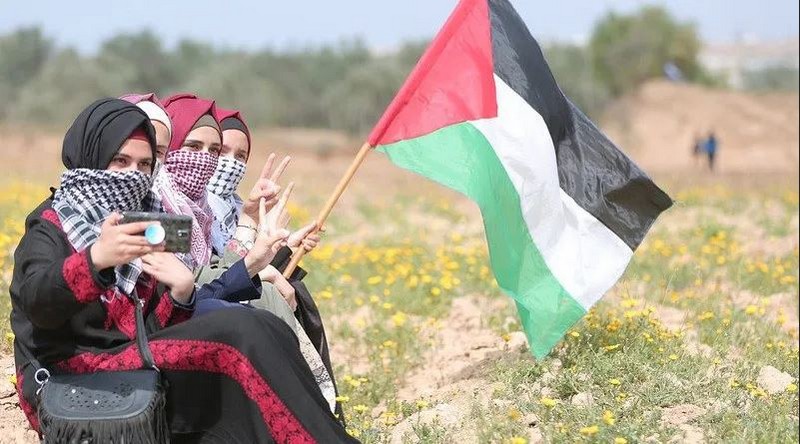
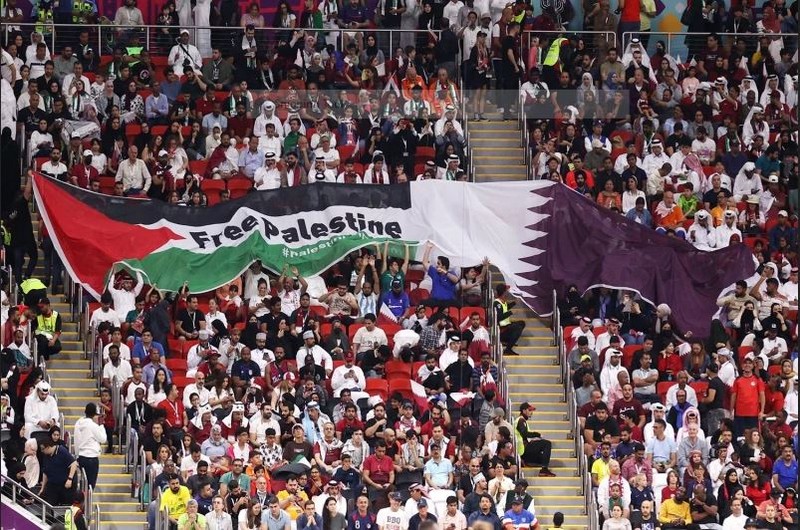
Palestinian factions sign reconciliation agreement in Algeria

Hamas, Fatah and 12 other Palestinian groups agree to hold legislative and presidential elections within one year.

Rival Palestinian factions meeting in Algiers for talks mediated by the Algerian government have agreed on a reconciliation deal that aims to resolve 15 years of discord through new elections in the occupied Palestinian territories.

The agreement was signed by senior Fatah leader Azzam al-Ahmad; chief of the Hamas political bureau, Ismail Haniya; and the secretary general of the Popular Front for the Liberation of Palestine, Talal Naji.

“This is a historical moment, through which we see Jerusalem,” Haniya said before he thanked Algerian President Abdulmajeed Tabboune for his country’s efforts in sponsoring the talks.

For his part, al-Ahmad said: “We are proud to stand in this moment, under the auspices of President Abdulmajeed Tabboune, … to sign this deal and get rid of this [political] split and cancer that has entered the Palestinian body.”

“As Fatah, we pledge to be the first to execute this agreement,” he added.

Other Palestinian figures who were invited to sign the document included Ahmed Majdalani, a senior member of the Palestine Liberation Organization (PLO); Mustafa Barghouti, the secretary general of the Palestinian National Initiative; and Bassam al-Salhi, secretary general of the Palestinian People’s Party.

The agreement was signed after the leaders of 14 factions, including President Mahmoud Abbas’s Fatah movement and Hamas, the group that governs the besieged Gaza Strip, held two days of talks in the run-up to an Arab summit in Algiers next month.

Israel-Palestine: The Politics at Play | Start Here

According to Hamas spokesman Hazem Qassem, the deal does not include a section on forming a unity government but it does include clauses on developing the structures of the PLO, forming its national council and holding legislative and presidential elections.

There was scepticism back home, however, that they would deliver any concrete changes after previous promises of elections failed to materialise.

‘High hopes’
Under the agreement, the parties promised to “speed up the holding of presidential and legislative elections in all of the Palestinian territories including Jerusalem” to within a year.

It also recognised the PLO, of which Abbas is the head, as the sole representative of the Palestinian people.

Political schisms since 2007 have weakened Palestinian aspirations for statehood and have prevented presidential and parliamentary elections from taking place since ballots were last cast in 2005 and 2006.

Hamas’s legislative victory then laid the ground for the political rupture. The group, which opposes peace with Israel, seized control of the Gaza Strip in 2007 while Abbas’s Western-backed Palestinian Authority stayed dominant in the occupied West Bank. Since then, Gaza has been under a brutal Israeli-Egyptian blockade and has faced at least three Israeli assaults.

Palestinian youth voices frustration over old electoral systems

“We have very high hopes this time around, especially because of the latest Israeli assault on our people,” Qassem told Al Jazeera.

Fatah and Hamas have previously attempted to resolve their difference in several rounds of talks and even agreed to form an interim government in the past, but a reconciliation has yet to materialise.

In the occupied Palestinian territories, people have been following the talks in Algeria with little optimism that an agreement will deliver change.

Tebboune wants to use next month’s Arab League summit – the first since before the COVID-19 pandemic – to cement his country’s place as a regional heavyweight. It has held talks for months with Palestinian factions to pave the way for a deal.

Renewed demand for Algerian oil and gas and the end of mass street protests that rocked the country in 2019 and 2020 have bolstered its confidence on the international stage.

However, its ongoing dispute with neighbouring Morocco, which has impacted both countries’ relations with major European states, has overshadowed the run-up to the summit.

13 October 2022

Source: Al Jazeera and news agencies

Intensified Palestinian resistance

Palestine Update 601

The Electronic Intifada has narrated how events in the occupied West Bank show how the intensifying Palestinian liberation struggle is being met with Israel’s repressive and vicious violence. Clearly the Palestinian struggle has entered a new political space. The same source also describes how previously extremist fringe settlers now see themselves being advocated for and supported at the highest levels of the Israeli government. They have been “emboldened and (are almost) beyond the restraint of the army”. The Palestinian Authority is now ineffectual beyond recognition. Rather, it is viewed as an obedient servant to its Israel masters. Palestinians question its raison d’être because it serves no tangible purpose for the Palestinian people. Electronic Intifada also points out how “in a situation of complete Israeli impunity, and only empty gestures by international parties towards a nonexistent peace process, the grim statistic of more than 100 Palestinians killed in the West Bank so far this year foretells the even worse violence likely to come”.

In a further report from Middle East Eye: “Flare-ups were reported across the occupied West Bank, with confrontations between Palestinians and Israeli troops accompanied by attacks by Jewish settlers. In the Shuafat camp, which Israeli troops have locked down for five days following a deadly shooting at a nearby checkpoint, violence continued till the early hours of the morning. These were sparked by Israeli troops storming homes belonging to the Tamimi family, a member of which is suspected by Israel of killing an Israeli soldier at the checkpoint. Three Tamimis were arrested. Israeli forces fired tear gas inside the homes, with several people inside suffering injuries from choking…Residents of Shuafat said their civil obedience action and protests will continue until Israeli forces end all restrictive measures against them. “The occupation army is imposing a policy of collective revenge against the camp’s residents, and this has cost us a lot financially and psychologically.” Meanwhile, settler attacks escalated on Palestinian villages located near Israeli settlements across the West Bank. Settlers attacked poultry farms and torched three of them, which led to the deaths of 30,000 birds. They also destroyed olive trees in the area, leading to confrontations with residents. There were also settler-soldier assaults Palestinian houses and gun fights erupted overnight. All of these acts of extreme oppression are not going unchallenged. “Hundreds of Palestinians confronted Israeli security forces across occupied East Jerusalem overnight as Israeli soldiers, using tear gas and stun grenades, made several arrests. The IOF siege on Shoafat united the Arab part of the city. Armed resistance against Israeli incursions is mostly concentrated in Jenin and Nablus. But Palestinians on the ground say that could quickly change”.
Meanwhile, in a ground-breaking agreement, Hamas, Fatah and 12 other Palestinian groups have agreed to hold legislative and presidential elections within one year. Fingers crossed! Fairly often, such agreements have been broken and nullified from the colonial entity and internal frictions and interests.

Meanwhile, a report from the Palestinian Prisoners Society reported that thirty Palestinian administrative detainees in the Israeli occupation prisons are still on an open-ended hunger strike for the 15th day in protest of their unfair detention without charges or trial. 28 of the 30 hunger-striking detainees have been placed in solitary confinement in the Israeli prison of Ofer ever since they started the hunger strike. The group asserts that if Israel executes more administrative detention orders, more prisoners will be expected to join the strike.

Please disseminate the news in this newsletter widely. It is vital because it explains a deepening and firm resistance against a brutal military assault on civil rights. On behalf of MLN Palestine Updates

Ranjan Solomon

17 October 2022

Source: palestineupdates.com

The Thin Red Line: NATO Can’t Afford to Lose Kabul and Kiev

Russia will not allow the Empire to control Ukraine, whatever it takes. That’s intrinsically linked to the future of the Greater Eurasia Partnership.

By Pepe Escobar

Let’s start with Pipelineistan. Nearly seven years ago, I showed how Syria was the ultimate Pipelineistan war.

Damascus had rejected the – American – plan for a Qatar-Turkey gas pipeline, to the benefit of Iran-Iraq-Syria (for which a memorandum of understanding was signed).

What followed was a vicious, concerted “Assad must go” campaign: proxy war as the road to regime change. The toxic dial went exponentially up with the instrumentalization of ISIS – yet another chapter of the war of terror (italics mine). Russia blocked ISIS, thus preventing regime change in Damascus. The Empire of Chaos-favored pipeline bit the dust.

Now the Empire finally exacted payback, blowing up existing pipelines – Nord Stream (NS) and Nord Steam 2 (NS2) – carrying or about to carry Russian gas to a key imperial economic competitor: the EU.

We all know by now that Line B of NS2 has not been bombed, or even punctured, and it’s ready to go. Repairing the other three – punctured – lines would not be a problem: a matter of two months, according to naval engineers. Steel on the Nord Streams is thicker than on modern ships. Gazprom has offered to repair them – as long as Europeans behave like grown-ups and accept strict security conditions.

We all know that’s not going to happen. None of the above is discussed across NATOsan media. That means that Plan A by the usual suspects remains in place: creating a contrived natural gas shortage, leading to the de-industrialization of Europe, all part of the Great Reset, rebranded “The Great Narrative”.

Meanwhile, the EU Muppet Show is discussing the ninth sanction package against Russia. Sweden refuses to share with Russia the results of the dodgy intra-NATO “investigation” of itself on who blew up the Nord Streams.

At Russian Energy Week, President Putin summarized the stark facts.

Europe blames Russia for the reliability of its energy supplies even though it was receiving the entire volume it bought under fixed contracts.

The “orchestrators of the Nord Stream terrorist attacks are those who profit from them”.

Repairing Nord Stream strings “would only make sense in the event of continued operation and security”.

Buying gas on the spot market will cause a €300 billion loss for Europe.

The rise in energy prices is not due to the Special Military Operation (SMO), but to the West’s own policies.

Yet the Dead Can Dance show must go on. As the EU forbids itself to buy Russian energy, the Brussels Eurocracy skyrockets their debt to the financial casino. The imperial masters laugh all the way to the bank with this form of collectivism – as they continue to profit from using financial markets to pillage and plunder whole nations.

Which bring us to the clincher: the Straussian/neo-con psychos controlling Washington’s foreign policy eventually might – and the operative word is “might” – stop weaponizing Kiev and start negotiations with Moscow only after their main industrial competitors in Europe go bankrupt.

But even that would not be enough – because one of NATO’s key “invisible” mandates is to capitalize, whatever means necessary, on food resources across the Pontic-Caspian steppe: we’re talking about 1 million km2 of food production from Bulgaria all the way to Russia.

Judo in Kharkov

The SMO has swiftly transitioned into a “soft” CTO (Counter-Terrorist Operation) even without an official announcement. The no-nonsense approach of the new overall commander with full carte blanche from the Kremlin, General Surovikin, a.k.a. “Armageddon”, speaks for itself.

There are absolutely no indicators whatsoever pointing to a Russian defeat anywhere along the over 1,000 km-long frontline. The spun-to-death withdrawal from Kharkov may have been a masterstroke: the first stage of a judo move that, cloaked in legality, fully developed after the terrorist bombing of Krymskiy Most – the Crimea Bridge.

Let’s look at the retreat from Kharkov as a trap – as in Moscow graphically demonstrating “weakness”. That led the Kiev forces – actually their NATO handlers – to gloat about Russia “fleeing”, abandon all caution, and go for broke, even embarking on a terror spiral, from the assassination of Darya Dugina to the attempted destruction of Krymskiy Most.

In terms of Global South public opinion, it’s already established that General Armageddon’s Daily Morning Missile Show is a legal (italics mine) response to a terrorist state. Putin may have sacrificed, for a while, a piece on the chessboard – Kharkov: after all, the SMO mandate is not to hold terrain, but to demilitarize Ukraine.

Moscow even won post-Kharkov: all the Ukrainian military equipment accumulated in the area was thrown into offensives, just for the Russian Army to merrily engage in non-stop target practice.

And then there’s the real clincher: Kharkov set in motion a series of moves that allowed Putin to eventually go for checkmate, via the missile-heavy “soft” CTO, reducing the collective West to a bunch of headless chickens.

In parallel, the usual suspects continue to relentlessly spin their new nuclear “narrative”. Foreign Minister Lavrov has been forced to repeat ad nauseam that according to Russian nuclear doctrine, a strike may only happen in response to an attack “which endangers the entire existence of the Russian Federation.”

The aim of the D.C. psycho killers – in their wild wet dreams – is to provoke Moscow into using tactical nuclear weapons in the battlefield. That was another vector in rushing the timing of the Crimea Bridge terror attack: after all British intel plans had been swirling for months. That all came to nought.

The hysterical Straussian/neocon propaganda machine is frantically, pre-emptively, blaming Putin: he’s “cornered”, he’s “losing”, he’s “getting desperate” so he’ll launch a nuclear strike.

It’s no wonder the Doomsday Clock set up by the Bulletin of the Atomic Scientists in 1947 is now placed at only 100 seconds from midnight. Right on “Doom’s doorstep”.

This is where a bunch of American psychos is leading us.

Life at Doom’s doorstep

As the Empire of Chaos, Lies and Plunder is petrified by the startling Double Fail of a massive economic/military attack, Moscow is systematically preparing for the next military offensive. As it stands, it’s clear that the Anglo-American axis will not negotiate. It has not even tried for the past 8 years, and it’s not about to change course, even incited by an angelic chorus ranging from Elon Musk to Pope Francis.

Instead of going Full Timur, accumulating a pyramid of Ukrainian skulls, Putin has summoned eons of Taoist patience to avoid military solutions. Terror on the Crimea Bridge may have been a game-changer. But the velvet gloves are not totally off: General Armageddon’s daily aerial routine may still be seen as a – relatively polite – warning. Even in his latest landmark speech, which contained a savage indictment of the West, Putin made clear he’s always open for negotiations.

Yet by now, Putin and the Security Council know why the Americans simply can’t negotiate. Ukraine may be just a pawn in their game, but it’s still one of Eurasia’s key geopolitical nodes: whoever controls it, enjoys extra strategic depth.

The Russians are very much aware that the usual suspects are obsessed with blowing up the complex process of Eurasia integration – starting with China’s BRI. No wonder important instances of power in Beijing are “uneasy” with the war. Because that’s very bad for business between China and Europe via several trans-Eurasian corridors.

Putin and the Russian Security Council also know that NATO abandoned Afghanistan – an absolutely miserable failure – to place all their chips on Ukraine. So losing both Kabul and Kiev will be the ultimate mortal blow: that means abandoning the 21st Eurasian Century to the Russia-China-Iran strategic partnership.

Sabotage – from the Nord Streams to Krymskiy Most – gives away the desperation game. NATO’s arsenals are virtually empty. What’s left is a war of terror: the Syrianization, actually ISIS-zation of the battlefield. Managed by braindead NATO, acted on the terrain by a cannon fodder horde sprinkled with mercenaries from at least 34 nations.

So Moscow may be forced to go all the way – as the Totally Unplugged Dmitry Medvedev revealed: now this is about eliminating a terrorist regime, totally dismantle its politico-security apparatus and then facilitate the emergence of a different entity. And if NATO still blocks it, direct clash will be inevitable.

NATO’s thin red line is they can’t afford to lose both Kabul and Kiev.

Yet it took two acts of terror – on Pipelineistan and on Crimea – to imprint a much starker, burning red line: Russia will not allow the Empire to control Ukraine, whatever it takes. That’s intrinsically linked to the future of the Greater Eurasia Partnership. Welcome to life at Doom’s doorstep.

Pepe Escobar, born in Brazil, is a correspondent and editor-at-large at Asia Times and columnist for Consortium News and Strategic Culture.

13 October 2022

Source: www.globalresearch.ca

The U.S. Is Leading the World Into the Abyss

By Edward Curtin

A few years after WW I, the poet T.S. Eliot opened his famous poem “The Wasteland” with these words: “April is the cruelest month … “ I think he may be wrong, for this October may be the cruelest month of all, followed by November. Unprecedented. You can hear the clicking and grating of spades if your antennae are attuned.

We are on the brink of ominous events created by the U.S. war against Russia. Yet so many people prefer to turn away and swallow the lies that the U.S. wants peace and not war and is the aggrieved party in the crisis.

A friend of mine, who is constantly charging me with having turned right-wing because of my writing that accuses many traditional liberal/leftists of buying the national security state’s propaganda on the JFK assassination, “9/11,” Syria, Ukraine, Covid-19, censorship, the “New” Cold War, etc., and whose go-to news sources are The Guardian, CNN, The New York Times, NPR, ABC, seems oblivious to the fact that right and left have become useless terms and that these media are all mouthpieces for the CIA and their intelligence allies in the new Cold War; that the so-called right and left are joined at the hip with their obsession with Pax Americana.

There are no right and left anymore; there are only free and independent voices or those of the caged parrots repeating what they have been taught to say:

“Polly wants a war!” “Polly wants a war.”

I am afraid that I will never convince this dear friend otherwise and I find that depressing. Yet I know such views are shared by millions of others and that even if nuclear war breaks out their minds will not change. Propaganda runs very, very deep into their psyches, and they desperately want to believe. Hitler said it clearly in Mein Kampf:

The masses … are always more easily corrupted in the deeper strata of their emotional nature than consciously or voluntarily; and thus in the primitive simplicity of their minds they more readily fall victims to the big lie than the small lie, since they themselves often tell small lies in little matters but would be ashamed to resort to large-scale falsehoods.

Hitler learned so much about “manufacturing consent” from his American teachers Edward Bernays, Walter Lippmann, et al., who accomplished so much brainwashing of the American people. They were all masters of the lie and millions continue to believe their followers.

If nuclear weapons are again used (and everyone knows the only country to have used them), these believers will blame their use on Russia, even though Russia has made it very clear that it would only resort to such weapons if the country’s existence were threatened, while the U.S. continues affirming its right to preemptively use nuclear weapons when it so chooses.

And even if nuclear weapons are not used, the recent sabotage of the Nord Stream pipelines and the bombing of the Crimean Bridge, both clearly the work of U.S./NATO/Ukrainian forces, have raised the ante considerably. The door to hell has just been opened wider, and I suspect not by accident, as the U.S. elections approach.

In his recent television talk, Vladimir Putin made Russia’s nuclear position very clear, mentioning nuclear weapons only in the context of Western threats of using them, as Moon of Alabama reported.

Putin said:

They [the U.S./NATO/Ukraine] have even resorted to the nuclear blackmail. I am referring not only to the Western-encouraged shelling of the Zaporozhye Nuclear Power Plant, which poses a threat of a nuclear disaster, but also to the statements made by some high-ranking representatives of the leading NATO countries on the possibility and admissibility of using weapons of mass destruction – nuclear weapons – against Russia.

I would like to remind those who make such statements regarding Russia that our country has different types of weapons as well, and some of them are more modern than the weapons NATO countries have. In the event of a threat to the territorial integrity of our country and to defend Russia and our people, we will certainly make use of all weapon systems available to us. This is not a bluff.

The citizens of Russia can rest assured that the territorial integrity of our Motherland, our independence and freedom will be defended – I repeat – by all the systems available to us. Those who are using nuclear blackmail against us should know that the wind rose can turn around.

When the long-planned U.S. war against Russia, so obvious to anyone who sees past the propagandist headlines and studies the matter, soon explodes into full-scale open war for all to see in horror, as it will, these true believers will dig in their heels even more.  They will find new reasons to justify their faith, and it is akin to religious faith.  The infamous Rand Corporation’s 2019 report cited above, “Overextending and Unbalancing Russia,” cites the following as part of the war process, as summarized in the Strategic Culture article, but it will have no impact on the faithful believers:

  • Providing lethal military aid to Ukraine
  • Mobilizing European NATO members
  • Imposing deeper trade and economic sanctions
  • Increasing U.S. energy production for export to Europe
  • Expanding Europe’s import infrastructure to receive U.S. liquefied natural gas (LNG) supplies

I keep thinking of the U.S. false flag Gulf of Tonkin “incident” in 1964 and how effective that was in convincing the gullible population and the complicit U.S. Congress – by a vote of 88 to 2 in the Senate and 414 to 0 in the House of Representatives (try to imagine such criminals) – that U.S. destroyers were innocently attacked by the North Vietnamese and that Lyndon Johnson should be given the authority to respond to repel “communist aggression,” which, of course, he did by bombing North Vietnam and sending 500,000 troops to savagely destroy Vietnam and Vietnamese nearly 9,000 miles from the United States.  Johnson simply lied to wage war and Biden is doing the same today.  But far too many people love their leaders’ lies because it allows them to secretly feel justified in the lies they themselves tell in personal matters.  And what may be true of the distant past, can’t be true today.

In 1965, the folk singer Tom Paxton put Johnson’s lies to music with “Lyndon Johnson Told the Nation.”  In those days, art was used as a weapon against U.S. propaganda.

Today we can ask: Where have all the artists gone?

We know that the U.S. has, for the time being, abandoned sending hundreds of thousands of troops into another country; now it is drones, air warfare, special forces, the CIA, mercenaries, terrorists, and intermediaries such as the Ukrainian conscripts, Azov Nazis, and NATO surrogates.  Such was the lesson of Vietnam when the draft led to massive protests and resistance.  Now war is waged less obviously and the propaganda is more extensive and constant as a result of digital media.

There are many such examples of U.S. treachery, most notably the attacks of September 11, 2001, but such history is only open to those who take it upon themselves to investigate.

Now there is the corrupt Ukrainian U.S. puppet government, which is nearly 6,000 miles from the United States, and must be defended from Russian “aggression,” just like the corrupt South Vietnamese U.S. puppet government was.

To those who buy the mass media propaganda, I ask: Why is the U.S.A. always fighting to kill people so far from its shores?

Doesn’t it sound a bit odd that our wonderful leaders destroyed Libya, Vietnam, Serbia, the Philippines, Iraq, Syria, Afghanistan, etc., countries so far away, and now that Russia defends itself from U.S./NATO encroachment a few miles from its borders, it is accused of being the evil aggressors and Vladimir Putin called another Hitler like all the leaders of the countries we attacked?

Have you completely lost your ability to think?  Or do you, like little children, actually believe the disembodied newsreaders who deliver your prepackaged television propaganda?

If I ask such an obvious question, does that make me a “right-winger”?

If I state two facts: that Donald Trump – whom I consider despicable and part of the divide and conquer game as Biden’s flip side, and have said so – did not start a war against Russia and that Russia-gate was a Democratic propaganda stunt and is false, does that make me a right-winger?  My friend would say so. Do telling facts define your political allegiances, whether they be facts about Republicans or Democrats?

No.  I will tell you what it makes me: A disgusted human being sickened by all the lies and people’s gullibility after decades of evidence that should have awakened them to the truth about all these politicians and the war against Russia underway.  I have lost patience with it.  For decades I have been writing about such propaganda to no avail.  Yes, those who tended to agree with me might have moved a little closer to my arguments, but the vast majority have not budged an iota.

I wish it were different. It is my desire. Eduardo Galeano, the Uruguayan sage of the Americas, who knew what was up and what was down when he wrote Upside Down: A Primer for the Looking-Glass World in 1998, said this about Desire:

A man found Aladdin’s lamp lying around. Since he was a big reader, the man recognized it and rubbed it right away. The genie appeared, bowed deeply, and said, ‘At your service master. Your wish is my command. But there will be only one wish.

Since he was a good boy, the man said, ‘I wish for my dead mother to be brought back.’

The genie made a face. ‘I’m sorry, master, but that wish is impossible. Make another.’

Since he was a nice guy, the man said, ‘I wish the world would stop spending money to kill people.’

The genie swallowed. ‘Uhh … What did you say your mother’s name was?’

The desire for peace and security is a universal dream.  Sometimes it is hidden in people’s hearts because they have swallowed the lies of the evil ones who wish to wage war against those who insist on security for their country, as Russians are demanding today.

It is very frustrating to try to wake people out of their manufactured consent and the insouciance that follows as we are being led into the abyss.

But I will not stop trying.  Galeano did not.  He left us these words of universal resistance:

We shall be compatriots and contemporaries of all who have a yearning for justice and beauty, no matter where they were born or when they lived, because the borders of geography and time shall cease to exist.

We must save the world before it is too late.

Edward Curtin is a prominent author, researcher and sociologist based in Western Massachusetts.

10 October 2022

Source: www.globalresearch.ca

Can Europe Afford to Turn a Blind Eye to Evidence of a US Role in Pipeline Blasts?

By Jonathan Cook

6 Oct 2022 – The sabotage of the two Nord Stream pipelines leaves Europeans certain to be much poorer and colder this winter, and was an act of international vandalism on an almost unimaginable scale. The attacks severed Russian gas supplies to Europe and caused the release of enormous quantities of methane gas, the prime offender in global warming.

This is why no one is going to take responsibility for the crime – and most likely no one will ever be found definitively culpable.

Nonetheless, the level of difficulty and sophistication in setting off blasts at three separate locations on the Nord Stream 1 and 2 pipelines overwhelmingly suggests a state actor, or actors, was behind it.

Western coverage of the attacks has been decidedly muted, given that this hostile assault on the globe’s energy infrastructure is unprecedented – overshadowing even the 9/11 attacks.

The reason why there appears to be so little enthusiasm to explore this catastrophic event in detail – beyond pointing a finger in Russia’s direction – is not difficult to deduce.

It is hard to think of a single reason why Moscow would wish to destroy its own energy pipelines, valued at $20 billion, or allow in seawater, possibly corroding them irreversibly.

The attacks deprive Russia of its main gas supply lines to Europe – and with it, vital future revenues – while leaving the field open to competitors.

Moscow loses its only significant leverage over Germany, its main buyer in Europe and at the heart of the European project, when it needs such leverage most, as it faces down concerted efforts by the United States and Europe to drive Russian soldiers out of Ukraine.

Even any possible temporary advantage Moscow might have gained by demonstrating its ruthlessness and might to Europe could have been achieved just as effectively by simply turning off the spigot to stop supplies.

Media taboo

This week, distinguished economist Jeffrey Sachs was invited on Bloomberg TV to talk about the pipeline attacks. He broke a taboo among Western elites by citing evidence suggesting that the US, rather than Russia, was the prime suspect.

Western media like the Associated Press have tried to foreclose such a line of thinking by calling it a “baseless conspiracy theory” and Russian “disinformation”. But, as Sachs pointed out, there are good reasons to suspect the US above Russia.

There is, for example, the threat to Russia made by US president Joe Biden back in early February, that “there will be no longer a Nord Stream 2” were Ukraine to be invaded. Questioned by a reporter about how that would be possible, Biden asserted: “I promise you, we will be able to do that.”

Biden was not speaking out of turn or off the cuff. At the same time, Victoria Nuland, a senior diplomat in the Biden administration, issued Russia much the same warning, telling reporters: “If Russia invades Ukraine, one way or another, Nord Stream 2 will not move forward.”

That is the same Nuland who was intimately involved back in 2014 in behind-the-scenes maneuvers by the US to help overthrow an elected Ukrainian government that led to the installation of one hostile to Moscow. It was that coup that triggered a combustible mix of outcomes – Kyiv’s increasing flirtation with NATO, as well as a civil war in the east between Ukrainian ultra-nationalists and ethnic Russian communities – that provided the chief rationale for President Vladimir Putin’s later invasion.

And for those still puzzled by what motive the US might have for perpetrating such an outrage, Nuland’s boss helpfully offered an answer last Friday. Secretary of State Anthony Blinken described the destruction of the Nord Stream pipelines, and the consequent environmental catastrophe, as offering “tremendous strategic opportunity for the years to come”.

Blinken set out a little too clearly the “cui bono” – “who profits?” – argument, suggesting that Biden and Nuland’s earlier remarks were not just empty, pre-invasion posturing by the White House.

Blinken celebrated the fact that Europe would be deprived of Russian gas for the foreseeable future and, with it, Putin’s leverage over Germany and other European states. Before the blasts, the danger for Washington had been that Moscow might be able to advance favorable negotiations over Ukraine rather than perpetuate a war Biden’s defense secretary, Lloyd Austin, has already stated is designed to “weaken” Russia at least as much as liberate Ukraine.

Or, as Blinken phrased it, the attacks were “a tremendous opportunity once and for all to remove the dependence on Russian energy, and thus to take away from Vladimir Putin the weaponization of energy as a means of advancing his imperial designs.”

Though Blinken did not mention it, it was also a “tremendous opportunity” to make Europe far more dependent on the US for its gas supplies, shipped by sea at much greater cost to Europe than through Russia’s pipelines. American energy firms may well be the biggest beneficiaries from the explosions.

Meddling in Ukraine

US hostility towards Russian economic ties with Europe is not new. Long before Russia’s invasion, Washington had been quite openly seeking ways to block the Nord Stream pipelines.

One of Blinken’s recent predecessors, Condoleezza Rice, expressed the Washington consensus way back in 2014 – at the same time as Nuland was recorded secretly meddling in Ukraine, discussing who should be installed as president in place of the elected Ukrainian government that was about to be ousted in a coup.

Speaking to German TV, Rice said the Russian economy was vulnerable to sanctions because 80% of its exports were energy-related. Proving how wrong-headed American foreign policy predictions often are, she asserted confidently: “People say the Europeans will run out of energy. Well, the Russians will run out of cash before the Europeans run out of energy.”

Breaking Europe’s reliance on Russian energy was, in Rice’s words, “one of the few instruments we have… Over the long term, you simply want to change the structure of energy dependence.”

Condoleezza Rice: Gas und Ölkrieg gegen Putin

She added: “You [Germany] want to depend more on the North American energy platform, the tremendous bounty of oil and gas that we’re finding in North America. You want to have pipelines that don’t go through Ukraine and Russia.”

Now, the sabotage of Nord Stream 1 and 2 has achieved a major US foreign-policy goal overnight.

It has also preempted the pressure building in Germany, through mass protests and mounting business opposition, that might have seen Berlin reverse course on European sanctions on Russia and revive gas supplies – a shift that would have undermined Washington’s goal of “weakening” Putin. Now, the protests are redundant. German politicians cannot cave in to popular demands when there is no pipeline through which they can supply their population with Russian gas.

‘Thank you, USA’

One can hardly be surprised that European leaders are publicly blaming Russia for the pipeline attacks. After all, Europe falls under the US security umbrella and Russia has been designated by Washington as Official Enemy No 1.

But almost certainly, major European capitals are drawing different conclusions in private. Like Sachs, their officials are examining the circumstantial evidence, considering the statements of self-incrimination from Biden and other officials, and weighing the “cui bono” arguments.

And like Sachs, they are most likely inferring that the prime suspect in this case is the US – or, at the very least, that Washington authorized an ally to act on its behalf. Just as no European leader would dare to publicly accuse the US of carrying out the attacks, none would dare stage such an attack without first getting the nod from Washington.

That was evidently the view of Radek Sikorski, the former foreign and defence minister of Poland, who tweeted a “Thank you, USA” with an image of the bubbling seas where one pipeline was ruptured.

Sikorski, it should be noted, is as well-connected in Washington as he is in Poland, a European state bitterly hostile to Moscow as well as its pipelines. His wife, Anne Applebaum, is a staff writer at The Atlantic magazine and an influential figure in US policy circles who has long advocated for NATO and EU expansion into Eastern Europe and Ukraine.

Sikorski hurriedly took down the tweet after it went viral.

But if Washington is the chief suspect in blowing up the pipelines, how should Europe read its relations with the US in the light of that deduction? And what does such sabotage indicate to Europe’s leaders about how Washington might perceive the stakes in Europe? The answers are not pretty.

Demand for fealty

If the US was behind the attacks, it suggests not only that Washington is taking the Ukraine war into new, more dangerous territory, ready to risk drawing Moscow into a round of tit-for-tats that could quickly escalate into a nuclear confrontation. It also suggests that ties between the US and Europe have entered a decisive new stage, too.

Or put another way, Washington would have done more than move out of the shadows, turning its proxy war in Ukraine into a more direct, hot war with Russia. It would indicate that the US is willing to turn the whole of Europe into a battlefield, and bully, betray and potentially sacrifice the continent’s population as cruelly as it has traditionally treated weak allies in the Global South.

In that regard, the pipeline ruptures are most likely interpreted by European leaders as a signal: that they should not dare to consider formulating their own independent foreign policy, or contemplate defying Washington. The attacks indicate that the US requires absolute fealty, that Europe must prostrate itself before Washington and accept whatever dictates it imposes.

That would amount to a dramatic reversal of the Marshall Plan, Washington’s ambitious funding of the rebuilding of Western Europe after the Second World War, chiefly as a way to restore the market for rapidly expanding US industries.

By contrast, this act of sabotage strangles Europe economically, driving it into recession, deepening its debt and making it a slave to US energy supplies. Effectively, the Biden administration would have moved from offering European elites juicy carrots to now wielding a very large stick at them.

Pitiless aggression

For those reasons, European leaders may be unwilling to contemplate that their ally across the Atlantic could behave in such a cruel manner against them. The implications are more than unsettling.

The conclusion European leaders would be left to draw is that the only justification for such pitiless aggression is that the US is maneuvering to avoid the collapse of its post-war global dominance, the end of its military and economic empire.

The destruction of the pipelines would have to be understood as an act of desperation: a last-ditch preemption by Washington of the loss of its hegemony as Russia, China and others find common cause to challenge the American behemoth, and a ferocious blow against Europe to hammer home the message that it must not stray from the fold.

At the same time, it would shine a different, clearer light on the events that have been unfolding in and around Ukraine in recent years:

  • NATO’s relentless expansion across Eastern Europe despite expert warnings that it would eventually provoke Russia.
  • Biden and Nuland’s meddling to help oust an elected Ukrainian government sympathetic to Moscow.
  • The cultivation of a militarized Ukrainian ultra-nationalism pitted against Russia that led to bloody civil war against Ukraine’s own ethnic Russian communities.
  • And NATO’s exclusive focus on escalating the war through arms supplies to Ukraine rather than pursuing and incentivizing diplomacy.

None of these developments can be stripped out of a realistic assessment of why Russia responded by invading Ukraine.

Europeans have been persuaded that they must give unflinching moral and military support to Ukraine because it is the last rampart defending their homeland from a merciless Russian imperialism.

But the attack on the pipelines hints at a more complex story, one in which European publics need to stop fixing their gaze exclusively at Russia, and turn round to understand what has been happening behind their backs.

Jonathan Cook is an award-winning British journalist based in Nazareth, Israel, since 2001.

10 October 2022

Source: www.transcend.org

Iranian and Turkish Moves to Join Shanghai Cooperation Organization Raise Its Profile

By John P. Ruehl

7 Out 2022 – Held in Samarkand, Uzbekistan, from September 15 to 16, the 2022 summit of the Shanghai Cooperation Organization (SCO) Heads of State Council demonstrated that the SCO was continuing to evolve into a viable international political congregation independent from the West.

Beginning in the early 1800s, international organizations (IOs) began to emerge as modest arbiters of European affairs. But during and after World War II, new IOs established themselves as far more prominent actors on a global scale. The United Nations (UN), the Arab League, the Organization of Petroleum Exporting Countries (OPEC), the Association of Southeast Asian Nations (ASEAN), and several other IOs were created to manage the affairs of their member states.

After the Soviet collapse, more IOs were created to manage the independence of new states, globalization, and regional cooperation. The Commonwealth of Independent States (CIS), created in 1991, attempted to coordinate military, economic, and political policies between post-Soviet states. The European Union (EU) and the African Union (AU), created in 1993 and 2002, respectively, bound member states more forcefully to common economic and political norms. Other IOs, like the Arctic Council (1996) and Asia Cooperation Dialogue (2002), aimed to foster broader regional cooperation.

Most new international organizations meshed neatly with the Western-led liberal world order. But in 2001, the formation of the Shanghai Cooperation Organization (SCO) was formally announced, and it established itself as an exclusionary outlier. Originally known as the Shanghai Five when it was created in 1996, it included China, Russia, Kazakhstan, Kyrgyzstan, and Tajikistan, with Uzbekistan later joining when it evolved into the SCO in 2001.

The SCO was created partly to help coordinate a new era of peaceful relations between Moscow and Beijing and to manage their coalescing interests in Central Asian states. In addition, combatting the “Three Evils” of extremism, separatism, and terrorism were major priorities for the organization, which included data and intelligence sharing and common military drills among its member states.

Over time, the SCO began to embrace greater political and economic integration. Support for autocratic rule and limiting criticism of human rights violations set it apart from other Western-aligned IOs, with the SCO also overseeing the growth of joint energy projects, the fostering of trade agreements, and the introduction of the SCO Interbank Consortium in 2005 “to organize a mechanism for financing and banking services in investment projects supported by the governments of the SCO member states.”

But the organization’s most pressing vocation was facilitating a multipolar world order. Investing in an independent forum for economic, political, and military affairs outside of Western influence became a key component of Russian and Chinese attempts to reduce Western power in global affairs.

Russia and China have also developed complementary mechanisms to the SCO, which have helped decentralize its mission. Following the blacklisting of several Russian banks from the Society for Worldwide Interbank Financial Telecommunication (SWIFT) in 2014, for example, the Kremlin approved the creation of the System for Transfer of Financial Messages (SPFS) to replicate SWIFT and introduced the National Payment Card System (now known as Mir), while China created the Cross-Border Interbank Payment System (CIPS).

These initiatives even proved attractive to states that were more aligned with the Western-led global order. India and Pakistan began SCO accession talks in 2015 and officially joined the organization in 2017. Despite relatively positive relations with the West, India and Pakistan have both faced Western criticism over human rights and democratic backsliding in recent years. India’s introduction of platforms like RuPay in 2012 and Unified Payments Interface, which eroded the traditional dominance of Visa and Mastercard in the country, also complemented SCO’s attempts to reduce Western economic preeminence globally.

At the 2022 summit of the SCO Heads of State Council, Uzbek President Shavkat Mirziyoyev reiterated that the SCO was not an anti-U.S. or anti-NATO alliance. But the organization’s original motive to create a multipolar world was echoed in its Samarkand Declaration, the final declaration of this meeting, and continues to conflict with Washington’s attempts to maintain the U.S.-led world order. According to the declaration, the member states “confirm[ed] their commitment to [the] formation of a more representative, democratic, just and multipolar world order.”

This core stratagem continues to appeal to countries around the world. Alongside the leaders of its eight member states, the SCO invited the presidents of Belarus, Mongolia, and Iran as official observers to the recent summit. Having started its accession process in 2021, Iran signed a memorandum of understanding with the SCO to join the institution by April 2023.

The SCO would likely alleviate Iran’s sense of economic isolation stemming from Western sanctions, a sentiment shared by Iranian officials at the summit and something that was also noted back in 2007. Belarus has also found itself under increasing sanctions in recent years and enhanced its accession procedures to join the SCO in Samarkand.

The presidents of Azerbaijan, Turkmenistan, and Turkey were also invited to the SCO summit as special guests, with Turkish President Recep Tayyip Erdoğan announcing that his country would seek full membership to the SCO. In 2012, Erdoğan joked to Russian President Vladimir Putin about abandoning Turkey’s EU aspirations if Russia would allow them into the SCO. Turkey’s renewed attempt comes at a time when its ties with the rest of the Western world are increasingly strained and could instigate other NATO states, and potentially the EU states, to join the SCO as well.

The SCO has also established strong relations with other IOs. Representatives from ASEAN, the UN, the Russian-dominated CIS, the Collective Security Treaty Organization (CSTO), and the Eurasian Economic Union (EAEU) were invited to the 2022 summit. Notably absent were any representatives from the EU or NATO. Meanwhile, in 2005, the U.S. was rejected from gaining observer status, solidifying the SCO’s status as a bulwark against U.S. influence in Eurasia.

Like all major international organizations, the SCO faces systemic obstacles that hinder its effectiveness and long-term viability. At the recent summit in Uzbekistan, China’s Xi Jinping was welcomed to the country by his Uzbek counterpart, Shavkat Mirziyoyev. Putin, however, was greeted by Uzbek Prime Minister Abdulla Aripov, highlighting Russia’s strained relations with many of the former Soviet states and the growing strength of Beijing over Moscow. Unlike in the CSTO and the EAEU, Russia is not the dominant actor in the SCO, and will increasingly have to contend with China’s predominant authority.

Disputes also remain between SCO member states. India and Pakistan, for example, are afflicted with an ongoing struggle over Kashmir. China and India have their own territorial disputes and have engaged in minor violent skirmishes since India joined the SCO. Additionally, deadly clashes between Kyrgyzstan and Tajikistan erupted during the recent summit, while admitting Armenia and Azerbaijan, both of which are SCO dialogue partners, will only further increase the number of members currently locked in their own territorial disputes.

But the SCO has consistently portrayed itself as a vehicle to supervise these issues. The leaders of Kyrgyzstan and Tajikistan met for talks during the summit to assuage tensions. And since 2002, the Regional Anti-Terrorist Structure (RATS) has encouraged military coordination between member states, with the Indian and Pakistani militaries conducting RATS drills in 2021. More drills between them are planned for October, and while they are aimed primarily at countering unrest from Afghanistan, they are also part of SCO’s attempts to manage relations of member states.

China and Russia have also agreed to “synergize” the Belt and Road Initiative (BRI) and the EAEU to help mitigate possible tension between them, with both Xi and Putin meeting on the sidelines of the 2022 SCO summit and pledging to respect each other’s core interests.

The SCO member states clearly believe the organization can, and has greater potential to, effectively manage their concerns and regional affairs, and its appeal continues to grow. Besides the additional SCO dialogue partners (Cambodia, Nepal, and Sri Lanka), Qatar, Saudi Arabia, and Egypt were granted the status of SCO dialogue partners at the 2022 SCO summit. Myanmar, Bahrain, Kuwait, the United Arab Emirates (UAE), and the Maldives were also granted the status of dialogue partners.

Russian and Chinese influence will fall as more members join, which will also dilute consensus within the organization. But it remains a Beijing and Moscow-led initiative to manage world affairs and to demonstrate that the “international community” is not just the West. With almost half of the world’s population and a quarter of the global GDP, the SCO is increasingly becoming a representative of the Global South.

By pooling together other IOs into an umbrella forum, the SCO can further its goal of challenging the wider Western-dominated IO ecosystem and prevent Washington from setting the global agenda. This will require the constructive management of Russian and Chinese ambitions and the increasingly complex needs of more member states.

John P. Ruehl is an Australian-American journalist living in Washington, D.C. He is a contributing editor to Strategic Policy and a contributor to several other foreign affairs publications.

10 October 2022

Source: www.transcend.org

The Puppets and the Puppet Masters

By The Chris Hedges Report

9 Oct 2022 – Merrick Garland and those who work in the Department of Justice are the puppets, not the puppet masters. They are the façade, the fiction, that the longstanding persecution of Julian Assange has something to do with justice. Like the High Court in London, they carry out an elaborate judicial pantomime. They debate arcane legal nuances to distract from the Dickensian farce where a man who has not committed a crime, who is not a U.S. citizen, can be extradited under the Espionage Act and sentenced to life in prison for the most courageous and consequential journalism of our generation.

The engine driving the lynching of Julian is not here on Pennsylvania Avenue. It is in Langley, Virginia, located at a complex we will never be allowed to surround – the Central Intelligence Agency. It is driven by a secretive inner state, one where we do not count in the mad pursuit of empire and ruthless exploitation. Because the machine of this modern leviathan was exposed by Julian and WikiLeaks, the machine demands revenge.

The United States has undergone a corporate coup d’etat in slow motion. It is no longer a functioning democracy. The real centers of power, in the corporate, military and national security sectors, were humiliated and embarrassed by WikiLeaks. Their war crimes, lies, conspiracies to crush the democratic aspirations of the vulnerable and the poor, and rampant corruption, here and around the globe, were laid bare in troves of leaked documents.

We cannot fight on behalf of Julian unless we are clear about whom we are fighting against. It is far worse than a corrupt judiciary. The global billionaire class, who have orchestrated a social inequality rivaled by pharaonic Egypt, has internally seized all of the levers of power and made us the most spied upon, monitored, watched and photographed population in human history. When the government watches you 24-hours a day, you cannot use the word liberty. This is the relationship between a master and a slave. Julian was long a target, of course, but when WikiLeaks published the documents known as Vault 7, which exposed the hacking tools the CIA uses to monitor our phones, televisions and even cars, he — and journalism itself — was condemned to crucifixion. The object is to shut down any investigations into the inner workings of power that might hold the ruling class accountable for its crimes, eradicate public opinion and replace it with the cant fed to the mob.

I spent two decades as a foreign correspondent on the outer reaches of empire in Latin America, Africa, the Middle East and the Balkans. I am acutely aware of the savagery of empire, how the brutal tools of repression are first tested on those Frantz Fanon called “the wretched of the earth.” Wholesale surveillance. Torture. Coups. Black sites. Black propaganda. Militarized police. Militarized drones. Assassinations. Wars. Once perfected on people of color overseas, these tools migrate back to the homeland. By hollowing out our country from the inside through deindustrialization, austerity, deregulation, wage stagnation, the abolition of unions, massive expenditures on war and intelligence, a refusal to address the climate emergency and a virtual tax boycott for the richest individuals and corporations, these predators intend to keep us in bondage, victims of a corporate neo-feudalism. And they have perfected their instruments of Orwellian control. The tyranny imposed on others is imposed on us.

From its inception, the CIA carried out assassinations, coups, torture, and illegal spying and abuse, including that of U.S. citizens, activities exposed in 1975 by the Church Committee hearings in the Senate and the Pike Committee hearings in the House. All these crimes, especially after the attacks of 9/11, have returned with a vengeance. The CIA is a rogue and unaccountable paramilitary organization with its own armed units and drone program, death squads and a vast archipelago of global black sites where kidnapped victims are tortured and disappeared.

The U.S. allocates a secret black budget of about $50 billion a year to hide multiple types of clandestine projects carried out by the National Security Agency, the CIA and other intelligence agencies, usually beyond the scrutiny of Congress. The CIA has a well-oiled apparatus to kidnap, torture and assassinate targets around the globe, which is why, since it had already set up a system of 24-hour video surveillance of Julian in the Ecuadorean Embassy in London, it quite naturally discussed kidnapping and assassinating him. That is its business. Senator Frank Church — after examining the heavily redacted CIA documents released to his committee — defined the CIA’s “covert activity” as “a semantic disguise for murder, coercion, blackmail, bribery, the spreading of lies and consorting with known torturers and international terrorists.”

All despotisms mask state persecution with sham court proceedings. The show trials and troikas in Stalin’s Soviet Union. The raving Nazi judges in fascist Germany. The Denunciation rallies in Mao’s China. State crime is cloaked in a faux legality, a judicial farce.

If Julian is extradited and sentenced and, given the Lubyanka-like proclivities of the Eastern District of Virginia, this is a near certainty, it means that those of us who have published classified material, as I did when I worked for The New York Times, will become criminals. It means that an iron curtain will be pulled down to mask abuses of power. It means that the state, which, through Special Administrative Measures, or SAMs, anti-terrorism laws and the Espionage Act that have created our homegrown version of Stalin’s Article 58, can imprison anyone anywhere in the world who dares commit the crime of telling the truth.

We are here to fight for Julian. But we are also here to fight against powerful subterranean forces that, in demanding Julian’s extradition and life imprisonment, have declared war on journalism.

We are here to fight for Julian. But we are also here to fight for the restoration of the rule of law and democracy.

We are here to fight for Julian. But we are also here to dismantle the wholesale Stasi-like state surveillance erected across the West.

We are here to fight for Julian. But we are also here to overthrow — and let me repeat that word for the benefit of those in the FBI and Homeland Security who have come here to monitor us — overthrow the corporate state and create a government of the people, by the people and for the people, that will cherish, rather than persecute, the best among us.

Chris Hedges is a Pulitzer Prize–winning journalist who was a foreign correspondent for fifteen years for The New York Times, where he served as the Middle East Bureau Chief and Balkan Bureau Chief.

10 October 2022

Source: www.transcend.org

‘End the War on Journalism and Free Assange’: Thousands Demand Release of WikiLeaks Founder

By Kenny Stancil

9 Oct 2022 – Supporters of WikiLeaks founder Julian Assange held a massive transatlantic protest yesterday to demand freedom for the incarcerated journalist.

In London, thousands of people formed a giant human chain around Britain’s parliament and called for Assange’s immediate release from the nearby maximum-security Belmarsh prison, where he has suffered for years under conditions that experts have condemned as torture.

Meanwhile, in Washington D.C., people gathered outside the Department of Justice (DOJ) and implored Attorney General Merrick Garland to end the United States government’s attempt to extradite Assange, who faces up to 175 years behind bars on espionage charges stemming from his publication of information that exposed war crimes committed by U.S. forces in Afghanistan, Iraq, and elsewhere.

“We did it!” tweeted Stella Assange, wife of the jailed Australian publisher. “Julian will be so energized and thankful for the support that you have shown for him,” she said in a recording thanking those who surrounded the Palace of Westminster—home to the United Kingdom’s House of Commons and House of Lords—on both sides of the River Thames.

Among those who joined London’s human chain to oppose the extradition of Assange was Jeremy Corbyn, a member of the U.K.’s opposition Labour Party. Characterizing the protest as an attempt to “stand up for press freedom everywhere,” Corbyn warned: “If they can silence Assange, they can silence anyone.”

“Julian is a journalist,” Corbyn said in an interview. “Journalism is not a crime. If he is extradited to the U.S.A., any other investigative journalist is at risk.”

That message was echoed by WikiLeaks editor-in-chief Kristinn Hrafnsson. Describing Assange as “an intellectual, a journalist who committed no crime but the crime of telling the truth,” Hrafnsson warned: “Today it’s Julian, tomorrow it’s you.”

In a message to Assange, Corbyn said: “Julian, you’ve made your life’s work that of exposing truths. You’ve taken enormous risks and made enormous sacrifices to do that. And you’ve faced horrible personal abuse and attacks upon your life and your character as a result… But there are millions of people that support you all around the world.”

“We’re just some of those, and we’ve completely surrounded parliament to show our support for you,” Corbyn added. “Our demand [for] the British government: Do not deport you; instead, free you so you can return to your passion, your skill, your genius of being a journalist.”

In a last-ditch effort to avoid extradition to the U.S., Assange’s legal team has filed an appeal at the U.K.’s High Court to block the transfer, which was formally approved by U.K. Home Secretary Priti Patel in June. The High Court is expected to announce whether it will hear the appeal in the coming weeks.

Stella Assange told Reuters on Saturday that British government officials should try to convince their counterparts in the U.S. to withdraw the extradition bid launched in 2019 by then-President Donald Trump’s administration and pursued relentlessly by President Joe Biden’s administration.

“It’s already gone on for three-and-a-half years,” she said. “It is a stain on the United Kingdom and is a stain on the Biden administration.”

On the other side of the Atlantic, Ben Cohen, co-founder of Ben & Jerry’s Ice Cream, was among those who demonstrated outside the DOJ. “It’s time to end the war on journalism and free Assange,” the activist tweeted.

“There’s no democracy without freedom of the press,” Cohen said at the rally. “Because it’s only a press that can hold government accountable. And there’s no free press without a free Assange.”

Given that he is being persecuted for the common journalistic practice of publishing classified information to expose wrongdoing in service of the public good, press freedom and human rights advocates have denounced the indictment of Assange as a landmark attack on and threat to First Amendment protections.

“Julian Assange exposed the crimes of the most powerful governments and corporations in the world today,” Misty Winston, a leading organizer of the D.C. rally, said this week in a statement. “He should be praised, not prosecuted.”

When Secretary of State Antony Blinken said last July that the U.S. “will always support the indispensable work of independent journalists around the world,” critics were quick to point out that Washington’s purported commitment to press freedom has never applied to Assange.

Two years before Assange’s 2019 arrest, for example, the CIA under then-Director Mike Pompeo reportedly plotted to kidnap—and discussed plans to assassinate—the WikiLeaks founder.

In a message to Biden, Corbyn said Saturday: “You won a presidential election against an extremely intolerant right-wing president. You won that with the support of millions of Americans who want to live in a free, open, democratic society.”

“Are you really wanting your administration to be the one that imprisons a journalist for telling the truth about wars in Afghanistan, Iraq, Iran, Syria, Libya, and the environmental destruction by big business and arms companies in so many parts of the world?” he asked. “Think of your place in history. Are you to go down in history as the president who put a journalist in prison on a triple life sentence? Or, will you get your place in history as the man who stood up for free speech?”

Nathan Fuller, director of the Assange Defense Committee, said this week in a statement that “the Biden DOJ could end this travesty at once.”

“Administration officials have given speech after speech touting the principles of a free press abroad and the importance of journalism to a healthy democracy,” said Fuller. “It’s time they practice what they preach and drop these charges immediately.”

Solidarity events were held Saturday in cities across the U.S., including San Francisco, Denver, Tulsa, Seattle, and Minneapolis.

There was also a march in Melbourne, where Assange’s brother, Gabriel Shipton, urged Australian Prime Minister Anthony Albanese to “call Joe Biden and say, ‘Hasn’t Julian suffered enough? Drop the charges and extradition.’”

“Julian would walk free,” he said.

Kenny Stancil is a staff writer for Common Dreams.

10 October 2022

Source: www.transcend.org