Just International

Kissinger Nails It. For Once.

By Michael Whitney

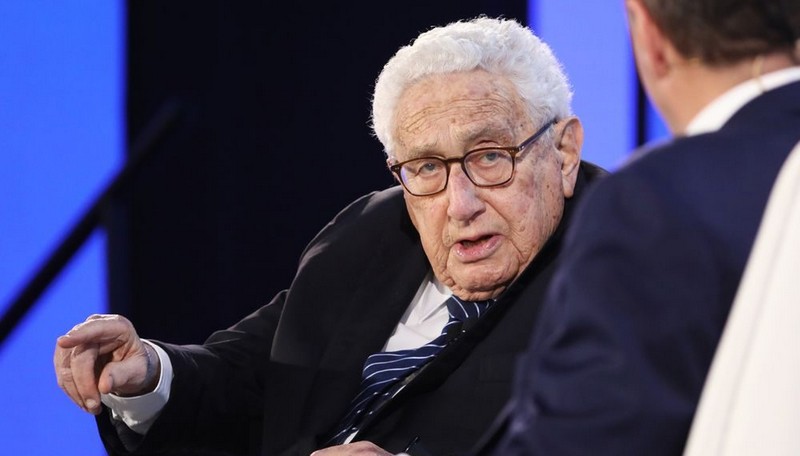
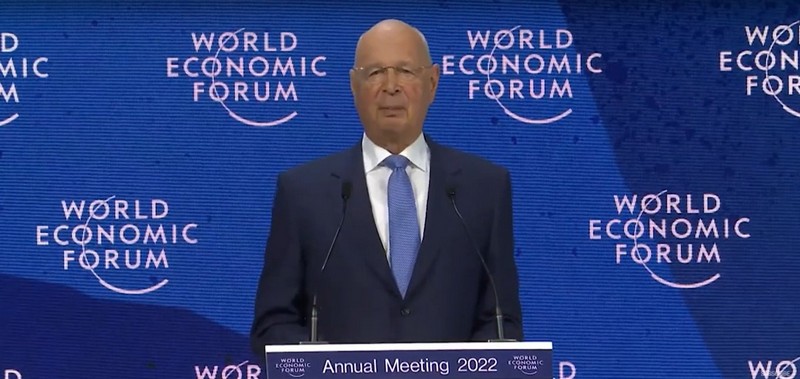
3 Jun 2022 – Do you know why Henry Kissinger’s speech at the World Economic Forum touched-off such a furor?

Kissinger didn’t criticize the way the war in Ukraine is being conducted or the lack of progress on the ground. No. What Kissinger criticized was the policy itself, that’s what triggered the firestorm. He was throwing a bucket of cold water on the people who concocted this loony policy by telling them to their faces that they “got it wrong.”

And, they did get it wrong, because the policy they are currently pursuing is hurting US allies and US interests. That is the metric we use to determine whether a particular policy is stupid or not and, unfortunately, this passes the “stupid test” with flying colors.

Let me explain: Our basic strategy is to “weaken” and “isolate” Russia by severing Russia’s economic ties with Europe and goading them into a long and costly quagmire in Ukraine. That’s the plan.

Now you might think that it sounds pretty reasonable but– according to Kissinger– it’s the wrong plan.

Why?

Because US National Security Strategy identifies China as America’s number one rival (which it certainly is) so, naturally, any policy that makes China stronger, runs counter to US strategic interests.

Got it? So, the question is: Does our proxy-war in Ukraine make China stronger?

And the answer is: Of course, it does. It makes China alot stronger because it forces Russia to strengthen relations with China.

What does that mean in practical terms?

It means that relations between the world’s manufacturing powerhouse (China) and the world’s second biggest producer of hydrocarbons (Russia) just got a helluva alot better because of Washington’s counterproductive war in Ukraine. That’s what it means. It also means that– as relations between the two countries improve– the pace of US imperial decline is going to accelerate as the non-dollar zone expands and bilateral trade gradually replaces the current US-dominated global trade system.

You can see this happening already. The war in Ukraine has triggered a shocking collapse in global trade, major disruptions in critical supplylines, unprecedented food and energy shortages, and the greatest redivision of the world since the breakup of the Soviet Union. Washington has decided to stake its future and the future of the American people on a senseless geopolitical gambit could turn out to be the greatest strategic catastrophe in US history.

Kissinger grasps the gravity of the situation which is why he decided to put in his two-cents. But he wasn’t just critical of the policy, he also offered an ominous warning that has been almost-entirely ignored by the media. Here’s what he said:

“Negotiations need to begin in the next two months before it creates upheavals and tensions that will not be easily overcome. Ideally, the dividing line should be a return to the status quo ante (…) Pursuing the war beyond that point would not be about the freedom of Ukraine, but a new war against Russia itself”.

There it is in black and white, but let’s break it into two parts to get a better sense of what he’s saying:

1. The policy is wrong

2. The policy must be changed immediately or the damage to the US and its allies will be severe and permanent. (“Negotiations need to begin in the next two months”)

That might sound too apocalyptic for some, but I think Kissinger is on to something here. After all, look at the massive changes the world has already experienced since the conflict began; the disruptions in supplylines, the food and energy shortages, and the rolling-back of the globalization project. Pretty big changes, I’d say, but they’re probably just be the tip of the iceberg. The real pain is still ahead of us.

What is this winter going to look like when home heating bills go through the roof, industries across Europe succumb to the higher energy costs, unemployment soars to Great Depression levels, and rolling blackouts become a regular feature of life in the west? That’s what the future holds for Europe and America if the policy isn’t reversed and a negotiated settlement quickly reached.

Putin has already stated that Russia will not put itself in a position where it is economically dependent on Europe again. Those days are over. Instead, he is redirecting critical energy flows to China, India and beyond. Europe is no longer a priority customer, in fact, they have emerged as a threat to Russia’s survival, which means, Russia will continue to reorient its production eastward.

How will this impact Europe?

That’s easy. Europe is going to pay more for its energy that any country in the world. That is the choice they made by shrugging off Russia’s legitimate security demands, and that is the outcome they will have to live with.

So, here’s what you need to know:

In 2021, Russia provided 40% of all the natural gas consumed in the EU.

In 2021, Russia provided over 25% of the oil consumed in the EU.

If you think that those quantities of hydrocarbons can be replaced by producers in Nigeria, Iran, Saudi Arabia or some other far-flung location, you are sadly mistaken. Europe is walking headlong into the biggest energy crisis in its history, and it can only blame itself. Here’s more from an article at RT:

“The current energy crisis could be one of the worst and longest in history and European countries could be hit particularly hard, the head of the International Energy Agency, Fatih Birol, said on Tuesday. In an interview with German magazine Der Spiegel, Birol said that the fallout from the events in Ukraine is likely to make the current energy crisis worse than the crises of the 1970s.

Back then it was all about oil. Now we have an oil crisis, a gas crisis and an electricity crisis at the same time,” Birol told the publication, adding that before the ongoing events in Ukraine, Russia was “a cornerstone of the global energy system: the world’s largest oil exporter, the world’s largest gas exporter, a leading supplier of coal.”

As part of its Ukraine-related sanctions, the EU introduced restrictions on Russian fossil fuels and has pledged to gradually phase them out. Birol warned that countries in Europe that are more dependent on Russian gas are facing a “difficult winter,” as “gas may well have to be rationed,” including in Germany. His comments came as Russia’s state gas supplier Gazprom cut off supplies to some energy firms in Germany, Denmark, the Netherlands and other countries, after their failure to pay for the fuel in rubles as per new requirements.” (“Fuel rationing may be coming to Europe – IEA“, RT)

So, I guess, freezing to death in the dark is preferrable to insisting that Ukraine remain neutral and stop killing ethnic Russians in the east? Is that the “principal” that Europe is defending?

If so, it’s a bad choice.

Here’s something to mull over: Did you know that all “oil blends” are not alike?

Why would that matter?

Because Germany currently imports 34% of its oil from Russia. And Russian oil is a fully-proven, high quality Urals blend that is delivered in vast quantities via the Druzhba pipeline to German refineries that have been engineered to meet particular processing requirements. Different oil from different providers would throw a wrench in the whole refinery process. It would require significant “modification of new feedstock lines and infrastructure, an atmospheric distillation facility, a vacuum distillation system, a cat-crack unit, a visbreaking facility, an alkylation unit, a catalytic reformer, an isomerisation unit, and an ethyl tertiary butyl ether (ETBE) facility. Plus brand new storage facilities + handling equipment for Rostock feed to substitute the 24x7x365 smooth Druzhba pipeline.” (“Germany’s Refinery Problem”, The Saker)

So, all oil blends aren’t the same?

Nope, not even close. On top of that, industry experts estimate that the refinery modifications would take roughly 6 years to complete. In the meantime, Germany’s economic growth– which is closely aligned with energy consumption– will dip dramatically, businesses will be shuttered, unemployment will spike, and the EU’s most powerful and productive country will be brought to its knees.

Maybe someone in the German government should have thought about these things before they decided to boycott Russia oil?

The point we’re trying to make is simple: Kissinger is right and the neocon clowns that concocted the failed Ukraine strategy are wrong, dead wrong. And, if we don’t convene “Negotiations… in the next two months”, as Kissinger advices, then the break with Russia will be final and irreversible, at which point, Russia’s voluminous energy resources, mineral wealth and agricultural products will be forever routed eastward to friendlier nations. And that is going to inflict terrible suffering on both the United States and its allies in Europe.

The only reasonable course of action is to call for an immediate ceasefire so that peace talks can begin ASAP.
________________________________________

Michael Whitney is a renowned geopolitical and social analyst based in Washington State.

6 June 2022

Source: www.transcend.org

How the U.S. Government is controlled by its armaments firms

By Eric Zuesse

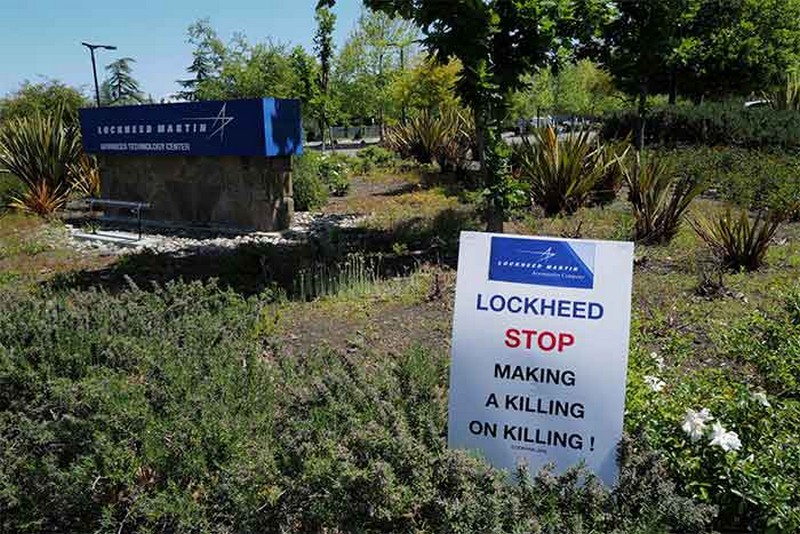
Unlike corporations that sell to consumers, Lockheed Martin and the other top contractors to the U.S. Government are highly if not totally dependent upon sales to governments, for their profits, especially sales to their own government, which they control — they control their home market, which is the U.S. Government, and they use it (their government) to sell to its allied governments (via the NATO and other U.S.-run weapons-marketing operations), all of which foreign governments constitute the export markets for their products and services. These corporations effectively control the U.S. Government, and they control its weapons-marketers, such as NATO (in addition to, of course, the U.S. Government itself, which has the world’s largest sales-force peddling specifically U.S.-made weapons to foreign countries).

And, here will be described how they do it, which is essential to understand, in order to be able to make reliable sense of America’s foreign policies, such as determining which nations are ‘allies’ of the U.S. Government (such as Saudi Arabia and Israel), and which nations are instead its ‘enemies’ (such as Libya was and Syria still is) — and are thus presumably suitable for America to invade, or else to overthrow by means of a coup installing a U.S.-stooge regime. First, the given target-nation’s head-of-state becomes demonized by the U.S.-and-allied ‘news’-media; and, then, the invasion or coup happens. And, that’s it. And here is how it’s done:

America (unlike Russia, China, and a few other countries) privatized the weapons-industry, which causes there to be, in America, profits for investors to make in invasions, and in military occupations, of foreign countries; and the billionaires who control these corporations can and do — and, for their financial purposes, they must — buy Congress and the President (billionaires can easily afford to do this), so as to keep those profits flowing to themselves. That’s the nature of the war-business in a strictly capitalist country, since the markets for war-weapons are governments (not consumers). But these markets do not include governments that the aristocracy want to overthrow and replace. The foreign governments that are to be overthrown are not markets, but instead are targets; and target-nations are as necessary for the “Military-Industrial Complex,” or “M.I.C.,” as ally-nations are (because there are two sides to every weapon — its users, and its victims — and its victims are to be targets instead of markets). The bloodshed and misery go to those unfortunate lands, the target-lands. If you control these corporations, then you need these invasions and military occupations, and you certainly aren’t concerned about any of the victim-nations, who (unlike those profits) are irrelevant to your business (except as being targets). In fact, to the exact contrary: killing people and destroying buildings etcetera (in the targeted countries), are what you sell — that’s what you (as a billionaire with a controlling interest in one of the 100 top contractors to the U.S. Government) are selling to your own government, and to all of the other governments that your country’s cooperative propaganda (in your ‘news’-media) will characterize as being ‘enemies’ — Iraq, Afghanistan, Syria, Yemen, etc. — and definitely not as being ‘allies’, such as are being characterized these corporations’ foreign markets: Saudi Arabia, EU-NATO, Israel, etcetera. In fact, as regards your biggest foreign markets, they will be those ‘allies’; and so, you (that is, the nation’s aristocracy, the people who own also the news-media etc.) defend them (fund propaganda for them), and you want the U.S. military (the taxpayers and the troops) to support and defend them (using the weapons that you sell, of course, so as to deplete those weapons-stockpiles and thereby create the ‘need’ to buy more of those weapons). It’s defending your market, even though you, as a controlling owner of such a corporation, aren’t paying the tab for it: the taxpayers in your country are. The rest of the country is actually paying for all of this ‘defense’, so you’re “free-riding” the public, in this business. It’s the unique nature of the war-business, and a unique boon to its investors.

In fact: all of this U.S. imperialism has been enormously profitable for America’s billionaires, and especially for the ones who have been investing the most heavily in ‘defense’ industries. This has been most clearly and most blatantly so after the ‘ideological’ ‘justification’ for the Truman-and-Eisenhower start, in 1945, of the Cold War, finally ended in 1991. Beginning at around 1990 — the very same period when G.H.W. Bush started secretly instructing America’s ‘allies’ that the Cold War would continue on the U.S. side even after the Soviet Union would break up and end its communism, and end its side of the Cold War — the “Cumulative Returns, Indexed to 1951,” for the total stock “Market” vs. for “Industrials” vs. for “Defense,” which three segments had previously moved in tandem with each other, sharply diverged after 1990, so that “Defense” has since been soaring, it’s rising much faster than the other two sectors, both of which other two sectors (“Market and “Industrials”) continued after 1990 rising in tandem with each other, and rising far less fast than the ‘defense’ industry has. That year — 1990 — was the time when market valuations on America’s armaments producers suddenly took off and left the rest of the economy ever-increasingly behind. It’s all shown right there in that chart. It is shocking.

Thus, for example, on 21 May 2017, U.S. President Donald Trump sold to the Saud family, who own Saudi Arabia, an all-time-record $350 billion of U.S. arms-makers’ products, which they obligated themselves to buy during the following ten years, with an up-front commitment of $100 billion during just the first year, so as to make even just that one-year commitment an all-time record. This deal was by far the biggest part of Trump’s boost to American manufacturers — but it’s only to military manufacturers, the people who depend virtually 100% on sales to governments, specifically (in addition to one’s own government), to ‘friendly’ governments: to ‘allies’, such as, in that case, to the Saud family.

In fact, the Sauds’ war against their neighbor Yemen is a good example of just how this sort of operation (profit to the billionaires, and bloodshed and destruction to — in this case — the Yemenites) works:

Yemen’s war goes back to the “Arab Spring” revolution in Yemen, which overthrew the U.S.-and-Saud-backed President, former Colonel and then General, Saleh. Wikipedia says of him: “According to the UN Sanctions Panel, by 2012 Saleh has amassed fortune worth $32-60 billion hidden in at least twenty countries making him one of the richest people in the world. Saleh was gaining $2 billion a year from 1978 to 2012 mainly through illegal methods, such as embezzlement, extortion and theft of funds from Yemen’s fuel subsidy program.[75][76][77]” And, furthermore: “New York Times Middle Eastern correspondent Robert F. Worth described Saleh as reaching an understanding with powerful feudal ‘big sheikhs’ to become ‘part of a Mafia-style spoils system that substituted for governance’.[18] Worth accused Saleh of exceeding the aggrandizement of other Middle Eastern strongmen by managing to ‘rake off tens of billions of dollars in public funds for himself and his family’ despite the extreme poverty of his country.[19]” Saleh fled to Saudi Arabia. Yemen’s Army installed the Vice President, and former General, Hadi to succeed him. Then, there was a second revolution, and, on 21 January 2015, the Shia Houthi tribe took over, and the rabidly anti-Shia Saud family promptly started their bombing of Yemen, using American training, weaponry and tactical and refueling support. The U.S. Government — like its ally the Saud family — is rabidly anti-Shia. That’s to say: The U.S. aristocracy, like Saudi Arabia’s aristocracy (the royal family), is rabidly anti-Shia. But, whereas for the Sauds, this is motivated more by hate than by greed, it’s more greed than hate on the U.S. side, because at least ever since the U.S. coup in the leading Shia country, Iran, in 1953, it’s been purely about greed, specifically that of the oil (and other) companies who also (in addition to the armaments-firms) control U.S. foreign policies. (For example, international oil companies need to extract and sell oil from many countries. They’re highly dependent upon the military, though not nearly to the extent that the weapons-firms are.)

A poll happened to be taken of American public opinion regarding America’s arming and training Saudi forces to fly over and bomb Yemen — taken during November 2017, while U.S. President Trump’s Administration was doing that. This poll was tabulated on 28 January 2018, and finally published a month later, on 28 February 2018. It headlined “Nationwide Voter Survey – Report on Results – January 28, 2018” and reported that it had asked 1,000 scientifically sampled American voters, a “Question: Congress is considering a bi-partisan bill to withdraw U.S. forces from the Saudi-led war in Yemen. Would you say that you support or oppose this bill?” It reported that, “Support” was 51.9%, “Oppose” was 21.5%, no opinion was 26.6%; and, so, 71% of the opinions were “Support”; only 29% were “Oppose.” That’s more than two-thirds supporting this bill to consider withdrawing U.S. forces from that U.S.-Saudi war against Yemen.

On 4 December 2017, just weeks after that poll of Americans was taken, RT News headlined “Saleh’s death means a fresh hell beckons for Yemen”, and the U.S. Government’s participation in the bombing of Yemen then did increase. This event — the murder of Saleh — raised the Yemen war to broader public attention in the country that was supplying the bombs and the weapons and training to the Sauds.

On 28 February 2018, U.S. Senator Bernie Sanders was the lone sponsor of “S.J.Res.54 — 115th Congress (2017-2018)”: “This joint resolution directs the President to remove U.S. Armed Forces from hostilities in or affecting Yemen, except those engaged in operations directed at Al Qaeda, within 30 days unless: (1) the President requests and Congress authorizes a later date, or (2) a declaration of war or specific authorization for the use of the Armed Forces has been enacted.”

On 19 March 2018, NBC bannered “Senators to force vote to redefine U.S. role in Yemen” — that was merely to force a vote in the Senate, not actually to vote on the issue itself. However, given how overwhelmingly America’s voters opposed America’s arming the Sauds to slaughter the Yemenese, this vote in the Senate to consider the measure was the gateway to each Senator’s being forced to go public about supporting this highly unpopular armament of the Saudis; and, so, if it had gotten that far (to a final vote on the issue itself), the arms-makers might lose the vote, because Senators would then be voting not ‘merely’ on a procedural matter, but on the actual issue itself. So, this vote was about the gateway, not about the destination.

The next day, Breitbart News headlined “Administration, Bipartisan Interventionist Establishment Kill Aisle-Crossing Effort to Rein In U.S. Military Involvement in Yemen” and presented a full and documented account, which opened: “The Senate resolution invoking the War Powers Act to demand the administration seek congressional authorization or withdraw American support from Saudi Arabia’s military operations in Yemen was defeated Tuesday by a vote of 55-44.” The peace-activist, David Swanson, headlined at Washingtonsblog, “Why 55 U.S. Senators Voted for Genocide in Yemen”, and he alleged that the vote would have been even more lopsided than 55% for the weapons-industry, if some of the Senators who voted among the 44 non-bloodthirsty ones hadn’t been in such close political races. The weapons-industry won’t hold against a Senator his/her voting against them if their vote won’t even be needed in order to win. Token-votes against such bills are acceptable. All that’s necessary is winning the minimum number of votes. Anything more than that is just icing on the cake.

On 19 December 2018, what survived from the Sanders bill was “Received in the House”, and less than three hours later was simply “Held at the desk.” And that was the end of it. This was a perfect example of the findings by political scientists that the U.S. Government is no democracy but instead a dictatorship by the very richest Americans.

So, this explains how the U.S. Government really ignores public opinion and only pretends to be a democracy. It’s done by constantly fooling the public. On the issue of which countries are ‘allies’ and which are ‘enemies’, and other issues regarding national ‘defense’, all necessary means are applied, in order to achieve, as Walter Lippmann in 1921 called it, “the manufacture of consent.” He wrote:

That the manufacture of consent is capable of great refinements no one, I think, denies. The process by which public opinions arise is certainly no less intricate than it has appeared in these pages, and the opportunities for manipulation open to anyone who understands the process are plain enough. The creation of consent is not a new art. It is a very old one which was supposed to have died out with the appearance of democracy. But it has not died out. It has, in fact, improved enormously in technic, because it is now based on analysis rather than on rule of thumb. And so, as a result of psychological research, coupled with the modern means of communication, the practice of democracy has turned a corner. A revolution is taking place, infinitely more significant than any shifting of economic power.

The CIA virtually controls the ‘news’ media.

Furthermore, even corporations that aren’t on that list of top 100 U.S. Government contractors can be crucially dependent upon their income from the U.S. Government. For example, since 2014, Amazon Web Services has supplied to the U.S. Government (CIA, Pentagon, NSA, and the entire U.S. intelligence community’s) cloud-computing services, which has since produced virtually all of Amazon’s profits (also see “Cloud Business Drives Amazon’s Profits”), though Amazon doesn’t even so much as show up on that list of 100 top contractors to the U.S. Government; so, this extremely profitable business is more important to Jeff Bezos (the owner also of the Washington Post) than all the rest of his investments put together are.

During June 6-9 of 2013, Jeff Bezos and Donald Graham had met at the Bilderberg conference, and, two months later, Bezos agreed to buy the Washington Post from Graham. Might Bezos have done this because Bezos knew that Amazon Web Services would be getting the giant Pentagon & CIA contract, which would soon start, and he wanted to make sure that Amazon’s profits would now, at last, start as a result; and that he would be the person who would be controlling what the readers of that newspaper — including almost every influential person in and around Washington D.C. — would be reading in their morning ‘news’paper? This would be at least as effective for boosting his net worth as hiring a few more lobbying firms would be.

Another of Donald Graham’s properties is the online magazine, Slate. On 5 August 2013, that ‘news’-site headlined “Jeff Bezos Buys Washington Post” and reported

Now based on what we can tell from Bezos’ stewardship of Amazon, he’s possibly a dream owner from a journalism viewpoint. It’s of course possible that his intention is to run the company with a mindset of cutbacks on the expenses side to try to milk as much profit as possible out of a business in terminal decline. But he’s famously run Amazon as a deliberately low-margin, growth-oriented firm. If he runs the newspaper in anything like that same spirit, it’ll be an excellent thing for the world, whether or not it works out as a business.

No mention was made there that Graham owned Slate, or that the owner of Slate would be financially benefitting from Bezos’s purchase of that newspaper. Instead, the myth was (as always) being fed, that billionaires buy newsmedia because they want to benefit the public (support ‘our free press’) — the ‘philanthropic’ myth about super-wealthy individuals, that they are ‘public-spirited’.

The most corrupt part of the U.S. Government is the ‘Defense’ part. That also happens to be — and by far — the most popular part, the most respected (by the American public) part.

That’s a toxic combination (the ugly reality, plus the widely-believed lie to the contrary of it): toxic not only for a government’s domestic policies, but especially for a government’s foreign policies — such as for identifying which nations are ‘allies’, and which nations are ‘enemies’ (the issue of war and peace). This type of mega-toxic combination can’t exist in a nation whose press isn’t being effectively controlled by members of the same group that effectively controls the Government (in America, that’s the richest few, by means of these individuals’ many paid agents), including all of the Deep State, which America’s super-rich own. In America, one key to the rot is that the ‘Defense’ firms (and not merely most of the press) are privately owned. They are not actually for defense, at all; they endanger the country; they are for aggression — profitable aggression — from which everyone except the country’s super-rich suffer.

Harry Truman and Dwight Eisenhower started this, and it’s only getting worse.

Like former U.S. President Jimmy Carter said:

It violates the essence of what made America a great country in its political system. Now it’s just an oligarchy with unlimited political bribery being the essence of getting the nominations for president or being elected president. And the same thing applies to governors, and U.S. Senators and congress members. So, now we’ve just seen a subversion of our political system as a payoff to major contributors, who want and expect, and sometimes get, favors for themselves after the election is over. … At the present time the incumbents, Democrats and Republicans, look upon this unlimited money as a great benefit to themselves. Somebody that is already in Congress has a great deal more to sell.

And this is how it’s done. It is done by constantly deceiving the public. It’s done by lies. Lies rule over guns. And guns rule over butter. Lies are the ultimate weapon. And every empire is ruled by lies. That’s the way the world works.

—————

Investigative historian Eric Zuesse’s next book (soon to be published) will be AMERICA’S EMPIRE OF EVIL: Hitler’s Posthumous Victory, and Why the Social Sciences Need to Change.

8 June 2022

Source: countercurrents.org

Palestine’s New Resistance Model: How the Last Year Redefined the Struggle for Palestinian Freedom

By Dr Ramzy Baroud

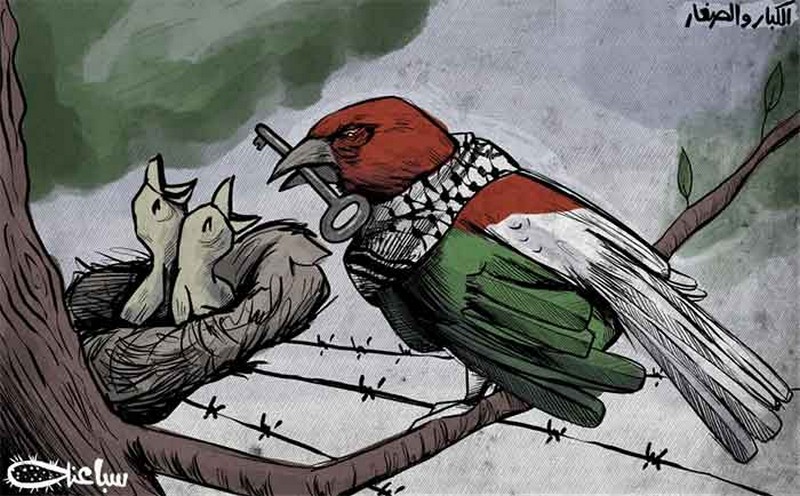
What took place between May 2021 and May 2022 is nothing less than a paradigm shift in Palestinian resistance. Thanks to the popular and inclusive nature of Palestinian mobilization against the Israeli occupation, resistance in Palestine is no longer an ideological, political or regional preference.

In the period between the signing of the Oslo Accords in 1993 and only a few years ago, Palestinian muqawama – or resistance – was constantly put in the dock, often criticized and condemned, as if an oppressed nation had a moral responsibility in selecting the type of resistance to suit the needs and interests of its oppressors.

As such, Palestinian resistance became a political and ideological litmus test. The Palestinian Authority of Yasser Arafat and, later, Mahmoud Abbas, called for ‘popular resistance’, but it seems that it neither understood what the strategy actually meant, and certainly was not prepared to act upon such a call.

Palestinian armed resistance was removed entirely from its own historical context; in fact, the context of all liberation movements throughout history, and was turned into a straw man, set up by Israel and its western allies to condemn Palestinian ‘terrorism’ and to present Israel as a victim facing an existential threat.

With the lack of a centralized Palestinian definition of resistance, even pro-Palestine civil society groups and organizations demarcated their relationship to the Palestinian struggle based on embracing certain forms of Palestinian resistance and condemning others.

The argument that only oppressed nations should have the right to choose the type of resistance that could speed up their salvation and freedom fell on deaf ears.

The truth is that Palestinian resistance preceded the official establishment of Israel in 1948. Palestinians and Arabs who resisted British and Zionist colonialism used many methods of resistance that they perceived to be strategic and sustainable. There was no relationship whatsoever between the type of resistance and the religious, political or ideological identity of those who resisted.

This paradigm prevailed for many years, starting with the Fidayeen Movement following the Nakba, the popular resistance to the brief Israeli occupation of Gaza in 1956, and the decades-long occupation and siege starting in 1967. The same reality was expressed in Palestinian resistance in historic Palestine throughout the decades; armed resistance ebbed and flowed, but popular resistance remained intact. The two phenomena were always intrinsically linked, as the former was also sustained by the latter.

The Fatah Movement, which dominates today’s Palestinian Authority, was formed in 1959 to model liberation movements in Vietnam and Algeria. Regarding its connection to the Algerian struggle, the Fatah manifesto read: “The guerrilla war in Algeria, launched five years before the creation of Fatah, has a profound influence on us. […] They symbolize the success we dreamed of.”

This sentiment was championed by most modern Palestinian movements as it proved to be a successful strategy for most southern liberation movements. In the case of Vietnam, the resistance to US occupation carried out even during political talks in Paris. The underground resistance in South Africa remained vigilant until it became clear that the country’s apartheid regime was in the process of being dismantled.

Palestinian disunity, however, which was a direct result of the Oslo Accords, made a unified Palestinian position on resistance untenable. The very idea of resistance itself became subject to the political whims and interests of factions. When, in July 2013, PA President Abbas condemned armed resistance, he was trying to score political points with his western supporters, and further sow the seeds of division among his people.

The truth is that Hamas neither invented, nor has ownership of, armed resistance. In June 2021, a poll, conducted by the Palestinian Center for Policy and Survey Research (PSR), revealed that 60% of Palestinians support “a return to armed confrontations and Intifada”. By stating so, Palestinians were not necessarily declaring allegiance to Hamas. Armed resistance, though in a different style and capacity also exists in the West Bank, and is largely championed by Fatah’s own Al-Aqsa Martyrs Brigades. The recent Israeli attacks on the town of Jenin, in the northern West Bank, were not aimed at eliminating Hamas, Islamic Jihad or socialist fighters, but Fatah’s own.

Skewed media coverage and misrepresentation of the resistance, often by Palestinian factions themselves, turned the very idea of resistance into a political and factional scuffle, forcing everyone involved to take a position on the issue. The discourse on the resistance, however, began changing in the last year.

The May 2021 rebellion and the Israeli war on Gaza – known among Palestinians as the Unity Intifada – served as a paradigm shift. The language became unified; self-serving political references quickly dissipated; collective frames of reference began replacing provisional, regional and factional ones; occupied Jerusalem and Al-Aqsa Mosque emerged as the unifying symbols of resistance; a new generation began to emerge and quickly began to develop new platforms.

On May 29, the Israeli government insisted on allowing the so-called ‘Flag March’ – a mass rally by Israeli Jewish extremists that celebrate the capture of the Palestinian city of al-Quds – to once more pass through Palestinian neighborhoods of occupied East Jerusalem. This was the very occasion that instigated the violence of the previous year. Aware of the impending violence which often results from such provocations, Israel wanted to impose the timing and determine the nature of the violence. It failed. Gaza didn’t fire rockets. Instead, tens of thousands of Palestinians mobilized throughout occupied Palestine, thus allowing popular mobilization and coordination between numerous communities to grow. Palestinians proved able to coordinate their responsibility, despite the numerous obstacles, hardships and logistical difficulties.

The events of the last year are a testament that Palestinians are finally freeing their resistance from factional interests. The most recent confrontations show that Palestinians are even harnessing resistance as a strategic objective. Muqawama in Palestine is no longer ‘symbolic’ or supposedly ‘random’ violence that reflects ‘desperation’ and lack of political horizon. It is becoming more defined, mature and well-coordinated.

This phenomenon must be extremely worrying to Israel, as the coming months and years could prove critical in changing the nature of the confrontation between Palestinians and their occupiers. Considering that the new resistance is centered around homegrown, grassroots, community-oriented movements, it has far greater chances of success than previous attempts. It is much easier for Israel to assassinate a fighter than to uproot the values of resistance from the heart of a community.

Dr. Ramzy Baroud is a journalist and the Editor of The Palestine Chronicle.

8 June 2022

Source: countercurrents.org

Russia vs NATO: How Mali Became Another Front for the Ukraine War

By Dr Ramzy Baroud

The distance between Ukraine and Mali is measured in thousands of kilometers. But the geopolitical distance is much closer to the point that it appears as if the ongoing conflicts in both countries are the direct outcomes of the same geopolitical currents and transformation underway around the world.

The Malian government is now accusing French troops of perpetuating a massacre in the West African country. Consequently, on April 23, the Russian Foreign Ministry declared its support for Malian efforts, pushing for an international investigation into French abuses and massacres in Mali. “We hope that those responsible will be identified and justly punished,” the Ministry said.

In its coverage, Western media largely omitted the Malian and Russian claims of French massacres; instead, they gave credence to French accusations that the Malian forces, possibly with the help of ‘Russian mercenaries’ have carried out massacres and buried the dead in mass graves near the recently evacuated French army Gossi base, in order to blame France.

Earlier in April, Human Rights Watch called for an ‘independent, credible’ inquiry into the killings, though it negated both accounts. It suggested that a bloody campaign had indeed taken place, targeting mostly “armed Islamists” between March 23-31.

Media whitewashing and official misinformation aside, Mali has indeed been a stage for much bloodletting in recent years, especially since 2012, when a militant insurgency in Northern Mali threatened the complete destabilization of an already unstable and impoverished country.

There were reasons for the insurgency, including the sudden access to smuggled weapon caches originating in Libya following the West’s war on Tripoli in 2011.  Thousands of militants, who were pushed out of Libya during the war and its aftermath, found safe havens in the largely ungoverned Malian northern regions.

That in mind, the militants’ success – where they managed to seize nearly a third of the country’s territory in merely two months – was not entirely linked to western arms. Large swathes of Mali have suffered from prolonged governmental neglect and extreme poverty. Moreover, the Malian army, often beholden to foreign interests, is much hated in these regions due to its violent campaigns and horrific human rights abuses. No wonder why the northern rebellion found so much popular support in these parts.

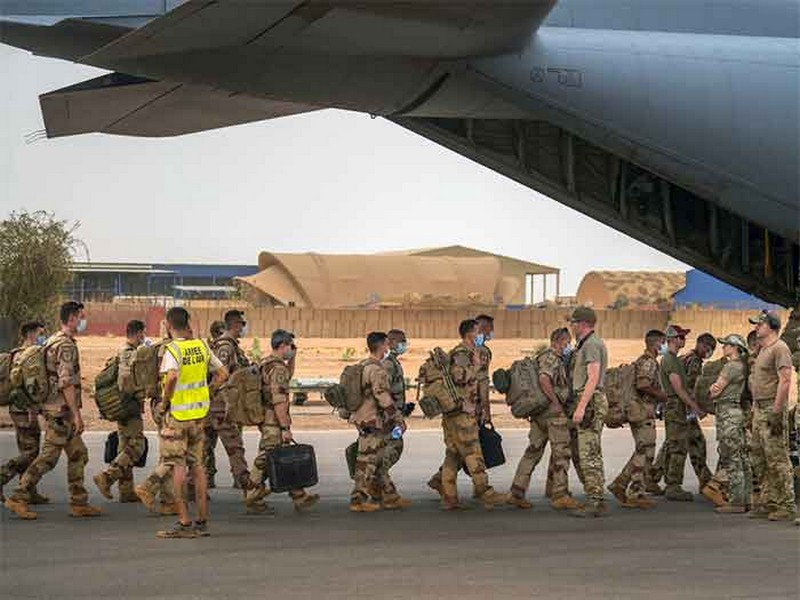
Two months after the Tuareg rebellion in the north, a Malian officer and a contingency of purportedly disgruntled soldiers overthrew the elected government in Bamako, accusing it of corruption and of failure in reining in the militants. This, in turn, paved the road for France’s military intervention in its former colony under the guise of fighting terrorism.

The French war in Mali, starting in 2013, was disastrous from the Malians’ point of view. It neither stabilized the country nor provided a comprehensive scheme on how to pacify the rebellious north. War, human rights violations by the French themselves, and more military coups followed, most notably in August 2020 and May 2021.

But France’s intervention was fruitful from France’s viewpoint. As soon as French troops began pouring into Mali, as soon as France began strengthening its control over the Sahel countries, including Mali, leading to the signing of two defense agreements, in 2013 and 2020.

That’s where the French West African ‘success story’ ends. Though Paris succeeded in digging its heels deeper in that region, it gave no reason to the Malian people or government to support their actions. As France became more involved in the life of Malians, ordinary people throughout the country, north and south, detested and rejected them. This shift was the perfect opportunity for Russia to offer itself as an alternative to France and the West. The advent of Russia into the complex scene allowed Bamako to engineer a clean break from its total reliance on France and its Western, NATO allies.

Even before France formally ended its presence in the country, Russian arms and military technicians were landing in Bamako. Attack helicopters, mobile radar systems and other Russian military technology quickly replaced French arms. It is no wonder why Mali voted against the United Nations General Assembly Resolution to suspend Russia from the UN Human Rights Council.

As a result of the Ukraine war and western sanctions starting in late February, Russia accelerated its political and economic outreach, particularly in southern countries, with the hope of lessening the impact of the west-led international isolation.

In truth, Moscow’s geopolitical quest in West Africa began earlier than the Ukraine conflict, and Mali’s immediate support for Russia following the war was a testament to Moscow’s success in that region.

Though France officially began its withdrawal from Mali last February, Paris and other European capitals are increasingly aware of what they perceive to be a ‘Russian threat’ in that region. But how can the West fight back against this real or imaginary threat, especially in the light of the French withdrawal? Further destabilizing Mali is one option.

Indeed, on May 16, Bamako declared that it thwarted a military coup in the country, claiming that the coup leaders were soldiers who “were supported by a Western state”, presumably France.

If the ‘coup’ had succeeded, does this indicate that France – or another ‘western country’ – is plotting a return to Mali on the back of yet another military intervention?

Russia, on the other hand, cannot afford to lose a precious friend, like Mali, during this critical time of western sanctions and isolation. In effect, this means that Mali will continue to be the stage of a geopolitical cold war that could last for years. The winner of this war could potentially claim the whole of West Africa, which remains hostage to global competition well beyond its national boundaries.

Dr. Ramzy Baroud is a journalist and the Editor of The Palestine Chronicle.

4 June 2022

Source: countercurrents.org

Palestine Update 560

Opinion

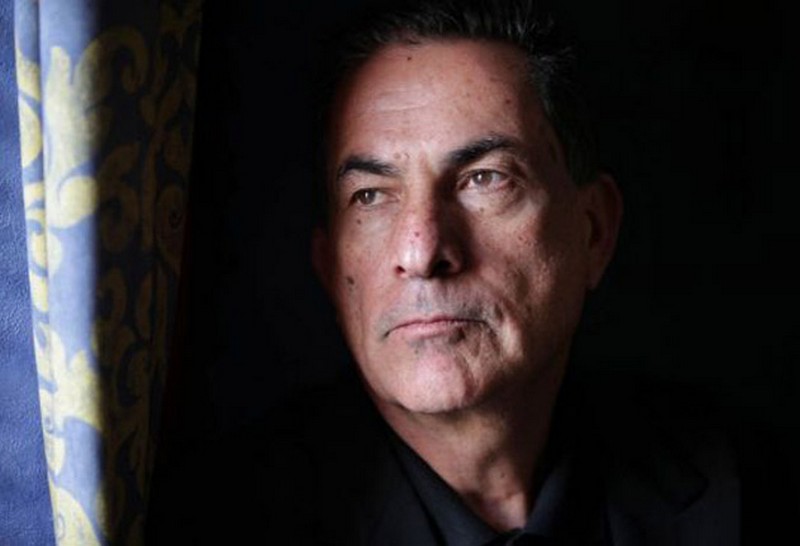
A must-read piece from Gideon Levy

This article by Gideon Levy is a must-read for all those who wonder what it is that Israeli’s really want for their future. In fact, Gideon Levy goes further and suggests that the Israeli public lack a ‘long term view’.  Or, for that matter,cling to a denial of the future like an ostrich that buries its head in the sand, hoping your problems will disappear because, in their view, there is something potentially unpleasant about the future.

Many tough questions are raised. Will Israel be around in another twenty or fifty years? No one has thought this through. Now have people thought seriously about peace and security. The ostrich sees nothing. Most Israelis follow this ostrich. Little wonder, they have no clue where they are headed.

This article from an eminent and much-awarded journalist is stimulating and projects a troubled people and nation plagued with a strong sense of insecurity.

Please read widely disseminate.

Ranjan Solomon

________________________________________

For Israelis, the future is impossible to see

Gideon Levy
The writer, Gideon Levy is a Haaretz columnist and a member of the newspaper’s editorial board. Levy joined Haaretz in 1982, and spent four years as the newspaper’s deputy editor. He was the recipient of the Euro-Med Journalist Prize for 2008; the Leipzig Freedom Prize in 2001; the Israeli Journalists’ Union Prize in 1997; and The Association of Human Rights in Israel Award for 1996. His new book, The Punishment of Gaza, has just been published by Verso.

A society cannot go far with its head buried in the sand, and will certainly be unable to cope with the real challenges confronting it. If there is one thing completely missing from the public agenda in Israel, it is the long-term view. Israel does not look ahead, not even by half a generation.

Children are important in Israel, and the time and energy devoted to them may substantially exceed what is typical in most other societies, yet no one talks about what lies ahead for them or for their own future children. There is not a single Israeli, not one, who knows where his country is headed.

Ask any ordinary Israeli or any politician, any journalist or scientist, from the political centre or the right or the left: where are you going? How will your country look in another 20 years? Or 50? They can’t even describe what 10 years from now might be like. Few Israelis could even say where they would like their country to be going, apart from empty slogans about peace and security and prosperity.

Troubling question
Also very instructive is the one question that does arise about the long term: will Israel still exist in another 20 or 50 years? That is all you will hear queried in Israel about the future. And meanwhile a different question – Will there ever be peace? – which a generation or two ago was omnipresent, is no longer on the agenda and almost never asked.

There are very few places where people ask whether or not their country will exist a few decades hence. People don’t ask that in Germany or Albania, or in Togo or in Chad. This question may not be pertinent for Israel either – a powerfully armed regional power, impressively well-connected, with such technological prowess and such prosperity, the darling of the West.

Note the incredible efforts Israelis expend to obtain a second passport for themselves and their children – any passport
Yet consider the fact that so many Israelis continue to ask this question, more often lately than ever. Note the incredible efforts Israelis expend to obtain a second passport for themselves and their children – any passport! Let it be Portuguese or Lithuanian, the main thing is to have some option beyond an Israeli passport, as if an Israeli passport is some kind of temporary permit nearing its expiration date, as if it weren’t possible to go on renewing it forever.

All of that suggests that the Israeli habit of burying their heads in the sand about the future of their country disguises a deep-seated, and possibly very realistic, fear about what the future may hold. Israelis are afraid of the future of their country. They brag about their country’s power and ability, a righteous nation, a chosen people, a light unto the nations; they are exceedingly boastful about their army, about their skills, while at the same time a primordial fear gnaws at their innards.

The future of their country is hidden from them, shrouded in mist. They like to talk in religious terms about eternity, “a united Jerusalem for eternity” and “God’s eternal promise to Israel”, while deep down they have no clue what will be happening to their country tomorrow or, at the latest, the day after that.

Self-delusion provides no answer
The name of the game is repression, denial, self-delusion, on a scale unknown in any other society that comes to mind. Just as for most Israelis there is no occupation, and definitely no apartheid, despite the mountains of evidence towering higher all the time – so, for most Israelis, tomorrow is not a thing. Tomorrow is not a thing in terms of the environment or climate change in Israel; tomorrow is not a thing in terms of relations with the other nation living alongside us with our knee on its throat.

Just try asking Israelis what it is going to be like here one day with a Palestinian majority between the Jordan River and the Mediterranean Sea, and in the best case you’ll get nothing but a shrug. Where is it all headed? Will we live forever by the sword? Is it worth the price?

What you’ll discover is that – guess what? – Israelis have never asked themselves this question before and no one has ever queried them about it before, either. Their expression will tell you that they’ve never heard such a strange question. In any event, there will be no answer. Israelis have no answer.

This situation is very unhealthy, of course. A society cannot go far with its head buried in the sand, and will certainly be unable to cope with the real challenges confronting it. The occupation, which more than anything else is what defines Israel today, presents more than a few challenges – with which Israel refuses to grapple. What will happen with the occupation? Where will it take the two societies, occupier and occupied, Israeli and Palestinian? Can the occupation go on forever?

Until recently, I was convinced that the occupation cannot last forever. History has taught us that a people fighting to be free generally wins and that rotten regimes, like the military occupation of the Palestinian people by Israel, collapse of their own accord, crumbling internally from the decay that always pervades them. But as the Israeli occupation drags on and its end continually recedes, doubts have riven my once-solid conviction that something will surely happen soon to bring down the occupation, like a tree that looks robust but has rotted from within.

The most frightening case in point is that of America and the Native Americans, a story of a conquest that became permanent, with the conquered herded onto reservations where they have independence and self-determination only in theory and their national rights are ignored.

Indefinite occupation
In other words, there are indeed occupations that go on indefinitely, defying the odds and all the predictions, persisting and persisting until a conquered people stops being a nation and becomes an anthropological curiosity living in its cage on a reservation. This happens when the occupation is particularly powerful and the conquered are especially weak and the world loses interest in their fate. A future like that now looms over the Palestinians. They are at their most perilous hour since the Nakba in 1948.

Divided, isolated, lacking strong leadership, bleeding at the side of the road and slowly losing their most precious asset in terms of the solidarity they aroused all over the world, especially in the global south.

Yasser Arafat was a global icon; there was nowhere on earth that did not know his name. No Palestinian leader today even comes close. Worse yet, their cause is gradually disappearing from the world’s agenda as it pivots to pressing issues like migration, the environment and the war in Ukraine. The world is tired of the Palestinians, the Arab world tired of them long ago and the Israelis were never interested in them. That could still change, but the current trends are deeply disheartening.

Part of the world has simply lost interest, and the rest clings to the formula of a two-state solution as if it were sanctified by religious edict
Another Nakba on the 1948 model would not seem a realistic option for Israel at the present time; the second Nakba is an ongoing one that creeps along insidiously all the time, but without drama. There are certainly those in Israel who toy with the idea that under the cloak of some future war, Israel could “finish the job” only partially completed in 1948. Threatening voices in that key have sounded louder lately but they remain a minority in Israeli discourse.

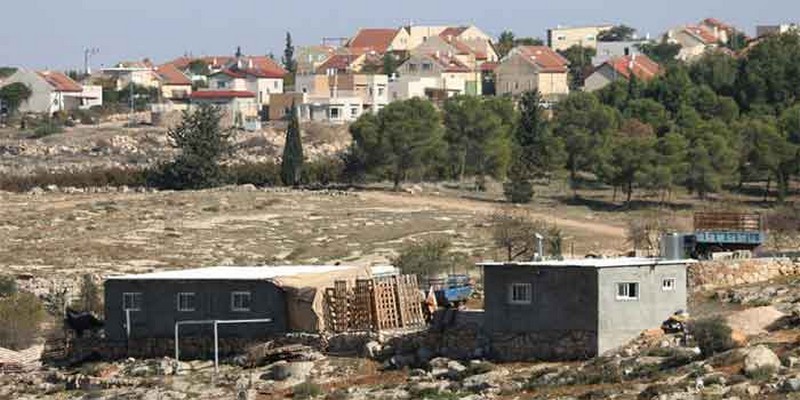
Continue with the settlements? Why not? Most Israelis just do not care. They have never been to the settlements, will never go there and couldn’t care less whether Evyatar is evacuated or not.

The struggle has long since moved to the international front. The crucial shift will come only from there, as happened in South Africa. But part of the world has simply lost interest, and the rest clings to the formula of a two-state solution as if it were sanctified by religious edict. Yet, most decision-makers already know that the two-state solution is long dead, if in fact it ever lived and breathed.

Equality is the path
The only exit from this depressing impasse is by creating a new discourse, a discourse of rights and equality. People must stop singing the songs of yesteryear and embrace a new vision. For the international community, this should be obvious; for the Israelis and to a lesser extent the Palestinians, the idea is revolutionary, threatening, and exceedingly painful.

Equality
Equal rights from the river to the sea. One person, one vote. So basic and yet so revolutionary. This path requires a parting of the ways with Zionism and the rejection of Jewish supremacy, and letting go of the entire self-definition of both peoples – but it represents the only ray of hope.

In Israel until just a few years ago this idea was viewed as subversive, treasonous and illegitimate. It is still viewed that way but with somewhat less force. It has become mentionable. It now remains for civil societies in the West and then the politicians to embrace the change. Most of them already know that this is the only solution left, but are afraid to admit it lest they lose the magic formula for a continued Israeli occupation provided by the now dead two-state solution.

The present is deeply discouraging, the future no less so. And yet to persist in thinking that something can still be hoped for, some action can still be taken, is of the utmost importance. The worst thing that could happen in this part of the world would be for everyone to lose interest in what happens here and resign themselves to the current reality. That must not be.

The views expressed in this article belong to the author and do not necessarily reflect the editorial policy of Middle East Eye.

4 June 2022

Source: palestineupdates.com

The Ethnic Cleansing of Masafer Yatta: Israel’s New Annexation Strategy in Palestine

By Dr Ramzy Baroud

The Israeli Supreme Court has decided that the Palestinian region of Masafer Yatta, located in the southern hills of Hebron, is to be entirely appropriated by the Israeli military and that a population of over 1,000 Palestinians is to be expelled.

The Israeli Court decision, on May 4, was hardly shocking. Israel’s military occupation does not only consist of soldiers with guns, but elaborate political, military, economic and legal structures, dedicated to the expansion of the illegal Jewish settlements and the slow – and sometimes not-so-slow – expulsion of the Palestinians.

When Palestinians state that the Nakba, or Catastrophe – which led to the ethnic cleansing of Palestine in 1948 and the establishment of the state of Israel on its ruins – is a continuous, unfinished project, they mean exactly that. The ethnic cleansing of Palestinians from East Jerusalem and the endless torment of Palestinian Bedouins in the Naqab and, now in Masafer Yatta, are all testaments to this reality.

However, Masafer Yatta is particularly unique. In the case of occupied East Jerusalem, for example, Israel has made a fallacious, ahistorical claim that Jerusalem is the eternal and undivided capital of the Jewish people. It combined its unsubstantiated narrative with military action on the ground, followed by a systematic process that aimed at increasing the Jewish population and ejecting the original native inhabitants of the city. Such notions as ‘Greater Jerusalem’ and legal and political structures, like that of the Jerusalem Master Plan 2000, have all contribute towards turning the once absolute Palestinian majority in Jerusalem into a shrinking minority.

With the Naqab, Israel’s similar objectives were put into motion as early as 1948, and again in 1951. This process of ethnically cleansing the natives remains in effect to this day.

Though Masafer Yatta is part of the same colonial designs, its uniqueness stems from the fact that it is situated in Area C of the occupied West Bank.

In July 2020, Israel purportedly decided to postpone its plans to annex nearly 40% of the West Bank, perhaps fearing a Palestinian rebellion and unwanted international condemnation. However, the plan continued in practice.

Moreover, a wholesome annexation of West Bank regions would mean that Israel would become responsible for the welfare of entire Palestinian communities. As a settler-colonial state, Israel wants the land, but not the people. In Tel Aviv’s calculation, annexation without the expulsion of the population could lead to a demographic nightmare; thus, Israel’s need to reinvent its annexation plan.

Though Israel has supposedly delayed the de jure annexation, it continued with a de facto form of annexation, one that has generated little international media attention.

The Israeli Court’s decision regarding Masafer Yatta, which is already being carried out with the expulsion of the Najjar family on May 11, is an important step towards the annexation of Area C.  If Israel can evict the residents of twelve villages, with a population of over 1,000 Palestinians, unhindered, more such expulsions are anticipated, not only south of Hebron, but throughout the occupied Palestinian territories.

The Palestinian villagers of Masafer Yatta and their legal representation know very well that no real ‘justice’ can be obtained from the Israeli court system. They continue to fight the legal war, anyway, in the hope that a combination of factors, including solidarity in Palestine and pressure from the outside, can ultimately succeed in compelling Israel to delay its planned destruction and Judaization of the whole region.

However, it seems that Palestinian efforts, which have been underway since 1997, are failing. The Israeli Supreme Court decision is predicated on the erroneous and utterly bizarre notion that the Palestinians of that area could not demonstrate that they belonged there prior to 1980, when the Israeli government decided to turn the area into ‘Firing Zone 918’.

Sadly, the Palestinian defense was partly based on documents from the Jordanian era and official United Nations records that reported on Israeli attacks on several Masafer Yatta villages in 1966. The Jordanian government, which administered the West Bank until 1967, compensated some of the residents for the loss of their ‘stone houses’ – not tents – animals and other properties that were destroyed by the Israeli military. Palestinians tried to use this evidence to show that they have existed, not as nomadic people but as rooted communities. This was unconvincing to the Israeli court, which favored the military’s argument over the rights of the native population.

Israeli firing zones occupy nearly 18 percent of the total size of the West Bank. It is one of several ploys used by the Israeli government to lay a legal claim on Palestinian land and to, eventually, years later, claim legal ownership as well. Many of these firing zones exist in Area C, and are being used as one of the Israeli methods aimed at officially appropriating Palestinian land with the support of the Israeli courts.

Now that the Israeli military has managed to acquire Masafer Yatta – a region spanning 32 to 56 sq km – based on completely flimsy excuses, it will become much easier in ensuring the ethnic cleansing of many similar communities in various parts of occupied Palestine.

While discussions and media coverage of Israel’s annexation scheme in the West Bank and the Jordan Valley have largely subsided, Israel is now preparing for a gradual annexation scheme. Instead of annexing 40% of the West Bank all at once, Israel is now annexing smaller tracts of land and regions, like Masafer Yatta, separately. Tel Aviv will eventually connect all these annexed areas through Jewish-only bypass roads to larger Jewish settlement infrastructures in the West Bank.

Not only does this alternative strategy allow Israel to avoid international criticism, it will also permit Israel to eventually annex Palestinian land while incrementally expelling Palestinians, helping Tel Aviv prevent demographic imbalances before they occur.

What is happening in Masafer Yatta is not only the largest ethnic cleansing scheme to be carried out by Israel since 1967, but the move should be considered a first step in a much larger scheme of illegal land appropriation, ethnic cleansing and official mass annexation.

Israel must not succeed in Masafer Yatta, because if it does, its original, mass annexation scheme will become a reality in no time.

Dr. Ramzy Baroud is a journalist and the Editor of The Palestine Chronicle.

3 June 2022

Source: countercurrents.org

Paradigm for peace applied to Russia, Ukraine and the US: Proposal for a peaceful Pathway forward

By Kristin Christman

PART 3. THE ROOTS OF VIOLENCE: NEEDS FOR POWER AND FREEDOM

Part 3C. The National Endowment for “Democracy”: A Second CIA

We’ve been describing the threats to power and freedom that are driving the current crisis in Ukraine, specifically threats of foreign political interference. In discussing the external conflict between the US and Russia, the earlier essay, Part 3A, focused on the political interference performed by the CIA. But it’s also critical to discuss the behavior of the National Endowment for “Democracy” (NED) and the types of foreign political interference in which it is reportedly routinely engaged.

William Blum, a former Foreign Service Officer who left his post in opposition to the US war in Vietnam, spent a few decades researching US foreign intervention abroad. His intent was to write a magazine article, but the more he uncovered, the more he realized the material was book length. He writes, “My government, I discovered, had easily been the intervention king of all history, a serial intervener. There was scarcely any place in the known world where the CIA, the State Department, and/or the US military had not been doing their dirty work.”

NED was formed in 1983, one year after a proposal by President Reagan for the US “to foster the infrastructure of democracy” abroad. In 1991, one of the founders of NED, Allen Weinstein, stated that much of NED’s work involves doing what the CIA used to do. Some, in fact, refer to NED as the “second CIA.”

NED has four core institutes, the National Democratic Institute (NDI), the International Republican Institute (IRI), the American Center for International Labor Solidarity, and the Center for International Private Enterprise, which it uses to infiltrate foreign political, labor, and business organizations to mastermind “separatist riots, color revolutions, political crises, lies and rumors, and infiltration around the world, with an ever-growing list of evils.”

At the time of NED’s creation, the CIA was in hot political water and under heavy scrutiny, presumably over its violations of congressional law with regard to funding the contras who were trying to overthrow Nicaragua’s left-wing, reform-minded Sandinista government. Officially a non-partisan, not-for-profit organization, NED receives most of its funding from US taxpayers through legislation of the US Congress, it is budgeted for within the US Agency for International Development with the Department of State, and it’s ostensibly subject to congressional overview.

NED almost lost its funding in 1993, and in 2018, it was President Trump who unsuccessfully proposed slashing its funding. Those engaged in the anti-Trump groupthink which criticized every single thing Trump did—especially bizarre and disproportionate given the enormous weaknesses of his predecessors, condemned him once more and his “authoritarian” personality for the reason he opposed such a “good thing” as promoting democracy abroad. Writing in the New Republic, Jeet Heer states, “Unlike every US president since Jimmy Carter, he [Trump] doesn’t believe that it’s in American foreign policy interest to promote democracy and human rights abroad. Instead, his administration is working to undermine the agency tasked with doing so.”

It’s unbelievable that past US presidents are so revered and trusted as to assume that they, in their massively deadly actions in Nicaragua, El Salvador, Guatemala, Panama, Haiti, Venezuela, Afghanistan, Iraq, Pakistan, Somalia, Yemen, and beyond, and in their promotion of violence-inducing CIA and NED activities abroad were actually engaged in promoting democracy and human rights abroad. Apparently, in American Orwellian doublespeak, killing more than 800,000 in the Middle East in the US War on Terror was all part of promoting human rights.

It’s certainly possible Trump’s motives were about personal profit. But whether his motives were personal profit or were about saving national money from endless altercations abroad, the argument against his proposal to slash NED’s funding is shallow and false. Heer states, “NED is hated by the very authoritarian regimes with whom Trump is currying favor. For instance, Russia has banned the NED because the Kremlin has deemed it an ‘undesirable’ NGO.” That first line is false. As we shall see, NED is hated by people who are very democratic-minded, and NED’s actions have helped place into power authoritarian leaders, just as the CIA did.

In response to US condemnation of Russia’s alleged interference in the 2016 elections, some have pointed out that the US has interfered in foreign nations to extraordinary degrees. Yet Heer insists that such “moral equivalency is a bit glib” since there’s a big difference between interfering in order to promote democracy and interfering in order to destabilize democracy, which, he claims, is what Russia is doing in the US. In other words, US political interference is considered moral and good because it’s promoting democracy, but Russian political interference is bad and criminal because it’s thwarting democracy.

It’s already a controversial idea to suggest that the morality and legality of violating another nation’s sovereignty varies and depends upon the violators’ purpose. After all, most violators of others’ sovereignty probably presume that their purpose is good. The Allies thought they were great when they violated Iran’s sovereignty and declaration of neutrality during the World Wars to use its railroads. That, supposedly, was somehow also about promoting democracy and freedom. However, in those rare instances where it’s deemed good to violate another nation’s sovereignty, under international law it is only the UN who makes this decision, not simply the US. This helps ensure a more comprehensive, less selfish perspective.

But another hugely shaky point in Heer’s thesis is the idea that US political interference actually is promoting democracy, when abundant evidence suggests that it is not. Equally shaky is the idea that Russian political interference is thwarting democracy or destabilizing US democracy—to the extent that it even exists in the US—when no facts are given to support this statement either. How are we to know that alleged Russian political interference on social media in the US, for instance, wasn’t aimed at trying to thwart the US propaganda machine that steers American minds in undemocratic ways? How do we know that alleged Russian interference in other nations isn’t aimed at thwarting other forms of undemocratic US influence, which seeks to place leaders in power who will grant financial favors to US businessmen? We don’t know either way when only these shallow, unsubstantiated claims are made and no comprehensive analysis is performed. We’re just supposed to stupidly assume that one nation interferes in all the right ways and the other in all the wrong ways.

As we shall see, there’s no clear proof in the material I’ve come across that NED actually is engaged in promoting democracy, or, if it is, there’s no clear proof in that material that its efforts to promote democracy are not offset by its efforts to thwart it. In fact, the evidence I’ve seen supports the idea that NED actually thwarts democracy. American groupthinkers who like to climb on the jeering bandwagon of hating someone, whether it’s Trump or Putin, have to learn that that bandwagon was likely created for manipulative reasons by people who have their own ulterior motives. Just because Trump and Putin didn’t like NED doesn’t mean NED is good. The same goes for NATO.

Many Americans who have already uncovered NED’s worldwide nefarious role from a variety of other sources would wholeheartedly agree with these opening words in a May 7, 2022 report by the Ministry of Foreign Affairs of the People’s Republic of China: “The United States has long used democracy as a tool and a weapon to undermine democracy in the name of democracy, to incite division and confrontation, and to meddle in other countries’ international affairs, causing catastrophic consequences.” NED “has subverted lawful governments and cultivated pro-US puppet forces around the world under the pretext of promoting democracy. Its disgraceful record has aroused strong discontent in the international community.” And again, for those with biases, remember: just because China said this doesn’t mean it’s wrong.

NED supposedly promotes democracy, but, according to William Blum in Rogue State, it actually promotes free market economies and US investment abroad—ironically at the expense of both US and foreign democracy—by using US tax dollars to support right-wing groups against left-wing groups and supplying funds, technical expertise, training, educational material, computers, copiers, cars, etc. to right-wing political groups, civic organizations, labor unions, student groups, book publishers, and foreign media. The result of NED’s activities has been the destabilization of nations that in many cases already had free and fair elections.

Certainly, these types of anti-left-wing activities—performed with the goal of toppling and forming foreign governments who will promote the profits of certain US social and business circles at the expense of the local population’s prosperity and well-being, are the activities that have been commonly observed in the CIA, giving credence to NED’s nickname as the “second CIA.”

Therefore, not only does NED promote a certain economic system against the will of the foreign population, but, while I don’t have comprehensive evidence for this, it seems, based upon the results of their work, that their motivation is to promote in particular the ability of US investors and businessmen to have the power they need to make profits off foreign resources, labor, and markets, even if that means that foreigners have less ability to engage in free market economics themselves.

History demonstrates that the US government seeks to stabilize right-wing governments and to destabilize left-wing governments. The entire process is undemocratic, both in trampling the foreign population’s will to choose and benefit from other forms or variations of economic systems and what appears to be the trampling of the general foreign population’s ability to prosper from free market economics to the extent that US businessmen do. In fact, evidence indicates that, aside from a foreign elite that is cultivated, nations go downhill economically after NED or some other pro-capitalist force does its work. If there is evidence to the contrary, of course, it would be important material to bring forward in cooperative dialogue of non-violent conflict resolution. However, be wary of including in the calculations any economic boosts derived from US aid or loans, for these invariably have interest payments that benefit US bank owners as well as over-bearing political, economic, and military strings attached.

In fact, with regard to the economic results of US influence, Blum provides relevant information in his book, Freeing the World to Death: Essays on the American Empire:

In Russia and in the other countries, the “success” of such globalization programs has typically resulted in the mass of the population being left in great want, much worse off than when they were under communism, while a wealthy elite class is created and the country is gradually thrown open to foreign investment and control.

The reduction in the standard of living of the people in the region since 1990 can scarcely be exaggerated. . . . From Bulgaria to Poland, from Slovenia to Lithuania, the citizens have left their homes to become the guest workers, the illegal workers, the migrants, the refugees, and the prostitutes of Western Europe.

However, these countries are now honored members of NATO, proud possessors of a couple of billion dollars worth of useless military hardware they were obliged to buy from multinationals, they have the right to send their youth to the killing fields of Iraq and Afghanistan to support US wars, the American flag flies over American military bases on their lands, globalized free enterprise is king.

When NED appears on the scene, freedom seems to jump ship, because US policymakers want leaders abroad whom they can control. China’s report lists numerous coups and revolutions in which NED was involved with its use of heavy propaganda, character assassination, and the funding and training of opposition groups, including Poland in 1989, the dissolution of the USSR in 1991—which led to the cannibalization of Russia’s resources and the impoverishment of its people, and coups and forced resignations in Serbia (2000), Georgia (2003), Ukraine (2004), Egypt (2011), and Yemen (2011), as well as Jordan, Algeria, Syria, Libya, Belarus, and Bolivia —of the highly popular left-wing Evo Morales, who had done wonders to reduce Bolivian poverty and improve internal ethnic relations. In fact, when Morales had first run for president in 2002, US Assistant Secretary of State Otto Reich warned Bolivia that its aid would be in danger if they chose Morales, who was anti-big business.

According to China’s report, NED, like the CIA, also interfered in several foreign elections, stirred up protests, and funded opposition and media groups, including in Mongolia, Kyrgyzstan, Thailand, Nicaragua, Venezuela, Haiti, and China. Blum also reports in detail on NED’s major interference in Nicaragua, Venezuela, and Haiti. The Alliance for Global Justice states that NED’s first success after its formation was to defeat the left-wing Sandinista government in Nicaragua in 1990, which the US-backed contras had been fighting for years. It then moved on to toppling Haiti’s leader, Jean-Bertrand Aristide.

In his work, America’s Other War: Doug Stokes describes how Venezuela was the victim of a US-supported coup in 2002 when the late President Hugo Chávez was forced from power for 48 hours. And keep in mind that the “support” of a US-supported coup usually means much more than a phone call or handshake. It means money, arms, propaganda, bribes, scheming, payrolls, destabilization operations, economic sabotage, mob instigators, and military back-up.

Stokes explains that NED had funneled hundreds of thousands of dollars in grants to US and Venezuelan opposition groups, including the labor group whose protests ignited the coup. Yet Chávez, who had won the elections of 1998 and 2000 by the largest majority in forty years, was vigorously defended. Millions of Venezuelans protested and defeated the US-backed coup leaders.

To get a glimpse into the disdain some US policymakers actually hold for democracy, note that a Bush Jr. administration spokesman explained that while Chávez had been democratically elected, “‘legitimacy is something that is conferred not just by a majority of the voters.’”  Of course, Bush Jr. should know, since he didn’t win the popular vote against Al Gore but nonetheless was granted legitimacy as the US president.

Eva Golinger, a Venezuelan-American attorney and journalist who strongly supported Chávez, writes that the US Agency for International Development and NED funneled millions annually into political groups who opposed and led to the political downfall of Ecuador’s President Rafael Correa, a highly popular leader who worked hard to reduce poverty and who also refused to renew the lease to allow the US to maintain a military base in Ecuador, thus earning US policymakers’ enmity by breaking the second and fourth of the “Four Commandments” described in the earlier essay, Part 3A, on coups.

Golinger also states that Honduras was the victim of a coup backed by the Obama administration that forced President Manuel Zelaya from power in 2009. Honduras has suffered ever since from the loss of its democracy and the presence of enormous human rights violations.

As Al Jazeera reports, NED also helped anti-Morsi supporters get rid of Mohammed Morsi, Egypt’s first-ever democratically elected president, by paying huge amounts of US taxpayer dollars to opposition parties and wealthy opponents, and by encouraging protests. Now US policymakers support al-Sisi, who led the 2013 anti-Morsi coup, and who’s said to be even worse with regard to human rights than Egypt’s brutal Hosni Mubarak—like Mubarak on steroids. Al-Sisi has had hundreds of Egyptians killed and imprisoned tens of thousands of political prisoners. But you don’t see US headlines hateful towards al-Sisi and calling him a murderer.

Of course, such interference in foreign nations’ internal politics is illegal and violates international law and foreign nations’ laws, if not US law itself. How is it possible that our tax dollars are allowed to fund this? If NED is under congressional oversight, why isn’t Congress acting to enforce law and dismantle NED for criminal behavior?

Blum’s Freeing the World to Death describes NED activities in Eastern Europe:

The standard operating procedure in a particular country has been to send in teams of specialists from US government agencies, non-governmental organization (NGOs), American labor unions, or private organizations funded by American corporations and foundations; leading examples are the National Endowment for Democracy (NED), Agency for International Development (AID), and the Open Society organizations of George Soros, American citizen and billionaire. These teams go in with as much financial resources as needed and numerous carrots and sticks to wield; they hold conferences and seminars, hand out tons of papers, manuals and CDs, and fund new NGOs, newspaper and other media, all to educate government employees and other selected portions of the population on the advantages and joys of privatizing and deregulating the economy, teaching them how to run a capitalist society, how to remake the country so that it’s appealing to foreign investors.

Again, notice that these “pro-democracy” institutions aren’t pro-democracy at all. They’re pro-capitalism and specifically, pro-privatization and pro-US investment abroad. They’re confusing an economic system with a political system. Privatization has also been pushed by the World Bank, which grants loans typically on conditions of privatizing. This entire issue led to the “Water Wars” in Cochabamba, Bolivia, when a corporation owned in large part by Bechtel was trying to take over Cochabamba’s public water supply. This was during the brutal dictatorship of US-supported Hugo Bánzer, prior to the leadership of Morales. When the civilians resisted the contract, Bánzer cut off power to the city, banned meetings of more than two people, and instituted martial law. But this forced privatization is what US policymakers call “freedom.”

Once you read about the coups funded and instigated by the CIA and NED in articles and books such as Blum’s Killing Hope and James Cockcroft’s Latin America, you start to see the pattern. In fact, the current crisis has many parallels with the pre-coup stages of CIA and NED operations, particularly the propaganda, the lies, the economic and financial sabotage of Russia, and US businessmen’s acquisitive interests in Russia and Europe. This entire crisis is more than likely another case of the US government fighting to secure control—not only over Ukraine—but over Russia, in order to force them to conform to the Four Commandments.

I’ll include them again here:

First Commandment: Thou shalt not obstruct US businesses’ profit-making abroad.

Second Commandment: Thou shalt not significantly help the poor or give decent amounts of fertile land to the landless.

Third Commandment: Thou shalt not be enemies with our friends, or friends with our enemies.

Fourth Commandment: Thou shalt not reject US military bases and weapons.

Within Russia, the NDI and IRI—two of NED’s core institutes, and George Soros’ International Renaissance Foundation contributed millions to Yeltsin’s presidential campaign and helped create a certain public image that would be as likeable as possible, while ignoring less savory aspects of his personality and plans. Most of all, these US campaign contributors wanted Yeltsin in power because he would play the privatization game, thus opening Russia to the grubby, grasping hands of US investors and businessmen. Harvard University’s Institute for International Development sent over its “shock therapist,” Jeffrey Sachs, to put Russia through a crash immersion into capitalism, a course that resulted in catastrophe for most Russians, but fortunes for foreign investors and Russian oligarchs. While Sachs seems genuinely committed to eradicating poverty, others accused him of being tied a narrow way of thinking that caused the crash into poverty of Russia.

China’s report also writes that NED has been “interfering in Russia’s elections and threatening Russia’s constitutional, defense and national security. According to the Prosecutor General’s Office of the Russian Federation, between 2013–2014, NED allocated 5.2 million in US dollars to Russian organizations.” By July 2015, NED was declared an “undesirable organization” by Russia. Russian officials reported that NED “participated in work to recognize election results as illegitimate, to organize political action with the goal of influencing government policy, and to discredit Russian army service.” Can you imagine if Russia were involved in discrediting US military service? Even Americans are guilt-tripped into feeling practically criminal if they express disgust with military service rather than the expected holy reverence.

In 2017, NED, apparently in denial of the CIA’s and its own highly manipulative, intrusive, and violence-inducing activities abroad, issued a report “Sharp Power: Rising Authoritarian Influence” in which it demonized China and Russia by alleging that for more than a decade they’ve spent enormous funds on influencing and manipulating target countries and purchasing loyalty. The hypocrisy is unreal. I wonder if NED ever does a self-report on the spending of enormous funds from US tax payer dollars to manipulate target countries and purchase loyalty. I wonder if NED has read Dov Levin’s book which states that in the years 1946–2000, the US has interfered in foreign political elections 81 times, while Russia has interfered 36 times?

Greedy oligarchs who are rivals with Putin, oligarchs who are angered by Putin’s clamping down on the worst cases of corruption and Putin’s re-nationalizing the energy and banking sectors, are oligarchs who’d be happy to accept NED and CIA bribes to commit murder. And there’s no doubt that US policymakers, NED, and NATO, would conveniently but falsely frame a coup against Putin as the result of “dissension within the Kremlin” and “popular unrest” against an “authoritarian, anti-democratic” leader by Russians who “yearn for freedom.”

Putin and Russia have every right to keep NED and its supporters out of their land, unless they want to use the opportunity to try to teach NED members about the true elements of democracy and the fact that democracy need not have a thing to do with capitalism. In my view, it is NED who’s behaving aggressively towards other nations in its illegitimate efforts to take for itself power and freedom meant for others.

However, in the cooperative dialogue of non-violent conflict resolution, it would be important to learn all the facts from all perspectives, and to see if the issue is more complicated than what I have presented here. In what ways do NED members believe they’re promoting democracy or thwarting democracy? Are all NED members equally aware of all NED activities? Might some be in the dark about undemocratic behaviors? Do NED members feel I am misunderstanding some important aspects of their work or misrepresenting what they do? If NED has been accused of so much coup involvement, why doesn’t it admit it?

In the next part of this essay, we’ll talk a bit about the backgrounds of the social and business circles supporting NED, and we’ll carefully scrutinize the assumptions and leaps of logic within statements made by NED leaders with regard to Russia.

Part 3C. Power&Freedom. National Endowment for “Democracy”: A Second CIA

Kristin Christman has been independently researching US foreign policy and peace since 9/11.

30 May 2022

Source: countercurrents.org

Ukraine Update: The War Hikes Hunger In Africa With Increasing Food Price

By Countercurrents Collective

The war in Ukraine is increasing food prices, which is increasing hunger in Africa.

An AP report from Mogadishu, Somalia cited Ayan Hassan Abdirahman, who is now paying twice as much as she did just a few months ago to buy the wheat flour she uses to make breakfast each day for her 11 children in Somalia’s capital.

Abdirahman has been trying to make do by substituting sorghum, another more readily available grain, in her flatbread. Inflation, though, means the price of the cooking oil she still needs to prepare it has skyrocketed too — a jar that once cost $16 is now selling for $45 in the markets of Mogadishu.

“The cost of living is high nowadays, making it difficult for families even to afford flour and oil,” she says.

The AP report said:

Nearly all the wheat sold in Somalia comes from Ukraine and Russia, which have halted exports through the Black Sea since Feb. 24.

In the Horn of Africa

The report said:

The timing could not be worse: The U.N. has warned that an estimated 13 million people were facing severe hunger in the Horn of Africa region as a result of a persistent drought.

Haji Abdi Dhiblawe, a businessman who imports wheat flour into Somalia, fears the situation will only worsen: There is also a looming shortage of shipping containers to bring food supplies in from elsewhere at the moment.

“Somalis have no place to grow wheat, and we are not even familiar with how to grow it,” he says. “Our main concern now is what will the future hold for us when we currently run out of supplies.”

Sahel

The AP report said:

Another 18 million people are facing severe hunger in the Sahel, the part of Africa just below the Sahara Desert where farmers are enduring their worst agricultural production in more than a decade. The U.N. World Food Program says food shortages could worsen when the lean season arrives in late summer.

“Acute hunger is soaring to unprecedented levels and the global situation just keeps on getting worse. Conflict, the climate crisis, COVID-19 and surging food and fuel costs have created a perfect storm — and now we’ve got the war in Ukraine piling catastrophe on top of catastrophe,” WFP Executive Director David Beasley warned earlier this month.

Even the cost of therapeutic food for malnourished children could rise 16% over the next six months because of the war in Ukraine and disruptions related to the pandemic, UNICEF says.

African countries imported 44% of their wheat from Russia and Ukraine between 2018 and 2020, according to U.N. figures. The African Development Bank is already reporting a 45% increase in wheat prices on the continent, making everything from couscous in Mauritania to the fried donuts sold in Congo more expensive for customers.

“Africa has no control over production or logistics chains and is totally at the mercy of the situation,” said Senegalese President Macky Sall, the African Union chairperson, who has said he will travel to Russia and Ukraine to discuss the price woes.

Moscow Is Ready To Make Significant Contribution

The report said:

Russian President Vladimir Putin pressed the West last week to lift sanctions against Moscow over the war in Ukraine, seeking to shift the blame from Russia to the West for a growing world food crisis that has been worsened by Ukraine’s inability to ship millions of tons of grain and other agricultural products while under attack.

Putin told Italian Prime Minister Mario Draghi that Moscow “is ready to make a significant contribution to overcoming the food crisis through the export of grain and fertilizer on the condition that politically motivated restrictions imposed by the West are lifted,” according to the Kremlin.

Western officials have dismissed the Russian claims.

The report added:

In Cameroon, baker Sylvester Ako says he has seen his daily clientele drop from 300 customers a day to only 100 since bread prices jumped 40% because of the lack of wheat imports. He’s already let three of his seven employees go, and worries that he will have to shutter his Yaounde business entirely unless something changes.

“The price of a 50-kilogram bag of wheat now sells at $60 — up from about $30 — and the supply is not regular,” Ako said.

Along with the shortfall in wheat imports, the African Development Bank is also warning of a potential 20% decline in food production on the continent because farmers are having to pay 300% more for their imported fertilizer.

The organization says it plans to address the issues through a $1.5 billion plan that will provide farmers in Africa with certified seeds, fertilizer and other help. Reducing dependence on foreign imports is part of the strategy, but those economic transitions are likely to take years, not months.

Senegal’s president says appetites can pivot more quickly. He is encouraging Africans to consume local grains that were once the staples of their diets.

“We must also change our eating habits,” Sall said. ”We dropped millet and started importing rice from Asia. Now we only know how to eat rice and we do not produce enough. We only know how to eat bread. We do not produce wheat.”

Aid Projects Are Threatened

A Reuters report from Dakar said about a small charity broke ground this year on a clinic in northern Burkina Faso to care for thousands of women and children who have fled Islamist insurgents wreaking havoc along the fringes of the Sahara.

According to the Reuters report, when the Ukraine war began, global supply chains buckled and the cost of building materials, fuel and food spiked in West Africa. The charity’s founder, Boukary Ouedraogo, was forced to make a tough decision: he halted construction of the clinic with only the foundations laid.

Similar calls are being made across sub-Saharan Africa, where aid projects are threatened by the fallout from the war in Ukraine, potentially putting millions of lives at risk.

Ouedraogo’s clinic was desperately needed in Kaya, a town of dirt streets and squat brick buildings surrounded by arid scrubland. Its population has swelled in recent years as thousands of people from surrounding villages flee militant attacks, straining the already basic health care system.

“What happened in Ukraine happened at the same time as the crisis in this country got worse,” said Ouedraogo, who runs the BO Foundation in Burkina Faso.

“We hope all the donors can keep their attention,” he said. “We felt what we were doing was going to reduce the number of deaths and infant mortality.”

Humanitarian agencies already struggling with widespread price increases under the pandemic say the crisis in Europe has made things worse. Even the cost of life-saving therapeutic foods for malnourished children has spiked.

Diverting Aid: From Africa to Europe

Compounding the problem, some donors have diverted state aid from Africa’s worst-hit countries to help support more than six million refugees who have fled the fighting in Ukraine.

Denmark

The report said:

Denmark said in March it was halving its aid to Burkina Faso this year to accommodate Ukrainian refugees. Its budget for Burkina’s neighbor Mali, also in the grips of an Islamist insurgency, has dropped 40%.

Sweden

The Reuters report said:

Sweden has also said it plans to divert $1 billion from its aid budget to help cover the cost of hosting Ukrainian refugees.

Sudan

It is a similar story in Sudan. In a southern area faced with conflict and food shortages, a paediatric clinic run by Senegal-based medical charity Alima faces a $300,000 funding gap due to an increase in costs, including fuel for the clinic’s generator.

At this rate, Alima will have to shut the program down, said its director of operations, Kader Issaley.

Action Against Hunger, a charity with operations across Africa, has seen the cost of foodstuffs such as rice, oil and sugar rise 20% to 30% over the past year.

This will reduce its coverage by the same amount, said Mamadou Diop, a representative from its West Africa office.

“We have to totally rethink our approach,” said Diop. “We must decide, do we reduce supply or reduce the number of beneficiaries?”

Not Only In Africa

The Reuters report said:

The problem is not limited to Africa. The U.N.’s World Food Programme (WFP) feeds 13 million people a month in Yemen, where the economy has been wrecked by years of war, but it has reduced rations for 8 million of them since January.

It may have to make further cuts, after raising only a quarter of the $2 billion it needs for Yemen this year from international donors.

“We are taking food from the poor and feeding the hungry,” said WFP representative to Yemen, Richard Ragan.

“In June we will have to make some tough decisions about possibly even going down to just feeding five million, those who are really most at risk,” he said

Ethiopia, Somalia, DRC

The report said:

Conflict in Ethiopia, Somalia, Democratic Republic of Congo and the Sahel region have forced millions to flee their homes. Nearly half a billion people live in extreme poverty, according to the World Bank.

West Africa alone faces an unprecedented food shortage that threatens nearly 40 million people, driven in part by drought and the impact of the war in Ukraine on food prices and supply.

The impact of higher costs on aid organizations varies, health specialists say.

Smaller non-profits reliant on institutional donors such as governments for yearly budgets may struggle more than a larger charity such as Medecins Sans Frontieres, which raises money through public campaigns.

MSF said it did not foresee cutting back its operations due to the war in Ukraine.

But few are immune. A drop in funding that preceded the Ukraine war has forced WFP to cut rations in seven countries in West and Central Africa.

Nigeria

The Reuters report added:

In Nigeria, the continent’s most populous country, the number of people receiving emergency assistance from WFP has dropped from 1.9 million in September to 650,000.

Like Burkina Faso and Mali, northern Nigeria is also wracked by a prolonged Islamist insurgency.

Health specialists and aid workers said it was too early to assess exactly what the impact on communities will be and it could take months to see how much damage the cutbacks cause.

“Further funding shortfalls will contribute to worsening food security and nutrition in locations where food insecurity is already at emergency levels,” said WFP spokesman for Western Africa, Djaounsede Madjiangar.

The report cited a child from Somalia:

One-year-old Hassan howled in a blue plastic bucket suspended from a scale as a medical technician noted his weight: 5.6 kg.

The report said:

It was an improvement. Hassan weighed only 5.2 kg when he first began receiving treatment for severe acute malnutrition at a clinic run by aid workers in the south of the country three months ago – about half what a boy his age should weigh.

His partial recovery is thanks to a sweet peanut paste called Plumpy’Nut developed by French scientists in the 1990s that has become a crucial weapon in the fight against child malnutrition.

Three small sachets a day for six weeks can be enough to bring a starving child back to full health, according to U.N. children’s charity UNICEF.

“He used to be much worse,” said the boy’s mother, Hasan Habiba Mohammed Nur, patting his bony legs under an oversized T-shirt. “The Plumpy’Nut has really helped him.”

UNICEF says it spends $137 million a year on therapeutic food and the overall market is estimated to be worth up to $400 million.

But aid agencies say it is becoming too expensive.

Over the past year, the cost of Plumpy’Nut has risen 23%, including a 9% increase imposed since the Ukraine crisis began, Plumpy’Nut’s main producer Nutriset, told Reuters.

In a letter to customers in March warning of impending price increases, it said the cost of ingredients such as palm oil, milk powder and whey, and packaging including laminate for the sachets, had risen sharply. Shipping expenses have also rocketed. In all, costs are up 39%, Nutriset said.

“The war in Ukraine is indirectly impacting the price of raw materials, and prices will continue to increase even more in the weeks and months to come,” Nutriset said.

The increases worry UNICEF. It predicts that prices of therapeutic foods will rise 16% in the next six months because of Ukraine and pandemic disruptions. Without further funding, 600,000 more children may miss out on treatment, it said in May.

The effects are already being felt, aid workers say.

Alima’s budget to buy and ship a batch of Plumpy’Nut to a project in an impoverished area in the southeast of Democratic Republic of Congo is about 175,000 euros ($188,000).

But with a rise in fuel costs and the price of Plumpy’Nut, the shipment now costs 230,000 euros, said Hassan Bouziane, who runs logistics at Alima.

He now has to go to donors to get more cash, taking up valuable time.

“The impact on the beneficiaries will be huge,” said Bouziane. “The treatment for a child of five years old is six weeks. When you lose two weeks, that is a third of their treatment.”

2 Of The World’s Top Rice Producers Are discussing Hiking Prices

Two of the world’s top rice producers are in discussions to raise prices together, Reuters reported, citing Thai government spokesperson Thanakorn Wangboonkongchana.

“We aim to raise rice prices, increase farmer income and increase bargaining power in the global market,” Thanakorn said on Friday, per Reuters. “The rice price has been low for more than 20 years while the cost of production has been increasing.”

Thailand and Vietnam are the world’s second- and third-largest rice exporters after India. A price increase in the staple grain would be bad news for billions of people across the world, especially as it comes on top of soaring wheat prices.

Thai Commerce Minister Jurin Laksanawisit told reporters on Friday that the country’s rice exports are getting a boost this year due to a recovery in global demand and as the country’s currency falls to a five-year low against the US dollar, which is used in the trade of commodities internationally, per Bloomberg.

Vietnam’s agriculture ministry did not immediately respond to Insider’s or Reuters’ requests for comments.

Vietnam’s Food Association played down the prospect of measures to boost prices ahead of a June meeting with its Thai counterparts.

“The meeting will focus on measures to cooperate in sustainable food production,” Nguyen Ngoc Nam, the chairman of Vietnam’s Food Association, told Reuters. “It is not reasonable to talk about raising or controlling rice prices at this time when the global food price is on the rise.”

Neither Thailand nor Vietnam are facing a shortage in rice supply this year, according to data from the US Department of Agriculture. However, like in many countries, inflation in both countries has risen sharply in the last year, putting pressure on the government to soften the impact on their populations. About 30% and 40% of the population in Thailand and Vietnam respectively are employed in the agricultural sector, according to the United Nations.

Consumer prices in Thailand are hovering around a 13-year high, having gained 4.71% on-year in April, according to data from the country’s Commerce Ministry. Prices in Vietnam rose 2.86% on-year in May, according to data from the country’s statistics office.

But consumers could turn to other major exporters for rice — like top exporter India — for supplies.

“If Thailand and Vietnam try to jack up the prices, obviously price-sensitive buyers in Africa will shift towards India,” B.V. Krishna Rao, president of the All India Rice Exporters Association, told Reuters. He said neither country has approached India about participating in a rice cartel, Reuters reported.

Benchmark export prices for Thai rice have averaged $420 a metric ton this year — 16% higher than India’s $363 a ton, per Reuters.

Indian trade and government sources told Reuters on Friday that there were no plans to limit rice exports.

The Crisis May Spread To Sugar

Other media reports said:

Sugar prices are expected to soar due to the export restrictions imposed by a number of key producing nations seeking to tame rising domestic food prices.

The impact of the Covid-19 pandemic, which seriously undermined global supply chains, has been dramatically aggravated by the crisis in Ukraine and the subsequent sanctions imposed on Russia. The conflict between the two major grain exporters has disrupted global supplies.

A number of countries have moved to limit exports of other key commodities, putting global food security under threat, while risking further increases in the prices of agricultural products.

Kazakhstan

On Monday, Kazakhstan began a six-month ban on white and cane sugar exports. India is reportedly considering placing restrictions on sugar exports for the first time in six years to prevent a surge in domestic prices. India’s ban is expected to target around 10 million tons of this season’s exports.

Brazil

Last week, Reuters reported that sugar cane mills in Brazil, the world’s biggest producer and exporter of sugar, were canceling sugar export contracts and shifting production to ethanol in an attempt to take advantage of the high energy prices. The estimated cancelations could equate up to 400,000 tons of raw sugar.

Pakistan

Earlier this month, Pakistan imposed a complete ban on sugar exports, citing deep concerns about inflation. In March, Russia banned sugar exports until the end of August.

“For sugar, it’s relatively easy for Brazilian mills to switch production to ethanol production if the economics make sense, and this can push global sugar markets higher,” Darin Friedrichs, founder and market research director at Sitonia Consulting, a Shanghai-based commodities analysis firm, told the South China Morning Post.

“In particular, as both food and energy prices are rising, there is increased focus on the use of food for the production of fuel,” he added.

Earlier this week, the head of the IMF, Kristalina Georgieva, warned that the global economy is facing “its biggest test since the Second World War.” UN Secretary General Antonio Guterres said global hunger levels “are at a new high,” with the number of people facing severe food insecurity doubling in just two years, from 135 million before the pandemic to 276 million today.

However, Dong Xiaoqiang, the commercial head of AB Sugar China, said he does not expect a global shortage of sugar this year despite mounting concerns, adding that India and Thailand, the world’s second largest sugar producer and number two exporter respectively, are expected to increase their sugar output in 2022.

“What has happened recently is more a show of emotional tension over the supply of food including sugar,” Dong told the media. “Most countries that announced export bans are small sugar producers with a tight balance between supply and demand, and not many contracts have been cancelled in Brazil,” he said, while adding that prices are still expected to surge.

30 May 2022

Source: countercurrents.org

The World Economic Forum Concludes Not with a Bang, but with a Whimper. “Improving the State of the World”, Really?

By Peter Koenig

On 26 May the 2022 WEF concluded not with a bang, but with a whimper. When mainstream journalists start questioning the usefulness of the WEF, the world should listen.

They asked to what extent WEFs slogan, “Committed to Improving the State of the World”, was relevant.

Improving the State of the World – Really?

What did the WEF and all the illustrious attendants of the Davos meeting do to stop the Ukraine War? Nothing. Zilch.

Professor Schwab, didn’t even offer to mediate for Peace. Instead, he introduced President Zelenskyy of Ukraine on video, who addressed the WEF in his brown t-shirt – a brown that may otherwise and during WWII have been associated with the Nazi-color – coincidence?

In an aggressive tone, Zelenskyy demanded from the West more billions of cash and weapons to kill more Russians. He was very clear that Peace was not an option, but more war against his archenemy, Russia.

Winning that war is indeed not the slightest option, despite all the western propaganda. And Zelenskyy knows it. So, why continue a useless war that kills thousands and thousands of innocent people, more Ukrainians than Russians? Instead of accepting the proposals to talk, to negotiate which had been initiated in Istanbul in late March? What’s the hidden agenda – or perhaps not so hidden, as NATO, not Zelenskyy is calling the shots?

Instead, Zelenskyy got a standing ovation from the WEF crowd, presumably for Zelenskyy’s aggressive, belligerent tone and requests for more fire and killing power from the west. The applause was like enhancing the propagated and truly indoctrinated hatred for Russia within the Forum and around the world. The Forum, consisting of luminaries dubbed the “Davos Man”, for individuals who are bought and sold by “Davos”.

But, Professor Schwab, the founder and eternal CEO of the WEF, the overlord of the world’s good-doers, the one who is “Committed to Improving the State of the World”, did not offer Peace mediation with one world. How would that have been received by the world? Maybe the WEF wants to keep its ambiguous image between “doing good” and “doing right” – or both, or neither?

Can you imagine? Not one word towards Peace, towards seeking a negotiated solution for Peace.

Strangely, Peace and what could be done about it rather than sending more killing material, was hardly mentioned throughout the WEF’s 4-day Forum. Doesn’t that speak for itself and for the WEF’s irrelevance?

Perhaps not. Let’s see.

Of course, there was a multitude of behind close-door sessions taking place. They were secret. Not accessible to the public at large. That’s where the game-making decisions are and were taken. What was playing out in the open Forum was sheer diversion, with a hint of mind-manipulation.

In comes Henry Kissinger, the famous “Realpolitik” statesman, close to 100 years old, (mentor of Klaus Schwab) he who is credited with “opening” China for President Nixon and subsequent US Administrations. He dared suggest, that for Peace, Ukraine may have to cede some territory to Russia.

He was referring to the mostly Russian Donbas area, of about 45,000 sq. km, and 4.1 million people. Compare this to the entire Ukraine, about 604,000 sq. km and roughly 44.1 million people, rapidly declining, though, due to war refugees leaving the country.

This is, of course, “Realpolitik”. Any serious analyst would agree. However, Zelenskyy was furious and aggressively rejecting the idea; Kissinger was verbally insulted with four-letter word by one of Zelenskyy’s aides.

As to the overall gist of the globalist WEF, Kissinger’s attempt to seek a solution didn’t match the globalist’s agenda – another move away from globalization by Henry Kissinger? Is the world listening? Or is it just a farce?

Peace Negotiations?

Shortly after WEF’s closure, President Emmanuel Macron of France and Chancellor Olaf Scholz of Germany, proposed to President Putin to sit down with Zelenskyy for Peace negotiations. It was not clear whether the two were also proposing to moderate these talks.

image: Macron and Scholz at Munich Security Conference, February 2022

Mr. Putin immediately accepted, saying he and Russia’s Foreign Minister, Sergey Lavrov, had proposed such talks on several occasions, but were always rejected.

Will they be accepted this time?

Zelenskyy hasn’t responded yet. Of course, NATO has to be involved and NATO has to give the “green light” …

Logically, NATO knew, or even initiated the idea. Otherwise, the overture by the two leaders (sic) – both scholars of Klaus Schwab’s academy for “Young Global Leaders”, wouldn’t have been possible.

Why are we made to believe something that isn’t?

Are we Being fooled?

Remember, nothing is coincidence, and nothing is what it appears, and you are trained – by media and endless highly sophisticated propaganda – to believe the truth is a lie and vice-versa.

And so, they keep you confused, so that you laugh, when you should scream and vice-versa.

“We’ll know our disinformation program is complete, when everything the American public believes is false.” — William J. Casey, CIA Director (October 2020)

Most surprising, or not, were Ms. Von der Leyen’s remarks, when she praised the Ukraine army for the progress, they made against the Russian Bear (not her words) … and this coming from a former Minister of Defense (Germany). It is surely not naïve, but sheer lie-propaganda – to attract more money from the world’s billionaires, the EU and individual EU countries? Or to fool you once more, into believing that Ukraine really made progress against Russia and may be at the verge of winning this war?

It’s hard to believe by cold logic. But when it comes from her, THE Eminence of the EC, plus as former German Defense Minister, well-versed in war games, it must be true. And this, despite all the reports from independent journalists in the “field”, commenting directly from the war zones.

Independent reports have confirmed that many of the atrocities on the Ukrainian civil society are not perpetrated by the Russian army, but by the Ukrainian Forces, including the Nazi-Azov battalion(s) – yes, there are more than one.

Yes, they are deadly “false flags” inflicted by the very Ukrainian compatriots, and the western news casters know about it, and so does Ms. Von der Leyen.

Why would the journalists lie? They have all to lose by telling the truth. They are doing an independent job, exposing their lives, not only for being at the front line, but also because they are telling the truth.

Is Blatant Lying Necessary?

If blatant lying is necessary at the WEF and that from the – let’s face it, unelected – President of the European Commission (EC), then, the WEF has been sinking very deep – and maybe seriously losing its grip on “globalization” namely Schwab’s dream, of “Global Governance”. Good riddance!

That’s what we hope. But are they really losing out on Globalization? Because one deception chased the next, and we don’t know any more what is real and what is fake.

That’s the purpose. Our brains are getting weaker and weaker.

Eventually we believe whatever the Matrix-commanding authority says, jumping from one belief to the next. At the end we jump from the bridge to our death, if the commander says it’s the best thing we can do for society.

Confusion makes us compliant.

And the world will notice this deglobalizing trend, the intellectual world anyway, even those who have been staunch adherents to the WEF’s annual oligarch get-together.

What was also remarkable and should be noted, in connection with the WEF’s “declining usefulness” – none of the key world leaders were present: Not President Putin (he was most likely not invited), not President Xi (he may have declined either out of solidarity with the Russian leader, or because of “covid” and the zero-covid policy China defends, or both); and not even Joe Biden, the chief globalist himself, was present. Maybe he confused the dates with his trip to Asia.

The absence of the three world leaders clearly shaded the WEF’s luster as well as the pretense of globalization and Global Governance, the ultimate objective of The Great Reset.

Instead, Biden went to South Korea and Japan, to threaten North Korea with additional sanctions which the UN Security Council rejected; and in Japan to gather two-fold support for his aggressive threat on China that the US would go to war to defend Taiwan from an attack of the mainland. Biden’s brain must have forgotten that Taiwan was declared by the UN already in 1971 as an integral part of China, what it historically is.

Maybe this faux pas was also part of the chess game to fool us once more and to plant more confusion.

And, second, to seek Japan’s support for the WHO “Pandemic Treaty” which he, Biden, initiated and proposed, and which is currently being discussed by the ongoing World Health Assembly. If approved, it would transfer WHO into WHT – for World Health Tyranny.

Remember, it is no coincidence that the WEF and the World Health Assembly or the “Pandemic Treaty” take place in parallel. The Pandemic Treaty is an integral part of the WEF’s Great Reset. All is connected.

WHO’s “Pandemic Treaty” on Hold

Here are the good news. At least the first attempt to push this two-fold treaty through seems to be blocked by the African States. That’s a good omen for the world, being rescued by Africa. See this.

According to latest news, WHO withdraws 12 of the 13 Biden proposed ‘sovereignty’ amendments; in other words, of the proposed changes to WHO’s International Health Regulations (IHR). This occurred apparently amid fierce opposition to WHO’s “Pandemic Treaty”, not only from Africa. See this.

However, this doesn’t mean the battle is won, and the world, the people should not become complacent now. The globalists won’t let go easy. Remember, the WEF and especially financial institutions behind the WEF have enormous money power. And if all fails, they may apply other means of pressure – blackmail and worse.

More importantly, people opposing this WHO Pandemic Treaty, must remain on the ball. For example, pressuring their government’s for exiting WHO, and by seeking alternatives to WHO, by creating an alternative international health body, with the purpose of primarily seeking disease prevention, instead of mainly curative means, like high-risk vaccines and other medication, that serve the interests of the WHO controlling elite, as is the case today.

See this: 17,000 doctors launch a plan to break away from the WHO and create a parallel medical universe (this link will give you the Portuguese version. On this link, go to “change language” and switch to English and the English text will appear, however, without changing the website link).

Disapproving the WHO’s amendments to the IHRs and eventually of the “Pandemic Treaty, would be a clear move away from globalization towards individual countries’ sovereignty. Granted, at this stage it would be just winning a battle in what could become a long war of the People against a tyrant health governance of our globe – our humanity; and wars against more tyranny imposed by the globalists.

Further down the road we may be told that Africans have been convinced of the “good” of the “Pandemic Treaty”, for the good of humanity, for preventing future pandemics.

Let’s not be fooled again!

All is possible. Remember, nothing is coincidence, and all is connected – and in this total chaos – what it seems – we are hopelessly lost, and believe what we are told, even if evidence and logic may tell us something different or the contrary. We can’t cope anymore. We just believe what we are told to believe. It’s cognitive dissonance on steroids.

Let me interject here a personal note. We, The People, Shall Win. Not just the battle, but also the war. The sun, the LIGHT, is on our side.

No Snow in Davos. The WEF: “Eternal Globalist Agenda Pusher”

This year, the WEF – the eternal globalist agenda pusher – played out in a pre-summer Davos, no snow, no snow-covered roofs with white-uniformed, hazmat-looking, machine-gun toting face-covered police and military. Much less impressive without snow.

But, all the same, the police and military were everywhere, many hidden, plain-clothed, but all wearing a discrete armband indicating that they were the custodians of WEF-protection.

Ever-so-often they harassed a journalist, who was known to be critical – not mainstream, of course – just for show, and possibly “fear-making” à la “beware of misbehavior, you are in the city of the WEF”. Well, yeah, at least for these 6 days, including the two days of the luminaries’ arrival last weekend.

That the world is rather moving away from the globalization craze, the WEF’s flagship, could be seen on various fronts. Or is it just wishful thinking? Deception in disguise? Nothing is what it seems and nothing is coincidence.

The Money-making “Green Capitalist” Agenda

Other than no Peace suggestion by the WEF, there was of course also Climate Change on the agenda. It’s a must on every world event. There are some thousand or more scientists trained and available to defend this horrifying climate change theory – man-made climate change. A money-making green capitalist agenda, against which very few intellectuals and scientists dare to argue.

How dare you!!!

Now, the Climate Change talk is presented in a new dress. It shifted from man-made CO2 to the Oceans which absorb CO2 and give off CO2 – to keep the world in balance. A perfect system that has worked for millions and millions of years. As if science didn’t know that before. NASA has been studying this phenomenon for over thirty years in both the Atlantic and the Pacific Ocean.

Now the new twist is, because of man’s abuse in producing CO2, perhaps the Ocean’s capacity is no longer sufficient to absorb it all. After all the years of a completely other climate change narrative, we are suddenly presented with this astounding fact – mea culpa – we simple humans, are responsible for releasing and producing so much CO2 and other climate pollution, that the Oceans can no longer absorb it, can no longer keep Mother Earth in balance, what the Oceans have been doing, since Mother Earth exists.

Some two or three decades ago, an Australian scientist said, based on ample studies, that not only does the climate change all the time, nothing is stagnant in the universe but that by far the principal influence on Mother Earth’s climate is the sun, different phases of sun movements.

Man had practically zero influence in the earth’s weather / climate pattern.

There have been long periods of no sun movements that resulted in what is called “Snowball Earth” some 700 million years ago. This is what google has to say:

“These dramatic “Snowball Earth” events occurred in quick succession, somewhere around 700 million years ago, and evidence suggests that the consecutive global ice ages set the stage for the subsequent explosion of complex, multicellular life on Earth.” See this.

“Green Capitalism” cum “Progressive Neoliberalism”

Be it as it may – this scientific evidence doesn’t fit the globalist agenda. It is not even mentioned to be argued about. The Global Warming narrative, that indeed started some three decades ago absorbing everything “environment”, was later converted into “Climate Change”. There was a time, when the entire Environment Department of the World Bank focused only on Climate Change. It was the narrative the world had to believe – and still has to be indoctrinated with it.

Any idea why?

When mankind is presented with its guilt, a guilt that can realistically not be changed, because the guilt is not real, so, whether true or false, we must believe it, to become vulnerable for manipulation and the entire Climate Change panorama offers itself for a new GREEN style of capitalism cum neoliberalism, as those who can still see straight will have observed.

But hardly anybody seems to notice this absurd controversy between the elite’s climate sermon, and their flocking to Davos, in hundreds of private jets, clogging the Zurich airport, then many take a helicopter to get to Davos in 20 minutes instead of the two-hour train ride.

These billionaires or wannabe billionaires, certainly couldn’t give a flying sh*t about CO2 and “man-made climate change”. It’s one of those flying-in-our-face lies, that we so gallantly ignore.

Total Confusion and Scare Mongering

Now that we are totally confused about what’s what and what to believe – and our brains are running crazy, wanting to rest – that’s when the Great Reset comes in, with the whole truth and nothing but the truth. We can’t believe what’s presented, so we laugh and shrug it off as impossible and untrue.

To make the point even stronger, Klaus Schwab hired the Israeli “futurist scientist” Yuval Noah Hariri, apparently Klaus Schwab’s closest advisor, as far as his dream world “The 4th Industrial Revolution” goes, an all-digitized world. Hariri produces videos galore to convince the people that they are mere “hackable” animals, and eventually will be subjected to brain manipulation, either by implanted chips or directly by 5G ultra-short-waves.

It’s part of scare-mongering, but also part of truth-telling about their intention. This dark cult must divulge their intention in whatever convoluted way so that their plans may come through. That’s part of the cult’s rule.

And because our brains are vulnerable and can be chipped or otherwise manipulated, The Reset’s final doctrine, “You own nothing but will be happy” may also be true.

Global Deception. Addicted to Misinformation

This reminds me of a recent article by The Cogent – “Revelation of the Method”. It is a brilliant masterpiece in describing how we are being deceived in plain sight, know it, and still believe in the deception.

We are hopelessly addicted to misinformation to justify our own behavior – there is no escaping, unless we have a shock break-through and jump the fence of the matrix. Within the matrix many of us, totally off-mainstream, believe we are chewing the red pill; in reality we are sucking on the blue pill. Only once we jump the matrix’s fence are we in a position to chew and swallow the red pill.

It will be a big loneliness. Only a drastic jump in consciousness to the level of Fifth Dimension, where the light will be on our side, will make us resistant, red pill-capable.

It is not impossible, but it takes a sea-change in peoples’ thinking and reasoning, especially in the highly educated, a.k.a. indoctrinated, and comfortable western world. But we shall not give up. See this for more details. May I suggest you read this relatively short explanation on the sophisticated psychological war game that, we the People, are being exposed to.

This is my non-conclusive WEF 2022 conclusion. Are they on the winning side, with a well working deceptive program, keeping us confused, and eventually believing in lies, instead of the truth – both of which are presented to Us, The People, simultaneously, and / or sequentially?

Just follow he Climate Change Agenda; the Vaxx Agenda; or the fully orchestrated vaxx propaganda dialogue between Klaus Schwab and Albert Bourla, Pfizer’s CEO – and the Schwab-invited “standing ovations”. See this.

See Video: Conversation between Klaus Schwab and Albert Bourla

In the end, we humanity must and will win this existential war, a war between the dark cult, led by off-humans – and Us, The People.

Our entire Civilization is at stake.

It is as serious as that.

*

Note to readers: Please click the share buttons above or below. Follow us on Instagram, Twitter and Facebook. Feel free to repost and share widely Global Research articles.

Peter Koenig is a geopolitical analyst and a former Senior Economist at the World Bank and the World Health Organization (WHO), where he worked for over 30 years around the world.

30 May 2022

Source: www.globalresearch.ca

The US baby formula crisis and capitalism’s indifference to the lives of children

By Kevin Reed

The baby formula crisis that is threatening the lives of infants across the US deepened this week as the out-of-stock rate for baby formula on store shelves surged to 70 percent for the week ending May 22. The shortage rate during the previous week was 45 percent, according to the retail tracking firm Datasembly.

The supply shortage is so severe that there are now reports in some areas of the country of mothers attempting to purchase breast milk online from anonymous and independent sources such as Facebook and Craigslist. Pediatric nutritionists are warning that such measures are potentially very harmful to children.

The crisis of powdered formula supplies, 90 percent of which are produced by four monopolies that dominate the US pediatric nutrition industry, is not a mistake or a product of unforeseen circumstances. It is the outcome of a society run by a ruling elite that, in its singular preoccupation with increasing its wealth, is totally indifferent to the lives and well-being of children.

There has been a combination of criminal negligence, corporate profiteering, stock market manipulation and government complicity that have resulted in the shortage of the essential food needed by infants and toddlers, especially those from poor and working-class families.

The supply shortage began almost immediately following the onset of the coronavirus pandemic in February 2020 when supply chains and transportation were disrupted internationally. During the initial days of the pandemic, families stockpiled the formula and emptied shelves. This was followed by a sharp fall in sales, and manufacturers cut back on production.

Now, with an uptick in births and a dramatic decline in breastfeeding rates among new mothers, demand has shot up again. The inability of the producers to adapt to fluctuations in demand is itself an expression of the anarchistic and unplanned nature of capitalist economics.

The primary cause of the recent surge in the shortage stems from the shutdown in February of the baby formula factory operated by Abbott Labs in Sturgis, Michigan, the largest in the US. The plant is responsible for 25 percent of the US supply and produces the popular brand names Similac, Alimentum and EleCare.

In February, the US Food and Drug Administration (FDA) forced Abbott Labs to recall products and shut down the Sturgis facility. This action was taken only after it became clear that the conditions in the plant were so unsanitary that the federal government agency, which has a long history of collaboration with the corporations in the food and drug industries, could no longer look the other way.

During congressional testimony Wednesday, FDA Commissioner Dr. Robert Califf said the agency’s inspection of the Sturgis operations that began on January 31 revealed conditions that were “shocking” and “egregiously unsanitary.”

Dr. Califf told the Subcommittee on Oversight and Investigations of the House Energy and Commerce Committee that the “totality of evidence” obtained during the inspection caused the FDA to conclude that infant formulas manufactured at this plant “were produced under insanitary conditions.” He added that the formula “may be contaminated” with bacteria that is known to be fatal in infants.

Among the unsanitary conditions uncovered at the Sturgis factory were that multiple swab samples “later tested positive for the bacteria Cronobacter sakazakii,” cracks in the spray dryers used in the manufacturing process are “an issue related to previous foodborne illness outbreak in powdered infant formula” and water leaks and condensation that are known risk factors for deadly bacteria were found “in areas where dry powdered formula was produced.”

Califf also reported leaks in the roof, standing water in the factory and two instances in the past, based on internal company documents, when finished baby formula was known to have “environmental contamination with Cronobacter sakazakii.” The FDA commissioner claimed that these poisoned batches, which were produced by Abbott Labs in 2019 and 2020, had been destroyed by the company.

The FDA inspection was motivated in part by the fact that four infants, who had been fed nutrition products from the Sturgis factory, had been hospitalized between September and December 2021 with Cronobacter infection. Cronobacter sakazakii is a serious foodborne pathogen that can cause “severe, life-threatening infections,” including sepsis and meningitis as well as bowel damage. Two of the children died from their infections.

The agency was also belatedly responding to a report by a whistleblower who disclosed in October 2021 details about the dilapidated conditions at the Michigan factory. The whistleblower also highlighted the retaliatory policy of company management and its firing of employees who objected to the failure to follow FDA requirements, falsification of records, releasing untested products onto retail shelves and failure of antiquated equipment at the Sturgis facility.

Abbott Laboratories is a $200 billion global corporation that produces medical devices and health care products and was founded in 1888. The multinational has profited enormously over the past two years from its pandemic-related COVID testing products while its less profitable pediatric nutritionals operations have been starved of resources.

Meanwhile, the company—whose Executive Chairman Miles D. White earned $27 million and CEO and President Robert Ford earned $25 million in 2021—has rewarded its investors with billions of dollars in quarterly stock buybacks while the bacterial contamination of its baby formula products were well-known. In December 2021, after the FDA had notified Abbott Labs of a planned inspection of its Sturgis facility, the company announced a $5 billion stock repurchase authorization.

Throughout the bacterial contamination crisis, Abbott Labs has claimed there is no proof that its products have caused infants to become sick and die from life-threatening infections. The company has also maintained that the allegations in the 34-page whistleblower report are untrue.

The belligerence of Abbott Labs in the face of facts that it has acted in a criminally negligent manner has been bolstered by the FDA and the US Justice Department which signed a consent decree with the corporation on May 16. This agreement guarantees that Abbott Labs will not be prosecuted or held responsible for the bacterial contamination of its baby formula products, in exchange for restarting its manufacturing operations at the Sturgis plant.

The fact that millions of families are now desperately searching for baby formula on empty store shelves and forced to make life and death decisions to feed their infants is proof that the corporations and the government do not care about what happens to the lives of millions of children. This fact was confirmed in the recent comment by President Biden’s Transportation Secretary Pete Buttigieg who washed his hands of the crisis, saying, “The government does not make baby formula, nor should it. Companies make formula.”

“Let’s be very clear,” Buttigieg said, “this is a capitalist country.” Precisely. While Buttigieg made this statement to justify a position that the government should do nothing, the entire crisis condemns the social and economic system that the Biden administration and the entire state apparatus defends.

The formula shortage—coming in the midst of a massive surge in prices throughout the world and an ongoing pandemic that has already killed more than one million people in the United States—is another demonstration of the urgent necessity for the socialist reorganization of society.

Baby formula production and distribution—and other essential products and services required to sustain the lives of millions and billions of people on the earth—must be taken out of the hands of the financial parasites who own them. The working class must transform these resources into public property and operate them based on social need and not profit.

Originally published by WSWS.org

28 May 2022

Source: countercurrents.org