Just International

Four Straight Years of Nonstop Street Protest in Haiti

By Vijay Prashad

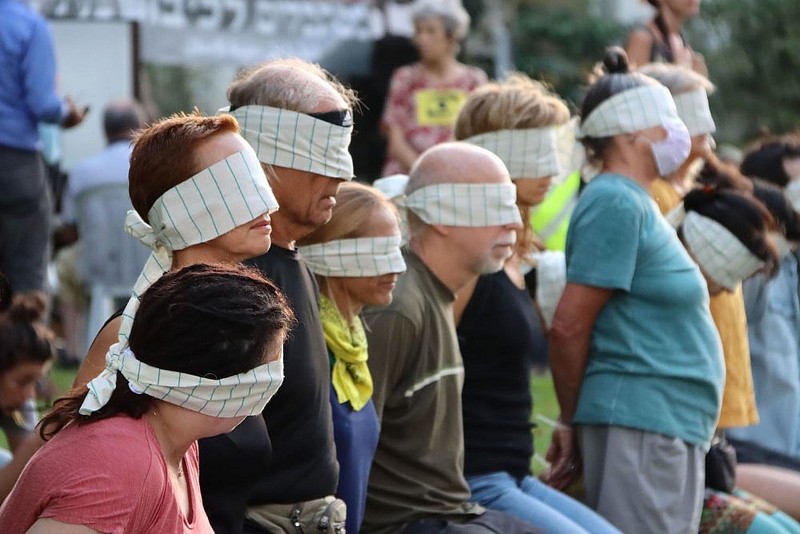
A cycle of protests began in Haiti in July 2018, and—despite the pandemic—has carried on since then. The core reason for the protest in 2018 was that in March of that year the government of Venezuela—due to the illegal sanctions imposed by the United States—could no longer ship discounted oil to Haiti through the PetroCaribe scheme. Fuel prices soared by up to 50 percent. On August 14, 2018, filmmaker Gilbert Mirambeau Jr. tweeted a photograph of himself blindfolded and holding a sign that read, “Kot Kòb Petwo Karibe a???” (Where did the PetroCaribe money go?). He reflected the popular sentiment in the country that the money from the scheme had been looted by the Haitian elite, whose grip on the country had been secured by two coups d’état against the democratically elected President Jean-Bertrand Aristide (once in 1991 and again in 2004). Rising oil prices made life unlivable for the vast majority of the people, whose protests created a crisis of political legitimacy for the Haitian elite.

In recent weeks, the streets of Haiti have once again been occupied by large marches and roadblocks, with the mood on edge. Banks and nongovernmental organizations (NGOs)—including Catholic charities—faced the wrath of the protesters, who painted “Down with [the] USA” on buildings that they ransacked and burned. The Creole word dechoukaj or uprooting—that was first used in the democracy movements in 1986—has come to define these protests. The government has blamed the violence on gangs such as G9 led by the former Haitian police officer Jimmy “Babekyou” (Barbecue) Chérizier. These gangs are indeed part of the protest movement, but they do not define it.

The government of Haiti—led by acting President Ariel Henry—decided to raise fuel prices during this crisis, which provoked a protest from the transport unions. Jacques Anderson Desroches, president of the Fós Sendikal pou Sove Ayiti, told the Haitian Times, “If the state does not resolve to put an end to the liberalization of the oil market in favor of the oil companies and take control of it,” nothing good will come of it. “[O]therwise,” he said, “all the measures taken by Ariel Henry will be cosmetic measures.” On September 26, trade union associations called for a strike, which paralyzed the country, including the capital of Haiti, Port-au-Prince.

The United Nations (UN) evacuated its nonessential staff from the country. UN Special Representative Helen La Lime told the UN Security Council that Haiti was paralyzed by “[a]n economic crisis, a gang crisis, and a political crisis” that have “converged into a humanitarian catastrophe.” Legitimacy for the United Nations in Haiti is limited, given the sexual abuse scandals that have wracked the UN peacekeeping missions in Haiti, and the political mandate of the United Nations that Haitian people see as oriented to protecting the corrupt elite that does the bidding of the West.

The current President Ariel Henry was installed to his post by the “Core Group” (made up of six countries, this group is led by the United States, the European Union, the UN, and the Organization of American States). Henry became the president after the still-unsolved murder of the unpopular President Jovenel Moïse (thus far, the only clarity is that Moïse was killed by Colombian mercenaries and Haitian Americans). The UN’s La Lime told the Security Council in February that the “national investigation into his [Moïse’s] murder has stalled, a situation that fuels rumors and exacerbates both suspicion and mistrust within the country.”

Haiti’s Crises

An understanding of the current cycle of protests is not possible without looking clearly at four developments in Haiti’s recent past. First, the destabilization of the country after the second coup against Aristide in 2004, which took place right after the catastrophic earthquake of 2010, led to the dismantling of the Haitian state. The Core Group of countries took advantage of these serious problems in Haiti to import onto the island a wide range of Western NGOs, which seemed to substitute for the Haitian state. The NGOs soon provided 80 percent of the public services. They “frittered” considerable amounts of the relief and aid money that had come into the country after the earthquake. Weakened state institutions have meant that the government has few tools to deal with this unresolved crisis.

Second, the illegal U.S. sanctions imposed on Venezuela crushed the PetroCaribe scheme, which had provided Haiti with concessionary oil sales and $2 billion in profits between 2008 and 2016 that was meant for the Haitian state but vanished into the bank accounts of the elite.

Third, in 2009, the Haitian parliament tried to increase minimum wages on the island to $5 per day, but the U.S. government intervened on behalf of major textile and apparel companies to block the bill. David Lindwall, former U.S. deputy chief of mission in Port-au-Prince, said that the Haitian attempt to raise the minimum wage “did not take economic reality into account” but was merely an attempt to appease “the unemployed and underpaid masses.” The bill was defeated due to U.S. government pressure. These “unemployed and underpaid masses” are now on the streets being characterized as “gangs” by the Core Group.

Fourth, the acting President Ariel Henry likes to say that he is a neurosurgeon and not a career politician. However, in the summer of 2000, Henry was part of the group that created the Convergence Démocratique (CD), set up to call for the overthrow of the democratically elected government of Aristide. The CD was set up in Haiti by the International Republican Institute, a political arm of the U.S. Republican Party, and by the U.S. government’s National Endowment for Democracy. Henry’s call for calm on September 19, 2022, resulted in the setting up of more barricades and in the intensification of the protest movement. His ear is bent more to Washington than to Petit-Goâve, a town on the northern coast that is the epicenter of the rebellion.

Waves of Invasions

At the UN, Haiti’s Foreign Minister Jean Victor Geneus said, “[T]his dilemma can only be solved with the effective support of our partners.” To many close observers of the situation unfolding in Haiti, the phrase “effective support” sounds like another military intervention by the Western powers. Indeed, the Washington Post editorial called for “muscular action by outside actors.” Ever since the Haitian Revolution, which ended in 1804, Haiti has faced waves of invasions (including a long U.S. occupation from 1915 to 1930 and a U.S.-backed dictatorship from 1957 to 1986). These invasions have prevented the island nation from securing its sovereignty and have prevented its people from building dignified lives. Another invasion, whether by U.S. troops or the United Nations peacekeeping forces, will only deepen the crisis.

At the United Nations General Assembly session on September 21, U.S. President Joe Biden said that his government continues “to stand with our neighbor in Haiti.” What this means is best understood in a new Amnesty International report that documents the racist abuse faced by Haitian asylum seekers in the United States. The United States and the Core Group might stand with people like Ariel Henry, but they do not seem to stand with the Haitian people, including those who have fled to the United States.

Options for the Haitian people will come from the entry of trade unions into the protest wave. Whether the unions and the community organizations—including student groups that have reemerged as key actors in the country—will be able to drive a dynamic change out of the anger being witnessed on the streets remains to be seen.

Vijay Prashad is an Indian historian, editor, and journalist.

28 September 2022

Source: countercurrents.org

Ukraine Update: Four Regions In Southern Ukraine Vote To Join Russia

By Countercurrents Collective

In an important development with serious implication, the Donetsk and Lugansk People’s Republics (LPR and DPR) along with Kherson Region (87%) and part of Zaporozhye Region (93%) in southern Ukraine have voted to join Russia in referendums that were held between September 23 and 27.

Media reports said:

In Lugansk, more than 98.42% of voters have supported the idea to join Russia, official figures show with all the ballots counted. Donetsk has shown similar results with 99.23% of voters supporting the move. Both Zaporozhye and Kherson regions have process all the ballots by late Tuesday, with 93% and 87% of voters respectively backing the split from Ukraine and reunification with Russia.

The process of integrating new regions into Russia may take some time as it requires the approval of the country’s parliament and the president. But Kremlin spokesperson Dmitry Peskov said on Friday that he was “convinced it will be fast enough.”

Under the Russian constitution and the federal law on the accession of new constituent members, the procedure includes several steps. Once the regions willing to become part of the Russian Federation submit their proposals to Moscow, the president should inform parliament and the government on the matter, Senator Konstantin Kosachev explained in a Telegram post last week.

If a political agreement on the accession is reached, “draft international treaties on the admission of foreign states or parts of them” to Russia should be developed, Kosachev, the vice speaker of the upper house of parliament, said. These agreements regulate issues such as the name and status of new territories, citizenship, succession, the functioning of public authorities, the operation of legislation, and so forth.

After these treaties are signed, the Russian Constitutional Court should verify if they comply with the country’s supreme law. If there are no violations, the next step will be the ratification of the documents by the lower house, the State Duma, and their approval by the upper house, the Federation Council.

Simultaneously, a draft federal constitutional law on the admission of new constituent units to Russia should be submitted to the Duma. If approved, it then goes to the upper house for consideration.

“This law enters into force no earlier than the entry into force of the international treaties themselves,” Kosachev noted.

Russia’s Earlier Warning

Russia warned earlier that if the Donbass republics and the two southern Ukrainian regions united with Russia, it would consider any attempts by Kiev to retake them as attacks on its own land. “Immediately the Russian Constitution will come into force in relation to these territories where everything is very clearly stated in this regard,” Peskov told journalists last week.

Shortly after the regions decided to hold referendums, Russian President Vladimir Putin announced a partial mobilization that involved calling to arms some 300,000 reservists, according to the military. Media reports have suggested that Moscow allegedly plans to mobilize up to a million.

Kiev considers the territories willing to join Russia to be under illegal occupation and said it would not recognize the results of the referendums. Ukrainian President Vladimir Zelensky has ruled out any possibility of talks after the voting.

Ukraine’s Claimed Right

Ukrainian Foreign Minister Dmitry Kuleba stated last Tuesday that “Ukraine has every right to liberate its territories and will keep liberating them, whatever Russia has to say.”

Sham Vote, Say EU And U.S.

The EU and the U.S. have already called the voting a “sham.”

U.S. Secretary of State Antony Blinken told CBS on Sunday that the LPR, DPR, Kherson and Zaporozhye regions “will never be recognized” as part of Russian territory. He added that Kiev had “every right” to take them back.

Zelensky Condemns Referendums

Ukrainian President Vladimir Zelensky firmly rejected the referendums staged in Moscow-held parts of Ukraine’s Zaporozhye and Kherson Regions, as well as in the Lugansk and Donetsk People’s Republics, on joining Russia.

Speaking during a UN Security Council meeting via a video link on Tuesday, he urged the countries of the world to reject the results. Zelensky also reiterated his threat to stop any contact with Russia should it recognize the results of the referendums.

Ukraine Can Use Western Weapons Against Territories Seized By Russia, Says U.S.

Washington has no objections to Kiev using Western-supplied weapons to target territories that may decide to join Russia, as the U.S. considers the vote to do so illegitimate, Secretary of State Antony Blinken said on Tuesday.

The U.S. and its allies have supplied Ukraine with a variety of weapons, including tube and rocket artillery. At a joint press conference with his Indian counterpart Dr. Subrahmanyam Jaishankar in Washington, Blinken was asked if the U.S. had any objections to Ukraine using those weapons to attack targets in Donetsk, Lugansk, Zaporozhye and Kherson, which just wrapped up a vote on joining Russia.

“We will never recognize the annexation of Ukrainian territory by Russia,” Blinken told reporters. “Ukraine has the absolute right to defend itself throughout its territory, including taking back the territory that has been illegally seized, one way or another, by Russia. And the equipment, the weapons that we and many other countries are providing, have been used very effectively to do just that.”

In June, when the U.S. first sent long-range HIMARS rocket artillery to Ukraine, Blinken said he had received “assurance” from Kiev that they will not be used on Russian territory, and that he believed them due to a “strong trust bond.”

Kiev’s forces have since used the U.S.-supplied weapons to target civilians in Donbass, Kherson and Zaporozhye, which are under Russian control. Ukraine has also bombed Crimea and border towns in the Russian regions of Kursk and Belgorod. Crimea rejoined Russia in March 2014, after the U.S.-backed coup in Kiev, while Donetsk and Lugansk declared independence.

CIA Warned Germany Of Nord Stream Attack

The CIA warned Berlin about a possible attack on gas pipelines in the Baltic Sea “weeks ago,” German magazine Der Spiegel reported on Tuesday. Germany was looking for answers after both of Russia’s Nord Stream pipelines were damaged and a massive gas leak appeared off the Danish island of Bornholm.

A tip from the U.S. spy agency was “received in Berlin during the summer,” the outlet said, citing “several people familiar with the matter.” Officially, however, the German federal government declined to comment on intelligence-related matters.

German security services are currently examining satellite imagery of the area where the explosions occurred, but see only “unremarkable” naval traffic, according to Spiegel. They are also convinced only a state actor could have done this, suggesting “divers or a mini-submarine” could have installed mines or explosives on the pipeline.

Nord Stream 1 and Nord Stream 2 both suddenly lost pressure on Monday. Danish authorities reported a gas leak off Bornholm, while Swedish seismologists registered multiple explosions. The pipeline operator confirmed multiple gas lines suffered “unprecedented” damage and it was impossible to estimate when, or if, service might be restored.

By Monday evening, the German government was convinced the pipeline was targeted in a deliberate attack, according to the daily Tagesspiegel. Berlin was considering the possibility Ukraine or “Ukraine-affiliated forces” could be behind it, but also a “false flag” by Russia to make Ukraine look bad and drive EU energy prices even higher.

While acknowledging that the “permanent interruption of gas supplies from Russia” would be in Ukraine’s interest, Der Spiegel said such an attack would have “immense political disadvantage” for Kiev. The only motive for Moscow to blow up the pipeline, according to the magazine, would be to “blame other parties for the incident.”

Earlier on Tuesday, US Secretary of State Antony Blinken said an attack on Nord Stream was “in no one’s interest,” but that it also represented a “significant opportunity” for Europe to abandon Russian natural gas in favor of alternative energy supplies, presumably such as U.S. LNG, and “accelerate the transition to renewables” in order to fight climate change.

Kremlin’s Comments on Nord Stream Damage

The Nord Stream pipelines may have been damaged in an act of sabotage, Kremlin spokesperson Dmitry Peskov suggested when asked about the possible reasons for sudden pressure loss in three of the Baltic Sea gas network’s lines.

Speaking to journalists on Tuesday, Peskov commented on a statement made by Nord Stream AG, the operator of the network, which said three offshore lines of the Nord Stream pipeline system sustained “unprecedented” damage in just one day.

“No option can be ruled out right now,” Peskov said when asked if the damage may have been the result of sabotage. He added that Moscow is very concerned about the situation, and called for an immediate and thorough investigation into the incident, which has implications for energy security on the “entire continent.”

Pressure in line A of the Nord Stream 2 pipeline, which was pumped with gas but had yet to go into operation, suddenly dropped overnight between Sunday and Monday. Shortly after that, on Monday afternoon, both of Nord Stream 1’s pipelines also suffered a sharp loss of pressure.

Sweden and Denmark’s coastguards have since reported gas leaks off the coast of Bornholm island in the Baltic Sea – one in the Swedish economic zone and one in the Danish zone – and closed off the area to maritime traffic.

According to a report from the Tagesspiegel newspaper on Tuesday, Berlin believes the sudden pressure drop in three gas pipelines at the same time could not be a coincidence and is likely a “targeted attack” from either Ukraine or Russia. The outlet explained that a deliberate attack on the pipeline could only have been carried out using special forces, navy divers or a submarine.

Nord Stream 1 was completed in 2011. Construction work on Nord Stream 2 (NS2) began in 2018, and suffered delays due to political pressure and sanctions from the U.S. NS2 was finished and pressurized in September 2021. However, two days prior to Russia’s military operation in Ukraine, the German government put its certification on indefinite hold, and has categorically rejected any suggestion from Moscow – or domestically – to unblock the pipeline.

U.S. Praised For Nord Stream Explosion

While the U.S., Russia and most European governments reserved judgment as to who might be behind Monday’s explosion that damaged both Nord Stream pipelines and cut off Germany from Russian gas, former Polish minister and member of the European Parliament Radoslaw Sikorski had no such qualms.

“Thank you USA,” Sikorski tweeted on Tuesday, alongside a photo of the massive gas leak in the waters of the Baltic Sea. Both pipelines were severely damaged off the coast of the Danish island of Bornholm, in what everyone is now calling a deliberate act.

Sikorski later tweeted, in Polish, that damage to Nord Stream means that Russia will have to “talk to the countries controlling the Brotherhood and Yamal gas pipelines, Ukraine and Poland” if it wishes to continue delivering gas to Europe. “Good work,” he concluded.

Nord Stream 1 and Nord Stream 2 lost all pressure on Monday, after what the Swedish and Danish authorities later said were a series of undersea explosions. The first pipeline was operating at reduced capacity after what Russia said were technical difficulties, while the second was fully pressurized but not operational, due to German refusal to certify it.

Russian Spokeswoman’s Comment

Russian Foreign Ministry spokeswoman Maria Zakharova wondered if Sikorsky’s tweet amounted to an “official statement that this was a terrorist attack.”

Moscow’s deputy ambassador to the UN, Dmitry Polyanskiy, thanked Sikorski for “making it crystal clear who stands behind this terrorist-style targeting of civilian infrastructure!”

Polish PM

Polish Prime Minister Mateusz Morawiecki did not go quite as far as Sikorski, but chose to describe the Nord Stream incident as “an act of sabotage, related to the next step of escalation of the situation in Ukraine.”

Not just any Member of European Parliament, Sikorski is a former UK citizen and a fellow at numerous U.S. and NATO think-tanks, as well as Poland’s former defense (2005-2007) and foreign minister (2007-2014). In October 2014, he was caught fabricating a claim about Russian President Vladimir Putin wanting to partition Ukraine with Warsaw, and was forced to recant.

Zelensky’s Adviser

While Sikorski thanked the U.S. for the Nord Stream sabotage, Kiev blamed Russia. President Vladimir Zelensky’s adviser Mikhail Podoliak called it “a terrorist attack planned by Russia and an act of aggression towards EU,” arguing the best response would be sending German tanks to the Ukrainian army.

More Americans Oppose Sending Military Aid to Ukraine Without Diplomatic Efforts, Finds Poll

Nearly half of Americans (47%) are against sending military aid to Ukraine if the U.S. is not involved in diplomatic efforts to resolve the conflict, a new poll conducted by the Quincy Institute for Responsible Statecraft revealed Tuesday.

About 40% expressed their support for providing weapons to Kiev regardless of the negotiation process.

Roughly 58% say they would oppose the U.S. providing military aid to Ukraine at current levels if their own country suffers higher gas prices and a higher cost of goods.

The poll also revealed that 57% of likely voters support the U.S. pursuing diplomatic negotiations as soon as possible to end the conflict, while only 32% oppose such efforts.

“Americans recognize what many in Washington don’t: Russia’s war in Ukraine is more likely to end at the negotiating table than on the battlefield. And there is a brewing skepticism of Washington’s approach to this war, which has been heavy on tough talk and military aid, but light on diplomatic strategy and engagement,” executive vice president at the Quincy Institute Trita Parsi was quoted as saying in the release.

Six percent of those surveyed further recognized that Russia’s special military operation is among the top issues the U.S. is currently facing. Other concerns included inflation, gun violence and the state of the American economy.

The survey was conducted from September 16 to 19, and included responses from 1,215 voters nationwide. The margin of error is three percentage points.

28 September 2022

Source: countercurrents.org

US defends F-16 arms deal with Pakistan against India’s criticism

Top diplomat Anthony Blinken says $450 million deal with Islamabad is for maintenance of its existing fighter jets.

Secretary of State Antony Blinken has defended military sales to Pakistan after withering criticism from growing US partner India, which considers itself the target of Islamabad’s F-16 planes.

Blinken met in the US capital with India’s foreign minister on Tuesday, a day after separate talks with his counterpart from Pakistan.

The top US diplomat defended a $450 million F-16 deal for Pakistan approved earlier in September, saying the package was for the maintenance of Pakistan’s existing fleet.

“These are not new planes, new systems, new weapons. It’s sustaining what they have,” Blinken told a news conference with his Indian counterpart, Subrahmanyam Jaishankar.

“Pakistan’s programme bolsters its capability to deal with terrorist threats emanating from Pakistan or from the region.

It’s in no one’s interests that those threats be able to go forward with impunity,” Blinken said.

‘You’re not fooling anyone’

Jaishankar did not criticise Blinken in public. But on Sunday, speaking at a reception for the Indian community in the United States, Jaishankar said of the US position: “You’re not fooling anybody.”

“For someone to say, I’m doing this because it’s for counter-terrorism when you’re talking of an aircraft like the capability of the F-16, everybody knows where they are deployed,” he said, referring to the fleet’s positioning against India.

“Very honestly, it’s a relationship that has neither ended up serving Pakistan well nor serving American interests well,” he said.

Pakistan’s military relies on US equipment but the relationship soured during the two-decade US war in Afghanistan, with Washington believing that elements in Islamabad never severed support for the Taliban, which seized back power last year.

India historically has bought military equipment from Moscow and has pressed the United States to waive sanctions required under a 2017 law for any nation that buys “significant” military hardware from Russia.

29 September 2022

Source: www.trtworld.com

From Exodus to Marvel: A brief history of Hollywood’s justification of Israeli war crimes

By Dr Ramzy Baroud

The introduction of an Israeli Mossad agent as the latest Marvel movie character crosses the line, even by Hollywood’s poor moral standards. However, the Israeli superhero, Sabra, must be understood within the rational progression of the Israelification of Hollywood, a phenomenon that is surprisingly new.

Sabra is a relatively old character, dating back to Marvel comic The Incredible Hulk in 1980. On 10 September, however, it was announced that the Israeli character would be included in an upcoming Marvel film, Captain America: New World Order.

Expectedly, many pro-Palestine activists in the US and around the world fumed. It is one thing to introduce an ordinary Israeli character with the mere aim of normalising Israel, an unrepenting apartheid state, in the eyes of Marvel’s impressionable young audiences. However, it is far more sinister to normalise a state intelligence agency, Mossad, known for its numerous bloody assassinations, sabotage and torture.

By adding Sabra to its cast of superheroes, Marvel Studios has shown its complete disregard for the massive campaign by millions of fans around the world who, in 2017, protested the inclusion of former Israeli soldier Gal Gadot as Marvel’s Wonder Woman. Gadot is a vocal supporter of the Israeli government and military.

In response to the news, many rightly highlighted Hollywood’s inherent bias, starting in the 1960s movie Exodus by Otto Preminger, with Paul Newman as the lead actor. The film provided pseudo-historical justification for the colonisation of Palestine by the Zionists. Ever since, Israel has been elevated, celebrated and included in an ever-positive context by Hollywood, while Muslims, Arabs and Palestinians continue to be vilified.

Although Israel was represented in a positive light by Hollywood filmmakers, the Israelis themselves were quite marginal in the content creation process. Until recently, the Israeli construct was mostly built on behalf of Israel, not by Israel itself. “Things began to change in 1997,” wrote Brian Schaefer in Moment Magazine. It was then that the LA Federation’s Entertainment Division and the Jewish Agency launched the project, the Master Class, which: “For nearly 15 years… brought countless actors, directors, producers, agents, managers and top studio and network executives to Israel, introducing many of them to the country for the first time, and taught Israelis how to pitch their projects.”

The indoctrination of American actors and filmmakers through these visits and the introduction of many Israeli actors and filmmakers to Hollywood paid dividends, leading to a major change in the narrative on Israel. Instead of simply communicating Israel to American and international audiences using references to historical victimisation, positive association or even humour, Israelis began to make their case through Hollywood directly. And, unlike the haphazardness of past messages – good Israel, bad Arabs – the new messages are far more sophisticated, tailored around specific ideas and designed with full awareness of the politics of each era.

Steven Spielberg’s movie Munich (2005) was released within the cultural context of the US invasion of Iraq as part of Washington’s so-called “war on terror”, where human rights were violated on a global scale. Munich was a selective “historical” account of the supposedly difficult choices that Israel, namely Mossad, had to make to fight its own “war on terror”. That was the era when Tel Aviv tirelessly underscored its affinity to Washington, now that both countries are purportedly victims of “Islamic extremists”.

Unlike Munich, the popular TV series Homeland was not just another pro-Israel American argument that justifies Israeli wars and violence. The series itself, one of the most racist, Islamophobic shows on television, was entirely modelled on the Israeli show HaTufim. The writer and director of the Israeli show, Gideon Raff, has been included in the American version, serving as an executive producer.

The change in the ownership of the narrative may seem superficial – as pro-Israel Hollywood propaganda is being replaced by organic Israeli propaganda. However, this is not the case.

The pro-Israel agenda of the past – the romanticisation that followed the creation of Israel in 1948 – did not last long. The Israeli defeat of Arab armies in 1967 – thanks to the massive US military support of Tel Aviv – replaced the image of nascent, vulnerable Israel with that of the brave Israeli army, capable of defeating several militaries at once. It was then that Israeli soldiers toured US colleges and schools, talking about their heroism on the battlefield. The Israeli invasion of Lebanon and the subsequent massacres, like that of Sabra and Shatila, forced a rethink.

Throughout the 1980s and 1990s, Israel largely existed in Hollywood as comic relief, from shows like Friends, Frasier and, more recently, The Big Bang Theory. References to Israel were often followed by laughter – a clever and effective way of linking Israel with positive, happy associations.

The “war on terror”, starting in 2001, coupled with the creation of the Master Class project, allowed Israel to return to the Hollywood universe, not as an occasional reference, but as a staple, with Israeli shows or joint US-Israeli productions, defining a whole new genre: making difficult choices to fight terrorism and ultimately save the world.

The exploitation of Israeli women on magazine covers, for example, Maxim, was an entirely different shady business, catering to a different audience. The half-naked Israeli army girls have succeeded, in the minds of many, in justifying war through sexual imagery. This genre became particularly popular following the bloody Israeli wars on Gaza, which killed thousands.

Israel’s growing influence on Marvel movies is a combination of all of these elements: the sexualisation of the supposedly strong, empowered woman, the normalisation of those who carry out Israeli crimes – Gadot, the soldier, Sabra, the Mossad agent – and the direct injection of Israeli priorities as part of everyday American reality.

Yet, there is a silver lining. For decades, Israel has hidden behind false, romanticised historical notions, making its case to the US and other Western public, often indirectly. The wars on Gaza, the exponential growth of the Palestinian boycott movement and the proliferation of social media have, however, forced Israel out of hiding.

The new Hollywood Israel is now a warrior, often forced to make difficult moral choices, but it is, like its American counterpart, ultimately a force for good. Whether Israel will succeed in maintaining this image will depend on several factors, including the pro-Palestinian communities’ ability to counter such falsehood and hasbara.

Ramzy Baroud is a journalist and the Editor of the Palestine Chronicle.

24 September 2022

Source: www.middleeastmonitor.com

Number of Ultrarich Hits All-Time High as Someone Dies From Hunger Every 4 Seconds

By Brett Wilkins

As a new analysis revealed that the global ranks of the superrich soared to a record number, a coalition of charity groups said Tuesday that hundreds of millions of people around the world are hungry—and that someone starves to death every four seconds.

At least 238 international and local charities from 75 countries signed an open letter noting that “a staggering 345 million people are now experiencing acute hunger, a number that has more than doubled since 2019.”

“Despite promises from world leaders to never allow famine again in the 21st century, famine is once more imminent in Somalia,” the signers stated. “Around the world, 50 million people are on the brink of starvation in 45 countries.”

The letter—which was timed to coincide with the annual meeting of the United Nations General Assembly in New York—asserts that “the global hunger crisis has been fueled by a deadly mix of poverty, social injustice, gender inequality, conflict, climate change, and economic shocks, with the lingering impacts of the Covid-19 pandemic and the crisis in Ukraine further driving up food prices and the cost of living.”

“Those with the power and money to change this must come together to better respond to current crises and prevent and prepare for future ones,” the signatories argued.

The number of those with the most money grew to a record number last year.

According to an analysis published Tuesday by Credit Suisse, there were 218,200 ultra-high net worth (UHNW) people in the world in 2021, an increase of 46,000 from the previous year. The share of the world’s wealth held by the richest 1% of people also increased from 44% to 46% last year.

Credit Suisse said there were 62.5 million U.S. dollar millionaires on Earth, and that all the wealth in the world added up to $463.6 trillion, while attributing what one of the report’s authors called the “explosion of wealth” to soaring home and stock values.

A separate report published in July by letter signatory Oxfam revealed that profits from soaring food prices have enriched billionaires around the world by a collective $382 billion.

Meanwhile, Sumaya, a 32-year-old mother of four living in a camp for internally displaced people in Ethiopia’s Somali region, lamented her family’s dire situation in the charity groups’ letter: “No water, no food, a hopeless life.”

“Above all, my children are starving,” she said. “They are on the verge of death. Unless they get some food, I’m afraid they will die.”

Last week, Oxfam published a report underscoring how the climate emergency is exacerbating extreme hunger. The report examined 10 of the world’s worst climate hot spots, where 18 million people are on the brink of starvation.

Mohanna Ahmed Ali Eljabaly of the Yemen Family Care Association, which also signed the charities’ letter, said that “it is abysmal that with all the technology in agriculture and harvesting techniques today we are still talking about famine in the 21st century.”

“This is not about one country or one continent and hunger never only has one cause. This is about the injustice of the whole of humanity,” she continued. “It is extremely difficult to see people suffering while others sharing the same planet have plenty of food.”

“We must not wait a moment longer to focus both on providing immediate lifesaving food and longer-term support,” Elhjabaly added, “so people can take charge of their futures and provide for themselves and their families.”

Originally published in CommonDreams.org
This work is licensed under Creative Commons (CC BY-NC-ND 3.0). Feel free to republish and share widely.

21 September 2022

Source: countercurrents.org

Queen Elizabeth II & 70 years of UK colonialism, neo-colonialism, wars, mass mortality & genocide

By Dr Gideon Polya

Queen Elizabeth II has died, and there is immense public affection for the Queen for her dignified but warm conduct in 70 years of dedicated service as a constitutional  monarch. That affection is most marked among her British, Australian , Canadian and New Zealand Subjects, as well as among some British Commonwealth loyalists. However resolutely ignored is the Royal heading of British imperialism, slavery, colonialism, neo-colonialism, war and genocide for centuries up to the present.

It is no accident that the Royal parades for which Britain is famous heavily and prominently involve British regiments, and typically also the armed forces of countries for which the British Monarch is also the head of state, notably the White Anglosphere countries of Australia, Canada and New Zealand. Indeed the sad passing of Queen Elizabeth II  and accession of King Charles III have been marked by huge military parades and the firing of massed artillery across the Anglosphere from Scotland  to remote New Zealand (Aotearoa). Indeed “Royal” is an appendage not just to numerous hospitals around the world  (e.g. the Royal Children’s Hospital in Melbourne) but also to armed forces and security services from the Royal Australian Navy (RAN) and Royal Australian Air Force (RAAF) to the Royal Canadian Mounted Police (RCMP).

The English have invaded 193 of the world’s present-day countries over the last 1,000 years, as compared to Australia 85, France 82, the US 72 (52 after WW2), Germany 39, Japan 30, Russia 25, Canada 25, Apartheid Israel 12, China 2, North Korea arguably zero, Iran zero and indeed most Developing Countries, zero  [1-4]. These invasions, from the Normans invading England in  1066 to the UK-backed US devastation of the Muslim world in the 21st century, have often involved genocide that is defined by Article 2  of the UN Convention on the Prevention and Punishment of the Crime of Genocide as “acts committed with intent to destroy, in whole or in part, a national, ethnic, racial or religious group” [5]. Thus the newly installed Norman English Establishment in 1066 commenced the violent removal of the Anglo-Saxon Establishment and genocidal removal of resistant peasantry (“the harrying of the north”), and the genocidal killing has continued for a thousand years. Nearly every present-day country in the world has suffered British invasion and devastation. Indeed one notes that the magnificent venues and bejewelled crowns and other accoutrements of Queen Elizabeth II’s memorial arrangements and King Charles III’s accession variously reference that violent 1,000-year history of the English monarchy.

Space does not permit even a brief account of this millennium in which the British Establishment (read English Establishment) have invaded nearly every country on earth with inaccessible Mongolia, Kazakhstan and other Central Asian states being the notable exceptions. For a summary see my article “British Have Invaded 193 Countries: Make 26 January (Australia Day, Invasion Day) British Invasion Day” [2], and also see my book “Body Count. Global avoidable mortality since 1950” that includes a brief but comprehensive summary of the avoidable mortality-related history of every present day country in the world from Neolithic times [3].

The most horrendously super-deadly, English-complicit  events (deaths in brackets) include the 16th – 19th century onwards Amerindian Genocide in North and South America  (90 million deaths)  the 17th – 19th century North American Indian Genocide (up to 18 million deaths), the  15th -19th century African Holocaust of the trans-Atlantic slave trade (6 million deaths), the 19th century Chinese Holocaust (20-100 million deaths), WW1 (1914-1918; 40 million deaths), the 1918-1920 Influenza epidemic (50-100 million deaths), WW2 (1939-1945, 90 million deaths) [3, 4, 6, 7], and the 2-century Indian Holocaust (1,800 million Indian deaths from violence and imposed deprivation under the British) that commenced with the 1769-1770 Great Bengal Famine (10 million deaths) and concluded just prior to Indian Independence with the British-imposed and Australia complicit but “forgotten” 1942-1945 WW2 Bengali Holocaust (WW2 Indian Holocaust, WW2 Bengal Famine; 6-7 million deaths)[8-14].

While the 2-century British-imposed Indian Holocaust (1757-1947) was quantitatively the worst man-made atrocity in human history (1,800 million Indian deaths from violence and imposed deprivation) [13, 14], from a qualitative perspective the 1788 onwards Australian Aboriginal Genocide and Ethnocide was the worst such atrocity in human history. Of 350-700 Indigenous languages and dialects in 1788 only 120 survive today, and of these all but 25 are endangered [15].

Queen Elizabeth II was Queen for 70 years,  from 1952-2022, and during that time the UK was regularly involved in wars that were horrendously deadly for the Indigenous people that the UK and its allies were attacking.

There are presently 15 countries having the Queen as head of state (UK, Australia, Canada, New Zealand, Jamaica, Bahamas, Grenada, Papua New Guinea, Solomon Islands, Tuvalu, Saint Lucia, St Vincent and the Grenadines, Belize, Antigua and Barbuda, and Saint Kitts and Nevis [16]. Of these 14 countries only the 4 White Anglosphere countries (the UK, Australia, Canada and New Zealand) have been involved in invading other countries during the Queen’s reign (1952-2022) [3].

In addition there have been a further 18 countries that for technical reasons connected with the independence and other processes had Queen Elizabeth II as sovereign for some time: South Africa, Pakistan, Ceylon (Sri Lanka), Ghana, Nigeria, Sierra Leone, Tanganyika (Tanzania), Trinidad and Tobago, Uganda, Kenya, Malawi, Malta, Gambia, White-ruled Rhodesia (officially unrecognized  by the Her Majesty’s UK Government and Her Majesty the Queen), Guyana, Barbados, Mauritius and Fiji [16]. Notwithstanding internal violence and/or brief conflicts and incursions with neighbours (South Africa, Nigeria, Sierra Leone, Uganda, Kenya, Rhodesia, Tanzania),  none of these countries were involved in the massive and genocidal invasion of other countries during the Queen’s reign (1952-2022) as carried out by the 4 White Anglosphere countries (the UK, Australia, Canada and New Zealand) [3].

Of 33 countries that had the Queen Elizabeth II as sovereign (some for short periods) only the  4 White Anglosphere countries (the UK, Australia, Canada and New Zealand) were involved in egregious violence against distant countries in a continuation of the extraordinary genocidal violence of England over a millennium (193 countries invaded i.e. nearly every present-day country invaded).

In summary, countries  in the post-1950 era that were variously subjects of the UK Monarchy, or were attacked and occupied by the UK and other war-making Anglosphere countries having the Queen as head of state (the UK, Australia, Canada, and New Zealand) were as follows:

United Kingdom – Afghanistan, Argentina, Bahamas, Bahrain, Barbados, Belize, Botswana, Brunei, China (Korean War), Cyprus, Diego Garcia (part of  Mauritius), Egypt, Fiji, Gambia, Ghana, Guyana, Hong Kong, Indonesia (Confrontation), Iran, Iraq, Jamaica, Kenya, Kiribati, Korea (North & South), Kuwait, Lesotho, Libya, Malaysia, Maldives, Malta, Mauritius, Nigeria, Oman, Qatar, Saint Lucia, Saint Vincent and the Grenadines, Serbia, Seychelles, Sierra Leone, Singapore, Solomon Islands, Somalia, South Africa, Sudan, Syria, Tanzania, Trinidad & Tobago, Tonga, Tuvalu, United Arab Emirates, Vanuatu, Yemen.

Australia – Afghanistan, China (Korean War), Indochina (Vietnam, Laos, Cambodia), Indonesia (Confrontation), Iraq, Korea, Malaysia, Nauru, Papua New Guinea, Solomon Islands, Timor-Leste.

Canada – Afghanistan, China (Korean War), Iraq, Korea.

New Zealand – China (Korean War), Indochina (Vietnam, Laos, Cambodia), Indonesia (Confrontation), Iraq, Korea, Malaysia, Samoa, Timor-Leste, Tokelau.

Below is a brief, alphabetically-ordered  summary of the last 70 years of egregious UK violence (with the overall historical period of British intervention, and deaths from violence and imposed deprivation given in brackets). One notes that at the end of WW2 (1945), a mere 7 years before the accession of Queen Elizabeth II in 1952,  the British Empire was at its peak. Most African colonies of the UK gained independence in the 1960s, and the key default reference for this list is [3] which contains a succinct history of every country.

(1). Afghanistan (1838-2021): UK First Afghan War (1838); Second Afghan War (1878); UK control of Afghan foreign affairs (1907); Third Afghan War (1919); UK invaded and occupied Afghanistan with the US Alliance (2001-2021; Afghan Genocide and Afghan Holocaust deaths 6 million). Huge under-5 infant deaths (in 2020 77,000 in Afghanistan as compared to 3,100 in the UK ) will continue due to US seizure of Afghan assets, and sanctions by the US Alliance including the UK.

(2). Argentina (1806-1982): British invasion repelled (1806); US-backed UK seized the Malvinas (Falkland Islands) (1833); Great War in Uruguay involving UK, France, Argentina, Uruguay and Brazil (1839-1852); horrendous genocide of Indigenous people in Argentina, Paraguay and Uruguay for the benefit of the British beef trade (19th century); genocidal Zionist psychopath Theodor Herzl contemplated Argentina as a “Jewish Homeland” (however the UK “gave” Palestine to the Zionists in 1917); Argentina invaded the Falkland Islands and was expelled by the UK in the Falklands War (1982).

(3). Bahrain (1861-1971): British protectorate established (1861); independence (1971); used by US, UK and Coalition forces against Iraq (1991).

(4). China (18th century onwards): the genocidal British conquered Bengal and thence set up the lucrative opium trade to China (Bengali opium for Chinese silver and tea; 1757); British defeated China in the First Opium War with ports opened and Hong Kong acquired (1839-1842); anti-Western Tai Ping Rebellion put down by the UK and other European forces (20-100 million dead; 1850-1864); Anglo-French forces defeated China and captured Beijing ((1856-1860); Queen Victoria the greatest opiate drug pusher in history; anti-Western Boxer rebellion subdued by the British with Russian, German, French, Japanese and US forces (1898); 35-40 million Chinese died under the Japanese (1937-1945); the British lead by Churchill successfully brought the US into war against Japan, and thence secured victory in the WW2 (1941-1945); UK forces fought Chinese forces in the Korean War (1950-1953); Hong Kong returned to China (1997); 800 million Chinese brought out of poverty in the Chinese economic “miracle” (1990s onwards); UK joined the threatening US anti-China stance (2020s).

(5). Cyprus (1878-1960): British rule (1878); British annexation (1914); the armed Greek Cypriot independence movement of EOKA culminated in independence under Archbishop Makarios (1960); conflict over Greek union, Makarios overthrown and Turkey seized part of the island (1974).

(6). Egypt (1882-1956): British conquest (1882); independence but with retention of British forces (1923); British forces finally left after the coming to power of Colonel Abdul Gamal Nasser (1956); however this was immediately followed by  the collusive UK, France and Apartheid Israel invasion of the Sinai Peninsula and the Suez Canal that took place at the same time as the Russian invasion of Hungary (1956); nuclear-armed,  UK-backed Apartheid Israel invaded again, seizing the Gaza Strip and the Sinai Peninsula (1967); defeated by Apartheid Israel in the Yom Kippur War (1973); US-brokered peace with Apartheid Israel, and return of the Sinai Peninsula (1979).

(7). Indonesia (1963-1965): armed conflict between Indonesia and the UK and its allies  over Malaysia and the future of Brunei and Borneo (Confrontation) (1963-1966); the UK was heavily involved in machinations to remove President Soekarno and eliminate the Indonesian communists, that were realized with the UK- , Australia- and US-backed military coup in 1965 that removed President Soekarno, and in which 1 million progressive Indonesians and many Chinese were murdered and hundreds of thousands imprisoned (1965). Corrupt and violent military rule for 34 years was associated with 33 million Indonesian excess deaths from deprivation (1965-1999).

(8). Iran (1914 onwards): Oil discovered (early 19th century); Iran was neutral but there was heavy Anglo-Russian involvement in WW1 (1914-1918);  WW1-related Iranian Famine (1917-1919, 2-10 million deaths);  Anglo-Russian occupation and installation of Mohammed Shah Pahlevi (1941-1979); economic blockade and UK MI6 and US CIA coup that removed elected PM Mossadegh who wanted to nationalize Anglo-Iranian oil, with thousands  killed (the CIA secretly invoked Queen Elizabeth II to stop a nervous and ambivalent Shah from quitting) (1953); UK- and US-backed authoritarian Shah regime with Anglo-American, French and Dutch oil interests dominant (1953-1979);  Iranian theocratic revolution (1979) and increasing hostility from the UK, US and Apartheid Israel (1 million Iranians died in the UK- and US-promoted, 1980-1988 Iran-Iraq War, and 3 million Iranians died from sanctions (1979 onwards) urged and applied by the nuclear powers US, UK and  Apartheid Israel against a non-nuclear weapons-possessing Iran [17]  .

(9). Iraq (1914 onwards): British invaded (1914); Kurdish and Arab revolts suppressed with use of the British Royal Air Force (RAF); Iraq made a British League of Nations Mandate ( 1920); first oil concession (1925); 25 year alliance with Britain (1930); British Mandate terminated and Iraq joined the League of Nations (1932); Iraqi Parliament rejected the UK demand for an extension of the of the 1930 alliance (1948); Iran, Turkey, Pakistan and Iraq formed the pro-US Baghdad Pact (1955); Kassem military coup ousted UK-backed King Faisal II who was killed (1958); US green-lighted the Iraqi invasion of Kuwait by Saddam Hussein; sanctions imposed killing 1.7 million Iraqis; deadly US, UK and Israeli bombing devastated Iraqi infrastructure (1990-2003); US, UK and Coalition Gulf War (0.2 million Iraqis killed); prefaced by US and UK lies about actually non-existent Weapons of Mass Destruction (notably by US President George W. Bush and UK PM Tony Blair), the US, UK, Australia and US lackey Coalition invaded and further devastated Iraq (2003-2011); rise of ISIS and subsequent defeat by the US, UK, Russia and the Syrian Government (2012-2017; half of Mosul, population 2 million, destroyed with 40,000 Iraqi residents killed by US, UK, and Australian bombing); notwithstanding demands  by the Iraqi Parliament that foreign forces leave, US, UK and Australian forces remained, and Trump threatened destruction of the Iraqi economy by freezing assets (2020); UK forces remain in Iraq, and NATO (including UK ) forces are planned to increase from 400 to 5,000 [18] (2021; I was alerted to this by the fact that some UK soldiers serving in Iraq were brought back to the UK especially for the Queen’s funeral). The ongoing UK-initiated and UK complicit Iraqi Genocide and Iraqi Holocaust has been associated with deaths from violence and imposed deprivation totalling 9 million (1914-2011), 4.6 million (1990-2011), and 2.7 million (2003-2011) [3, 4].

(10). Jordan (1918-1958): British defeated the Ottoman Empire (1918); Jordan was ruled from Damascus by UK-installed King Faisal I (1919); Faisal I removed by the French  and Jordan became part of a British Mandate (1920); Abdullah (son of Faisal) made emir with a British-trained army (1921); constitutional monarchy (1928); independent (1946); defeated by UK-backed Zionists (1948); changed name to  Jordan (1949); annexed West Bank of Palestine (1950); Jordan and Iraq formed the Arab Federation and British troops were sent to Jordan (1958); invasion and defeat by a now nuclear-armed Apartheid Israel of all its neighbours (the Naksa or Setback; 400,000 Arabs expelled in addition the  800,000 expelled in the UK-complicit 1948 Nakba) (1967); UK-backed and UK trained Jordan military took action against the huge Palestinian population (thousands killed) (1968); Jordan hosts over 2 million Palestinian refugees and over 1.5 million Syrian refugees.

(11). Kenya (1884-1960): Berlin Conference “gave” Uganda, Kenya, and Zanzibar to Britain and Tanzania (Tanganyika) to Germany (1884); Imperial British East Africa Company (1888); British East Africa Protectorate (1888); Mombasa-Lake Victoria Railway built with involvement of Indian workers (1895-1901); commencing in 1903 British settlement on most of the best land, with Kikuyu and Masai  people confined to the rest (20th century); the  “Uganda Plan” for Jewish Settlement was rejected by the genocidally racist Zionists, and the UK took back its offer of 13,000 square kilometres of Kenya (1903); interior Kenya colony and a coastal Protectorate of Kenya; European settlement of the temperate highlands, coffee plantations,  Indian labour and traders, and mounting Indigenous activism (20th century); Jomo Kenyatta started the independence movement (1944);  Kenyan Kikuyu Mau Mau uprising and the Mau Mau Emergency involving British atrocities and mass population incarcerations in concentration camps (1952-1960 excess mortality 1.1 million).

(12). Kiribati (1892 -1979): This low lying coral atoll archipelago of small islands was a UK colony (the Gilbert Islands part of the Gilbert and Ellice Islands) (1892-1979). In WW2 it was invaded by the Japanese who were thence removed by US forces from Tuvalu. In the late 1950s and early 1960s, Christmas Island was used by the US and UK for the testing of nuclear weapons, including hydrogen bombs.

(13). Korean War (1950-1953): 28% of the North Korean population was killed [19] and no buildings were left standing by US bombing; the UK, Australia, Canada and New Zealand were all involved in the Korean  War (1950-1953; 5 million Korean deaths) [9]; the conduct of the Korean War may have involved setting up an “excuse” for the nuclear destruction of China [20].

(14). Kuwait (1897-1961): British protectorate (1897); independent sheikdom but British and thence Arab League forces remained because of Iraqi claims (1961); Iraq recognized Kuwait (1963);  greenlighted by the US, Iraq invaded and annexed Kuwait over an oil dispute (1990); US-led Gulf War freed Kuwait, with 80% of oil wells destroyed,  0.2 million Iraqi soldiers killed, and mass expulsion of Palestinians (1991); Kuwait was the launch site for the US, UK and Australian invasion of Iraq, and the UK-involved Iraqi Holocaust and Iraqi Genocide associated with 2.7 million Iraqi deaths (2003-2011).

(15). Libya (1943-2012): UK and Allied forces prevailed over German and Italian forces with subsequent Anglo-French rule (1940-1943); UN jurisdiction (1949); independent as a monarchy under King Idris (1951); Anglo-Libyan treaty permitted presence of UK forces  (1953-1956); oil discovered (1958); most British forces left (1966); military coup with rule by Colonel Qaddafi under whom Libya became the richest country in Africa (1969-2012); terrorists destroyed US passenger plane over Lockerbie, Scotland (1988); France, UK and US (FUKUS) Coalition bombing destroyed Libya, and Qadaffi was captured and butchered (2011-2012; 0.1 million killed, 1 million refugees, and continued civil war  between US- , UK- and Turkey-backed Government in Tripoli and Egypt-backed forces based on Benghazi).

(16). Malaysia (1786-1960): British founded Georgetown on Penang (1786);  trade involved Chinese, Indians, Sumatrans and Malays (18th – 21st centuries); British under Raffles founded Singapore (1819); British-Dutch Treaty- Malaya and North Borneo to Britain and South Borneo and the rest of Indonesia to the Dutch (1824);  British protectorate agreements with sultanates, Chinese workers for tin mines and Tamil workers for rubber plantations (1870s onwards); federation of Malay Peninsular sultanates under British protection and similar arrangements for Brunei, Sarawak and Sabah (1896); political movements of Chinese (Sun  Yat Sen, Communism), Indians (Congress and Gandhi) and Malays (Islamic reform) (20th century); Japanese occupation (1941-1945); independence (1957); Communist revolt suppressed by the UK with Commonwealth allies (notably Australia) in the Malayan Emergency (1950-1960 excess mortality 1.0 million and 0.5 million Chinese compulsorily resettled).

(17). Mauritius (including the Chagos Archipelago, and Diego Garcia) (1810-onwards): Mauritius was a British colony (1810); Mauritius independent (1968); ruled by the UK, the Chagos Archipelago is part of Mauritius and home to the Chagossians, a Bourbonnais Creole-speaking people, it was completely ethnically cleansed by the British in 1967-1973 to make way for the obscene US Diego Garcia military base that threatens the Indo-Pacific with “conventional” or nuclear destruction. The UK and US  berate China with the “rules-based order” over its island-building on uninhabited coral reefs in the South China Sea, but effected the  genocide of the Chagossians (the Chagossian Genocide).

(18). Nigeria (16th century – 1970): Portuguese, British and French slave trade with millions transported and millions dying (16th-18th century); British abolished slavery within the UK (1807); UK took Lagos (1861); palm oil and capitalist exploitation replaced slavery (19th century); Goldie secured UK interests along the Niger (1880s); Britain invaded Oyo State (1883); Royal Niger Company dominated the Niger trade (1886); Berlin Conference “awarded” Nigeria to Britain (1894-1895); Benin taken by the British (1897); British colony (Lagos) and British protectorates (North and South) (1906); Nigerian independence (1960); Igbo (Biafra) military coup followed by massacres of Igbo people in the North (1966); Biafra in Eastern Nigeria declared independence (1967); Biafra backed by France and Apartheid Israel but the central Nigerian Government backed by the UK, USSR, Egypt and Zaire; UK Labor Government headed by Harold Wilson secretly armed the Nigerian Government; Biafra defeated; Biafran Genocide excess deaths totalled 2.5-3.0 million (1967-1970).

(19). Oman, 18th century-1971): British influence commenced (late 18th century); slave-trading  Zanzibar lost to British (1856); an interior revolt was suppressed by British forces (1957); UN demanded British withdrawal (1965); some royal concessions but rebellion continued in Dhofar (1970); Oman joined the UN and the Arab League (1971); bases given to US, UK and Coalition forces (1991); Oman bases were used by the US, UK and US Coalition in attacks on Afghanistan Alliance (2001-2021; Afghan Genocide and Afghan Holocaust deaths 6 million).

(20). Palestine (1917 onwards): the British promised Palestine as a Jewish Homeland by the despicable “stolen goods”  Balfour Declaration of 2 November 1917 (made 2 days after the Australian and New Zealand (ANZAC) victory over the Turks at Beersheba (31 October 1917), this declaration actually being an inducement for Communist Russian Zionists to try to keep Russia in WW1); the UK War Cabinet under Churchill approved Partition of Palestine (1944); the British supplied and trained Zionist terrorists in the 1930s and 1940s and then withdrew (1948); The WW1 onwards Palestinian Genocide has been associated with 2.2 million Palestinian deaths from violence, 0.1 million, and imposed deprivation, 2.1 million . Genocidally racist Apartheid Israel gained nuclear weapons in the mid-1960s, enabled Apartheid South Africa do the same, and presently has 90 nuclear weapons and bomber, missile and German-supplied submarine delivery systems. Successive UK Conservative and Labour Governments and Oppositions have been  fervent supporters of nuclear terrorist, genocidally racist, grossly human rights-abusing, democracy-by-genocide Apartheid Israel (a notable exception was the outstandingly anti-racist UK Labour Opposition leader Jeremy Corbyn who was falsely defamed and politically destroyed by the traitorous Zionists and the 34-member state International Holocaust Remembrance Alliance (IHRA) for supporting Palestinian human rights). Queen Elizabeth visited many countries in the Middle East but never visited Palestine/Apartheid Israel [21].

(21). Qatar (1868-1971): British installed Al-Thani clan and controlled foreign policy (1868); British protectorate (1916); oil discovered in Qatar (1939); UK left the Trucial Coast leaving 7 emirates as United Arab Emirates but with Bahrain and Qatar separate (1971); Qatar became a major US war base (2001); HQ for US, UK, Australian and Coalition invasion of Iraq (2003); Qatar withdrew from the Saudi-led and UK complicit war on Yemen (2017) and suffered intense Saudi Coalition hostility.

(22). Sierra Leone (16th century – 2000): exploited for timber, ivory and slaves (16th-20th century); British abolition of slavery and takeover of the Sierra Leone Company running Freetown (1807); 50,000 freed slaves settled but interior resistance to British rule (19th century); British protectorate over interior (1896); final British victory over Indigenous resistance (1897); autonomy with pro-British interim government (1960); independence under conservative Mende Sir Milton Margai as PM and representing Creole, British and Syrian-Lebanese merchant interests) (1961); 4 decades of coups and civil wars involving Guinea and Liberia; UN forces held hostage by rebels; British forces critically involved in defeating rebels; ban on rebel-funding sales of “blood diamonds” (2000); sanctions on Liberia; hundreds of thousands of refugees; rebel and pro-government militia disarmament (2001); 1991-2001 excess mortality 1.1 million.

(23). Somalia (1870- onwards): construction of the Suez Canal made the Horn of Africa strategically important to the British, French and Italians  (19th century); partial occupation by British-dominated Egypt (1870); Egyptians withdrew (1884); Italians defeated by Ethiopia (1896); Somali resistance to British eventually crushed using air power (1885-1920);  British forces from Kenya defeated the Italians (1941); Italian and thence British Somalia independence with union as United Republic of Somalia (1960); war by US- and Saudi-backed Somalia against USSR-backed Ethiopia over the Ogaden region (1976-1988; 840,000 refugees fled to Somalia); US gained formerly British Berbera base; Somalia-Ethiopia peace accord  (1976-1988 excess mortality 1.4 million); famine, US intervention and civil war (1990s onwards; 1991-2005 excess mortality  1.9 million); Indigenous Islamic Courts victory (2006-2007); US-backed Ethiopian invasion followed by African Union forces (notably from Kenya) (2007); continuing war of the Indigenous Al-Shabaab versus the US-backed foreign occupiers.

(24). South Africa (1795-1994): British occupation of the Cape during the Napoleonic Wars (1795); formal British “possession” by the Congress of Vienna (1814); British annexation of Natal (1843); Afrikaaner (Dutch origin) Boers enslaved and exterminated Indigenous Africans, and benefited from land, gold,  diamonds; British brought in  Indian and Chinese indentured labour (“5 year slaves”) (19th  century); British versus Afrikaaner Boer War , 50,000 Boer dead including  28,000 (mainly women and children) in British concentration camps (1899-1902); indignation in Europe over British crimes against the White Boers (20th century); Gandhi launched his non-violent Satyagraha message for human rights (Johannesburg, 11 September 1906);  many Afrikaaner nationalists were imprisoned as Nazi sympathizers in WW2 (1939-1945); Afrikaaner Nationalist victory (1948) and increasing racist Apartheid legislation legitimizing dispossession  confinement and control of the African, Asian and part-European majority; Apartheid policies led by Dr Hendrik Verwoerd, the “architect of Apartheid” (1948-1994); US, UK, Australia, Canada and Apartheid Israel support for Apartheid South Africa (1940s-1990s); Sharpeville Massacre (69 Africans killed; 1960) led to world-wide anti-Apartheid activism, Boycotts and Sanctions; the Queen was monarch of South Africa from 1910-1961); abolition of Apartheid, one-person-one-vote elections, and surrender of nuclear weapons acquired with Apartheid Israeli help  (1994);  Dr Verwoerd stated (1961): “Israel is an apartheid state” and leading heroes in the fight against Apartheid in South Africa (notably Nobel Laureates Nelson Mandela and Desmond Tutu) oppose Israeli Apartheid. Boycotts, Divestment and Sanctions (BDS) against Apartheid Israel and all its supporters is strongly supported  worldwide but is fervently opposed by the pro-Apartheid US, and by the pro-Apartheid Israel and hence pro-Apartheid  monarchies, the UK, Australia and Canada, under Queen Elizabeth II as head of state (20th and 21st centuries) .

(25). Sri Lanka (Ceylon) (1798-1972): British defeated the Dutch (1798); final British defeat of Indigenous resistance (1815); introduction of tea, coffee, and rubber cash crops (19th century); independence from Britain (1948); Queen Elizabeth II was Queen of Sri Lanka (Ceylon) from 1952-1972; growing conflict between the Tamils and the Sinhalese that descended into armed conflict  (1971 onwards); critically supported by Apartheid Israel and the US, the Sri Lanka Government defeated the Tamils (2009); the Tamil Genocide was associated with  100,000 Tamils killed and 800,000 Tamils fleeing Sri Lanka (2009).

(26). Sudan (1881-1958): Mahdi revolt against British-ruled Egypt (1881); General Gordon killed (1885); General Herbert (later Lord Kitchener) defeated Mahdi followers at Obdurman (the British executed the Sudanese wounded) (1889); Anglo-Egyptian condominium over Sudan (1889-1952); Egyptian independence from Britain and moves for Sudan independence  (1952); southern revolt commenced (1955); independence  from UK (1958) followed by 50 years of North-South civil war (1955-2005 excess mortality 12.4 million);

(27). Syria (1916 onwards): UK-France Sykes-Picot Agreement divided the Arab world between the non-Arab and non-Muslim UK and France (1916); British and Free French invaded (1941); Syria independent (1944); UK-backed Apartheid Israel attacked, and seized the Golan Heights (1967); US-led Coalition of US, UK, France, Apartheid Israel, Saudi Arabia and Turkey sought to remove the Assad Government under guise of defeating ISIS, but were opposed by Russia, Iran and Hezbollah (from Lebanon); ISIS was eventually defeated but the ISIS-held city of Raqqa was destroyed (like Fallujah for the second time and Mosul in Iraq) (2012-2017); 0.5 million Syrians killed, massive human rights abuses, and 11 million refugees (2012-2017). The US, UK and France were unable to get UN “permission” to bomb Syria as they had bombed Libya, but Apartheid Israel, the US and Turkey still occupy parts of Syria and regularly  bomb targets in Syria. It appears that Russia backs an Iran to Europe gas pipeline via Syria whereas the US and UK back a gas pipeline from Qatar via Syria to Europe.

(28). Uganda (1890-1962): UK-Germany Treaty over East Africa (1890); British protectorate (1894); beginning of cotton production (1904); British personal ownership-based “land reform” (i.e. military-backed theft) and cash crops distorted society; Indian immigration and the rail system advanced the economy (20th century); the  “Uganda Plan” for Jewish Settlement was rejected by the genocidally racist Zionists and the UK took back its offer of 13,000 square kilometres of Kenya (1903); independence (1955); Queen Elizabeth II was Queen of Uganda in 1962-1963; General Idi Amin came to power in a coup but was opposed by the US and Apartheid Israel (1971); expulsion of Indians; of 80,000 Indians  over 27,000 found safety in the UK, with others going to Canada, Pakistan and India (1972); severe repression in Uganda (0.3-0.5 million killed) (1970s);

(29). United Arab Emirates (1892 – 1971): British protectorates established (1892); British withdrawal (1971); UAE used by US, UK and Coalition forces in the Gulf War (1991); UAE involved with the UK, US, Australia, Saudi Arabia, Egypt, and the UAE  in the genocidal war on Yemen (2012 onwards).

(30). Yemen (1839- onwards): British East India Company seized Aden (1839); long and complicated North-South conflict variously involving  the UK, Egypt, and Saudi Arabia; North Yemen joined the UN (1947); independence of South Yemen from UK (1967); Yemen unified (1989); Houthi rebellion (2012) followed by UK- and US-backed intervention of a Saudi-led Coalition of Egypt, some Gulf States and some African countries. The UK is complicit in a worsening Yemeni Genocide (massive threat from famine; 66,000 avoidable deaths from deprivation in 2022 alone; so far 400,000 killed and 1.3 million dead predicted by 2030) [22].

 (31). Zimbabwe (formerly Rhodesia) (1889-1980): Rudd Concession opened up invasion by Boers and the British (notably by Cecil Rhodes’ British South Africa Company) (1889); Company charter renewed (1914); self-governing White-ruled Rhodesia (1923); Federation  of Rhodesia and Nyasaland (1953); by 1960 the 5% European minority owned 70% of the land; African National Congress (ANC) struggle for independence and majority rule (1960s to 1990s); Northern Rhodesia became independent Zambia and Nyasaland became independent Malawi (1963); after Ian Smith’s Unilateral Declaration of Independence (UDI) the UK refused to suppress the White rebellion (1965); UN embargo was violated by South Africa, Portugal, and the West (notably the UK and US); Rhodesian republic (Queen no longer the Queen of Rhodesia) (1970); 1970s, African guerrilla warfare involving Rhodesia, Mozambique and Zambia; the war made 1 million homeless; internal settlement (1978); peace with interim formal UK control and supervised elections);  Robert Mugabe was elected PM (1980) and he ruled until deposed in 2017. The 1965-1980 hostilities  killed 25,000 with an excess mortality from deprivation of 0.7 million).

How many people died avoidably from imposed deprivation in countries variously occupied impacted by the Queen-ruled UK, Australia and New Zealand  in the post-WW2 era?

Whether a child is killed violently (by bombs, bullets, and bashing) or non-violently through avoidable deaths from imposed deadly deprivation, the death is just as final and the perpetrators  just as guilty. Avoidable deaths (excess deaths, deaths that should not have happened)  can be readily estimated from UN Population Division demographic data that have been made available and continually revised since 1950 [3].

The summary data provided below are of 1950-2005  excess mortality/ 2005 population (both in millions, m) and expressed as a percentage (%); this ratio is given for each major Occupier, for each country occupied and as a total for all the countries subject to a particular Occupier. The asterisk (*) below indicates a major occupation by more than one country in the post-WW2 era.

Australia [0.587m/20.092m = 2.9%] – Papua New Guinea [2.091m/5.959m = 35.1%], Solomon Islands* [0.050m/0.504m = 9.9%], total = 2.141m/6.463m = 33.1%

New Zealand [0.143m/3.932m = 3.6%] – Samoa [0.039m/0.182m = 21.4%], total = 0.039m/0.182m = 21.4%

UK [4.411m/59.598m = 7.4%] – Afghanistan* [16.609m/25.971m = 64.0%], Bahamas [0.007m/0.321m = 2.3%], Bahrain [0.054m/0.754m = 7.2%], Bangladesh* [51.196m/152.593m = 33.6%], Barbados [0.015m/0.272m = 5.5%], Belize [0.014m/0.266m = 5.3%], Bhutan [0.908m/2.392m = 38.0%], Botswana [0.443m/1.801m = 24.6%], Brunei [0.020m/0.374m = 5.3%], Cameroon* [6.669m/16.564m = 40.3%], Cyprus [0.054m/0.813m = 6.6%]; Egypt* [19.818m/74.878m = 26.5%], Eritrea* [1.757m/4.456m = 39.4%], Ethiopia [36.133m/74.189m = 48.7%], Fiji [0.054m/0.854m = 6.3%], Gambia [0.606m/1.499m = 47.6%], Ghana [6.089m/21.833m = 27.9%], Greece* [0.027m/10.978m = 0.2%], Grenada* [0.018m/0.121m = 14.9%], Guyana [0.086m/0.768m = 11.2%], Hong Kong [0.125m/7.182m = 1.7%], India [351.900m/1096.917m = 32.1%], Iraq* [5.283m/26.555m = 19.9%], Israel [0.095m/6.685 = 1.4%], Jamaica [0.245m/2.701m =9.1%], Jordan* [0.630m/5.750m = 11.0%], Kenya [10.015m/32.849m = 30.5%], Korea* [7.958m/71.058m = 11.2%], Kuwait* [0.089m/2.671m = 3.3%], Lesotho [0.951m/1.797m =52.9%], Libya [0.785m/5.768m =13.6%], Malawi [6.976m/12.572m = 55.5%], Malaysia [2.344m/25.325m = 9.3%], Maldives [0.015m/0.338m = 4.4%], Malta [0.019m/0.397m = 4.8%], Myanmar [20.174m/50.696 = 39.8%], Nepal [10.650m/26.289m = 40.5%], Nigeria [49.737m/130.236m =38.2%], Occupied Palestinian Territories [0.677m/3.815m = 17.7%], Oman [0.359m/3.020m =11.9%], Pakistan [49.700m/161.151m = 30.8%], Qatar [0.029m/0.628m = 4.6%], Saint Lucia [0.012m/0.152m = 7.9%], Saint Vincent & Grenadines [0.018m/0.121m =14.9%], Sierra Leone [4.548m/5.340m = 85.2%], Singapore [0.113m/4.372m = 2.6%], Solomon Islands* [0.050m/0.504m = 48.5%], Somalia* [5.568m/10.742m =51.8%], Sri Lanka [0.951m/19.366m = 4.9%], Sudan [13.471m/35.040m = 38.4%], Swaziland [0.471m/1.087m = 43.3%], Tanzania [14.682m/38.365m =38.3%], Tonga [0.020m/0.106m = 18.9%], Trinidad & Tobago [0.052m/1.311m = 4.0%], Uganda [11.121m/27.623m = 40.3%], United Arab Emirates [0.087m/3.106m =2.8%], Vanuatu [0.037m/0.222m = 16.7%], Yemen [6.798m/21.480m = 31.6%], Zambia [5.463m/11.043m = 49.5%], Zimbabwe [4.653m/12.963m =35.9%], total = 727.448m/2247.711m = 32.4% [3].

The avoidable mortality (excess mortality) from deprivation for the whole world totalled 1.3 billion for the period 1950-2005, but that associated with countries variously occupied  by the UK in the post-WW2 era totalled 727 million or 56% of that in the whole world. The excess mortality for the whole world during the reign of Queen Elizabeth II (1952-2022) totalled about 1.5 billion with about 50% in countries variously  occupied by the UK. Under-5 infant deaths represent about 1.0 billion of these avoidable deaths.

Thus about half of this Global Avoidable Mortality Holocaust of 1,500 million people (including 1,000 million under-5 year old children) during the reign of Elizabeth II can be attributed to British colonialism and neo-colonialism. That is the awful reality that is unspoken during the dozen days of massive public mourning between HM The Queen’s death on 8 September 2022 and her official funeral to be held in in Westminster Abbey on 19 September 2022 that will be seen on TV by billions of people around the world.

Elizabeth II was much loved by the hundreds of millions of her Subjects from the wilds of Wales and Highland Scotland to the desert Outback of Australia and loyalist Royalist Pacific Islands on the other side of the world. She provided an  example of calm, niceness and dedicated public service that was widely admired, even by Republicans.  However the harsh reality that will be scrupulously ignored is that she presided for 70 years over a highly militarized global British system that was linked to a Global Avoidable Mortality Holocaust of 1,500 million people. Indeed the military play a key part in the Royal ceremonials for which Britain is famous.

Public dissent from the military pageantry of the fortnight’s massive public memorializing  has so far been minimal, and has not been tolerated (a few public dissenters in the UK have been swiftly arrested). Thus the timid new Australian Labor PM, Anthony Albanese (a Republican), has suspended Parliament and declared a public holiday in memory of the Queen’s death, ignoring the immense cost of his patriotic measure. Thus Australia has a GDP of US$1,450 billion in 2022 and thus 1 day’s lost production can be crudely estimated at $1,450 billion/365 days = $4 billion, or about 10% of the annual Australian defence budget.

The closest the hysterical and saturating Royalist public commentary and coverage has got to the actual historical has been glib talk of a New Elizabethan Era. However nobody has dared to go into specifics. Thus Elizabeth I launched the East India Company in 1600 that was  to ravage China and India over 2 centuries (several hundred  million  Chinese  and nearly 1.8 billion Indians died), whereas Elizabeth II’s 70 year rule was associated with 750 million avoidable deaths in the British “share” of the Global Avoidable Mortality Holocaust.  Elizabeth I’s rule was associated with invasion of the Americas (that would ultimately kill 90 million Indigenous people) and invasion of Gaelic Ireland that set the stage for horrendous British atrocities in coming centuries  (notably under Cromwell in the 17th century) and  culminating in the 1848-1850 Irish Famine (1 million starved to death and 1.5 million were forced into exile).  The much vaunted New Elizabethan  Era of Elizabeth II was associated with huge technical advances and attainment of peace in Northern Ireland. However the Mainstream resolutely ignores the atrocities  outlined in items # 1- #31 above,  and avoidable mortality from deprivation totalling about 750 million people in UK-impacted countries during the reign of HM Queen Elizabeth II.

Elizabeth II made her third and last visit to India in 1997, and much debate was provoked by her visit to the Jallianwala Bagh of the Golden Temple in Amritsar, Punjab, India. On 13 April 1919 this site was bloodied by the actions of the British Brigadier General Reginald Dyer who ordered troops to fire upon a gathering of thousands of Indians that resulted in the deaths of some 379 men, women and children. The Queen made no apology for this notorious British atrocity but commented thus: “It is no secret that there have been some difficult episodes in our pasts – Jallianwala Bagh, which I shall visit tomorrow, is a distressing example. But history cannot be rewritten, however much we might sometimes wish otherwise. It has its moments of sadness, as well as gladness. We must learn from the sadness and build on the gladness” [23]. However not a word uttered about the 6-7 million Indians deliberately starved to death by the British with Australian complicity in the WW2 Bengal Famine (WW2 Bengali Holocaust, WW2 Indian Holocaust) [8-14], nor indeed about 1,800 million Indians who died avoidably from imposed deprivation in 2 centuries of barbarous British rule [13, 14].

While the White Anglosphere is devoting nearly a fortnight to lavish public memorializing of HM Queen Elizabeth II, descendants of the victims of British imperialist  crimes have been less than enthusiastic. Thus Gwenda Stanley, Ambassador for the Aboriginal Tent Embassy in Canberra, commented: “She’s left a legacy of genocide and we’re the actual products of that, the result of that 232 years of genocide in this country” [24]. The ongoing Australian Aboriginal Genocide involved massive land dispossession, 0.1 million Indigenous people killed by violence, about 2 million deaths from imposed deprivation and disease, and about 0.1 million Indigenous children forcibly removed from their mothers and their cultures [15].

The Nigerian-born Uju Anya, an associate professor in the linguistics department at Carnegie Mellon University in Pittsburgh, Pennsylvania, commented very angrily and unkindly: “I heard the chief monarch of a thieving raping genocidal empire is finally dying. May her pain be excruciating”.  She refused to back down after the subsequent outcry, stating further: “If anyone expects me to express anything but disdain for the monarch who supervised a government that sponsored the genocide that massacred and displaced half my family and the consequences of which those alive today are still trying to overcome, you can keep wishing upon a star,” and  “I stand by my tweet and do not have any regrets … I am the child and sibling of survivors of genocide. From 1967-1970, more than 3 million civilians were massacred when the Igbo people of Nigeria tried to form the independent nation of Biafra. Those slaughtered included members of my family. I was born in the immediate aftermath of this genocide” [25].  British imperialism, under the Labour government headed by Harold Wilson, secretly supplied arms, and ammunition to the Nigerian government during the Biafran Genocide (1967-1970).

After their defeat in 1945 the Germans adopted a CAAAA (C4A) protocol of Cessation of  the crimes, Acknowledgment of the crimes, Apology for the crimes, Amends for the crimes, and Assertion “never again to anyone”. Unfortunately for the war criminal offences of Britain over the last 70 years (and let alone the last millennium), there has been no Cessation, Acknowledgement, Apology, Amends or Assertion “never again”.

Final conclusions.

Her Majesty Queen Elizabeth II  has died after 70 years of warm, nice, and dignified public service, and is being mourned by hundreds of millions  people around the world. However  while ostensibly politically neutral and disempowered, Queen Elizabeth II was the Head of State of a power that has wreaked immense harm to the world through colonialism, war and neocolonialism in the last 70 years, and indeed over the past 1,000 years. It cannot be ignored that the Queen’s office is inescapably linked to a millennium of invasions and colonial atrocities variously led or figure-headed by her predecessors. However they are ignored, and the closest the Western public is presently getting to see of this horrendous military power reality are the spears, swords, halbards, automatic weapons, bayonets, cannons, war horses,  and colourful uniforms associated with the pageantry of her memorial fortnight.

Lest we forget the martyred billions. History ignored yields history repeated. Presently 7.4 million people die avoidably from deprivation each year (5.3 million being under-5 infants) on Spaceship Earth with endlessly greedy First World One Percenters in charge of the flight deck [3]. However it is predicted that in the absence of requisite action a worsening Climate Genocide  may kill 10 billion people this century en route to a sustainable human population of only 1 billion by 2100 [26]. Please inform everyone you can. All people are created equal, and we must all adhere to the fundamental imperatives of Humanity, namely Kindness and Truth.

References.

[1]. “Stop state terrorism”: https://sites.google.com/site/stopstateterrorism/ .

[2]. Gideon Polya, “British Have Invaded 193 Countries: Make 26 January ( Australia Day, Invasion Day) British Invasion Day”, Countercurrents, 23 January, 2015: http://www.countercurrents.org/polya230115.htm .

[3]. Gideon Polya, “Body Count. Global avoidable mortality since 1950”, Korsgaard Publishing, Germany, 2021.

[4]. Gideon Polya, “US-imposed Post-9/11 Muslim Holocaust and Muslim Genocide”, Korsgaard Publishing, 2020.

[5]. UN Convention on the Prevention and Punishment of the Crime of Genocide  : http://www.edwebproject.org/sideshow/genocide/convention.html .

[6]. Gideon Polya, “Racist Mainstream Ignores “US-imposed Post-9/11 Muslim Holocaust & Muslim Genocide””, Countercurrents, 17 July 2020: https://countercurrents.org/2020/07/racist-mainstream-ignores-us-imposed-post-9-11-muslim-holocaust-muslim-genocide/ .

[7]. “Report genocide”: https://sites.google.com/site/reportgenocide/ .

[8]. N.G. Jog, “”Churchill’s Blind-Spot: India”, New Book Company, Bombay, 1944.

[9]. “Bengali Holocaust (WW2 Bengal Famine) writings of Gideon Polya”: https://sites.google.com/site/drgideonpolya/bengali-holocaust .

[10]. Gideon Polya, “Body Count. Global avoidable mortality since 1950”, Korsgaard Publishing, 2021.

[11]. Gideon Polya, “Australia And Britain Killed 6-7 Million Indians In WW2 Bengal Famine”,  Countercurrents, 29 September 2011: https://countercurrents.org/polya290911.htm .

[12]. Gideon Polya, “Jane Austen and the Black Hole of British History. Colonial rapacity, holocaust denial and the crisis in biological sustainability”, 1998, 2008 (revised and updated 2022 edition in press).

[13]. Gideon Polya, “Economist Mahima Khanna, Cambridge Stevenson Prize And Dire Indian Poverty”,  Countercurrents, 20 November, 2011: https://countercurrents.org/polya201111.htm .

[14]. Gideon Polya, “Britain robbed India of $45 trillion & thence 1.8 billion Indians died from deprivation”, Countercurrents, 18 Decemebr 2018: https://countercurrents.org/2018/12/britain-robbed-india-of-45-trillion-thence-1-8-billion-indians-died-from-deprivation/ .

[15]. “Aboriginal Genocide”: https://sites.google.com/site/aboriginalgenocide/ .

[16]. “List of sovereign states headed by Elizabeth II”, Wikipedia: https://en.wikipedia.org/wiki/List_of_sovereign_states_headed_by_Elizabeth_II .

[17]. Gideon Polya, “Apartheid Israel bombing Syria & Iraq – hotting up deadly 4-decade US war on Iran”, Countercurrents, 14 August 2019: https://countercurrents.org/2019/08/apartheid-israel-bombing-syria-iraq-hotting-up-deadly-4-decade-us-war-on-iran .

[18]. Mark Nichol, “UK troops surge as Iraq simmers: Hundreds of British soldiers will be sent to Iraq as part of a new NATO mission”, Daily Mail, 19 February 2021: https://www.dailymail.co.uk/news/article-9276693/Hundreds-British-soldiers-sent-Iraq-new-NATO-mission.html .

[19].  Michel Chossudovsky, “Know the facts: North Korea lost close to 30% of its population as a result of US bombings in the 1950s”, Global Research, 27 November 2010: http://www.globalresearch.ca/know-the-facts-north-korea-lost-close-to-30-of-its-population-as-a-result-of-us-bombings-in-the-1950s/22131 .

[20]. I.F. Stone, “The Hidden History of the Korean War”, Monthly Review Press, 1969.

[21]. “Palestinian newspapers announce the death of Queen Elizabeth II”,  UPI, 9 September 2022: https://www.upi.com/News_Photos/view/upi/d285fc29de46a32b181131fd1b178e29/ .

[22]. “Yemen war deaths will reach 377,000 by end of year: UN”, Al Jazeera, 23 November 2021: https://www.aljazeera.com/news/2021/11/23/un-yemen-recovery-possible-in-one-generation-if-war-stops-now .

[23]. Binoy Kampmark, “The other side of Elizabeth II’s reign: How to profit from plunder while disclaiming responsibility”, Pearls & Irritations, 14 September 2022: https://johnmenadue.com/cool-subjects-the-other-side-of-elizabeth-iis-reign/ .

[24]. Dana Morse, “Queen Elizabeth II’s death shows we’re still uncomfortable with Australia’s colonial truth”, ABC News, 14 September 2022: https://www.abc.net.au/news/2022-09-14/queen-elizabeth-death-indigenous-australia-analysis/101434952 .

[25]. Fred Mazelis, “Attack on Carnegie Mellon professor over criticism of British imperialism”, WSWS, 13 September 2022: https://www.wsws.org/en/articles/2022/09/13/pwge-s13.html?pk_campaign=newsletter&pk_kwd=wsws .

[26]. Gideon Polya, “Climate Crisis, Climate Genocide & Solutions”, Korsgaard Publishing, Germany, 2020.

Dr Gideon Polya taught science students at La Trobe University, Melbourne, Australia over 4 decades.

18 September 2022

Source: countercurrents.org

‘Asia’s Future Takes Shape in Vladivostok, the Russian Pacific

By Pepe Escobar

8 Sep 2022 – Sixty-eight countries gathered on Russia’s far eastern coast to listen to Moscow’s economic and political vision for the Asia-Pacific.

The Eastern Economic Forum (EEF) in Vladivostok is one of the indispensable annual milestones for keeping up not only with the complex development process of the Russian Far East but major plays for Eurasia integration.

Mirroring an immensely turbulent 2022, the current theme in Vladivostok is ‘On the Path to a Multipolar World.’ Russian President Vladimir Putin himself, in a short message to business and government participants from 68 nations, set the stage:

“The obsolete unipolar model is being replaced by a new world order based on the fundamental principles of justice and equality, as well as the recognition of the right of each state and people to their own sovereign path of development. Powerful political and economic centers are taking shape right here in the Asia-Pacific region, acting as a driving force in this irreversible process.”

In his speech to the EEF plenary session, Ukraine was barely mentioned. Putin’s response when asked about it: “Is this country part of Asia-Pacific?”

The speech was largely structured as a serious message to the collective west, as well as to what top analyst Sergey Karaganov calls the “global majority.” Among several takeaways, these may be the most relevant:

  • Russia as a sovereign state will defend its interests.
  • Western sanctions ‘fever’ is threatening the world – and economic crises are not going away after the pandemic.
  • The entire system of international relations has changed. There is an attempt to maintain world order by changing the rules.
  • Sanctions on Russia are closing down businesses in Europe. Russia is coping with economic and tech aggression from the west.
  • Inflation is breaking records in developed countries. Russia is looking at around 12 percent.
  • Russia has played its part in grain exports leaving Ukraine, but most shipments went to EU nations and not developing countries.
  • The “welfare of the ‘Golden Billion’ is being ignored.”
  • The west is in no position to dictate energy prices to Russia.
  • Ruble and yuan will be used for gas payments.
  • The role of Asia-Pacific has significantly increased.

In a nutshell: Asia is the new epicenter of technological progress and productivity.

No more an ‘object of colonization’ 

Taking place only two weeks before another essential annual gathering – the Shanghai Cooperation Organization (SCO) summit in Samarkand – it is no wonder some of the top discussions at the EEF revolve around the increasing economic interpolation between the SCO and the Association of Southeast Asian Nations (ASEAN).

This theme is as crucial as the development of the Russian Arctic: at 41 percent of total territory, that’s the largest resource base in the federation, spread out over nine regions, and encompassing the largest Special Economic Zone (SEZ) on the planet, linked to the free port of Vladivostok. The Arctic is being developed via several strategically important projects processing mineral, energy, water and biological natural resources.

So it’s perfectly fitting that Austria’s former foreign minister Karin Kneissel, self-described as “a passionate historian,” quipped about her fascination at how Russia and its Asian partners are tackling the development of the Northern Sea Route: “One of my favorite expressions is that airlines and pipelines are moving east. And I keep saying this for twenty years.”

Amidst a wealth of roundtables exploring everything from the power of territory, supply chains and global education to “the three whales” (science, nature, human), arguably the top discussion this Tuesday at the forum was centered on the role of the SCO.

Apart from the current full members – Russia, China, India, Pakistan, four Central Asians (Kazakhstan, Uzbekistan, Tajikistan, Kyrgyzstan), plus the recent accession of Iran – no less than 11 further nations want to join, from observer Afghanistan to dialogue partner Turkey.

Grigory Logvinov, the SCO’s deputy secretary general, stressed how the economic, political and scientific potential of players comprising “the center of gravity” for Asia – over a quarter of the world’s GDP, 50 percent of the world’s population – has not been fully harvested yet.

Kirill Barsky, from the Moscow State Institute of International Relations, explained how the SCO is actually the model of multipolarity, according to its charter, compared to the backdrop of “destructive processes” launched by the west.

And that leads to the economic agenda in the Eurasian integration progress, with the Russian-led Eurasia Economic Union (EAEU) configured as the SCO’s most important partner.

Barsky identifies the SCO as “the core Eurasian structure, forming the agenda of Greater Eurasia within a network of partnership organizations.” That’s where the importance of the cooperation with ASEAN comes in.

Barsky could not but evoke Mackinder, Spykman and Brzezinski – who regarded Eurasia “as an object to be acted upon the wishes of western states, confined within the continent, away from the ocean shores, so the western world could dominate in a global confrontation of land and sea. The SCO as it developed can triumph over these negative concepts.”

And here we hit a notion widely shared from Tehran to Vladivostok:

Eurasia no longer as “an object of colonization by ‘civilized Europe’ but again an agent of global policy.”

‘India wants a 21st Asian century’

Sun Zuangnzhi from the Chinese Academy of Social Sciences (CASS) elaborated on China’s interest in the SCO. He focused on achievements: In the 21 years since its founding, a mechanism to establish security between China, Russia and Central Asian states evolved into “multi-tiered, multi-sector cooperation mechanisms.”

Instead of “turning into a political instrument,” the SCO should capitalize on its role of dialogue forum for states with a difficult history of conflicts – “interactions are sometimes difficult” – and focus on economic cooperation “on health, energy, food security, reduction of poverty.”

Rashid Alimov, a former SCO secretary general, now a professor at the Taihe Institute, stressed the “high expectations” from Central Asian nations, the core of the organization. The original idea remains – based on the indivisibility of security on a trans-regional level in Eurasia.

Well, we all know how the US and NATO reacted when Russia late last year proposed a serious dialogue on “indivisibility of security.”

As Central Asia does not have an outlet to the sea, it is inevitable, as Alimov stressed, that Uzbekistan’s foreign policy privileges involvement in accelerated intra-SCO trade. Russia and China may be the leading investors, and now “Iran also plays an important role. Over 1,200 Iranian companies are working in Central Asia.”

Connectivity, once again, must increase: “The World Bank rates Central Asia as one of the least connected economies in the world.”

Sergey Storchak of Russian bank VEB explained the workings of the “SCO interbank consortium.” Partners have used “a credit line from the Bank of China” and want to sign a deal with Uzbekistan. The SCO interbank consortium will be led by the Indians on a rotation basis – and they want to step up its game. At the upcoming summit in Samarkand, Storchak expects a road map for the transition towards the use of national currencies in regional trade.

Kumar Rajan from the School of International Studies of the Jawaharlal Nehru University articulated the Indian position. He went straight to the point: “India wants a 21st Asian century. Close cooperation between India and China is necessary. They can make the Asian century happen.”

Rajan remarked how India does not see the SCO as an alliance, but committed to the development and political stability of Eurasia.

He made the crucial point about connectivity revolving around India “working with Russia and Central Asia with the INSTC” – the International North South Transportation Corridor, and one of its key hubs, the Chabahar port in Iran: “India does not have direct physical connectivity with Central Asia. The INSTC has the participation of an Iranian shipping line with 300 vessels, connecting to Mumbai. President Putin, in the [recent] Caspian meeting, referred directly to the INSTC.”

Crucially, India not only supports the Russian concept of Greater Eurasia Partnership but is engaged in setting up a free trade agreement with the EAEU: Prime Minister Narendra Modi, incidentally, came to the Vladivostok forum last year.

In all of the above nuanced interventions, some themes are constant. After the Afghanistan disaster and the end of the US occupation there, the stabilizing role of the SCO cannot be overstated enough. An ambitious road map for cooperation is a must – probably to be approved at the Samarkand summit. All players will be gradually changing to trade in bilateral currencies. And creation of transit corridors is leading to the progressive integration of national transit systems.

Let there be light

A key roundtable on the ‘Gateway to a Multipolar World’ expanded on the SCO role, outlining how most Asian nations are “friendly” or “benevolently neutral” when it comes to Russia after the start of the Special Military Operation (SMO) in Ukraine.

So the possibilities for expanding cooperation across Eurasia remain practically unlimited. Complementarity of economies is the main factor. That would lead, among other developments, to the Russian Far East, as a multipolar hub, turning into “Russia’s gateway to Asia” by the 2030s.

Wang Wen from the Chongyang Institute for Financial Studies stressed the need for Russia to rediscover China – finding “mutual trust in the middle level and elites level”. At the same time, there’s a sort of global rush to join BRICS, from Saudi Arabia and Iran to Afghanistan and Argentina:

“That means a new civilization model for emerging economies like China and Argentina because they want to rise up peacefully (…) I think we are in the new civilization age.”

B. K. Sharma from the United Service Institution of India got back to Spykman pigeonholing the nation as a rimland state. Not anymore: India now has multiple strategies, from connecting to Central Asia to the ‘Act East’ policy. Overall, it’s an outreach to Eurasia, as India “is not competitive and needs to diversify to get better access to Eurasia, with logistical help from Russia.“

Sharma stresses how India takes SCO, BRICS and RICs very seriously while seeing Russia playing “an important role in the Indian Ocean.” He nuances the Indo-Pacific outlook: India does not want Quad as a military alliance, privileging instead “interdependence and complementarity between India, Russia and China.”

All of these discussions interconnect with the two overarching themes in several Vladivostok roundtables: energy and the development of the Arctic’s natural resources.

Pavel Sorokin, Russian First Deputy Minister of Energy, dismissed the notion of a storm or typhoon in the energy markets: “It’s a far cry from a natural process. It’s a man-made situation.” The Russian economy, in contrast, is seen by most analysts as slowly but surely designing its Arctic/Asian cooperation future – including, for instance, the creation of a sophisticated trans-shipment infrastructure for Liquified Natural Gas (LNG).

Energy Minister Nikolay Shulginov made sure that Russia will actually increase its gas production, considering the rise of LNG deliveries and the construction of Power of Siberia-2 to China: “We will not merely scale up the pipeline capacity but we will also expand LNG production: it has mobility and excellent purchases on the global market.”

On the Northern Sea Route, the emphasis is on building a powerful, modern icebreaker fleet – including nuclear. Gadzhimagomed Guseynov, First Deputy Minister for the Development of the Far East and the Arctic, is adamant: “What Russia has to do is to make the Northern Sea Route a sustainable and important transit route.”

There is a long-term plan up to 2035 to create infrastructure for safe shipping navigation, following an ‘Arctic best practices’ of learning step by step. NOVATEK, according to its deputy chairman Evgeniy Ambrosov, has been conducting no less than a revolution in terms of Arctic navigation and shipbuilding in the last few years.

Kniessel, the former Austrian minister, recalled that she always missed the larger geopolitical picture in her discussions when she was active in European politics (she now lives in Lebanon): “I wrote about the passing of the torch from Atlanticism to the Pacific. Airlines, pipelines and waterways are moving East. The Far East is actually Pacific Russia.”

Whatever Atlanticists may think of it, the last word for the moment might belong to Vitaly Markelov, from the board of directors of Gazprom: Russia is ready for winter. There will be warmth and light everywhere.”

Pepe Escobar, born in Brazil, is a correspondent and editor-at-large at Asia Times and columnist for Consortium News and Strategic Culture in Moscow.

19 September 2022

Source: www.transcend.org
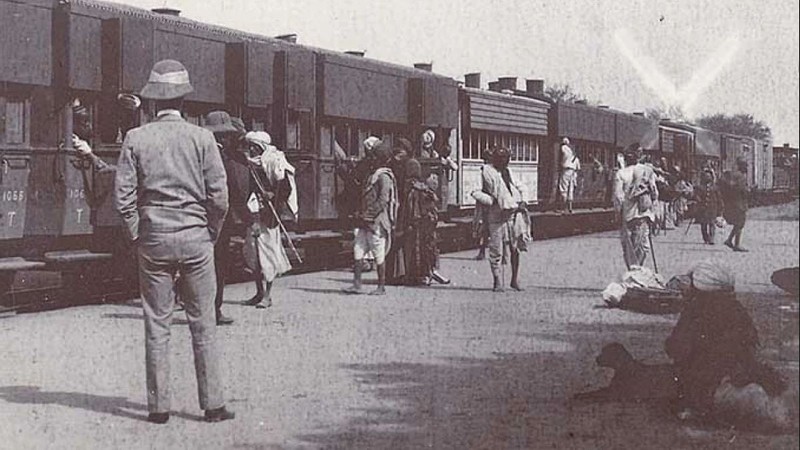
‘Dear Friends’ Xi and Putin: Project Unity

By Ray McGovern

16 Sep 2022 – In the official Chinese and Russian statements regarding yesterday’s meeting between Presidents XI Jinping and Vladimir Putin in Samarkand lies not a scintilla of evidence that China’s support for Putin’s invasion of Ukraine has weakened.

In my view, if Putin decides to up the ante in Ukraine, XI would be likely to support him. Most analysts of China doubt that this would extend to China’s stirring up trouble in the South China Sea or opposite Taiwan, but most Chinese analysts did not expect China to tolerate, much less endorse, Russia’s invasion of Ukraine. So your guess is as good as mine.

Underneath the ‘Dear Friend’ professions of solidarity lies a concrete-reinforced commitment, so to speak, indeed a China-Russia entente that bespeaks an intention to coordinate closely – including before any major military initiatives against the U.S. or its proxies.

Some of the mutual statements of solidarity may sound boilerplate, but it is important to remember that the boilerplate has acquired additional steel reinforcement, so to speak, in the crucible of this year 2022. Each country has pledged strong support for the other’s “core interests” – for Russia, re. Ukraine; for China, re. Taiwan.

The “core interest” mutual support was given prominence in the official Chinese readout of the Putin-Xi conversation:

“President XI emphasized that China will work with Russia to extend strong mutual support on issues concerning each other’s core interests….

“President Putin noted that the world is undergoing multiple changes, yet the only thing that remains unchanged is the friendship and mutual trust between Russia and China.

“The Russia-China comprehensive strategic partnership of coordination is as stable as mountains. … The Russian side is firmly committed to the one-China principle and condemns provocative moves by individual countries on issues concerning China’s core interests. Russia will consolidate and deepen bilateral and multilateral communication and collaboration with China and expand cooperation in key areas such as trade and energy.”

In his remarks, Putin emphasized the “key role” played by “the foreign policy tandem of Moscow and Beijing” in ensuring global and regional stability and took another potshot at the undefined “rules-based” order promoted by Washington. He also expressed appreciation for “our Chinese friends’ balanced position in connection with the Ukraine crisis.”

Putin also fleshed out the progress in Russia’s trade with China:

“Last year, trade grew by 35 percent to over $140 billion. In the first seven months of this year, our trade increased by another 25 percent. I am convinced that by the end of the year we will reach new record high levels, and in the near term, as agreed, we will bring our annual trade to $200 billion or more.”

On a personal note, in the early 60s when I was responsible for analyzing Sino-Soviet relations, mutual trade amounted to $200 million. Granted: bilateral relations back then were in the pits. But still, $200 million to $200 billion is something we never imagined in our wildest dreams.

The Chinese and Russians can thank the reckless-feckless team of Secretary of State Antony Blinken and national security adviser Jake Sullivan, as well as their immediate predecessors for helping that increase to be as large as it it.

Finally, right after the Xi-Putin meeting yesterday, ABC’s Martha Raddatz read the following words of wisdom into the TV camera:

“Given what has happened in Ukraine, with Russia losing territory and its forces exposed as weak and hapless, even if Russia gets nothing [from XI], the meeting will signal an anti-Western bond which is significant – it IS significant.”

I believe Martha got that last part right. We shall have to wait and see how this all plays out regarding Ukraine and Taiwan.

Ray McGovern works with Tell the Word, a publishing arm of the ecumenical Church of the Saviour in inner-city Washington.

19 September 2022

Source: www.transcend.org
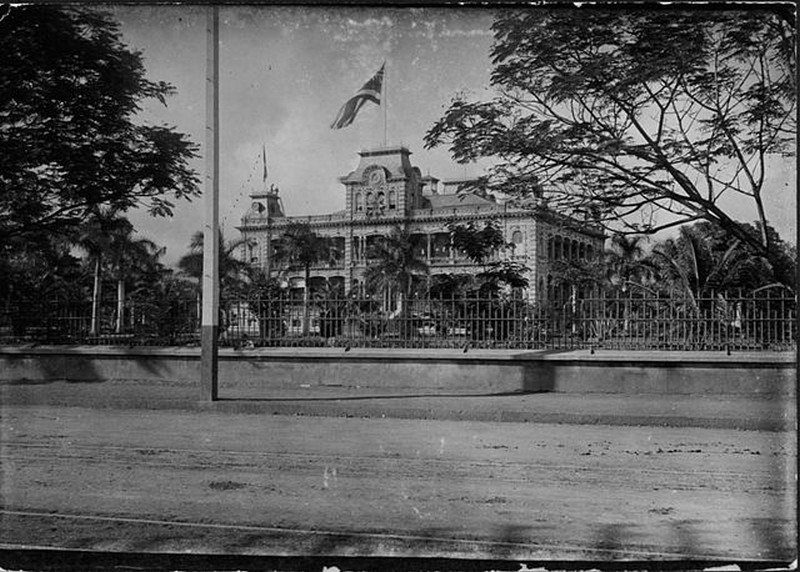
Europe, More Than Putin, Must Shoulder the Blame for the Energy Crisis

By Jonathan Cook

14 Sep 2022 – The same arrogant, self-righteous posturing from the West that fuelled the Ukraine war is now plunging Europe into recession.

Outraged western leaders are threatening a price cap on imports of Russian natural gas after Moscow cut supplies to Europe this month, deepening an already dire energy and cost-of-living crisis. In response, Russian President Vladimir Putin has warned that Europe will “freeze” this winter unless there is a change of tack.

In this back-and-forth, the West keeps stepping up the rhetoric. Putin is accused of using a mix of blackmail and economic terror against Europe. His actions supposedly prove once more that he is a monster who cannot be negotiated with, and a threat to world peace.

Denying fuel to Europe as winter approaches, in a bid to weaken the resolve of European states to support Kyiv and alienate European publics from their leaders, is Putin’s opening gambit in a plot to expand his territorial ambitions from Ukraine to the rest of Europe.

Or so runs the all-too-familiar narrative shared by western politicians and media.

In fact, Europe’s arrogant, self-righteous posturing over Russian gas supplies, divorced from any discernible geopolitical reality, reflects precisely the same foolhardy mindset that helped provoke Moscow’s invasion of Ukraine in the first place.

It is also the reason why there has been no exit ramp – a path to negotiations – even as Russia has taken vast swaths of Ukraine’s eastern and southern flanks – territory that cannot be reclaimed without a further massive loss of life on both sides, as the limited Ukrainian assault around Kharkiv has highlighted.

The western media has to carry a major share of the blame for these serial failures of diplomacy. Journalists have amplified only too loudly and uncritically what US and European leaders want their publics to believe is going on. But maybe it is time that Europeans heard a little of how things might look to Russian eyes.

Economic war

The media could start by dropping their indignation at “insolent” Moscow for refusing to supply Europe with gas. After all, Moscow has been only too clear about the reason for the shutdown of gas supplies: it is in retaliation for the West imposing economic sanctions – a form of collective punishment on the wider Russian population that risks violating the laws of war.

The West is well practised in waging economic war on weak states, usually in a futile attempt to topple leaders they don’t like or as a softening-up exercise before it sends in troops or proxies.

Iran has faced decades of sanctions that have inflicted a devastating toll on its economy and population but done nothing to bring down the government.

Meanwhile, Washington is waging what amounts to its own form of economic terrorism on the Afghan people to punish the ruling Taliban for driving out US occupation forces last year in humiliating fashion. The United Nations reported last month that sanctions had contributed to the risk of more than a million Afghan children dying from starvation.

There is nothing virtuous about the current economic sanctions on Russia either, any more than there is about the blackballing of Russian sportspeople and cultural icons. The sanctions are not intended to push Putin to the negotiating table. As US President Biden made clear in March, the West is planning for a long war and he wants to see Putin removed from power.

Rather, the goal has been to weaken his authority and – in some fantasy scenario – encourage his subordinates to turn on him. The West’s game plan – if it can be dignified with that term – is to force Putin to over-extend Russian forces in Ukraine by flooding the battlefield with armaments, and then watch his government collapse under the weight of popular discontent at home.

But in practice, the reverse has been happening, just as it did through the 1990s when the West imposed sanctions on Iraq’s Saddam Hussein. Putin’s position has been bolstered, as it will continue to be whether Russia is triumphing or losing on the battlefield.

The West’s economic sanctions against Russia have been doubly foolish. They have reinforced Putin’s message that the West seeks to destroy Russia, just as it previously did Iraq, Afghanistan, Libya, Syria and Yemen. A strongman is all that stands between an independent Russia and servitude, Putin can plausibly argue.

And at the same time, the sanctions have demonstrated to Russians how truly artful their leader is. Economic pressure from the West has largely backfired: sanctions have barely made an impression on the value of the rouble, while Europe looks to be heading into recession as Putin turns off the gas spigot.

It will doubtless not only be Russians quietly rejoicing at seeing the West get a dose of the medicine it so regularly force-feeds others.

Western conceit

But there is a more troubling dimension to the West’s conceit. It was the same high-handed belief that the West would face no consequences for waging economic warfare on Russia, just as earlier assumed it would be pain-free for Nato to station missiles on Moscow’s doorstep. (Presumably, the effect on Ukrainians was not factored into the calculations.)

The decision to recruit ever-more east European states into the Nato fold over the past two decades not only broke promises made to Soviet and Russian leaders, but flew in the face of advice from the West’s most expert policy-makers.

Guided by the US, Nato countries closed the military noose around Russia year by year, all the while claiming that the noose was entirely defensive.

Nato flirted openly with Ukraine, suggesting that it too might be admitted to their anti-Russia alliance.

The US had a hand in the 2014 protests that overthrew Ukraine’s government, one elected to keep channels open with Moscow.

With a new government installed, the Ukrainian army incorporated ultra-nationalist, anti-Russia militias that engaged in a devastating civil war with Russian communities in the country’s east.

And all the while, Nato secretly cooperated with and trained that same Ukrainian army.

At no point in the eight long years of Ukraine’s civil war did Europe or the US care to imagine how all these events unfolding in Russia’s backyard might look to ordinary Russians. Might they not fear the West just as much as western publics have been encouraged by their media to fear Moscow? Putin did not need to invent their concern. The West achieved that all by itself.

The encirclement of Russia by Nato was not a one-off error. Western meddling in the coup and support for a nationalist Ukrainian army increasingly hostile to Russia were not one-offs either. Nato’s decision to flood Ukraine with weapons rather than concentrate on diplomacy is no aberration. Nor is the decision to impose economic sanctions on ordinary Russians.

These are all of a piece, a pattern of pathological behaviour by the West towards Russia – and any other resource-rich state that does not utterly submit to western control. If the West were an individual, the patient would be diagnosed as suffering from a severe personality disorder, one with a strong impulse for self-destruction.

Bogeyman needed

Worse still, this impulse does not appear to be open to correction – not as things stand. The truth is that Nato and its US ringmaster have no interest in changing.

Their purpose is to have a credible bogeyman, one that justifies continuing the massive wealth redistribution from ordinary citizens to an elite of the already ultra-rich. A supposed threat to Europe’s safety justifies pouring money into the maw of an expanding war machine masquerading as the “defence industries” – the military, the arms manufacturers, and the ever-growing complex of the surveillance, intelligence and security industries. Both Nato and a US network of more than 800 military bases around the globe just keep growing.

A bogeyman also ensures western publics are unified in their fear and hatred of an external enemy, making them readier to defer to their leaders to protect them – and with it, the institutions of power those leaders uphold and the status quo they represent.

Anyone suggesting meaningful reform of that system can be rounded on as a threat to national security, a traitor or a fool, as Britain’s former Labour leader Jeremy Corbyn found out.

And a bogeyman distracts western publics from thinking about deeper threats, ones that our own leaders – rather than foreigners – are responsible for, such as the climate crisis they not only ignored but still fuel through the very military posturing and global confrontations they use to distract us. It is a perfect circle of self-harm.

Since the fall of the Berlin Wall, and the demise of the Soviet Union, the West has been casting around for a useful bogeyman to replace the Soviet Union, one that supposedly presents an existential threat to western civilisation.

Iraq’s weapons of mass distraction were only 45 minutes away – until we learned they did not, in fact, exist.

Afghanistan’s Taliban was harbouring al-Qaeda – until we learned that the Taliban had offered to hand Osama bin Laden over even before the 9/11 attacks.

There was the terrifying threat from the head-choppers of the Islamic State (IS) group – until we learned that they were the West’s arm’s-length allies in Syria and being supplied with weapons from Libya after it was “liberated” by the West from its dictator, Muammar Gadaffi.

And there is always Iran and its supposed nuclear weapons to worry about, even though Tehran signed an agreement in 2015 putting in place strict international oversight to prevent it from developing a bomb – until the US casually discarded the deal under pressure from Israel and chose not to replace it with anything else.

Braced for recession

Each of these threats was so grave it required an enormous expenditure of energy and treasure, until it had served its purpose of terrifying western publics into acquiescence. Invariably, the West’s meddling spawned a backlash that created another temporary enemy.

Now, like a predictable Hollywood sequel, the Cold War is back with a vengeance. Russia’s President Putin has a starring role. And the military-industrial complex is licking its lips with delight.

Ordinary people and small businesses are being told by European leaders to brace for a recession as energy companies once again clock up “eye-watering” profits.

Just as with the financial crash nearly 15 years ago, when the public was required to tighten its belt through austerity policies, a crisis is providing ideal conditions for wealth to be redistributed upwards.

Like other officials, Nato’s Secretary-General Jens Stoltenberg has sounded the alarm about “civil unrest” this winter as prices across Europe soar, even while demanding public money be used to send yet more weapons to Ukraine.

The question is whether western publics will keep buying the narrative of an existential threat that can only be dealt with if they, rather than their leaders, dig deep into their pockets.

Jonathan Cook is an award-winning British journalist based in Nazareth, Israel, since 2001.

19 September 2022

Source: www.transcend.org
IMF Tells Bolivia to Drop Its Successful Economic Model

By Kawsachun News

16 Sep 2022The IMF released a report today on the Bolivian economy in which it recommends adopting drastic neoliberal measures, including; reducing workers’ salaries, cutting public investments, and ending currency controls. These policies have turned Bolivia from one of the poorest countries in the region into it’s fastest-growing economy.

The report takes aim at the government’s spending on development, saying, “The government must restrict spending, including eliminating the end of year wage bonus for workers, they must restrict the growth of wages for public sector workers, and limit the growth of public investment and subsidies.”

The ‘end-of-year wage bonus’ for workers (in both the public and private sector) refers to a policy introduced under Evo Morales that requires employers to pay their workers a bonus equal to double their monthly wage, but only if annual GDP growth is over 4.5%.

The bulk of public investment is destined for infrastructure, while the majority of subsidies are for ensuring the price of fuel doesn’t rise. Bolivia is the only country in the region to see no rise in fuel prices, a policy that has kept inflation at less than 2%, unlike the rest of South America.

The report even states that fuel prices must rise, and the inflation that would inevitably cause could be offset by cash-transfer programs for the poorest sectors, says the IMF:

“The successful implementation of an increase in domestic fuel prices will require recycling a part of the budget savings in cash transfer programs aimed at the poorest deciles of the population.”

Bolivia’s Economy Minister, Marcelo Montenegro, emphatically rejected the report, stating today; “They prescribe the old recipes from many decades ago where they call for reducing subsidies, lowering public spending, gradually eliminating the end of year bonus for workers. We are not going to accept these recommendations because we are a sovereign country, and we have a sovereign economic policy.”

The policies criticized by the IMF have helped Bolivia reduce poverty by over 50% since Evo Morales took office in 2006. It has also helped keep inflation at the lowest rate in Latin America. Meanwhile, when IMF policies were implemented in the early 2000s, over 60% of the country lived below the poverty line.

In a recent speech in Brazil, Bolivia’s President Luis Arce stated that the country’s impressive growth is due to rejecting IMF recommendations; “We are in better conditions because, since 2006, Bolivia doesn’t have a single agreement with the IMF. In 2020 with the de facto government, they tried to enter into a loan program with the IMF, which we stopped as soon as we entered government, we reversed that IMF loan because believe the best way to make economic policy is to have a sovereign monetary and economic policy without being submitted to any international organism.”

19 September 2022

Source: www.transcend.org