Just International

RIP Mikhail Gorbachev, Nobel Peace Laureate

By Mairead Maguire

31 Aug 2022 – I am sad to learn of the death of Mikhail Gorbachev on Tue, 30 Aug 2022.

I had the honour of meeting him on several occasions at the Gorbachev Nobel Peace Summits.

I never had the honour of meeting his beloved wife Raisa who died some years ago and who President Gorbachev missed and loved tenderly. I send my condolences to his daughter Irina, and family and friends and the Russian peoples, on the loss of Mikhail Gorbachev. President Gorbachev was a warmhearted and kind man with a vision of peace and nuclear disarmament and a belief that the cold war between the west and Russia could be changed by talking and friendship.

He won the Nobel Peace Prize for his work in building dialogue and encouraging America to sign important agreements to start dismantling nuclear weapons and end the arms race. Gorbachev took risks for peace and he gave hope to many of us when he met with President Regan and worked to end the cold war and the arms race.

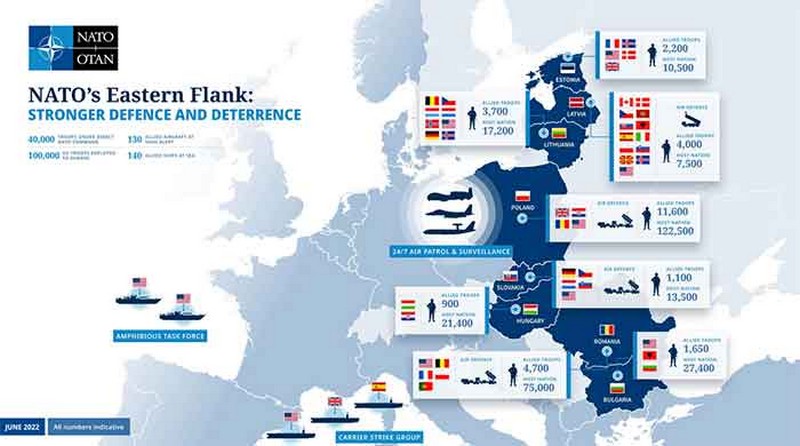
It is to the shame of the West that the promises given to President Gorbachev were broken and US/NATO instead of keeping to its promises not to advance one inch towards Russia surrounded it with NATO bases and partners and continues to militarize and arm the world.

Gorbachev’s vision of an end to Cold war politics, a world built on peaceful solutions and an end to nuclear weapons and war is not a utopian dream, it is possible, and for those who had the honour of knowing Mikhail Gorbachev our best tribute to him is to begin again the quest for a disarmed peaceful world where our humanity comes first and ending poverty, the arms race, and war takes top priority for each of us.

May we all be inspired by the spirit of the late Mikhail Gorbachev for his courage, integrity and vision of Nuclear Disarmament and Peace for Russia, the West and the World.

Mairead Corrigan Maguire, co-founder of Peace People, is a member of the TRANSCEND Network for Peace Development Environment.

5 September 2022

Source: www.transcend.org

CO2 Levels Are the Highest in a Million Years as Extreme Weather and Flooding Rage Across the Globe

By Juan Cole

CNN reports that satellite photos show that the overflowing Indus has created a new body of water in southern Pakistan some 62 miles (100km) wide. It will take days or weeks for the water to recede, and in the meantime millions are left homeless and over all, 33 million people have been affected by the worst monsoon floods in recorded history. CNN quotes Pakistan’s Climate Minister Sherry Rahman as saying “That parts of the country ‘resemble a small ocean,’ and that ‘by the time this is over, we could well have one-quarter or one-third of Pakistan under water.’”

Because of our burning of fossil fuels to drive cars and heat and cool buildings, the world is heating up. But the Indian Ocean is heating up a third faster than the rest of the world. Very warm waters in the Bay of Bengal are helping create more destructive cyclones and flooding. The air over warming waters contains more moisture than the 20th century average. Warming waters also make the winds that blow over them more erratic, and wayward winds from the Arabian Sea helped push the heavy monsoon rains farther north than they usually extend.

We don’t have to look far for the culprits. J. Blunden, and T. Boyer, Eds., 2022: “State of the Climate in 2021” Bull. Amer. Meteor. Soc., 103 (8), Si–S465, https://doi.org/10.1175/2022BAMSStateoftheClimate provides a state of the climate report for 2021.

It isn’t good news. The concentration in the atmosphere of carbon dioxide increased another 2.6 parts per million, to a year-long average of 414.7 parts per million of CO2. We should be trying to get to zero increases of carbon dioxide, not increasing it. Arctic snow cores show that there hasn’t been that much CO2 in the atmosphere for at least 800,000 years, i.e. nearly a million years. It turns out that if you go back to “1 million Years B.C.” you don’t find Raquel Welch, you find a steaming tropics of a world. The growth rate for methane was the highest on record. Methane is 25 times more potent than carbon dioxide as a heat-trapping gas, and CO2 isn’t any slouch itself. Methane, though, dissipates quickly if you don’t keep adding to it in the stratosphere, in as little as nine years. If you put carbon dioxide up there, though, it can last thousands and thousands of years. It is gradually absorbed by the oceans or igneous rocks, but he ocean may reach its capacity for absorption of CO2 in only 15 years, after which the stuff will just stay up there, making earth hot.

The report says that Death Valley, California, reached 54.4°C (130.46 F.) for the second time since records have been kept. Across the global ice concentrations or “cryosphere,” glaciers lost ice mass for the 34th consecutive year. Now the BBC is predicting that in the near future the glacier ice lost will become so great that it will threaten the water supplies of Switzerland and other European countries.

And in horrific news for Bangladesh and Egypt, the report says, “Across the world’s oceans, global mean sea level was record high for the 10th consecutive year, reaching 97.0 mm above the 1993 average when satellite measurements began, an increase of 4.9 mm over 2020.”

Seas rising, carbon dioxide concentrations in the atmosphere rising to best a million-year-old-record, super-monsoons. We can change all this, but we have to hurry to shut down CO2 emissions quickly.

Juan Cole teaches Middle Eastern and South Asian history at the University of Michigan.

2 September 2022

Source: countercurrents.org

The holocaust and the Nakba

By Dr Ranjan Solomon

Israel and Germany are prolonging their fuss over Mahmoud Abbas’ comment on the ‘holocausts’ committed by Israel on the Palestinian people. Abbas cannot reverse facts even if he pulls back his statement. Abbas is no political saint. But he has on this occasion spoken out with courage and truthfully. Germany cannot stomach it because the term sticks on them because of what happened from 1941-45.

Paulo Friere, the widely known Brazilian educator and philosopher famously stated in his book ‘Pedagogy of the Oppressed’ that the oppressed tend to ‘internalize the image of the oppressor’ and hence duplicate the behaviour of the latter when the opportunity arises. In his understanding post-trauma education must propel transformative values which reject replicating the ways of the oppressor. In the tearing hurry to rehabilitate the victims of what happened to the Jews in Europe, the world set out to wash their hands off the problem and dump it on the Palestinians. Balfour’s United Kingdom adopted their practiced colonial inanity of a political legacy where confusions and conflict reined. They left the Palestinians and Israelis at war that later led to ‘The Nakba’.

In his article The Holocaust and the Nakba: Memory, National Identity and Jewish-Arab Partnership, Alon Confino, an Israeli cultural historian and Director of the Institute for Holocaust, Genocide, and Memory Studies, wrote: “The link between the Holocaust and the Nakba is probably the most charged for both Jews and Palestinians. To Jews, the Holocaust is a foundational past, and some would say a unique one, and thus to discuss it in conjunction with any other event may appear to banalize the extermination of the Jews and even to present a moral and political threat. To Palestinians, the Nakba is a foundational past, and since the Jews invoke the Holocaust to justify Zionism and Israel’s actions, to many Palestinians recognition of the Holocaust is tantamount to legitimizing the injustices of the Nakba and the iniquities that Israel continues to wreak upon them. To Germans as well, the juxtaposition of these two events is a sensitive matter, since they feel particularly responsible for the memory of the Holocaust”.

Rather than dwell in polemics, Germany and Israel may want to indulge in solemn futuristic thinking and action by which a political blueprint can be arrived at with a sense of urgency and a new political practice restores a just and peaceful life for the Palestinians. That will happen to be a political space inside which a value-based mutual co-existence is forged and the asymmetry that now undergirds Israel’s colonialist-apartheid State are abandoned. There are no two ways about this option.

A recent statement on behalf of the European Commission affirms: “Past allegations of misuse of EU funds in relation to certain Palestinian Civil Society Organisations have not been substantiated.” The EU also reiterated its ongoing support for such organisations because “they play a crucial role in promoting international law, human rights and democratic values.”

But Ramona Wadi, independent researcher, freelance journalist, book reviewer and blogger is scathing in her assessment of the double-speak by the EU. She disputes the EU’s ‘Pretty words’. In her appraisal, “the significance has greater impact in terms of allowing Israel to continue with its violations unchecked. Primarily, the EU’s praise of such organisations also highlights its own ineptitude. Undoubtedly, civil society and human rights organisations are indispensable, but they have also been made so due to governments’ reliance on violations of international law. The fact that the EU finances civil society organisations in Palestine and will continue to do so is only part of a bigger equation that sees the bloc in a duplicitous role of funding both the oppressor and, to a much lesser extent, the oppressed. Hence, the EU maintains the imbalance in favour of Israeli violence, while Palestinian civil society organisations are restricted in terms of lesser funding in comparison with the magnitude of violations that Israel commits”.

Ranjan Solomon is a human rights activist, political commentator who believes that peoples’ power is a non-negotiable instrument to further democracy and justice.

24 August 2022

Source: countercurrents.org

UK sued by Africans over colonial-era abuses

By Countercurrents Collective

A group of Kenyan activists filed a case against the UK to the European Court of Human Rights (ECHR) on Tuesday.

Lawyers representing peoples forced off their land in Kenya’s Rift Valley argue the UK has violated the European Convention of Human Rights, to which it is a signatory, by consistently ignoring complaints lodged by the victims of colonial rule.

“The UK government has ducked and dived, and sadly avoided every possible avenue of redress,” Joel Kimutai Bosek, representing the Kipsigis and Talai peoples, has said. “We have no choice but to proceed to court for our clients so that history can be righted.”

The British Empire ruled Kenya between the late 19th century till 1962. The peoples living in the Rift Valley were forced off their lands in the early 20th century. Today, the area around Kericho, the biggest town in the Valley, is a major tea-growing region farmed by multinational majors.

“Today, some of the world’s most prosperous tea companies, like Unilever, Williamson Tea, Finlay’s, and Lipton occupy and farm these lands and continue to use them to generate considerable profits,” the plaintiffs said in a statement.

Previously, the Kipsigis and Talai took their cause to the UN, where a special investigative panel expressed “serious concern” last year over London’s failure to acknowledge its share of responsibility or issue an apology for colonial-era abuses. The complaint to the UN was signed by more than 100,000 people who suffered from colonial rule or their descendants, demanding an apology and reparations for their land being ceded to white settlers.

Filing the case with the ECHR has been praised by the outgoing governor of Kericho County, Paul Chepkwony, who said it was “a historic day” for the whole region.

“We have taken all reasonable and dignified steps. But the UK government has given us the cold shoulder. We hope for those who have suffered for too long that their dignity will be restored,” Chepkwony stated.

UK Waged ‘Dirty’ Propaganda Operation In Africa

An earlier report said:

A covert unit within the British Foreign Office targeted Kenya’s first vice president, Oginga Odinga, in the 1960s as part of a “black propaganda” campaign, The Guardian reported, citing newly declassified documents. After Kenyan independence from the UK in 1963, London perceived the left-wing politician as a threat to its interests, according to the papers.

Odinga is said to have been subjected to a three-year campaign by the Information Research Department (IRD), a clandestine unit initially established by the post-WWII Labour government to spread anti-Communist views. The effort was led by the Special Editorial Unit (SEU), a highly secretive “dirty tricks section” of the IRD, the report says.

After Kenya broke free from British rule in 1963, London apparently viewed President Jomo Kenyatta as the preferred leader of the country. However, the UK seemed to have been worried that the vice president, Odinga, a left-wing figure who was open to relations with the Soviet-led bloc and communist China, could somehow replace Kenyatta in the future. These apprehensions led the British ‘black ops’ units to scramble to undermine Odinga, despite British diplomats recognizing that he was not actually a communist, the report says.

The declassified files detail four campaigns to smear Odinga, according to The Guardian. In September 1965, the Daily Telegraph reported on a pamphlet issued by a fictitious organization called the ‘People’s Front of East Africa’ that branded Kenyatta’s government as “reactionary, fascist and dishonest” while touting Odinga as “a great revolutionary leader” who would ascend to power with the help of a new socialist party, the outlet says.

However, this was, apparently, a sophisticated propaganda ploy meant to arouse suspicion that Odinga was in league with communist China. The IRD is said to have distributed the pamphlet among “leading personalities and the press.” The story gained significant traction in Kenya and successfully convinced many of the country’s ministers that the pamphlet was genuine.

According to historian Dr. Poppy Cullen of Loughborough University, as quoted by The Guardian, all of this “clearly shows that Odinga was considered the main threat to British interests.” It also demonstrates the lengths to which the British were prepared to go to undermine him, he added.

However, the Kenyan vice president smelt trouble, the report says. In 1964, he accused the British press of a “a spate of vilification and facile criticism,” decrying the allegations in their reports that he was plotting against Kenyatta.

In another instance, the SEU reportedly created a leaflet from what was called the ‘Loyal African Brothers’ that castigated Odinga as “a tool of the Chinese” communists.

Although this organization never really existed and was merely the creation of British propagandists, over nearly ten years the fictitious group produced 37 leaflets claiming to want “to free Africa of all forms of foreign interference.”

In April 1964, Kenyatta voiced suspicions that Odinga might attempt to overthrow him, which, The Guardian says, prompted plans for British military intervention should a coup take place. In the aftermath of these propaganda efforts, the homes of Odinga and his supporters were raided, but no evidence that a coup was being prepared was found, and the vice president kept his post, at least for the time being.

In 1966, Odinga resigned and established his own leftist party, the Kenya People’s Union. In 1969, the party was banned, and Odinga was placed under detention and later jailed by Kenyatta’s successor, Daniel arap Moi. Nonetheless, Odinga’s son, Raila Odinga, is set to take part in Kenya’s upcoming presidential election.

“The story of the British propaganda operations in Kenya is a reminder that the days of a declining empire were not as much pomp and circumstance as deception, disinformation and dirty tricks,” Professor Scott Lucas, a specialist in British foreign policy at the University of Birmingham, told The Guardian.

In May, The Guardian revealed how, from the 1950s to the 1970s, London sought to drive a wedge between Moscow, Beijing, the Arab world, and Africa through disinformation in an attempt to undermine their global influence.

Documents declassified back in 2021 and seen by the newspaper also showed that the British propaganda campaign had played a role in the mass slaughter of communists in Indonesia in the 1960s. Although the propaganda unit was officially disbanded in 1977, similar efforts allegedly continued for nearly another decade, according to the outlet.

24 August 2022

Source: countercurrents.org

Pakistan’s Generals Want To Muzzle Imran Khan. It May Backfire

By Charlie Campbell

Deaths From flooding in Pakistan Near 1,000: Officials

Imran Khan has been dialing up the invective since even before his ouster as Pakistan’s Prime Minister in a parliamentary no-confidence vote on Apr. 9. In the weeks prior to that, and seeing the end was near, Khan took to mass, highly-produced rallies for his centrist Pakistan Tehreek-e-Insaf (PTI) party to rail against political opponents, whom he accused of hatching a U.S.-backed coup to unseat him. These demonstrations have only grown larger and more vitriolic in recent weeks as the cricketing icon turned his ire on the military establishment that aided his political rise before deserting him.

Things came to a head Sunday when police charged Khan under anti-terror legislation over a speech he gave in Islamabad on Saturday, in which he vowed to sue police officers and a female judge over the arrest and alleged torture of a close aide.

So far, Khan remains free and his supporters have threatened to stage mass demonstrations should he be taken into custody. “If Khan is actually arrested, all bets would be off and the country could see heightened risks of political violence in major cities,” says Michael Kugelman, the deputy director of the Asia Program at the Woodrow Wilson Center. “Khan enjoys backing from a rabid support base that would not sit quietly.”

The controversy centers around Shahbaz Gill, a former Cabinet minister and special assistant to Khan, who earlier this month urged soldiers to disobey “illegal orders” from their military leaders in a televised address. Gill was charged with sedition—a crime which carries the death penalty—and claims he was tortured under interrogation. (One senior PTI figure provided photos of bruises Gill allegedly suffered during detention, though TIME was unable to independently verify the contents.)

Khan came to the defense of his friend by criticizing the inspector-general of Pakistan’s police force and the judge deemed responsible for Gill’s arrest. “You also get ready for it, we will also take action against you,” Khan reportedly said. “All of you must be ashamed.”

Pakistan’s judiciary subsequently deemed those comments—and threats to sue the police and the judge—an explicit threat and filed charges against him. However, the Islamabad High Court granted Khan “protective bail” until Thursday, which blocks his potential arrest for now.

In any case, Khan’s speeches have been banned from live satellite television broadcasts inside Pakistan after the national regulator accused him of leveling “baseless allegations” against the state and “spreading hate speech.” The order has been met with pushback from across the political divide. “Banishing completely a political leader from the media is not the best policy,” tweeted former Pakistani Senator Farhatullah Babar of the opposition center-left Pakistan Peoples Party (PPP). “It risks making someone bigger than life unwittingly and undeservingly.”

It’s also not clear how effective such a ban would be. Khan has over 17 million followers on Twitter, which is higher than the ratings of many top nightly news shows in Pakistan. On Sunday, access to YouTube was reportedly disrupted across the country in an apparent attempt to restrict a live speech he was giving in the northern city of Rawalpindi.

Certainly, Khan’s predicament is only the latest salvo as nuclear-armed Pakistan lurches from crisis to crisis, with potentially grave implications for regional and global security. On top of a hyper-polarized political environment, the nation of 230 million people is blighted by runaway inflation that reached 24.9% in July and a government that has been unable to improve the economy and heavy-handed with opponents. On Aug. 29, the IMF is due to meet to negotiate yet another bailout. But the specter of political unrest risks wobbling an already precarious economic tightrope. “No matter how you slice it, it’s a very uneasy and volatile moment for Pakistan,” says Kugelman.

Is Pakistan’s military getting ready to act?

Despite an often tetchy relationship, Pakistan is an invaluable security partner for the U.S. regarding neighboring Afghanistan, where the Taliban have been back in power for a year.

Instability gripping Pakistan—including rumors of splits between pro- and anti-Khan factions in the military—undermines this invaluable security apparatus. On Aug. 10, the Pakistani Taliban claimed it had regained control of a part of Swat district in the country’s far north. It’s a precarious time for Pakistan’s military to be divided and distracted.

For Samina Yasmeen, director of the Centre for Muslim States and Societies at the University of Western Australia, the new government of Prime Minister Shahbaz Sharif of the center-right PML-N party—brother of Khan’s longtime nemesis Nawaz Sharif—has made the mistake of allowing Khan to “whip up hysteria” but now faces “even more instability” by clumsily cracking down. “It’s not simply the fact that Pakistan is a nuclear state,” she says. “It’s that this state has a lot of people in it. If there are clashes, then you really don’t know where it’s going to go.”

Tellingly, Khan has toned down his anti-U.S. broadsides in recent weeks, presumably leaving the door open to mend relations with Washington should he engineer a miraculous return to power. Instead, he’s dialed up attacks against the military, which he sardonically dubbed “neutrals” in response to statements from brass hats insisting they don’t meddle in politics. Even the figures in the ruling PML-N have now adopted the quip, hammering home the fact that the generals who have ruled Pakistan for half its 75-year history remain kingmakers today.

The charges against Khan have in particular galvanized his supporters’ enmity against Pakistan Army chief General Qamar Javed Bajwa, who they believe was a big driver of the 69-year-old Khan’s ouster. “Bajwa’s transformation in the eyes of Khan’s supporters from revered to reviled … is one of the most striking takeaways from this ongoing saga,” says Kugelman.

The reality is, of course, that Khan’s path to power was possible because the military backed him and then he lost power when they withdrew their support. Overall, the reputation of the generals has taken a hit across the political spectrum. When six senior army officers including a top general died in a helicopter crash in early August, the overwhelming reaction on social media was far from sympathetic, with many mockingly expressing condolences for the aircraft rather than the lives lost.

Pakistani society has rarely been so polarized, with half the country treating Khan as a savior and half as the devil incarnate. “Effectively, what he’s done is divided the country,” says Yasmeen. “It’s very much like Trump [in the U.S.]. And if the United States hasn’t fully recovered yet, how can a country like Pakistan recover?”

The question is whether the generals will sit back if widespread protests erupt amid a brewing economic catastrophe. Pakistan’s military has willingly seized power when they thought things were spiraling out of control, most recently in 1999. But the generals worked out that they preferred to pull the strings from the shadows. The question is whether this view has changed. “I can’t see the military taking over,” says Yasmeen, “But then part of me thinks, it’s gone so bad, could there be some [in the army] who think it would be the right thing?”

Charlie Campbell

East Asia Correspondent for TIME

22 August 2022

Source: time.com

Imran Khan’s arrest will derail Pakistan’s democracy

By Ejaz Akram

Prominent defense analyst and former Pakistani military officer Haider Mehdi has vociferously claimed that Army Chief General Qamar Javed Bajwa colluded with US authorities to topple the Imran Khan government on 9 April.

While much of the Pakistani masses and social media seem to think the same, the state’s mainstream media outlets have largely stayed mum on the biggest political scandal the country has witnessed in years.

Many who criticized the role of Pakistan’s military in the alleged coup – even without naming the collaborating officers specifically – have already fled the country. Some have been arrested, while others are facing legal charges.

One of the more notable and emotionally-charged cases has been that of Dr. Shahbaz Gill, a Pakistani-American academic and a close member of Imran Khan’s media team. Gill was charged with sedition against the state for making the argument on ARY News Network (a mainstream channel which was immediately shut down afterward) that military officers should not obey unlawful commands from their superiors.

Various senior military officers have already explained that Gill’s remarks are no serious offense because all military officers are already under oath to not obey unlawful commands by their superiors.

Gill was apprehended by authorities on 9 August and reportedly remained in federal government custody until his deteriorating medical condition forced his jailers to move him to a state hospital.

Khan said that he had been fooled by the very same state medical facility back in 2019 when courts were persuaded to allow former PM Nawaz Sharif to travel to the UK for urgent medical treatment, from which he never returned. Khan insisted on checking on Gill’s status himself, but was denied entry to the hospital.

According to the leadership of Khan’s Pakistan Tehreek-e-Insaf (PTI) party, Gill was apprehended without an arrest warrant, tortured, and sexually assaulted.

Under Pakistan’s Code of Criminal Procedure (CrCP), the maximum period of detention is 14 days – which for Gill would be today, 23 August – except for “terrorism specific cases,” in which custody can be extended for up to 90 days.

“The disparity in the period of detention under the CrPC and the ATA [Anti-Terrorism Act] is one of the many contributory factors of the high number of superfluous cases in the anti-terrorism courts of Pakistan, since the ATA gives more time to the police to complete investigation while detaining the accused,” writes the Research Society of International Law in its report on Pakistan.

Is Imran Khan next?

Which brings us to news of the arrest warrant on “terrorism” charges issued against Imran Khan himself.

The highly controversial charge against Khan, under section 7 of Pakistan’s Anti-Terrorism Act, followed Saturday’s mass rally in support of Gill. During his speech, Khan vowed to bring lawsuits against police and judicial authorities for their roles in Gill’s alleged torture: “We will not spare you … We will sue you,” he threatened.

The accusation appear frivolous to the extreme, especially when the prosecuting government’s cabinet is overwhelmingly composed of well-known indicted criminals and repeat offenders on charges that range from corruption to murder.

But government officials defended the “terrorism” charges against Khan, saying he “spread terror amongst the police and the judiciary” and hindered their work.

Pakistan’s ATA has come under fire by domestic lawyers as well as overseas organizations. It’s definitions are too broad, its powers too aggressive, its authorities too dangerous.

Pakistan’s abuse of terror laws

The Office of the UN High Commissioner for Human Rights (OHCHR) says one of the “fundamental flaws” of the ATA “is the vague and overly broad definition of ‘terrorism’ under its provisions. This allows offenses bearing no nexus to militancy and proscribed terrorist networks to be tried.”

Up to 80 percent of those convicted of terrorism-related offenses under this act in Pakistan were accused of things that had nothing to do with “terrorism.”

Furthermore, the OHCHR cites observations from Pakistani lawyers that “political and economic influence serves as a primary determinant for whether an offense is tried under the ATA or under the ordinary criminal justice system.”

The report quotes lawyer Imran Asmat Chaudhry, a senior Advocate of the High Courts, saying:

“I have personally taken around 11 cases, which were sent to ATCs for trial. [The] motive behind all cases was personal enmity, political rivalry, or any other malignant intentions of the police themselves – even though the crime had no nexus to the ATA.”

The UN human rights group concludes: “The [ATA’s] broad definition under the law has often allowed it to be used as a tool of political victimization by ruling parties against opponents.”

Silencing media

Following the news of Khan’s arrest warrant, several Pakistani television channels were shut down and prominent journalist Jameel Farooqi was arrested and moved to an undisclosed location. According to analysts, such level of Praetorian politics and McCarthyism is unprecedented in Pakistan.

Pakistani social media activists have reported deployment of troops on high alert in major cities of Pakistan. The state has imposed a ban on Khan’s appearance on mainstream television networks, and Islamabad Police has announced that it will be no longer provide security services for Khan in the capital.

Sami Ibrahim, another prominent journalist from BOL TV that was struck off the air, says the next 48 hours will be crucial because actions for or against Khan’s arrest may take place. He believes some key decisions are likely to be made shortly, possibly including further restrictions, crackdowns, and persecution of social media platforms inside Pakistan.

In a potentially dangerous stand-off between state authorities and regular Pakistani citizens, most are wondering if the government has enough power to arrest the most popular leader in Pakistan’s recent history.

Khan’s PTI political party currently runs multiple governments in different Pakistani provinces. In stark contrast, the ruling party in the federal government – widely seen as a foreign installed government – is limited to the capital and is suffering from a major crisis in legitimacy, despite aggressive efforts to control the narrative.

Cracks form at the top

The current Pakistani government is in an impossible situation. It cannot call for early elections to help establish a public mandate of support, because all indications suggest an overwhelming win for Khan. And yet the very act of governing is a challenge without this mandate, especially given the ongoing public derision expressed in massive street protests and across social media.

In addition, the government of PM Shahbaz Sharif has its own internal divisions; these cracks are slowly becoming visible – and widening.

On 21 August, the PTI beat their opposing 13-party alliance with a decisive margin in Karachi’s by-election. Imran Khan has essentially already gone to the polls and won, because these massive election margins are taking place on the opposition’s own home ground.

Many of the ruling alliance members are fleeing provinces, where the PTI has formed provincial governments, in order to avoid potential legal charges. Some federal ministers have already escaped overseas.

According to prominent Pakistani analyst Nasir Ahmad: “General Bajwa and his senior generals have no idea how deeply the people of Pakistan, and indeed their own command, loathe them. The more insecure the generals feel, the more they dig their heels, and the closer they dig in their heels, and the closer they take their country, which they are oath-bound to defend, to its ultimate fall.”

Others, however, worry that if the state succeeds in arresting – or even assassinating Imran Khan – then nobody of similar stature and popularity will remain to lead Pakistan to safe shores. Mass movements require competent and legitimate leadership that can appropriately channel nations toward a politically constructive end, or else these numbers may just collapse upon themselves.

Since the alleged US-sponsored ousting of Imran Khan on 9 April, there hasn’t been a dull moment in Pakistani politics. It is as though the country grew a new head overnight:

Nobody could have imagined that the nation’s usually impartial military elite could be turned against the Pakistani masses and become the focus of widespread disdain. Nobody thought the military’s top brass would cozy up to New Delhi, all while when India amasses invasion-level troop build-ups in occupied Kashmir.

Interior Minister Rana Sanaullah stated on 22 August that Afghanistan is an ‘enemy country,’ signaling renewed Pakistani sycophancy in Washington’s latest war against the Taliban. Such decisions go diametrically against the will, interests, and decisions of the people of Pakistan.

A showdown between the majority – versus an increasingly unpopular and emboldened Pakistani elite – is inevitable in the near future.

Dr. Ejaz Akram is currently Professor of Religion & Politics in the Southwestern University of Politics and Law in Chongqing, China.

23 August 2022

Source: thecradle.co

The west’s false narrative about Russia and China

By Jeffrey Sachs

The world is on the edge of nuclear catastrophe in no small part because of the failure of Western political leaders to be forthright about the causes of the escalating global conflicts. The relentless Western narrative that the West is noble while Russia and China are evil is simple-minded and extraordinarily dangerous. It is an attempt to manipulate public opinion, not to deal with very real and pressing diplomacy.

The essential narrative of the West is built into US national security strategy. The core US idea is that China and Russia are implacable foes that are “attempting to erode American security and prosperity.” These countries are, according to the US, “determined to make economies less free and less fair, to grow their. militaries, and to control information and data to repress their societies and expand their influence.”

The irony is that since 1980 the US has been in at least 15 overseas wars of choice (Afghanistan, Iraq, Libya, Panama, Serbia, Syria, and Yemen just to name a few), while China has been in none, and Russia only in one (Syria) beyond the former Soviet Union. The US has military bases in 85 countries, China in 3, and Russia in 1 (Syria) beyond the former Soviet Union.

President Joe Biden has promoted this narrative, declaring that the greatest challenge of our time is the competition with the autocracies, which “seek to advance their own power, export and expand their influence around the world, and justify their repressive policies and practices as a more efficient way to address today’s challenges.” US security strategy is not the work of any single US president but of the US security establishment, which is largely autonomous, and operates behind a wall of secrecy.

The overwrought fear of China and Russia is sold to a Western public through manipulation of the facts. A generation earlier George W. Bush, Jr. sold the public on the idea that America’s greatest threat was Islamic fundamentalism, without mentioning that it was the CIA, with Saudi Arabia and other countries, that had created, funded, and deployed the jihadists in Afghanistan, Syria, and elsewhere to fight America’s wars.

Or consider the Soviet Union’s invasion of Afghanistan in 1980, which was painted in the Western media as an act of unprovoked perfidy. Years later, we learned that the Soviet invasion was actually preceded by a CIA operation designed to provoke the Soviet invasion! The same misinformation occurred vis-à-vis Syria. The Western press is filled with recriminations against Putin’s military assistance to Syria’s Bashar al-Assad beginning in 2015, without mentioning that the US supported the overthrow of al-Assad beginning in 2011, with the CIA funding a major operation (Timber Sycamore) to overthrow Assad years before Russia arrived.

Or more recently, when US House Speaker Nancy Pelosi recklessly flew to Taiwan despite China’s warnings, no G7 foreign minister criticised Pelosi’s provocation, yet the G7 ministers together harshly criticised China’s “overreaction” to Pelosi’s trip.

The Western narrative about the Ukraine war is that it is an unprovoked attack by Putin in the quest to recreate the Russian empire. Yet the real history starts with the Western promise to Soviet President Mikhail Gorbachev that NATO would not enlarge to the East, followed by four waves of NATO aggrandisement: in 1999, incorporating three Central European countries; in 2004, incorporating 7 more, including in the Black Sea and Baltic States; in 2008, committing to enlarge to Ukraine and Georgia; and in 2022, inviting four Asia-Pacific leaders to NATO to take aim at China.

Nor do the Western media mention the US role in the 2014 overthrow of Ukraine’s pro-Russian president Viktor Yanukovych; the failure of the Governments of France and Germany, guarantors of the Minsk II agreement, to press Ukraine to carry out its commitments; the vast US armaments sent to Ukraine during the Trump and Biden Administrations in the lead-up to war; nor the refusal of the US to negotiate with Putin over NATO enlargement to Ukraine.

Of course, NATO says that is purely defensive, so that Putin should have nothing to fear. In other words, Putin should take no notice of the CIA operations in Afghanistan and Syria; the NATO bombing of Serbia in 1999; the NATO overthrow of Moammar Qaddafi in 2011; the NATO occupation of Afghanistan for 15 years; nor Biden’s “gaffe” calling for Putin’s ouster (which of course was no gaffe at all); nor US Defence Secretary Lloyd Austin stating that the US war aim in Ukraine is the weakening of Russia.

At the core of all of this is the US attempt to remain the world’s hegemonic power, by augmenting military alliances around the world to contain or defeat China and Russia. It’s a dangerous, delusional, and outmoded idea. The US has a mere 4.2% of the world population, and now a mere 16% of world GDP (measured at international prices). In fact, the combined GDP of the G7 is now less than that of the BRICS (Brazil, Russia, India, China, and South Africa), while the G7 population is just 6 percent of the world compared with 41 percent in the BRICS.
There is only one country whose self-declared fantasy is to be the world’s dominant power: the US. It’s past time that the US recognised the true sources of security: internal social cohesion and responsible cooperation with the rest of the world, rather than the illusion of hegemony. With such a revised foreign policy, the US and its allies would avoid war with China and Russia, and enable the world to face its myriad environment, energy, food and social crises.

Above all, at this time of extreme danger, European leaders should pursue the true source of European security: not US hegemony, but European security arrangements that respect the legitimate security interests of all European nations, certainly including Ukraine, but also including Russia, which continues to resist NATO enlargements into the Black Sea. Europe should reflect on the fact that the non-enlargement of NATO and the implementation of the Minsk II agreements would have averted this awful war in Ukraine. At this stage, diplomacy, not military escalation, is the true path to European and global security.

Jeffrey D. Sachs, Professor of Sustainable Development and Professor of Health Policy and Management at Columbia University, is Director of Columbia’s Center for Sustainable Development and the UN Sustainable Development Solutions Network.

24 August 2022

Source: johnmenadue.com

Drought Pushes Millions in East Africa To Starvation

By Countercurrents Collective

In East Africa, millions of people are facing starvation due to drought.

The World Health Organization (WHO) warned on Wednesday that millions of people in East Africa face the threat of starvation.

Speaking at a media briefing in Geneva, WHO Director-General Tedros Adhanom Ghebreyesus said that drought, climate change, rising prices and an ongoing civil war in northern Ethiopia are all contributing to worsening food insecurity.

Tedros Adhanom Ghebreyesus:

“Now to the Greater Horn of Africa, where millions of people are facing starvation and disease in Djibouti, Ethiopia, Kenya, Somalia, South Sudan, Sudan and Uganda.

“Drought, conflict, climate change and increasing prices for food, fuel and fertilizer are all contributing to lack of access to sufficient food.

“Hunger and malnutrition pose a direct threat to health, but they also weaken the body’s defenses, and open the door to diseases including pneumonia, measles and cholera.

“Food insecurity also forces some people to choose between paying for food and health care.

“Many people are migrating in search of food, which can also put them at increased risk of disease, and reduced access to health services.”

Over 50 million people in East Africa will face acute food insecurity this year, a study from late July by the World Food Programme (WFP) and Food and Agriculture Organization (FAO) found.

Roughly 7 million children are suffering from malnourishment and, according to the United Nations High Commissioner for Refugees, hundreds of thousands are leaving their homes in search of food or livelihoods. Affected countries include Djibouti, Ethiopia, Kenya, Somalia, South Sudan, Sudan and Uganda.

“The current food security situation across the Horn of Africa is dire after four consecutive rainy seasons have failed, a climatic event not seen in at least 40 years, or since the beginning of the satellite era,” Chimimba David Phiri of the Food and Agriculture Organization said in the report.

The warnings have been gradually building for months, as the situation worsens. In June, David Nash, a physical geographer at the University of Brighton, reported for the Conversation that “large areas of Ethiopia, Somalia and Kenya are currently in the grip of a severe drought.”

The Horn of Africa has two rainy seasons per year, but the last four have been unusually dry. In some regions of Somalia, it has not rained in two years, according to Reuters.

“This meteorological drought has resulted in a loss of soil moisture, caused waterways to dry up, and led to the death of millions of livestock,” Brighton reported. “Forecasts suggest that the September to December rainy season could also fail. This would set the stage for an unprecedented five-season drought.”

Climate change increases the risk of drought because warmer air causes more evaporation and throws off the natural water cycle.

“Climate change and La Niña have caused an unprecedented multi-season drought [in East Africa], punctuated by one of the worst March-to-May rainy seasons in 70 years,” the U.N. News Service reported last month.

Somalia

The drought has had a devastating effect on crop yields and on livestock populations. In Somalia, vegetable and grain production is expected to drop by about 80% this year.

According to the Foreign Policy Research Institute, a U.S-based think tank, “Somalia is entirely dependent on Ukraine (70 percent) and Russia (30 percent) for wheat imports.

The Islamist terrorist group al-Shabab controls over 20% of Somalia. Attacks by al-Shabab have increased since the Trump administration withdrew U.S. troops from the country in December 2020. The Biden administration redeployed 500 soldiers to Somalia earlier this year.

Ethiopia

In the Tigray region of Ethiopia, the government military, ethnic militias and soldiers from Eritrea are fighting the Tigray People’s Liberation Front, a political party that the Ethiopian government considers a terrorist organization.

The WHO DG said:

“In the Ethiopian region of Tigray, the drought is compounding a man-made catastrophe for 6 million people who have been under siege from Ethiopian and Eritrean forces for 21 months, sealed off from the outside world, with no telecommunications, no banking services and very limited electricity and fuel.

“As a result, the people of Tigray are facing multiple outbreaks of malaria, anthrax, cholera, diarrhea and more.

“This unimaginable cruelty must end. The only solution is peace.

“Earlier this month, a delegation from the US, European Union, United Kingdom, Germany, Italy and Canada visited Tigray in an effort to facilitate peace talks.

“Following their visit, the US and EU issued a joint statement saying that swift restoration of electricity, telecommunications, banking and other basic services in Tigray is essential for peace talks to go forward. So far, the government has refused.

“Since the humanitarian truce was announced in late March, some humanitarian aid has been delivered to Tigray, although nowhere near enough.

“In addition, the shortage of fuel and cash continues to be a major impediment to the distribution of aid, and to WHO’s efforts to respond to outbreaks, provide vaccination against COVID-19 and deliver other life-saving health services.”

Eastern Africa: Over 50 Million Face Acute Food Insecurity In 2022

Over 50 million people are expected to face high levels of acute food insecurity this year across seven IGAD countries (Djibouti, Ethiopia, Kenya, Somalia, South Sudan, Sudan, Uganda) according to the 2022 edition of the Inter-Governmental Authority on Development (IGAD) Regional Focus on Food Crises released on July 22, 2022.

Ethiopia, Kenya, Somalia, South Sudan, and Sudan are facing the largest food crises in the region. About 300,000 people are projected to face Catastrophe in Somalia and South Sudan in 2022, with a Risk of Famine occurring in eight areas of Somalia through September in the event of widespread crop and livestock production failures, spiraling food costs, and in the absence of scaled-up humanitarian assistance.

The situation in 2022, with 50 – 51 million people expected to face Crisis or worse, marks a dramatic increase from 2021 when 42 million people suffered from high levels of acute food insecurity. Last year, the IGAD region accounted for nearly 22 per cent of the global number of people in Crisis or worse, with an estimated 10 million children under the age of 5 suffering from acute malnutrition. In addition, 24 per cent of the world’s 51 million internally displaced people were also in IGAD countries, mainly Ethiopia, Somalia, South Sudan, and Sudan.

“Our region has been hit like never before”, says Workneh Gebeyehu, Executive Secretary of the IGAD. “The combination of climate extremes, conflict, and macroeconomic challenges makes it almost impossible for our otherwise very resilient communities to sustain multiple shocks. The figures we are releasing today are heartbreaking, and I’m very worried they could increase even more as the outlook for the October to December rainy season is bleak.”

“The current food security situation across the Horn of Africa (Ethiopia, Kenya, and Somalia) is dire after four consecutive rainy seasons have failed, a climatic event not seen in at least 40 years, or since the beginning of the satellite era”, noted Dr. Chimimba David Phiri, FAO Subregional Coordinator for Eastern Africa and FAO Representative to the African Union and UNECA. “Now more than ever, we must implement short-term livelihood-saving responses with long-term resilience building aimed at addressing the root causes of food crises in our region”.

Climate change and La Niña have caused an unprecedented multi-season drought, punctuated by one of the worst March-to-May rains in 70 years. The latest forecast by IGAD’s Climate Prediction and Applications Centre (ICPAC) is for a fifth consecutive failed rainy season across the region, with the latest long-term forecasts for the 2022 October–December rainfall season indicating an increased chance of below-average rains.

“Conflict, climate extremes, economic shocks, rising costs and now the impact of the conflict in Ukraine on food and energy prices are pushing millions towards starvation in Eastern Africa,” says Michael Dunford, the World Food Programme’s Regional Director for Eastern Africa. “Sadly, there is a very real risk of famine in the region, and we must do everything possible to prevent this from happening. At the same time, together we must start building the capacity to prepare and respond to future shocks which are increasingly inevitable because of a changing climate.”

The UNHCR said (https://reporting.unhcr.org/document/2716): Following poor rainfall patterns in the Horn of Africa since 2019 along with changing climatic conditions, the region is facing a catastrophic drought, the worst experienced in 40 years. The drought is severely affecting millions of refugees, internally displaced persons (IDPs) and their host communities in Ethiopia, Kenya and Somalia. With water sources drying up, livelihoods decimated, and rising prices, there is new displacement – both internal and across borders due to a mix of conflict and climate shocks – as well as drought specific impacts on existing refugee camps and settlements and host communities in all three countries. These populations are already suffering a dramatic reduction in food assistance due to funding shortfalls coupled with the global economic crisis that has seen drastic increases in food and commodity prices. Over 3.5 million (75%) of the total refugee population in the wider region is affected by cuts to food assistance – including Ethiopia and Kenya, where refugees are only receiving 60% of a full ration. Meanwhile, the cost of a food basket has already risen by 66% cent in Ethiopia and by 36% cent in Somalia, leaving many refugees and IDP families unable to afford even basic items. This has forced some of them to sell their hard-earned assets in exchange for food and other life-saving items.

19 August 2022

Source: countercurrents.org

Biden administration agrees arms sales to Riyadh and Abu Dhabi to counter China’s growing influence

By Jean Shaoul

Just a few weeks after US President Joe Biden’s visit to Saudi Arabia, aimed at shoring up relations with the murderous regime, his administration has approved two massive arms sales worth more than $5 billion to Saudi Arabia and the United Arab Emirates (UAE). It follows $650 million in air-to-air missiles sent to Riyadh in November 2021 for its criminal war against the civilian population in Yemen.

Included in the sales are Patriot missiles costing $3 billion for Saudi Arabia and a high-altitude missile system costing $2.2 billion for the UAE aimed at protecting the venal petro-monarchs from rocket attacks by Yemen’s Houthi-led rebel movement.

The US State Department, seeking Congress’s approval for the deal, said the proposed sale would “support the foreign policy and national security of the United States by helping to improve the security of an important regional partner. The UAE is a vital US partner for political stability and economic progress in the Middle East.”

Biden had pledged during his election campaign to treat Saudi Arabia as a “pariah state” due to its appalling human rights record and Crown Prince Mohammed bin Salman’s signing off on Saudi insider turned dissident Jamal Khashoggi’s gruesome assassination in 2018. He also promised to cut off or cut back on the sale of “offensive” weapons to both Saudi Arabia and the UAE, citing their attacks on civilians in Yemen. But this has counted for nothing next to the more pressing needs of Washington’s geostrategic interests.

Last month, Reuters reported that the Biden administration was discussing lifting the ban on US sales of offensive weapons to Saudi Arabia.

Ever since Saudi and the UAE-led coalition invaded Yemen in April 2015, international human rights groups—including the New York-based Human Rights Watch and the London-based Campaign Against the Arms Trade—have documented the coalition’s use of US and UK weapons in unlawful airstrikes, including undoubted war crimes, breaching Washington and London’s own policies on arms sales. These two imperialist warmongers, which lose no opportunity to justify their bellicosity in the name of human rights, have also provided the Saudis and Emiratis with political and diplomatic cover at the UN, even as their blockade of the impoverished country has put millions at risk of famine.

The Guardian reported that the Biden administration is also exploring the setting up of a new international committee to document and report on human rights violations in Yemen that would include representatives from the Saudi and UAE puppet government in the country. An intensive lobbying campaign by Riyadh put a stop to an earlier United Nations Human Rights Council investigation into possible war crimes. One can only imagine the uproar that would follow if President Vladimir Putin were to be included in a panel to investigate Russian war crimes in Ukraine.

The political reasons Washington supports two of the most repressive regimes on the planet are clear. They are a key market for US arms and play a vital role on behalf of US imperialism in suppressing the working class in Saudi Arabia, the Gulf and throughout the region and supporting Washington’s domination in the resource-rich Middle East. They have allied with Israel in a US-led anti-Iranian axis that threatens to push the region into another catastrophic war.

The economic reasons are less well-known. As the US became increasingly self-sufficient in oil, the petro-monarchs turned elsewhere for customers. By 2020, the Gulf countries were supplying 40 percent of China’s oil imports, with 16 percent of that coming from Saudi Arabia. The Kingdom’s trade with China has soared from $3 billion in 2000 to $67 billion in 2021, while its trade with the US rose from $20.5 billion to $24.8 billion in the same period. While much has been made of China’s 25-year $400 billion trade and investment agreement with Iran, even if it were actualized at some $16 billion a year this is still much less than Beijing’s trade with Riyadh.

Merchandise trade between the Middle East and China has increased significantly, totaling $272 billion in 2020. Furthermore, despite heavy pressure from Washington, no Middle Eastern country has banned the Chinese telecom giant Huawei’s 5G networks. Beijing is now the largest single regional investor and trading partner of 11 countries in the Middle East. Its Belt and Road Initiative (BRI), aimed at placing China at the centre of global trade, is the basis of agreements with 21 countries in the region.

Algeria, Egypt, Iran, Saudi Arabia and the UAE all have “comprehensive strategic partnerships” with China, while Iraq, Jordan, Morocco, Oman and Qatar are “strategic partners.” Turkey has a “strategic cooperative relationship and Israel a “comprehensive innovation partnership” with China. Tel Aviv’s extensive links with China’s defence technology has on occasions put it at odds with Washington.

A critical element in China’s BRI has been its development and expansion of ports and industrial parks in Egypt, Oman, Saudi Arabia, the UAE and Djibouti, China’s only overseas military base, to secure its shipment of goods to Africa, Europe and beyond.

Of even greater significance are the talks, reported in the Wall Street Journal last March, between Beijing and Riyadh over pricing some oil sales to China in yuan. Such a move that would undermine the dollar’s role in the global petroleum market. Under a 1970s agreement between the US and Saudi Arabia, all oil sales anywhere in the world are conducted in dollars, recycled back to the US and to a lesser extent Britain as sovereign reserve holdings in return for military support and security.

The petrodollar system has underpinned the US financial system, allowing it to finance its soaring debts—the US is the world’s largest creditor nation—and the dollar’s status as the world’s reserve currency. While the US accounts for around 20 percent of global GDP, nearly 90 percent of international currency transactions and 60 percent of foreign exchange reserves are in dollars.

But foreign investment no longer finances US debt to the same extent as it once did. Since the 2008 financial crisis and more recently the pandemic crisis, the Federal reserve has sought to protect financial markets with quantitative easing and bought up US debt itself. As a result, foreign central banks’ and foreign investors’ holdings of US treasury bonds as a proportion of total US public debt have fallen by about 50 percent.

The prospect of Riyadh accepting payment in yuan is totally unacceptable to Washington. It would further and significantly undermine the dollar-based system, following on from Russia and Iran’s attempts to strike payments in different currencies under the pressure of US sanctions. Iraq’s efforts to avoid sanctions by selling its oil for euros was one of the factors that led the Bush administration to declare war on Iraq in 2003, despite opposition from the European powers.

Biden declared quite openly that his trip to Saudi Arabia last month was to bolster America’s position in the region, which had waned under his watch, against its rivals: “I want to make clear that we can continue to lead in the region and not create a vacuum, a vacuum that is filled by China and/or Russia.”

Relations with the Gulf States began to cool after President Barack Obama’s refusal to back Egypt’s President Hosni Mubarak during the mass protests that were to bring down his government in 2011 and threaten Saudi clients in Bahrain and Yemen. They became more strained after Washington signed the 2015 nuclear accords with Iran—whom Riyadh and Abu Dhabi accuse of supporting the Houthi rebels who ousted Riyadh’s puppet government in Yemen in 2015—and did little to counter the Houthis’ missile attacks.

Russia’s successful thwarting of the attempted overthrow of Syria’s President Bashar al-Assad, orchestrated by Washington and heavily backed by Riyadh in particular, and of the US-organised coup against Turkey’s President Recep Tayyip Erdogan have also caused disquiet.

Biden’s billion-dollar arms sales are intended as a down payment on a renewed partnership. They were announced as China’s President Xi Jinping prepares to visit Saudi Arabia as early as this week—his first overseas visit since the COVID pandemic—where he is expected to be given an extravagant welcome, in contrast to its low-key reception of Biden in July. They follow shortly after Saudi Arabia’s state-owned oil company Aramco signed a memorandum of understanding with China’s state-owned Sinopec for cooperation in areas, including “carbon capture and hydrogen processes.”

19 August 2022

Source: countercurrents.org

Whose Grain Is Being Shipped from Ukraine? America’s GMO Agribusiness Giants to Take Control of Ukraine Farmland

By F. William Engdahl

A great humanitarian uproar in recent weeks demanding the safe shipping of Ukrainian grain to ease a hunger crisis in Africa and elsewhere is deceptive on many levels.

Not the least is who owns the land on which the grain is grown and whether that grain is actually illegal GMO patented corn and other grains. A corrupt Zelenskyy regime has quietly made deals with the major GMO agribusiness companies in the West who have been stealthily taking control of some of the world’s most productive “black earth” farmland.

The 2014 CIA Coup

In February 2014 a US Government-backed coup d’etat forced the elected president of Ukraine to flee for his life to Russia. In December 2013 President Viktor Yanukovych had announced following months of debate that Ukraine would join the Russian Eurasian Economic Union on promise of a $15 billion Russian purchase of Ukraine state debt and 33% reduction in cost of imported Russian gas.

The competing offer had been a paltry “associate membership” in the EU tied to Ukraine acceptance of a draconian IMF and World Bank loan package that would force the privatization of Ukraine’s invaluable agriculture land, allow planting GMO crops, as well as imposing severe pension cuts and social austerity. In return for a $17 billion IMF loan, Ukraine would also have to raise personal income taxes by as much as 66% and to pay 50% more for natural gas. Workers would have to work ten years longer to get pensions. The aim was to open Ukraine to “foreign investment.” The usual IMF rape of the economy on behalf of globalist corporate interests.

A key provision of the US and IMF demands on the post-coup government of US-picked Prime Minister Arseniy Yatsenyuk , a leader of the CIA-backed Maiden protests against Yanukovych, was to finally open Ukraine’s rich agriculture land to foreign Agribusiness giants, above all GMO giants including Monsanto and DuPont. Three of the Yatsenyuk cabinet , including the key Finance and Economy ministers, were foreign nationals, dictated to Kiev by the US State Department’s Victoria Nuland and then-Vice President Joe Biden. The Washington-imposed IMF loan conditions required that Ukraine also reverse its ban on genetically engineered crops, and enable private corporations like Monsanto to plant its GMO seeds and spray the fields with Monsanto’s Roundup.

Since Ukraine declared independence from the Soviet Union in 1991, keeping control of Ukraine’s precious “black earth” land has been one of the most heated issues in national politics. Recent polls show 79% of Ukrainians want to retin control of their land from foreign takeover. Ukraine, as southern Russia, is home to valuable black earth or chernozems, a dark, humus-rich soil that is very productive and needs little artificial fertilizer.

2001 Moratorium

A 2001 Ukraine law imposed a moratorium on private sale of farmland to larger companies or foreign investors. The moratorium was to halt buy up by corrupt Ukrainian oligarchs and their leasing to foreign agribusiness of the rich farmlands. By then Monsanto and other Western agribusiness had made significant inroads into Ukraine.

When Ukraine left the Soviet Union in 1991, farmers who had worked on the Soviet collective farms were each given small plots of the land. To prevent sale of the plots to hungry foreign agribusiness, the 2001 moratorium was voted. Seven million Ukrainian farmers owned small plots totaling some 79 million acres. The remaining 25 million acres were owned by the state. Cultivation of GMO crops was strictly illegal.

Despite the moratorium, Monsato, DuPont, Cargill and other Western GMO purveyors secretly and illegally began spreading their patented GMO seeds in the black earth of Ukraine. Small landowners would lease their land to large Ukrainian oligarchs, who in turn would enter secret agreements with Monsanto and others to plant GMO corn and soybeans. By the end of 2016 according to a now-deleted US Department of Agriculture report, about 80% of Ukraine’s soybeans, and 10% of corn, were grown illegally from genetically modified seed. The Zelenskyy 2021 law has allowed this open door to GMO to be vastly expanded.

Enter the Comedian

In May 2019 Volodymyr Zelenskyy, a Ukrainian TV comedian, a protégé of notoriously corrupt Ukraine oligarch, Igor Kolomoisky, was elected President in a tragic popular revolt “against government corruption.” One of Zelenskyy’s first acts in 2019 was to try to overturn the 2001 land moratorium. Farmers and citizens staged huge protests throughout 2020 to block the changes proposed by Zelenskyy.

Finally, taking advantage of the covid lockdown restrictions and bans on public protests, in May 2021 Zelenskyy signed Bill No. 2194, deregulating land, calling it the “key” to the “farmland market.” He was right. In a sneaky move to calm farmer opposition, Zelensky claimed the new law allows only Ukrainian citizens to buy or sell the valuable farmland in the first few years. He did not mention the huge loophole allowing foreign-owned companies like Monsanto (today part of Bayer AG) or DuPont (now Corteva), or other companies which have been operating in Ukraine more than three years, to also buy the desired land.

The 2021 law also gave ownership to notoriously corrupt municipal and village governments who can change the land purpose. After January 2024 Ukraine citizens as well as corporations can buy up to 10,000 hectares of land. And an April, 2021 amendment to the land market law– “On Amendments to the Land Code of Ukraine and other Legislative Acts concerning the improvement of the management system and deregulation in the field of land relations”– opened another huge loophole for foreign agribusiness to take control of the rich Ukraine black earth. The amendment circumvents the ban on sale of land to foreigners by changing the purpose of the land, say from cropland to commercial land. Then it can be sold to anyone, including foreigners who can in turn repurpose it to farmland. Zelenskyy signed the bill and went back on his campaign pledge to hold a national referendum on any change in land ownership.

Should there be any doubt as to interest of US GMO-linked agribusiness in grabbing Ukraine prime farmland, a look at the current Board of Directors of the US-Ukraine Business Council is instructive. It includes the largest private grain and agribusiness giant in the world, Cargill. It includes Monsanto/Bayer which owns patented GMO seeds and the deadly pesticide, Roundup. It includes Corteva, the huge GMO fusion of DuPont and Dow Chemicals. It includes fellow grain cartel giants Bunge and Louis Dreyfus. It includes the major farm equipment maker John Deere.

These were the powerful agribusiness corporations reportedly behind Zelenskyy’s betrayal of his election promise.

With Bayer/Monsanto, Corteva and Cargill already controlling a reported 16.7 million hectares of prime Ukraine black earth farmland, and with a de facto bribe from the IMF and World Bank, Zelenskyy’s government caved in and sold out. The result will be very bad for the future of what was until recently the “breadbasket of Europe.” With Ukraine now being pried open by the GMO cartel companies, it leaves only Russia which banned GMO crops in 2016 as the only major world grain supplier without GMO. The EU is reportedly working on a new law that would overturn the long-established critical approval process for GMO crops and open the floodgates there to the GMO takeover.

F. William Engdahl is strategic risk consultant and lecturer, he holds a degree in politics from Princeton University and is a best-selling author on oil and geopolitics, exclusively for the online magazine “New Eastern Outlook” where this article was originally published.

19 August 2022

Source: www.globalresearch.ca