By Dr Gideon Polya
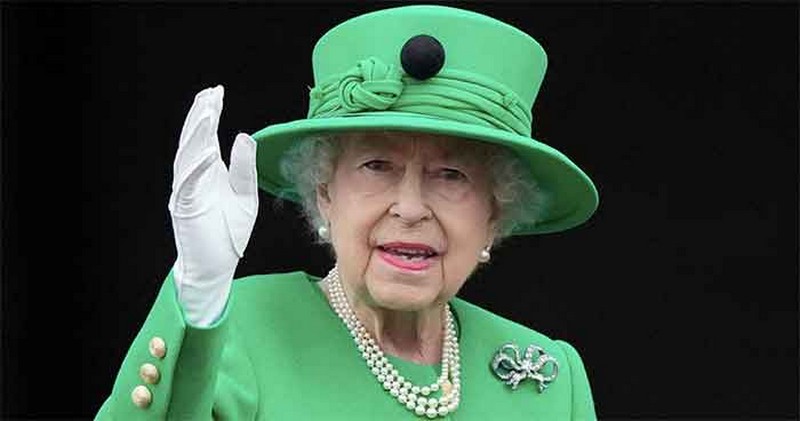
Queen Elizabeth II has died, and there is immense public affection for the Queen for her dignified but warm conduct in 70 years of dedicated service as a constitutional monarch. That affection is most marked among her British, Australian , Canadian and New Zealand Subjects, as well as among some British Commonwealth loyalists. However resolutely ignored is the Royal heading of British imperialism, slavery, colonialism, neo-colonialism, war and genocide for centuries up to the present.
It is no accident that the Royal parades for which Britain is famous heavily and prominently involve British regiments, and typically also the armed forces of countries for which the British Monarch is also the head of state, notably the White Anglosphere countries of Australia, Canada and New Zealand. Indeed the sad passing of Queen Elizabeth II and accession of King Charles III have been marked by huge military parades and the firing of massed artillery across the Anglosphere from Scotland to remote New Zealand (Aotearoa). Indeed “Royal” is an appendage not just to numerous hospitals around the world (e.g. the Royal Children’s Hospital in Melbourne) but also to armed forces and security services from the Royal Australian Navy (RAN) and Royal Australian Air Force (RAAF) to the Royal Canadian Mounted Police (RCMP).
The English have invaded 193 of the world’s present-day countries over the last 1,000 years, as compared to Australia 85, France 82, the US 72 (52 after WW2), Germany 39, Japan 30, Russia 25, Canada 25, Apartheid Israel 12, China 2, North Korea arguably zero, Iran zero and indeed most Developing Countries, zero [1-4]. These invasions, from the Normans invading England in 1066 to the UK-backed US devastation of the Muslim world in the 21st century, have often involved genocide that is defined by Article 2 of the UN Convention on the Prevention and Punishment of the Crime of Genocide as “acts committed with intent to destroy, in whole or in part, a national, ethnic, racial or religious group” [5]. Thus the newly installed Norman English Establishment in 1066 commenced the violent removal of the Anglo-Saxon Establishment and genocidal removal of resistant peasantry (“the harrying of the north”), and the genocidal killing has continued for a thousand years. Nearly every present-day country in the world has suffered British invasion and devastation. Indeed one notes that the magnificent venues and bejewelled crowns and other accoutrements of Queen Elizabeth II’s memorial arrangements and King Charles III’s accession variously reference that violent 1,000-year history of the English monarchy.
Space does not permit even a brief account of this millennium in which the British Establishment (read English Establishment) have invaded nearly every country on earth with inaccessible Mongolia, Kazakhstan and other Central Asian states being the notable exceptions. For a summary see my article “British Have Invaded 193 Countries: Make 26 January (Australia Day, Invasion Day) British Invasion Day” [2], and also see my book “Body Count. Global avoidable mortality since 1950” that includes a brief but comprehensive summary of the avoidable mortality-related history of every present day country in the world from Neolithic times [3].
The most horrendously super-deadly, English-complicit events (deaths in brackets) include the 16th – 19th century onwards Amerindian Genocide in North and South America (90 million deaths) the 17th – 19th century North American Indian Genocide (up to 18 million deaths), the 15th -19th century African Holocaust of the trans-Atlantic slave trade (6 million deaths), the 19th century Chinese Holocaust (20-100 million deaths), WW1 (1914-1918; 40 million deaths), the 1918-1920 Influenza epidemic (50-100 million deaths), WW2 (1939-1945, 90 million deaths) [3, 4, 6, 7], and the 2-century Indian Holocaust (1,800 million Indian deaths from violence and imposed deprivation under the British) that commenced with the 1769-1770 Great Bengal Famine (10 million deaths) and concluded just prior to Indian Independence with the British-imposed and Australia complicit but “forgotten” 1942-1945 WW2 Bengali Holocaust (WW2 Indian Holocaust, WW2 Bengal Famine; 6-7 million deaths)[8-14].
While the 2-century British-imposed Indian Holocaust (1757-1947) was quantitatively the worst man-made atrocity in human history (1,800 million Indian deaths from violence and imposed deprivation) [13, 14], from a qualitative perspective the 1788 onwards Australian Aboriginal Genocide and Ethnocide was the worst such atrocity in human history. Of 350-700 Indigenous languages and dialects in 1788 only 120 survive today, and of these all but 25 are endangered [15].
Queen Elizabeth II was Queen for 70 years, from 1952-2022, and during that time the UK was regularly involved in wars that were horrendously deadly for the Indigenous people that the UK and its allies were attacking.
There are presently 15 countries having the Queen as head of state (UK, Australia, Canada, New Zealand, Jamaica, Bahamas, Grenada, Papua New Guinea, Solomon Islands, Tuvalu, Saint Lucia, St Vincent and the Grenadines, Belize, Antigua and Barbuda, and Saint Kitts and Nevis [16]. Of these 14 countries only the 4 White Anglosphere countries (the UK, Australia, Canada and New Zealand) have been involved in invading other countries during the Queen’s reign (1952-2022) [3].
In addition there have been a further 18 countries that for technical reasons connected with the independence and other processes had Queen Elizabeth II as sovereign for some time: South Africa, Pakistan, Ceylon (Sri Lanka), Ghana, Nigeria, Sierra Leone, Tanganyika (Tanzania), Trinidad and Tobago, Uganda, Kenya, Malawi, Malta, Gambia, White-ruled Rhodesia (officially unrecognized by the Her Majesty’s UK Government and Her Majesty the Queen), Guyana, Barbados, Mauritius and Fiji [16]. Notwithstanding internal violence and/or brief conflicts and incursions with neighbours (South Africa, Nigeria, Sierra Leone, Uganda, Kenya, Rhodesia, Tanzania), none of these countries were involved in the massive and genocidal invasion of other countries during the Queen’s reign (1952-2022) as carried out by the 4 White Anglosphere countries (the UK, Australia, Canada and New Zealand) [3].
Of 33 countries that had the Queen Elizabeth II as sovereign (some for short periods) only the 4 White Anglosphere countries (the UK, Australia, Canada and New Zealand) were involved in egregious violence against distant countries in a continuation of the extraordinary genocidal violence of England over a millennium (193 countries invaded i.e. nearly every present-day country invaded).
In summary, countries in the post-1950 era that were variously subjects of the UK Monarchy, or were attacked and occupied by the UK and other war-making Anglosphere countries having the Queen as head of state (the UK, Australia, Canada, and New Zealand) were as follows:
United Kingdom – Afghanistan, Argentina, Bahamas, Bahrain, Barbados, Belize, Botswana, Brunei, China (Korean War), Cyprus, Diego Garcia (part of Mauritius), Egypt, Fiji, Gambia, Ghana, Guyana, Hong Kong, Indonesia (Confrontation), Iran, Iraq, Jamaica, Kenya, Kiribati, Korea (North & South), Kuwait, Lesotho, Libya, Malaysia, Maldives, Malta, Mauritius, Nigeria, Oman, Qatar, Saint Lucia, Saint Vincent and the Grenadines, Serbia, Seychelles, Sierra Leone, Singapore, Solomon Islands, Somalia, South Africa, Sudan, Syria, Tanzania, Trinidad & Tobago, Tonga, Tuvalu, United Arab Emirates, Vanuatu, Yemen.
Australia – Afghanistan, China (Korean War), Indochina (Vietnam, Laos, Cambodia), Indonesia (Confrontation), Iraq, Korea, Malaysia, Nauru, Papua New Guinea, Solomon Islands, Timor-Leste.
Canada – Afghanistan, China (Korean War), Iraq, Korea.
New Zealand – China (Korean War), Indochina (Vietnam, Laos, Cambodia), Indonesia (Confrontation), Iraq, Korea, Malaysia, Samoa, Timor-Leste, Tokelau.
Below is a brief, alphabetically-ordered summary of the last 70 years of egregious UK violence (with the overall historical period of British intervention, and deaths from violence and imposed deprivation given in brackets). One notes that at the end of WW2 (1945), a mere 7 years before the accession of Queen Elizabeth II in 1952, the British Empire was at its peak. Most African colonies of the UK gained independence in the 1960s, and the key default reference for this list is [3] which contains a succinct history of every country.
(1). Afghanistan (1838-2021): UK First Afghan War (1838); Second Afghan War (1878); UK control of Afghan foreign affairs (1907); Third Afghan War (1919); UK invaded and occupied Afghanistan with the US Alliance (2001-2021; Afghan Genocide and Afghan Holocaust deaths 6 million). Huge under-5 infant deaths (in 2020 77,000 in Afghanistan as compared to 3,100 in the UK ) will continue due to US seizure of Afghan assets, and sanctions by the US Alliance including the UK.
(2). Argentina (1806-1982): British invasion repelled (1806); US-backed UK seized the Malvinas (Falkland Islands) (1833); Great War in Uruguay involving UK, France, Argentina, Uruguay and Brazil (1839-1852); horrendous genocide of Indigenous people in Argentina, Paraguay and Uruguay for the benefit of the British beef trade (19th century); genocidal Zionist psychopath Theodor Herzl contemplated Argentina as a “Jewish Homeland” (however the UK “gave” Palestine to the Zionists in 1917); Argentina invaded the Falkland Islands and was expelled by the UK in the Falklands War (1982).
(3). Bahrain (1861-1971): British protectorate established (1861); independence (1971); used by US, UK and Coalition forces against Iraq (1991).
(4). China (18th century onwards): the genocidal British conquered Bengal and thence set up the lucrative opium trade to China (Bengali opium for Chinese silver and tea; 1757); British defeated China in the First Opium War with ports opened and Hong Kong acquired (1839-1842); anti-Western Tai Ping Rebellion put down by the UK and other European forces (20-100 million dead; 1850-1864); Anglo-French forces defeated China and captured Beijing ((1856-1860); Queen Victoria the greatest opiate drug pusher in history; anti-Western Boxer rebellion subdued by the British with Russian, German, French, Japanese and US forces (1898); 35-40 million Chinese died under the Japanese (1937-1945); the British lead by Churchill successfully brought the US into war against Japan, and thence secured victory in the WW2 (1941-1945); UK forces fought Chinese forces in the Korean War (1950-1953); Hong Kong returned to China (1997); 800 million Chinese brought out of poverty in the Chinese economic “miracle” (1990s onwards); UK joined the threatening US anti-China stance (2020s).
(5). Cyprus (1878-1960): British rule (1878); British annexation (1914); the armed Greek Cypriot independence movement of EOKA culminated in independence under Archbishop Makarios (1960); conflict over Greek union, Makarios overthrown and Turkey seized part of the island (1974).
(6). Egypt (1882-1956): British conquest (1882); independence but with retention of British forces (1923); British forces finally left after the coming to power of Colonel Abdul Gamal Nasser (1956); however this was immediately followed by the collusive UK, France and Apartheid Israel invasion of the Sinai Peninsula and the Suez Canal that took place at the same time as the Russian invasion of Hungary (1956); nuclear-armed, UK-backed Apartheid Israel invaded again, seizing the Gaza Strip and the Sinai Peninsula (1967); defeated by Apartheid Israel in the Yom Kippur War (1973); US-brokered peace with Apartheid Israel, and return of the Sinai Peninsula (1979).
(7). Indonesia (1963-1965): armed conflict between Indonesia and the UK and its allies over Malaysia and the future of Brunei and Borneo (Confrontation) (1963-1966); the UK was heavily involved in machinations to remove President Soekarno and eliminate the Indonesian communists, that were realized with the UK- , Australia- and US-backed military coup in 1965 that removed President Soekarno, and in which 1 million progressive Indonesians and many Chinese were murdered and hundreds of thousands imprisoned (1965). Corrupt and violent military rule for 34 years was associated with 33 million Indonesian excess deaths from deprivation (1965-1999).
(8). Iran (1914 onwards): Oil discovered (early 19th century); Iran was neutral but there was heavy Anglo-Russian involvement in WW1 (1914-1918); WW1-related Iranian Famine (1917-1919, 2-10 million deaths); Anglo-Russian occupation and installation of Mohammed Shah Pahlevi (1941-1979); economic blockade and UK MI6 and US CIA coup that removed elected PM Mossadegh who wanted to nationalize Anglo-Iranian oil, with thousands killed (the CIA secretly invoked Queen Elizabeth II to stop a nervous and ambivalent Shah from quitting) (1953); UK- and US-backed authoritarian Shah regime with Anglo-American, French and Dutch oil interests dominant (1953-1979); Iranian theocratic revolution (1979) and increasing hostility from the UK, US and Apartheid Israel (1 million Iranians died in the UK- and US-promoted, 1980-1988 Iran-Iraq War, and 3 million Iranians died from sanctions (1979 onwards) urged and applied by the nuclear powers US, UK and Apartheid Israel against a non-nuclear weapons-possessing Iran [17] .
(9). Iraq (1914 onwards): British invaded (1914); Kurdish and Arab revolts suppressed with use of the British Royal Air Force (RAF); Iraq made a British League of Nations Mandate ( 1920); first oil concession (1925); 25 year alliance with Britain (1930); British Mandate terminated and Iraq joined the League of Nations (1932); Iraqi Parliament rejected the UK demand for an extension of the of the 1930 alliance (1948); Iran, Turkey, Pakistan and Iraq formed the pro-US Baghdad Pact (1955); Kassem military coup ousted UK-backed King Faisal II who was killed (1958); US green-lighted the Iraqi invasion of Kuwait by Saddam Hussein; sanctions imposed killing 1.7 million Iraqis; deadly US, UK and Israeli bombing devastated Iraqi infrastructure (1990-2003); US, UK and Coalition Gulf War (0.2 million Iraqis killed); prefaced by US and UK lies about actually non-existent Weapons of Mass Destruction (notably by US President George W. Bush and UK PM Tony Blair), the US, UK, Australia and US lackey Coalition invaded and further devastated Iraq (2003-2011); rise of ISIS and subsequent defeat by the US, UK, Russia and the Syrian Government (2012-2017; half of Mosul, population 2 million, destroyed with 40,000 Iraqi residents killed by US, UK, and Australian bombing); notwithstanding demands by the Iraqi Parliament that foreign forces leave, US, UK and Australian forces remained, and Trump threatened destruction of the Iraqi economy by freezing assets (2020); UK forces remain in Iraq, and NATO (including UK ) forces are planned to increase from 400 to 5,000 [18] (2021; I was alerted to this by the fact that some UK soldiers serving in Iraq were brought back to the UK especially for the Queen’s funeral). The ongoing UK-initiated and UK complicit Iraqi Genocide and Iraqi Holocaust has been associated with deaths from violence and imposed deprivation totalling 9 million (1914-2011), 4.6 million (1990-2011), and 2.7 million (2003-2011) [3, 4].
(10). Jordan (1918-1958): British defeated the Ottoman Empire (1918); Jordan was ruled from Damascus by UK-installed King Faisal I (1919); Faisal I removed by the French and Jordan became part of a British Mandate (1920); Abdullah (son of Faisal) made emir with a British-trained army (1921); constitutional monarchy (1928); independent (1946); defeated by UK-backed Zionists (1948); changed name to Jordan (1949); annexed West Bank of Palestine (1950); Jordan and Iraq formed the Arab Federation and British troops were sent to Jordan (1958); invasion and defeat by a now nuclear-armed Apartheid Israel of all its neighbours (the Naksa or Setback; 400,000 Arabs expelled in addition the 800,000 expelled in the UK-complicit 1948 Nakba) (1967); UK-backed and UK trained Jordan military took action against the huge Palestinian population (thousands killed) (1968); Jordan hosts over 2 million Palestinian refugees and over 1.5 million Syrian refugees.
(11). Kenya (1884-1960): Berlin Conference “gave” Uganda, Kenya, and Zanzibar to Britain and Tanzania (Tanganyika) to Germany (1884); Imperial British East Africa Company (1888); British East Africa Protectorate (1888); Mombasa-Lake Victoria Railway built with involvement of Indian workers (1895-1901); commencing in 1903 British settlement on most of the best land, with Kikuyu and Masai people confined to the rest (20th century); the “Uganda Plan” for Jewish Settlement was rejected by the genocidally racist Zionists, and the UK took back its offer of 13,000 square kilometres of Kenya (1903); interior Kenya colony and a coastal Protectorate of Kenya; European settlement of the temperate highlands, coffee plantations, Indian labour and traders, and mounting Indigenous activism (20th century); Jomo Kenyatta started the independence movement (1944); Kenyan Kikuyu Mau Mau uprising and the Mau Mau Emergency involving British atrocities and mass population incarcerations in concentration camps (1952-1960 excess mortality 1.1 million).
(12). Kiribati (1892 -1979): This low lying coral atoll archipelago of small islands was a UK colony (the Gilbert Islands part of the Gilbert and Ellice Islands) (1892-1979). In WW2 it was invaded by the Japanese who were thence removed by US forces from Tuvalu. In the late 1950s and early 1960s, Christmas Island was used by the US and UK for the testing of nuclear weapons, including hydrogen bombs.
(13). Korean War (1950-1953): 28% of the North Korean population was killed [19] and no buildings were left standing by US bombing; the UK, Australia, Canada and New Zealand were all involved in the Korean War (1950-1953; 5 million Korean deaths) [9]; the conduct of the Korean War may have involved setting up an “excuse” for the nuclear destruction of China [20].
(14). Kuwait (1897-1961): British protectorate (1897); independent sheikdom but British and thence Arab League forces remained because of Iraqi claims (1961); Iraq recognized Kuwait (1963); greenlighted by the US, Iraq invaded and annexed Kuwait over an oil dispute (1990); US-led Gulf War freed Kuwait, with 80% of oil wells destroyed, 0.2 million Iraqi soldiers killed, and mass expulsion of Palestinians (1991); Kuwait was the launch site for the US, UK and Australian invasion of Iraq, and the UK-involved Iraqi Holocaust and Iraqi Genocide associated with 2.7 million Iraqi deaths (2003-2011).
(15). Libya (1943-2012): UK and Allied forces prevailed over German and Italian forces with subsequent Anglo-French rule (1940-1943); UN jurisdiction (1949); independent as a monarchy under King Idris (1951); Anglo-Libyan treaty permitted presence of UK forces (1953-1956); oil discovered (1958); most British forces left (1966); military coup with rule by Colonel Qaddafi under whom Libya became the richest country in Africa (1969-2012); terrorists destroyed US passenger plane over Lockerbie, Scotland (1988); France, UK and US (FUKUS) Coalition bombing destroyed Libya, and Qadaffi was captured and butchered (2011-2012; 0.1 million killed, 1 million refugees, and continued civil war between US- , UK- and Turkey-backed Government in Tripoli and Egypt-backed forces based on Benghazi).
(16). Malaysia (1786-1960): British founded Georgetown on Penang (1786); trade involved Chinese, Indians, Sumatrans and Malays (18th – 21st centuries); British under Raffles founded Singapore (1819); British-Dutch Treaty- Malaya and North Borneo to Britain and South Borneo and the rest of Indonesia to the Dutch (1824); British protectorate agreements with sultanates, Chinese workers for tin mines and Tamil workers for rubber plantations (1870s onwards); federation of Malay Peninsular sultanates under British protection and similar arrangements for Brunei, Sarawak and Sabah (1896); political movements of Chinese (Sun Yat Sen, Communism), Indians (Congress and Gandhi) and Malays (Islamic reform) (20th century); Japanese occupation (1941-1945); independence (1957); Communist revolt suppressed by the UK with Commonwealth allies (notably Australia) in the Malayan Emergency (1950-1960 excess mortality 1.0 million and 0.5 million Chinese compulsorily resettled).
(17). Mauritius (including the Chagos Archipelago, and Diego Garcia) (1810-onwards): Mauritius was a British colony (1810); Mauritius independent (1968); ruled by the UK, the Chagos Archipelago is part of Mauritius and home to the Chagossians, a Bourbonnais Creole-speaking people, it was completely ethnically cleansed by the British in 1967-1973 to make way for the obscene US Diego Garcia military base that threatens the Indo-Pacific with “conventional” or nuclear destruction. The UK and US berate China with the “rules-based order” over its island-building on uninhabited coral reefs in the South China Sea, but effected the genocide of the Chagossians (the Chagossian Genocide).
(18). Nigeria (16th century – 1970): Portuguese, British and French slave trade with millions transported and millions dying (16th-18th century); British abolished slavery within the UK (1807); UK took Lagos (1861); palm oil and capitalist exploitation replaced slavery (19th century); Goldie secured UK interests along the Niger (1880s); Britain invaded Oyo State (1883); Royal Niger Company dominated the Niger trade (1886); Berlin Conference “awarded” Nigeria to Britain (1894-1895); Benin taken by the British (1897); British colony (Lagos) and British protectorates (North and South) (1906); Nigerian independence (1960); Igbo (Biafra) military coup followed by massacres of Igbo people in the North (1966); Biafra in Eastern Nigeria declared independence (1967); Biafra backed by France and Apartheid Israel but the central Nigerian Government backed by the UK, USSR, Egypt and Zaire; UK Labor Government headed by Harold Wilson secretly armed the Nigerian Government; Biafra defeated; Biafran Genocide excess deaths totalled 2.5-3.0 million (1967-1970).
(19). Oman, 18th century-1971): British influence commenced (late 18th century); slave-trading Zanzibar lost to British (1856); an interior revolt was suppressed by British forces (1957); UN demanded British withdrawal (1965); some royal concessions but rebellion continued in Dhofar (1970); Oman joined the UN and the Arab League (1971); bases given to US, UK and Coalition forces (1991); Oman bases were used by the US, UK and US Coalition in attacks on Afghanistan Alliance (2001-2021; Afghan Genocide and Afghan Holocaust deaths 6 million).
(20). Palestine (1917 onwards): the British promised Palestine as a Jewish Homeland by the despicable “stolen goods” Balfour Declaration of 2 November 1917 (made 2 days after the Australian and New Zealand (ANZAC) victory over the Turks at Beersheba (31 October 1917), this declaration actually being an inducement for Communist Russian Zionists to try to keep Russia in WW1); the UK War Cabinet under Churchill approved Partition of Palestine (1944); the British supplied and trained Zionist terrorists in the 1930s and 1940s and then withdrew (1948); The WW1 onwards Palestinian Genocide has been associated with 2.2 million Palestinian deaths from violence, 0.1 million, and imposed deprivation, 2.1 million . Genocidally racist Apartheid Israel gained nuclear weapons in the mid-1960s, enabled Apartheid South Africa do the same, and presently has 90 nuclear weapons and bomber, missile and German-supplied submarine delivery systems. Successive UK Conservative and Labour Governments and Oppositions have been fervent supporters of nuclear terrorist, genocidally racist, grossly human rights-abusing, democracy-by-genocide Apartheid Israel (a notable exception was the outstandingly anti-racist UK Labour Opposition leader Jeremy Corbyn who was falsely defamed and politically destroyed by the traitorous Zionists and the 34-member state International Holocaust Remembrance Alliance (IHRA) for supporting Palestinian human rights). Queen Elizabeth visited many countries in the Middle East but never visited Palestine/Apartheid Israel [21].
(21). Qatar (1868-1971): British installed Al-Thani clan and controlled foreign policy (1868); British protectorate (1916); oil discovered in Qatar (1939); UK left the Trucial Coast leaving 7 emirates as United Arab Emirates but with Bahrain and Qatar separate (1971); Qatar became a major US war base (2001); HQ for US, UK, Australian and Coalition invasion of Iraq (2003); Qatar withdrew from the Saudi-led and UK complicit war on Yemen (2017) and suffered intense Saudi Coalition hostility.
(22). Sierra Leone (16th century – 2000): exploited for timber, ivory and slaves (16th-20th century); British abolition of slavery and takeover of the Sierra Leone Company running Freetown (1807); 50,000 freed slaves settled but interior resistance to British rule (19th century); British protectorate over interior (1896); final British victory over Indigenous resistance (1897); autonomy with pro-British interim government (1960); independence under conservative Mende Sir Milton Margai as PM and representing Creole, British and Syrian-Lebanese merchant interests) (1961); 4 decades of coups and civil wars involving Guinea and Liberia; UN forces held hostage by rebels; British forces critically involved in defeating rebels; ban on rebel-funding sales of “blood diamonds” (2000); sanctions on Liberia; hundreds of thousands of refugees; rebel and pro-government militia disarmament (2001); 1991-2001 excess mortality 1.1 million.
(23). Somalia (1870- onwards): construction of the Suez Canal made the Horn of Africa strategically important to the British, French and Italians (19th century); partial occupation by British-dominated Egypt (1870); Egyptians withdrew (1884); Italians defeated by Ethiopia (1896); Somali resistance to British eventually crushed using air power (1885-1920); British forces from Kenya defeated the Italians (1941); Italian and thence British Somalia independence with union as United Republic of Somalia (1960); war by US- and Saudi-backed Somalia against USSR-backed Ethiopia over the Ogaden region (1976-1988; 840,000 refugees fled to Somalia); US gained formerly British Berbera base; Somalia-Ethiopia peace accord (1976-1988 excess mortality 1.4 million); famine, US intervention and civil war (1990s onwards; 1991-2005 excess mortality 1.9 million); Indigenous Islamic Courts victory (2006-2007); US-backed Ethiopian invasion followed by African Union forces (notably from Kenya) (2007); continuing war of the Indigenous Al-Shabaab versus the US-backed foreign occupiers.
(24). South Africa (1795-1994): British occupation of the Cape during the Napoleonic Wars (1795); formal British “possession” by the Congress of Vienna (1814); British annexation of Natal (1843); Afrikaaner (Dutch origin) Boers enslaved and exterminated Indigenous Africans, and benefited from land, gold, diamonds; British brought in Indian and Chinese indentured labour (“5 year slaves”) (19th century); British versus Afrikaaner Boer War , 50,000 Boer dead including 28,000 (mainly women and children) in British concentration camps (1899-1902); indignation in Europe over British crimes against the White Boers (20th century); Gandhi launched his non-violent Satyagraha message for human rights (Johannesburg, 11 September 1906); many Afrikaaner nationalists were imprisoned as Nazi sympathizers in WW2 (1939-1945); Afrikaaner Nationalist victory (1948) and increasing racist Apartheid legislation legitimizing dispossession confinement and control of the African, Asian and part-European majority; Apartheid policies led by Dr Hendrik Verwoerd, the “architect of Apartheid” (1948-1994); US, UK, Australia, Canada and Apartheid Israel support for Apartheid South Africa (1940s-1990s); Sharpeville Massacre (69 Africans killed; 1960) led to world-wide anti-Apartheid activism, Boycotts and Sanctions; the Queen was monarch of South Africa from 1910-1961); abolition of Apartheid, one-person-one-vote elections, and surrender of nuclear weapons acquired with Apartheid Israeli help (1994); Dr Verwoerd stated (1961): “Israel is an apartheid state” and leading heroes in the fight against Apartheid in South Africa (notably Nobel Laureates Nelson Mandela and Desmond Tutu) oppose Israeli Apartheid. Boycotts, Divestment and Sanctions (BDS) against Apartheid Israel and all its supporters is strongly supported worldwide but is fervently opposed by the pro-Apartheid US, and by the pro-Apartheid Israel and hence pro-Apartheid monarchies, the UK, Australia and Canada, under Queen Elizabeth II as head of state (20th and 21st centuries) .
(25). Sri Lanka (Ceylon) (1798-1972): British defeated the Dutch (1798); final British defeat of Indigenous resistance (1815); introduction of tea, coffee, and rubber cash crops (19th century); independence from Britain (1948); Queen Elizabeth II was Queen of Sri Lanka (Ceylon) from 1952-1972; growing conflict between the Tamils and the Sinhalese that descended into armed conflict (1971 onwards); critically supported by Apartheid Israel and the US, the Sri Lanka Government defeated the Tamils (2009); the Tamil Genocide was associated with 100,000 Tamils killed and 800,000 Tamils fleeing Sri Lanka (2009).
(26). Sudan (1881-1958): Mahdi revolt against British-ruled Egypt (1881); General Gordon killed (1885); General Herbert (later Lord Kitchener) defeated Mahdi followers at Obdurman (the British executed the Sudanese wounded) (1889); Anglo-Egyptian condominium over Sudan (1889-1952); Egyptian independence from Britain and moves for Sudan independence (1952); southern revolt commenced (1955); independence from UK (1958) followed by 50 years of North-South civil war (1955-2005 excess mortality 12.4 million);
(27). Syria (1916 onwards): UK-France Sykes-Picot Agreement divided the Arab world between the non-Arab and non-Muslim UK and France (1916); British and Free French invaded (1941); Syria independent (1944); UK-backed Apartheid Israel attacked, and seized the Golan Heights (1967); US-led Coalition of US, UK, France, Apartheid Israel, Saudi Arabia and Turkey sought to remove the Assad Government under guise of defeating ISIS, but were opposed by Russia, Iran and Hezbollah (from Lebanon); ISIS was eventually defeated but the ISIS-held city of Raqqa was destroyed (like Fallujah for the second time and Mosul in Iraq) (2012-2017); 0.5 million Syrians killed, massive human rights abuses, and 11 million refugees (2012-2017). The US, UK and France were unable to get UN “permission” to bomb Syria as they had bombed Libya, but Apartheid Israel, the US and Turkey still occupy parts of Syria and regularly bomb targets in Syria. It appears that Russia backs an Iran to Europe gas pipeline via Syria whereas the US and UK back a gas pipeline from Qatar via Syria to Europe.
(28). Uganda (1890-1962): UK-Germany Treaty over East Africa (1890); British protectorate (1894); beginning of cotton production (1904); British personal ownership-based “land reform” (i.e. military-backed theft) and cash crops distorted society; Indian immigration and the rail system advanced the economy (20th century); the “Uganda Plan” for Jewish Settlement was rejected by the genocidally racist Zionists and the UK took back its offer of 13,000 square kilometres of Kenya (1903); independence (1955); Queen Elizabeth II was Queen of Uganda in 1962-1963; General Idi Amin came to power in a coup but was opposed by the US and Apartheid Israel (1971); expulsion of Indians; of 80,000 Indians over 27,000 found safety in the UK, with others going to Canada, Pakistan and India (1972); severe repression in Uganda (0.3-0.5 million killed) (1970s);
(29). United Arab Emirates (1892 – 1971): British protectorates established (1892); British withdrawal (1971); UAE used by US, UK and Coalition forces in the Gulf War (1991); UAE involved with the UK, US, Australia, Saudi Arabia, Egypt, and the UAE in the genocidal war on Yemen (2012 onwards).
(30). Yemen (1839- onwards): British East India Company seized Aden (1839); long and complicated North-South conflict variously involving the UK, Egypt, and Saudi Arabia; North Yemen joined the UN (1947); independence of South Yemen from UK (1967); Yemen unified (1989); Houthi rebellion (2012) followed by UK- and US-backed intervention of a Saudi-led Coalition of Egypt, some Gulf States and some African countries. The UK is complicit in a worsening Yemeni Genocide (massive threat from famine; 66,000 avoidable deaths from deprivation in 2022 alone; so far 400,000 killed and 1.3 million dead predicted by 2030) [22].
(31). Zimbabwe (formerly Rhodesia) (1889-1980): Rudd Concession opened up invasion by Boers and the British (notably by Cecil Rhodes’ British South Africa Company) (1889); Company charter renewed (1914); self-governing White-ruled Rhodesia (1923); Federation of Rhodesia and Nyasaland (1953); by 1960 the 5% European minority owned 70% of the land; African National Congress (ANC) struggle for independence and majority rule (1960s to 1990s); Northern Rhodesia became independent Zambia and Nyasaland became independent Malawi (1963); after Ian Smith’s Unilateral Declaration of Independence (UDI) the UK refused to suppress the White rebellion (1965); UN embargo was violated by South Africa, Portugal, and the West (notably the UK and US); Rhodesian republic (Queen no longer the Queen of Rhodesia) (1970); 1970s, African guerrilla warfare involving Rhodesia, Mozambique and Zambia; the war made 1 million homeless; internal settlement (1978); peace with interim formal UK control and supervised elections); Robert Mugabe was elected PM (1980) and he ruled until deposed in 2017. The 1965-1980 hostilities killed 25,000 with an excess mortality from deprivation of 0.7 million).
How many people died avoidably from imposed deprivation in countries variously occupied impacted by the Queen-ruled UK, Australia and New Zealand in the post-WW2 era?
Whether a child is killed violently (by bombs, bullets, and bashing) or non-violently through avoidable deaths from imposed deadly deprivation, the death is just as final and the perpetrators just as guilty. Avoidable deaths (excess deaths, deaths that should not have happened) can be readily estimated from UN Population Division demographic data that have been made available and continually revised since 1950 [3].
The summary data provided below are of 1950-2005 excess mortality/ 2005 population (both in millions, m) and expressed as a percentage (%); this ratio is given for each major Occupier, for each country occupied and as a total for all the countries subject to a particular Occupier. The asterisk (*) below indicates a major occupation by more than one country in the post-WW2 era.
Australia [0.587m/20.092m = 2.9%] – Papua New Guinea [2.091m/5.959m = 35.1%], Solomon Islands* [0.050m/0.504m = 9.9%], total = 2.141m/6.463m = 33.1%
New Zealand [0.143m/3.932m = 3.6%] – Samoa [0.039m/0.182m = 21.4%], total = 0.039m/0.182m = 21.4%
UK [4.411m/59.598m = 7.4%] – Afghanistan* [16.609m/25.971m = 64.0%], Bahamas [0.007m/0.321m = 2.3%], Bahrain [0.054m/0.754m = 7.2%], Bangladesh* [51.196m/152.593m = 33.6%], Barbados [0.015m/0.272m = 5.5%], Belize [0.014m/0.266m = 5.3%], Bhutan [0.908m/2.392m = 38.0%], Botswana [0.443m/1.801m = 24.6%], Brunei [0.020m/0.374m = 5.3%], Cameroon* [6.669m/16.564m = 40.3%], Cyprus [0.054m/0.813m = 6.6%]; Egypt* [19.818m/74.878m = 26.5%], Eritrea* [1.757m/4.456m = 39.4%], Ethiopia [36.133m/74.189m = 48.7%], Fiji [0.054m/0.854m = 6.3%], Gambia [0.606m/1.499m = 47.6%], Ghana [6.089m/21.833m = 27.9%], Greece* [0.027m/10.978m = 0.2%], Grenada* [0.018m/0.121m = 14.9%], Guyana [0.086m/0.768m = 11.2%], Hong Kong [0.125m/7.182m = 1.7%], India [351.900m/1096.917m = 32.1%], Iraq* [5.283m/26.555m = 19.9%], Israel [0.095m/6.685 = 1.4%], Jamaica [0.245m/2.701m =9.1%], Jordan* [0.630m/5.750m = 11.0%], Kenya [10.015m/32.849m = 30.5%], Korea* [7.958m/71.058m = 11.2%], Kuwait* [0.089m/2.671m = 3.3%], Lesotho [0.951m/1.797m =52.9%], Libya [0.785m/5.768m =13.6%], Malawi [6.976m/12.572m = 55.5%], Malaysia [2.344m/25.325m = 9.3%], Maldives [0.015m/0.338m = 4.4%], Malta [0.019m/0.397m = 4.8%], Myanmar [20.174m/50.696 = 39.8%], Nepal [10.650m/26.289m = 40.5%], Nigeria [49.737m/130.236m =38.2%], Occupied Palestinian Territories [0.677m/3.815m = 17.7%], Oman [0.359m/3.020m =11.9%], Pakistan [49.700m/161.151m = 30.8%], Qatar [0.029m/0.628m = 4.6%], Saint Lucia [0.012m/0.152m = 7.9%], Saint Vincent & Grenadines [0.018m/0.121m =14.9%], Sierra Leone [4.548m/5.340m = 85.2%], Singapore [0.113m/4.372m = 2.6%], Solomon Islands* [0.050m/0.504m = 48.5%], Somalia* [5.568m/10.742m =51.8%], Sri Lanka [0.951m/19.366m = 4.9%], Sudan [13.471m/35.040m = 38.4%], Swaziland [0.471m/1.087m = 43.3%], Tanzania [14.682m/38.365m =38.3%], Tonga [0.020m/0.106m = 18.9%], Trinidad & Tobago [0.052m/1.311m = 4.0%], Uganda [11.121m/27.623m = 40.3%], United Arab Emirates [0.087m/3.106m =2.8%], Vanuatu [0.037m/0.222m = 16.7%], Yemen [6.798m/21.480m = 31.6%], Zambia [5.463m/11.043m = 49.5%], Zimbabwe [4.653m/12.963m =35.9%], total = 727.448m/2247.711m = 32.4% [3].
The avoidable mortality (excess mortality) from deprivation for the whole world totalled 1.3 billion for the period 1950-2005, but that associated with countries variously occupied by the UK in the post-WW2 era totalled 727 million or 56% of that in the whole world. The excess mortality for the whole world during the reign of Queen Elizabeth II (1952-2022) totalled about 1.5 billion with about 50% in countries variously occupied by the UK. Under-5 infant deaths represent about 1.0 billion of these avoidable deaths.
Thus about half of this Global Avoidable Mortality Holocaust of 1,500 million people (including 1,000 million under-5 year old children) during the reign of Elizabeth II can be attributed to British colonialism and neo-colonialism. That is the awful reality that is unspoken during the dozen days of massive public mourning between HM The Queen’s death on 8 September 2022 and her official funeral to be held in in Westminster Abbey on 19 September 2022 that will be seen on TV by billions of people around the world.
Elizabeth II was much loved by the hundreds of millions of her Subjects from the wilds of Wales and Highland Scotland to the desert Outback of Australia and loyalist Royalist Pacific Islands on the other side of the world. She provided an example of calm, niceness and dedicated public service that was widely admired, even by Republicans. However the harsh reality that will be scrupulously ignored is that she presided for 70 years over a highly militarized global British system that was linked to a Global Avoidable Mortality Holocaust of 1,500 million people. Indeed the military play a key part in the Royal ceremonials for which Britain is famous.
Public dissent from the military pageantry of the fortnight’s massive public memorializing has so far been minimal, and has not been tolerated (a few public dissenters in the UK have been swiftly arrested). Thus the timid new Australian Labor PM, Anthony Albanese (a Republican), has suspended Parliament and declared a public holiday in memory of the Queen’s death, ignoring the immense cost of his patriotic measure. Thus Australia has a GDP of US$1,450 billion in 2022 and thus 1 day’s lost production can be crudely estimated at $1,450 billion/365 days = $4 billion, or about 10% of the annual Australian defence budget.
The closest the hysterical and saturating Royalist public commentary and coverage has got to the actual historical has been glib talk of a New Elizabethan Era. However nobody has dared to go into specifics. Thus Elizabeth I launched the East India Company in 1600 that was to ravage China and India over 2 centuries (several hundred million Chinese and nearly 1.8 billion Indians died), whereas Elizabeth II’s 70 year rule was associated with 750 million avoidable deaths in the British “share” of the Global Avoidable Mortality Holocaust. Elizabeth I’s rule was associated with invasion of the Americas (that would ultimately kill 90 million Indigenous people) and invasion of Gaelic Ireland that set the stage for horrendous British atrocities in coming centuries (notably under Cromwell in the 17th century) and culminating in the 1848-1850 Irish Famine (1 million starved to death and 1.5 million were forced into exile). The much vaunted New Elizabethan Era of Elizabeth II was associated with huge technical advances and attainment of peace in Northern Ireland. However the Mainstream resolutely ignores the atrocities outlined in items # 1- #31 above, and avoidable mortality from deprivation totalling about 750 million people in UK-impacted countries during the reign of HM Queen Elizabeth II.
Elizabeth II made her third and last visit to India in 1997, and much debate was provoked by her visit to the Jallianwala Bagh of the Golden Temple in Amritsar, Punjab, India. On 13 April 1919 this site was bloodied by the actions of the British Brigadier General Reginald Dyer who ordered troops to fire upon a gathering of thousands of Indians that resulted in the deaths of some 379 men, women and children. The Queen made no apology for this notorious British atrocity but commented thus: “It is no secret that there have been some difficult episodes in our pasts – Jallianwala Bagh, which I shall visit tomorrow, is a distressing example. But history cannot be rewritten, however much we might sometimes wish otherwise. It has its moments of sadness, as well as gladness. We must learn from the sadness and build on the gladness” [23]. However not a word uttered about the 6-7 million Indians deliberately starved to death by the British with Australian complicity in the WW2 Bengal Famine (WW2 Bengali Holocaust, WW2 Indian Holocaust) [8-14], nor indeed about 1,800 million Indians who died avoidably from imposed deprivation in 2 centuries of barbarous British rule [13, 14].
While the White Anglosphere is devoting nearly a fortnight to lavish public memorializing of HM Queen Elizabeth II, descendants of the victims of British imperialist crimes have been less than enthusiastic. Thus Gwenda Stanley, Ambassador for the Aboriginal Tent Embassy in Canberra, commented: “She’s left a legacy of genocide and we’re the actual products of that, the result of that 232 years of genocide in this country” [24]. The ongoing Australian Aboriginal Genocide involved massive land dispossession, 0.1 million Indigenous people killed by violence, about 2 million deaths from imposed deprivation and disease, and about 0.1 million Indigenous children forcibly removed from their mothers and their cultures [15].
The Nigerian-born Uju Anya, an associate professor in the linguistics department at Carnegie Mellon University in Pittsburgh, Pennsylvania, commented very angrily and unkindly: “I heard the chief monarch of a thieving raping genocidal empire is finally dying. May her pain be excruciating”. She refused to back down after the subsequent outcry, stating further: “If anyone expects me to express anything but disdain for the monarch who supervised a government that sponsored the genocide that massacred and displaced half my family and the consequences of which those alive today are still trying to overcome, you can keep wishing upon a star,” and “I stand by my tweet and do not have any regrets … I am the child and sibling of survivors of genocide. From 1967-1970, more than 3 million civilians were massacred when the Igbo people of Nigeria tried to form the independent nation of Biafra. Those slaughtered included members of my family. I was born in the immediate aftermath of this genocide” [25]. British imperialism, under the Labour government headed by Harold Wilson, secretly supplied arms, and ammunition to the Nigerian government during the Biafran Genocide (1967-1970).
After their defeat in 1945 the Germans adopted a CAAAA (C4A) protocol of Cessation of the crimes, Acknowledgment of the crimes, Apology for the crimes, Amends for the crimes, and Assertion “never again to anyone”. Unfortunately for the war criminal offences of Britain over the last 70 years (and let alone the last millennium), there has been no Cessation, Acknowledgement, Apology, Amends or Assertion “never again”.
Final conclusions.
Her Majesty Queen Elizabeth II has died after 70 years of warm, nice, and dignified public service, and is being mourned by hundreds of millions people around the world. However while ostensibly politically neutral and disempowered, Queen Elizabeth II was the Head of State of a power that has wreaked immense harm to the world through colonialism, war and neocolonialism in the last 70 years, and indeed over the past 1,000 years. It cannot be ignored that the Queen’s office is inescapably linked to a millennium of invasions and colonial atrocities variously led or figure-headed by her predecessors. However they are ignored, and the closest the Western public is presently getting to see of this horrendous military power reality are the spears, swords, halbards, automatic weapons, bayonets, cannons, war horses, and colourful uniforms associated with the pageantry of her memorial fortnight.
Lest we forget the martyred billions. History ignored yields history repeated. Presently 7.4 million people die avoidably from deprivation each year (5.3 million being under-5 infants) on Spaceship Earth with endlessly greedy First World One Percenters in charge of the flight deck [3]. However it is predicted that in the absence of requisite action a worsening Climate Genocide may kill 10 billion people this century en route to a sustainable human population of only 1 billion by 2100 [26]. Please inform everyone you can. All people are created equal, and we must all adhere to the fundamental imperatives of Humanity, namely Kindness and Truth.
References.
[1]. “Stop state terrorism”: https://sites.google.com/site/stopstateterrorism/ .
[2]. Gideon Polya, “British Have Invaded 193 Countries: Make 26 January ( Australia Day, Invasion Day) British Invasion Day”, Countercurrents, 23 January, 2015: http://www.countercurrents.org/polya230115.htm .
[3]. Gideon Polya, “Body Count. Global avoidable mortality since 1950”, Korsgaard Publishing, Germany, 2021.
[4]. Gideon Polya, “US-imposed Post-9/11 Muslim Holocaust and Muslim Genocide”, Korsgaard Publishing, 2020.
[5]. UN Convention on the Prevention and Punishment of the Crime of Genocide : http://www.edwebproject.org/sideshow/genocide/convention.html .
[6]. Gideon Polya, “Racist Mainstream Ignores “US-imposed Post-9/11 Muslim Holocaust & Muslim Genocide””, Countercurrents, 17 July 2020: https://countercurrents.org/2020/07/racist-mainstream-ignores-us-imposed-post-9-11-muslim-holocaust-muslim-genocide/ .
[7]. “Report genocide”: https://sites.google.com/site/reportgenocide/ .
[8]. N.G. Jog, “”Churchill’s Blind-Spot: India”, New Book Company, Bombay, 1944.
[9]. “Bengali Holocaust (WW2 Bengal Famine) writings of Gideon Polya”: https://sites.google.com/site/drgideonpolya/bengali-holocaust .
[10]. Gideon Polya, “Body Count. Global avoidable mortality since 1950”, Korsgaard Publishing, 2021.
[11]. Gideon Polya, “Australia And Britain Killed 6-7 Million Indians In WW2 Bengal Famine”, Countercurrents, 29 September 2011: https://countercurrents.org/polya290911.htm .
[12]. Gideon Polya, “Jane Austen and the Black Hole of British History. Colonial rapacity, holocaust denial and the crisis in biological sustainability”, 1998, 2008 (revised and updated 2022 edition in press).
[13]. Gideon Polya, “Economist Mahima Khanna, Cambridge Stevenson Prize And Dire Indian Poverty”, Countercurrents, 20 November, 2011: https://countercurrents.org/polya201111.htm .
[14]. Gideon Polya, “Britain robbed India of $45 trillion & thence 1.8 billion Indians died from deprivation”, Countercurrents, 18 Decemebr 2018: https://countercurrents.org/2018/12/britain-robbed-india-of-45-trillion-thence-1-8-billion-indians-died-from-deprivation/ .
[15]. “Aboriginal Genocide”: https://sites.google.com/site/aboriginalgenocide/ .
[16]. “List of sovereign states headed by Elizabeth II”, Wikipedia: https://en.wikipedia.org/wiki/List_of_sovereign_states_headed_by_Elizabeth_II .
[17]. Gideon Polya, “Apartheid Israel bombing Syria & Iraq – hotting up deadly 4-decade US war on Iran”, Countercurrents, 14 August 2019: https://countercurrents.org/2019/08/apartheid-israel-bombing-syria-iraq-hotting-up-deadly-4-decade-us-war-on-iran .
[18]. Mark Nichol, “UK troops surge as Iraq simmers: Hundreds of British soldiers will be sent to Iraq as part of a new NATO mission”, Daily Mail, 19 February 2021: https://www.dailymail.co.uk/news/article-9276693/Hundreds-British-soldiers-sent-Iraq-new-NATO-mission.html .
[19]. Michel Chossudovsky, “Know the facts: North Korea lost close to 30% of its population as a result of US bombings in the 1950s”, Global Research, 27 November 2010: http://www.globalresearch.ca/know-the-facts-north-korea-lost-close-to-30-of-its-population-as-a-result-of-us-bombings-in-the-1950s/22131 .
[20]. I.F. Stone, “The Hidden History of the Korean War”, Monthly Review Press, 1969.
[21]. “Palestinian newspapers announce the death of Queen Elizabeth II”, UPI, 9 September 2022: https://www.upi.com/News_Photos/view/upi/d285fc29de46a32b181131fd1b178e29/ .
[22]. “Yemen war deaths will reach 377,000 by end of year: UN”, Al Jazeera, 23 November 2021: https://www.aljazeera.com/news/2021/11/23/un-yemen-recovery-possible-in-one-generation-if-war-stops-now .
[23]. Binoy Kampmark, “The other side of Elizabeth II’s reign: How to profit from plunder while disclaiming responsibility”, Pearls & Irritations, 14 September 2022: https://johnmenadue.com/cool-subjects-the-other-side-of-elizabeth-iis-reign/ .
[24]. Dana Morse, “Queen Elizabeth II’s death shows we’re still uncomfortable with Australia’s colonial truth”, ABC News, 14 September 2022: https://www.abc.net.au/news/2022-09-14/queen-elizabeth-death-indigenous-australia-analysis/101434952 .
[25]. Fred Mazelis, “Attack on Carnegie Mellon professor over criticism of British imperialism”, WSWS, 13 September 2022: https://www.wsws.org/en/articles/2022/09/13/pwge-s13.html?pk_campaign=newsletter&pk_kwd=wsws .
[26]. Gideon Polya, “Climate Crisis, Climate Genocide & Solutions”, Korsgaard Publishing, Germany, 2020.
Dr Gideon Polya taught science students at La Trobe University, Melbourne, Australia over 4 decades.
18 September 2022
Source: countercurrents.org