Just International

Pipeline Politics and the Ukraine Crisis

By John Foster

Why Nord Stream 2 Is a Key Part of the Impasse

“Canada is supporting Ukraine … because we have a clear and urgent national interest in the situation there.”
—Canadian Deputy Prime Minister Chrystia Freeland, January 26, 2022

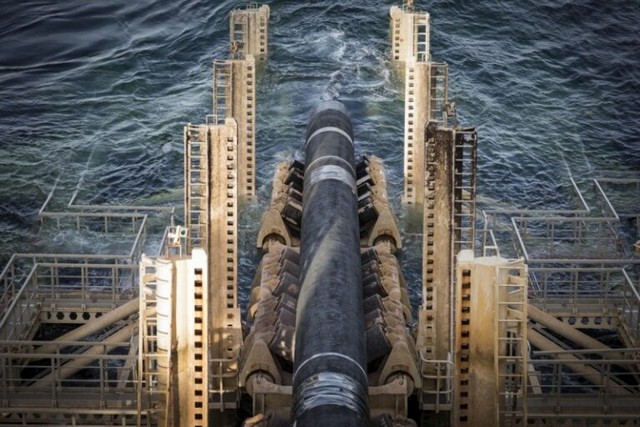
6 Feb 2022 – Amid escalating tensions between the United States, NATO and Russia, all eyes are on Ukraine. Canada’s Deputy Prime Minister Chrystia Freeland describes it as “a struggle between democracy and authoritarianism.” But Nord Stream 2, a pipeline built to bring Russian gas under the Baltic Sea directly to Germany, is an integral part of the story.

On January 27, US Under Secretary for Political Affairs, Victoria Nuland, asserted, “If Russia invades Ukraine one way or another … we will work with Germany to ensure it [the pipeline] does not move forward.” Delayed by US threats and sanctions, Nord Stream 2 highlights why countries are challenging the leadership of the Biden administration.

Since the 1960s when Europe first began importing Russian gas, Washington perceived Russian energy as a threat to US leadership and Europe’s energy security. More recently, with fracking, the US has become the world’s largest gas producer and a major exporter of LNG (liquefied natural gas). It wants to muscle in on Europe’s huge market, displacing Russian gas. With Nord Stream 2 completed and filled while it awaits German regulatory approval, the stakes are high.

Soon after pipeline construction began in 2018, the US passed a law threatening sanctions on the Swiss ship laying the pipe. The Swiss pulled out and two Russian vessels completed the line despite sanctions. The US threatened German contractors too, but Germany stood firm.

In 2021, with construction almost complete, German Chancellor Angela Merkel visited the White House, insisting on Nord Stream 2. President Biden gave way. He wanted to mend relations with Germany—the European Union’s most powerful country.

Nord Stream 2, like its predecessor Nord Stream 1, began as a joint venture (51 percent Russia’s Gazprom, 49 percent Royal Dutch Shell as well as Austrian, French and German companies). Then Poland’s government agency responsible for monopoly regulation forced European partners to relinquish their share, creating another delay. The European companies gave up their shareholding but remained as equivalent financial investors in the pipeline.

Upon the Europeans relinquishing their shareholding, Gazprom became the sole pipeline owner. It is also the world’s largest gas supplier, with a gas pipeline monopoly in Russia. Gazprom wants to deliver its own gas via its pipeline to Europe. The EU has maintained since 2009 that pipeline operators, in order to encourage market competition, cannot own the gas they carry. After construction of Nord Stream 2 began, the EU extended its rules to new marine pipelines originating abroad.

Nord Stream 2 was the only pipeline affected. While those pipelines completed prior to May 2019 were exempt, its completion was delayed by US sanctions on pipelaying. Gazprom claimed discrimination and appealed. In August 2021, a German court rejected the appeal. Gazprom then appealed to Germany’s Supreme Court.

German industrialists are desperate for Russian gas. Germany has only 17 days of gas supply in storage. Volatile short-term spot prices have compounded their woes. EU gas imports have increasingly shifted from long-term contracts with prices indexed to crude oil toward short-term deals by multiple traders in spot markets.

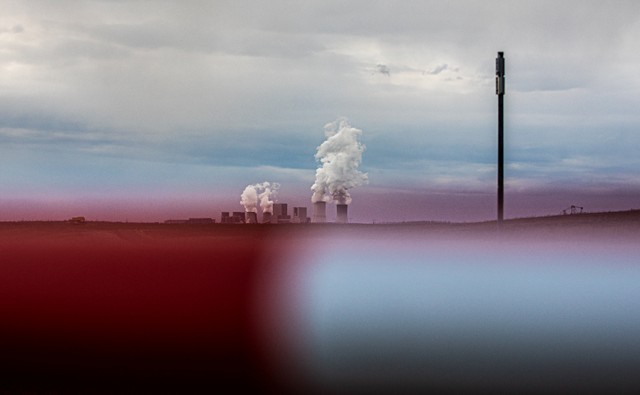
In 2020, spot prices were roughly half those of Gazprom’s long-term contracts. They surged as much as sevenfold in 2021, reflecting a mix of factors. On the demand side, economic revival from the pandemic boosted demand for gas in Asia as well as Europe. On the supply side, green sources of energy diminished in central Europe because of cloudy windless days. With the decommissioning of coal and nuclear power stations, utilities turned to natural gas.

European politicians blamed Russia for high gas prices, but Gazprom affirmed it was supplying the amounts stipulated in its long-term contracts. Gazprom wants long-term contracts to underpin the huge capital costs of gas field and pipeline investments.

Russia is a petro-state. It’s the world’s single largest exporter of natural gas, and the second largest oil exporter—just behind Saudi Arabia. Pipelines and sea routes to market are vital to its economy. Russia wants to sell oil and gas in Asia and Europe, and they want to buy it. Nord Stream 2 makes commercial sense. It incurs no transit fees. The route to market is much shorter than aging pipelines via Ukraine. For its part, Ukraine depends on transit fees from gas shipped through these pipelines.

Nord Stream 2 remains controversial, bitterly opposed by Poland and Ukraine who presume it will reduce volumes and transit fees on pipelines through their countries. Others (notably Germany, Austria, Croatia, Czech Republic, Hungary, Italy) want it. Germany, which carries huge weight in the EU, sees gas as a transition fuel after phasing out nuclear and coal. As Canadian foreign minister, Freeland voiced “significant concerns” about Nord Stream 2.

Numerous hurdles during and since construction have delayed the pipeline’s certification. The most recent forced its Swiss operating company to form a German subsidiary for the section in German waters. Upon eventual certification, Germany will become Europe’s main entry point for Russian gas.

The current crisis between Russia and the US/NATO has been brewing for many years. With the dissolution of the Soviet Union, NATO expanded membership to Eastern Europe. NATO facilitates US leadership, keeping European countries on its side against Russia. From a Russian viewpoint, NATO is provocative and threatening.

Part of the agreement underpinning the USSR’s dissolution was Western assurance that it would not expand into Russia’s sphere of influence, a pledge NATO most recently violated by stationing troops, ships and planes along Russia’s borders. The West accuses Russia of interference in Ukraine. Russia points to a 2014 Western-inspired coup in Ukraine and legitimate grievances of Russian-speakers in the breakaway Donbas republics. I document the two narratives in my book Oil and World Politics.

In December 2021, Russia presented draft treaties to the US and NATO, demanding a complete overhaul of Europe’s security architecture. Russia stressed the principle of indivisible and equal security for all countries, as agreed by all 56 members of the Organization for Security and Co-operation in Europe (OSCE) at Istanbul (1999) and reaffirmed at Astana (2010). Countries expressly agreed not to strengthen their security at the expense of others. In January, Russia wrote to all signatory countries, including Canada, demanding clear answers on how they each intended to fulfil these obligations in the current circumstances.

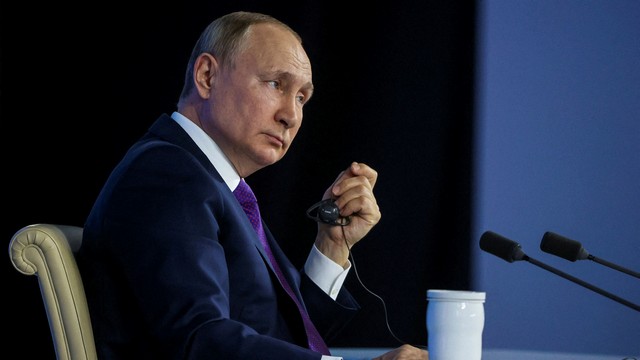
Russian President Vladimir Putin warned that if the West continued its aggressive policies (NATO’s expansion and missile deployment in eastern Europe), Russia would take ‘military-technical’ reciprocal measures. In his words, “They have pushed us to a line that we can’t cross.”

Russia’s initiative put the cat among the pigeons. A succession of high-level meetings occurred between Russia and the US, NATO and OSCE. On January 26, Washington presented written responses, seeking to narrow the debate to Ukraine and alleging the Russians were poised to invade it. Russia insisted repeatedly it would not initiate an invasion but would support Donbas if the latter were attacked.

The US escalated tensions by repeating claims of an “imminent” Russian invasion, even as Ukraine’s leaders expressed doubts. Washington threatened new sanctions of unprecedented severity, including major Russian banks, high-tech goods, the SWIFT financial messaging system, and Nord Stream 2. Britain and Canada followed suit. On January 11, Prime Minister Justin Trudeau asserted any Russian incursion into Ukraine would have “serious consequences,” including sanctions.

France, Germany and Italy balked because the sanctions would backfire on their economies. They appeared unconvinced Russia intended to attack unless provoked. A flurry of high-level bilateral discussions with Russia followed.

Significantly, on January 26, representatives of France, Germany, Russia and Ukraine confirmed support for the 2015 Minsk II agreement and an unconditional ceasefire. Minsk-II requires Ukraine to negotiate with the two Donbas republics on autonomy within a federalized Ukraine but, thus far, no negotiations have been held.

The EU imports 40 percent of its gas from Russia. For Russia, the routes through Ukraine and Poland are unreliable, because of hostility in both countries. Ukraine has a long-term deal with Gazprom for gas transit until 2024. Ukraine earns big transit fees, roughly US$2 billion per year, and desperately wants to keep them. For its internal market, Ukraine buys Russian gas indirectly from Poland, Romania and Slovakia.

Whatever happens with Western sanctions, Russia has a strategic new market in China. Russia’s Power of Siberia pipeline began exporting gas from east Siberia to northeast China two years ago. The two countries have agreed to build a second line, Power of Siberia 2. It will bring gas from the Yamal Peninsula in the Russian Arctic to China’s northeast. That means Yamal gas will be able to flow to China as easily as to Europe.

The current situation is dangerous and could easily escalate. Nord Stream 2 is critically important but national security trumps all. Security can only be achieved if it is universal. US efforts to contain Russia and maintain leadership over Europe are not working. It’s wake-up time for Canada, too. The world has become multi-polar and Nord Stream 2 is a fulcrum at the centre of the current crisis.

John Foster is the author of Oil and World Politics: The Real Story of Today’s Conflict Zones (Lorimer Books, 2018).

21 February 2022

Source: www.transcend.org

‘Politics as Usual’ Will Never Be a Solution to the Current Climate Threat (or to Nuclear War)

By C.J. Polychroniou interviews Richard Falk

(Commentary added by Roger Kotila)

[DWF NEWS editor Roger Kotila has taken the liberty to add “nuclear war” to the title of this article, which discusses the idea that “politics as usual” will never be a solution to climate threat. And included throughout (in red) are his views from the perspective of the Earth Constitution/Earth Federation movement.]

17 Feb 2022 – There is an ever-growing consensus that the climate crisis represents humanity’s greatest problem. Indeed, global warming is more than an environmental crisis — there are social, political, ethical and economic dimensions to it. Even the role of science should be exposed to critical inquiry when discussing the dimensions of the climate crisis, considering that technology bears such responsibility for bringing us to the brink of global disaster. This is the theme of my interview with renowned scholar Richard Falk. (Roger Kotila commentary: There is a growing number of people who believe that nuclear war is the “greatest” threat to humanity.)

For decades, Richard Falk has made immense contributions in the areas of international affairs and international law from what may be loosely defined as the humanist perspective, which makes a break with political realism and its emphasis on the nation- state and military power. He is professor emeritus of international law and practice at Princeton University, where he taught for nearly half a century, and currently chair of Global Law at Queen Mary University London, which has launched a new center for climate crime and justice; Falk is also the Olaf Palme Visiting Professor in Stockholm and Visiting Distinguished Professor at the Mediterranean Academy of Diplomatic Studies, University of Malta. In 2008, Falk was appointed as a United Nations Special Rapporteur on the situation of human rights in the Palestinian territories occupied since 1967. He is the author of some 50 books, the most recent of which is a moving memoir, titled Public Intellectual: The Life of a Citizen Pilgrim (2021). (Roger Kotila commentary: Richard Falk is a world citizen and top notch World Patriot. He is a courageous truth teller who, as UN Special Rapporteur, reported on the oppression by Israel of the Palestinians.)

C.J. Polychroniou: The climate crisis is the greatest challenge of our time, but, so far, we seem to be losing the battle to avoid driving the planet to dangerous “tipping points.” Indeed, a climate apocalypse appears to be a rather distinct possibility given the current levels of climate inaction. Having said that, it is quite obvious that the climate crisis has more than one dimension. It is surely about the environment, but it is also about science, ethics, politics and economics. Let’s start with the relationship between science and the environment. Does science bear responsibility for global warming and the ensuing environmental breakdown, given the role that technologies have played in the modern age? (Roger Kotila comment: Climate change is a great challenge which will need help from science, but nuclear war is even a greater challenge as we must end war itself. Both climate and war need to be dealt with at once. The present global war system will obstruct the necessary scientific steps needed to deal responsibly and effectively with climate change.)

Richard Falk: I think science bears some responsibility for adopting the outlook that freedom of scientific inquiry takes precedence over considering the real-world consequences of scientific knowledge — the exemplary case being the process by which science and scientists contributed to the making of the nuclear bomb. In this instance, some of the most ethically inclined scientists and knowledge workers, above all, Albert Einstein, were contributors who later regretted their role. And, of course, the continuous post-Hiroshima developments of weaponry of mass destruction have enlisted leading biologists, chemists and physicists in their professional roles to produce ever more deadly weaponry, and there has been little scientific pushback. (Kotila: Albert Einstein concluded that only world government could save us. These days many scientists are using their expertise to make nuclear weapons for first strike and for use in conventional warfare. Lawrence Livermore Lab located near San Francisco is part of this so-called nuclear “modernization” Life Extension Program (L.E.P.) according to Citizens Watch, but which DWF NEWS labels the Pentagon’s Life Extinction Program.)

With respect to the environmental breakdown that is highlighted by your question, the situation is more obscure. There were scientific warnings about a variety of potential catastrophic threats to ecological balance that go back to the early 1970s. These warnings were contested by reputable scientists until the end of the 20th century, but if the precautionary principle included in the Stockholm Declaration on the Human Environment (1972) would have been implemented, then certainly scientists bore some responsibility for continuing to work toward more capital-efficient means of finding technological applications for oil, gas and coal. As with adverse health effects, post-Enlightenment beliefs that human progress depended on scientific knowledge inhibited regulation for the benefit of the public good. Only when civil society began to sound the alarm were certain adjustments made, although often insufficient in substance, deferring to private interests in profitability, and public interests in the enhancement of military capabilities and governmental control. (Kotila: Insufficient? Profit over people has been disastrous. The military-industrial-covert operations complex is out of control. The US is not in the defense business, it is in the War Business. The so-called UN “Security” Council P-5 veto powers, supposedly for peace and security, are the world’s leading weapons dealers. The world has suffered war after war after war despite the launching of the United Nations in 1945.)

Overall, despite the climate change crisis, there remains a reluctance to hamper scientific “progress” by an insistence on respecting the carrying capacity of the Earth. Also, science and scientists have yet to relate the search for knowledge to the avoidance of ecologically dangerous technological applications, and even more so in relation to political and cultural activities. There is also the representational issue involving the selection of environmental guardians and their discretionary authority, if a more prudential approach were to be adopted. (Kotila: Good point. Scientists have learned how to destroy the world.)

C.J. Polychroniou: The climate crisis also raises important ethical questions, although it is not clear from current efforts to tame global warming that many of the world’s governments take them seriously. Be that as it may, how should ethics inform the debate about global warming and environmental breakdown?

Richard Falk: The most obvious ethical issues arise when deciding how to spread the economic burdens of regulating greenhouse gas emissions in ways that ensure an equitable distribution of costs within and among countries. The relevance of “climate justice” to relations among social classes and between rich and poor countries is contested and controversial. As the world continues to be organized along state-centric axes of authority and responsibility, ethical metrics are so delimited. Given the global nature of the challenges associated with global warming, this way of calculating climate justice and ethical accountability in political space is significantly dysfunctional. (Kotila: National self-interest often betrays the world public interest. The Earth Constitution calls for a World Parliament representing “we, the people” of the world. The design for its “House of Peoples” is for 1000 electoral districts to represent the world’s 7.9 billion people, and offers a broader view of what needs to be done than the current UN system which gives rich and powerful nations too much authority over global affairs. Too often a nation’s selfish self-interest harms the world community at large.)

Similar observations are relevant with respect to time. Although the idea of “responsibility to future generations” received some recognition at the UN, nothing tangible by way of implementation was done. Political elites, without exception, were fixed on short-term performance criteria, whether satisfying corporate shareholders or the voting public. The tyranny of the present in policy domains worked against implementing the laudatory ethical recognition of the claims of [future generations] to a healthy and materially sufficient future. (Kotila: The UN is limited by what it can accomplish for future generations by its defective Charter which allows, for example, war after war. The Earth Constitution is designed to replace the UN Charter. Activists should be encouraged to support the demand for UN Charter Review to open the door for the Earth Constitution — which happens to be the first green constitution ever drafted, and which is designed to abolish war. Under the Earth Constitution nations in conflict must go to a democratically elected World Parliament or to a World Court to peacefully resolve conflicts — the advantage of a democratic world federal union government (ie, “new UN” under the Earth Constitution).

Taking account of the relevance of the past seems an ethical imperative that is neglected because it is seen as unfairly burdening the present for past injustices. For instance, reparations claims on behalf of victimized people, whether descendants of slavery or otherwise exploited peoples, rarely are satisfied, however ethically meritorious. There is one revealing exception: reparations imposed by the victorious powers in a war. (Kotila: I believe that it is highly relevant and wise to include history in decision-making.)

In the environmental domain, the past is very important to the allocation of responsibility for the atmospheric buildup of greenhouse gas emissions. Most Western countries are more responsible for global warming than the vast majority of the Global South, and many parts of Africa and the Middle East face the dual facts of minimal responsibility for global warming yet maximal vulnerability to its harmful effects. (Kotila: Yes.)

These various ethical concerns are being forced onto the agendas of global conferences. This was evident at the 2021 COP-26 Glasgow Climate Summit under UN auspices. The intergovernmental response was disappointing, and reflected capitalist and geopolitical disregard of the ethical dimensions of the climate change challenge. (Kotila: The Earth Constitution under Articles 4.14. and 4.17 provides a better way than the UN Charter in order to regulate and supervise international capitalistic excesses which may hamper needed responses to climate change. No longer will Big Money be allowed to rule, but instead must adapt to serve “we, the people.”)

C.J. Polychroniou: Politics also figures prominently in the climate crisis, with questions being raised as to whether our current system of government, both at the national and international level, is adequate to meet the greatest challenge of our time. What are your thoughts on this matter?

Richard Falk: As suggested, addressing the global challenge of climate change with the tools developed for problem-solving in a state-centric world possessing weak institutional mechanisms for the effective promotion of the global public good is the organizational root of the problem. The UN was established with the ahistorical hope that the great powers of international relations would cooperate for peace as successfully as they cooperated for war between 1939 to 1945. Despite lofty rhetoric, the UN was designed to be a weak global mechanism. Why else disempower the UN by giving the victors of World War II a right of veto, which in effect was a recognition of the primacy of geopolitics? (Kotila: The World Constitution & Parliament Association anticipated the UN’s defective Charter, and proceeded over 30 years to draft the Earth Constitution (aka The Constitution for the Federation of Earth). While activists are putting into place what will become a democratically elected World Parliament, the UN General Assembly is being sought to launch Charter Review as a step to activating the Earth Constitution. The UN General Assembly could become the “House of Nations” in the EC’s World Parliament.)

Besides geopolitics, there were other obstacles to global-oriented problem-solving as a result of the persistence and expansion of statism after the collapse of European colonialism. This dominance of statism was reinforced by rigid ideological adherence to nationalism on the part of political leaders, shaping relations with other countries even if disguised somewhat by alliance diplomacy, “special relationships” (such as the U.S.’s relationship with Israel) and neoliberal patterns of globalization. (Kotila: Nationalism too easily becomes the evil of jingoism where we see belligerence toward foreign nations and lust for war. True national patriotism requires being a world patriot first and foremost — because what is good for our world is good for our country, because our country is part of the world.)

The core political issue is upholding the indispensable need for unprecedented degrees of globally oriented cooperation to address effectively climate change challenges that were being stymied by the continuing dominance of statist and geopolitical tendencies in international relations. These tendencies favor the part over the whole in multilateral forms of problem-solving. This structural reality has recently been accentuated by the rise of autocratic hyper-nationalist leaders in many important states, and by recent preoccupations with overcoming the COVID pandemic and containing its negative economic spillovers. (Kotila: Yes, we need “cooperation” on behalf of the whole world. But “cooperation” between nations [multilateralism] is unreliable unless buttressed by a well-written good government world federal constitution like the Earth Constitution.)

Until a robust mechanism for the promotion of global public goods is established, the political potential of present structures of world order do not seem capable of fashioning prudent and effective policies to cope with climate change. For such a mechanism to be established will require [either] the shock effect of future climate catastrophes, or a powerful, widely supported, militant transnational civil society movement dedicated to the protection of the Earth. (Kotila: The Earth Constitution is ready to go.)

C.J. Polychroniou: The climate crisis also reflects the failure of economics, with the argument being made that capitalism is actually the cause of the problem and climate change merely a symptom. Given where we are, and with the window of opportunity rapidly closing, should the fight against global warming be also a fight against capitalism? (Kotila: There is a place for both capitalism and socialism; like a bird it takes two wings to fly. Capitalism, however, will need supervision and regulation by the World Parliament as planned under the Earth Constitution.)

Richard Falk: David Whyte ends his book on ecocide with these stark words: “[W]e have to kill the corporation before it kills us.” The guiding idea of contemporary capitalism is to maximize short-term profitability, a posture that contradicts the kind of approach that would protect the natural habitat against the ravages wrought by contemporary capitalism. (Kotila: There are positive features to capitalism, but there must be strong regulation and supervision. Privatization, for example, has harmed health care systems where profits take away from patient care, and are overly expensive. Privatization tends to be bad for almost any public service such as public utilities, mass transportation, education, or health care.)

However, the issue may be broader than capitalism. Actually existing socialist governments, exercising greater state control over the economy, have exhibited no better record when it comes to environmental protection or taking responsible account of longer-term threats to the natural habitat. State-dominated economies may be less concerned about profitability, but their preoccupation with maximizing economic growth and susceptibility to corruption is as dangerous and destructive. (Kotila: A good point made here. Socialism, like capitalism, has its faults. The UN Charter which grants “sovereignty” for each nation, allows kleptocrats to steal from the people and the UN can’t stop the corruption. The “new UN” under the Earth Constitution with a World Parliament could address this problem if a nation goes corrupt using the Office of the Ombudmus.)

Until economic and political policies grounded upon a new kind of citizenship [prioritizing] humanity gain political traction, it seems highly improbable that ecological threats will be addressed responsibly. From your own perspective, how do we move forward in the fight against global warming? Indeed, what might be possible approaches to overcome climate inaction?

You saved the most difficult question for last! I do think education in the broad sense is key, including rethinking citizenship and activist civic participation. It is also essential that efforts be made to enable the UN to act more independently of geopolitical and nationalist manipulations, which have prevented the UN from playing an influential role throughout the COVID pandemic. This regressive interaction with states was highlighted by the hostility of Trump’s presidency to any kind of meta-nationalist approach to the control of the virus, including his disgraceful decision to defund and disengage from the World Health Organization. (Kotila: “enabling the UN to act more independently” will most likely require replacing the UN Charter with the Earth Constitution.)

A more credible UN requires independent and increased funding by way of an international tax, as well as curtailing of the right of veto by the five permanent members of the Security Council. Such global reforms will not happen without substantial pressure from civil society mobilizations coupled with the emergence of more enlightened leadership in important countries. (Kotila: Absolutely YES, but for a “new UN” using the Earth Constitution as its guide and model to establish the necessary world federal union government. The Earth Constitution movement must gain popular support for ratification, and be given the full attention from the UN General Assembly which currently has 188 nations denied voting rights.)

As suggested above, a reconstituted world order responsive to the magnitude and character of climate change challenge would seem to require the radical transformation of economic activity. This seems as though it could happen only through a revolutionary process, either as something that took the unprecedented shape of a transnational movement or spread from state to state as did the Arab Spring of 2010-2011, but without sparking a counterrevolutionary backlash. (Kotila: I’d like to see a nonviolent r- evolutionary movement — a renaissance, an awakening as described by Professor Glen T. Martin in his book “The Earth Constitution Solution.”)

Because there is no currently visible transition strategy to move from where we are to where we need to be, indulging the utopian imagination is a political act, envisioning futures attuned to the climate change agenda. (Kotila: A transition strategy is already underway with the Earth Constitution/Earth Federation movement. See earthfederation.info)

I believe that our escape from present entrapment depends on “a politics of impossibility.” Our leaders say, and the general consensus is, that politics should be conceived as “the art of the possible,” which assesses the play of forces to discover what is feasible. My argument has been that what is understood by the political class as feasible is insufficient to produce satisfactory policies and practices with regard to climate menaces. That is, the politics we know lacks the capacity to generate a solution. (Kotila: YES.)

It is evident that the impossible happens. This was manifested in recent international experience by the victories of national resistance movements in several major 20th- century anti-colonial wars, the collapse of the Soviet Union, the dismantling of apartheid in South Africa. In each instance, before the impossible happened, experts deemed the outcome utopian or impossible, not worthy of the attention of serious persons. What seems clear is that the impossible happens only when the mobilization of people is great enough to produce outcomes that defy the perceptions of those forces committed to the permanence of the status quo. (Kotila: Yes, the “impossible is possible.” See below at the end of this article taken from the front page of the earthfederation.info website.)

This leads me to view the future as uncertain and unknowable. For this reason, whatever future we believe necessary and desirable can unfold, defying current expectations. This makes it rational and justifiable for patriots of humanity to engage on behalf of this better future. There are many signs that a green vision of the future is gaining support throughout the planet, especially among youth who have most to lose, and hence to gain. Youth may be the vanguard among those demanding ecologically responsible patterns of humane governance for the planet.

Richard Falk is a member of the TRANSCEND Network, Albert G. Milbank Professor Emeritus of International Law at Princeton University, Chair of Global Law, Faculty of Law, at Queen Mary University London, Research Associate the Orfalea Center of Global Studies at the University of California, Santa Barbara, and Fellow of the Tellus Institute.

Roger Kotila, Ph.D. is a peace activist and a psychologist (ret.) with many years of clinical experience with the California Dept. of Corrections doing psychiatric diagnosis and treatment with inmates. President of Democratic World Federalists he is co-editor of DWF NEWS, and editor of Earth Federation News & Views.

21 February 2022

Source: www.transcend.org

The Western Allied Nations Bully the World While Warning of Threats from China and Russia

By Vijay Prashad

17 Feb 2022 – On January 21, 2022, Vice Admiral Kay-Achim Schönbach attended a talk in New Delhi, India, organized by the Manohar Parrikar Institute for Defense Studies and Analyses. Schönbach was speaking as the chief of Germany’s navy during his visit to the institute.

“What he really wants is respect,” Schönbach said, referring to Russia’s President Vladimir Putin. “And my god, giving someone respect is low cost; even no cost.” Furthermore, Schönbach said that in his opinion, “It is easy to even give him the respect he really demands and probably also deserves.”

The next day, on January 22, Ukraine’s Foreign Minister Dmytro Kuleba summoned Germany’s ambassador to Ukraine, Anka Feldhusen, to Kyiv and “expressed deep disappointment” regarding the lack of German weapons provided to Ukraine and also about Schönbach’s comments in New Delhi. Vice Admiral Schönbach released a statement soon after, saying,

“I have just asked the Federal Minister of Defense [Christine Lambrecht] to release me from my duties and responsibilities as inspector of the navy with immediate effect.”

Lambrecht did not wait long to accept the resignation.

Why was Vice Admiral Schönbach sacked? Because he said two things that are unacceptable in the West:

  • First, that “the Crimean Peninsula is gone and never [coming] back” to Ukraine and,
  • Second, that Putin should be treated with respect.

The Schönbach affair is a vivid illustration of the problem that confronts the West currently, where Russian behavior is routinely described as “aggression” and where the idea of giving “respect” to Russia is disparaged.

Aggression

U.S. President Joe Biden’s administration began to use the word “imminent” to describe a potential Russian invasion of Ukraine toward the end of January. On January 18, White House Press Secretary Jen Psaki did not use the word “imminent,” but implied it with her comment: “Our view is this is an extremely dangerous situation. We’re now at a stage where Russia could at any point launch an attack in Ukraine.” On January 25, Psaki, while referring to the possible timeline for a Russian invasion, said, “I think when we said it was imminent, it remains imminent.” Two days later, on January 27, when she was asked about her use of the word “imminent” with regard to the invasion, Psaki said, “Our assessment has not changed since that point.”

On January 17, as the idea of an “imminent” Russian “invasion” escalated in Washington, Russia’s Foreign Minister Sergei Lavrov rebuked the suggestion of “the so-called Russian invasion of Ukraine.” Three days later, on January 20, spokeswoman for Russia’s Foreign Ministry Maria Zakharova denied that Russia would invade Ukraine, but said that the talk of such an invasion allowed the West to intervene militarily in Ukraine and threaten Russia.

Even a modicum of historical memory could have improved the debate about Russian military intervention in Ukraine. In the aftermath of the Georgian-Russian conflict in 2008, the European Union’s Independent International Fact-Finding Mission on the Conflict in Georgia, headed by Swiss diplomat Heidi Tagliavini, found that the information war in the lead-up to the conflict was inaccurate and inflammatory. Contrary to Georgian-Western statements, Tagliavini said, “[T]here was no massive Russian military invasion underway, which had to be stopped by Georgian military forces shelling Tskhinvali.” The idea of Russian “aggression” that has been mentioned in recent months, while referring to the possibility of Russia invading Ukraine, replicates the tone that preceded the conflict between Georgia and Russia, which was another dispute about old Soviet borders that should have been handled diplomatically.

Western politicians and media outlets have used the fact that 100,000 Russian troops have been stationed on Ukraine’s border as a sign of “aggression.” The number—100,000—sounds threatening, but it has been taken out of context. To invade Iraq in 1991, the United States and its allies amassed more than 700,000 troops as well as the entire ensemble of U.S. war technology located in its nearby bases and on its ships. Iraq had no allies and a military force depleted by the decade-long war of attrition against Iran. Ukraine’s army—regular and reserve—number about 500,000 troops (backed by the 1.5 million troops in NATO countries). With more than a million soldiers in uniform, Russia could have deployed many more troops at the Ukrainian border and would need to have done so for a full-scale invasion of a NATO partner country.

Respect

The word “respect” used by Vice Admiral Schönbach is key to the discussion regarding the emergence of both Russia and China as world powers. The conflict is not merely about Ukraine, just as the conflict in the South China Sea is not merely about Taiwan. The real conflict is about whether the West will allow both Russia and China to define policies that extend beyond their borders.

Russia, for instance, was not seen as a threat or as aggressive when it was in a less powerful position in comparison to the West after the collapse of the USSR. During the tenure of Russian President Boris Yeltsin (1991-1999), the Russian government encouraged the looting of the country by oligarchs—many of whom now reside in the West—and defined its own foreign policy based on the objectives of the United States. In 1994, “Russia became the first country to join NATO’s Partnership for Peace,” and that same year, Russia began a three-year process of joining the Group of Seven, which in 1997 expanded into the Group of Eight. Putin became president of Russia in 2000, inheriting a vastly depleted country, and promised to build it up so that Russia could realize its full potential.

In the aftermath of the collapse of the Western credit markets in 2007-2008, Putin began to speak about the new buoyancy in Russia. In 2015, I met a Russian diplomat in Beirut, who explained to me that Russia worried that various Western-backed maneuvers threatened Russia’s access to its two warm-water ports—in Sevastopol, Crimea, and in Tartus, Syria; it was in reaction to these provocations, he said, that Russia acted in both Crimea (2014) and Syria (2015).

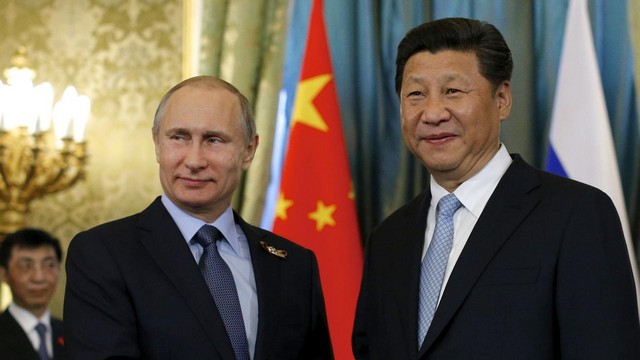
The United States made it clear during the administration of President Barack Obama that both Russia and China must stay within their borders and know their place in the world order. An aggressive policy of NATO expansion into Eastern Europe and of the creation of the Quad (Australia, India, Japan and the United States) drew Russia and China into a security alliance that has only strengthened over time. Both Putin and China’s President Xi Jinping recently agreed that NATO’s expansion eastward and Taiwan’s independence were not acceptable to them. China and Russia see the West’s actions in both Eastern Europe and Taiwan as provocations by the West against the ambitions of these Eurasian powers.

That same Russian diplomat to whom I spoke in Beirut in 2015 said something to me that remains pertinent:

“When the U.S. illegally invaded Iraq, none of the Western press called it ‘aggression.’”

Vijay Prashad is an Indian historian, editor and journalist.

21 February 2022

Source: www.transcend.org

What Russia Wants

By John Scales Avery

Russia Does Not Want to Invade Ukraine

21 Feb 2022 – Both Russia’s President Vladimir Putin and Foreign Secretary Sergey Lavrov have repeatedly stated that Russia does not intend to invade Ukraine. Logic also tells us that if they had wished to do so, they would have done it long ago. The threat of a Russian invasion of Ukraine is a western invention.

Russia Fears the Eastward Expansion of NATO

To understand how Russians feel about having western weapons and troops poured into a position on their nation’s borders, we should imagine how the United States would react if large numbers of Russian weapons and troops were stationed in Mexico or Canada.

A Broken Promise

In 1990, US Secretary of State James Baker assured Mikhail Gorbachev that “not an inch of NATO’s present military jurisdiction will spread in an eastward direction”. In return, Gorbachev agreed not to oppose the reunification. Russia kept its side of the bargain, but the United States broke its promise.

The Illegality of NATO

Former UN Assistant Secretary General Hans Christof von Sponeck used the following words to express his opinion that NATO now violates the UN Charter and international law: “In the 1949 North Atlantic Treaty, the Charter of the United Nations was declared to be NATO’s legally binding framework. However, the United-Nations monopoly of the use of force, especially as specified in Article 51 of the Charter, was no longer accepted according to the 1999 NATO doctrine. NATO’s territorial scope, until then limited to the Euro-Atlantic region, was expanded by its members to include the whole world”

Article 2 of the UN Charter requires that “All members shall refrain in their international relations from the threat or use of force against the territorial integrity or political independence of any state.” This requirement is somewhat qualified by Article 51, which says that “Nothing in the present Charter shall impair the inherent right of individual or collective self-defense if an armed attack occurs against a Member of the United Nations, until the Security Council has taken measures necessary to maintain international peace and security.”

Thus, in general, war is illegal under the UN Charter. Self-defense against an armed attack is permitted, but only for a limited time, until the Security Council has had time to act. The United Nations Charter does not permit the threat or use of force in preemptive wars, or to produce regime changes, or for so-called “democratization”, or for the domination of regions that are rich in oil.

What Military-Industrial Complexes Want

Military-industrial complexes do not actually want war. What they want is a level of tensions sufficiently high to justify obscenely bloated military budgets. In 2021 the world spent roughly two trillion dollars on armaments. This enormous river of money, almost too great to be imagined, flows like current in a devil’s dynamo from immensely rich arms corporations to buy the votes of corrupt politicians and the propaganda of mass media, numbed by which, citizens vote to perpetuate the system.

In the United States the industrial-military complex is particularly strong, and it has bipartisan support. This may explain US President Biden’s aggressive actions in the Ukraine crisis. However, although nobody wants war, and especially not a suicidal and potentially omnicidal nuclear war, a situation with very high tensions can become out of control through a technical or human error, through escalation of a small incident, or through a false flag operation.

The Threat of a Nuclear War

Looking at modern history we can remember a number of times when the world came extremely close to nuclear war, The Cuban Missile Crisis is one example, but there are a number of others. We cannot continue to be lucky forever. Just as the politicians and generals who started World War I had no imaginative idea of what it would be like, our present day leaders seem not to realize the catastrophic nature of nuclear war. Because of the nuclear winter effect and because of the long-lasting effects of radioactivity, our civilization and much of the biosphere would not survive such a war. In the present crisis over Ukraine, Both the United States and Russia possess more than enough nuclear weapons to destroy the world completely.

As citizens we must prevent our politicians from pursuing this insane brinkmanship.

John Scales Avery, Ph.D., who was part of a group that shared the 1995 Nobel Peace Prize for their work in organizing the Pugwash Conferences on Science and World Affairs, is a member of the TRANSCEND Network and Associate Professor Emeritus at the H.C. Ørsted Institute, University of Copenhagen, Denmark.

21 February 2022

Source: www.transcend.org

‘Nothing More Grotesque than a Media Pushing for War,’ Says Edward Snowden

The Intercept’s Jeremy Scahill similarly notes that “the talking heads on cable news are almost drooling over the prospect of a ratings-boosting war.”

By Jessica Corbett

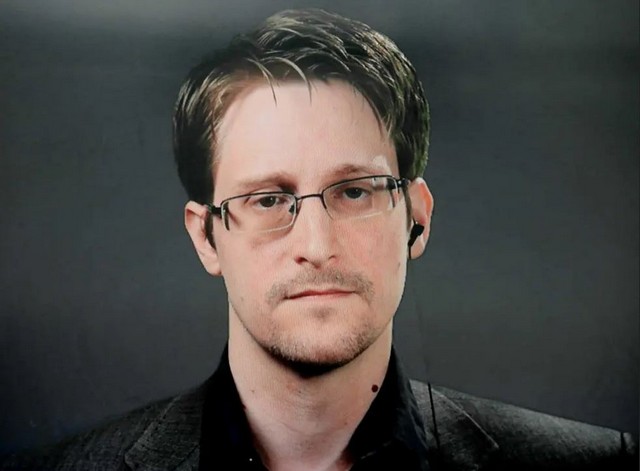
12 Feb 2022 – Exiled American whistleblower Edward Snowden yesterday joined global critics who are decrying news outlets for encouraging war with their coverage of rising tensions between the United States and Russia—where he has lived since 2013—over Ukraine.

“With talk of war in Ukraine rising to a fever pitch, U.S. media outlets are once again beating the drums.”

“There is nothing more grotesque than a media pushing for war,” Snowden tweeted.

After a flood of responses—some highlighting that Russian President Vladimir Putin has stationed over 100,000 troops near his country’s border with Ukraine and is conducting military exercises in Belarus—Snowden doubled down on his anti-war message.

“When you see snide quote-tweets of this from the boot-licking think-tank crowd, look at the ratio and remember that even if they’re loud, they are in the minority,” he said. “Being pro-war is not smart, cool, or sophisticated, and their performative outrage doesn’t change that.”

Snowden is far from alone in blasting a media march toward war that has been compared to the lead-up to U.S. invasion of Iraq in 2003.

“Here we go again,” Jeremy Scahill, co-founder of The Intercept, wrote in a Friday fundraising email. “With talk of war in Ukraine rising to a fever pitch, U.S. media outlets are once again beating the drums.”

The investigative reporter, who has covered U.S. wars for decades, added:

The talking heads on cable news are almost drooling over the prospect of a ratings-boosting war. Retired Pentagon officials on the payroll of the defense industry are presented as “experts,” often with no disclosure of their financial conflicts of interest.

And once the shooting starts, mainstream pundits will drop any remaining pretense of journalistic integrity and begin openly cheerleading for “the troops,” like sports announcers rooting for the home team.

Meanwhile, the U.S. is the world’s largest arms dealer and it spends more on “defense” than China, Russia, India, the U.K., Germany, France, Japan, South Korea, and Australia combined.

In a Friday opinion piece for Middle East Eye, journalist Joe Gill wrote that “in the 21st century, the media war is a critical element of any pre-war planning, and this appears to be reaching its crescendo.”

“The narratives repeated in the Western media are so thunderingly pro-Ukrainian and anti-Putin that it is hard to extract from the simplistic framing the complex nature of the conflict.”

“By talking up the inevitability of a war in Ukraine against Russia, Western intelligence agencies and their media outliers are implanting the idea that war has already started,” he continued, noting that “Bloomberg even accidentally announced that Russia had invaded Ukraine (before apologizing).”

Ahead of U.S. President Joe Biden’s call with Putin reportedly planned for Saturday morning, the White House continued to warn of a potential imminent invasion.

During Friday’s White House press briefing, Jake Sullivan, Biden’s national security adviser, said that “Russian military action could begin any day now,” citing “what we are seeing on the ground and what our intelligence analysts have picked up.”

“We are not saying that… a final decision has been taken by President Putin,” Sullivan noted, while also emphasizing that “any American in Ukraine should leave as soon as possible, and in any event, in the next 24 to 48 hours.”

The adviser also insisted that “we are ready to continue results-oriented diplomacy that addresses the security concerns of the United States, Russia, and Europe consistent with our values and the principle of reciprocity.”

However, the Biden administration has also signaled an unwillingness to agree to any of Russia’s security demands—including Ukraine’s exclusion from the North Atlantic Treaty Organization (NATO)—and deployed B-52 bombers with nuclear capabilities to the United Kingdom as well as 3,000 more troops to Poland.

A senior defense official said in a statement that the troops “are being deployed to reassure our NATO allies, deter any potential aggression against NATO’s eastern flank, train with host-nation forces, and contribute to a wide range of contingencies.”

Noting that “the U.S. and NATO are pouring in high-tech weaponry and training up Ukraine’s armed forces, making it a much more militarily capable foe,” Gill wrote Friday that “from where the Russians are sitting, the deployment of billions of dollars worth of new U.S. and U.K. military hardware on its borders is a sign of escalation, rather than defense.”

He added that “the narratives repeated in the Western media are so thunderingly pro-Ukrainian and anti-Putin that it is hard to extract from the simplistic framing the complex nature of the conflict.”

Bryce Greene delivered a similar critique last month in a Fairness and Accuracy in Reporting analysis of the corporate media’s Ukraine coverage, writing that missing context, including “the crucial role the U.S. has played” in fueling regional conflict, “allows hawks to promote disastrous escalation of tensions.”

“As a result of this coverage, the interventionist mentality has trickled down to the public,” Greene added, citing recent polls. “Perhaps if the public were better informed, there would be more domestic pressure on Biden to end the brinkmanship and seek a genuine solution to the problem.”

Meanwhile, as Branko Marcetic pointed out at Jacobin earlier this week, progressives who have taken a forceful stand for a diplomatic resolution to the Ukraine crisis, such as Sen. Bernie Sanders (I-Vt.) and Rep. Ilhan Omar (D-Minn.), are “navigating a dangerous climate created by mainstream media—including liberal outlet MSNBC—that casts anti-war opinion as disloyalty.”

Journalists who are critical about a potential war between the world’s two nuclear superpowers—or even question Western governments’ claims about a potential Russian invasion—are also being met with hostility.

Last week, as Common Dreams reported, Matt Lee of the Associated Press grilled a U.S. State Department spokesperson about the administration’s refusal to provide any evidence backing up the claim that Russia is planning false flag operation as a pretext to invade Ukraine.

Referencing the George W. Bush administration’s infamous lies about weapons of mass destruction, Lee told the State Department’s Ned Price that “I remember WMDs in Iraq.” As the journalist pushed for more than “a series of allegations and statements,” Price accused him of wanting “to find solace in information that the Russians are putting out.”

Recalling the exchange, Gill said Friday that “this kind of briefing can’t help but recall, as Lee suggested, the feverish months in the run-up to the 2003 invasion of Iraq.”

Jessica Corbett is a staff writer for Common Dreams.

21 February 2021

Source: www.transcend.org

The Terrible Fate Facing the Afghan People

By Vijay Prashad

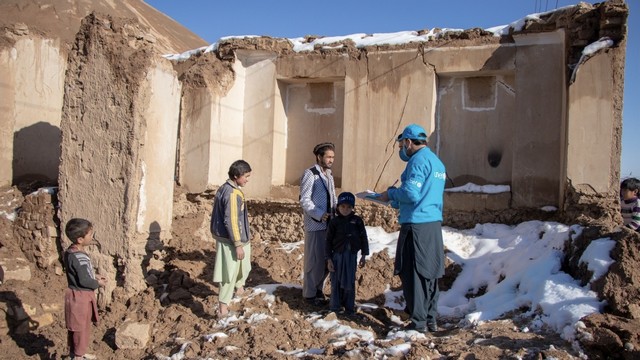
11 Feb 2022On 8 Feb 2022, UNICEF (the United Nations Children’s Fund) Afghanistan sent out a bleak set of tweets. One of the tweets, which included a photograph of a child lying in a hospital bed with her mother seated beside her, said:

“Having recently recovered from acute watery diarrhea, two years old Soria is back in hospital, this time suffering from edema and wasting. Her mother has been by her bedside for the past two weeks anxiously waiting for Soria to recover.”

The series of tweets by UNICEF Afghanistan show that Soria is not alone in her suffering. “One in three adolescent girls suffers from anemia” in Afghanistan, with the country struggling with “one of the world’s highest rates of stunting in children under five: 41 percent,” according to UNICEF.

The story of Soria is one among millions; in Uruzgan Province, in southern Afghanistan, measles cases are rising due to lack of vaccines. The thread to the tweet about Soria from UNICEF Afghanistan was a further bleak reminder about the severity of the situation in the country and its impact on the lives of the children: “without urgent action, 1 million children could die from severe acute malnutrition.” UNICEF is now distributing “high energy peanut paste” to stave off catastrophe.

The United Nations has, meanwhile, warned that approximately 23 million Afghans—about half the total population of the country—are “facing a record level of acute hunger.” In early September, not even a month after the Taliban came to power in Kabul, the UN Development Program noted that “A 10-13 percent reduction in GDP could, in the worst-case scenario, bring Afghanistan to the precipice of near universal poverty—a 97 percent poverty rate by mid-2022.”

The World Bank has not provided a firm calculation of how much of Afghanistan’s GDP has declined, but other indicators show that the threshold of the “worst-case scenario” has likely already passed.

When the West fled the country at the end of August 2021, a large part of the foreign funding, which Afghanistan’s GDP is dependent on, also vanished with the troops: 43 percent of Afghanistan’s GDP and 75 percent of its public funding, which came from aid agencies, dried up overnight.

Ahmad Raza Khan, the chief collector (customs) in Khyber Pakhtunkhwa in Pakistan, says that exports from his country to Afghanistan have dropped by 25 percent; the State Bank of Pakistan, he says, “introduced a new policy of exports to Afghanistan on December 13” that requires Afghan traders to show that they have U.S. dollars on them to buy goods from Pakistan before entering the country, which is near impossible to show for many of the traders since the Taliban has banned the “use of foreign currency” in the country. It is likely that Afghanistan is not very far away from near universal poverty with the way things stand there presently.

On January 26, 2022, UN Secretary-General António Guterres said that “Afghanistan is hanging by a thread,” while pointing to the 30 percent “contraction” of its GDP.

Sanctions and Dollars

On February 7, 2022, Taliban spokesperson Suhail Shaheen told Sky News that this perilous situation, which is leading to starvation and illness among children in Afghanistan, “is not the result of our [Taliban] activities. It is the result of the sanctions imposed on Afghanistan.”

On this point, Shaheen is correct. In August 2021, the U.S. government froze the $9.5 billion that Afghanistan’s central bank (Da Afghanistan Bank) held in the New York Federal Reserve. Meanwhile, family members of the victims who died in the 9/11 attacks had sued “a list of targets,” including the Taliban, for their losses and a U.S. court later ruled that the plaintiffs be paid “damages” that now amount to $7 billion. Now that the Taliban is in power in Afghanistan, the Biden administration seems to be moving forward “to clear a legal path” to stake a claim on $3.5 billion out of the money deposited in the Federal Reserve for the families of the September 11 victims.

The European Union followed suit, cutting off $1.4 billion in government assistance and development aid to Afghanistan, which was supposed to have been paid between 2021 and 2025. Because of the loss of this funding from Europe, Afghanistan had to shut down “at least 2,000 health facilities serving around 30 million Afghans.” It should be noted here that the total population of Afghanistan is approximately 40 million, which means that most Afghans have lost access to health care due to that decision.

During the entire 20-year period of the U.S. occupation of Afghanistan, the Ministry of Public Health had come to rely on a combination of donor funds and assistance from nongovernmental organizations (NGOs). It was as a result of these funds that Afghanistan saw a decline in infant mortality and maternal mortality rates during the Afghanistan Mortality Survey 2010. Nonetheless, the entire public health care system, particularly outside Kabul, struggled during the U.S. occupation. “Many primary healthcare facilities were non-functional due to insecurity, lack of infrastructure, shortages of staff, severe weather, migrations and poor patient flow,” wrote health care professionals from Afghanistan and Pakistan, based on their analysis of how the conflict in Afghanistan affected the “maternal and child health service delivery.”

Walk Along Shaheed Mazari Road

On February 8, 2022, an Afghan friend who works along Shaheed Mazari Road in Kabul took me for a virtual walk—using the video option on his phone—to this busy part of the city. He wanted to show me that in the capital at least the shops had goods in them, but that the people simply did not have money to make purchases. We had been discussing how the International Labor Organization now estimates that nearly a million people will be pushed out of their jobs by the middle of the year, many of them women who are suffering from the Taliban’s restrictions on women working. Afghanistan, he tells me, is being destroyed by a combination of the lack of employment and the lack of cash in the country due to the sanctions imposed by the West.

We discuss the Taliban personnel in charge of finances, people such as Finance Minister Mullah Hidayatullah Badri and the governor of the Afghanistan central bank Shakir Jalali. Badri (or Gul Agha) is the money man for the Taliban, while Jalali is an expert in Islamic banking. There is no doubt that Badri is a resourceful person, who developed the Taliban’s financial infrastructure and learned about international finance in the illicit markets. “Even the smartest and most knowledgeable person would not be able to do anything if the sanctions remain,” my friend said. He would know. He used to work in Da Afghanistan Bank.

“Why can’t the World Bank’s Afghanistan Reconstruction Trust Fund (ARTF) be used to rush money to the banks?” he asked. This fund, a partnership between the World Bank and other donors, which was created in 2002, has $1.5 billion in funds. If you visit the ARTF website, you will receive a bleak update: “The World Bank has paused disbursements in our operations in Afghanistan.” I tell my friend that I don’t think the World Bank will unfreeze these assets soon. “Well, then we will starve,” he says, as he walks past children sitting on the side of the street.

Vijay Prashad is an Indian historian, editor and journalist.

14 February 2022

Source: www.transcend.org

AP Reporter Challenges US Lies about Russian War Preparations

By Clara Weiss

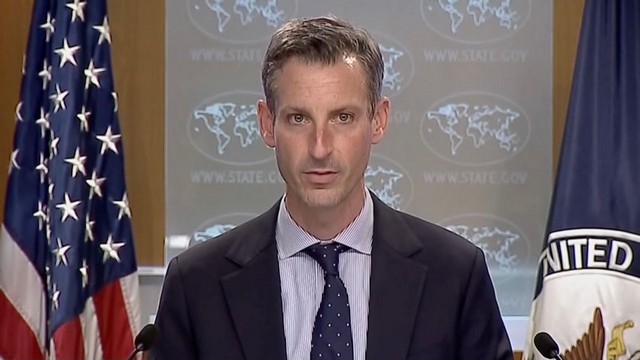
5 Feb 2022 – In a remarkable exchange on Thursday [3 Feb], US State Department spokesman Ned Price was challenged by Matt Lee from the Associated Press for selling baseless allegations about an impending attack by Russia on Ukraine to the public as “facts” based on “declassified information.”

Ned Price—a former CIA operative—appeared before the press on Thursday, declaring, “The United States has information that Russia is preparing fabricated attacks by Ukrainian military or intelligence forces as a pretext for a further invasion of Ukraine.”

This would involve, Price continued, the “production of a propaganda video with graphic scenes of false explosions, depicting corpses, crisis actors pretending to be mourners, and images depicting destroyed locations and military equipment—entirely fabricated by Russian intelligence. To be clear, the development of such a propaganda video is one of many options that the Russian government is developing as a fake pretext to initiate and potentially justify military aggression against Ukraine. … Russia has indicated it’s willing to continue to diplomatic talks, but actions such as this suggest otherwise.”

Turning to the press for questioning, Price clearly expected everything to go as usual. In the past three decades, the US government and intelligence agencies have fabricated one lie after another to justify the illegal invasion and destruction of entire countries in Yugoslavia, the Middle East and North Africa, with little to no questioning from the media. On the contrary, these lies were gladly picked up and recycled by the New York Times and other outlets that then either cheered on the bombing of innocent civilians or covered up these war crimes.

Julian Assange, who has exposed some of the most horrendous war crimes of US imperialism, has been persecuted, surveilled and tortured at the behest of Washington for over a decade and now faces extradition to the US. The vast majority of American media outlets and journalists have dropped any pretense of defending Assange and, along with that, the freedom to publish and free speech.

Yet, in a rare moment of lucidity and sign of critical thinking among journalists, Matt Lee from the Associated Press challenged Price after the conclusion of his presentation.

US State Department spokesman Ned Price questioned by AP reporter Matt Lee starting at 2:00 (C-Span)

Heated Exchange Between State Dept. & Media on Evidence Russia Fabricating Attacks by Ukraine

The exchange is worth quoting at some length.

Matt Lee: What actions [suggesting that Russia is not interested in diplomatic talks] are you talking about?

Ned Price: The action that I just pointed out, the fact that Russia continues to engage in disinformation.

Matt Lee: You made an allegation that they might do that, have they actually done it?

Ned Price: What we know Matt is what I have just said is that they have engaged in that activity.

Matt Lee: What activity? What activity?

Ned Price:….We told you a few weeks ago that we have information that Russia has also already prepositioned a group of operatives conditioned to conduct a false flag [operation] in Eastern Ukraine. So that, Matt, to your question, is an action that Russia has already undertaken.

Matt Lee: It is an action that you say that they have taken, but you have shown no evidence to confirm that and I’m going to get to the next question here which is: What is the evidence that they planned [this action]? What is this? Crisis actors? Really? I mean this is Alex Jones territory you’re getting into now. What evidence do you have to support the idea that there is some propaganda film in the making?

Ned Price: This is derived from information known to the US government, intelligence information that we have declassified.

Matt Lee: OK well where is it? Where is this information?

Ned Price: It is intelligence information that we have declassified.

Matt Lee: But where is it? Where is the declassified information?

Ned Price: I just delivered it.

Matt Lee: No, you made a series of allegations. …

Ned Price: What would you like Matt?

Matt Lee: I would like to see some proof that you can show that shows that the Russians have been doing this.

Ned Price: You have been doing this for—

Matt Lee: That’s right, I have been doing this for a long time. … I remember WMDs [weapons of mass destruction] in Iraq, and I remember that Kabul was not gonna fall….I remember a lot of things. So where is the declassified information other than you coming out saying it?

With just one simple question—“what evidence do you have?”—Lee threw Price completely off and exposed a simple fact: The current press campaign over an allegedly impending “Russian invasion” of Ukraine and “false flag attacks” has no more credibility than Colin Powell’s lies of “weapons of mass destruction” in Iraq.

This campaign is aimed at creating both a pretext for conflict, and conditions where Russia can be blamed for such a war. In fact, the allegations of a “false flag operation” being prepared by Russia are a clear indicator that a real false flag operation is being concocted by the CIA and the White House. Its likely helpers and executors are US proxy forces in Ukraine, chief among them neo-Nazi paramilitaries like the Azov Battalion, which have been heavily armed and funded by Washington and NATO over the past several years.

But the exchange didn’t end here. Clearly irritated by Lee falling out of line, Price said, “I’m sorry you don’t like the content, I’m sorry you’re doubting the information that is in the possession of the US government. … If you doubt credibility of the US government, of the British government and of other governments and want to find solace in information that the Russians are putting out, that is for you to do.”

This implicit questioning of Matt Lee’s “national loyalty”—“if you want to find solace in information that the Russians are putting out, that is for you to do”—has a sinister and threatening undertone. It is a clear indicator that preparations for both war and dictatorship are well underway. Everyone is supposed to fall in line for the sake of “national unity” and “defense of the fatherland.” Those who question the US government, the intelligence agencies and the military will be portrayed as “friends of Putin,” and, by extension, “traitors” to the fatherland.

The first victim of war is the truth. This is why the role of the media—or, rather, the transformation of the media into a tool of government propaganda—is critical for every war effort. The very fact that Price was taken aback by a long-time journalist daring to “doubt the credibility of the US government, of the British government and of other governments”—the most basic professional obligation of any journalist worth the name—shows that the integration of the media into the state and security apparatus is already very far advanced.

But the exchange also shows something else: the extreme nervousness of the ruling class. The most basic of all journalistic questions clearly threw Price off and exposed the fabrications of the latest propaganda effort of the US state machine as a house of cards, ready to collapse at the slightest pressure.

Neither this nervousness nor the war hysteria and preparations can be understood outside their class context. The United States is a powder keg. Over 900,000 people have died from COVID-19 in a preventable pandemic. The lives of millions of workers have been upended by social misery and the deaths of their loves ones, while the billionaires and “pandemic profiteers” have grown their wealth to staggering proportions. These conditions are mirrored internationally.

To divert tensions outward and preempt a social explosion, the bourgeoisie sees only one way out: war. But the same objective tendencies drive the international working class onto the opposite road, the road of social revolution. It is this development that must form the basis for the building of a socialist anti-war movement.

14 February 2022

Source: www.transcend.org


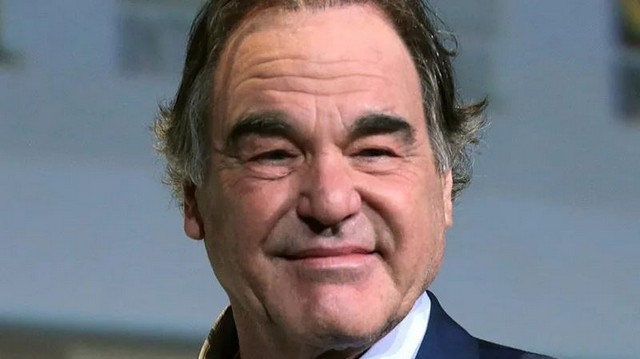
Oliver Stone: American Exceptionalism Is on Deadly Display in Ukraine

By Robert Scheer

The creator of the Showtime documentary series “The Putin Diaries” speaks to Robert Scheer about the escalating crisis in Ukraine.

11 Feb 2022 – “The crisis over Ukraine grows simultaneously more dangerous and more absurd,” Katrina vanden Heuvel recently wrote in The Nation. Rather than help de-escalate the growing conflict between Ukraine and Russia over the Donbas region, it seems like the Biden administration and U.S. corporate media have been beating the war drums. The result of any war, needless to say, would be catastrophic for all involved and would have pernicious repercussions the world over.U.S. reports, according to “Scheer Intelligence” host Robert Scheer, have failed thus far to understand the perspective of Russia and its leader Vladimir Putin, and do so to the detriment of everything and everyone at stake. Film director Oliver Stone, however, offers a unique insight into the crisis given his experience interviewing the Russian leader a dozen times over two years for Stone’s Showtime series “The Putin Diaries.” The Oscar winner and Vietnam War veteran joins Scheer on this week’s show to discuss the critical nuances Americans are missing in Ukraine.

“No one really knows what’s going on in the actual sense of being in Russia’s mind,” Stone tells Scheer, “but I do think, from the beginning, this has been a defensive maneuver from the Russian side. The United States and its allies in NATO have been provoking Russia [and] have been using Ukraine as bait, as a temperature-taker of that region [since 2014]. Now we’ve reached this place where they have threatened the Russians so much that they had to react, because I don’t think Putin could have stayed in office if he had not reacted.”

Scheer argues that one of the most toxic elements at play in this international brinkmanship is nationalism, a force he warns against, especially in the form of American exceptionalism that views and pursues the country’s interests as “global interests.” Oliver and Scheer also examine a recent joint statement from Russia and China that they believe marks a paradigm shift in global politics. Listen to the full conversation between Oliver and Scheer as they thoughtfully discuss how U.S. nationalism requires crises like the one brewing in Ukraine to sustain its national narratives.

**

RS: Hi, this is Robert Scheer with another edition of Scheer Intelligence, where the intelligence comes from my guests. In this case, Oliver Stone. And I’m going to say, on the subject I want to talk about—Vladimir Putin, Russia, and what’s going on with the Ukraine, what’s going on with the world—I’m going to say it right here, I think Oliver Stone has a viewpoint about Putin, knows about Putin in a way, I don’t know if there’s anybody else I could be calling right now.

He did the Putin interviews for Showtime; I thought it was an incredible documentary. The New York Times, which, you know, got a very angry Russian émigré to attack it, Masha Gessen—but I have looked at this thing over and over, and I think it’s an incredible insight into another government leader that we have to do business with. And Oliver did a dozen interviews over a two-year period with Putin; I found it a candid look, and I just want to praise it as a work of journalism, which obviously the New York Times didn’t do.

But whether we like Putin or hate Putin, we’ve got to figure out what he’s doing now. And with the recent declaration between Xi, the Chinese leader, and this Russian leader, that they have a common view of the Western alliance being, really, basically another way of describing U.S. hegemony, using NATO to really push people around. And that they have now an agreement to withstand it, means you just can’t easily say you’re going to just cut people off economically and so forth. That represents a pretty powerful coalition.

So let me just begin with that. You know, what the hell is going on? You’re a guy who fought communism in Vietnam, you got the Bronze Star, Purple Heart, everything else. We would have thought this many years later we still wouldn’t be screwing around with some kind of Cold War scenario, but we are.

OS: Yeah. Well, Bob, I thank you for your comments, very nice of you. You actually are one of the few people in the United States who looked at the Putin interviews, and looked at it, as opposed to criticized it without seeing it, which is what often happened. So I’ve known you a long time, and I think you and I pretty much agree on the United States’ position in the world, and what’s going on.

So I’m going to take it from there, and just tell you what I think is going on right now. No one really knows what’s going on in the actual sense of being in Russia’s mind, but I do think, from the beginning, this has been a defensive maneuver from the Russian side. The United States and its allies in NATO have been provoking Russia for, since two years now—actually three years over the Ukraine; more. I mean, they started this in 2014.

But they have been using Ukraine as bait, as a temperature-taker of that region. And now we’ve reached this place where they have threatened the Russians so much that they had to react, because I don’t think Putin could have stayed in office if he had not reacted. So this is a game that’s somewhat like the Cuban Missile Crisis of 1962; Russia is concerned, very tense; and the United States and its allies don’t seem to be listening to its concerns, don’t seem to care about its concerns about NATO, and specifically Ukraine.

But it’s not just Ukraine. It’s also the Baltic; it’s the constant war exercises in the Baltic region, it’s the pressure from Europe, it’s the United States—in the air, we send our bombers close to the border [unclear]. So we’re constantly provoking them, going into their territory. If we can think of it as Canada and the United States—if Canada were doing that, and sending warnings to us like this, we would be freaking out. I would think Canada is somewhat like—Ukraine is to the Russians like Canada is to the United States. In other words—yeah, go ahead.

RS: Well, let me just push this a little bit, because I say it in the intro. You actually talked to Putin. And, you know, this guy has been demonized. Because, you know, if you go back to Orwell, Nineteen Eighty-Four, his great fear that he discussed was the need of the new empire—whatever it was, and America fits the bill now, with its 800 bases—to constantly have an enemy.

And the whole contradiction with Russia—at least with China, which we get along with a lot better than we do with Russia, because we need them. China took us through the pandemic; China made Jeff Bezos the richest man in the world because most of the goods that we’re consuming to get through are from China. So whether they’re communist or not communist, they’re very good capitalists, and we need China. And China has 1.4 billion people; Russia has 140 million people, it’s got a military, it’s got a big land mass.

But the big contradiction, whereas at least the Chinese still have a communist party in power, Vladimir Putin was picked by the United States; he was picked by Yeltsin, who was the guy that the United States liked more than Gorbachev. And Putin was brought into power, basically, because Yeltsin was a hopeless drunk, and Putin at least represented sobriety and some kind of conservative, Russian Orthodox nationalism. Clearly he had broken with any communist past.

So the inconvenience here is we are demonizing a guy who got elected by defeating the remnants of the old Russian communist system. And yet it doesn’t matter; logic doesn’t matter, facts don’t matter. We need an enemy. That’s the way I see it. And Putin is the enemy. So tell us about this enemy, because he’s clearly not a communist ideologue; he clearly doesn’t quote Marx extensively, and he’s actually a conservative, what, at best a Peter the Great, czar-type figure.

And you’ve met him; I mean, it’s no small thing. It’s very interesting to dismiss someone of your worldwide experience—you’ve interviewed a lot of people, you’ve seen war, you’ve seen the world; and yet somehow your two years of trying to figure out Putin, and your dozen interviews, which I think is a real important reservoir of information, gets ignored. And all these people in journalism and everywhere, they’re talking about Putin, Putin, Putin, as if he’s Stalin or something.

OS: I know. I know.

RS: It’s nutty! It’s nutty, is what it is.

OS: And it’s scary. Last week I was looking at the American news, and I could not believe how bloodthirsty the journalists were. CNN and Fox both were demanding, almost demanding our leaders to take on, to get tough with the Russians, because we have taken enough [unclear] from them. As if Putin had pushed all our buttons; as if he was the aggressive one. I saw young women with no experience [unclear] in their thirties, talking about the need to really go after Russia. And then they would cut to some general in civilian clothes, or some guy from a think tank who was going to tell them what they want to hear.

I didn’t see one person on television who was talking for peace, talking to understand Russia; I really didn’t. And it’s very, as you say, these people like Masha Gessen, who is to the right on most things Russia, are telling us what the Russian point of view is, but it’s just not true. The Russian point of view has always been consistent, and Mr. Putin has always been consistent in what he says. And he says, basically, the argument is, OK—well, first of all, I wouldn’t say that he got in to power because of us. I do think that Yeltsin, who was not as drunk and hopeless as you think—but I do think Yeltsin chose him. But the United States came down on Putin after his speech in Munich in 2007, when he said there has to be a line, and—

RS: Yeah, but that was seven years after he got elected with our blessing, and he defeated the communist party candidate. He was the anti-communist when he got elected.

OS: Absolutely, and he has no fondness for the old empire, as many of these Russia thinkers say. It’s nonsense; he has no desire to return to that; he is looking for security. Security is the mother word here. He’s a son of Russia. The Russian people demand security; they do not want to be all the time threatened by a Western power that is telling them you have to do this and you have to do that.

But NATO is also a huge threat, because we’ve seen NATO expand since 1989 by 13 countries. And now there’s talk of course with Ukraine joining NATO and all that stuff. But the truth is, NATO is seen by the Russian people as an enemy. They bombed Yugoslavia in the 1990s, if you remember; they attacked Libya. NATO has turned from a defensive organization into a very aggressive organization. They were in Iraq; we’ve seen their activities in Afghanistan. NATO continues to be an arm of the United States to bring offensive operations.

And this is—it’s not working, and what Putin is saying in general is: lay off; back away. You cannot run war exercises all the time on our borders; you cannot talk this language of calling us the aggressor. And that’s what’s very interesting to me, is the United States media always say—every day I see it in the newspaper or this or that—the Russian invasion, the coming Russian invasion of Ukraine.

Now, this is outrageous, because first of all, they have no proof that Russia intends to invade Ukraine; I doubt that they would. I think Russia is concerned only with the Donbass region. The Donbass region being the eastern sector where the Russian-speaking people are threatened by the Ukrainian government. Why? Because, we saw back in 2014, they were killing them. There was quite a bit of murder going on, and the Ukrainian government did not want to recognize the historic autonomy of the eastern Ukraine, of the people who speak Russian. In fact, Russian language was banned in Ukraine, if you remember correctly.

And there’s been a general strong, almost nationalistic attack on Russia from those years. And we know about the old Nazis, the Nazis from World War II, their inheritors are in Ukraine; there’s quite a few fascist people there who are working and putting pressure on the government to attack Donbass. You saw what happened, if you remember correctly, in Odessa, when the Russian-speaking natives were surrounded in a building and the Ukrainian nationalists burned them alive. That was a horrible moment, and what was it, 20 or 30 dead. And it was shocking to the world, and gave us the intention, showed us the intention of the Ukrainian government.

RS: Well, the real issue here—and it’s interesting. I want to talk about one of my favorite Oliver Stone movies, which doesn’t get the respect—I mean, you’ve won all these Academy Awards, I mean, three I think, and all sorts of honors. But I liked your movie on Alexander. And what I liked about it, and what I like about the whole question of Alexander, really goes to the central tension in human history: what is the role of partisanship, of patriotism, of nationalism?

And something has happened. It was interesting, in the dispute—you know, Aristotle, of course you know, was Alexander’s teacher, and then advisor. And Aristotle betrayed, in really the pursuit of ethics, when he advised Alexander to be an imperialist, really. And in regard to the Persians, he said, you know, treat the Greeks, all of the Greek cities and so forth, as your family, as your friends. But treat the non-Greeks—that was the Persians then, basically—as beasts and vegetables, and they have no rights.

And Alexander, because he was out there the way Oliver Stone was out there, but you were a grunt and he was leading it, and you were in Vietnam and you saw the humanity of the Vietnamese; my understanding is Alexander said, hey, these are people; they’ve got brains; maybe they could cooperate with us and so forth. It was an interesting moment.

The U.S. is kind of in that position. We as a culture only accept our own legitimacy, our own nationalism, but we don’t call it nationalism; we call it internationalism. And anybody else in the world who has nationalist concerns—beginning with the Chinese and Russians, but it extends to anyone else—their nationalism is always threatening, is always illegitimate.

And to my mind, that’s the issue here. Not to—I don’t want to tear down Ukrainian nationalism, and I don’t want to overly boost Russian nationalism. But you have, as you point out, in Ukraine you have people there who think that they are identifying with Russia. And you have to worry about what happens to them, and you have a clash of nationalisms. And the basic U.S. position is that we are not nationalists; everything we believe in is universal. It’s the definition of freedom and the good life.

And anybody who disagrees—and that’s really what that Chinese-Russian statement was all about. These two countries—which by the way are closer now than they were under communism. There was a Sino-Soviet dispute when they were both ostensibly communist, but in their declaration last week of their common concern about the Western, NATO-led alliance, they’re saying that this hegemonic power of the United States, using NATO, is an enormous threat. And I think that’s something people don’t want to address. They think, oh no, we’re just pursuing human rights, which is nonsense.

OS: Yeah, absolutely. One thing that comes through in the interviews with Mr. Putin was he constantly refers to sovereignty—the sovereignty of Russia, the sovereignty of any country. It’s very important to the Russian nation. They have interests, they have national interests; everyone is allowed to have their national interests. We have never recognized their interests. On the contrary, we’ve done our best to spoil their interests, with our sanctions and our encouragement of the coup, and our financing of the coup in Ukraine.

We’ve tried to do the same thing in Georgia, and they fought a small war against the Georgians. And we’ve tried to do it repeatedly, possibly even in Kazakhstan recently. The United States is always looking to cause tension. That is the key: tension, call it a revolution, any of these things; raise the temperature and make it possible for a coup or a regime change, which is the objective of people like Victoria Nuland, who’s an undersecretary in the department of state.

So I think that, you know—we don’t recognize it, and we go and we play dirty games, very dirty games, to get what we want—which is, we want regime change in Russia. We’ve been referring to Putin as if he is Russia. If you look at all the news stories, they don’t even bother to say “Russia”; they say “Putin,” as if he is Russia, but that’s not quite the case. He has tensions from within, too. He has much pressure. There are factions in Russia. I know about that, and I think people underestimate the degree of difficulty in ruling a country as big as Russia.

If Putin does not act in certain ways, they will take him down. People will not abide by it if the Russians are embarrassed in Donbass. They will not. And I think America doesn’t understand that. They think that Putin makes up all these decisions himself, he sits there and he’s like a king, a monarch. But he’s not. He works with people. He has pressures. We have to understand that.

RS: Well, I think it really goes back to a basic arrogance which you as a young person had to confront. I mean, after all, you volunteered for combat in Vietnam; you’d been a schoolteacher there after you left Yale, and then before you went back, and then you left again. But the story of your life is really going between a notion of American innocence and virtue, and then being a soldier out there and seeing the killing of innocent people elsewhere. What Martin Luther King—here we are in Black History Month; we just celebrated Martin Luther King’s birthday. And most people, and certainly young people—you never hear it mentioned that Martin Luther King condemned the United States, at the time of his death and before that, as the major purveyor of violence in the world today. The major purveyor of violence in the world today, his government, the United States.

Now, what we had with Gorbachev—the reason I say we liked Putin, because Putin was not with Gorbachev, he was with Yeltsin; and Gorbachev was the naïve one, and Reagan promised Gorbachev that NATO would not expand. The whole reason of NATO was supposed to be a Cold War organization. Gorbachev thought he was ending the Cold War; he was very proud of this. And Reagan seemed to accept that. And instead, this Cold War organization of NATO has grown; it’s unwieldy, because it includes Turkey, it includes all kinds of countries that you suddenly find you’re not in agreement with, and a couple of them are closer to Russia in this respect. And you know, it’s hard to organize—it’s like organizing cats or something.

But the fact of the matter is, NATO was no longer supposed to be this vital organizing—what happened to the UN? In the joint Russia-Chinese statement, even though the Chinese had bad experience with the UN in the Korean War, they fought Korean troops and so forth—nonetheless, in that joint statement that Putin and Xi signed, they say: What happened to the UN? What is this NATO thing? What is this Western military alliance that is coming to our door? I think that’s the big issue of our time. And unfortunately, it’s only older people seem to have any memory of what the Cold War was supposed to be about, and what is it doing now.

OS: [Laughs] You’re very funny, Bob. That’s great, you have a lot of passion. I think NATO, as you say, has taken the place of the UN in many people’s minds. But it shouldn’t, because it’s an alliance with people from the West who seem to have one interest, one blinkered interest in taking over and changing things. In Libya, as I said earlier; in Iraq; in Afghanistan. They are interfering everywhere in the world, and Russia and China both recognize that and are worried about it.

And it’s a destabilization that we keep putting out into the world. It’s what I call a strategy of tension. The concept, for example, of saying in our immediate, day by day—since October it’s been a crescendo of imminent invasion of Ukraine by the Russians. Russian invasion, invasion—the word “invasion.” This is not an accurate word. Russia was not interested in invading Ukraine at all. What they are interested in doing is protecting the people of Donbass. That’s where this thing comes.

When the Crimean situation—if you look at the film I worked on, Ukraine on Fire, it’s very interesting; you see the people of Crimea at the hottest moment of the crisis. And you know what was happening? The nationalists, the Nazi groups, were coming into Crimea in order to cause trouble. And they saw them coming and they cut them off at the roads. We show it, how acute, how perceptive the Crimeans were. They knew who the enemy was. They stopped them from coming into Crimea.

And you know what the Ukrainian army that was stationed in Crimea did? The United States never tells you this in the press. They stayed in their barracks; they stayed in their barracks in Crimea. There was no violence at all. Not one person was killed. There was no gunfire. Crimea went into the referendum at peace. And the referendum, as you know, to rejoin Russia, carried by a huge amount, by ninety-some, ninety-seven, eight percent.

So why was there no violence? If it was an unhappy situation, and these people truly wanted to join the Ukraine, why was there no violence? That is a very interesting point, and people don’t recognize. Same thing is true about Donbass. People don’t recognize the murders that happened in Donbass, the artillery and the shelling, and the Ukrainian army moving in.

The whole situation last year—the only reason the Russian invasion has been hyped by the Western press is because the Ukrainian army upped its troop numbers and its armaments on the border of Donbass. So it looked like they were about to make a move on Donbass. They were getting javelin missiles from the United States, they were getting other weapons, and they were adding soldiers. They were trained by American advisors who are there, American—all kinds of specialists are in the country. Green Berets, Special Forces—it’s an operation. The United States has put more, has put a heavy amount of investment of our energy and time into destabilizing Donbass.

And that was supposed to be the move, I think, and I think it’s still a possibility. There was supposed to be a move in the winter, this winter, into Donbass. If they had done that, think about it, that would have been—that’s why the Russian troops were brought—actually the Russian troops were not brought to the border; that’s another lie. The Russian troops were where they were, in their barracks. Close to the border, but not on the border.

So when—follow my thinking here—when William Burns, the CIA chief, goes to Europe in October, he takes with him these satellite photographs, which he shows to the Europeans in the belief that they would follow us in our plan. The satellite photos were completely false. Again, they transposed the satellite photos to look as if they were on the border of Ukraine. And that was the aggression charge, that the Russian troops were about to invade—which was just simply not true; they were in their barracks. They were in their bases in Russia at that point. So you have this buildup of a fake invasion, a false flag invasion, and yet you keep hearing that; that’s what concerns me.

So think about it. If the Ukrainians go in—oh, that’s another thing they said. They said the Russians are planning a false flag operation in Ukraine to show that the Ukrainians are moving into Donbass. To show all the destruction. And that will be the reason for the Russian, quote, invasion. OK—so this is all staged. This is all staged, like an action, frankly, in Syria. We did this several times in Syria to blame the Russians for using poison gas. Same thing is true in Ukraine. They were looking—the reason the United States put that information out there that the Russians were creating a false flag and were going to invade, was because we were going to do it. We were going to support the nationalists to go into Donbass to attack the separatists. And if that had been the case, then Russia would have reacted.

But we were preparing the world to condemn Russia for that. We were preparing the world through our propaganda, which was extensive and worldwide, that Russia was the bad guy for having come in, tried to defend the Donbass people. It was a very disgusting but typical CIA operation. Typical of them, to put—in other words, they did the same thing numerous times now; they keep doing it. It’s annoying, because people don’t see the pattern. They did it with Julian Assange. They’re doing it with—they create this flags that they are doing, and they say, “he did it.” Do you understand what I’m saying?

RS: Oh, I understand it all too well. And I do want to bring up another, a book that you wrote—I forget your coauthor, but he was a well-known historian on the history of the Cold War. Help me here. Hello?

OS: Peter Kuznick.

RS: Yeah. And what is so interesting—I mean, look, you know, we’re older guys; I’m older than you. But the fact of the matter is, the notion of American innocence and exceptionalism has reasserted itself. And once again with the Democrats—they’re much better at this than the Republicans. The Republicans seem out for markets and business and so forth; the Democrats always have this fake idealism. And what you documented in that book was a history of false flag operations on both sides.

I want to reiterate this: I had hoped at this point in our history that nationalism would have receded; that people would not be dying over nationalism. And nationalism is always betrayed, until some big emperor comes up, and then they say, we’re not nationalists, we’re a civilization. But I mean, the Kurds didn’t get anything from U.S. manipulation of the Kurds in Iraq and Syria; they’re not getting a state. And nationalism was played within the old Yugoslavia, and where is the benefit there? Where is the benefit in Iraq?

So in the name of nationalism, whether we—now we claim we care about the Ukrainians. Do we really? Does the U.S. really care about—you know, it’s interesting. The only reason I’m in the United States, [Laughs] or at least part of me, is my mother was a refugee from the Russian revolution. She left after the revolution; she was a Lithuanian. And you know what? She trusted the Russian communists, more than she did the Lithuanian nationalists or the Ukrainian nationalists, to care about the Jews. Because they certainly didn’t care about the Jews before, and a very significant number of concentration camp guards and everything were drawn from the anti-Soviet nationalists in the Ukraine and Estonia, Latvia and so forth.

And so nationalism is always played; you’ll always find virtue on different sides. And I’m not here to celebrate Putin or Xi’s Chinese nationalism or anything else. I thought nationalism would decline. But as I see it, the main force in the world’s nationalist preoccupation is the United States. They are the ones saying, you know, we are not nationalists; we represent civilization, democracy, and freedom. But we’re going to back—you know, we’re going to back the Shiites against the Sunnis, because we think they’ll be better. Well, they weren’t better, and they also happened to be close to Iran. Or we’re going to back this faction against that faction. And nothing has—

OS: ISIS, too.

RS: Yeah, and nothing has to do with really giving voice to people. Giving voice to their concerns. They are just pawns. And I think, you know, we should really talk about the Democrats a little bit, because we drank from this Kool-Aid that somehow if we could just get these enlightened Democrats back in, we’d be in better shape. Well, the enlightened Democrats gave us the Vietnam War that you, Oliver Stone, got a Purple Heart and a Bronze Star for, you know. And saw what folly that war was; that was a Democrat war. And then they went out with the FBI and J. Edgar Hoover, with the support of Lyndon Johnson, to get Martin Luther King to kill himself because he dared oppose that war, and said it was wrong. You know, so he was going to be expendable. As long as we’re in Black History Month, let’s bring that up.

But the fact of the matter is, there’s been no accountability. And the people who claim they are wise and believe in peace and democracy—no. They’re quite cynical. And to take somebody like Victoria Nuland, who was involved in the machinations that overthrew a Ukrainian leader who happened to get along with Russia—that was his crime. You know, he had other crimes and what have you—that wasn’t why he was overthrown. And the whole meddling, and the assumption that somehow you are on the side of virtue because you are the United States—you’ve lived your whole life with that, Oliver. You carried a gun for that, that hypocrisy.

OS: I know. I know, and listen, the behavior of the United States in all these instances that you mentioned has been reprehensible. And it’s hard for me to say it, but it’s our country, Bob. And we continue to question it for these reasons, and it seems that we keep going in this direction. We’re really blundering, blundering into a possible disaster, I’m talking about World War I-level, where because of our naivety—you know, they always say god protects puppies and innocent people and the United States of America. But, just, we’re blundering in a bad way.

RS: We’re not naïve. What are you talking about? The people may be caught up in what Huxley, the other dystopian writer, you know, in consumerism and they don’t give a damn about the world, and they don’t understand it very well. But our leaders are not naïve, they’re cynical. They’re deeply cynical. They know there was no Russiagate, and they know this is all machinations and everything. And they’re not interested, I don’t think for a second—I mean, Biden supported every irrational war. I don’t think for a second he has a greater compassion about the needs of people around the world than Republican hawks. I mean, what, the neocons, they started out as Democrats, then they became Republicans, then they became Democrats again. And they’re the same people in the State Department, and what they like is mischief. They think it’s virtuous. And it has to do with their careers, it has to do with power. I know it’s not naïve; they know darn well they’re not building a democracy there. And by the way, if you want peace and you want democracy, you’ve got to go against nationalism. You’ve got to contain it. And that’s true for Putin as well. If Putin keeps stoking nationalist feelings, that’s going to destroy Russia. And I must say, I thought this joint statement of the Chinese and the Russians was a game-changer. Because what they really said is, if we keep going down, the world goes down that road of nationalist division and stoking them and inventing them, you’re going to have disaster. And that’s what we’re talking about now, we’re talking about making not only Russia but China an enemy. You know, when the fact is the Chinese and the Russians would like to—because they’re conservative, basically, the Putin leadership—they want to follow the Chinese model. They want to produce stuff, they want to be in this market global economy, right? And that’s a vision based in trade, based on producing things, that one would hope would represent progress. Instead, we’re back in the darkest days of the Cold War because there’s a military-industrial complex, there are careerists, and they want war. They live off war.

OS: I can guarantee you that Mr. Putin is not at all interested in nationalism. He doesn’t see nationalism the way you’re seeing it. He sees national interests for Russia. And those interests are in the sphere of that area around Russia, which is [unclear] violated constantly by air exercises and land exercises, gigantic operations in the north and in the Black Sea, of Western allies, to warn Russia not to invade. The word “invasion”—it’s unbelievable, in my lifetime I remember Vietnam and I remember the New York Times writing about how dangerous Vietnam was because of the communists. But I’ve never seen the word “invasion” every day in the New York Times. Russian aggression, invasion—they did it like an Orwellian propaganda word, and they use it over and over, so that if there comes to be a fight, you will automatically register “Russian invasion.” That will be the first reaction, rather than “Ukrainian invasion of Donbass.” It’s a very sick game, and [unclear] It’s called the great game. It’s what these people do for a living; they play the great game. They raise the strategic tension wherever they can, the pot boils, and they take advantage of it.

RS: Well, I agree with that. The point I was trying to make about nationalism is that this will always be a force in the world. People find reasons to celebrate their own interests, their own culture, and attack others. The point of wisdom is to try to see past that, and to try to find common interests. And I do want to say—I want to end this by talking about your Putin interviews, because I hope anyone listening to this will watch that Showtime, four-part series, or will get the book based on it. And full disclosure, by the way—I wrote and introduction to your book, you might not remember I did. But I want to say, how—if we are thinking about war here, and what does this guy Putin want, and people ask me that all the time—you would at least have the obligation to take this work that you did, where you engaged this guy. And it’s absolute bull to say you don’t ask tough questions; that’s a lot of crap, you know. These were very good interviews. And to put somebody, this Masha Gessen who now writes for the New Yorker and is in the Ukraine kind of stoking this whole thing—for the New York Times to really, dare I say it, just pee on your work—it was just awful. And not, by the way, telling; there was no great revelation there. But the idea that we don’t have to—like reading this declaration. Any serious person should read the Chinese-Russia declaration. You may disagree with all of it, but you’ve got to read it. Five thousand words. What are they talking about? How did these two very different countries—which by the way had racial tensions historically, didn’t get along even in the heyday of communism, were shooting at each other. I happened to go from Russia to China, I was there during the Cultural Revolution, I know how they were at their border and everything else, I was in Vietnam as well. So somehow or other, they’re alarmed about us. They’re alarmed about American hegemony. And you know, one is a communist country—China, still; one is an anti-communist country, Russia, I don’t think there’s any question; Putin does not want a return to any kind of communist state of any sort. And yet this is a cry for reason, this statement saying, what are you guys doing? What is this Western alliance? Do you still think you can control the world and not pay attention to what we’re concerned about? And it’s not going to work, for that reason. You can’t blackmail them now.

OS: Yeah, thank god. But you know, objectively speaking, the United States—think about it, it’s just more secure from external danger than at any time since before World War I. We don’t have any enemies capable or desirable of using military force against us, our territory [unclear]. You know, China is not Japan, and Russia is not Germany in those years.

RS: Yeah, but Russia still has a very formidable nuclear force. And one of the things—remember, I wrote a book called With Enough Shovels about Reagan’s, the delusion during the Reagan administration about winning a nuclear war. And our indifference to something Putin talks a lot about in your interviews: the need for arms control, the need for stability. That concerns the Chinese as well. And all this Victoria Nuland stuff, and all this, you know, let’s bait ‘em, let’s bait ‘em, let’s stick our finger in the eye of the Russian bear—all that ignores the element of irrationality.

You brought up the missile crisis, and what John Kennedy learned was hey, it could all go kaput in a matter of minutes. And that’s the world we’re playing with now. And that’s why I bring up other people’s nationalism, and the pressure from their community. Don’t forget, it was Khrushchev, who was a Ukrainian, that gave Crimea supposedly to the Ukrainian state, which was like, you know, taking something from New Jersey and giving it to New York. They’re supposed to be part of the same country. It was Stalin who was a Georgian, right, who thought Georgia should be incorporated into greater Russia.

You know, so we just—look, I was in the Ukraine because a year after Chernobyl I was at the plant and I could not for the life of me tell who was Russian and who was Ukrainian. You know, and they had joint responsibility for creating and for mishandling this mess, OK? And it wasn’t like, oh, they’re the good guys over there, they’re actually more born in Kiev and not near the Russian—it was all garbage. They were all talking Russian, they all had the same power structure that they were part of. And so yes, it is largely an invention.

But what I’m saying is—again, let this be a positive part of this interview, and I want to end by talking about Alexander. Because I think it’s one of your great works, and it applies here. Because Alexander was the idea that maybe there could be a good emperor. But there can’t be. It’s a contradiction in terms. You can be enlightened with the best of Greek philosophy; you can have the best intentions; you can have the widest-open eyes. But at the end of the day, whether you’re the Roman emperor, whether you’re Alexander, or whether you’re the U.S. hegemony over the world, your stated intentions have nothing to do with your capacity to contain evil. It’s just the opposite. And that was the message from Orwell, invoking about the use of the enemy, and we ought to take it seriously.

OS: I agree. I think that’s very well said, Bob.

RS: All right. Well, thanks for doing this, Oliver. And again, can they still see the Showtime interview on Putin? Is it still up there?

OS: You can go to Amazon, you know, just regular Amazon, and you can rent it there. I’m sure you can rent it on iTunes and all the other platforms. It’s on Showtime also, but some people don’t have Showtime. Definitely widely available.

RS: All right. The Putin Interviews, and it’s a dozen interviews done over a two-year period. And I defy anybody to watch that. I watched it very carefully before I wrote an intro to the print version of this, you know; very carefully. I think I watched it six or seven times before I wrote a word there. I think it’s a marvelous piece of journalism. I really do. I think it’s a very important insight into a guy who, whether you like it or not, has power, has to be dealt with, has to be dealt with seriously. It doesn’t mean you cave or you give in or nothing matters. But the fact of the matter is, you won’t be able to just dismiss Putin in some simplistic terms if you watch this movie openly.

So let’s leave it at that. That’s it for this edition of Scheer Intelligence. Christopher Ho posts these at KCRW. Joshua Scheer is our executive producer. Natasha Hakimi Zapata writes the introduction. Lucy Berbeo does the transcription. See you next week with another edition of Scheer Intelligence.

Oliver Stone – Academy Award-winning director, screenwriter and producer.

Robert Scheer is the editor-in-chief of ScheerPost.com. He has built a reputation for strong social and political writing over his nearly 60 years as a journalist.

14 February 2022

Source: www.transcend.org

The Geo-Political Battle in Asia About Democracy

By Kalinga Seneviratne

SYDNEY (IDN) — With the geo-political battle between China and the United States gathering momentum in Asia, whoever can define democracy better and demonstrate that it works for the betterment of the people, could win the battle in coming years.

One may argue that there is no such battle for democracy because it is a battle between democracy and authoritarianism with China clearly in the latter box. But, while the Covid pandemic has been devastating the world, China has moved aggressively to redefine democracy as a development right accusing the West, and the US, of weaponizing human rights and democracy.

They won a small victory at the UN Human Rights Council (UNHRC) in July last year when a resolution on the role of development in promoting and protecting human rights for the wellbeing of the “entire population” was adopted by 31 votes to 14 with even India voting for it along with other Asian countries such as Indonesia, Philippines, Bangladesh and Nepal. Voting against it were mainly European nations plus South Korea and Japan.

The resolution called upon the UNHRC to organize a regional seminar before the 2023 sessions to define the role of development in promoting human rights. It is in this process a new definition of democracy could be born and the Asian media need to pay attention to it because the western media would ignore it.

In a speech to the Canberra Press Club in August 2020, China’s deputy ambassador to Australia Wang Xining said, “the overarching mandate of the government, and the Communist Party of China, is to meet the ever-growing needs of our people for a better life and promote comprehensive human development and common prosperity, by eradicating poverty, upgrading productivity, optimizing the allocation and improving livelihood”. He described this as “building socialist democracy”.

Later responding to a question by an Australian journalist he said that it is the wrong attitude to say, “mine (western) is democracy and yours is not”. He argued that it is a narrow interpretation and an empty political slogan. “I think democracy is not the end, it is the means (of socio-economic development)” noted Wang.

In the opening speech to his own Democracy Summit in December 2021, US President Joe Biden acknowledged that people all over the world are dissatisfied with democratic governments because they feel these are failing to deliver their needs. “In my view, this is the defining challenge of our time,” he said. At the same time, he warned that autocratic governments “justify their repressive policies and practices as a more efficient way to address today’s challenges”.

Referring to rare bipartisan legislation he has just signed, The Infrastructure Investment and Jobs Act, Biden said: “This legislation will make a generational Investment to deliver what people need most in the 21st century: clean water, safe roads, high-speed broadband Internet —all of which strengthen our democracy by creating good-paying union jobs”. He also added that soon he hopes to sign the “Build Back Better” plan, “which will be an extraordinary investment in our people and our workers”.

Interestingly, Biden’s definition of democracy seems on the same wavelength as that of China’s development rights-focused socialist democracy.

Addressing the same summit, Indian Prime Minister Narendra Modi tried to distance India from the western origins of democracy by noting that India’s democratic tradition is over 2500 years old. Pointing out to the 10th-century “Uttaramerur” inscription that codified the principles of democratic participation, he said, “this very democratic spirit and ethos had made ancient India one of the most prosperous. Centuries of the colonial rule could not suppress the democratic spirit of the Indian people”.

In his surprisingly short speech, he offered India’s expertise in holding free and fair elections, and warned that nations need to “jointly shape global norms for emerging technologies like social media and crypto-currencies, so that they are used to empower democracy, not to undermine it”.

Modi’s Bharatiya Janata Party (BJP) led government recently enacted new Internet control laws that target social media companies, digital news services and curated video streaming sites. R. Jagannathan, editor of pro-BJP Swarajya magazine while acknowledging that internet-based social media has given a voice to the voiceless in society, argues that tech platforms like Facebook, Google and Twitter “are now brazen enough to censor those they disagree with”. Thus, these platforms that “practice cancel culture with a vengeance” need to be regulated and “held accountable for what they do or do not”.

Non-governmental organizations (NGOs) funded by western agencies and used as a weapon for human rights and democracy campaigns in Asia have come under the scrutiny of many Asian governments. They use young people, and these campaigns often spill over to the streets and create social chaos such as seen recently in the anti-monarchist demonstrations in Thailand and the democracy protests in Hong Kong. In both countries the government moved to enact authoritarian laws.

In early January, the Thai government led by former military leader Prayut-Chan-o-cha, flagged legislation to control NGO funding in the country. The NGOs Operations Act is expected to be passed by parliament soon that would require NGOs to submit their activity plans for government’s approval in advance to ensure that “public order” and “good morals” are not affected. The Thais treasure their monarchy as providing social stability to the country by protecting its Buddhist and national identity.

In Hong Kong, protests that started in June 2019 against a proposed extradition treaty spiralled into violent demonstrations over months with involvement of foreigners in many spheres of the movement that alarmed the Xi Jinping government in Beijing. China accused protest leaders of meeting with US politicians in Washington, and the Chinese media compared the uprising to the ‘Arab Spring’ protests a decade ago that brought social and political chaos to the Middle East.

Thus, China moved quickly to crack down on the protesters with legal means, enact “national security” legislation and hold elections last year which they dubbed as “patriots only” elections. Hong Kong authorities insisted that the security law imposed in 2020, was needed to ensure stability after the protracted protests that rocked the Asian financial hub in 2019.

In 2021, the Modi government called Twitter’s policies in India of censoring right-wing content as attempts to “dictate terms to the world’s largest democracy” and in his Democracy Summit speech he did not pitch India as a liberal democratic alternative to China. This would leave the question open whether Asian nations could see the common ground when it comes to development rights.

While the West tries to paint it as a “debt trap”, China’s Belt and Road Initiative (BRI) is increasingly seen across the region as providing opportunities to expand trade and development. On the other hand, the western alternative in the form of Quadrilateral Security Dialogue (QUAD) is seen as what the name suggests—a military alliance that could trigger conflicts rather than development cooperation.

Earlier in January, during a visit to Colombo, when Sri Lanka asked China to help restructure its debts to the country, China’s Foreign Minister Wang Yi proposed a forum on the development of Indian Ocean Island countries to build consensus and synergy, and promote common development, in which Sri Lanka can play an important role. Interestingly, there is an alternative QUAD being developed between Bangladesh, Sri Lanka, Pakistan, and China that would use the Chinese built harbours in the Indian ocean along with the development of industrial zones around it to build a new development architecture for the region.

In a response to the Democracy Summit, China’s foreign ministry in a statement released in the Global Times said the US is trying to “thwart democracy under the pretext of democracy”. It argued that the people need to judge the success of democracy in terms of a country’s development and social progress, and the delivery of a happy life for the people.

By pushing for so-called “democratic reforms” and inciting “colour revolutions”, the statement argues “democracy has become a weapon of mass destruction” to interfere in other countries’ internal affairs.

15 January 2022

Source: www.indepthnews.net

Cuba, Venezuela and Nicaragua: The US-Russia Conflict Enters a New Phase

By Dr Ramzy Baroud

As soon as Moscow received an American response to its security demands in Ukraine, it answered indirectly by announcing greater military integration between it and three South American countries, Nicaragua, Venezuela and Cuba.

Washington’s response, on January 26, to Russia’s demands of withdrawing NATO forces from Eastern Europe and ending talks about a possible Kyiv membership in the US-led alliance, was noncommittal.

For its part, the US spoke of ‘a diplomatic path’, which will address Russian demands through ‘confidence-building measures’. For Russia, such elusive language is clearly a non-starter.

On that same day, Russian Foreign Minister Sergey Lavrov announced, in front of the Duma, Russia’s parliament, that his country “has agreed with the leaders of Cuba, Venezuela, and Nicaragua to develop partnerships in a range of areas, including stepping up military collaboration,” Russia Today reported.

The timing of this agreement was hardly coincidental, of course. The country’s Deputy Foreign Minister Sergey Ryabkov did not hesitate to link the move to the brewing Russia- NATO conflict. Russia’s strategy in South America could potentially be “involving the Russian Navy,” if the US continues to ‘provoke’ Russia. According to Ryabkov, this is Russia’s version of the “American style (of having) several options for its foreign and military policy”.

Now that the Russians are not hiding the motives behind their military engagement in South America, going as far as considering the option of sending troops to the region, Washington is being forced to seriously consider the new variable.

Though US National Security Advisor Jake Sullivan denied that Russian military presence in South America was considered in recent security talks between both countries, he described the agreement between Russia and the three South American countries as unacceptable, vowing that the US would react “decisively” to such a scenario.

The truth is, that scenario has already played out in the past. When, in January 2019, the US increased its pressure on Venezuela’s President Nicolás Maduro to concede power to the US-backed Juan Guaido, a coup seemed imminent. Chaos in the streets of Caracas, and other Venezuelan cities, mass electric outages, lack of basic food and supplies, all seemed part of an orchestrated attempt at subduing Venezuela, which has for years championed a political discourse that is based on independent and well-integrated South American countries.

For weeks, Washington continued to tighten the pressure valves imposing hundreds of sanction orders against Venezuelan entities, state-run companies and individuals. This led to Caracas’ decision to sever diplomatic ties with Washington. Ultimately, Moscow stepped in, sending in March 2019 two military planes full of troops and equipment to prevent any possible attempt at overthrowing Maduro. In the following months, Russian companies poured in to help Venezuela out of its devastating crisis, instigating another US-Russia conflict, where Washington resorted to its favorite weapon, sanctions, this time against Russian oil companies.

The reason that Russia is keen on maintaining a geostrategic presence in South America is due to the fact that a stronger Russian role in that region is coveted by several countries who are desperate to loosen Washington’s grip on their economies and political institutions.

Countries like Cuba, for example, have very little trust in the US. After having some of the decades-long sanctions lifted on Havana during the Obama administration in 2016, new sanctions were imposed during the Trump administration in 2021. That lack of trust in Washington’s political mood swings makes Cuba the perfect ally for Russia. The same logic applies to other South American countries.

It is still too early to speak with certainty about the future of Russia’s military presence in South America. What is clear, though, is the fact that Russia will continue to build on its geostrategic presence in South America, which is also strengthened by the greater economic integration between China and most South American countries. Thanks to the dual US political and economic war on Moscow and Beijing, both countries have fortified their alliance like never before.

What options does this new reality leave Washington with? Not many, especially as Washington has, for years, failed to defeat Maduro in Venezuela or to sway Cuba and others to join the pro-American camp.

Much of the outcome, however, is also dependent on whether Moscow sees itself as part of a protracted geostrategic game in South America. So far, there is little evidence to suggest that Moscow is using South America as a temporary card to be exchanged, when the time comes, for US and NATO concessions in Eastern Europe. Russia is clearly digging its heels, readying itself for the long haul.

For now, Moscow’s message to Washington is that Russia has plenty of options and that it is capable of responding to US pressure with equal or greater pressure. Indeed, if Ukraine is Russia’s redline, then South America – which has fallen under US influence since the Monroe Doctrine of 1823 – is the US’s own hemispheric redline.

As the plot thickens in Eastern Europe, Russia’s move in South America promises to add a new component that would make a win-lose scenario in favor of the US and NATO nearly impossible. An alternative outcome is for the US-led alliance to recognize the momentous changes on the world’s geopolitical map, and to simply learn to live with it.

Ramzy Baroud is a journalist and the Editor of The Palestine Chronicle.

11 February 2022

Source: countercurrents.org