Just International

We Must All Recognize That a War Over Ukraine Is Not the Answer

By Bridget Moix

As Russia threatens to move its forces across the Ukrainian border, the talk in Washington, D.C. is focused on how many weapons and troops the United States can send and how quickly, how to design the most crippling sanctions, and whether to impose them before or after an invasion occurs.

This discussion assumes that Russia can be threatened into submission. Or that threats of war will prevent a war. But disputes don’t end with wars, they end with diplomacy and peacebuilding. Rather than mobilizing resources and efforts to prevent a war, Russia, the United States, and much of Western Europe are rapidly bidding each other into a war.

Most heartbreaking of all, little or no thinking on either side has gone into who will bear the brunt of the suffering and what will be achieved by fighting a war.

As Quakers, we affirm that war is never the answer. War is brutal and bloody, and its grievous consequences stretch on for generations. War represents a calamitous failure of governments to do their most basic job of keeping their people safe. Better and often faster outcomes can be achieved by patient, flexible, good-faith diplomacy. Long-term peace requires building trust and cooperation.

President Vladimir Putin, as you amass more troops and weapons at Ukraine’s borders consider these questions: How many innocent civilians will be killed, injured, made homeless, forced to flee, or left unable to feed their families following an invasion? How much land and water will be poisoned or littered with deadly war detritus? How many debts will those who had no say in this decision be forced to repay and for how many decades?

President Joe Biden and members of Congress, expanding NATO any further would constitute an unnecessary provocation as well as an unwise military obligation. Taking such expansion off the table would address Russia’s primary security concern and reduce the likelihood that U.S. troops will be sent to yet another unwinnable war. Simply by acknowledging this, you could save thousands of lives and billions of dollars.

Russia, the United States, and Ukraine all share one key interest now: preventing a war. To put people first, all sides must do everything in their power to deescalate the situation and return to the bargaining table. Anything less represents a moral failing of the highest magnitude.

Bridget Moix is the fifth General Secretary of the Friends Committee on National Legislation (FCNL).

26 January 2022

Source: countercurrents.org

Big Pharma Conglomerate with a Criminal Record: Pfizer “Takes Over” the EU Vaccine Market. 1.8 Billion Doses

By Prof Michel Chossudovsky

“Hundreds of millions of people have taken an injection that allows a bio-reactive “gene-therapy” molecule to be injected into their bodies because of fear, ignorance, and a refusal to consider that the people who are promoting this … have ulterior motives.” (Edward Curtin, April 2021)

***

Author’s Note and Update

There is evidence that Pfizer is routinely involved in bribing numerous politicians at the highest levels of government.

In turn, draconian governmental measures are being applied which consist in instructing people to take the mRNA vaccine, despite ample evidence that this so-called “vaccination program” has already resulted in countless deaths and injuries, most of which are documented by official statistics.

These shots are NOT vaccines. They are not meant to protect you against the virus.

And why on Earth would you trust a Big Pharma company which has a criminal record? Did you know that?

The media has failed to remind us that in 2009 Pfizer Inc. pleaded guilty to criminal charges. It was “The Largest Health Care Fraud Settlement” in the History of the U.S. Department of Justice.

And now Pfizer is upheld as a “Reliable Partner” by the President of the European Commission (EU) representing some 450 million citizens in the EU’s 27 countries.

The criminality surrounding the 2020-21 mRNA vaccine far surpasses the 2009 “fraudulent marketing” charges directed against Pfizer.

“Fraudulent marketing” of an illegal and experimental “vaccine” is an understatement.

What is at stake is the outright “Criminalization of the state apparatus” whereby politicians, members of parliament, senior government officials are routinely bribed, coopted or threatened to abide by a diabolical project which is literally destroying people’s lives Worldwide.

In recent developments (September 26, 2021

“The European Ombudsman Emily O’Reilly, the EU’s chief accountability and governance officer, has launched an investigation into the European Commission’s refusal to reveal the content of communications between Ursula von der Leyen and the CEO of an unnamed pharmaceutical company.

In April, the New York Times reported that von der Leyen had spent a month exchanging texts and calls with Pfizer CEO Albert Bourla as part of negotiations to procure vaccines for the EU. The newspaper cited “personal diplomacy” as having contributed largely in securing the vaccines.”

Corruption and Fake Science

Say NO to the Covid Vaccine.

Michel Chossudovsky, September 27, 2021

***
Introduction

On April 14, 2021, the President of the European Commission confirmed that Brussels is negotiating a contract with Pfizer for the production of 1.8 billion mRNA vaccine doses.

This astronomical figure represents 23 percent of the World’s population. It is exactly four times the population of the 27 member states of the European Union (448 Million, 2020 data).

This is the largest vaccine project in World history which is accompanied by the imposition of a diabolical “Timeline” on the people of the European Union consisting of recurrent mRNA inoculations over “the next two years and beyond”.

The entire process will be coupled with a relentless fear campaign and the embedded ID vaccine passport, approved by the European Parliament barely a few weeks prior to the EU’s announcement.

The EU Digital Vaccine Passport to be implemented by Pfizer BioNTech is part of the infamous ID2020 project sponsored by Bill Gates’ Global Alliance for Vaccines and Immunization (GAVI) “which uses generalized vaccination as a platform for digital identity“.

If this EU contract with Pfizer extending into 2023 were to be carried out as planned, every single person in the European Union would be vaccinated four times over a two year period (2021-2023).

And bear in mind, at the time of writing, Pfizer’s mRNA (as well as those of its competitors including Astrazeneka, Moderna and J & J) are legally categorized (in the US) as “unapproved” and “experimental products”. They are illegal drugs.

In the US, the FDA in its ambiguous statement provided a so-called Emergency Use Authorization (EUA) to the Pfizer-BioNTech vaccine, namely “to permit the emergency use of the unapproved product, … for active immunization…” (see below)

I have checked this statement with a prominent lawyer. It is blatantly illegal to market an “unapproved product” (irrespective of government permissions pertaining thereto).

A Multi-billion Dollar Bonanza for Pfizer BioNTech

Coinciding with the EU April 14, 2021 historic decision, Pfizer has announced that the price of its vaccine has been hiked up to $23 a dose.

Big Money for Big Pharma. The 1.8 billion doses vaccine project will cost 41 billion dollars, largely to be financed by the creditors of EU member states. The vaccine project will thereby contribute to the spiralling public debt crisis affecting most European countries, which was triggered by the closure of economic activity and the lockdowns in the course of last 13 months.

Meanwhile, Pfizer has extended its global market largely to the detriment of its competitors.

  • A contract to supply the US with up to 600 million doses,
  • Brazil, approximately 100 million,
  • South Africa 20 million doses,
  • Philippines, 40 million,
  • etc.

The Medium Term: 2021-2023 and “Beyond”. No Return to the “New Normal” once Vaccinated

What is envisaged in the EU is a so-called “medium term” plan extending into 2022/23. Does this “medium term” timeline imply a fourth and a fifth wave?

The “medium term” project will be carried out in liaison with the “Great Reset” proposed by the World Economic Forum. It will most probably be accompanied by lockdown and other restrictive measures. No foreseeable return to the “New Normal” is contemplated:

But let me [President of EU Commission Ursula von der Leyen] also focus on the medium term. ... It is clear that to defeat the virus decisively, we will need to be prepared for the following: … we might need booster jabs to reinforce and prolong immunity; … we will need to develop vaccines that are adapted to new variants; and we will need them early and in sufficient quantities. Having this in mind we need to focus on technologies that have proven their worth. mRNA vaccines are a clear case in point.

Based on all this, we are now entering into a negotiation with BioNTech-Pfizer for a third contract. This contract will foresee the delivery of 1.8 billion doses of vaccine over the period of 2021 to 2023. And it will entail that not only the production of the vaccines, but also all essential components, will be based in the EU.

The negotiations we are launching today [April 14, 2021]– and hope to conclude very rapidly – are a further important step in Europe’s response to the pandemic.

I want to thank BioNTech-Pfizer. It has proven to be a reliable partner. It has delivered on its commitments, and it is responsive to our needs. This is to the immediate benefit of EU citizens. ( President of EU Commission)

Reliable Partner? Pfizer’s Criminal Record

There is another dimension, a “can of worms” which the EU does not want to open. The largest vaccine project of an “unapproved drug” is to be implemented by a Big Pharma company which has a longstanding record of bribing medical doctors and public health officials.

Pfizer has been a “habitual offender,” persistently engaging in illegal and corrupt marketing practices, bribing physicians and suppressing adverse trial results. Since 2002 the company and its subsidiaries have been assessed $3 billion in criminal convictions, civil penalties and jury awards. (Dr Robert G. Evans, National Institutes of Medicine)

Moreover, Pfizer has a criminal record in the US, indicted by the US Department of Justice in 2009 for “fraudulent marketing”. 

“Pfizer, the world’s largest drugs company, has been hit with the biggest criminal fine in US history as part of a $2.3bn settlement with federal prosecutors for mispromoting medicines and for paying kickbacks to compliant doctors.”(Guardian)

In a historic US Department of Justice decision in September 2009, Pfizer Inc. pleaded guilty to criminal charges. It was “The Largest Health Care Fraud Settlement” in the History of the U.S. Department of Justice.

To view the C-Span Video Click

How on Earth can you trust a Big Pharma vaccine conglomerate which pleaded guilty to criminal charges by the US Department of Justice (DoJ) including “fraudulent marketing” and “felony violation of the Food, Drug and Cosmetic Act”?

In this 2009 DOJ Judgment, Pfizer was so to speak “Put on Probation” for a four year period. Pfizer was ordered to enter into “a corporate integrity agreement” with the Inspector General of the Department of Health and Human Services (DHHS), acting as a de facto “Parole Officer”. “That agreement provided for “procedures and reviews to … avoid and promptly detect” (future) misconduct on the part of Pfizer, Inc.

The Killer “Vaccine”

Corporate Integrity? Pfizer BioNTech’s “Fraudulent Marketing” behaviour prevails with regard to the projected 1.8 billion doses of its “unapproved” “experimental” mRNA COVID‑19 Tozinameran “vaccine”, sold under the brand name Comirnaty.

What we are dealing with is the “fraudulent marketing” of what is best described as a killer “vaccine”.

But in fact, the mRNA “vaccine” which modifies the human genome “is NOT” a vaccine. It is based on gene therapy combined with an embedded ID vaccine passport.

Deaths and Injuries Resulting From the MRNA “Experimental Vaccine”

Is the European Commission intent on edging out Astrazeneka and J & J (on behalf of Pfizer??). Official statements suggest that Pfizer BioNTech will eventually be taking over the entire EU vaccine market.

In early March 2o21, 18 European countries including France, Italy, Germany and Spain decided to suspend the AstraZeneka mRNA vaccine. Astrazeneka was the target of national EU governments, the European Medicines Agency (EMA) as well as the EU Commission.

The EU has now confirmed that it will not renew its contracts with J and J and AstraZeneka despite the fact (according to EU and UK data) that the deaths and injuries resulting from the Pfizer BioNTech “vaccine” are much higher than those of AstraZeneka.

Official EU data pertaining to vaccine deaths and injuries for Pfizer, Moderna and AstraZeneca point to: 3,964 Dead and 162,610 Injuries (December 27, 2020 – March 13, 2021)

The Breakdown (Astrazeneka, Pfizer, Moderna)

Total reactions for the experimental vaccine AZD1222 (CHADOX1 NCOV-19) from Oxford/ AstraZeneca: 451 deaths and 54,571 injuries to 13/03/2021

Total reactions for the experimental mRNA vaccine Tozinameran (code BNT162b2, Comirnaty) from BioNTech/ Pfizer: 2,540 deaths and 102,100 injuries to 13/03/2021

Total reactions for the experimental mRNA vaccine mRNA-1273 (CX-024414) from Moderna: 973 deaths and 5,939 injuries to 13/03/2021

UK data also confirms  that the so-called side effects of the mRNA are significantly higher for the Pfizer BioNTech “vaccine” (in comparison with AstraZeneka). See British Government Shocking Report on Side Effects of Corona Vaccines: Strokes, Blindness, Miscarriages

So why are Pfizer’s competitors, namely Astrazeneka and J & J being shoved out of the EU market?

There is War within Big Pharma. 

Concluding Remarks

Amply documented, the vaccine is not required.  There is no pandemic. 

And why would the EU Commission representing 450 million people in 27 countries commit itself to purchasing 1.8 billion doses of Pfizer’s mRNA Tozinameran”vaccine” which at the very outset is known to have resulted in countless deaths and injuries including autoimmune reactions. blood clotting abnormalities, stroke and internal bleeding?

Who is behind this despicable project??

See the Rebuttal of Doctors for Covid Ethics addressed to the European Medicines Agency (EMA).

Say NO to the Killer Virus. The EU sponsored Pfizer “vaccine” must be the object of  a coordinated grassroots movement in all 27 member states of the European Union, as well as  Worldwide.

The scientific evidence amply confirms that a Covid-19 vaccine is NOT required. Quite the opposite.

The estimates of so-called covid-19 positive cases are based on the RT-PCR test which according to the WHO’s latest statement (January 20, 2021)  is totally unreliable and which has served to hike up the numbers, while also justifying the need for a mRNA vaccine, which in effect is not a vaccine.

See:The WHO Confirms that the Covid-19 PCR Test is Flawed: Estimates of “Positive Cases” are Meaningless. The Lockdown Has No Scientific Basis

While the media will highlight the “Killer virus”, with scanty and contradictory “evidence”, what is at stake is best described as “a killer vaccine”.

Misleading Covid Death Estimates

Moreover, the estimates of Covid deaths used to justify the need for a vaccine are fake. In the US, certifiers have been instructed to indicate the “underlying cause of death” as Covid-19 “more often than not”.

See Covid-19 and the Falsification of Death Certificates: The CDC’s “More Often Than Not” Clause

Michel Chossudovsky is an award-winning author, Professor of Economics (emeritus) at the University of Ottawa, Founder and Director of the Centre for Research on Globalization (CRG), Montreal, Editor of Global Research.

25 January 2022

Source: www.globalresearch.ca

Six Things the Media Won’t Tell You about Ukraine

By Ted Snider

6 Jan 2022 – On January 10, American and Russian officials will meet to discuss Putin’s proposal on mutual security guarantees. Western media and political analysts have cast Putin’s demands that NATO not expand further east to Ukraine and that NATO not establish military bases in former Soviet states nor use them to carry out military activity as bold and impossible.

Here are six crucial pieces of background that the western media will not tell you.

The NATO Promise

Putin’s demands are only bold if it is bold to ask NATO to keep its promises; his demands are only impossible if it is impossible for NATO to keep its promises.

On February 9, 1990, Secretary of State James Baker assured Gorbachev that if NATO got Germany – a huge concession – NATO would not expand one inch east of Germany. The next day, West German Foreign Minister Hans-Dietrich Genscher made the same promise to his Soviet counterpart, Eduard Shevardnadz. Earlier, on January 31, 1990, Genscher had already publicly declared in a major speech that there would not be “an expansion of NATO territory to the east, in other words, closer to the borders of the Soviet Union.”

Recently declassified documents make it clear that all the western powers, including not only the US and Germany but also the UK and France, repeatedly made Russia the same promise.

Seven years later, when the US had already broken that promise, Clinton made Russia a second promise. Having expanded NATO far east of Germany, at least they would not permanently station substantial combat forces. That was the promise the US signed in the NATO-Russia Founding Act on Mutual Relations. It was a reiteration of the earlier February 1990 promise that, not only NATO membership, but NATO troops would not extend east.

So, far from being bold or asking the ridiculous, what the media will not tell you is that Putin is not asking for any new Western concessions. He is asking only that the West honor the commitments it has already made.

The Coup

The catalyst for the crisis today in Ukraine was the 2014 coup. That coup was set up and supported by the US. Ukrainian President Viktor Yanukovych was faced with the choice of economic alliance with the European Union or with Russia. Polls at the time clearly showed that Ukrainians were nearly evenly split on which economic alliance to choose. Yanukovych’s choice of either package would have divided the country. Putin offered Yanukovych a way out: both Russia and the EU could help Ukraine and Yanukovych doesn’t have to be forced to choose. The US and EU rejected Putin’s peace offering. According to Stephen Cohen, Professor Emeritus of Russian Studies at Princeton, “it was the European Union, backed by Washington, that said in November to the democratically elected President of a profoundly divided country, Ukraine, ‘You must choose between Europe and Russia.’”

The stage was now set for strife in Ukraine. And the US stoked that strife. Led by Senator John McCain and Assistant Secretary of State for European and Eurasian affairs Victoria Nuland, the US publicly endorsed and supported the coup protesters. The White House then provided cover and legitimacy to the violent protesters in the streets. Through The National Endowment for Democracy, the US also funded projects that helped fuel the coup.

More sinister than that even, the US was deeply involved in the plotting of the coup itself. Nuland was caught plotting who the Americans want to be the winner of the regime change. She can be heard on an intercepted call telling the American ambassador in Kiev, Geoffrey Pyatt, that Arseniy Yatsenyuk is America’s choice to replace Yanukovych (and he did). Most importantly, Pyatt refers to the West needing to “midwife this thing,” a metaphorical admission of America’s role in leading the coup. At one point, Nuland even seems to say that then Vice President Biden, himself, would be willing to do the midwifery.

Nuland then pressured security forces to stop guarding government buildings and allow the coup protesters in. The opposition then took advantage of the absence of MPs from the south and east because of a pre-scheduled congress of regional politicians and of intimidation that forced many others to flee to ensure that it had the numbers to take over parliament in a coup disguised as democracy.

So instead of a Russian puppet president betraying his people and abandoning an economic alliance with the European Union in favor of an economic alliance with Russia, what the media will not tell you is that the catalyst of the current crisis was a US engineered and supported coup of a democratically elected president.

The Connection

The media will also not tell you about the crucial connection between the NATO promise not to expand east and the coup in Ukraine. The economic alliance with the EU was not the benign package presented to the Western pubic. It was not just an economic offer. According to Professor Emeritus of Russian Studies at Princeton, Stephen Cohen, the European Union proposal also “included ‘security policy’ provisions . . . that would apparently subordinate Ukraine to NATO.” The provisions compelled Ukraine to “adhere to Europe’s ‘military and security’ policies.” So the proposal was not a benign economic agreement: it was a security threat to Russia in economic sheep’s clothing.

Professor of Russian and European Politics at the University of Kent Richard Sakwa says, “EU enlargement paves the way to NATO membership” and points out that, since 1989, every new member of the EU has become a member of NATO. It’s not only that the EU package subordinated Ukraine to NATO, since the EU Treaty of Lisbon went into effect in 2009, all new members of the EU are required to align their defense and security policies with NATO.

Far from being just an economic agreement, Article 4 of the EU’s Association Agreement with Ukraine says the Agreement will “promote gradual convergence on foreign and security matters with the aim of Ukraine’s ever-deeper involvement in the European security area.” Article 7 speaks of the convergence of security and defense, and Article 10 says that “the parties shall explore the potential of military and technological cooperation.”

So, the EU economic alliance was an aggressive package that hid in it NATO’s expansion right up to Russia’s border. The media won’t tell you that either.

What Crimea Wants

What made Russia’s annexation of Crimea so threatening to the US was not the annexation itself. In itself, Crimea is not so important to the US. What was so threatening was what the annexation meant in terms of Russia’s relationship to the US and in terms of its changing role in the world order.

Alexander Lukin, who is Head of Department of International Relations at National Research University Higher School of Economics in Moscow and an authority on Russian politics and international relations, explains that the reason the annexation of Crimea was crucial is that, prior to that, since the end of the Cold War, Russia had been considered a subordinate partner of the West. In all disagreements between Russia and the US up to then, Russia had compromised, and the disagreements were resolved rather quickly. “The crisis in Ukraine and Russia’s reaction to it have fundamentally changed this consensus,” Lukin says. “Russia refused to play by the rules.” Crimea marked the end of the unipolar world of American hegemony. Russia drew the line and asserted itself as a new pole in a multipolar world order. That is why the US is so threatened by Russia’s response to the events of 2014 and the US coup. It is the battle over which US hegemony will be fought.

The coup in Ukraine led to the Russian annexation of Crimea. But that was not an act of aggression. It was a defensive reaction to Western encroachment deep into its sphere of influence and right up to its borders. It was a defensive reaction to the oppression of Russian-speaking people on its borders. NATO expansion had knocked on Russia’s doors. In 2014, “it came to ‘brotherly’ Ukraine,” as Lukin puts it, “a region for which Russia has special feelings and most of whose residents consider themselves Russian.” That was Russia’s red line, and it annexed Crimea. But not as an act of aggression. Rather the annexation was “in response to the aspirations of a majority of its residents.”

Sakwa says that “It is clear that the majority of the Crimean population favored unification with Russia.” A majority voted for unification with Russia when the question was put to a referendum. The accuracy of the exact result has been the subject of debate, but Sakwa says that “even in perfect conditions a majority in Crimea would have voted for union with Russia.”

So, far from being an act of Russian aggression in seizing Crimea, what the media will not tell you is that Russia was responding to Western aggression and answering the call of the majority of the people of Crimea.

What the Donbas and Russia Want

While the US and the Western media exaggerate the threat of an unprovoked Russian invasion of Ukraine – an invasion Noam Chomsky has recently said that “most serious analysts doubt” – what they won’t tell you is that Russia wants very badly not to invade Ukraine. That’s why they haven’t for the past seven years. Anatol Lieven, who is a senior research fellow at the Quincy Institute for Responsible Statecraft, points out that “Russia has not annexed Donetsk and Luhansk (the two Ukrainian provinces that make up the Donbas) or recognized their independence.” He says that “annexation is not Russia’s preferred option for the future of the [Donbas] region,” and adds the important reminder that “Moscow could have annexed the Donbas (as it did Crimea) at any time during the past seven years but has refrained from doing so.”

When the Donbas region of Eastern Ukraine tried to follow Crimea’s path back to Russia, Putin tried to prevent their referendums, even while he accepted Crimea’s. Sakwa reports in Frontline Ukraine that “Putin showed little sign of wanting a Crimea-style takeover of the region, repeatedly rejecting requests to accept the territory as part of Russia.” When Donbas did hold elections, though Putin “respected” the results, he declined to accept them or be bound by them.

In addition to Russia’s actions being defensive and not expansionist, there are a number of reasons Putin would be hesitant to invade Ukraine. One is the US promise that it “will respond decisively.” Another is the difficulty in winning, controlling and holding the Donbas region. But another is that it is strategically more beneficial for Russia not to annex the Donbas. Anatol Lieven told me in a personal correspondence that “it makes much more sense for Russia to leave the Donbas as part of Ukraine and use it as a lever first to block NATO expansion and secondly (if it can be made an autonomous part of Ukraine) to influence Ukrainian politics from within.” As long as the Donbas is part of Ukraine, it can vote against NATO membership; if Russia annexes it, it loses that vote.

So, contrary to the media message, Russia doesn’t even want to annex the Donbas. And what do the people of the Donbas want?

The US maintains that it is helpless to promise that Ukraine won’t join NATO because it is up to the people of the Ukraine to make that decision. That is ironic because it is not clear that the people of Ukraine want to join NATO, and it is certainly unclear that the people of the Donbas do.

Contrary to the portrayal in the media of a people desperate to escape Russian and to run into the arms of NATO, Volodymyr Ishchenko, research associate at the Institute of East European Studies, Freie Universität Berlin, reports that “Ukrainians are far from unified in support of NATO membership.” Ishchenko says that the majority of Ukrainians do not favor NATO membership. He reports that support stands at about 40% but that even that minority number is misleadingly bloated. The number has swelled to 40% by no longer including Ukrainians from the pro-Russian regions of Crimea and Donbas in the surveys. He adds that even where support for an alliance with Russia has dropped, it has not migrated to the NATO camp but to the neutral camp.

So the real picture is one the media won’t tell you: Russia doesn’t want the Donbas and the Donbas, and possibly even Ukraine, don’t want NATO.

Hypocrisy

Russians also feel the sting of hypocrisy when it comes to Ukraine and Crimea. They point to Kosovo and Cuba.

In 2008, the US supported the secession of Kosovo over Russia’s objections, but they call Crimea’s secession a gross violation of international law by Russia. “As a result,” Lukin says, “Russia sees the West’s position on Crimea . . . as nothing more than a case of extreme hypocrisy.”

Sakwa points out in Frontline Ukraine that Kosovo unilaterally declared independence from Serbia without even having a referendum. Yet “many Western countries, with the US in the lead, had recognized Kosovo’s independence despite repeated UN resolutions upholding the territorial integrity of Yugoslavia.” Sakwa also points out that the US endorsed “the infamous advisory opinion of the International Court of Justice . . . that Kosovo’s declaration of independence ‘did not violate general international law’.” Why is what’s fair for Kosovo not fair for Ukraine?

And what about NATO troops and weapons pushing right up to Russia’s borders? How would the US respond if Russia placed troops and weapons on America’s border? The Munro doctrine tells us clearly how the US would interpret Russian encroachment into the American sphere. And the Cuban missile crisis tells us clearly how the US would react to Russian troops and weapons on America’s border.

The annexation of Crimea was not a Russian act of expansionist aggression or intervention. It was the defense of a red line against US expansionism that broke a foundational US and NATO promise and against an interventionist US supported coup. Russia has been unwilling to annex the Donbas and responsive to the will of the majority in annexing Crimea. The US is threatened by Russia’s activity because Russia has drawn the line and is no longer playing a submissive and cooperative role in the US led world order. The Eastern Ukraine-Russian border is the line over which the battle of US hegemony is being fought. But the Western media won’t tell you that.

______________________________________________

Ted Snider has a graduate degree in philosophy and writes on analyzing patterns in US foreign policy and history.

24 January 2022

Source: www.transcend.org

JFK Revisited: Through the Looking Glass by Oliver Stone

By Edward Curtin

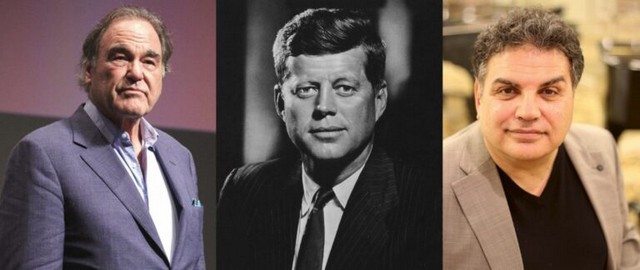
16 Jan 2022 – Two of the greatest speeches ever delivered by an American president bookend this extraordinary documentary film. It opens with President John F. Kennedy giving the commencement speech at American University on June 10, 1963 and it closes with his civil rights speech to the American people the following day. It is a deft artistic touch that suggests the brevity of JFK’s heroic efforts for world peace and domestic racial equality and justice before he was assassinated in a public execution in Dallas, Texas on November 22, 1963.

In the former anti-war speech, he called for the end to the Cold War with the Soviet Union, the halt to the arms race, and the abolishment of war and its weapons, especially nuclear. He said:

What kind of peace do I mean? What kind of peace do we seek? Not a Pax Americana enforced on the world by American weapons of war. Not the peace of the grave or the security of the slave. I am talking about genuine peace, the kind of peace that makes life on earth worth living, the kind that enables men and nations to grow and to hope and to build a better life for their children – not merely peace for Americans but peace for all men and women – not merely peace in our time but peace for all time.

In the latter address to the American people, having just sent National Guard troops to the University of Alabama to make sure two black students were admitted despite the racist objections of Governor George Wallace, his words transcended the immediate issue at the university and called for the end to the immoral and illegal discrimination against African Americans in every area of the nation’s life. He said:

One hundred years of delay have passed since President Lincoln freed the slaves, yet their heirs, their grandsons, are not fully free. They are not yet freed from the bonds of injustice. They are not yet freed from social and economic oppression. And this Nation, for all its hopes and all its boasts, will not be fully free until all its citizens are free.

Having framed the documentary thus, Oliver Stone and the screenwriter James DiEugenio do a masterful job of explaining what really happened in the years of Kennedy’s short presidency, why he was such a great threat to the CIA and the military industrial complex, what really happened when they killed him, and how the Warren Commission, the CIA, and the corporate media have worked hand-in-hand to this day to cover up the truth. The current two-hour version of JFK Revisited: Through the Looking Glass will be followed in a month or so by a more detailed four-hour version.

The importance of this film is twofold: It establishes an updated historical record since the Assassination Records Review Board (AARB) was established as a result of Stone’s 1991 breakthrough film, JFK, which forced the release of previously hidden documents, and, more importantly, it emphatically shows why JFK’s assassination is crucial for understanding the United States today. For without a clear and unambiguous accounting of why he was killed and by whom (I do not mean the actual shooters), and who in the government and media has covered it up, we are doomed to repeat the past as this country has been doing ever since.

Because JFK Revisited assiduously documents the essential claims of Stone’s 1991 film and adds to it with the latest factual material released since the ARRB required the release of the previously secret documents, the film, like the JFK film before it, will be denounced by the same media/intelligence forces that slammed the earlier movie. Back then the bogus critiques claimed Stone’s imagination had gone wild and he distorted history, so now the best way for those critics to rip this evidence-filled documentary is to omit mentioning its contents and to continue calling him a conspiracy obsessed guy still intent on promoting his fantasies.

Once it was his “fictions” that were ridiculous; now it is his facts, despite his research colleague and screen writer James DiEugenio’s exhaustive confirmation of the facts that will be released later this year when the annotated script is published. JFK Revisited proves with facts that Stone was right in 1991. Even then, but little known, is that JFK was also accompanied by a book of the film that included copious research notes. But facts don’t seem to matter to Stone’s critics, then or now. They are too damning.

So let’s examine the documentary.

It opens with Kennedy speaking at American University and quickly switches to a montage of condensed news reports of the shooting in Dallas, Kennedy’s death, people’s reactions, Oswald’s arrest, his claim that he’s a “patsy,” Ruby’s killing of Oswald, JFK’s funeral, reports that Kennedy was shot from the front and the rear, the formation of the Warren Commission and the naming of its members, including most significantly the former Director of the CIA Allen Dulles whom Kennedy had fired, the Commission’s finding that Oswald alone killed the president, that there was no conspiracy, the Zapruder film, and NBC’s Chet Huntley saying that the assassination is thoroughly documented (in the Warren Commission Report) and it’s all there for anyone who would like to pursue it.

Huntley’s ironically false statement is followed by a jump cut to Oliver Stone in Dealey Plaza telling how it wasn’t all there at all, that The Warren Report was a sham, and how in the intervening years plenty of new information and evidence has been revealed by the Church Commission Hearings in 1975 that uncovered the CIA and FBI’s machinations in assassination plots at home and abroad; followed a decade later by the public showing of the Zapruder film and the subsequent House Select Committee on Assassinations’ (HSCA) finding that there was probably a conspiracy in Kennedy’s murder.

Although the Warren Report came under questioning during these years, the HSCA sealed half a million “dangerous records” until 2029. But as a result of Stone’s JFK film in 1991, the government was pressured to pass The John F. Kennedy Records Collection Act with its Assassination Records Review Board (ARRB). The ARRB ordered the release of the secret documents within four years. Over two million pages were released and they are housed at the National Archives, although certain documents are still being withheld.

One could argue that the truth about the assassination was obvious from the start and that only elements within the U.S. government could have carried out this crime and covered it up. That only simple logic was needed to solve the crime because from the start the Warren Commission made no sense with its magic bullet explanation, and that only national security operatives could have withdrawn the president’s security protection, etc. That new documents are not needed. That arguing any of this is just a pseudo-debate and a waste of time.

There is cogency to that argument, but Stone prefers to take a different route and use the released records to bolster his argument and establish a cinematic record for future generations. He is making accessible in a two-hour movie a powerful historical lesson that should be seen by everyone; it is one absent from the history books students read in school.

That his enemies will try to dissuade the public from viewing the film is not surprising, for doing so with the supporting testimonies of so many experts and the presentation of the suppressed official documents make these critics look like fools, or simply the tools they are. For while this film relies on many documents forced out of the government’s own vaults and therefore hoists the critics with their own petard, it is also a reminder that the media is deeply infiltrated with CIA plants and assets, as has been shown by the revelations of Operation Mockingbird, a program that surely never ended but has only intensified today’s propaganda.

One glance at the headlines of reviews of this film since its release two months ago reveals the vituperative personal nature of the attacks on Stone, showing that the film’s evidentiary content is of no interest to the reviewers. Ad hominem attacks will suffice. Even the one review I read previous to writing this – sent to me by someone who considered it to be positive – was a sly piece of disinformation disguised as praise. The enemies of truth are not just vulgar morons but very sophisticated tricksters.

Let me break down the evidence presented in the film in order of appearance. First, the so-called three bullets and the magic bullet. Second, the alleged rifle and new evidence confirming that Lee Oswald was not on the 6th floor of the Texas School Book Depository. Third, the autopsy, its faked photographs, and the pressure placed on the Parkland Hospital doctors to change what they saw with their own eyes. Fourth, Oswald’s history working with the CIA and FBI, his fake defection to the Soviet Union, the coverup of the intelligence agencies’ use of Oswald from start to finish, and the other plots to assassinate Kennedy in Chicago and Tampa that follow the same template as Oswald in Dallas. Fifth, why Kennedy was murdered.

None of these issues are analyzed in some half-assed theoretical way, but are supported by documentary facts – evidence, in other words. As Stone says, “Conspiracy theories are now conspiracy facts.” Nevertheless, those writers whose review headlines I mentioned prefer to call Stone “looney,” a “conspiracy quack,” etc. as they ignore the facts, new and old.

The Magic Bullet

The Warren Report claimed that since three empty shells were found on the floor of the sixth floor of The Texas Book Depository that only three bullets were fired, and from that spot. The FBI claimed that all three bullets hit inside the car, two hitting Kennedy and one Gov. Connolly. But evidence showed that one bullet missed the car, striking an underpass.

This forced the Commission into a dilemma, and so Arlen Specter, the future long-standing senator, conjured up the so-called Magic Bullet Theory, claiming that one bullet hit and passed through Kennedy only to hit Connolly, zigzagging absurdly and causing seven wounds. It was ridiculous but conveniently avoided admitting that there had to be more shots and therefore a conspiracy. The Magic bullet – CE 399 – was said to have been found in pristine condition on a stretcher in Parkland Hospital. This bullet was foundational to the Warren Commission’s case, but Stone shows with released documents that there was no chain of custody for this bullet and that lies were told about it. He further shows how this magically found pristine bullet could not have passed through two men and emerge like new.

The film immediately demolishes the Warren Commission’s basic premise.

The “Rifle” with No Oswald on the Sixth Floor

And then this: the film shows that the rifle Oswald is alleged to have used and ordered through the mail with its paper trail (he could have walked into a store and bought one without leaving evidence) does not look like the famous highly questionable photos of Oswald posing with a rifle in the back yard. But more importantly than various other anomalies concerning the rifle(s-?), such as the absence of Oswald’s hand prints, is the new evidence the film documents about Oswald’s non-presence on the sixth floor.

Researcher Barry Ernest went to the National Archives to find the original testimony of Victoria Adams who worked on the fourth floor and knew Oswald. He discovered that it was missing and that the Warren Commission had destroyed the tapes. So he went and found Adams, and what she told him contradicted the Commission’s findings. It was claimed that after shooting Kennedy, Oswald quickly went down the back stairs to the second floor lunch room. Adams told Ernest that immediately after the assassination she went down the back stairs from the fourth floor and saw no one. Ernest found corroborating evidence from two other women, Sandra Styles who accompanied Vicki Adams down the stairs and Vicki’s supervisor Dorothy Garner who saw them descend, to back Adams’ testimony, about which the Warren Commission lied. Further proof that Oswald could not have shot Kennedy from the sixth floor window since he wasn’t there.

The Head Wound and the Autopsy Coverup

With video testimonies from Doctors Perry, Clark, and Crenshaw from Parkland Hospital, Stone shows how the original testimonies placed the neck and head wounds to Kennedy coming from the front, but that pressure was applied to Perry to recant, which he did, only to later to admit his recantation was a lie and that the wound in Kennedy’s neck was an entrance wound.

Then with the autopsy, we learn how it was controlled not by forensic pathologists experienced in doing autopsies on gunshot victims, but by shadowy military and intelligence figures. We learn of another magic bullet that allegedly was found in Parkland Hospital where it was claimed it fell out of a back wound of the president. But this bullet later turns out to be The Magic Bullet after further legerdemain by Warren Commission member Gerald Ford.

This stuff is highly comical if it weren’t so sinister, and it is surely “unbelievable” as the eminent forensic pathologist Dr. Cyril Wecht tells the viewer. That one of the autopsy doctors burned his notes and another had his disappear might not be new knowledge, but to learn that two honest FBI agents who witnessed the autopsy and were not called as witnesses by the Warren Commission – James Sibert and Francis X. O’Neill, Jr. – were shown the autopsy photos in depositions taken by the Assassinations Record Review Board in 1997 and claimed that Kennedy’s head had been doctored to conceal his gaping rear head wound is startlingly new evidence.

As is the important diagram Sibert drew of a large head wound in the back of the head supporting a shot from the front.

As is the ARRB’s declassification of forty witnesses’ testimony that they saw a gaping hole in the back of the President’s head consistent with a shot from the front.

As is the White House photographer Robert Knudsen’s admission thirty-years later that the photos he took were after the head had been doctored to conceal the wound.

As is the evidence that the autopsy photos of JFK’s brain in the National archives are fakes.

Thus, the film emphatically shows that the new forensic evidence proves that there were multiple shooters and that Oswald, who was not on the sixth floor, was not one of them. Oswald, because he was killed by the F.B.I. affiliated Jack Ruby two days later, never had a trial, but if he did, in light of all we know now, he would never be convicted, yet the media, led by The New York Times, Washington Post, CBS, etc., have spent decades covering up the truth and claiming Oswald killed Kennedy, just as they have with their equally bogus claim that Sirhan Sirhan killed RFK. They can not be so ignorant not to know they are spouting absurdities, so one can only conclude they are lying to protect the killers. That they are accomplices after the fact.

Oswald the Patsy and his Connections to the CIA and FBI

This section contains much evidentiary information about Oswald that is in the 1991 film. That he was associated with David Ferrie, Guy Bannister, and Clay Shaw (alias Betrand), all of whom were FBI and CIA affiliated. That he was a provocateur playing multiple roles, one day an anti-Castro protester and the next day a Castro supporter. That he was trained as a Marine at a top secret Military base in Japan that ran U-2 spy flights run by the CIA over the Soviet Union. That his defection to the Soviet Union was likely a part of a CIA defector program. That after marrying a Russian wife, he was welcomed back into the U.S. by the government he “betrayed” and greeted upon his arrival by an intelligence asset who got him to Dallas to hook up with another CIA operative, George de Mohrenschildt.

Everything we learn about Oswald makes it clear he was working for the CIA and FBI while simultaneously being on their watch list for years. The CIA denials that this was true were lies. We learn that the ARRB had a hard time getting the CIA to hand over documents on Oswald, that both the FBI and CIA lifted flashes on Oswald in early October 1963 which allowed him access to the Dallas parade route without attention. We learn that the Secret Service destroyed their threat sheets for 1963, those being reports of JFK’s prior trips and threats associated with them.

Essentially, we learn again with documentation what was in the earlier film, JFK, and more; all of which proves that Oswald was being run by the CIA and that he was used as a patsy after the assassination. We see the similarities to the earlier plots on the President’s life in Chicago (see JFK and the Unspeakable by James W. Douglass re the Chicago plot) and Tampa that are eerily alike to that in Dallas. We learn everything essential, and yet this is just the two-hour version of the film.

Why Was Kennedy Killed, Who Benefited, and Who Had the Power to Cover it Up?

In the conclusion of the film, we are told all the things that Kennedy did that made him an arch-enemy of the CIA and the military. Kennedy, who was hated by the CIA even before the Bay of Pigs disaster, afterwards fired the CIA Director Allen Dulles and his subordinates and promised to splinter the CIA into a thousand pieces and scatter it to the winds after he realized that they tricked him with the Bay of Pigs.

In 1961, they also killed those Kennedy greatly admired and was working with on issues of decolonialization: Patrice Lumumba of the Congo and the Secretary General of the United Nations, Dag Hammarskjöld. Less than eleven months into office, JFK was faced with a savage enemy from within that he didn’t control. He told the French ambassador that he was in no way involved in the CIA’s attempts to assassinate French President Charles de Gaulle, his ally, and that he had no control over the CIA.

After JFK’s assassination, Allen Dulles told journalist Willie Morris that Kennedy “thought he was a god.” This from the man who had his henchmen kill with impunity and loved the Nazis with whom he worked and brought into the U.S. government (see David Talbot’s The Devil’s Chessboard). In a document uncovered by the ARRB called the Northwoods Document, the Joint Chiefs of Staff recommended to Kennedy that he approve a false flag operation to start a war with Cuba by blowing up an empty plane over Cuba and blaming it on Castro and setting off bombs in American cities killing Americans for the same purpose. Of course, Kennedy refused, only intensifying their hatred of him. Then when he wouldn’t bomb Cuba during the missile crisis in October 1962, gave his American University speech the following June, sought reconciliation with the Soviet Union, and decided to withdraw from Vietnam, the die was cast: He had to die.

Who has benefited from his death?

The war manufacturers first and foremost, for they have been reaping their bloody profits ever since. The war against Vietnam was just the start, for the wars and alarms of war have never stopped.

And the CIA, working as the leading edge for the military around the world, continuing the Pax Americana for Wall St. and the power hungry millionaires and billionaires who hate democracy.

And of course, the media companies that are stenographers for the CIA, the politicians who pimp for them, and the vast interconnected power elites who cash in while playing innocent.

Finally, without having to explicitly say it, JFK Revisited makes it emphatically clear by presenting evidence that the criminals who committed this terrible crime, together with their media accomplices, were the only ones able to cover it up.

Of course, there is more to this powerful and important film than I have mentioned here, all carefully laid out and documented. Those who criticized Stone’s earlier movie and continue to hurl insults at him rather than consider the evidence he and DiEugenio present are the worst kind of anti-intellectual sycophants. If they were forced to dispute the content of this film step-by-step, that would simply expose their agendas, something they must keep hidden to safeguard their establishment credentials.

JFK Revisited ends with an important reminder from David Talbot that the truth of this film about an event that took place long ago is so essential to understand because of its contemporary relevance. It is not dead history. The “horror show” we are now experiencing has its roots in JFK’s public execution on the streets of Dallas, when the killers sent the most obvious message:

Obey or you will suffer the same fate.

The United States is still controlled by the forces that killed President Kennedy – the CIA and those who comprise the national security state that wage war at home and abroad in contradistinction to everything JFK was trying to accomplish. Their cowardly allies in the media are everywhere.

There is a reason why, as Robert F. Kennedy, Jr. tells the viewer near the film’s end, that all across the world there are streets named and statues erected to honor President Kennedy: for people know that he was a brave man of peace and human reconciliation and that he died at the hands of scoundrels intent on stopping his work.

With JFK Revisited, Oliver Stone has truly honored this fallen hero. Like Jim Garrison in JFK, he offers this film as his closing statement to the jury, which is all of us. Here is the evidence. Consider it closely. Render your verdict.

By doing so, we may yet take back the country from the forces of evil.

Bravo to Stone and DiEugenio! They have created a tour de force.

______________

Edward Curtin is a widely published author and a member of the TRANSCEND Network for Peace Development Environment.

24 January 2022

Source: www.transcend.org

Asia-Pacific: Just 5% of the Region’s Population Owns 70% of Its Total Wealth

By Baher Kamal

18 Jan 2022 – The Asia-Pacific region is experiencing growing inequality even while registering impressive economic growth and poverty reduction. Such sharp inequalities continue to be persistent in the region, with nearly 2 in 4 people still unable to afford a healthy diet.

“The gains from socioeconomic development have favoured the wealthiest, with the wealthiest 5% of the population controlling close to 70% of total wealth in the region,” reports the Economic and Social Commission for Asia and the Pacific (ESCAP).

The Asia-Pacific region, comprising 58 countries and territories, has over the past few decades registered the fastest rate of economic growth globally and achieved gains in human and social development, informs the Commission.
“In the Asia and Pacific region, 1.9 billion people are unable to afford a healthy diet, driven by high prices of fruits, vegetables and dairy products, making it impossible for the poor to achieve healthy diets”

And it provides some examples: life expectancy has increased significantly. While poverty eradication efforts have released approximately a billion people from poverty, both income poverty and multidimensional poverty continue to exist alongside affluence within and between countries.

Despite these gains, “inequalities persist, with income, consumption and wealth concentrated among the top deciles of the population. Non-monetary inequalities exist between regions, gender, race, ethnicity, geography and age, as well as in access to services, including sexual and reproductive health services.”

The Asia-Pacific region is home to approximately 4.5 billion people, and its demographic landscape is diverse in terms of population growth and size, composition by age and sex, and spatial distribution, ESCAP explains in report about this region.

The largest world’s region’s multidimensional poverty is made up of several factors that constitute poor people’s experience of deprivation, such as poor health, lack of education, inadequate living standards, lack of income, disempowerment, poor quality of work and threat from violence.

Perpetuating inequality

“These circumstances often shape, accentuate and perpetuate inequalities in income and wealth.” For example, the outcome can be influenced by efforts made in education or the labour market.

The last category, inequality of impact, relates to the differential impact of certain events or phenomena, such as a natural disaster, on different groups.

The impact has often been greater on poor people, women, older persons, persons with disabilities and other marginalised groups.

High fertility

The report also explains that poverty, inequality and high fertility are closely associated. Poor households tend to have many children owing mainly to lack of access to and knowledge of contraceptives, low autonomy among women, and the demand for children for economic or household support.

Contraception is less accessible to women who are poor, less educated and living in rural areas. These fertility differentials perpetuate inter-generational poverty and inequalities.

No decent jobs for the young

In countries where the number of youths seeking jobs is high relative to employment opportunities, and where their skills do not match market requirements, young people often cannot find decent jobs, ESCAP adds.

“The share of workers in unpaid jobs in Asia is twice as high for young people aged 15–24 as for adults aged 25–29 years.

For example, youth unemployment rates in 2016 were as high as 39% in Armenia, 30% in the Islamic Republic of Iran and 18.8% in Fiji.

Human trafficking

“Workers’ fundamental rights, especially those of women and marginalised populations, have also been challenged by the rise in vulnerable employment, especially concentrated in agriculture, and affects women more than men.”

In South Asia and East Asia, approximately 40% and 30%, respectively, of identified victims of human trafficking and forced labour are children, the report alerts. Vulnerable employment covers jobs involving inadequate pay, low productivity and adverse working conditions.

Migration, an escape from inequalities

“Migration often occurs as an escape from inequalities of opportunity, including decent work in home countries, or a flight from persecution, climate change, conflict or poverty. There is migration for marriage and domestic work too.”

Many migrants, however, face other forms of inequalities such as precarious working conditions, human rights abuses and irregular employment in their countries of destination. A considerable proportion of international migration within and from the Asia-Pacific region is irregular.

Discriminated, Exploited…

“Migrants are also vulnerable to coercion, discrimination, exploitation and substandard labour conditions and benefits.”

Female migrants are often victimised on the grounds of both being female and being migrants. They face labour exploitation, including confinement, lack of pay and lack of rest days. Undocumented female migrants also have no access to sexual and reproductive health services, explains ESCAP.

Internal migration

Another defining megatrend is internal migration, which has increased in volume in the past few decades.

Increased internal migration has been due to fewer work opportunities in traditional agriculture and better employment opportunities in urban areas, manufacturing in urban areas and high-production agriculture.

Unprecedented urbanisation

According to the report, there has been unprecedented urbanisation as a result of a combination of natural population increase, rural-urban migration and reclassification.

“By 2050, two out of three people are expected to live in urban areas, with about 10% of the urban population living in megacities, and the rest living in medium-sized and small cities.”

Meanwhile, “approximately half of all urban dwellers in South Asia live in slums. In large countries such as Bangladesh, China, India, Indonesia, Pakistan, the Philippines, Thailand and Viet Nam, 30 to 60% of the urban population lives in slums.”

People in slums face such challenges as poor health conditions, lack of sanitation and risk of exposure to pollution, including high carbon emissions.

The COVID factor

The Asian Development Bank reports that according to its Outlook 2020 report, tourism-driven economies—including the Cook Islands, Fiji, Palau, Samoa, and Vanuatu—were the hardest hit by the COVID-19 pandemic.

The Asia and Pacific region, alone, was expected to lose almost 70 million jobs and 1.1 trillion US dollars in GDP—more than any other region in the world.

Gender inequalities persistent

Meanwhile, gender inequalities continue to be persistent in Asia and the Pacific. In particular in the Pacific, women and girls face fewer opportunities for development.

Gender inequalities also intersect and overlap with age, ethnicity, wealth status, and residence, inter alia. Many of these inequalities have been discussed earlier, such as the differential access to maternal health services by less educated, rural and poorer women.

Hunger, malnutrition

For its part, the 2020 report: Asia and the Pacific – Regional Overview of Food Security and Nutrition provides an update on progress towards the 2030 targets at the regional and country level.

While the region continues to work towards ending all forms of malnutrition and achieving Zero Hunger, progress on food security and nutrition has slowed, and the Asia and Pacific region is not on track to achieving 2030 targets, warns the report, elaborated by the UN Food and agriculture Organisation (FAO), the World Food Programme (WFP), and the World Health Organisation (WHO).

About 350.6 million people in the Asia and Pacific region are estimated to have been undernourished in 2019, about 51% of the world’s total of undernourished people.

Children stunted, wasted

“An estimated 74.5 million children under five years of age were stunted and a total of 31.5 million were wasted in the Asia and Pacific region. The majority of these children in the region live in Southern Asia with 55.9 million stunted and 25.2 million wasted children.”

Estimates predict a 14.3% increase in the prevalence of moderate or severe wasting among children under 5 years of age, equal to an additional 6.7 million children, due to the COVID-19 pandemic.

Two billion people unable to afford healthy diet

With basic food prices and disposable incomes influencing household decisions on food and dietary intake, they are critical to improve food security and nutrition in the region, the joint report adds.

“However, in the Asia and Pacific region, 1.9 billion people are unable to afford a healthy diet, driven by high prices of fruits, vegetables and dairy products, making it impossible for the poor to achieve healthy diets.”

Baher Kamal, a member of the TRANSCEND Network for Peace Development Environment, is an Egyptian-born, Spanish national, secular journalist, with over 45 years of professional experience — from reporter to special envoy to chief editor of national dailies and an international news agency.

24 January 2022

Source: www.transcend.org
Ukraine: The West Has Paved the Road to War with Lies

By Jan Oberg, Ph.D.

While this is being written, tension builds up around the more comprehensive Ukraine conflict formation. If this blows up in real war – God forbid! – the main reason will be three serious lies disseminated by the NATO side.

Lies are used in so-called security politics when some militarist project doesn’t make any (common) sense to intelligent people, when the real motives have to be covered up and war is being prepared or when the sociological cancer called the Military-Industrial-Media-Academic Complex, MIMAC, and the elites who run it, try to squeeze out even larger military expenditures from their taxpayers.

You lie to manufacture an enemy that can justify what you will do and enrich yourself. With 40+ years of experience in security politics in general and NATO/US policies in particular, I know too much – sorry for the arrogance – and have become too cynical to believe that what goes on goes on for the sake of self-defence, security or peace.

Some quick examples of gross empirically revealed lying to the word – all the liars still at large:

  • In the 1990s, Yugoslav President Milosevic was Europe’s new Hitler (Bill Clinton) and planned genocide on the Albanians in Kosovo.
  • Saddam Hussein’s soldiers threw babies out of their incubators in Kuwait City.
  • Afghanistan had to be destroyed because of 9/11.
  • Saddam Hussein had weapons of mass destruction.
  • The US-led Global War On Terror – GWOT – has been about reducing terrorism.
  • The US/NATO orchestrated regime-change attempt in Syria from 2011 to 2016 was exclusively about Dictator al-Assad’s sudden sadist “killing of his own.”
  • Qaddafi was just about to murder all who lived in Benghazi.
  • The conflict around Ukraine was started by Putin’s “aggression” on Crimea, nothing preceded it.
  • Iran has always plotted and lied to acquire nuclear weapons.
  • There are only bad things to say about Russia and China and…

You may continue on your own.

The Three Big Lies Pertaining to Ukraine:

  1. The West’s leaders never promised Mikhail Gorbachev and his foreign minister Eduard Shevardnadze not to expand NATO eastward. They also did not state that they would take serious Soviet/Russian security interests around its borders. And therefore, each of the former Warsaw Pact countries has a right to join NATO if they decide to freely.
  2. The Ukraine conflict started by Putin’s out-of-the-blue aggression on Ukraine and then annexation of Crimea.
  3. NATO always has an open door to new members. It never tries to invite or drag them in, doesn’t seek expansion. It just happens because East European countries since 1989-90 have wanted to join without any pressure from NATO’s side. That also applies to Ukraine.

Concerning the first lie, listen to or read US Secretary of State, Antony Blinken, here on January 7, 2022.

Here he presents a series of accusations and empirical lies about Russian politics and behaviours, predictably omitting every mention of the simple fact that it takes two to have a conflict and defying Eric Clapton’s wise advice that ”before you accuse me, take a look at yourself.” His body language and submachine gun stumbling way of speaking reveal that he is perfectly aware that he is lying. Note in passing that the journalists present ask only “understanding” questions. The whole thing smacks the Soviet Union shortly before its collapse.

Why is it so evident that he lies?

TFF has reproduced two essential pieces from the National Security Archive at George Washington University with irrefutable documentation that Gorbachev indeed was given such assurances – “cascades” of them! as is stated in the article – by all the most influential Western leaders at the end of 1989 and into 1990:

“NATO Expansion: What Gorbachev heard” – and

“NATO Expansion: The Budapest Blow Up 1994”

Read them, and you will be shocked.

You’ll find that they have lots of notes and, in sum, no less than 48 original historical documents. For instance, here is just one of the 48 informing us about then NATO Secretary-General Manfred Woerner’s view and statement:

Woerner had given a well-regarded speech in Brussels in May 1990 in which he argued: “The principal task of the next decade will be to build a new European security structure, to include the Soviet Union and the Warsaw Pact nations. The Soviet Union will have an important role to play in the construction of such a system. If you consider the current predicament of the Soviet Union, which has practically no allies left, then you can understand its justified wish not to be forced out of Europe.

Now in mid-1991, Woerner responds to the Russians by stating that he personally and the NATO Council are both against expansion – “13 out of 16 NATO members share this point of view” – and that he will speak against Poland’s and Romania’s membership in NATO to those countries’ leaders as he has already done with leaders of Hungary and Czechoslovakia. Woerner emphasizes that “We should not allow […] the isolation of the USSR from the European community.”

This is just one of the “cascades” of statements and assurances given to the Russians at the time. Over 30 years ago, 13 out of 16 members were against NATO expansion because they respected Russia’s crisis and legitimate security interests! Today – 2022 – NATO has 30 members!

Is the U.S. Secretary of State, his advisors and speechwriters unaware of the next-door National Security Archives? Are we really to believe that they have no clue about the conditions and dialogues at the end of the first Cold War? If so, they ought to resign or be fired for their unbelievable incompetence.

If not so – if they know the content of these historical documents – Mr Blinken, his advisors and speechwriters know that they lie.

The second lie is a lie by omission. Antony Blinken and almost all Western politicians, including the NATO S-G, and mainstream media simply omit that the West attempted a regime change in Kyiv in 2014 and that Putin’s reacted to it by annexing Crimea.

The Maidan riots took place in February 2014, the sniper fire on February 20. Russia formally annexed – or accepted self-determination – of Crimea on March 18. The complex Western-instigated and -financed turmoil was orchestrated by the EU, US and NATO leadership, as you can read in articles or books by people who know such as Gordon M Hahn and Richard Sakaw (“Frontline Ukraine: Crisis in the Borderlands”), Stephen Cohen, Henry Kissinger and many more here.

To put it crudely, the conflict issue was the Western attempt at getting Ukraine to side not with Russia but with Western institutions, the EU and, later, NATO. One problem would be Russian-speaking minorities, the opinion polls concerning NATO membership which were not in favour and, more strongly, that Russia would a) never accept Ukraine in NATO – but very well as a neutral state between – and neither that Russia’s extensive military base in Crimea, on lease for 30+ years ahead, should end up being located in a NATO country.

This entire regime-change policy under the Obama administration was one big insensitive and plain foolish idea also in the light of the old promises given to Gorbachev.

But of course, that cannot be admitted today, eight years later. To cover it up, the US/NATO must blame the present situation on Russia, on Russia only. Russia annexed Crimea for no good reason; nothing “we” did preceded that move or could explain it.

Like with the lie about promises never given to Gorbachev and this omission of Western regime change in Ukraine, one must ask: Are they really so desperate and so politically naive that they believe that we neither remember nor can put 2 + 2 together?

Now to the third lie. It’s stated repeatedly and in a larger context by NATO’s Secretary-General Jens Stoltenberg here:

NATO Secretary General, Press Conference at Foreign Ministers Meeting, 07 JAN 2022

NATO as an alliance has enormous resources to influence opinions in potential member states. Contrary to his open door talk, NATO’s Charter speaks only about inviting new members, not about holding a door open for anyone who might want to join.

It should be well-known by now – but isn’t – that in the late 1990s, Vladimir Putin asked to join NATO – but it didn’t happen, did it, Mr Stoltenberg? And why not? Because Putin – Russia – wanted to be invited as an equal partner and not sit and wait till Montenegro had become a member, to put it bluntly. NATO decided to close the door at Putin’s request.

This – fantastic – story is told by a former NATO Secretary-General, George Robertson; there is no reason to assume that is not credible or just a rumor. Or, for that matter, that Putin was not serious.

And what an exciting thought: Russia in NATO! Who would Mr Stoltenberg and Mr Blinken – and all the rest of the Military-Industrial-Media-Academic Complex, MIMAC – then have to put all the blame on? How then legitimate NATO’s permanent armament and its 12 times higher military expenditures than Russia’s?

Mr Stoltenberg must know that he lies when saying NATO has an open door. It doesn’t for Russia. It doesn’t even have open ears for Russia’s legitimate security concerns. But it knows how it would never accept what it requires Russia to accept. Here is a quotation from January 14, 2022, documenting the double-standard, the exceptionalist self-understanding of the US:

“US will act ‘decisively’ if Russia deploys military to Cuba or Venezuela.” – The White House

United States National Security Advisor Jake Sullivan called the idea “bluster in the public commentary” and noted that the deployment of Russian military infrastructure to Latin America was not a point of discussion at the recent Russia-US Strategic Stability Dialogue in Geneva.

“If Russia were to move in that direction, we would deal with it decisively,” he said, responding to a question from a journalist.

The US opposition to Russian troop placement in the Americas may raise some eyebrows in Moscow, which has repeatedly complained about US armed forces being located near Russia’s western frontier.” (Russia Today, January 14, 2022)

Finally, Mr Stoltenberg is very proud of NATO’s generous training and assistance to potential NATO members. Before they are admitted, they must go through all kinds of reforms and accept practical, military and political support. And what is the real purpose of all that training and generous help? Stoltenberg says it in the video:

“…It also makes the societies of Ukraine and Georgia stronger. So resilient, well-functioning societies are also less vulnerable from interference from Russia.”

In plain Realpolitik language: the goal is to disconnect countries from Russia’s influence, program them for NATO membership and then they decide in complete freedom to ask for admission.

Remember, NATO never drags in members. NATO set up its office in Kyiv in 1994. And here you’ll see how Olga Stefanishyna, Ukraine’s deputy prime minister, standing at NATO’s H.Q. with Stoltenberg, consistently talking about NATO as Ukraine’s “allies,” expecting all kinds of guarantees and – in Foreign Policy of course – argues that Ukraine Needs a Clear Path to NATO Membership in the face of Russian aggression.

Accumulate expectations and add a series of lies when Reality emerges as a train coming against you in a dark tunnel. And you have the perfect recipe for war – Cold or Warm. Or both.

Prof. Jan Oberg, Ph.D. is director of the Transnational Foundation for Peace and Future Research, TFF and a member of the TRANSCEND Network for Peace Development Environment.

17 January 2022

Source: www.transcend.org
Why Is Joe Biden Discreetly Looking the Other Way as His AFRICOM Commander Commits War Crimes for Which He Would Have Been Hanged at Nuremberg?

By Jeremy Kuzmarov

Townsend Oversaw Army Unit in Syria That Committed Myriad Atrocities and Helped Cover Up Crimes

As head of AFRICOM, the veteran of Operation Urgent Fury in Grenada and U.S. wars in Afghanistan and Iraq is sanctioning yet more dirty war operations and killings.

13 Jan 2022 – In early December, The New York Times reported on the existence of a clandestine army unit in Syria which, from 2014 to 2019, had launched tens of thousands of bombs and missiles and repeatedly killed civilians, including farmers trying to harvest, children in the street and villagers sheltering in buildings.

The secret unit—which officially did not exist—was called Talon Anvil, and it embraced a loose interpretation of the military’s rules of engagement, according to the Times.

From 2016 to 2017, the unit was overseen by four-star Army General Stephen Townsend who, as commander of the offensive against the Islamic State in Syria, authorized low-level commanders to order air strikes. Under pressure to obtain results, these commanders, according to Air Force intelligence officers, would push analysts to say they saw evidence, such as weapons that could legally justify a strike, even when none existed.

Larry Lewis, a former Pentagon and State Department adviser who was one of the authors of a 2018 Defense Department report on civilian harm, reported that Townsend was dismissive of reports from news media and human rights organizations describing the mounting human toll of U.S. Special Forces operations in Syria.

Rather than being hounded by anti-war protesters and fired, Townsend was promoted in July 2019 to become the head of the U.S. military’s Africa Command, or AFRICOM, headquartered in Stuttgart, Germany.

In that capacity, he is sponsoring yet more killing in U.S.-run dirty wars.

In April 2020, Townsend heralded the killing in a U.S. air strike of al-Shabaab leader Yusuf Jiis (aka Yusuf Nur Sheikh Hassan) 135 miles west of Mogadishu in Somalia.

According to Townsend, Jiis “was a key leader in the al-Shabaab organization [who] was violent, ruthless, and responsible for the loss of many innocent lives. His removal makes Somalia and neighboring countries safer.”

The “kingpin strategy,” however, in which top insurgent leaders are assassinated, has been shown time and time again to be a failure because these leaders are replaceable.

In the case of Jiis, he was al-Shabaab’s liaison to humanitarian agencies who was accused of leading a raid on aid agencies in 2009—although it was not clear that he had ever killed anybody.

AFRICOM had carried out hundreds of air strikes in a decades-long war against al-Shabaab, which was founded among disaffected youth after a joint U.S.-Ethiopian invasion overthrew the more moderate Islamic Courts Union (ICU).

In April 2020, Amnesty International condemned AFRICOM for failing to report on civilian casualties—stating that it did not “seem to care about the families it has completely torn apart.”

This is unlikely to change under Townsend’s direction, given his track record. In an op-ed in Foreign Policy, he claimed that the reports of civilian casualties coming out of Somalia were “vastly inflated,” Airwars, however, identified at least 29 separate incidents in which civilians were harmed by U.S. military action in Somalia and, in June 2020, estimated that between 68 and 140 Somali civilians had been killed—a figure that far exceeded AFRICOM’s official count of four by at least 17 times.

Enabling Terrorism

AFRICOM was established in 2007 with the underlying goal of enhancing U.S. access to Africa’s mineral wealth and containing Chinese encroachment on the continent.

Townsend himself admitted in testimony before the U.S. Senate Armed Services Committee that 26 African nations “hold reserves of minerals determined to be critical to the U.S. economy and national security.” He also emphasized the importance of AFRICOM in keeping vital shipping lanes—which he said are key to the movement of Africa’s vast natural resources including energy and strategic minerals—open to international trade.

Netfa Freeman, co-coordinator of the Black Alliance for Peace’s Africa Team, said that “the real purpose of AFRICOM is to enable terrorism while at the same time prosecuting the ‘war on terror’ in Africa. This contradictory action ensures that Africa is in a constant state of war and instability. In doing so AFRICOM nurtures and justifies its own reason for being while developing a dependence of African states on AFRICOM for their defense.”

Since his appointment in 2019, Townsend has crisscrossed Africa, forging greater liaison with African military commanders and political leaders, many of whom are authoritarian in nature or have been involved in human rights atrocities.

In 2021, for example, Townsend visited Morocco to oversee a war-games operation between AFRICOM and local troops. One of the defense officials with whom he met was Lieutenant General Belkhir El Farouk, who was appointed to head military operations in Western Sahara, which Morocco occupies and had recently launched military operations against.

Townsend also met with General Mohammed El Haddad, chief of staff of the Libyan army, to discuss counter-terrorism cooperation. Subsequently, Townsend visited Libya in an attempt to curry influence with Libyan Prime Minister Abdulhamid Dbeibha in advance of elections scheduled for December (later postponed) in which Muammar Qaddafi’s son, Saif al-Islam, was the frontrunner. (The U.S. obviously does not want Qaddafi to win).

In September, Townsend met with Ivory Coast President Alassane Ouattara, who had overseen ethnic violence after winning fraudulent elections.

Townsend then traveled to Niger, where the U.S. houses two major drone bases. The country’s president, Mohamed Bazoum was leading a major counter-insurgency operation, backed by the U.S. against Islamic militants. The U.S. troop presence was exposed when four American soldiers were killed after being ambushed in October 2017.

Besides Bazoum, Townsend met in Niamey with French Ambassador Alexandre Garcia and Burkina Faso Commander Laurent Michon to enhance U.S.-French counterterrorism cooperation—along the Syrian model.

Afterwards, Townsend traveled to Djibouti, home of a major U.S. military base where Special Forces operations on the continent were coordinated. He also met with Chadian President Idriss Déby, who later died on the front-lines of a dirty war supported by AFRICOM, and with Mozambican Defense Minister Cristóvão Chume and Chief of General Staff Admiral Joaquim Mangrasse.

The Biden administration had recently sent troops to Mozambique alongside Portuguese and Rwandan soldiers and South African mercenaries to help the corrupt government quell a Muslim insurgency that threatened a $30 billion liquefied natural gas project of ExxonMobil.

State security forces there receiving training by AFRICOM units were implicated in serious human rights abuses, including arbitrary arrests, abductions, torture, use of excessive force against unarmed civilians, intimidation, and extrajudicial executions.

When he visited a U.S. military base in Manda Bay, Kenya—a headquarters of the war in Somalia—Townsend survived an assassination attempt. AFRICOM troops based there adopted similar tactics to Talon Anvil against al-Shabaab—which made Townsend a target.

Secret paramilitary units for which Townsend had been covering up, like in Syria, were mounting “snatch and grab” and “kill and capture” raids which “disappeared” many innocent victims and frequently disregarded human rights.

Army Brat

Priding himself as a “soldier’s commander” with a love of history, General Townsend was born in Scheinfeld, Bavaria, West Germany, in 1959 to a German art student mother and an Afghan medical student father, the result of a love affair. He was adopted soon after birth by an American military family in Germany and grew up as an army brat. His adoptive father, James Townsend, was a staff sergeant in an armored unit.

Upon graduation from North Georgia College in 1982, General Townsend was commissioned as an Army infantry officer. In 1983, he served with Operation Urgent Fury in Grenada and continued with Operation Just Cause in Panama and Operation Uphold Democracy in Haiti.

Subsequently, he served with the 10th Mountain Division in Afghanistan, leading a task force in Operation Anaconda, and commanded the 3rd Stryker Brigade Combat Team, leading it in the 2007 Battle of Baqubah in the Iraq War, where the capital of the Iraqi province of Diyala was retaken from Sunni/al-Qaeda forces at a cost of 124 insurgents killed.

A report on the battle in The Guardian described brutal battlefield conditions in Baqubah in which soldiers were faced with the dilemma of whether or not to shoot women and children who were being used by the insurgents as human shields. Photos show U.S. troops under Townsend’s command terrorizing local residents in the attempt to capture insurgents who had littered the city with IEDs and roadside bombs.

Empire As a Way of Life

From Grenada to Iraq, to Syria and now Africa, Stephen Townsend has gone around the globe for the last 38 years hunting down insurgents in the interests of the American empire.

In that time, he has helped advance a psychological operation facilitating public support for America’s “forever wars.”

Fashioning himself as a practitioner of counter-insurgency doctrine emphasizing the importance of building the legitimacy of the local government, Townsend claims that the U.S. was “never a colonizing power in Africa,” that AFRCOM’s motto is “African solutions, for African problems,” and that countries “drowning in poverty” frequently “ask for U.S. help.”

These words mask the imperial underpinnings of U.S. foreign policy.

Unfortunately, there is no broad demand for Townsend’s indictment as a war criminal. Townsend, rather, continues to enjoy status and respect in a society where empire is a way of life.

Jeremy Kuzmarov is Managing Editor of CovertAction Magazine and author of four books on U.S. foreign policy, including Obama’s Unending Wars (Clarity Press, 2019) and The Russians Are Coming, Again, with John Marciano (Monthly Review Press, 2018).

17 January 2022

Source: www.transcend.org
Washington Pursues RAND’s Plan in Kazakhstan, Then in Transnistria

By Thierry Meyssan

11 Jan 2022 – The events that have been unfolding for the past week in Kazakhstan are the fifth part of a plan by the RAND Corporation, the sixth of which will take place in Transnistria. The four previous episodes took place over the last two years in Ukraine, Syria, Belarus and Nagorno-Karabakh. The aim is to weaken Russia by forcing it to over-deploy.

US President Joe Biden responded to Russia’s proposal for a Treaty guaranteeing peace on the basis of strict compliance with the UN Charter and keeping one’s word [1] in a telephone conversation with his Russian counterpart, Vladimir Putin, on December 30, 2021. Unsurprisingly, he did not respond to the substance of the Russian request, merely mentioning a possible end to US operations in Ukraine.

At the same time, the US National Security Council has initiated several actions against Russia. It is not a question of overthrowing governments or launching new wars, but of forcing Moscow to intervene outside its borders in order to exhaust it. The Russian Federation already has a huge territory that it is unable to exploit with a population of only 150 million.

In May 2019, the Rand Corporation, the think-tank of the US military-industrial complex, listed six options in this regard [2]:

1. Arming Ukraine ;
2. Increase support for jihadists in Syria;
3. Promoting regime change in Belarus;
4. Exploiting tensions in the South Caucasus;
5. Reducing Russian influence in Central Asia;
6. Rivaling the Russian presence in Transnistria.

Under Secretary of State for Political Affairs Victoria Nuland visited Moscow from October 11 to 13, 2021 to meet with the Russian government. The Russian government exceptionally lifted the ban on her travel to Russia for the occasion [3]. Indeed, Ms Nuland is not just another civil servant. She is a figure of the US deep state, participating in all administrations, whether Republican or Democrat, with the exception of the Jacksonian administration of President Donald Trump. It was she who, in 2001, called up the Allies to fight in Afghanistan despite the opposition of French President Jacques Chirac and German Chancellor Gerhard Schröder. It was she who saved Israel at the end of the 2006 war against Lebanon, organising a unilateral ceasefire so as to avoid the humiliation of a military defeat. And she was also the one that organised the colourful Maidan revolution in 2014 to overthrow Ukrainian President Viktor Yanukovych and replace him with Nazis, among others. The contempt in which it holds Europeans was then evident, causing unease in Brussels and sanctions from Moscow.

During the colourful revolution in Ukraine, Victoria Nuland came to distribute sandwiches and drinks to the neo-Nazis in Maidan Square. DR

Mrs Nuland belongs to an illustrious neo-conservative family. Her husband is none other than Robert Kagan, one of the founders of the Project for a New American Century (PNAC), which raised the funds for the accession of George W. Bush (the son) to the White House and wished for “a new Pearl Harbor”, which the attacks of September 11 brought about. His brother-in-law, Frederick Kagan, is a pillar of the American Enterprise Institute. He was the inspiration for the US policy of occupation of Afghanistan and Iraq. His sister-in-law, Kimberly Kagan, is president of the Institute for the Study of War. She has played a leading role in all the wars in the ’wider Middle East’, including the surge policy in Iraq.

Victoria Nuland explained her approach to dealing with Russia in a provocative article in Foreign Affairs in July 2020, ’Pinning down Putin’ [4]. The neo-conservative author was then working for former Democratic Secretary of State Madeleine Albright and outlined what the next president should do with Moscow. After presenting a Russia in ruins and a beleaguered Putin, she proposed negotiating a new START treaty, fighting Russian use of the internet, supporting Ukraine’s membership of the EU (and then Nato), and the armed opposition in Syria. She imagined US investment in Russia to modernise this poor country in exchange for its political alignment with the “Western democracies”. The Kremlin, which does not recognise any of her findings, received her just as it had accepted the Biden-Putin summit in Geneva after the US president had insulted his Russian counterpart on television.

Nothing has come out of these closed-door meetings. But it is highly likely that Ms Nuland threatened Russia once again, as she has been doing so continuously for the past twenty years. In any case, Russian Foreign Minister Sergei Lavrov confirmed that she was not ready to support the implementation of the Minsk agreement to resolve the Ukrainian crisis.

As soon as her trip to Moscow was over, Victoria Nuland went to Beirut to meet Najib Mikati’s new government, then to London to sound the alarm. There she announced that Moscow was massing troops on the Ukrainian border and preparing to invade the country.

Three weeks later, CIA Director William Burns rushed to Moscow to fix what Victoria Nuland had broken. He tried to be conciliatory and was received by President Putin himself.
However, Washington has just stopped blowing hot and cold. After (1) arming Ukraine, (2) supporting jihadists in Syria, (3) attempting regime change in Belarus [5], (4) exploiting tensions in the South Caucasus with the Azerbaijani attack on Armenia [6], Washington (5) is trying to reduce Moscow’s influence in Kazakstan and should soon (6) compete with Russia in Transnistria. In short, it is pursuing the Rand Corporation’s plan.

Kazakhstan

In Central Asian culture, the ruler is a kind of Kubilai Khan and his family are privileged. Kazakhstan has only been a nation for a few years. It owes this to President Nursultan Nazerbayev who managed to unite different tribes. His successor, President Kassym-Jomart Tokayev, democratised the country, but attitudes are still influenced by the Turko-Mongolian culture.

On January 2, 2022, protests against a 13% increase in gas prices turned into a riot. Coordinated groups attacked public buildings and often local businesses. Snipers fired from rooftops at both protesters and police. Military armouries were attacked. The loot was distributed among the groups of attackers. The phenomenon was repeated throughout the country. The Taldykorgan prison, where Islamists are held prisoner, was also attacked.

The operation is led by jihadists who fought in Syria and by former Afghan collaborators of the CIA. The groups they lead are made up of Kazakh Islamists.

President Kassym-Jomart Tokayev recognised the legitimacy of the demonstrations and cracked down on terrorist attacks. He declared a state of siege and arrested the chairman of the Security Council, Karim Masimov, a former banker who was twice prime minister and head of the presidential administration. He is currently charged with high treason. Tokayev then appointed his successor and convened the Security Council.

Reports from his administration put the number of insurgents at around 20,000, including both foreign jihadists and rioters and Kazakh Islamists. The country has had cordial relations with Israel for many years, long before the Kushner plan for normalisation. Although former President Nazerbayev had held anti-religious positions during the Soviet era, he later converted and made the pilgrimage to Mecca. Churches were allowed, subject to registration. An inter-religious summit, comparable to the one the Vatican organises in Assisi, takes place every year.

Kazakhstan distinguishes any kind of religion from political Islam, which is prohibited. However, the Muslim Brotherhood and the Hizb ut-Tahrir (Liberation Party) have developed throughout Central Asia with the help of the British MI6. It was to combat this separatism that the Shanghai Cooperation Organisation was created.

The Security Council has passed on to the Kremlin the information it already has on the plot against the country. It has asked for help from the Collective Security Treaty Organisation (CSTO) to fight the jihadists. President Tokayev immediately ordered his security forces to shoot without warning and kill any jihadists they found [7].

The CSTO responded immediately by deploying 2,500 soldiers, Armenians, Belarusians, Russians and Tajiks, under the command of General Andrei Serdyukov, Commander-in-Chief of the Russian Federation Paratroopers. The People’s Republic of China has announced its readiness to help, if necessary.

Turkey supported President Tokayev, indicating that it was not involved in the Islamist plot. Afghanistan did the same, which is less surprising insofar as the Taliban are Deobandis and the Afghans involved in the jihadist attack are former CIA collaborators who have fled the country [8].

It was soon learned that the National Endowment for Democracy [9], of which Victoria Nuland is a former administrator, had given millions of dollars since Joe Biden’s arrival in the White House to “extend democracy” in Kazakhstan.

A few years ago, Dariga Nazarbayeva gave an award for his work as a journalist to Thierry Meyssan.

In the past, the former energy minister, the oligarch Mukhtar Ablyazov, created an (unrecognised) opposition party, the Democratic Choice of Kazakhstan (QDT), with President Nzerbayev’s son-in-law, Rakhat Aliyev. Together they tried to overthrow him with the help of George Soros. Aliyev died in 2015 in prison in Austria while Ablyazov went into exile in the UK and then France. He was arrested several times in the European Union for murder in Russia, but was never extradited. He was granted political asylum in France and has been living in Paris for over a year. From the first day of the riot, he called for the overthrow of the regime, i.e. not only President Kassym-Jomart Tokayev, but also former President Nursultan Nazarbayev, now officially retired but still very influential.

According to some unconfirmed sources, Mukhtar Ablyazov is linked to President Nazerbayev’s nephew, Samat Abish, a former deputy director of the secret services. He was reportedly arrested on January 7 for high treason. He is known to be a militant of political Islam like his father, who built a gigantic mosque in Almaty.

President Nursultan Nazerbayev has returned to the capital. If his health allows it, he could take things in hand, notably with the help of his daughter, Dariga Nazarbayeva.

The Dnieper Valley (Transnistria) is represented by a small red strip, wedged between Moldova in the west and Ukraine in the east. It has no outlet to the Black Sea and therefore could not join Crimea.

Transnistria

According to the RAND plan, after Kazakhstan, Transnistria’s turn will come.

The United States has mobilised the European Union to carry out an economic blockade of this unrecognised state, whose population broke away from Moldova in a referendum when the USSR was dissolved. Officials of the European Union Border Assistance Mission to Moldova and Ukraine (EUBAM), led by Stefano Sannino (the former OSCE representative in Serbia), have been supervising the Moldovan and Ukrainian customs (which are not EU members) to carry out the blockade of this country since January 1, 2022. Russia will be forced to develop the former Soviet space base and create an air bridge to feed the 500,000 inhabitants of this enclave.

The Dnieper Valley (Transnistria) is represented by a small red strip, wedged between Moldova in the west and Ukraine in the east. It has no outlet to the Black Sea and therefore could not join Crimea.

The citizens of the European Union have forgotten that in 1992 the United States tried in vain to militarily crush Transnistria (now the Dniester Moldavian Republic) using an army recruited from Romanian prisons [10]. The courage of this population, faithful to the Soviet model, and particularly of its women, scuppered the CIA’s project.

It should be noted in passing that although the population of Transnistria speaks Russian, three villages still speak French. They are inhabited by descendants of Napoleon’s grognards who married and settled there during the Russian campaign.

In conclusion, if Washington’s response to the Moscow Treaty proposal to secure peace was officially a halt to its eastward advance, it is unofficially that it still has the capacity to do harm.

NOTES:

[1Draft Treaty betweeen the USA and Russia on Security Guarantees”, Voltaire Network, 17 December 2021.

[2Extending Russia: Competing from Advantageous Ground, Raphael S. Cohen, Nathan Chandler, Bryan Frederick, Edward Geist, Paul DeLuca, Forrest E. Morgan, Howard J. Shatz & Brent Williams, Rand Corporation, May 25, 2019.

[3«U.S., Russia lift targeted sanctions to allow Nuland visit – Moscow», Elizabeth Frantz, Reuters, Octobrer 10, 2021.

[4«Pinning Down Putin», Victoria Nuland, Foreign Affairs Vol. 99 #4, July 2020.

[5Who wants to overthrow President Lukashenko?”, by Thierry Meyssan, Translation Roger Lagassé, Voltaire Network, 1 September 2020.

[6Nagorno-Karabakh: victory of London and Ankara, defeat of Soros and the Armenians”, by Thierry Meyssan, Translation Roger Lagassé, Voltaire Network, 24 November 2020.

[7Military analysis of the attacks on Kazakhstan”, by Valentin Vasilescu, Translation Roger Lagassé, Voltaire Network, 12 January 2022.

[87 lies about Afghanistan”, by Thierry Meyssan, Translation Roger Lagassé, Voltaire Network, 20 August 2021.

[9NED, the Legal Window of the CIA”, by Thierry Meyssan, Translation Anoosha Boralessa, Оdnako (Russia) , Voltaire Network, 16 August 2016.

[10« En 1992, les États-Unis tentèrent d’écraser militairement la Transnistrie », par Thierry Meyssan, Réseau Voltaire, 17 juillet 2007.

_______________________________________

This article is a follow-up to:  “Russia wants to force the US to respect the UN Charter“, January 4, 2022.

Thierry Meyssan – Political consultant, president-founder of the Réseau Voltaire (Voltaire Network).

17 January 2022

Source: www.transcend.org
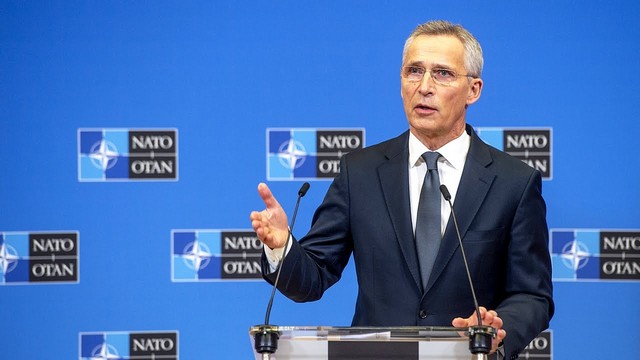
Are Western Wealthy Countries Determined to Starve the People of Afghanistan?

By Vijay Prashad

14 Jan 2022 – On 11 Jan 2022, the United Nations (UN) Emergency Relief Coordinator Martin Griffiths appealed to the international community to help raise $4.4 billion for Afghanistan in humanitarian aid, calling this effort, “the largest ever appeal for a single country for humanitarian assistance.” This amount is required “in the hope of shoring up collapsing basic services there,” said the UN. If this appeal is not met, Griffiths said, then “next year [2023] we’ll be asking for $10 billion.”

The figure of $10 billion is significant. A few days after the Taliban took power in Afghanistan in mid-August 2021, the U.S. government announced the seizure of $9.5 billion in Afghan assets that were being held in the U.S. banking system. Under pressure from the United States government, the International Monetary Fund also denied Afghanistan access to $455 million of its share of special drawing rights, the international reserve asset that the IMF provides to its member countries to supplement their original reserves. These two figures—which constitute Afghanistan’s monetary reserves—amount to around $10 billion, the exact number Griffiths said that the country would need if the United Nations does not immediately get an emergency disbursement for providing humanitarian relief to Afghanistan.

A recent analysis by development economist Dr. William Byrd for the United States Institute of Peace, titled, “How to Mitigate Afghanistan’s Economic and Humanitarian Crises,” noted that the economic and humanitarian crises being faced by the country are a direct result of the cutoff of $8 billion in annual aid to Afghanistan and the freezing of $9.5 billion of the country’s “foreign exchange reserves” by the United States. The analysis further noted that the sanctions relief—given by the U.S. Treasury Department and the United Nations Security Council on December 22, 2021—to provide humanitarian assistance to Afghanistan should also be extended to “private business and commercial transactions.” Byrd also mentioned the need to find ways to pay salaries of health workers, teachers and other essential service providers to prevent an economic collapse in Afghanistan and suggested using “a combination of Afghan revenues and aid funding” for this purpose.

Meanwhile, the idea of paying salaries directly to the teachers came up in an early December 2021 meeting between the UN’s special envoy for Afghanistan Deborah Lyons and Afghanistan’s Deputy Foreign Minister Sher Mohammad Abbas Stanikzai. None of these proposals, however, seem to have been taken seriously in Washington, D.C.

A Humanitarian Crisis

In July 2020, before the pandemic hit the country hard, and long before the Taliban returned to power in Kabul, the Ministry of Economy in Afghanistan had said that 90 percent of the people in the country lived below the international poverty line of $2 a day. Meanwhile, since the beginning of its war in Afghanistan in 2001, the United States government has spent $2.313 trillion on its war efforts, according to figures provided by Watson Institute for International and Public Affairs at Brown University; but despite spending 20 years in the country’s war, the United States government spent only $145 billion on the reconstruction of the country’s institutions, according to its own estimates. In August, before the Taliban defeated the U.S. military forces, the United States government’s Special Inspector General for Afghanistan Reconstruction (SIGAR) published an important report that assessed the money spent by the U.S. on the country’s development. The authors of the report wrote that despite some modest gains, “progress has been elusive and the prospects for sustaining this progress are dubious.” The report pointed to the lack of development of a coherent strategy by the U.S. government, excessive reliance on foreign aid, and pervasive corruption inside the U.S. contracting process as some of the reasons that eventually led to a “troubled reconstruction effort” in Afghanistan. This resulted in an enormous waste of resources for the Afghans, who desperately needed these resources to rebuild their country, which had been destroyed by years of war.

On December 1, 2021, the United Nations Development Program (UNDP) released a vital report on the devastating situation in Afghanistan. In the last decade of the U.S. occupation, the annual per capita income in Afghanistan fell from $650 in 2012 to around $500 in 2020 and is expected to drop to $350 in 2022 if the population increases at the same pace as it has in the recent past. The country’s gross domestic product will contract by 20 percent in 2022, followed by a 30 percent drop in the following years. The following sentences from the UNDP report are worth quoting in full to understand the extent of humanitarian crisis being faced by the people in the country: “According to recent estimates, only 5 percent of the population has enough to eat, while the number of those facing acute hunger is now estimated to have… reached a record 23 million. Almost 14 million children are likely to face crisis or emergency levels of food insecurity this winter, with 3.5 million children under the age of five expected to suffer from acute malnutrition, and 1 million children risk dying from hunger and low temperatures.”

Lifelines

This unraveling humanitarian crisis in Afghanistan is the reason for the January 11 appeal to the international community by the UN. On December 18, 2021, the Council of Foreign Ministers of the Organization of Islamic Cooperation (OIC) held an emergency meeting—called for by Saudi Arabia—on Afghanistan in Islamabad, Pakistan. Outside the meeting room—which merely produced a statement—the various foreign ministers met with Afghanistan’s interim Foreign Minister Amir Khan Muttaqi. While in Islamabad, Muttaqi met with the U.S. Special Representative for Afghanistan Thomas West. A senior official with the U.S. delegation told Kamran Yousaf of the Express Tribune (Pakistan), “We have worked quietly to enable cash… [to come into] the country in larger and larger denominations.” A foreign minister at the OIC meeting told me that the OIC states are already working quietly to send humanitarian aid to Afghanistan.

Four days later, on December 22, the United States introduced a resolution (2615) in the UN Security Council that urged a “humanitarian exception” to the harsh sanctions against Afghanistan. During the meeting, which took place for approximately 40 minutes, nobody raised the matter that the U.S., which proposed the resolution, had decided to freeze the $10 billion that belonged to Afghanistan. Nonetheless, the passage of this resolution was widely celebrated since everyone understands the gravity of Afghanistan’s crisis. Meanwhile, Zhang Jun, China’s permanent representative to the UN, raised problems relating to the far-reaching effects of such sanctions and urged the council to “guide the Taliban to consolidate interim structures, enabling them to maintain security and stability, and to promote reconstruction and recovery.”

A senior member of the Afghan central bank (Da Afghanistan Bank) told me that much-needed resources are expected to enter the country as part of humanitarian aid being provided by Afghanistan’s neighbors, particularly from China, Iran and Pakistan (aid from India will come through Iran). Aid has also come in from other neighboring countries, such as Uzbekistan, which sent 3,700 tons of food, fuel and winter clothes, and Turkmenistan, which sent fuel and food. In early January 2022, Muttaqi traveled to Tehran, Iran, to meet with Iran’s Foreign Minister Hossein Amirabdollahian and Iran’s Special Representative for Afghanistan Hassan Kazemi Qomi. While Iran has not recognized the Taliban government as the official government of Afghanistan, it has been in close contact with the government “to help the deprived people of Afghanistan to reduce their suffering.” Muttaqi has, meanwhile, emphasized that his government wants to engage the major powers over the future of Afghanistan.

On January 10, the day before the UN made its most recent appeal for coming to the aid of Afghanistan, a group of charity groups and NGOs—organized by the Zakat Foundation of America—held an Afghan Peace and Humanitarian Task Force meeting in Washington. The greatest concern is the humanitarian crisis being faced by the people of Afghanistan, notably the imminent question of starvation in the country, with the roads already closed off due to the harsh winter witnessed in the region.

In November 2021, Afghanistan’s Deputy Foreign Minister Sher Mohammad Abbas Stanikzai urged the United States to reopen its embassy in Kabul; a few weeks later, he said that the U.S. is responsible for the crisis in Afghanistan, and it “should play an active role” in repairing the damage it has done to the country. This sums up the present mood in Afghanistan: open to relations with the U.S., but only after it allows the Afghan people access to the nation’s own money in order to save Afghan lives.

_______________________________________________

Vijay Prashad is an Indian historian, editor and journalist. He is a writing fellow and chief correspondent at Globetrotter.

17 January 2022

Source: www.transcend.org
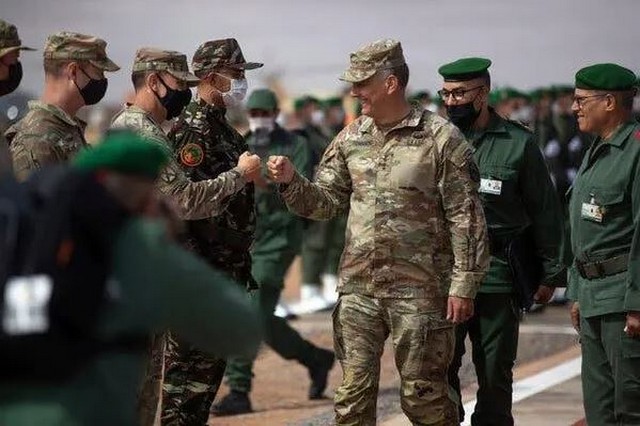
Syrian Extremists Had Free Access to Western Media, Says Award Winning Syrian Photographer

By Patrik Paulov

15 Jan 2022 – Issa Touma, photographer from Aleppo, has portrayed the Syrian people before, during and after the war. But it was only when he moved to Sweden that he understood why the Western world’s image of Syria was so distorted. Despite great difficulties in Syria, he feels hopeful for the future.

I call several times at the agreed time. I write a message. After a while, I get an answer: please try again later.

There is a power outage. I had to start the generator to start the computer. We only have electricity for maybe two or three hours a day, says Issa Touma when we talk via Facetime.

He is in Aleppo in northern Syria. The Internet connection is unstable but, during most of the conversation, both audio and video work. In Aleppo, Issa Touma has been running Le Pont Gallery for 25 years. Although he periodically has worked in Europe, he always returned to his hometown and his gallery.

When the war in Syria started in the spring of 2011, life in Aleppo continued as usual. On August 19, 2012, the calm was over. Issa Touma, who in his professional role usually stands by and watches and listens to people, ended up in the center of events. With his camera, he documented what he saw from his window.

The short film 9 Days – From My Window in Aleppo has received several international awards, and has been highlighted by BBC News and shown at festivals around the world. It depicts what happened when the war came to Aleppo.

Issa Touma’s street was at the front line in the fighting between the Syrian army and the armed groups. The film shows that it took nine days before the young, secular men with weapons disappeared and the uprising was in the hands of combat-experienced religious extremists.

Some of the fighters were foreigners. The military leader on Issa Touma’s street were from Chechnya.

“When the war started, a lot of people in Syria, especially the secular ones in the cities, were shocked by the religious fanaticism in the uprising. For me, it did not come as a surprise,” says Issa Touma.

“Before the war, I had traveled around northern and eastern Syria. I had visited the villages and listened to people. The change came with the U.S. invasion of Iraq in 2003. The influence of the fanatics grew rapidly in the years that followed.”

After the war came to Aleppo in 2012, four difficult years followed. Issa Touma’s home ended up on the eastern side of the divided city, which was controlled by extremist groups. For a time, the western, government-controlled part and its more than one million inhabitants were completely enclosed by the armed groups. There was an acute shortage of food, water, medicine and electricity.

Thousands of Aleppo residents fell victim to the shelling from the eastern side. But Western media rarely reported on what was happening in western Aleppo.

During these dark years, Issa Touma received scholarships that enabled him to save his digital archive and continue his work abroad. In March 2016, the Swedish city of Gävle, member of The International Cities of Refuge Network (ICORN), welcomed Issa Touma to stay there for two years.

“Something I asked myself during the first years of the war was how come the voices of the war fanatics were so loud in the West. I found the answer when I came to Sweden,” says Issa Touma.

”In Sweden, oppositional Syrians could tell anything and get it published. No one checked if the things they claimed were true. The task of these Syrians was to clean up the dirty pages of the war, so that the fanatics in Syria would get the support of European politicians.”

Issa Touma was frightened by the situation in Sweden. He saw cultural centers and human rights organizations controlled by Syrian extremists. He saw how some Syrians were elevated by media as Syrian experts, despite the fact that they barely had been in Syria during the war, and sometimes came from cities other than those they claimed.

These so-called experts were also among the cultural workers who received support from ICORN, Pen International and other similar organizations.

Issa Touma told me about a conference in Norway in 2017. At the conference, an acclaimed Syrian filmmaker said that allies of the Syrian government side conducted ethnic cleansing in Aleppo. The audience was told that Iranian Shia militias occupied the city and purged the Sunni Muslim majority.

“What was he saying, I asked myself. I had been in Aleppo recently before the conference and saw nothing of this. There are few Shia Muslim families in Aleppo, almost all living there are Sunni Muslims. But the audience in Norway believed his lies. Ten organizations had invited this filmmaker to speak.”

During the conference, the Syrian government was accused of killing an opposition activist, despite the fact that it was known that the terrorist group Jaysh al-Islam was guilty of the murder.

“I was so angry. I went to the ICORN director and said this is too much for me. I do not mind criticizing the Syrian government—but told him that ICORN should criticize what it does badly, rather than promoting the fantasies of war activists in Europe.”

9 Days – From My Window in Aleppo and Issa Touma’s other movies have been shown worldwide.

In Sweden, it was difficult to reach out to the public. During Issa Touma’s two-year stay in Sweden, his film was shown in Gävle only. Not a single film festival invited him. He believes that it is because of his refusal to accept the image that the conflict is between freedom-fighting rebels and a dictator.

“If that was really the case, then why did 80-90 percent of the inhabitants flee to the dictatorial side when the freedom fighters came? If it was freedom that they brought, then surely the people should have gone the other way?”

“People fled from eastern to western Aleppo because they were terrified of the Islamist fighters, not because they liked the government.”

Due to his statements, Issa Touma has been accused of being an agent of the Syrian government. He shakes his head at the absurd statement: “I am independent, and everyone knows my history with the government.”

That the ruling Ba’ath party did not always appreciate Issa Touma was obvious long before the war. His exhibitions and the annual international film festival attracted thousands of people. When the content was considered too controversial, the ruling party tried to stop the activities by turning off the electricity, and they forced him to keep the gallery closed.

In the autumn of 2016, the final battle for Aleppo took place. On December 22, 2016, the Syrian army retook the eastern part of the city, and the last hard-core jihadists and their families were bussed to Idlib west of Aleppo. During the Christmas celebrations the same year, thousands of Christians and Muslims took to the streets together.

The week after Christmas, Issa Touma entered the previously closed eastern part. He saw destruction and dead bodies. His house remained, albeit marked by bullet holes. Many of his neighbors’ homes had been demolished. He also saw how people tried to get their lives back to normal and do things they could not do before.

“A football pitch (soccer field) located on the outskirts of the Armenian Christian quarter in eastern Aleppo was quickly restored. The field is in the middle of war-damaged houses. It is a great place, always clean and tidy. It is not just Armenians who play there, all ethnic and religious groups come there.”

Five years after the liberation of Aleppo, a few hotbeds remain in Syria. One is the Idlib province under the control of Hayat Tahrir al-Sham, a former al-Qaeda branch in Syria. Another hotbed is the border area with Turkey in the north. It is occupied by Turkish troops in cooperation with the Western-backed Free Syrian Army with a new name. The wreckage of ISIS is operating in the east at the border area with Iraq.

Issa Touma’s image of Syria at the end of December 2021 is simultaneously both gloomy and positive.

He told me that “most of those who fled Aleppo during the war have not returned. At least one million people now live in the city, but it was two million before the war. The roads in the city have been cleared. The street to my house was one of the first to be opened. It is step one to enable people to return.

The biggest problem is the economy. The Syrian pound has plunged against the U.S. dollar, and commodity prices have risen dramatically.”

“Life has become so difficult,” Issa Touma continued. “A pair of shoes costs as much as the monthly salary of a government employee. In many families, all adults and also young people 16-17 years old work. It is their only chance to survive. A lot of people want to leave Syria for economic reasons, but it is difficult to get out when the road to Europe via Turkey is closed.”

When I ask him what role the U.S. and EU sanctions play, Issa Touma answers that he honestly “does not know the answer.” Instead, he points to what he himself can see in everyday life, such as that “some use the crisis to enrich themselves.

There is no control over business and pricing. Control is needed.”

However, Issa Touma believes that “the war did not only bring death and destruction.”

“For the past year and a half, I have chosen to only work in Syria,” he said. “The Syrian people who are 40 years and older are dreaming of going back to the old times. The young people, the war generation, do not remember what Syria was like before the war. Here is the chance to build something new.”

The young people he has interviewed for his film project Freedom of Choice are open to change. According to Issa Touma, Islamism is in sharp decline. The liberation process is also directed at deeply rooted traditions such as the influence of the family and the clan.

“The real revolution is starting now. It can give Syria a better future.”

Patrik Paulov is a freelance writer based in Gothenburg, Sweden. He has published several articles about the war in Syria in Sweden’s largest newspapers, as well as in alternative and independent media.

17 January 2022

Source: www.transcend.org