Just International

A Marcos Is Back in Power in the Philippines

By Mike Billington

May 12—Ferdinand Marcos Jr., the son of the nationalist leader
of the Philippines whose massive development programs for
his nation were crushed in one of the first “color revolutions,”
run by then Secretary of State George Shultz and his neocon
Deputy, Paul Wolfowitz, in 1986, has been elected President of
the Philippines in the May 9 election. While not yet official,
Marcos crushed his opponent, Leni Robredo, the darling of the
regime-change set in Washington, in preliminary statistics, by
two to one, setting a record in Philippine presidential elections
of 31 million votes.

Bong Bong Marcos, as he is known, or BBM, held rallies before
huge crowds across the country during the campaign, but gave
few interviews and simply skipped most of the debates.
Although he served as a senator, he had a sparse record of
legislative accomplishments.

So why the massive victory? In fact, Marcos was swept into
power on the hope by the masses of Filipino citizens that he
can restore the policies of the much beloved Ferdinand Marcos

Sr. His overwhelming victory, beyond the reach of the infamous
vote fraud capacities in the Philippines, serves to prove to the
Western world, at least, to those who appreciate the truth rather
than the fake news and information warfare now dominating the
Western press and governments, that his father and his
mother, Imelda Marcos, who worked closely together during the
Marcos era as President from 1965-1986, to build the
Philippines miracle—leading Southeast Asia in scientific,
industrial, medical and agricultural development, making it the
envy of its Asian neighbors.

Is this the way you remember the Marcos era? Is this the way
the Marcos legacy is reported in your newspapers? Rather,
what is reported ad nauseum is some variant of this lead article
in the May 9 Washington Post:

Ferdinand Marcos Jr., son of the late dictator whose family
plundered billions of dollars, was elected president of the
Philippines by a landslide, according to preliminary results, 36
years after his father was ousted in a historic revolution. For
critics, it marks a further backward slide for a nation—once
admired as one of the few democracies in Southeast Asia—that
continues to trudge down the path of populism.

Whether Marcos will follow his brilliant father’s legacy is not
certain, but his campaign slogan was “Together, we shall rise
again,” reflecting both his call for unity in the heavily divided
country, but also clearly the revival of the Marcos family policies
and values. He also had the support of the outgoing President
Rodrigo Duterte, whose daughter Sara was elected Vice
President in an even more resounding margin of three to one.

The Marcos Sr. Record

In a series of articles in EIR, this author presented the true
history of the 1986 coup against Marcos, portrayed to the world
by the whorish Western press as a “People’s Power” removal of
a vile killer and dictator:

• December 24, 2004: “Shultz and the ‘Hitmen’ Destroyed the
Philippines”
• May 16, 2008: “Why the Philippines is Starving—How Shultz
and the WTO Destroyed the Philippines Green Revolution”
• June 14, 2019: “U.S.-China Cooperation in the
Philippines—Operation Marcos: A Development Plan for Asia
and the World”

Here are some highlights:

Agriculture: Marcos was the first president of the Philippines
who did not rise from the elite class, but was a “commoner,”
trained as a lawyer. Making the nation self-sufficient in rice and
corn for the first time, he emphasized irrigation in the major
food-producing regions of Luzon and Mindanao. Credit
facilities, mechanization, and the introduction of high-yield rice
varieties, which needed irrigation, resulted in the self-
sufficiency in rice by 1968.

Eliminating the “latifundista” structure of agriculture under a
landed aristocracy was only possible after Marcos imposed
martial law in 1972. Although martial law was primarily aimed at
countering the communist insurgency in the country, Marcos
used it to break many aspects of the oligarchical control over
the economy. He proclaimed that the entire nation was to be
considered a “land reform area,” and declared that all tenants
working land devoted primarily to rice and corn were to be the
owners of that land, up to a specified limit. Over enraged
opposition from the oligarchs, the program, together with
infrastructure and mechanization improvements, made a
quarter of a million peasants into landowners and increased
grain productivity by half. [Box: Why Marcos Was a Target for
Regime Change]

Nuclear Power: In 1974, Marcos contracted with
Westinghouse to build a nuclear power plant in the Philippines,
which was to be, and is still today, the only nuclear power plant
in Southeast Asia. As originally contracted, the plant would
have cost about $1 billion, and produced 1,200 MW of
electricity by 1984. However, with the anti-nuclear hysteria
following the Three Mile Island (inconsequential) accident in
1979, the Carter Administration imposed retroactive safety
regulations which contributed to more than doubling the cost of
construction. After the 1986 color revolution placed Cory
Aquino, of the latifundista Aquino clan, in power, the fully
completed Bataan nuclear power plant was mothballed, never
to produce a single watt of electricity. Aquino agreed to her
controllers’ demands in Washington that the Philippine people
pay every cent of the inflated cost, for nothing.

Industrial Projects: Marcos launched 11 major industrial
projects, shifting the focus of the nation’s manufacturing
economy from consumer goods to basic heavy industry. This
included steel, petro-chemical, pulp and paper, a copper
smelter, aluminum, phosphate fertilizer, diesel engines, gas
and oil, a coconut industry, and the nuclear power program.
The administration tripled the country’s road network, doubled
the electrification of the country’s homes, increased irrigated
cropland eight-fold, and achieved rice and corn self-sufficiency.
Minimum daily wage rates tripled, although inflation, driven by
international oil price hikes and exploding U.S. interest rates,
more than wiped out these wage increases.

Philippine Heart Center For Asia: In 1975, under First Lady
Imelda’s leadership, Marcos established by presidential decree
the Philippine Heart Center for Asia, open for both paying
patients and charity patients from across Southeast Asia. It stands, still today, as one of the foremost heart hospitals in Asia.

All of these programs—every one, except the Heart
Center—were totally destroyed by the 1986 coup. The
oligarchs, placed in power to “save freedom and democracy,”
scrapped all the industrial programs, ended food self-
sufficiency, privatized power and water utilities, shuttered the
nuclear power plant, and much more, at the command of Wall
Street and Washington. The Philippines, once the envy of its
Asian neighbors, soon became the basket case of Asia, with
mass poverty, transportation bottlenecks, mass unemployment
and a horrendous drug addiction crisis.

Marcos Jr.’s Program?

While BBM has said little about his intentions, there have been
some signals. “We really have to look at nuclear power,” he
said in March, addressing the exorbitant and rising cost of
electricity. Although he goes along with the undependable and
expensive green energy hype for wind and solar, he said a
South Korean proposal to rehabilitate the Bataan nuclear plant
should be revisited: “Let’s look at it again.”

Antonio “Butch” Valdes, the founder of the Philippine LaRouche
Society and of the new political party KDP (Katipunan ng
Demokratikong Pilipino), has long campaigned to reopen the
Bataan plant and to build more nuclear plants across the
country, especially the new small modular reactors (SMRs)
which are now coming on line. He also has campaigned to re-
nationalize the utilities away from the oligarchs who have
demonstrated their failure to run them on behalf of the
population. The potential for BBM to revive his father’s
movement for an actual transformation of the nation will depend
on his willingness to take on these issues against the U.S.-
influenced oligarchical families.

The financial lords of Wall Street and the City of London are
distraught over the Marcos/Duterte victories. Goldman Sachs
complained that—

[Marcos] has sounded a less cautionary note on rising public
debt levels, while emphasizing measures such as subsidizing
key agricultural inputs or capping key food prices to contain
inflation risks, alongside initiatives to revitalize the industrial
sector and SMEs [small and medium-sized enterprises] to
provide more jobs.

Goldman has threatened that if Marcos is so reckless as to try
to build the economy and improve the living standards of the
impoverished population, then investors may “pull out and
outsource their services elsewhere,” leading to “massive
layoffs.” Their support for the defeated Leni Robredo was in no
way hidden, praising her throughout the campaign for her
subservience to Western finance and her rabid attacks on
China.

The Key Role of China

Indeed, it is the Philippine relationship with China that is the
crucial issue which will determine the success or failure of the
new Marcos era. BBM’s mother, Imelda, played a critical
foreign policy role in her husband’s administration, leading a
delegation to Beijing in 1974, meeting twice with then Prime
Minister Zhou Enlai and once with Chairman Mao Zedong,
arranging for the purchase of Chinese oil and China’s purchase
of Philippine exports. Bong Bong accompanied his mother on
that trip, and treasures the pictures of his meeting with Zhou
Enlai. Mao pledged to Emelda that the Cultural Revolution
leaders who had been training communist insurgents in the
Philippines had been deposed, and that, henceforth, China
would respect Philippine sovereignty under the Chinese
Communist Party’s Five Principles of Peaceful Coexistence.

Today that relationship is even more important. As the Western
financial system collapses into a hyperinflationary breakdown, driving deadly inflation in the former colonial countries like the Philippines, and with Washington demanding that these impoverished nations kowtow to their efforts to destroy Russia and China, Marcos Jr. bravely asserted:

No matter what the superpowers are trying to do, we have to
work within the interest of the Philippines. We cannot allow
ourselves to be part of the foreign policy of other countries. We
have to have our own foreign policy.

Soon after his election in 2016, Duterte visited China, meeting
with President Xi Jinping, and other delegations from the
Philippines followed. A Six-Year Development Program for
Trade and Economic Cooperation was signed with China in
March 2017. In November 2018, President Xi visited the
Philippines and signed 29 cooperative agreements, lifting the
China-Philippine relationship to the level of “Comprehensive
Strategic Cooperation.” These agreements include bridges, a
dam, irrigation systems, highways, industrial parks, drug rehab
facilities, and more. While some of this is in process, the
COVID-19 pandemic, which had a devastating impact on the
Philippines, has stalled many of the projects. Hopefully, this
cooperation with the Belt and Road Initiative will continue and
expand under the new Marcos administration.

Between them is Mike Defensor, candidate for mayor of
Quezon City.

Regarding the South China Sea, and the 2016 arbitration ruling
at The Hague which rejected Chinese claims over certain areas
also claimed by the Philippines, Marcos Jr. has said that since
China did not even attend the arbitration and does not recognize it, “it’s no longer available to us.” Nonetheless, he added, “We will not cede any one square inch to any country, particularly China, but will continue to engage and work on our national interest.” That will come through negotiations, he insisted, not confrontation.

As to relations with the U.S., Marcos Jr. insists that he respects
the historic relationship with the former colonial power, but told
a radio host:

If you let the U.S. come in, you make China your enemy. I think
we can come to an agreement [with China]. As a matter of fact,
people from the Chinese embassy are my friends. We have
been talking about that.

BBM was the special guest at an event in the Chinese
Embassy last October, when the Embassy invited him to cut
the ribbon for a new photo display of historic moments of
China-Philippines relations, including a photo of then Chinese
Premier Zhou Enlai and former President Ferdinand Marcos
signing the Joint Communiqué on the Establishment of
Diplomatic Relations between the Philippines and China on
June 9, 1975—four years before the U.S. established official
relations with Beijing.

Speaking at that October event, Chinese Ambassador Huang
Xilian said:

While [we] always cherish and honor old friends, we hope that
more and more people from our two countries will be committed
to deepening our partnership and cooperation, so as to bring
more benefits to our two peoples and pass on our traditional
friendship from generation to generation. Together, we are
opening up a brighter future! As to the oligarchs’ view of BBM,
Antonio Carpio, the former Supreme Court Judge who led the
Philippines’ legal team at the arbitral tribunal, said Marcos’s
stance in regard to the South China Sea was a “betrayal. He’s
taken the side of China against the Philippines.”

Outgoing President Rodrigo Duterte had been more direct in
cutting ties with the U.S. neo-colonial policies, especially the
military agreements, although he has since softened and has
allowed the U.S. to set up military operations within five
Philippine Army Bases. How Marcos will deal with the U.S.
military presence, especially in the context of the mounting
belligerence of the “NATO in Asia” campaign by London and
Washington, is yet to be seen. There is a very real potential
that NATO will provoke China into military action against
Taiwan by threatening to recognize Taiwan as an independent
country, undermining China’s sovereignty over Taiwan under
the “One China” policy acknowledged by the U.S. in 1979 when
they recognized the People’s Republic of China in Beijing as
the “sole legal Government of China.” It has been shown by the
NATO provocations of Russia over Ukraine that the ultimate
purpose was to create a justification to wage direct economic
warfare, and proxy military warfare against Russia within
Ukraine, threatening a nuclear confrontation.

One complicating factor for Washington is that under current
U.S. law, Marcos Jr. and the rest of his family are not allowed
to enter the U.S. The family was held in contempt of court for
refusing to co-operate with the District Court of Hawaii ruling in
1995 which ordered the Marcos family to pay $2 billion of what
the court falsely declared “plundered wealth,” to be handed out
to people they declared to be “victims of Marcos Sr.’s rule.” If
the current madness in Washington is not stopped, to continue
the drive for world war and to do nothing about the collapse of
the entire Western financial system, it were better Ferdinand
Marcos Jr. stays away.

Why Marcos Was a Target for Regime Change

Ferdinand Marcos Sr. wrote the book, An Ideology for
Filipinos, published in 1983. The following excerpt exemplifies
why he was targeted for regime change:

The western philosophic tradition locates man’s uniqueness in
his rationality: it defines man as a rational animal. The idea of
man does not necessarily lead to the philosophy of humanism,
for the concept of rationality could be construed
mechanistically: as a movement of thought that follows a set of
inflexible principles. The Cartesian conception of reason is
mechanistic in this sense. For it regards thinking as something
that can be pursued in one way: beginning with clear and
distinct notions, the mind moves forward, step by step,
following only the dictates of logic. What Cartesianism
overlooks is that element of creativity so essential to the
concept of human rationality. The recognition of man’s
creativity, or that impulse to create new forms and new modes
of coping with the demands of reality, has tremendous
implications—not only for a philosophy of man but also for
social policy and thus for ideology.

In a sense, we can regard the history of civilization as the
history of human creativity. The so-called scientific revolutions
represent man’s disengagement from traditional modes of
thinking….

The humanistic thrust of our ideology precisely takes into
account the fact that apart form being rational, in the Cartesian
sense of the term, man has a gift of creativity that expresses
itself not only in his art but also in his science and social
institutions. This creativity is what makes man truly human. In
fact, it seems more appropriate to define man not as a rational
animal, but as a creative being.

20 May 2022


Jeremy Corbyn: It’s Not Enough to Resist—We Have to Build, Too

By Jeremy Corbyn

In April, the UN’s climate scientists warned it’s “now or never” to limit global warming to 1.5 degrees Celsius above preindustrial levels. You can almost hear them screaming at their keyboards, desperate for governments to actually do something, when they outline the need for “rapid, deep and immediate” cuts in CO2 emissions. But their words are not just a warning about the future; they describe the present reality for billions of people.

South Asia is now into its third month of extreme heat, with temperatures soaring above 40 degrees Celsius day after day. And it’s not just South Asia that is sweltering. In March, both the Arctic and the Antarctic were 30 degrees Celsius and 40 degrees Celsius above their usual average temperatures, respectively. Ice is melting, and sea levels are rising. Thirty million people were displaced by climate shocks in 2020. And these shocks store up more strife to come by wrecking harvests.

The supply chains that connect the world’s farms, mines, factories, shipping lanes, ports, warehouses, delivery networks and consumers are already massively disrupted, even before the full effects of climate breakdown are felt. In the heavily integrated global capitalist economy, disruption spells disaster. Already, more than 800 million people—1 in 10 people of the entire world’s population—go to bed hungry.

The price of wheat has doubled already this year. And it could rise further as the effects of Russia’s criminal invasion of Ukraine and Russia’s resulting partial economic isolation are felt across the globe.

Wars lead to hunger, mental distress, misery and death for years after the fighting stops. There must be an immediate ceasefire in Ukraine, the withdrawal of Russian forces from Ukrainian territory and a negotiated settlement between the two countries.

If there isn’t, then not only will the Ukrainian people continue to face the horror of shells, tanks and air raid sirens; not only will Ukrainian refugees suffer uncertain futures and dislocation from their families and communities; not only will young Russian conscripts be sent off to be brutalized in the army and die in a foreign land for a war they don’t understand; not only will Russian people suffer under sanctions; not only will the people of Egypt, Somalia, Laos, Sudan and many others who rely on wheat from the belligerent nations continue facing rising hunger.

But everyone on earth faces the threat of nuclear Armageddon if the war in Ukraine continues. The threat of direct confrontation between Russian and NATO forces is a clear and present danger to all of us. That’s why it is so important that we support the Treaty on the Prohibition of Nuclear Weapons, which is now part of international law thanks to inspiring campaigning by countries in the Global South.

It will not be easy. Weapons companies do extremely well out of war. They fund politicians and think tanks. They have their many media mouthpieces. Those who strive for peace and justice are vilified because behind conflict stand the interests of the war machine. They threaten the ill-gotten wealth and power of the few.

We see it with painful clarity in the pandemic as Big Pharma refuses to share vaccine technology that was mainly developed with public funds. Who benefits? The pharma executives and shareholders. Who loses? Everyone else. More mothers and fathers die. More livelihoods are wrecked. And the threat of viral mutation hangs over everyone, vaccinated and unvaccinated alike.

The state is used to prop up the wealth of the richest. Central banks pumped in $9 trillion in 2020 in response to the pandemic. The result? Billionaire wealth went up by 50 percent in one year, when at the same time the world economy shrank. The billionaires and corporations claim to hate government action. In reality, they love it. The only thing they hate is governments acting in your interests. And so, they fight to keep governments in their pocket and try to overthrow those that aren’t.

When we step back and survey all of these dynamics, a truth dawns on us. We used to think that there were a series of distinct crises: the climate crisis, the refugee crisis, the housing shortage crisis, the debt crisis, the inequality crisis, the crisis of the rich getting richer and the poor getting poorer. We tried to isolate each one and solve it.

Now we can see that we don’t face multiple separate crises. The system itself is the crisis. The global system is not in a crisis that can be resolved. The system is crisis and must be overcome, replaced and transformed.

The end of the world is already here—it is just unevenly distributed. The image of apocalypse—bombs and raids, oil spills and wildfires, disease and contagion—is a reality for people across the planet.

The periphery is the future, not the past. We were told that developed countries give the developing world an image of their future. But the periphery sits at the vanguard of history—where the crises of capitalism hit hardest, the consequences of climate collapse arrive the quickest, and the call to resist them rings the loudest.

That resistance is powerful and inspiring. The world recently witnessed the largest strike in history when Indian farmers and their worker allies resisted the neoliberal bills that Prime Minister Narendra Modi’s government wanted to force through their parliament. The farmers stood up for themselves, their livelihoods and the needs of the poor. And they won.

Or take Amazon, the world’s sixth-largest company, which has made record profits during the pandemic. Its greed and exploitation are being fiercely resisted by workers, communities and activists on every continent in the world. They have come together to make Amazon pay.

In Latin America, the people are rallying to support progressive political leaders to say no more to the domination by imperialism, the destruction of their communities and the abuse of their environments.

But it’s not enough to just resist. We have to build a new world brimming with life, bound by love and powered by popular sovereignty.

How do we do that? We strengthen workers and rural workers in their struggles against exploitation, support people and communities in their fights for dignity and join progressive forces to mobilize state power. And we bring them all together into powerful people’s alliances with the capacity to remake the world. If we do that, we will breed hope over despair.

So I want you to commit today: Double your efforts in the struggles you are involved in. Join that campaign you’ve been thinking about joining. Show that real solidarity.

I want you to be able to look back in a generation’s time and say, yes, I built the trade unions, the community organizations, the social movements, the campaigns, the parties, the international platforms that turned the tide.

I want you to be able to say, yes, we produced and distributed the food, homes and health care so no one endures poverty; preserved and shared the wisdom of the people of this planet; spread love between people and communities; built the energy system to decarbonize our planet; dismantled the war machine and supported refugees; reined in the power of the billionaires; and secured a new international economic order.

Will it be easy? Of course not. We will face enormous resistance. Of course we will.

But, as the great and wonderful Chilean poet Pablo Neruda once wrote, “You can cut all the flowers, but you cannot stop spring from coming.”

And spring, my friends, is coming.

Adapted from Jeremy Corbyn’s inaugural speech to the Progressive International’s Summit at the End of the World on May 12, 2022.

Jeremy Corbyn is a member of the UK Parliament, former leader of the UK Labour Party and the founder of the Peace and Justice Project.

14 May 2022

Source: countercurrents.org

MESSAGE ON THE OCCASION OF NAKBA DAY 2022

Palestine Update 551

Global Network for Palestinian Refugees and Displaced Persons
Indo Palestine Solidarity Network, India (IPSN)
Global Kairos for Asia Pacific Solidarity with Palestine GKAPPS)
Palestine Updates

MESSAGE ON THE OCCASION OF NAKBA DAY 2022

Today we stand here in India, and Asia-Pacific region, in unity with our people in the refugee camps in Gaza, the West Bank, Lebanon, Syria and Jordan, and in the countries of the distant diaspora, to declare that we are one people, we have one destiny, and that our return is certain.

Today we stand here to renew the pledge that we will continue to resist the ongoing Nakba. The Nakba is not a memory. The Nakba is ongoing with the continued domination of the Israeli colonial-apartheid regime. The Nakba continues with forced displacement, denial of return and residency rights, fragmentation and racial segregation, discriminatory planning and permit regimes, repression, arbitrary arrests and detentions, extra-judicial killings/executions and collective punishments, home demolitions, and denial of access to natural resources and services.

Today we stand here to say that ending the ongoing Nakba requires the dismantling of the Israeli system of colonialism and apartheid politically, economically, legally and ideologically. We stand here to recall that dismantling this regime is the responsibility of the Palestinian people as it is the responsibility of all the free people in the world, because colonialism, apartheid, forced displacement, denial of self-determination, and persecution in all their forms are crimes against humanity and international crimes that must be stopped.

We stand here to confirm that the services of the United Nations Relief and Works Agency for Refugees (UNRWA) are not a gift that the world would kindly give to the refugees of our people. UNRWA services are a right for Palestinian refugees, and providing them is an international responsibility incumbent on the United Nations and individual states. That is why we declare our total rejection of the imposition of political conditions by the United States of America and the European Union on UNRWA in exchange for funding. We reject forcing UNRWA to erase Palestine from the Palestinian curriculum, and reject turning it into a security agency spying on our people for the benefit of the Israeli regime and the donor countries. The project of transferring UNRWA’s services to countries of asylum or to other international agencies and organizations aims to liquidate UNRWA – the existing witness to the international responsibility for the plight of the Palestinian people and their displacement.

We stand to say that the Oslo Accords and the facts they produced are invalid and rejected, and that normalization serves the Israeli colonial – apartheid regime and not the rights of the Palestinian people or peace. We affirm that depriving refugees of their human rights in host countries does not serve return, but rather pushes them to death boats on the high seas and oceans.

Therefore, we affirm:

First: The return of Palestinian refugees and internally displaced persons to their original homes, the restoration of their properties and compensation is a national, legal and human right that is not subject to derogation, restriction, delegation or substitution, and that any solutions that do not expressly recognize this right are null and rejected.

Second: Ensuring a permanent and stable budget for UNRWA by the international community does not constitute a gift or favor from anyone. It is an international responsibility that is due to the Palestinian people, and it is not permissible to detract from it nor to use it for political blackmail.

Third: The necessity of recognizing the basic human rights of Palestinian refugees and not discriminating against them in host countries.

Fourth: Resistance and partnerships with the solidarity, rights and liberation movements in the world is the way to dismantle the system of colonialism and apartheid, not victim rhetoric or begging and seeking sympathy.

One people, one destiny, and our return is certain

Glory to the martyrs, healing to the wounded, freedom to the prisoners, and long live a free Arab Palestine


Signed by
*

GLOBAL KAIROS ASIA PACIFIC SOLIDARITY FOR PALESTINE

*

INDO PALESTINE SOLIDARITY NETWORK

*

PALESTINE UPDATES

14 May 2022

Source: palestineupdates.com

Fear of Nuclear War Drives More into Action against Global NATO

by Gretchen Small

[Print version of this article]

April 30—On April 26, the Committee for the Republic, a group formed by American policymakers and “strategic realists,” convoked a “salon” in Washington, D.C. and online, to clarify the U.S. Congress’s war power responsibilities with regard to the conflict in Ukraine. Speakers included the Committee chairman, Rep. Thomas Massie of Kentucky, John Henry, and Vice Chairman Bruce Fein. Their conclusion: The United States has become a “co-belligerent” in a war with Russia, by providing arms, intelligence, and personnel to Ukraine since Feb. 24. By so doing, it has made itself a legitimate target for Russian attacks under international law—and this has been done without a Congressional declaration of war, and thus is unconstitutional.

The Committee was founded in 2003, after President George W. Bush launched an unprovoked war upon Iraq, also without a congressional declaration of war, its chairman, Henry, reminded. Since then,

imperial presidents under the leadership of the Republican and Democratic parties have waged unconstitutional wars with abandon across the Middle East…. Article I, section 8, clause 11 establishes neutrality as the default policy of the United States until such time as Congress formally takes the country from a state of peace to a state of war,

which clearly has not occurred in this latest war.

Rep. Massie denounced current U.S. policy of arming “‘peaceful, moderate’ Nazis” in Ukraine, as the United States had armed “‘peaceful, moderate’ terrorists” in Syria. He called NATO a Cold War relic, whose expansion to Russia’s borders created the conditions for this conflict. Most importantly, he raised the reality that the policy of backing Russia into a corner, with NATO, sanctions, charges of war crimes, etc., risks nuclear war.

Massie explained: When I am asked back home for a quick answer as to why I have voted against various resolutions and sanctions against Russia, I tell people: “If there’s a 5% chance of going into nuclear war, and I can reduce it to 2% by my vote, then that vote I will take.”

That such a discussion takes place in Washington, D.C. is a start. Many, many more such discussions are urgent in the countries of “the collective West,” in order to break the iron-grip of censorship, lies, and persecution thrown against those who do dare speak up.

This week, we focus our reporting of global opposition against “Global NATO” on voices being raised from behind the Iron Curtain imposed upon the United States and Europe. The common denominator of most of the opposition statements below, is the urgency of turning back to a policy of reaching a negotiated conclusion to this war, out of the realistic fear that the current, now-openly-stated policy of not permitting any settlement until Russia is crushed as a nation, has brought the world to the brink of global, possibly nuclear war.

United States

U.S. a ‘Co-Belligerent’ in Ukraine War, Legal Expert Says

CC/Gage Skidmore
Bruce Fein

Constitutional lawyer Bruce Fein, who served as Associate Attorney General in the Reagan administration, is warning all who will listen, that U.S. and several NATO members

have become co-belligerents with Ukraine against Russia by systematic and massive assistance to its military forces to defeat Russia, [and are thus vulnerable to attack by] an enemy belligerent [that is, Russia, because of their] systematic or substantial violations of a neutral’s duties of impartiality and non-participation in the conflict.

Fein’s warning was reported by James Carden, himself a former State Department advisor, journalist and senior consultant to the American Committee for U.S.-Russia Accord, in his April 19 Asia Times article with the above title.

U.S. involvement goes deeper than arms sales and intelligence sharing, Carden reported:

A Pentagon official who requested anonymity told me it is “likely we have a limited footprint on the ground in Ukraine, but under Title 50, not Title 10,” meaning U.S. intelligence operatives and paramilitaries—but not regular military.

Such violations of neutrality are unconstitutional, Fein emphasized:

Under the Declare War Clause of the Constitution, co-belligerency, which displaces the status of the United States as neutral, requires a declaration of war by Congress.

A Voice of Sanity: Prof. Michael Brenner

Senior American foreign policy expert Michael Brenner ripped into the “cartoon caricatures” used today to portray the rationale behind Russia’s military operation in Ukraine and what motivates Putin, in a spirited interview with Robert Scheer of Scheer Intelligence April 15. Brenner was a prestigious senior professor at the University of Pittsburgh and the University of Texas, and a fellow at Johns Hopkins SAIS, working also at the State Department’s Foreign Service Institute and the Department of Defense, during his decades-long career, but he has been subjected to vitriolic attack unlike anything he had ever experienced, he reported. Brenner nonetheless continues to insist that the United States must adopt a “dialogue of civilizations” approach to both Russia and China.

On Putin, Brenner told Scheer:

What we’re getting is not only a cartoon caricature, but a portrait of the country and its leadership—and by the way Putin is not a dictator. He is not all-powerful. The Soviet (sic) [Russian] government is far more complex in its processes of decision-making.…

And he is, Putin himself, an extraordinarily sophisticated thinker. But people don’t bother to read what he writes, or to listen to what he says.

I know, in fact, of no national leader that has laid out in the detail and the precision and the sophistication his view of the world, Russia’s place in it, the character of interstate relations, with the candor and acuity that he has. It’s not a question of whether you believe that that depiction he offers is entirely correct.… But you are dealing with a person and a regime which in vital respects is the antithesis of the one that is caricatured and almost universally accepted, not only in the Biden administration but in the foreign policy community and the political class, and in general.

It’s been the objective of American foreign policy for at least a decade to render Russia weak and unable to assert itself in any manner of speaking in European affairs. We want it marginalized, we want to neuter it, as a power in Europe. And the ability of Putin to reconstitute a Russia that was stable, that also had its own sense of national interest, and a vision of the world different from ours, has been deeply frustrating to the political elites and the foreign policy elites of Washington….

There is growing and now totally persuasive evidence that when the Biden people came to office, they made a decision to create a crisis over Donbas to provoke a Russian military reaction and to use that as a basis for consolidating the West, unifying the West, in a program whose centerpiece was massive economic sanctions, with the aim of tanking the Russian economy and possibly and hopefully leading to a rebellion by the oligarchs that would topple Putin….

Why do Americans feel so threatened, so anxious?

… We have to look in the mirror and say, well, we’ve seen … the source of our disquiet, and it’s within us; it’s not out there, and it is leading to gross distortions of the way in which we see, we depict, and we interpret the world all across the board….

I truly believe that we are talking about collective psychopathology. And of course, collective psychopathology is what you get in a nihilistic society in which all sort of standard conventional sort of reference points cease to serve as markers and guideposts on how individuals behave.

And one expression of that is the erasure of history. We live in the existential … moment, or week, or month, or year or whatever. So, we totally, almost totally forget about the reality of nuclear weapons….

Germany

Open Letter: Replace Logic of War with Logic of Peace!

Days before the German government announced its decision to deliver heavy weapons to Ukraine on April 26, German academicians, artists, churchmen, and journalists had appealed to the German Chancellor not to deliver weapons to Ukraine and thereby prolong the war, but instead take the lead for an initiative to have a ceasefire and begin serious talks on a peace agreement. The letter warns that a bigger war, potentially a nuclear one, could grow out of a prolonged war in Ukraine.

Here are excerpts from that letter, published April 22 in the Berliner Zeitung. Signers include Hans-Christof Graf von Sponeck, former Assistant Secretary General of the UN, and Dr. Antje Vollmer, former Vice President of the German Bundestag:

Dear Chancellor Scholz,

We are people of different backgrounds, political attitudes and positions toward the policies of NATO, Russia and the German government. We all deeply condemn this war of Russia in Ukraine, which cannot be justified by anything. We are united in warning against an uncontrollable expansion of the war with unforeseeable consequences for the entire world and in opposing a prolongation of the war and bloodshed with arms deliveries.

By supplying weapons, Germany and other NATO countries have de facto made themselves a party to the war. And thus, Ukraine has also become the battleground for the conflict between NATO and Russia over the security order in Europe, which has been escalating for years.

This brutal war in the middle of Europe is being fought on the backs of the Ukrainian population. The economic war now unleashed is at the same time endangering supplies for the people of Russia and many poor countries around the world. Reports of war crimes are mounting. Even if they are difficult to verify under the prevailing conditions, it can be assumed that in this war, as in others before, atrocities are being committed and the brutality increases with its duration. All the more reason to end it quickly.

The war carries the real danger of an expansion and uncontrollable military escalation—similar to that in the First World War. Red lines are drawn, which are then crossed by actors and hazards on both sides, and the spiral is once again one step further. If responsible people like you, dear Chancellor, do not stop this development, we will end up with another big war. Only this time with nuclear weapons, widespread devastation, and the end of human civilization. Avoiding more and more casualties, destruction and further dangerous escalation must therefore have absolute priority….

We therefore call on the German government, EU, and NATO countries to stop supplying arms to Ukrainian troops and to encourage the government in Kyiv to end military resistance—in exchange for assurances of negotiations on a ceasefire and a political solution.

Negotiations on the rapid withdrawal of Russian troops and the restoration of Ukraine’s territorial integrity should be supported by NATO countries’ own proposals regarding legitimate security interests of Russia and its neighbors….

The prevailing logic of war must be replaced by a bold logic of peace, and a new European and global architecture of peace must be created, including Russia and China. Our country must not stand on the sidelines here, but take an active role.

General Slams Green Politicians, Insists on Ceasefire

Brig.-Gen. (ret.) Erich Vad

Erich Vad, a retired Bundeswehr brigadier general and security advisor to former Chancellor Angela Merkel, repeatedly warned against capitulating to the demands that Germany send heavy weapons to Ukraine, before Chancellor Scholz did so this week. On the primetime TV show Maybrit Illner April 21, Vad had caused another stir, with his insistence that:

We have to put the political emphasis on the time after, on a possible ceasefire…. Delivering battle tanks now would make no sense militarily because we would have to send technicians along and have no time to train them. Moreover, these tanks would never reach eastern Ukraine. Russia would never allow that.

Vad attacked the Green Party, in particular, for their campaign for heavy weapons:

It bothers me when German politicians from the Greens present military solutions as the ultimate goal. That’s crazy. These are politicians who have nothing to do with the military, who have refused military service. We have to come to some kind of cease-fire in the end…. We have to be careful with our military rhetoric and with arms deliveries. To assume that only one side can win in the end is a mistake.

Former German National Security Advisor Argues for Diplomacy to Prevent Nuclear War

CC/StagiaireMGIMO
Horst Teltschik

In an April 28 interview with web.de magazine yesterday, Horst Teltschik, the national security advisor of former Chancellor Helmut Kohl who was personally involved in the negotiations with Russia on German reunification, was asked how great the danger of nuclear war is. No one knows the answer to that, Teltschik answered. He put the onus on Russia possibly using nuclear weapons, because he, and others, think Vladimir Putin “believes he needs a victory—whatever it may look like. Russia cannot afford to lose. That’s what key Kremlin advisers say, too, for example, Sergei Karaganov, whom I’ve known since the 1980’s.”

But while Teltschik has questions about what Putin’s real motives are, he acknowledged Western errors:

For sure, Russia has an interest that Ukraine cannot become a member of NATO, that it is neutral and does not pose a military threat to Russia, that the already-occupied territories of Crimea and Donbas get a pro-Russian status. That was also part of the Minsk Agreement. And, of course, you also have to ask Ukraine why it was so inflexible about the Minsk Agreement.

Teltschik thinks NATO should not have expanded first, but rather the European Union—which also has security guarantees for its members:

At the same time, the establishment of a European free-trade zone involving Russia should have been pursued.

But none of these designs was ever seriously pursued by the West, and the NATO-Russia Council was never ever seriously made use of.

I have never understood why the NATO Secretary General did not convene this Council, especially in crisis situations. If he did, it was only at the ambassadorial level, which can’t make decisions anyway. So, we have had a number of instruments that have not been used specifically by the West….

You have to talk to the heads of state or government, whether you want to or not, and whoever they are. But I’ve always said: it’s better to talk than to bang your heads…. It is always crucial to create some kind of atmosphere of trust….

Teltschik worries that whereas there was trust among Helmut Kohl, Michael Gorbachev, and George Bush 40 years ago, today “relations of trust between Putin and the West are more or less dead.”

Scandinavia

Senior Finnish Parliamentarian Slams ‘War Psychosis’

CC/Paasikivi
Erkki Tuomioj

Finnish MP Erkki Tuomioja, Vice Chairman of the Parliament’s Foreign Affairs Committee, told American National Public Radio April 22, that he views the growing support for Finland joining NATO as the result of fear and emotion. Tuomioja, a veteran politician and member of the governing Social Democratic Party who has served as foreign minister in several governments over the past two decades, told NPR:

Public opinion plays a big role in this, but there is also this ingrained fear, which is actually fueled also by our media, which is in a state of, I would say, war psychosis, in a sense—

… That Finland could any day expect to be attacked—I don’t think this is realistic….

[Joining NATO] would create tensions with Russia, obviously. And we have had a very pragmatic relationship with Russia in terms of logistics, environment and regional cooperation….

I’m also concerned about the level of the public debate. Anybody who questions membership is being vilified as a Putin agent.

NATO Is Part of the Problem, Not the Solution

Alexis Kouros

The editor-in-chief of Helsinki Times, Alexis Kouros, cited Tuomioja’s warning, in his April 25 column headlined, “NATO Is Not the Solution to Finland’s Security Concerns, but Part of the Problem.” Kouros argues that popular support for NATO membership is the product of a momentary panic resulting from the shock of the Russian invasion, and Finland’s own history with Russia:

Historically, the majority of Finns have never supported joining NATO. Pro-NATO parties want to use this “shell shocked” status of the nation to expedite the submission of Finland’s NATO application, before blood returns to people’s heads….

This false perception, that the Ukraine war is a good opportunity to join NATO, is shared by many Finnish politicians across party lines. A momentum which could have been used for novel progress, is being used to trap Finland in the past, this time as a participant in the new cold war…. There is no reason for Russia to show aggression against Finland, unless Finland provokes Russia with bad decisions….

Some NATO supporters … have claimed that NATO is a defensive alliance and for that reason, Russia should not be concerned. This claim is utterly false. NATO has not had a single defensive war since its establishment. On the contrary, the alliance, or collection of its members have attacked several countries with tragic consequences….

A fundamental characteristic of strong and wise leaders is that they don’t make decisions out of emotions or fear and in haste. Unfortunately for Finland, we lack those leaders now when we need them badly. What we need now for our fragile post-pandemic world is de-escalation and de-militarization, not more arms, new arms races, and a new cold war.

Swedish Left Party Leader Says ‘No’ to NATO, Demands Referendum

CC/Vansterpartiet bildbank/Jessica Segerberg
Nooshi Dadgostar

In a dramatic turn, Swedish Left Party leader Nooshi Dadgostar on Swedish Public Radio news April 28 said “no” to NATO membership for Sweden and demanded a referendum. She raised the issue of keeping nuclear weapons out of Sweden, which strategically is the big issue, as NATO membership for Sweden and Finland could lead to a Cuban missile crisis in reverse in Northern Europe.

Not only would Russian cities be threatened with mere minutes of warning, but also the Kola Peninsula, where the major part of Russia’s nuclear submarine fleet is based, which provides Russia’s second-strike capabilities. From the Finnish border, it is just 180 km to Murmansk, Kola’s largest city, and 450 km to Sweden.

Dadgostar’s statement will significantly influence the decision-making process in the Social Democratic Party, which began April 22 and will continue until a final decision is taken by the party on May 24th. Already the sudden spurt of support for joining NATO has fallen from 49% to 47% since just last week. More voices are being raised daily in Sweden against NATO.

Italy

Italian President Calls for New Helsinki Conference

Presidenza della Repubblica
President Sergio Mattarella

Speaking April 27 before the Council of Europe, Italian President Sergio Mattarella harshly condemned Russia and supported sanctions, as he has before, but then called upon the international community “to obtain a ceasefire and restart with the construction of a respectful and shared international framework that leads to peace.” To accomplish this, he proposed that a peace and security conference like the 1975 Helsinki conference be convened:

For a moment, let’s practice—borrowing them from the language of the so-called “cold war”—spelling out words we thought had fallen into disuse, to see if they can help us get back on track, however difficult it may be. Détente: to interrupt hostilities. Repudiation of war: to return to the status quo ante. Peaceful coexistence among peoples and states. Democracy—as the precious work of the Venice Commission of the Council of Europe teaches us—as a condition for the respect of the dignity of each one. Finally, Helsinki and not Yalta: dialogue, not tests of strength between great powers that must understand that they are less and less so.

To envisage an international forum that renews the roots of peace, that restores dignity to a framework of security and cooperation, following the example of the Helsinki Conference that led, in 1975… of which the Organization for Security and Co-operation in Europe was the offspring.

It is a matter of strongly affirming the rejection of a policy based on spheres of influence, on weakened rights for some peoples and countries and, instead, of proclaiming, in the spirit of Helsinki, equal rights and equality for peoples and people.

According to a new architecture of international relations, in Europe and in the world, shared, involving, without prejudicial privileged positions.

Principles of Westphalia Are Being Revived

IASSP
Ivan Rizzi

Prof. Ivan Rizzi, the chairman of Italy’s Institute for High Strategic and Political Studies, who has warned of the “Algorithm of World War Three,” is working to wake the West up to its increasing isolation from its war and economic policies. In his March 19 article in IlSussidario.net, “If We Isolate Russia, the West Will Also Remain Alone,” Rizzi wrote that the resentment against the West’s failed model has gone so far as to revive the principles of the 1648 Peace of Westphalia:

The West’s presumption of good and right is not widely shared today. On the contrary, there is a growing global resentment that is increasingly isolating us….

Our presumption of good and right is not much shared on Earth; we have not even implemented it with the integrity due, through our example. The morality that should preside over those principles is always overridden by self-interest….

The humanitarian interventions and their evangelization by the United Nations and NATO in war-torn countries (Iraq, Lebanon, Kosovo, Afghanistan …) have not stabilized peace at all, so much so that some are proposing to revive the principles of the Peace of Westphalia (1648), which respected the different cultures, religions, lifestyles, that is, the differences between people who still insist on existing with feelings in the face of hyper-development and hyper-consumption….

But resentment is not only everywhere else than in the West, it is also within it: in the suburbs of French and English cities, in the Turkish enclaves in Germany, in every city of ours, often protected by a vindictive identity in Islamic regions, among African-Americans of the United States, punctuated by periodic riots as violent as the simmering of an unspeakable racial resentment….

Now, however, we must realize in time, that if we totally isolate Russia without thinking of a way out to allow it to retrace its steps and stop the massacre, then try at all costs to start negotiations to resolve the conflict, we are, in fact, isolating the West….

Most of the population is outside our limes and looking favorably on the successes of China, which has not yet either colonized or evangelized any place on earth, with the exception of the snows of Tibet.

It would be fatal for the West, and in particular for our country, if the irrationality of resentment, which is known to be the best glue of the masses, were to merge with the rationale of a response from the producing and exporting countries of “dirty” energy; that is, a dispute arose with the strategy of the Great Reset of the energy and technological transition.

Right now, that the others finally are able to produce and have raw materials under their feet, we are left with the “cleanest” energy of finance, which, however, happens to be the first thing that the winds of war will sweep away.

The orientation of inclusive and sustainable capitalism is the exact opposite of what the rest of the world wants: Russia, China, India, Arabia, and the countries of South America claim the priority of development at non-prohibitive costs, following the path of unrestricted prosperity already taken by the West. Privilege breeds resentment.

International

Appeal for Peace from UN-Linked Professionals

An appeal for peace issued April 15, by leaders of the UN Sustainable Development Solutions Network, a worldwide network of universities, scholars, politicians, business leaders, and faith leaders operating under the auspices of UN Secretary General António Guterres, has been signed by over 200 of its members by the end of April. While focusing only on security, not development, and blaming the war fully on Russia, “A Message to all UN Member States and Leaders of the United Nations” does demand that the Permanent Five member nations of the UN Security Council sit down together and reach an agreement that assures security for all.

Some excerpts:

The war in Ukraine threatens not only sustainable development, but the survival of humanity. We call on all nations, operating in accordance with the UN Charter, to put diplomacy to the service of humanity by ending the war through negotiations before the war ends all of us.

The world must urgently return to the path of peace. Blessed are the peacemakers, teaches Jesus in the Gospels. The Qur’an invites the righteous to the Dar as-Salam, the abode of peace. Buddha teaches Ahimsa, nonviolence to all living beings. Isaiah prophesizes the day when nation will no longer fight against nation, nor train for war anymore.

International peace and security are the first purposes of the United Nations. The world’s nations dare not fail to bring peace to Ukraine in the momentous hours ahead….

Peace requires dialogue and diplomacy, not more heavy weaponry that will ultimately lay Ukraine to utter ruin. The path of military escalation in Ukraine is one of guaranteed suffering and despair. Still worse, military escalation risks a conflict that spirals to Armageddon….

Russia’s troops must leave Ukraine, but not to be replaced by NATO’s troops or heavy weaponry. We note that the UN Charter uses the words “peace” and “peaceful” 49 times, but never once uses the word “alliance” or the phrase “military alliance.”…

The UN Security Council can secure the peace precisely because Russia, China, the U.S., France, and the United Kingdom are all permanent members of the UNSC. These five permanent members, together with the other ten members of the UNSC, must negotiate with each other to find a way forward that preserves the territorial integrity of Ukraine while meeting the security needs of Ukraine, Russia, and indeed the other 191 UN member states….

6 May 2022

Source: larouchepub.com

Palestinian journalist Shireen Abu Aqleh assassinated by Israeli occupation forces in Jenin

Palestinian journalist Shireen Abu Aqleh, a prominent reporter for Al Jazeera who has been one of the most well-known faces conveying the current situation in Palestine in Arabic-language media for over 20 years, was shot dead in the early morning hours of Wednesday, 11 May by Israeli occupation forces invading Jenin. She was shot in the head as she wore her “Press” vest, sparking outrage at her murder and at the systematic attacks directed against Palestinian journalists.

The assassination of Abu Aqleh drew comparisons to the killing of Palestinian journalist Yasser Murtaja and Ahmed Abu Hussein in Gaza during the Great March of Return in 2018, as well as the 50 Palestinian journalists killed since 2000 by the Israeli occupation. There are also dozens of Palestinian journalists held behind occupation bars, including Bushra al-Tawil, jailed without charge or trial under administrative detention. Abu Aqleh was a fixture on Al Jazeera, famed throughout the Arab region for her reporting of four wars on Gaza, the Israeli war on Lebanon, and the ongoing Palestinian liberation struggle. On many occasions, she covered the stories of the thousands of Palestinian prisoners, their families, their lives and their resistance. Indeed, her final tweet reported on the death of the mother of one of the longest-serving Palestinian prisoners, Karim Younes, only eight months before his scheduled release:

Samidoun Network
@SamidounPP

She joins a long line of Palestinian martyrs whose lives have been taken by a colonial force attempting its futile effort to defeat the Palestinian people. Her legacy, like that of all of the martyrs of Palestine, must inspire all to organize, struggle and resist for the liberation of Palestine, its prisoners and its people, and to turn our eyes to Jenin, a daily site of assassinations, extrajudicial killings, armed raids, home demolitions and relentless occupation assaults — and a daily site of an undaunted and undefeated resistance that continues to struggle for justice and freedom, to defend the land and people from colonial aggression.

We urge all to salute the martyrs of Palestine and their aspirations by joining the marches and rallies for Palestine around the world marking the 74th commemoration of the Nakba, the Day of Palestinian Struggle, and the ongoing movement for liberation and return. See the list of actions here. 

The below article by Shireen Abu Aqleh was published in “This Week in Palestine” (in English) in September 2021. She writes of her return to Jenin after her previous coverage there, specifically because of the heroes of the “Freedom Tunnel,” who liberated themselves from Gilboa prison, and weaves the story of imprisonment in Jenin with that of life and resistance:

“Reporting in a Time of Legends”

by Shireen Abu Aqleh

It was probably a coincidence that brought me back twenty years. When I arrived in Jenin in September, I did not expect to relive this overwhelming feeling. Jenin is still the same inextinguishable flame that is home to fearless young men who are not intimidated by any potential Israeli invasion.

The success of the escape from Jalbou’ Prison was the reason I spent a number of days and nights in the city. It was like going back to 2002 when Jenin lived something unique, unlike any other city in the West Bank. Towards the end of Al-Aqsa Intifada, armed citizens spread out all over the city and publicly dared the occupation forces to raid the camp.

In 2002, Jenin became a legend in the minds of many. The battle in the camp against the occupation forces that April is still powerfully present in the minds of its inhabitants, even those who were not yet born when it happened.

Returning to Jenin now, 20 years later, I encountered many familiar faces. In a restaurant, I met Mahmoud who greeted me with the question, “Do you remember me?” “Yes,” I replied, “I remember you.” It is difficult to forget that face and those eyes. He continued, “I was released from jail a few months ago.” Mahmoud was wanted by the Israelis when I met him during the years of the Intifada.

I relived those feelings of anxiety and horror that we experienced every time we met an armed person in the camp. Mahmoud is one of the lucky ones; he was imprisoned and released, but the faces of many others have been turned into symbols or mere memories for the inhabitants of Jenin and for Palestinians in general.

During this visit, we did not face any difficulties in finding a place to stay, unlike ten years ago when we had to stay in the homes of people we did not know. At that time, people opened their homes to us since there were no hotels.

At first sight, life in Jenin may appear normal, with restaurants, hotels, and shops that open their doors every morning. But in Jenin we have the feeling that we are in a small village that monitors every stranger that comes in. On every street, people ask the crew, “Are you from the Israeli press?” “No, we are from Al-Jazeera.” The yellow Israeli vehicle plates raise suspicion and fear. The car was photographed and the photograph was circulated several times before our movement in the city became familiar to inhabitants.

In Jenin, we met people who have never given up hope; they have not allowed fear to infiltrate their hearts and have not been broken by the Israeli occupation forces. It is probably not a coincidence that the six prisoners who managed to escape are all from the vicinity of Jenin and the camp.

To me, Jenin is not a one ephemeral story in my career or even in my personal life. It is the city that can raise my morale and help me fly. It embodies the Palestinian spirit that sometimes trembles and falls but, beyond all expectations, rises to pursue its flights and dreams.

And this has been my experience as a journalist; the moment I’m physically exhausted and mentally drained, I’m faced with a new, surprising legend. It might emerge from a small opening, or from a tunnel dug underground.

About  Shireen Abu Aqleh

For 24 years I have been covering the Palestinian-Israeli conflict for Al Jazeera. In addition to the political issue, my concern has been and will always be the human story and the daily suffering of my people under occupation. Before joining my current channel, I was a co-founder of Sawt Falasteen Radio. Throughout my career, I have covered four wars against the Gaza Strip and the Israeli war on Lebanon, in addition to the incursions into the West Bank. Furthermore, I have covered events in the United States, the United Kingdom, Turkey, and Egypt.

10 May 2022

Source: samidoun.net


The Key Issues within Ukraine. The Big Picture

By Rod Driver

In 2014, the journalist and writer John Pilger wrote an article for The Guardian newspaper entitled ‘In Ukraine the US is dragging us towards war with Russia’.[i] Eight years later, in 2022, this prediction came true when Russia invaded Ukraine. Readers should be aware that I am anti-war, and therefore not in favour of any country invading any other. This article is to help readers understand why Russia invaded Ukraine.

A peaceful outcome is possible if negotiators from the US, Ukraine, Europe (particularly Germany and France) and Russia are able to sit down and agree a solution. Negotiations have to deal with two sets of connected problems. The first is about how different regions in Ukraine are governed. The second is about the role that Ukraine plays internationally.

The key issues within Ukraine

Ukraine is a patchwork of regions, whose people have very different backgrounds and loyalties. In simple terms, in the West of Ukraine, most people are pro-Europe, in the East most people are pro-Russia. The US engineered a coup in Ukraine in 2014 to overthrow the pro-Russian leader, Yanukovych, and replace him with the pro-US leader, Yatsenyuk. The current leader, Zelensky (elected in 2019) is also pro-US. During the 2014 coup, there were protests in Maidan Square which began peacefully but were hi-jacked by violent extremists,[ii] who have committed many atrocities.

There are two regions in Ukraine which are particularly relevant for understanding recent events. The first region is Crimea, in the south. This is a Russian-speaking area that contains Russia’s only warm-water port in Sevastopol. In 2014 the people of Crimea overwhelmingly voted to leave Ukraine and become part of Russia. The Ukrainian leader, Zelensky, said in March 2021, “we are taking back Crimea”. Since then, the Ukrainian army have increased the number of soldiers in the south and east of the country.

Russian would like to create a peace agreement where Ukraine has no claims on Crimea.

The second region is known as Donbas, around the cities of Donetsk and Luhansk in the east. The extremists mentioned earlier have been fighting with people in Donbas for the last eight years. The OSCE (Organisation for Security and Cooperation in Europe) have recorded approximately 15,000 deaths in the region. Residents in the region have been asking for Russian help for years.[iii] On 16 Feb 2022, there was a huge increase in the intensity of shelling against Donbas by the Ukrainians. This would normally be the beginning of a large-scale attack.[iv]

There is a concept in International Law known as ‘Responsibility to Protect’. This is usually abused by the US and Britain to justify criminal invasions, but it has relevance in this case. The Russian invasion was necessary to protect the people of Donbas.[v]

The International Situation

Many US experts on International Relations, most notably John Mearsheimer, have been saying for many years that the problems in Ukraine are the US’s fault.[vi] The main reason is the ongoing expansion of a military grouping known as NATO (North Atlantic Treaty Organisation). It was set up in 1949 to protect European countries against a communist invasion. (The threat of such an invasion was hugely exaggerated.[vii]) When the Berlin Wall came down in 1989, and the Soviet Union disintegrated, US leaders promised that NATO would not expand Eastwards towards Russia. Unfortunately, the US has broken that promise. More and more countries in Eastern Europe have joined NATO, seriously increasing the militarization of the region.[viii] NATO has ceased to be a defensive arrangemet. They have actively participated in the destruction of Yugoslavia and Libya.

Whilst Ukraine is not a formal member of NATO, for all practical purposes Ukraine has become a defacto member of NATO. The US, Britain and many other countries have supplied large numbers of weapons to Ukraine, including sophisticated ones such as drones and modern anti-tank missiles. The US has biological weapons labs in Ukraine, many close to the Russian border.[ix] Approximately 260,000 Ukrainian troops have been trained to NATO standards[x] by the US military.[xi] The Russians have stated since 2008 that NATO expansion into Ukraine is an existential threat, because the US could then put nuclear missiles in Ukraine, pointing at Russia.

Russia’s main goal is for Ukraine to be neutral.[xii] This means that Ukraine cannot become a member of NATO, and it cannot have US or other weapons pointing at Russia.[xiii] More generally, Russia wants the US and European countries to sign a binding East-West security agreement. This would involve NATO ending military and naval exercises in nations and seas bordering Russia, and guarantees that NATO will not deploy missiles in other nations bordering Russia.[xiv] (They are already in place from Slovenia to Romania, with Poland to follow). One of the early targets of the Russian invasion was a NATO training-base in Ukraine, which was destroyed by Russian missiles.

There have been discussions about both of these issues for years, but the US and Ukraine have been working against peaceful outcomes. The US (and Britain) has a long track record of pursuing violence, when peaceful alternatives are possible. Hillary Clinton did not want peace negotiations before the US, Britain and France destroyed Libya in 2011, and the US ensured that peace negotiations failed in Yugoslavia in the 1990s. Similarly, British Prime Minister, Margaret Thatcher, avoided peace negotiations before the Falklands War in 1982. It is the US and Ukrainian refusal to engage in genuine negotiations that forced Russia into the current situation.[xv]

Western Propaganda

There is widespread evidence that public relations companies are active in Ukraine, helping the government put out propaganda.[xvi] The mainstream media in Britain and the US are also putting out pro-Ukrainian propaganda. The general portrayal of the situation follows the pattern of Ukraine as innocent victims, Russia as the demonic invader, with little discussion of history or context.

It is difficult to know with absolute certainty about specific events during war, but there have been stories about Russian atrocities which have been contradicted by evidence and eye-witnesses. This includes an attack on a theatre in Mariupol,[xvii] a massacre in Bucha, and an attack on a hospital. The CIA have admitted that they are using fake stories about events in Ukraine.[xviii] These are all reminiscent of the fake story in 2003 about Iraqi soldiers killing Kuwaiti babies in incubators. Occasionally, even mainstream British journalists have criticized the BBC for its flagrant propaganda.[xix]

In some cities the Russians are being welcomed as liberators,[xx] and eye-witnesses report that it is the Ukrainian extremists who have been killing civilians if they try to leave certain cities, such as Mariupol.[xxi] Russia has presented evidence to the ECHR (European Court of Human Rights) about Ukrainian atrocities, where extremists have been murdering and torturing prisoners.[xxii] Zelensky has had opponents and critics tortured and assassinated,[xxiii] and Ukrainian peace negotiators have been murdered.[xxiv]

The evidence indicates that Russia’s invasion has been much more careful than US and British attacks on Iraq and other countries. The US Department of Defense has leaked information indicating that Russia is trying to avoid civilian casualties and property damage.

The Big Picture – Why the US wanted Russia to attack

It is important to understand the broader context of the world we live in. The US government is the biggest criminal organization in the world, having committed the worst crimes of the 21st century in destroying Iraq, Afghanistan, Libya, Syria and (with a little help from their Saudi allies) Yemen. Britain has actively participated in these war crimes. The US also overthrows governments in many other countries by funding protests, known as colour revolutions.

The US also dominates the global economy. China, Russia and many other countries are trying to find ways to change the global economic system so that it cannot be controlled and exploited by the US. This means ending the dominance of the US$, ending US control of international institutions such as the IMF, World Bank and WTO, and creating alternative mechanisms for international payments.

The US wants the existing system to continue. It is trying to weaken Russia, by forcing it into conflict with its neighours. The US wants to stop Germany, and Europe more generally, from developing closer links with Russia.[xxv] The US particularly objects to the Nordstream 2 pipeline that will deliver gas from Russia to Germany. By goading Russia into attacking Ukraine, the US are creating the impression that Russia poses a military threat to Europe.[xxvi] This is intended to encourage NATO countries to have more weapons, and to encourage other European countries, such as Finland and Sweden, to join NATO.[xxvii]

A US think-tank, known as RAND, wrote a report recommending provocations of Russia to force them to invade Ukraine. This included military exercises in Ukraine and in the Black Sea; withdrawing from weapons treaties; and putting offensive weapons in Ukraine. The US has done all of these things.[xxviii] It is quite clear that the US deliberately provoked this war.

During the 1990s, the US imposed extreme economic policies on Russia, with devastating consequences. Parts of the economy were destroyed, millions of people ended up in poverty, and life expectancy was reduced by an amount rarely seen outside of wartime. The Russian leader, Putin, rescued Russia from this situation. The former CIA analyst, Ray McGovern, has pointed out that in a US DIA (Defence Intelligence Assessment) in 2015, Russia was convinced that the US was aiming to overthrow the Russian government. Senior US commentators regularly declare that this is their goal.[xxix]

Invasion is usually, but not always, the worst course of action

There is at least one historical example where the invasion of a neighbouring country was a better course of action than not invading. This was in 1978 when Vietnam invaded Cambodia. Cambodia was ruled by a leader called Pol Pot, and his government was known as the Khmer Rouge. They were committing genocide against the population of Cambodia. The invasion by Vietnam ended the genocide, but it also ensured that the genocidal violence did not cross the border into Vietnam. It is clear when the US and Britain destroy other countries, their motivation is not to protect the people of those countries, or the people of Britain and the US. The Russian invasion of Ukraine is to protect people in Eastern Ukraine, and the people of Russia in the long term.

We must not make the situation worse

It is important that the US and Europe do not make the situation in Ukraine worse by supplying weapons, or sending soldiers to fight. Unfortunately, weapons are pouring into Ukraine. The US is even training ISIS terrorists at a base in Syria and then sending them to Ukraine.[xxx] When ordinary people call for more weapons or no-fly zones, they mistakenly assume that the US, Britain and NATO have ‘good intentions’. This is contradicted by the evidence of recent years. There is clear evidence that some NATO members want the war to continue in order to weaken Russia,[xxxi] despite the fact that this will lead to the deaths of far more people.

Further Reading or Viewing

Jacques Baud, ‘Retired Swiss military-intelligence officer: ‘Is it possible to actually know what has been and is going on in Ukraine?’’, SOTT.net, 22 April 2022, here.

Oliver Stone, ‘Ukraine on Fire’. This documentary explains in more detail what had happened in the previous few years.

*

Note to readers: Please click the share buttons above or below. Follow us on Instagram, Twitter and Facebook. Feel free to repost and share widely Global Research articles.

Rod Driver is a semi-retired academic who writes beginners’ guides to help people understand how the world works, without the nonsense in the mainstream media.

References

[i] John Pilger, ‘In Ukraine the US is dragging us towards war with Russia’, The Guardian, 13 May 2014, at https://www.theguardian.com/commentisfree/2014/may/13/ukraine-us-war-russia-john-pilger 

[ii] Many of the extremists display Nazi insignia on their uniforms.

Robert Parry, ‘U.S. House admits Nazi role in Ukraine’, Consortium News, 12 June, 2015, at https://consortiumnews.com/2015/06/12/u-s-house-admits-nazi-role-in-ukraine/ 

[iii] Eva Bartlett, ‘Under Fire from Ukraine: The people of the DPR share their stories’, BSNews, 5 March 2022, at  https://bsnews.info/under-fire-from-ukraine-the-people-of-the-dpr-share-their-stories/

Brett Redmayne-Titley, ‘The lies…and the eyes…of Ukraine. Reporting from Lviv’, Global Research, 19 April 2022, at https://www.globalresearch.ca/lies-eyes-ukraine/5777824 

[iv] Aaron Mate and Jacques Baud, ‘US, EU sacrificing Ukraine to ‘weaken Russia’: fmr. NATO adviser’, TheGrayzone, 15 April 2022, at https://thegrayzone.com/2022/04/15/us-eu-sacrificing-ukraine-to-weaken-russia-fmr-nato-adviser/

Peter Koening, ‘Kiev’s secret order for a march offensive against Donbass?’, Global Research, 10 March 2022, at https://www.globalresearch.ca/breaking-russian-defense-ministry-publishes-kievs-secret-order-offensive-against-donbass/5773652 

[v] Stephen Sefton, ‘Ukraine, international law, the left and double standards’, Global Research, 10 March 2022, at https://www.globalresearch.ca/ukraine-international-law-left-worth-wanting/5773602 

[vi] Ray McGovern and John Mearsheimer, ‘Putin’s Invasion of Ukraine’, Committee for the Republic, 2 March 2022, at https://www.youtube.com/watch?v=ppD_bhWODDc 

[vii] Jim Garrison and Pyare Shivpuri, The Russian Threat: Its Myths and Realities

[viii] Ian Klinke, ‘NATO: The alliance that should have been dissolved’, AlJazeera, 3 Sep 2014, at https://www.aljazeera.com/opinions/2014/9/3/nato-the-alliance-that-should-have-been-dissolved 

[ix] Mision Verdad, ‘Military Biolabs in Ukraine’: A Pandora’s Box’, Internationalist 360, 20 March 2022, at https://libya360.wordpress.com/2022/03/20/military-biolabs-in-ukraine-a-pandoras-box/ 

[x] Michael Welch and Scott Ritter, ‘Russia is succeeding wildly in its objectives!” Scott Ritter on the war in Ukraine’, Global Research, 29 March 2022, at https://www.globalresearch.ca/russia-is-succeeding-wildly-in-its-objectives-scott-ritter-on-the-war-in-ukraine/5775864

[xi] Dave DeCamp, ‘Report: 8-year secrt CIA training program in Eastern Ukraine helped prepare for Russian invasion’, Antiwar.com, 16 March 2022, at https://news.antiwar.com/2022/03/16/report-secret-cia-training-program-in-eastern-ukraine-helped-prepare-for-russian-invasion/

[xii] C.J.Polychroniou and Noam Chomsky, ‘Noam Chomsky: A no-fly zone over Ukraine could unleash untold violence’, Truthout, 8 March 2022, at https://truthout.org/articles/noam-chomsky-a-no-fly-zone-over-ukraine-could-unleash-untold-violence/

[xiii] Tyler Stone and Doug McGregor, ‘McGregor: Washington wants war to continue as long as possible in hopes to overthrow Putin’, RealClearPolitics, 16 March 2022, at https://www.realclearpolitics.com/video/2022/03/16/macgregor_washington_wants_war_to_continue_as_long_as_possible_in_hopes_to_overthrown_putin.html 

[xiv] John Pilger, ‘War in Europe and the rise of raw propaganda’, 17 Feb 2022, at http://johnpilger.com/articles/war-in-europe-and-the-rise-of-raw-propaganda

[xv] Nick Beams, ‘How the anti-Russian sanctions were planned’, WSWS, 27 March 2022, at https://www.wsws.org/en/articles/2022/03/28/sanc-m28.html 

[xvi] Dan Cohen, ‘Ukraine’s propaganda war: International PR firms, DC lobbyists and CIA cutouts’, MintPressNews, 22 March 2022, at https://www.mintpressnews.com/ukraine-propaganda-war-international-pr-firms-dc-lobbyists-cia-cutouts/280012/

[xvii] Max Blumenthal, ‘BBC correspondent-fixer shaping Ukraine war coverage is PR operative involved in “war-messaging tool”’, The Grayzone, 25 March 2022, at https://thegrayzone.com/2022/03/25/bbc-fixer-war-ukrainian-nationalist-pr-operative/

[xviii] Rodney Atkinson, ‘Railway station bombing by Ukrainian forces. USA admits fake news’, Freenations, 11 April 2022, at http://freenations.net/railway-station-bombing-by-ukrainian-forces-usa-admits-fake-news-ukrainian-bodies-cant-keep-still/ 

Joe Lauria, ‘Pentagon drops truth bombs to stave off war with Russia’, Consortium News, 23 March 2022, at https://consortiumnews.com/2022/03/23/pentagon-drops-truth-bombs-to-stave-off-war-with-russia/ 

[xix] Peter Hitchens, ‘Granny gets her gun – from a bunch of shameless neo-nazis…not that the BBC would ever tell you’, Mail on Sunday, 19 Feb 2022, at https://hitchensblog.mailonsunday.co.uk/2022/02/peter-hitchens-granny-gets-her-gun-from-a-bunch-of-shamelss-neo-nazis-not-that-the-bbc-would-ever-te.html

[xx] Sonja Van den Ende, ‘U.S. media decries brutal Russia invasion of Ukraine – Yet an intrepid reporter finds that the Russinas were welcomed as liberators in the Southern Ukrainian city of Henichesk along the sea of Azov’, Covert Action Magazine, 25 March 2022, at https://covertactionmagazine.com/2022/03/25/u-s-media-decries-brutal-russia-invasion-of-ukraine-yet-an-intrepid-reporter-finds-that-the-russians-were-welcomed-as-liberators-in-the-southern-ukrainian-city-of-henichesk-along-the-sea-of-a/

[xxi] Tyler Stone and Doug McGregor, ‘McGregor: Washington wants war to continue as long as possible in hopes to overthrow Putin’, RealClearPolitics, 16 March 2022, at https://www.realclearpolitics.com/video/2022/03/16/macgregor_washington_wants_war_to_continue_as_long_as_possible_in_hopes_to_overthrown_putin.html 

Brett Redmayne-Titley, ‘The lies…and the eyes…of Ukraine. Reporting from Lviv’, Global Research, 19 April 2022, at https://www.globalresearch.ca/lies-eyes-ukraine/5777824 

[xxii] ‘Russia’s investigation into the crimes committed against the people of Donbas’, Investigative Committee of Russia, April 11, 2022, at https://www.globalresearch.ca/comment-investigative-committee-russia-regarding-crimes-against-peaceful-population-donbass/5777135

[xxiii] Max Blumenthal and Esha Krishnaswamy, ‘”One less traitor”: Zelensky oversees campaign of assassination, kidnapping and torture of political opposition’, The Grayzone, 17 April 2022, at https://thegrayzone.com/2022/04/17/traitor-zelensky-assassination-kidnapping-arrest-political-opposition/

[xxiv] Ben Norton, ‘NATO admits it wants Ukrainians to keep dying’ to bleed Russia, not peace’, Al Mayadeen, 8 April 2022, at https://english.almayadeen.net/articles/analysis/nato-admits-it-wants-ukrainians-to-keep-dying-to-bleed-russi/ 

[xxv] Jochen Scholz, ‘Who is the aggressor? NATO and Russia with a view to Germany and Ukraine’, Current Concern (English edition of Zeit-Fragen), February 2022, at https://www.zeit-fragen.ch/fileadmin/user_upload/zeit-fragen/eins/ganze_Ausgaben/2022/CC_special_edition_2-2022.pdf

[xxvi] Mike Whitney, ‘The crisis in Ukraine is not about Ukraine. It’s about Germany’, Global Research, 26 March 2022, at https://www.globalresearch.ca/crisis-ukraine-not-about-ukraine-about-germany/5770269 

[xxvii] Eric Zeusse, Putin fell into Biden’s trap’, Global Research, 11 April 2022, at https://www.globalresearch.ca/putin-fell-into-biden-trap/5777215

[xxviii] Rick Sterling, ‘RAND report prescribed US provocations against Russia and predicted Russia might retaliate in Ukraine’, Global Research, 28 March 2022, at https://www.globalresearch.ca/rand-report-prescribed-us-provocations-against-russia-predicted-russia-might-retaliate-ukraine/5775595

[xxix] Tyler Stone and Doug McGregor, ‘McGregor: Washington wants war to continue as long as possible in hopes to overthrow Putin’, RealClearPolitics, 16 March 2022, at https://www.realclearpolitics.com/video/2022/03/16/macgregor_washington_wants_war_to_continue_as_long_as_possible_in_hopes_to_overthrown_putin.html 

[xxx] Unnamed Author, ‘New batch of ex-ISIS members transferred from Syria to Ukraine: Report’, TheCradle, 28 March 2022, at https://thecradle.co/Article/news/8465

[xxxi] Dave DeCamp, ‘Turkey says some NATO members want  longer Ukraine war to hurt Russia’, Antiwar.com, 21 April 2022, at https://www.globalresearch.ca/turkey-says-some-nato-members-want-longer-ukraine-war-hurt-russia/5778360

10 May 2022

Source: www.globalresearch.ca

The Persecution of Julian Assange

By Jonathan Cook

4 May 2022 – The British home secretary, Priti Patel, will decide this month whether Julian Assange is to be extradited to the United States, where he faces a sentence of up to 175 years – served most likely in strict, 24-hour isolation in a US super-max jail.

He has already spent three years in similarly harsh conditions in London’s high-security Belmarsh prison.

The 18 charges laid against Assange in the US relate to the publication by WikiLeaks in 2010 of leaked official documents, many of them showing that the US and UK were responsible for war crimes in Iraq and Afghanistan. No one has been brought to justice for those crimes.

Instead, the US has defined Assange’s journalism as espionage – and by implication asserted a right to seize any journalist in the world who takes on the US national security state – and in a series of extradition hearings, the British courts have given their blessing.

The lengthy proceedings against Assange have been carried out in courtrooms with tightly restricted access and in circumstances that have repeatedly denied journalists the ability to cover the case properly.

Despite the grave implications for a free press and democratic accountability, however, Assange’s plight has provoked little more than a flicker of concern from much of the western media.

Few observers appear to be in any doubt that Patel will sign off on the US extradition order – least of all Nils Melzer, a law professor, and a United Nations’ special rapporteur.

In his role as the UN’s expert on torture, Melzer has made it his job since 2019 to scrutinise not only Assange’s treatment during his 12 years of increasing confinement – overseen by the UK courts – but also the extent to which due process and the rule of law have been followed in pursuing the WikiLeaks founder.

Melzer has distilled his detailed research into a new book, The Trial of Julian Assange, that provides a shocking account of rampant lawlessness by the main states involved – Britain, Sweden, the US, and Ecuador. It also documents a sophisticated campaign of misinformation and character assassination to obscure those misdeeds.

The result, Melzer concludes, has been a relentless assault not only on Assange’s fundamental rights but his physical, mental, and emotional wellbeing that Melzer classifies as psychological torture.

The UN rapporteur argues that the UK has invested far too much money and muscle in securing Assange’s prosecution on behalf of the US, and has too pressing a need itself to deter others from following Assange’s path in exposing western crimes, to risk letting Assange walk free.

It has instead participated in a wide-ranging legal charade to obscure the political nature of Assange’s incarceration. And in doing so, it has systematically ridden roughshod over the rule of law.

Melzer believes Assange’s case is so important because it sets a precedent to erode the most basic liberties the rest of us take for granted. He opens the book with a quote from Otto Gritschneder, a German lawyer who observed up close the rise of the Nazis, “those who sleep in a democracy will wake up in a dictatorship”.

Back to the wall

Melzer has raised his voice because he believes that in the Assange case any residual institutional checks and balances on state power, especially those of the US, have been subdued.

He points out that even the prominent human rights group Amnesty International has avoided characterising Assange as a “prisoner of conscience”, despite his meeting all the criteria, with the group apparently fearful of a backlash from funders (p81).

He notes too that, aside from the UN’s Working Group on Arbitrary Detention, comprising expert law professors, the UN itself has largely ignored the abuses of Assange’s rights (p3). In large part, that is because even states like Russia and China are reluctant to turn Assange’s political persecution into a stick with which to beat the West – as might otherwise have been expected.

The reason, Melzer observes, is that WikiLeaks’ model of journalism demands greater accountability and transparency from all states. With Ecuador’s belated abandonment of Assange, he appears to be utterly at the mercy of the world’s main superpower.

Instead, Melzer argues, Britain and the US have cleared the way to vilify Assange and incrementally disappear him under the pretence of a series of legal proceedings. That has been made possible only because of complicity from prosecutors and the judiciary, who are pursuing the path of least resistance in silencing Assange and the cause he represents.

It is what Melzer terms an official “policy of small compromises” – with dramatic consequences (p250-1).

His 330-page book is so packed with examples of abuses of due process – at the legal, prosecutorial, and judicial levels – that it is impossible to summarise even a tiny fraction of them.

However, the UN rapporteur refuses to label this as a conspiracy – if only because to do so would be to indict himself as part of it. He admits that when Assange’s lawyers first contacted him for help in 2018, arguing that the conditions of Assange’s incarceration amounted to torture, he ignored their pleas.

As he now recognises, he too had been influenced by the demonisation of Assange, despite his long professional and academic training to recognise techniques of perception management and political persecution.

“To me, like most people around the world, he was just a rapist, hacker, spy, and narcissist,” he says (p10).

It was only later when Melzer finally agreed to examine the effects of Assange’s long-term confinement on his health – and found the British authorities obstructing his investigation at every turn and openly deceiving him – that he probed deeper. When he started to pick at the legal narratives around Assange, the threads quickly unravelled.

He points to the risks of speaking up – a price he has experienced firsthand – that have kept others silent.

“With my uncompromising stance, I put not only my credibility at risk, but also my career and, potentially, even my personal safety… Now, I suddenly found myself with my back to the wall, defending human rights and the rule of law against the very democracies which I had always considered to be my closest allies in the fight against torture. It was a steep and painful learning curve” (p97).

He adds regretfully: “I had inadvertently become a dissident within the system itself” (p269).

Subversion of law

The web of complex cases that have ensnared the WikiLeaks founder – and kept him incarcerated – have included an entirely unproductive, decade-long sexual assault investigation by Sweden; an extended detention over a bail infraction that occurred after Assange was granted asylum by Ecuador from political extradition to the US; and the secret convening of a grand jury in the US, followed by endless hearings and appeals in the UK to extradite him as part of the very political persecution he warned of.

The goal throughout, says Melzer, has not been to expedite Assange’s prosecution – that would have risked exposing the absence of evidence against him in both the Swedish and US cases. Rather it has been to trap Assange in an interminable process of non-prosecution while he is imprisoned in ever-more draconian conditions and the public turned against him.

What appeared – at least to onlookers – to be the upholding of the law in Sweden, Britain and the US was the exact reverse: its repeated subversion. The failure to follow basic legal procedures was so consistent, argues Melzer, that it cannot be viewed as simply a series of unfortunate mistakes.

It aims at the “systematic persecution, silencing and destruction of an inconvenient political dissident”. (p93)

Assange, in Melzer’s view, is not just a political prisoner. He is one whose life is being put in severe danger from relentless abuses that accord with the definition of psychological torture.

Such torture depends on its victim being intimidated, isolated, humiliated, and subjected to arbitrary decisions (p74). Melzer clarifies that the consequences of such torture not only break down the mental and emotional coping mechanisms of victims but over time have very tangible physical consequences too.

Melzer explains the so-called “Mandela Rules” – named after the long-jailed black resistance leader Nelson Mandela, who helped bring down South African apartheid – that limit the use of extreme forms of solitary confinement.

In Assange’s case, however, “this form of ill-treatment very quickly became the status quo” in Belmarsh, even though Assange was a “non-violent inmate posing no threat to anyone”. As his health deteriorated, prison authorities isolated him further, professedly for his own safety. As a result, Melzer concludes, Assange’s “silencing and abuse could be perpetuated indefinitely, all under the guise of concern for his health”. (p88-9)

The rapporteur observes that he would not be fulfilling his UN mandate if he failed to protest not only Assange’s torture but the fact that he is being tortured to protect those who committed torture and other war crimes exposed in the Iraq and Afghanistan logs published by WikiLeaks. They continue to escape justice with the active connivance of the same state authorities seeking to destroy Assange (p95).

With his long experience of handling torture cases around the world, Melzer suggests that Assange has great reserves of inner strength that have kept him alive, if increasingly frail and physically ill. Assange has lost a great deal of weight, is regularly confused and disorientated, and has suffered a minor stroke in Belmarsh.

Many of the rest of us, the reader is left to infer, might well have succumbed by now to a lethal heart attack or stroke, or have committed suicide.

A further troubling implication hangs over the book: that this is the ultimate ambition of those persecuting him. The current extradition hearings can be spun out indefinitely, with appeals right up to the European Court of Human Rights in Strasbourg, keeping Assange out of view all that time, further damaging his health, and providing a stronger deterrent effect on whistleblowers and other journalists.

This is a win-win, notes Melzer. If Assange’s mental health breaks down entirely, he can be locked away in a psychiatric institution. And if he dies, that would finally solve the inconvenience of sustaining the legal charade that has been needed to keep him silenced and out of view for so long (p322).

Sweden’s charade

Melzer spends much of the book reconstructing the 2010 accusations of sexual assault against Assange in Sweden. He does this not to discredit the two women involved – in fact, he argues that the Swedish legal system failed them as much as it did Assange – but because that case set the stage for the campaign to paint Assange as a rapist, narcissist, and fugitive from justice.

The US might never have been able to launch its overtly political persecution of Assange had he not already been turned into a popular hate figure over the Sweden case. His demonisation was needed – as well as his disappearance from view – to smooth the path to redefining national security journalism as espionage.

Melzer’s meticulous examination of the case – assisted by his fluency in Swedish – reveals something that the mainstream media coverage has ignored: Swedish prosecutors never had the semblance of a case against Assange, and apparently never the slightest intention to move the investigation beyond the initial taking of witness statements.

Nonetheless, as Melzer observes, it became “the longest ‘preliminary investigation’ in Swedish history” (p103).

The first prosecutor to examine the case, in 2010, immediately dropped the investigation, saying, “there is no suspicion of a crime” (p133).

When the case was finally wrapped up in 2019, many months before the statute of limitations was reached, a third prosecutor observed simply that “it cannot be assumed that further inquiries will change the evidential situation in any significant manner” (p261).

Couched in lawyerly language, that was an admission that interviewing Assange would not lead to any charges. The preceding nine years had been a legal charade.

But in those intervening years, the illusion of a credible case was so well sustained that major newspapers, including Britain’s The Guardian newspaper, repeatedly referred to “rape charges” against Assange, even though he had never been charged with anything.

More significantly, as Melzer keeps pointing out, the allegations against Assange were so clearly unsustainable that the Swedish authorities never sought to seriously investigate them. To do so would have instantly exposed their futility.

Instead, Assange was trapped. For the seven years that he was given asylum in Ecuador’s London embassy, Swedish prosecutors refused to follow normal procedures and interview him where he was, in person or via computer, to resolve the case. But the same prosecutors also refused to issue standard reassurances that he would not be extradited onwards to the US, which would have made his asylum in the embassy unnecessary.

In this way, Melzer argues “the rape suspect narrative could be perpetuated indefinitely without ever coming before a court. Publicly, this deliberately manufactured outcome could conveniently be blamed on Assange, by accusing him of having evaded justice” (p254).

Neutrality dropped

Ultimately, the success of the Swedish case in vilifying Assange derived from the fact that it was driven by a narrative almost impossible to question without appearing to belittle the two women at its centre.

But the rape narrative was not the women’s. It was effectively imposed on the case – and on them – by elements within the Swedish establishment, echoed by the Swedish media. Melzer hazards a guess as to why the chance to discredit Assange was seized on so aggressively.

After the fall of the Soviet Union, Swedish leaders dropped the country’s historic position of neutrality and threw their hand in with the US and the global “war on terror”. Stockholm was quickly integrated into the western security and intelligence community (p102).

All of that was put in jeopardy as Assange began eyeing Sweden as a new base for WikiLeaks, attracted by its constitutional protections for publishers.

In fact, he was in Sweden for precisely that reason in the run-up to WikiLeaks’ publication of the Iraq and Afghanistan war logs. It must have been only too obvious to the Swedish establishment that any move to headquarter WikiLeaks there risked setting Stockholm on a collision course with Washington (p159).

This, Melzer argues, is the context that helps to explain an astonishingly hasty decision by the police to notify the public prosecutor of a rape investigation against Assange minutes after a woman referred to only as “S” first spoke to a police officer in a central Stockholm station.

In fact, S and another woman, “A”, had not intended to make any allegation against Assange. After learning he had had sex with them in quick succession, they wanted him to take an HIV test. They thought approaching the police would force his hand (p115). The police had other ideas.

The irregularities in the handling of the case are so numerous, Melzer spends the best part of 100 pages documenting them. The women’s testimonies were not recorded, transcribed verbatim, or witnessed by a second officer. They were summarised.

The same, deeply flawed procedure – one that made it impossible to tell whether leading questions influenced their testimony or whether significant information was excluded – was employed during the interviews of witnesses friendly to the women. Assange’s interview and those of his allies, by contrast, were recorded and transcribed verbatim (p132).

The reason for the women making their statements – the desire to get an HIV test from Assange – was not mentioned in the police summaries.

In the case of S, her testimony was later altered without her knowledge, in highly dubious circumstances that have never been explained (p139-41). The original text is redacted so it is impossible to know what was altered.

Stranger still, a criminal report of rape was logged against Assange on the police computer system at 4.11pm, 11 minutes after the initial meeting with S and 10 minutes before a senior officer had begun interviewing S – and two and half hours before that interview would finish (p119-20).

In another sign of the astounding speed of developments, Sweden’s public prosecutor had received two criminal reports against Assange from the police by 5pm, long before the interview with S had been completed. The prosecutor then immediately issued an arrest warrant against Assange before the police summary was written and without taking into account that S did not agree to sign it (p121).

Almost immediately, the information was leaked to the Swedish media, and within an hour of receiving the criminal reports the public prosecutor had broken protocol by confirming the details to the Swedish media (p126).

Secret amendments

The constant lack of transparency in the treatment of Assange by Swedish, British, US, and Ecuadorian authorities becomes a theme in Melzer’s book. Evidence is not made available under freedom of information laws, or, if it is, it is heavily redacted or only some parts are released – presumably those that do not risk undermining the official narrative.

For four years, Assange’s lawyers were denied any copies of the text messages the two Swedish women sent – on the grounds they were “classified”. The messages were also denied to the Swedish courts, even when they were deliberating on whether to extend an arrest warrant for Assange (p124).

It was not until nine years later those messages were made public, though Melzer notes that the index numbers show many continue to be withheld. Most notably, 12 messages sent by S from the police station – when she is known to have been unhappy at the police narrative being imposed on her – are missing. They would likely have been crucial to Assange’s defence (p125).

Similarly, much of the later correspondence between British and Swedish prosecutors that kept Assange trapped in the Ecuadorian embassy for years was destroyed – even while the Swedish preliminary investigation was supposedly still being pursued (p106).

The text messages from the women that have been released, however, suggest strongly that they felt they were being railroaded into a version of events they had not agreed to.

Slowly they relented, the texts suggest, as the juggernaut of the official narrative bore down on them, with the implied threat that if they disputed it they risked prosecution themselves for providing false testimony (p130).

Moments after S entered the police station, she texted a friend to say that “the police officer appears to like the idea of getting him [Assange]” (p117).

In a later message, she writes that it was “the police who made up the charges” (p129). And when the state assigns her a high-profile lawyer, she observes only that she hopes he will get her “out of this shit” (p136).

In a further text, she says: “I didn’t want to be part of it [the case against Assange], but now I have no choice” (p137).

It was on the basis of the secret amendments made to S’s testimony by the police that the first prosecutor’s decision to drop the case against Assange was overturned, and the investigation reopened (p141). As Melzer notes, the faint hope of launching a prosecution of Assange essentially rested on one word: whether S was “asleep”, “half-asleep” or “sleepy” when they had sex.

Melzer write that “as long as the Swedish authorities are allowed to hide behind the convenient veil of secrecy, the truth about this dubious episode may never come to light” (p141).

‘No ordinary extradition’

These and many, many other glaring irregularities in the Swedish preliminary investigation documented by Melzer are vital to decoding what comes next. Or as Melzer concludes “the authorities were not pursuing justice in this case but a completely different, purely political agenda” (p147).

With the investigation hanging over his head, Assange struggled to build on the momentum of the Iraq and Afghanistan logs revealing systematic war crimes committed by the US and UK.

“The involved governments had successfully snatched the spotlight directed at them by WikiLeaks, turned it around, and pointed it at Assange,” Melzer observes.

They have been doing the same ever since.

Assange was given permission to leave Sweden after the new prosecutor assigned to the case repeatedly declined to interview him a second time (p153-4).

But as soon as Assange departed for London, an Interpol Red Notice was issued, another extraordinary development given its use for serious international crimes, setting the stage for the fugitive-from-justice narrative (p167).

A European Arrest Warrant was approved by the UK courts soon afterwards – but, again exceptionally, after the judges had reversed the express will of the British parliament that such warrants could only be issued by a “judicial authority” in the country seeking extradition, not the police or a prosecutor (p177-9).

A law was passed shortly after the ruling to close that loophole and make sure no one else would suffer Assange’s fate (p180).

As the noose tightened around the neck not only of Assange but WikiLeaks too – the group was denied server capacity, its bank accounts were blocked, credit companies refused to process payments (p172) – Assange had little choice but to accept that the US was the moving force behind the scenes.

He hurried into the Ecuadorean embassy after being offered political asylum. A new chapter of the same story was about to begin.

British officials in the Crown Prosecution Service, as the few surviving emails show, were the ones bullying their Swedish counterparts to keep going with the case as Swedish interest flagged. The UK, supposedly a disinterested party, insisted behind the scenes that Assange must be required to leave the embassy – and his asylum – to be interviewed in Stockholm (p174).

A CPS lawyer told Swedish counterparts “don’t you dare get cold feet!” (p186).

As Christmas neared, the Swedish prosecutor joked about Assange being a present, “I am OK without… In fact, it would be a shock to get that one!” (p187).

When she discussed with the CPS Swedish doubts about continuing the case, she apologised for “ruining your weekend” (p188).

In yet another email, a British CPS lawyer advised “please do not think that the case is being dealt with as just another extradition request” (p176).

Embassy spying operation

That may explain why William Hague, the UK’s foreign secretary at the time, risked a major diplomatic incident by threatening to violate Ecuadorean sovereignty and invade the embassy to arrest Assange (p184).

And why Sir Alan Duncan, a UK government minister, made regular entries in his diary, later published as a book, on how he was working aggressively behind the scenes to get Assange out of the embassy (p200, 209, 273, 313).

And why the British police were ready to spend £16 million of public money besieging the embassy for seven years to enforce an extradition Swedish prosecutors seemed entirely uninterested in advancing (p188).

Ecuador, the only country ready to offer Assange sanctuary, rapidly changed course once its popular left-wing president Rafael Correa stepped down in 2017. His successor, Lenin Moreno, came under enormous diplomatic pressure from Washington and was offered significant financial incentives to give up Assange (p212).

At first, this appears to have chiefly involved depriving Assange of almost all contact with the outside world, including access to the internet, and telephone and launching a media demonisation campaign that portrayed him as abusing his cat and smearing faeces on the wall (p207-9).

At the same time, the CIA worked with the embassy’s security firm to launch a sophisticated, covert spying operation of Assange and all his visitors, including his doctors and lawyers (p200). We now know that the CIA was also considering plans to kidnap or assassinate Assange (p218).

Finally in April 2019, having stripped Assange of his citizenship and asylum – in flagrant violation of international and Ecuadorean law – Quito let the British police seize him (p213).

He was dragged into the daylight, his first public appearance in many months, looking unshaven and unkempt – a “demented looking gnome”, as a long-time Guardian columnist called him.

In fact, Assange’s image had been carefully managed to alienate the watching world. Embassy staff had confiscated his shaving and grooming kit months earlier.

Meanwhile, Assange’s personal belongings, his computer, and documents were seized and transferred not to his family or lawyers, or even the British authorities, but to the US – the real author of this drama (p214).

That move, and the fact that the CIA had spied on Assange’s conversations with his lawyers inside the embassy, should have sufficiently polluted any legal proceedings against Assange to require that he walk free.

But the rule of law, as Melzer keeps noting, has never seemed to matter in Assange’s case.

Quite the reverse, in fact. Assange was immediately taken to a London police station where a new arrest warrant was issued for his extradition to the US.

The same afternoon Assange appeared before a court for half an hour, with no time to prepare a defence, to be tried for a seven-year-old bail violation over his being granted asylum in the embassy (p48).

He was sentenced to 50 weeks – almost the maximum possible – in Belmarsh high-security prison, where he has been ever since.

Apparently, it occurred neither to the British courts nor to the media that the reason Assange had violated his bail conditions was precisely to avoid the political extradition to the US he was faced with as soon as he was forced out of the embassy.

‘Living in a tyranny’

Much of the rest of Melzer’s book documents in disturbing detail what he calls the current “Anglo-American show trial”: the endless procedural abuses Assange has faced over the past three years as British judges have failed to prevent what Melzer argues should be seen as not just one but a raft of glaring miscarriages of justice.

Not least, extradition on political grounds is expressly forbidden under Britain’s extradition treaty with the US (p178-80, 294-5). But yet again the law counts for nothing when it applies to Assange.

The decision on extradition now rests with Patel, the hawkish home secretary who previously had to resign from the government for secret dealings with a foreign power, Israel, and is behind the government’s current draconian plan to ship asylum seekers to Rwanda, almost certainly in violation of the UN Refugee Convention.

Melzer has repeatedly complained to the UK, the US, Sweden, and Ecuador about the many procedural abuses in Assange’s case, as well as the psychological torture he has been subjected to. All four, the UN rapporteur points out, have either stonewalled or treated his inquiries with open contempt (p235-44).

Assange can never hope to get a fair trial in the US, Melzer notes. First, politicians from across the spectrum, including the last two US presidents, have publicly damned Assange as a spy, terrorist, or traitor and many have suggested he deserves death (p216-7).

And second, because he would be tried in the notorious “espionage court” in Alexandria, Virginia, located in the heart of the US intelligence and security establishment, without public or press access (p220-2).

No jury there would be sympathetic to what Assange did in exposing their community’s crimes. Or as Melzer observes: “Assange would get a secret state-security trial very similar to those conducted in dictatorships” (p223).

And once in the US, Assange would likely never be seen again, under “special administrative measures” (SAMs) that would keep him in total isolation 24-hours-a-day (p227-9). Melzer calls SAMs “another fraudulent label for torture”.

Melzer’s book is not just a documentation of the persecution of one dissident. He notes that Washington has been meting out abuses on all dissidents, including most famously the whistleblowers Chelsea Manning and Edward Snowden.

Assange’s case is so important, Melzer argues, because it marks the moment when western states not only target those working within the system who blow the whistle that breaks their confidentiality contracts, but those outside it too – those like journalists and publishers whose very role in a democratic society is to act as a watchdog on power.

If we do nothing, Melzer’s book warns, we will wake up to find the world transformed. Or as he concludes: “Once telling the truth has become a crime, we will all be living in a tyranny” (p331).

___________________________________________

Jonathan Cook is an award-winning British journalist based in Nazareth, Israel, since 2001.

9 May 2022

Source: www.transcend.org
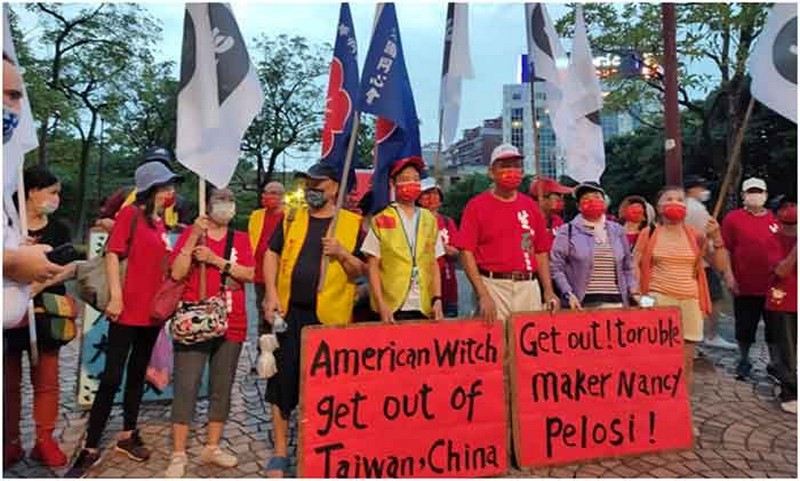
Pope Francis Suggests That NATO’s “Barking” Provoked Russia’s Military Op in Ukraine

By Paul Antonopoulos

4 May 2022 – Pope Francis has suggested to Italian daily Corriere Della Sera that the “barking of NATO at the door of Russia” provoked the military operation in Ukraine and alluded that countries should not supply Ukraine with more arms. Specifically, the Pope said that Russia has “an anger that I don’t know whether it was provoked but was perhaps facilitated” by NATO’s unrelenting expansion towards the Eurasian Giant.

Although Pope Francis denounced the Russian military operation and has concern for civilians, he has refrained from naming Moscow as an aggressor – a reflection of the Vatican’s tradition of neutrality and his own ambition to improve relations with the Russian Orthodox Church.

“In Ukraine, it was other states that created the conflict,” Pope Francis said in the interview without naming any specific states. He did highlight though that those foreign states fomented conflict and suffering in “Syria, Yemen, Iraq, one war after another in Africa.”

“I don’t know how to answer—I am too far away—whether it is right to supply the Ukrainians” with weapons, the Pope said. “What’s clear is that in this land, arms are being tested… Wars are fought for this: to test the arms we have made.”

It is recalled that Kiev has criticized the Pope for describing their conflict with Russia as “fratricidal,” which they have said downplays Moscow’s aggression. At the same time, the Pope expressed his desire to visit Ukraine, but said he wanted to travel to Moscow first to meet with President Vladimir Putin to appeal for an end to the war. However, at this time, the Kremlin has not responded to the offer.

Although Pope Francis is the spiritual chief for 1.3 billion Catholic Christians around the world, this does not correspond with political leadership or influence. Take for example President Joe Biden, described by NBC News as “America’s most prominent Catholic” and only the second Catholic president in the US after JFK. It is highly unlikely that Biden will entertain the Pope’s suggestion that NATO forced Russia’s hand against Ukraine.

In fact, Pope Francis has had very little influence over events in Ukraine. It is recalled that his appeals for an Orthodox Easter truce in Ukraine were ignored, his planned meeting with Patriarch Kirill of Moscow was cancelled, and now evidently a proposed visit to Russia has for now been ignored. The fact is that the Vatican is incapable of making a major mark in geopolitical issues, so for Putin it is less of a priority to meet Pope Francis given the issues Russia has in dealing with a war and severe economic sanctions.

Moscow must also consider though that the Pope does hold significant soft power and moral authority that millions across the world find extremely important. One can only imagine that the Polish people, in which 87% identify as Roman Catholic, a near equal amount oppose Putin and 94% support NATO, must be in a conundrum as they try to reconcile the fact that their spiritual leader suggested the Atlantic Alliance provoked Russia’s military response against Ukraine – something in complete opposition to what the Polish media and political establishment claim.

The Pope has caused a sensation across Western media, with many mainstream outlets shocked that he had made such a comment. However, the fact that he highlighted that the “barking of NATO at the door of Russia” could have provoked the war in Ukraine should not be controversial as Moscow had repeatedly warned that it would not tolerate threats to its national security at its border. NATO has been unrelenting in its pursuit to expand membership to Russia’s borders, even to the point of emboldening Georgia despite the country having no realistic prospect for membership, thus sparking the 2008 Russo-Georgian War.

Although Pope Francis has found himself in a position of having Western media demand to explain his refusal to “call out Russia or President Vladimir Putin by name”— it must be noted that Popes traditionally do not make such denunciations.

It is also interesting to note though that the Pope seemingly, despite his main focus being the spiritual wellbeing of Catholics, has more of a geopolitical nuance then most Western academics, experts, policymakers and think-tankers on understanding the harsh world we live in – endless provocations will lead to retaliations and responses, something the West ignored but was shocked to discover when Russian soldiers started crossing into Ukraine on February 24.

Although the Pope will have little influence over the course of the war, what his statement has done is spark debate, and perhaps even realization for some, that it was NATO that provoked Russia into war with Ukraine. In this way, the Pope is more of a realist then the liberal and neocon thinkers that dominate Western discourse and policy, and perhaps his comments can instigate a more realist discussion in the West on what led to Russia’s actions against Ukraine – such as the persecution of Russian-speakers in Ukraine, Kiev’s ambition for NATO membership and nuclear weapons, and operating bioweapon labs near Russia’s border.

________________________________________

Paul Antonopoulos is an independent geopolitical analyst.

9 May 2022

Source: www.transcend.org
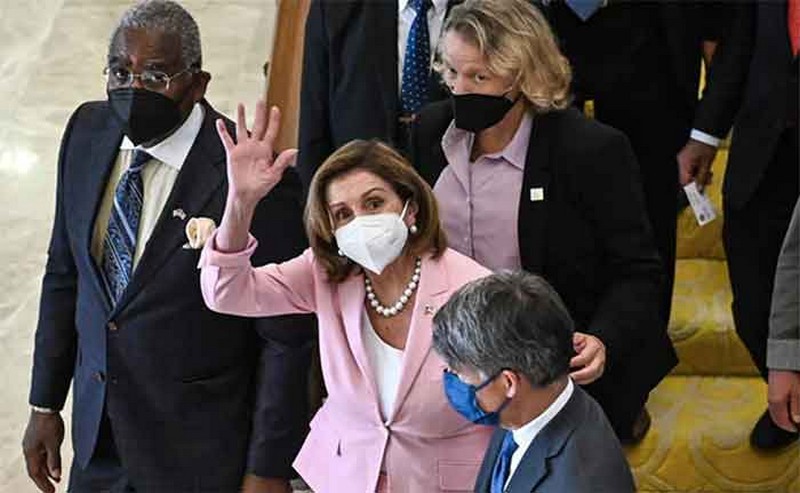
How They Have Lied to You about the Russian Threat for the Last 30 Years

By Jan Oberg, Ph.D.

8 Apr 2022 – Truth will out, as they say, and sometimes it in strange ways. On March 9, 2022, the former Danish Prime Minister and former NATO Secretary-General, Anders Fogh Rasmussen, gave an interview to Danish Television 2. Here a 30 sec excerpt.

In my view, it was deeply shocking for three reasons.

First, what he actually says:

“If we send planes, it’s to protect Ukrainian airspace, and then we have to be ready to shoot down Russian planes. That would undeniably mean war between NATO and Russia.”

That doesn’t worry him. He does not say that the West/NATO should therefore refrain from doing so. See below how he thinks it will go.

“I think if it’s going to deter Putin, we shouldn’t rule anything out. And I’m among those who say we should keep Putin in maximum uncertainty.”

Not ruling out anything in NATO parlance indisputably means that the use of nuclear weapons is also a possibility. And he knows that very well as a former NATO S-G.

Fogh Rasmussen does not mention nuclear weapons. It is better not to. But he does know that NATO is based on nuclear weapons and reserves the right to be the first to use them even against conventional attacks, so that is what he must be interpreted to mean. Precisely with the background he has.

Keeping an adversary in “maximum insecurity” in a dangerous conflict is, from a risk-analytic perperspective, an insane and dangerous philosophy. The conflict is already heavily militarized and both sides have large arsenals of nuclear weapons; moreover, all Western media and commentators are now claiming that Putin has probably gone mad in the psychiatric meaning of mad.

So it is not just a completely irresponsible philosophy. The statement testifies that Fogh Rasmussen, despite his background, is conflict illiterate.

“The Ukrainians have shown an amazing willingness to fight, and we will support them to the end.”

To the end?

In the context of his escalation idea, it is reasonable to assume that he also – by that formulation – includes nuclear bombing of Russia until it stops its military activities in Ukraine.

It also says that in Fogh Rasmussen’s view Ukraine is in effect a NATO member that we should support – even though formally it is not. He does not stress that the West has no obligation to support Ukraine since it is not a NATO member and therefore not covered by NATO’s musketeer oath (Art 5 in the NATO Treaty).

Then TV2 continues: “And should the Russian president end up interpreting the West’s weapons as a declaration of war, the former secretary general has no doubt who would ultimately win?

And listen carefully to Fogh Rasmussen’s answer with no hesitation:

“Putin will be beaten to a pulp by NATO. Once NATO moves, it will be with enormous force. You have to remember that the investments we make in defence are ten times greater than Putin’s,” he says.

So what has not been mentioned in the Danish and Western media so far suddenly comes out here: Russia is a military dwarf compared to NATO’s 30 members. It can beat Putin – Russia – to a pulp (in Danish “Plukfisk” – fish meat torn to pieces).

Says a man who knows NATO from the inside.

In other words, you and I have been deceived – grossly – the last three decades. Tax payers money squeezed out by lying about the immense Russian threat and, thereby, increasing citizens’ fears.

The exact situation right now, I can inform you, is that Russia’s military expenditure is 8% of NATO’s – namely US$ 66 billion and has been decreasing the last few years. There will now be a gigantic further over-armament within NATO – all up to 2% of their GNP, or more.

Germany has shrugged off all restrictions and will henceforth have a military budget of US$ 112 – that alone is almost double Russia’s.

In other words, Fogh Rasmussen speaks as the suddenly militarily superior, victory-proof militarist who in reality does not at all see Russia as a threat but is confident that the formidable alliance can beat Putin – by which he means by definition all of Russia and its people – to a “pulp.”

I wrote “shocking” above.

It is deeply shocking what is actually being said here: nuclear war in Europe is perfectly OK, even if it is not something Fogh Rasmussen wants. But that bastard in Moscow, we can corner even further so he might overreact again – and then we beat the crap out of him.

Russia, which we have heard for decades is a gigantic threat to us, must be crushed with our superior power. We’re not the least bit afraid of Putin Plukfisk!

The second shocking thing is that TV2 does not understand what it is doing – or not doing with these sensational views.

He is allowed to state them unchallenged, without their content being problematised, without others being asked to comment on such extremist positions or point out that Anders Fogh Rasmussen’s statements are completely unacceptable both professionally and ethically.

How long will TV2 – and virtually all other media – continue to cheer on the West’s self-righteous war of revenge? How far will they go? Consciously or because editors and journalists have no relevant expertise on war – let alone peace – but think mainly in terms of ratings.

And then it’s shocking for a third reason. If it had come to light that twenty years ago Fogh Rasmussen had put his hand on a woman’s thigh, the Danish press would be in a frenzy to condemn him in the media court.

So far, he has – only – been partly responsible, as NATO S-G, for the suffering of millions in Iraq and Libya, in total violation of international law and the UN Treaty.

Now he says – only – that we must win over Russia once and for all even if it means major war.

Nuclear war.

And nobody reacts.

In the Danish spirit pond and its media, he is regarded as a great statesman who speaks wise words.

About nuclear war for the sake of good democracies.

Prof. Jan Oberg, Ph.D. is director of the Transnational Foundation for Peace and Future Research,

9 May 2022

Source: www.transcend.org
Prof R Ramakumar, Tata Institute of Social Sciences shares: Sri Lankan Debt Trap?

By Prof R Ramakumar

Sri Lankan Debt Trap?

From the few numbers given it clearly showed that the debt trap which Sri Lanka is suffering is not from loans from China.

China’s loan accounts for only 10% of the total debt of Sri Lanka.

Japan’s loan to Sri Lanka is more than China at 11%. Why no one calls it a debt trap?

Mischievous agenda from the Americans is the reason.

They lied and spread disinformation to smear China without telling the real numbers.

If debt to China is only 10%, Japan 11%, then the bulk of the debt, the real debt trap of 79% came from where?

It is the IMF, the biggest creditor of Sri Lanka, the organisation that is causing all the woes of the Sri Lankans.

This is another perfect example of the treacherous Americans pointing fingers, making wild allegations when they are the real culprits. Sri Lanka’s debt trap is caused by loans from the IMF.

What about the infamous lie of debt trap caused by the Hambantota Port?

Yes, Sri Lanka took a big loan from China’s Exim Bank and unable to pay back the loan.

But Sri Lanka turned it into a revenue by leasing the port to China and was paid US$1.12 billion for it.

Where is the debt? Where is the debt trap when it is a plus for Sri Lanka?

Why the evil Americans still spreading this lie of debt trap because of the port?

Why don’t the Americans admit that the debt trap came from the IMF, an American controlled organisation?

Leasing the port to China is a profitable business like Djibouti leasing its land to the Americans, and a few other nations as military bases.

It is pure business, earning rents. What is wrong with that?

Djibouti is still an independent country and proud of it, unlike the semi-colonies of the American Empire, the Japanese, South Koreans, and the Europeans, that have all lost their independence and being controlled by the Americans and have to host American bases in their own countries, cannot say “No” to the Americans, and have to pay for the Americans’ military presence in their homeland.

When would the American and western media stop their fake news about this debt trap?

When would all the hostile media and so called journalists, reporters, analysts stop smearing China with this fake debt trap lie?

If there is a real debt trap issue, no one would be joining the BRI, the whole of Africa would not be taking loans from China.

Fortunately the leaders of these nations are not stupid and would not be led by the nose by the evil Americans and the West with their disgusting lies and disinformation.

There is no debt trap from China, only white men’s lies.

9 May 2022

R Ramakumar is a Professor of Economics at Tata Institute of Social Sciences.