Just International

[Nobel Peace Laureate] Desmond Tutu, the Nonviolent Foe of Two Apartheids – South Africa and Israel-Palestine

By Juan Cole

27 Dec 2021 – Ofeiba Quist-Arcton reports at NPR that Desmond Tutu has died in Cape Town, South Africa. He was 90.

Tutu was an amazingly courageous voice against the white nationalist Apartheid system in South Africa, which segregated Blacks and deprived them of a good education and economic opportunities, and which attempted to create reservations for them in which the state stripped them of their citizenship.

Tutu spoke out against South African systematic racial exclusion, making bold demands, given the Apartheid police state’s repressive apparatus. The Nobel Prize committee wrote in 1984:

‘Desmond Tutu has formulated his objective as “a democratic and just society without racial divisions”, and has set forward the following points as minimum demands:

  1. equal civil rights for all
  2. the abolition of South Africa’s passport laws
  3. a common system of education
  4. the cessation of forced deportation from South Africa to the so-called “homelands” ‘

The last point referred to the government’s carving out of “Bantustans” or statelets it declared to be not South Africa, the residents of which would not have citizenship. The white Afrikaners behind this policy hoped to decrease the demographic weight of Blacks in South Africa over time, making it a white country, by expelling Blacks to these Bantustans.

For these reasons (and American television will strictly not tell you this), Tutu spoke out equally courageously and eloquently about Palestinian rights. In a 2002 op-ed for The Guardian, Tutu wrote,

“In our struggle against apartheid, the great supporters were Jewish people. They almost instinctively had to be on the side of the disenfranchised, of the voiceless ones, fighting injustice, oppression and evil. I have continued to feel strongly with the Jews. I am patron of a Holocaust centre in South Africa. I believe Israel has a right to secure borders.

What is not so understandable, not justified, is what it did to another people to guarantee its existence. I’ve been very deeply distressed in my visit to the Holy Land; it reminded me so much of what happened to us black people in South Africa. I have seen the humiliation of the Palestinians at checkpoints and roadblocks, suffering like us when young white police officers prevented us from moving about.”

He spoke of the dispossession of Palestinians from their homes by Israelis, who took their land. He continued,

“Israel will never get true security and safety through oppressing another people. A true peace can ultimately be built only on justice. We condemn the violence of suicide bombers, and we condemn the corruption of young minds taught hatred; but we also condemn the violence of military incursions in the occupied lands, and the inhumanity that won’t let ambulances reach the injured.”

Tutu called for a peaceful resolution of Apartheid in Occupied Palestine, such as occurred in South Africa.

He also complained that in the United States to bring up the Israeli colonial project in the Palestinian territories was immediately to attract charges of anti-Semitism. With his gentle humor, he riposted that to voice such criticism of Israeli policy “is to be immediately dubbed anti-semitic, as if the Palestinians were not semitic. I am not even anti-white, despite the madness of that group. And how did it come about that Israel was collaborating with the apartheid government on security measures?”

In 2014 he wrote for the Israeli newspaper Haaretz about a pro-Palestinian rally he attended:

‘I asked the crowd to chant with me: “We are opposed to the injustice of the illegal occupation of Palestine. We are opposed to the indiscriminate killing in Gaza. We are opposed to the indignity meted out to Palestinians at checkpoints and roadblocks. We are opposed to violence perpetrated by all parties. But we are not opposed to Jews.’

He added,

“Over the past few weeks, more than 1.6 million people across the world have signed onto this movement by joining an Avaaz campaign calling on corporations profiting from the Israeli occupation and/or implicated in the abuse and repression of Palestinians to pull out. The campaign specifically targets Dutch pension fund ABP; Barclays Bank; security systems supplier G4S; French transport company Veolia; computer company Hewlett-Packard; and bulldozer supplier Caterpillar. Last month, 17 EU governments urged their citizens to avoid doing business in or investing in illegal Israeli settlements.’

He urged that the movement be nonviolent, and condemned Hamas’s rockets. But he wasn’t afraid to be called a terrorist (the Apartheid regime branded all its opponents ‘terrorists’ as well). His goal here, as elsewhere in his rich life, was peace, love and forgiveness. Especially forgiveness.

There is no point in celebrating Archbishop Tutu’s brave stand against Apartheid in South Africa if you are afraid to bring up his brave stand against Israeli Apartheid practices against Occupied, stateless Palestinians.

His life was epic, and full of love of others (including many dear Jewish friends who also worked against Apartheid alongside him).

In 1986, Tutu had become the first Black archbishop of the Anglican Church in Cape Town.

Tutu was born in Kerksdorp, a Gold Rush town in the North West Province. His father became an elementary school principal and his mother cooked and cleaned at a school for the blind. Already in 1913, the newly independent South African government began making Blacks live on reservations and usurping their property. After World War II, in 1948, the white nationalist National Party came to power. Starting in 1949, when he was 19, the Afrikaner-dominated government began passing Apartheid laws forbidding inter-racial marriage and imposing an even stricter segregation, which resembled the Jim Crow laws passed by Southern white legislators in the late nineteenth century to deprive African-Americans of the vote and to segregate them from whites.

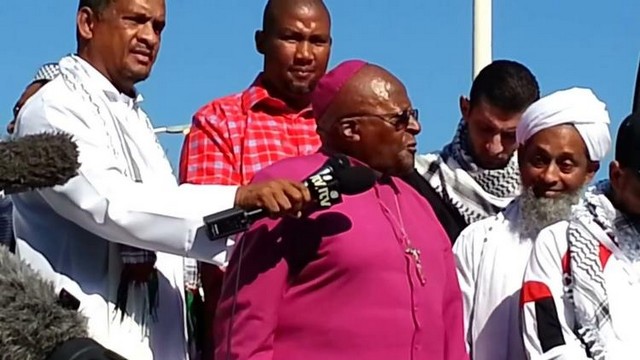
AfricaPalestine: “Archbishop Desmond Tutu addresses Palestine rally

Tutu was initially a high school teacher, but gained a sense that religious leaders were best placed to challenge racial inequality. In 1953, an Apartheid law lowered the standards for the education of Black children, trying to ensure that they learned only enough to be docile laborers. Tutu became an ordained Anglican priest (Americans would say Episcopalian) and studied theology in Johannesburg. Then he went off to London for an MA in theology, which he received from King’s College in 1966. On his return he rose quickly through the Anglican church hierarchy. In 1976 he became bishop of Lesotho, a former British colony that had become an independent kingdom in 1966. It is completely surrounded by South Africa.

From there, Tutu began speaking out against Apartheid, and continued even when he returned to South Africa, as an official of the Council of Churches. These were liberal Protestant denominations and the Council was the South African national sub-group of the World Council of Churches. The Afrikaner Calvinist churches withdrew from it because of its opposition to Apartheid.

After the Apartheid government collapsed and Nelson Mandela became president in the early 1990s, he appointed Archbishop Tutu to head the Truth and Reconciliation Commission, which investigated the crimes of the Apartheid regime. These included torture, unlawful imprisonment and unlawful killing, among others.

Tutu’s commission adopted the rule that a public and detailed confession of wrongdoing was sufficient punishment, and so elicited from some former Afrikaner war criminals a full picture of their activities, but then pardoned them. Many South Africans were angry about this leniency, but Tutu’s philosophy was that unless the country, including the Afrikaaners, fully faced the history and documented it, they would never be able to get past it. The war criminals after all would hardly have confessed at such length if they had simply been tried and imprisoned, where a conviction could even have been gotten.

The Israeli press is churlishly lambasting Tutu as an “enemy” of Israel, which I think I’ve shown he was not. Indeed, Israel’s continued and blatant war crimes are destroying the country, and its true friends owe it frankness and tough love. Tutu didn’t hate anyone, but he loved justice.

Juan Cole is the founder and chief editor of Informed Comment.

3 January 2022

Source: www.transcend.org
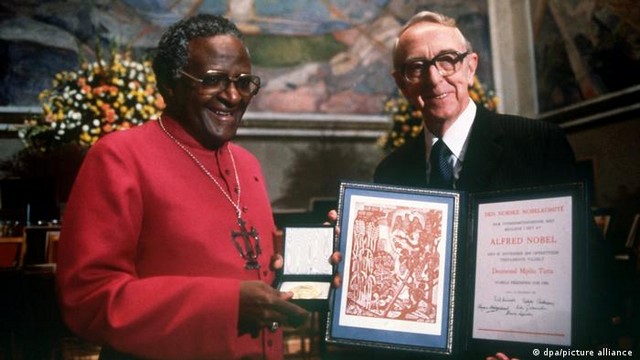
Obituary: South Africa’s Archbishop Desmond Tutu

By DW

Archbishop Desmond Tutu, who died on Sunday [26 Dec] aged 90, was one of South Africa’s most important Nobel Laureates and a tireless opponent of apartheid.

In April 1993, South Africa was a powder keg. Three years earlier, after decades of oppression of the black population, President Frederik Willem de Klerk had announced reforms. Many political prisoners, among them Nelson Mandela, were released, and their parties and organizations were no longer outlawed. But negotiations on a new democracy had stalled.

Then, a white right-wing radical murdered prominent politician and freedom fighter Chris Hani, pushing the country to the brink of civil war. At Hani’s funeral, which was attended by over 100,000 people, Desmond Tutu defused a tense situation by leading the crowd in a chant: “We will be free! All of us — black and white together!”

It was in these difficult moments in South Africa’s history that Desmond Tutu showed his strength. Throughout his life, he followed his ideals without wavering and fought for the Rainbow Nation — a term for South Africa he coined himself — in the name of peace and nonviolence.

Nobel Peace Prize for struggle against apartheid

Born in the mining town of Klerksdorp in 1931, Tutu first job was as a teacher, but he quit after the government implemented policies that undermined the education of black students.

Tutu opted for a new career in the church, becoming the first black Anglican bishop of Johannesburg and, later, the Archbishop of Cape Town.

He never stopped fighting for the abolition of racial segregation. He sympathized openly with the goals of Nelson Mandela’s party, the African National Congress (ANC), which wanted to build a democratic South Africa, undivided by race. In 1984, Tutu was awarded the Nobel Peace Prize for his nonviolent efforts against the apartheid regime.

‘An incredible day’

But a different event proved much more important to him: The day in April 1994, when he cast his vote in South Africa’s first free, democratic elections.

“It’s an incredible day for all of our people,” a visibly jubilant Tutu told members of the press outside the polling station. “And I mean all of our people — black and white. Because as of now, we won’t be able to say ‘that illegal regime.’ It will be our government.”

His cheerful, lighthearted nature — which he retained throughout the often frustrating years of the struggle for justice — endeared the archbishop to many South Africans. He had originally planned to retire to the US after the election to spend more time with his grandchildren there. But after President Nelson Mandela asked him to head the Truth and Reconciliation Commission, which was set up to come to terms with the crimes of apartheid, he decided to stay.

Pleas for reconciliation

Tutu and the commission tried to find a middle ground between victors’ justice and amnesty, appealing for reconciliation and forgiveness. Over the next three years, thousands of victims were given the chance to describe their suffering. Perpetrators asked for forgiveness.

Clad in a purple robe, Tutu often struggled to hold back tears. But he always directed attention away from himself, emphasizing that the focus had to be on the victims.

Once the commission was over, Tutu continued to speak out against injustice in the world, from the war in Iraq, to autocratic regimes. He didn’t spare South Africa’s neighbors. “He is an angry, even embittered little bishop,” Zimbabwe’s longtime ruler Robert Mugabe once said following Tutu’s remarks on his leadership.

The archbishop wasn’t always popular among many in South Africa’s ruling ANC party either — especially when he railed against the government’s relationship with Mugabe, its hesitancy in the fight against AIDS, and what overpaid political elites.

Disillusioned with South African politics, he later said it was no longer a given to vote ANC: “People are asking questions, which is a good thing. That’s what a democracy is.”

Retreat into privacy

In 1997, Desmond Tutu was diagnosed with prostate cancer. Three years later, on his 79th birthday, he officially withdrew from all public duties. In his typical upbeat way, he explained he simply wanted more time to drink rooibos tea with his wife.

But he wouldn’t — or couldn’t — stay completely out of politics. In 2014, he called for a boycott of mining and oil companies. Climate change, he said, should be fought with the same vigor that apartheid was fought in the 1980s. An ardent supporter of gay rights, he said he would rather go to hell than worship a homophobic god.

His daughter Mpho Tutu van Furth married a woman in the Netherlands in December 2015. As a priest in the Anglican Church of South Africa, she was forbidden to continue her duties in the church. Already in failing health, her father attended her second wedding ceremony in South Africa in May 2016, when same-sex marriage was legalized.

Cancer treatment left Desmond Tutu vulnerable to persistent infections. In recent years, South Africa often worried about its “Arch” — as Tutu was nicknamed. But the civil rights activist continued to make appearances in public life.

In 2020, during the Black Lives Matter protests in the US, Tutu said it was an “inconvenient truth” that the lives of certain groups in society were considered more valuable than those of others. Tutu’s words of caution followed the violent death of African-American George Floyd during a police operation in the US.

27 December 2021

Source: www.transcend.org

Will the Islamic World Save Afghanistan?

By Pepe Escobar

Between the complex internal dynamics of the Taliban and the western trick of conditional aid, it is the Muslim world that must act to save Afghanistan.

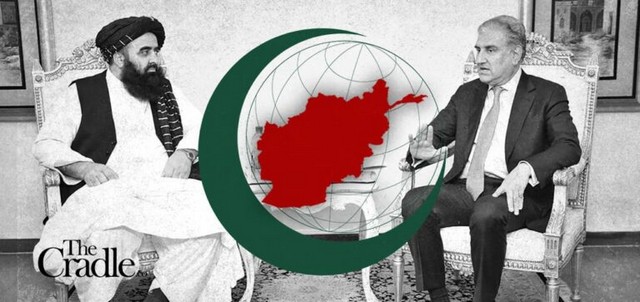
21 Dec 2021 – Afghanistan was at the heart of the 17th Extraordinary Session of the Council of Foreign Ministers representing 57 nations at the Organization of Islamic Conference (OIC).

It was up to Pakistani Prime Minister Imran Khan to deliver the keynote address to the session, held on 19 December at the Parliament House in Islamabad.

And he rose to the occasion: “If the world doesn’t act, this will be the biggest man-made crisis which is unfolding in front of us.”

Imran Khan was addressing not only representatives of the lands of Islam, but also UN officials, the proverbial “global financial institutions,” scores of NGOs, a smattering of US, EU and Japanese bureaucrats and, crucially, Taliban Foreign Minister Amir Khan Muttaqi.

No nation or organization has yet formally recognized the Taliban as the new, legitimate Afghan government. And quite a few are frankly more interested in engaging in an elaborate kabuki, pretending to deliver some sort of aid to the devastated Afghan economy after 20 years of US/NATO occupation instead of actually coordinating aid packages with Kabul.

The numbers are dire, and barely tell the full extent of the drama.

According to the UNDP, 22.8 million Afghan citizens – over half of Afghanistan – are facing food shortages, and soon, acute hunger; while no less than 97 percent of Afghans could soon fall under the poverty line. In addition, the World Food Programme stresses that 3.2 million Afghan children risk acute malnutrition.

Imran Khan emphasized that the OIC had a “religious duty” to help Afghanistan. As for the ‘hyperpower’ that stunned the world with its humiliating withdrawal show after 20 years of occupation, he was adamant: Washington must “delink” whatever grudges it may hold against the Taliban government from the destiny of 40 million Afghan citizens.

Imran Khan did ruffle a few Afghan feathers – starting with former President Hamid Karzai, when he observed that “the idea of human rights is different in every society,” referring to Khyber Pakhtunkhwa province, which borders Afghanistan.

“The city culture is completely different from the culture in rural areas …,” he said. “We give stipends to the parents of the girls so that they send them to school. But in districts bordering Afghanistan, if we are not sensitive to the cultural norms, then they won’t send them to school despite receiving double the amount. We have to be sensitive about human rights and women rights.”

This was interpreted in a few quarters as Pakistani interference – part of a secret, devious strategic narrative. Not really. The prime minister was stating a fact, as anyone familiar with the tribal areas knows. Even Afghan Foreign Minister Muttaqi said the prime minister’s words were not “insulting”.

Imran Khan also observed that there are already over three million Afghan refugees in Pakistan. Moreover, Islamabad is sheltering more than 200,000 refugees who overstayed their visas. “They can’t go back. We are already suffering from the impact of the Covid-19 pandemic. We are not in a position to deal with an influx of refugees.”

Would you ever trust NATO?

Then there’s the ultimate nut to crack: internal Taliban dynamics.

Diplomatic sources confirm off the record that it’s a non-stop struggle to convince different layers of the Taliban leadership to allow for some concessions.

Discussions with the NATO block are for, all practical purposes, dead: bluntly, there will be no help without visible concessions on girls’ education, women’s rights and the heart of the matter – on which everyone agrees, including the Russians, the Chinese and the Central Asians – a more inclusive government in Kabul.

So far, Taliban pragmatists – led by the Doha political office – have been on the losing end.

The OIC meeting at least came up with practical suggestions involving Islamic development banks. Pakistani Foreign Minister Shah Mahmood Qureshi was keen to emphasize the necessity of getting Kabul to access banking services.

This is the heart of the problem: there are no solid banking channels after NATO departed. So it’s technically impossible to transfer financial aid into the system and then distribute it across hard-hit provinces. Yet, once again, this is ultimately linked to those lofty western humanitarian aid pledges crammed with conditionalities.

In the end, Qureshi, together with the OIC Secretary-General Hissein Brahim Taha, announced that a ‘humanitarian trust fund’ will be established as soon as possible, under the aegis of the Islamic Development Bank. The fund should be able to incorporate international partners, non-politicized westerners included.

Qureshi put out his bravest face, emphasizing that “the need is felt to forge a partnership between the OIC and the UN.”

Taha, for his part, was quite realistic. No funds whatsoever have been pledged so far for this new OIC humanitarian operation.

As Qureshi mentioned, there is one thing which Russia, China, Iran, Pakistan and other actors may decisively help with: investment “in the people of Afghanistan, bilaterally or through the OIC, in areas such as education, health and technical and vocational skills to the Afghan youth.”

So now it comes to the crunch – and fast. It’s up to the OIC to play the leading role in terms of alleviating Afghanistan’s dire humanitarian drama.

The official declaration calling on all OIC member states, Islamic financial institutions, donors, and unnamed ‘international partners’ to announce pledges to the humanitarian trust fund for Afghanistan will have to go way beyond rhetorical flourish.

At least, it’s all but certain that from now on, it will be up to the lands of Islam to decisively help Afghanistan. A bitter, defeated, vengeful, internally corroded NATO simply cannot be trusted.

Nobody today remembers that the Empire had concocted its own version of the New Silk Road over 10 years ago, announced by then Secretary of State Hillary Clinton in Chennai in July 2001.

That was no ‘community of shared future for mankind,’ but a very narrow obsession on capturing energy resources – in Kazakhstan and Turkmenistan; ‘stabilizing’ Afghanistan, as in perpetuating the occupation; giving a boost to India; and ‘isolating’ Iran.

The energy supply routes to the west should have gone through the Caspian Sea, and then across Azerbaijan, Georgia and Turkey – the three actors of the BTC pipeline – thus bypassing Russia, which was already then being depicted in the west as a ‘threat’.

All this is dead and buried – as post-occupation Afghanistan alongside the five Central Asian ‘stans’ are now back as one of the key foci of interest of the Russia–China strategic partnership: the heart of a Greater Eurasia spanning from Shanghai in the east to St. Petersburg in the west.

Yet to make it happen, it’s imperative that the OIC helps Afghanistan as much as the Taliban must help themselves.

Pepe Escobar, born in Brazil, is a correspondent and editor-at-large at Asia Times and columnist for Consortium News and Strategic Culture in Moscow.

27 December 2021

Source: www.transcend.org

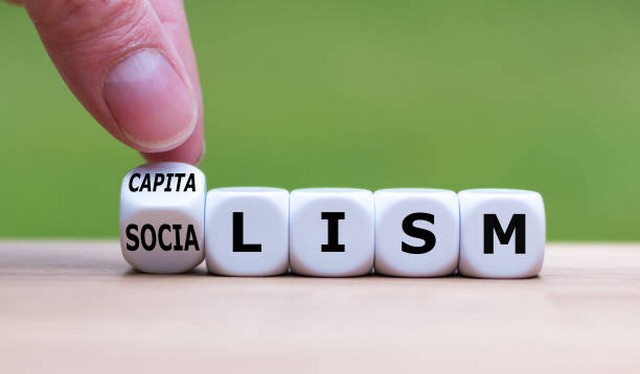
Was China’s Amazing Rise Due to ‘Socialism with Chinese Characteristics’ or ‘Capitalism with a Chinese Facade? Or a Little of Both?

By Richard Falk

23 Dec 2021 – There has in recent months many discussions centering around the proper characterization of China from an ideological point of view. The Chinese leadership has its own reasons for doing this, seeking to present what it deems a glorious self-image. In contrast, the West, especially the United States has wanted to offer an ideological explanation of its confrontational stance with China. Part of the ideological confusion is whether or not China can be considered to be a type of ‘democratic’ state, which it sometimes claims to be. China was not invited to take part in Biden’s Summit of Democracies, but questionable democracies as Israel, India, and the Philippines received invitations. What the United States has refrained from doing is to attribute China’s success to its mastery of and reliance upon maket-managed economic policy.

In my judgement, China’s self-identification as ‘a Communist state’ in certain contexts is no more misleading than the U.S. assumption that it possesses all the credentials to be claimed the world’s leading ‘democracy.’ There are features of both political systems that defy such labels from a descriptive perspective. China accelerated its amazing development process of the last 50 years by sometimes defining its system of governance as ‘socialism with Chinese characteristics,’ which was a coded way of expressing its participation at home and internationally in the capitalist world economy guided by a perspective usually described as ‘neoliberal globalization.’ Such an identity was underscored by Chinese membership in the World Trade Organization (WTO), widely accepted as an institutional body entrusted with overseeing and promoting global capitalism in its neoliberal phase. It is became common for economists to describe China after the market friendly reforms to attract foreign investment and promoted trade associated with Deng Xiaoping leadership in 1991 as establishing a ‘socialist market economy.’ To ideological militants in the West to be ‘socialist’ amounts to being ‘communist,’ a negative characterization applicable not only to China but also to social democracy in Scandinavia or liberal tendencies of the Democratic Party in the United States.

It is obvious that invoking the label ‘Communist’ by a party leader in Beijing is quite different than its use as a political slur by right-wing politics in Europe and North America. When Chinese officials insist on ascribing a Communist identity to China it functions as a claim of legitimacy, confirming fidelity to its founding ideology and recalling its revolutionary struggle. When agitators inside and outside of government in the West call China ‘Communist,’ or even ‘Socialist’ it is meant as both as an insult and a warning about an alien ideology that poses a domestic threat by way of leftist and even left liberal politics.

Looked at differently, China exemplifies the Communist political tradition after the Cold War associated with Marx and Lenin, and later Mao, in certain crucial respects. The Communist Party provides authoritative ideological guidance in relation to its own governing process, overseees one-party rule, provides guidance for political education and citizenship, and entrusts leadership to a single person essentially for lifetime. The current leader, Xi Jinping exemplifies this tradition in all respects. No political alternatives are accepted as legitimate challengers to Communist rule. In periodic five-year high-level conferences of the Chinese Communist Party leadership ideological articles of faith are reaffirmed and adjustments made by expressions of consensus seemingly shaped by the leader. The Chinese government from the moment of its takeover of the Chinese mainland in 1949 has suppressed dissent, and insisted on an extreme form of secularism that has regulated religious movements strictly, sometimes harshly, particularly if they dare to exhibit political ambitions.

Despite some superficial resemblances to the Soviet Union, and the Cold War, it would be deeply misleading to view China through a Soviet lens or by way of post-World War II geopolitics. Two extraordinary differences highlight the gaps between the Cold War era and the present confrontation with China: first, in contrast to the Soviet Union, China has compiled a remarkable record of administrative competence, which has overseen the greatest economic and geopolitical ascent of any country in all of history, a story confirmed by spectacular growth, alleviation of extreme poverty, and increasing dominance of the most significant technological frontiers of 21st innovation; secondly, China’s expansionist foreign policy has been completely reliant on soft power instruments of influence, producing many win/win solutions, including its hyper-ambitious Belt and Road Project, and contrasting dramatically with the Western rise and Soviet attainment of superpower status which were based on military conquest and imperial forms of coercive control. It is the U.S. hostile reaction that confronts China rather than cooperates that seems mainly responsible for

inducing China to place an ever greater emphasis on military capabilities to maintain its national interests by discouraging U.S. provocations. The West should be learning from China rather than treating China as the second coming of the USSR, necessitating an ideological and militarizing mobilization for a new cold war that the world cannot afford, diverting attention and resources from a series of urgent global challenges posed by climate change, pandemics, global migration, gross inequalities that did not seriously impact on international relations.

Only the costly arms race, especially its nuclear dimension, made the last half of the 20th century vulnerable to catastrophe on a global scale, threatening species survival, prepared the public sphere for its present policy agenda.

Xi Jinping has been claiming that he is adapting Marxism to contemporary condition under the banner of ‘Marxism for the 21st Century.’ As near I can tell this terminology is used mainly as a way to identify and highlight the charismatic relevance of Xi Jinping personal leadership, and in the process elevate him to the status of the most eminent of revolutionary leaders, above all as the equal of Mao Zedong. Xi’s ideological viewpoint has been also associated with explaining what is meant by the phrase ‘socialism with Chinese characteristics.’ In ideological discourse, especially internationally, Xi commonly refers to the ‘socialist’ nature of the Chinese approach rather than to claim its ‘communist’ character.’ Xi clearly wants his various audiences to believe that Marxist thought remains as dynamic and relevant as ever, being ‘full of vitality,’ and thus the key to future human happiness.

The Chinese references to 21sst century Marxism is also a way of entering dialogue with Marxist political parties in other societies and creating a common global discourse. It also seems a way to be faithful to Markist-Leninis traditions of thought without having to comment critically upon the Soviet-led interval as a departure from Marxism. Put in positive terms Marxism in the 21st century calls for dedication to ‘human progress’ focused on building ‘a shared future for humanity’ in collaboration with congenial forces around the world

Whether China is viewed as a Communist center of power or not is less important than for the West to relate to China in a manner that is mutually beneficial for world peace and multilateralism. The policy emphasis on the West should be on not only learning from China but on bringing out the most constructive responses in relation to China’s potential indispensable contributions to world order. Such a view is not blind to Chinese violations of human rights or the excesses of Han nationalism, but it views these undeniable blemishes as best left to dynamics of internal reform and to the pressures mounted by global civil society, rather than as presently, a form of geopolitical harassment and anti-Chinese mobilization.

Richard Falk is a member of the TRANSCEND Network, an international relations scholar, professor emeritus of international law at Princeton University, Distinguished Research Fellow, Orfalea Center of Global Studies, UCSB, author, co-author or editor of 60 books, and a speaker and activist on world affairs.

27 December 2021

Source: www.transcend.org

Spreading Hate- Inciting Violence: No more a Crime!

By Dr Ram Puniyani

After Suraj Pal Amu made derogatory and hate speech, he was made the spokesman for BJP state unit. After the murder of Akhlaq in the beef-cow issue, one of the murder accused died, one central minister (Mahesh Sharma) arrived to put tricolor on the body of the deceased. When 8 lynching accused got bail, Jayant Sinha another Central Minister garlanded them. Not too long ago, when a central minster made the audience give the slogan “Goli maro“ he was promoted to the Cabinet rank. In this background if one sees the present disturbing events of spreading hate and inciting violence, the lack of action on the part of authorities can be easily understood. We do recall that our PM, prompt at speaking when not needed generally either kept quite or spoke after a painfully long delay in the aftermath of murders of Juanid or Rohith Vemula.

Today (24th December, 2021), 5 days after the two disturbing events took place; our PM’s silence on these issues is very loud and clear. In the first incident on 19th December Suresh Chavhanke, the Editor-in-Chief of Sudarshan TV administered an oath to young boys and girls. The event was organized by Hindu Yuva Vahini (Founded by UP Chief Minster and Mahant of Gorakhnath Peeth, Adityanath Yogi), it was “. “We take an oath and make a resolution that till our last breath, we shall fight, die for and if need be, kill, to make this country a Hindu rashtra,”

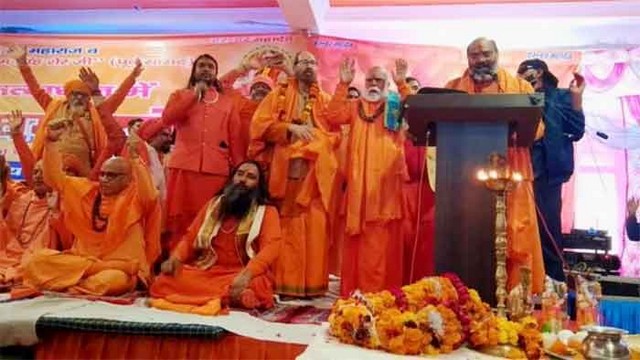
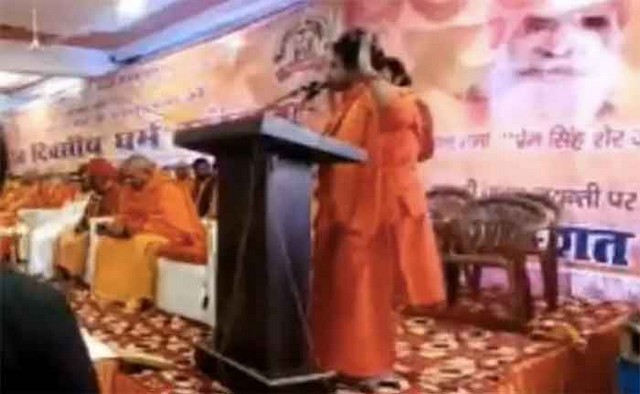
In another event organized in Hardwar hundreds of saffron clad Sadhus and Sadhvi’s had assembled for a meeting on the theme “Islamic Terrorism and our Responsibilities”. It was Dharma Sansad organized by Yati Narsinghanand, Head Priest of Ghaziabad temple. He himself set the tone by stating “‘Economic boycott (against the Muslims) will not work… No community can survive without picking up weapons…And swords won’t work, they look good only on stages. You need to update your weapons…more and more offspring and better weapons can protect you.” He gave a clarion call, Shastra Mev Jayate for inciting armed violence against Muslims.” “In another video, Narsinghanand is seen to be offering Rs 1 crore to Hindu youth for becoming like LTTE leader Prabhakaran as he called upon Hindu youth to become “Prabhakaran” and “Bhindranwale”

Annapurna Maa, (earlier, Poonam Shakun Pandey) general secretary of Hindu Mahasabha said, we need 100 soldiers who can kill 20 lakh of them (Muslims). She added ‘Matr shakti ke sher se panje hain. Phaad kar rakh denge’. (mother power has claws like lion, will tear apart). She is the one who couple of years ago reenacted Gandhi murder in Meerut and distributed sweets after that.

Dharam Das Maharaj from Bihar said “If I was present in Parliament when PM Manmohan Singh said that minorities have right over national resources, I would have followed Nathuram Godse and shot him six times with a revolver”

These are few samples from what happened in Dharma Sansad. Such meetings have been set into action by VHP, which began these meetings in the wake of Babri demolition. The surprise is that most of the videos are circulating and police have access to them. No arrest so far.

Those making such statements which are criminal as per our law are very much reassured that no action will be taken against them. They know those in power quietly appreciate their speeches or such speeches or incitement may be a part of planning in the wake of elections. What is surprising is that all this is taking place at a time when Munwar Faruqui was arrested for a joke which he had not cracked. His shows have been cancelled times and over again.

What will be the impact of these uttering’s on our minorities, who are equal citizens of the country. The fear and intimidation will reach the peak. Economic boycott, threat to life and intimidations will further intensify the ghettoization, already existing as serious problem. Disturbed by all these Jamiat-E-Ulema a Hindu, Mahmood Madnai has written to Home minster. Can Minorities commission take cognizance of this and take action? Can the police take proper action apart from just filing FIR against the recent convert to Hinduism, Jitendra Tyagi (earlier Wasim Rizvi)? And why is Supreme not waking up to take suo moto action?

The World is aghast at this level of hate and open incitement of violence. Martina Navratilova tweeted that she is aghast. The trends were caught by global media right some time ago when The Daily Guardian in a 2020 article states that “since achieving every single public interest is cumbersome; pointing towards the flaws of ruling party which may or may not have a religious back up and flaming the emotions of the public at large through continuous hate speech was a trend in early ’90s and the immediate years of second millennium. Hate speech was therefore procuring a wide scope with respect to democracy in India.” There is a turmoil world over on these incidents in India.

The Hate against minorities is reaching dangerous proportions. What began as a project of communal politics, Hindu and Muslim in undivided India is now focusing on Muslim minorities. Every occasion is being used to demonize them and the global trends set by American media in coining the phrase “Islamic Terrorism” has put salt on the wounds of the targeted community. During last seven years with the patronage of BJP government at the center; the process has taken ghastly proportions.

What is needed is that the civil society wakes up to the dastardly phenomenon. The Hate and violence which is directed against the ‘others’ takes a turn to consume the same community in whose name all this takes place, rather all this is orchestrated by the communal stream. All non BJP parties need to come together to raise their voice and call for action against the Hate mongers. It is welcome that Rahul Gandhi and many other leaders have tweeted and condemned these utterences.

Nothing short of a social movement directed against hate and promoting of love will help the matters. It is time that we to work on the lines of Bhakti-Sufi traditions; and the path of Mahatma Gandhi-Maulana Azad to keep the society and country in peace and harmony.

25 December 2021

Source: countercurrents.org

Spreading Hate: Open call for Genocide

By Press Release

Statement Released on December 24, 2021 at a press conference organized by Anhad. Dr Syeda Hameed, prof Ram Puniyani, Prashant Bhushan, Gauhar Raza, Anjali Bhardwaj, Dev Desai and Shabnam Hashmi addressed the press conference.

From December 17 to 19, the ‘Dharma Sansad’ or ‘Religious Parliament’ was organized in Haridwar wherein several religious leaders and those associated with Hindutva extremist organisations gave an open call for Hindus to arm themselves and eliminate Muslims from the country. Sadhvi Annapurna, general secretary of Hindu Mahasabha gave a direct call for the mass murder of Muslims. She said, we need 100 soldiers who can kill 20 lakh of them ( Muslims) . She added ‘Matr shakti ke sher se panje hain. Phaad kar rakh denge’ .

Dharam Sansad was organized by Swami Yati Narsinghanand, who has been spewing venom against Muslims for months. He said at the Dharam Sansad, ‘Economic boycott (against the Muslims) will not work. No community can survive without picking up weapons. And swords won’t work, they look good only on stages. You need to update your weapons…more and more offspring and better weapons can protect you.” He promised Rs.1 crore to anyone who is ready to become a Prabhakaran or a Bhindranwale for Muslims. He gave a clarion call, Shastra Mev Jayate for inciting armed violence against Muslims.

‘If I was present in Parliament when PM Manmohan Singh said that minorities have right over national resources, I would have followed Nathuram Godse and shot him six times with a revolver’ said Dharam Das Maharaj from Bihar. Anand Swarup Maharaj threatened to wage a war ‘more scarier’ than 1857 if the government does not concede the demand of creating a Hindu Rashtra through violence against the minorities. He said that in Uttarakhand he will not allow Christians to celebrate Christmas or Muslims to celebrate their festivals since the state belongs only to Hindus. Ashwini Upadhyay known for his anti Muslim vitriol at Jantar Mantar in October, also a BJP spokesperson; stood before the gathering and presented Bhagwa Constitution to his Gurudev Yati Narsinghanand. Swami Prabodhanand Giri, president of the Hindu Raksha Sena, a right-wing organisation based out of Uttarakhand said, “get ready to kill, there’s no other way. This is why, like in Myanmar, the police here, the politicians here, the army and every Hindu must pick up weapons and we will have to conduct this cleanliness drive (safai abhiyan). There is no solution apart from this.”

All this is an open violation of provisions of India’s Constitution and various provisions of the law which prohibit spreading of Hate. This is not just spreading of Hate; this is a call for violence against Muslims.

It’s been a week since the Haridwar Sansad began and 5 days since it ended; all under the state government’s watch. While poison was disseminated from here to the country and indeed all over the globe via social and other media the administration looked on. We all heard one sentence repeated ad nauseam by a police spokesman ‘Hum nazar banayen hain… uchit karavahi hogi’. (We are keeping an eye, will take suitable steps) It’s the mother of all banalities!

This Sansad has been held under the benign gaze of CM Uttrarakhad Pushkar Singh Dhami who has recently been seen paying respects to Yati Maharaj.

It is time when every sane Indian must think where the country is heading? Will the present regime uphold the Constitution of India or will they allow Bhagwa Constitution to be forced on them? This Sansad, permitted to be held on the eve of Elections in several states including Uttarakhand and UP, smashes to smithereens the ‘Idea of India’ held by Mahatma Gandhi, Jawaharlal Nehru, Maulana Azad and Bhimrao Ambedkar. When a state remains silent while hate speech and poison shards are flung at its citizens it bodes the worst evil for us the people who love this land, who are citizens of this country.

We strongly condemn the hate speeches, the calls for a genocide and demand immediate legal action and arrest of Swami Yati Narsinghanand, Swami Prabodhanand Giri , Annapurna Maa, Dharam Das Maharaj , Anand Swarup Maharaj and all others who organized the event and are indulging in hate mongering .

We demand an immediate stop to such gatherings which are organized to vitiate the atmosphere and polarize the people of India.

24 December 2021

Source: countercurrents.org

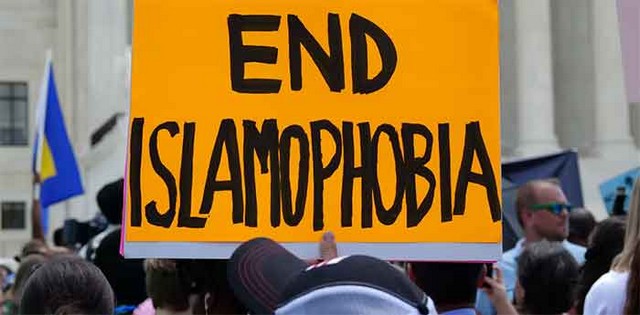
The Combating Islamophobia Act: On Hate Crimes and ‘Irrational Fears’

By Dr Ramzy Baroud

The result of a vote, on December 14, in the US House of Representatives regarding the combating of Islamophobia, may, possibly, appear to be a positive sign of change, that Washington is finally confronting this socio-political evil. However, conclusions must not be too hasty.

Disquietingly, Congress was nearly split on the vote. While 219 voted in favor of the resolution, 212 voted against it. What is so objectionable about the resolution, which was introduced by Rep. Ilhan Omar, that prompted a ‘nay’ vote by such a large number of American representatives?

The resolution – ‘Combating International Islamophobia Act’ – merely called for establishing the position of a “Special Envoy for monitoring and combating Islamophobia”. Arguably, HR 5665 would have not passed, were it not for the embarrassing episode last September, when Republican Rep. Lauren Boebert of Colorado mouthed off such obscene and racist language, in which she suggested that Rep. Omar was a terrorist.

“So the other night on the House floor was not my first jihad squad moment,” Boebert told a crowd during a campaign event in Staten Island. The other moment, according to Boebert, was when she met Ilhan Omar on an elevator. “What’s happening? I look to my left and there she is, Ilhan Omar, and I said, ‘Well she doesn’t have a backpack, we should be fine,’” suggesting that Omar was a potential bomber.

The fact that Boebert would make such racist references publicly, while being aware of the particular cultural sensitivity that exists in her country at the moment, speaks volumes about the complete disregard that many Americans, whether in power, in the media or on the street, have towards their fellow US Muslim citizens.

However, the disparaging and racist comments, thanks to the tireless efforts of numerous activists throughout the country, made enough impact that helped register a semi-official indictment of such despicable behavior. Of course, much more work would have to be done to convince the 212 objecting representatives that degrading and discriminating against their own people because of religion, culture or attire must not be tolerated.

Whether HR 5665 would prove decisive in condemning Islamophobia or holding Islamophobes accountable, is a different story. Hence, we must not hesitate to confront the term itself, the misleading reference that what Muslims in the US and throughout the world are experiencing is some kind of a pathological phenomenon, that of fear, itself instigated, as some suggest, by Muslims themselves.

Anti-Muslims are outright racists. Though Islam is a religion, in the mind of these racists, Islam is affiliated with brown and black-skinned people and, therefore, the hate of Islam and Muslims is part of the anti-black racism that continues to define many parts of the world, especially the US and Europe.

Anti-Muslims are also capable of being criminals, as numbers have shown that the so-called Islamophobia has resulted in mass killing, as was the case in Canada, New Zealand and the UK.

Less reported than these horrific massacres are thousands of incidents where Muslims are targeted because of their religion, cultural symbols and values.

According to a report released by the Council on American-Islamic Relations (CAIR) last July, hundreds of Anti-Muslim incidents have been reported throughout the country in the first half of 2021. These incidents range from hate crimes, hate speech, targeting mosques and Muslim children being bullied at school.

The US is not the only Western country where Anti-Muslim bias and hate crimes are on the rise. Canada, too, which has witnessed the horrific January 2017 attack on the Islamic Cultural Center in Quebec – in which six Muslims were killed and 19 others wounded – is equally culpable.

According to a report by the National Council of Canadian Muslims (NCCM) in September, Anti-Muslim incidents in Canada are growing exponentially. Fatema Abdalla, NCCM’s communication coordinator, described Anti-Muslim hate in Canada as “systemic”. “Not only is it growing, but it’s also evolving,” she told Global News, following the release of the report.

Like in the US, Anti-Muslim hate is also fueled by politicians, but not just any politician. In 2015, for example, Canada’s then Prime Minister Stephen Harper pushed to establish a “barbaric cultural practices hotline” where Canadians would be able to call the police to report the ‘disturbing rituals’ of their neighbors. The reference was widely understood to be targeting Muslims, especially as equally disturbing Anti-Muslim measures were proposed, or enacted, in Canada during that period.

Similarly, in the UK and the rest of Europe, Anti-Muslim bias and hate crimes were reported, based on extensive studies and research as well as experiences of ordinary Muslims on a daily basis.

While the vote in Congress to ‘monitor and combat Islamophobia’ is a positive step, the urgency of the situation demands not just symbolic gestures, but the outright criminalization and prosecution of Anti-Muslim hate crimes.

It is time that we stop perceiving ‘Islamophobes’ as people with irrational or, in the mind of some, rational, fear of Muslims – similar to ‘claustrophobia’, ‘arachnophobia’, or ‘agoraphobia’. Indeed, rarely do people in the latter categories gun down innocent people in the street to overcome their fears. Anti-Muslim hate is real and the racists behind it must be punished for their words and actions, as all racists surely deserve.

 Ramzy Baroud is a journalist and the Editor of The Palestine Chronicle.

24 December 2021

Source: countercurrents.org

Israel Killed Up to 192 Palestinian Civilians in May 2021 Attacks on Gaza

By Murtaza Hussain

More than 70 percent of the Israeli attacks that killed civilians in Gaza had no corresponding reports of militants hit alongside them.

9 Dec 2021 – A new report by the independent monitoring group Airwars found that the 2021 conflict between Israel and Palestinian factions in the Gaza Strip killed up to 192 Palestinian civilians and injured hundreds more over 11 days of intense fighting. Rockets fired by Palestinian militants into Israel are also estimated to have killed 10 civilians inside Israel during the brief but intense conflict first triggered by tensions between Israelis and Palestinians in Jerusalem.

Among the key findings of the report — titled “Why Did They Bomb Us?” — are the age breakdowns of Palestinians killed in Israeli strikes in Gaza. Of the total number of civilian deaths, roughly one-third were children, most of whom died in attacks that killed or wounded multiple members of the same family. More than 70 percent of the reported attacks that killed civilians had no corresponding reports of militants hit alongside them, meaning that civilians were the only victims.

One attack documented in the report took place the night of May 15, when an Israeli airstrike hit a house in the Al-Shati refugee camp in Gaza. Two mothers, sisters-in-law, were reportedly killed in the attack, along with eight children between the ages of 5 and 14. One 5-month-old boy was found by rescuers in the rubble from the attack still alive in his dead mother’s arms. The families had gathered together to celebrate the long weekend after the Eid holiday.

Alaa Abu Hattab, whose wife, children, sister, and sister’s children were all killed in the attack, recounted to Airwars what took place.

“I left my house on foot at about 1:30AM to go to some of the local shops that were open late during the run-up to Eid to buy toys and snacks for the kids for the Eid festival and to buy some food, as we were hungry,” Abu Hattab said in the report. Fifteen minutes later, an explosion hit the area he had just left. He ran back to find that it was his own home that had been struck. Seeing the rubble where his family house once stood, he fainted in shock. “When I regained consciousness, I saw rescue workers looking for bodies under the rubble and recovering body parts. The attack had shredded the bodies. Other parts remained under the rubble because they could not find them.”

No militants were reported killed in the strike, one of many that hit the strip during the brief fighting. “There were no militants in or near my house and no rockets or rocket launchers there,” Abu Hattab told Airwars. “I still don’t know why they bombed my house and killed my wife and children and my sister and her children.”

In addition to providing details on the civilian impact of the last war in Gaza, the Airwars report also provides the first comprehensive review of the long-running Israeli air campaign in Syria. Civilian casualties in Israel’s air campaign in Syria, mostly targeting alleged Iranian and Hezbollah assets, have been light, particularly in comparison with U.S., Russian, and Syrian government aerial attacks there that have killed tens of thousands of people. An estimated 14 to 40 civilians have been killed across hundreds of Israeli strikes against air bases, troop convoys, and weapons stores since 2013, according to Airwars findings.

“I still don’t know why they bombed my house and killed my wife and children and my sister and her children.”

The relative precision of Israel’s attacks in Syria stands in stark contrast to the toll of its operations in Gaza. According to the report, more civilians were killed in Gaza during the fighting this summer than in all of the attacks that have been carried out in Syria over the past eight years. The staggering difference between civilian harm in the two campaigns raises “fundamental questions about targeting policies,” according to the report. Israeli strikes in Syria have largely taken place away from built-up civilian areas, whereas the Gaza Strip is one of the most densely populated regions on the planet — making the nature of the Israeli campaign there something closer to counterinsurgency carried out from the skies.

In response to questions about its targeting practices during the 11-day Gaza conflict, an Israel Defense Forces spokesperson told Airwars that “terror organizations in the Gaza Strip deliberately embed their military assets in densely populated civilian areas,” adding that the IDF conducted internal operational reviews of its strikes and that the findings from those reports were classified. In response to similar questions about its attacks on Israel, a Hamas spokesperson stated that “[Israeli] military compounds and security facilities are built inside big cities and near universities and near hospitals,” claiming that the group similarly issued warnings in the hours before it carried out its attacks and took steps to ensure that its operations complied with international law.

Civilian Casualties in Gaza May 10–20, 2021 – An interactive map laying out the locations and extent of the civilian death toll.

The Airwars report is only the latest in a series from the monitoring organization on the civilian toll of various air campaigns in the Middle East and North Africa, including the U.S.-led coalition war against the Islamic State, Russian and Turkish airstrikes in Syria, and international operations in Libya. The study on Israeli and Palestinian militant activity is the first of its kind from the group.

“Our latest study corroborates what we have found with other large-scale conflicts in Iraq, Syria, and elsewhere: Even technologically advanced militaries kill large numbers of civilians when attacks focus on urban centers,” Airwars Director Chris Woods said about the report. “Stark differences in civilian deaths and injuries from Israeli actions in Syria and in the Gaza Strip clearly illustrate that the most significant driver of civilian harm remains the use of explosive weapons in populated areas. The single most effective way to reduce the number of civilians dying in warfare would be to restrict the use of such dangerous wide-area effect weapons.”

Murtaza Hussain – murtaza.hussain@​theintercept.com

20 December 2021

Source: www.transcend.org

The NYT Reports US Forces ‘Killed Dozens in Syria’–The Reality Is Far Worse

By Eva Bartlett

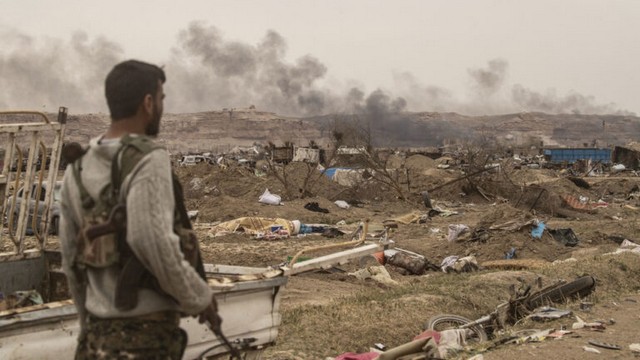
15 Dec 2021 – Two recent reports by the New York Times highlight some of the US’ manifold crimes in Syria, murdering untold numbers of Syrian civilians over the years, under the pretext of fighting the Islamic State.

They exposed a 2019 US bombing in Baghuz, eastern Syria, which killed 70 civilians, and that this was but one of numerous instances, with the Delta Force routinely launching “reckless airstrikes” while purportedly fighting ISIS.

Stating the obvious: had the wanton and repeated mass murder of civilians been committed by Syria or Russia, it would have been in headlines, ad nauseam… because the legacy media genuinely cares about the Syrian people. But, since the crimes were committed by the US, we’ll neither see outrage nor crocodile tears. In fact, it’s pretty shocking that the New York Times, a noted apologist for American Imperialism which has promoted outright fabrications about Syria over the years, has deigned to report honestly on actual war crimes in the country.

In April 2019, Airwars (and Amnesty International) reported that, “at least 1,600 civilians died in Coalition strikes on the city of Raqqa in 2017 during the battle to evict so-called Islamic State – ten times the number of fatalities so far conceded by the US-led alliance, which had admitted 159 deaths to April 24th.”

It noted that, “most of the destruction during the battle for Raqqa was caused by incoming Coalition air and artillery strikes – with at least 21,000 munitions fired into the city over a four-month period. The United Nations would later declare it the most destroyed city in Syria, with an estimated 70% laid waste.”

Along with reporting from Syria since 2014, I’ve keenly followed news on the subject and, unless my memory betrays me, I don’t recall overwhelming media outrage following this report.

In November, former United Nations Weapons Inspector and former Marine Corps Intelligence Officer, Scott Ritter, wrote: “The Battle of Raqqa became a template for all future anti-ISIS operations involving the SDF and the US going forward. By the time the mopping up operations around Baghuz were conducted, in March 2019, there was in place a seamless killing machine which allowed the US to justify any action so long as it was conducted in support of an SDF unit claiming to be in contact with ISIS.”

The US strikes were apparently meant to be portrayed as “self-defense” protecting US proxies on the ground, a feeble excuse for the slaughter that occurred. Yet, what Syria, with the aid of allies, has been doing the past ten years has literally been self-defense: defending the country against the death squads supported and funded by the West, the Gulf, Turkey and Israel in their war on Syria.

Were such death squads to descend on Western cities, they would almost immediately be eviscerated. This scenario is highly unlikely given that the terrorists are tools of the West, but this illustrates the hypocrisy of the situation: Syria has been doing its utmost to restore security to the nation, via strategic warfare against terrorist factions, as well as reconciliation deals enabling Syrian armed men among the foreign terror groups to lay down their weapons and return to civilian life. Simultaneously, the US, their allies, and the terrorists they support, have wantonly murdered Syrian civilians and wreaked destruction on the country.

Referring to the New York Times reports, RT reported recently that former Pentagon and State Department adviser Larry Lewis, who co-authored a 2018 DoD report on civilian harm based on classified casualty data, said the rate was “10 times that of similar operations he tracked in Afghanistan.’ … and that, when interviewed by the New York Times, Gen. Townsend blamed any civilian casualties on “the misfortunes of war.”

Funny how that works. When Syria is actually fighting terrorism, they are condemned. When the US is fake fighting terrorism and slaughtering civilians, it’s just a “misfortune of war.”

It should be no surprise to any thinking person that the US has committed untold war crimes in Syria (and many other countries) during its illegal presence in the country. Still, even with ample documentation of these crimes, the US is not held accountable. Completing this unjust scenario, the US and allies have repeatedly hurled unfounded accusations of chemical weapons attacks and Russian war crimes, providing no evidence and generally relying on unnamed sources or the al-Qaeda-affiliated White Helmets.

I wrote about this last year, noting, “A UN-mandated report, which accuses Russia of war crimes in Syria, heavily relies on anonymous sources and lacks evidence, but also smacks of deliberate disinformation that is halting the eradication of terrorism in Idlib.”

Emphasizing that this report was based on testimonies taken in Turkey, Jordan, Lebanon or by phone, I noted, “I scoured the 24 pages of the report, but even in the annexes I could find no transparent and credible sources, only the following vague terms repeatedly referred-to: Witnesses, civilians, NGO rescuers, medical teams, first responders, flight spotters, and early warning observers.”

In the relentless propaganda against Syria, and Russia, that report got a lot of traction in regime-change media. The recent reports on US crimes in Syria? Not so much.

Some days ago, the Twitter account @USEmbassySyria tweeted about the US standing firm in its commitment to human rights and the rights of women. A ludicrous tweet given the US’ support for terrorists who quash human rights and imprison and rape women.

It is also worth mentioning that Twitter account represents a non-existent entity: in their push for human rights for Syrians (as they bomb and murder Syrians or starve them with sanctions), the US Embassy in Syria long ceased to exist, as did most embassies involved in the plan to put extremist terrorists in power.

In a world where Israel can daily imprison and slaughter children and other Palestinians, and Saudi Arabia can wage war on Yemen while beheading its own civilians, the crimes of the US (and allies) in Syria are sadly not surprising. Nor are they new. The US has a decades-long history of attempting regime-change in Syria.

But seriously? Syria and Russia are to blame in this upside-down world…?

Eva Bartlett is a Canadian independent journalist and activist.

20 December 2021

Source: www.transcend.org

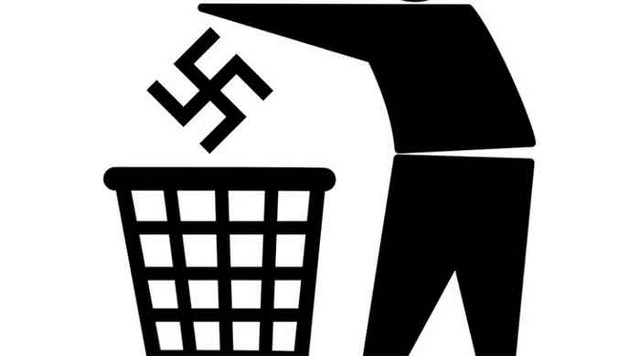
U.S. And Ukraine, Only Two Countries Vote Against UN Resolution Condemning Nazism

By Countercurrents Collective

The UN General Assembly has adopted a resolution condemning Nazism, neo-Nazism and all forms of racism, and the U.S. and Ukraine voted against it, while a few countries, mainly US allies, abstained. The resolution was co-sponsored by Russia.

On December 16, the UN General Assembly passed its annual resolution on “Combating Glorification of Nazism, neo-Nazism and other practices that contribute to fueling contemporary forms of racism, racial discrimination, xenophobia and related intolerance” with 130 countries voting in favor and only two in opposition.

Out of a total 193 members countries, 51 countries including all members of the EU, Australia, New Zealand and Canada were among those who abstained from voting on the UN resolution asking members to eliminate all forms of racism and attempts to glorify Nazism. The resolution was passed with overwhelming support from the Third World countries.

The resolution on “Combating glorification of Nazism, neo-Nazism and other practices” that contribute to racism, xenophobia and intolerance was adopted, the Russian permanent mission to the UN announced on Thursday.

#UNGA76 ADOPTED-INITIATED RESOLUTION “COMBATING GLORIFICATION OF NAZISM, NEO-NAZISM AND OTHER PRACTICES THAT CONTRIBUTE TO FUELLING CONTEMPORARY FORMS OF #RACISM, RACIAL DISCRIMINATION, XENOPHOBIA AND RELATED #INTOLERANCE” WITH 130 VOTES IN FAVOR, 2 AGAINST, 49 ABSTENTIONS. PIC.TWITTER.COM/WC63BHKQRJ

— RUSSIAN MISSION UN (@RUSSIAUN) DECEMBER 16, 2021

Sponsored by Russia and more than 30 other UN members, the resolution expresses concern about any form of glorifying Nazism, including putting up monuments and holding public parades honoring the Waffen SS – combat units within Nazi Germany’s military – or declaring them national liberation movements, among other things.

Russia has long taken issue with Ukraine and the three Baltic states – Estonia, Lithuania and Latvia – honoring individuals and organizations affiliated with Nazi Germany during the Second World War.

The resolution also urges member states to “eliminate all forms of racial discrimination by all appropriate means, including legislation,” and states that discrimination based on race, ethnicity, religion or belief such as “neo-Nazism, Islamophobia, Christianophobia and antisemitism” harms not just the targeted groups but the society in general.

Russia has proposed a similar resolution since at least 2015, and the U.S. has voted against it every time.

Last year, U.S. envoy to the UN argued that a ban on glorifying Nazism would clash with the First Amendment protection of free speech in the U.S. Constitution. The U.S. has also accused Moscow of using the resolution to push “disinformation narratives” about neo-Nazism in the Baltic states and Ukraine.

The resolution demands the UN member countries to pass legislation to “eliminate all forms of racial discrimination” and condemn all attempts to glorify Nazism, xenophobia or neo-Nazism. It also demands the countries to condemn all attempts to revise the history of the Second World War.

The countries which abstained from voting cited possible limitations on freedom of speech, assembly and association. However, activist groups allege that the EU’s reluctance to vote in favor of the resolution indicates the rising influence of right-wing politics there. Several European countries have right-wing governments or strong right-wing opposition sympathetic to neo-Nazi groups.

The U.S. has alleged that the resolution is a result of Russian attempts to paint the opposition to its interventions in East and Central European countries as pro-Nazi groupings.

Ukraine’s ministry of foreign affairs also alleged a pro-Russian bias in the resolution as the reason for its vote against the resolution.

However, Russia sees the abstentions and the votes against the resolution as assertion of right-wing pro-Nazi forces in these countries.

Several human rights activists and left intellectuals have criticized the U.S. and the EU for failing to stand up against the rising threats of Nazism and racism in their own countries. The West’s hypocritical stance has also come under heavy attack from human rights groups which argue that the failure to vote in favor of elimination of all forms of racism and the rising threat of Nazism is a way to encourage such acts and groups.

Most of the Third World countries voted in favor of the resolution, reiterating their commitment to fighting the rising threat of Nazism and racism, which led to its adoption.

Countercurrents is answerable only to our readers. Support honest journalism because we have no PLANET B.

17 December 2021

Source: countercurrents.org